Key Takeaways
- →A brand cannot automate its way into earned trust.
- →Purpose precedes design; the machine can support the design, never decide the purpose.
- →Polished output no longer proves the person behind it knows the work.
AI commoditization is not waiting for your five-year plan. It is flattening the market now.
The same tools that help your team move faster also help every competitor produce a decent script, landing page, sales email, graphic, or talking-head video.
Average output is becoming abundant.
Trust is not.
That distinction changes the job of a leader. You cannot protect your position by adding more generated noise to a market drowning in it. You protect it by building something the machine cannot own: a reputation shaped by lived experience, clear values, strong relationships, and a message you can defend without a prompt window open behind you.
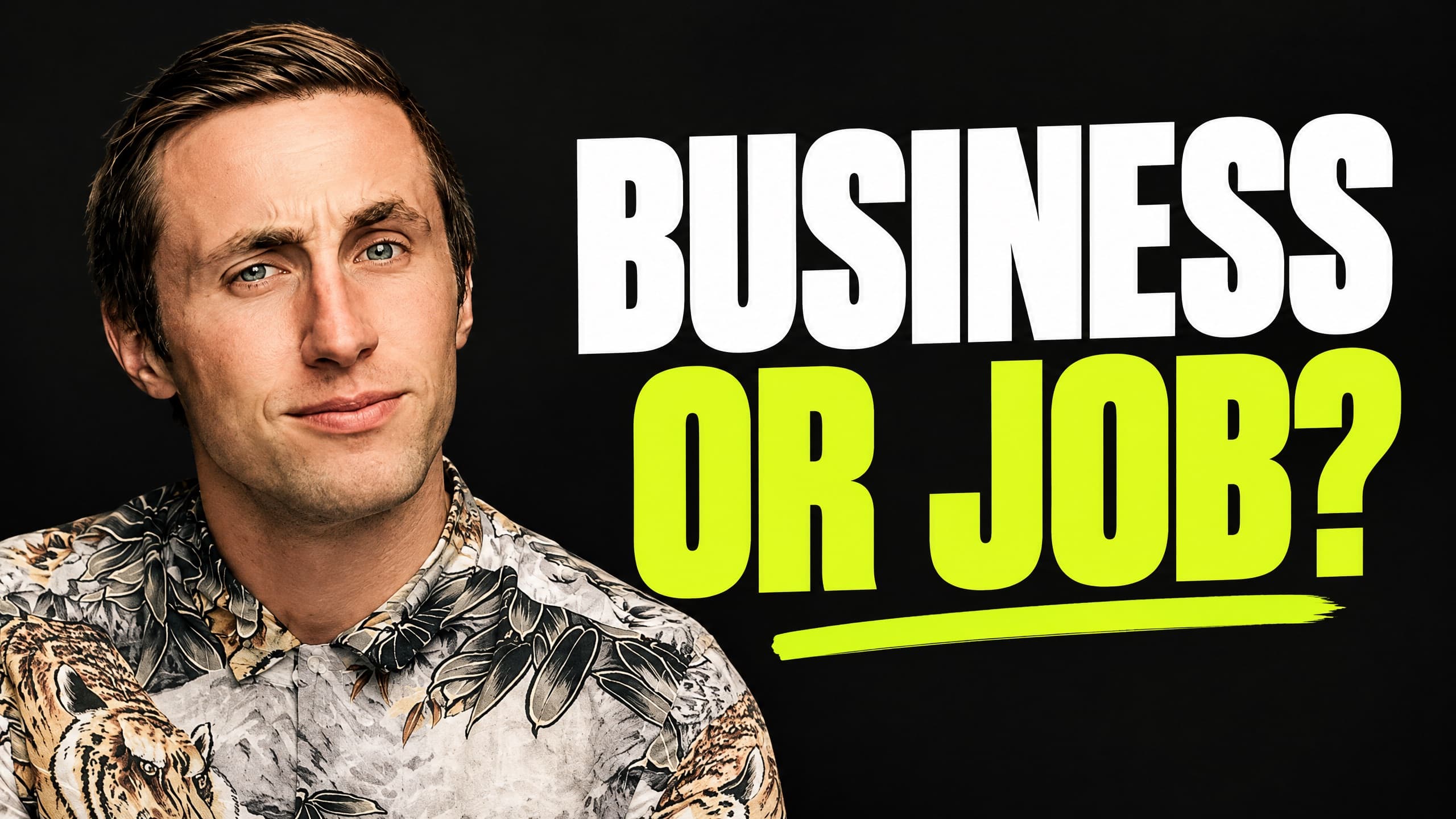
Tyler Cerny is an international, award-winning keynote speaker and keynote coach whose work centers on purpose, communication, and personal authority.
Our conversation started with a simple line he shared before we recorded: he is bullish on human connection.
That sounds almost quaint when the business world cannot stop talking about AI. It is not quaint. It is a competitive strategy.
Tyler and I walked through what human connection means inside a business, why AI avatars can weaken brand trust, how leaders become one of one, and why purpose must come before the design of a talk, offer, company, or life.
The argument is not anti-AI. I use these tools every day. The argument is that tools should remove Workslop so people can spend more time doing the work only people can do.
That work includes building relationships, solving complex problems, and growing the business.
Everything else is machinery.
Connect with Tyler Cerny
Website: https://tylercerny.com/
LinkedIn: https://www.linkedin.com/in/tylercerny/
Instagram: https://www.instagram.com/tylerdcerny
YouTube: https://www.youtube.com/@tylercerny
Pre-order The Life of Purpose: https://tylercerny.com/book/
AI Commoditization Makes Average Output Cheap
When everyone has access to similar tools, access stops being an advantage.
A competitor can generate a social post in seconds. A new consultant can ask a language model for a business plan, a sales script, and a content calendar before breakfast. Someone with no operating history can produce a convincing digital shell around an offer they have never delivered.
The shell can look good. That is the problem.
Competence once signaled effort, skill, or access to talent. AI weakens that signal because polished output no longer proves that the person behind it understands the work.
A clean video no longer proves that the speaker owns the idea. A sharp website no longer proves that the company can solve the problem.
Ryan’s question in the episode gets to the point:
I know they know it, but do you know it?
The first “they” is the software. The second is the person whose face is attached to the claim.
I told Tyler about a friend teaching business owners to create AI avatars for social content. The intention was good. The promise was scale. Write the script with one tool, clone the voice with another, and let an avatar deliver the message.
My response was blunt:
You’re teaching them how to commoditize themselves.
The problem is not the avatar as a piece of entertainment. Tyler made a smart distinction. If you use synthetic media with transparency, creativity, and a clear reason, it can fit the brand. The damage begins when the tool pretends to be human presence.
The audience feels the gap. They wonder whether the creator cares enough to show up. They wonder whether the creator can defend the position in a room, answer a hard question, or handle a customer problem without passing them to another automated layer.
A brand cannot automate its way into earned trust.
More content is not the cure for commoditization.
More ownership is.
That means using AI as an assistant rather than an alibi. Let it help organize thinking, identify gaps, test language, or remove repetitive work. Then put your name, face, judgment, and lived experience behind the final message.
If you cannot say it without the machine, do not ask the market to trust you because the machine said it well.
WATCH NEXT: AI Isn't the Moat in 2026: How Marketers Win with Skills + Context
Pick the Business Model You Are Willing to Operate
Not every business needs a deep relationship with every customer.
Some customers want a low price, a fast transaction, and no conversation. They want the digital equivalent of walking into a store, grabbing a pack of plain white socks, and leaving without learning the cashier’s life story. There is a large market for convenience.
There is nothing shameful about serving it.
The mistake is claiming to offer a white-glove relationship while operating like a vending machine.
A transactional company has one set of priorities. It reduces friction, lowers cost, improves speed, and removes unnecessary human contact. A relational company has a different set. It builds expertise, availability, judgment, memory, and a customer experience that makes the relationship part of the product.
Both models can work.
The confused middle gets punished.
If you compete on price and convenience, you accept that a faster or cheaper alternative can take the customer. If you compete on trust and depth, you accept that the work will demand more from your people. You answer the call. You remember the context. You know the problem better than the prospect because you have spent years inside it.
Tyler described giving clients his personal number. That choice creates more work, but it supports the promise he is making. He wants clients he would be willing to sit with, break bread with, and know beyond the invoice.
My filter is similar:
I would pass on five shallow relationships for one deep relationship any day of the week.
That is not a universal law. It is a declared operating model.
Once you choose the model, the decision filter gets easier. A relationship-led company can stop chasing cheap volume that would drain the team and disappoint the buyer. A transactional company can stop decorating itself with premium language it has no intention of honoring.
Clarity creates alignment.
Misalignment creates Workslop. People spend their time repairing promises the business was never designed to keep. Service teams scramble to create warmth after leadership built the system around distance. Salespeople sell intimacy while operations reward throughput.
That is expensive confusion.
Choose the game. Build for the game. Tell the customer which game they are entering.
Human Presence Becomes More Valuable as Digital Trust Falls
Tyler’s work lives on stages, in coaching rooms, and inside conversations where a person must earn attention in real time. That matters because keynote speaking strips away many of the shields available online.
You cannot quietly regenerate the answer while standing under stage lights.
You have to know the material. You have to read the room. You have to recover when the deck fails. You have to bring enough energy that the audience believes the message matters to you.
The standard is not perfection. It is presence.
I told Tyler about a speaking event where my presentation deck became corrupted. Years ago, that kind of failure might have wrecked the talk. Experience gave me another option. I kept moving because the slides were support, not the source of authority.
A leader who cares can survive a mistake.
A leader who hides behind polished assets has nowhere to go when the assets disappear.
Tyler said public speaking accelerates trust because the audience sees the person think, react, and communicate. The room gets evidence. People hear the words, watch the body language, feel the energy, and decide whether the message has weight.
Sell me on you as a person first.
This is why shared-air experiences will carry a premium. AI can distribute information. It cannot recreate the full cost and consequence of a person standing in front of other people with a claim.
The same principle applies outside a ballroom. A founder on a customer call, a manager in a hard meeting, or an owner explaining a decision to the team is doing live trust work.
Those moments create evidence that no avatar can manufacture.
The leader does not need to become a polished performer. The leader needs to care enough to prepare, speak clearly, answer directly, and remain present when the room gets uncomfortable.
That is what authority looks like before the highlight reel edits out the pauses.
Build a One-of-One Message From Your Life
You do not need to invent a topic no one has discussed.
Marketing is not new. Leadership is not new. Purpose is not new. Human connection is older than business.
Your edge comes from the angle you earned.
Tyler calls this becoming one of one. The topic may be familiar, but the combination of your story, values, skill, scars, and point of view cannot be copied cleanly. A competitor can repeat the words. They cannot carry the same weight because they did not pay the same price.
Tyler’s path into speaking did not begin with a natural gift for the stage. He had a speech impediment as a child and worked with a speaking coach in third grade.
The obstacle became part of the authority. It gave him an experience that connects communication, adversity, faith, and purpose.
When Tyler helps someone find a message, he looks for memorable moments, both good and bad. He asks about the breaking points, the transitions, the events that changed what the person believed about work, family, money, service, or identity.
Those moments contain material.
They also contain boundaries.
Tyler asks leaders to define their non-negotiables and values. The same story can support a talk about business, AI, relationships, or faith, but the values keep the message from becoming costume jewelry. They determine which angle is true and which one is borrowed because it looked popular in a feed.
This is Easy Mode applied to communication.
Your Easy Mode sits where natural talent, earned skill, and market value overlap. A one-of-one message comes from the same intersection. It is not the broad subject you picked. It is the work you can explain with unusual clarity because you have lived it, studied it, practiced it, and seen what happens when people get it wrong.
Tyler’s communication model has three levels. Personal communication shapes the way you speak to yourself.
One-to-one communication builds relationships and earns customers. One-to-many communication scales the message through keynotes, workshops, webinars, and media.
The order matters.
A person with no internal clarity cannot sustain an external message. The scripts change with every trend. The brand starts borrowing conviction from the crowd.
Know what you believe. Know who you serve. Know the problem well enough to describe it in language the buyer recognizes before you present the solution.
That is how authority becomes useful instead of theatrical.
Purpose Precedes Design
Tyler closed the conversation with the framework that ties the episode together.
Purpose precedes design.
A manufacturer designing a sports car for a driver who wants speed will make different choices than one building a safe vehicle for a family of eight. The materials, shape, space, and performance follow the purpose.
The same rule applies to a keynote, company, offer, relationship, or life.
Leaders often reverse the sequence. They copy the design first. They see a competitor’s funnel, content system, meeting cadence, or AI stack and install it without asking what purpose it is supposed to serve.
Then they wonder why the system feels heavy.
Purpose creates discernment. It tells you what belongs and what does not. It helps you recognize when a profitable opportunity would pull the company away from its edge. It gives the team a reason to kill Workslop instead of finding a prettier dashboard for it.
Tyler connects past, present, and future through story, purpose, and vision. The past provides the experiences that shaped you. The present gives those experiences a job. The future gives the work direction.
That sequence turns adversity into material without romanticizing pain. It turns skill into service without turning the person into a generic expert. It turns ambition into a compelling vision rather than a pile of disconnected targets.
AI can support the design. It can help test the structure, remove friction, and extend the reach of the message.
It cannot decide the purpose.
That decision still belongs to the human responsible for the consequences.
The leaders who win this era will not be the ones who reject AI. They will be the ones who refuse to hand over their judgment, relationships, and voice. They will use technology to remove low-value activity so their people can spend more time doing the work only humans can do.
Build relationships.
Solve complex problems.
Grow the business.
Find your Easy Mode. Build your life around it. Cut out everything else.
Listen to the audio version of the podcast: https://linktr.ee/ryan_hanley
Watch Finding Peak on YouTube: https://www.youtube.com/@RyanMHanley
Start your journey to Easy Mode: https://ryanhanley.com/subscribe
Follow Ryan on X: https://x.com/RyanHanley_Com
This is the way.
Hanley.