Hey, this is Michael Rosenbaum. Hey, guys. Tom Welling. Uh, look, we've both played heroes And, uh, we both played villains. But in the real life, there are no reshoots, no stuntmen, or sequels.
We all make mistakes. We're all human. Making one bad decision can not only land you in jail, but could also put yourself and other people around you in serious risk. Be smart, make a plan, catch a ride, stay put. Don't let a high moment turn into a lifetime of regret.
This holiday season, be your own hero. If you feel different, you drive different. Drive high, get a DUI. Paid for by NHTSA. Hiring isn't just about finding someone willing to take the job.
You need the right person with the right background who can move your business forward. If you want candidates who truly match what you're looking for, trust Indeed Sponsored Jobs. With Indeed Sponsored Jobs, your post stands out to quality candidates who actually fit the role. According to Indeed data, 90% are more likely to be hired and trusted by 1.6 million companies. Spend more time interviewing candidates who check all your boxes.
Less stress, less time, more results. Now with Indeed Sponsored Jobs. And listeners of this show will get a $75 sponsored job credit to help your job get the premium status it deserves at indeed.com/podcats13. Just go to indeed.com/podcats13 right now and support our show by saying you heard about Indeed on this podcast. Indeed.com/podcats13.
Terms and conditions apply. Hiring? Do it the right way with Indeed. You've finally broken loose from work. Three friends, one tee time, and then the text.
"Honey, there's water in the basement." Not exactly how you pictured your Saturday. That's when you call us, Cincinnati Insurance. We always answer the call, because real protection means showing up, even when things are in the rough. Cincinnati Insurance.
Let us make your bad day better. Find an agent at cinfin.com. Don't try to heal my scab. And I know I left way more on the table than I should have, and I like that that's a scab. Because brother, ever since then, I've been balls fucking deep in anything I've ever done.
Let's go. Yeah. Make it look, make it look, make it look easy. Ice. The Ryan Hanley Show shares the original ideas, habits, and mindsets of world-class original thinkers you can use to produce extraordinary results in your life and business.
This is the way. Hello, everyone, and welcome back to the show. We have a tremendous conversation for you today with Will Grimes. Will is a former Marine, worked in special operations, and we talk about how he took both the beats in his personal life as well as the lessons learned in his military career and applied those to his business life. Insomuch as rapidly building a seven-figure business in the real estate industry, both as an actual real estate investor and now as a real estate agent coach.
He's also the host of an incredible podcast. Will is a dynamic dude who just drips one-liners, big ideas. You're gonna love this show, and if you didn't have energy before you turned on this podcast, you will certainly be jacked up at the end. If this is your first time listening to the show, whether you're listening or watching on YouTube, make sure you hit that subscribe button so you get all future episodes. And I just want you to know, as always, I appreciate you for listening to this show.
I love you for listening to this show. Let's get on to Will Grimes. Let's, let's start there, man. Uh- Cool ... you're turning 40. You told me before we went live that things, you know, y- things are starting to hit your brain.
You're starting to think about things a little differently, you said, and I agree with you. It kinda is your first adult birthday in which you're like, "I'm not a kid anymore. Not old- Yeah ... but I'm not a kid." Yeah. So what, what thoughts are creeping into your mind?
What's going on with that? Yeah, are, are we starting right now or do you have an intro? Yeah, yeah, no. We go right now. Well, cool.
So, well, the, the main thought that I have, man, is I feel like... So growing up, 40 was like, I thought it was over, right? Like, we all probably grew up, like you're 43, so we grew up with baby boomer parents. You work somewhere for 25 years, and you retire, like 40 seemed old. 40 seemed like you're, you kinda are what you are, and if you ain't happy by now, you ain't gonna be happy, you know?
And I feel like for me, I'm just now putting fucking collars on my shirt, man. Like, and it, I feel like I'm just now getting into a great level of self-awareness, great level of understanding what I'm good at, what I'm not good at, who I like, who I don't like, what I like, what I don't like, where my skill sets apply, where they don't. I feel like I'm just now getting to, like, a great level of understanding all that. And as I'm approaching 40, I feel like I'm starting to put them all together, if that makes sense, right? Like, my 30s, uber grind.
Not, like, I knew who I was, but not as a business guy, man. Like I, I did just under a decade in the Marine Corps as an infantryman. I spent a little time under Special Operations Command. So there's certain identities and there's certain proficiencies there, but then, man, I, I, I was a cop for a while. Medal of Honor recipient as a cop.
They call it the Guardian Angel Award. So I was this thing. And then, like, my 30s, when I decided to leave the police department and, and, and get into real estate, a lot of that applied to managing people's stress and leading them, and I was... Dude, I was great at leading other... My 30s was leading other people and managing client emotions and just all of those great things.
As I'm approaching 40, I feel like all of that work helped get me to understand myself better. And you'll see a lot of it, man. A lot of people know the right answers for everybody else. And a lot of times you might have a good opinion. They di- they just can't seem to do it for themself.
Yeah. Right? Like use, use the gym for an example, dude. There's a gym on every corner, and if you ask anybody, regardless of their fitness level, "Hey, how do you get in better shape?" Everyone to a decent level can talk about eating healthier, eating less, exercising more.
"Hey, what kind of workout should I do?" Like, oh, cardio's good for your heart. Like, they'll have a good understanding, dude, better than m- most people might think, right? It's not about, like, knowing or having the resource, it's about getting yourself to do it. Yeah.
And I feel like 40 is, man, you're just, you're starting to take some of your own advice, and you're starting to really, like, protect your time, and you're not trying to fit in with all the cool kids anymore, and you've kind of found your tribe. And not that you're not open to new friends, but you just know the type of people you gravitate to, and you don't necessarily have to pick fights or defend your case anymore. It's more so just, I think it's a lot more internal conversation. I've gotten a lot more quiet, even though I'm running my fucking mouth on a podcast right now. I feel like it- I'm s- I really enjoy solitude.
You know what I mean? Yeah. And I feel like it comes natural because you tend to have a lot more self-reflection as you start approaching 40, for me. Yeah, so I call your 40s, uh, the GNF era of your life. GNF?
Give no fucks. Cool. Cool. So, uh, one of my, one of my audience members, I, you can't see it back here 'cause it's blurred out, but, uh, uh, w- made me, like, this little wooden, y- you know, he made it in his wood shop or whatever, and it's just the letters GNF, and it sits back there as a reminder. But, um, you know, you hit a certain point where, and, and you said it, like, you stop caring necessarily what people think.
It's not... And, and, and I try to explain this because I've had a lot of people online push back on me when I share this message. They're like, "Well, the fact that you're saying that you don't care means you care." And it's like, no, that's, that's, that's not what I'm trying to convey. No.
I, and I'm also not saying that we shouldn't be aware of what people think of us, right? There's this, there's this thing where, like, you know, uh, and I think a lot of people take Gary Vaynerchuk out of context who's a big, who pushes this concept quite a bit, right? They're like, "Well, you know, I just don't care what people think." And I'm like, nah, that's the wrong way to look at it. What- Okay ... the way that we have to approach this, I think this particular mindset is be aware of what other people think.
It's okay to listen to people, to what people say, but do not base your life on what other people say. Do not base your decisions on what other people say. Yeah. 'Cause, 'cause someone could have a critique of you that helps you improve who you are. Maybe, maybe something you're missing, maybe something there's a blind spot in your game that you're not seeing. And maybe it's some random commenter, maybe it's a friend, maybe it's an enemy, right- Yeah ... makes a comment or a critique about something you're doing.
And if you're not aware of that, you can't take it in as a data point. But I do think in our 40s we start to say to ourselves, "Okay, who do I want to be? Who am I? What, what makes me- Yeah ... who I am?" And we start to be able to filter, where in our teens we obviously can't.
That's why peer pressure in our teens is so, is so relevant, and I think that plays into your 20s. I think your 30s you start, you start that disconnection, but there's something about our late 30s, early 40s where we go, "You know, I'm this person that I don't care that so and so doesn't like me," or, "I don't care that this person- Yeah ... disagrees with my take. This is who I am. I, I take that connection-" Well, dude, you know where it comes from, man? It comes from intent.
Yeah. Like, I'm not mistake-free, and I'm not free from people maybe misinterpreting something I do or something I say. But the ones that are closest to me that know me, they know that my intent is good. They know that regardless of my background, dude, my intent is never to hurt or harm. I'm a super funny guy.
I love humor. I literally fall asleep... When people ask, like, how I sleep so well, I literally fall asleep to Katt Williams, okay? Yeah. I fucking giggle myself to sleep, dude.
I love comedy. But it's like, no matter what you do, everyone's gonna see it from the lens that they're looking through, correct? So if you please this person, you're not pleasing that person. If you're pleasing that person, then this person's not pleased. Or if, if you make sense to this person, this person won't make... you know, won't see it.
But okay, so try to make, have it make sense for him, but then he's not gonna make sense of it. It's never a win across the board. What matters is your intent, right? And, like, it's, it's such an important word, and people that know me closest, that understand me, like, they know my intent's good. And I do care about what people think when it comes to my inner circle, right?
Yeah. Like my family, my wife, my kids, my business partner who's my best friend. They know my intent is never to harm. So when they've got corrections for me, I'm all ears because they have permission to give that to me, because I also think that they know me well enough to have context on why I would do something in the first place. Folks online or folks that just don't know you so well, even if their intent is to, like, help you, they just don't necessarily understand everything that's going on or why you're doing what you're doing.
And hey, no harm, no foul. Like, unsolicited advice is probably the worst type of advice, correct? But for me, man, I think we stop giving a fuck, you know, in the, in the nature of what you're talking about because the better you get with yourself, the less you have to prove to others. When you're younger, you don't even necessarily know who you are yet, so you're proving yourself to something or someone because it validates you for you. But when you understand how to validate yourself for you because you're doing what you say you're gonna do, you're losing the weight you say you're gonna weight, you know, you're, you're gonna lose.
You're, you're training the way you say you're gonna train. You're approaching your business and your family the way that you say. You're going to church because you said you were gonna go. You're giving your kids more time because that's what you said you had to work on. And when you start being true to your own word to yourself and the voice that's inside here that you have the conversation with, when you start being true to that guy or that girl in here, you just require less validation from the outside world 'cause you don't need it from there anymore.
When you don't know who you are and you're not even having that conversation yet, then typically the validation comes from the outside, which is why you keep trying to prove yourself to them. How do you develop that self-awareness? I think you have to fuck up enough, dude. I, like, I've gotten in fights with friends and not felt good about it. I've bitched somebody out at a stoplight and not felt good about it.
You know? I've, I've bitched a Marine out and not felt good about it. And even... Dude, here's where I got as well, man. Like, I think the beginning is you jump the gun and you think you're right and you're not, and you bitch somebody out, or you make something an issue that didn't have to be an issue, and that doesn't feel good.
And you're like, "Man, I gotta, I gotta correct that." But then, you know, the la- the last phase, probably two, two years ago, even when I had the right to bitch somebody out, even when I was in the right, it still doesn't feel good to throw it. Yeah. 'Cause after the fact you don't feel any better. And what I started recognizing was making things issues that didn't have to be issues, or a bigger issue when it could've just kept, been kept to a minimum, or just chewing someone out even when you were right, I didn't feel good after. And it's like, man, that's what they mean about protecting your energy.
And now, dude, like we've got- Are you tired of endless follow-ups and missed opportunities in your sales process? Chasing leads is a losing game. That's why I created the One Call Close system, a battle-tested sales system that uses behavioral psychology to close deals in just one call. No more, "Let me think about it," no more, "I'll get back to you." Using the One Call Close system, we took new reps from 25% close ratio to over 80% in just three months.
To grow fast, you must close deals faster at zero extra marketing cost. The One Call Close system allows you and your reps to build trust, address pain points, all while watching your revenue skyrocket. Ready to stop chasing leads and start closing? Visit masteroftheclose.com today. Close twice as many deals this time next week.
Visit masteroftheclose.com to learn how. Got over 200 realtors that work for us. I mean, we're at, we're at 450 homes this year so far. Like, we do a lot of business, man. We have a lot of people that work for us.
And I got to it, man, about two years ago. This is not the Marine Corps. You don't have to be here. I don't have to be here. If I have to chew your ass or ride your ass like a Marine, I'm not gonna.
I'm just gonna move on. Yeah. I mean, 'cause like, dude, we're... This isn't, this isn't 18-year-old Marines that need culture shock and ass-chewing to wake 'em up and grow 'em up because we're preparing for war. That's not what this is.
But it takes time to really grow into a different, more effective leader, right? Does that make sense? And there's, like, this hierarchy. Like, in the military, what I had there was you're picking up rank. Like, when you pick up sergeant, that was like your first adult rank in the Marine Corps.
The way Marines treat you, the way your higher-ups treat you, especially in the infantry community. If you had a battalion commander who's in charge of 500 people still yelling at an individual Marine, it's like, no, man, he has more command presence than that. He's got more leverage with leaders around him than that. If he's got a problem with something he sees a Marine do, he's gonna go get that Marine's platoon commander, and he's gonna handle it diplomatically. And it's like at some point as we grow older, the hard part in business as entrepreneurs, and the hard part is just growing up, is we're not getting promoted.
Nobody's pinning sergeant on me. Nobody's pinning gunnery sergeant on me. Like, you have to just come to these, these self-reflections on your own and realize, man, I'm this respected now. I'm this big in business. I've got three kids.
I'm this age. How people handle me and appreciate my command presence when I walk, it's like I don't have to be the enforcer anymore. Like, let these young bucks who's in their 20s and 30s, like, prove themself and figure themself out. I should have a more effective way to lead than just that guy I used to be, right? Like, you gotta find a d- a, a better way, and I think it's just through self-reflection and not feeling good about just chewing someone's a- You're like, "Man, that didn't feel good."
Change it. But I think it's the conversations and just we all... Dude, we know us. Yeah. People might not admit it.
You know when you don't feel good walking away from something. Yeah. Right? Do you think... To me, so much of the mistakes that we make in our live, our lives has to do with ego, right?
Mm. And where, the role ego plays in how we operate ourselves. And one of the biggest changes that I saw through, you know, my 30s are I could write, I could write multiple books on all the mistakes- ... that I made in my 30s. I mean, just, you know, just, I, you know, I, I had the position of my dreams a- at a company I enjoyed that, you know, I had a 27-person team working for me, 23 people working for me at the time. Everything was great, and then I got fired.
And, you know, I look back at that thing, and okay, so there's that thing, and then, you know, this happened, and I started this and this, and you know, and, and you look at... And, like, all of it, to me, s- self-reflection allows you to break apart your ego. Mm-hmm. And when your ego starts to break apart, it opens up that awareness, right? Like, if we haven't dealt with our ego... 'Cause the thing that, to me, the thing that makes me yell at somebody is my ego.
I got, I gotta teach this person how to do this thing, right? And it's like, wait a minute. Well, is that what that person needs? Are they gonna respond well to that? Yeah, I think it's- Is that what's best for the company?
I think it's, it's, it's ego for sure, but it's not so much getting rid of your ego. I think it's just understanding where to place it- Mm ... and how to express it. So for example, you know, like when you start looking at, like, Marine Corps infantry stuff or professional sports. Like, when Mike Trout g- goes to home plate, that dude openly says, "I'm in there, and I'm the best in the world at this, and this is what I do, and I'm the best in the world, and here's how I'm gonna perform." And he's like, hey, man, if you don't think that way- You're in trouble.
And then one would say ego has to be involved in there, right? Of like being able to... Now, you gotta work hard and prepare hard and have a certain level of result to even tell yourself that and halfway believe it when you're at home plate in a Major League Baseball game. But I think it's in a moment where it's, it's not only okay, but he's also expressing it a certain way. He's not boasting.
He's quiet. He's not boasting at the plate. Mike Trout doesn't flip a bat. Mike Trout doesn't rub shit in people's face. He's not boasting, but internally he's got control of that ego.
He's got control of that fucking lion that's like, "Hey, man, I'm the fucking best at what I do, and the only expression of ego you're gonna see is when I hit this fucking bomb or when I hit this double in the bottom of the ninth to win the game." So I think it's like, man, like, you know, 'cause people say like r- you know, kill your ego. Kill your... And it's like I've never been a fan of all or nothing. I've never been a fan of all the time or never.
I, 'cause I don't think it's a proper answer. I don't think there's a blanket statement or a, a, a fix-all of get rid of something completely. No, and some of ego feeds confidence, right? Like, you've gotta have some ego and pushes into the hard work that you do that then creates a result that then says, "Hey, man, I am good at this and I can do it." Like, I tell you what, buddy, like when I was a cop, If you saw the calls we went on, if you don't have a little bit of ego, a little bit of chip on shoulder that says, "When I boot this door, I'm the guy that needs to be boot that door," buddy, I don't know if I'm saving you.
If you're in a bad spot, right? And I, I'm the guy that's supposed to come help you, you better hope I got something like that that says I can do it. But I'm not running my mouth or boasting. It's internal, and I'm focused, and I'm intentional. And I'm exactly who I need to be when I need to be it, and I think that's where you start getting mature.
I think that's where, you know, like the conversation of being an alpha, right? Like, everybody wants to be a fucking alpha nowadays. Let me tell you something, dude. I've been around all of them. I served with giants, and alphas come in all personality traits.
You know, right? And like everyone thinks, okay, it, it, it's Will. It's the quietest guy in the room, right? He's like the real alpha. No.
Not necessarily. There's some loudmouth dudes that love talking shit and busting balls, and they're the alpha in the room. That's just their natural disposition. Some people are naturally just more quiet, and are, are some of those guys hardcore? Yeah.
But there's also some guys like a Conor McGregor that runs his mouth, but that's what feeds him. And until Conor made over $100 million and got distracted, Conor was the fucking guy. And you're never gonna stay the guy forever, but using him as an example, that's how he fed the inner Conor that got him through the challenges. And dude, I'm telling you, man, at the highest level, some guys are quiet, some guys are humorous, some guys are certain ways. But when it comes down to the moment of when they have to perform, it's not a lecture.
It's not a boast. It's not a flip. It's intentional. I feel like alpha, right, like as men, as we wanna be alphas. Women, you're included in this as well, but speaking from a, a, a place of fatherhood and being, being a man per se, it's like I need to be exactly what I need to be when I need to be it, be on rapport without failure.
If that means I need to be compassionate, I better be the best at it. If that means I need to listen and be nurturing, I better be great at it. If that means I need to be dangerous, I hope you have no question that I better be that, be on rapport without failure. If I need to be funny and enjoy a moment with my friends and not take things too serious. So, dude, I think it's really the culmination of how well you can take every trait, ego, being humble, e- every trait and then every piece of like what makes you and, and what your natural disposition is and where you enjoy based off where you're at.
Like, I think it's about putting everything together and just being effective at who you need to be when you need to be it. What I just heard you say was all of these traits are tools that we pull on when we need them. And- 100% ... I think- But dude, you know what? Not to cut you off.
No. You know what it is? If w- uh, as we, as we grow into maturity, if we haven't developed other tools, we tend to pull the ego out a lot more. Yeah. If all you got is a hammer, you're probably gonna be a hammer, right?
So I feel like as we mature, we develop more tools, and we just tend to put the ego away a lot more 'cause we're more precision now. We're more developed. We've got more tools to get the job done, and we don't always have to rely on this thing. Yeah. I...
Guys, I want you to go back. Rewind. Listen to this quote from Will. "Be who you need to be when you need to be it." And I, and I think about this, I think about this in my own life, right?
Like, uh, I'm a speaker. I'm a podcaster. I'm a coach. D- you know, I, I do, uh, um, I, I act a- act as a fractional CMO for a company that I really enjoy in the AI space. I have these different hats, and if I were to take my coaching hat and bring that to my keynote speaking, that performance would not be what it needs to be.
And, and, you know, I, I played baseball, college baseball. Actually, i- uh, one of my questions that I, that I had, which we can, we can talk to or not, was, um, I was, I was this close to going into the military. Yeah. Uh, I came from tiny little nothing town. I had two good parents.
They were divorced, but, you know, we made nothing. They d- my dad was a mechanic on the railroad, and my mom was a receptionist. So I was taught, like you described, "Hey, get the safe job. Go work for the big company. Get the 401.
Everything'll be fine," whatever. And I fought that for so long, and I had an opportunity because I scored really high on a math, math and physics test. Uh, the Navy recruited me. They wanted me to become a nuclear engineer. Cool.
And, uh, I went way down that rabbit hole to the point where I was in the final, I took a final test, which I passed, and the guy had the contract and was sitting at my kitchen table. Again- 900 people in my town, middle of nowhere, no idea what my life was gonna be. Just wanted, my only goal in life was to get the fuck out of that town. Like, I just knew intrinsically- Yeah ... that nothing happened there and nothing good would. And here's this guy sitting across from me, and he hands me this contract and he, and he's like, "You know, we want you to come, uh, work for the Navy, be part, be, be, uh, go to..."
Uh, I'm not sure if I would've went to, uh, Annapolis or where I would've went, but, uh, where I think the, actually the nuclear program is in Texas, and he starts describing it to me, and my hesitation- He, he, you know, he goes... I go, "Well, what does this look like?" He goes, you know, he explains it, four years. He goes, "Then you do, uh, you'll have to do two tours on a sub." I said, "What does that look like?"
He goes, "Up to 12 months in a sub." Now the doors are what? 5'8" tops, right? So I'm, I'm 6'4". I don't look like it on a podcast, but I was like, I wasn't super ha- So I said, "Give me a chance.
You know, just, just give me a couple days to think about it." He said, "Fine." And in those two days between when I had to make a decision, I got a full scholarship to play baseball. Cool. And I ch- I chose that path because I didn't wanna have to duck for the rest of my life.
Um- Yeah ... but my, my point in saying all that is, you know, all these experiences, I think when we hit, going back to the 40s thing, when we hit our 40s or, or whatever that moment is for us, I think what we're able to finally do is look back at the previous 40 years of experience and see those decisions not as wins or losses, but simply as lessons that we then can apply. And I don't know that we have that. Yeah. Maybe some people do. There's always exceptions.
But I think that for most of us it's, there's like this, this switch that flips, and all of a sudden it goes... You know, 'cause there's part of me, I- I'm, dude, I'm, I tend, I'm conservative. I tend to be, I'm pro-America. I'm a patriot. Every, almost every charity dollar I give goes to veterans.
I mean, there's a big part of me that wishes I had that experience in my life. I do. Yeah. I would have loved to have served my country and- Dude, you know we're the opposite, right? What?
You know we're the opposite, right? No, no. And I'm, and I'm glad you're talking about looking back at the past 40 years for, you know, for, for lessons. So for me, dude, like I was a baseball guy. I'm not 6'4", I'm 6' but I'm left-handed and I threw the ball 91 out of high school.
I practiced hard at practice. I didn't do any extra Kobe Bryant shit. I was chasing girls in high school, hanging out with my girlfriend and... But when I was at, I was a good kid. When I was at practice, I practiced hard, but I wasn't going above and beyond and neuroc- neurotic about it and I went down and played a little bit of JUCO during a fall season.
You remember fall ball. Yep. You and I come from a similar era. Well, I had an opportunity to walk on with, um, one of the organizations with the Marlins, and I had no idea what pro baseball looked like, buddy. And it, and it was not what I thought it was, and it, dude, I was around for five minutes and it threw me for a spin and it, it just wasn't what I thought.
And I had a buddy pass away in Iraq, and I took the out from baseball and I joined the Marine Corps. Yeah. And it's not some heroic shit, "Oh, your buddy died, so you're gonna go, go defend your buddy." It was like, no, man, it was I was scared. I was lost.
I had no idea how to mentally prepare for like this professional level of baseball. And when my buddy died, it bothered me a little bit, but really it just, it, it asked me... Well, it, it bothered me. Don't get me wrong. Yeah.
But it really forced me to ask myself like, "What are you doing and are you even happy with what you're doing?" And I wanna be a part of something bigger than myself and it, you know, I think all young men do, and baseball didn't feel that way. I should not have tried to go pro that quick. I should have done better with the JUCO thing and get picked up after two years of JUCO or transfer to a university and start as a junior and really develop. I didn't understand develop.
I just, dude, I just, the ego of baseball, right? Yeah. Getting there as soon as you can and no idea what that looked like and, you know, I had a great career in the Marine Corps, right? But a lot of buddies, man, not a lot, but a couple have tried to give me outs and they say, "Well, dude, that, that's a hard world. Like, man, I'm sure you played well, but you still could've gotten hurt or maybe you just don't get picked up 'cause it..."
And they're trying to rationalize my exit. And it's like, "Listen, man, don't try to heal my scab," okay? Like, I like that that's a scab, and I know I left way more on the table than I should have and, and I'm judging myself at 39 to 18, okay? And I understand the difference of looking back. I'm not, you know...
But I know I didn't give it my all. Yeah. And I know I didn't even understand what, you know, and like, and I bounced. And I like that that's a scab because, brother, ever since then I've been balls fucking deep in anything I've ever done, and I don't leave anything left on the table. And where I learned how to do that in the first place was the Marine Corps.
Yeah. I learned a certain level of work ethic. I learned what it meant. When you, when we say we wanna be a part of something bigger than ourself, what the fuck does that even mean? 'Cause guess what it means? Nothing about you.
Man, I wanna be a part of something bigger than myself and be a part of a team. Cool, but if it's somehow fulfilling you individually first, it's, you're missing it. Yeah. It's sacrifice. It's commitment.
It's doing the right things. Doing the right thing is always the right thing. It's, dude, it's fucking hard. Brotherhood is hard. Commitment's hard.
Just doing hard shit when you... Like, dude, it's... And I learned that and I, and that's where I really started to understand again commitment, having core values, standing for something, what hard work actually looked like, and I had none of that. Don't get me wrong, I wasn't a bad baseball player. I, I trained hard.
I was a good player. I was good to my coaches. I wasn't even 70% of what I could've been putting into baseball, and that's okay. I just, you don't know what you don't know, but I'm okay. Like when we talk about lessons looking back when we're 40 and looking back, right?
I'm okay that I know I could've gone further. I'm okay that I know it could've been really cool because it's like I need that to pick at. I need that fucking scab 'cause that scab is what gives me the perspective on don't ever let that happen again. Yeah. Dude- You know what I'm saying? ...
I- I'm listening to your story, and it's funny. Obviously we've had different journeys, but I'll tell you that the, this idea of, of, of having that scab or that scar. So I, I, I tell you from my own baseball journey, right? Like I, I got, I got, I got two, I got offered two tryouts with the Pirates twice. Whoa.
Once my junior year, once my senior year, and I missed on both. And what, and the reason I missed on both is because while I was a hell of a hitter and, you know, I was a catcher and different stuff, I had, I had all these credentials and I had stats to back me up, and I could do... I still s- chose drinking beer and chasing women in college over getting myself in the physical shape that I knew. Especially, and this is, you know, and again, I'm, I'm talking to y- u- using these as lessons. Yeah.
My junior year I get this tryout with the Pirates. I'm jacked out of my mind. I get there, uh, I'm ranked in the top three hitters, uh, which actually one of my other teammates was, was ranked ahead of me. He was two, I was three. Out of all the hitters, out of all the people that show up, 100 guys show up- Yep ... we're, we're, we're two and three in hitting, right?
Uh, they got me playing third. Great, you know, no, no problem there. All good. Come back, don't get picked up, and the coach says, uh, "You're not fast enough." Okay.
Right? Not... That's fine. What I never did was fix that problem. I- Mm.
That's e- that's a easy problem to fix. There's a million ways to get faster, and I didn't need to be the fastest, right? I was a power hitting right-handed hitter who could catch and play third. So like there's no reason why- I don't have to be Elly, uh, De La Cruz. Yeah.
Don't need to be him, right? No. I just need to be able to run a little bit faster to get down to first, 'cause there's certain marks you gotta hit. You, you hit a ground ball in, in the pros, you gotta be able to get to first base. So- Mm-hmm ... but I never fixed that problem.
I show up the next year, have the same results in every category except for running. The coach looks at me and says, "Hey," you know? Yeah. And you know what that is? What they were looking at was they felt like you had hit your max capacity.
Yeah. He's as good as he's gonna get. And, and when they see that you're at your max capacity and you made no improvement, it's like, well, if you're not improving here, how are you gonna handle a bigger league when it's a harder game to play? So- They felt like whether it was mental or physical, for whatever reason, if you're not showing improvement, then you're at capacity. So why would you go higher?
If the game's gonna get harder but you're not getting better, it just, that's math in itself. And, and this is, and this goes back to the very beginning of this conversation. At this point in my life, I now use that as fuel for everything I do. That will not happen again. If you, if we get done with this podcast and afterwards you were like, "Dude, this part was great, this part was great, but geez, this little section here, you kinda messed that up.
Here's how I'd tweak that," boom, that shit never happens again. Right? No. I fixed that problem. That never happens again.
And that has been how I've been able to be successful in the second half of my career, was taking that not as like, "Oh, woe is me. I could've been... You know, I could've played in the pros." I, I definitely could've played in the minors if I'd gotten my shit together- Yeah ... but I was 20 pounds overweight, right? And- Well, hitters is worse in college.
You're okay. Yeah. But you know, you know what I'm saying, like- No, but I know what you mean, though. Like dude, this is, this... You know, I, I teach this a lot when I coach.
People don't change until it's too painful not to. Yeah. Okay? Like it's okay to have a relationship with your pain. It's perspective.
It helps fuel it. If you wanna be a victim mentality and drown yourself and wear your high school letterman jacket and tell everybody who you used to be, fine. You're using your pain differently there, right? Like, but if you learn how to use your pain and identify with it and realize that it's okay, it can be that fuel source, right? And believe it or not, it can actually be a fuel source better.
They, they... I can't remember who did the study. Some, some Ivy League school did this study with mice. They put a mouse in a container, and they like strap something to it so when it would try to approach the exit it would be pulling s- it'd be pulling weight. How hard can it pull?
So they showed it the exit, they measured the pull, cool. Then they put cheese in front of the exit, it pulled a little harder. Cool. Then they put a cat behind it, and it pulled the hardest. It didn't pull the hardest for the cheese.
It didn't pull the hardest for the big house and the dream and the vision board. It pulled hardest away from fear. Yeah. So having a relationship with your fear, as in my fear of like just never wanting to not give it... Like, dude, I'm okay if something doesn't work out.
I'm good with that. I'm not okay if I'm committed to it and I didn't give it my all, because now it's like, well, did it not work out because you're not good enough or it's not your thing or because you didn't put enough effort into it? And I just don't like the unknown of that, right? So that's, there's a fear there. There's a healthy level of perspective and fear with that.
That's a harder driver than me dreaming about some fucking yacht or some fucking vision board that I have. Not that those aren't important. If they work for you, great, but the relationship with reality. The reason why I think the mouse moves is like the reality of what that cat's about to do to it is significantly more powerful than getting a full belly worth of cheese. Same thing with us.
The relationship and reality of our pain and just not wanting to go back to something, it's a lot more tangible, it's a lot more relatable, 'cause we went through it, versus some dream we've never got to that we keep writing about in our fucking gratitude journals every morning. It's just, man, I just, I don't think it's as tangible as our pain. Let's spin this into the, into business context. And you started our conversation, again, before we went live, you said, "I love talking about what actually works." Yeah.
And I, I mean, dude, it just, we've only been talking for a half hour, but I, I just, I'm so with you there. I'm so... I get, I get frustrated because people come to me, like where I help people is between lift off and escape velocity. That's where I help entrepreneurs, is when they hit, they get off the ground and they get stuck. They're in that middle zone and they don't know how to get to that place where their business really, really ramps.
And every time- ... almost to a T, one of the problems that they're facing is they've read some fucking book or they follow some freaking person who just spouts all this cliche nonsense or has all these obscure ideas on how things are done, and they, they refuse- Dude ... or just aren't aware enough, to your word, to boil it down to the shit that actually makes progress. And it's the cheese. What are those things for you? Well, dude, I'll tell you what, that's the cheese. So people think, so like for example, dude, like when I started real estate, I'd g- I'd done military, done police work, I helped a buddy with a fitness startup.
We grew 14 stores in two years, franchises and crushed, right? Awesome. I get into entrepreneurship and, like, I was making good money at this fitness company, but I wasn't good with money. I had two stupid cars, I was spending every dime. So when I left that company, I went broke quick.
Got rid of my apartment, I had to sell two cars off, and I'm sleeping in my buddy's mom's pantry. The fucking Y2K pantry. You remember Y2K, the, the original pandemic, right? Yeah. I'm, like, buying toilet paper and castle.
Dude, and by the way, if you're an emotional eater, don't sleep in a pantry, okay? That, that was me- ... right? I'm, like, eating fucking 20-year-old Fig Newtons at night. But, you know, like, I'm s- I'm sitting there and, like, I'm driving Lyft at night. If you guys go back to my Instagram and scroll to the bottom, you'll see me driving Lyft at night to make a buck while I'm studying for my real estate license during the day.
And I'm grinding and I'm motivated and I'm good there, right? Cool. Couple years later I'm, you know, I'm making over seven figures, two and a half years later, and my buddy's, uh... It's, it's right around, like, Thanksgiving. My buddy, he's in Mexico with his family for a couple days, still working, doing his thing.
I was waking up, I was getting my, my mandatory work done. Cool. And then halfway through the day, I'd catch myself, I had this huge beanbag in my living room, right? This little house we were, we were renting. And I'm making significantly more money than my bills require now, okay?
And I'm sitting on th- I'm laying on this beanbag, watching ESPN. Cool. Second day happens while my bu- Same thing. Third day I go to sit down and I turn it on, I'm like, "I'm comfortable. I'm good enough."
I fucking felt it. That's more dangerous than the pantry, dude, right? Like, it's not the start where, like, "I'm fucking broke. I'll do whatever it takes. I've, I've, I've been here before.
I've worked hard before. Like, let me just, let me just put a pu- a ton of effort and intention behind this." That's the romantic story. That's the romantic story. That's the one I talk about on stage.
That's what people like to hear. The reality is beating my fucking dick off halfway through the day watching ESPN on a beanbag because I'm... My bills and my, like, no, like, my financial situation no longer required all of me. We're renting this home for 2,500 bucks a month. I got a truck for 500 a month.
Like, and dude, we're making over seven figures. There's no pressure. And I'm on that beanbag and I go... And I understood, like, I'm not stimulated. I'm good enough.
I'm bored. I'm comfortable, right? Like, dude, within, within three months we were in a $3 million home, and it's not for the material of a $3 million home, it was understanding I need a certain amount of acquired and mandatories because it'll... That's the fuel. That's what f- Like, "Hey, Will, what do you do when you get up in the morning and you don't want to?"
Well, I got kids and shit to pay for, man. That's a gas line for me, right? I don't have a morning I don't wanna get up. I don't have a morning I don't wanna get up. I don't have a morning I do wanna get up.
I don't have either conversation. Every morning I'm, dude, I'm just getting up and I'm getting after my day, but there is something about my ambition for business and serving and helping people, and I like to live a nice life and I like the things that I have, but it's not... And you don't, dude, you don't see me posting a lot. Like, you don't see me posting my Lamborghini or the, the, the big h- Like, you don't see a lot of that stuff on my social. I'll show it if I happen to be in my car and cool and people like seeing it, but I'm not boasting about it because I don't, I'm not using it for the accolade of social.
I have those things because I'm a car guy or I'm a house guy and I enjoy what I have, but I also understand it's this fucking gas line that keeps me straight with myself, dude. And that probably goes back to the whole Marine Corps thing, man. Like, if I don't have a mission, I'm digging holes in the backyard and jumping the fence and doing weird shit with the neighbor's dog, right? Like, I don't need that much sl- I need a mission. I n- like, dude, I'm service b- I need to serve.
Yeah. I need a mission. But I also enjoy my stuff and I just realize how that stuff also serves, like, a gas line, right? So dude, realizing that in myself, like when you're coaching these guys that are... Hey, they're off the ground now and they can't get to that next level, a lot of times it's not resource, it's not how to, it's you're good enough.
And my buddy Ben Newman talks about it. Ben Newman's a, a great coach and he's been the mindset coach for Alabama football for a long time. He just parted ways with them, but he talks about how do you respond after a win? And a lot of times he talks about that with his athletes when they're in their third year in the NFL, and you ha- you got your little s- teeny tiny rookie contract. You go crush in the league for three years and you're the man now.
You're Mahomes, and now you're making 100 million. How do you respond after that contract? How do you respond after that win? How do you respond after you're off the ground and now you have this intermediate, high beginner, intermediate level of success, and you're making a couple hundred grand as an entrepreneur, or you're, you're making a big check as an athlete? Like, where you respond there, that's where you're gonna figure out, like, do I really wanna do this and take it to the next level?
And I better figure out why. And brother, I have a why, but I also have a lot of really nice shit that needs to get taken care of. Yeah. And it feeds me both from an ambition standpoint and from a practical reality standpoint. And for me, dude, I, I need both.
Do you think... So if I'm listening to this and I hear you, I'm like, "Shit, this dude's got drive coming out his fucking ass," is that, is that intrinsic or can it be learned? If I'm sitting here saying- Learned ... "Man, I just, man, I just don't have Will's fire. I'm just, I'm a different kinda guy than Will-" Yeah ... but I want that," is that something that I can learn?
Can I- No ... is it a discipline or is that just intrinsic into a person? Well, it's learned, but you have to create discipline with it. Right? Like, I think, I think learning something and discipline they're, they're not two and the same, but one goes with the other. You have to apply discipline to actually learn something at a, at a high level of really creating, like, different habits.
But for the sake of a podcast and having people for a couple minutes, here's what I would say. Change your expectation of what shit should feel like. When I'm talking about my morning and, like, getting up, like, "Well, Will, what if you don't wanna get up?" I don't allow my m- emotions to have majority vote in making a decision. I haven't wanted to go to the gym for probably a year.
Like, dude, we got so much stuff going on in business, and it's fun, and it's dynamic, and it's... We're playing chess, not checkers now, and there's so many conversations or hopping on podcasts and building my brand like I'm doing with you. The last thing I wanna do is fucking squats, bro. But the fact that I don't wanna do it has zero to do with whether I'm actually gonna do it or not. And then when I'm at the gym, I don't have this expectation that I'm supposed to feel like Rocky in the movie, and I'm just like, the endorphins, and the sweat, and the fucking chicks checking me out.
Like, I don't have this expectation that that's what it's supposed to feel like. It's gonna feel like whatever the fuck it feels like that day, and I have a lot more better days than not so good days, but it doesn't matter. If I'm in the gym and I feel like shit, I just... Like, I don't have an expectation of what it should feel like. Yeah.
I have an expectation that it's getting done. So when you change your mindset of what things should feel like, it takes this o- it, it, it takes... It, it actually makes it easier to do. Like, when you're... Like, when you watch all these Nike commercials of runners in the rain, and it looks amazing, so then you go run, and it starts raining, and you're like, "Wait, I'm heavy 'cause my clothes are soaked and I'm in sweats.
So now I'm heavier. I'm slushing around. I can feel my heavy fucking feet hit the ground. I can hear and feel my heartbeat 'cause I'm a shitty runner." Brother, it feels nothing like a Nike commercial.
But if you put that expectation in there, then when you're not feeling a certain way, you must be doing it wrong or shouldn't be doing it all 'cause... Dude, I'm just not a runner. Yeah. I'm just not a runner. I'm a big guy.
I'm just not a runner. That's what happens. If you, if you eliminate expectation of what it should feel like and just let it feel how it feels, and knowing that as you continue it gets better, but even though it's getting better, who cares? And I'm just right in the middle, dude. Like, el- when you eliminate the expectation that, believe it or not, it makes it easier to go do the run.
Yeah. 'Cause you're like, "Yeah, it's gonna suck," or maybe it's not gonna suck. It do- like, it does- it doesn't matter. You're just thinking about the... You're thinking more about the trail or the run or the time that you're gonna do. You're not thinking about the emotional tank you're trying to fill.
So I coach, uh, my... I have two kids, 10, 10 and eight. They both play baseball. Uh, and my older son is, like, loves it. He's, he's all the way in.
The younger one, we'll see. He, he likes football more, which is fine, 'cause I played football in high school, too, and frankly, I would've played college football first, but I got three concussions my senior season and my doctor was like, "Yeah, your career is over." Yeah. So that, that, uh, unfortunately happened. But, um, but my older son the other day, um, w- he wanted to hit, so we went down to the fields and I'm throwing him balls, and he just was off.
He, because, you know, he just wasn't hitting well. You know what I mean? We're, I, we're working on it, whatever, but in general, I think it was below what he wanted, and I could tell he was upset. And I looked at him and I said, "Bro, the win is not that you're smoking balls all over the field. We're fucking here."
Yep. "Like, the win is that we're here. How many other kids?" I go, "Look, there's seven fields. There's one other father-son way over there.
Two. We're one of two here right now getting work in." Putting in the work. "Getting work in." Yep, yep.
"Everybody else is playing Fortnite or doing something else. The win was that we came here and you got swings in, not that you, you loved every swing that you took. That's not the victory." And that mentality changed... I, I picked up that mentality wh- wherever I picked it up.
I don't know, somewhere five, 10 years ago. I didn't always have this mentality. But that was one of the true course corrections in the success that I've had in my own life, has been the idea that... Like, I cold plunge, so I, I build... I, I, I had a similar situation where, uh, uh, about six months ago, I just...
I've been, I've been a seven day a work physical activity guy. Not always at the gym, but physical activity guy seven days. I just need it for my mental always, and then I just hit this moment, comfortable, as you said. I started to feel comfortable, was in great shape, and I just d- stopped wanting to go to the gym, and I started making excuses. Work this, podcast here, this client, whatever.
And I stopped going. And for two months I was, like, maybe once a week. Mm-hmm. And I started to hate the way I felt, so I said, "Fuck it." I went, built a gym in my garage, bought a steam room, bought...
You know, I, I always had the cold plunge. And now I get up in the morning and I'm doing something every day physical. Yep. Sometimes I'll just do 200 pull-ups. Who, who...
You know, whatever. And then I hit a steam and I get in that cold plunge. And I have friends that are like, "Why do you get in the..." He's like, "W- hey, you know, do you love the cold plunge?" I'm like, "No, I don't love the fucking cold plu- Have you ever been in a cold plunge?
It's terrible." Yeah. Every time- Yeah ... no matter how many times you go in. You know? I know you know Frisella.
I don't know him personally, but I listen to his show. He talks about it all the time. Look, look, look. Yeah. There's a sau- there's a sauna.
Yep. See the sauna? See the cold plunge? Yep. There you go.
Yeah. Guy- guys, for... Yeah, for you listening in audio, we just got a, a, a look at, uh... I love that steam room. My...
That's, uh, next, the next level for me, but, um, mine's a, mine's like a corner unit. Whatever, it doesn't matter. Yeah. It works. And, but my buddies are always, like, talking about this cold plunge.
It, like, fascinates them that I do this. And- Dude, Andy does it now as well. You were just mentioning Andy Frisella. Yeah. And he says it all the time.
He's a buddy of ours. He's like- We've been on his podcast before, and he just- Yeah, dude, I listened to that episode. I listened to it when it first came out. All right. It's fucking awesome.
Um- Yeah ... th- yeah. I, I, I... And he says it. He's like I don't wanna do it. The reason I do it is 'cause if I wake up and do it every day, then I know I can then do all the other things that I don't wanna do during the day.
And that's what it is. It's, it's how- But see, that's, that's the way to use it. Some people, they have this morning routine for the sake of a morning routine and all, and all they are is routines. Yeah. Yeah.
It's not- And I don't get it. Like for me, I, I know like as much as I do this stuff, the sooner I can close the gap between waking up and at the gym, the better my day is gonna be. Yeah, 100%. If I start making fucking calls or taking a call or something, it's like, then I start getting into that conversation, and then the pre-workout that's in my body starts fading and it's not good. And I know me, and I still make that mistake sometimes, but for me it's like- Right ... point A to point B, before I get to C and D and E and F, point A, getting up to, to getting to the gym, like that's, that's a measure of my day, dude.
And I, and I, and I gotta have it. And that's what I mean about like finding what actually works for you. My, my business partner sold his cold plunge. He's in great shape, he's shredded. He's like, dude, it was fucking with him.
He w- like doing it too much, and if he didn't do it, was he feeling bad? And it's like, dude, if it doesn't serve you, it'd be okay to say that. Me, from my past and how neurotic I get, dude, that thing was as cold as it got, and I w- I was in there I think for 22 minutes. I started just going here, dude. I started going like- Yeah ... oh, I bet I could just, I bet I could just warm this water up while being here so long, right?
And it's like, hey bro, not fucking healthy. Like don't. I know. Like it's three minutes and get the fuck out. Like, but what, it was like, yeah, like I'm just going dark with it 'cause I'm testing myself for the sake of something and it's not necessarily help- so it's like cool, so back off of that and just...
But again, we're getting into the whole self-awareness thing of the maturity, right? Of like something can serve you, just make sure you don't abuse it or it, if it stops serving you, identify that. And if, and if you try something and it never serves you, it's okay to not be in the cool club and not have a cold plunge. Who gives a fuck? Yeah.
Like j- but find what does work for you, right? Yes. Like it's, it's not about whether you do the thing, it's about what is your thing- Yes ... and you can say with integrity that it actually does help you, right? D- uh, dude, couldn't agree with you more. This goes all the way back to, to, to the GNF philosophy.
Your thing could be cold plunges, and that's amazing. The lesson is not cold plunges, the lesson is find the fucking- 100% ... thing that, to me, it's... So people alw- uh, I'll get pushback, "Hey, I can't work out in the morning. My kids, my schedule." I get that.
Do something hard as soon as you possibly can. That could be the really tough text message you have to send to a family member. The phone call- It could be the cold calls you don't wanna do. It could- Yeah ... 100%.
The cold calls, the call to a customer who's upset, the tough conversation with an employee. Where we, where we fuck this up is when we just let it drag and we give it space- Yeah ... and all it does is feed, no matter how mentally tough you are, the long, the more space you put between that hard thing you need to do, and, and, and when you wake up in the morning, just your body gets tense, anxious, and you never perform as well. Bro, this, I can talk to you for a freaking- I can talk to you for two more hours. Yeah, 100. This is amazing.
I, I want- Yeah, great episode ... I would love, before we go, I'd love just- Yeah ... just, like someone's listening here. You've said some amazing things, some quotes I've written down. We're gonna, we're gonna, I'm gonna, I'm gonna push these out. I'll give you credit.
These are awesome. I freaking love them. I wrote down, uh, "Who you need to be, when you need to be it, change your expectation with how things feel." I freaking love that. Like when, what is, what is one core idea that you haven't shared that you think is necessary for people to wrap their mind around to get shit done?
I'm curious. I'm curious, man. Like all of my friends are, not all of them, but a lot of them are eight and 10 years older than me, and clearly, right, like as I'm talking to you about being 40, we talked about it prior to the podcast, I'm talking with my buddies when they turned 40 and, and how they compartmentalize it and what was different about it, what was not different about it. Not to overthink the number, we're still super young, but the point is like how am I gonna get shit done in my 40s is really like, well, the better I can become with myself, the more effective I'm gonna be. So I'm curious, amongst other successful guys, what's working for them so I can then create my formula and I can try things and maybe it'll work, maybe it won't work.
But the point is like, you know, what's that word? Kaizen? I think it's Japanese, is just ever-evolving, man. Yeah. Ever-evolving and having the self-awareness of it doesn't work, cool.
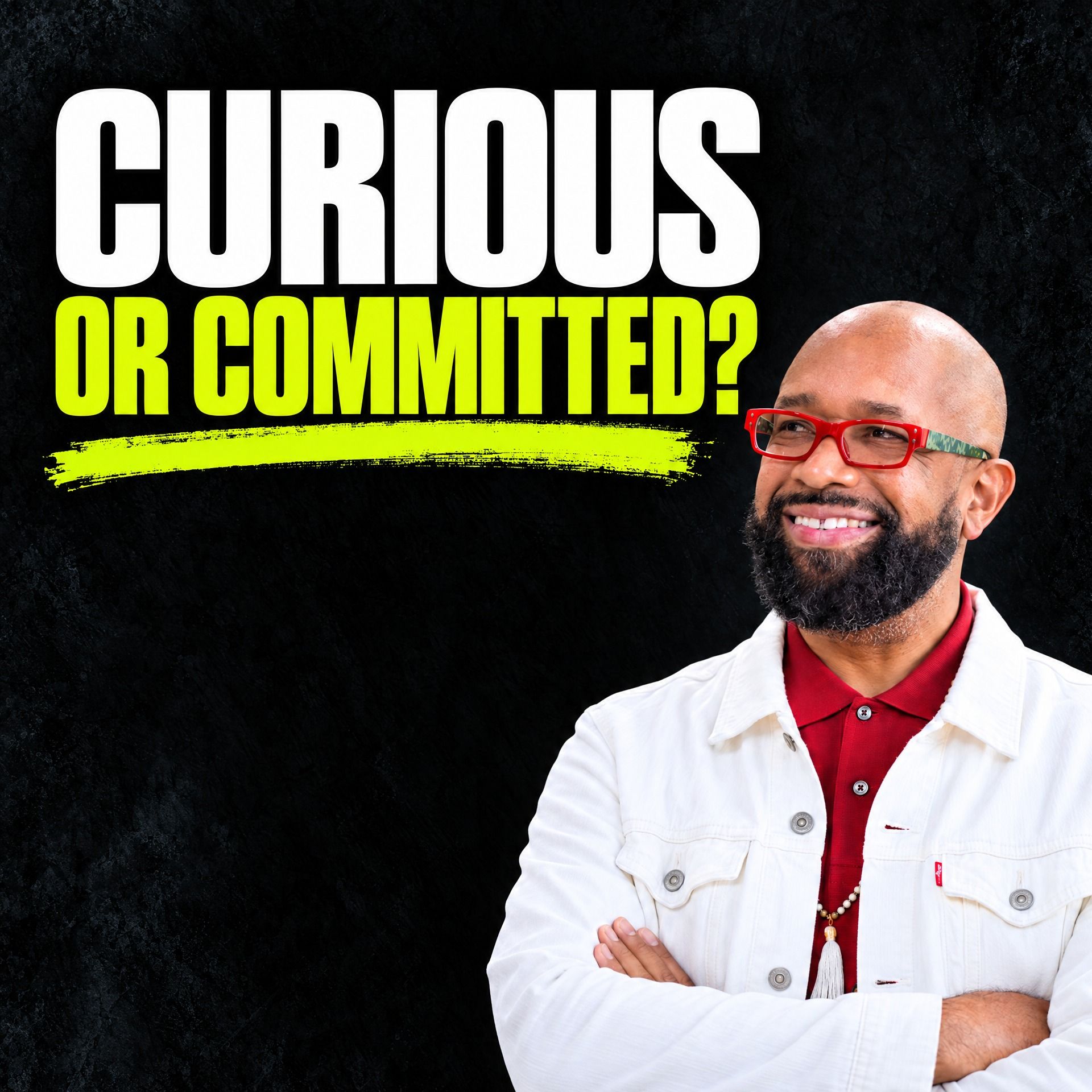
If it does, great, implement it. But just constantly seeking improvement. And I don't, I don't mean like becoming stressed about it, I don't mean, you know, like killing yourself over it, but just understanding that, you know, constant improvement and dedication and commitment to self and to self growth ultimately is what indirectly affects everything, man. But I like the word curious versus grind or fucking hustle or whatever romantic shit's out there. It's like, 'cause you don't ha- like I, I don't wanna attach a certain emotion or tempo to something.
Everyone's different. The word curious is great, 'cause you can be curious at your own pace and what that looks like and how you make that effective for yourself. But ultimately it, it does, man. It boils down to just, just being curious about your evolving, uh, about how you evolve. Will Grimes, where do we get more of you?
Will_Grimes on Instagram, man. Throw me a DM, I dare you. Throw me a follow, throw me a DM so I'll actually see the DM. I'll th- and if you have questions for me or if you need something from me, I w- I respond. I run my own account.
I will respond to you. Appreciate you, bro. You're a friend of the show. Yeah, I'm here. Anytime you wanna come back- Let's do it ... anything the audience can do, we're here for you, man.
Wish you nothing but the best. 100%. Dude, we'd love to have you on ours on Day $1 to Zero as well. Like I'm sure you and I will connect on Instagram after this show. Let's connect.
Let's see if we can't get it figured out. Love it. Let's go. Yeah. Make it look, make it look, make it look easy.
Ice. Thank you for listening to The Ryan Hanley Show. Be sure to subscribe and leave us a comment or review wherever you listen to podcasts. Game ain't a thing for me. I never switched up, no changing me.
The only thing changing is- Close twice as many deals by this time next week. Sound impossible? It's not. With the One Call Close system, you'll stop chasing leads and start closing deals in one call. This is the exact method we used to close 1,200 clients in under three years during the pandemic.
No fluff, no endless follow-ups, just results fast. Based in behavioral psychology and battle-tested, the One Call Close system eliminates excuses and gets the prospect saying yes more than you ever thought possible. If you're ready to stop losing opportunities and start winning, visit masteroftheclose.com. That's masteroftheclose.com. Do it today.
If you like the show, please take a moment to rate, review, and subscribe. It really does help the show to grow. Thank you for listening. Happy holidays. Want to give your host a gift?
Consider subscribing, rating, and reviewing the show this holiday season. It really helps the show grow. From all of us at Believe, have a merry Christmas, everyone, and a happy holiday.