And welcome back to part two of my conversation with Dr. Anne Mulhollen. We dive deep into the tactical aspects of building a personal brand in this era of AI and why it is paramount to become the signal and the noise as a leader if you want to grow an entrepreneurial endeavor. If you enjoyed the first half of this conversation, you are going to love the second half. Here we are, Dr.
Anne Mulhollen. Can I ask you about, um, you know, as I'm listening to your story and, and you actually, you actually called this out a, a few minutes ago, it seems to me like a superpower of yours, which, uh, seemingly there are quite a few, is your ability to not take yourself seriously while taking your career, your goals, your ambitions very seriously and being very intentional. And I think for a lot of people, those two ideas butt heads. They struggle with how to find harmony between them. So h- how, like, as you become more aware of this as a, as a big part of your personality and your success, how have you continued to cultivate that, and how would you recommend to someone who's listening who would like to be that funny, kinda self-deprecating, have a good time person while still being driven and ambitious and successful?
How does someone start to cultivate them in themselves if they feel like they're not there already? Yeah, that's a really good question. When I'm in a business mode and when I'm in business, I'm always in a business mode, but when I'm in business, um, y- you can be mistaken to be a nice person. Um, when I am working with people and you're in a business or you're doing something, I make sure that we are established as a business first. So my personality or the humor and all that isn't at that point.
It can be quick, but I have to be careful. Um, it's, it's fun when you see verbal volleyball, but you have to be careful of your audience, especially when you're deciding to work with someone. When I'm hiring people, I have an HR person in between. They do all the criminal record checks. They do all the hard stuff that I don't necessarily do.
So I get mistaken to be a nice person, and, and I, I'm nice, but I'm not naive. And I know that when I'm in business or when I'm working with people, they're looking at my wallet, and they're not looking necessarily at me. And so I'm very careful that my contracts are very tight, that I have review, that I have legal contracts that have been, um, designed by lawyers in the jurisdiction I'm doing business in, and everything has a contract. And every time somebody enters any of my homes, they have a non-disclosure agreement, or anytime anyone works with me, they have a non-disclosure agreement as well. Now, I know people, it's-- particularly in the US, make fun of that, but when you have to be smart in business, there is the internet.
You don't want people posting you coming out of a washroom and because you're a known person or something like that. So I make sure that I establish the business side of everything first. So I would say on that end of what you were saying is that you make sure you're very professional and you're covering your tracks. You don't wanna go back later and say, "Oh, I should've done, should've done." And the reason I do all these things is because I've made the mistake, and I should've done, I should've done.
So, so I, I have the business side, but the humor and the, and the living your life the way you want to, you need to do the business side first. That's really important. Your humor, you can never make fun of somebody, um, of something they can't change. So you, you can make fun of something that someone can change. So make fun of their, their bow tie.
Make fun of something that they can change, but don't make fun of their race, their-- It's, um-- Now, saying that, I joke around with my friends a little bit different when we, we, we call it what it is always, and it is funny. But I think that with the internet right now and with everything that goes on, you have to be very careful so that you can be taken out of context. But leaning your- I agree with that- Yeah ... completely. I had a conversation with a guest here on the show maybe a few months ago, and we were talking about that, and I was like, um, you know, it was a Black dude, and, you know, I was joking with him. I'm like, "I miss the days," and he was-- We're super good-natured.
We're having a good time with each other. And I was just like, "I miss the days where, like, we could, like, have this banter back and forth, and we didn't have to, like, because we're not both white guys or both Black guys or whatever, right? Like, somehow now we have to watch every single word because, you know, you busting my chops could be taken out of context as you trying to say something or vice versa." And I'm like, "You know, w- we're just..." You know, he, he was a, he's a boxer of, uh-- and I, you know, we're just having this really good-natured back-and-forth discussion around, you know, taking abuse and being successful, you know, physical abuse and being successful, and-- But it was also, you know, having played college sports and a little bit of sports afterwards and grown up in locker rooms and him the same, there's, like, this banter that you s- like you talked about, that you drop into, and you have to be very careful.
As much as I would've loved to have shown the audience the full range of our conversation when we weren't recording, you simply cannot do that today in its purest form unless you are willing to take all the s- the, the stones and arrows that you are gonna get because they will come get you regardless of who you are and what, you know, out of context. And even you said something before, and I, I read into it a little, but, like, you know, I see s- like some of your s- humor that I've seen is very sarcastic. And the internet simply cannot handle sarcasm. Like, it cannot handle sarcasm at all. It's like, it's like for some reason when you consume content through the magic box, sarcasm just doesn't work on our brains.
Yeah. And it, it's a shame because that form of humor is so funny, and we've just lost it. It's why movies aren't funny anymore. I, I, I watched a whole documentary a few days ago, and I apologize, I'll shut up in a second, but, like, uh, I watched this whole documentary about why movies aren't funny. Um, actually it wasn't a documentary.
It was a, it was a podcast, but it was like three hours long, so it felt like a documentary. But, um, it was, it was so good and it, and basically they were breaking down as, as language has to get dulled, as language has to be more normalized and centered, you just simply can't be funny if you can't push the edges, and it's, it's a shame really. And some people try to do it, but you even look at the best standup comedians today and then compare that against the best standup comedians of like when I was growing up in the '80s and '90s, like y- you can't even compare. They're just-- They're, they might be as talented, but they're not as funny 'cause they can't say the same things. Well, when you, when you say standup comedy, that is the one place that you can be political, you can be anything because you're on a stage, and comedians are the ones that are really delivering the messages these days of what's going on in the world because they are very succinct and they're actually making fun of life.
They're making fun of truth, and that's what standup comedy does. And I think there is a voice for it, but I, I agree completely. The standup comedy, the ones that I watch to get inspiration are Don Rickles and Joan Rivers and just some of the things that come out of their mouths. It's... A lot of what Joan Rivers did I found hilarious.
Hilarious. Joan Rivers was brilliant, absolutely brilliant, and I feel like a lot of people today don't know her like a lot of her male peers from that time. But she was an absolute killer. She was so funny. Even some of the stuff she did really late in her career, like that fashion show she did with her daughter, like I don't know anything about fashion.
I would never watch the E! Channel, although if her show was on and I came across it on the TV, I would stop 'cause she was just, she just was such a unique talent. And, like, you could even tell, like, I don't know. She had a way and, and you kinda have this in, in the subtlety of like your facial expressions and the way that you can tell, uh, how you, you're insinuating things without saying them and, you know, you could tell, you know, you're, you're, you're hoping the audience picks up on it. Like, she would say something and then like the corner of her eye, she could tell the entire joke, like just the way she would move her eye.
None of the words. Like the words would be as vanilla and then like she'd have this little facial expression and that would be the entire joke and you'd be cracking up and like that is such a unique talent, yeah. She-- I'll tell you something. In 2002, I had a show, a, a conference. I held my own conference, and it was all on medical procedures.
And so I rented 60,000 square feet in a conference center, and I put doctors in different booths because when I was financing medical procedures, and my husband's a surgeon, that we would go to different conferences and I would see like what is a breast implant made out of? What is, what is Botox? That was, that was the 17% market awareness. We'd see that this filler was coming on the market and laser hair removal. And I would see these at the medical conferences like the American Society for Aesthetic Plastic Surgery or the dermatology s- conferences.
And so we'd go to those and I thought, "Why don't I do a conference for consumers and then show them all this stuff?" So I got all these doctors. I got 60,000 square feet and put all these booths, and they showed-- They had us-- Botox leased and rented the space on the stage and they-- We actually had a chair on the stage and someone went in on the stage and put Botox in someone's forehead and everyone was like, "Ugh," like this. Like it was the very beginning of it all. And I also got Joan Rivers to come out.
In the conference center they also had an area which was a theater. Had about 1,000 people. And got Joan Rivers to come out and I got, at the time, uh, Botox, which was Allergan, and Medicis, which was Valeant at the time, and Coherent, three different medical companies to sponsor her. I think her fee was $60,000. So Joan Rivers came out.
She did a co- standup comedy act. I got to meet her backstage. I had my daughter, who was just born, in my arms. And she said, um, "You have a beautiful baby. Big eyes."
And I said, "Oh yeah, I had them done so she'd look like mine." And she goes, "Good one." And she was, she was just so fun and friendly and, and I couldn't spend time with Joan Rivers 'cause I was, um, doing the show, like behind the scenes. But I've, I figured out my snootiest girlfriend who's, she's always so irritating. She's all up on herselves, she, herself.
It's who's who, who's at the table. She's gotta be perfect. She's a tall blonde girl, looks like a Barbie doll. And I thought, I said to her, "Hey, can you do me a favor?" And she said, "What?"
And I said, "Can you look after Joan Rivers for me?" I figured if someone is so particular and so into herself, she would know everything for Joan Rivers. She met Joan at the airport. She came in on the limo. She made sure her room was set up.
She got everything done. She was the perfect person, so I didn't put someone who was a gopher. I put someone who was a diva to look after Joan Rivers. And at the end, Joan Rivers said, "That girl Kim," she goes, "She's amazing." Oh, that's fantastic.
That's absolutely fantastic. Um, there was just so much from your story that I would like to continue to unpack. Uh, a question that- I get asked, not necessarily this straightforward, it comes in a whole bunch of different versions, and I'm sure that you'll be aware because I'm sure you get the same questions. Um, particularly from people who are, this is their first time starting a business, right? Doesn't matter age, right?
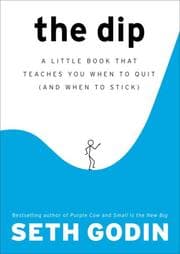
But if this is the first time they're engaging in their entrepreneurial journey, they hit a moment where they question all the things. We all hit it. Seth Godin called it the dip. There's been books written about this, countless ta- countless talks. And if you're trying to do something truly meaningful, it's almost like the universe, this is like just part of the rite of passage.
The universe is gonna do something you didn't see, and you're gonna have this moment where you go, "I didn't, I shouldn't be doing this. Am I making the right decision? I'm putting my family out. I could be, have a nice safe job. I don't have a four..."
All, you know, and all this noise starts in, in our head. You have obviously plowed through that noise, I'm assuming on multiple occasions with multiple different ventures, right? As you, you maybe had that moment and you said, "No, I'm committed to the path," and you kept going. How would you advise that, that startup, that first-time small business owner, that person who's trying to engage their entrepreneurial journey, when they hit that dip, that, that self-doubt, you question all the life decisions that got you to that moment, right? What is your advice for them in kind of recalibrating themselves and moving past that if it's the right decision?
So, um, the first thing I would say is when you're, when you're trying to start an entrepreneurial business, when you're... is you need to look at your mass distribution. And if you're thinking about your business as in something you can do in your current neighborhood, however big your neighborhood is, if somebody is interested in your product and it's your friend or your neighbor or... That isn't the right business. You have to think about the people that you don't know that would be interested in your product. And so the biggest mistake I see and with people I talk to is that they s- they're, they're looking too close to home.
You have to think farther away. You also don't wanna ever have someone else validate your business idea. So when you start to say out loud or to yourself, "Well, Jim thought it was a really good idea," or, "I told this to my friend and he thought it was a brilliant idea," you don't want to have that, um, validation come from somebody else. You need to have it come from your own head, not from somebody else validating your business model. And you need to think through your business model.
So think mass distribution, not your neighborhood. Outside your neighborhood, someone you've never met before, your, your entrepreneurial idea. And also have one idea, not two or three. You have one idea and you focus on it. If your idea is, um, finance like mine was, or if your idea is what, which I think is a brilliant one, was when they started the Uber, when they started...
You know, who would ever think taxis would get replaced? But that idea came from probably somebody getting frustrated trying to find a cab and thinking all these cars are driving around. And so start to solve problems. Like y- the best ideas, you're solving a problem, and you have mass distribution. B- Don't have two ideas where you're solving a problem and then you're also gonna create a website for people that have that issue.
Your one idea, just f- solve the problem. Yeah, you'll need a website, but your entrepreneurial venture is not the website. That's one of your tools. So we get mixed up because just say you're, you've got a, a weight loss pill, and then you wanted to do a website for people who wanna lose weight. Well, that's two different ideas.
So you'd have a weight loss pill, but then now think of your distribution. Are you gonna distribute it through different channels? How are you gonna get that distributed? So if I'm making sense, because we get very, um, distracted by thinking that a website is a business. It's a tool, unless your business is the website.
So, uh, something would be-- I, I've never done this. What's that Pilates thing where you go on a website and you, you do whatever? That, that's, that's a t- that is a business. You're actually using something, an app and things. But I would say that is ultimately the most important, that those are the most important things is not asking your friend, don't get other people to validate it, and ask yourself the business idea.
And if you're feeling really like you're not in the right place, um, just shift. Think of why you're not in the right place. Ask yourself, "What is going wrong here?" Not somebody else. You could a-ask somebody you don't know- Yeah ... too, if you have to have a conversation with someone, and don't argue with their answer.
So find someone where your, where your, your bottleneck or your, your block is. Um, when I was building my business, I would find people, and I would ask for five minutes of their time, and I'd say, "How do I distribute?" I had to figure out how to distribute money, and I didn't know how to do that. And so five minutes of their time, and I would come away not having have them invest it, but I would come away with an idea. See, in, in the world these days, you can find entrepreneurs, you can message them on Instagram.
You can say, "I want five minutes of your time." And, you know, you have to be compelling for somebody you don't know. But take the answer. Don't argue with the answers when you ask somebody for their time. Yeah.
I, I think that is a wonderful insight, and frankly, I, I've never had anyone on the show frame it that way, and I can... To be honest with you, it, it, I can see it, that this idea of your, your, your ability to help people lose weight is the business, not the website that you're trying to sell them on the service is not the business, and people get lost in the tools. And so my home industry is actually the property casualty insurance industry in the States. So that's the industry that I grew up in, and most of my entrepreneurial endeavors have been in a little bit in fit-fitness and technology as well. But, um- So much of what we talk about there with, say, uh, a single location, a 15-person family-owned independent agency, okay?
So is they get lost in, you know, well, we need a new website, and our CRM doesn't talk to our agency management system, and, you know, we can't do newsletter campaigns, or, you know, we need the new policy, AI policy analysis tool, and it's like, yeah, but you sell commercial insurance for a living. Like, that's what you do. So, like, what is the process for selling commercial insurance, and do you have the right products for the audience that you're trying to sell those products to? And it's like they skip off that stuff and go right to all the fancy tools and tactics and connectivity, and I've gone to entire conferences and, like, had, like, my brains coming out of my ears because every talk is, like, this tool-based, hyper-tactical thing that isn't what we do for a living, right? And it u- it drove me, it would, like, drive me nuts.
And it's like, guys, at the end of the day, like, you need to know people, you need to know what their problem is, if you can solve it, and how to convince them that you're the one that can actually do that. That's all you need. If you can do those things, everything else just kind of like, you know, the website you get just makes, to your point, like, the website just kind of solves itself. Like, okay, here's just what it needs to say because I know the problem I solve, and maybe I don't need a newsletter. Maybe I don't, you know...
All these things sort themselves out if you kind of know what your core business is, and I just, I've never heard anyone position it that way. I love it. Yeah, no, no, you're right. What you just said is absolutely right. And it is frustrating because it is, there is so much noise out there, especially when AI came into the picture, is that those two letters were thrown around like they were just, you know, you put sugar in your coffee.
But no one really knew what the AI was, and it's just really, it, it's like saying I have a, a phone. Like, there's all different types of phones. And AI's, you know, it's algorithms and it's regression models and it's all different types of things, but it gets thrown around as well. And so that type of thing gets in people's way because they think they need to have it, and they don't understand they probably already do, and it's not something, you don't just go and get AI. It's incorporated into something, and you have to incorporate it.
And so, and then they, they have to have a certain type of tool like a website, and they have to have certain apps, and they have to have certain things that they're forgetting that really they need to be in front of someone and sell something. And they need to have that relationship because down at the end of the day, at least hopefully for now, it is relationships. And it always will be- Yeah ... the relationships. It's just it's gonna be the people at the top that have the more than the people at the bottom. Yeah.
I, I, um, you know, so when I, when I teach this concept, I, I talk about it like it's a video game. And I say, "Look, like, when you're selling a- trying to convince anyone of anything, including sales, right? You start at zero trust, and your goal of this game is to get to 100 trust. And when you get to 100 trust, that person does the thing you want them to do. They say yes to the proposal.
They, you know, finance the deal. They buy from you, whatever." And all the things that you've talked about, the, the, the layering of your businesses and how you think about the, the personas of your brand and how you show up in different places. You know, you talked a lot about how, you know, in, in this setting, I wanted to show up as more the casual me. In this scenario, I want to have a, a, a ball gown on with a hard hat and a tiara on it, and that's the persona.
And you, you're thinking about these things in a way that ultimately what, what all those little touch points are doing, and I'm speaking to the audience, not necessarily y- you specifically, is, is building towards 100 trust, right? 'Cause the person who wants that thing, who wants funny, irreverent, but brilliant at business, right? You've just shown them you're 100 out of 100 on the trust meter if those are the things you're looking for, right? And I think too often, especially we, we undervalue the intentionality of how we show up in the world. And I think that one of the places I'm hoping AI used well because it is so good at analysize, uh, analysize analyzing past performance, it can help you... Like, I literally just did this the other day 'cause I'm constantly trying to improve the, uh, quality of the product that I deliver through this podcast.
And I said, "Here, analyze my last 20 episodes. You know, figure out where, uh, I seemingly am, like, really dialed to our mission." Really? "Where it's going up." You used AI to do that?
Yeah, yeah, yeah. Wow. Yeah. Yeah. Uh, we can, we can talk offline or we can talk here.
I, I'm so deep into, into this idea of how do we use AI tactically? 'Cause I, I-- when I first got in, there was just so much noise and I got overwhelmed and I chased a lot of rabbits and, and I don't, you know, and, and eventually I started to say, "Okay, this has the power to be an amplifier at a level that I don't think most people understand." However, there is a very fine line between value out of AI and just slop and lost time and, and, and just, you know, you value list. So I've really focused in on that and, uh, like, and again, uh, we don't know each other that well, but, uh, I'm launching a podcast network in partnership with a very good friend of mine. The announcement's coming on that, official announcement. And the whole idea is helping creators turn their podcast into a business, right?
There's so many great creators who are not able to deliver the product that I know they want to deliver to their audience because they're just either unable, uncapable, or just don't have the expertise or time to turn that podcast into a business. So we're developing this product. I have vibe coded- Ev-- And I hate that term vibe coded, but that's the tools where you punch in the text. You don't have to know how to code, you just tell it what you want it to do. The entire platform from the website to the backend functionality to the API connections to the, to the...
It's gonna be the first ever podcast network that has a backend for a creator that, that is able to combine traffic with rankings, with revenue all in one place. Um, and there's just-- It's basically everything that I've always wanted as a podcaster for almost 15 years. Smart. That's smart. But here's, here's what I'm-- here's my point.
I have done it all myself through telling this AI what I wanted it to be. Now, I would probably not do this again for a whole another project, but going through it one time for this project, I will now be able to rapidly deploy these at scale for every business idea that supports what I need here, and that to me is this amazing future of AI, is like you have a business idea, which I'm sure you have thousands, right? Now, instead of you going, "Hey, do we have a, a vendor over here who can connect our castle booking system to our event system to, you know, this other thing?" Now you can just, you can just code it up, make the connections yourself, and build the application behind the scenes that is proprietary to you and your business, and you can have it done in a few days. And that, to me, allows entrepreneurs to deploy ideas at scale that just...
I, I think we're, we haven't even hit the golden age of entrepreneurship yet. I think it's gonna be messy for a while with this, with AI, but man, I, I'm so excited for what, um, everyday creators, builders, entrepreneurs can be able to spin up, deploy, test, iterate in amounts of time that were unfathomable even five years ago. So two questions for you, but the first one is, is that noticing what you were saying is that you didn't start out to do your new podcast network the, the way that you're doing it now, is you had the idea because of, from your experience, and then as you started to test the AI, so as you started to build on it, you started to build on how it worked. And so the audience that you have, the entrepreneurial audience, is that you don't necessarily have the answers when you start down your venture. But if you-- Ryan, if you look at what your idea, if we wanna take that, is that you've got, you've got mass distribution.
You've got worldwide distribution. You're not calling up your friend and doing, "Can you be on this?" You're looking at a way that you... And right now you don't have anyone 'cause you haven't started it yet, but you're gonna be solving a problem for people out there. That was the problem-solving part.
And then you didn't, you didn't know how you were gonna do it, you just knew you could do it, and then you figure it out. But it's, it is disarming when you don't have the answer, but it's that you don't give up. You find the answer, and then you'd go out and do your, your, your business. So to anyone who's sort of at that being let down, they don't have it quite what they wanted their business to be, it's like find the solution. You might have to pivot a tiny bit, but find the solution.
If you've got a mass distribution and it's not to your friends and family, and you've got an idea and you've told yourself it's a good idea, then find the solution. Figure out how to make it work, and then I think that you've just hit it on. The, the question I have is when you plugged in all of your podcasts from your last 20, did you like the answer that AI gave you about your podcasts or did you feel- Well, I'm gonna say I... It wasn't positive, but I liked it because it, um, because it, I found... And, and it was things, it was things in general...
So one of the... I'll tell, I'll give an example. So one of the things that I know about my show that if I wanted to take it, which I'm, which I'm, I'm going to do, I just haven't implemented yet, is this idea of segments, right? Where I would take our conversation and I would potentially, I would seg- you know, put it into segments so it was easier to consume for the audience, so they would know like, hey, at around 10 minutes we talk about, um, your backstory. At 20 minutes, you know, we drop into this segment where we'd really dive into, you know, entrepreneurial motivation and this segment-based kind of, um, um, uh, context, uh, uh, build tension, open loop, new context, et cetera, keeps the audience engaged and it starts to play on some of their psychological triggers.
What I have always done with this show because I am an incredibly c- I do this show 'cause I'm incredibly curious person and like I, I honestly could talk to you for another three hours. I have like 400 questions here and if you're ever open to it I would love to have you back. But, and I wanna be respectful of your time and the audience's, but like I've always had these very meandering conversations because I'm watching you and listening to your tone of voice, the inflection, how your shoulders move, how your eyebrows move, how you react to me when I, when I speak to you and I'm trying to follow your energy. That, that's what I am doing throughout the entire course of the show is I'm watching and listening to everything you say and do and I'm finding where are the points of where you go low energy or you're just not as interested or may- that might be today or ever- Interested ... and where are the things that dial you up and then I try to move the conversation as much as I can to the places where you're high energy. Not necessarily what you're most known for or even what the audience would potentially if I were kind of click hacking this where they would be, you know, where I would get the most attention.
I simply want to draw out your highest energy ideas, concepts, stories today. That's what I'm doing. So that doesn't warrant a, a segment based show. So okay if I don't wanna necessarily do that with my, with my interviews then I w- I have wanted to do more solo shows so in my solo shows I'm gonna start to test segmentation because that was one of the things that came out was if you wanna take this to the next level you need this kind of context build, tension, open loop, et cetera format um, you know, and you're not, you don't have that today. So that was one of the things.
So- I didn't love it because there are a lot of things, it gave me a lot of things to improve on. But I, but I, but I did love it in so much as all I wanna do is create a more valuable product and a, and a better product for my audience. So I take that as, you know, just points of improvement. Yeah, I, I don't think I'd like it if I put my stand-up comedy in and then AI came back and told me I wasn't funny. It's okay with your mother- I would probably ... if your mom tells you you're not.
But if AI did, why would I trust AI more than my mom? So it's- That would be an awesome bit, though. Like, you put your jokes into AI and see what response it gets, and then you make fun of, like, the situation and- Yeah ... and the responses you're getting from the AI. Yeah, yeah. Like AI, you know, you're like, you tell a funny joke, the audience laughs, and you're like, "Just so you know, ChatGPT told me that joke was terrible.
Yeah, I'm not, I'm not a comedian, so I didn't set that up right." But like, you know, that- Yeah ... I think you could do something interesting out of that. Yeah. I don't know.
Well, Anne, I wanna be respectful of your time. This has been incredible. That's okay. Um, I really appreciate you sharing your story and your insights, because the career that you've built and, and the way that you've done it is as admirable, I think, as, as exists. And, uh, I'm just happy that I'm able to share it with the audience and, and, you know, expose even more people to what you're doing, how you're doing it, and, uh, the guidance that you're giving.
Thanks, Ryan. And sorry about the background. When I started out here, it was dark, 'cause I'm in Hawaii, which I don't know the, uh, where are you at? You're in New York. New York.
So I would be... Well, how far it's... Anyway, it was dark when I started. And then, so I had everything set up. And- Oh, no, it was great ...
I'm sorry about the lighting in the background- No ... 'cause I know better than to have the light like that. But- Oh, no, it, it was wonderful. The conversation was wonderful. Um, if, if people who are listening wanna go deeper into your world, um, I'm gonna have your Instagram linked up. Are there any other resources where you'd like peop- to drive people, have them go check out and get deeper into your world and what you're up to?
I think my Instagram just goes to wherever, and, um, that's probably good. I've got a website, but I, I haven't updated it in a couple years, but it's annekaplan, with a K, .com. Um, but the Instagram's probably a good place. Wonderful. Thanks a lot.
Well, thank you so much, and have a wonderful day. See you, Ryan. Hey, Ryan, thank you very much.