I'm here on a job site with Tim, who owns his own electrical contracting business Three employees and two work trucks Tim traded up to GEICO Commercial Auto Insurance. We're positively here where he needs us most. They sure are With step-by-step help on all his insurance needs, all for shockingly low rates. Shockingly low, huh? Just a little bit of electrician humor.
Did you get it? I got it You know, it feels like we have a real connection. All right, I'll stop. Get a commercial auto insurance quote today at geico.com and see how much you could save. Get more with GEICO.
Happy holidays. Want to give your host a gift? Consider subscribing, rating, and reviewing the show this holiday season. It really helps the show grow. From all of us at Believe, have a merry Christmas everyone, and a happy holiday.
I hate when this is the case, only because it makes for terrible radio- ... but I completely and utterly agree with everything that you're saying. I, I, uh, it's funny, um, my inner circle and I, which is a few, and, and I made a s- very similar move. I drastically reduced the circle of people that I spend significant amounts of time with- Mm-hmm ... that I share intimate details of my life with. I have plenty of friends, and that's not knocking the people that are outside that circle. But that- Sure ... core inner circle of people, um, I re- I reduced.
And then, and then really started to invest in those relationships deeper. And we have, um, this like hashtag that we use with each other when anyone is giv- getting like a little stale, and it's- Mm ... hashtag GNF, right? Give no fucks. Like, just- Oh, I like it ... like, just, and it's- Yeah ... this idea, and actually my buddy, um, in my other studio, my studio that's in my basement, I have, uh, he carved me out, he likes to do woodworking, he carved me out this, uh, this simple wood just says GNF. And it's always in the backdrop.
But- Mm ... the idea is like, uh, it- Paul Graham talks about this. There's plenty of people that have talked about this, but don't be the best, be the one, right? Don't be the best- Yes ... be the one. And the only way to be the one is to figure out what are you into. And, and I had this moment, uh, with, with, with one of my friends in my inner circle, and I, we were talking about this podcast.
And so this, this podcast, y- you don't know this, but up until four months ago, and this is the industry that I had come out of and had lived in for 18 years, this was primarily focused on the insurance industry. And four months ago, I made the decision that, look, I've done insurance for a long time. I find it interesting. It's obviously, I still have a ton of connections there, but it's not where I'm passionate. And I took this podcast to the next level, started bringing in people like yourself who had incredible ideas that are larger, bigger, et cetera.
And I just said, "You know, I'm, I'm so nervous about being 100% myself." I've always been told- Mm ... I talk too fast, I'm too much, too contextual- Mm-hmm ... blah, blah, blah, blah, blah, blah, blah, blah, blah, all these things. Mm-hmm. And, and he literally- Okay ... uh, goes, "GNF," and hangs up the phone on me.
And I was like, "Motherfucker." Mm. Like, you know what I mean? Like, you know how sometimes someone just hits you with that? So, so what is, what was the moment that hit you when you were like, "I've had this incredible career, these amazing experiences," you said this, "The sexiest place you could be in your career.
It's wonderful." But something hit you that you just said, "I'm not 100% me and that's what I wanna be. This Win Monday is 100% me." Maybe you didn't have that idea in your head, but you knew- Sure ... it was something. What was that moment for you that, that shook you loose?
Yeah, so it's funny because here we are. All right, so my Jerry Maguire leap out of sports happened. I made the mental decision, and notice, and this is important. I'm gonna pause here for just a second 'cause this is important. People always see this glorious leap, and they feel like you've got the biggest you know what in the world.
Yeah, yeah. And I'm like, "Dude, no." Like, I made the decision in 2016. I left sports at the end of 2017, okay? So, like, this didn't happen overnight.
But what I was doing in the interim process were these micro decisions. I was doing the research. I was having the coffee meetings. I was, uh, you know, talking to friends, talking to industry peers, talking to, talking to myself. Yeah Figuring that stuff out of like what do I really want and what's the price that I'm willing to pay to get there?
Is it responsible to pay that price? Who else would this affect? All the things. Notice that those sound like plain, small questions, but they're actually the questions that you need in order to play big. Yeah.
I'm not a burn the boats at all costs guy. I am a burn the boat when you zoom out. Like, if it's a good financial stock, we all know this, zoom out from the stock's performance. As long as over time it goes up and to the right, we all understand that there's gonna be this jagged up, up, up, up, da, da, da, da, da, da. It's, it's a roller coaster.
But if it goes up and to the right, who cares? And that's my process for everything. Mm. It's not about this overnight piece. So you asked me what was the origin story of or that moment, and it's interesting how here I am circa seven years later launching a mission, a movement, a brand, a company called Win Monday.
It's one of the, the rallying cries that I say from stage as I'm just blazing all over the world as a keynote speaker. Yep. And I will tell you that it was a decision that I made on a Monday following that life-changing retreat. It's all 49ers execs, two days off-site, find your why, unearth your core values, and for most people that attended, it ended right there. And then TikTok, one or two weeks go by in your life and you are no different, you are no better.
All of these events and experiences, even my keynotes, part of the Win Monday promise is no sugar highs allowed. Because I don't hear, care how great of a speaker you are, eventually people default back to their old self unless you give them a game plan with momentum and tools and resources to make sure that they can continue that. So for me, coming off the retreat, my moment was I felt like a different human being. I never had this clarity of self. If you would've told me, "What are your core values?"
I would've looked at you like you had a third eye and a second head. Like, I had no freaking clue. And you know why I had no clue? Not only had I not done the work, Ryan, but you probably know this from yourself, your own journey and/or your own clients- It's hard to change when you're winning. Hmm.
It's hard to change when you're winning. Nothing was broken in my life. Yeah. I didn't have this massive gap. Like, I did not feel stuck.
I did not. Dude, I'm a CRO for the San Francisco 49ers. Nothing's wrong with that. And the world applauds you, your LinkedIn profile looks sexier and sexier. And at the end of the day, where I knew that I had to make a move, it was because when I understood my core values from this retreat, and like I said earlier, I realized I had two different versions of me: a work version, and then the way I showed up with my best friends.
Mm. The way I showed up behind closed doors with my wife, the way that I talk to my... All of that, and I was like, "Why is there a gap?" But here's the kicker. I've got five core values.
One of the five is authenticity. How the hell can you be authentic if you're showing up as two different versions of you? Mm-hmm. So the, it, I got lucky in that authenticity was one of 'em, and when I started to question myself like, "Dude, are you selling out? Like, is this even you?"
And this was my self-talk, but instead of crippling myself to play small, I actually used it as this platform to play bigger, and I said, "All right. If you could bring your two versions of yourself together, what does that look like?" And then what I started to do, Ryan, was because I felt this, like, just special thing about purpose, but notice, like, when I say purpose, I think the world thinks about that, and you'll, you'll read all this literature like, "It is your reason for being." You know why that definition sucks, is because if I don't feel alive, if I feel stuck, if I feel broken, if I'm on the struggle bus and you talk to me about a distant North Star, it actually has a negative effect- Yeah ... 'cause now I'm like, "I'm not even, I'm not even close." Yeah.
And to use some of my words, I just wanna win Monday. And you're talking to me about a North Star. So because of that gap where I feel like, okay, I feel like a different person, but I'm early in my journey, and as they say, and you know this as a coach yourself, the best way for iron to sharpen iron, if I wanna get better in something, I start to teach it, because I don't have all the answers, and I realize that. And so for me, paying this gift of purpose forward on nights, on weekends, I was doing the same why discovery that I experienced at the retreat. I was helping my team members at the Niners unearth their core values.
I'm just paying the gift of purpose forward, and I started to be known internally as the Why Coach of the 49ers. And that, brother, was the greatest graduation of my life. That was the first time in my life, after almost a decade and a half in a very sexy industry of sports, that I graduated from career to calling. I- Yeah ... for the first time felt called to pay this gift of purpose forward. Like, those two hours of a passion project where I'm on the side just hustling and being a Why Coach separate from my day job of being a CRO, it wasn't even comparable, dude.
I would do this for free- Yeah ... the rest of my life, and that's how I knew. I'm like, "I'm onto something." And then just hitting the piñata over and over, one person at a time, the water cooler, uh, buzz starts in the Niners front office. I started with my team, water cooler spreads, and then some of the football coaches came up to me, then some of the players, then HR says, "What do you think of coaching the why to our onboarding employees?" And that's what leads to the Why Coach, and I just flexed that muscle for about a year, and eventually my passion project took over.
The Jerry Maguire leap doesn't even feel like a bold move for me. It felt like something I had to do. Yeah. Like, I couldn't go back. At some point it became non-negotiable to stay in the sports industry, and that's the backstory.
It's funny. Put the very unsexy, maybe polar opposite 180 degree unsexiness industry of insurance to what you just described, and there's a lot of similarities. And I, I think that you're 100% right. What, what ... I've always struggled with this idea of passion and purpose and, and these kind of things because I just, I'm gonna work as hard as I possibly can.
Like, my way is just to work as hard as I possibly can at whatever- Yeah ... is in front of me. So, like, what is, why, why do I have to set goals? Like, goals are stupid. I'm going to go as hard as I can, and whatever we get is what we're gonna get, right? Mm-hmm.
Like, it took me, but I, it took me a long time to realize that these were, that these were also very limiting ideas. And that while I do believe that finding, I, I don't love the word passion. Passion to me is a derivative, not, not, not a, not an indicator. Um, but I like to use the term meaning, 'cause purpose- Mm-hmm, mm-hmm ... feels, you know, when, when, when I first started taking, and, and, and I had a similar thing where I would take all these one-on-one calls. People would be like, "Oh, I just, I got this question I wanna ask you.
Can I ask you?" Right? From people all over the industry. Yep. And I found that I, I enjoyed Fridays, which was the day I carved off for those kind of calls, more than any other day of the week because I'd be like, man, I get to learn what's going on with this person and maybe give them some- Mm-hmm ... a, a, you know, whatever.
And I started to, I know for me, and, and I'm, I'm interested in your take on this, is that t- you, and you said it, like, when you're, when someone has to consider their purpose, it feels like this decision that once you make it, you can't unmake it. Yeah. Where, like, what brings you meaning, right? Like, how do you find meaning? Well, my kids bring me meaning.
Okay. We can work with that. Well, what- Sure ... what aspects of where you... Like, and you can kind of break it down into chunks. So, so when someone is struggling with that, that idea of purpose, that it feels like the m- it's so big, it's so far away that the, the micro actions between here and there just feel irrelevant, how do you start to chunk that up for them?
How do you, how do you get them going? What's that first bit? I know momentum is a huge thing for you. What's that first bit of momentum that you coach people to get going?What I've realized is that momentum and growth are impossible unless we can simplify- Hmm ... that first step. So simplification, it's stickier, it's more achievable, it's more memorable, and it widens the net of possibility and opportunity.
Because if we make it too big, then I'm gonna focus on why I cannot do something, versus if somebody gives me a simple bite-sized step. Now, to your point, it needs to mean something to me, it needs to matter, or it's not gonna stick. Look, you know things that don't mean anything and don't matter and it's why we all suck at it? New Year's resolutions. But, but dude, I'm lucky to get to Jan 10, nevertheless Feb 1, right?
Yeah, yeah. But why? It's 'cause my head says, to, just to use a very common one, my head says lose 10 pounds. But unless my heart has a deeper meaning on why I become, why I want to become a healthier human being, that I'll stick with. Oh, 'cause I wanna be throwing the ball in the backyard with kiddos in 20...
Ah, that means something to me. Losing 10 pounds is so arbitrary. It's a goal. What I have realized, Ryan, is I'm a standards over goals guy. Hmm.
As somebody that has achieved phenomenal goals, primarily in business, but they're arbitrary, they're often short-game, and if you wanna play the long game and you wanna feel like you're living on your terms and you don't wanna feel stuck, step up to your standards. Yeah. I don't have to take a day off from my standards, but even if I'm amazing, I'm gonna hit a lot of goals, but I'm gonna miss some. 'Cause we're all just human beings here- Yeah ... doing our best. And so with that standards over goals, but, but here's the thing, I say this from a stage, and I'll say it now from this conversation, and it also ties back to my big, uh, sports exit that I have been referencing. On a stage, closing out my intro, I will say the ROI of today's conversation are the decisions we make and the actions we take on Monday morning.
I'll repeat that. The ROI of today's conversation, and I'm saying this right now to our podcast audience- Mm-hmm ... I'm saying this to you right now listening in, the ROI of me and Ryan jamming right now are the decisions you make and the actions you take on Monday morning, period, full stop. That's just it. So if we simplify this big, complex thing that we're trying to navigate and it's a decision and action thing.
Own your decisions, you own your life. Show me the quality of your decisions, I'll show you the quality of your life. You make good decisions 80, 90% of the time, the compounding effect is you're gonna have a really good quality of life. But the opposite is also true. Mm-hmm.
Show me somebody that is inconsistent in their decision-making, dude, that person- Yeah ... that's a life that I do not envy. And so for me, the decisions I made and the actions I took that following Monday, post-retreat, that's what inspired this Win Monday movement h- half a decade later. I never thought that I'd be saying it from a bright light, big stage. I never thought I'd be starting a community around... I never thought any of that.
But it didn't matter, because I got obsessed with the work. Yeah. I got obsessed with the meaning, to use one of your pieces, Ryan. And here, here's the real meaning. The meaning for me is I think that a lot of purpose, even though I know you don't love the word, but I feel that a lot of purpose comes from pain.
Purpose and pain are inextricably linked, as long as you have healed from whatever the pain is. That could be childhood, capital T trauma, lowercase T trauma. In my case, I lost my hero at 19 years old. I'm an only child, my dad was my hero. I have not given him a hug since I was 19 years old.
Hmm. And he was a continuation school teacher by background, which in case you're listening in and you're not familiar with a continuation school, it's a kid's last chance. They've been kicked out of traditional school time and time again. They land at a continuation. The next stop are the streets.
The hope and prayer is that they don't land on the streets. And after teaching in traditional school for decades, my dad chose to teach at a continuation because he felt he could have more impact in that environment versus a traditional environment. Well, full circle. One of my five core values that I figured out at that retreat, and it's my strongest one to this day, because I'm inspired by my hero: impact. Yeah.
Impact to me is making a difference, and my measurement of impact is, am I leaving people and places better than I found them? So for me, now on this lifelong mission of impact, the reason I get out of bed every day, Ryan, my purpose and my whole reason for being a great dad myself, and I do my darnedest to be the best husband and the best speaker and the be- anything that I am obsessed with in a positive way, we can call it passion, we can call it whatever. Anything that I pour myself into, it's because I wanna make my hero proud. I am on a mission for me. I- did, uh, did I do well in this podcast conversation?
If my dad's answer is yes, then it was a massive success, and that's how I'm wired. So I simplified it to my decisions and actions. I centralized it to this higher thing that, for that can mean whatever it means for anybody. For me, it's my dad, and I lost him, and I experienced the worst thing in my life at 19 years old. And after years of dusting yourself off, if you can find some positive in the pain, I think you'll know what you need to be curious about.
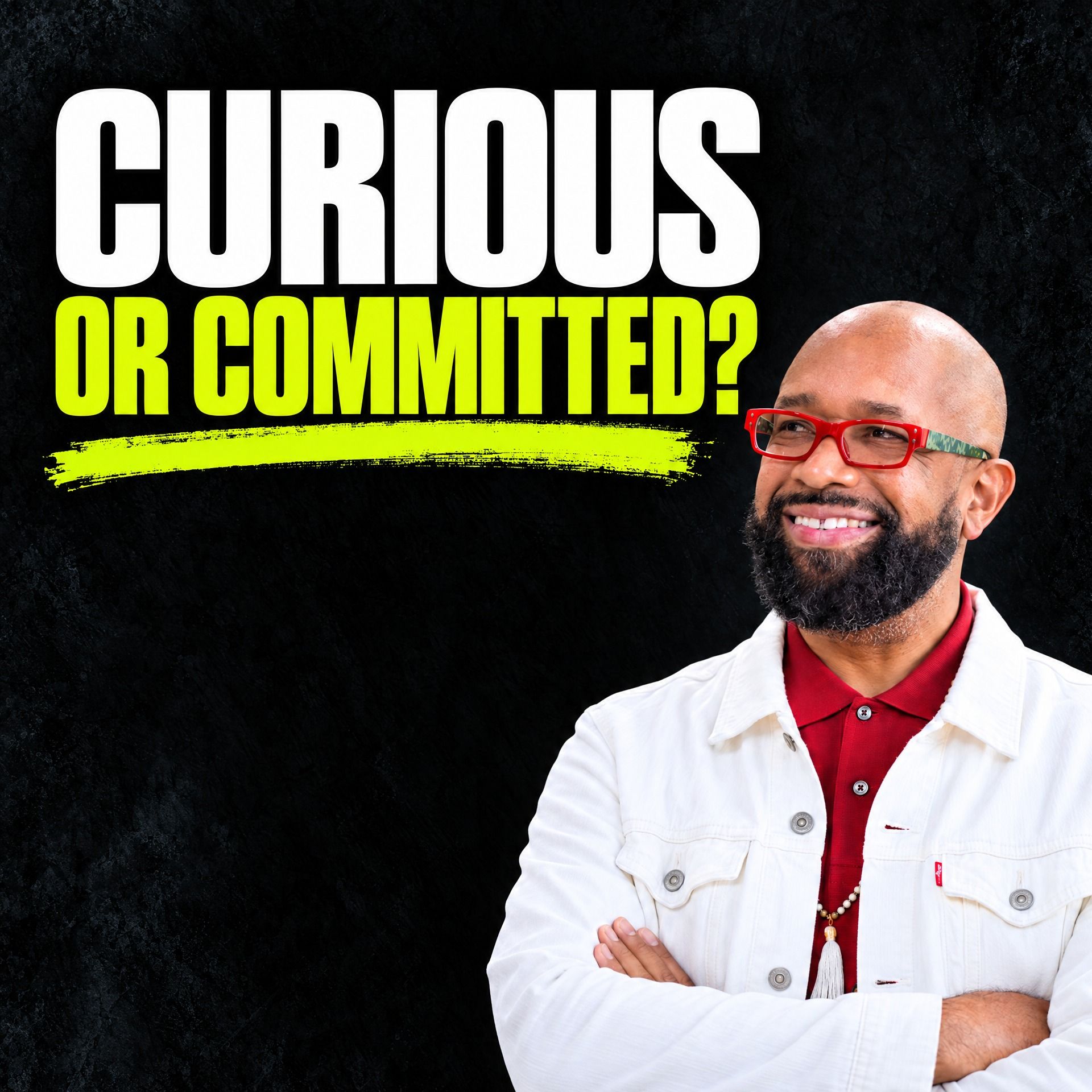
And from curiosity, your passions can be born, and from passions, purpose can be born. But I go in this order: curiosity to passion to purpose. Don't start at purpose. Mm-hmm. That is a mistake.
It's just too big. Yeah. Start at what are you curious about. Hang out there for, run, run a lot of experiments. And then the ones that really light you up, ah, maybe there's some clues about some passions in there.
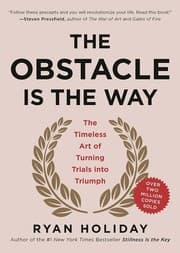
And then lean further into that. And then, ah, after a couple months, you're like, "Dude, this is feeling like I've never felt before. Maybe I could experience some level of meaning or purpose from scratching that itch," which once was a passion, which once was a curiosity.Yeah, I think that what you just described, um, is, is part of why so many people have turned to stoicism and Ryan Holiday, who made it s- Lovely. Lovely ... you know, kind of repopularized. And, and that, just the, you know, I mean, obviously it's the title of the book, but it's also the core idea, you know, this idea of the obstacles away.
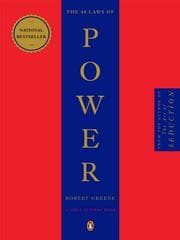
You, you, you, you cannot... So the turning point for me was, uh, I had this wonderful career as a CMO for a national insurance technology company, blah, blah. I was do- doing, had all these things going on. Listeners know the story. But I broke power law number one, uh, from Robert Greene's 48 Laws of Power, and was fired six days after I put on, um, what was the best conference in the entire industry probably in a decade.
And I had a million emotions. I had fear, pain, anger, frustration, depression, all these different things- Mm-hmm ... because this thing I loved doing felt like it had just been ripped away from me. Mm. And it was only through following all those feelings, and I, and I got wonderful advice from a mentor at that time, and he said, "Just let, like, experience the feelings. Like, experience them.
Don't try to stop. Don't..." You know, so we'd like, what we'd do instead is we'd put up these walls and we're like, "I don't wanna be sad." And it's like, no, he was like, "Be sad." Yep.
"Be a little depressed. Be a little frustrated. Be a little mad. Like, let it go through you because if you don't, then you, you're not ever gonna be able to grow from it." And, and he said, "What's gonna happen is some of those things are gonna pass through you and be gone.
Some of those things will, will stick." He goes, "The ones that stick are the places that you need to do work." And, like, that's what drove my entire personal development journey to where I am today. I lost 25 pounds. I became a better leader.
I became, you know, b- better dad, b- all, all the things, because now I was like, I was so intensely focused on, on figuring out how to overcome these obstacles that had been put in front of me, which were, you know, certain aspects of the way that I operated. And I, I worry that people are listening to this and they're nodding along and they're going, "Man, these two guys, they just have something different than me." Right? "They just, they, there's just something different about them. They're born different-" Yeah.
"... so that's why they're able to see these things and move forward." I think we both agree that's not the case, but how do you respond to that question? 'Cause I do get that a lot, right? If you use, you know, someone brings up a, an example of a celebrity or a professional athlete, they're just cut from a different mold, and that has not been my case. Like, the ones that are completely cut from a different mold are the exceptions on the exceptions, and most of the successful people that I have come across in every walk of life, be it, be it business, relationships, uh, r- religion, spirituality, sports, et cetera, they're like regular people who just seemingly figured out what you're, what you're describing, your, your Win Monday mentality. Is that, is that, but like how do you talk someone through that?
Yeah. Great, great question. So I'm gonna share a couple of thoughts, and then I wanna share a process that everybody can implement on Monday morning- Awesome ... 'cause at the end of the day, again, unless we get tactical, all this stuff is just motivational back and forth. And my worry is the same as yours, Ryan, that folks are gonna say, "Oh, these guys are different," which is fundamental BS. Yeah.
I am no different. I am no better. I have, I, I have found the way through showing up in the opposite way. I can now clearly define what I view as the common threads of what the most successful people in the world have, and all of this is trainable. All of this is accessible, and I don't care who you are listening to this right now, Ryan is no more special or better or different than you, nor am I, because here's what we have in common, and here's the invitation to everybody listening in.
I call it AOI. These three things are what I call the table stakes of life and the table stakes of winning. Awareness, ownership, intention. I'll repeat that. AOI is awareness, ownership, and intention.
If you tell me you cannot be aware, you're lying. If you tell me you cannot have an ownership mindset, which is the opposite of a victim mentality- Mm-hmm ... you can say, "You know what? Instead of success or failure, it's success or learning. It's success or growth. I'm going to, I'm going to put myself in a situation where no matter what happens to me, I can own the next day," and here's what I mean by that.
When I worked in sports, I was a part of some really negative, toxic environments, and I don't mean on the business side, I mean, like, losing franchises. Like, I worked for the LA Clippers when Kobe and Shaq were winning championships. We were known as the red-headed stepchild of the building. ESPN called us the worst brand in sports. The front cover of Sports Illustrated said, "Worst franchise in sports history," and I had to sell that.
And the way that I apply it to the storms that you and I are going through, and I'm talking not to Ryan, I'm talking to everybody that's listening in, the losses were never my fault, but it was always my responsibility. I'll repeat that. The losses were not my fault, but they became my responsibility. The way I showed up the next day, my reaction, my mood, my energy, my effort, my attitude, I own that. I didn't own the losses, but it was the hand that I was dealt, and so I had a choice: bitch about the dealer or own it, and even if I'm dealt a bad hand, say, "It is my responsibility how I play this hand," and I think we can do that every day of our lives.
So awareness, which is the hub of EQ, ownership, and then intention. And intention comes back to journaling, which is gonna be the practice that I'm about to share with everybody, and don't worry, I'm not gonna tell you to do a gratitude journal like, like a lot of other people. I think there's a lot of good in gratitude journals, don't get me wrong, but I have a better one that I think can change your life and transform it. So again, I'm gonna land the plane here. Awareness, ownership, intention.
If you're feeling like Ryan and Paul are different, that, that's self-talk. That's a self-limiting belief. That, that doubt, that worry, that comparison game, get rid of it. Awareness, ownership, intention. Here's the process I want everybody to implement.
One of the biggest things that I learned from the NFL and NBA, if you were to look at those athletes, they are at the peak of the world, the top .001% in the world at what they do. So in the NFL and NBA, no longer is their separator their gifts, their talents, or their abilities. Everybody's epic. Everybody is amazing. Now, in college, they were super...
Like, they, they were on a different wavelength. In high school, it was man amongst boys, but that's not the case in the NFL and NBA. Like, they're just... They're competing against equal talent. Equal.
And so if that's the case, I started to study and research and eventually obsess with, so what is their silver bullet separator? Like, why are some players more consistent than others? Why do some become Hall of Famers and others have a six-month career without an injury? You know? Like, what, what happened?
And I've realized that they leverage a different form of currency than the majority of the world, and even at that major league NFL and NBA level. Their currency is confidence. They have figured out a way to show up consistently with unshakable confidence, starting by the bets that they make on themselves, the resilient mindset that they show up with, a lot of the AOI. So here's a process that has changed my life, and I believe it can change yours, too. This is a process on how you can become the most confident version of yourself, and it ties back to core values.
So the journal that you're gonna do, after you were to look up a, a, a list of values, you could Google, "List of personal values," choose one from the group of 50 or group of 100. Just choose one. And here's the formula, and then I'm gonna give you the journal. My formula for confidence that I coach to thousands, from Navy SEALs to Olympians to you name it, to CEOs, confidence equals values times action. I'll repeat that.
Confidence equals values times action. The multiplication is how consistently you do it. In other words, show me a person that takes consistent action on their values, I will show you a confident person, period, full stop. So here's the journal. It's one sentence.
It takes you a minute to do, and you only have to do it once a week. So no excuses, we all have a free minute in a week. It is, "For the week ahead, I will live my value of blank by blank." The first blank is the value that you chose. The second is an action that is connected to the value.
Remember, confidence is equal to values times action, so the journal is, "For the week ahead, I will live my value of blank by blank," the value and then the action. I'll give you two hypothetical examples. Let's say that you chose a value like joy. So if you chose joy, you could journal something like, "For the week ahead, I will live my value of joy by cooking my favorite meal." Simple, small, accessible.
Anybody in the world can do it. For me, I'm throwing bacon in a pan. What are you doing? Whatever brings you joy. You do you.
Now, let's up the ante a little bit. Let's get off of joy. Second example would be a core value of courage. All right. You could journal something like, "For the week ahead, I will live my value of courage by having that challenging conversation that I've been putting off."
You're not having that conversation 'cause Paul said. You're having that conversation because courage is a core value. And now, in the spirit of habits and rituals, if we only do this once or twice, one week and maybe another week, I promise you no permanent change, and I promise you no transformation. I'm sorry, I'd be lying to you. But here's the good news.
We know what the science tells us about habit formation. For the average person, it takes three to four weeks of a consistent practice, process, and system. In other words, let's get past that threshold into habit formation. So my invitation to everyone listening in it, i- to listening in is commit to four weeks. Same value, joy four consecutive weeks, courage four consecutive weeks, growth four consecutive weeks, impact four...
Whatever it is. And you're only gonna journal one action. And what has happened with all of my clients that I have coached this to is in week four, it explodes. They only committed to one action, but they did six, seven, eight, nine, 10 or more actions because there's this habit loop inside of them. Core value, decision, action.
Core value, decision, action. Core value, decision, action. And that's how it works. I promise you, commit to four weeks. I have coached this from the SEALs to Olympians to Fortune CEOs to Shark Tank entrepreneurs 100% of the time.
When they get to the fourth week, it's transformational, and that, to me, is how you become the most confident version of yourself all through a one-minute journal per week. Paul, this has been incredible. I, uh, I think that, um, I, I, I think your work, I think you're dialed in on it. I love it. The psychology behind everything you're saying is so on point.
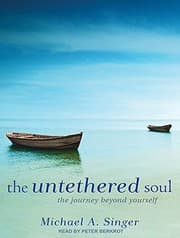
It's so dialed in. And going all the way back to our Michael Singer Untether- Tethered Soul, when you, when, guys, when you listen to what Paul's asking you to do, a simple ritual habit that provides you with a very simple action to take, just one action associated with a value every week, right? What, what happens is you train your mind to understand that this is now how you're successful. So instead of be small, be weak, you know, fit in with the crowd, don't stand out is how you survive, you start training your mind that how we survive is through courage, or through impact, or through joy, or whatever. And now you turn this, this, the negative self-talk that's constantly, you start to hear positive self-talk in your brain because you're retraining this thing that is not you to understand that success and survival is based on these habits, not, not the classic habits that we've, that we've had to evolve into.
And, um, I, I think that's tremendous. And I wanna leave our audience wanting more of you. Where do they do that? How do they get the book? Where's the best places to connect with you and get more of what you're doing with, uh, Win Monday and all your other work?
Absolutely. So for me, the key is all about momentum, right? This conversation is a hello, it's a kickoff point. Now let's create a 52-week action plan. So this is just a free gift from my heart.
I want everybody to head over to winmonday.win. That's winmonday.win, and you sign up, name and email, for Monday Momentum, and you're literally gonna see me in your inbox with a short video every Monday with one new tool, tip, tactic, strategy, mindset shift, whatever it is, one way that you can win the day, Monday, to create more momentum to win the week. So that's how you sign up, and then obviously if you're leading a team or an org, head over to paulepsteinspeaks.com. Everything that you need there relative to speaking, books, all that good stuff, it's all there. But winmonday.win is the, that's the fast pass for growth.
Paul, I appreciate the hell out of you. I appreciate your time. This has been tremendous, and, uh, I just love that you shared it with our audience, man. Thanks for being here. Oh, thank you, brother.
Love the time. Let's go. Close twice as many deals by this time next week. Sound impossible? It's not.
With the One Call Close system, you'll stop chasing leads and start closing deals in one call. This is the exact method we used to close 1,200 clients in under three years during the pandemic. No fluff, no endless follow-ups, just results fast. Based in behavioral psychology and battle-tested, the One Call Close system eliminates excuses and gets the prospect saying yes more than you ever thought possible. If you're ready to stop losing opportunities and start winning, visit masteroftheclose.com.
That's masteroftheclose.com. Do it today. If you like the show, please take a moment to rate, review, and subscribe. It really does help the show to grow. Thank you for listening.
Happy holidays. Want to give your host a gift? Consider subscribing, rating, and reviewing the show this holiday season. It really helps the show grow. From all of us at Believe, have a merry Christmas, everyone, and a happy holiday.