Be The One: How Leaders Win by Owning Themselves | Karl Sherrill
with Karl Sherrill
Episode Answer
Every leader wants a better culture. Almost none of them want to hear that culture starts with the guy in the mirror.
Read the Conversation
Show the full transcript
I'm gonna be an impact to somebody every time I interact with them. I will never be perfect at it, but I'm gonna try to do the best I can to be the positive influence on people. Why don't you be the one that makes a difference, a positive difference? Like, why don't you be the one that... And since people would come and complain to me either at work or at home about stuff in the community, and I'm like, "Let's just talk through that.
What if that person just needs you to be positive? Like, you don't even have to agree with them. What if you just be kind to them today? Like, maybe that changes the environment they're in." I'm an insurance junkie by trade, and so acronyms flow all over the place, and I figured out, let me take one, and how can I talk about that message in an organized pattern?
And so I just kinda came up with own yourself, nurture others, and expand your influence, which is the acronym that I use for this story. This message is part of kind of what I've been trying to, to lead to in my life, and also the way that that carries over into how I lead my teams, and how that's been a development over time is kind of the, the big idea. I mean, it, it's a function of how it carries into every single thing that you do when you get to a point where you understand I, I, I'm, I no longer... Being a leader for me becomes the big idea, which is I, I'm just who I am. I happen to have been blessed with experiences and life experiences that have allowed me to, uh, fail miserably and to succeed very, very well.
And all of that mix, I, I would say over many, uh, much of my years, you know, when I was growing was how do I, how do I hide the failures? How do I get by over the failures? How do I defend against the failures? And then how do I embrace my success and get more success? And then the secret became that chasing those two different things was more stressful and challenging than just being really clear about who I was and what I wanted to be, and then let that just carry over into how I lead.
What was the catalyst to create that reframe in your brain? Because I think a lot of people never, they never reframe it the way that you did. They get caught in this constant loop of hide my failures, overemphasize my success, and try to chase more. And, and that I think we both can say, and I would completely agree with you, there's no happiness in that, down that path. Certainly no long-term happiness.
So what was, what was the catalyst for you to reframe that idea in your mind? I think more than anything, being a father, right? And, and my f- my fatherhood and leading at home had lots of ups and downs over the years. As you grow and y- you know, you have kids and nobody tells you how to do it, and then you look around and you see people that are doing it well, and it all looks like success, and obviously with social media and other things, it puts that in front of people. You just kinda wonder sometimes y- you know, when it, when it's not what you see that everything else is defined by the world as success, you start to question how are you leading at home.
And, and so as my children grew, I began to see things like, I mean, silly examples of like just being so caught up in how they did in school at an early age, and how important that I thought that was during that time. And, and going through middle school, and then as they reach high school, and then the whole everything in middle school is about getting into the right spot for high school, and how high school is all about college. And there's really... I've got a whole nother tangent we could go on about higher education to today's environment. But, but how all of that pushes you to lead differently than maybe how your heart feels.
Heart was saying when I had young children was, "I want them to be healthy. I want them to be happy. I wanna enjoy that time with them." And, and I certainly did. But every once in a while, you would let the world creep in to say, "Well, yeah, but they need to be doing this, and they ought to be doing this, and they need to be playing more of this, and they should be doing..."
And so the world began to dictate how I thought about the way I wanted to define success as a father, as a, as a family for my children. And as we got into the middle school years, I have three children. I've got a 24, a 22-year-old, and a 19-year-old, my two boys and my daughter at the end. Um, as we got into middle school, I had, uh, especially one of my, my sons who began to have some health issues that we couldn't figure out, and they were impacting him significantly, and y- there's no playbook for that as a dad. Like, th- that's not what you talk about with other dads.
You talk about what travel team they're on. You talk about how, what sports they're playing, how they're doing in school, what grades they're making. Y- All that's the normal conversation amongst dads. There was no normal conversation when I would go out with friends in the community about, "Hey, my son's really struggling, and we can't figure it out, and I wanna help him, and I don't know how to help him." And so that began to reframe things for me.
Um, and then there was another seminal moment, um, during COVID where I found myself, as many of us did, uh, home, couldn't go to the office, wasn't allowed to go to the office. I'm a people person, so that wasn't healthy for me. And I got home, and I've got three great kids. I've got a beautiful bride. We've had a great marriage.
We've got a beautiful home. My job was going really well at the time. I was with Marsh. Things were great. Um, and so I'm at home, and I'm miserable.
And you look around, and I'm like, "I'm doing great in my career. I've got a great w- family. Got a neighbor across the street I'm hanging out with during COVID. We've got it." It's kind of like you got it licked, and yet I was not happy.
And I began to look at it and say, "You know what? I'm not in control of my situation. I'm letting the world dictate to me what is going on." And so I had a-- my oldest son was a senior in high school, and COVID was taking all that away from him, right? All the senior celebrations, 13 years of school to get to that senior moment, to have senior breakfast, and have mom and dad come over for the breakfast, and to have prom, and to have dances, and to have graduation live, and all of those things that he had worked so hard for, to watch it be stripped away from him and, and realize that, yeah, but, but in the grand scheme of things, he, he's 18 years old.
He's got a lot of life ahead of him. This, this is a moment in time, and I was letting myself look at it and say, "That's defining how I feel about the world." And, and I felt out of control, and I was not myself. Had good friends and mentors in my life who said to me, "Man, you don't, you don't seem like yourself. What's going on?"
And that helped me to step back and say, I've got to take control of the situation. So that the reframing for me was twofold. One is that my priorities completely shifted. I had to have a child who, who is incredible. He's one of my heroes in my life.
He has challenges that many people will never face in their life. And he overcomes them on a regular basis. And so whether he did his homework or not, I could care less. I really could care less because his health and his happiness was the primary focus. And a middle school science assignment, a middle school calculus test was pretty small in the grand scheme of things.
And so I wanted to make sure that he knew that as, as, as a leader, as his dad, as his leader, I wanted you to focus on what mattered. And that was you being happy and healthy. And we'll worry about that other stuff later. Tests come and go. We'll figure that out.
So that, that was probably the beginning of the reframe of how I began to look at the world, which changed the way that I operated on a daily basis. Well, I think your self-awareness and, and I'll say humility to actually step back and look at those things is incredibly admirable and something that I think we all should strive for because it comes in moments, right? Maybe waves, right? We have waves of self-awareness and waves where we're, you know, maybe a little, a little filtered in our view. But I do believe in having done, you know, this podcast for as long as I have and spend as much time with people, you know, I'm a very people person too.
I think a lot of people struggle with this, right? It's a big, it's, I did a TEDx talk back in February on, on status and the impact of status in our life. And where I, when I did my self-awareness journey, I could almost pinpoint decisions that I made based on the status that I thought I would accumulate from that decision versus the decisions that I made because that's what I wanted to do with my life and how it fit was literally green for when it wasn't based on status and red for when it was almost to a T. And, and I think this is very difficult for us because the world is, is, is, you know, social media in particular, even if you're not there still plays this role. People look at you, they expect things from you.
So, you know, if someone's out there listening to this going, I find myself in a similar place to where Carl was before he kind of reframed, right? What would, how, how does someone break down or just start to start to organize some of the mental clutter around the ego or the status or that, that living a life that they didn't choose that, that may have been pre your reframe that, that so many of us deal with? What if I told you that every no you've gotten in the last 30 days was preventable? What if every I need to think about it was actually your fault? What if every can you send me more information meant you screwed up that sales call?
You'd probably get pissed, right? It certainly pissed me off when I realized this is what was happening to my own sales team. And you should be angry because anger creates action and action is what you need right now. Your conversion rate is stuck at 20 to 30% because you're using a broken script and a broken process. Meanwhile, your competitors are gaining ground.
But wait, you have a secret weapon. The one call close system I'm going to teach you. My clients who I work with one-on-one are hitting 80 plus percent conversion rates. Same leads, same market, different words. Now, here's the deal.
I'm giving away the entire system for free. Not because I'm nice, because I know once you see the results, you'll want to work with me. So click the link below, get the workbook and start experiencing sales conversion rates most believe are impossible. This is the way. Sure.
I'll tell you how I did it, like the way it worked for me and I would recommend it. But I mean, for everybody, they'll have their own way. But I began to read and chase after people who had a philosophy like mine. And so I would look at different authors and different books and I would read. I've always been a reader and I began to reshape what I was reading because guess what I was reading?
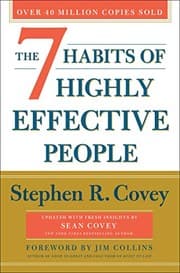
Seven Habits of Highly Effective People. I was reading the books that the world said you should read if you're a good leader. But that wasn't feeding what I needed, right? And so I went back and started looking at things like, well, I need to get myself in order. How do I, what are some, who are some people writing about that?
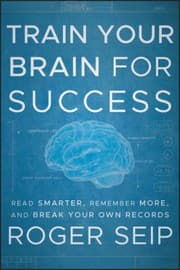
Who are speakers that I've heard at different conferences who I feel like that spoke to me? I need to go back to that. And so the beginning step for me was I literally sat down with a book. It's by Roger Sipe. It's called Train Your Brain for Success.
I've handed it out to a lot of people. Roger spoke at a convention that I was at years ago. It was a big eye convention in North Carolina. And it was a little speech and probably most people in the room, I don't know if it impacted them or not, but it just stuck with me. And it was years later before I went back to that book.
And in there, there's some chapters that really stuck with me. The very first one that I grabbed hold of was about what are your values? Have you sat down and done an exercise where you come up and look through and put seven words together that are the things that are the most important to you? Have you done that exercise? And I hadn't.
And so everybody could probably tell you what they value, but I had not sat down and spent time with that. So I dedicated time to let me go through the exercise of putting a bunch of words on paper and then narrowing them down. And the neat thing about the way that exercise played out was you go through a lot of words. He has like 100 and some words on a page. You go through the words, then you cross off the ones that are similar and you narrow it down to where you get to whatever it is, five, six, seven.
There's no magic number. For me, it was seven. And then you go in and define yourself, not the dictionary. What does that word mean to you? And you write that definition out.
And then you start looking at what are the things that I value. And so for me, it was faith, joy, influence And, and, um, a, a couple other great comments in there. And so I went back and defined those, and that set me on a path of, okay, well, if those are the seven things that I say are non-negotiable for me, let me look at what my calendar looks like every week. So I calendared that, and that was very eye-opening. I wasn't feeding those things, and my calendar wasn't reflective of my values.
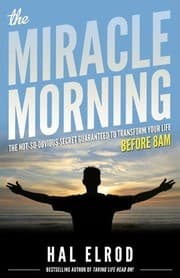
So I began to change that. And then the other piece of the puzzle that, that happened, not just from that book, although he talks about it and a lot of people do, uh, The Miracle Morning by Hal El- Elrod is another great one that I gleaned onto. Um, I realized that for me, if I just woke up every day and tried to live that out, it wasn't gonna happen. The world would-- The world had many times successfully derailed me throughout my career, throughout my life. And so that's when I said, "I've gotta own myself in the mornings and then during the day."
So I sat down and worked on a routine that I was gonna commit to on a daily basis of things I was gonna do to put me in the best position to defend myself from when the world came at me. Um, so, so to me, getting clear on those values and actually writing those down, and then starting to come up with a routine that would allow me to... Listen, I'm not 100% successful. I'm not 100% with my routine. I, I fail still on a regular basis, but, but my routine gave me the best chance of success every day.
And, and at that time too, Ryan, it was I can't take a chance because of what I'm dealing with to try to help my son get through his, what he's dealing with. That, that's-- It's one thing to let my team down at work. It's one thing to not sell another insurance policy. It's a whole 'nother thing to, to take a chance on the way my day goes and when it impacts my son, and my daughter, and my other son. And that, that became how I began to move in that direction.
You use this term, defend yourself against the world, the universe, and I think, I think habit, routine, and we'll put all that in a bucket of, say, preparation, right? Mm-hmm. Yeah. Mental, physical- Yeah ... daily preparation. We're not taught this, right?
No. It's one of the reasons that I do this show is, is I'm so incredibly curious as to how everything works, right? Like this show would be more commercially successful if I was like the leadership guy for, you know, ba, ba, ba or what- Yeah. Right ... you know, like it would be, it would be... But I just-- I'm so interested in, in how we, we...
Just so many different things and this particular idea that... And, and what's come out of that. This is where I'm trying to get to. Yeah. From talking to so many different people, everyone from the first licensed psyl- psilocybin clinic in the United States to, you know, billionaire investment bankers to content creator, you know.
This idea of preparation is im- is one of the keystones of all of their success that I have found, right? And everyone prepares differently. Sure. But, and here's, here's where my question comes, because I think everyone can get behind that, right? Yeah.
You find a routine, you do it daily. Okay. But the world's gonna punch at you. The universe is gonna punch. I tell people all the time, the universe doesn't give a shit about you.
They- Right. It does not care, right? You have to. You intentionally have to prepare yourself. That's right.
So when it hits you hard, right? Mm. Mm-hmm. Something happens, uh, you know, maybe it, you know, God forbid something with your kids or, or work, you know, just something happens at work that just throws the whole ship into, into flux. How do you not spin off the rails?
How do you, how do you, how do you come back in? Everyone's gonna have those moments, right? Yeah. Maybe it takes a day or two to get back on track. But where I see the, the difference between highly successful individuals like yourself and those who do not reach goals or do not reach places that they maybe are proud of, is that when the best get punched in the face, they're able to recalibrate themselves and get back on track, and so many others are not.
Yeah. Uh, that's a great point. How do you do, how do you do that? How do you get yourself back on track when you get knocked off course? The, the, the way that I frame that in my, in my mindset over the last r- really very recently, but I, I think it's, it's just I've been recently able to kind of describe and define how I was doing it before, right?
So, so I... It's, it's like a, a, a... I can equate it to like being in a boxing match. You're in a boxing match with the world, and, and if you think you're getting into a boxing match and nobody's gonna throw a punch at you, well, that's just insanity. The, the, the...
You are gonna get punches thrown at you in the world, and what I have learned as I began to study and read a little bit about boxing, which has been fun to do. It's something I don't know a lot about. I don't really follow it. I mean, I know Tyson and Muhammad Ali and, but I don't know the science of it. I started reading some books on that.
Some of the most successful fighters and trainers, it's because they learned how to take a punch, not necessarily avoid a punch. They don't-- They teach you how to dodge and move, but, but nobody ever says you're not gonna, you're not gonna avoid every punch. And so how you absorb a punch, it... You actually have to think about it. Like, you have to be prepared.
It's something you train about, of how to, how to take a punch, how to be absorbing of something. And so what I look at now is I try to take it as an absorbing of some experience, right? And so when negative comes at me, and it does, and man, I get knocked down, I'm, I'm in a, I'm in a season now where I've got some stuff going on that it would be easy for me to just say, "This isn't right. This isn't fair. God, why are you doing this?"
Like, that all exists in my life right at this very moment, but, but I just... When you know it's coming, it's not that I live in fear of when it's gonna happen, like when's the other shoe gonna drop, but I just kind of accept the fact that there's gonna be something coming in my life, and when it does come, I'm gonna absorb that punch. Well, how do I absorb it? I, it, I've got, I've got a partner in life in my wife who we are aligned and we see the world the same way, and so I can go to her and we can share with each other. We, we don't have conversations that very often that are like, "It's gonna be fine.
Don't worry about it." We have conversations which is, "Yeah, this sucks. Sorry we're dealing with this. I'm sorry you're dealing with that, but, but this is what matters. This is what we know matters.
Let's focus on that. Let's stay clear to that." And so whether it's at home or at work, I've got great mentors and friends throughout the industry, throughout work, who I can also lean on to say, "Man, remind me why we're doing this." And then you get that reminder, and it helps you to absorb it. The other thing I, I think about it too is I, I fully believe all that negative stuff that comes at me from the world, every time I get punched by the world, if I can absorb that and then look back at it, I, I can learn from it, and I'll be better the next time I take one of those punches, 'cause they're gonna keep coming.
Like, that's just not, we don't get a life free of punches. It's just gonna happen. But I, I think framing it from a standpoint of I wanna absorb the experience for what it is. Good- And I, and, and the interesting cool thing about that, Ryan, for me is I'm very much in the moment on the good stuff, too, now. Like, I fully absorb that stuff, too, because in the back of my head I'm thinking, "Hey, it's not every day that it's gonna be good like this.
Let me, let me be in this moment." My wife and I joke around. We've got, we got three kiddos, and throughout life, all three of them have had their ups and downs. Obviously. They're, they're growing adults trying to figure this world out that, that even a grown adult doesn't have figured out.
And we call it the trifecta when all three of them are in a good spot. Like, we kinda high-five secretly. They're out of the house now. We'll have phone calls and texts with them, and, and if all three of them are really good, we're like, "Hey, I talked to him. He's great.
She's doing good. Oh, he's good today, too. It's a trifecta." And we high-five, and we celebrate little wins. Like, they're just all three having a really good day right now.
Like, so I think, I think the combination of absorbing the punch, knowing it's coming, being prepared for it. Um, listen, I still get knocked down a lot. Still happens, s- and it still sucks, but I got a couple people around me that are not gonna allow me to s- lay on the mat and complain about getting punched in the face. I think, uh, one, I, I love that. Um, you know, a reframe that I use all the time is this isn't happening to me, it's happening for me, right?
So, so when things happen that I didn't expect or aren't exactly what I want, right, it's often, it's easy to go, "Why is this happening to me? You know, I'm a good person. I pay my taxes. I, you know, love my ki- why is this happening to me? What did I..."
And it's like, no, it's happening for you. Like this- Yeah ... this thing- Love that ... that you didn't like, right, how about you go put your adult pants on and go s- solve the problem, right? Right. Like go figure it out. Right.
Learn from it, right? Yeah, absolutely. It's, it's happening regardless. Mm-hmm. You can either wallow in it or like- That's right ... go figure it out, and that, that mentality that I'd say the second half of my, of my, um, more mature side of my career, not the super early days, has really, has really, has really helped me get through those, like that absorbing of the punch, right?
Yeah. And I think these kinda reframes, as much as we can, um, build them into our life, uh, really help. They're, you know, yeah, they're aphorisms or whatever. They're just little ditties. But man, they can, they can be really powerful, and I often caution people to, uh, some people can think they're trite or like, "Ah, you know, I don't need that in my life," and it's like, it's like, dude, you just got punched in the face.
Yeah. Like if a simple reframe can help you think about it differently, like i- isn't it worth doing it? So I, I- Yeah, right ... I love, love that stuff. So- Well, and I think, too, Ryan, I think, too- Yeah ... for, for a lot of folks, there's, there's some people that don't have that happen a lot, or they already naturally handle it well.
And, and, and for me it's not, I'm like good for you. Like that's awesome if you don't need it. I'm, I, I hope, I hope you live a life where you don't have to worry about what I've got to worry about. Like I would love for you to have, for that to be your life experience, but the large majority of us know that that's not the way it works. So where did, um, okay, so for the audience, so they know I was at, uh, Mick Hunt's Lead Loud series down in Greenville, South Carolina.
Tremendous event. Um, highly recommend you go check out his Lead Loud series. He has them I think quarterly or so. Um, wonder- wonderful events. And you were, uh, one of the speakers, and, uh, I was really captured by this idea of, of being the one.
Your, your, your leadership philosophy that extend, extend, and you used examples extending outside of just business into, into how you lead your family, et cetera. But I, I love this concept because, again, speaking to the reframes and stuff, it's a simple, understandable concept, but incredibly powerful. So I'd love for maybe talk through the, the genesis of, of- Mm-hmm ... where this idea started to come, and then, and, and start to break down for us what this philosophy is that, that you're out there teaching, 'cause I do think it's incredibly powerful. Well, I, I thank you for that, Ryan. And, uh, and I, I, I second that with Mick's group and that Lead Loud is, it's an amazing time together with a lot of leaders really chasing the same things.
The, the thing I like most about it is it's, it's chasing the personal side of it to be professionally better, and that's most of what you hear at the conference. And so, um, I, I s- I came up with an idea probably four or five years ago, um, about h- how do I get the message out about what I and my family went through in helping my son, um, to be, to be successful, be happy, and be healthy even though he's facing health situations that are out of his control. Um, and so what it really came to me, there were a number of people along that journey who, at moments in time, at the exact right time when needed, were the one person that showed up in that moment. And as I look back on our journey through there, it was there's always been this moment where a person showed up, and because that one person took interest to make a difference and have an impact, it significantly changed the path that we would've been on. And so, so as that began to happen and as I look back at that journey, I started to think about there's so many people out there.
So for example, teachers don't know how to deal with this, and they... Listen, they haven't been trained properly. There's a whole thing to this. I, I'm not, I'm not saying at all, and I've got a long line of educators in my family, and I teach as well, so it's, it's nothing about that. It's just that when you're, when you're dealing with something like he was dealing with that's not evident.
And the other thing is played all, played sports, great football player, student body president, great student, smart kid, super smart kid, so from the outside everybody loved being around him. So from the outside to a teacher, to people around him, they had no idea the struggle that he was having. And so when we finally talked to some people and they realized it, you had a couple different reactions to this, and I think this happens, a- and this happens professionally, too, by the way. But in, in this situation, this was the genesis, is that There were the group that would think, "Well, I don't know if I believe all this. You know, maybe, maybe this is just some manipulation.
Maybe this is just a kid trying to get over. Maybe what- whatever, whatever." Then you had a couple people that took an interest enough to say, "Well, maybe not. Like, maybe this is a real struggle, and how can I help?" And, and on both sides of those coins, I began to make the argument with everybody that, listen, at the end of the day, let's say you're right.
Let's just say you're right. Let's say that the manipulated, that you think they're trying to get over on you with whatever the situation is, right? Let's say you're right. Let's go to the... What is the worst possible case scenario that could happen in that if, if they're actually getting over with you?
Well, that doesn't happen forever, and maybe they get a grade they don't deserve, and maybe they move on and... But at some point, life catches up with us when we do those things. But, but what if, what if this struggle is real and you're the one who did not help them, and it was enough to go to the other side of the equation? Which, which, let's be honest, like, you never know where that's gonna go with someone, and you could have been the one that did that too. And, and I just got to a point where I said I, I've seen people impact him and us positively and negatively by being the one person that made a difference and took an interest.
And I wanna make sure that all the interactions that I have, I'm fortunate enough in my professional life to interact with tons of people. And man, what if somebody just needed me to be positive and smile at them that day? Maybe that was the one thing that I was the one interaction in their day that changed the path for them that day that maybe led them to a different place. But, but what if also, if I'm real with myself, what if I'm the one that was negative to them? What if I'm the one that had a negative interaction?
What if I'm the one who fed into what might be self-talk for a person to say, "I don't know why I'm here. Nobody cares about me. What's the deal? I, I don't have any hope. Why am I here?"
And then you interact with Carl at the airport, and he's frustrated already because he's missed a couple flights, and we have this interaction, and I don't even know you, but we have a bad interaction, and I'm really negative to you. And then off you go because I've just confirmed the self-talk you already had that it's, it-- there's no reason to be doing this anymore. Everybody's out to get me. And, and that just became a real moment for me to say, "I, I, I don't wanna be... I'm gonna be an impact to somebody every time I interact with them.
I will never be perfect at it, but I'm gonna try to do the best I can to be the positive influence on people." And, and so that kind of started me down this path of be the one. Um, and I, I-- So that's the message that I talked to people about when I was already having an interaction. Like, the message is just getting out. But as I talked to people, I was saying, "Why don't you be the one that makes a difference though, a positive difference?
Like, why don't you be the one that..." And so if people would come and complain to me either at work or at home about stuff in the community, and I'm like, "L- l- let's just talk through that. What if that person just needs you to be positive? Like, you don't even have to agree with them. What if you just be kind to them today?
Like, maybe that changes the environment they're in." So, so that, that started it. I, I, I put... You know, I'm, I'm an, I'm an insurance kinda junkie by trade, and so acronyms flow all over the place. And I, I figured out, let me take one, and how can I talk about that message in an organized pattern?
And so I just kinda came up with own yourself, nurture others, and expand your influence, which is the acronym that I use for this story. And I think it's tremendous, and I think the message is timely because of where we are in our society today. Um, we have lost the ability to, uh, disagree with each other in a way that doesn't lead or spin out of control. Um, people develop preconceived notions on fragmented information and will interact with you in ways that you don't understand. Um, it's a very odd time, uh, to be a communicator and a leader.
Odd is not the right word. Uh, challenging- Yeah. Yeah ... um, uh, tumultuous. But I think this idea of constant positivity or reasonable and intentional positivity is absolutely what we need. And that, and the, and the audience at Lead Loud resonated.
It certainly resonated with me. It's why I was so excited to have you on the show is because I... You know, I'll g- I'll just give you an example. Um, I coach my kids baseball, and, um, what I found, I... You know, one of the parents came up to me, and she was like, "You know, my son, like, really likes playing for you."
She's like, "Uh, w-what are you doing?" I was like, "Nothing. I, I don't know." I mean, I know the game. I love the game.
Don't get me wrong. Yeah, yeah. But she's like, "Well, no." She's like, "You know, he's played for other coaches that were, you know, whatever, not yelling." I'm not a big yeller or whatever.
Um, and he's like, "But he really..." He's like... And I was like, "High fives." And she's like, "What do you mean?" I'm like, "Kids, high fives," 'cause it makes them feel connected.
It makes them feel seen. It's fun. It's energizing. Now, do adults want you high-fiving them as you walk through the office? Probably not.
Maybe not. Maybe they do. Maybe not. Maybe- But I'm not against it. Yeah.
I love a good fist pump or whatever. Yeah, yeah, yeah. But, like, I was like, for this audience, kids, if you just constantly high-five them, they're in a good mood. Even if they, even if they mess up, you just give them a little dap. "Dude, you got this.
You're good. Bam, you're the man. No one better." You know, throw some little thing on it with a high five. They could go 0 for 3 that day, and they walk away with a smile.
Yes. And I think in, in, in the context of Little League- Mm-hmm ... everyone, that makes complete sense. Yeah. Oh, yep. No.
Yep. That makes complete sense. Yep. Then we get into our adult world, and we're like, "Johnny's not holding up his end of the bargain. Sally hasn't sold anything.
The HR team's up my butt about some email I sent," or, "I didn't mean what I s- you know, blah, blah, blah, blah, blah." And now all of a sudden it's pure negativity. And I guess when, when, when you talk to someone who's dealing with these adult toxic environments, w-what is... Like, is the first step just be the one? Is it go get consensus?
Like, if you're in one of these toxic environments, maybe you enjoy the company in general, but it's got this kinda negative or toxic and you wanna change it How do you start injecting this idea into, this idea of being the one, which I love, into an organization so that, you know, you can start to break that negativity spiral down? Yeah, I think, um, so early on it's, it's if you have the opportunity to be really careful about who you join. I, I think the team that you join, you have to be careful about it. And so I talk to a lot of undergrads, I talk to young professionals, and I remind them to just, this is the time to not compromise. Finding a team of people that, that is aligned with the way that you see the world and the way you wanna live your life and the way you wanna be professionally.
Uh, again, just to reiterate, the, the main thing they're usually missing is they haven't even spent time thinking about that. So I gotta get them to go back and do that first. So, but, but let's move forward. They've joined a team and, and obviously sometimes you do, do the best you can. You still end up in a team where the environment is, is not what you expected it to be, it turns toxic over time, you have new leadership or new teammates, whatever the situation is.
But when you find yourself in that space, I, I think you have to do a couple things. Number one is I, I wanna make sure, I, I don't want people to think that I'm all rainbows and unicorns. Like, I do not think that this is easy. I'm not good at it all the time. I- it- it's the desire of my heart, it's not the way that I execute on a daily basis, but it sure is what I wanna do on a daily basis.
And so what I would encourage people in those situations is be really clear on who you are, because if you're compromising the core value of who you are, uh, in a toxic situation, there, there's no fixing that. It's probably not getting better. If you can align your core values and you can have honest conversations with people, start trying to find people amongst, in, in, in that team who you believe are aligned with you, and begin to have real, vulnerable, transparent conversations about what you're feeling and where you're at and how it's going, because that's reality for a team. And good leaders should be receptive to the teammates coming to them and saying, "I, I don't know what's going on, but this is how it is making me feel. It may just be my perception is incorrect, and I may be, my, my feel, I may need to adjust this a little, but I think it's important that you and I have a conversation about how this is impacting the way that I operate daily."
Um, and, and then you've just gotta kinda find a way to talk through how do I move to a place that I want the team to be. Now, the other piece of that that, that I challenge people with, you, you have an obligation, though, to be the teammate that you want to be, that you want everybody else to be too. It's very easy for all of us to point to the people around us who are causing the problem without taking a step back real quick to say, "Yeah, but was I really intentional about showing up today? Like, did I really do my work today? Did I really show up correctly?"
Because if the answer's no to that, you, you can't, you gotta get that square before you go take care of what's happening with the rest of the team. Um, so I think that's where, I mean, it's difficult when you find yourself, and listen, there's a lot of people who... Listen, I, I've, I've been very fortunate in my career, very fortunate with people and connections and things, and there's people, though, that are in places where they're stuck, that don't have a choice, that the, the choice to leave is... It'd be easy for me to answer that question and say, "Well, you shouldn't be on that team. You should find another team, and you should go enjoy that other team."
And, but the reality is for many of us, th- that's just not reality, that you can just jump around and be shopping around for some team that makes you feel better. Like, that's just not the world we live in. But I also think you have this incredible opportunity if you can take it on as a challenge and as a project, your own project. If you can absorb the negativity for what it is and then brush it off a little bit and then dig in a little bit, man, if you're the one that changed the culture of that toxic team, what an incredible spot you'll find yourself in, right? Have you ever read the book No More Mr.
Nice Guy? I have not. I highly- Okay ... highly recommend it. Yeah. Like, it's one of my number one recommendations- Okay, great ... for, for pretty much any, any, anyone really, but particularly men in leadership positions.
Mm. Mm. And what he defines in that book is the difference between nice and good. And this opened my eyes. I read this about a year and a half into, uh, Rogue Risk, when I was developing Rogue Risk- Yeah ... and the team was really starting to grow.
And I had, I was, you know, you're bringing people in, and you're bringing in teammates that fit in immediately, and you're bringing in teammates that have some friction here or maybe, you know, different personalities. And, and I'm looking at this, and I was struggling to pull it all together and, and I didn't understand why my message of, like, wasn't resonating as much as I wanted it to. Mm-hmm. Um, 'cause I've always prided myself on, on being someone who could inspire humans, uh, captain of every team and all this kind of stuff, whatever. And when I read that book, what I realized is I was over-indexing on nice, right?
It was nice. I wasn't, I didn't have the hard conversation, 'cause I wanted to be nice. I didn't bring two people together and help them talk, 'cause I didn't wanna create con- 'cause I was nice. Everything was nice, nice. And what he outlines in this book, and it's very s- it's not a long read.
You could, you could get through it in a, in a couple days. It's, it's, it's really the perfect type of business book, 'cause you can you, it doesn't take you a year to read it. Yeah. Um, it's not like, uh, I'm reading, um, The Art of Seduction by, uh, by Robert Greene right now, and it's like, it's like a college textbook. It's like this big.
It's, you know, 12 font. I mean, it's amazing. I mean, it's, uh- So let me, let me, let me just give you a little quick side story on this same topic- Yeah, yeah, yeah ... which is weird, but it's legitimate, 'cause it's real for me. We were taking a group to London last year, a group of producers. It was a fun contest reward trip.
I wanted to learn a little bit more about Winston Churchill, so I ordered a Winston Churchill book, a biography. The book came in, and it was 1,700 pages, and it was this thick. And, and I was like, "Well, I wasn't expecting that." So I sent it back, exchanged it for another book. The next one came in, it was 1,400 pages, and it was still this thick.
And my wife was like, "Did you read the description?" And I'm like, "Yeah, I don't know if I've, I'm not sure I can get through that kinda thing." So yeah, good. Yeah, no, I, I'm with you. No More Mr.
Nice Guy's a readable book, yeah. I've, I'm with you. I, when it's over a certain number, I gotta go to audiobook. Yeah. I just can't, I won't get through it.
But so this idea of good versus nice, and what I realized is it kinda comes back, it almost is, um, a more tactical version of, of what Jordan Peterson talks about with be a monster, right? Have the capability to stand up for yourself, to step into tough situations, but keep that sword sheathed as much and as often as you possibly can in the world. And what it forced me to do was say The nice thing, the nice thing is to not address this point of negativity because I don't wanna cause more problems. That's the nice thing. Right.
But the good thing for my team and for everyone is to, let's address these problems, let's ha- what is going on? 'Cause, 'cause a lot of times I've found, and I'm very interested in your take, uh, with all the teams that you've led, um, is that when you do f- the, the, the negativity spreads, right? It's contagious, but so is positivity. Yeah. So oftentimes someone who presents themselves as negative on a day-to-day basis, when you can show them that you accept them or accept whatever their issue is, or you're willing to address their issue and, and you keep that positive environment, you can flip people ba- people would rather be positive. I think most people would rather operate from a place of positivity.
They just don't know how to. And, and you, you can. It is not a lost cause if you find yourself in one of these negative environments where if, as you said, you live that, that value structure that you say you want, and you actually present it, people will come along for that ride. Have you, have you found that to be true? I have, and I would say, um, so, so number one, I, I'm an over-index to nice guy for sure.
Um, I, I, I think the place that I have developed into from maturing in my professional career, also led by my personal life, um, is, is to be willing to have a very challenging conversation with someone because I'm coming at it from the standpoint of, if we don't talk about it, that's bad for everybody, and, and I care too much about you to not have that conversation. So that's number one. Um, the, the other thing that is, uh, interesting, I also agree, like our brains are wired to be defensive, and that brings on some interesting personality traits in the way that we interact with each other that are just kind of by design. But I do believe that there's not people that get up every day that would otherwise be wired to just be miserable and make your life miserable. And so then you begin to think about, well, if, if I believe that to be true, then I would like to seek understanding as to why they're there.
Like to me, it becomes compassion for there's been something in the, the life experiences that they've absorbed have put them into a place where that's the how they see the world when they get up in the morning, and that's sad. Like I'm, I'm desperately sad for those people because that's not a way to live a life. And so as leading a team, I, I wanna understand why we're there. I wanna understand what the experience in your life has been that, that's put you in that space where you can't enjoy the moments in life that are really important, um, and then try to help you find a way to get there and enable you to do that. Listen, the reality is, if I've got a team of people who, who can't figure that out, we're not gonna be successful together.
We'll have small successes, and we'll be able to get lucky wins. Long-term sustainable success for a team, when we've got people dealing with that, I, I, I don't believe, and I don't think history has proven it out either, that you'll have long-term sustainable success if you don't help the team be great. I had a, I had a great mentor who, who years ago said to me, "If, if you're not good at home before you get to work, it-- Ho- how do you-- you're not gonna cut that off. It's, it's not gonna turn a switch when you get here." Like, so, so I think it's, I think it's an opportunity for us to really step back and say, "If I f- if I believe," and I do, "but if, if I believe that people are generally wired to do good things and be good people, if they're not, something's going on."
And there is no greater joy in, in my life to date or in, in other leaders than I, I think there's no greater joy than to take that really negative person in my life and turn them into something, turn them into a fan, turn them into a person that smiles when they see me. And I joke around with people, "Listen, if you're, if you're rude and ugly to me, I, I'm, I'm gonna probably be okay with it. It might not feel great. I'll get over it." But I also have just accepted that as the challenge to, for you, you and I have a disconnect 'cause if you really knew me, I don't think you'd treat me that way.
So let's figure out how we can figure that out first. Yeah. I, I, I completely agree, and when you see that light bulb come on for someone- Right ... ah, there's nothing more rewarding because- Mm-hmm ... all of a sudden you can take, you can take, you know, I, I don't love these terms A, B, C player type of thing that you hear. Yes. I, I understand why we use them because- Yeah, sure ... they're, you know, but I, I don't love that because I think oftentimes we categorize people as if they're static, right?
Sh-- "He's a sh- C player. She's a A player. He..." And it's more like in this moment, in this season of their life and/or our business, this is where they fall. But it doesn't mean they're static, right?
And what we ultimately wanna do is look at our Bs and our Cs in the current moment and say, "How can I help them elevate to- Right ... their best level?" 'Cause, 'cause I also think, and, and I'm, I'm really interested in your take on this, 'cause again, I don't love this terminology. I understand why we use it, but I, I don't love it. Yeah. Yeah. Yep. 'Cause and my point is like, okay, I want everyone on my team at their A, not our A, right?
They ha- they obviously have to hit certain business metrics. They have to do their job. They have to perform, and, and we all have KPIs in what we need to do. Right. But if I can just have everyone at their version of A, whatever that is, or as close to their version of, of A as often as possible, that to me is how you hit true escape velocity in a business, and you launch out into the atmosphere.
Because you're not gonna have everyone at a, quote-unquote, "A level" way up here all the time because that might not be, you know, Johnny's A, one, he might be doing a different function- Mm-hmm ... and two, his version of A might be, yeah, he doesn't, you know, he only kinda sells at the minimum requirement each month. But man, he also does X and Y and Z, and while those don't count in terms of the cash register, man, they really help our business in this way or that way. And it's getting these people up to A and simply everything that you've talked about so far, it, it's about raising those people up and, um- And, you know, I think that should be our goal as leaders is not to have this team where all our As are exactly the same, but how many of the people in your organization are operating at their version of an A at that moment? And I just, again, I, I, the way my brain works, I have s- severely hyperactive ADHD at all given times. There's like 10,000 things going.
I don't wanna tell you the other thoughts that are running through my brain while we're having this conversation, and I mean that with no disrespect. Um, but, you know, I've had to come up with these reframes and, and some of these things, you know, like just y- Johnny doesn't have to be the same A as Sally. Sally's version of A is this killer. She's putting max revenue on. That's awesome.
He's hitting his A, though, and that seems g- that's good enough. That's awesome. He shows up happy. He's com- communicating. He comes to the parties.
He supports people. And yeah, he doesn't sell as much as her, but he sells enough, and he's super happy, so let's freaking go. Like- Mm-hmm ... why are we gonna knock him- I love that ... because Sally's just an absolute sales monster, right? I mean, there are dif- but he's operating at his A, and I think- That's right ... that's just a better way of viewing it. Um- Well, I lo- I love the reframing of that a little bit too, right?
Because, because if I want you to operate at your best, I need to help you understand what that looks like, right? The, the, not everybody kinda has a view of that, and if we're not careful, again, the outside influence of the world and the environment and the business that you're in will dictate to someone what they should be chasing as their A level. And what I would rather see us do is help them, help them understand, what is my A level that I'm wanting to achieve in life, and let's help you get there, and let's have a real conversation about it instead of chasing somebody else's desire for what you should be in life. You know, and I, and I think, you know, I know people who don't play sports hate when people on podcasts talk about sports, but I'm gonna talk just for a second. Um, you know, coming up, I w- I played football, baseball, baseball.
Football was my number one sport until I got, I got three concussions my senior season, and I ultimately ended up having to play baseball in college. I say have to like that was a bad thing. I loved it. But, uh, and probably better for my physical health long term. However, I think about a football team in this way.
If, if you're taking this idea of everyone at their A, right, uh, uh, uh, a middle linebacker or a quarterback has a very defined A in what they can do, and they're often highlighted in the respective sides of the field as, like, the prime time players on those sides of the field. However, don't you also want your long snapper to be an A long snapper? Because if that guy sl- throws the ball 10 feet over the punter's head, you're in a really bad position. So you don't need your long snapper to be an A middle linebacker or an A quarterback. You just need to get them to being an A long snapper.
And I think if we think through our businesses in that way, it, it helps us not compare people who shouldn't be compared. I think, I think comparison is good to a s- extent, but it can also create some of the negativity if we let it get out of hand. And I also think it can sometimes be, and, and this is what I'm super interested in your take on this, I think sometimes it can be lazy leadership to just apply everyone to the same standard, uh, and, and judge them accordingly as if we're all the same humans because we're just not. Yeah, I think, um... So, so I, I had a coach, uh, in my high school career when I was a really good athlete at one thing, right?
And so, um, I played soccer growing up. I wasn't a great soccer player, but I was good enough to get to hang out with my buddies who also played, and so I played soccer. So my freshman year of high school, played soccer. Wasn't great, but nobody cared because it was freshman soccer, and nobody was great, so big deal. Go back out, and, and at the end of my freshman soccer season, wrestling started.
Well, I had never wrestled. I didn't know what wrestling was. I'd never done it. But I was also a 97-pound tiny little kid in high school as a freshman. So football wasn't an option.
Soccer wasn't great for my size. Ba- wrestling became this thing that had this ability to put you in a category where you're competing with similar people, right? Like weight divisions. And so I went and wrestled, fell in love with it, was pretty good at it my freshman year. The wrestling coach was also the soccer coach, same guy.
And so we show up. I show up my sophomore year to, to soccer. I go out for the team. I'm at spring practice, and the soccer coach comes over to me about two days into practice, and he basically says, "Hey, if you wanna play JV soccer, most of your buddies are gonna be up on the varsity this year. If you wanna play JV soccer and, and you wanna sit on the bench most of the year and not play a whole lot, you are more than welcome to do that if that's some experience that you think you want."
He said, "But also, let me, let me ask you, would you consider this? We've got some guys from the wrestling team who are doing preseason work in the fall. Would, would you be interested in that? I think you could be a really great wrestler." And so I had a coach come to me and say that uncomfortable conversation to say, "Hey, here's the reality of it.
You wanna muddle around over here? You can. And I'll... That's fine. I, I don't have any problem with you doing that.
So be it. I see an, I see an A player over here in this spot. Go... If you wanna put the time into that, that's where I think you should be, and I'll give you that option. But you still gotta make a decision as to what you wanna do."
And so fortunately for me, I chose to take his advice and go wrestle, and had a really great, fun wrestling career in high school. But it, it does go back to we have to put people in a position to be successful. Th- again, people wanna be successful. People don't wanna show up to work and do a bad job. But if I'm putting them and telling them, "Here's who I want you to be," and it's not who they are, that dynamic will never work, and it actually will stress them out, and it'll make the whole environment difficult.
What a great example of someone being the one for you in the moment that you needed them. Totally. What a tremendous example. No doubt about that. That's true.
Very, very well said. Um, I got one last question for you. Yeah. Uh, I wanna be cognizant of your time. Our children are often our most, um, honest critics- Mm-hmm ... uh, or feedback givers.
Mm-hmm. So when you first pitched this idea of the one to them, when they started heard you, what did you, what was the feedback that you got? Like, did they buy into this? Are they like, "Oh, Dad, you know, what are you talking about now?" Or was it like, "Oh, yeah, Dad, uh, you got something here."
Like, I like, like what, what was your, what was your feedback on that? That's, that's great. I, I think, um- My kids were a little bit older when this kind of began to develop, um, and, and they have always been super supportive. You know, I get, I get a lot of eye rolls from them. I try to use words that they use.
You know, I use six seven and rizz and all this kind of stuff today to try to- Hold on. Do you know what's... I have no idea what six seven means I don't know actually. I don't know, but I just know that when I do it, I do this. Nor do I.
I don't even know if I'm, if I should be saying it, quite honestly, but- I don't think anybody knows Yeah. I ask them all the time, "What are you saying?" Yeah, exactly. They have no idea. And so my, my, my daughter and my boys, they roll their eyes at me on a regular basis 'cause I like to be awkward and embarrassing for them.
But in, in this topic, you know, we've had a lot of conversations about this general topic and the way that it influenced our family because it, because when, when you're going through something like this, it, it was really my son and I who, I mean, my wife's totally involved, but I was the one struggling with how to help him, and so therefore, that caused a lot of tension for us and it caused a lot of, uh, issue within the family dynamic as well. So my whole family, we've all gone on this journey together, and so when I talk to them about this idea of what I had, they're so supportive of it, and my middle son especially, who was my main inspiration for this, he's very open and talks to others and to each other, and he and I have very honest, vulnerable conversations with each other about how we, how we grew together through that journey that was very difficult at times, but how we grew together in that and, and he wants the story to be out and we want the story to be out because we believe the impact that we can help... A- and I could... If I help one dad have a better day with one of his kids, then that's good enough for me, 'cause I, I, I wanna just change something in a small level on a regular basis.
So the answer is, is that they, uh, they, they think it's funny. I take selfies on stage when I do talks and they can't stand that. They think that's crazy. I show pictures of them in my presentations. They're not a fan of that.
But as far as this topic in, in my heart about helping others in this space, um, we, we've all lived it, and so I've got great support from them. They're, they're on board fully. They're older, and so that's certainly helpful. They're more mature. Um, uh, I mean, ideally I would love for my son and I to, to together tell our stories independent but together because he is as much of this as, as it is for me.
Yeah. That's phenomenal. I, I, and you, you know, I will let you know you are not alone. My children do, like, love to bust my chops about the videos and the this, and at the same time, they also love it. You know what I mean?
Like, they're like- Yeah. Oh, yeah ... you know, they love it- Yeah ... but they're also, they love- I catch them, I catch them occasionally ... especially when someone gets you with a funky face. Yeah. Like, you get a picture and you got, like, the fu- you know, a funky face. Like, they, they, that's the one that they'll talk about and send me a picture of, and I'm like, "Really?
Of all the shots-" Yeah. "... that came out of that speaking gig-" Yeah, yeah. Most definitely. "... that's the one you're texting me?" Yes.
Yes. Like, come on. There's some universal truth in all of that with kids, that's for sure. Well, Carl, man, I, I could talk to you all day. I think your story is absolutely phenomenal, and obviously, uh, I'm a huge fan, um, fan of you in the industry, someone I've watched you grow and watched HighC grow and, and a big fan in that regard, but, but what I saw on stage was a message that I feel needs to spread.
It's why, again- Thank you ... I couldn't wait to have you on the show. People who've heard this who wanna get deeper into your world, who wanna follow along, who, who think that this idea of being the one, uh, can help them either in their leadership or how they operate with their family and their children, um, where can they go to get more of you and the work that you're doing here? Uh, uh, the, the best way would be to connect with me. I, I'm, I'm on social media and I'm out there, so it's not hard to find me, and if you send me a note, probably LinkedIn is probably the best way to catch me.
Uh, but my email's out there and you can email me as well. Um, I'm more than willing to be open to and helping someone have more conversation about this topic, so, uh, would, would love to do that, and, uh, it's equal, uh, same to you, Ryan. I've, I've known of you and seen you and followed you as well throughout our different paces in the industry. We've, we've never really overlapped until just then at that conference. It was really great to see you.
Appreciate your, your feedback on the topic and the opportunity to come here and continue to kinda spread this message that I hope to really get some momentum behind. Yeah. That's awesome. And guys, I'll have, uh, Carl's socials, uh, linked up, whether you're watching on YouTube, listening, just scroll down. I'll have those linked up, and, um, I'll say, man, hey, open invitation.
If this becomes a book, whatever, love to have you back on the show. Thank you. Enormous fan. And guys, if you put on events, and obviously I'm a speaker myself, but, but if you put on events, I'm telling you, um, Carl is a great, great story. This, this is a wonderful keynote.
It hits both the personal and the business side, and, uh, just appreciate the hell out of you, man, and glad that you're out there sharing the message. Ryan, thanks so much. I really appreciate it.
Books from this episode