Happy holidays. Want to give your host a gift? Consider subscribing, rating, and reviewing the show this holiday season. It really helps the show grow. From all of us at Believe, have a merry Christmas, everyone, and a happy holiday.
One is called the compass method, which is about coming back to your own core values and looking at what is your own internal compass. Not the one that you think you need to live by because the world tells you, but what is your own true north? What is your own internal compass? It's about awareness, reaching the in- inflection point, making a decision, what do I want to do about it? Then you move through, um, the transformation, that rite of passage, the undoing process.
My mission really hasn't changed. It's, it's actually quite comical if you look at sort of the movement of entrepreneurship and how we were all... Some of what I help clients with, I needed obviously to do my own work as well, and, um, realized that the Unworthy Leader podcast, well, it meant so much to me, um, we can talk more about it, coming out of the hospital. It really resonated with me, and I wanted to strike, like, a visceral chord with people. At the same time, I was branding the lie, not the truth, which is that they're really... people that feel unworthy are really just high achievers that are just c- in the continuous pattern of chronic success and achievements.
And a lot of it really aligns with your TEDx talk, so I'm super excited to talk with you. Ah, awesome. Well, let's, uh, let's, let's get right into it. I mean- Okay ... I, I, uh, you know, let- let's start to...
I really, I'd like to start with this idea of you branded the lie. W- what does that mean? And maybe talk us through that, 'cause that's a really heady idea. Yeah. Well, what I came out of, from my trauma-informed background and then some l- lived experiences, was this idea that I was unworthy.
And, you know, as a, as a Christ follower and as somebody who's done a lot of my own healing work, I realized, okay, I know that's not true mentally, but somewhere somatically and in my body, I still felt those, those lies. And so I really wanted to message to all those leaders out there and really kinda cut the crap and have this conversation around all of these high achievers out there and all of these leaders that I've worked with over my 25 years in corporate, including myself, who h- underlying have this sense of unworthiness. And whether they identify as imposter syndrome, or whether just selective unworthiness, maybe it's particular scenarios and situations, it's contextual, or whether it's pervasive, um, it can really be all over the place. And so I, I think that I really wanted to speak to that and have the audience have a very visceral reaction and like, "Oh, she's talking about the unworthy leadership. I can, I can relate to that."
What I realized through my own journey of launching and then, um, publishing 26 episodes in my first season of my podcast since last February, was that I felt unworthy having a podcast. Because I felt everyone out there has one. There's so many to choose from. Why me? I'm not famous.
I haven't written a book. You know, I'm, I'm sort of always been known as the ghost in the boardroom, 'cause I work behind all these really successful executives, but I'm not really a huge known name. And I was struggling with my own feelings of unworthiness. And so as that's evolved, I've realized that what I'm really looking to do is help high achievers and really circumvent the root cause that's driving high achievers to still feel so unfulfilled. So I, I can relate to this to an incredible amount, and, and honestly, a lot of my own work is maybe a different angle, but a, but a similar path.
Um, I came to the realization very early in my career that... I shouldn't say really early. I, I came to the realization in my career after a few major setbacks and, and... You know, I had, I had two jobs in a row that I loved, executive leadership position. One was a CMO position.
One was a CEO position. And I loved them, and both times they ended up in me getting fired. And in having to go back, reflect on those experiences, your first instinct is, "It's not my fault. Why did he do this to me?" All this kinda stuff.
And it was... That was really the moment when I started down my own path and said, and when I did some self-awareness stuff, it came back to ego, right? It was always this sense of ego. And, and I think a lot of our unworthy feelings, and, and I'm very interested in your take on this, is, is, is ego. We, we build up this sense of what I should be or how people perceive me or the, the status symbols that I want people to see in me, and then we're...
If, but behind that, it's all empty. It's, it's, it's, it's sticks. It's built on cards, you know? There's nothing actually there because you're, you're trying to prop up this vision of yourself or this image of yourself that isn't actually you yet. And, um, man, you make so many bad decisions coming from that place.
So, so h- do you see ego playing a large role in, in the unworthiness? And maybe what other aspects of our emotional character play a role in this sense of unworthiness that so many of us deal with? Yeah, definitely ego is a huge part of it. I think, um, the ego is what drives the need to get at that external validation, that unfortunately we have a society today that is largely driven on external validation. Think of it, and I mean, even from corporate standard.
What's your market share? You know, how are you marketing? Are you dressing appropriately? Are you, you know, ev- everything... I mean, you, you play a sport.
My sons are both in sports. Okay, the scoreboard gives you direct feedback. How are you doing? You know? So everything is external validation, and that's why for me, I find it so important to be rooted in my, my faith so I have a, a, a bigger mission and, and picture of sort of what my purpose is here and, and how I can live my life and that my worth is identified in being a child of God and Christ, and that is my worth.
And it took me a long time to get there. I'm 51, so it took me a long time to get there, Ryan. But I think that ego plays a huge part of it, and I think there's a lot of good things that ego can do, too, right? It, it... There is a protective mechanism.
There's a w- a very long conversation we could have around all the good things it can do. However, I think there are a lot of lies that, uh, we end up telling ourselves in our society today around it. I think we think that proving will finally make us free. Like, "Oh, if I can just get this next promotion, I'll finally feel better." Well, guess what, Ryan?
When you got that next promotion, did you finally feel better? Most- maybe for a little bit, right? Yeah. Um, and I find it to be almost like it's very similar to addictions. So it, it...
You get that serotonin and dopamine rush every time you achieve and approve that next thing. Um, but just like that addict that needs the video game or more alcohol or more drugs, you need more of that achieving to actually get that same high, right? I think, you know, it's funny. I was listening to... I'm gonna forget his name, but he's, uh, uh, his expertise is around sugar, and he was on the Diary of a CEO podcast, Steven Bartlett's podcast, a very famous podcast if you guys haven't listened to it.
And he was talking about this, this topic from a, from a neurochemical level, right? Why do we attach ourselves to things like sugar, right? Why do we attach ourselves to drugs or alcohol or, or porn or, you know, gambling? And it, it has to do with the dopamine receptors in our body, and our dopamine receptors have a healthy amount that they can receive, and they have an unhealthy amount. And anytime we blast them for extended periods of time with more dopamine than those receptors can take in, they actually shrink in size to limit the uptake 'cause we can only handle so much.
And then as they shrink, and, and again, I'm third-party-ing this science here, guys, so there's... I'm sure there's a, uh, there's a lot of nuance here. But essentially, um, we then have to chase that, right? So whether it's the next promotion and that feeling of high that we get or that next big sale or the award or all the way down to, you know, needing to have a cocktail every night or having to get, you know, high before you go to bed because that makes you feel, you know, whatever way. These all...
You constantly have to chase more to get to that same feeling, and his whole point is if you go and you actually address those root causes- Mm-hmm ... and you actually don't need that initial blast of dopamine, your res- dopamine receptors open back up, and then you can have a very healthy relationship with these things. But that doesn't seem like the work that a lot of people wanna do. It seems like most people choose the path of just masking it with insert vice or dopamine addiction. Um, how did you... Like, have you experienced that in your life, and, and how did you personally start to overcome this sense of unworthiness?
Well, for me, it was a t- uh, tipping point where it became too uncomfortable to not address it, right? So, and you know, I kind of hit rock bottom and have, uh, had a lot of abuse and trauma through childhood and then kind of on and off through my teens and then into college. And then I got into some drug use for a few years and just really realized this is not who I am. This is... I'm not even...
I don't even recognize this person. Like, this is not who I wanna be. But at work, I would show up as a high performer. Nobody knew. Like, it was this closet life, right?
And, um, as I got that all together and, you know, found Jesus, met my husband, uh, had kids, I started to really just go into that deep healing work. I've, I've done all of the, you know, esoteric sort of new age stuff as well as, um, now I'm doing some, um, some really deep reparenting therapy that deals with, like, inner child traumas and stuff where it gives you a chance as an adult self to go back and actually reparent the child the way in which you felt it would, it needed in the moment that it didn't get, and that's been incredibly liberating. And so I really just had to get-- do the work. Like, there was no clean way to do it, Ryan. I had to roll up my sleeves and just go in and do the work and then really reconcile with myself, um, you know, how can I get this out of the way so I can, I can actually live and feel free and not feel like I'm a victim or I'm triggered by everything or, or I'm doing fine and suddenly I'm triggered by this random thing.
I just was tired of that. And so I really went in and did the work, and that's why I got into this work is because it actually keeps me in the work. It keeps me honest and grounded, and I kind of feel like a professor who's out there doing field work but also is teaching in the classroom. And I think that's why my clients are-- feel so safe with me and can open up and, and there's something in me, and I don't... It's just a gift from God, I guess, that when they get in the room with me or we're together virtually, I, I'm not asking, you know, really, um, you know, provocative questions or anything.
I'm just having conversations with them, asking open-ended, insightful questions. But there's something in them where suddenly they give themselves permission to not-- to put the peacock feathers down and, and to just be seen as a human and to finally admit to themselves maybe that one lie that they've been telling themselves, uh, that they can feel free from. And it's... A lot of times it ends up being they resign, you know? And that's not my intention, but a lot of times they resign, and they realize, "Oh my gosh, this role is not for me.
Like, I'm actually gonna give myself permission to not beat myself up over this, but I need to move on to that next thing." And so that's kinda how I got into the work, um, myself, was just doing it. And then I've just found that I truly believe that God only put me through everything he put me through in life that I could help liberate others from it too. Yeah, I was, I was having a conversation the other day. Uh, my mother is very devout Christian and, uh, she's actually a, um...
She would probably hate that if I described her this way, but I always describe her as a Bible purist, right? She's like a, a verbatim believer. Yes. And I'm not. Uh- Mm-hmm ... uh, n- believer through and through, but, you know, the...
We always have these arguments around, um, I believe the words in the Bible were written by men who are fallible, and she believes that they are verbatim as described by God. And, and, and that's not the debate that we need to have. Um, but I was talking to her, and she was asking me about some things that, you know, I've been through in my life and she's been in her life, and, and she has guilt for decisions that she's made. She has feeling, you know, she has these, these, these sense of doubt around some decisions that she's made ear- earlier in her life. And I said to her, like, and I firmly believe this, "I don't think you can understand good if you haven't lived and experienced evil."
And I don't necessarily mean pressed upon you. Mm-hmm. I mean decisions that you've made, actions that you've taken in your life- Mm-hmm ... that were driven by the enemy. And I think, you know, I think some people feel like their only acceptance will be if they live this pure life, like if they've never made a bad decision or they've never done something that was, you know, mean or, or, or- Mm-hmm ... vengeful. And it's like, no, that's part of being a human.
And, and it's very difficult, and I think what I hear you saying, and I'm sure this is what your, your clients can, can, can experience from being around you, is that they s- they can sense that you've lived it, so they know they can relate to you. If you came in and you were pure and I've never made a mistake and I've only ever been successful and da, da, da, da, da, like so many people present themselves, you're like, "Well, wait a minute. How are you gonna understand this crazy shit that I'm going through, like these- Mm ... horrible feelings that I'm having if you've literally never experienced what that feels like?" And I honestly believe you have to go through that to be able to be in the position that you are and help people the way that you are. So when y- how do you start to break that down for people?
How do you start to present yourself to them in a way where y- they can understand that you, you, in a, to some extent, understand where they're coming from and, and have sp- experienced similar f- What if I told you that every no you've gotten in the last 30 days was preventable? What if every, "I need to think about it" was actually your fault? What if every, "Can you send me more information?" meant you screwed up that sales call? You'd probably get pissed, right? It certainly pissed me off when I realized this is what was happening to my own sales team.
And you should be angry, because anger creates action, and action is what you need right now. Your conversion rate is stuck at 20 to 30% because you're using a broken script and a broken process. Meanwhile, your competitors are gaining ground. But wait, you have a secret weapon, the one-call close system I'm going to teach you. My clients, who I work with one-on-one, are hitting 80-plus percent conversion rates.
Same leads, same market, different words. Now, here's the deal. I'm giving away the entire system for free. Not because I'm nice, because I know once you see the results, you'll want to work with me. So click the link below, get the workbook, and start experiencing sales conversion rates most believe are impossible.
This is the way. Feelings. Yeah. Such a great question. Well, I'm a big fan of vulnerability, you know?
It needs to be selective, and I'm a big fan of it in service of, right? So I would only share something with you that would, I felt would really be in service of you, not to make myself, not to fill that ego. Uh, so that's a learned skill, and it takes time to really feel into that and, and make sure that you're not doing it for the wrong reasons. But I, I often will share within context that, you know, stories from other executives if I'm in meeting in the corporate context so that they feel like, "Okay, she's, she's worked with executives that have felt down and out or felt like they're in over their skis, or they're not ready for this promotion, or they signed up for this job and now they're realizing it's everything they didn't want, and they've got families to feed and all these things." So, you know, in that context, I share it.
With my private clients in my practice, I'll share some of my trauma-informed background, um, whether it's sexual assault or abuse or it depends, you know, on what's appropriate, um, to help them understand that, look, I've walked through the valley of shadow of death as well, and we all have different valleys and it, there's n- no comparison. Um, I, this is not meant to compare mine to yours, and there's not one that's better or worse. It's all relative, but I want you to know that I've been there, and I can hold space for that. And there's a coach I had, um, years ago, uh, Steve Chandler, and I think he even wrote it in a book with Rich Litvin, and I loved the quote. It said, "You can only take clients as deep as you've been willing to go yourself."
And I, I, I think you've summed that up very nicely in your question. Yeah. Yeah. I, I agree with you. Um, it's, someone said to me one time, they were, we were talking about, uh, how to, how to get through to employees, team members who we knew had a trauma, right?
Maybe we, we don't know what it is, because obviously that's private, and a lot of times in that relationship you, you don't necessarily want to know the specific thing because- Right ... of different r- reasons. But, but they've been through something. And what he said to me was it's- Always, whatever they went through is the worst to them, right? To your point on comparison of trauma, like there is, there is a, there is an weird anti-side to trauma where people will almost hold their trauma up as part of their ego, right? Like, "Look at how bad this thing that I went through was, and my thing was so much worse than your thing, and you know, that puts me at a, at a higher level of awfulness of, of previous life than you."
And it's, and his point was, and I thought this was such an incredible point, he's like, "Whether it's just your parents ignored you or you got the crap beat out of you every day by your dad with a belt for the first 12 years of your life," right? Those are the worst for both those people. That's right. And, and it, and the feelings that they have about those things are the same feelings even though, you know, if you were to technically stack them, you know, most people would probably choose being ignored, although that presents a whole slew of issues that are also o- oftentimes subtle and deep-rooted as well. But like I thought that was a really interesting insight e- that I hadn't wrapped my head around, that it's like no matter what they went through, it's the worst for them, for that person, and they're feeling that same sense of, of pain.
Um, I, I wa- I had a question a- around the, the reparenting piece, 'cause I'm, I'm very interested in your take on this. So, uh, I, uh, first heard on Joe Rogan and then read, read the book or technically listened to the audio book, um, uh, I think it's, uh, Abigail Shrier's, um, Bad Therapy. Mm-hmm. Which was, the core concept of the book, broad-stroking, there was a lot in it, was that we spend too much time, um, uh, looking into our past, reliving our past. And if we, if we l- if we spend too much time bringing up these old things that happened that, that are terrible- Mm-hmm ... but if we keep bringing them up, um, it, we're re- we, we end up reliving these moments over and over.
Mm-hmm. And her point was like at some point we have to move on. Mm-hmm. So, um, you obviously had a, a, a really powerful and, and, and productive experience with this idea of reparenting, which I think is really interesting. Um, did you feel any of that?
Do you, do you, you know, where do you kinda stand on spending time evaluating and kind of reliving those past moments as a way to get past them? Yeah, that's such a great question. So just to back up, I did therapy when I was 13, 14, 15, and then I stopped, and then I got into coaching in my 20s. So I was always very much the coaching methodology of, you know, looking forward, not really looking at causality and, and always moving forward. Only in the last year, uh, as my parents start to age and, and, um, you know, it became really pressing for me, like, "Oh, gosh, before they pass on, I really wanna heal some of this stuff."
Like, I feel like when, there's things I'm not gonna be able to say once they're gone, but I need to do some work before I can say them, those kinds of things. And so I went back to therapy and I, I think it's, I think Abigail's right in what she's saying. I think it can become, um, keeping you in the victim cycle. It can keep you, um, kinda beating a dead horse, pardon the analogy, but just really, uh, ruminating on something, um, and feeling stuck and giving you an excuse to feel stuck. I think this is where the power of slowing down really comes in and really giving yourself enough space and time to really sit, and this is where somatics also comes in, to feel in your body, am I just, like conve- like what am I benefiting from reliving this lie and ruminating on this story?
Because it's benefiting you somehow 'cause that's why you keep doing it. Like, at the end of the day, even if it's like, oh, I get a, you know, I get to not do as well at work or I get to claim sick all the time or whatever the reason is, there's a benefit. Um, and unfortunately, that's just how things work. Or is, um, are you at a point where you just really have never addressed it? Have you s- have you stuffed it?
And what happened with me is there had been so much, and then there had been so much dissociation, that I, I just had stuffed so much that I'd never really even acknowledged it. And because my parents didn't acknowledge it, everything was swept under the rug. It, um, and then I got into life, um, and, and met friends that sometimes had trauma that was, what, from my point of view, much worse than mine, so I downplayed mine. Like, oh, I, you know, my friend saw her, her, uh, parents murdered in Bogotá, Colombia. Like, oh my gosh, that's awful.
Like, what happened to me is like, ooh, you know, no big deal. So I downplayed my own stuff, so I never really gave my, honored myself, right, and my ch- my inner child to even grieve the experiences that she had gone through. So for me, that was the telltale that like, okay, this really makes sense for me to go back and revisit. Now, do I ruminate on it? No, but what I found through that process was a lot of grief.
A lot of grief in, um, the childhood I wish I had had. Um, the, and then a lot of gratitude for the child I, childhood I did have at the same time. A lot of really mixed emotions. But I will tell you, I think it's just really important to slow down and then obviously work with a, you know, clinical therapist, um, and somebody who's trained to do this work. And that's where it gets really dicey with coaching, 'cause sometimes I'll work with clients who have had these things and I'll always say, "Okay, you know, I advise you go see a therapist," 'cause I think as an ethical coach, we just have to be really careful with that.
Great. I get a lot of questions from some of the people that I coach around, a- and this is different, different, but, but similar, around, uh, like fitness and health related things. And I've had to start telling them, like, "Look," like, "I'm happy to share what I do, but I cannot, I cannot recommend for you different things." And I think it's really important 'cause I also think as a coach, that builds tremendous trust when they know they can bring something to you and you're not gonna try to pretend like you know the solution. And I think this is really important from a leadership perspective, from a household leadership perspective, from a relational, whether it's a spouse, a partner, a child, uh, even a deep friendship.
Again, going back to this idea of ego or not ... wanting to be seen as less than we are, we pretend to know about things or have opinions on things that w- we don't actually know about. And just go on X for, like, 30 seconds and you will see examples of this all over the place where you have people commenting on world topics like the Ukraine War or what's going on in Israel, Gaza, or some crazy economic thing, and you're like, there are people who've dedicated their entire lives to these topics and still don't, like, know the answer. Mm-hmm. And you're out here spouting like you do, and, and granted I, I will say occasionally I get sucked into that. I try very hard not to.
It's almost like, X is almost like a practice. Like- ... can I not respond to this thing that I'm seeing that I believe is crazy? And I do think that's another way we can build deeper relationships, whether it's a coaching client- Right ... or a teammate or, or even just your spouse. Like, we, we, we often, we, we try to be these things that we're not, and it's like, if, if we were enough, if what we actually were was enough- Mm-hmm ... so many of the emotional bullshit that we deal with would go away. It- does that make sense?
Yeah. Oh, totally. And that's why, you know, even though I label myself executive advisor or, you know, in my work I, I'll be an executive coach or leadership development consultant, that's really just the c- nomenclature, right? That's just the container that they understand. What I really offer is a rite of passage, and it, for me, it's that ability to, where I look at it, is where they're able to cross that threshold.
They're able to h- either acknowledge and or become aware of, okay, yeah, you're right. There's this thing that's not... I've outgrown this life I built. It worked for me 20 years ago or 10 years ago, but guess what? I've outgrown it, and I need a new fish tank.
I need a bigger fish tank. And so I help them create the bigger fish tank and then also figure out what's, you know, how can they live in alignment with who they are and their vision and their values without all the things they've lost along the way trying to stuff that vision, you know, that o- that old vision. And so a lot of times they'll come to me and they hit an inflection point where they're like, "Okay. Oh, crap. I get to make a choice."
And then they get to make a decision at that point, and guess what? Some of them decide, you know, like the board game, back to start, right? And that's okay. They're just not ready. But the others, I call it the threshold.
They're ready to cross that threshold, and that's the rite of pro- passage. And that whole rite of passage is about undoing, unsubscribing, um, you know, u- un- corporating, I call it. It's kind of like unschooling for kids. A- and I've been going through this process myself, and it's been fascinating because it's been everything from, like, the tactical things to, you know, "Oh, no. I'm not gonna do meetings after this time or before this time," to small things like, "I can't be at a call five minutes late."
It's like, well, sure you can. Like, it may not be the best thing to do, but you have agency. You're sovereign. You can. And the other day I was held up doing something else more important, and I was feeling so bad about it, and then I decided to honor myself and just do it, and I showed up five minutes late, and the executive was thankful because he got five minutes to do his thing, and it totally worked out.
And I just was like, "Well, gosh. You know, isn't it interesting?" So there's just things that seem little, but they're actually pretty monumental in how we think, um, as we've been programmed into this corporate and business mentality, that have to be undone. And as you undo those, then when you're at the other side of the threshold, then that is obviously the embodiment phase. That's when you decide, "Okay.
This is who I am now." And it sounds like you kind of went through that yourself when you came- Yeah ... out of your own corporate. Yeah, I- And so that's really what I walk people through. Yeah, I, I, and I think that is phenomenal because social media gets a, gets a bad rap, right? A lot of people, we all use it, yet everyone, there's like this, it's almost...
I'm gonna try to articulate this the right way. I feel like there are certain things that it's just, like, accepted to bang on without ever positioning the other side, and social media is one of those, right? Everybody uses it, yet everyone will also go, "Oh, and it's also the worst," and da, da, da, and it's rotten people. And it's like, you know, I, I feel the opposite. I- it definitely can suck some time, and I have to be careful because, uh, I'm a voracious consumer of information.
It's just the way that my brain works. It's like, like you know how in the first Matrix, like, Neo gets the thing in the back of his head, and he's like, "You know, give me more," and he's, like, learning on karate and monkey style kung fu and all this stuff? I- that is, that is, like, the way my brain works. Like, if there's actually, if I ever get sucked out of the Matrix and that plug goes in the back of my head, that- that's like heaven for me. Like, give, give me all the info.
That's just the way my brain operates, for better or for worse. Um, my point in saying that is I think if you, what I do think social media and just digital communication, maybe podcast is another one, um, that I that, uh, I think is very valuable is we've been able to see how people actually operate. 'Cause you c- in a long form podcast in particular, you can't hide. So all of a sudden you start to learn that Naval Ravikant, who's incredibly successful and smart, reads four hours a day, does one hour of, no more than one hour of meetings, and two hours of creativity, and he's done for the day. That's it. That's the most he'll do.
And you learn that, you know, this other individual works this way, and all of a sudden you, you start to, you ... I think what starts to hit me at least was I, I don't just have to do it the way that business was run in the '80s and '90s. I don't have to, you know, just because everyone else shows up at 8:30 and leaves at 4:30 and, you know, b- a, a day is stuffed with meetings, that that's how every day has to be. And, uh, I can set my life up s- so that I can make sure that I can pick my kids up from school every day, you know, and there being no issues with wherever I work. Like, you can have that if you want it.
You just have to craft your lifestyle to get there. And it may not be the job you're currently in. It may not be the field you're currently in, but- If that's what's most important to you, that life is available to you, and it's okay to want that life, which I think is the most important part. Like, for so long, the idea that, look, I- at 3:00 PM, I'm not taking a meeting at 3:00 because I have to pick my kids up. Mm-hmm.
It's just not happening. I'm good at 3:30. I'm good at 2:30. But at 3:00 PM, I'm at the ... I'm picking the kids up from school because my kids are 11 and nine.
I'm in the golden years, and I don't give a ... what you say or what your meeting is or how important it is, I'm picking them kids up from school. That's the li- if you don't like it, I don't have to work for you, I don't have to work with you, whatever. It took me 42 years to figure that out. Mm-hmm. Like, but it only ...
I only figured it out because of conversations like this, like these deep, long-form conversations where you get to go back and forth with people and hear like, wait, Kendra's okay sharing her trauma with her clients? Like- Mm-hmm ... I can share more than just my surface-level expertise with the people that I work with? Like- Mm-hmm ... it- it's like it's giving ... There's so much permission granted if you use these resources from a positive standpoint, I think.
That's right. Yeah. Well, and a quick story on that. So last year, I ... We went river rafting, and I ended up getting bacterial pneumonia, and it turned into sepsis, and so I ended up in septic shock with, um, resp- uh, respiratory failure and the beginning of liver failure.
And I'm very healthy, and almost died. And I had some really interesting conversations with God while I was in the hospital, and one of them was actually, um, I believe I was having a near-death experience with a life review, and I sort of saw all these things I felt that I ... It was like I just remember myself talking in my sleep and keep waking up, and I was just sweating, and just please forgive me for this and this and all these things I had done. And what was so interesting was that, um, the passage Luke 12:25 came forward for me, um, and he said, "What ... You know what your biggest sin is?"
And I was like, "No." You know, he goes, "Worry." He said, "Did you not live an hour more of your life because of all your worry?" My gosh, like if I, um, counted all the, you know, hours I, you know, worried, um, fear, uh, worry, concern, however you want to frame it, that was way more, I guess, than all these, you know, like lying to my teacher in second grade or whatever, all these things I was thinking about. And I thought, "Wow."
And so the reason I share that with you is I came out of that experience a different person and realized, um, because of my experience that how grateful I am for each breath, I mean, literally at that level of, like m- second to second. And we take so much of that for granted, Ryan, and I think that's why it's so important to have these conversations because when, um, you start to talk with leaders, they're just doing the job. They're just doing that thing, and they just, they're take- you know, and there's nothing wrong with what they're doing. It's how we live our life. But they, they take it all for granted that they can walk and that they can breathe and all these things.
And when you realize that without that breath, you're not even here, your vitality is number one, and if you don't have that, you're nothing. And guess what? You can't help your kids. You can't help your wife, your husband, your spouse, your partner. So I try to kind of bring them back to that, and like how they can best honor themselves in their most authentic way.
And then they sort of start to see, "Oh, maybe this, this thing I'm doing in my life isn't really honoring myself. Um, and maybe I just need to renegotiate it. Maybe it doesn't mean I have to leave." You know what I mean? Maybe it's like I just have to renegotiate things.
Um, so I always ... I coin it as that you're, you're showing up DOA, whether you know it or not, because of my, my near-death experience, and that's how I was living. And the acronym obviously stands for dead on arrival, but for me, it also stands for you're doing just to do, just to keep busy, because that's how we're trained and how we're rewarded in society. You're, you've outgrown the life that you're living in, and you might not even know it. And the last one is you're achieving just for the sake of chronic achievement because you're trying to prove, um, your way out of emptiness.
And you think that achieving equals fulfillment, and busyness is productivity, and self-sacrifice equals leadership, and external validation is the measure of success, and you think that you can out- outperform this unworthiness. So I just wanted to share that quick story with you because I think that's what I try to bring people back to, and I think that that's what's often missing is they just get caught up in the busyness. No, I love that. I, I- Mm. I wanna unpack a couple things there.
The first is we're not honoring ourselves, that idea. How do you help someone find that? 'Cause- Hm ... I've found with some of the individuals that I've coached, uh, over the years, sometimes they don't even know what they actually want. Like they- Mm ... feel this sense of disconnect, frustration, pain, anxiety, annoyance, reactivity. Mm-hmm.
So they know something's wrong. Mm. But when you ask them, like, "What do you really want out of this job even?" Not even going all the way to their life. Like, people just don't know.
Like, like they ... Or they can't articulate it. H- how do you get them to ... How do you get your clients to a point where they can actually articulate to you w- what, what their, what the life is that they would actually want if they could just- Yeah ... you know, wave a wand and craft that life for themselves? Well, it's not ...
I mean, uh, so there's not, like, a one solution for all because I know I was there probably even what, 15 years ago. And I remember a coach asking me, "What do you want?" And I was like, I just started crying. I'm like, "I don't know." And oh, everything I'd answer is like, "Well, I want my kids, my husband."
"No, what do you want?" You know, so everything was about everyone else, which isn't a bad thing to want, but you also have to be clear on what you want. W- you know, from my own personal story, this doesn't have to be true for listeners, but it sometimes can be, so just a, a heads-up, is that I, you know, I had realized that I had lived a very codependent life where, like with a codependent parent, and so everything was always about somebody else and taking care of others. And in order to stay away from on ... acknowledging my pain and trauma, I was just always focused on everyone else. And so, um- That was a, took me years to kind of really get to the bottom of it.
But I think it depends on the person, but I, I think a great place to start with someone who's very cerebral, Ryan, is let's start with what you don't want. You know, let's get real clear on like what are the non-negotiables that you don't want, and then, and then let's go back to the non-negotiables of things that are important to you. Because if you can... Because you're never gonna get them away from their values, right? If their values are family and faith and, um, community, then that's a great place to start.
And so, um, sometimes I'll have a values conversation with them, and then I often, um, tell them to visualize the values like a tree, and kind of play with putting each one as the trunk of the tree and the roots of the tree. And so what you'll find over time is most people, even though family and, um, community and prosperity or, you know, wealth or a career, things are on their list, there's always something that's the roots of the tree. And so for me, it's spiritual connectedness. For me, it's I want to feel that everything is being done through the purity of a spiritual connection, and that doesn't mean my family's not important, but if I do it through that lens, it's so much more rich for me. And so that's kind of an exercise I'll, I'll do to help people visually kind of see like, okay, I can have all these values, but there's really one that's a core driver that without it, the other things don't light me up as much.
Does that make sense? It makes complete sense. Yeah. Oftentimes, I think people give lip service to family, community, some of these things because that's what they expect people to think that the answer should be like- Mm-hmm ... good people, you know, prioritize their family. And that's not, not true, b- but you can't be your best for them if you're not your best for you.
And that is a very difficult thing. And, um, find in myself, so I'm gonna speak for myself. In the times when I felt the most disconnected, the most off-kilter have been when-- And I, this is a weird-- it's weird to articulate this, but it's something I've been playing with in my mind a little bit lately. It's like in the moments when I was afraid to sh- to shine, to, to like, like... We, I feel like we don't talk enough about-- We talk about the fear of failure all the time.
Fear of failure, fear of failure. I don't-- I have a whole diatribe that I could go on because I don't think failure is a real thing, and it's a, failure is a contrive, it's a construct. Um- Totally agree. Yeah ... and you know, that's a whole thing. But there's this whole other side of it, which is a fear of success.
Like there is, there's absolutely an unspoken, unarticulated fear that so many people live with of what if I was the best version of myself? Mm-hmm. What does that look like? I think that is actually scarier for most people, myself included- Me too. ... than, than failure, right? Failure, I mean, at this point also, I've had enough practice at it that, you know, I know I'll survive for the most part.
Um, but man, what if, what if I get that enormous speaking gig? What if, you know, some major, you know, uh, uh, you know, Joe Rogan, Diary of CEO podcast calls and you know your life is gonna change if you go-- Like what if all of a sudden you do get to that place that you've said you wanted to get to- Mm-hmm ... and now you gotta be that thing? Mm-hmm. That I think is way scarier, and we do not talk about it. One, you said you shared, so I, I really wanna hear your feelings on this.
And two, have you experienced this with your coaching clients, and how do you help them through this? 'Cause there's just, there's not enough, there's not enough literature on this topic in my opinion. Yeah, I agree. So first, I also wanna tie it back to what we just talked about because I think a lot of people are afraid to even admit that that's what they want. So that's step one, right? So it-- someone's like, they're afraid to admit, "Well, I wanna have a million-dollar company," 'cause they think it's selfish, greedy, whatever, you know.
So they put all these constraints on themselves, right? And so they're afraid to even admit what they really want, which also gets in the way of them knowing what they want, right? Because they feel guilt or shame around it. So that's a whole nother topic we could dive into. But I, I definitely, um, have felt that because when you start to think about the power, and I mean that from a impactful way, not a manipulative way, that one can have when they actually are at their best and can achieve anything they want, we are really powerful human beings, and we can do a lot and, and be really impactful.
And so I think that can be overwhelming for our nervous system and for us to kind of put our heads around. And so we self-sabotage, which is, you know, a very well, uh, studied topic and, and whatnot. And so I've caught myself getting in, in that over the years as well, and I think even with the podcast, I had to be really careful, like with the name change, like, okay, is this another form of doing that? Uh, 'cause it was starting to get some good traction, get some YouTube traffic and, and Spotify traffic. And then I really just settled in and did some meditation and prayer on it and realized, no, this is the direction I wanna move in.
It feels more aligned with, with where I wanna be. So I think it's really, um, in my practice, I think it's really hard because a lot of people, um, first of all, they don't necessarily know what they want outside of what they're told they want. "Well, no, I want this job," and then they're afraid to admit it. And so oftentimes we just have to have conversations around, well, you know, who are you outside of work? What makes you happy?
A- again, going back to that values conversation. I think when it comes to, um, working, um, with clients in, in the practice around the scariness, uh, we have to explore, you know, and I think you said this even in your talk, like what's the worst thing that could happen if it did happen? You know what I mean? And kind of, kind of play with that, that mindset trick of like, okay- What's the best thing that could happen, you know? And, and what, how might that scare you?
And y- you know, that kind of, does that pattern interrupt where they're like, "Well, the best thing that could happen usually I, I would want that to happen." But then the fact that there's actually something there that may, um, be holding them back is, is usually a big awareness for them. Does that answer your question? No, it does. And I think, you know, it's funny.
W- we have these conversations, and the questions always end up being so tactical that you come out of them, right? Like, I find that when we, when we talk about some of these, uh, really, um, larger, more introspective topics on the show, people love them, but then the questions are rarely about the high level ideas. They're about, like, how do you actually get there, right? Mm-hmm. Like, what does, what do I do?
So, like- Yeah ... it's like, Kendra, what, what Yeah ... I hear you. What do I do? Yeah. Right?
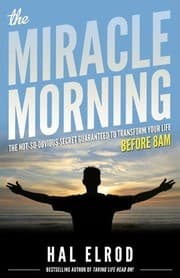
Like, is it, is it journal every day? Is it my magic, you know, miracle morning? Is it- Yeah ... is it a coach? Is it, you know, do I go vegan, sober, you know- Yeah ... uh, Bible be- Like, like, how, what do I... You know, like, how do I actually- Yeah ... get there?
Yeah. And, you know, I know that this is probably particular to each individual, but do you have some just common practices for people who may be listening to say, okay, if you wanna... Maybe you don't spend enough time in your own mind, right? So I don't think, I think today in particular, the vast majority of our society does not spend enough time inside themselves. It, and I don't mean ruminating on the past as we discussed.
I mean, just literally, what am I feeling right now? What am I thinking right now? Why do I feel this way, et cetera. Um, to start to get in there and, and actually do that, what are some common practices that you've either used yourself or coached others on that start this conversation, that, that allow us to start talking or, or understanding ourselves at a, at a deeper level? Yeah.
So there's three things I'll offer. So, um, one is I'm actually an emotional intelligence advisor as well, so I am a huge fan of the emotional intelligence assessment for those that want data and are very cerebral. It's, um, not super expensive, and what it shows by and large is it shows, uh, h- not just how intelligent you would be on a scale, but we're usually less concerned with that. What we're looking at more is how aware are you of your emotions and how much are they getting in the way of your self-regulation? And the thing I love about it is that other, unlike other psychometric assessments, it's not behavior, which typically doesn't change over...
It takes a lot of work to change it over time. It's skills. So, uh, you can actually take the assessment and then decide, oh, I wanna work on my emotional expression, and then in 30 days take it again and see that number, uh, improve, which I think is super empowering and, and great. So that's a great place to start, and what you'll find on that assessment is by and large, most people have a pretty low emotional awareness number in compar- comparison to their emotional expression and assertiveness number, which means that they're speaking and acting before they really understand what's going on. Mm.
So that's, like, a huge aha and, um, a great tool just to generate that awareness, and then you can work with a coach or, or somebody to, to, to work through that. The, the second piece is I created my, um, two methods. One is called the compass method, which is really about coming back to your own core values and looking at what is your own internal compass, not the one that you think you need to live by because the world tells you, but what is your own true north? What is your own internal compass? And then I walk you through that method as part of what I call my aim true method, which, um, I alluded to earlier, but it's really about awareness, reaching the an- inflection point, making a decision, like, okay, now I really see where this one thing in my life, or maybe it's more than one, aren't working.
What do I wanna do about it? And then you start to move through, um, the transformation. You start to move through that rite of passage, and then you go through the undoing process as you cross that threshold, and then you move into embodiment. And so I walk them through that in 90 days. Um, that's the process I've seen that's worked for me personally over and over again, so that's the one I use.
But as you said, it's very contextual. Um, maybe eating vegan is the right answer. Maybe, you know, miracle morning is the right answer. I think all these things help. However, they're not gonna get to the root cause, and I think to get to the root cause, the, the number one strategy, uh, that my methods allow is giving yourself the grace of space and time, like you said, to have some reflection and really ask yourself the tough questions.
Like, what is it that I'm afraid to see? What is it that I'm afraid to say out loud? And acknowledge what is the one truth that I'm afraid to, you know, admit. You know, like, what's not working for me anymore in my life? And make a list, and it doesn't have to mean it's cast in stone if you make a list.
You may realize that, okay, next week this one went off the list, you know? It's just start learning to have that relationship with yourself where you're taking time to reflect and, um, have that mental processing time like you talked about. We're really good at talking, but we're not really good at listening, especially to ourselves. Have you ever read the book, uh, The Untethered Life by Michael Singer? Yes.
Yes. That, I- probably one of the top five most recommended books on the podcast that I've, that I've talked about. Um, you know, if I, you know, if I had to put my finger on one of a few books that has literally changed the way that I operate as a human being, it was that book. And if I had to, to broad stroke it, it's essentially the voices in your head are not you, and you have, and I'm giving you permission to not listen to them. Mm-hmm.
Doesn't mean they're not data points, right? But they're, but, you know, all this, the way I think of it, just the way my brain works is, like, I was like, "Oh-" That's not me? They're just data points? That's just my body and my mind sending me signals to keep me alive for one more second? Mm-hmm.
Oh. Yeah. That's why it tells you to stuff your face full of food because, you know, your body's going, "I need calories to survive," because it could... You know, I'm, I still think it's 150,000 years ago where I may not eat for a month, right? Like, like, it's just...
And then all of a sudden, I, I started... It was, it was a weird moment because it was almost like I was meeting myself for the first time again- Yeah ... when I stopped listening to that voice, 'cause that voice was like, "You're not good enough. You didn't come from enough. You, you haven't done anything." All the things you said at the beginning, right?
I, you haven't done anything worth doing. You didn't come from a family that's worthy. You don't have any interesting, you know, you're, you're not the third generation son of some prince from wherever that's a fun story. You weren't, like, abused as a child so badly that that's a f- a story worth talking, but, like, you kinda had, like, this lower class but semi-fine upbringing in a small, shitty town and kinda made your way out, right? Like, no one gives a shit.
That's not worthy. You know, like, all this stuff going on in my head every time I wanted to do something, and when I finally just went, "Oh, you're kind of an asshole. I don't really like you 'cause you say things that don't, you know, isn't aligned with who I am, and, and now I have permission not to listen to you anymore." And that may sound crazy, but, like, I literally sometimes will tell the voice in my head, "You're an asshole." Like, not out loud, like- Yeah ... in myself I'll be like, "Nope, that's kind of a, that's kind of a jerky thing to say."
Like- Yeah ... I, I, I'm not with you on that. Like, I'm gonna keep going. When I tell people sometimes about that book and about what, what I just told you, you know, articulated in different ways sometimes, but, um, I don't think most people know that. Like, I, I- No ... honestly think most people believe that voice in their head is- Yeah ... them, like some subconscious thing that gives a crap about them- Mm ... actually speaking to them, and they don't realize that it is a selfish portion of either your brain or your body communicating to you to literally keep you alive for another second, which is- Right ... it's o- their only goal.
And sometimes that aligns, right? Like jump out of the way of the bus. Yeah. And but most of the time it does not align with your long-term goals. And, like, I guess i- through your experience, I'm gonna assume you've had different moments like this, like when you have these moments of clarity, like for me, when I, when I kind of learned this, I turned to journaling for...
That was my tactic, right? Mm-hmm. And I just started writing, and things came out of me that I had never thought, written, or certainly not articulated before. Mm-hmm. W- when you've experienced these moments of clarity, how do you, how do you solidify them in your life? 'Cause I think they can be blips, right?
You have this moment where you're like- Mm-hmm ... "Oh, wow, that's not who I wanna be. Like, I actually wanna live this life. I'm okay making a little less money to have a little more freedom to be with my f-..." 'Cause that's what actually aligns. And then we forget, and we go right back to doing what we've always done, and we never put it into practice.
So how when we have these moments, we, we, we find something about ourselves, or we, we are like, we, we really lock in on a value that we would like to live by- Mm-hmm ... how do we make sure that we keep doing that thing, that we lock that into our lifestyle, that we don't backtrack to the person that we were before that was creating the frustration, pain, et cetera? Yeah. I love that question. So first of all, there's one core question I ask myself every day, and now I ask myself probably hundreds of times a day. I'm not always perfect at it, but it's will this bring me closer to peace?
And what I find is if the answer is no, then the answer's no. Now, if it's like a business decision, let's say there's like a contract or something I'm in, right? And I'm like starting to realize I'm halfway through the contract and it's not bringing me closer to peace anymore. It's bringing me closer to fear. Then that's when you start to negotiate and start to bifurcate and say, "Okay, what part of it is fear?"
And, um, and maybe I exercise a 30-day rule or, and find s- another advertiser or do, you know, what, what are the options here? And then you've honored your integrity, right? You've honored that peace, and you, then you get a sense of peace because you've done the thing that you know you needed, your soul knows you needed to do, if that makes sense. So I just wanted to share 'cause that's my one question I ask myself about everything. Does this bring me closer or further away from peace?
Because I believe that's our natural state. That's how God wants us, and that's how we need to operate, and then we can save those amygdala moments for when we really need them, not be firing on it all day long like most of us do, myself included, in, um, up until now. So that's step one. Um, step two is I'm a huge-- I love journaling, w- but I'm also, because I'm a mom on the go and doing things, I'm a huge fan of I do voice notes. So I'll do memos on the phone or I'll even do the Notepad, and then I'll just voice to text in there.
And I'll just say, "Insights from walk on," you know, "Friday, October 3rd," and I'll just start talking. I find that, uh, I like writing, but things come out me a little more prophetically if I speak it. So I must, I, I tend to do it with my speaking. Yeah. And that's how I kinda anchor it, and then if I wanna take that further, I'll come back and journal.
And then if I wanna take it even further, I'll copy and paste it into like ChatGPT and kind of say like in my own little private Jeep chat that I've created with my own rules and guidelines, so it sounds like me, and saying, "Okay, like, how might this work into my current method or into my coaching methodology to get ideas on how to actually bring it out into the world?" 'Cause I've, I really feel strongly when I get those clarity and insight that they're things that need to be shared. I completely agree. Yeah. I, I, I love that you took it all the way to publishing 'cause I think that's, to me, that's the piece that locks it into my brain. I completely agree.
My, my way is slightly different but exactly the same in the same regard. Um, I tend to, for me, writing locks it in a little better, but that's just me. And I, but I will agree, less articulate. Um, and but I find sometimes when I write Weird things come out of me that don't come out of me when I'm talking. And again, this is just me.
That, that's, that's not a judgment. But, like, the other day I was journaling and I try to journal in the morning every day, one page. It's, it's not a big page, just so everyone knows. This isn't, like, some crazy thing. I, I started doing it, um, during a very rough time in my life, uh, 'cause I read, um, The Artist's Way, uh, by Julia Cameron, and I did the morning pages, and that was very, very helpful.
But I found three full pages every day as a s- as a dad and, and now as a single dad, like, was too much. But so I have this one little, it's probably six by eight notebook, and I just do one page at, at max. If I hit a page, I'm done. Sometimes I will at night. I always date and time them just so I know.
But the other day it was funny. I was, I was writing and, you know, I've been struggling with a few things lately. Just, just different business stuff and where do I wanna go with this and different stuff. And all the sudden I just wrote, "Stop hiding." And- Powerful ... like, I don't know where that came from.
I hadn't had that thought, right? But for me, again, again, this is just my way, that this is not a, a better or worse in any regard. When I write, weird things like that happen. Just these, all the sudden I'll be like, boom, and then I'll just, "Stop hiding." And I'm like, I like s- I literally stop and I, and I looked at it and I was like, one, it m- it, like, gave me chills.
I just got chills saying it to you again. I know, me too when you said it. And I wa- and then, and I, I don't know that I've fully... This was, like, four days ago, by the way. So I have not completely figured out exactly what that thought meant, but there is something inside me that feels like I'm hiding from something, and that came out.
And, and whether it's through voice notes or it's through whatever your method is, writing, et cetera, jou- you know, typing, whatever, whatever your method is, I feel like we have to get it out of our brain. But the part that I love that you brought up that I think is the linchpin to this, that locks it in, is the publishing piece. And the publishing doesn't have to be public, but I do think you need to publish it. It needs, even if it's a, a personal Apple Notes folder where you, you, you work out the thoughts a little more, right? Not just the voice note or the, or the journal entry, but, like, you actually kinda go, "What does this actually mean to me?"
And, and start to build it out. That really locks it in, I, I think. I think you have to take that next step. Just capturing it is enough, 'cause how many amazing things have we captured and never gone back to? Yeah.
Like, it just, it's somewhere in some folder on s- you know, something, but we've never gone back to it. But when you publish it, it's like now it's a real, now it's an archive, kinda, that, that is now part of your, your brain, which I think is wonderful. Um, I have a few more questions if you, if you have a few more minutes. I know we're, we're starting to get up to the time. I just have a few more questions.
Um, and this is gonna be slightly out of context, but I, I wanna come back to it. Um, how do, how do you know when to transition from, like, dealing with your shit to, like, suck it up and just go get it done, right? Mm-hmm. 'Cause there is another side to this sometimes too that's like you can almost, uh, be too introspective sometimes. Mm-hmm. Oh, yeah.
And sometimes it's like, look, like, everything's not perfect. Yeah, you got this pain. You're frustrated by this, but you also gotta go get some shit done. Like, how, for you, do you, like, compartmentalize that shift? Or how do you know when it's time to go like, "Okay, I've thought about this enough.
Now it's time to go execute"? Or is that not a decision? Is it all part of the process? Like, I'm just- Wow ... I'm interested in that for you.
No, I love that, 'cause I, as a ruminator and a thinker, I have spent a lot of my life overthinking on things. I, I think for me, the way I do it now, at least at this season, is, is my body. So for instance, if I am, like, really tired and just feeling like I'm hitting a point of, like, a day or two where I'm really just exhausted, kind of out of nowhere, but my brain is like, "No, you need to do all these things," I listen to my body. Like, my body's like, "Nope." Like, trust the process.
Take your time, you know? Um, if my body is energy, but my head is like, "No, stop. This and that," you know? So I find that my head ten- my body tends to be more the truth-teller than my head a lot because of the conversation we had earlier around voice. So just getting really clear on that voice and, and whose it is.
Is it yours? Is it, you know, God's? Is it a higher self? Is it your, you know, angry stepdad? Is it, you know, whose voice are you hearing and, and what are their intentions for you?
Um, so I think that's really an important part of it. I think, um, I think, um, s- you know, for me, I, this may not work for everybody, but I get, I usually have, like, it's usually, like, a 24-hour rule. Sometimes it can be 48 or 12. It kinda, it, it has a, a d- standard deviation there a little bit, um, depending on what it is. But, like, for instance, if, like, something bad happens, like let's say I lose a client or something, I'll give myself 24 hours to feel bad about it and then say, "After that, Kendra, you, you're done.
So here's your 24 hours," you know? Um, and so I try to kinda put rules on it. Um, obviously, if it's, like, a death of a, of a friend or a family member or something, you need more time than that. But what I do is try to give myself time to grieve in each day, you know? So, like, you're gonna be grieving through a whole, out the whole day, but, like, deliberate grieving time.
Like, these two hours I'm gonna go on a walk, and if I cry, I'm just gonna cry. And, and actually build that space into your life for these things so that you can move through and move on. And so, you know, for me, those tools and, and tips work for me. What's worked for you, Ryan? I'm curious.
Yeah. I, I'll tell you the second, the second one that you talked about, the just letting yourself experience it, was huge for me. Mm-hmm. Um, you know, I was raised by a, a good father, but a very kinda traditional, um- Men, you know, are strong, shoulders back, don't show emotion kinda thing. And, and, you know, when, when different very negative things happened to me in my life, uh, especially early on, I would push down, and repress, and hold in.
And, and, um, and it never, it, it, it rare- well, it rarely then presents itself in any kinda positive way, in any kind of positive way. Um, maybe as aggression on a football field as a child, but certainly not in any kinda, uh, real positive way. However, um, as I grew up and, and actually, uh, my dad ended up going to, to prison at one point in my life, and I got space from that mentality. And again, I don't-- my dad's a, was a tremendous dad. He's a great grandfather.
Uh, he made some bad decisions that he paid for and has changed his lifestyle and, and it's all good. That's good. Um, but that space, I, I, I sp- I spent more time with my mom and more time, uh, and she's, as I mentioned earlier, um, very biblical, very, very, very dialed into Christianity, and I got a little more taste of, of acceptance, of understanding. And now, uh, just recently I had a, uh, a guy that I know locally in my town, unfortunately, he's getting a divorce, and his wife initiated the divorce. He's very upset.
You know, he did not want it, does not want it, and he's experiencing these emotions. And I said to him, "The worst thing you can do is not, not allow yourself to go through it." And now, like you, 24, 48, whatever the appropriate amount of time is, an appropriate amount of time, I give myself permission to let that bad thing wash through me and experience all the negative emotion, right? Like you said, if it's crying, if it's anger, if it's, you know, shouting in a controlled, appropriate way, not at other humans. You know what I mean?
Like, if it's, whatever you gotta do to let that emotion wash through you- Mm-hmm ... it's the only way to get past it. It's- Right ... there's just no other way. And, and it, if you, if you bottle it, if you don't deal with it, if you think that somehow being... You, you can be stoic in public and still let something wash through you if that stoicism is what is needed, right? Like there's, uh, Jordan Peterson says, "Be the, be the strongest man at your dad's funeral."
Mm-hmm. And I think that's a wonderful-- I, I, I do think there's a lot of merit, and I think it's a wonderful idea because other people may need your strength, right? Mm-hmm. But that does not mean, nor is he advocating for, you to not deal with that trauma. Mm-hmm.
So even if you, for whatever reason, need to be stoic in your public-facing life, you have to let that shit wash through you, or it will literally eat you from the inside out. And that has been one of the, the biggest lessons and one of, something I will carry with me forever, and I advocate for it. And anybody who brings up trauma, my first thing I say to them is, "Experience it." Mm-hmm. Experience the-- You're, you're mad as hell, be mad as hell.
You're, you're, you're sad, you just wanna cry, and shout, and curse, and, and, and, and do it. Like, let that out. 'Cause the only way to repair is on the other side of that. If you're holding it- Mm-hmm ... it's just, it's just, it's just a cancer. It's just eating you from the inside out. So I, I completely agree with that 100%.
And, um, it, it, it's funny how we almost need-- It's why I think coaches, counselors, um, you know, why I think these, these roles are so important is oftentimes it's simply permission. It's someone who's having this terrible experience sitting down with you, and you saying, "You know what? It's okay for you to feel that way." Mm-hmm. Like, "You're, you're not wrong.
You're not bad. You're not whatever, because you're, all you wanna do is cry for 10 hours today 'cause of this horrible thing that happened. That's not wrong. Go do it." Like, it's just that, that little bit of permission that people need and, and I just think it's a, it's a wonderful profession.
I, I'm so glad that you are out there. I love your methodology. I love the way that you approach it. I mean, I feel like people are lucky to be able to spend time with you. I certainly have, uh, in our time together here.
Thank you. Um, if someone does wanna get deeper into your world, if they wanna listen to your podcast- Mm-hmm ... you know, how, how do people get deeper into your world, your work, your ideas? Yeah. Um, what's funny, I kinda joke that I'm the Hitch of executive coaching because it's always been, like, secret and word of mouth kind of, you know? So now I'm doing podcasts, so putting myself out there a little more.
But they can find me at kadridalstrom.com. They can, um, find my podcast, which will be, um, thehighachievingleaderpodcast, um, .com. They can find it on that alias as well as on Spotify or on, um, YouTube, a YouTube channel. And reach out to me. I, I do work, like, with only five or six clients a year.
So I work with, you know, it's very, um, c- curated, cultivated, um, very high touch experiences as I, um, uh, work through the, to work through the year just to, to keep it, um, the quality. Quality's really important to me, so I wanna have quality and attention to detail. And, and a lot of what these people are going through, as you've mentioned, are intense moments and life transformations. So whether it's career or personal, it's just important that they, they have the support they need, and I wanna be, I, to my, to your earlier point, I need to be at my best self in order to do that. So that means I only can take so many people a year.
So that's how they reach out to me and, um, it's been a pleasure talking to you. I think you and I are aligned on so many things, and I love reading your Substack and, and following your work. Oh, well, thank you so much. Um, when you do write the book, you- Yes ... t- call me, text me. Come-- I want you back on the show 'cause there's, like, a million more things we can talk about.
I would love to. Yeah. Um, I had a lot more, so, uh, open invitation to come back, so please, uh, reach out 'cause, um, I know the audience is gonna love this conversation and, 'cause I certainly did. So thank you so much. Thank you.
It's been a pleasure. Happy holidays. Want to give your host a gift? Consider subscribing, rating, and reviewing the show this holiday season. It really helps the show grow.
From all of us at Believe, have a merry Christmas, everyone, and a happy holiday. If you liked the show, please take a moment to rate, review, and subscribe. It really does help the show to grow. Thank you for listening.