Hiring isn't just about finding someone willing to take the job. You need the right person with the right background who can move your business forward. If you want candidates who truly match what you're looking for, trust Indeed Sponsored Jobs. With Indeed Sponsored Jobs, your post stands out to quality candidates who actually fit the role. According to Indeed data, 90% are more likely to be hired and trusted by 1.6 million companies.
Spend more time interviewing candidates who check all your boxes. Less stress, less time, more results. Now with Indeed Sponsored Jobs. And listeners of this show will get a $75 sponsored job credit. To help your job get the premium status it deserves at Indeed.com slash Podcast 13.
Just go to Indeed.com slash Podcast 13 right now and support our show by saying you heard about Indeed on this podcast. Indeed.com slash Podcast 13. Terms and conditions apply. Hiring? Do it the right way with Indeed.
Hello. I'm here during the lunch rush with Janice who owns her own food truck. Best cheese steaks in town. Janice traded up to Geico Commercial Auto Insurance for her food truck business. We're here where she needs us most.
They sure are. We make it so easy for her to save. With customized coverage that grows with her business. I'm sorry. I just get so emotional talking about saving folks money.
Not this onion I'm chopping? It's just so beautiful. Oh yeah. Nice. The onion.
Get a commercial auto insurance quote today at Geico.com and see how much you could save. It feels good to Geico. At Emory University we are guided by a shared purpose and a spirit of collaboration. Students here push each other to think creatively and work together because we believe different perspectives lead to new ideas. We know that Emory's mission to create, preserve, teach, and apply knowledge in the service of humanity takes all of us.
We do together better. Learn more at emory.edu. In a crude laboratory in the basement of his home. Hello everyone and welcome back to the show. Today we have a tremendous episode for you with a tremendous guest, Brett Fulmer.
Otherwise known as Broker Brett on all the socials. Brett's been around for a long time and I've always enjoyed his approach because he doesn't attack insurance from the traditional standpoint. He comes at it very much from a more technology or insurtech standpoint but with a strong appreciation and respect for the traditional agency, the importance of insurance. And I've just always been a fan of the way that he views our industry. His work at Insurance Nerds has always been fantastic.
You've seen him working with a bunch of different insurtech startups as well as both like a brand ambassador slash advisor and growing his own agency that he's a partner of out in Newport Beach in California. And this is just an awesome conversation. It's just an awesome conversation and frankly, I'll say this, I say it during the episode as well, but when I realized that I hadn't had Brett on the show yet, I was like, oh my gosh. Like I just, I kind of just assumed that I had interviewed him before and if I'm being completely candid, my mental around interviewing people spans the various shows that I've done. Everything from the old Content Warfare show to Agency Nation to, you know, all, you know, I think this is the third iteration of a podcast that I've done.
I tend to get it kind of jarbled in my head who I've interviewed, who I haven't. And when I realized that I hadn't actually had him on the show, I was like, oh my gosh, dude, you got to get on. So hopefully that gives you an understanding of my appreciation and respect for Brett, what he's doing and what I think he's capable of in our space. And I hope that you'll connect with him on LinkedIn, Twitter, great follow, but definitely get in Brett's ecosystem, make him a connection, highly recommend it. And he'll talk a little bit about how you do that at the end of the show.
So you can also connect with him in all his spots in the show notes of this episode, go to RyanHanley.com. That's where all the episodes are. But before we get there, just a quick shout out to a couple sponsors of the show, the people that make this possible, tools and people that I love and respect. Big shout out to Donna for Agents. Donna is an analytics platform that is changing the game for us.
I mean, really, it's giving us insights into our book of business in a way that wouldn't be possible otherwise. Now, your natural reaction to that should be, Ryan, you're a startup agency, put your head down, right? Business, you know, just why are you worried about all these things? Because my agency is not going to be a small startup business for very long. Like I'm not taking the traditional path and I'm certainly not going to grow at the traditional pace.
And for that reason, I want to make sure that I have the tools in place that mirror or mirrors the wrong word. That support the core values of what we're doing. And data and not just data to have data, but data that I can look at, that I can digest and make business decisions around is one of the core pieces of that's going to separate Rogue from everyone else. And that's why I've made the investment in Donna is a sponsor of the show, but I pay for Donna. It is a tool that I pay for out of our, you know, it's an agency line expense because I believe in it.
That's the whole deal. I believe in this tool. And I think you should go to, you know, Google Donna for Agents. Just the people behind the project, the people involved with the project, the agents that are using Donna today. This, if data is something that is important to you.
Now, if it's not important to you, just disregard this. But if it is, this is a tool you at least want to know about. It's a tool you at least want to go get the demo for and know about this tool. I promise you, you will not be disappointed. Donna for Agents.
Check it out. I just want to give a very quick shout out to Mick Hunt and the team at Premier Strategy Box. Guys, if you need help with something in your agency, and I'm going to say something as a broad term, connect with Mick, reach out, go to Premier Strategy, mystrategybox.com, mystrategybox.com. Go to mystrategybox.com or just Google Premier Strategy Box. Find Mick Hunt.
Find his team. They will help you manage, build sales processes. Same thing with customer service, customer experience. The team there is incredible. And if you're looking to next level up, if you as an agency owner are sick of having your hands in every single process that happens in your agency and you want to really put yourself in positions where you can go be your best version of yourself and you need someone to step in and help manage sales flow or help manage service flow, then Mick and his team are the perfect partner.
Every agent that I have referred to Mick in the team at Premier Strategy Box has signed up. Every single agent, 100 for 100, or I don't think I've sent 100 agents, but we're batting 1,000, I can say. So that's how much, how strongly I feel about Mick and a team at Premier Strategy Box. Okay. I got that out of the way.
I love you guys for listening, as always. Let's get on to Brett Fulmer. Dude, what's up? How you doing? Another day in the neighborhood, you know?
We're recording already. We're coming in hot. So I can't even ask about what we can and can't talk about. So we'll just go for this. Well, we can turn it off for a sec if there's some...
I don't think we should. You know, I think we just got the candid live feedback. Yeah. If you want to go super off the record, we can just... Everyone can just earmuff.
Just say earmuffs to everyone, and then they can't hear us. Well, not to like fanboy part, but what I think is interesting, and sorry, this will sound better. Yeah. Dude, so when I got started, I'd already... I kind of cheated because I was at a startup around 2014 to 16, data visualization.
Yep. But I want to say 17 or 18, I got an office job, and it freaked me out because I'd always been an outside salesman. So I go like walk or jog two or three miles in the morning. I listened to the whole Agency Nation, like podcast catalog. That's really like if I came in with a head of steam, it's like he'd been in sales, he'd been around a startup.
You guys were a little bit more nervous about tech than I was. I was like... And plus, I had nothing to lose. You know what I mean? So you're worried about them coming in.
I'm like, dude, tech happens. You know, like it's usually helpful. I think the part about the InsurTech revolution of 2016 that was the most interesting to me, and I'll say I agree with you. I think, you know, looking back now on, you know, five years ago, our position, and even 2015 a little bit when it really started to get started, there was... I think it was less about the tech and more about the rhetoric.
It was more this every InsurTech founder of that generation, and some of which have changed their tune and changed their narrative. It was combative. It was disrupt. Tech crunch disrupts. It was disrupt, disintermediate.
This entire industry is filled full of sluggish idiots who don't understand, who can't innovate, who can't move, who are... I kind of thought that, too. I thought it was going to come in and have a heyday, just outrun people, work hard. It is hard to move products. It's hard to move relationships.
Like... Yeah. Yeah. And, you know, I'd say in the last few years, I've been blessed to be an advisor for a couple different startups in our space. And not even necessarily startup startups, but emerging platforms of all different sizes, and probably half a dozen or so, some of which I talk about, some I don't.
And the number one thing that I say when I get involved with any of those groups, if they don't already understand this, is that understanding how this industry actually works and what we really do for a living is the core of being successful. I do not care how smart you are, how much money you are, how well-connected you are. There are startups right now who look like they could be potential household names that have absolutely, positively no shot of ever reaching profitability. You know, you come in with a slick front end and 80% reinsurance, you're toast. You have no chance.
I don't care how good your marketing is. The first time we hit a hard market in reinsurance, you're toast. And we've seen some of that, you know. And I think – and that's just one small example. And I'm not talking about anyone.
You have to start kind of unideal to get to ideal, but I see what you're saying. Like unless the math pencils out right, you can be in trouble pretty quick, you know. And that's a very shallow, broad stroke example. And no one is quite so leveraged into reinsurance as that. But the idea is if you come in and you're going to bypass some of the traditional models, understand that you're not actually doing anything that is that new.
And what I mean by that is there have been companies for a millennia that have tried to leverage different markets, come in with different backing. I mean, maybe not necessarily using digital or, you know, whatever, the different processes that we have today from a technology standpoint. But the idea of buying market share by dropping prices and being easier to do business with is not a new – that's not a new idea. That's actually one of the most recycled ideas that exists. I think some have done it well.
Some have haven't. And the ones that I see, like I look at Kyle Nagasuji. Nagasuji. Yeah, I always mess with that. I'm sorry, Kyle.
I always butcher your last name. But I have tremendous respect for the way that he's building ClearCover. And I'll tell you from a personalized perspective. Now, Rogue is a primarily small commercial, but we have in our roadmap – I want to start adding personal lines. Well, today, traditional – most carriers from a commercial line standpoint will open up to a more – because we're in 20 states now.
We have customers actually in 27 states, and in the next six months, we'll be fully national, if not sooner. Probably not Alaska and Hawaii just because it's just – the traffic is so small, there's been zero interest. But say we'll be in all lower 48 states inside of six months, if not earlier. Okay. So to get an appointment with a traditional carrier in the lower 48 on a national level for commercial lines is not incredibly difficult.
You have a – if you can prove that you understand the product and you have a plan, you know, checkbox, hey, just send us your license. You're good to go. But on personal lines, I found – and again, I'm sure someone will email me and say, Ryan, but we – I think I know where you're going. I agree. It's way, way different.
It's – we're not appointing anyone in New Jersey. Well, what do you mean? I'm in Pennsylvania and New York with you and have written business. You want to – well, in New Jersey, you know, you got to talk to Tim. Tim's been underwriting new – it's like this completely different thing.
So, okay, some of the bureaucratic stuff, completely willing to deal with. Some of it is just too much of a struggle. So, I look to some of the InsurTech carry – and I shouldn't say InsurTech. The – this next generation of insurance carriers, ClearCover, I'd put in this bucket. Yeah.
As better national options for personal lines insurance. Especially if you're focusing somewhere else. I think InsurTech's going to make all of us cross-sell more. There's a friend with a niche, commercial expertise. And I was like, no, just go get set up with HIPPO and ClearCover.
That'll make that part of your life easy when people are demanding to get a quote for X. Yes. And that's the way – that's the way we're going to address it too is I think we will write with very commonly known traditional agencies. Not that we won't look at some of the InsurTechs, but pound for pound, I haven't seen them displacing either in ease of business or in quality of product. You know, any of the InsurTech carriers on the commercial line side, I like the people running them and I have no problem with them.
But I'll tell you, I'll take Hartford or Chubb or, you know, even Guard. Or somebody who gets you to them. You know, the – it's just as easy to quote with Chubb or Hartford as it is to quote with any of the InsurTechs. The product I think is still better by far and the claims is way better. And so I don't know that you're actually getting a better product yet on the commercial line side.
But on the personal line side, like I look at ClearCover and I think ClearCover is a primetime player. I think ClearCover has got a real shot of being – like I look at Hippo as a best in breed. Personal lines, you know, I'm doing air quotes, you can't see me. InsurTech, personal lines carrier. I think Hippo has kind of done a lot of things really right and I have a lot of respect for them.
And I think ClearCover is the auto equivalent. And I think they – did they just have a – no, it was Metro Mile that Hippo did a partnership with. I'm sure that's because of scope. But I put those – Well, it's like a faux bundle, which I think is smart. Yeah, like a faux bundle, which I think is cool.
I mean – Yeah. That makes sense. No, I've liked Hippo. The way – and I'm always way too political for my own good. I'm, you know, a nice little Southern California guy.
Hippos, I'm weeded. You know, 40 things are going on and a realtor reaches out and says, hey, I need a quote. I need to put a mortgage company on it. Can you turn something around? Boom, Hippo real quick.
You know, maybe Travelers, if I have some more time, a little nicer situation, bundle, umbrella, whatever else. Something more bespoke, high net worth, you know, we'll go to a different carrier. But, yeah, they're great when you're in the weeds and you're weeded and you believe in the product. Yeah, I've been a ClearCover client myself because I like to eat my own dog food. I bought a jetty of renters, use Oscar for health insurance.
Like, you can't be chilling this stuff. But I've actually gotten to the point where I don't even think about it as insure tech and insurance anymore. It's sort of like fit, place, time, and hopefully everyone's using technology well. But I do think you're right, though, to look at the reinsurer and the claim side and kind of the full spectrum, you know, of what you're offering. Yeah, one of my, so in personal lines, and again, this is all, what are you willing to tolerate for what exchange, right?
You know, for what's the value prop? And I look at, in personal lines, if you're primarily third-party claims adjusters, you know, independent claims adjusters, and there's that level of disconnect. I feel more comfortable with it. Personal lines, claims adjusting is far more standardized, and, you know, you have companies like Snapsheet, which make it very standardized. And so I feel more comfortable there.
But in commercial lines, I still would love to see a large portion of the claims adjusters be familiar or contracted to that carrier. Nothing against independent claims adjusters if there's any listening. I'm sure there's not a lot. But I will say that in the situations that I've had, both in this instance of my career and in past, independent claims adjusters are oftentimes, from my perspective, involved in claims that get out of hand. And it's just, a lot of times, they're overburdened.
It's not even like they're trying to do a bad job. That's not a knock on them as professionals. But a lot of times, they get thrown different claims for different lines of business from four different companies. And now, you just, you can't, you're never going to get as good of experience as, all I do is adjust this company, and I know the products inside and out. I know the forms inside and out.
So that's one of the things I try to look at. And again, it means more to me on commercial than personal. Yeah, no, it's fair. And, you know, to be honest, I've been on the sales side a lot. I've had a few personal lines, losses.
Luckily, most of them have gone a good direction. You know, I haven't seen it. You know, I mean, I just, my book's small, my book's growing. And, no, it makes sense to me. The other thing I was going to say is the D to C is kind of rough.
You can have a third-party adjuster or whatever else, but you want to have that broker relationship, not to be biased. You know, kind of coach people through it a little bit. You can be biased on this show. Yeah. You know, I just think you still have a spot just because, you know, we're emotional beings.
You know, we're not totally rational and, you know, the shit hits the fan. You want a relationship. You know, you want somebody who's been there since before the fallout or whatever you're working on and can help you navigate, get back quick. Yeah, I was talking to an agent buddy of mine today and he said, he said, he, he, what he, he was explaining his business model and I'm an enormous fan of it and I don't want to blow up his spot for a couple of different reasons. And so I'm not going to, um, somebody, um, somebody, I think a lot of listeners in the show would probably know if I said his name.
Um, and he was describing his model, which he described as, and now that I'm about to bring it up, I'm going to get it slightly wrong, but you'll get the gist. Which was essentially different people, same process, every customer, right? Every customer is going to, their relationship is to the process, not to the person. And his point was, I want to be flexible with my team, both from a sales and from a service perspective to know that you're going to call and you don't need to get Brett, right? Because Brett doesn't do car changes as well as John and the service team does car changes, right?
The process is Brett is your problem solver and your program builder. And then once that program is built, sold, and you're with our agency now, John or John and one of his peers, Sally and Tammy and Timmy and Tommy, you know, they handle service and, you know, that, and, and, and, and the, the relationship is to the process, to the fact that you know, there's someone there and it is a human. It may be different people, but the process is what you believe in because that's what helps serve you the best. And he, he, he, he, he was much better in the way that he explained it. So I'm doing disjustice.
If he, if he listens, he'll know, and he'll probably be laughing because I'm butchering the way he said it. But I said, that is what we're doing at Rogue. And I hadn't really positioned it that way, but it is what I, it is a version of the, the traditional relationship that I believe works very well for higher volume and or more digitally oriented agencies. And I certainly believe that it is one of the models that sets you up for success in the future. Yeah, no, it's a Adam Smith differentiation of labor and reminds me of like the founder, you know, McDonald's set himself up to be hyper-efficient.
Yeah. I'll plug, you know, a little company to help out working with Faneo that's coming to the, you know, the States from Canada. They're working on some really cool built-in automation. It's not there yet, but to have recommended good, better, best to have these service policies, but they still believe like the ball's got me in the agent's court. You know, you're enabling the producer to use tech to better serve the client.
So, you know, I definitely see a hybrid future. You know, I don't see us going anywhere. No, I don't, I don't either. I think, I think the days of the chest thumping, you know, and I always, I give, I give Crothers a hard time for this all the time, but like, you know, he, he, he is training the next generation of these men and women. Um, you know, the, the chest thumping middle market producers, I think that, I think they'll still always exist.
I don't think that you, I think that that there, I think that middle market commercial is the last bastion of that ideal though, in my opinion, I think that, you know, you, you, you, I think what a producer is, what an insurance professional is today is going to drastically change. I think for a long time, it's been, when you think insurance professional, you think producer, and I will tell you one of the issues. And I, you know, Matt, Matt Jagger, who I just hired to our team. Oh, congrats, by the way. Yeah.
Thank you. Thank you. He's, he's been awesome and fits fits fit in amazingly with our team and him and Sarah. I feel, I feel very blessed. I've, I've been able to bring two people on.
I feel incredibly confident in and have really, um, and, and Sydney row can attest to this. They've taken to my, uh, more hands-off leadership style very well. Uh, and, and that's, that's, it's been good. Um, but my point in saying that is in, in, in, in that process of hiring, I realized that what I'm, what I was hiring for and what a traditional producer is seen as are not the same thing. And that, um, I think the idea of an insurance professional is drastically changing more technologist, more marketer, you know, like, uh, more of a Renaissance person than a, I sell policies.
You don't know what I mean? Like, I mean, if that makes sense. No, you're 100% correct. So when the pandemic hit, I used to do something called broker brews. We do a digital one.
And then I did one with some like leader buddies for insure tech. And then I did one with like young guns. We do these zooms, right. And since zoom fatigue. So I started messing around the podcast, uh, had fun with it, but it was a little all over place and shared some startups last year.
Not a lot of premium, a lot of work. And I realized between Feneo and everything else going on, I couldn't really nurture my own pipeline as much as I should. So I doubled down on the auto space with my buddy, Ed, who loves it. You know, he ran a big Marine agency for a number of years, but loves classic autos. And it's been phenomenal helping him build like an auto-focused podcast, helping the market, help him cold call a little bit to dealerships, making friends there, selling a couple of garages.
But he's passionate about classic cars, the auto industry, and we're selling insurance to it. We're making podcasts, we're making YouTube videos, and we can sell product. It's perfect. You know, I'm thrilled to see him just building a brand and join it. And we're transacting business.
It's perfect. You know, that Renaissance man kind of project, like you're saying. Yeah. I've always looked for allies. You know what I mean?
Like I like playing sports. I joke, I want to be the seventh best guy on the basketball court. You know, it's terrible when you're 10th. And if you're the first best, it's boring. You know, like I like hunting with people.
You know, even I know your wife's a badass. My wife's in PT school. You know, she's getting a doctorate. Like I'm looking for people are going to challenge me. We can grow and win together.
You know, I'm not looking for people to pat me on the butt. I'm too nice to everyone. So everyone's too nice to me. I need people are going to challenge me and help me kind of grow and go forward. Yeah.
I love, I'm the exact same way. I get bored with people who just tell me I'm doing things right very quickly. I would not have married the woman that I married if that was what I was looking for. Like, you know, I don't mean that in a negative way. That comes off very negative.
I mean, she, she's a high performer and she expects me to be a high performer along with her. And, and that's a good thing. And I, uh, I'm with you. I, I, I, I also thrive in a team environment. Um, I, uh, you know, I, I recently took on, uh, two, two partners in my business who will remain anonymous for now.
Um, small, small, but I needed some people who are more than just emotionally invested in rogue who could be sounding boards and that I could have on speed dial. And I didn't just want to pay a consultant as much as there are some amazing consultants in our space that, that, that I don't mean that to come off negative to anyone who does consulting. Um, I, I needed some, I personally needed something more, someone who was kind of, you know, very committed. And just having those two people, um, uh, just a lap allowed me to talk through different things. And it has taken me from, I will say a, a foggy vision of what I wanted to rogue to be to now we have a laser focused vision on who we are, what we're going to be, how we're going to attack the market.
And then that has allowed me to bring in Sarah and Matt who, who've amplified and it's funny. And, and, and I, I, I want to, uh, after you answer this question, I would like you to level set for everyone, all the things you actually do, because that's, uh, we never got to that part, but, uh, um, you know, I, I think, why do you think it is like, what do you think that is about having a team? Cause there are people who want to be solo, right? Like, what do you think it is that having a team brings out in you that allows you to be a better version of yourself? One of three brothers, you know, I'm in the middle, always grew up playing sports, actually naturally good long distance runner, but I always joke if God was like, you can be good at, you know, be a quarterback or shooting guard, you know, like I had somebody tell me one time that means I'm egotistical.
I was like, nah, I don't know. Um, just fun. I don't know. Success on her own. Like it's more fun seeing the bank account go up when your spouse is there too.
It'd be like, wow, that's pretty cool. You know, this is going up. Not that it goes up that often. Um, so I guess, yeah, for background, um, probably most relevant was doing office moving sales and a friend who's same age, but I would say a little bit more mature, a little bit smarter. It was like, Hey, you should check out insurance, good industry.
So I got my PNC license to try to see where leases were going to go or building purchases, but as a way to put my toe in the water, did that for like three years, uh, while moving companies. And then I thought my dad was going to buy it when the writing was on the wall that he wasn't going to buy the moving company. He was always scratch call for a commission salesman, great salesman. I got to work with him for six years. My older brother was bad-ass.
Like, you know, any positive traits I have selling with him, you know, I worked at a church for three years, a lot of good, you know, influence. Um, but anyways, personal lines for a year with the ability, networking, commercial, I want to kind of mess with my paycheck at the end of the year, small business, weird things happen, you know, um, six months that I thought was insure tech was kind of leads company, goofy experience, got recruited, something else goofy experience for three months was like, screw it. I'm going to go out on my own, uh, go back to restaurants, bartend. That was like three and a half years ago. Um, didn't know what I didn't know, uh, was on my own for six months, sold some personal lines, didn't realize how sticky the commercial relationships were, how hard it is to move that paper, what a long road that is.
So hopped at my buddy's benefit shop for a year and a half, did PNC there, great place to cut my teeth. You know, he's corporately trained, you know, really knows his stuff. A year ago, got back out on my own year and change and, uh, got a business partner, Ed, who's 57, who's ran a national Marine agency before, you know, 20 employees, six locations. Um, similar, you know, he lost a job two years before, had a goofy stint. I was like, dude, you're too knowledgeable.
Like this needs to be like your masterclass. You know, at the time he was like 55, 56, we started talking. I was like, make a good 10 years. Let's build something worthwhile, you know? And we have all my tech goofiness versus his ability to actually run a company and, uh, make sure we're making money, which apparently is important.
Found out later. That's what everyone says. Apparently. Yeah. That's the rumor.
Um, so luckily through, you know, insurance nerds, Lamparelli, you know, being friends with guys like yourself, you know, my buddies up in Canada, you know, Faneo kind of heard of me, knew of me and I was independent. So I was like, yeah, I can get you licensed. I don't, I don't know life insurance as well as I should, but I'm licensed. Like, how can I help? So we started working together about two and a half years ago, really cool relationship going from, you know, small goofy business to hanging out around a VC backed startup.
It was like trying to row canoe to hopping on a little battleship, you know? And like, it's been fun and like work really closely with one of the co-founders, Donald. He's a great businessman. Get to learn from him. So they're working hand in hand.
You know, Blake lets us use his address to start. We ended up getting our own little address. So that's all grown together. When Ed and I get going, you know, a year and change ago, he's like, hey, I have this program or friend with a lending CRM. Would you want to try to build the AMS?
I was like, dude, you're nuts. Like we're trying the hardest thing in the world to get like a scratch agency going. And you want to build like a CRM AMS? I'm like, you're out of your mind. But like he had been open to me.
So I'm like, okay, sure. You know, starts off as this little quiet project. I let Ali and Donald know. I'm like, hey, by the way, this is random. I swear I didn't mean to get into something else.
Just want to let you know before this goes out in public, like no problem. I was like, I'm saving life for us on there. We built, and I'll show it to you afterwards, but a really cool light CRM. You could dump in a CSV file, move them over to prospects, active, inactive, load up documents. There's something else.
It's not public yet. I'll tell you about later. You close that business, it can drop right into the agency management side of the house. The point isn't be cost effective, but it is cost effective. We're building it for the small guys, the one to two man agencies.
You know, want to help out Marine, want to help aviation, you know, kind of the unloved little corners of our industry. They're just a happy accident, and we're eating our own dog food. We have, you know, 60-ish clients. They're ourselves, 60% probably personal lines, probably 30% commercial, 10% life. We hit it for all verticals because that's kind of rare.
But this bootstrap little thing, there's four of us out of Southern California working on it, just a real happy accident. But yeah, so the three main horses are the brokerage, which I'm lucky that Ed's living in and running, and I just try to help out with prospecting and kind of back end. And the CRMAMS, which is actually, you know, somebody else's company that we're all partnering to build. And then, you know, Fineo is the big venture-backed startup that I've been lucky to, you know, they've gotten me out to Toronto twice, you know, just really cool. And you know what it's like when you're out there trying to build.
Like you said, it's kind of lonely. So having the Fineo team while working on my own stuff has been a nice blend of like community, thought building, and then also my own shingle. So I don't want to sound full of shit. Like I don't, you know, like I want to sell business. I want to be in the paperwork.
I don't want to pretend to have done more than I have, but I'm working on insurance every day. I have lists of things I need to do right here, you know? So try to add some authenticity to work with the startups, which I've enjoyed. But dude, thanks for helping me get a jumpstart, you know, with the early podcast, just give me perspective to all this shit. It's fun to be on here, you know?
Yeah. Well, it was funny was we communicate so often in the digital space that it like hit me one day. I was like, I've never had Brett on a show. So then I like immediately stopped what I was doing. I was like, yo, you got to just come on the show.
And you're like, oh yeah, well, you know, I was like, no, no, just let's do this. I'm going to spend a time. Just come on and you can come on again if you got something else. But like, it was weird to me that you hadn't been on. And, you know, if this is, this is probably not a surprise to our regular listeners, but there is no formal invite process for the Ryan Hanley show.
It is. I just kind of like, oh, that person would be fun or, oh, I haven't talked to them in a while. Or someone will reach, people reach out. There's like a, there's just no formal process. I appreciate though.
I kind of feel like, you know, I'll call it like business big brother or something. But it was fun when I ran into the ITC too. We got to meet that person. It's always cool. Yeah, that was cool.
Remember Christopher Franklin being like, Brett Fulmer's a lot bigger than you'd think. Just physically. That's right. Yeah. No, but it's funny.
That feels like a lifetime ago too. It's probably like 2018, right? So it was that three years ago. I just lost a job like three months before. Went out there, had a broker bruise the night before ITC and then just drove back.
I spent $60 on my hotel room, 180 on the happy hour. Drove out and drove back. That's funny. Yeah, no, it's fun hacking it together. But yeah, dude, you were open.
I mean, it's funny you say it this way. Like you've been known, you've been around a long time. And I felt very considered even before I started being on the scene more, you know? So thanks for being down to earth. Yeah.
I mean, as much as I've actually done anything in what you just said, thank you. I appreciate it. I, um, it's funny. I get, uh, I, I, uh, you know, you're, you're describing where you are, right? You have this agency, you also have two startups that you're a part of.
And I think for a lot of people listening that for some people listening, they may be nodding their head going, oh yeah, that's cool. And for other people, they're going, geez, what is wrong with these guys? Why don't they just focus on one thing and, and I, I will say, cause I've thought about this a lot, a lot, right? Because even doing this podcast, I'm doing a podcast. It's one o'clock in the afternoon on a, on a Thursday and in the day that we're recording it, you know, whenever you're listening to it, it'll be later.
But, um, and there's a lot of people that if they were my life coach, they would say, why are you doing that? Like, don't do that. Like you're, you're, you should be quoting policies or building automations or doing any other number of things to rogue that aren't this. And then I also, like I said, I'm have maybe it's probably half a dozen companies that I'm advising for. And then the number of other things that I do during a week that aren't just rogue would, would probably make a lot of agency owners want to barf.
That being said, um, you know, I don't know, you know, I, I think, you know, I think you could probably relate to this and I'm just interested in your perspective. You know, I go back and forth. Like, I don't know how to be any other way. Like I see projects that I want to be involved in that I think are interesting, whether they're interesting for rogue or not. Right.
There's projects that I'm involved in that I give feedback on and attend regular phone calls for, to, you know, as an advisor, they'll never be, I mean, they're all insurance. Everything I do is insurance industry, but they'll never be, they'll never, I'll never use the product. Not, not just, it just doesn't fit what I'm doing. Not, not that I think it's a bad, obviously I don't think it's a bad product. I'm, I'm advising them.
And I just think that I don't know how to be any other way. I just, I don't know how to, how do you look at something that looks interesting and go, meh, nah, I, I don't know. I'm with you. I, I've thought about a few different ways. Um, I tend to try to think like a VC and not literally back horses that overlap.
They can kind of like go up next to each other. Like for now, for instance, it's kind of like a cover wall, but for a life financial planning insurance, the CRM AMS can plug into Feneo and then I could use both as an agency. Um, and I can sell through Feneo's pipes. I can recruit to Feneo. Um, I think it is important to touch projects, highlight projects that you don't have any equity in, like, you know, clear cover that you don't have skin in the game on.
Cause I think it provides an air of authenticity. I think that there's a network effect too, that by touching these things, I can overlap. Like I actually hang out and I haven't lately, cause I'm not trying to ensure startups right now, just because they're too all over the place. I'm going to try to work on a classic industry. Um, but I would hang in a fintech slack.
You know, I actually don't pay that much attention to our industry for being around as much as I am. I kind of don't care. Like I'm playing my game. I'm trying to help the people that I'm friends with. I'm trying to build business and none of my clients give a shit about broker Brett.
You know, none of my clients care that I'm lucky to have doors open within our industry. To me, I try to be as active as I can around the insure tech stuff to get doors open. And I'm just trying to get the best spears as early as I can to go hunt as well as I can. And I do appreciate having a business partner who's 57, who will call spade a spade and he'll hang with these insure techs with me. And sometimes the stuff makes sense.
And sometimes he's like, that doesn't really pass the sniff test. Like we actually need the clients to use that. How are they going to get us the clients? All automation is great, but who's coming in the door, you know, like, so just balance. And for me, it was having a business partner who can live in the agency so I can touch the other stuff, you know, that was helpful.
Yeah. You know, yeah, try to be reasonable. I try to help my brother's cooler startup and my wife shut me down. She's like, hey, has to be insurance, you know, kind of funny. Yeah.
So there's a little bit of that. To me, it's so random, but Fineo being on the East Coast is helpful. And then trying to build a business in the West Coast. So I can do a lot of that tech stuff in the morning, you know, and then cold call and whatever in the afternoon, little things like that kind of line up, you know, pretty good. Yeah, that's cool.
I will say that, yeah, I keep my eyes, a big part of this podcast that I do, part of it is I just like talking to people. Part of it is, and I've said this a bunch, I feel an obligation to add as much value back to this industry that has changed my life, right? I mean, my kids live in a nice suburban home and go to a nice school because, you know, very, very much unlike me, you know, my youth because, you know, I'm of this industry because of my wife and her family and what this industry has brought. So I feel an obligation to give back as much as possible. And the other side of it is, like, just like you said, I think by engaging, by getting to know people, by taking a half hour on a Friday to hear someone's story, you know, and learn from them and give them some feedback and connect them to people, you're gathering intel constantly and building karma in the world.
You know, you're building credits that you can exchange down the line for things that you might need, right? Hey, can you introduce me to insert this person that helps you deliver more value to your customers or whatever? And while I agree with and believe that focus is very much important at the same time, if there's any, if there's any through thread to my own career, it's serendipity. And that's only through constant connection and value delivery. What's up guys?
Sorry to take you away from the episode, but as you know, we do not run ads on this show in an exchange for that. I need your help. If you're loving this episode, if you enjoy this podcast, whether you're watching on YouTube or you're listening on your favorite podcast platform, I would love for you to subscribe, share, comment if you're on YouTube, leave a rating review if you're on Spotify or Apple iTunes, et cetera. This helps the show grow. It helps me bring more guests in.
We have a tremendous lineup of people coming in, men and women who've done incredible things, sharing their stories around peak performance, leadership, growth, sales, the things that are going to help you grow as a person and grow your business. But they all check out comments, ratings, reviews. They check out all this information before they come on. So as I reach out to more and more people and want to bring them in and share their stories with you, I need your help. Share the show.
Subscribe if you're not subscribed. And I'd love for you to leave a comment about the show because I read all the comments. Or if you're on Apple or Spotify, leave a rating review of this show. I love you for listening to this show and I hope you enjoy listening as much as I do, creating the show for you. All right.
I'm out of here. Peace. Let's get back to the episode. Yeah. Lamperelli, I feel lucky to be kind of mentored by him.
When I was in between, I lost that job doing my own thing. Him and Steven Goldstein were really the two that were like, no, just figure it out one way or another. Just go build, be helpful. He would say it's about the relationships. He's like, I don't care if anybody watches or listens to it.
I have somebody for an hour that I really get to connect with and we're fighting the same fight. We're in the same battle. You know, like that to him was what it was all about. Yeah. And I think, you know, being a partner in a brokerage, to be honest, like we went 50-50 because like that's a grown ass man and he's a solid dude and you want to go to war together.
I care about building my business. Like I'll take a lot of pride when that thing's freaking chugging. You know what I mean? Like this stuff's really cool. This stuff opened the doors.
But to me, that's the crown jewel I'm chasing is like, wow, you know, we figured out the mousetrap and, you know, we can deploy other people to do the same thing. You know, even candidly, the name sets itself up to once we feel like we have it, you know, we can deploy other insurance center, you know, other people get rolling, but we got to figure out how to make our own stuff work first. Yeah. And that's the, I'll tell you early on, one of the things that I have, one of the things that I have struggled, now I won't say struggled, struggled, struggled is not the right word. One of the things that is tough mentally is when you see where you want to go with, with your product or with your experience that you want to provide and you know who you want to be, but you don't yet have the volume or the, you know, you're just not there from a cash flow standpoint to put it in place, you know, and eating, eating the fact that you're not delivering at the level that you want to deliver, um, yet is tough sometimes.
You know what I mean? Cause it's like, I know what I want rogue to be, but we're not there yet. You know what I mean? We're not, we're not, I mean, they're, if someone were to come in and snapshot our business today, I'm sure any number of people could poke a million holes in our operation. That's the man in the ring versus the commentator dude.
And nothing's perfect. So not to piggyback to, you know, my main horse, I've been hanging out with that Feneo in Canada, watertight, plugged in and, and going into carriers, super clean, super fluid, rolling out in California first in the U S and you know, the backend connectivity is not there yet. For instance, there's a few other things that we would love to do here that they can't do here that are up in Canada. I'm still talking to people. I still have to say, this is what we got.
This is today. This is where it ends. This is where we want to go. This is what we're planning on doing. And I think that's okay.
As long as you're authentic, you know, as long as you're like, these are the tools we're offering. These are things we'd love to offer. This is what we're working on. And we grow this together. We want your feedback.
You know, we're regularly going to meet as a team of three of how we can make your client experience better. This is what we got for you today. This is what we want to have for you. We appreciate being in this relationship for a lifetime. There's a 93% retention rate.
We hope to be a hundred percent, you know, a relationship. You're getting these services today. But in 10 years, I hope you're getting 10 times the services. I think that's fine. You know, I think just the candidness, you know, plus I have a feeling whatever you're offering is going to be at or above what they're getting anyways, or what they're getting from somebody else.
So you're already starting in a good spot. It might not be your, you know, presentation, like vision casted perfection, but who cares? Nobody, nobody actually cares about us. We're critical of ourselves. You know, we're trying to do it.
They just want good, honest people to provide insurance. It's going to do its job. You know, it's all. So, you know, just in general, what, like, as you're building this agency, right? So we're both building agencies that are fairly close in age.
When did you launch? So technically three years ago and change, but then I kind of shelved my own initiatives to sort of learn at my buddies and to help Faneo. And then last March, me and Ed decided to kind of- What day in March? Like 17th or something. Ah, I got you by eight days.
So as peers, it sounds like we're not in each other's minutiae. You're ahead of us, you know, and you got three people. And it's me and Ed just rolling up our sleeves ourselves, you know? So like, it's all perspective. And I'm sure there's somebody out there who would love to have relationships and connections I have to open doors or even like the number of people I have on LinkedIn or Instagram.
It's that whole, like, you can always look at somebody else and be jealous. The problem where I think it's going to be hard on you is just the people you're running with, but we're all playing our own game. I just listened to a great book called The Psychology of Money. And it's like, you can't really pick on other people or you shouldn't really judge them because everyone's coming at this game from a different lens. You don't understand circumstances.
It's how I handled credit cards as a kid who grew up in LA County, kind of middle to maybe slightly lower times to upper middle income. It's going to be different than my best friend who grew up in Yorba Linda and their family has a third generation machine shop with 200 employees. I'm going to do stuff he thinks is dumb, but as a salesman who's been like overextended times, like I might have these mission critical decisions that are less than ideal, but this is how I'm living. You know, we're all on our own journey. As long as you're challenging yourself, like I'm jealous of where you're at.
I'm sure somebody is jealous of me and I'm sure somebody is jealous of the person who's jealous of me. You know, as long as we're all striving, I think we're doing fine, you know? Yeah, I agree with you. I also, I am a big, big proponent of not. So, so, uh, Jordan Peterson, I've talked about him on the show before.
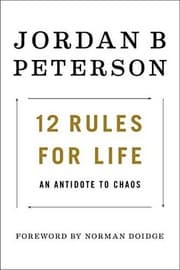
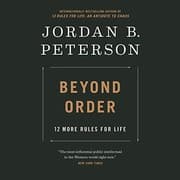
I'm going to, he, I think 12 rules of life. I listened to that book. That was awesome. Yes, that book is right up there. His next one, Beyond Order, I'm reading right now.
I just somehow building a startup doesn't lend itself to, uh, reading time. Now I'm sure there's someone who's like, oh, I just get up earlier, but just tough. Um, that being said, so I'm not as far along in Beyond Order as I'd like to be. But 12 rules for life, I, as much as a book has, it changed my vantage point on, on life. And one of the things that he says in that book is do not compare yourself to anyone else.
Compare yourself to who you were yesterday. So are you better today than you were the day before? Like, just, just, just win this day. Just be better today than you were yesterday. Don't worry about anyone else.
And I think that's, uh, while at face value than done, yeah, yeah, I think it's powerful. I think it's easier said than done. I think it also can be brushed off as trite. Um, but I think if you let it sink in and use it as a construct, it's very, very important. And the reason for that is, uh, I'll use an example.
So I pay for, it's the second most expensive thing that I pay for in my agency on a month to month basis, uh, Donna for agents, which is a, uh, analytics platform. It's way more than that. It's the balls. I kind of love it. Um, in full transparency, they are also a sponsor, but I pay out of pocket for it.
So it's not, I don't get it for free. I pay for it. Um, and if you were to look at my agency, you would say you don't need that. And you don't, I don't need it to be successful. It does.
It does not today make me more money than yes. Now, if I was in this, you know, in five years from now, I know it will. So that's so, so I am making an investment and building into the fabric and culture of my agency analytics and data, because I believe so strongly in what they will do for my agency. And I don't want to wait three years and then try to backdoor it in. I'm going to make it part of the core of who we are.
We're going to analyze what's happening. We're going to think through our data and our clients and how we can service them better and where gaps are, and we're going to find them. And that's going to be part of who we are, not something, not a nice to have down the road. And I think that's a decision that some agency owners would make. Some wouldn't make, I've decided to make that decision.
And I think that if there are people who go, oh, you know, you get to have that. I'm like, not get to have, I pay for that. Like, that's something like I write the check every month for that thing. And just like everything else, no one likes to see their credit card go bing. You know, you just paid, you know, this amount for this thing.
And you're like, oh, you know, but, but the point is. That I could say that to you and you can go, that's great. Don't need it. Right. And, and that has to, we have to be okay with that.
Right. I think, I think that's the thing to your point about jealousy or comparing ourselves to others. I look at some of, some of the people that, that are, that I aspire to be like, like David Carruthers. Right. I talk about him all the time on the show.
The dude is just a killer of a salesman, just has it, thinks about it in a different way. The levels of, you know, the levels that he thinks about while selling in terms of connecting and connecting different ideas and examples and stories. I just don't think that way. I just don't. And, you know, I think you, I could be jealous of that, or I could just be happy to know him, learn what I can and, and be aspirational.
And it's, it's really difficult, I think, because there are times when like, he'll post something. I mean, I'm just like anybody else, right? He'll post something about just writing a $50,000 account. And he's using it as an educational thing. And in my mind, I'm like, you son of a bitch.
I die for a $50,000 revenue. Are you kidding me? Take my pinky finger right now. You can have it, you know? So it's like, it's just tough things, you know?
These are the things that we have to deal with emotionally. I kind of want to backtrack to your, Donna, for agents. Big fan of like, plan the work, work the plan, and begin with the end of mind. You know, it's sort of like if you're framing up a house and you knew you wanted a second story, like you would put in the stairs and go plumbing. You know where you want to go, man.
I don't fault that at all. I think it's smart. And this is funny to say, I don't feel like naturally the best salesman in the world. I get along with people. You know, when I said I was getting into sales, my brother's like, you're the nicest guy in the world, but you're a bulldog.
He's like, you'll be fine. So he was confident. But I'm self-conscious of my own, you know, kill mentality or whatever. But I looked at sales as the doorstep to small business. And I looked at small business as the ability to be independent.
And I'm always chasing kind of independence, libertarian, whatever else. So that's why I think I got into sales as more for the potential fiscal related freedom, not even like to be rich, but to just kind of control your own time, energy, be a part of what you want to be a part of. I don't know. My little brother's a better salesman than I am. He's great.
He sells cars, you know, works at a Dodge dealership. He crushes it. How come he's not working for the agency? We fight too much. We can't even get off a phone call without yelling at each other half the time.
Can't make that car money at the agency. Dude, they make good money. Don't sleep on a nice Dodge Chrysler Jeep dealership. So funny. We're 21 months apart.
I would joke that like seven years of peace, three years of war growing up. He's still the only person who ever punched me in the face. I had two black eyes and a bloody nose. He's a shot putter, a lineman, football player, which I actually just kind of twisted. But as a brother, I almost appreciate getting punched in the face once so you can do it.
You're like, oh, OK, that wasn't that bad. Yeah. The rest of your life, you kind of have that in back pocket. I don't know. Yeah, dude, I'm dyslexic.
I talk about that more now. I think I was more self-conscious about talking about it before. I am very good at connecting the dots, putting things together, seeing around corners a little bit, but I have other shortcomings. You know, and I play with the skill set that I have and I do my best, you know, and just keep showing up. You know, I think that's the other part of this game.
Yeah, I was blessed to pick up pretty early in my career. And I don't know where I got this from exactly. Probably just a string of decent managers and leaders in different businesses that I was in, where the concept of, you know, know, know what you're good at and just do not get rid of your ego and everything else. Right. Just know this.
Like that might be the baseball player in you because baseball players are very narrow, you know, like could be. You know, I, I, I don't know. I don't know. I don't know exactly what it was, but I've just always operated from a mentality of if I'm not good at something, I want someone else to do it. And, and I have standards and I have, uh, uh, a belief structure on quality.
And that doesn't mean, cause I think, I think a common, a common, uh, misconception in our space is that like, if an agency owner has someone else do that thing, whatever that thing is that somehow they're less than, oh, you don't do that. Like, I'll be honest with you. If I never wet, if I never sold another insurance policy, the rest of my life, I'd be perfectly happy. I it's a, it's something I do today. I do it less because Matt is part of the team who I, who I, who I talked about.
Hopefully in the near future, I can hire another salesperson because we have enough volume. And then maybe I can only, then I'll only sell direct referrals. And then hopefully I'll never, ever, ever, ever have to sell another policy. And I'll be honest with you. I will.
That will be a huge win in my book. Yeah. Well, and the thing is you have knocked the doors. You have done the personal sales. You've done the one-to-one sales.
I think you need to be, as a leader, I think you, you can't be perfect at everything, but I think you got to touch the org top to bottom. I think it's important to know the guys at the bottom of the org. I've learned a lot of that stuff from my best friend, Mike, like their machine shop. He knows the guys at the bottom. He's working machines.
He's still at the floors. Yeah. Um, can't, I mean, I'm still making cold calls for Finao to agents one-to-one. And I'm still calling garages and dealerships for, you know, Newport Beach Insurance Center. I'm literally using the CRM AMS that we built to try to sell business to.
And I do it just because that's where we are today. And I'm with you at some point, I'm going to have to step back. But you've done those things that allow you to lead and understand what other people are doing. You know, as long as you're, as long as you can wrap yourself around what you're asking people to do. Yeah, ideally, you want smarter, more talented, more specialized people to be doing things than you are.
You know, that's how you build a team. That's how you win. I think ideally, because that's your mindset and my mindset, and it's one of the blessings, I think, of working in a couple different technology startups, because I do think it's very much the culture of technology startups, is cohesively work, a team of specialists cohesively working together at pace, right? I think that's a big part of the culture of these, and transferred into the insurance industry. I think it's an enormous competitive advantage.
I do not think it is as culturally accepted in our space as maybe you and I would think that it is. That's my perspective. I could be wrong. I just. Well, I think there's two things at play.
I heard the reason why SF sort of took off over Boston, because for a while it seemed like tech-wise they were similar, was you have a very flat paradigm on the West Coast. Everyone has a voice. Everyone's contributing, growing. But the East is a little bit more hierarchical, because it's been around longer. And I think in our industry, when you get to those structures that have been in place, for good reason.
Lethargy is also like a protective measure. If you have a big thing, you don't want to pivot real quick and fall off a cliff. If things are working, let them keep working. I think startups, and I think scratch agencies are trying to do the impossible. You know, they're getting funding to try to build a flywheel to grow past the incumbent.
So, I think when shit's crazy, you know, Ali from Feneo, open to what I have to say. Donald, open to what I have to say. It's all hands on deck. It's like, we're trying to do the impossible. Whoever can bail water, whoever can help, by all means, get in here.
Let's help us do this shit. But I can get where, you know, if an agency's set up, if there's a structure in place you want to maintain. If you're paying the bills, if you've hit your number, I think you talked about that with Meg Whitman. Yep. You kind of check out a little, you know.
And I think you and I both are hungry. I like the game. To me, I broke my hand when I was 30. I used to play in like three men's leagues a week in my 20s. Basketball.
I love basketball. But I'm lucky that like startups and sales have kind of taken over my sports itch. I feel like this is where I compete. Like I run a lot, but this is where I like, feel like I win and I lose and I, you know, feel lucky to gain some ground and Ed's never sold before. It is so freaking cool.
He's taking deals soup to nuts, you know, and it's like so freaking cool, you know, and we're just winning together, competing together. I had a carrier call for Faneo the other day that went really well. I was floored, you know, like to me that felt levels beyond, you know, what I'm expecting to do. You know, I was, I was really jazzed, you know. No, I do.
Yeah, I do. I think it's funny, man. I feel, I feel, and I think we share, I think we share this because in many regards, I think our, our paths and what we do on a day-to-day basis are, are, are fairly similar. And so much as, you know, to be able to touch as many things, Bill, have as many conversations to be able to say, if someone calls or emails or texts, and I get a lot of them and, and I don't ever tell anyone, no, you know, sometimes I just can't help people. But I can attest to that from when I haven't been as known, you know, I mean, you were still open to appreciate it.
You just, I, I'll be honest with you. I get as much enthusiasm. I had a call with a prospect on Friday of last week. If that deal closes, it literally changes the, it levels us up. It's a, you know, we go from, we go, we, we jump in one of, you know, Mario jumps in one of those things that takes them from level two to level eight, you know, and, and, and it was awesome.
Felt jacked, jacked up, you know, rolled into Duke's baseball game, like, you know, flying high. It was awesome. And then, you know, that weekend I got a text from a guy who said, Hey, I, you know, he had a problem and not a problem, but he had a, you know, he was trying to solve a problem. And I just said, Hey, I'm going to send you an email right now and connect you to this person. They'll be able to help you.
And I did that. And I felt just as jacked up about connecting. I'll never make it a dollar. It means it, it, it'll never, you know, it's, it was not nothing about finances. It was nothing about no one will ever, I'll never say what the thing was or what it was other than the situation.
And it was just that I felt just as much energy out of that. And I was like, I feel, um, when I first got into the industry, and this is what I'll say on this. And, um, you know, is that when I first got into this industry and this, this isn't ubiquitous. So, so please don't anyone who's been around for a long time, take this negatively, but there was much more of a general sense of stay in your space. Don't share.
People will steal from you. They'll steal your producers. They'll steal your ideas. They'll steal your clients. They'll, you know, you didn't, when I first started talking about digital marketing, people would ask me, should we put our carriers on our website?
Because we don't want our, we don't want our competitors to know what carriers we have. I mean, today that concept, I think to the average 45 and under insurance professional is bonkers, right? I mean, we, it completely bonkers, but just a decade ago, you did not do that. You didn't, cause you didn't tell anyone what carriers you have. And I love today that we're in this space where we're so open, so willing to share, you have agents who would have, who a decade ago would have been thought as competitors sitting on the same advisory boards, the same state association boards, starting, you know, JVs with each other to attack certain markets.
I mean, it's just, it's so, it's such a fantastic time to be in our space. It's just fun. Not to be too like talking heady. I got lucky that to a guy when I was a youth pass from 18 to 21 was pretty like reflective, I guess, kind of made us consider a lot of stuff, but you compare the internet to the printing press, you know, we went from competing with our neighbor cause it was analog and there was like a main street to, I think today you want to have that main street look. You want to build your company almost in a boring way, like a grandpa would trust, but you want the digital reach, you know?
So I think we just, the world changed, you know, we went from competing with our neighbor to realizing, you know, we can go as far, as fast as we want to go, you know? And like, I think it's cool, man. I'm with you. I definitely like the blue ocean mentality to go back to Kyle Nakasuchi, which I feel like I'm messing that up. I've heard the SIGO guys say really nice things about him.
I've heard loop insurance say really nice things about him. Technically these should be his competitors, but I think that abundance mindset, you know, same thing. Like there's a joke that Napoleon would only, you know, get generals that consider themselves lucky. Cause if you think you're lucky, you stay open, you know, and you find a, you find a, an opportunity, you know, you have a plan. No, it's fun, man.
I love the next cohort, you know, and I feel lucky to be a part of it. I, you know, I sold copiers. I worked constructions. I sold office moves for six years. This industry is awesome.
I mean, compared to having to manage a crew and do collections and whatever else, like we're lucky. Our paperwork sucks, it can be stressful, but at the end of the day, we've got an annuity. We're doing something that you can make a lot of money at and you're generally doing good for people. That's freaking cool. And I think what you're saying about that guy handing the thing off properly, we just want loose ends to be taken care of.
We want people to have good insurance products. Doesn't really matter if it goes through us or somebody else. There's really like a farmer kind of mentality, I think, to insurance as opposed to maybe commercial real estate, you know, where they're competing with each other for the same building. In the back of our mind, we just want people to be covered. You know, we just want good paper to be out there.
Yeah. Yeah. I think you're right. I think you're right, man. Well, we, uh, we touched on a lot of topics in an hour.
I can't believe it's already done an hour. It feels like it's been about 10 minutes. This is tremendous. Um, and I got a few things I want to talk to you about offline. So let's, so if people want to get at you, they want to learn more about what you have going on.
Great follow on Twitter for sure. Um, you know, where, where, where can people, where can people get ahold of you? Yeah. So, uh, LinkedIn actually think it's backslash broker Brett. And I want to say it's broker underscore Brett on Twitter to, um, B-R-E-T-T at broker Brett.com is probably the best one.
I use it kind of like a little hub site, but yeah, broker underscore Brett on Twitter. Um, yeah, I would not pretend to have anything figured out, but happy to share what I'm up to, what I'm learning as I go. And if you Google, uh, F-I-N-A-E-O. Yeah. F-I-N-A-E-O.
Or capital I-M-S. Yeah. Capta, uh, I-M-S. Yeah. It's a fun one.
Yeah. We'll cheat those in the show notes. Um, great down to earth people on both projects and feel very fortunate to be just helping build stuff while building an agency. Yeah. Awesome, man.
Well, I'm, I'm very glad that we finally got you on the show. Uh, I almost feel bad that it has taken so long. Um, but I, I'm, you know, I'm, I mean this with the most sincerity. I'm, I'm glad that there are, are people out there like you who are so willing to, to spread themselves out. Cause I know how stressful that can be, but, but in an effort to help improve and provide value and, and just share ideas.
I mean, that's how, that's how we all grow is the, the intermingling of people on different organizations, cross-pollinating ideas. And I think that you're a big part of that. And, um, I'm just happy to have you, man. So thanks for being here. Thanks, man.
Likewise. Thanks for going through the wall first. Close twice as many deals by this time next week. Sound impossible. It's not.
With the one call close system, you'll stop chasing leads and start closing deals in one call. This is the exact method we use to close 1200 clients in under three years during the pandemic. No fluff, no endless follow-ups, just results fast. Based in behavioral psychology and battle tested, the one call close system eliminates excuses and gets the prospect saying yes, more than you ever thought possible. If you're ready to stop losing opportunities and start winning, visit masteroftheclosed.com.
That's masteroftheclosed.com. Do it today. If you like the show, please take a moment to rate, review, and subscribe. It really does help the show to grow. Thank you for listening.
Happy holidays. Want to give your host a gift? Consider subscribing, rating, and reviewing the show this holiday season. It really helps the show grow. From all of us at Believe, have a Merry Christmas, everyone, and a happy holiday.