Happy holidays. Want to give your host a gift? Consider subscribing, rating, and reviewing the show this holiday season. It really helps the show grow. From all of us at Believe, have a merry Christmas, everyone, and a happy holiday.
Everybody zoom in. Absolutely you should be charging for customer service. It should be baked into your pricing. When you buy plane tickets, calling customer service is baked into that. When you go to Best Buy, customer service is baked into those prices, too.
Let's go. Yeah. Make it look, make it look, make it look easy. Hey. Stand up The Ryan Hanley Show shares the original ideas, habits, and mindsets of world-class original thinkers you can use to produce extraordinary results in your life and business.
This is the way. Hello everyone, and welcome back to the show. We have a tremendous episode for you today. This was actually recorded as a live broadcast on our YouTube channel, which you can go head over to YouTube and just type in Ryan Hanley Show. You'll find the channel.
Make sure you subscribe. You can find this video. We're gonna be doing more live events coming in the future. We're gonna be having special guests, uh, some recurring guests, and today we have George B. Thomas and Mick Hunt on the show.
Uh, George has been in the marketing industry for more than 20 years. He's helped some of the biggest brands implement their HubSpot installation, build out campaigns, understand how to use that particular tool for their customer experience needs, and has, and has seen CX, or customer experience, from every angle. Mick Hunt, a two-time successful, uh, exit from businesses inside the insurance industry, now one of the top podcasters in the entire United States. Not just in the business category, in all of the United States. This dude is absolutely killing it.
Mick is the man. He's one of my best friends, and this podcast is all about taking on common customer experience best practices and flipping them on their head. What works? What doesn't? Where are people going wrong with these commonly held beliefs?
We em- we talk about things such as should you post negative feedback publicly, and if so, how do you do that? How does the underpromise, overdeliver strategy work, and is that even relevant, and should we be doing this in our marketing and our customer experience? Should we charge for customer service? Should customer service be part of the product, or should there be an additional fee? And four more commonly held customer exper- customer experience best practices that we take on, walk through, and give you tactical guidance on how to implement.
Guys, this is an episode that just blew me away, and, uh, I highly encourage you to head on over to the YouTube channel. Make sure you subscribe, like the video, leave a comment. Where do we get it wrong? What's working for you that we missed? What customer experience best practice have you flipped on your head?
Let us know in the comments, guys. That's gonna drive more engagement to that video, and ultimately, um, you will then be notified when we do new live videos on the YouTube channel with some of the biggest and baddest thought leaders in the entire world. The guests that we have lined up for The Ryan Hanley Show, for both the recorded shows that you get most of the time, as well as these new live events, are out of this world. Don't miss it. If this is your first time listening to the show, subscribe wherever you listen.
Guys, I love you for being here. Let's get on to this customer experience masterclass. Excited to, excited to chat with you guys. We, um, this kinda came together, for those looking back, uh, or, uh, are watching live, uh, Mick reached out to George and I, said, "Hey, uh, let's talk customer experience. Let's talk about, um, what's happening right now, and, and not so much just best practices, but what are we seeing that people are doing that maybe we need to stop, that might be antiquated or old or just tactics that have kinda, uh, run their course and that we, we need to, you know, maybe take a different take on.
Maybe, maybe there needs to be a new best practice." So, um, I'm excited to have that chat because there's a few things that I think are crazy that we still do, and, uh, I'll kick it off to the two of you, uh, with, with this. I think it is absolutely insane that there are still businesses out there, um, many of which are in, uh, Mick, your and my home industry, or the industry that we grew up in- ... in the insurance industry, that still consider a 24-hour turnaround time on an inbound service request acceptable. Where do we stand on this? What is acceptable?
And what are you seeing as best practices out there right now? Yeah, that's a, a great question. I wanna dive into that dialogue Ry- Ryan, for sure, because here's the thing. People want communication and feedback. The problem doesn't have to be solved.
They wanna make sure that they're heard and seen. And, and I feel like, and not just the insurance industry, but a lot of industries feel like some type of request equals work or someone's upset. Well at the end of the day, I'm gonna be brutally honest, it's 2024. We all try to call or n- we all try to solve our own problems, and the last resort is either an email or a phone call. And so when your people are reaching out to you, whether it's a customer or prospect, what they're saying is, "I have a problem," and they want that problem acknowledged, and then ultimately resolved.
And, and a lot of times we get confused that resolution has to mean that we make everybody happy. No, resolution means that we provided the right answer Or the, or the right solve or the right fix. And so for me, Ryan, when you talk about a 24-hour turnaround, I think it's more we've got to acknowledge and we have to let our customer or prospect understand that it is in some type of flow or process, whatever that flow or process is. No one expects there to be an answer tomorrow, right? Like, your desk isn't whatever your industry is, fill in the blank, ER, right?
Your desk isn't insurance ER. Your desk isn't marketing support ER. So don't treat it that way. What your customer wants is just an acknowledgement that you hear them and that you are going to solve whatever that communication point was for. Yeah, it's so interesting, Mick, to hear you talk about this, because I do agree that communication should be immediate, um, but the work could take 24, 48, who know, like a week to do the work, but at least- Yeah ... their mind is at ease.
And what I want everybody watching this or listening to this, you know, if we s- slice it and dice it and put it all sorts of places, is you gotta put yourself in the other human's shoes. Like, you might see that request and you might get sick to your stomach and you might be a little fearful 'cause you don't know exactly what's on the other side of that red dot or that bolded email, but if you put your, yourself in their shoes, you're right. It's, they either have a problem, or the ones that I love the most is they just don't understand. Like, they, there's an educational gap from where they're at to where they're trying to go. And by the way, I love those quick answers where here's a knowledge article or here's a video we created or here's a thing I learned, you know, two years ago, two weeks ago, or two minutes ago that's gonna get you from here to there.
And, and honestly, if you can get those quick responses, quick wins, get past that, like, sick feeling in your gut and fear of like, "Oh, my God, am I gonna know what to say to these humans?" And just engage, then all of a sudden we're in a way better place. And everything else can come out of, you know, whatever needs to happen later can happen later, but they're appeased. They're at ease. They understand that something is happening.
The longer you wait, and, and Ryan, I was sitting here shaking my head no vigorously when you said 24 hours. That's a lifetime. Yeah. Like, in internet years, that's, like you're 98 years old by the time you got to 24 hours. So that's just- ... it's a no-go at this point.
Yeah. You know, so the way that I think about this, and, and Mick, you alluded to it, um, the first thing, when something goes wrong with any product, the first thing we do is we try to fix it ourselves, right? So hopefully, either f- having used the tool or through training, we know how to fix whatever the problem is. That's what we try to do first. If we don't know how to fix it ourselves, then we turn to the knowledge base that that company has, right?
So we maybe go to their website, see is there a how-to or a frequently asked questions. Maybe we go to their YouTube channel and see did they create a video on how to fix this simple problem, right? So most customers are not going directly to the humans in most industries. Now, granted, your financial advisor who's the only one that can make transactions for you, if there's a problem, you're gonna might call that person direct. But for, for most products, for most services, they're gonna try to do it themselves, then they're gonna go do research, and only then do they d- reach out.
So my, my purpose in, in explaining that process is that we're no longer getting them when the problem just happened. Correct. There is now an added level of frustration when they reach out because they can't fix it themselves and there's nothing they've found online to help them fix it, so now they're reaching out to you. And if you then tell them, "I can't be bothered to get back to you," or, "I'm so busy with other people," who in their mind they're inserting are more important than me, so I can't get back to you for 24 hours, then you're, you're toast. They're gonna move on to somebody else.
Now, I think as George, you described, uh, uh, a simple email or text saying, "Hey, we have you. It's in our hopper. We're actually solving the problem behind the scenes. We'll reach out as soon as we can," uh, helps, but in truth, I think this window is, like, two, maybe three hours at, at, at the most. That's, like, maxing it out to talk to them on the phone.
Even if, even if reaching out is just, "Hey, I hear you," your words, Mick, "Heard and seen, acknowledged. I will get back to you." But, like, if it's just silence, that person's gone. Yeah. And I wanna double click on something you're talking about, Ryan, because, you know, our friend Mark Sheridan talks about frustration, the F word of the internet.
And we have to realize that, yes, they have probably gone through all the things. By the way, they probably went to Google. They might have gone to the la- Are you tired of endless follow-ups and missed opportunities in your sales process? Chasing leads is a losing game. That's why I created the One Call Close system, a battle-tested sales system that uses behavioral psychology to close deals in just one call.
No more, "Let me think about it." No more, "I'll get back to you." Using the One Call Close system, we took new reps from 25% close ratio to over 80% in just three months. To grow fast, you must close deals faster at zero extra marketing cost. The One Call Close system allows you and your reps to build trust, address pain points, all while watching your revenue skyrocket.
Ready to stop chasing leads and start closing? Visit masteroftheclose.com today. Close twice as many deals this time next week. Visit masteroftheclose.com to learn how. This AI platform that they're now asking questions to as well.
And so they are coming to us with a level of frustration. What we have to be careful of is that we don't immediately internalize their frustrations. We have to meet them with empathy. We have to meet them with servanthood. We have to meet them with the, with the understa- understanding that they might be frustrated, but how are we that frustration fighter?
Yeah. Like, what narratives do we have queued up to actually take somebody who's, like, at their wit's end, steam's coming out of their ears, and be like, "Oh, God, George, Mick, Ryan, I love you so much. Like, I just feel like you have my back"? 'Cause as soon as you can make those humans feel like they have their back, now you're creating loyal customers. You're creating fans. You're creating advocates or evangelists for the things that you're doing.
And by the way, remember, a second ago they were, like, ticked off. Right. Yeah. Right. We used, um, at Rogue, we had this really simple phrase that, that I taught everybody to use, and I would hammer it over their head.
Uh, for those that are l- watching that may not know, Rogue is a company that I started and exited from. Um, we would say, "We got you." I would go, "Guys, guys, all you have to tell them is, 'We got you.' Not, 'I got you.' 'We got you.' That's all you have to say."
The minute someone explains a problem to you, you hear them, right, maybe mirror back to them or label what they're saying just so they, you're acknowledging that you heard them, and you say, "We got you," you could, you could hear an audible re- like, like, like, the sound of relaxation, right? Like, they'd slump down in their chair or they'd exhale or sometimes they would, like, say, "Thank God," or, "I- amen," you know? 'Cause, like, that's what people are looking for is... And Mick, you said it perfectly at the beginning. They wanna be heard and they wanna be seen, and you have to acknowledge that. And once you do, you've given yourself a grace period to actually go out and figure out what the problem is and solve it.
But until they feel heard and seen, they are gonna pester the hell out of you, and, um, your life is gonna be tough and miserable and hard. Yeah. Mick, I wanna swing over to you for a second around that. But Ryan, I feel like there's this human side of me that has to get this piece out. Um, it, my, my dad used to say this to me.
He's like, "Son, I don't want your lip service. Like, I want..." You know? And so when you say that, "We got you," ladies and gentlemen, you have to authentically have them. Yeah.
Right. If lip service is like, "I got you, bro," and then all of a sudden you just ignore the crap. But no, like, if you're gonna do business in a human-centric way, then when you say something, you have to have the stuff to back it up, uh, the feeling of importance for them to do it. So again, don't try to just use a phrase, but make that phrase part of the process that actually makes it true and builds trust. Yeah.
Completely agree. Totally agree. Totally agree. Um- You know... I was gonna say, it's 2024.
Go ahead. I, I wanna debunk something, a practice that we need to stop, and I'm probably gonna lose a whole bunch of friends when I say this, and I don't care. I need to shrink my circle anyway, so it's cool. It's 2024. Can we please stop email marketing and, and email marketing campaigns?
It doesn't work. It, it's, it's a thing of the past, and what you're doing to prospects and customers is saying, "You're one of many, not one of one." Y- your, your communication through email and text has to be very personal to a problem, to something that is upcoming, but these spam outreaches via email have got to stop. To me- Mm ... that's what social media is for now. Like, if you're gonna, you're gonna post something, do something, go on social.
And if that's not working, it's probably a you problem. Yeah. It's probably a you problem. Yeah. I, I, I want people to understand what Mick said, though, 'cause Mick did not say stop emailing people.
Mick did not say stop communicating with people. He just said stop emailing and communicating with people in a crappy way. Like- Yeah ... and we use the word marketing, which makes me sad around, like, crappy way. But the, here's the thing. What, what I totally agree with you, Mick, is we are in a society, in a world that is so fast-paced and, and so, uh, what's in it for them, what's in it for me, that it, it, it has to feel one-to-one.
It can't feel one to many. And so giving yourself the ability to educate yourself on the platform that you're using to do great email communication and understanding how you can make every message look like it's coming from an individual human and feel like it's being emailed to that specific human that needs the resources, needs the value, has the question, has the aspiration, like, this is a must. So I agree with you, uh, quit spamming an email. By the way, I might lose friends too. You can send hate email if you want.
Quit spamming me on LinkedIn. Like, just quit being stupid when you're trying to communicate with us as humans 'cause you're human, I'm human, and we all see right through it. Yeah. W- George, you said it perfectly. So I'm gonna, I'm, I'm not gonna, I, I'm not gonna push back, but I am, I just wanna add a little nuance or my own nuance to what you're saying.
I, I think, one, cold, standard email, I can just tell you numbers-wise, doesn't work. I'm sure there's some internet marketer who can write long-form whatever the hell and get people to do something. I'm sure that there's exceptions, but the, the vast majority of us, 99-plus percent of the companies out there are not gonna be successful with cold, flat, standard email. Just it's not gonna happen. That being said- I'm a huge believer in email with a purpose, but it all has to go through the construct of what George just said.
What's in it for them? When you write the email, what's in it for them? The minute you send someone an email and you... Think about your own life when you open up your inbox, right? And you're scrolling through and you're making the toughest decision of your day.
Why- which emails am I gonna open? Um, the ones you open are the ones that you feel have the most value for you. That's what you do. Yet, then we'll turn around and we'll send out a marketing email, even if it's an email that somebody opted into, that is, "Look at all the cool shit I did. Look at how amazing I am.
Come watch my video," or, "Come do this thing," or, "Buy my product," or whatever, and it's all about me, me, me, me, me, and not the person you're emailing. So when you write an email, uh, I, I have, you know, couple... There's, there's courses that can help you. There's copywriting stuff. You can find a lot of it, most of it is free.
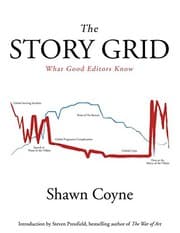
You can use YouTube and, and find people that will help you craft different narratives. Um, but, you know, I use a simple three-step process that I've used for almost every piece of content I've ever created, uh, which is, um, the story grid process, which is basically beginning hook, middle build, ending payoff, right? And everything is, um, hook, tension, build. Hook, tension, build, over and over and over again, right? All through the construct of what's in it for them.
And if you can craft a message that way, again, cold, flat, standard email being tossed away. I'm talking about maybe someone downloads an e-book, and now you wanna, uh, sell them on a, a consultation, right? Whether it's a service-based business or whatever. Um, that email has to be crafted so that every sentence is adding value to the reader, not to you. And it's a difficult thing to do at first, but once you kinda start to get the language down and understand how it works and how to reframe it, um, this is the key to, to, to any of these communications.
Whether you're doing cold video outreach, whatever, like this is the key. What's in it for them? Yeah, the two th- I wanna- I love what you're saying, Ryan, and I just wanna piggyback on it. Two things that I think about, a- and honestly, this is when I'm crafting email or when I'm creating any type of copy, is, um, how am I using this to evoke an emotion, and how am I using this to unlock their imagination to get them to ask, "Is it possible? Is it possible that I can do this thing or get from here to there?"
And when, when you use those two levers to what you're creating, it puts you in a different perspective and direction than what we... And again, I'm a marketer, so I've put on that, like, metal helmet that, like, s- makes you quit thinking when you actually go to, like, create things. Uh, and, like, it's just not a good look. And so that little, like, hook in there of evoke emotion or the kind of unlock the imagination really helps me when I'm trying to craft that copy. Yeah.
Yep. So- Totally agree ... uh, I, I have a couple more that... Yeah, go ahead. No, go ahead. Go ahead.
Go ahead. Go ahead. Oh, yeah, sure. So I, I came up, uh, in preparation, I, I just wrote down a couple kind of ideas that I have that I felt were kinda contrarian, um, and I'm gonna toss them out to you two guys and get your feedback. The first one I'm gonna give, uh, uh, Mick, you, you give to you first to, to do.
Um, AI, automation, these things are amazing, right? But I still believe that there needs to be some friction in the process, that we, if we go too automated, too AI, all of a sudden what makes our business special starts, the edges start to get too smooth. Do you think there's truth in that? Do you think... Where, where's the happy medium?
How do you walk that line? Like, where, where are you on that particular topic? You think, and you know, I'm, I'm a process person, right? So what problem are you solving with the process? Like, what is automation, what is AI doing for you?
What is it solving for you? And ultimately, what does it mean for your customer or prospect, right? Because, you know, the theme of this is the modern buyer, the modern customer, meeting people where they wanna be met. And not all are the same, right? Like, what's important to Ryan, I can promise you, is vastly different than what's important to me.
And so I think, Ryan, that's where the friction comes into play, right? So it's like, okay, I'm gonna put everyone through stage one, and then there's gonna be some logic or decisioning that's then gonna move everyone to somewhat of a personal process or a personal role dependent upon whatever those variables are. And, and again, I'm gonna lose friends over this. I'm good. Everyone you can't treat the same.
Mm-mm. Right? It- it's okay to not treat people the same, and it is also okay to know that you need help building this out. And, and, and by that, what I mean is, if I know, okay, perfect scenario, this is what I wanna do, right? But I know there's gonna be hiccups.
How do I fix the hiccups? And then, th- the best part to me is, what's the best avenue to get help to get this done? And so I can be very transparent, right? I hired George because I didn't wanna try to figure it out, right? Like, like, I didn't need to try to figure it out.
What I needed to know was this is what I need my end result or end results to be, and yeah, there are things that George puts automation in for me. There are things that George uses AI in parts of processes for me. But it's because he understands where I'm going, and- He's not gonna mess it up. Where that's not what I do, right? Like, that's not what I do.
I could take the time to learn it, but then I'm not scaling my business. And so when we talk about the modern customer, the modern employee, like we have to understand that authenticity matters, that one-to-one matters. And one of George's things that I love about George is making them feel like they are the most important person at that time, making them feel like they are the one. And so if I'm using automation, I'm thinking through that. When Ryan gets a communication from me, whether it's a social post or it's a video that I'm driving Ryan to, Ryan needs to feel like I did that for him because I understand his needs.
And so for everybody that's watching or listening, understanding that you can no longer put everyone in a box. You can no longer say, "Okay, I have 500 customers and they're all gonna get this message, and I just brought on 20 new customers and they're all gonna go through this exact same process or flow," because that's not what the world expects anymore. So George, I'll lob it over to you. Or Ryan, you can, you can- Well, I- ... disagree with that if you want. Yeah.
I, I actually wanna double-click on some things around this conversation, 'cause Ryan, I'm glad you brought up the idea of friction. It's actually a two-sided coin, because a modern business owner needs to think about force and needs to think about friction. The unfortunate thing is when you bring up force and friction in most business conversations, they think force is positive 'cause they're pushing it through the funnel, and friction is negative. And I always am trying to get people to challenge that thinking because it's friction that lights a match. It's friction that makes your brakes work.
Like, there is good friction and there's bad force, and that's the thing that we need to pay attention to, is it's not a always good or always evil. And what's funny is when I think about this, uh, 'cause you brought it around the thing of AI and automation, which by the way, when I think about these conversations, I usually go in, like, should it be automatic, should it be automated, or should I find a way to augment the human? Like, so there's kind of these layers to what we're talking about here. Uh, but what I want everybody to kinda understand is that the friction points that matter are the friction points where it should be human interaction. Exactly.
It's where your sales team should be asking the right questions. It's where your service team, a human, should actually be listening to the story of what went wrong. And so yes, you can augment, automate, or make a bunch of things automatic. But where does the human need to step in and apply the proper friction so that the proper force actually gets us to where we're trying to go? Yeah.
I love that. And I'll add on only this thought, that we need to be re-engaging the type of client and the segment of client throughout their life cycle with our business, right? Uh, you may bring someone in and they're just a small purchase or a, a, a small client, and they come in and they're in your lower level segment in terms of what service level they get, uh, and then they buy another product from you, and then they join a, a program that you have, and then they become... You know, they, they, they start moving up the chain. Now, if you're not constantly, uh, uh, dipping into your customer pool and understanding where they are, now you could have someone who should be in your VIP program, right, in terms of service level, who's getting entry-level service.
And then they leave and you're like, and, and you don't understand why, you don't understand what went wrong, and it's because, uh, today's business environment, set it and forget it is over in all these things. People are constantly changing their, their work. They may be making $200,000 one year, and the next year they're making 75 or vice versa. They may go from one job to three jobs. They may add f- you know, their, their family may split.
They may, their family may come together. There's all these different things. They may move geographical regions. There's a million different reasons why their, their level of service segmentation may change, but if we are setting them on one level and don't have a system to go back in and audit that, um, we're gonna create major problems. So wonderful- I love this, Ryan.
I got, again, I'm doubling down on what you guys- Yeah ... are saying, because where my brain goes with this is you have to have a smart CRM, customer relationship manager. Which by the way, I'm even kind of battling against it being a customer relationship manager. I think it should be a communication and relationship manager, because that's really what it comes down to with the modern buyers and what they need. But when you, when I hear you talking, Ryan, it's like, okay, you have to have this smart CRM. You have to be focused on data hygiene.
Because at the end of the day, what you're looking for is behaviors, patterns, and possible potential. Because out of that possible potential is where you can go back to what we were talking about with Mick, is like, I see the behavior, I see the pattern, here's the potential. Here's the one-to-one feeling email. Here's the setting that sets, that makes them VIP. Here's the things that I'm looking at from a dashboard and reporting standpoint to actually be able to visualize what's happening with the big data inside my smart CRM.
And so there's layers of this to understand that, um... It's, it's like instead of looking through, like, foggy old, like, Coke bottles, you can actually have a really powerful set of lenses on your face. But it's through this unified CRM, this data hygiene, clean data, and then being able to diagnose out of that what the frick is actually happening, what's going on. Yeah. So George, George, for the, the people that are listening or watching, and they're either in between CRMs, they don't have one, they're looking for one, what should you be looking for minimally, minimally out of a CRM?
For this modern customer now, like, what are, what are three or four things that your CRM has to be able to do in order to be viable today? Yeah, definitely. So first of all, it needs to help you simplify the complex. So if you need a college degree to figure out how to get your CRM set up, implemented, and be using it, then we have an issue. So it just has to be able to, like, turn it on, look at it, and kind of fundamentally understand it or have a massive set of resources that you could dive in to learn and actually execute the things.
But when we think about CRM, one, we have to be able to be able to customize it. And when I say customize it, I mean it, it has to be able to be customized to what your business needs. One of the things that I talk about, and by the way, I'll just throw this out, I use HubSpot, I teach HubSpot, I help clients with HubSpot, but one of the things I'm always talking about is you gotta be able to wrap HubSpot around your business instead of feeling like you're squeezing your business into a CRM system. So you have to look at the capabilities of customization. The other thing that you have to look at is how can it help you, not destroy silos, 'cause by the way, sometimes silos in business is a good thing.
Remember, that positive friction. But how do you get those silos to at least work together? So this CRM should have channels or abilities to do marketing stuff, sales stuff, service stuff. Uh, in other words, what I'm talking about is you should be able to pick up a RevOps mindset and have your entire organization be using that CRM and the tools that are part of it or integrated with it. And this makes me lean into if you're a business out there and you're using what is a Franken system, a little bit of this, a little bit of that, a little bit of this- ... and trying to tie it all together, then you are in the wrong spot for the modern buyer.
And so again, think about this holistic, multi-department communication relationship building machine that is easy to use. Like, that's just, that's table stakes by the way. I could probably talk about this for the entire hour. But y- you have to, listen, you have to take the step and you gotta implement these things because the other side of success is the struggle that you're gonna have to face to get everybody on board, get the employee buy-in, get the process set, because it's gonna be all about the platform, the process, and the people. And when we can get all three of those lined together, man, we're gonna hit some business magic moments right there.
So George, I wanna, I wanna double down on something that you just said, and I'm gonna flip this to Ryan though. So George said that your CRM should have multi-department usage. I think there's been this big social realm, societal realm, that CRMs are for salespeople only. And I totally agree with you, George, right? Because again, we're talking about this modern customer, your, your modern buyer, where your service people, your, your customer service representatives, your leadership all have to communicate with the customer through a journey.
And if your CRM isn't being utilized as a complete customer journey map, you're failing. So yeah, that does mean, yeah, my, my customer service representative needs to know the CRM too. My managers need to be in the CRM too. My leadership might need to be in the CRM. Ryan, what's your take on that?
Oh, completely and 100% agree. Um, this was the, a lot of the flailing that we did early on at Rogue Risk w- with technology was in search of what you just described, was, you know, how, how you can expect sales to operate on a funnel, kind of classic Kanban funnel system, and then tell service they need to work on a list of tasks that looks like something that came out of one of those computers that, uh, that, w- uh, w- you know, from, from green screen in the 1980s or whatever. Like, I, it, it's, it's crazy. A- additionally, so, so you're just, just in that, in that lack of Kanban sales flow functionality, you're losing efficiency in your s- in your service team to begin with. Uh, two, sales, service should be part of sales and sales should be part of service to a certain extent, right?
Obviously, that has to align with expectations of the team and compensation and type of product, et cetera. But I find it very hard to believe that separating those two departments completely, giving them different workflows, which understand the, the, the medium is the message to a certain extent, right? I know that's a commonly used, um, cliche in marketing, but it's true in this as well, right? The re- salespeople are thought to think in a flow, in a structure, in a get them to this stage, get them to this stage. But then our service people are just given, uh, a big open screen with a notes section and say, "Hey, service this account."
And it's like, well, uh, have we, have we contacted them yet? Have we started the process? Did we assign it to an owner? Like, what- whatever your service steps are for that product or your, or your company as a whole, like, if you want them to think as a flow and consistency and, and doing things in a, in a regimented and consistent manner, there needs to be both a visual, uh, uh, and data structure that allows them to do that. Now, I, there are plenty of modern CRMs that allow you to.
Some industries, um, purposefully limit your ability to do that because they want you to hate your job. Um- Mick and I are both very familiar with what that industry is. But, uh, there, this to me is just a, it's a non-starter. If, if, if you don't, if you're not giving your service team an easy flow system that works very similar and in conjunction with the sales team, um, you're gonna have lots of problems. So I have to double click on what you're talking about, Ryan, because you're talking about sales and service, but I'll go on record right now, and again, you can send me hate mail if you want, but the best marketers know how to sell And the best salespeople know how to market.
Like, you have to embrace both mindsets to truly be amazing when we're talking about the modern buyer. And what I want us to also think about with this modern buyer is why what Ryan said about service is so important and a focal point, is so many times when we talk to business owners, it's about generating more traffic, generating more leads, and closing more sales, but they're forgetting the back door. They're forgetting one of the most important words, that is retention. 'Cause you know what? You wouldn't need so much traffic, leads, and new sales if you actually had the people that weren't escaping out the back door every three months, every six months, every year. Again, this becomes a mindset of they're focused on transaction instead of relation.
And again, the modern buyer's looking for a relationship. They wanna know, and we've said this, "I got you, boo." Like, "I'm here for you for the long haul." And what I want us to realize is that every touch point from the beginning to the very end is the buyer's journey or the customer journey. But the fact of the matter is it is a journey, and we have to be there every step of the way, sales, marketing, service, to produce what is the most important words that I hope people take away from this, is that today it's about creating a great user experience from the beginning to the end.
We all as humans want an experience. We go to movies, we want an experience. We go to Disney World or Disneyland, we want an experience. We take our wives, husbands, or whoever, significant other out to a dinner. Why? 'Cause we're trying to create an experience.
How is your business creating an experience for the people that you're so actively trying to get there, and how are you trading, treating them like humans through that actual experience? Yeah. All right, I'm gonna take a quick, quick pause for the audience here. If you're, if you're watching live or you're watching in the future, uh, uh, watching the recording of this, le- leave a comment if you have a question about something related to customer service. It could be a particular tool that you're using, a question you have about that.
It could be a process, some sort of cliche or best practices that you heard or maybe that you're following, something you're considering. Type that into the, the comments here and, uh, we will make sure that we get that question answered as we move into what I'm gonna call the lightning round of this, of this, uh, conversation. So I have, uh, five topics, okay? I want you guys to try to limit your answers to, say, 90 seconds, right? 90 seconds.
Try to keep them quick. We're gonna be punchy here. Give the audience something fun. We wanna be quick. Choose your words carefully, okay?
And, uh, I'll throw these out and, um, George, we'll start with you. Embrace negative feedback publicly. Yes, no, and why? Oh, without a doubt. Uh, look, we all know that we have mistakes.
We all know we screw up. If we try to hide them, you're not being authentic. If you handle them in public, the people can see how well you handled them, if you handled them well. Which, by the way, you should have processes in place to handle them well. But yes, absolutely you shouldn't hide anything.
Uh, if you do, it erodes trust. You wanna build trust, and so handle the things in front of the people in a way that is, um, making you look like you are a good human doing good business. Yeah, I love it. Yeah. No one, I don't think anyone expects us to be perfect.
Yeah. I totally agree with what George said, and I'll take it even further, right? Like, people do want that authenticity. None of us really believe that a business that's been around for 50 years has five star review. Like, like, their, their average is a five, right?
Yeah. And, and so people look at that and they want that. They wanna see what's going on, what's happening. And here's what I'm also gonna say. Handle the negativity the right way.
Bec- just because you handled it, if you were snappy, if you were defensive, right? That's not the right way. So handle everything with grace. Yeah. There's nothing worse than when someone leaves a piece of negative feedback that isn't just vitriol, right?
That is, like, a actual piece of negative feedback, and then the business owner will be, like, kinda sarcastic or, like... You're, you're like, wait a minute, this person is actually doing you a favor. They're telling you something that's not working. Like, you should thank them, uh, uh, for what they, what they said. Um- Which, Ryan- All right, n- ... by the way, before you jump forward, that was the dopest Scrabble word that you just threw into this conversation ever.
So that, good job, brother. Yeah. Mick's probably gonna make fun of me for that. Um, Mick, this one goes to you. I go to you first, okay?
So this is lightning round question number two. Overpromise, overdeliver. Yes, no, why? No. I mean, you know, the old cliche is underpromise, overdeliver.
My thing is just freaking deliver. Like- Mm-hmm ... you don't have to over either one. You don't even have to promise, right? My thing is have a standard and deliver, and then everything else takes care of itself. I think we get too caught up in cliches and these promises, and I have great customer service and, you know, we give you immediate gratification.
Well, that doesn't mean great service, right? So my thing is just deliver. Deliver when you say you're gonna deliver, and everything else takes care of itself because every situation's different. Yeah. I love that.
George, you got anything to add there? I mean, the only thing I'll add is, like, just stay in reality. And a lot of these things that we're taught to do around this conversation that you just asked the question around create these falsities because we're trying to make ourself look better than we are. Just be you, be real, and like Mick said, deliver the junk, man. Yeah.
Deliver the goods. Yeah. I mean- Marketing is just setting expectations for what the product is gonna do. And a lot of times, I think we get caught up in this underpromise, overpromise, you know, all this kind of stuff like that, like, 'cause we feel like one or the other is gonna be some sort of marketing hook that like opens up the floodgates of money. And it's like, no, people have problems, they're looking for providers of products and services to solve those problems, and if you properly set expectations and deliver, you're gonna be all set.
So I, I'm with you guys. Yeah, and- I think that both are... Yeah, go ahead. I was just gonna say, there actually is no such thing as over-delivering, by the way. Like, you, you can't over-deliver.
You can over-speak, you can over-write, but you can never over-deliver. Yeah. Yeah, yeah, exactly. Um, awesome. Awesome.
All right. Uh, let's move on to lightning round question number three. Should we charge for customer service? George, should we charge for customer service? Yes, no, and why?
See, that one's rough. Um, so part of me says no, but then my brain is divided because part of me wants to give the greatest marketing answer ever, which is, it depends. So I think there's a layer of service that should be free, but as somebody who helps humans, um, I know that the asks never stop being asked. And if you give everything away for free, sometimes they don't even pay attention to the free advice or support that you gave. And so when you get to a certain level where maybe they have to pay for a little bit of what I'll call the advanced support, now it was attached to their wallet, which for some reason their wallet is attached to their brain, which then makes the words come out of your mouth actually more important than they were when you gave them away for free.
So that's a mixed bag answer, but I'm torn, 'cause I, I believe in supporting or serving the humans, but I also believe in supporting you staying in business and not being this like potential suck of your time and day and energy as well. Yeah. Mick? Uh, we get to come to Mick for this one right here. Everybody zoom in.
Absolutely you should be charging for customer service. So much so that it should be ba- uh, sorry, it should be baked into your pricing. If you're not charging for customer service, then what are you doing? If you have a customer service team, you should be charging for customer service. So for me, absolutely, you should be charging for service because every other business does as well.
They just don't say, "Here's an additional fee for service." When you buy plane tickets, calling customer service is baked into that. When you go to Best Buy, customer service is baked into those prices too. So yes, you should be charging for customer service absolutely. I love it.
And I tried to, being that this is my first live stream here, I tried to make my initial attempt to make you the solo- ... when you said, "Everyone zoom in," I actually took you off the show for a brief second, so I apologize for that. Great. And apologize for everyone watching at home. Um, all right, I, I agree. I'm a firm believer at that, especially a VIP level of service should, should certainly be.
If, if service is baked in, I actually think that if you have a VIP, a red velvet rope version of your service, a white gloves or whatever version of your service, velvet gloves, whatever you wanna call them, um, that you can charge an additional fee for. But completely agree, whatever you guys said. Um, f- in my opinion, free customer service is maybe just your how-to or frequently asked questions videos on your website. Uh, after that, it, you, it has to be baked into those spreadsheet. Um, and, and it's funny, I did a keynote, uh, in Canada a, a few months ago, and I was talking about the cost of service.
And I thought, and this was a wake-up call for me, which I, which I love when this happens, right? I, in my mind, everyone calculates and understands the cost of service to their business, and I brought this topic up with that assumption, and I got 300 blank stares. They, they had not e- they had, they did not, they were not following that thought. And I go, "Wait a minute. We're gonna go off script for a second here.
We need to talk about the fact that your service team costs you money beyond just their salary, and if you're not baking that into the cost of goods sold for your product, y- you're losing money. Like, that's where your margin is going. Like, your, if you don't understand what those numbers are, like, there's a, there's a big piece there." And, um, that was a huge awakening to me. And, uh, Kiki, appreciate your comment.
Obviously, you're well aware of this and, uh, and, and this is, this is the case for so many businesses, um, you know, insurance or otherwise, that they just, they are not... They think about the cost of sales, they think about what they, what their payroll is, but they're not looking into what it actually costs to service them and then finding potentially tools or processes that can fix that. So all right, uh, lightning round question number four. Should we limit customer choices of communication, or do we have to be a catch-all for everyone? So we're just gonna say, uh, we'll start with Mick, since George, you got the f- the first one last time.
Mick, yes or no, we should limit customer choices of communication, and why? So I'm gonna say no, because I don't think we know where communication is going right now. And so I think if you have a hard limit today, when this new wave of innovation happens in six months, you might be behind the game. And so I'm gonna say- You can't limit it because we don't know where this is ending or going, right? I mean, again, it used to be phone call, email.
Now we have text, now we have social, now we have communities that you can build, right? Like, you don't wanna limit yourself because we don't know where the end game will be, and you don't want to have to try to recreate yourself. Yeah. Great. So it's interesting because my brain went in a totally different direction with this question, Ryan, and I think maybe it's 'cause we're coming off the question around support.
My brain went to how I've gone down this road where, um, oh, well, we can talk in ClickUp, or we can talk in Google Meet, or we can talk in Slack, or we can talk via email, or we can talk... Like, yeah, go ahead and text me on the weekend, or yeah, call me because you've got my phone number. And so I went from, like, that side of it where actually I believe that there should be specific channels, and this is customer-focused, right? Now, I'm not saying anything about what Mick said as far as, like, communication to the world of, you know, should it be on TikTok or SMS. Yes.
Yeah, no, pay attention to all of that and wherever that's gonna be moving forward, and by the way, figure out how you're gonna get your brand into the latest AI platform as well to communicate with them when they're not even trying to communicate. But from a customer side of this and a support side, I am definitely becoming a quick, um, learner or advocate of, okay, here are the channels where customer communication should happen. Because otherwise, I've realized we've created this level of complexity that they're confused where they should actually communicate with us. So I know that's longer than 90 seconds, so my side of it is, yes, it should be limited communication per customers, but not for the rest of the world, if that makes sense. It does.
I fall in, there are trade-offs to both. You have to do a opportunity cost-benefit analysis on what you wanna do. Easier to manage less channels, you're gonna lose customers or lose communications if you do. Harder to manage more channels, but giving people choice is often the best method, and a lot of times with omni-channel communication, meaning someone might email you, then text you, then call you, then text you, then email you, and being able to capture all that, difficult but possible, or just more difficult but possible. Um, and I think that elevates the customer experience.
I also think Mick is right. We don't know where communication is going, and, um, I think being on the forefront of communication methods is good. All right. Last lightning round, although I'm not sure, this is more like a, a rolling thunderstorm than it is a lightning round. Uh- ... but I think it's all been, it's been very good.
Um, we will wrap up, uh, after this question. Um, but I saved it for last because I think it's one of the more important topics around customer experience. George, it's your turn, so you get to go first. Oh, boy. Prioritize employee experience over customer experience.
Yes, no, why? Ooh, wow. Um, so if you understand that the employees are the ones that create the experiences for your customer, then you realize that you need to double down on the experience of your employees so that they're knowledgeable, they're happy, uh, they understand the core values and principles that you want to portray as a business. Because listen, you're not gonna be able to be there to do all of the touch points and all the interactions. So while I am a big believer that customer experience is the end-all be-all, I think providing the best customer experience is by focusing on culture and creating that employee experience that is super dope, which again is why I love a unified omni multi-channel simplified CRM multi-department system that I can put those employees in to help them equal success on a day in and day out basis.
Mick. I'm torn because I, I personally feel like it is hard to deliver the employee experience. It is so hard to get the employee right because our, our, our moods, our mindset changes with the wind, right? And so to really be in that, you've gotta have, to George's point, the right culture, and that could take five years to get right. Like, I'm gonna be very honest.
It could take years to get culture right. So I think you are always working to improve employee experience, but you have to master customer experience because without customers, you ain't got employees. So I was in more of Mick's camp until a recent podcast interview that I did with a guy by the name of Chris Devers. Dever, sorry. Uh, he wrote a book, uh, with a co-author called Brave Together.
Book is phenomenal, phenomenal. Highly recommend everyone pick this book up. So these guys, in conjunction with a couple research firms, did all, did a national study for national companies. This isn't necessarily for, like, a local shop, but for national companies, customer satisfaction is tied within five percentage points to employee satisfaction. Nike and Adidas, Nike has a 94% uh something he said he was you know within a few standard deviations we'll call it low 90s employee satisfaction low 90s customer satisfaction Adidas almost exactly the same Skechers and New Balance both in the 60s for employee satisfaction both in the 60s for customer satisfaction and then they have a million other case studies and it wasn't and this was read this is a week ago two weeks ago it wasn't until that conversation that I was like that it pushed me over the edge to I think you you have to set the path for customer experience that you want to see as a leader but then you have to do everything you can to put the right people with the right I like the word chemistry not culture into um into your business and on those tasks that they can actually deliver it uh and this dude just has uh the research to back this up I was shocked when he said that I was blown away and um I kind of haven't been able to stop thinking about it since so uh so that's kind of where that is um I want to say I appreciate the two of you I appreciate doing this uh first first live stream uh for me here on the channel in almost five years I went back and looked I hadn't done a live stream on youtube in almost five years um and I think it was wonderful to have the two y'all and I was great I think this conversation was fantastic uh appreciate uh everyone who came on and watched guys if you have questions about customer experience reach out to make george these guys are experts I'm not an expert I tend to hate customers but uh uh that's why I always that's why I always hire somebody my uh I tell a story all the time my mom called me about a month ago and she goes um she goes so this is how the call started hey ry what's up uh nothing ma what's going on so why do you think empathy skipped a generation I was like what the what what so so uh I tend to surround myself with empathetic people so that they can they can care about the customers um that's tongue tongue-in-cheek but uh leave your questions in the comments guys if you're watching george mick they'll be notified they can jump back in the comments or just reach out to them directly connect with them um if you google either one of them you'll find their names their stuff is all over the place uh uh uh both have phenomenal content and I just couldn't appreciate the two of you enough for coming on here and uh being my guinea pigs for the very first live stream for the channel so uh thank you so much I love it and appreciate you, Brian, definitely.
Yeah. Awesome. All right. Thanks guys. Always.
And that's with Go Pats. Oh my God. That sounds the truth. We're out of here. Peace.
Peace. Close twice as many deals by this time next week. Sound impossible? It's not. With the One Call Close system, you'll stop chasing leads and start closing deals in one call.
This is the exact method we use to close 1,200 clients in under three years during the pandemic. No fluff, no endless follow-ups, just results fast. Based in behavioral psychology and battle tested, the One Call Close system eliminates excuses and gets the prospect saying yes more than you ever thought possible. If you're ready to stop losing opportunities and start winning, visit masteroftheclose.com. That's masteroftheclose.com.
Do it today. If you're a maintenance supervisor for a commercial property, you've had to deal with everything from leaky faucets to flickering light bulbs. But nothing's worse than that ancient boiler that's lived in the building since the day it was built 50 years ago. It's enough to make anyone lose their cool. That's where Grainger comes in.
With industrial-grade products and dependable fast delivery, Grainger can help with any challenge, from worn-out components to everyday necessities. Call, click grainger.com, or just stop by Grainger for the ones who get it done. If you liked the show, please take a moment to rate, review, and subscribe. It really does help the show to grow. Thank you for listening.
Happy holidays. Want to give your host a gift? Consider subscribing, rating, and reviewing the show this holiday season. It really helps the show grow. From all of us at Believe, have a Merry Christmas, everyone, and a happy holiday.