Happy Holidays! Want to give your host a gift? Consider subscribing, rating, and reviewing the show this holiday season. It really helps the show grow. From all of us at Believe, have a Merry Christmas, everyone, and a Happy Holiday!
Hello, everyone, and welcome back to the show. Today we have a tremendous episode for you, a conversation with Doug Benz, one of my favorite people in the insurance industry, one of my favorite people in general. We talk about how we first met, getting to know Doug and his wife, Liz. We talk about the, we'll call it a mastermind or meetup that Doug calls the business meeting, which is done in New York City. We talk about the insurance industry.
We talk about life. I mean, it's just absolutely tremendous, and Doug's just such a quality professional. I mean, absolutely killing it at New Buffalo Insurance. The agency is the founder and CEO of, as well as working with the Big Eye Board, being part of Killing Commercial, attending different industry events, and just has so much knowledge and so much experience. I love talking to Doug.
I love his perspective on the industry. I feel like he has a very real, very honest perspective, and just every chance I get to talk to Doug is a pleasure. And he actually had me out to speak at a local Western New York Big Eye event or Western New York insurance event. I'm not really sure. But it was about 60 people.
It was awesome. Or, sorry, it was about 30 people. It was absolutely awesome, small batch. We had a tremendous time, great conversation. And just, it's things like that that bring us together, these in-person things.
I love podcasting. I love video. I love all the stuff that we do here in the digital space. But when you can share air with somebody, when you can really spend time with them and get to know them, it's on a whole nother level. And I take that chance every opportunity that I have with Doug and Liz and any of the organizations that he's a part of.
So, happy to share this episode with you. Before we get there, guys, if you love the podcast, you're going to love the blog. Go to FindingPeak.com. That's FindingPeak.com. Go to FindingPeak.com.
Insert your email, and every Friday, you'll get a new article delivered. It's about the emotional, psychological, physical aspects of life and how we put ourselves in peak performance in order to dominate. And I think you'll love that. It's absolutely free. And I also want to give a big shout-out to Tivly.com.
T-I-V-L-Y.com. T-I-V-L-Y.com. If you want to grow your business, go to T-I-V-L-Y.com. If you want to grow your business, go to T-I-V-L-Y.com today. All right.
Let's get on to the man, the myth, the legend, Doug Benz. I'm going to shop booze. The falling into it kind of thing is very similar to what most people's story is in our industry, right? I mean, it's not like people are drawn to – I mean, clothing is a little different. I mean, some people, because of the fashion piece, they're drawn to it.
But certainly, our space, like people are not drawn to this. I think you either fall into it or you're born into it and – Or you stumble into it. Like you're looking for a job and somehow you sort of stumble into it, you know? And it's just funny how it just grabs a hold of some people, you know? And not everybody, but I'd say a lot of people.
A lot of people – I mean, you see some of the people who work in our space and their story is almost exactly the same. You know, I – this and this and I took a job and all of a sudden it got in me. And then once it's in you and – and I forget who it is who says it, but one of our friends, someone we know. It may be Carruthers or whatever, but it's like, you know, you develop an arcane set of skills and knowledge that just is completely useless anywhere else in the world. And you're just like, where else would I go?
I don't know anything else now. You know, I've been here for too long. It is funny. You got into it because of marriage, right? Was that really your introduction to the whole thing?
And I honestly was just like picking a new career out of a hat almost. And I looked around at some guys I knew that were doing this. And it seemed like they were doing pretty well. And I was just hung up on this idea of something that was like had residual income. You could build up all these clients.
And then every time, you know, it renewed or came around or annually or whatever it was, you know, you get paid again. So I was like, whatever, I'll just do this. It was like pretty random, you know. It was like I'll get a license and give it a try. Yeah.
Keep showing up until something good happens. Yeah. It's surprising to me. Surprising might not be the wrong word because I know the reason why. But the fact that our industry struggles to recruit people is very – it's interesting.
You know, I was asked to do like an AMA, like an ask me anything kind of thing for Nexure. We use Nexure as our agency management system. And they were having an event. And they had said, hey, you know, can you be at this event? And I couldn't.
I actually had another obligation. But I said, I can zoom in. And how about instead of doing – it was a small group, so it wasn't a big deal. I said, instead of doing like a whole song and dance, why don't we do like an AMA? Like collect a whole bunch of questions or we can ask questions on the fly.
And we can, you know, we can do that. And it actually ended up working out really well. And one of the questions that someone in the audience asked was, you seemingly don't have a hard time recruiting. Why is that? And, you know, what could we be doing differently?
And my advice was like, stop being fucking boring. Like, you know what I mean? Like there's a reason that people – like where our industry, the brands are so boring and I don't understand why. Like you can be – like look at Progressive, right? Like that's not a boring brand.
I mean they make it fun. They make it funny. We can internally not love their business practices or whatever, although, you know, I think – No, people love it though. Right? But people love it and they get engaged and like, oh, I'm working for Progressive.
I'm going to work for Progressive or whatever. And, you know, you think about how we market our agencies or we market our, you know, our carriers or our MGAs or our wholesalers or whatever, and it is just so boring. And it's like if people just knew what this career could actually do for them from a skills perspective, from a knowledge perspective, from a purpose and meaning perspective, from a pure monetary lifestyle creation perspective, they would never become financial advisors, right? You'd look at financial advisors and you would laugh at that career versus why so many people want to become financial advisors and so few want to become, you know, insurance sales people. It just – it's just such an opportunity.
It's like a secret business. Yeah. Yeah. It almost really is. Because I think for a long time they were just, you know, controlled by families and people outside those families didn't really know how much money you could make doing it or what it was really all about or how it worked.
And, you know, now we have this aggregation and these big guys that you didn't have too long ago. But anyway, it's just sort of interesting that it is a really good business, but we don't market it too well. So, I don't know. It's getting better. I think there's still like the two sides of – you know, there's like those old school agencies that just operate in a way that maybe make you or me cringe in terms of the culture and the way they compensate and sort of treat people or just view the whole operation.
And then there's folks that are just forward thinking and know that, you know, to retain good talent in this day and age, you kind of got to make it fun. And you got to have a nice place to work where it's like sort of family first and there's some flexibility and maybe you order lunch, you know, and shit like that, you know. You know, I think that – I think more than that, more than like – because I think family first works great for local. I think more than anything what – one of the biggest changes that I see starting to happen or at least more people are talking about it but it is so important is agency brand, right? We never had – we never focused on brand, right?
Like it would be, you know, Ben's Insurance of Buffalo, LLC, you know, and it was just about you and that was what it was and there was no brand. And, you know, I was talking to someone the other day and a producer and they had said that – they had said – because we're kind of getting back into a hiring phase here and start, you know, just kind of first conversation. And the guy was like, yeah – actually, no, it wasn't a guy. It was a woman. She was like – now I'm mixing my stories up.
This was a – she was a CSR we're looking to hire. And she said, you know, we used to have to take phone calls and sometimes do outbound calls. And I said, oh, that's great. That's a good thing. You know what I mean?
We do cross-selling and stuff. And she goes, yeah, our sales philosophy was – our principal said just use my name and everything will be fine. Like that was the whole sales philosophy. Never taught him how to sell. Never taught him question, answer, Chris Voss.
All the stuff that like we talk about is like bananas, right? Just literally his sales philosophy, his sales guidance to this woman was just drop my name and everything will be fine. Like you think about that and you're like, that is crazy. That's a brand. That guy thinks he's got a brand at least.
Yeah, but dude, I honestly believe that there's – and I always have to remind people like the circles that we run in, you, me, the people, a lot of people that are on the show, our friends. There's not that – it feels like there's a lot of us. There's not that many of us, right? There's maybe a couple thousand agents, agencies that are run in a more progressive, forward-leaning manner. It's the why – it's why you hear people like Billy Vangura, who I love, always bitching about the same people being on podcasts.
And it's like, Billy, it's because there's not many people doing things out there that are that exciting. You know, it's like not trying to be a jerk, but like there's just most agencies in most towns in most of this country, that's how they act. It's whoever the white male patriarch is at the top of the heap, his name, his last name is the marketing strategy. Like that's what it is. Like we've been here for 30 years.
I just don't – I don't – that's not – I was talking to one yesterday at the Buffalo Eye Day that was, you know, what are you doing about hiring and, you know, how much – there's somebody, you know, kind of casually and it's like, you know, talking about how much do you pay people in your office. And, I mean, this guy is like complaining about he can't keep anybody. It's the same thing, name on the door, what's his dad's. They're kind of in a weird part of town that's like changed a lot over probably like 50 or 60 years, but they're still there. Yeah.
And they're paying people like minimum wage, you know. Yeah. And they're like mind-blown when we started talking about compensation a little bit. And it's like, well, I can't keep anybody and it's this nightmare. But people are like, you know, still just so stuck in this thing where it's like they've got these dungeon offices and, you know, paying people like nothing and treating them like they're lucky to have a job.
And I'm just – Yeah. It's not going to fly. Yeah. I completely agree. There's this meme that goes around and it's from Mad Men and it's where whoever the female who works there, the young girl, she like has this moment where she gets – she's like crying because he doesn't say thank you.
And he goes on this rant and he's like, you know, you're too young to, you know, this. And he's like, you're – he's like, you get a paycheck every other week. Like you should be thanking me for that. And it's like that – part of it, every business owner I think watches that goes, yes, please just do your job. Like, please just do your job and stop fucking around.
Like why does every employee feel like on a quarterly basis they need to go crazy for some reason? Like I don't understand that. But at the same time, that Mad Men style, your paycheck, you know, you should thank me because you have a job, that doesn't exist today. That is not reality of today. There's – with knowledge work, with remote work, with, you know, the leftists in our government paying people to stay home and have babies, like, you know, there are way – there are a lot of ways to make enough money to survive.
And your $14 an hour to come in and make cold calls, they just – it's not attractive. And people just have no tolerance for like a miserable situation at any cost. Yeah. And then, you know, you just – you can't grow while simultaneously trying to maximize your personal take-home income out of the agency. Like that to me is, you know, you see this a lot.
You see this agency will sit at one table and be talking about how they're amazing at EBITDA and all these financial, you know, gobbledygook. And they make all this, you know, they have all this money that they pull out of the agency and it's hyper-maximized for their own personal benefit. But then they'll sit at another table and go, how do we get leads? Hey, Doug, how do we get leads? I don't understand.
Why doesn't anyone want to work for me? It's like you can't milk your agency for every frigging dollar for your own pocket and then wonder why you're not growing. Like it doesn't work that way. Like it doesn't mean you can't make a good living, but you have to put something back into the business. It's a really good point.
Yeah. And especially, and I'll even say like, I'm guilty of this. And it's like, I've come six years now. I feel like I've come to like a good equilibrium. But like when I started this agency and we started rocking and rolling, you know, I was the first time I ever really felt like I had much money to spend on anything.
And it's like, okay, it's like, let's take a trip. Let's do this. Let's do that. I've never done this before. And then like, it kind of got to a little point where I was like, okay, enough.
I got it out of my system. Now I've got to be like a little bit more disciplined and pay attention and, you know, kind of get a little bit back to normal because it's easy to do that. Yeah. And I think, I think what you just described to me is healthy and fair, right? That to me, it's very stressful.
It's very difficult owning an agency, regardless of shape, size, you know, what you're going after. I don't care if you're one person or a hundred people. I don't care if you're local, national, region. It doesn't matter. I don't care if it's niche or generalist.
It is very difficult doing this job. And people look at you, you know, and I know you know this. We've talked about it. Like people, things happen in your agency and people turn and look at you like, hey, Doug, what's the answer? You're like, you're the only one that's got the answer.
Yeah. I'm like, you know, you're like, I don't really know. You know, and then the pressure that comes with that and you're paying people and it's a lot. So I think, I think there is, I think rewarding yourself occasionally is that you absolutely need to do that. I guess the individual or the agency owner that I'm kind of referencing is that person who is just, every, you know, all their cars are there, all, you know, the country club membership is there.
The, this is there, the, you know, everything is milked out of the agency. And then they wonder why they don't have money to pay people. Right. It's like, because you've taken, you've, you've, you've created a lifestyle business, which is fine, but you can't grow that way. Like you can't, and that's always the, the, the dichotomy that I, that I kind of try to pin for people, especially when I'm doing my keynotes.
And I guess I'm interested in this for you is like, like, like when you think about it and I, and I think about it a lot, like, how do you, the lifestyle agency is like the Holy grail, right. You're making whatever your number is to be happy. You're doing the minimal amount of work necessary customers, right. Yeah. To maintain that.
But at the same time, you're probably not growing. Maybe you're flat, but you're probably not growing. If you're doing that, how do you mentally, cause I, you know, I'm always out over my skis pushing. Cause that's where we have to be right now. I fantasize on a daily basis about what it would be like to have a local agency with, you know, a hundred or so clients that paid me enough that I could like live my life.
Like I definitely fantasize about that, but I'm just interested. Where do you fall on that? What, how do you manage that kind of thought process? Like, cause I know you want to grow, but at the same time, you know, you've got this family that you want to spend time with too, and you want to do things with, and you got Liz and how do you manage that? I know it's hard.
And I honestly, I feel right now, like a little bit, like looking towards the next five years, like something's got to change a little bit because going on, I mean, there's a lot of times that you just feel like your hair's on fire and we got a pretty good staff here, but I also don't want to beat them down or grind them down into the ground. Yeah. And you feel ground down sometimes. So it's easy to justify then saying like, I'm just going to take the trip I want to take or whatever, cause I can, but, um, you know, like longer. It's like, I don't want to just grind and grind and grind and like, you know, keel over at my desk or something.
Like somebody was telling me this week that their husband is buddies with these accountants who were just like some big firm that there was just such a crazy year. And they were working like, you know, seven days a week, like 12 hours a day. And like two dudes in this office had like heart attacks at like the end of March. And, um, and I'm, I'm just like, you know, I don't want to be that guy. I do not want to die at my desk.
So it's like, it is, it, it is a challenge to now try to like the next step. I feel like we built something we are growing, but it's a lot of hard work. And it's kind of like working with Liz is also interesting. My wife, because, you know, like for 60 or 70% of the time we were married, we never worked together. And then I kind of started this and I was like, please, will you come help?
And she's like, yeah. So we've been with these partners, you know, after, after not having anything like that previously. But so it's like a lot on both of us, right? Because she's like, you know, get some mom guilt if she can't get out of here to pick the kids up because she's working on something or whatever. So it's like some, some harmony, I think in that, in that, you know, in the, the home life and the work life is, is like a priority for me right now is to try and find the next step, how you can continue to grow, but also just not be the only person that can answer a bunch of questions and, and, and just feel like you're, you're on a Friday at five o'clock.
Like, you know, you just, you know, went like 10 rounds with Muhammad Ali or something. Yeah. Yeah. I know this, this, this last year I've struggled with this particular issue quite a bit because, you know, now I'm a single dad and I don't wake up with my kids in my house every day, which was like one of my favorite things. And, and, you know, so the time that I'm with them, I want to macro.
Maximize that time. At the same time, you know, I'm trying to grow this agency, do, do, you know, grow this thing in a way that necessarily hasn't, there's no like clear path on how to do it. Managing a relationship with a parent company that now owns us outright. And, and I have like goals that I have to hit, or I sold my company for free, which would make me want to become murderers. That can't happen.
Yeah. Yeah. So, so, so you're pushing and, you know, it's become like, you know, there's, there's just these whack, you have to, you have to make trade-offs, you know, and it's, it's very difficult. You know, I basically, I broke up with a woman that I was seeing who I liked and we had a good time together basically because between work and my kids, I literally don't have the mental space for, for, for a female and not, and, and like, like, and what I mean by that, like I can go, I still like, we'll go on a date and, you know, even sometimes I go on a date with her, but, but like, um, it's more just the idea, like I, you know, she would want to like, Hey, what are we doing this weekend? Right.
And like that concept would be so overwhelming to me. Cause I'd be like, I have five meetings today. The fourth meeting is like a make or break partnership meeting that I have. Uh, we're behind on this. My kids have baseball practice.
Uh, I also have to have, make sure I have the right school clothes because tomorrow's a dress up day. And, you know, you're just like, and like, and now I've got to think about my plans for the weekends. Like, how do you, how do you, how do you do that? You know, it's not like when you're 25 and it's like, you can just kind of go have a blast all weekend and do whatever and roll out of bed and go to work on Monday. It's like, this is the real deal.
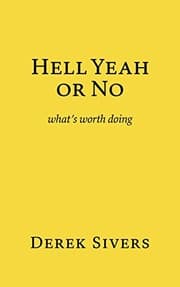
Yeah. So I, I think that there's some of that. And I think that it's, I think, you know, one of the things that I've been trying to think about is, um, uh, there's this book, uh, by a guy by the name of Derek Sivers. Um, and he wrote this book. He's wrote a couple of books.
He's very smart guy. Um, it's called hell yes or no. And, and I have not dialed in this mental model yet, but I will, but I, what I'm trying to work on, I've been trying to say to myself and, um, you know, I tend to write and create things to remind myself of them. Um, and like this idea of you're either hell yes on something or, or, or it's a no, like there's no in between. There's no like, ah, it probably should.
If it's a probably should, it's a no, right. It's, it's my kid as a sports game of some sort, or my, you know, or, or, or a dance recital or a, they're given a presentation. That's a hell yes. I'm going to that. But this meeting that I'm kind of like, I guess I could take it or leave it that, that gets a no.
Right. And that frees up the space. You know, his whole point is again, and I'm, I'm not, I'm not trying to pretend like I have this like dialed in. This is, I'm still working on this actually, but like what the, by, by, by it being hell yes or no, it, all the no's free you up for the hell yeses, right. Cause there's nothing worse than, man, I would freaking love to do insert thing, but I got all these like meetings that I don't really care about, but I've already scheduled them and they're already there.
And, you know, so now you don't do the thing you really want to do in exchange for five things that you, or you don't do the, yeah, you don't do the thing that you, you're really excited about in exchange for five things that you're like mad about, but you feel like you should. And like, that's the really, I don't know. It's getting owned by other people in that situation. And you got to like recognize that, you know? Yeah.
Yeah. Yeah. So, um, I want to talk about the business meeting. I want to talk about the business meeting. So we did this, uh, for everyone listening at home, we did this really fun thing that was put on by Doug and Liz and it was tremendous.
Um, it was like a 15 couple. I think I was the only person who wasn't a couple. Uh, uh, 15 kind of agent with, with significant other event down in, um, New York city. Um, we just had an absolutely tremendous time. It was a wonderful group.
Um, day, it was basically like a day and a half ish. And, uh, man, I just, I, I, you know, a couple of people said it and I agree with them. They're like, this is the future of events. So maybe talk me through like where this idea came from, um, like what, what, I mean, it was a big deal to put it on and you did a fantastic job. So like, what, what, what was the impetus for this?
Why did you decide to even do something like this? So it was kind of random a little bit and it's, it's not part of some like grand master scheme or something to be quite honest. And I always feel like that's a little lame. Like I should have some, some really big, uh, idea that this is like some part of or something, but, but it wasn't, you know, I was at a lot of events and, um, have developed a really nice crew of friends in the business all around the country. A couple of common things I would hear people are like, oh, you're from Buffalo.
You know, do you spend a ton of time in New York city? And, um, and then your answer is like, well, like, yeah, sure. I love to go down to New York, but it's like, you know, um, at the opposite end of the state, it's like quite a distance. You know, it's like, if you're talking to somebody from like, uh, Montana or Oklahoma or something, you know, they think that like Buffalo and New York city, it's like, you know, like a 20 minute train ride or something. Yeah.
So, um, so anyway, that led into conversations, a lot of answers you get, like, you know, I do all this travel and I do all this stuff. I've been to all these things, but I've like never been to New York city or I was like went to New York city once when I was a kid for like a, a Yankees game or something like that. But, you know, I've never been to New York and I'm like, you know, we've got all of these people who are really out front in our industry and, um, and like, they've never been to New York and I love New York. And, you know, in this kind of post COVID world, New York was obviously like, um, was where it started and hit so hard. And I know the city was kind of, is kind of continuing to struggle back a little bit.
So I was like, let's just take a field trip to New York. And, um, you know, I thought one day is pretty easy for people. It's not like you gotta, you know, go for three days or, or, or four, four days or something like that. So I'll just make it, it's easy to get to, right. So I'll make a quick in and out.
And, um, and then, you know, I'm like the ultimate ADD boy, I think. So it's like, sometimes when I go to these, these things and I'm in like a hotel ballroom or something all day, you know, I can get, I can get antsy, right. I can get a little, I can get a little anxious or I struggle to kind of stay focused or whatever. And, um, and as we all know, even though there's a lot of amazing content, especially if you haven't been exposed to it previously, or if you just started an agency and going to these things, there's just like amazing people telling amazing, uh, stories, but the sidebars are, are, are sort of where the magic happens too. Right.
So, um, so I thought this would be a chance to do that. And it'd be kind of fun to just go to New York and take it, do a little field trip and go to a couple of meetings. So I was beating my head against the wall. I had, I had some things, I won't tell you what the failures were, but I had a few things I was trying to do and it wasn't really coming together. And I'm like, man, I thought I had a little juice here.
And I was getting, getting a little, getting a little down because I wasn't getting anywhere trying to pull this thing together. And I had, I'm on this big guy, New York board. And I was chatting with Lisa Lounsbury, who's, who's like the big guy CEO here in New York. And, and she was like, Hey, you know, who, what do you want to do? Who do you want to talk to?
She's like, I know a lot of people down there. So like, you know, we, we kind of spitballed a couple ideas together and she's like, I can introduce you to this person. I can introduce you to that person. And, and she did, and they were super responsive and excited about it. So we ended up, it was in the beginning of March, March 2nd, it was a Thursday.
And we kind of all met on Wednesday, the day before you and I had a drink at the hotel, the first person I saw. And, and we went to Lloyd's America on Park Ave. And we met with their CEO and had a really cool, I think, kind of just Q&A. And he gave a little presentation. We talked about just a lot of different things changing and forces in the market.
And then we grabbed lunch and went down. We went down to InsureTech New York, down on West 23rd street and, and just saw what they're doing there. Talk to some people that are in their accelerator and what they're working on. And I thought it was a great conversation to have because as we know, a lot of the, you know, InsureTech can equal like no agent for a lot of people. Right.
So yeah, to sort of have that conversation with those guys and inject that and just kind of frame that mindset, I thought was also very cool. And then, and then like you're in New York, right? So you got to get dressed up and, and have dinner kind of, yeah, kind of, you know, Frank Sinatra style a little bit decked up. So, so that was it. And some people hung out for the weekend and it was nice, but, but boy, I'll tell you, I never, I never thought going into it that the field trip idea would have so much impact because I have heard that from a number of people now.
And I've heard other people that I don't even know are kind of talking about, like it's gaining a little bit of traction, this field trip idea. Yeah. That's cool. I, I, I, that makes me feel good. You know, what's up guys?
Sorry to take you away from the episode, but as you know, we do not run ads on this show and in exchange for that, I need your help. If you're loving this episode, if you enjoy this podcast, whether you're watching on YouTube or you're listening on your favorite podcast platform, I would love for you to subscribe, share, comment. If you're on YouTube, leave a rating review. If you're on Spotify or Apple iTunes, et cetera, this helps the show grow. It helps me bring more guests in.
We have a tremendous lineup of people coming in, uh, men and women who've done incredible things, sharing their stories around peak performance, leadership, growth, sales, the things that are going to help you, uh, grow as a person and grow your business. But they all check out comments, ratings, reviews. They check out all this information before they come on. So as I reach out to more and more people and want to bring them in and share their stories with you, I need your help. Share the show, subscribe if you're not subscribed.
And I'd love for you to leave a comment about the show because I read all the comments or if you're on Apple or Spotify, leave a rating review of this show. I love you for listening to this show and I hope you enjoy it. Listening as much as I do creating the show for you. All right. I'm out of here.
Peace. Let's get back to the episode. Yeah, no, I thought it was, I thought it was tremendous. I had, I had such a good time and I agree with you. It was like, it was built for side conversations and that to me is, is a very magical, um, insight that you had that while, you know, you may be inspired watching someone on the main stage to tell their story or whatever the, the conversations oftentimes you remember are the ones had in between the sessions or at the bar or breakfast, coffee, whatever, or a little walking excursion or, you know, whatever you're, whatever you're doing, that's, that's oftentimes the conversations that you remember.
I mean, that's, those are the conversations that sold my business. You know, I mean, that's, that's, that's really where that the first time I ever even considered selling the business. Um, you know, I, I had considered taking more investment, but I had never considered selling it until I had a side conversation. It was a happy hour conversation after, after the conference you spoke at, right? Yeah.
And that, and I think that the fact that you were able to facilitate that, um, throughout an entire day, because, you know, there, there are these things that we did, you know, in sure, tech, New York and whatever, but there were all these moments baked in between, whether intentionally or unintentionally that you're just, you know, you'd be walking down a sidewalk and you'd walk a block with one person talking to them. And then kind of naturally that would morph and you'd be standing next to somebody else. And then you'd walk a block with them and, you know, and just all the different personalities and, um, it was, it was, uh, that was a special event. I thought, I thought you did a tremendous job. I hope, I hope that you guys, you know, think about doing it again, obviously.
Um, I appreciate that, you know, if you and a lot of other people hadn't made a lot of effort to get there, it would have been just like me and my wife having dinner in New York. So, um, so it was special because, uh, because people showed up, you know, I know, I know people made, you know, getting babysitters and some other things and shuffling schedules around. It was not, it was not the easiest or cheapest thing for folks to do to come. So I, I appreciated that so much that when I tossed it out there, the response was like, yes, you know, I'll be there. Yeah, yeah.
Well, that's, that's also the beauty of our industry is that I think, um, you know, I have found this to be true over my course of my career. And I think you and I have talked about it before that just, man, the friendships that you make, um, even if you don't talk to those people every day, they're very, they're lasting, you know, like, you know, many of the, there were a few people there that I hadn't met before, which was great. But a lot of the people that came were people that I've been friends with as well for a long time, I mean, you don't see someone for a year or year and a half in person, even if you communicate online or whatever, and just, it just snaps right back and you get right into this groove and you just, you appreciate these people and what they do. And, uh, the industry is incredibly supportive. Um, one thing I think is, was funny, uh, and I haven't shared this or even talked about it.
I just, it was a takeaway that I wrote down in my phone while I was listening to the InsurTech New York guys is that, um, like non-retail agent, non-independent agent, InsurTech people like get excited about stuff like the whack, like my opinion, like the wackiest stuff to be like, we got this pet insurance, InsurTech startup here. And everyone's like, eyes are glazing over like pet insurance. And like, you know, they're like, we're doing something really cool with like, you know, uh, embedded, you know, dog collar insurance. And you're like, Oh God, you know, like, Oh, you don't understand the dog collar market is so, you know, it's, and you know, we just raised $30 million. Yeah.
We're like, there's like drool coming out of her side of her mouth. We're like, what are you talking about? These guys are like all jacked up about embedded dog collar. And it wasn't actually what it was, but it was just, you know, like you said, and then they'll be like, yeah, they got pre-seed angel 30 mil at a hundred million valuation. You're like, what the fuck?
Where are you hitting me or what? I'm like, who are the people that are giving these people money? Oh my God. Oh, it's so, it's just so crazy. I just, you know, I had nothing against it.
I get it. It's funny. It is a drip though. I think it's that much more important to have our voice in there though, because it's like sometimes God bless these guys, but it's like such wackiness. It's like, no, it's like, if you talk to somebody on the ground about this, like, yeah, I also felt bad and I'm not going to name his name, but like for the cyber insurance guy, because one of the, so three insure techs, uh, uh, did a, did, you know, did their thing.
And, um, one of them was a guy that had a new cyber startup. And like, I think he didn't necessarily, wasn't really aware of who, like who was in the room or like the expertise or breath of, you know, awareness of who was in the room because he starts talking about this thing. And like, you could tell immediately no one cared. Cause there's like 10 bazillion cyber startups out there. And they all, they all do some sort of a private, we, we look, no, we have a bot that scans their website and comes back and report it.
And someone raised their hand and you're like, you know, like, uh, you know, whoever, like whoever, like whoever. And he's like, well, no, it's different because we got, and you're like, so it's basically like this one, this one, this one. He's like, ah, and we're just kind of like, come on, man. You know, like I just, you know, and you like, look at, and I feel bad because that guy paid and he seems like a perfectly smart and I'm sure his product is perfectly reasonable. So I'm not knocking the product, but like that guy paid probably a couple hundred thousand dollars to get an MBA somewhere, which who they taught him to do a regression analysis.
And that regression analysis came out with the same findings that every other cyber startup has come out with is companies need cyber insurance. So he starts this company and then it's just like, you're exactly the same as like, I mean, literally decide at this point, what is the delineation between all the cyber companies? Like there's no, they all do a little report thing. They all have the same insuring agreements. Uh, there's no one, you know, the same underwriting requirements.
You gotta have two factor and all this other stuff. I mean, it's all the same. They're like, wait, you're a company that actually needs cyber. Nah, we're not interested. No, no, we're not going to, we don't do that.
We don't write cyber policies for the companies that actually need them. We write cyber policies for the companies that don't need them. Cause we don't want to pay any claims. Specialized in cyber policies for contractors. That's what we're going after.
Yes. Yeah. So he doesn't have a website or an email address. We want that account. That's what we want.
We want that one. And Hey, do you, how does he feel about $25,000 a year? Does he feel, how does he feel about that? I feel pretty good. Um, so on that note, like, so what's, what's working for you, man?
Like what, what's, what's, what's, uh, what's your big secret? What's the, what's the little secret sauce that's, um, that's got you cranking right now? Is it, is it a killing commercial stuff? Is it just your process? Is it the networking relationships?
What's, what's got you cooking? Yeah. Killing commercial continues to be a great influence on us. So we have a new producer here, uh, Noah, who came from the car world and, um, and, uh, he went through the whole process with all the modules and, um, and it was a really great training to get him up and moving. And so that's some nice energy in the office.
Like we're working together and I'm trying to get him moving and, um, you know, I don't know. I feel like you're always trying to shake the bushes a little more on prospecting and just kind of be disciplined about the prospecting that you want to do. So, um, it's the usual mix. We have a pretty good, we have a pretty good network kind of like referrals going. We got some really good referral partners, like, you know, payroll folks who take over maybe a pay as you go work comp from paychecks who, uh, who, who bring us in to handle that for them.
And, and that's like a valuable one. Um, uh, the social stuff is a pretty consistent draw inbound. Um, it feels like the world is just returning to a little bit better of a spot. I hope because the economy is still concerning, but like last year, we have people that are just always buying buildings or doing stuff, you know, movers and shakers that just felt like they were doing no moving and no shaking. So it seems like that's coming back a little bit more like our people are doing stuff and like they need insurance for it.
So, um, so I think that's pretty good, but you know, always trying to prospect a little more, we just brought out a VA for, um, for a telemarketing campaign. Hopefully that brings, brings some, uh, some good stuff, but, um, I don't know. It's a little bit of a weird time, but it feels good. Like we're writing some business. We're swamped with trying to re-quote stuff way more than you would normally be, but you know, we're figuring it out.
We're figuring it out. I'm excited about this year. I feel like, like last year was just last year was like the one year since we started that it was just like, what is going on? And in terms of, you know, we had some nice growth from premiums on the rise, but in terms of like new business, it was, it was awful compared to the years prior. And I'm, you know, like what's going on.
So it feels like we're back on track this year a little bit, but it's like a little bit of scariness out there. I'm not going to lie. It's like, I got a, I got a, this list going on my desk of, um, that I'm just writing down of stuff that we've lost either, you know, in personal lines, it's leaving. We had one today, the small welding company, this guy called and said, I just got my renewal bill. He's like, just shit can this thing.
He's like, I'm barely working at all. Anyway, um, we had, we've had, uh, I don't know, steady stream of small guys that are going out of business. Yeah. But at the same time, I feel like it's leveled out by the big guys that are growing. So it's like one little contractor throws in the towel and the bigger contractor buys two trucks.
It's basically a premium positive if that happens in one day, but it's like, that's what it feels like right now, which is weird. Yeah. I'd say that philosophically, I, we're seeing the same exact thing and what we are doing. And I'd say philosophically, I hate that because obviously that's the leftists plan is to, you know, grow big business and put all the little guys out of business, um, through taxes. And our state is the worst at that.
But that being said, I feel like, I feel like the challenges of the moment also create opportunities. You know, I think there's a lot of agents, a lot of businesses, a lot of small business owners in general. And, um, and I think you even see this in some of the big guys, you know, they're, they're, they're, they're in holding patterns, right? They're, they're, what is the economy going to do? What are interest rates going to do?
Uh, what's, what's going to happen with the market? It's a hardening market. Let's batten down the hatches. And to me, I think that creates the biggest opportunity for us to either, uh, shorten the gap to our competitors or, or extend it if, depending on where we fall in our current evolution, because. You know, if you can be the loudest voice in a time when everyone else is scared, you get to own the narrative, you know?
And that's, that's one of the things, like if people have been following along with any of my social, they'll see that I've been putting out content, content, like a crazy man. And we're gearing up. I've been doing it personally. Um, and a lot of that is tests and different stuff. And, um, we're going to be, like I said, hiring.
So a lot of those videos are just, are, are a lot of the stuff that I do is sharing. Part of it is like a daily diary for myself. It holds me accountable and the different thoughts that I have. And it's part of my method of healing. But the other side of it too, is, um, it's, it's for recruiting.
I want people to understand what the philosophy and methodology is. And then on the other side, what we're going to be doing at rogue is taking what I learned doing a lot of the individual stuff on my personal channels, and then applying it to rogue in terms of the tactics, the strategies, because I think that if you can get out ahead of people right now, especially using marketing in some form, whatever your preferred form is, it could be a physical newsletter. It could be calling whatever, but if you can add value, give people guidance, give them support, or just be positive during this time when, when small businesses are struggling right now, you know what I mean? Any, any political leader or economic commentator, and you know, this as well as anybody who goes on any platform and tries to pretend like things aren't bad right now is in a, this is a line I use it on Twitter all the time. And it gets me in trouble as I'm like, this person doesn't buy their own groceries.
Like if you, it's like, if you, if you could, if you're, if you have the balls to go onto a public forum and make any kind of comment that inflation is not currently a problem, you're, you are either selling something or you're an idiot and you certainly don't buy your own groceries because I'm a single guy that somehow manages to pay $120 a week in groceries. I don't know. I don't understand how I do that. Like, I don't even have that much stuff. Like I couldn't imagine what your freaking grocery bill is.
It's gotta be like $10,000. Everything's through the roof too, man. I mean, just what it was like a minute ago. It's, it's crazy how every week, every week, you know, Liz does a shop and she's like, man, it was like amazing because this was up or that was up, you know, or, or something just a week ago, you know, milk was whatever, four bucks. Now it's four 50 or something.
Yeah. And it's like, I think that everybody sees it. Everybody in our local communities, the, the size businesses that most of the people who listen to this show work on, if they write commercial, right. Middle market and, and small business. Like if you're, they all see it, they're all feeling it.
They're the cost of their materials is going up. The cost of their inventory is going up. Their employees are more expensive pay. Yeah. Payroll their, you know, taxes are going up all over the place.
Like it's, everybody feels it. And I think everybody's scared. And I think that one creates an opportunity because people's antennas go up. Maybe they're open to new opportunities, maybe situations that haven't been productive. But also they're just looking for someone to anchor them to the fact that they're not fucked.
Right. And I think that the more often, if, if you can live in a place of positivity and be that thing, even if you're just talking to yourself, you know, and this is why I don't mind talking head inspirational videos on social media. I know some people think they're trite or whatever, but like, to me, it's, if I can just get a little blast of positivity, that feels like a good thing to me, you know what I mean? It's like, feels okay to me to, if you need to jump on social and you just want to do a quick walking. And I know you do them sometimes you did them when you had that big snowstorm, right?
You stood out there and you said, Hey, look, things are shitty, but we're here to help. Like, let me help you. If you need help, reach out. This is how you get like that stuff. I think now is more meaningful than ever, because what it says is look like Doug might not have all the answers, but shit, he's out there.
Right. I now know that at least there's somebody out there who can help me. That to me feels very important. I think that that is, and that's the, is the beauty of social and to try and fill social with some positivity too, is a great mission. Your stuff looks good.
I noticed a little change in flavor, some edgier titles and stuff that like grab your eye. So it looks really good. We're trying. I like what you're doing, but yeah, you gotta be there and you gotta let people know. I'm, I'm like a firm believer that like sometimes in this job, you really feel like more like a counselor than anything.
And it's like, I had this guy like recently, the sign blew off his building, the carrier saying like, wow, the supports, you know, might, there might've been some wear and tear there. So it's like this little black back and forth and it's all actually working out in the end. But I mean, he was like really pissed off and angry and, um, you know, just kind of trying to like say the right thing and saying like, okay, you know, relax for a minute. Let us take a look or, or just listening to these people sometimes when they're got something to say. It's like, I'm telling people it's going to be okay.
It's going to work out, you know, you know, this is going to work out. Just stay sane for a minute on me, please. You know, I've, I've, I've been working on my team, working, helping train them on like my personal inbound sales philosophy, which is probably not much different than a, any sales philosophy, but, um, and it's all, there's really like the first step of the process is really, is really two parts. You literally just ask, how can I help? And then shut up and let them talk.
And at the end you confirm whatever they said and they go, don't worry. I got you. Yeah. Right. Like you just do that.
You just ask an open-ended question. And at the end, when they're done bitching and barfing, whatever their problems are, you know, which could be big or small or, you know, whatever, wide ranging, when they get to the end, you just go, Hey, don't worry. I got you. Or we got you. Whatever you, you can all like, even though you're talking to them on the phone, you can like almost feel just a little bit of tension come out of their body.
Cause they're like, Oh, that's all I really wanted. I just wanted someone to tell me everything was going to be okay. I just wanted somebody to tell me everything I'm safe. I'm going to be okay. Yeah.
And, and, you know, obviously you have to make good on that and that's the job, but like that, that just letting people know, I think, you know, and that's why I think more than ever positivity on social sharing means I have like a whole group of people that I've talked to and comment on that there, they share positivity stuff all the time. And, you know, they'll, we'll even talk about once in a while, how people will make fun of you or like, you know, I, people will, you know, some of my buddies here locally will always, you know, not, not being jerks, just good natured route, but they'll be like, Oh, you know, another meme or whatever. And I'm like, look, like me hitting share into my Instagram story of that, like positive message. I don't need you to give a shit about it. Like that was for me.
Like that was me just saying like this piece of positivity just helped me today. Like it kept me from going into the dark corners that we can go in when we're losing accounts or, you know, the bank account isn't as flush as we think it should be, or an employee is giving us a hard time about something and we don't know how to handle it. Like you can go into dark holes. And I think those little, the little bits of positivity, they can go a long way. If you, if you take them in, they can go a long way and you got to do it.
And I'll give Liz some credit that when I'm, you know, freaking out about something, she'll be like, where's the opportunity, you know? And it's like, man, to just shift your mind like that when you're going into those dark places is, is like so necessary because let's face it, this is tough. There's a lot of stuff. You got relationships with carriers, you got employees, you got, you know, your brand, you have all these different dimensions, you got all the back office accounting. There's like so much to do here beyond just go out and take care of customers, which is what you really want to do, that it's like, you know, any one of those things is like really enough to tweak you at like any given time, you know what I mean?
It's like, oh my God, I got all these agency bills. Like I got to make sure I pay those. I'm down to the wire. Like, oh my God, my employee's pissed off or, oh my God, like this carrier, like I haven't written anything with all year. And they're like up my ass right now.
Yeah. So it's like, it's, it's like easy to get yourself like really tuned up. You got to reinforce that positivity like constantly. Yeah, I know that dude. That's one of the reasons why I started posting the video, the workout videos, which I also, I also get made fun of.
You're over 400 on the deadlifts, bro. Yeah. Yeah. I have 425, 425. Yeah.
425. Yeah. That's the max. I, I only got that once, but yeah, 425 is my max right now. Actually today is deadlift day.
It's the next thing I'm doing after this. I'm really excited. I try to deadlift once every 10 days. That's my, that's kind of my rhythm, but, but the point was not, I get, I get made fun of a lot because people say that it's thirst traps, which if anyone understands what a thirst trap is, then I let's just say this. I didn't originally start posting them as thirst traps, but they don't hurt the single game.
Let's just put it that way, but it wasn't the original purpose, but I am now aware that perfectly. Yeah. But the whole point was like, the whole point was like, I, I, and I've said this a long time. It's like, you know, I, if I am not physically active at a, at a fairly strenuous level, I, my brain gets, can get dark, right? I can start, I start thinking negatively about myself.
I start thinking negatively about where I am, my future. You don't have discipline, you know, I go down this rabbit hole of self defeatism and I just started saying like, the only way if I don't post, like posting, this is my way of holding myself accountable. Cause I can go back in and I only post, I mostly only post like days. I do work out almost every day, but like, I can now see like my progress. Like I can actually watch and people, people don't care, but I can go back and see like my form a year ago from my form today on a pole or a lift.
And like, that, that keeps me positive. That's what it is. It's just about staying. It's about staying in that positive frame of mind versus allowing ourselves to spiral into negativity where nothing good happens. And, and I love what Liz said.
I mean, where's the opportunity? That's brilliant. I mean, that's, that's very brilliant. You're lucky to have a partner who supports you that way. I am.
I, I, I, I'm very grateful for her. I appreciate about you that, that discipline and that mindset. And I am striving for that right now in my life too. I'm trying to like, just get into, I'm trying to get fit, you know? So it's hard.
And the fact that you have that discipline and you know that that clarity comes from that and, and, and you don't fall off track. I, I, I admire that because it's not easy. And that's, that's, that's kind of what I'm trying to do. And it's so funny when you get into that rhythm, you feel so good. It's like a drug, but for what it's also like, you're getting pulled to be like this lazy ass, you know, at the same time, it's like, you know, if you go and you do it, it is, it is everything that you need to be good in this life.
Yeah. In terms of like clearing your head and feeling good and just kind of like getting that rush. But, but, but it's so easy to just be like, ah, I don't want to get off the couch, you know? Yeah. No, I, I completely get it.
And I think, so two things there. One, I think the key is not to like, I, I, what I've learned about myself and just, and just doing, especially the exercising stuff, but really anything that involves discipline is that you're going to fuck up, you know, like you're going to have like, I haven't, I haven't worked out, worked out. I've walked, I try to, on days that I'm not going to get a workout, I try to walk at least two miles. I fucking hate running, so I don't run, but like, um, but, uh, I haven't done anything more than walk for the last two days in a row. And I'm starting to get a little crazy.
Um, and, and it's just because of life and work and kids and all those kinds of things. But, um, but one of the things, and this is, I'll leave you with this. And I want to be respectful of your time and of the audience's time, um, that I found is, uh, uh, I, I really try to work five hours during the work day. So out of the eight hour work day, I'm only going to work, work, work five hours. Cause, cause not because I'm getting 10 hours a day in, but I'll have like an hour in the morning, probably have two hours at night.
And then I'm trying to do five ish hours, maybe a little more. So I'm still getting that extra time in, but what I've done is said, I'm not getting to the gym at 6 PM. It's not happening for me. That's not happening for me. For me, the best time to get to the gym is sometime between noon and 4 PM.
That's where one, my body is the most dialed in ready to exercise to, I usually need a break then anyways. Right. So if I'm cranking all morning, I need a break in the early afternoon. So what I've just said to myself is instead of holding my, instead of saying, geez, I'm missing two hours of work between commute and workout and commute back. I just tell myself, this is part of my work day.
Like I can't make a good decision on a really tough business meeting or a tough, uh, uh, strategy or dealing with a tough issue. If I'm, if my brain is not optimized or, you know, if I'm not firing on all cylinders and part of my cylinders is working out. So I've just basically said, it's part of my work that me being, doing this exercise is part of me being the best version of myself at work. And when I started telling myself that I stopped feeling the guilt for going and working out in the middle of the day. Right.
Cause I have a, I actually have a really important business meeting this afternoon, uh, because we're recording this in the morning. So I'm going to go get my work in now I'm going to get all jacked up. And this afternoon, this motherfucker doesn't know what's going to happen to him when I show up at this meeting. Cause I'm going to be coming in like a rocket ship and, and, uh, that to me, right. Literally out of this entire day, if I crushed that meeting, nothing else could happen in this day.
And that was a very productive day. And that's kind of how I started thinking about it. So anytime you have a question about workout shit, you know, this is what I love to talk about. So you just, you just text me or call me, but, um, dude, I'm so happy for your success. I'm so happy that you and the way you are in your methodology has, is starting to spread out to the, to the broader insurance industry.
I think that, um, you know, I obviously think the world of you and Liz, I think you guys are dear friends and, uh, happy to support you. And, uh, just, I can't believe this hasn't happened sooner. I'm so happy that we finally had a chance to talk on the podcast. Yeah, me too. It's a great honor to be on.
We love you back, buddy. And, um, and, uh, you know, you, you were one of the first people I met in this business. Um, you know, another agent, another owner outside of, uh, outside of Buffalo or something when we started. So it's like that we were saying that in New York, but it really sticks in my mind. It was like day one, it was like a trip to Albany and, and we met you and it's like thinking back about where we've come in that time.
Yeah. And I love that bench, like your photos, you know, it's like, I love that benchmark to think back. I mean, it was like, we didn't even have a customer yet, you know, and it was like, we were talking and here we are. So it's awesome. I'm sorry.
Thanks for having me on. I appreciate it so much. Absolutely. Go crush it, man. It's like, you got some good stuff lined up.
I'll talk to you. All right, buddy. Be good. All right. Be good.
Later. See ya. See ya. Close twice as many deals by this time next week. Sound impossible?
It's not. With the one call close system, you'll stop chasing leads and start closing deals. In one call. This is the exact method we use to close 1,200 clients in under three years during the pandemic. No fluff, no endless follow-ups, just results fast.
Based in behavioral psychology and battle-tested, the one call close system eliminates excuses and gets the prospect saying yes, more than you ever thought possible. If you're ready to stop losing opportunities and start winning, visit masteroftheclosed.com. That's masteroftheclosed.com. Do it today. If you're the purchasing manager at a manufacturing plant, you know having a trusted partner makes all the difference.
That's why, hands down, you count on Grainger for auto reordering. With on-time restocks, your team will have the cut-resistant gloves they need at the start of their shift. And you can end your day knowing they've got safety well in hand. Call 1-800-GRAINGER, click grainger.com, or just stop by. Grainger, for the ones who get it done.
Happy Holidays! Want to give your host a gift? Consider subscribing, rating, and reviewing the show this holiday season. It really helps the show grow. From all of us at Believe, have a Merry Christmas, everyone, and a happy holiday.
If you like the show, please take a moment to rate, review, and subscribe. It really does help the show to grow. Thank you for listening.