Ex-Marine Officer: Why Comfort is Quietly Destroying Your Life
with Jill Schulman
Episode Answer
Ex-Marine Officer: Why Comfort is Quietly Destroying Your Life is a Finding Peak podcast episode hosted by Ryan Hanley with Jill Schulman. The conversation explores leadership, performance, entrepreneurship, and the work required to build with clarity under pressure.
Read the Conversation
Show the full transcript
I do not understand why so many people are willing to trade for a little bit of discomfort. When people don't go after what they want because of discomfort or fear, it's not their fault. We're twice as motivated to avoid what we fear than to move toward what we want. If you want to have the most successful life, if you wanna have the happiest life, you need to get uncomfortable, and it's gonna feel unnatural. Like what's the thing that you really want that you keep saying, "Ah, someday"?
That is such a dangerous word. Instead of someday, we need to replace that with today. I had this woman on, uh... Oh, man, I'm gonna forget exactly which, which one of the, which one of the women that I interviewed it was, but it was, it was a few weeks ago, and she was like, "Fucking hate pink." She's like, "I hate pink so much."
She's like, "But when I, when we post something," she's like, "I have these analytics that, like, when we post something and I use pink in, like, the imagery, I get X more visibility or whatever." She's like, she's like, "It drives me nuts." She's like, "So," she's like, "We've integrated pink into our, into, like, our brand." She's like, "But it drives me crazy 'cause I hate pink, but I, I can't deny that, like, when I post something"... And she would explain it better.
Obviously, I'm kinda butchering it. But like- Yeah ... "When I post something with pink, it, like, gets more engagement." So she was, like, in this, uh, philosophical battle with her team over whether she should embrace this color she hates or, you know, just, just throw it out and say, "Screw it," um, which I thought was really funny. Yeah.
I, I, I guess maybe it's one of the times where the, the phrase embrace the suck, just, you know, it suck, just embrace it. That's right. I know. I will say, when you're creating content, I just feel like you have to enjoy, like you have to enjoy what you're putting out. Um, I think you can tell over time the people who have maybe bought into the analytics too much, they're playing to the algorithm or whatever too much, and you can tell, like, it kinda, you can tell it's not authentically them.
And then everyone starts sounding the same, 'cause if you allow what everyone wants to guide you, then everyone's gonna come to the same middle. So can you serve a smaller set of people more deeply and make a bigger impact because you're being your authentic self versus changing? So I, yeah, I'm, I'm with you on that. I, I definitely have a unique message too, but I think it, it's what sets me apart in the marketplace, you know, 'cause I talk about bravery. I want people to do hard things, and I, I've studied positive psychology, so I am a happiness scientist.
But the way you get to happy, m- my research is through doing hard things and doing things scared, you know? And I wanna get into it 'cause I'm, I'm philosophically, like, 100% aligned. Mm-hmm. And, um, anytime someone pushes back on... 'Cause, 'cause I do the same thing. I test all kinds of stuff.
Like, if you look through my social feeds, like, every once in a while, and probably more than every once in a while, you'll see something and be like, "What? Why would he do that?" Like, "Why would he post that? Why would you try..." And 'cause I'm just trying different stuff, like what, what do I like doing, what resonates, you know, that kinda stuff.
And I always go, like, Joe Rogan became the most popular podcaster and probably media brand in the world high as a kite talking about ancient civilizations. So y- which marketing, which, like, marketing brand house would put in front of you a proposal that says, "Hey, Jill, here's what we're gonna do. You're gonna get stoned out of your mind. You're gonna have this guy that no one's ever heard of on your podcast, and you're gonna talk about ancient civilizations as if they're real"? Yeah.
"That's what we want you to do." Right? Like, you'd be like, you'd be like, "Get the hell outta here." But the crazy uniqueness of it, for whatever, space and time, that hit, and now, you know, obviously he's who he is. But, like, people forget that his show was kind of nothing until he did that Graham Hancock interview, and it was the Graham Hancock interview which was so bananas that he would plat- you know, platform this guy who talks about this thing that, you know, at the time was, I mean, today almost it's like it's more science than not science, but, I mean, this was 15 years ago, and- I need to listen to it.
I, like, don't even know what you're talking about, so I'm like, "Uh-oh, I should probably know this." Oh, sorry. Oh, so, so, so, uh, there's this guy... I mean, I, uh, I'm nerdy as shit, so please take that with a grain of salt. No, I'm, I'm a fellow nerd, so I love it.
Okay. I usually listen to more the academic, like, podcasts, and so that's why I don't r- I don't f- I don't listen to Joe Rogan, but I know who he is. Yes. Yeah, yeah. And I've listened to the right two podcasts.
Yeah. So, so he, you know, whether you like all of his stuff or not, the one thing that I find the most intriguing about him is he will give these, we'll call them alternative scientists, the ability to tell their story. Some of them are, end up being a little nutsy. Mm. But in the case of Graham Hancock, he is literally the guy who has pushed this narrative of there was a civilization before the last ice age.
So that was complete- Oh ... pseudoscience. No one believed it. He was laughed out of rooms. And then he wrote this book called The Fingerprints of the Gods, which will blow your mind if you're into history, like ancient history. It'll blow your mind.
You don't have to believe it, but there's too much evidence for there- Wow. There's a s- s- there's something there. What is there? We don't know, but there's something there. There absolutely is.
Uh, and I could go down, I could do an entire- Yeah ... four-hour... I'm so fascinated- ... by this idea that there was this entire civilization which 11,000 years ago was essentially wiped out by a meteor hitting, or, you know, whatever, meteor, asteroid, hitting the, the world and, and creating the Younger Dryas, that thousand years that, uh, uh, brought the ice age back. Um, this dude is just this obscure, out of nowhere, you know, kinda wrote this book which Joe liked, but it's very obscure. Hyper, hyper obscure. Like deep, deep Reddit cut obscure.
And then Joe brings him on the platform, and he's smoking a joint on the show, you know, with this guy. They talk for three and a half hours about how Graham believes there was a civilization before, like, Mesopotamia. Like we're taught, you know, we were all just shooting buffalo and running around in loincloths, and then Mesopotamia happened, and all of a sudden we had writing and kings and rules. And Graham's like- That's not the way humans work. Like, you don't go from no language, nothing written to, you know, to, to Hammurabi, like, in the, in the period of, like, 50 years.
Like, that's just... There's no way that that happens, and so he's got this whole thing. But my point is, like, h- Joe's entire platform off of that episode was that was the first major leap, and no branding specialist, no PR specialist, nobody would ever come to you and say, "This is the guy you should have on your show." But because he did that, it separated him from every other podcaster and launched him into the stratosphere, you know? So that's- Right.
Follow your heart, talk about what fires you up, even if it's not popular, and, and then you get in alignment. 'Cause I feel like for, for me, I'm, I've never been busier. Like, I feel like I'm in the middle of a hurricane 'cause there's so much going on. Um, but I feel, like, in complete alignment with what I'm meant to do. So like, I'm just... I'm gonna stay on the path.
Like, I just... I feel like I now I know I am on the path and doing what I'm meant to do, and it's, it's fun. I'm not a psychologist. Uh, I had to cheat my way to a math major in college, so I'm, I, as a, a much of a neophyte on this, but, but I'd say I'm an armchair psychologist. Um, mostly I was raised by a mother that liked to break people down, and I was forced to listen to her philosophical breakdowns on all the humans in our lives, so I became very interested in how humans tick.
Um, I c- do not understand why so many people are willing to trade what they really want for a little bit of discomfort. Hmm. Yes. Um, I mean, you just get to the heart of what I care about and what, and what I study. And, and the reason for this is the way humans evolved is that we ran away from what was dangerous or what scared us or, or risk, and it's what kept us alive.
So when people don't go after what they want because of discomfort or fear, it's not their fault. It is way... It's the way that our brains are wired. Dr. Daniel Kahneman, um, you know, did groundbreaking research in this area and discovered that we're twice as motivated to avoid what we fear than to move toward what we want.
Um, so that's why I'm so passionate about doing this work, is I think people just do what's easy. They... It'll be... They'll always... You know, I, in front of my office, I have all these things around my office, but I've, I've got the picture of when Hercules made the decision.
Do you, do you, you know, do you have to... You may have to make the choice. Do you, do you live a life of virtue which will be hard and filled with challenges and discomfort, you know, and go this way? Or do you want to live a life of luxury, of everything given to you with this beautiful woman, right? And he had to make that choice.
So if we just do what naturally comes to us, we're gonna choose a life of comfort and not choose a life of virtue. Um, but it's very shortsighted because in the short term, we're more comfortable, and we think it makes us happier because we wanna do, like, what's, what's gonna feel better. But in the long term, it makes you mus- much less happy. So if you look at the Hercules, if he would've gone down the life of, of, you know, of pleasure, you know, uh, um, he wouldn't have had a very fulfilling life, you know? So, so this is where I'm, you know, I'm trying to educate people on if you want to have the most successful life, if you wanna have the happiest life, you need to get uncomfortable, and it's gonna feel unnatural.
Like, doing things scared is gonna feel unnatural, and that's the way it's supposed to be. And this is where so many people think, like, "I'm just not brave. It just, like, I, I can't do that." I'm like, that's, that is part of the way you're wired that is making you freeze in the presence of fear, but you can overcome it. We can train ourselves to be brave.
So, so that's, you know, what I have to respond to that is, you know, 'cause I wanna give people a little... You know, I wanna give the benefit of the doubt. It's not that they're, they're wimps or they're cowards. It's just that this is what they're naturally doing, is to avoid risk, and we are wired to do that. But we can, you know, we can rewire our brains to do it differently.
It seems very counterintuitive that comfort shouldn't be the goal, right? That's the thing that I always think about is like, I get why it's such a trap, and I fall into it as well, you know? I mean, I, I think we're all guilty at different times of, of, of falling into it. Like, "Ugh, had a long day," you know? Just, you know, instead of insert thing I've meant to do, you know, or, you know.
So I'm a... I've been divorced for four years, so single dad. So if anyone out there can feel this, then you understand, um, I will sleep next to a pile of unfolded clean clothes for days because I just have a million other things going on. And because I'm sleeping by myself most of the time, um, you know, a pile of clothes isn't a big deal on the other half of the bed, and I'll get to it when I get to it. And it's like, it...
I look at that and I'm like, it, my, my reason for saying that is I just need to fold the clothes. Like, they're right there. It drives me nuts. Walk into the bedroom to go to bed, I stare at them, I'm like, "I just need to fold those stupid clothes." But that's a half hour of me doing something that I don't wanna do, and it's just much more comfortable to shove that pile of clothes to the other side of the bed and crawl in, and I'll never know the difference.
And it's, like, such a stupid example, but it's like real-life decisions like that, like every day and all these little micro decisions that we choose to, to go with the comfort route versus, like, what we need to do. So if we feel ourselves... Like, I guess, how would you describe the tension? So I f- I make that decision, and I get into bed. There is a tension that I feel, though.
It's a micro tension 'cause it's not like this is some monumental, you know, nothing super negative's gonna happen to me. Maybe a little bit embarrassment, although I just shared it with 200,000-plus people- ... um, that I do this. Um- Like, there is a little bit of micro tension that I feel. If, like, what is that signal? How do you pick up on that signal to know I'm starting to make too many decisions that are comfort-based and not what I need to do?
Like, it feels like you don't fall off this path, like, in one big step. It feels like a series of micro-comfort decisions get to you. Is that what you're finding? Yeah. No.
Is that what you see? So I think what, what comes to me as you describe that is sometimes we, we allow decisions, the decisions we make on what we do, to be guided by our feelings or our motivation. So I think that's where the flaw is. Sometimes you go like, "I'm just gonna wake up in the morning," like, "What do I feel like doing? Well, I don't feel like working out, so I'm not gonna work out, and I don't feel like getting the work done, and I don't feel like, I'm not motivated to fold the clothes."
And motivation is overrated. Um, and as you talk about that tension, you kind of know you should fold the clothes, but you don't feel like it. And so, uh, this is so central too, and I'm gonna cite a couple researchers here. So, um, you know, f- I'd say first and, I, I wanna first cite Roy Baumeister, his research, and he, he, he's done research on, uh, basically willpower or motivation, right? You know, and, and what he says is we've got a limited amount of psychological resources each day.
So imagine that you have a full battery in the morning, and then throughout the day, your battery goes down, and then your battery's basically on, on that red last bar before you go to bed. And so your likelihood to do the uncomfortable, hard thing, we have the best chance of doing that first thing in the morning. You know, so one of the things we can do to overcome that resistance is really ... This goes down to the discipline of planning our days, of, of thinking about ... So instead of just saying like, "What, what am I gonna do tomorrow?
I'm just gonna wake up and just see what I feel like doing," but no, instead think about, "What are my goals? What, what kind of person do I wanna be? And let me plan what will I do tomorrow that is consistent with the person that I wanna be and will help me make progress on my goals." So what really helps, and this is also, um, Gollwitzer's research that talks about implementation intentions. So don't just wait to see what you feel like doing, but plan ahead of time.
Like, "I will do these things because they're the right thing to do for me to achieve my goals." Right? So that simple thing, and then I always tell people, like, preload the hardest things, the things that you dread doing most. Maybe it's folding the laundry. Some people, it's, it's working out.
Like, if you love working out, then you might wanna do that later in the day and do that, start writing the book in the morning. So whatever y- where you have the most resistance, where you don't wanna do it, you really wanna ... I call it, when I, I speak, I'm a keynote speaker around the world, right? So when I'm on the stage, I call it attack the day. Because of my Marine Corps background, I'm like, Marines don't get up and go like, "What do we feel like doing?"
No. We have our battle plans the day before, and we wake up, and we attack the day, right? You know, so, you know, have your, your battle plans to be able to attack the day, and then sometimes it does have to feel like attack. Like, this thing I don't wanna do, I'm like, "Oh, I'm just gonna, I'm just gonna jump in, and I'm gonna attack. I'm gonna get it done."
But what happens is when you do the hardest thing the first thing in the morning, how do you, how do you think someone feels after they get that done? How do you feel like when you fold that laundry? You feel like, "Oh. Oh, gosh, I'm so glad I got that done." You actually feel better.
You feel that dopamine hit. So you see even this little example, you think, "Oh, I don't wanna fold the laundry because I just, I don't feel like it. I wanna just be comfortable in the moment." But if you just do the damn laundry and it takes you 20 minutes, you're gonna feel like, "Oh, I feel so proud of myself. I feel accomplished."
So this is where I'm always battling. There's so many things I wanna bring up, but I want people to choose to do the things that are gonna make you feel better at the end of the day instead of feel good in the moment. So just a- that's a really effective question. Ask yourself this question throughout the day: What does my future self, my 5:00 PM, my 6:00 PM self want me to do in this moment to feel proud of myself so I'm making progress toward my goals? If you just develop a relationship with your future self, your end-of-the-day self, and listen to that end-of-the-day self, Ryan, your end-of-the-day self is gonna say, "Fold the damn laundry."
You're like, "All right." And listen to that future coach. And the other motivator I can use, um, as well, um, is sometimes, like, we think of what do I wanna do in the moment? What is the risk to my comfort right now? But what we can do is we can try to amplify the future risk.
If I don't work out today, how will I feel later, or how will that impact my goals? So this is Dr. Cynthia Pury. She s- um, is a professor at Clemson University. She's a researcher in, in bravery, and she says when people, you know, do brave things, usually in the moment they are scared, but when they try to amplify the risk or what's scary if I don't do it, it really helps.
So these are, like, these little psychological tools, and, and a lot of them is just imagining, like, what is the risk down the road if I don't do this thing right now, right? Um, and if you do that, it- it'll help with that ... You know, you, you wanna make yourself uncomfortable with the person that you'll be at the end of the day if you don't do it. So if you think about that, it can motivate you to do the right things. And, and what I really want is I want people at the end of the day to look in the mirror with pride and feel good, and like, "You know what?
I'm proud of the day I had." And then that is when you can rest, and then I want people to have comfort. But it's amazing when you work really hard throughout the day or if you have a really good workout how good it feels, like, to relax. But if I've been sitting my, on my ass all day, Net- binging Netflix, eating potato chips, and at the end of the day I'm, I'm, I'm, I'm relaxing on the couch, it doesn't feel good to relax. So if you work really hard, it feels really good to give yourself a break at the end of the day, right?
But, and if you work out your body really hard, like, my favorite thing is I love really getting it after it in the gym. You know, um, and then, like, getting in, I have a massage chair in my house, right? And getting in the... Oh, it feels so good. But notice, like, when I get in the massage chair and my muscles aren't very sore, it doesn't feel as good Yeah.
There's such a mental reward to earning it. I think it's why, you know, you see people who kinda, you hear these stories of, like, came over here when they were five as a, with immigrant parents and built this business and, you know, all the suc- And they, and they just, they walk around. You meet those people, and they walk around with this sense of pride. No matter where their business is, no matter where it ranks, they have just this sense of pride in, in everything. And then you can see the same person, but their parents had already been here.
Maybe it's the second generation of that individual. They were given that business, or they were given a portion of it. They may even be high-functioning w- you know, in terms of, um, you know, they may not just be complete slackers. You know, they... But there isn't that same sense of like, "I earned this.
I went out." And there's always that tension with the second generation. You can tell. The ones that, like, were forced to start down in the mail room and the ones that walked right into the C-suite, there is s- There, the way they operate, talk, act, there is such a difference between those two people, even if they've taken the business to the exact same place post them, like, taking over. Yeah.
That, that's, that's so true. We as human beings, we are built to strive. Physically, that's why we have to move our bodies. That's why we have to lift heavy things, right? Resistance training.
Like, our bodies will thrive when we strive, so that's kind of a little key term. Like, like, we thrive st- when we're striving to do more, to get uncomfortable, so both physically, but also psychologically. Psychologically. So that's where I want people to challenge themselves physically. That's really important.
Um, I'm into fitness. But also I want people to challenge themself psychologically. Like, what's the thing that you really want that you keep saying, "Ah, someday"? That is such a dangerous word. Someday.
You know, and if you wait until you're ready, if you wait until you're confident, that day is not gonna come. Mm-hmm. Also, you know, as I'm 45, and I think, like, w- why wait until I'm older? You know, my brain's not gonna work any better than it does today. I'm not gonna be...
You know, my body, although I, I, I also am very big into fitness and longevity, you know, I'd like to believe my body is doing well. It's not gonna get younger. You know, I may not age as fast, but we haven't yet determined how to turn aging around yet. Have you done your BioAge, though? Have you done your BioAge?
Like, you know how you can, like, test your BioAge, and you can actually be- Yeah ... you know, like I just had mine. I'm like, "I'm, I'm 42 years old. I'm gonna be 52, but, like, my BioAge is like," you know? So- That's amazing ... I'm trying to think.
I have to look into it ... hey, 10 years is great. I, I- Yeah ... definitely don't have 10 years on my BioAge. I'm, I'm also about 42 on my BioAge, but, uh- ... um, yeah, no, I'm not gonna tell you. That's impressive. That's amazing.
Um, where was I going with that? Um- You, you were saying, like, when people say someday, and they wait, and they wait. And that- Yeah. It's, it's like what do we replace someday with? Because I understand why people do it, right?
Life is busy. Um, particularly let's say you're in the, like, where I got kids that are 10 and 12. I can hear one of 'em. My, my podcast studio I built in my basement, I can hear 'em stomping around upstairs 'cause they're off from school for some reason. I don't know why.
It's two days before Easter break, so I don't know why he's home, but he's home. So, like, you know, I can m- there's all these excuses that I can use. Well, my kids have sports, or, you know, I'm, I'm only a single guy, or, you know, what- whatever excuse I wanna input. I'm, I'm X age. Uh, I wasn't born into X family.
You know. So someday the, the moon will be in the sign of Aquarius, and the heavens will open, and everything will be perfect for me to walk down that path. The year of the horse or something is it? Is everybody here? It's the year of the...
Yeah, we're waiting till the si- the- That's right ... our zodiac signs, like, line up. Like, yeah. Yeah. Well, let me answer that. So wha- what do we replace someday with?
I have an answer for that. And the answer to that is today. Instead of someday, we need to replace that with today. And, you know, if I look at what is, what is bravery? So, um, you know, when we research bravery, bravery is defined as voluntary action in the presence of fear toward a noble or worthwhile goal.
So let's think about that. N- bravery, voluntary action in the presence of fear toward a noble, worthwhile goal. So someday is because w- we keep waiting. Like, okay, I wanna wait until I'm not scared. Like, right now there's some, there's some fear, there's some discomfort, which is why I don't wanna do it today.
Someday, someday. I'm waiting until I feel ready or the time is right. And you know what? Fear. So just notice that definition of bravery.
Fear is part of the equation. Once there's no fear, you're not brave anymore, 'cause brave is taking a step scared because something really matters. So what we're doing with someday someday is we're just waiting until the fear to disappear. So, like, I tell people, like, fear is not a bad thing. Fear is a signpost usually pointing you to exactly what you need to be doing.
But no, we feel fear, and we run away from it. So what I teach people to do is we need to stop hesitating, 'cause usually you know exactly what you need to do, right? You know that, um, I should get started on that project I always wanted to. I should call that, maybe that relative, that sibling that we had a falling out and we haven't talked in three years. Like, I should repair that relationship, have that difficult relationship.
I should, um, start the podcast I've always wanted to or start writing the book. Like, all these someday things, you know, instead of saying someday because of the fear, it's just we need to get started today. So- I mean, that's really what bravery is. I tell, try to help people to stop hesitating, to do the things that you know that you really need to do to achieve your goals, and start doing them today. And it's not that I want someone to say, "I've always...
Someday I'll climb Mount Everest," and I want you to do it tomorrow or today. That's ridiculous. But it's starting to take a step today of saying, "Okay, if I want to climb maybe Mount Kilimanjaro, right? If that's something that I wanna do, today I'm gonna go out and I'm gonna hike five miles. And I'm gonna, I'm gonna at least create a plan to be able to, like, if I've always wanted to climb Mount Kilimanjaro, which I wanna do, so I wanna do it in 2027.
So now I gotta plan a day. When am I gonna do it in 2027? Let me plan when I'm gonna do it, and let me back plan all the training that I need to do, and then what can I do today? I can go out and hike five miles today." But ju- we have to start at least taking some steps toward it, so take a little baby step.
Maybe you at least come up with a plan on how you're gonna do it. That's your baby step today, and then tomorrow you start executing. So, you know, I, I sometimes have a problem with people that talk about manifesting, because manifesting sometimes means to people that I'm just gonna sit in my room and I'm gonna dream and go, "I wanna be famous. I wanna be rich. I want a Lamborghini, and I'm just gonna sit here, and I'm gonna just think about it, and want it, and put it out in the universe, right?
That I want it." Um, and, and they just wait for it to happen. So I do believe in mindset, 'cause I, uh, my work is grounded in cognitive psychology, so we do need to master the mindset, but we can't stay in the dreamer world. We can't just be wishing for it or manifesting. And some people that I've talked to about manifesting, they're like, "No, manifesting requires you to take steps."
I'm like, "Then I'm okay with it." So we can't just say like, "I want this, I want this, I want this. Someday, someday, someday." No. "I want this.
I want this. I want this. I believe," this is where the cognitive psychology comes, "I believe that it's possible that I can do that, that I can forge the path to accomplish it, and I'm gonna take a small step today." So we need to move from someday being in a dream state to saying, "I will do something. I'm gonna take a step today."
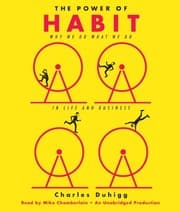
And if each day we take little steps, you know, we don't... I mean, you probably know, like, the power of habit, things like that. We are what we consistently do, right? If you wanna write a book, that means you need to... What does a writer do?
They write every day. So what are you gonna write today? Write 100 words today. So we need to start saying today. And if you're scared, good.
You should be scared, because it means you're getting out of your comfort zone. You're moving toward what you really want because it's really important. And the more you, you take steps toward what you want even though you're scared, you'll get more used to it. You'll build your bravery muscle. You'll actually do some rewiring in your brain.
Yeah. I'm, I'm with you on the manifesting thing. I, uh, I always thought it was complete nonsense. Um, I read The Secret. I was like, "This is insane."
Um, and so I had a couple manifesting experts on the show. Okay. That's the beauty of having a podcast, is you get to reach out to people and- Yeah ... have them explain stuff to you. Have a good, have a good discussion. And- Yeah.
Tell me more ... yep, and I'd say one of, one, uh, for one thing, uh, two of them were the most engaged shows in terms of, like, back and forth. People are very... People have a lot of opinions about manifesting. Like, if you, if you're looking to pure engagement harvest any type of content, just make it all about manifesting. You will get crazies from both sides going bananas, uh, which is fun in its own way.
Um, that's not why I did it, but I wanted to learn. One of them was very much like, I'm gonna call it the more ethereal, foo-foo-y, the universe listens to you. Okay. Mm-hmm. And the other was very much grounded in, in, like, the practicality- Like woo-woo ... uh, practical side of it.
Woo-woo. Yeah. It's like the woo group. And, and, and I, and I thought, you know, I'll be honest with you, when I heard the argument for manifestation from a psychological standpoint, from a how the brain actually works, you know, it's kinda like, ah, I always forget the name of this, um, principle, but it's like when you buy a red car, all of a sudden you see red cars everywhere kinda thing. Right.
Like- Right ... that's what you're doing, like, from a... If you're doing manifesting right, right, you are basically just giving your brain a signal to look for the thing that you want. Like, I wanna be a speaker. Okay, what do I have to do? I'm looking for opportunities to speak.
I'm looking for event planners. I'm looking for new pieces of content to fit into my... Right? So now your brain, like, has a signal. That makes sense to me.
Um, it's very hard for me to believe that the universe cares enough about us that if we just think about something and sit in a, with our legs crossed, that somehow it's gonna come to us. I just don't know that it does. Uh, however, here's a question I have for you. How do we know that our, that the thing we're somedaying is actually worth doing today? Because I, you know, just again, from having enough people on the show, I do know that a part of procrastination is an unconscious part of our brain saying that thing is not worth the effort, right?
The juice isn't worth the squeeze. There is, there, there is a portion of pr- pr- procrastination, not all of it, but a portion of procrastination that is like our body going, "I know you think you want that, but you really, you really don't want that." So, like, if we're trying to figure out, I have these some days. I someday wanna be a professional speaker. I someday wanna be a best seller.
I someday wanna be an entrepreneur, whatever that thing is for you. Or you someday wanna climb Mount Kilimanjaro. How do we start to pick the some days that are worth taking action on today, and the some days that are not? Yeah. Um, I would, I would point to the research on self-concordant goals.
It's, it's about making sure you're choosing the goals that are really meaningful to you, right? Like, my husband thinks I'm crazy for wanting to climb K- Mount Kilimanjaro. He's like, "Why would you wanna do that?" So, like, there's certain... I, I'm running Spartans.
I, I did, I, I r- ran my first Spartan, and I got bit by the bug, so I'm doing another one in a couple weeks. Like, I'm like, "This is so fun." He's like, "Why would you wanna do..." So for him- He would say, "I, I'm not gonna go through this 'cause I- that's not what my goal is." But I, the, maybe it's my Marine Corps background, I think that stuff is fun, and I have...
You know, so you've gotta make sure that whatever goals that you set, they're self-concordant, which just basically means that they are aligned with your intrinsic motivators. If someone wants to be a doctor, why do they wanna be a doctor? Is it because it's a deep-rooted desire in them that they, they, they love medicine, they wanna help people, they maybe have a story of something that impacts them? But if their parents tell them, like, "You need to be a doctor," see the difference there? So it should be intrinsically motivated goal.
And I can, I, and I can share a story too. Like, um, I decided when I was in my teenage years that I wanted to become a Marine, right? And so I applied. Um, I got a full scholarship on the Marine Corps. Um, and it was that self-concordant goal.
Um, and when I showed up in San Diego to report into my naval ROTC unit to begin my training... So most people show up to college to just get to know their fellow freshmen on campus, and then have fun and party, and then go to school, right? But if you go to ROTC, you show up a week earlier for naval ROTC orientation. Um, and then the Marines do their separate thing, which is, of course, always harder, 'cause it's the few, the proud. So it's, it's kind of like a mini boot camp.
And, like, when I showed up, I was pretty confident because I earned the scholarship. I had... I was physically fit. I had academic great grades. I was a leader in high school.
I mean, I got the scholar- I was kinda struttin' and goin' like, "I got my stuff goin' on." I was in for a rude awakening. Um, I showed up, first of all, did not make the best decision on my outfit. I was an 18-year-old girl, so I put a lot of thought into my outfit, and I this is so funny. Um, I, I knew I couldn't wear jeans because Marine Corps officers cannot wear jeans.
And, like, if you're an 18-year-old kid, what are you gonna wear if you... 'Cause ev- that's all you wear is jeans. And I didn't wanna wear a dress, 'cause I thought it would be too girly. So I found the perfect, it was actually a hot pink outfit with white polka dots. We were talking about pink before. Um, with little pink pumps.
Like, like, I showed up there and it was, it was a disaster because, like, I was, I did not look like anyone else. There was only two females. The other one quit, like, halfway through the year. And, like, that first day, I had the, the guy I looked up to that was in charge of this, this, you know, orientation on day one came up to me, and he, and he leaned over and said, "You're never gonna make it, you know, as a Marine." So you think of it there, like, for me, like, did I...
Like, that was a really hard day, and then it got harder. I mean, then I showed up to my first run. I thought I was in great shape, but I, I grew up in Minnesota. Like, the little running I did was flat. I went to school in San Diego.
Like, there are hills, and that's exactly where they take Marines is to we went and ran in the hills. So, like, my first run that first Friday, I couldn't keep up, and that is very shameful as a Marine if you can't keep up. So I'm this 18-year-old. It was, it was miserable. But what I did is I kept showing up.
And why did I keep showing up? Because it was worth it. For me to earn the title of United States Marine, that was important to me. And you know another thing that motivated me, too? Because that jerk said, "You will never make it," that motivated the crap out of me.
Like, sometimes I wanna look into this, and I don't know the answer from a psychological, like, I... Psychologically, I wanna know why do some people hear something like that and believe it, and their self-belief goes down, and other people, like me, you tell me I can't do something, like, "Oh, thank you so much," 'cause now I'm... Um, and it took me, Ryan, it took me years, years to become that top performer. It was, it wasn't until between my junior and senior year, so, like, freshman, sophomore, junior year, three years in college, before I was at my, I was at the level where I was not only keeping up, but probably outperforming a lot of the Marines. And because it was such a struggle, I think accomplishing and, and earning the title of Marine and getting my lieutenant bars put on, it meant so much more, right?
So it's really about making sure that you set s- when you set challenging, uncomfortable goals, I call them brave goals, because if you're not a little scared, they're not really worth setting, so goals should be a little scary. Make sure that in, there's gonna be, there's gonna be ups and downs to achieve your goal. Just make sure that you want it badly enough, it's really important to you intrinsically, so that when you have those days when you're in the downs, you're not going to quit. So hopefully that story helps. Um, you know, and my, my grand- No, it does.
Yeah, my grandfather was a Marine, and I think part of my motivation, too, is I wanted m- the Marine Corps was my ticket out of the Midwest. I mean, I love being from the Midwest, but I didn't wanna live in the same small town. My dad was born in Prior Lake, Minnesota, and he still lives there today. He's never moved out. But for him, that's what he wanted.
I wanted a ticket out of the Midwest, I wanted my college paid for, and I wanted a career of something that really mattered and was meaningful. And so I, that's what motivated me, and I, I was not... I, I guess what, that's what called to me, but I didn't feel like getting up and going to run three days a week with my unit. In fact, I, that's the thing that I most want- I wanted to avoid that. I, I hated doing it because I wasn't really keeping up for a very long time.
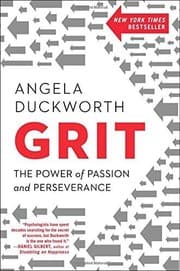
Now, I was a female ch- keeping up with male Marines, but eventually I got there, you know? So, so self-concordant, we just, um, and I can also, uh, quote Angela Duckworth. She wrote a book on grit. She, she's at Penn as well, where I studied. Um, and what she says is you f- you first have to make...
If you wanna be gritty, if you wanna have the grit, which is a long-term, uh, passion and perseverance in the pursuit of long-term goals, she said you first have to start off with that burning desire. It's gotta be something you really want. It's gotta be aligned. You know, if, if it, if you don't have that alignment, it's really hard to be gritty When it's something you don't really want. So you gotta start off, like, what are you interested in?
W- you know, what is something that you've always wanted to do? So a, a little soul-searching, too, of like, what do you care about? What do you-- what is the impact you wanna make on the world? What is it you really want? And once you find that deep why, you really need to make sure you capture it, because there are going to be times where you wanna quit, and you gotta go back to that why, and that's gonna motivate you to keep going.
And, and that's really where the most, most growth happens. I know I'm all over the place here. But when... You know how, like, when you go into the gym and you have the hardest workout ever and you're super sore? Like, I did leg day, and I haven't been able to walk for, like, the last three days, right?
But I know that my l- my, my muscles are growing and getting stronger. In those hardest moments, where you just really wanna quit and you show up anyway, it's the equivalent of having a really hard workout in your brain. There's, this is the part of the brain that you're giving a workout. Like, your amygdala, the feeling part of your brain, is going like, "I don't wanna do this. This sucks."
It's j- it's, it's, it's the part of your brain trying to control your behavior and seek comfort. But y- when you're getting that really, really good workout in, you're giving a workout to your prefrontal cortex, the part of the brain that's our executive functioning part of the brain. But also a little part of the brain in the back, in the anterior cingulate cortex. There's a little part in there called the midcingulate cortex, sometimes known as the courage part of our brain. It's what really gets a workout when we do something hard when we really don't want to or we do something that requires that courage or that bravery.
So that part of our brain is getting stronger, and then our brain is also creating more neural pathways between our prefrontal cortex and our midcingular cortex, so we see in the functional MRI that part of the brain working out. So that's where I, I think when I explain the mechanism, what's happening, at least for being a little bit of a science nerd myself, if I understand the mechanism of what's happening, it motivates me more. So when I really don't feel like doing something, I go like, "This is like me doing, like, y- you know, a max set of something at the gym, and it really hurts." And I like, I savor it. Like, I embrace it because I know it's gonna make me stronger.
The same thing happens with us psychologically. So when you really don't feel like it, that's where it matters most that you keep that promise to yourself and you do it anyway. You're, you're, you're, you're having the best workout, and you're helping rewire your brain to do hard things. Yeah. First, we gotta get you on some BPC 157 so your recovery isn't three days after, uh, after leg day.
Um- Okay, I need to learn from you on there 'cause I'm just doing creatine and glutamine, so if I need- I don't- ... to be doing more stuff. If you, uh... Have you looked into peptides at all? I-- You know what? I was just listening to a Huberman podcast.
I'm a huge f- I, I, like, I love s- Yeah ... I love geeky podcasts. And so I was just listening to one on my workout this morning, and they were talking all about it. And I know there's not a lot of evidence out there yet, but it seems really promising. In the podcast I was on, they were like, "It seems to be safe.
There's no harm in doing it, and a lot of people's experience say it's great." So I, just this morning, I was like, "I think I need- Yeah ... to try it." So yeah. So I'm on a cocktail of pepti- So I'm a hu- I will test anything. Um, anything that seem like, that isn't completely out of this world.
But I'll test just about anything 'cause, um, I feel like I've done enough damage to my body playing football and sports and all the various things that I did, uh, kind of in very similar but different story. My way of getting out of my shitty little small town that I couldn't stand. Um, not that you couldn't stand your town, but I couldn't stand my town. I need to get out of there as well. Sports was the avenue that I took to get out.
So I got a college scholarship, and that's how I got out of there. But, um, I had a guest on the show. It was probably last year, and he, but he was all talking about peptides, and this is before the big peptide. It might've even been two years ago now 'cause this is before the big peptide craze. Um, aw- awesome guy.
Uh, Huberman talks about this stuff, too, but I, uh, I know we're a little off track, but I love to work out as well, and I love to get after it, and my goal for this year is I wanna pull, uh, 500 pounds on the deadlift. My current PR is 463. I did that two years ago or t- about 18 months ago. I down cycled 'cause I kinda hit a, a plateau, and now I'm working my way back, um, uh, with a stronger base. So trying to get back there.
Um, and I just, there's something about being 40 plus and pulling 500 pounds that just makes me wanna look at every other guy like they're, you know, less. Can't help myself. There's a part of me that just looks at other people like, "There's only a few of you." Everybody else in my gym is about 22, so I'm pretty pumped that I'm here pulling with these guys, you know? Um, but one of the things that happens as you get older is that you just don't recover the same.
No matter how you train, you just don't recover the same. You just don't. And what I was finding is that where maybe five to eight years ago, uh, if I did a heavy leg day or whatever, but mostly legs are where I f- where I feel the longest, um- Me too. That's where I feel the- Yeah ... the soreness. Yeah.
Not as much for upper body. Yeah. So where I could do maybe a, a, a, a, a squat, a, um, a pull, so, so deadlift and then do like a more of a, um, a base leg day, um, all the ancillary stuff as a third leg day every week. Yeah. Now I can only do two, and if I go really hard, maybe even one de- leg day a week.
Okay? Mm-hmm. So that was starting to bug me because it was impacting my ability to hit my targets. Yeah. So I started digging into these peptides, and I found a cocktail of three that has been amazing for me.
Um, I encourage everyone who is interested, you have to do your own research. Your primary care physician will not know anything about this stuff, and they will push you away from it because they don't know. Trust me, I have tried. You have to go find specialists, and unfortunately, most of those specialists are gonna be online. I would start with, with guys, um, or gals of the Huberman class and work your way down from there.
There are a lot of charlatans as well who are just looking to sell you repackaged, um, peptides that are of low quality, and you can find these things on websites all over the place. You have to be very careful where you get your stuff from. So, so find a professional, but it's most likely not gonna be your primary. If you go ask your primary, they're gonna push you away from it. That being said If you are going to get after it in the way that you've discussed.
I take a microdose of Tirzepatide, which is a GLP-1, um, not for weight loss, but for, uh, inflammation, um, for gut health, and for, um, uh, it, it... I have fairly severe ADHD that as I've gotten older has gotten worse. It's a whole nother story. Um, and, and yeah, it, it really quiets your brain. It's a big-time brain quieter.
It's not gonna cure the activity, which is not what I want. I want my brain to stay as active, but I wanna have more control over what it thinks about, and I've found that Tirzepatide, particularly with food noise and other vice-related noises, so if you chew gum or you chew your nail, whatever crazy, weird vices you have, everyone has different ones, it really reduces your brain cycles you spend on those types of things. Right. So Tirzepatide is one. Tesamorelin is for, uh, muscle growth.
Again, microdoses. Um, again, this is why you wanna work with someone that really knows what they're doing, 'cause if someone's just trying to sell you something, they're gonna push a full dose on you, which is expensive and more than most people need. Yeah. Right. So microdose of Tirzepatide, that's, um, like a growth hormone, and then BPC-157 is a recovery, uh, peptide.
And here's where, here's my case study on the recovery. So having deadlifted now for almost seven years, I picked it up, um, in 2020, uh, after COVID. Like, the day the gym opened, I was like, "I wanna do something new. I've never deadlifted," um, despite all my athletic... 'Cause I've always been told it's too dangerous. It's not if you do it right.
I wanna try this, so I picked it up. Okay. Well, once a year inevitably, I don't stretch properly. Um, if my hamstrings are tight and I don't properly warm them up, um, I'll pull, and I'll get really, my, my back will lock up, and it usually takes three to five days before I can get back into leg activities. Um, since I started taking BP- B- BPC-157, this happened about a month ago, I was back in the gym one day later.
Wow. One day later. 'Cause it just, it, it, what it does, and I'm... Guys, if you, if you guys are experts at this, please go in the comments on YouTube. Let me know all the places where I'm off. I am broad stroking this.
All the disclaimers that I am not advocating nor am I prescribing any kind of medication here. However, it naturally induces the body to produce whatever the chemicals or blood cells are or whatever which repair, which do reparative work. So again, on a microdose level, taken on a daily basis, what it's doing is just increasing the general amount of recovery molecules- Right ... or chemicals or whatever going through the body. So then you can do more working out to get stronger and- Yes ... healthier. Okay.
Yeah. Love it. And so I, I, uh, not that we needed to take that quick diatribe, but I will say- Well, I know, but it, it, I mean, it does relate though, 'cause we're talking about, like, challenging our bodies and, and we wanna recover, and challenging ourself psychologically and doing hard things. And, and there is the recovery side there. There's a lot of these same agents.
Like, you know, our brains use so much energy. Um, you know, I am supplementing with creatine now, not just for muscle recovery, because it has a huge impact on our cognitive function. Yeah. Right? So I, I just, I, now I sent it, I just sent it to my dad, who's 76 years old, you know, 'cause he's worried about his cognitive function, and I'm like, "Dose 20 milligrams a day."
Yep. I mean, it's just, it's protein. It's good for you. So, you know, um, so just for you to be, like, psychologically strong to, you know, to make these decisions to set these self-concordant brave goals and then be brave enough to take steps toward them each day, you know, um, a couple things that I, that come to mind too is it is really important for us to get really good quality sleep- Mm-hmm ... so that when we wake up, we're not going to, um, take action based on how we're feeling, but we take action based on what we should do. So I always talk about if you really wanna do brave things, it doesn't start first thing in the morning.
It starts the night before. Preparation. So really think about... Yeah, preparation. And I, I always use analogies from the stage of, like, you know, you know, what do we do, you know, as Marines?
We know, like, what we know our mission we wanna accomplish tomorrow. We come up with our battle plans. We know exactly what we're gonna do, and then we start preparing the night before. So we need to think about the same way. If you wanna be successful in life, you wanna feel proud at the end of the day, the last thing you should do before you start relaxing or whatever is plan tomorrow, right?
When are you gonna get up? What are you going, going to do? What is the first, hardest thing, you know, to attack the day that, the thing that you dread most? Don't have just meetings with people. Like, I, I like to preserve 8:00 to 10:00 to do your deepest work.
You know, so just pl- plan your day, and then think about, like, now what do I need to do tonight to, to be able to jump out of bed and have the most successful day? And usually that means that we're gonna eat a healthy dinner, not drink too much alcohol, um, not have our phone or our TV on in front of our face with all that blue light. If you do, wear your orange glasses so that it's more like campfire. And then go to bed, get that deep sleep, and that way you can jump out of bed in the morning. Um, and the last thing that just relates to this, and my, my kids are sick of hearing that because they're now, like, 18 and 20, but I always say, like, never, ever press snooze, literally or figuratively on life, right?
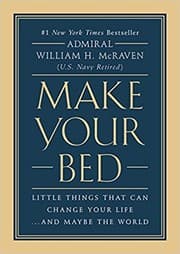
So snooze is, like, when you wake up, and obviously you're like, "Ugh, gosh, I, I'm tired. I just don't wanna get up." If you press snooze first thing in the morning, you're starting off the day breaking a promise to yourself, and it is not a good habit to get in. 'Cause isn't there that n- that famous Navy commander that says, "Make your bed first thing in the morning"? Like, sure, I, I don't even care if you make your bed. Uh, but I want you to just don't press snooze.
Uh, jump out of bed the second that that alarm goes off 'cause you've already had a plan. You know, so self-care isn't sleeping in and taking the morning off. No, self-care is keeping a promise to yourself. So don't press snooze, um, in the morning. Get up, and then don't press snooze on your dreams and your goals, and that's what that hesitating is.
That someday, someday, that's pressing snooze- And it's just, and the reason I care so much about this, and you know, this may sound a little woo-woo, but, um, so, 'cause I'm mainly like, you know, gritty Marine Corps Jill, but there's a little woo-woo in there. And the reason I care about this is the impact of y- your relationship with fear and discomfort is, is so, has such a huge impact on not only your success, but how happy and fulfilling your life is. If you allow fear to control your behavior where you don't apply for a job, you don't have a difficult conversation, you don't share an idea in a meeting. Like, and, and it's not just big moments, it's little moments. Little moments day in and day out you have an opportunity to be brave or to step back.
And if you have a relationship with fear where you're like, "Okay fear," it, it actually is a little signal that, oh, like sometimes, sometime, sometimes something's important and it's something that I should do. And if you learn to move toward what you fear and you stop hesitating and you do it. And imagine like over a year if someone stops hesitating and they move, they, they do something today because it's that important thing to do to them. And so they do it week in and week out over a year. Imagine where their career and life is at.
Or imagine it five years down the road, Ryan, or 10 years down the road. What would their career be like? And the reason I talk about career and performance is because I get paid by Fortune 500 companies to come speak, so we talk about performance and success at work, and that will come. But what I really care about is it's life satisfaction. It's like when you look in the mirror, do you, do you like what you see?
We have to change our relationship. Like stop allowing fear to control your behaviors because then you're gonna look in the mirror and you're gonna go like, "I suck because I, I can't do it, and I keep s- promising myself, and I keep breaking the promise." Like we need to change that. Um, and it's possible. I'm s- I'm completely with you.
Um, I, I wanted to look up this stat real quick, 'cause I heard this on Chris Williamson's podcast the other day. 45% of men between 18 and 25 have never asked a woman out in person. I believe it. 45% of men 18 to 25. At that ...
I'll be honest, at that time, I was probably asking 45 women out a week, 'cause you're just like spray and pray, right? You're just like, "Hey, you know, who knows?" Eventually I'm gonna get a yes eventually. Yeah. That's, I mean, that's, that was the way- That was me.
Like- You know, I mean, back then when there was no internet and no cell phones, I mean, you had to like, you had no idea who anybody was. You were just walking up to, "Hey, how are you? What's going on? You know, hey, you wanna get a drink with me?" So I mean, you would ...
That, that was the only way to meet people. And today, 40, I mean think of ... I mean, and that took ... You wanna talk about fear. Like I know maybe it's the same for women.
I don't know. I've never been a woman, so I don't know. But I can tell you that there are few things that are as scary as seeing a group of women in a circle at a bar and walking up to them and trying to ask one out. Yeah. That is one of the most fear-deriving moments of any- That is brave ... young man's life.
And- That is brave. Right? Like, so I ... You think about that and you think, "Okay, like if they're not even willing to do that, then are they gonna be willing," like you said, "to, to ask the boss for a promotion or to, you know, reach out to the event they've always wanted to be a speaker at and, and give a pitch or whatever that scary thing is," right? Like, we're talking about baser instinct stuff.
We can't even get past the fear of that, and we're gonna start getting after these second level, um, you know, I, I ... Yeah. I wanna ... If I can add on that, yeah. Oh, yeah.
Please, please. So bravery isn't like ... Sometimes the misconception is people think bravery is just like moments of heroism. Like, would I run into a burning building to save a child? Would I, if I was a Marine, would I, would I charge forward in the presence of danger?
Like, you know, yes, though, that is bravery. That is absolutely examples of bravery, but bravery is so much bigger than that. It's all the little moments. It's there's this girl at work, and I really wanna ask her out, but I'm scared. Will I do it?
Like you're saying. And so, you know, and just more research 'cause I'm a nerd, um, when you look at all the research in psychology with experiential avoidance. So experiential avoidance basically means running away from what you're scared or running away from what's uncomfortable. Um, there's a study that was published where they followed over two thou- There was 2,400 adults, and they followed them over four years. And they were like 18 to 65, so all age.
And they found that experiential avoidance, running away from what you're scared of or not doing it, um, ended up leading to the development and persistence of anxiety and depression. So let's let that sink in, because I care about this younger generation because I have two kids. They're 18 and 20, like this month, 'cause it's April, they're gonna be turning 19 and 21. And I see the world through the younger generation. And they are so chicken shit scared of everything.
And they allow, they use this word of like m- mental health, mental health, I don't wanna do it for my mental health. It's, it's like mental health is now a, an excuse to not do things. Or even like, oh, you, you let a young person say, "Oh, that causes me anxiety, so I'm not going to do it." Um, and so that I think people are confused. They think that for my happiness and wellbeing, I need to avoid things that make me scared because I, I wanna ...
The goal is to be happy and to be comfortable in life. But what they don't understand is that is a fast path to mental distress. Jill, it's also completely false. Like I, I talk to my kids about this too. So they're, they're 12 and 10, two boys, and we talk about it in the context of sports a lot just 'cause that's like the most important thing, and their world is small 'cause they're, 'cause they're younger, right?
But, like I tell them, I'm like, "Guys, M- Michael Jordan had fear. He had fear." Th- this, we're not talking about, like the opportunity doesn't present itself when the fear goes away We're talk- you, these people perform despite fear. So don't even set the expectation. I feel like we've sold an entire generation of children that somehow there are certain individuals who were born with zero fear, and they're the ones who are able to do the exceptional shit, and, and all these other, all the rest of us who have fear, we can't accomplish anything.
And I'm like, "No." I'm like, you think ... I've done 400 and, and at this point 425 plus keynotes, paid keynotes in my career. All, I've, almost every state, pretty much all of North America, s- some in South America. I haven't been to Europe yet.
That's coming. Ooh. I haven't cracked Europe. Maybe we can hit Europe. Yes.
But I mean- We can help each other ... I've been on stage quite a bit. And I said to them, I go, "I've been doing this for almost two decades. It's the thing I love to do professionally more than anything else that, that happens professionally." Yep.
"And every single time before I go on stage, I feel fear." Yeah. "Every single time. Every single time." Mm-hmm.
I go, "The difference is at this point, I know how to harness that fear into energy and excitement. I've learned how to-" Right ... develop that. But don't," I go, "Don't think that when you're walking up to bat in baseball and you feel fear that you're wrong or bad or less than." Yes. Aaron Judge feels fear every time he walks up, and he's one of the greatest hitters in the history of the game.
And he would even tell you that he gets that feeling every at bat. Every at bat. 162 games. Every at bat he sees. I've heard him say it in interviews before.
Yeah. And it's like, so don't try to ... We've, like, missold, I get s- Yes ... I get fired up on this topic. No, no.
I, no, I'm, I'm just, I'm so glad 'cause this is exactly, this is my jam. I mean, I am- ... a bravery expert. We need to change our relationship with fear. You're right, and that is the big misnomer. People think that if you're brave, you're fearless.
Oh, like there's something wrong with me because I feel scared, so it means that I shouldn't do it, or there's something wrong with me. No. That is, you're right. It's exactly, it's misinformation. So my TEDx that I just did, I, I named it Fear More Not Less.
Like, we have to change our relationship with fear. And I love, you talked about the cognitive reframe, so for your audience as well is, you know, first of all, if you're not a little scared, then y- you're just letting life take you by. You're not ... You know, I want you to chart the path of the life that you want. And if you're- Yeah, life is dictating to you.
You're not dictating the life. Yeah. It's like you're just in, like, letting the, the, the life just carry you along the way so that life is just what it is because it comes to you. Like, if you wanna chart the path of your life, there, there's gonna be discomfort, there's going to be fear, and there's nothing wrong with you. Yes.
And when you feel that fear, you know, we can do that cognitive reframe of, of really thinking about, like, what is happening when I feel the stress or fear in my body? Like, my, my, my heart is beating really fast now. This is actually my body from an evolutionary point of view preparing me to get blood in every part of my body to be able to perform at my best. This adrenaline, this is energy. Again, it's, it's here to serve me so I can do the best job possible.
This is excitement. Excitement and fear feel almost identical, right? So- Is this true? I, I wanna ask you this since I, because I have you here. So I use this all the time, and I don't know if it's true.
I, but I use it on my kids all the time. I say, when, when, uh, brain scans look at your brain, they can't tell the difference between excitement and fear. Your, your brain lights up the same way when you're excited versus fear. So what I say to them is, what that means is it's a fucking choice. It means you get to choose whether you're excited for this thing or you're scared of this thing, because your brain is operating the same way.
Now, that's what I say. How much of that is actually true, I don't know. That's it. Sounds good. Well, and I have to say, like, my background is I, I have a master's degree in positive psychology from the University of Pennsylvania.
So, like, I am, like, I am not a neurologist. I'm, I'm, I'm obsessed with, I think my next book might be Building a Brave Brain, 'cause I'm- Ooh ... I'm really into, to researching that. Like that. I, I love, um, um, but I'd say overall based on what I know, that is a true statement.
You know, the, the feeling of fear and excitement are almost identical, and we have the power to reframe it. Like, I gotta, I gotta share one other thing 'cause it's related, but I just love how we're just going back and forth. This is awesome. So some of the most exciting research that I love talking about is research by Dr. Alia Crum out of Stanford.
Oh, she is amazing. Um, so she has talked about something called a stress is enhancing mindset instead of a, a stress is debilitating or harmful mindset. So, like, this is another, you know, lie that we have been sold where people think, like, stress is bad. Stress will kill you. Stress is horrible.
You'll have a heart attack. Like, if, if there is stress, you need to eliminate it. So she did this research on mindset on stress. So what she found in her research is that if you believe that stress is bad for you, it will be bad for you. Um, what happens if you feel like stress is bad for you, you'll have a bad psychological response.
You're gonna be like, "Oh, my God. This is horrible. This is horrible." Like, and then you'll, y- it'll just, you know, your, your response to the stress will make the stress even worse, right? And then you'll have a bad physiological reaction.
If you think that stress is bad and you experience a stressful event, what happens is inside of your vasculature, inside your lumen, which is the inside of your veins and arteries, it will constrict. And then when it constricts, it will increase your blood pressure. So if you for a lifetime think stress is bad, and guess what? In life, there's always going to be stress. You will have a negative stress response psychologically, the way you feel, and physiologically, what happens to your body.
Um, but if you believe that stress is enhancing, like, hey, being challenged. Like, you know, this, this setback, this is gonna make me stronger, right? If you believe that stress is enhancing, then your body and your brain will believe you. So from a psychological point of view, if you b- if you believe that stress or setbacks and challenges are good, like, you know what? We're gonna learn from this.
We're gonna get through this. And all the other people, they're probably gonna just tap out and we're gonna get forward, so this is good, right? We're gonna look at it as a positive thing. Um, we're, we're gonna be more apt to be able to overcome the challenges and adversity if we think stress is enhancing. And also, she, she really looks at the, the physiological part of stress.
If you believe that stress is enhancing, your body believes you. So when the stressful event happens, y- the, the... You'll feel the, you'll feel like your heartbeat will go up, you know, and you'll feel the, the endorphins in your body, but your lumen stays relaxed, so your blood pressure doesn't go up. You know, and if you look at a lifetime of, of that difference, that can be the difference between a premature heart attack at 55 versus someone living into their 90s. Um, and so they have this really amazing study and, and I wanna just talk about this study 'cause this is the one that blew my mind.
Um, um, I do work mainly in organizations and in the workplace. So they, um, so they took this research on can we change someone's mind on stress? Can we educate them that stress is enhancing, and does it make an impact? So they went into a, a stressful workplace. Uh, uh, it w- this was in finance, so like really high stress.
Um, and they went in and they, their, the intervention, so, you know, when you d- when you do an empirical study, there's gotta be the, the placebo where they, they get something, but it's not the, the actual, like, treatment, and then you've got the people who actually get the treatment. So, uh, the treatment arm was watching a three-minute video telling people that stress is enhancing. You know, we're built to strive. Stress makes us stronger. It makes us smarter.
It helps us grow. So it's, it's all scientifically valid, you know, evidence. A three-minute video saying stress is enhancing. The placebo group, they had to also watch a video, but what they did, um, on the placebo video is they, they filled it with all the headlines that you and I are used to seeing. Stress is horrible.
Stress is gonna kill you, so avoid stress at all costs. So everyone got a three-minute video, and then they followed these people over time, and they looked at the impact on their performance and their job satisfaction, all these different things. So, um, they found the difference in performance, all these people had the same job, same stressful job. The people that just were told that stress is enhancing ended up performing, outperforming the other people that were told stress is horrible for you, and it was statistically significant. They looked at job satisfaction.
Again, statistically significant. But here's where it gets really interesting. They also looked at the physiological response. There was also a huge difference between the two. Actually, it was, I shouldn't say a huge difference.
It was a statistical significant difference in these two arms, and they looked at blood pressure, like we talked about just right there. Um, they also looked at DHEA, a hormone linked to resilience, was higher in the group that believed that stress is enhancing by just watching a three-minute video. They watched the three-minute video, I think, a couple times a week. But this is why I, I'm so passionate about this work, is I feel like people are sold lies. Stress is horrible, right?
So avoid it. No. No. Like, life will be filled with challenges and setbacks and adversity and stress, and your belief about stress, that's the thing that will kill you or make your life miserable. So the stress is enhancing mindset.
So, um, you know, in my book, The Bravery Effect, like, we talk about the cognitive side first, and we talk about the growth mindset, which you probably know Carol Dweck's work, um, from Stanford, like believing you have an ability to do hard things. It'll take work and effort, but you have a, you can have a growth mindset. But I also teach the stress is enhancing mindset. Like, let's, let's make sure we... I wanna give everyone the benefit that Alia Crum and Shawn Achor and others did in that study, and I want people to know that this is the truth, right?
Stress is like a workout for your brain, just like it's, you know, weights are a workout for your body. And when you, when you, when you stress your mind and you challenge your mind, you improve your cognitive function, you grow, and you're developed. So, um, it's just really exciting research, and the fact that they did it in organizations and that simple intervention made a statistical significant difference. Like, I'm on a mission to, to tell the truth. Stress is not bad.
It's our beliefs about stress. And fear is not something bad. Fear is something we should... If you're not feeling fear, you're, you're doing life wrong. I want people to seek out fear.
And there's a difference between, like, what I speak about and resilience speakers, right? 'Cause sometimes I get, I get calls to speak on big stages 'cause they're like, "Oh, we want a resilience speaker," and I'm like, "Let me tell you, resilience is really about making sure that people can bounce back when something bad usually happens to them." I'm like, "I am the speaker that will tell people I want people to seek out. I want you to proactively find things that will create challenges and adversity because you're trying to climb that mountain toward whatever you want in life." So instead of just passively like, "Okay, if y- if you get knocked down, I'm gonna teach you how to get back up," that's not what Jill's message is about. I want you to be on the offensive.
I want you to be seeking things where you're gonna encounter adversity and challenges. I don't wanna just wait until they happen to you. Thank you for-- I feel like I, I was up on my, on my pulpit for a while there. No, you're good. No, you're, this is, no, this has been absolutely fantastic.
I think this is a- Good ... wonderful place to wrap. I could talk to you for another couple hours about this stuff. I want everyone to buy the book, The Bravery Effect. Um, we're gonna have that linked up, so whether you're watching on YouTube, listening wherever you do, just scroll down. You'll find links to that.
Where else can they get deeper into your world? Yeah. Other than the book, um, just the, people can find me on jillschulman.com, so it's my website, you know. Uh, and it'll be in the show notes, but Jill, last name is S-C-H-U-L-M-A-N. I've got a free bravery assessment.
I have a free bravery blueprint. So if you go in and take the assessment, it takes three minutes, and then they get a free bravery blueprint that really teaches them how you can build this bravery muscle, right? And it's got cognitive workouts, like it's the reframing. It's got the behavioral psychology and social psychology, and it's all free. And then if you choose to buy the book, um, I love the audiobook, um, because it's a parable.
I wrote the book as a parable because I want people to actually read the whole thing, and I want the younger generation to read it. So if anyone has any kids that are confused and they think that comfort... I mean, I really, I dedicated the book to my daughters, and I'm just, I'm hoping they actually read it someday. So we'll see. It's been out on the market for six months.
I'm still holding my breath. Um, but I don't wanna task them to read it, but, um, so you can find me just online, jillschulman.com. Um, my book's all anywhere books are sold, and then I'm, I'm getting out of my comfort zone. I'm on Instagram. You know, I'm on, um, Facebook.
I'm on LinkedIn mainly, but I make a commitment because one of the parts of helping us stay brave is to make sure that we fill our feed with the correct science and information that will help you do the brave thing each day, so that's my commitment. At least three times a week, it's like three to five, I commit at least three times, I have a post that will be something that will motivate you to keep the promise to yourself and be brave every day. It's the everyday moments of bravery that has the profound compound effect of your life. So not just the brave moments, but be brave for yourself each day. I absolutely love it.
It's been my pleasure. We're out of here, guys. Peace.
Books from this episode