Hiring isn't just about finding someone willing to take the job. You need the right person with the right background who can move your business forward. If you want candidates who truly match what you're looking for, trust Indeed Sponsored Jobs. With Indeed Sponsored Jobs, your post stands out to quality candidates who actually fit the role. According to Indeed data, 90% are more likely to be hired and trusted by 1.6 million companies.
Spend more time interviewing candidates who check all your boxes. Less stress, less time, more results now with Indeed Sponsored Jobs. And listeners of this show will get a $75 sponsored job credit to help your job get the premium status it deserves at indeed.com/podcats13. Just go to indeed.com/podcats13 right now and support our show by saying you heard about Indeed on this podcast. Indeed.com/podcats13.
Terms and conditions apply. Hiring? Do it the right way with Indeed. Because what we have to get to, the root is fear. The only reason we don't want to be vulnerable is we're afraid we're going to be judged.
We're afraid that in being judged, we're going to be rejected because the one thing we all want is to know that we belong and that we matter. We're afraid that when we tell our truth, someone else will deem us unworthy of belonging and we don't ever want to feel that way. You know, growth is your game. Like, that's what you do. You help companies.
One of the things, you know, kind of in researching your work that I saw is you work with both kind of small businesses as well as larger corporations. And one of the first kind of questions that I want to kind of start our conversation around is really what are the when you're approaching, say, a small business, Main Street business versus a larger corporation that that has more staff, maybe more distributed staff. You know, what are some of the similarities that you see between growth strategies and where do the strategies that are ultimately going to produce results start to diverge between those two segments of business? This is such a great question. Okay.
So on the small business side and, you know, small business is still pretty large, right? If you listen to the SBA and the IRS, they're saying up to 1500 employees and $40 million in revenue makes you a small business now. Yeah, yeah. So that means some of the business we work with are really like micro businesses because we're working to get them to their first seven figures. Whereas with our corporate clients, we're really coming in and we're working with them specifically around either their sales infrastructure or their leadership development for their teams.
But some of the things that are the same, no matter who we work with, is really evaluating the strategy that they're using to get in front of whatever the goals and objectives that they set for the company. And then looking at the people, right? Like the only differentiator any company has are the people that are performing the tasks for the clients. And so with a small business, often when we first start working with them, they are the talent. They are the service provider.
They are customer service. They are marketing. They are retention. They are all the things, right? They don't have other people that are on their team.
But through working with them and helping them to develop the systems and strategies to bring on the support and have the way that they deliver for the client be very consistent with when it the way that it was when they were doing it themselves. That's what we start to see from a growth perspective. Whereas with our corporate clients, from day one, we're entertaining the various diversity and skill sets of a workforce that has been designed and relegated down to this one specific KPI, right? And so we're really helping them hone in on their own leadership, their own emotional intelligence, their own understanding of their gifts and talents and how they relate to the overall goal and objectives of the organization. So while it is a lot of the same language, the way that it gets interpreted and even executed is different based on the variables that determine how many people are at play when we're looking at them from a support person perspective.
Yeah, I want to key in on something you said around with the smaller businesses where you're helping them essentially replace themselves in the business. And, you know, the core industry that I've come out of is insurance and inside of insurance, there's all different sized businesses. But the vast majority of the businesses that people think about in terms of frequency of business are, say, agencies, right? So five to 15 in most cases, employees, single location, usually operate regionally or even hyperlocal. And I have found this idea of the in this case, they call themselves agency owners, right?
Of replacing themselves. They're often the top salesperson, the number one customer. And they really struggle to release some of these some of these internal roles. How do you go about approaching a really high functioning leader who is struggling with this concept of Darnell? If I pass off sales to my team, we're just not going to sell as much, right?
Like how do you start to get past that that barrier? Because it is huge for so many small businesses. It is huge. And I'm so glad you pointed out for a couple of reasons. First and foremost, it is just the acknowledgement of the fact that at the moment that we have this conversation, it is the truth.
But it doesn't have to remain the truth if they're willing to develop their people. And so what because I had the same experience and problem and no one's going to sell like the owner because you're the owner. You have the Oprah effect for whomever is coming into your ecosystem, right? But they don't have to sell like you, but they do have to learn all of the mechanics, all of the methodologies, and all of all of the steps that get taken in to do it in their own way. The reason we hire the people that we hire is because there is a uniqueness that we need to bring into our culture and our way of doing things that is going to make us more well-rounded and help us to show another perspective, right?
And so it's important to understand that first and foremost, to acknowledge yourself for being the, the best whoever did it in your company, while also acknowledging that you have brought in this talented individual to help to complement what it is that you have done. And it really works through shadowing. Like, I literally will bring a new person on my team, and they will follow me around like my shadow for 90 days, picking up the key phrases that I use and then h- actually having conversations and debriefing. So when I'm training someone, I will not have my calendar be back to back to back to back to back. It'll, there'll be a, a, an, a meeting or, or an event that happens, and then there's time for us to actually debrief what just happened, for them to unpack what they just learned, what they just heart, heard, what they're taking away, how they would say the same thing that I said so that they could get to a similar result.
We also are recording everything. Everything that we learn as people, it's either taught or it is caught, and the things that stick the most are the things that are caught, the subliminal things that we catch as we're paying attention and we're going back over. I'm a speaker, and I, if I get down off of a stage, I always request my footage if I don't have someone there filming me, and then I watch it with the members of my team who also speak so that they can see what I'm doing so that we can debrief on it and we can create an action plan of how they're gonna integrate some of these things in their own way, in their own style in order to be able to create an environment where there is some brand message consistency. We also help our clients to create brand messaging cheat sheets. There are specific words and phrases, not jargon, so that we can say them in English so that humans understand them, but there are specific phrases that are centrifugal to the way that we work and operate that must be learned and then embodied, and we're tracking for that consistently.
And so I always say, like, what's the point of leading if you're not going to develop? Like, we've gotta make sure that we're taking the time to do the development work, unpack, because as adult learners, we need to debrief consistently. That debrief allows us to regurgitate what we got so that we can anchor it in and internalize it, but it also creates capacity 'cause we're not storing everything in. We get to bring it up. We get to bring it out.
We get to talk about how we're going to use this going forward. It's just like when you're learning how to spell, and they say, you know, "Spell the word and then use the word in a sentence so that you have that cognition." It's the same thing when you're training and developing team. You've gotta give them the opportunity to create cognition so that they can internalize it, and then you can see it happening again and again, especially when you are finally not there. When we start, as small businesses, they're hiring us, but the ultimate goal is that they begin to hire our company, and that can only happen if we start to develop the people.
Yeah. Uh, what I hear you saying, and I, and I think it's 100% true, is it, you know, and it's kinda ... When we go from, say, top functioning producer/owner of the business, that's not the same as a, as a president or a CEO role. Correct. And when, you know, and, and I think that's where the confusion is.
We, we might title ourselves CEO, but really we're just the best salesperson in the company. Right. Right. And we, and we own the most equity, right? Right.
Right. But that's not really the CEO. Like, when you move to a true CEO role, your role stops being top salesperson and starts- Correct ... being, like you said, uh, uh, focused on hiring, building brand, um- Yeah ... uh, and, and this training part, it to me seems like the most often just completely abdicated responsibility of a CEO is like, like, "Well, I'm too busy to train." It's like, well, you're too busy because you're not training, right? Like that- Right ... that's just such...
What, what are some of the other, um, what are some of the other things that you see when this kinda top functioning producer/owner goes to a CEO role that they, that they often kind of forget, don't implement, or maybe just don't understand is now part of the role, um, that creates issues with their growth? Yeah. Strategic provision. Like, your job as the CEO is to strategically provide over. You should not be in the day-to-day because every moment you're looking down, you can't be looking up.
And far too many entrepreneurs and small business owner CEOs, they're operating their businesses from their vantage point and not their vision point. It's gonna be really hard to scale and sustain if you're in the day-to-day of the business. And we don't give ourselves the spaciousness that is required to be able to think innovatively to move the company forward if we're the person who's responding to the email or the request for whatever the thing is. And I think it's cute, right? I think it's so cute that we start a business and we're the CEO, right?
W- when we, like you said, we're really the chief salesperson, or we're really the chief service provider, but it sounds really cute to give ourselves that title, and we're the farthest thing from actually executively presiding over the vision. And so for us and our clients, you know, we have to take a stair step approach 'cause not everyone walks through the door ready to go and hire a layer of leadership that is actually gonna allow them to strategically preside over their business. So we take it in steps. Like, the first roles that I always recommend that you hire for are, first you wanna get an administrative person because your time spent on administrative tasks is not the best and highest use, right? And then the second is you wanna replace yourself for service provision.
So talent team and operations team are the first two roles-All right, people, serious question time. Did you know that driving high is considered driving under the influence? That's right, driving under the influence of marijuana is against the law in every state. That means even in states where marijuana is legal. That means driving high could get you a DUI, and if you think law enforcement officers can't tell when you're driving high, well, you're wrong.
If you're high, they can tell. Your friends can tell. Your coworkers can tell. Even your parents can tell. Everyone can tell.
So what makes you think that law enforcement officers don't know when you're driving high? You'd be wrong. They can tell, too. Driving under the influence of marijuana can slow your response time and change how you perceive time and speed. So even if you think you're fine to drive when you're high, you're not, because the bottom line is if you feel different, you drive different, and driving high is driving under the influence.
So remember, drive high, get a DUI. Paid for by NHTSA. You're hiring for. A lot of people want to go to sales first. Like, you may still be the, the salesperson when you first start building out a team because those are the tasks that bring in the most amount of revenue, and you being c- in control of that helps you to project at a level to be able to see where we need to get our client base in order to get enough revenue to bring in the next position.
The other thing I think is important that I often see m- is overlooked, like, when, when you decide you're gonna be CEO and you're gonna start to put other people in place to serve the clients, you have to raise your rates. You have to charge more because you can start out with a whole bunch of doers, a whole bunch of tacticians, but eventually you do need a layer of leadership, or you're gonna bottleneck your business, and you're gonna cap your growth because you cannot grow if you have to be the only one who can make a strategic decision to move the company forward. And the only way you're gonna be able to get management level people in your organization are the ability to pay higher salaries, right? And, and that is only going to come if we're raising our profit margins, if we're looking at a 60 to 80% profit margin on every service that we sell so that we have enough to carve out for these salaries. Now, when you're hiring a leader, you really only have to have in, in the bank 90 days worth of their salary because by 90 days they should be producing three to 10 times what they are paid for your company.
That's a KPI. As the CEO, you have to have the energy and the understanding to manage, too, so that you can actually make sure that the people you are bringing on the team are helping you to move the company forward. Do you see any scenarios that actually go the other way where that top producer/top equity owner stays in that role and actually hires for the president operational person above them? 'Cause, 'cause I've, I've actually talked, in, in this particular to the insurance industry, 'cause oftentimes how they became an agency owner is they were just really good at sales. Yeah. And they're, and, and I, I've had conversations, and, and I don't do the consulting work that you do, this is just, like, conversations on the side- Yeah ... where it's been like, "Well, why don't you just stay the top producer and hire some..." 'Cause you s- Mm-hmm ... you need someone in that role- Yeah ... to look over and, and, and kind of wa- make sure the vision is on track.
So have you seen those scenarios? And maybe what, what's the, what's the, um, mental process, m- uh, a thought experiment that you need to do to decide whether you should stay in that role or move to a, move to the actual CEO position? Yeah, so to answer the first part of your question, yes, I've seen that, and we've consulted many clients through that. If you are the best copywriter for your company and you've tried hiring other copywriters and their copy just doesn't convert the way that yours does, then that means you need to surround yourself with team that frees you up to be available to write the copy. And so yes, sometimes that means bringing on a director of operations or some other role that frees you up and allows you to do the part that you're absolutely the best at.
And truthfully, Ryan, like, that's why we start our own businesses, to do the part that we love. And so if the part that you love you don't want to give it up, you don't have to just in the name of you're the CEO, the president, or the founder. You get to decide how your org chart works for you, but you do need to supplement with those roles because otherwise you will bottleneck your business. So absolutely, we see that all the time. And then in terms of what it, what does it take as from a mental standpoint, I think it's three things.
And, and number one, it's just getting yourself to a quiet place away from the day-to-day of the business where you have spaciousness to really think through what you want for yourself, what you want for your company, and what that is going to require. Like, I believe that we can have whatever it is that we decide we want. We have to be willing to put the things in place in order to get them, but there's nothing off limits. And so sometimes it's just giving yourself the space to get really honest and say, "You know what? I really want to be the salesperson.
I love connecting with prospects. I love being able to think in advance how we would serve this client and put together the, the path that we would take this client down, and I really don't want to entrust that to anyone else. That's what I want to do." Okay, so if that's what I want to do, in order for me to be available for sales, and if we're a company where we're focused on selling every single day, which means that every single day I'm holding sales conversations, I'm doing things that are gonna move the needle and bring new clients into our company, what do I need to take off of my plate? And that might look like getting a sheet of paper and putting three columns, right?
What are the things that I hate doing that have to be done, but I am not the best person to do them, and I'm doing them because there's no one else to do them? What are the things I tolerate doing, I'm decent at it, it's not my best work, it's not my zone of genius, but I can do it, but when I do it I'm probably gonna slow us down? And then what are the things that I love to do that I also do extremely well that produce the most for the company? You make those three lists, and this is when you get yourself to a space where you actually have time to think Without having to worry about needing to put out a fire. And then once you have your hate to do and your tolerate doing list, you wanna start thinking through who's already on the team that have the skillsets that could potentially do these things, or what are the job descriptions I need to create so that I can go and find people, either part-time, prime time, or full-time, to perform these tasks so that I'm free to operate in what I love to do that moves the needle the most for this company.
And, and if you can t- find the time to be able to go through this exercise, it will be a game-changer. It will also help you to i- inform what those job descriptions need to look like so that you can create the process flow of bringing these team members on, whether you are going to LinkedIn on your own to post these jobs or you're hiring an HR professional to do the recruiting function for you, knowing specifically what it's gonna take, thinking through what the KPIs need to be so that you give that 90 days to kinda get up to speed and familiar with your company, your culture, and your way of doing things, but then on day 91, if not before, you are actually starting to add value and produce results that make it worth what we're giving up in order to be able to have you be a part of the team so that we're not missing a step and we're actually putting ourselves in the position to be able to eventually scale and ultimately sustain and continue to grow. It, it feels to me like the, the biggest part of this decision as to whether to stay the, uh, high-functioning, uh, production side or to become the true CEO is often, it's often a, an ego or status-related decision, I see. Like, especially the people who, who know they'd rather be doing X function.
That's, that's really what they wanna be doing all day, but they've, they, they take the CEO role, and they try to muddle through it, and they hate, you know, half of, th- more than half of what that job is. To me, it's of- Like, they feel like because they're the, you know, primary owner or whatever, they, they have to take that role. They have to do it, right? What would people think if I, if I'm still selling, but really I'm the owner and... So how do you work someone through who's struggling with the emotional side of this? 'Cause, you know, logically, hey, your, your, in, your zone of genius on sales is off the charts.
This is where we need you. This is where you should spend your time. Okay, but we still have this pull that, like- Yes ... I should be the top of the, the pyramid. So how do we start to break down some of the, like, like, EQ, as you brought up, the, the EQ, the emotional- Yeah ... side of this in making the decision?
Yeah, three things come to mind right away. N- number one, we just gotta acknowledge it, right? We gotta put it right out there, and in so doing, highlight the fears, the doubts, the overwhelm, and the inconsistencies that are coming up. Because I think you're correct. For the person who keeps the CEO title when they hate being the CEO, they are doing it out of the sheer, "I have to," this sense of responsibility or obligation.
Well, here's what I know. Fear and lack-based leadership is not gonna lead to scaling a company that serves you financially and spiritually. So we're gonna have to break that down, and the only way to break that down is to get to the root of it. Where does this come from, right? And once we get to the root of it, then we can start to challenge the beliefs that you hold and the blocks that are there as a result and help you to see what is possible instead.
Just because that's the way it's always been done doesn't mean that is the way it has to be done. And if we can get people to shift from this have to to get to, like, the privilege of doing the part that you do well, which is all mindset, right? It's all the energetics and the emotion behind finding the confidence and the courage to play the role that is the best role for you to play. If there is someone else who is better suited to being the CEO of your company so that you can be the salesperson, or if you wanna be the person who coaches or consults your clients, or, you know, if you're the attorney who wants to go into court. Like, whatever it is, the thing that you wanna do the most, it is okay, and it is acceptable, and it doesn't make you any less of a founder or owner if that is the role that you play, but we've gotta deal with the fear that is coming up.
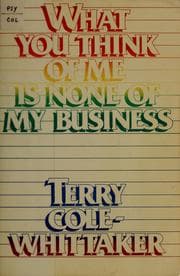
And that fear is most often as a result of how you think other people are gonna see you and the fear that you'll be judged if you are the owner of the company and you don't have the role of CEO. And we have to all get to the point, Ryan, one of my favorite books, one of the first books I read as an entrepreneur, What You Think of Me Is None of My Business by Terry Cole-Whittaker. We all have to get there, and the only way we can get there is going through the paces of doing the work. And some of that work can be done through coaching. Some of that work might need to be done through mental health support, like therapy, depending upon how deep the trauma associated with that emotional container that you find yourself in is, so that you can release it.
Because when you are willing to surrender it and forgive yourself for thinking that you had to do that, you open up this amazing portal, this amen- amazing energetic exchange that gives you the freedom to show up in the way that honors you the most and supports the goals that you have for your business the most. And if you ask me, that's what we all quit our good jobs to do, right? And so if we can get to the point where that's what we're doing, it's a game-changer, and it's gonna change our business, and it's gonna change the world. Yeah, I, I think the funny part is, about this, about this particular, uh, conversation, is that if you were sitting, standing in a circle of, of, of founder entrepreneurs, right? And, you know, everyone's kinda going around and talking about what's going on and, and your, your take was, "Yeah, I, uh, I brought in a president to run day-to-day and operational stuff, and I just, you know, code all day or build product or sell or whatever," and that's, that...
The other, every other founder and entrepreneur in that circle would be envious of you. Yes. Right? They, they would be like- Absolutely ... "Wait a minute.
That's why I started the..." Like you said, "That's why I started the business in the first place." Yeah. "That, that's what I wanna do." So it's, it's like we feel this pressure to be this thing, yet behind the scenes, every single one of those people is going, "I really just wanna do the thing that I love to do that I started the business in the first place for."
And there are, uh, I'll call them professional CEOs, people who really enjoy the business, the work of, of that job. And I, and what I try to I've tried to share this on the show and make this point and, and you're doing a phenomenal job, is, like, CEO is just another job in the company. Yeah. It's not... Like, like, it has a specific role and set of duties and job description just like every other role, and I think oftentimes if you, especially if you go into a small business, you'll find there is a job description for every position in the company except for whoever's sitting at the top of the pyramid.
Right, whoever's the CEO, right. And you're like, "Well, what is it exactly that you do all day?" You know what I mean? Um, and I, I find that really interesting. I, I'd love for you to dig a little deeper into, and you went into this in your, in your last response around, uh, I'll just kind of, uh, put it in a bucket, like this holistic approach to, to our lives in association with being a founder and entrepreneur, a small business owner.
Um, I don't think we talk about this enough, and I know in my own career my entrepreneurial journey didn't really take off until I got my internal shit right. Mm-hmm. Right? My health, my mental. I- Mm-hmm ... you know, developed a, a deeper relationship with God.
Mm-hmm. And then all of a sudden, like, the business stuff started to shake out in more positive ways. I wasn't as frustrated about setbacks. I could- Right ... handle different things that would come. So you know, when you, when you're digging in with someone, and you can even share as much about this, your personal journey as well as you want too, like, how, how do you approach someone or even address this topic of a holistic approach?
Because I do find a particularly, um, more ego-driven men tend to really fight how their exterior, their, their life outside- Yeah ... of the business impacts their operations inside the business. Yeah, I think it happens amongst women too, you know, working predominantly with women. For me, and I'm, I'm gonna, I am gonna tell a little bit of my story. So I, you know, my career started like many people's in corporate America. I was in corporate for 12 years.
I roos- rose to the ranks of vice president, and I literally woke up one day, December the 17th, 2004, with a knot in the pit of my stomach and I knew it was my last day. And I had no clue what I was going to do. But I knew that I was not created to sit behind someone else's desk. That's what I knew. That, that's what was, um, rising up in me as I deepened my own connection and alignment to God.
And I walked in to my boss and just quit. Like, I, I had no plan. I didn't know what I was gonna do. While I was figuring out what I was gonna do, I was in my 20s, so I, you know, I had a, I had a lot, had a lot of room to figure it out. I wasn't married.
I didn't have children. You know, if there was ever a time to take a chance on myself, it was at 27- Yeah ... when I did. And while I was figuring out what I was going to do, I started selling Mary Kay Cosmetics and ended up becoming a sales director and ultimately a top executive sales director, pink Cadillac, the whole nine yards. I did that for about two years, and then the same thing happened. I, I, I call that my Britney Spears moment: Oops, I did it again.
I had merely traded one desk for another, but I still wasn't living the purpose for why I quit my job in the first place, and I think part of it was the fear. You know, starting a ground up business is very different than working a business model like Mary Kay Cosmetics that is already established. You can just work the formula and get the results. And so back, so then in 2007 I saw myself starting, um, to feel the same way again. I'd just finished my second pink Cadillac, and I literally said, "I'm not gonna do this anymore.
God, what do you have next for me?" And that was where I- Ooh ... I went to bed that night and I dreamt that I saw myself walking into a building that had a marquee that read Incredible One Enterprises, which is the name of my company today. And so I woke up the next morning with my journal and said, "Okay, God, what in the world is an Incredible One Enterprise?" And what I heard the Spirit say was, "I want you to do what I purposed you to do."
And I knew from the age of 10 that I was supposed to use words to help people to change their lives, and so that meant I was supposed to be an author, I was supposed to be a speaker. I'm brilliant at marketing. I have an MBA in marketing. I'm supposed to get out and to get people into action. That is my purpose.
That's what I do. I'm a disruptor. And so as a result of all of this, and you know, and, and all of the setbacks, filed bankruptcy, went back to work, didn't know what I was gonna do. Now I'm in this ground up business, and it is not working. And I'm the CEO.
I've got the title, but I'm the bottleneck in the business and I'm struggling. And then I literally just made a decision, Ryan. Now I'm gonna answer your question. I made a decision, because when I started the business, I told myself and other people told me that I had to compartmentalize, that I could not bring all that who I am to the table. If I as an entrepreneur, small business owner, wanted to get on stage and talk about my spirituality, it would be a business killer, and I believed them because I was afraid, 'cause I had never seen it modeled before.
But when I decided to come back into my business full time in January of 2011, I decided that all of Darnell was coming back, and Darnell loves God. Darnell believes that a business with a spiritual foundation goes way farther than a business that doesn't have one. Darnell came to learn about the significance of self-care. In the last 18 months I've lost 58 pounds. Wow.
I've become a vessel that when I stand on a stage and I tell people that they can love God and make millions of dollars, people will actually believe me because I look like I'm a living example of what I preach. I made the decision that I was gonna bring all my work together. I, my, my, um, signature framework that we use with our clients is called the Move to Millions method. It has seven pillars. It first had five pillars: strategy, sales, system, support, and success mindset.
A few years ago I expanded it once I made a decision to start treating my body like the vessel, the only one I'm going to get while I'm here on earth, to be an example of what is possible if you let the God in you show out in the work that you do. I expanded it to include soul leadership, which includes things like forgiveness, alignment, surrender Embodiment and obedience and self-care. Learning how to integrate self-care and rest into your business model. My company grows more when I take a break than it does when I grind it out. And so I decided that I was gonna take a holistic approach because we're not just our business.
Like, we're not one-trick ponies. We are fully faceted human beings living a life experience that has many components, all that deserve to be nurtured and celebrated in the process. And what I have found since I've done this in my entrepreneurial work as well as in our corporate and even our governmental work, is that leaders are craving an environment that makes it o- The holidays are here, and that means it's the most wonderful time of the year to save with Rakuten. Use Rakuten to stack cash back from your favorite stores on top of holiday sales. That's savings on savings.
With Rakuten, you can get cash back on gifts for everyone on your list, from toys for the kids, to kitchen gear for the person who loves to cook, to electronics for everyone. You can even save on something for yourself. Just shop the stores you love, and cash back is automatically added to your account. And you can get paid with gift cards, PayPal, or check. Or eligible American Express card members can even choose to earn membership rewards instead of cash back.
It's truly a no-brainer. Join for free today and get a new member bonus after minimum qualifying purchases. Just go to rakuten.com, download the app, or install the browser extension. That's R-A-K-U-T-E-N. Terms and conditions apply Okay?
To care for themselves. Leaders are craving bringing their faith. Like, I mean, as a country, we are not agnostic to God. Our money says, "In God we trust." Mm-hmm.
Our politicians end every speech by saying, "And God bless America." Like, we are not agnostic to God. And I'm not saying I pass a collection plate or, or do any of those things that might be perceived as, you know, religious or, or any of that. But I integrate the humanity that I am that understands that I'm a spiritual being having a human experience, and what I do, and I invite other people to do the same. And what I find is that at every level, leaders are excited about the permission that I invariably grant them because I'm showing up and being an example of what it is that I think makes the difference in scaling and sustaining a business that serves you both financially and spiritually.
So, it, uh, thank you so much for sharing that. Yeah. Uh, it's funny, I had a very similar, I had a similar experience, um, when I started talking about my faith, uh, on this show. Um, and I had people reach out to me, and they're like, "You know, your show is about business, you know, why are you talking about things related to God or to religion or, you know, whatever?" And I said, "Because this is a big part of who I am."
Like, you know, I wear a cross every day. I have multiple crosses tattooed on my body. I pray in the morning, I try to at night, as much as I can. And, you know, it's a huge part of how I, my g- guiding principles, my morals- Yeah ... you know what I mean? Like, you know, the, business decisions that I make, decisions I make in interpersonal relationships, how I treat my employees.
Like, you know, uh, at the end, you know, I, I, it... Not everyone appreciates this example, but, like, how I frame it is I believe, uh, whether this ends up being true or not, that at some point, I'm gonna have to stand in front of St. Peter and explain the shit that I did during my life. Yeah. And I wanna be able to stand there and go, and be proud of the things that I did.
Not that I'm perfect. I mean, I've made- Yeah ... tons of mistakes too, but, like, you know, the, the, the big things, the, the, the, the soul-shaking things, I wanna be able to say, "Look, I navigated through those. I didn't, I didn't go down that dark path," and that's important to me. Yeah. And, and okay.
So, so I would share those things, and what's funny is, like, at first, I would get these messages like, "I'm surprised you're sharing that. What if that turns somebody off? What if they're Jewish?" I'm like, I... One, I am not advocating Christianity.
Right. Like, that's my belief, you know, and that's where I come from. But I could care less where you come from. It doesn't matter, right? But it's all just if you're operating through a moral framework, then- Yeah ... we're all good.
Two, I'm like, this is who I am. If someone doesn't wanna listen to this show or doesn't wanna do business with me because I'm, I have a relationship with God and I'm fine talking about it, that's a filter for me. Exactly. And now I don't have to deal with that person. Right.
Right? And- You dodged a bullet. And that's the thing. Like- Yeah ... and that's the part that I, I've tried to share so often, is, like, sharing these part... Now, again, you don't need to barf every dirty little detail of your life.
Right. But sharing these major things that are part of who you are, all they do is filter out the people who you don't wanna do business with anyways. It's the- And bring the ones that you do closer ... and that's the flip side. Yeah. Since that time, I have seen massive growth in this show.
And not, not, I don't think it's because I talked about God. I think it's, it's all the things, all the, the, the belief structures that I've applied, you know, in various aspects to say, "If you are into this, or if you are just interested in someone that has these viewpoints, come on in." Yeah. And, but, you know, I think a lot of people really struggle with this 'cause they're so worried. They go, "Darnell, but if I talk about, you know, my, the fact that I'm a gun owner, you know, all these people who don't believe in the Second Amendment or whatever, they're not gonna do business with me."
Yeah. And, like, how do you start to work someone through this? 'Cause, 'cause... And I'm gonna put one more... This is a horrible question as a podcaster, so bear with me here. Mm-hmm.
I know I'm taking some time. But I guess where I'm trying to go with this is, like, I honestly believe that c- coming with AI is the, is, makes brand more important than ever before in the history of business. 100%. Not that it hasn't always been important. Yeah, 100%.
But AI is going to commoditize so much of what we do- Correct ... that our brand and how people feel about us and trust is more important. Okay. So to get to that brand and have it be honest, we have to start to inject some of these things that aren't just business. Correct. So for someone who is struggling, you, you're, you're working with them and you've worked through various pieces of your process and you get to this one, and they're, they're really struggling with cracking open, how do you start to coax that out of them in a way that they feel comfortable and can be consistent with, but ultimately gets them to do it?
Yeah, and, and I wouldn't use the word coax, and, and, and here's why. Because I think whenever you're dealing with people and you're asking them to be vulnerable, and vulnerability is not a core value that they already o- own, right? There has to be an element of grace. There has to be a patience that allows you to let them share their uncomfortability, their fears, and you hear them without just trying to flip them, right? And so, so there, there is a dance that happens when we're working with clients around this.
And, you know, luckily for me today, because I have been a champion in the marketplace for the importance of faith and business together since 2011, and outwardly since 2013, I mean, more than a decade, the people who are attracted to me today are people who are faith-filled people. And so it's not as challenging because they kinda come in. But they have other things, right? And I even think about my, my own self in 2013, I was holding a live event, and it- I had filed bankruptcy in 2010, and I was, my plan was to take my bankruptcy to my grave. I was never gonna tell anyone that I had filed bankruptcy.
I was embarrassed, you know, all the things. And I was leading this live event, and an attendee came in from lunch and gave me an, a handwritten note just thanking me. She said I changed her life in three days. She just wanted to thank me. And so I'm reading this handwritten note, and I'm moved to tears.
And as people are starting to come back in the room, someone calls my name, and so I raise my head up and you can see my face. It's wet. I'm crying. So I stand up and I start talking, and I'm, I'm, I'm in the most vulnerable state that I could possibly be in in this moment, and Ryan, it slipped out that I filed bankruptcy. Mm-hmm.
Like, it was, it slipped out. And it was like one of those things where you, like, you say it and you almost hope nobody heard you so you could just, like, take it back real fast, but no, they heard me. And here's what happened. I continue to talk and talk through even that part of it, 'cause it's like, well, it's out there now. There's about 68 people in the room.
It was day three of my enrollment event. I had made my offer on day two, and s- eight people had signed up. I was vulnerable and transparent and spoke my truth. That number climbed to 38 people signed up. Wow.
And so what I learned that day, and this is the same story I would tell a client, what I learned that day is that the more human you are ... Because when you are an expert, right, you're on the stage, y- they put you on a pedestal, whether they mean to or not. But when you show them that if they cut you, you will bleed, when you show them your insecurities, when you show them the moments where you were a human, it gives them the audacity to hope that they could experience something similar to what you've experienced. And so the line of questioning that I would go down as I was coaching this particular client, and this would be me showing up as a coach and not me showing up as a consultant or a mentor in that moment, I would ask them to tell me about a time where they felt safe and comfortable with the parts of themselves that are not as polished. Because what we have to get to, the root is fear, and the only reason we don't wanna be vulnerable is we're afraid we're gonna be judged, and we afraid that, we're afraid that in being judged we're gonna be rejected, because the one thing we all want is to know that we belong and that we matter.
And we're afraid that when we tell our truth, someone else will deem us unworthy of belonging, and we don't ever wanna feel that way. And so we dissect that belief, and we find the truth that's in it, which often it isn't the truth. It is an assumption based on things that have happened in the past when we have no filter that it's gonna happen that same away, same way again. And then we create a safe space for them to find their level of vulnerability, and it grows over time. I don't ever recommend that anybody just pop out and tell the whole everything, right?
No one goes to bed a blunder and wakes up a wonder. So we do it in pieces. We do it in a way that feels comfortable, because our most innate need is to feel safe. And as long as you feel safe and regulated in your nervous system, you will continue to, to branch out. Think about Peter walking on water, right?
Like, he walked on water because there was safety in Jesus saying, "Come to me on the water." And so if we can create and erect a space of safety for them to be vulnerable and transparent, they will, and that is going to take a delicate approach. It is gonna take coaching. It is gonna take a grace-filled understanding of what your client is doing and not a hard-ass, "Do it now or it's gonna cost you your business," which I think a lotta people do. They do, do, do.
They tell people instead of showing people or even better, creating space and holding capacity for them to take the step that is gonna lead to the vulnerability that's gonna change everything for them. Yeah. They have to make the decision themselves. You can't make it for them. Correct.
Yeah. You know, i- uh, another interesting moment was, um, I did a show about six months ago, a solo episode where I was talking about, um, a, an aspect of my personality that has been used against me many times. So, um, I have incredibly high level of, of ADHD, and I've had to deal with it most of my life. I didn't even know that I had it until a few years ago, and then, uh, all it did was give a name to the feeling that I've had for 44 years. Yeah.
Um, but, uh, in, in kinda researching, okay, like, I don't want this ... Like, it, the thing when you're, when you have this type of hyperactivity, right, it's a superpower one day and, uh, uh, you know, your kryptonite the next day. Right. And, and you deal with that. And I was like, okay, well, I don't wanna just live by that.
Like, I wanna find ways to, to, to mitigate the downside and, and maximize the upside. Okay, great. So I started talking about that on the show, and I shared a story about how, uh, on multiple occasions, my intensity in the workplace has been used against me And, uh, used, you know, either in, you know, negative write-up when I was, you know, kind of still working inside of companies, or, you know, whatever. And what's f- you know, and I, and I was talking about this, and talking through, and talking f- about how it feels. Like, you feel like you're, you're, you're, you know, in your head you're like, "Man, I'm showing up every day, I'm going 110 miles an hour."
Like, you have this narrative in your head, and then you get this, this story from the outside, and it's very hard to meld the two. Yeah. And what's funny is, uh, you know, I, I wasn't really sure how that would come off. Um, and then again, out of the woodwork came all these people who are like, "I deal with the same thing, I try to hide it." Like, I...
A lot of people who, who have a, a hyperactivity or, or a kinda standard level of intensity more than the norm, they actually, they actually try to hide it, like, and, and, and create mechanisms in their personality to, to hide this thing. And what I thought was really, was really, was really fun and, and I think in doing the work, and, and ultimately speaks to your point, is that all of a sudden these... I started talking to these people. I created a little group for a while where we would talk to each other and, and now a lot of these guys are starting to come out. So my point in saying all this, and, and it's the work that you're doing and your story about the woman who comes up and writes you the note, is that we're not just...
It is very, it is absolutely self-serving to do this, in a positive way, to, to start to bring this stuff up and, as you say, work through in a way that's comfortable for you. But it is also such a service to your community, to your industry, to your family- Yeah ... to, to share these things. 'Cause now they can start to, and I think this is one thing we forget about, like, the... There's so many people that love and support and care about you, even if it's, even if it's at an arm's length. Yeah. And they don't know what you're going through.
They don't know what you deal with. Like, they, as you said, they look at you as a superhero standing up on stage. Look at her. She looks amazing. She sounds amazing.
She's so put together. She's so professional. Man, she must've been born that way. Yeah. Right?
And then all of a sudden you go, "No, no, no, I'm a regular person- Right ... who's just done this work and deal with this issue." And now all of a sudden it becomes accessible for people. Mm-hmm. Now it's, it's like, "Oh, wait, I can do this, too." Yeah.
And, jeez, I, I'd love to spend time with Donyale and l- learn more about how she did it and, and, you know, and all that. And, and then your business grows, and then you start to attract more of these people. Um, it, it is... It- And man, the feeling that you get, I mean, that, that feeling that you had when you were crying and just, I mean, it's just, it's such an intense feeling when people connect on this level on issues beyond the surface stuff. Yeah.
Um, yeah, it's wonderful. I, I appreciate all that. I wanna transition a little to, um, kinda some, some, some things that are impacting businesses today l- in our marketplace. Okay. Um, I don't wanna spend too much time on AI, 'cause there's like 10 bazillion shows that break down AI, but I am very interested in how you are consulting your leaders, owners, your c- your cus- your, your coaching clients, et cetera.
How are you starting to talk to them about not just where AI is today, but, but how they're start to position themselves as leaders and their companies as a whole for what is absolutely gonna be a revolutionary change in the way we operate our business? Right. Absolutely. Like, and I am, I am pro-AI, just, like, just for the record. I think that when done well, when you understand it and when you take the time to prime it, it becomes additional team members.
It becomes thought partners. It creates an environment for you to think beyond what you could do in your own time, not necessarily your strength, 'cause your greatness is your greatness. And so for me, I am helping our clients to understand it. We're teaching them how to build their own custom GPT so that they can use it in their work for their clients and create these tools for their clients. Because I think that any more, and you, you alluded to this a few moments ago, like, the more AI continues to improve, the less they're gonna need a business consultant a- on the surface, right?
So we really do need to, A, embrace it, B, still be able to determine how our uniqueness, our anointing, our brand equity and our brand essence makes the AI stronger. We have to be able to have that conversation, and the only way we can have that conversation is if we're exploring it, right? So we, you know, we're teaching our clients to test and try all of them, and to see which ones perform at a level that feels closest to you after you've done, you know, the things to, to be able to prime it to make sure that you're getting the best output. And, and to embrace it, and to make it part of the conversation. When I'm working with some of our corporate clients where, you know, AI has been around for longer than it's been known to us, like, we were building GPTs for companies three years ago, very inf- you know, entry-level in comparison to what we're able to do now all around leadership development models to help them in identifying how to best serve and support and develop their teams through the use of AI.
And so it's not, it's not going away. It's only gonna continue. And we have a real opportunity as small business owners, as CEOs, as leaders, to embrace it, and to develop it, and to take our unique greatness and brilliance and our methodologies and our frameworks, and to pair it with a system that allows us to create output for clients and deliver our services much faster. It, it, it's a game-changer. It can be a game-changer.
It's gonna allow us to charge more. It's gonna allow us, allow us to work way more smart, and to reduce the amount of time we have to spend in delivery to our clients to produce the same or better results. How do we continue to maintain the human aspect of our business while we inject more AI into our business? Stories. Like, like, it, and, and not even just from, you know, a social media perspective, but telling the human side, the behind the scenes- Behind the scenes journey of what you are doing, how you lead, how you develop, how you're running the company, the decisions that you're making.
The more you interject your personal story and what makes you uniquely you, the more you separate from AI. 'Cause, 'cause we can make the assumption that every single per- person out there who technically does what it is that you do has the ability to create an AI tool that will do that same thing better, faster. But what we cannot replicate is your uniqueness. And so first, we have to understand our uniqueness. So we all need to go back through and exercise on personal branding and really discover our essence and what has helped us to build equity as the brands that we are in the marketplace. And we have to find the levers to exploit, and when I say exploit, I mean it in a good way, not a bad way, those things about us that if we talked about these uniquenesses more, these brand equity points more, it would create more connection.
And we're still today, it- we're actually even more today, in a trust economy. And the difference is being made, and when you think about marketing 101, which as people buy when they know you, like you, and trust you, we have a distinct opportunity in the face of AI to really heighten how we allow people to know us so that they can like us, and ultimately they can trust us. And as we create more points, more offers that are surrounded in a mechanism of trust, trust through being vulnerable and being transparent, we're gonna open up an opportunity for more people to be willing to invest in themselves through us, through our uniqueness, our brand story, the story of our team. So not just you as the, the head brand underneath the umbrella of your company, but starting to explore and exploit the stories of your team members, especially those that are gonna be doing the service provision, making sure that who they are is being expressed through the platforms that you're using to tell the story of your company and your brand. Those are the ways that we continue to stand out, and then AI just becomes a complement, because at some point in time, anybody who wants to do business in this current environment is going to have AI as a part of their, their offer suite.
So if everybody's gonna have it, you have to really continue to develop and explore your story, and how that story is going to resonate and help other people find that belonging. Because again, we're all looking for that place where we feel safe, where we feel seen, where we feel heard, and we can let our guard down and get the support that we need in order to transform the area of our life that we're coming to your company for in the first place. Darnelle, this has been an incredible conversation. I, uh, I have, could go another hour with you. I, uh, this is just phenomenal.
I mean, I, I'm so in line with the way that you talk about this stuff and you line up. And, you know, I think w- what I, what I, what I love about the way that you approach it is, and you've pushed back on me multiple times, and, and I very much appreciate that you did that, um, in, in taking a more, um... A couple times I have referenced, uh, activities and, and, and pushed, and, and you've kind of come back around and explained a more tactical step-by-step way of getting there. And I think that, you know, this is one of the things that, um, I, I know I struggle with sometimes, right? Like, we want it tomorrow.
Like, I know what I want, right? And I just, now I want it tomorrow, and y- it's easy to get frustrated in that, in that time between when I make the decision to go after the goal and, and the goal itself, right? Yeah. I, I want everything right now. I wanna, I wanna go.
And, and we have to break it down into steps, and I think you've done a wonderful job with that today. Thank you. Um, if people wanna get deeper into your world and learn more about what you're doing, which I know they're absolutely gonna want to, 'cause I know my audience, um, how do they do that? What are the best places to connect with you? Yeah.
I would invite them to go to movetomillionsgifts.com. Both millions and gifts are plural. When you get there, it's gonna give you an opportunity to opt in for a special bundle that I created just for you to give you, like, a crash course in all things Darnelle Jervie Harmon and our Move to Millions methodology. Wow. Um, that's where I would start, and from there you can find me on how to connect with me on Instagram or LinkedIn and any of the other places.
So go to movetomillionsgifts.com. Guys, and I'll have that link, uh, as well as link to, uh, Darnelle's Instagram, uh, in the show notes. Whether you're watching on YouTube or listening wherever you do, just scroll down and you can, uh, get into Darnelle's world, which I highly recommend that you do. Thank you so much for your time today. I appreciate you.
Thank you, Ryan. This was great. Let's go. Yeah. Make it look, make it look, make it look easy.
Hey. Thank you for listening to The Ryan Hanley Show. Be sure to subscribe and leave us a comment or review wherever you listen to podcasts. Game ain't a thing for me. I never switched up, no changing me.
The only thing changing is- You've finally broken loose from work. Three friends, one tee time, and then the text. "Honey, there's water in the basement." Ugh. Not exactly how you pictured your Saturday.
That's when you call us, Cincinnati Insurance. We always answer the call, because real protection means showing up, even when things are in the rough. Cincinnati Insurance. Let us make your bad day better. Find an agent at cinfin.com.
If you liked the show, please take a moment to rate, review, and subscribe. It really does help the show to grow. Thank you for listening. Happy holidays. Want to give your host a gift?
Consider subscribing, rating, and reviewing the show this holiday season. It really helps the show grow. From all of us at Believe, have a merry Christmas, everyone, and a happy holiday.