Fighter Pilot Reveals Why You Never Hit Your Goals
with Christian Boucousis
Episode Answer
Fighter Pilot Reveals Why You Never Hit Your Goals is a Finding Peak podcast episode hosted by Ryan Hanley with Christian Boucousis. The conversation explores leadership, performance, entrepreneurship, and the work required to build with clarity under pressure.
Read the Conversation
Show the full transcript
What is it about fighter pilots? No matter what you see or where you go, you're always thinking, "How can this be done a little bit better?" Yeah, 95% of our decisions are based on our own perceptions, which means that they're not based in reality. And the great thing about an execution gap is it's an emotion-free space for you to get curious as to why it exists. People believe their opinions and ideas outweigh reality.
Leaders often just give a vomit of stuff that needs to get done to their team. You can only solve one problem at a time. The thing that gets in the way is fear, not ego. Christian, dude, it's incredible to have you on the show. I'm very excited about our conversation today.
Thanks, Ryan. It's an absolute honor to be here. I'm really grateful for the opportunity to talk today and see if we can share some insights for your audience. Yeah, so when we were talking in the green room, um, you used this word that I think it is the obstacle of our day, uh, at least in this moment, and it is uncertainty. I think that most of the stress, anxiety, you know, you, you'd also used the word panic in the green room.
Like, I think it, one of the cores, if not the core root cause of so much of this heightened tension we deal with is uncertainty. So maybe break down with your clients, with your life, with your experience, like, where is this uncertainty coming from that I think everybody who's listening to this show in some regard feels every single day of their life and is, and is dealing with in hopefully positive ways, but I think unfortunately there's a lot of negative, a lot of negative ways that we're dealing with this uncertainty as well. Yeah, look, I think uncertainty's been there for hundreds of thousands of years. I mean, if, if you're a caveman and you're went out hunting, there was no certainty that, A, you'd find something and, B, it's not gonna bite you back. Uh, so I think uncertainty's, uh, been a, a factor of humanity, uh, which is why some people thrive and grow and build empires and businesses within that uncertainty, and others kind of get crushed by it.
I, I would say the only k- kind of radical change in the last 10 years is we just talk about it more. Uh, and we talk about uncertainty as if it can be tamed. In my-- I have a book coming out, uh, in September. It's called A Flawless Leadership, and the premise of flawless leadership is to understand that, uh, perfection, which has its origins in Latin and in scholarly texts, is an environment where, uh, basically you can control everything. For something to be perfect, it has to be, uh, completely controlled and delivered both internally and externally.
Uh, the way that I define a flawless leader is a leader who is, uh, understands that perfection's unattainable. And even the origin of the word flawless comes from Vikings. It's a warrior word. Uh, and it means that, you know, my stone is not broken. Uh, and it's more about what you can control.
So when we look at uncertainty, u- as human nature is geared towards survival, we tend to project externally all of our problems like it's the world, rather than internally, which is, okay, the world is gonna be uncertain. It's a given. Uh, but what I need to be focused on is how I respond to it, and building the structures, the systems, the thought patterns, uh, the philosophies that I have as an individual to view uncertainty as a opportunist, uh, rather than as a threat. Uh, with AI, you know, I'm, I'm like everyone else. I didn't know anything really.
I've been using AI since GPT-1 and, uh, hav- having it write my emails and, and everything and, and then I, uh, joined a program run by Dan Martell, and he, he had this wonderful advice, which is if you need help from AI, ask it how to help you. And ever since I've done that, you know, we've built... And, and I love that because it harnesses one of the core philosophies of my former, what I call career 1.0, which was as a fighter pilot, uh, which is you're always curious. Y- there's always this, how can I, how can I use this tool better? How can I use the airplane better?
How can I fly it better? You're always asking questions. Based on today's uncertainty, as it crystallizes into reality, you can carry some of that forward. Uh, and with AI, obviously it, it's not really a fixed state. It's, it's the acceleration of the acceleration of technology.
Uh, and I think what we need to shift as humans, which are largely, uh, our thought patterns are largely lineal. And by lineal thought patterns, it's, uh, we- what we're really saying is, "I need to get there, and here I am, so what do I need to do?" Uh, r- we need to embrace iterative thinking, and iterative thinking is engineered as a cognitive model that's deals with uncertainty very well because it says, "At this current point of time, this is what I know, uh, but I'm probably gonna need to know something different tomorrow as the world changes around me." And the learning model that, uh, AI uses is an iterative learning model. It has a go, it attempts things, and then it does-- it gets it right or wrong, and then it learns.
The, the thing about AI, though, is it learns an awful lot faster than a human being and has a memory of a steel trap. Uh, so it's-- think of it-- I think of AI as like a wing man. I think of it as a alternate intelligence source of me, and the more it knows about me, the m- the more it knows about where I'm going. And this is what we need to understand with AI. You ask it to do something that you're already doing, it's just gonna do-- it's not gonna be that helpful.
It's just gonna do whatever you're doing now more useful. But if you have a conversation with AI and you use it as a tool to say, "This is where I'm going. How do we get there? How can you help me?" Uh, and ask me as many questions as you need to understand the scope of the project.
A little bit like you would if you were using an external vendor, like you're building a house and, and you're talking to an architect. An architect- Is an expert at architecture, building homes, understanding how all the systems work together. Uh, but you don't just tell an architect, "I, I wanna build a house," and when they come back at you and it's a crappy design, you say, "You're a bad architect." You have to have a conversation. You have to scope it out.
You have to talk about your feelings. What feels good? How do you want the room to flow? Uh, and what I love about the fighter pilot way of, of thinking and working is everything we do-- And, and you have to understand that a fighter pilot, we're, we're basically re- a reprogrammed human being because everything that we're programmed to do as a human to survive is the opposite of the skillsets and the mental models you need to, to be a fighter pilot. So what we understand is everything in the world of a fighter pilot, you start with a target and work backwards, and then you iterate your actions to get there, whereas a human being does the opposite.
A human being says, "Here's who I am and what I do, and this is where I want to go." Uh, which means that you're really not going to transform yourself or evolve yourself into the person you need to be. And, and at risk right now is anyone in the in- intellectual space, anyone who is in the leadership space. Because if you start, if you keep approaching leadership as you do today, which is managing what exists, three years from now you're not gonna have a job, uh, because AI needs direction. So in an ironic way, we've gone through this phase where technology has dehumanized us to some degree.
Uh, we were talking about it, you know, before we got on the podcast about, you know, how technology's making us neurotic because we really only do things based on what the technology tells us to do. Whatever the messages we receive, whatever the email that's just been sent, whatever our job tracking software tells us. So, so we've actually gone backwards into being these really reactive leadership models. Uh, and AI needs the opposite. It needs us to be deeply human because that's what it can't do.
It needs us to go back into the critical thinking structures of the brain. It requires us to get creative. It requires us to understand the emotional impact that we need the intelligence to deliver. So I'm kinda hopeful that, you know, and that's my job is to help people with this, is to help you reconnect way more at the human layer, to be more, uh, free to go back into those models of building relationships, talking about emotion, uh, being, being engineered towards making an impact on the world and the people around you, r- rather than being effectively, uh, the doing side of what your technology's telling you to do today. Uh, lots to dig in there.
So one, I did not know the genesis of the word flawless, and I love the fact that it means what is it? My, my stone is unbroken. Is that what you said? What was the- Yeah. Yeah.
My, my rock- My, my rock ... or my axe is not broken. Is not broken. I, I love that. I love where- Yeah ... these words come from. I wanna dig in, uh, maybe, uh, uh, uh, a little bit into this idea of, of iterative thinking because, uh, there's a quote from Naval Ravikant.
I'm a huge Naval fan. And he had this-- He built on, um, Malcolm Gladwell's 10,000 hours, and he said, "It's not about putting in 10,000 hours; it's about achieving 10,000 iterations that gets you to mastery." And that, to me, resonated so much more in my life than 10,000 hours because there's things that I feel top, top 5%, top 3%, top 1% efficient in certain tasks, and I certainly haven't put 10,000 hours in them, but I have absolutely probably put 10,000 iterations. So that really spoke to me. And, and I will say after doing 450-plus episodes of this show, the idea of curiosity is pulled through almost every one of these high-achieving guests like yourself who've been on the show.
It's like a, it's almost like a core tenant of achievement is, is curiosity. And I think iterative thinking and curiosity kinda go together. So let's say I'm sitting here, I'm listening to this show, and maybe, maybe curiosity and this idea of, of iterating, it just hasn't been programmed into me. Maybe I came up through corporate world where it was just task, stamp, swipe. Task, stamp, swipe.
Like I, I was, I was actually penalized for thinking iteratively, for being curious about things. You know, stay in your lane. Do your job. Do what you're told. This is what I pay you to do, right?
Like, there's so many people who are now, I feel like, in the way the world is, is today and the, like, all the entrepreneur porn that's out there and the access to entrepreneurial opportunities that AI is creating, their s- their brain is starting to open up. "Hey, maybe I can be an entrepreneur." But they've been almost, like, programmed for most of their life to, to stay in their box, to stay in their lane, to incremental improvements, you know, one step at a time kinda stuff. How do you recommend to your clients and the companies that you're working with that they can maybe break free of some of that linear thinking and get into a more iterative, curiosity-driven culture? How do you start to, to, to build that if it doesn't exist inside your organization or yourself today?
Yeah, well, it's, you know, iteration is really the talent that an inventor has. The talent-- You know, I, I think entrepreneur is a bad word now because there's more people that are entrepreneurs that aren't than are. I, I prefer to think of founders. People that found something that, that n- wa- wasn't ever there before. Uh, they found- Yeah, or builders.
I really like the word builders ... Yeah. And they found a problem that needed to be solved. You know, I think one of the, you know, the, again, the challenge with an entrepreneur is when you approach entrepreneurialism with a linear mindset, you say, "I have a product. Everyone needs this," but you haven't actually asked anyone.
Uh, and then you wonder why it doesn't work. Whereas, you know, your founders who do, who do very well, they're always curious about is, is this fulfilling a need that's met? And they're always challenging that and testing it. Uh- So the best way to think iteratively is, uh, which is what the Air Force gets you to do, is use a system that is iterative. So follow some steps that automatically create an iterative mindset.
In the world of fighter pilots, we codify it as the debrief. And what's interesting in my own journey, I was a, a f- a fighter pilot for 11 years, a business founder for 20 years, and what was interesting is I always thought debriefing was a ritual. It was a meeting. But what I've realized, uh, i- in the last few years is that it's, it's actually the entire way of th-- it's an entire way of thinking. It's, it's a way of viewing the, the world.
And I came upon this-- Before I talk about debriefing, I'll tell you a story which, where this-- I had the aha moment. So here we are in Boston, uh, actually working with a, a large group of insurance brokers, and we went to get a coffee before the event started. So we go to the coffee shop around the corner, and we're sitting in the queue, and there's five people in the queue, and we notice that there's five people behind the counter as well. So we're sitting there and we're like, "Well, how can there be five people behind the counter and five people in the queue, and we've been-- hasn't moved for five minutes?" And then we started to deconstruct it.
My wingman, guy called Balls, ex, uh, United States Air Force, uh, F-16 pilot, and then he flew the First Lady, uh, around as a, as the, um, in the presidential flight up in Washington. And we're sitting there and we're like, start to deconstruct what this person's doing, what that person's doing, how they can be more efficient. Uh, we got our coffees and we sat down, and we're like, "What is it with us? What is it about fighter pilots?" No matter what you see or where you go, you're always thinking, "How can this be done a little bit better?"
And that's when I realized, you know what? That, that is us. So this whole idea of debriefing, which is reflection on performance, becomes reflection on everything. And you start to effectively have the iterative view of everything in life, your relationship, your children, your business. Like you d- It's like an itch that you, you can't help but scratch.
It's like, "Oh, this could be a bit better. We can do a little bit better with this process. We can shave 30 seconds off the way we talk with our clients in a meeting. We can tweak this, we can tweak that." So what the debrief is, it's a four-step process called ORCA, the same as a killer whale.
I have another story about debriefing killer whales, which we-- if we get time, I'll tell you it later. But w- what it stands for is objective, result, cause, and action. And when, when peoples see fighter pilots and we work with organizations, they're always like, "Oh, you guys like robots, mission objectives." And it's like, no, it means an objective view of the world. It means you don't bring your biases.
You don't bring your opinions. You're creating a picture of the future that's completely objective. We know where it is, we know how to measure it, and we believe in our soul that it's achievable. Uh, so f- that's the first step that most people aren't very good at. Everything in the future is generic and subjective.
Uh, and we create, we create these objectives in, in another system I'll talk about later. The R is the result or reality. And if you look at the neuroscience on how human beings make decisions, you-- 95% of our decisions are based on our own perceptions, uh, which, which means that they're not based in reality. Uh, so when you do anything in life, the only moment in time that really supports your decision-making in the future is being very honest about your reality, right? If you want to get healthier and that's your intention, but the reality is you, you reach for a bag of chips with every meal, you're chomping a Snickers bar after dinner every night, then that's-- your reality is out of kilter with your intention, right?
So between objective and reality lives a gap, and we define that as the execution gap. And the great thing about an execution gap is it's an emotion-free space for you to get curious as to why it exists, and that's what the C stands for, curiosity or the cause of this gap. And what's really important about this process in the way the human brain works, if you go to a museum and you see those plasma balls, the big glass balls, and they have, like, electricity going everywhere inside of them, and if you put your hands and all your fingers on the glass ball, you'll see the electricity dancing around everywhere. It's, it's kinda weak and sippet, and it's just bbb. If you put one finger on the glass ball, you get this incredibly intense piece of electricity flowing into your finger.
There's no-- It's not dancing around everywhere. It's locked in. The brain is a plasma ball. It's just electricity. And when you reflect on something, if you reflect on 10 things, you're, you, you can't access the deep recesses of the memory, and y- y- you, you're, you're working with assumption, not reality.
So what happens is the objective is the finger on the ball, the reality is the electricity, and the curiosity is, well, why is there a gap in between? So you get this really powerful, focused ability to access the f- the, the full structures of the brain. So it's deep, meaningful, intentional reflection. And it's in the context of what good looks like in the future, rather than why am I a bad person and why am I a loser and why is it not working? When we look at the-- When we get curious, we're just looking for one thing, one root cause that's within my control.
And once I understand what it is and I can control it, the A is the action. What do I do tomorrow morning or what do I do right now to close the execution gap? So in this one really neat conversation, you're connecting to the future, you're assessing it versus today, you're looking over your shoulder at yesterday, which is the only real thing that's happened And then the action projects you into the future. Th- every meeting and every business, every conversation with your wife, your children, your family, if you structure it with ORCA, then everyone understands that we're having a conversation where we win at the end. Because every conversation is anchored with what is your objective.
And now I've got something that I can control, I'm evolving into this flawless individual, this flawless person. I'm focusing on what I can control and iterating and adapting very quickly to everything that I can't. Yeah. I, I, I love that framework. And, you know, one of the things that I've found doing the show is whenever I have someone who has, at some point in their life, operated in a space where, like, life and death was part of the, part of the job, right?
Like, you, you mess up going Mach 2 30,000 feet in the air, you're in big trouble, I'm assuming, right? Like, there's, there's, there's serious consequences to the, to, you know, mis-action. And what you-- One of the things that you mention m- multiple times throughout working that framework is this idea of, of operating in reality. And one of the core things that, that I like to teach and, and, and I work through in my own life and try really hard, 'cause you say that we don't bring our biases, we don't bring our beliefs, perceptions. We, we, we, you kinda operate in what's in front of you, what you're looking at.
That feels like one of the most important aspects of success i- if not forever, certainly today, with all the deluge of information and opinions and biases and misinformation from this side, but it's real information on that side, and who should I trust and where should I go? It's like, it, it seems like a lot of people get lost in the way they would like the world to be versus what's actually happening. H- how do you stay grounded, and how do you help your clients stay grounded in, in, in what's actually happening on the field? What's, what's, what, what are the real results, repercussions, you know, uh, um, uh, uh, a collateral that comes out of your action? Because I feel like when we lose the path, it's because, well, we, I...
This should be happening, or I wish this was happening, and unfortunately, that's just not the game. That's, that's not what we're seeing. And, and we get off track hoping things will happen or believing that they should happen, but it's, it's not what's actually going on in front of us. Well, it's, I mean, that, that's what survival looks like. That's why 80% of our biases tend towards negativity.
Because if I think bad things are outside the cave, I'm gonna survive and stay inside the cave. Like, it's that simple. Uh, that is the program. And if you, uh, I call them the three Bs: the biases, beliefs, and behaviors. And we are driven by biases, w- which are all subconscious.
They are, they are the autopilot of a human being, and the autopilot is programmed by all the experiences you have through life. So if you're brought up in a dysfunctional home, you're, you're biased to believe that there's no such thing as a functional home. If you're in an environment where conflict is how problems are solved, you will bring conflict into the way you solve problems. And you won't, you won't think you're doing anything wrong. And you will think everyone else is doing something wrong because that's what biases do, and that's why the world is in the state it is today.
Because we're in an environment where we're fed on our phones information that feeds into what we already-- our biases already are. So then, then our biases become conscious. And, and when we become conscious of our biases, it becomes a belief. And we do, we behave in a way in what we believe in. So, you know, it's, uh, the Ted Lasso story.
You put believe in the, in the change room, and the, the all of a sudden the team believes it's a championship team. I, I, I love that documentary Wrexham, where Rob McElhenney and, um, Ryan Reynolds have bought that Welsh team, and they've just absolutely monstered it through the league from absolutely nothing. That's a great iterative story. Uh, so you can't tell someone they're biased, and you can't tell someone their beliefs are wrong, and you can't tell someone to behave differently. So to, to really unpick all of that, you need to have iteration as a practice.
Because as a fighter pilot, I'll tell you right now, we are biased towards action. We are biased towards success. I mean, we win 99.1% of the missions that we fly. And all of those biases are reprogrammed because the system reprograms them. Uh, we have an incredibly high standard, and everyone in the organization wants to meet those standards.
To become a fighter pilot, you fly roughly 400 missions, and every mission is incrementally harder than the mission before. We're talking about a program that takes young men and women off the street with absolutely no skills in what the job is. And you think of how businesses recruit. Businesses recruit skills. Th- the Air Force recruits mindset.
It recruits a gr- it recruits kids who believe they can be anything. They recruit a belief system. Uh, so here you go. You, you fly your first mission, and your first mission is literally in an airplane. Push forward, you go down; pull back, you go up.
Push left, y- you bank left; push right, you bank right and hit the rudder pedals, and you yaw all over and then you land. The last mission, you're flying as a four-ship in contested airspace with 2,000-pound bombs under your wing, and you've gotta drop them on the target within five seconds, right? So throughout that process of iteration, and this is what a, you know... We've worked with 19 NFL teams at Afterburner, and the reason we did that is the first NFL team we worked with won the Super Bowl. Uh, and what you find is too often within these systems- People believe their opinions and ideas outweigh reality.
Uh, a-a-another great exa- is that book is, uh, the, the, the book Moneyball and the movie, which was a very fact-based, reality-driven methodology that delivered success. Uh, and even though we have all of this evidence, and even though we know that we make better decisions when we're grounded in reality, the human bias always tends towards, "I know best. This is easier than it's gonna be, and if we just do something new, it's gonna be better." It's a little bit like if I just buy a new washing machine, I'm gonna fix the bro-- the broken one's gonna be fixed. And, but the reality is, well, you could probably just fix the existing one and you don't need a new one.
Uh, so we've moved into this world of hypervelocity, not only hypervelocity of, um, just the speed of the world, but the velocity in which an expectation is believed to be met. So we, we effectively-- You, you book an Uber, you book a Waymo, you, you order your Uber Eats. You know, you- your expectation is that within five minutes I get an Uber. Within 20 minutes I get my meal. And anything outside of that elicits an emotional response.
You get up very upset. This speed of expectation delivery is subconsciously now programmed into every leader inside organizations, big or small. Founders, entrepreneurs, businesses with four people, businesses with 400,000 people, and we work with all of them. And a big part of, of working with, with leaders is to say, "Hey, look, you're setting expectations that take months to achieve, and you're anxious 'cause you're not achieving them on the first day." We need to start getting really good at expectation management and daily setting of expectation.
And when we talk about daily setting of expectation, very rarely does anyone wake up in the morning and write down the three things they need to achieve today. People wake up, have their coffee, their brain's all over the place 'cause we're coming out of, you know, our REM sleep and our expansive default mode network, and we've got to switch into the task positive network of the brain, which is we're getting stuff done. And usually what that means is you open your emails and you start going through your emails, so you're pushed around by the technology. So a big part of, of execution and getting things done, uh, let's use an NBA player, right? An NBA player at some stage as a child, they decide they want to be in the NBA, right?
That's called an intention. And just 'cause you want it doesn't mean you, you're gonna get it, right? So we start with intention, and then we s- have to think about setting a destination. And when we talk about a destination, think of it the same way as when you fly on vacation. Let's say we're going to Cancun, and you get on the airplane and the captain says, "Welcome aboard, ladies and gentlemen.
Uh, our goal is to get to Cancun today." That word goal. Imagine if you heard that as a passenger on the airplane. You'd be getting off the airplane, right? Again, we are biased to believe that a goal is nice to achieve and a destination I must arrive at.
So we have to reprogram ourselves as a leader to say, "Well, if my intention is to be an NBA player and I'm 12 years old, my destination is to get on the first team now. Like, I've got to get on-- I've got to h-h-hit the destination today." Then we go into an objective. So a destination might be, my destination is to make the team, but there's a whole bunch of stuff I have to do there, which is understand the plays, train, practice, improve my jump shot, improve my three-pointers. So the objective then is the layer that defines action.
So my objective is to get four from 10 from the, from the three line. That's my objective. And my actions are to practice that until I get there. Now importantly, if you do that without a coach and without the external view of what you're gonna do, you're gonna start to believe your own storytelling. "Oh, I can't throw three floors.
I keep going too high. I keep doing this." Because you can't physically see your hand, you, you can't physically see your arm, you can't see your body language, you can't see where your eyes are looking when they're looking at the wrong place. So this is where-- what a coach does. A coach debri- helps you debrief because it brings the perce- perception outside of it.
So all of a sudden, what you see, and this is why a kid makes it to the NBA from the age of 12, is they're doing this debrief iteration naturally. Some people can just do it naturally. They're, they're already doing that. Um, if you look at, uh, I just watched a documentary on the weekend about Fernando Mendoza, and just the all-pervading theme throughout his life from every coach, his parents, is his thirst for knowledge. He's, he was talking to the coaches at six o'clock at night.
After every session, after the, after the coaches ran the reviews, he would seek them out for more personal guidance. Uh, so he wasn't a fighter pilot. He didn't follow Orca, but he's naturally doing it anyway. He's, he is very clear around, "I want, I wanna be in the NFL. My destination is to get on the, the, the high school football team, then the college D1 athlete, then, then, then."
And he's doing the intentional practice to get there, the intentional iteration of the practice. And it all boils down to taking big intentions and translating them into those three things I need to achieve today. To almost liberate yourself from the to-do list, because when you set achieve lists, the doing just kind of looks after itself. You're a smart-- Humans aren't dumb. You know, we're pretty good at, at figuring out what to do.
And this is-- You, you apply the f- the framework to what you're doing, your team's doing, and AI just becomes another player. Once you want to achieve three things, you, "Hey, AI," this is what I do every day. "Hey, Claude, this is the three things I want to achieve today. How can you help me?" "Here's what I can do.
Here's what I can't do. Here's what I need from you." And I'll tell you right now, if you set out to achieve three things in a day, you typically achieve three things by 9:00 AM. Well, if you're like me and you start work at 6:00. Uh, y- and, and there's no distractions.
You can just, you can just power through. Over 30 years with Afterburner and working with almost 4,000 businesses, when we start debriefing, the vast majority, and we quantify it at around 80% to 85%, of organizations don't know where they're going. They don't know what they need to achieve. And it's a constant guessing game each and every day as they run around urgently reacting to reality rather than getting ahead of reality and doing the work that has meaning rather than just doing the work. So I love the-- I love this concept of if the, if, if the pilot of your flight gets on and says, "Our goal is to get to Cancun today," you're gonna get off the plane, 'cause I, I completely agree.
As soon as you said that, my first thought was like, "That's not the language I want to hear." But that's the language everyone uses in business. Yes. Everyone uses in life. No, that- You know? ... that hit me, that hit me like a sack of potatoes.
I, I, I love that, and I completely agree. I've always had this... You know, personally, I've always had this very love/hate relationship with the idea of goals because I would consider myself a very hard worker, like yourself. I'm up early, I'm working, constantly thinking about, you know, whatever it is that I'm doing. I, I coach Little League.
I, I have been accused many times, uh, in jest most of the time, of, of breaking down the swings of 12-year-olds to ele... So I played college baseball. I'm enamored by the body mechanics of the game and really sports in general, and a f- big fitness guy. Um, and like I could tell you f- from a body mechanic standpoint what every one of my guys, like what their thing is. And like I spend a lot of time thinking about it, and it's just a microcosm of this is kind of the way I've always been.
And my, my-- And why I've struggled with goals is if I'm always kind of breaking things down, and I'm always working as hard as I can, and I'm always pushing forward, and, and w- what is the purpose of the goal? Like, I'm going to get as much as I possibly can get from whatever I'm doing every time because I believe I'm giving max effort in whatever thing I commit myself to. So then why is the goal important? And to your point, so often we set these goals, and we're like, "Well, you know, set a, set 120% goal, and if you get to 105%, that's better than you would've gotten anyways." And I'm like, "But you didn't achieve the number that you put on the piece of paper, so why even put that piece of paper to begin with?"
Because I could've just put the 100% goal and then felt amazing when I got to 105% if that same amount of effort was gonna get me there. Um, but this idea of achieve, like what do I want to achieve versus like some arbitrary goal to me m- makes a lot more sense. And, and then c- connecting this entire thought and, and getting to my next question is you said so many of the organizations that you've worked with don't know where they're going. I believe that 100%. It's been my experience as well with the organizations I've worked in, either been an executive of or, or, or consulted with as well.
How do you figure out where you're supposed to go? Like if you're, if you're, let's say you, you get hired in and you're in the executive suite, you're brand new to a company, and you sit down in your first meeting and you listen to the CEO talk and you're like, "Oh my God. We're just kinda like getting through every day." Like to your point, just reacting to problems. How would you start to, how do you start to focus that organization when you're sitting down with someone and go, "Let's figure out where you actually need to go," versus just reacting to the last problem that came up or the last email that hit my inbox?
How do I actually figure out where it is that, that I need to go at, at... whether it's personal goals or a business goal? So all of a sudden you're pursuing exclusivity, okay? Uh, you would think in someone's brain, you would say, "If we've gone from delivering a, a business model that serves everyone in the world who's a child, and then we get them as a child, and then, you know, the McDonald's model, uh, the Happy Meal, and, and we've got them for life. And then all of a sudden we want to be Louis Vuitton, uh, and the whole thing collapses, right?" So then what happens is all of a sudden everyone realizes, "Oh, we've, we've lost the grassroots.
We need to go back there." But it's too much of an admission of failure for the leadership to go back. So they're sitting there saying, "No, no, no, it's not that. It's not that." And it's like, well, it, ex- how can it not be that?
You know, we, we went from providing a, a really good product to every retailer in the world. Our sales team are out at the call for-- And all of a sudden we're sitting behind our desks, and we're spending millions if not billions of dollars in supporting tier one athletes. Uh, it's, it's not gonna work. So what happened there was the company decided it wanted to be something else without thinking about what's the effect of that in, in, in, in the real world. So, so this whole idea, and it's very important in a, in an e- era of uncertainty and the fickle nature of a consumer, is you've gotta constantly start with, well, what effect do we want to achieve in the world?
Once we know the effect we want to achieve, then what's our objective? So in, uh, and I use this example in, in my book, Afterburner Advantage. And if we want every person to be an athlete, then we need to build a business strategy that enables every person to be an athlete, not just supreme athletes on the planet. The-- We need to do both 'cause we wanna inspire and, and it's for anyone to feel like, you know, "Hey, I'd like to be like Mike." Uh, you know, w- we have to have both.
Uh, and then you start doing the work, and then all of a sudden as you go, "Right, we wanna be, we want ev- to make everyone an athlete. How do we do that? Wow, we've got a lot of work to do now." Uh, when we were exclusive, it was like fun, sexy work. But now that we're going out to everyone, it's like, but let's connect it with meaning.
Let's connect every four, five, six, seven-year-old and inspire them with our clothing to be, uh, to be, um- a potential, a potential athlete. And the coaches who are our enablers, let's, let's reconnect with them. And I was in a room with a coach of one of the most successful college, uh, teams, and we're having a conversation, and the conversation was like, "What happened to you guys? Six years ago, you used to come and see me, like, three, four times a year. We, we-- you'd, you'd get us all, all the coaches together, and you'd come, and we'd just go offsite for two days."
He goes, "I haven't even heard from you guys for six, six months, and you, and you wonder why we're all going with a different brand." Um, so the first place to start your strategy is outside your eyeballs, on the other side of your eyes. Uh, then you reframe what can we do to meet that need? I built an entire multimillion-dollar business with this. I had a business that had no products, no services at all.
It didn't even exist. It was a brand-new company. Me and my best friend started it. We had, uh, an industry, and the industry started as providing security in post-war-torn countries, and then it morphed into humanitarian services because we iterated in the field. And what we would do is we would-- And I didn't even-- We didn't-- This wasn't conscious, by the way.
This is how strong biases are. That bias towards curiosity and the bias towards doing things a little bit better meant that we were doing that orca thing with everyone in town, and, and this was specifically in Kabul, in Afghanistan. So we flew into Afghanistan with nothing. Sweat equity, meager retirement savings from being a fighter pilot for 11 years, and we just had coffees and beers with everyone every single day. We were always out with the people doing the work.
And we would ask them, "Hey, g'day. I'm Boo. What's your name?" "I'm Mike." "What are you doing in here, Mike?"
"I'm building-- I'm with this company. We're building a road from Kabul to Kandahar." "Ah, awesome. That's, that's gonna really change things up here. That's gonna be a massive contributor to the economy.
You, you must really enjoy the work." "Yeah, I do. It's really challenging." Uh, "How's it going?" "Oh, it's going really well.
Uh, we're doing this, we're doing that. You know, we're, we're dealing with a lot of the challenges, and we're..." And we had done our homework, and we'd had this conversation a few times, and we'd, we'd learned that it's Afghanistan. No one's-- Nothing's easy, right? And the, the biggest cost that we could understand in that part of the world was labor.
Uh, so we're, we're sitting there and, uh, we're, we're like, "Oh, okay. Um, you know, we, we understand that it's difficult to secure the environment, you know, that there's terrorists and IEDs and all this sort of stuff." And they're like, "Yeah, yeah. So it's costing us an absolute fortune. So that's, that-- So the result is it's costing us a lot of money, all right?
And actually, the project's starting to fall behind." So we're curious about, you know, w- why does it cost a lot of money? Where do you recruit your people from? When we go through, through this whole iteration, we said, "What if we could get people that were just as capable on half the salary? Would that be of use?"
And they're like, "Yeah, that would really unlock a lot of potential for us here. That, that would be-- 'Cause we can have more people, and we can do more work." Uh, and we said, "Okay, let's-- We'll get back to you by Friday, and we'll, we'll have-- we'll come up with a plan together." So we went away, and we knew that, you know, India, Nepal, Philippines, you know, there's v- there's very capable people there. And because of the cost of living in those countries, they're a lot more affordable.
So we had some friends in Nepal, and we, we found all of these ex-British Army Nepalese Gurkhas, and we, we managed to rustle up 60 of them in four days. And we went back, and we said, "Look, we can have 60 highly capable, intelligent people here at half the cost." And by the way, for them, it's rockstar wages. They're getting paid double anywhere else they would normally get paid, so everyone's winning here. Uh, we can get them here by Friday, two weeks from now.
Would that be useful?" "That'd be fantastic." And before you know it, after three months, we, we land our first $6 million contract, and we're in the hundreds of millions a, a few years later with 6,000 staff. Uh, because we just solved other people's problems, and we invested in what we could control, the quality of the people, the fact that the people that were working for us knew that we valued them, that anything that we can do for you to help accrue your wealth and look after you, we will do. And if there's a low quality or toxic person that we recruit, we're not aware of it, we will get-- we, we will weed them out within two weeks.
Uh, and then we just had the reputation for solving problems, not theoretically, actually, and then that expanded into setting up ambulances, hospital clinics, mortuaries, m- uh, camps. We, we would recruit lawyers, accountants. We were writing legislation. Whatever a country that needs to be rebuilt from nothing needed, we could do it, uh, because we understand implicitly the scope, and we put that into the contract of the people that we hired. And then we had a clause which was, "We will iterate this contract once it starts.
And every two weeks, we're gonna meet, we're gonna review against the scope, and you're allowed to change the scope. We're not gonna lock you in, and we'll absorb some of it. But if it's markedly increased in scope, then w- we're probably gonna have to charge you a little bit more." And everyone was fine because they felt they were in control, and we were in control of what we could control. Uh, and then I applied that into property development, building a hotel, into publishing, and, you know, three years ago, I bought this company Afterburner, which is a 30-year-old company that's been using fighter pilot cognitive models and ways of working to help businesses and sports, professional sporting teams win.
So my whole life has just ran full circle, and here I am, like almost the embodiment of the company. Uh, and I'm fortunate because I believe in what we do, not only because I've seen it work with our clients, I've done it myself. Uh, the challenge is for most leaders Is believing it, it can't be that simple. It can't be. It-- I run a complicated business.
It doesn't work in my sector. And I'm like, "It does. It works in every single thing." Because all you, all you're doing is replacing a generic objective with yours, a generic result with yours. Curiosity around your objectives and your reality and your actions to do it, it's, it's agnostic as to the problem set.
It's just a way of problem-solving. Uh, so yeah. So it's, um, you know, o-often the solution to complexity is more simplicity. Uh, and particularly when you're dealing with large groups of people. Uh, and, and with your little league, it's, uh, when, if you're coaching a kid through a baseball swing, iterating one thing at a time, and it, you might be debriefing the same action.
It might take a little while, but it's one root cause, one action, not 20 root causes and 20 actions, so the poor kid's sitting there trying to, "I've gotta put my feet in the right spot. I've gotta put the bat in the right position. I've gotta put my eyes in the right place." Y-you cannot-- A human is, is engineered to do one thing at a time, and that includes thinking or doing. Y-y-you can't be thinking through your swing in the act of the swing.
They're two completely different structures of the brain. So, so, you know, leaders often just give a vomit of stuff that needs to get done to their team, and here they are, they're trying to improve their golf swing, and they're, they're trying to improve the swing l- thinking of 20 things at a time and wonder why they're not getting any better. Yeah. I know it sounds trite talking about, uh, all the complexities of business and, and solving problems through teaching a little leaguer how to hit a baseball, but what you just described is the number one lesson that I took away through that process. So, you know, I played college baseball.
I played a little baseball after college. Um, you know, hitting was my thing. I knew how to do it. Uh, I never really had a great hitting coach. I pretty much figured it out on my own.
And when I first started trying to teach my kids and their teammates how to hit a baseball when they were seven, I did exactly what you just said. It was, you know, "Load, turn, blah, blah, blah." You know, I'm just barfing all these things that they need to do to get to, you know, making the contact that they're gonna be happy with. And the biggest lesson that I learned, and I was actually putting this into practice last night with my younger son, 'cause he's been struggling a little bit, is that you, you can only solve one problem at a time. You can only solve one problem.
And even if you can see, like, that there's multiple things going on in a process, in this case, you know, in the example we're using is hitting a baseball, you know, maybe they're, they're doing a few things wrong. If you give them more than one thing to think about at any given moment, they will not capture any of the things that you give them. They will, they will continue to make the mistakes or just create new bad habits that are still not the path that they need to be on. And it is only through, like, this building block method-- uh, uh, methodology of, "Hey, let's set your foundation first. Let's, let's just get a solid stance.
Are you, are you grabbing the ground with your feet?" Right? Which is a concept that most people don't even understand, so let's talk about what does that mean to grab the ground with your feet, to have a steady base that where you can take a small stride and not fall over the plate or fall backwards or fall, you know, or fall wherever. Okay, now we can do that. Now we're, we're loading properly.
We're landing pro- Okay, now we got that down. Now let's move to the next thing. And to your point, it feels like, you know, and, and, and this is where I wanna go with this question. What, what so much of what you have described as the, we'll call it the, um, the, the, the, the negative side or the, the, the more complex side or the, the problem side of, of what people face, I feel like so much of it, the reason they aren't curious or don't embrace their curiosity or don't, don't operate through an iterative thinking or work backwards to a problem or to a, to a, to an activity set from a, from an outcome, all, all the things you've described, th-the personality trait that I believe holds so many back is ego, right? When I look at everything from a 12-year-old to, you know, I, I, I have a client who's, who's in his early 50s, and he runs a, a, a, a well-- a successful company that has been successful despite chaos, and he's, he's burned out from the chaos, and we're, we're trying to remove the chaos, right?
I can pinpoint both the kid who won't change and the CEO running a successful but highly chaotic business to ego. And the fact that they-- There's, like you said, I-- The fictitious company that you were describing, right? They made this pivot from everybody's an athlete to exclusive, but they didn't wanna go back because of ego, 'cause they didn't wanna look wrong. They didn't wanna look like they didn't have the answer. They didn't wanna look like, "Hey, you know, someone somewhere is gonna write an article about us because we made this pivot back to where we were at the beginning, and what's that gonna make us all look like?"
One, do you believe that ego is, is one of the-- can be, I mean, uh, ego can be very positive too, but can be o-o-one of the more toxic qualities that, that holds us back, and how do you break the negative aspects of ego down so you can harness the positive aspects and get to do the things that you've actually described in your different methodologies and frameworks? 'Cause there's no doubt, dude, you're a fighter pilot. You have to have an ego, right? You have to believe when you hit launch or accelerate, that you are going to execute that mission, and you're gonna do it the way that, that it needs to be done, and you're gonna bring all your guys home, and the mission will be-- Like, you have to believe that. That's ego. But at the same time, if you're up there thinking you have every answer, and every way you do it's gonna be exactly right, you're, you're most likely gonna run into problems too.
So how do you marry those things in the highly successful, high-functioning, high-performance world that, that you live in? I think people get confused about ego, which is just self Uh, and when we say the word ego, it's just how I view myself. Uh, and we think that ego means big ego. Oh, you've got an ego. We all have an ego.
It's just, it's just our, our self-perception. Uh, so some of-- Some people have egos that are negative, and some people have egos, big egos, which really they're saying, "I have a strong sense of self. I'm confident and I'm capable." Uh, the thing that gets in the way is fear, uh, not ego. And the fear is that if I do something wrong and people are aware of it, I am not a worthy person.
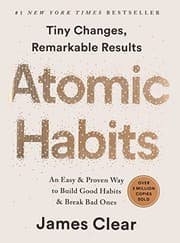
I, I am a loser. And w- what we're actually attacking is identity. Uh, and when we talk about identity, what we're talking about are, uh, the behaviors that accumulate in us that define who we are. Uh, and as James Clear talks about in his book, "Atomic Habits", is, you know, you're not gonna change your habits until you change your identity, which is the, the forward-leaning mindset part. A lot of...
Or the biggest challenge when it comes to iteration is the personal attachment to failure because you, you got something wrong. Um, and these are all, again, just, they're just biases. The, the survival mode is, well, you know, I, I need to be seen to be good at everything, uh, or else no one will follow me and help me kill mammoths and saber-toothed tigers. Yeah. Uh, there's a whole bunch of...
You kind of also mentioned as well the 120% goal, and I got 105. Like, I was just working with another, uh, you know, the biggest video conferencing company on the planet, and every year the finance team sets targets that are-- they never achieve. And then there's this perception that they do better each year, so it must be because we keep setting these unattainable targets. But the science is the opposite. The science says when you set an achievable target and you, uh, outperform it, then you get all this dopamine, oxytocin, serotonin, and endorphins in the body.
Like, we've, we've forgotten that, you know, you don't have to win massive all the time. You can win small. And when you set achievable goals, and then also set a stretch goal. So if I just, if I work at 60%, I achieve my d- I achieve my objective. But if I wanna unlock the extra 40, I go further, and you ride the energy and the positivity of the small win to get you to the stretch win.
Uh, 'cause no one likes to constantly lose. Uh, but that's what most businesses feel like because 90, 99% of programs run o- late and over budget. So we're always in crisis mode. Uh, we're always, you know, full of cortisol. We're-- As men, we're carrying bellies at the age of 40 and 50 'cause we're just holding on all our stress down there 'cause we've never set ourselves up to win.
Uh, so a big part of understanding ego is understanding how you see yourself. So again, if you look at those 400 missions, every one of them is incrementally more difficult than the one before. But through iteration, we've learned that, you know, fighter pilots can handle this l- rate of growth. Um, and that rate of growth is what we call pushing out the comfort zone. Uh, we don't operate outside the comfort zone, 'cause when you're outside the comfort zone, you experience what they call the amygdala hijack, uh, which is effectively the body th- thinks like an animal.
It doesn't think like an intelligent human. So when you're outside your comfort zone, your learning regresses rather than grows. So, so sometimes in a business you'll see organizations like, "Right. Let's embrace it, guys. Let's get outside our comfort zone."
It's like, okay, let's do that and go backwards. It's, it was a really great idea. What you wanna do, and, and let's go to the Little League, is how, how long is a Little League season? What? Three months?
Yeah. Ish. I mean, unfortunately, if you play travel baseball it's 12 months a year. But, uh, but yeah. They, they actually play games about three to...
Three, four months, depending on how the weather goes. Okay, so let's look at that. We've got 12 iterative cycles, right? Uh, within that, within that window. Within those 12 iterative cycles, we have, if you're a really motivated kid, seven cycles per 12.
Um, so, so a kid might need 12 things fixed on their, on their swing. So week one is just one, right? All right. It's bedded down. Hey, there's nothing wrong with bedding it down in three days and pulling things forward, is what we say in business.
It's like, there's nothing wrong with building a quarterly plan and then achieving stuff early and bringing it forward. What we don't want is a 12-month pla- 12-week plan where we're constantly late. Uh, and so, so f- uh, for example, let's use Afterburner. You know, about three weeks ago, uh, Google made the biggest change in search engine history when it went from SEO to generative engine optimization. So if you, if you google something now, the first thing you get is, is Gemini giving you an AI response.
So all-- Everyone on the planet has spent trillions of dollars building SEO content on their website to rank on a search engine. I was talking to Gemini about it when I read the news, and I'm like, "Oh, yeah, you know, SEO's still gonna work." And I'm like, "Hey, look. I'm a fighter pilot. We use nameless and rankless debriefing.
We want radical transparency and honesty. Tell me the absolute truth about this." And they're like, "It doesn't really work anymore when it comes to GEO." So we, we've, we set four iterative cycles, four weeks, to transform a 35,000-word website into a 650,000-word GEO-optimized website. There's an awful lot of other stuff we need to do in this business, but right now, everything else we've made a decision is going to suffer as a result of it.
Our revenue's gonna suffer, our, our bound's gonna suffer. Everything's gonna suffer. But if we try and do this and everything else, it's gonna suffer along with everything else a little bit later. On Friday, we finally launch our new GEO website, which we built with Gemini and Claude. We...
What better platforms to say, "Hey, people are gonna use you to find us. Write everything on our website that enables you to find us easily." Um, so it's, so, so, so this is the, the, the whole idea. Like, even within our, within our organization, Monday, Tuesday, Wednesday, Thursday, every day has a theme So if we, if we have a, um, if we wanna up- modify something on our CRM 'cause we discover it on a Monday, it just gets parked in our AI agent, and we come to it on Thursday, 'cause Thursday's our bottom funnel day. Tuesday's our top of funnel day.
Wednesday's our operational day. And Friday is the, "Hey, if we didn't, if we missed something on the other four days, we, we finish it off on Friday." So we, we every-- and every M- Monday, every Monday, Tuesday, Wednesday, Thursday, Friday morning, or Thursday, it's like, "Okay, what do we need-- what do you need to achieve by Friday?" And I don't have to run that as a leader. The team comes on, this is what I need to achieve by Friday, this is what I need to achieve by the end of the day.
That's how we talk. And at the end of the day, we debrief, and if we didn't achieve it, we're like, "Cool, is, does it go into Friday's bucket, or is it that urgent that we're gonna have to put in an extra hour tomorrow?" Or, "It's, it's that urgent. Okay, I'll get up at 5:00 instead of 6:00, and I'll do it." 'Cause that's my job as a leader. My, my job is to pick up the overflow, not to do the work.
So these, it's all these little w- w- I got diagnosed with ADHD three years ago, and I had to go through an assessment 'cause my son was struggling, uh, at school, and the school thought he had ADHD. And as part of their assessment, they're like, "We need both parents to go and get an ADHD assessment from a psych-- Not, not just a get online and do it online, you know, ADHD test, but do the self-assess test, go to a psychiatrist, and get a formal diagnosis." And both his mother and I have ADHD. So for the last three years, I've been a, uh, an avid student of ADHD. And what you learn about ADHD is, you're, you're not that different from everyone else.
There's just a few things that are amplified, so you learn a lot about how the brain works. And one of the, one of the interesting elements about the brain is that the way in which it structures time, uh, it, it c- it only has two buckets of time: now or later. So if we don't get intentional around later, we just end up with this big bucket full of later stuff, and now just becomes whatever's in front of me. There's no intentionality. So there's a really simple way, you know, even with your Little League team, is you can basically theme out the 12 weeks, and you can theme out each day, and you can theme out the homework for the kids. 'Cause what's gonna happen is they're gonna have a problem with their swing, and you're gonna focus on their, on their footwork, and then they're gonna go home to their dad, and their dad's gonna be talking about a whole bunch of other stuff.
So, you know, the, the true embodiment of a coach is not just coaching the player, it's coaching the environment that the player's in as well. Uh, so all of a sudden, it becomes a lot less stressful being a coach because you just let the, just let the position of the bat, "Hey, just let that fly. That's, that's week three. That's w- that's not even im- important right now." Right?
And hitting the ball and getting a home run, it's not even on the objective list right now. Because this kid, by Friday, I want you to explain to me in your own words what it feels like to be gripping the ground. And when you can explain that to me, that's the win for the week. And all of a sudden, the kid's like, "Whoa, I'm liberated from being the home run kid, and on Friday I can really feel my feet in the ground." Awesome.
Next week, we're gonna look at where you're holding the bat. It's very powerful when you bring intentionality to action, and when you start to be disciplined around how you allocate future time buckets. If the kid on Wednesday tells you, "Man, I'm gripping the ground," I'm going, "Okay, cool. Let's bring the bat swing bit forward." And that's where you're gonna-- That's how you tailor it, right?
Um, so f- fighter pilots, that's our DNA. There's not a hour of the day, there's not one minute of the day that isn't projected out to six months. So we know exactly what each mission needs to be, what the deliverable of the mission is be, how that accumulates into the competency of the squadron at the end of the six-monthly cycle. Uh, so every action within the mission delivers an objective that arrives the squadron at its destination at the end of a six-month cycle. That does not exist anywhere in the 30 years that we've worked with businesses, and I would challenge to think that apart from the Bezoses of the world, and the Federers, and the W- Serena and Venus Williams, that most of us just exist.
We don't bring awareness to time, and we don't bring awareness to intentional activity. We just do whatever we wanna do that's in front of-- And there's a study that proves this. Uh, back in 2014, there was a study called Just Think. And the premise of the study was if we put individuals in a white room with a white chair for six to 15 minutes, we wanna assess whether that's an enjoyable experience or not. So just be left with your thoughts.
And the study was a, a very broad spectrum of age groups from 18 to up, up to 80. And overwhelmingly, the response was m- mostly negative. It wasn't an enjoyable experience. So the psychologists thought, "Ah, it must be the environment. No one wants to sit in a white room and twiddle their thumbs for six minutes."
So they reset the study, and they got them to sit at home for the same time period. So everyone went through the t- through the study again. They sat, did nothing, and they didn't enjoy the experience any more or less than just sitting in the white room. And when they were reviewing each of the candidates on the study, one of the gentlemen admitted to cheating and turning on the television. So this gave them another thought, and they went back to the white room with a white chair, uh, and this time they said to everyone, "Look, we're gonna put a button on the table, and if you hit it, you're gonna get an electric shock.
How much would you pay us to not get an electric shock?" And the average was $5. I'll give you $5 to not shock me during this study. So they run the study again, and this time 67% of men and 25% of women gave themselves an electric shock rather than just sit there and think. And 17% of the people on the study hit it twice, and one guy hit it 190 times.
So, so what you, what you discover here is-- or what they discovered Was this propensity to be busy, even doing something harmful for yourself, rather than sit for six minutes and think. And this is the, this is the paradigm that we're trying to break with Afterburner and the work I'm doing, is bring awareness that busyness feels fulfilling. It feels like good work. But the reality is, the measurement is the result that you're delivering and achieving within time, within budget, without burning yourself out. Uh, so this awareness of missionization, of creating the long-term destination, the short-term objectives that drive the action, is what liberates us from that overwhelming sense of doing everything everywhere all the time, and really starts us to power through, through the work, and for the work to, to, to translate from meaningless work into meaningful activity.
Dude, I could talk to you all day long. I love this stuff. This is like a master class. Um, the book is coming out in September. I'm assuming pre-orders are up.
We can g- people can start ordering the book. Yeah, the pre-orders will be out in a, in a couple of weeks. Uh, again, we everything got shifted a month thanks to, uh, Google. Uh, so the, the pre, the pre-orders will be kicking off in July. Great.
Okay. We'll time this around the launch of the pre-orders so we make sure everyone who's listening... 'Cause I know, I know my audience is gonna be salivating to get more of you. So in the meantime, um, you know, w- pre-orders, we'll, we'll make sure we time it with the pre-orders. Where else can people connect, go deeper into their, your world? I know I have a lot of, uh, uh, corporates that listen that are gonna be very interested in Afterburner as well, and your work.
How do people get deeper into your world and follow along? There's really three channels. Just type my last name into Google, B-U-C-O-U-S-I-S. I'm kind of the only one out there. My website's callmeboo.com.
And, uh, my, uh, company, which is manned by over 25 phenomenal former fighter pilots, all of, from, from brigadier generals that worked in the White House all the way down to squadron commanders, uh, could, could come in, inspire your people to truly believe that there's this untapped potential in each of them, and that we can live an existence that embraces awareness, where we get more done, make more impact, and, and it takes less effort to get there. I absolutely love it. Thank you so much for sharing your time today. I appreciate the hell out of you and, um, I hope that we can have another conversation again in the future. This was phenomenal.
It'd be a pleasure, Ryan. Thanks for having me on the show. It's a real honor
Books from this episode