Hey. This is Michael Rosenbaum. Hey, guys. Tom Welling. Uh, look, we've both played heroes And, uh, we both played villains.
But in the real life, there are no reshoots, no stuntmen, or sequels. We all make mistakes. We're all human. Making one bad decision can not only land you in jail, but could also put yourself and other people around you in serious risk. Be smart, make a plan, catch a ride, stay put.
Don't let a high moment turn into a lifetime of regret. This holiday season, be your own hero. If you feel different, you drive different. Drive high, get a DUI. Paid for by NHTSA.
What is up? Welcome back to the show. We have a tremendous conversation for you with Nick McKinley. Nick is a Harvard graduate, a former military special operations, worked for a kinetic team at the CIA, and is now an entrepreneur with a spin. Nick is also the founder of deliverfund.org, which is a private nonprofit focused on stopping human trafficking, reducing human trafficking in the United States, in the world, by 80%.
And this is a topic that is near and dear to my heart. I'm a huge believer in the protection of our children and the development of our children, and the fact that the United States is the number one market for human and sex trafficking in the world is deplorable in the purest sense of that name. And specifically, Nick talks about how he was able to achieve the success of graduating from a university like Harvard, special operations, kinetic team at the CIA, and why he is applying all those skills, all that knowledge that he developed to fighting human and sex trafficking. Guys, I'm gonna have a link below to deliverfund.org. If this is something that you believe in, if you believe that it is our responsibility as Americans, as adults, to protect our children, then I highly recommend you scroll down, donate to deliverfund.org.
Uh, you can give-- You know, every dollar counts. You can give 10 bucks. It doesn't really matter. It takes two minutes to do, and we can start to fight, to fight back against this absolutely horrific activity that is happening in our country. This is an incredible episode.
Nick is just filled with knowledge and his achievement, and the way he describes what we can start doing to, to manifest the things in our life that we want to happen. This is one of those episodes, it's like, this is why I do this show. This is why I put the time in. This is why I create these episodes, is for these types of conversations, these types of missions, and I hope that you will take just the two minutes to scroll down or just type it in, deliverfund.org, donate today, and let's keep fighting human trafficking in this country. Guys, I give you Nick McKinley.
In a crude laboratory in the basement of his home. It is 3:00 AM, and I can't find- All right, man. Well, dude, Nick, it is awesome to have you on the show, dude. And I will tell you, like, I've had-- Dude, I've had close to 350 guests on this show over the last, you know, whatever, however many years, and you were one of the toughest to prepare for because of the breadth and depth of shit that you have done in your life. Now, before we went live, you referred to yourself as a nonlinear thinker, which speaks to my heart because it, you know, for any-- for the audience, they know I love bringing in all different people, right?
And you said something, and this is where I wanna start, like, your nonlinear thinking style, you know, allows you to examine questions such as, how do you go so impossibly big, right? That no one thinks it's possible. So I wanna start there. Like, how do you-- how do people grab this mindset? Because we know a large percentage of the population of people that are listening to this show right now have incredible talent, all the ability and means to make things happen, but they're stuck, and it's often because they're thinking too small.
So let's start at the biggest question, how do we make these incredibly big things happen? Purpose. It's that simple. When people are thinking too small, it's-- I would say it's usually because they're thinking about themselves, right? Their goal is like, "Oh, I wanna build the mastermind class that's gonna get me the freedom that I want, so that I can have the boat that I want, so that I can drop ship stuff from Alibaba on a beach somewhere while I drink my ti..."
Right? It's, it's I, I, I, I, I. God did not create us to serve ourselves, right? He created us to serve a greater purpose. And so it's, it's what I call the, the dragon that you are, that you are made to slay.
Like, what is the problem in the world? What is the problem in society? What is, what is the thing that just haunts you and bothers you? And, a- and, and that is, that is your purpose. That's what you were designed to do.
So I've been-- Uh, I, you know, do a lot of coaching of entrepreneurs and, and, um, you know, companies that I'm invested in and, and, uh, and work with venture capital firms for the, the leaders that they're, uh, investing in, right? 'Cause one of the best ways for them pro- to, to protect that investment is to make sure that the leader doesn't collapse- Yes ... under the weight of that investment. And so one of the questions that I, I like to ask all of these people is, what is the one thing that you would do if you were independently wealthy? And that usually starts an exercise of, they go through, "Well, like, oh man, I would retire my parents and I would, I would do this for this person and I would-- I've always wanted to travel," and okay. So they get, they get all the, like, me stuff outta the way. Like, great.
You've 48 months of playing around. You still have more money than any gen- any number of generations could ever spend. What are you gonna do with the rest of your life now? Because you can't just travel. You can't just sit on the beach your whole life.
I mean, I guess some people can, but, like, if, if you're one of those people, you should probably stop listening to this podcast right now, uh, because you're- Also, dude, those are the people who fall apart. Those are the ones- Absolutely ... that you read the stories about that become alcoholics or get drug addicted or do all this crazy stuff because they're lost, and it's like a ship at sea with no direction, right? I mean, that's, that's what happens if you don't find this purpose, right? Right. They're so internally focused.
So, so what is the problem? What is, what is the dragon that you're gonna go slay? So for me, it's commercial sex trafficking that, that, uh, of, uh, primarily of children. Like, that is, that is what I've focused on with my nonprofit companies. It's what I'm focused on, on my for-profit company.
Uh, it's a revenue generator there. It's a, uh, an industry, uh, a, a weapon for industry to actually wield against that dragon. Like, that, that's where I'm focused, right? And, and I think that's, that's it. You've got to find the purpose.
And, a- and you can't take steps, you can't create a framework, you can't do all of these things that people talk about that are downstream of purpose, right? Purpose is the glacier that is, that melts into the stream of your life. So what is that purpose? And that purpose better be bigger than yourself. Uh, and I think there, there are so many good examples of this, uh, that people look to.
And, and I'm not, I'm not saying that any of these people are obviously perfect, and they all have their own problems. But when you look to the Bezoses and you look to the Musks and the Steve Jobs and the people who've been hyper successful in business, I would even say Zuckerberg, right, as, as a great example, and the Google founders. When you look at them, what, what are they doing today? They're some of the richest people on the planet, wealthiest people on the planet. They have achieved the level of wealth that no measure of generations could ever spend, and what are they doing?
They're getting up every day, and they're going to work. Uh, a couple of billionaires I know are some of the hardest people, uh, some of the hardest working people I know. They have all of the wealth that they could possibly ever need, and yet they're still working 10 plus hours a day. And that's, a- and when you ask them why, it's because they have a goal and a singular purpose that they're focused on solving, right? So a billionaire that I know is investing in cancer treatments 'cause his mother died of cancer, and he's like, "It shouldn't be that way," and so he's just all in on biotech.
Um, another one that I know is, uh, really doesn't like the way that society is unfolding and, uh, and the divisions among, uh, among the people are unfolding and the things that media are doing. So he just was like, "You know what? Forget it. I'm worth $200 million. I'm gonna go create a new, uh, a new media company," and, and, and on and on.
And so that is, that really is what it comes down to, is just you've gotta find a dragon to slay and then start taking the steps required to go slay that dragon. Why do you think societally, at least a loud faction that looks at Bezos, Jobs, Musk, you know, and, and s- vilifies them for their continued pursuit at that mission? Is it, is it misunderstanding? Is it jealousy? Is it this kinda, is it just insecurity?
Is it a lack of education? Like, like, to me, I look at someone like, this is something that has bothered me a lot recently. 'Cause I look at Elon Musk, and, and maybe it's because I can detach some of his personality or life h- things that he, that make him who he is from all the good that this human being is creating in terms of, you know, you don't have to like all his products, but the dude is creating things that seemingly our society- He's executing. Yeah. Yep. Okay.
So, like, I look at that, and then you have people over here shouting about how he's a demon and he's Hitler and he's b- and I, I can't... A- and I'm usually pretty good at, at getting to the root of the psychology of where something comes from, and I have really struggled with this because I thought I had it figured out, and then every once in a while I'll get messages from people 'cause, you know, maybe I'll s- you know, sh- reshare something that I think he said that was good or whatever, and, and they'll be like, "Ba-" And I'm like, "I don't understand how you can see it that way." Like, what is going on with that mentality? Why are we s- why do we vilify, why is there such a vocal portion of our population that vilifies people who just push hard with purpose? Like, why is that so offensive to some people?
Because those people are the straight stick. And what I mean by that is the best way to point out that a stick is crooked is not to tell somebody that the stick is crooked. It's to lay a straight stick next to it. And oftentimes, those people are the straight stick who those folks then are confronted by the fact that they're not doing very much. And, and I've, I, I get terrible hate mail, um, f- and I've had, you know, some of the biggest players in the pornography industry spend hundreds of thousands of dollars trying to go after me personally, which I pers- I consider that a badge of honor.
That means that I'm getting the dragon's attention, and, uh, and the dragon doesn't like it, and that means I'm being effective. Because if you aren't getting attacked, if people aren't saying bad things about you, well guess what? You're probably not re- really being that effective. And there are so many people in our society who have just gotten so comfortable, and, like, that, that is their life's goal, right? They want to pursue their own comfort And that means that the people who are actively working to better society, now they may not necessarily agree with the way that they're actively working to better society, but all the same, people who are a- who are executing on that purpose, they're executing on the plan, they're, they're, they're very clearly putting their money where their mouth is, so to speak, that makes everybody else e- essentially look at themselves in the mirror and be confronted with the fact that they're not doing as much, or they're not executing on things.
And it is so much easier to destroy than it is to build. Mm. I mean, think about how fast, uh, how long it, it took to build the house that you're sitting in right now or the office that you're sitting in, right? To, to build this, this, this studio and, and the office building that I'm sitting in right now. I mean, it was probably years in the making.
Yet with some of the skills that I learned at the Central Intelligence Agency and in military special ops, I could level this building in a matter of minutes. And so it's so much easier to destroy. And so to destroy is the lazy man's path. Mm. To destroy is the, "Oh, well, this person is executing and building and doing all these things."
And so instead of just saying, "I don't agree with the way you do-- you're doing these things, so I'm gonna go build better," instead they say, "I don't... You're, you're a terrible human." When you can't attack the argument, you attack the person. And, and I think another part of this is that drive and intellect are not equally distributed. And I, I have no idea who said it.
It definitely wasn't wisdom coming from me. I stole this from somebody at some point, but, um, paraphrasing, somebody famous once said, uh, something to the tune of, "Stupid people talk about people, and intelligent people talk about ideas." Yeah. And so if you can't attack the idea because you can't intellectually hang, like, you, you intellectually can't attack the idea, then what are you gonna do? You're gonna attack the person.
I think you're right. I, I think that, you know, I, I-- When you dig into who puts these messages out about, you know, any of these individuals that are, that are creating and, and building and, and trying, trying, you know, like you said, you don't have to agree with their-- how they're going about it, but they are, they are purposefully efforting to try to make society better. When you see the people who are coming at them, none of them produce anything. Right. They just talk.
It's just talk. You are never gonna get hate from somebody who's- Yeah ... done more than you. Yeah. It always comes from the people who have done less than, than you. I mean, I, I have mentors that I surround myself with who, who will call balls and strikes and say, "Nick, uh, we don't think you should've done that.
You really screwed up here. Have you thought about doing this differently?" And, and, and I listen to them, and every single one of them is economies of scale more successful than I am. They've forgotten more about their levels of expertise than I will ever know. For the most part, probably better people than I could ever be.
And yet I, I learn from them and I listen to them, um, and never, never do I get s- do I get hate from those people. It's always from people who've done less. Uh, and I've had people attack me to say, "Oh, well, Nick was in special ops, but he didn't really do that much." I was like, "Okay. Well, I guess my 14 combat deployments didn't really count."
"Oh, well Nick was at the CIA, but, you know, it's not like he was really doing operations." "Okay. Well, I guess my 16 combat deployments there don't really count," right? "Well, Nick may have went to Harvard, but it was extension, so it doesn't really count." I'm like, "Oh, really?
I had to s- I had to pass the same test as everybody else to get in, right?" I mean, it's so... Well, yeah, Nick was an entrepreneur, and yeah, he's had this nonprofit that's been around for 10 years and one technology company, and now he's got another one and they're venture capital backed, but that's just because insert excuse on why I can't do the same thing. What they don't know is that I'm 47 years old. I've never had a vacation in my entire adult life, um, because I have just always been executing on, on the mission.
I have a few hobbies because it's kinda what you need for health, um, but that's the reason that I do them. Um, that or it's, you know, things that I'm gonna do with my kids and my family because that has to be mission number one. Yeah. But beyond that, it's like, no, like, what do I wanna do? Well, I've got, I've got half a day where I've got nothing to do?
Awesome. Um, I've got, I've got work to do because my goal is so impossibly big that there's no possible way that I will reach it if I don't continually work on it. Let's say someone is sitting here listening to this and has the self-awareness to say, "You know, maybe I have been... I've been a little critical. I've been a little snipey.
I've been a little, you know," insert critical, uh, from, and coming from a place of, of insecurity or et cetera, and, and they wanna start, but they would like to change this about themselves. How would you recommend someone who is like, "You know, I, I, I don't like this about myself. I hear what Nick's saying. I believe him. I, I don't wanna be this person.
I've kinda found myself in this place," how would you recommend someone start to work through maybe moving from a destruction mentality to a building mentality? Stop being who you are and start being who God designed you to be. Mm. See, we, we, we have this, uh, the, the, our two selves, and the, these two selves, if anybody is ever honest with themselves, um, they both exist, right? You have the good side of you and the bad side of you, and which side gets stronger?
The side that you feed. So, so it, it's, it's constantly trying to, um, become what, uh, Aristotle used the word pous, which, which basically means that, uh, it was used to describe a war horse, right? This extremely powerful horse that was, was trained and designed to run into battle and run people over and, and, right? It was a destruction machine. Yet That powerful horse was under the control of the rider.
And so the question is, what are you under control over, of, right? What has control of you? Um, I have zero social media apps on my phone. Um, those are on another phone. Yeah.
Uh, and the reason why is because I'm not gonna sit there and just scroll the, you know, doom scroll X or Instagram or any of these different platforms, uh, because I don't wanna feed that side of me. And the algorithms are going to... Like, like I know I can't defeat the algorithms, so the only way I can defeat those algorithms, uh, is to put it on something else so that the phone that I have with me all the time doesn't have any of that stuff on it. Uh, so, so taking deliberate steps to not be that person anymore, uh, if that makes sense, right? Yeah.
I mean, with, with the training I have from obviously special ops in the military, you know, a kinetic unit at the CIA, uh, one of the most selective units at the CIA, uh, I, I know how to destroy some things, uh, and I'm pretty good at it. But that was, that was the then me. The now me is building things, right? I'm building AI platforms. I'm building data sets for industry.
I'm building a nonprofit that is facilitating counter human trafficking operations for law enforcement at an extreme scale, uh, right? I'm building things. I'm trying to make the world a significantly better place. And what I used to do was primarily destruction related, but it was, the end goal was to make the world a, a safer place. Uh, whether or not we made the world better, history will tell.
Uh, but it was definitely to make the world a safer place in, in the short and, and, and medium term at least. Do you think you were a naturally disciplined person which made special ops and CIA work fit for you, or were, were-- did those organizations and your time inside of them help mold that discipline? It's a really interesting question. Uh, the special operations community has been spending billions of dollars over its lifetime trying to figure out that very question. How can you have somebody who has an absolutely terrible childhood and somebody who has a normal childhood and somebody who has an extraordinary childhood all end up graduating, and yet the same versions of those people also didn't graduate?
They've been trying to figure out that for years, and nobody, nobody really knows. Uh, I know for me, it, it has... You know, there's the guys like Jocko who like to talk about discipline and, and yeah, that's, that, that's a, that's a downstream effect of a decision. So when I went into pararescue, I knew that I had a, a 92% chance of not making it, right? Eight out of 100 people graduate statistically, at least at the time.
I have no idea what it is now. But I decided I was gonna be one of those eight. It's that simple. There was no motivation. There was no discipline.
It was no... I just decided I was gonna be one of those eight. Um, getting into the CIA, I just decided that I was gonna go work at the CIA. Getting into Harvard, I just decided I was gonna get into Harvard. And I think when you make the decision that something is going to happen, and you're not, you know, like, you're not jumping off a cliff deciding that you can suddenly fly, right?
It's, it's when you're, when you're doing things that are, that are logical and make sense. Uh, they may not make sense to the entire world, but they make sense to you. I think this is every entrepreneur's journey. Um, everybody thinks you're crazy until, until you're successful, and then they don't. So if you are just-- If you just decide that you're gonna go do something, then you will continually move your feet in that direction, and you'll stumble and you'll fall and you'll learn from those failures, and you'll get up and you'll do it again.
I think too many times when people quit, the people who quit in my special ops selection class or the guys who didn't make it in my CIA selection class, they all were people who hadn't really decided what it was that they were gonna do. They didn't decide for sure that they wanted to be in the Air Force special ops community. They hadn't decided for sure that they wanted to be in the, in the, at the Central Intelligence Agency. They were just kinda kicking the tires, and that, I think, is the primary reason why they failed. And I think it's the same thing for entrepreneurs.
Yeah, I, I completely agree with this mindset. Um, Co- Kobe's got a great, uh... He, he's, he said it a couple different times, so I'm paraphrasing now. But it's essentially once-- He had this philosophy, he didn't negotiate with himself, right? So once he made a decision, I'm going to insert whatever his goal was, whatever the things were he needed to do to hit that goal, he just simply didn't nego- He's like, he just turned off in his brain the, "Well, you know, I worked out yesterday, and I went a little hard yesterday, so today I'm gonna do ha-- I'm gonna, you know, dial it back a little."
It's like, no, I committed to two hours or whatever, you know, whatever it was, of this amount of work at this effort level every day or, you know, whatever the cadence was, and he simply didn't negotiate with himself. And I think, I think what I love about that is the simplicity of, of what you're saying and this idea of, like, just make a decision and then don't negotiate, because the path to being successful as an entrepreneur is fairly simple. It's incredibly difficult, but what you need to do when you ma-- Like, like, take, you know, take making the eight out of the hundred, um, uh, when you're getting into special ops, right? Like, I'm assuming the path is simple. Getting there is very difficult.
But, but what the... You know, just in your bra... I need to have this amount of, you know, aerobic fitness, this amount of strength. I need to know these skills. I need to perform these five things, you know, whatever they are, right?
Like, it's not like it's a secret what you need to do. But- You just need to be able to do these things. So it's like instead of constantly negotiating and trying to find a hack and a shortcut and a this, and, "Well, I'm good at this one. I don't necessarily have to be as good at this one." It's like, no, no.
Here's the five things you need to do to be- Mm-hmm ... to hit your goal. Do them. The pain, the difficulty is not in the things you need to do. It's consistently showing up to do the things. And I-- And s- And that's why there's 10 bazillion $27 courses that exist out there for all these random things, is because everyone's searching for this magical how to when you don't need the how to.
You're, you're gonna figure it out if you just show up every day and do the things that you know you need to do. It's, it's simple, just not easy, I guess. Does that make sense, my framing that properly? It, it makes absolute sense. And in fact, uh, I would, I would say it's so simple that people are skeptical of how simple it is.
You know what the number one thing you need to do to make it into a special ops program is? The number one thing that you need to do. No. Don't quit. Mm.
Yeah. What's the number one thing that an entrepreneur needs to do? Don't quit. You hear these entrepreneur stories and, "Oh, look at how this o- this person was successful overnight." They don't realize was that-- what people don't realize is they tried three companies before that, that all failed, and the fourth was an overnight success that took 11 years.
So, so not-- none of it... Like, I've never seen anybody who was an overnight success. You look at the, the, the work that Kobe put in. You look at the work that Tiger Woods or Michael Jordan or, uh, you know, any of these people put in, right? That Musk is putting in, that Bezos put in, that Jobs put in.
I mean, any of these folks. If you look at the work that they put in, then they just eventually started tripping over success. And, and-- But it's, it's-- They didn't quit, and they just continually advanced the ball. And I think part of the problem that we run into in the business and entrepreneurship community is that we get addicted to fighting battles. Mm.
So I just put out a, a, a substack on this very issue. Um, I put it on LinkedIn as well. It-- A- and I, I know this personally because in my old world as an operator, we were-- we, we got a kind of addicted to the fight. Yeah. We weren't really thinking about the strategic wins and what was going on.
All we knew was, "Hey, go to this country and go save good guys, kill bad guys, and do that on repeat." And, and so we-- It was, it was pretty binary because, okay, well, there's a certain set of skills that we need to be able to do that. Um, I do not need to understand computer science and AI to rescue good guys and kill bad guys. Super simple. But then at the CIA, things kind of changed, and it got a lot more strategic because now very, very small teams operating with virtually no supervision.
Um, and, and we were kind of able to do really whatever we wanted and kinda came up with our own mission. So suddenly the strategic objectives became extremely important because instead of having mishis ha- missions handed down from a, from a higher headquarters, we were, we were developing our own missions and, and doing our own work and deciding what it was we were gonna do, and the agency gave us all the rope in the world we wanted. However, they made it very clear that if we hung ourselves, they weren't gonna come cut us down. We had to start thinking more strategically. And while in my old world as an operator, right, the, the, the hard skills are a lot of fun, right?
The combatives and the CQB and the gun work, right? It's, it's all really fun. It's, it's fun stuff. But that's not what moves the needle strategically. It moves the needle tactically, and that's the foundation.
But suddenly I started saying, "Okay, I, I see where the future is going. I see where the-- I'm paying attention to the wars that are, that are r- rolling out around me. When I'm not on deployment, I'm gonna sign up for that computer science course. I'm gonna sign up to go learn that new data ana- analysis tool. I'm gonna go hang out with the nerds.
I'm gonna go check out, you know, 12 years ago, this, like, really cool technology called AI that they were rolling out," right? "I'm gonna go learn all that stuff." Well, here we are 12 years later after making those kinds of decisions, and the decisions that I made 12 years ago are what are informing what I do today. So people will say, "Well, oh yeah, Nick's this, like, you know, keyboard guy." But then the people who know me from the past are like, "Oh no, like, Nick's a shooter."
But then people who know me from undergrad are like, "Oh no, Nick was the, like, super nerd." Well, I'm actually all of those things. Every, e- each, just each one of those groups of people only got a slight window into who I was. And what that turned into was now I can, I can build whatever it is that I wanna build because I put in all the work 12 years ago, 22 years ago, maybe even 32 years ago to lead- The holidays are here, and that means it's the most wonderful time of the year to save with Rakuten. Use Rakuten to stack cash back from your favorite stores on top of holiday sales.
That's savings on savings. With Rakuten, you can get cash back on gifts for everyone on your list, from toys for the kids to kitchen gear for the person who loves to cook, to electronics for everyone. You can even save on something for yourself. Just shop the stores you love, and cash back is automatically added to your account. And you can get paid with gift cards, PayPal, or check.
Or eligible American Express card members can even choose to earn membership rewards instead of cash back. It's truly a no-brainer. Join for free today and get a new member bonus after minimum qualifying purchases. Just go to rakuten.com, download the app, or install the browser extension. That's R-A-K-U-T-E-N.
Terms and conditions apply Hear that? That's me in Tokyo learning to make sushi from a master. How did I get here? I invested wisely. Now the only thing I worry about is using too much wasabi.
Get where you're going with SPY, the world's most traded ETF. Getting there starts here with State Street Investment Management. Before investing, consider the fund's investment objectives, risks, charges, and expenses. Visit statestreet.com/im for prospectus containing this and other information. Read it carefully.
SPY is subject to risks similar to those of stocks. All ETFs are subject to risk, including possible loss of principal. Alps Distributors Inc., distributor. To the point that I'm at today, and I think the big problem that entrepreneurs run into or that their detractors, uh, run into is they don't wanna put in that work, and that's okay. We don't need everybody in the world to be launching rockets to Mars or trying to solve the commercial sex trafficking issue.
Um, we don't need everybody to be doing that. But don't demonize the people who are just because they're not living like you are. Yeah. And, and that's-- I'll be honest with you, that's why I do this show is, is I've always wanted it to be a home for unreasonable people to learn from other unreasonable people, right? Like, that's, that's the idea.
And 'cause-- and it came from, you know, my own journey as an entrepreneur and growing in my career and the various things that I've done. I've been referred to as unreasonable so many times. It was actually- Badge of honor, isn't it? It, it was actually on one of the letters when I was fired from a job was, um, you know, the, the-- Despite your performance, the unreasonable nature that you take with your team, you know, blah, blah, blah, blah, blah. And it's like, uh, so, so hitting the goals, happy team, those didn't matter.
It was that I didn't kowtow to the leadership with an unreasonable... Now, some of that is me learning and being immature, right? I probably could handle myself better at certain points. Right. But the other side of it was I also was keenly aware, coming from where I came from, you know, I grew up in a household where I was blessed with two loving parents, but we were-- we did not have anything.
I grew up in the middle of nowhere in a tiny town of nine hundred people with, you know-- I mean, like, we would get one new shirt and one new pair of pants for the whole school year, and you would just wear the shit from the last year with holes in it and stains and your one new stu- Like, that was how I grew up, right? So, like, I learned very early that looking around where every role model was either an alcoholic or a pothead or worse and, uh, you know, looking and going, "The only way out of here is to become a different version of-- than all these people, is to become this person who does different things, who does seemingly what they would consider unreasonable things, like not getting hammered every night and not, you know, being a freaking clown and not becoming a drug dealer." You know what I mean? Like, those-- It was unreasonable for me to, like, beyond, you know, being an athlete and focusing on getting good grades and go- You know, those were, like, unreasonable things at that time, which may sound crazy to some of you, but from where I came from, very, very unreasonable. And- Because you were the straight stick- Stick ... to that, to that community.
Yes. You were a reminder of what they could be, but they were choosing not to be. And for that reason, I literally talk to two people from high school for that exact reason, right? Now, I'm fine with that. That's not something that I even concern myself with, but, but it's, but it is an interesting thing.
And, and what I hear you saying is, like, look, like, these are all choices that we, we get in life to make. And I think what I, what I would hope people take from this, if you aren't willing to put in that extra effort, is be okay with where you are and the choices that you make. It-- Like you said, it's okay to say, "You know what I wanna do? At 4:30 every day, I want work to be done. I don't wanna think about it again.
I'm gonna hang out with my family, watch TV, Netflix with the spouse," you know, whatever, "and that's what I want my life to be." And it's like, there's no, there's, there's nothing wrong with that. Like- No ... God bless you for that. If that's what you want, great.
But what, what I, what I think where I do judge those people is in then turning around and vilifying those who say, "I'm going to, I'm going to see my kids less in exchange for this thing that I want to get done." That's the decision, that's the math they made. You don't have to agree with their math, but that's the decision they made. And I just-- What bothers me is that, uh, and, and is this idea that, like, you get to choose exactly who you wanna be, the life you wanna live, right? Your priorities exactly.
You're creating, you're building. That's great. But there's no reason for someone who chooses a different path to then tear you down 'cause your path is different. And I think that's where, from a communication standpoint, you know, our, our political class has completely lost their minds, so we can't even look to them anymore, you know? It's funny, I was talking to my kids the other day, um, I was at-- My kids play baseball, and I was talking to one of the other dads, and we were just kinda standing around before practice and, you know, everyone's just kinda getting their stuff together.
And, uh, I don't know how this came up, but I was like, "Remember when being the president..." Like, that's, that was, like, the highest goal. Like, when I was a kid and everyone's like, "What do you wanna be when you grow up?" Right? It was like, like, the, the really ambitious kids were like, "I wanna be the president."
Everyone was like, "Ooh, that's awesome. You wanna be the president?" They don't even think that way today. Like, our politicians have so lost that respect and that, that political kind of talking head class because of the nature of their communication and, and the, frankly, except for a few, none of them create or have created anything. Literally, it's just been these narratives.
Like, literally, the only thing they create is narratives that-- to try to get elected, and it's, it's, it's sad that we've, we've lost that. Um, but I wanna, I wanna, I wanna, uh, turn, turn a little bit to the, um, um, uh, to your fund and to the, to the work in sex trafficking. Where did this come from? Why did that become such a huge part of your mission? W- Like, where, where did this come from?
The short story is, uh, and I've told this, you know, a lot of times on, you know, podcasts like Patrick Bet-David and stuff in much longer form, um, is I am at the CIA, was working, uh, counterterrorism issues with a JSOC counterpart. We came across, uh, what I like to call smoking gun intel on a child trafficker that was moving children across the Afghanistan-Pakistan border, uh, and basically selling them for whatever reason. And, uh- We figured like, okay, we now know this intel. Trafficking isn't our mission. It's somebody else's mission.
We're gonna write this intel up. It's gonna go through the process and end up in the right person's hands. Well, it turned out there was no right person's hands for the intel to, uh, to land in, and that made me really curious. Uh, human trafficking wasn't, at the time, a, a mandatory presidential reporting requirement. I, I don't think it is still to this day.
And that got me really curious. And when you have access to systems at the Central Intelligence Agency, which like when you're at the CIA and you have the highest clearance that you can possibly get in the government, there's nothing that you can't reach down into. Now, if you start reaching down into classified programs that you have no business reaching down into, like some people are gonna come knock on your door and ask you some questions. But beyond that, uh, you can kinda get to anything that you need to get to. So I started hunting for who's got the ball on the human trafficking issue and is running it towards the end zone, and figured out that there was really nobody.
And, uh, that then led me kinda deeper into learning about human trafficking, and I learned that dollar for dollar, the largest human trafficking market in the world is the United States of America. And that just blew my mind because I was just still thinking that human trafficking was an over there issue, not an over here issue. What does that mean, we're the biggest human trafficker? Because, um, I was having a conversation- No, we're the biggest human trafficking market, as in we have the most customers and we spend, as a country, the most money on purchasing primarily children and young girls for sex. That is something that we, the United States of America, are the number one in the world on.
Trump mentioned that as one of the reasons why he wanted to shut down the border. And I had a friend of mine who's a Democrat reach out and say, you know, "This is another one of the ways that he deflects from, you know, his Nazi whatever." It was kinda crazy, but, but completely disregarding this idea of human track- trafficking. Mm-hmm. I think for a lot of, for a lot of like everyday Americans in particular, we see ourselves as the good guys, right?
And I had this conversation actually with my sister, who is slowly converting from a liberal to more conservative mindset. Um, it's only taken me 36 years, but I'm getting her there. Um, and, and I don't mean to be-- I, I actually don't necessarily align with the political parties because I think it's just- So you mean she has, she has kids and she pays taxes, meaning she's a fascist now. Well, she, she has a house and she's paying taxes now. She's still working on the kid.
It, uh- Funny how that happens. Yes. Yeah, but all of a sudden she buys a home and has to pay taxes and is slowly converting. Um, but I brought this issue up to her and I, you know, 'cause, 'cause she's a very thought- like she's one of those people who moved to the Democrat party because she's just got this enormous, like she's so caring, right? Sure.
Animals, children, she helps the disabled. She's a wonderful human being, like wonderful. Mm-hmm. And so like she struggles because she's always seen like this idea of, of... And, and I'm, I really don't wanna make this political, but like the left as being the, the good guys, right?
And you know, and I come back to her and I'm like, "There aren't good guy-- like you're thinking about it wrong. Like there's no good guys and bad guys." Like that's not necessarily how the world works. Like there are bad people who do evil things for sure, but we can't put them in these buckets. But I brought up the human trafficking, the sex trafficking as a, as an issue, and she was like, "No, that's not real.
That's all misinformation." Like where, where can, where-- like obviously I, I know you guy- have resources at DeliverFund, but like I, I-- how do we make this tangible for people to understand what is actually fucking... I mean, this is one of the most horrific things that happens in our world, right? Maybe, you know, uh, it, it certainly, it's there at the top level of horrific things that can possibly happen. Being fucking trafficked into this country and having to have sex as a minor or- Well- ... worse ... it, it's not even just being trafficked into the country.
So when I learned that human trafficking in the United States, right, dollar for dollar, largest human trafficking market in the world, my mind was blown 'cause I'm like, wait a minute. Here I am in Afghanistan, right? We, we can kill people with flying robots from 6,000 miles away, but we can't do anything about this like child trafficking issue? And I'm still thinking it's like, oh, it, it's coming across the border and things like that. And, and that does happen, right?
I mean, Trump is not wrong. Yeah. It does happen, and there are traffickers who come in here and they bring children with them, and they recycle children across the border and all that. But according to the DOJ, 86% of the victims in their cases are US citizens. Over 70% of the human traffickers are US citizens.
So whether it's traffickers coming across the border or it's traffickers who are already in our country, they're preying upon our children, and the reason why is because of the internet. I mean, in my day, um, you know, the creep, right, pre-internet, uh, the, the creepy guy on the wrong side of town, everybody knew keep your kids away from him. And the only gut peak- kids that he could abuse were really the kids that he could get access to, which were usually lower socioeconomic demographic, under-supervised, mom's working three jobs, no dad, right? I mean, the, the typical story. Now, because of the internet, um, and, you know, poverty being relative to what you compare it to, the girl with the $1,000 shoes in the private school is impoverished compared to the girls with the $2,000 shoes.
And so she gets on her phone because her parents are checked out, uh, right? Mom's on Xanax and wine, and dad is just working too much to, to be y- you know, to, to be, uh, relative r- you know, or to, to be a, a good influence in her life and understand what's going on. And so she gets on her phone and she makes a couple of bad decisions, uh, trying to get some extra money, and next thing you know, you have a girl who's being trafficked out of an $80,000 private school. That is a real story that we were involved in- Um, and she was going to school every day and being trafficked in the evening, and everybody just knew that her grades were suffering, and she was, she was getting y- you know, her mental health was, was getting worse, but nobody knew what was going on. So, so the internet gave all the predators access to every child in the country, and really around the world, who has, who, who has a smartphone or a gaming console.
Uh, we've got plenty of cases where that happened. And so that was my kind of epiphany as a CIA officer to say, "Wait a minute." Again, most powerful military, economic, and intelligence might the world has ever seen, and yet our own children are being trafficked? We gotta do something about this. And then that's where I took my skills, training, and created a fund, right, called DeliverFund, to be able to fund the equipping, training, and advising of, of law enforcement officers to help them be able to close human trafficking cases and find human traffickers and put them in bars, behind bars better, faster, and cheaper.
That was the overall goal, which obviously then also I have for-profit companies that, that build technology and, um, provide that technology to DeliverFund for free, and then DeliverFund has its own engineers that it's building technology. And so we have this, this consortium, right, this ecosystem for good that's all centered around this one problem of, of- Hear that? That's me in Tokyo learning to make sushi from a master. How did I get here? I invested wisely.
Now the only thing I worry about is using too much wasabi. Get where you're going with SPY, the world's most traded ETF. Getting there starts here with State Street Investment Management. Before investing, consider the fund's investment objectives, risks, charges, and expenses. Visit statestreet.com/im for prospectus containing this and other information.
Read it carefully. SPY is subject to risks similar to those of stocks. All ETFs are subject to risk, including possible loss of principal. ALPS Distributors Inc., distributor. This message comes from Alteryx.
Business breakthroughs aren't about more data. They're about getting your data ready to harness advanced analytics, custom models, AI, agentic futures, and more. Alteryx 1 makes that happen. Built for analysts, powered for the intelligent enterprise. Connect data from anywhere, automate analytics, and turn insight into action with speed.
User-focused, secure, scalable. That's Alteryx 1, trusted by nearly half of Global 2000 companies. Visit alteryx.com to learn more. Fighting child sex trafficking in the United States of America, which, which then translates to other Western countries. And so that was kind of the origin story, and that I think is the thing that people need to understand is trafficking is not predominantly a border issue.
It is connected to the border. I'm not saying it's not. But predominantly, it's the trafficker from LA who's moving through Oklahoma on his way to Chicago who, who has been targeting a couple of 14-year-old girls in rural America and grabs them, drugs them, takes them to Chicago, and starts selling them. That's human trafficking in America. I don't think people know that.
I mean, honestly- No ... what you just said, I mean, this is something that I've even looked into. I had no idea that this was predominantly a, a inside the States issue. Why, why is this not, like, why is this not the most unified topic? Like, like, I-- Like, when the movie, and I cannot believe that I'm forgetting the name of the movie that came out about the guy that went down to Mexico- It's a fiction. Yeah.
It's all, it's all come out in the media that that movie was a fiction. But it, it, it, it at least helped to shine a little bit of a spotlight on, uh- But it wasn't a unifying topic. Even, even if it, even if it's a whole fiction just to bring awareness to the topic, right? Like, even, you know, that being true, how it... That movie got immense hate, and I'm like, I just can't wrap my head around it.
I mean, this seems like the most unifying topic that should exist. We do not want our children to be sex trafficked. Full stop. Like, yeah, full stop. Who-- Like, you would think everyone would be kumbaya, arms locked, like, "Let's find these people.
Let's go frigging get 'em." Like, like, I, I, I can't understand. Like, what is the counterargument? Why, why, why do you, why is it not... You know, and maybe I'm sure you w- have politicians that are behind what you're doing and helping you at some level, but, like, how is our political class not just like, "This has to end, period.
Let's go get 'em"? Like, there-- we can have a war on, on drugs and marijuana, but we can't- Yeah. Ozark one. We can't, we can't have a war on kids getting trafficked? Like, I don't, I don't understand the mentality.
Like, what is the counterargument to what you're saying? How could anyone push back against this? Well, think about this. We have a drug enforcement agency, yet 90% of drugs are actually legal. 90% of the drugs that they enforce are actually legal, and so we have a entire multi-billion dollar agency that's focused around the illicit sale of legal commodities, by and large.
Fentanyl is legal, right? I've got some kidney disease because of some, you know, stuff that happened to me when I was in the military and the CIA, and so I have to go in for these, like, surgeries and stuff. They give me fentanyl. Uh, right? It's hyper useful.
When you look at the Bureau of Alcohol, Tobacco and Firearms, alcohol, tobacco, and firearms are all legal. One of those, firearms, is actually a constitutionally protected commodity, yet we have this entire bureaucracy that spends billions of dollars fighting what is the illicit sale of those legal commodities. 100% of human slavery, which is what we're talking about when we talk about, you know, sex trafficking, is we're talking about people who are being enslaved and then forced to do these things. 100% of human slavery is illegal per the 13th Amendment, and yet we don't have a single, a, a singularly focused agency on human trafficking, and that's not to take away from those agencies. Department of Homeland Security, the DOJ, the FBI, they are, they're doing the absolute best that they can, right?
But the major majority of the heavy lifting in law enforcement goes to state and local law enforcement officers. When was the last time you were pulled over by an FBI agent for speeding? Right? And so it's those state and local law enforcement officers that are doing the heavy lifting, and they have no resources, no anything. And I think there's a, a large part of the reason for this is that there's a massive overlap, and I do mean massive overlap.
And a lot of your com- a lot of your male listeners are about to get real uncomfortable, which means I'm doing my job. Um, a massive overlap between human trafficking and strip clubs- Mm ... and pornography. So if you have an OnlyFans, uh, uh, if, if you're one of these guys who participates in, like, OnlyFans and Pornhub and things like that, there is a, a... And you, you do it regularly, there is virtually a, a... It's not a non-zero chance, but it's a very, very small chance that you have actually fed money into the human trafficking market.
Hmm. Um, you, you have these, uh, you know... And, and so the guy who likes to go to the strip clubs doesn't wanna hear that, and so of course just puts it out of his mind. Never mind the fact that we have data, we have photos, we have indisputable proof that this is happening. Um, there's this incredible book about Pornhub and the, the, the, like, absolute evil that happens on that platform called, called Takedown.
Uh, Lila McElwee, absolute hero, um, for the work that she did in helping to take, uh, a lot of the child pornography off of Pornhub, and a lot of the rape videos and things like that, like, and a lot of the trafficking videos. When you have these parts of our society that are the over-sexualization of our society, that are treating women and girls as commodities, and then you have predominantly men... And again, I said we are the largest human trafficking market in the world, which means that statistically 30% of the men who are listening to this right now are engaged in those activities, and they like those activities. And so they don't want somebody coming along and telling the truth about those activities. That's why we get so much pushback.
And as soon as I see what... It, it's really funny. When I go to talk to groups of, you know, donors or investors or whoever about the, about the human trafficking issue, inevitably I'll have one or two men come up to me and be like, "But human trafficking is- isn't that, like, isn't that the oldest trade in the world?" And I go, "That's interesting. I was talking about human trafficking and you brought up prostitution."
You just told me everything I need to know about you- Yeah ... and what you're into and what, and the types of things that you like, and why men like me are, are extremely confronting. And this gets back to the, the slaying the dragons, so to speak, right? It's why I personally absolutely hate the existence of, of the things that people like, like Andrew and Tristan Tate say, right? They're like, "Oh, women are property." I mean, they, there's...
That, that's undeniable. Like, like, they have... They've said that in text messages. Like, we have that in court documents. And yet they, like, they, the, the way that, that they are training other men is absolutely reprehensible.
Um, and what I find is that the men that they're training are living in their mom's basement. They don't have the courage to go volunteer for the military, much less special ops. They're not gonna go try to get into a good university. They're not gonna try to go to the CIA. They're not gonna actually try to go slay a dragon, and they're basically perpetual victims.
So I think the men listening g- have a choice to make. It's like, are you a perpetual victim and you're like, "Well, I can't get a girlfriend and so I'm gonna go do this porn thing or this strip club thing, or I'm gonna go visit this woman who's a prostitute," which by the way, about 80% of what you think is prostitution is actually human trafficking by the best data that we can find. Or are you just gonna pull yourself up by your bootstraps and make a decision that you're gonna go be a better man? And the reason I really focus on men here is because that human trafficking market, it's supply and demand generated, and the demand is generated by men. If men didn't want the product, there would be no market and they would sell, they would try to sell the product someplace else.
I mean, that's, that's, that's how it works. I mean, it, it, the demand drives itself. So if, if men like us- Yeah ... don't stand up to the men who are creating the demand, then what, what are- Yeah ... I mean, what are w- what are we really standing for? Dude, this is why I was so excited to have you on the show because, like, these are the kind of things that just drive me absolutely crazy.
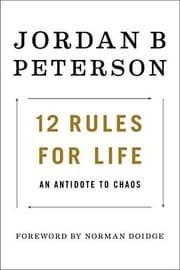
Um, you know, I'm a firm... I'm a, I'm a huge fan of, of Jordan Peterson and his mindset and the way- Sure ... he approaches things. And he has this mentality, uh, act as if, right? And it started out of his belief in God. When he first started, I, I found Jordan Peterson, uh, before "12 Rules for Life," which was a book that changed my life.
But I found him because he did a 17-episode series on Genesis, right? So where he breaks down- Okay ... an hour and a half chunk. It, dude, it's phenomenal. Cool. I'll, I'll go check that out.
Yeah. Highly recommend. You gotta go way back in his archive, but you'll find it. It's 17 episodes. It's long.
But he, he approaches it from a very pragmatic standpoint. And, you know, and he, what he says is, 'cause at the time he didn't, he wasn't... He believed in the lessons, but hadn't necessarily, um, hadn't necessarily figured out his true relationship to God. So people would ask him all the time, at that time, this is like 2015, 2016, um, they, he got asked a bunch, uh, you know, "Do you believe in God?" He would get that question constantly.
And he said, "What I believe is the Bible is the best set of rules for living a purpose-driven, fulfilled life. That's what I believe it to be." He goes, "And my relat- and, and how I approach God is I don't..." He goes, "I don't know if he exists or not, but I act as if he does." And he says, "What that does is it, is what I know, what I know that's going to do mentally is push me in the direction to believing.
I will believe at some point as I act through the lessons that Jesus taught us, right? So, so, so I think it's a wonderful mindset. So what I try to coach people, and I talk about on the show too, is like, "Okay, you're not that thing today. You're not the guy that can go to a, go to a, a community event and introduce yourself to a girl and have her be interested. You, you're not that guy today."
Okay. The only option you have is to act as if you were. Right. That's it. Just go act- Right ... as if you were that guy.
You don't have to be that guy. Pretend. Go pretend to be that guy, and what's gonna happen is the more you pretend to be a fit guy, to be a guy that doesn't, you know, waste time on porno or wa- waste time on social media, right? The more you act as the person that you would like yourself to be, surprisingly and shockingly, you eventually become that person. It's- Right ... it may start as an act, and this goes the same for entrepreneurs, right?
You might not know what the you're doing, but if you act as an entrepreneur, act, solving problems, working through things, persi- all the sudden you wake up one day and you're like, "Holy , I'm like an entrepreneur that, like, builds stuff and runs companies," and, you know, all of a sudden you wake up and you're that thing. And, but sorry for that diatribe, but like- It's, it's the whole fake it till you make it thing. Like, when, when I hear people say fake it till you make it, I'm like, no, that, that's, that's, that's completely wrong. You shouldn't fake it till you make it. What you should do is you should do exactly what it is that you're saying, Ryan, right?
You should act as if you are that person, right? And that's what I'm talking about is, like... So to decide I am an entrepreneur, right? We go all the way back to the beginning, we said, like, what, what's the secret, right? It's, it's you find purpose and then you decide that you're gonna act on that purpose.
It's that simple. And so once you decide I am an entrepreneur, well, that doesn't make you an entrepreneur, right? But you're going to now s- if you start taking the steps to become an entrepreneur, then you will eventually morph into that person. Um, and if you decide I'm gonna have a strong marriage, does that mean... And you know, let's just say your marriage is falling apart, right, and everything's going bad.
I decide I'm gonna have a strong marriage. Does that mean that you'll be successful? No. It's the same thing as deciding that you're gonna be an entrepreneur or deciding that I'm gonna reduce commercial sex trafficking by 80%. When I tell people that, they're like, "You are grandiose and crazy."
And I say, "Thank you." Right? Um, in fact, if you go to my website, which is just Nick, N-I-C, mckinley.com/10points, I actually lay out in explicit detail to include Markov chain models, right? So, so math models on exactly why I believe that, that I can accomplish this, right? And it's not me, right?
That, that we collectively can accomplish this. Um, and I put it out there publicly, which is probably sca- I, I mean, getting shot at actually isn't all that scary, um, when you've done it enough times. But, but for most people, like, that would probably be really scary. Um, it's putting out something that public is actually scarier because it's like, all right, I am putting out a manifesto that I'm gonna stand on and I'm telling the world what my purpose is and, and, and I'm driving towards this purpose. Does it mean I'll reach that goal?
No. But what if I manage to, and we manage to collectively reduce commercial sex trafficking by 80 or by 60%? We don't make the 80%. That's a huge win. Yes.
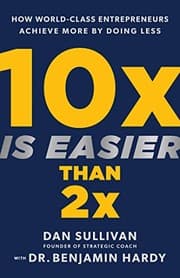
Let's do that. All the way back to the first point, if you... And, and there's a, there's a book behind me that was written that kinda shares this too, 10X Is Easier Than 2X. If you shoot for the massive goal, the massive, ridiculous, unbelievable, unacceptable, unreasonable goal, and you miss, you still have an enormous win. But if you shoot for what you think is possible and you miss, you're still unsatisfied, you're still unfulfilled, you feel like a loser.
It's, it, it... And, and the, the decisions become clearer, right? With, with, with that goal that you set, there's, like, one path to getting that done, right? Like, yeah, I have to do this and I have to raise this and we need this technology and I need these three groups on board and blah, blah, blah. You're like, there is one path to hit that goal, and now you know exactly what you need to do versus, you know, the, the people who wake up every day and, and earlier in my life, I'm just as guilty of this as anybody, where you have, like, seven things and your goals aren't that big so you're not really sure what to do every day, so you start spending your time on, you know, tasks that don't add value.
And, uh, I, dude, I, I could talk to you all frigging day, Nick. I, I absolutely love this. We're gonna have links to, um, DeliverFund. We're gonna have links to your website in the description. Whether you're watching on YouTube or listening, just scroll down.
You'll find that stuff. And, uh, my man, I, I want, uh, this show to be a supporter of DeliverFund, so I'm gonna work- Well, thank you ... with you after we get done, uh, offline and figure out ways that we can kinda build helping push people 'cause this is something that's near and dear to my heart. I'm an-- I coach all my kids' sports teams. I'm heavily involved. That's kinda...
Kids, our kids are so incredibly important to the security and sanctity of this country, and it's our, our, our, our, our God-given responsibility to protect them, and I think, uh, the work you're doing is absolutely incredible. I couldn't be more honored to be on the show, man. So, uh, any other places, any other final place that you'd like to send people if they just wanna get involved in your world? Uh, if you just go to my website and go to the Mission tab, you'll see all the different things I'm involved in. Uh, my data and AI company, so if you're a for-profit company, uh, we can actually help you make sure that, that human traffickers are not using your platforms because they use all the platforms we use for business, right?
Um, if you are a, uh, y- you know, if you're a law en- if you're in law enforcement or a prosecutor or part of that chain, we are more than ha- uh, happy. DeliverFund will provide you, equip, train, and advise you with everything you need to include case data and intelligence. Uh, that's all free for you. Uh, if you're a donor and this resonates with you, uh, you can go right to that Mission tab and you can find information about DeliverFund, and you can, you can make a donation there. We are solely, uh, funded right now by, by the generosity of donors, so all of this, like, Doge cutting and stuff like that doesn't affect us one bit.
We are, we are moving forward with the mission as strong as we ever have. Um, and then if you just wanna learn more about me or, or you can find me on all the social platforms at TheNickMcKinley, and again, my website is Nick, N-I-C, mckinley.com. Appreciate you, man. Thank you so much. Thank you.
In a crude laboratory in the basement of his home. It is 3:00 AM, and I can't find- Hear that? That's me in Tokyo learning to make sushi from a master. How did I get here? I invested wisely.
Now the only thing I worry about is using too much wasabi. Get where you're going with SPY, the world's most traded ETF. Getting there starts here with State Street Investment Management. Before investing, consider the fund's investment objectives, risks, charges, and expenses. Visit statestreet.com/im for prospectus containing this and other information.
Read it carefully. SPY is subject to risks similar to those of stocks. All ETFs are subject to risk including possible loss of principal. ALPS Distributors Inc., distributor. This message comes from Alteryx.
Data's scattered. Tech stacks are disjointed. Teams are out of sync. Alteryx One brings it all together on a single platform where data, analytics, and automation move as one so your organization can too. Meet the intelligent enterprise at alteryx.com