Hiring isn't just about finding someone willing to take the job. You need the right person with the right background who can move your business forward. If you want candidates who truly match what you're looking for, trust Indeed Sponsored Jobs. With Indeed Sponsored Jobs, your post stands out to quality candidates who actually fit the role. According to Indeed data, 90% are more likely to be hired and trusted by 1.6 million companies.
Spend more time interviewing candidates who check all your boxes. Less stress, less time, more results now with Indeed Sponsored Jobs. And listeners of this show will get a $75 sponsored job credit to help your job get the premium status it deserves at indeed.com/podcats13. Just go to indeed.com/podcats13 right now and support our show by saying you heard about Indeed on this podcast. Indeed.com/podcats13.
Terms and conditions apply. Hiring? Do it the right way with Indeed. I'm here on the job site with Dale, who's a framing contractor. Hey, good morning.
Dale traded up to GEICO Commercial Auto Insurance for all his business vehicles. We're here where he needs us most. Yep, they sure are. We make it easy for him to save on all his insurance needs, all in one place, with coverage that fits his business and bottom line. Oh, I shouldn't have looked down.
It's all right. We're, we're so far up here. Look at me. Take a deep breath. No, I'm good.
S- so good. Get a commercial auto insurance quote today at geico.com and see how much you could save. Get more with GEICO. Happy holidays. Want to give your host a gift?
Consider subscribing, rating, and reviewing the show this holiday season. It really helps the show grow. From all of us at Believe, have a merry Christmas, everyone, and a happy holiday. Hello, everyone, and welcome back to the show. We have a treat for you today.
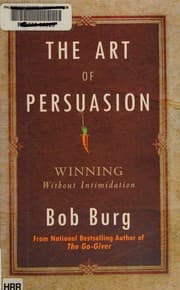
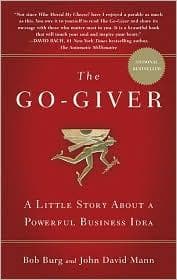
Bob Burg, author of The Go-Giver and the entire Go-Giver series, as well as The Art of Persuasion, world-class international speaker, tremendous thought leader on personal development and peak performance and leadership and communication, shares his thoughts on authenticity, community, and why so much of our anxiety, stress, depression is a result of trying to align our values with someone else's. And this concept, dig in, friends. Dig in. If you're driving, if you're on the treadmill, y- you know, you're gonna wanna come back and take notes on this episode. I took, while I was listening to Bob , I took an entire two pages of notes on just all the ideas that he throws out in our conversation.
You're gonna love this one. I appreciate Bob for giving us his time and his just, just these, these nuggets, these insights that just absolutely grabbed me. I know they'll grab you. Uh, uh, with no further ado, my friends, Bob Burg. In a crude laboratory in the basement of his home.
Bob, it's great to have you on the show. I appreciate your time, man. Oh, my absolute pleasure. Thanks for having me. All right, well, I wanna get right into it, and like, uh, most business-minded individuals, I have read The Go-Giver, and there has been- Oh, thank you ... one particular law of that book that I have always wanted to ask you about since the first time that I read it.
And, uh, it's law number four, the law about authenticity. Okay. And, and the reason is I get, because, because I create online, I'm sure you do too, I get a lot of people who will reach out to me about, um, uh, "My message isn't connecting online. My message isn't connecting with my team. My message isn't connecting," and I, I will point them to your book and, and th- your, this particular law and this section about authenticity and really try to drive into are you trying to play a role or are- Mm ... you being true to yourself?
And I would love for you to maybe just expound a- a- as much as you can or are willing on w- why authenticity, especially in today's environment with so much communication hitting people, is, is, is paramount to being successful i- in our communication. Yeah. No, that's a, that's a, a great question. I appreciate that. So, so law number four, the law of authenticity, says the most valuable gift you have to offer is yourself.
And i- in this part of the story, uh, Debra, the mentor in that part, s- uh, made the statement that, you know, all the, the skills in the world, the sales skills, technical skills, people skills, uh, as important as they are, and they are indeed very, very important, they're also all for naught if you don't come at it from your true, authentic core. But when you do, people feel good about you. They feel comfortable with you. They feel safe with you. And why wouldn't they?
They know who they're getting. There's a consistency there. And you know, Robert Cialdini, in his wonderful book, Influence: The Psychology of Persuasion, which he had just updated, uh, revised a few years ago, um, uh, you know, he talks about the, uh, about consistency being such a, an important part of human nature, and it, it dates back to the caveperson days, right? When everything was a matter of life. Every day was surviving the day.
Yeah. So consistency was key, right? Uh, you had to know who in your tribe of 200 people had your back and who might club you in the back, right? You had to know what the sounds in the distance meant. You had to know what the bent twigs meant and the footprints, and it had to be consistent, had to be the same.
And so, so, you know, when we are ourselves- We tend to be very consistent. People know who they're getting. Now, uh, there's, there's a couple of things here though, and I, I think that, that perhaps since, um, social media has become so prolific, I think the, uh, the definition of authenticity has almost changed, and I, I think in a, in a false way, uh, if I, if I may suggest. And here, here's what I mean. Authenticity now seems to mean no boundaries.
Just say or do whatever you want. Y- you know, use whatever language you want, insult people if you... You know, this, that, whatever you want because, well, you're being yourself. You're authentic. Uh, and I, you know, Ryan, I respectfully disagree with that.
Uh, I believe this is sort of like the person who says, "Well, I have anger issues, and I yell at people a lot, and if I were to act any differently, that wouldn't be authentic of me." And I, and I think that's, uh, really a bunch of baloney, right? Uh, it simply means this person has an authentic problem, uh, that they need to authentically work on in order to become a better, higher, more effective authentic version of themselves. Um, so I... We, we never want authenticity to be confused with or an excuse for not growing, right?
Uh, not bettering ourselves, but instead as motivation or impetus to become a, you know, a higher version. Now, with social media as well, it's also, and this is a good thing, a lot more difficult to hide your authentic self. So if someone doesn't show up authentically, that's gonna come back to, to haunt them. Now, let's answer the question, why do some people not show up authentically, right? If it's been proven to be so, so helpful in business.
And we might think it's, well, because the person's phony, or they're trying to pull one over on everybody, or they're... Well, it's a big world. There's lots of people out there, so there's always some who are like that. But I don't think that's usually it. I really believe that when someone does not show up authentic, uh, but instead comes across as a, I guess the correct Latin term would be phonus balonus.
Uh, it's typically because they just don't have the self-confidence- Hmm ... to show up authentically. In other words, it's difficult to show up authentically when you don't feel you have anything worthy of showing up authentically for. Um, this comes down to how we value ourselves, right? And it can be very difficult for people to recognize their, their value. Uh, I believe we all have two types of value.
We have, um, a intrinsic value just by the nature of being a human being. Being here, we, we bring value to the table. That's intrinsic value. But we also have what I call market value, and I define market value as that combination of strengths, traits, talents, and characteristics that allow us to add value to others, to the marketplace, in such a way that we will be rewarded for it financially and, and otherwise. The challenge is it can be very difficult to understand those as- and to recognize and embrace those assets of value we, we, we have.
Why? 'Cause we're human beings, and it's re- we're too emotionally close to ourselves. You know, we see a lot of our, uh, somebody... Mark Sanborn, a, a great, great speaker and, and author, once said to me, "You know, Bob, we tend to look at other people, uh, other people's highlight reels and our blooper tapes." And I, and I think that's, you know, so important. So we tend to devalue ourselves sometimes if we don't...
And that's, you know, when we, when we don't really have that self-confidence and recognize the, the, those assets of value we have. So I think it's important to get with someone who cares about us but is not so emotionally close to us as well, so that they can really see objectively what we really have. But once we know that, now we can connect better with people. So the people who ask that question, "Well, you know, it's, it's not connecting," well, they're probably not really... They're, they're maybe trying to, to, to almost imitate, if you will- Mm-hmm ... somebody else's style, right?
Who they like, you know, who they see as successful, and it just doesn't work. So in order to really be authentic successfully, we need to understand the authentic value that we bring to the table. Do you... Okay. So when we're giving feedback as leaders, uh, one of the things that I've heard from many, many executives, many leaders today is, "I'm, I'm giving my team feedback, and they're not...
It doesn't seem... They don't wanna hear it." It, and, and, and hearing your response, that, and the way you define authenticity and the way you talk through that, it made me think about if that leader, if that individual, if they haven't been authentic in what they want and who they are, maybe in some of the places where they're deficient, if they're trying to play a role or mimic what they believe a leader should be or should look like, then that person, it's gonna be harder for that individual to hear them because they're not sure they can trust that feedback. Does that, does that resonate? Is that- It, it, it does.
And for feedback to happen... And by the way, you know, I, I would say if, if we were gonna have one underlying definition of authenticity, it m- perha- perhaps it would be acting congruently with one's values Right? So if we're acting congruently with our values, we're always on the right track and we are being authentic. Now, that doesn't mean the values that we think we should have or that the world tells us that we should have, or even people who, who love us tell us we should have, or what we, what we wish we had, but the actual values that we hold. Okay?
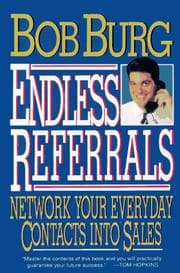
Uh, when we're acting congruently with those, we are, uh, by the very nature, by the very definition of the thing, we are being authentic. Now, as a leader, when you, when you see someone who you're leading who is not doing that, you know, that's where, uh, that's where you have to step in. But then your question becomes, well, what if that person is sort of defensive, uh, just is not open to it, is... This is really where the relationship comes into play. You know, one thing I've been saying, and I said it in my, my first book, Endless Referrals, back in the mid-'90s, we, we have it in the Go-Giver, and ev- everything I write kind of makes its way in there, and that is this: all things being equal, people will do business with and refer business to those people they know, like, and trust.
Well, all things being equal, people will also follow those people they know, like, and trust, and be able to accept counseling, coaching, teaching, mentorship from those people they know, like, and trust. And that's why that relationship's so very important when it comes to working with someone, helping someone. And when that person understands and they know that you have their wellbeing at heart, that you're providing these suggestions because you genuinely care about them. And now, that doesn't mean you don't have to be tactful, as you say. You do.
You still do need to. You need to let them know how, uh, you know, how much you believe in them, uh, how much you admire about them, and would you mind if I shared something with you that I think could take your, your effectiveness from this level to maybe the next level, you know? And when you do it that way, uh, this person, again, they feel safe with you. They feel safe because you're not putting them down. You're not saying, "Hey, you're really blowing it.
You're really doing something wrong. You're, you're not being yourself, and that's taking away your credibil-," you know, that's gonna cause a person to def- be defensive no matter, uh, you know, how much they know, like, and trust you. But when you let... But when they know you have their wellbeing at heart and you frame it in such a way that it's more that you're just trying to help them move from where they already are to where you know they can be, uh, they're much more likely to be receptive. It feels today like so many people are fearful of, i- in your words, being congruent to their values.
And a lot of this, you know... I, I'll give you an example. I, and not to be political, but I had a Trump sign out in front of my house since August. Are you tired of endless follow-ups and missed opportunities in your sales process? Chasing leads is a losing game.
That's why I created the One Call Close system, a battle-tested sales system that uses behavioral psychology to close deals in just one call. No more, "Let me think about it." No more, "I'll get back to you." Using the One Call Close system, we took new reps from 25% close ratio to over 80% in just three months. To grow fast, you must close deals faster at zero extra marketing cost.
The One Call Close system allows you and your reps to build trust, address pain points, all while watching your revenue skyrocket. Ready to stop chasing leads and start closing? Visit masteroftheclose.com today. Close twice as many deals this time next week. Visit masteroftheclose.com to learn how.
It is what it is. Whatever. Okay? I have no problem being who I am and, and showcasing that for whatever reasons I feel necessary to do that. Yeah.
What's interesting to me is that I assumed that thing would get egged, stolen, ripped up, and I would have to buy like seven of them before the election came. That was my... I live in New York. That's what I assumed would happen. Oh, boy.
Yeah. It didn't happen. It didn't happen. I, I'm kind of surprised. What actually...
Yeah. What actually happened- Because you see that all over. Yeah ... yeah, yeah. What actually happened was I had no less than a dozen of my neighbors come up to me and say, "Your..." And this is the first time it happened.
I was really nervous, right? Yeah. Uh, neighbor comes up and she says, "Your sign," and she kind of points at the sign in the lawn. And I go, "Yeah?" You know?
I'm like, am I about to get, like, yelled at for it? And she goes, "I love your sign." And I said, "Oh, thank you." And she goes, "Man, I wish, I w- I wish, I wish I could do that." And I was...
And it, like... And I just said, "Well, you know, I... Maybe I'm just a jerk or it's my Irish heritage, or I, I don't know. Whatever it is, you know, I, I don't care." But, but it...
But all... But I'm telling you, no less than a dozen neighbors came up and said almost the exact same thing. Mm-hmm. And it really, I started to think about it and go, they're... They all said almost the same term.
"I wish-" Wish ..."I could do that." And it, and it, and in hearing you, you know, I hadn't planned to tell you this story, but, like, in hearing what you're saying, it... You know, they, they felt fear of being- Well, sure ... of sharing what their value structure was. And, and I don't... We don't have to make this political, but I do think that this is something that's really made its way into our society.
Do you think it's a lack of confidence, as you stated, alone or do you think there are other factors as well that play into our fear of being congruent with our values? Oh, I, I, I think you're, you're right on the mark, and I, I, I think it's very worth exploring because it, it ha- it talks a lot about human nature in a sense and the need to belong, and this is where a lot of political correctness comes into play. Okay? When you think about it, political corre- uh, uh, or what do they call it? Uh, wokeness.
Yep. And, and there, that's a, a big word now, okay? Yes. And woke began as a very well-intentioned concept. Yes.
It meant you're woken up to conscious of people being mistreated, people not being made to feel w- right? Very good. Mm-hmm. I don't think anybody- Yeah ... has a problem with that. But then what happened was it morphed into something different.
It morphed into, unless you agree with our definition of, or, you know, values, if you will, of what this should mean and how you should think, we don't accept you. Well, let's go back again into human nature and being part of the tribe. Those 200 people who if you get kicked out of that tribe, what happens? You probably die. Mm-hmm.
Right? That's why back in the cave person days, that was so important to be part of a tribe, and it was usually about 200 people, okay? Uh, and so what happens is, you know, well, my values might say, "Yeah, I like the idea of being inclusive, and I like the idea of making people feel welcome and respecting people for the way they are, so long as they don't infringe upon the rights of anybody else. Yeah. But I don't agree with these people saying, 'You have to believe blah, blah, blah, blah, blah.'"
But if I say something, what happens? I'm gonna be... And then what was that word? Canceled. Yes.
Okay? And now the people who I wanna have like me are gonna shun me. So there's a lot there. And again, I'm not being political either. We're just talking about human- Yeah ... nature and what we have seen happen.
Yeah. So- It's funny- ... that, that does h- hurt a person in terms of being, having the guts, as you did, to be congruent with your values. Do you think part of the solution is, and this is a sales terminology applied to this broader concept of, of having people, uh, maybe having people like you. You know, in, in sales, we talk all the time about detach from the outcome, right? Mm-hmm.
It's det- you, you can only give your, your, your best, you know, I'm gonna use the word pitch even though that's trite versus what a sale actually is- We like to say- ... to the- ... a sales conversation ... sales conversation. You give your best sales conversation to that prospect- ... and it's their choice whether they buy from you or not, essentially. Okay. Um, d- should we start to apply that to other aspects of our life in so much as if you're being, if you're confident and being congruent in your values, which I absolutely love that terminology and, and way you frame that, then we have to detach from which individuals decide that they like our value structure and which do not. Is the problem desiring certain individuals to like us?
It's, it, the, the pro- ugh, God, I love that question. I love how you think. I think the problem is the attachment to caring what other people think of us. It's okay to prefer it. Okay?
I, you know, I would love everybody to like everybody, you know? I mean, that- Mm-hmm ... that would be great. But we, you know, I wish everybody liked me. Uh, why not? I'm a human being.
Of course I want, I want that. But if I'm attached to them having to like me, that means that their liking me is dependent upon my doing things that are congruent with their values, not mine. Mm. And I think that's where it really comes into play. And again, by saying being congruent with one's values, I don't mean any way you should be trying to, uh, you know, insult someone, make, like the...
No. That's, again, that's that authenticity trap that people use for kinda not being a care, you know, a caring, tactful, kind, and to- you know, what have you. No. But I'm just saying that, that when push comes to shove, we've got to be true to ourselves and our values if we're gonna be happy, right? Yeah.
And, and that's where attachment comes into play. Uh, you know, you can, y- you can, you can prefer for people to like you, but it's the attachment to them having to, which means you're not happy in and of yourself. Your happiness is dependent upon outside circumstances. And, you know, everything from philosophies such as the Stoics to the Buddhists to Judeo-Christian to all sorts of, have all taught us, right? That, you know, f- control what you can control and lose your attachment to what you cannot control and, and then you can be happy.
I had to deal with, uh, so I am disagreeable by my nature. I don't think I'm a jerk, but I tend to question things. Mm-hmm. I tend to, you know, I don't just take a statement at face value or- Right ... or whatever. Just tends to be...
And, uh, you know, as a kid, I didn't really realize this about myself until I got into the working environment. Then all of a sudden I'm sitting in meetings as a, as a junior team member, and I'm asking questions, and all these heads are snapping, and I'm getting middle managers coming up to me going- ... "You know, you shouldn't be asking those questions." And, and, and it took me... And, and what happened was I s- I, I shut up, right?
I, I stopped asking those questions for a period of time because I wanted to, to fit in, and I became very dissatisfied, I guess, is probably the best way to put it. And it, it took, like, I took a, a mentor of mine who, who came to me and said, um, "You know, being disagreeable doesn't make you a jerk," right? "You can be a jerk and be disagreeable, but you can be disagreeable without being a jerk." Mm-hmm. "You have to..."
But, but he's like, "You have to accept that you are a disagreeable human being. Like, you, you're not just a go along to get along kinda person." And what, what I'm, I'm, I'm listening to what you're saying, and I'm, I'm processing it, and, and I'm saying, you know, this, it's... I came up with this phrase, and excuse my language, but I, I use poor language. I won't actually use the word.
Um, I, I, it's a, it's an acronym, GNF. Give no Fs, right? Got it. And I actually, I point back here because one of my audience members made a little wood thing with the letters. And what's...
And, and, and I promise this has context into a question, but, um, when I shared that philosophy with my audience on this show, I got a lot of feedback, and people are like, "Oh, you know, if you say you don't care what people think, then, you know, that means you really do care," and this... And I couldn't articulate as well what, what you just did, which is I want you, Bob Burg, to like me. I, you know, I really... This is what you just said to me, right? Like, I want you to like me.
I'd prefer it, right. But if you didn't, if we got up- we got to the end of this call, and I hit stop, and you're like, "You know what, man? You're kind of a jackass." Like, I just... I don't...
I'm never coming on your show again. I wouldn't like that- You'd get over it ... but I'd get on with my day- No, exactly ... and be perfectly fine, right? And that, that idea, we don't teach that. So- No, and that's very healthy, by the way. Yeah.
Yes. That's very healthy. So it took me getting fired multiple times and having many negative impacts. So here's my question to you. Um, here's my...
Here's where the question of all this context actually comes from, is how do we start to train ourselves? How do we start to cultivate that i- idea in our lives? I had to be fired four times before I realized that this is who I was, and maybe I had to realign some of the ways that I went about it, but it was who I was as a person, and I couldn't care if people didn't like that I questioned things, right? Mm-hmm. I had to find environments that supported that.
Not... Okay. But it... I don't want everyone listening to this to have to go through that many negative experiences- Sure, sure ... to figure that out. So from your perspective, your teachings, your experience, how does someone who's hearing this and going, "You know, I'd really like to build that into who I am," how do they start to cultivate that idea into their lives?
Well, I think first it be- it begins with awareness, and, and that's what you really... That your mentor helped you to see. Mm-hmm. Because, you know, you didn't really understand why you were doing the things that you were doing. What were the implications, and how did that really, uh, uh, affect you?
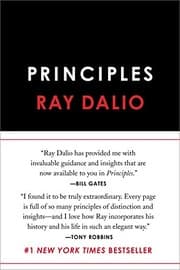
You know what I'm saying? You knew it didn't feel good to have them d- And, you know, you were in an environment that was not welcoming, you know, to that, where there are other environments that, uh, which are very healthy environments, which love respectful disagreement. Uh, Ray Dalio- Mm-hmm ... talks a lot about that- Yeah ... in his, in his book, Principles. It's respectful disagreement, but it's disagreement, right? Um, but so the, so the first part is just being aware of it and then saying, uh, you know, a- and, and like, like you did, and I thought you said it beautifully, that, that you can pr- you know, that you can prefer a certain result or that somebody...
But you're not... But you're okay with it if that's not the result. And then you've gotta just work at it. I mean, that's, that's really all you can do. And I mean, first of all, continuing to read, uh, books.
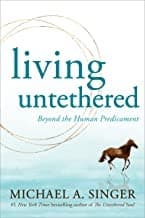
And, you know, one of the g- best books I ever read in that regard, and I, I probably read this about 30 years ago, um, it was called The Handbook to Higher Consciousness by Kenneth Keyes Jr- Mm ... which, which really helped me understand the difference between preferences and attachments. And, uh, one I'm reading right now, I've been actually reading this for the last year and a half, I've been studying this book. It's made such a huge difference in, in my life, and it, and, and I think it helps for someone to, uh, really understand themselves, and it, it kinda goes back to the... this, this, this point. Uh, I'm reading, um, Living Untethered by Michael- Mm ... Singer, Michael A.
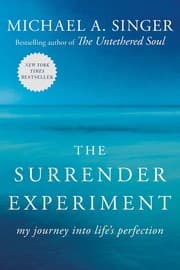
Singer. Now, he wrote, wrote two other books, which are great. One was The Untethered Soul, and the other was The Surrender Experiment. Wonderful, great books, but this book, this third one, and it can be read just individually. It doesn't need to be...
You don't need to have read the other two. This, this one, Living Untethered, he just hit the jackpot with this. Mm. It really helps us to, to not only understand ourselves, but understand why we have these feelings that just can make life so un- u- as he says, uncomfortable in here, right? And how to work through those in a, a very, very eloquent and wonderful way.
Like I said, I've been studying this book now for a year and a half. I read it almost every day. I read at least one or two chapters. They're short chapters. But, but it takes a long time to read each page because there's a nugget on every line.
I mean, it's, it's that good. But, but, uh, that, that is the thing. I think we need to, you know, we need to be aware of the issue. We need to, to learn as much as we can about it. Uh, and then again, be okay with the results, understanding that, yeah, that aligns perfectly with my value system.
Oh, I'm gonna have to get that one. I... The Untethered Soul is a book I read every single year. Um- Great ... again, quick, quick read. It's, like, 115 pages.
Yeah. But the, the idea, and I think, you know, one of the ideas that I took from that book that I think relates to what we're discussing here today is, is, like, we, we tend to operate with every nerve ending, like, on high alert all the time, and any little stimulus, we need to react and react and react. And this, this concept of- Mm-hmm ... you're not your body, you're not your mind, you're your soul, and these are just- Right ... mechanisms to help you interact with the world. Exactly. Like, that detachment aspect is so incredibly important because y- you, you think about, you know, so much of the, the fear, you know...
So, so we, we use the word fear attached to, uh, trying to apply someone else's values to yours in order to be liked, et cetera. Mm. Mm-hmm. The next level of that is anxiety, stress, uh, depression, you know, all these downstream, um, you know, ailments that we- Mm-hmm ... then, maybe then we have to medicate, and then we're, now we're- Right ... or self-medicating to deal with. And you think, you know, "Why, why do I feel the need to have two drinks every single night, even though I know it's terrible for me?"
It's because I'm feeling stress and anxiety associated with fear because I want my boss to like me, because that's how I get this promotion. It's like- But if you just detach from the fact that you didn't care if you got the promotion or not because you were gonna be exactly who you were and do your best work regardless of whether- Right ... your boss liked you, then all that downstream negative impact goes away. Ah. The need- Beautiful ... you stop feeling the stress, you stop feeling the anxiety, and you don't even want the drinks because it's not there in the first place. And i- man, that is such a hard concept to wrap your...
I mean, there's a lot of- Beau- beautifully stated. I- it is. A- and that... And I... And, uh, again, I loved The Untethered Soul, but when you w- read Living Untethered, you'll see how- Yeah ... he sort of brought that together to even a- another level.
Yeah. And it is so... Here, here's how I say it. When I read the, uh, uh, the The Untethered Soul, I really got it on an intellectual level. Studying Living Untethered, I got it into the heart.
Ooh. Yeah. And, and I've been able to actually do some of those thing- not, not just... I've done a lot of, been able to do a lot of the things he talks about, and it's, it's been a huge difference-maker, you know? And I've been studying personal development, I think, for probably, well, close to 40 years.
Uh, and I would say this is the best one. The, this is the best book I've ever read on the topic. Bob, I have enjoyed this conversation so much. I wanna thank you- Oh, likewise. I was just thinking the same thing.
Yeah. I've been... I, I wanna r- be respectful of your time and of the audience's. Um, I know you have so much going on. Where can they get...
I mean, obviously, you know, a lot, so many people know The Go-Giver and all the subsequent books as well as many of the books that you wrote before, but what are you working on today? Where can someone get more, dive deeper into your world and just be in your ecosystem? Uh, yeah, the best place is really just Burg, and that's B-U-R-G.com. And when they're there, if they'd like, they can subscribe to the, uh, Daily Impact, uh, email that I, I send out Monday through Friday mornings. Um, they'll see there's some, uh, resources, uh, such as the, uh, s- The Go-Giver Success Vault, and they can read chapters of the different books if they'd like to see if they like it first.
So yeah, everything's pretty much on burg.com. I'm a simple guy. I like it. And I love, I love that you got the URL just burg.com. That's, uh- That, that's from being old.
That's a, there's a story- That's all right ... behind that, but it has more to do with my being old and there at the beginning than anything else. Well, I appreciate you. I've appreciated this conversation so much, and, uh, just thank you for your time, and I wish you nothing but the best. Oh, likewise. Thank you so much again.
Let's go. Yeah. Make it look, make it look, make it look easy. Ayy, stand up Thank you for listening to The Ryan Hanley Show. Be sure to subscribe and leave us a comment or review wherever you listen to podcasts.
This game ain't a thing for me. I never switched up, no changing me. The only thing changing is you Close twice as many deals by this time next week. Sound impossible? It's not.
With the One Call Close system, you'll stop chasing leads and start closing deals in one call. This is the exact method we used to close 1,200 clients in under three years during the pandemic. No fluff, no endless follow-ups, just results fast. Based in behavioral psychology and battle-tested, the One Call Close system eliminates excuses and gets the prospect saying yes more than you ever thought possible. If you're ready to stop losing opportunities and start winning, visit masteroftheclose.com.
That's masteroftheclose.com. Do it today. If you like the show, please take a moment to rate, review, and subscribe. It really does help the show to grow. Thank you for listening.
Happy holidays. Want to give your host a gift? Consider subscribing, rating, and reviewing the show this holiday season. It really helps the show grow. From all of us at Believe, have a merry Christmas, everyone, and a happy holiday.