With the state of today's economy, it is more important than ever to invest in products that last for years to come. As the seasons shift and get cooler, make sure your closet is stocked with durable layers that stand the test of time from American Giant. American Giant's clothes work harder and are wearable season after season. Their greatest hoodie ever made is made of the highest quality materials that are cut and sewn right here in the United States, so you're investing right back into your local community. Choosing American Giant means taking a stand for American manufacturing and hardworking Americans, something other mega corporations don't care about.
From fleece to knit, all in a range of colors for versatile daily wear, American Giant delivers everyday pieces designed for everyday life. Feel the difference of quality made to last clothes from American Giant. Get 20% off your first order with code STAPLE20 at american-giant.com. That's 20% off your first order at american-giant.com with code STAPLE20. Hiring isn't just about finding someone willing to take the job.
You need the right person with the right background who can move your business forward. If you want candidates who truly match what you're looking for, trust Indeed Sponsored Jobs. With Indeed Sponsored Jobs, your post stands out to quality candidates who actually fit the role. According to Indeed data, 90% are more likely to be hired and trusted by 1.6 million companies. Spend more time interviewing candidates who check all your boxes.
Less stress, less time, more results now with Indeed Sponsored Jobs. And listeners of this show will get a $75 sponsored job credit to help your job get the premium status it deserves at indeed.com/podcats13. Just go to indeed.com/podcats13 right now and support our show by saying you heard about Indeed on this podcast. Indeed.com/podcats13. Terms and conditions apply.
Hiring? Do it the right way with Indeed. I'm here on a job site with Tim, who owns his own electrical contracting business. Three employees and two work trucks. Tim traded up to GEICO Commercial Auto Insurance.
We're positively here where he needs us most. They sure are. With step-by-step help on all his insurance needs, all for shockingly low rates. Shockingly low, huh? It's just a little bit of electrician humor.
Did you get it? I got it. You know, it feels like we have a real connection. All right, I'll stop. Get a commercial auto insurance quote today at geico.com and see how much you could save.
Get more with GEICO. Yeah. Um, the, the end, I didn't want to listen to music. I didn't want to, I didn't want to sing a note. Let's go.
Yeah. Make it look, make it look, make it look easy. Ice tea. The Ryan Hanley Show shares the original ideas, habits, and mindsets of world-class original thinkers you can use to produce extraordinary results in your life and business. This is the way.
Hello, everyone, and welcome back to the show. We have an incredible conversation for you today with Deanne DeMeo. Deanne has a storied musical career working with some incredible acts, as well as a solo career, and her most recent album is actually in the ja- the jazz genre, and we talk about how she has moved through things like pop and country now to jazz, how she was able to do that, why she did it, what her inspirations for that was, where she gets her creativity for. But the power of this episode is dealing with tragedy. And in this case, Deanne was faced with the loss of her child three years ago, and dealing with her son's death, coming through that, and how she was able to re-energize her career, re-energize her creativity, and pull herself through that moment in order to be the success that she is today, launching a brand-new album.
This is a powerful episode. Buckle up. You're gonna absolutely love it. If this is your first time listening to this show, whether you're listening on Apple, Spotify, or wherever you listen to podcasts or you're watching on YouTube, make sure you hit the subscribe button so you get future episodes. If you have comments, if you have thoughts, if you just wanna show support for Deanne, either connect with her directly or leave it in the comments section or in the review section of, uh, wherever you're listening or watching.
That way we can pull, uh, Deanne in and, uh, connect her with you if you, uh, wanna do so. Deanne's a wonderful person. It was such a pleasure having her on the show. I know you're gonna love this conversation. And as always, I appreciate the hell out of you for listening.
I love you for listening. Let's get on to Deanne DeMeo. Deanne, so excited to have you on the show. Um, w- when I was researching you, one of the first things that I saw that I found intriguing and a place of connection that we have is that you're from Buffalo. Yes, I am.
Well- Yes ... Nine Mile's actually. Yeah. So my entire family, except for me, I have like 30 Irish Catholic cousins and now all kinds of, you know, second cousins or whatever you call their kids, uh, just this huge Irish Catholic family in, uh, South Buffalo. They all live in South Buffalo.
So I've been to Buffalo 10 million times. My, you know, we're Bills fans and Sabres fans, and Western New York has a, plays a huge role in my life, and, uh, I thought that was a really interesting connection point. Yes. Uh, definitely. Buffalo Bills.
I think we are the only team that four consecutive years in a row. Yes. Yeah, four consecutive years, for 100%. Unfortunately, we never came away with the trophy, but, um, there's a-- It's funny, people I find who, uh, grew up in Buffalo or Western New York in general and were... You know, they didn't have to be huge fans, but followed the team at that time.
There's like this, there's like this odd camaraderie that you just have to have if you experienced those moments. Whether you're like someone who was yelling at the TV or just, you know, there and aware, there's always this shared connection point having suffered or just how much the city suffered during that time, you know? Yeah. It's so interesting. Yeah.
It's so funny what sports does to us, and we were talking a little beforehand about baseball and, and your son, and I, and I wanna get into all that, but, uh, what you were discussing was, was coaches, and I think of that more, you know, not just, not just coaches in sports, but you could have a coach in basically anything you do, mentors. You know, I, I'm interested in y- y- you came from a, a musical family. W- was that your primary influence? Was there someone else that grabbed you that, that, that kinda pushed you into this life that, that this was gonna be kinda a, an enormous part of, of who you are? Like, did you have that coach, that mentor, that person that guided you?
Yeah. Uh, when I was seven, I'm one of those where I have that dream of when I was seven, I knew this is what I wanted to do, and I was playing in the playground in school, and we were talking, and I don't even know how it came up, but I said, "I- I'm gonna be a singer, and that's what I'm doing." I don't know why I thought that at seven, but my father, always a singer, um, singing around the house, uh, turning me on to jazz music, and I didn't wanna listen to jazz at the time 'cause I wanted to listen to pop music and- Yeah ... Barbra Streisand, actually. So I'd say, um, between my father being my mentor and, and it's kinda crazy, but Barbra Streisand was another mentor to me.
I just would read about her and absorb everything about her because I was just so enamored with her, um, her passion and her strength and her, um, con- or her confidence and her drive and, you know. So kinda learned a lot from her by reading her stories, but my father definitely. My father was- Yeah ... from the beginning to the end. He just passed a couple years ago, so yeah. So ultimately, you found yourself in jazz.
What brought you back? I found myself not in jazz. I mean, I found myself in jazz with my dad, yeah. But, um, I went into pop, I went into country, I went into blues. Blues, jazz, similar.
Countries. They're all kinda similar in ways, but, um, jazz was where you can be free to w- change the melody. And not change the melody. You gotta respect the melody of the song. So the first time you sing the verse-chorus, you always wanna give respect to that melody.
But if you wanna change it around a little, you have some freedom there, where when I sang the pop, you know, it just, you wanna kinda sing verbatim like what it is. You, you don't wanna change it. And the jazz to me was a challenge because, uh, I didn't know... I kinda liked I, how I had to stay within the lines, and now I like that I can go outside the lines and do whatever I want. And sometimes it sounds fantastic, and sometimes like, "Oh, maybe I shouldn't have done that."
But I learn. Yeah, and- Every day's a learning process. You know, I, I've had other, uh, jazz musicians, and obviously that's where, uh, you are today in, in, in your work and, and I wanna dig into the evolution of that. But I'm, I've always been so enamored by jazz and blues particularly in how you can listen to a song, uh, the, the studio recording of, of any particular song and sounds great, and then you could hear a live version or see that same individual live, and it's almost as if I think more than any other genres, those two particular allow... The music captures the mood of the artist in that moment and allows them to express it, where like a pop artist, if he or she's having a bad day, they're gonna sing the song exactly the same way.
It's gonna come off, you know, pretty close to what you're gonna get. But you could hear somebody just be in a different mood and the same, the same blues tune comes off a little slower with a little more cadence or a little more depth or, or vice versa, and I, I find that such an intriguing quality of those particular types of music. Absolutely. Um, my drummer I used to work with, uh, I do a Wednesday afternoon jazz gig, 12 to 2. And we get people.
Um, and it's a Sportsman's. You know Buffalo, so it's Sportsman's. Yep. Yeah, yeah. Oh, yeah.
So, um, uh, I used to work with a drummer who worked with Billie Holiday, and he said exactly that, that she would... It depended on her mood how the song came out. So one of her songs that I love to sing, "Fine and Mellow," it could be upbeat, bluesy swing. It could be just torture. It could be whatever mood she's in.
And the- he told me that the, the musicians would, um, they would have to... What, what she, what mood is she in today? Yeah. Yeah, yeah. Which way are we doing this song?
And you just had to pay attention. But yeah, it, music is such a release, um, and if you wanna sing that song real bluesy and more sultry, then you go ahead and do it. Yeah. You have the freedom. I'm very interested in how you transitioned throughout your career through the different genres of music because, you know, you don't necessarily see a lot of people go pop to country to something else, right?
Like, you don't, you don't see those, those moods. I mean, m- people may do different artists, and certainly some artists who've been around a long time have tried different styles. But o- one, I guess, and again, uh, so you know, and I've said this before on the show, I am the, like, not musically inclined. I have a, this enormous and huge appreciation, and I'm sure if I practiced, I could make something come out of an instrument, but at my core, I do not have any, like, God-given musical talent at all. So I'm very interested in just- W- w- what, what, uh, inspiration you had to say, "Hey, I'd like to try something different"?
Is it hearing a certain song? Is it just you're in a different place in your life? Is it a seasonal thing? Like, how does that-- how do you make those transitions or decide, or what's your inspiration to make that kind of move? That's exactly, um...
Well, first of all, let me just say you may have musical talent that you don't know. 'Cause I used to teach pre-K to eighth grade, and I used to teach those kids how to sing on pitch, 'cause they didn't think they could. And many that I thought, "Ooh, possibly, I don't know if they're singing, you know, if I'm gonna do- be successful here." But 95% of them I was able to. So not everything that, that you don't know Benny. All right.
But as far as different genres, um, I guess it just depends on what's going on in your life, the maturity, pl- the, you know, where you are. Um, pop was fun to me. It was dance music. Uh, I, I love to dance. Um, so I loved the Gloria Estefan stuff, and, you know, My Name is Sound Machine had-- her band was just so rhythmic.
And, um, the, the beginning days, um, like I said, started with Barbra Streisand. So for me, it's about the song, it's about the vocal, 'cause I'm always-- that's the first thing I listen to. I, I listen to the production of the whole song, but the vocal is what grabs me. And a song is a song, whether it's in the country vein or it's in the jazz vein. But if it's a good song, I'm loving it.
So I think that's how I kinda switch from, from different genres, 'cause I still love country very much. Um, a friend of mine, we were just listening to George Jones, some of the earlier stuff, and I didn't even know about some of his earlier stuff, and he turned me onto it. Um, and I opened up for George Jones singing country. But then again, like, I did the pop stuff and, um, and I love doing the dance band and watching the people enjoy that dancing to that music that we were producing. So it really just depends what's going on in your life.
As I matured even more, I really love the freedom of the jazz and the blues. Oh, the blues, yeah. Just to be able to just express yourself and reach someone through your vocal is- means everything. It's more than the paycheck at the end of the day, or how many people were watching you, how much validation you may have gotten or may not. It's when someone is so moved from your song, from your vocal, you know, especially if it's your original song, Yeah ... the best.
But yeah, so that's why I think I just, I, I love all genres, but right now I'm very comfortable and happy to, um, book as many jazz shows as I can because that's my time now. Like the name of my CD, It's My Time. Yeah. What-- how do you write a song? Like- Oh, that's crazy.
Yeah. H- I mean, I just, I've never written a song. Um, like, where does the inspir- is it d- is it, is it like the Jerry Seinfeld method, where you sit down every day and you're putting notes down and-- or is it you, you're getting inspiration and things are coming to you, or are you constantly collecting ideas? Like, how does that work for you? Yeah.
For me, um, it's definitely inspired by, uh, a few things. One of them is just what's going on in your life. And all of a sudden, I'll just start speaking something, or I'll start saying something, or I'll hear a melody and I'll just write it down. Or because we have iPhones now, I'll get the voice memo and I'll record a a cap- Are you tired of endless follow-ups and missed opportunities in your sales process? Chasing leads is a losing game.
That's why I created the One Call Close system, a battle-tested sales system that uses behavioral psychology to close deals in just one call. No more, "Let me think about it," no more, "I'll get back to you." Using the One Call Close system, we took new reps from 25% close ratio to over 80% in just three months. To grow fast, you must close deals faster at zero extra marketing cost. The One Call Close system allows you and your reps to build trust, address pain points, all while watching your revenue skyrocket.
Ready to stop chasing leads and start closing? Visit masteroftheclose.com today. Close twice as many deals this time next week. Visit masteroftheclose.com to learn how. ... acapella version of it, acapella without instrumentation. Yeah.
And I'll, I'll record that and, um, so I can get inspired by that, or I can get inspired by my one song, "Me After You" it's called, was ex- inspired by a very sad love story, me before you. Um, everybody's got a story, a song I wrote after I lost my brother. I was inspired because I was like, "Everybody's got a story. Everyone's walking around with something, and you have no idea what they're walking around with, so you always have to be kind." And the bridge is talking about just listen, just observe, just watch what they're going through, because when they're snapping at you, it's not what you did.
Most of the time it's about what they're going through. Yeah. And you don't know if they just, if their husband just upped and left two days ago, or they just buried a very special person in their life, or they just lost a job, or, um- There is abuse. Like, you don't know what's going on in people's lives. So that's where that s- song came from.
And, and just so many of them. "Stay Here" is another song, um, I wrote missing someone who, who left me. So, you know, that's how they get inspired a lot. Yeah. And sometimes they're written in like two, three minutes, they're done, and th- e- everything comes flowing.
And sometimes it's like you put it down, you go back to it. And there's a song called "Torn" that I wrote. Um, I was torn between do I, um, keep trying to pursue this thing, this-- At the time I was doing a lot of stuff in Nashville. Do I keep trying to pursue this or do, do I have children? 'Cause I knew my spouse at the time was not, um, not gonna like the lifestyle of music and children, which that happens in a lot of relationships, unfortunately. So I was torn, which way do I go?
And I end up going towards having two children, um, which I don't regret a second of that. But again, that song started and it didn't get finished until, I don't know, it didn't get recorded till years later. So there's a lot of notes too. Yeah. If you go under my piano bench, you'll see tons and tons of handwriting that we don't do anymore, and you'll see, um, you know, like so many lyrics that I've written throughout the years I may have not, may not have put melodies to yet.
And how do you put the melody-- Like, I guess what I've never been able to wrap my head around is, does the melody come first? Do the lyrics come first? Like, how do you start to match those two? You know, you hear in R&B a lot, um, there are producers who all they do is produce beats and drops and riffs and, you know, these different things, and then they find an artist who can put lyrics over the top. You know, h-how, how do you piece all that together?
Like, what-- Are you, in your mind while you're singing the song or you're, you're doing it acapella, do you also have like a background track going in your head of kinda maybe where some beats are or something like that? In my situation, um, I don't do the beats so much. Um, I didn't grow up with that as, and I appreciate it. Um, I sang my stuff, a lot of it I sang acapella or I would accompany myself on piano with some ba-basic chords that I can do. And either, it goes both ways.
Sometimes I can hear the melody and I'll just start humming it, and then I'll say, "Oh, I should try to put some lyrics to that." And sometimes nothing happens. Or more often I'd say I, I hear the ly- I s- I write the lyrics first and then I try to put a melody to it. Um, but in, also what happens in my situat- or what has happened for me is my producer, who produced my last three, um, albums, I would send him the acapella version of me singing, and then he would surprise me with arrangement around it. So he'd accompany it with chords and, and sometimes I'd be like, "I did not hear that the way you're hearing it."
And it's all subjective. And 99.9% of the time I loved what he was putting around it, and I, even if I didn't hear what he was hearing. So he would start putting the chords around it and some much prettier chords than I was playing. Um, and then he might try a different rhythm that, that, um, I didn't maybe hear myself. So it's, in my situation, it's been a combination of the producer and myself putting it together.
So that's why I say we co-write the songs. Yeah. Um, your latest album, "It's My Time", which you referenced before, is dedicated to your late son. O- o- one, maybe just as much as you can talk about how that you were able to bring anything creative out of such a horrifying experience and, you know, just talk a little bit about how that experience shaped your creation process. Yeah.
Um, the, the beginning I didn't wanna listen to music. I didn't want to, I didn't wanna sing a note. I actually couldn't hum for the longest time, 'cause I'm always humming. Um, that takes a long time. And then my producer started like, "Hey, let's do this, let's do that."
And then he'd look at me, "You're not ready." And I'd g- "Yeah, I am. Yeah." You know, I'd get defensive. "Yeah, I am."
But I wasn't. Um, then I'd say probably it was a year later, I really wanted to do a fundraiser for him. I wanted his... Which I've completed, which I'll tell you about it, but I couldn't just let it end there. He was 23.
He was a very smart, um, driven, funny, uh, kinda spontaneous, talented in his sports. He thought he can sing, but kind of. Um, so I couldn't let William's life end right there at 23 years old. So, um, when my producer said, "Let's put a show together and we'll raise money for the fundraiser, for the scholarship," and I said, "Okay." So he puts the flyer together and it says, "All proceeds going to William's scholarship."
And I was like, "I don't have a scholarship. So wait a minute, we can't put this flyer out." He's like, "No, you better find a scholarship." So it, it- friends really, and family really helped me through a lot of this time. So I went to Canisius High School, where my son played baseball.
Um, he was the catcher On the varsity team, uh, right, he, I think he joined JB in his freshman year, and his sophomore year he was already on the var- varsity team. He was a fantastic catcher, which, you know, playing baseball, that's like the guy that's gotta watch everything. And you gotta pay attention. Captain of the defense. Yep.
Pardon? Yes. Captain of the defense. Yes. And he, you know, I didn't realize how much he has to think about.
So, um, he went to that school. He graduated seventh in his class, full, you know, a great scholarship to go there. And so during his junior year, he went to-- He really wanted to do something. He always wanted to find purpose in life, which I'm the same way. Like, I, I always feel like, why are we here?
And he did that, um, trip to Nicaragua. It's a mission trip, and he, he went for 10 days, and he helped them build their church, and he stayed in the little house, whatever you call their little houses. It was like a little hut with a bathroom in the back and, um, maybe some dirt floors, and their... You know, just that's their lifestyle. They didn't have a lot.
He watched them. It was life-changing for him. He watched how happy they were, and they had nothing. Where you come back here, we have everything. We have way too much, and then we're not happy.
We're trying to figure out, "Well, how do I get happy?" And they're just happy with the authentic, simple life. There's so much love, and the families are together. So he just saw so much. It was life-changing for him.
So, um, that came to my mind. So I went to Canisius, and Andy Dial, I said, "Listen, you know, I'm, I'm, you know, a mourning mother, and I need to do something for my son." He helped me set it up. So it's, um, been going for... Well, I started it, it's been three years since I lost my son, so it's, um, I started it two years ago.
And within, you needed to raise $50,000 to get it endowed, so within a year I got, I raised it, and I was just driven. And, um, I sent two boys on the trip so far. My first boy, James, we just did an interview with him, our local news station, and it was fantastic. Pete Gallivan from Channel 2, he's like, I maybe you know him from being from Buffalo. He's on the morning show.
And, um, he interviewed James, myself, Andy, and James just said, "I'm so grateful. It's been life-changing. I wanna start a nonprofit organization now. I wanna help other people. I have a purpose.
Uh, th- I know there's something in life that I'm supposed to do, and I'm finding this purpose, and going on this trip helped me." So William's scholarship will continue to help each individual every year. It's an all-boys school, so, and their junior year is when they do their mission trips. And that's what kept me singing. So that was the answer to your question- Wow ... is, uh, obviously I'm supposed to do this.
Um, and I'm supposed to keep this story alive to help others, because I know there are many other people hurting just as bad or definitely worse. So if I can help these young men get a change in their life, I'm, I'm happy. Then I'm doing my purpose. Yeah. And, and I'm doing it, you know, through singing, through interviews, 'cause I share my story with others on stage and, and, and everyone wants to help, and they wanna donate, and they, you know.
So it's all good. Yeah. As much as we give people, people, the proverbial people, a hard time, and I think we're all caught up in our own stuff, at our core, I think most of us just wanna help other people. Man, when the rubber really meets the road, so many people come out. Yeah.
You notice anytime there's tragedies, it's so many people are running to help, um, in this country, other countries. Yeah. And I know I feel the best when I'm helping someone else. I've always felt that way. Um, and if I can help them through the scholarship, if I can help them through showing that no matter what tragedies come on, you know, and going spiritual now, God has a plan.
I didn't agree with His plan on this one. I still don't understand the plan, and I'm just gonna have to have my faith and believe that this plan, it ha- everything's happening the way it's supposed to happen, and I will see him again when it's my time. Meanwhile, I'm singing, and I'm taking care of my daughter, who I have a beautiful daughter. She's 23, and, um... Or 24, she just turned.
And there, I'm gonna still fulfill my purpose and keep living, 'cause that's what I'm supposed to do. Yeah. I think you have to believe, and, you know, I've lost people in my own life, and I think also God-fearing, I, I, I think you have to believe that God needed them for something, you know? That's what my dad used to tell me, you know, when we would lose family members and I would ask questions. He would say, "Hey, He needed them for something."
Some unique skill that that individual had, you know, for whatever reason. And it's terrible, but I think, um, how else do you explain it, you know? Yeah, you, you can't really. Um, you just, uh, you gotta have faith. Yeah.
I don't know how I would do this without my faith. I know that much. Yeah. I, I would be very lost. Yeah.
I, I really cannot wrap my head around this idea of, uh, there's a new atheism is something that you hear a lot. I, I've listened to the people, they're very intelligent. I'm very interested in what they have to say. I still, despite all the arguments that I've heard, cannot wrap my head around the idea of believing that there isn't something bigger than... There's too many experiences, too many feelings, too many moments in my own life, let alone all the books I've read and, you know, all the people you talk to, to believe that there isn't something bigger going on that we just can't see.
And I don't know how you live, I don't know how you live-- What, what become-- Morality alone cannot be your compass, in my opinion. There has to be more than that, and I also don't think that without a mooring to God, you-- it's too easy to excuse away moments where morality doesn't fit, and that's the part that I struggle with, with that concept, and I feel like that concept falls apart. Yeah, it kinda scares me where they're at and all that atheism stuff. Um, there's no hope, and why would you worry about doing anything wrong if you're not gonna be punished for it or if you're not, uh, if, yeah, you don't have any morals because why? There's nothing after here, so just do whatever you wanna do whenever you wanna do it, and that's- Yeah ... a scary thought.
Yeah. Life has changed a lot since I've been, since I came on this earth, and, um, I pray that we all find a way, and there's no set, like I'm not like you have to be this kind of religion or that kind of religion. Same. 'Cause religion is, um, it's really human beings trying to come together and put, you know, a community together, which a lot of us need that community to get, you know, to share with each other. But still, at the end of the day, your, um, spiritual needs and fulfillment come in through here, through your s- through your soul. Yeah.
And without, in my opinion, without religion, I feel like too much of our lives we're, we're taught, first we're, we're never actually taught, but we're then rewarded as we grow older, everything, all our rewards are externalities. It's all about external. When you grow up in a church, and that church can take many different forms, you, you, you start to learn about the importance of taking care of yourself and about what it means to actually love yourself, be comfortable with yourself, find meaning that's unique and specific to you as an individual, and instead of constantly searching for some form of justification or external validation for the things that you do, and that feels to me like the big disconnect between much of what we're seeing in our society today that to me is bananas, and, and the individuals that I know grew up with faith. It's, it's, it's a, it's, it's almost like they just see two completely different realities. Absolutely.
Their perspective is so different than not having something to believe in. I was listening to one of your podcasts. I, I don't remember his name, but he was talking about, um, uh, how we're so busy and we don't-- We want noise around us 'cause we don't wanna, we don't want the quiet, 'cause if we have the quiet, then we have to face what's going on in our head. And if we face what's going on in our mind, then there's that inner child that needs to resolve things, and if we don't resolve those things, we are go- we're gonna continue to use that behavior with the next relationship, with the next friend, with the job, with anything we do because we're still trying to resolve something that happened when we were three. Yeah.
And there's so much noise now that, um, nobody likes to listen and sit in quiet. And, and you know, and I'm not saying you gotta be quiet as far as meditation and cross your legs and raise your hands, you know, and hum. Quiet, even if you're in the streets in East New York City and you're, um, there's noise all around, you gotta get the quiet in your own core, and I think that a lot of people are afraid to do that, and I think many people go through life never doing it, never finding that authentic self, never loving that self 'cause there's always rush to the next thing, the next movement, the next sound. And I liked that podcast, and I didn't finish listening to it. I still have to listen to it.
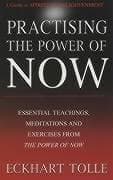
I think that was Mike Robbins. I think, I think that was Mike Robbins who, who said that. I, uh, so it's funny, I'm read- I've just f- I shouldn't say I'm reading. I just finished, um, Eckhart Tolle's "The Power of, of Now." Um, read another- Oh, I have that book.
I never read-- I, I have it, but I didn't read it. It's a good one. You can-- My opinion is you read the first 100-ish pages and you kinda can blow through the next 100, um, but the concept is, is fairly simple but incredibly powerful in my opinion, and it's just h-his, one of his core ideas and maybe one of the primary ideas is this idea that all the time we spend in the past and all the time we spend in the future is wasted, that right now in this moment with you, I could be thinking about the four things I need to get done tonight. I'm gonna go ... with my girlfriend to dinner, and I got this thing over here, and I could be thinking about how, uh, there was a question I wanted to ask on the last podcast and I never got to it, and I was upset with myself. I could be thinking about all these things.
Or I could be 100% in this moment with you, listening to you, responding to you, connecting with you, and developing in, in the short time that we have together, uh, a connection that allows you to feel heard, to share your story, and for the audience to understand that, that there's a real conversation happening, and that it's not just a business transaction where you come on and speak, and I speak, and we wait for our turns, right? And how I decided to try to practice that, because I will say that I'm not the best at this particular thing, um, I do these ruck walks. You ever see people with the ruck vests? They wear weighted plates in the vest and they go for... Okay, so I wear a ruck vest.
It's a 40 pound, 20 in the front, 20 in the back, and I love it. It's a, it's, it's a fantastic exercise. I highly recommend it for anyone. It strengthens m- a- all the small muscles that you w- that you kind of bypass when you walk without weight. So I, it's, so as an exercise, I love it.
But what I used to do is I'd put a podcast on. So now I'm listening to someone else, someone else's ideas are in my brain. I'm not really in myself. I'm kind of listening to them while I go for this walk, and I'm walking through, and I live in kind of a wooded area, so it's kind of beautiful kind of place that I live in. And one day I just took the AirPods out and I left them at home, and I went for the walk without my phone and without my AirPods, and I went, I go for about 45 minutes, and I came back and I had...
It was a completely different sensation. I don't wanna say, I don't wanna say better or worse necessarily because I do enjoy also listening to podcasts when I go on my walks, but I said, "I'm gonna start working this in once or twice," because the stuff that starts to pop in your brain is kind of crazy. Like, when you give yourself space, like without music and without someone other voice, these thoughts and ideas and whatever start popping in your brain. I was like, "Ooh, I, I wouldn't have expected to think about that right now," or, "I didn't know that that was on the ba- in the back of my mind somewhere." And it was just a, it was just a really interesting experience in trying to be present for a 45-minute walk.
That's funny you saying that 'cause, uh, around in my block I have a wooded area, and they built a path there and it's probably, uh, probably a couple miles, and I used to go with the pod, you know, podcast or music constantly. And then one day I took them off, same story. Yeah. And I said... And not that it's worse or better, right?
Like you said, but it made me stay in the moment. It made me look for the deer and check out the, the cardinals that were flying by and the rabbits that were jumping over and, you know, the butterflies or I was... And then listening to the woody, the woodpecker, you know? And I'm like, "This is so much where I wanna be when I'm in the woods like that." I just wanna listen- Yeah ... to the, I wanna listen to what's going on right now.
Um, I'll share another quick experience with you that's similar. Uh, eh, I live, um, now I live in Albany, and, uh, n- Lake George is about an hour and a half north. Lake George is this gorgeous lake- Gorgeous. I've been there ... beautiful. Yep.
It, uh, uh, 100 years ago it was like the spot for New York City elites to come up and they'd camp and do all this kind of stuff. So it's like, got this kind of old world but beautiful. It's a, it's a, it's a really cool place. And, uh, we rented a cabin as like a week vacation even though it was close, you know, whatever, and a bunch of my, uh, she's now my ex-wife, but a bunch of her family member came and it, it was a great experience. And there was a moment where a- at night, uh, when you, when you look up there, you see 10 bazillion stars 'cause you're far enough away from any light pollution, and people, other people in the country live in these areas too, but for me in Albany, I can only see a few stars.
Like there's not, it's not this star sky. And you look up and you're like, "Oh my God. Look." Like it, it's insane on a, on a cloudless night what, what you can see. And I had this moment where I thought to myself like, imagine, you know, 100 years ago, 200 years ago, 300 years ago, you didn't have AirPods you could bring with you.
Radio didn't exist. Well, like 100 years ago, you guys, 300 years ago, radio doesn't exist, right? You are at all moments, you have to be completely present because there's danger, right? At all, all over the place, everything from animals to other people. Uh, you have this vast world of sounds and noises.
You have very little control over your light, your lighting situation, right? Maybe you have a campfire, uh, whatever. Um, you have all these inputs from everything from stars to landscape to, to all this kind of stuff. None of it has been really cultivated to a certain extent unless you're in one of the few urban areas. And like how much different their brains had to operate and how much more present they were forced to be in every moment than we are today.
You can live your entire life today checked out from the present moment, and I think a lot of people do. I was gonna say- And- ... I think a lot of people do. Yeah. Yeah.
It was just, it was like I, I don't know, I mean, I don't know why that came to my head, but just through our conversation I was like, I just, I had this moment where I was like, oh my God, like these people had to be just everything that's going on from make... You know, the campfire dies, the wolves come in, right? Like, so you're waking up in the middle of the night to throw wood on the fire. I mean, there's just, they had to be present in every moment of every day, and you think of the The, um, determination and the, uh, creativity and all the things that they had to do to survive, and then you contrast that to today, and there is a large portion of our population that lives checked out every moment of every day for almost their entire lives, and it makes me very sad to a certain extent that that's the case. Yeah.
Well, 'cause I think, again, 'cause, um, you know, you become a parent, and most people become a parent, there's no book on how to become a parent. I mean, there's a book on how, how to nine months pregnant- There's parenting books, but- I read that- None of them tell you the truth. Every kid's different. Every parent is different, and that parent's bringing their experience in to this new child, and whatever they teach this new child, good or bad, that child is gonna grow up and res- you know, relive it, and, you know, it just, it just recycles. And I think, yeah, because there's so much more around us, social media, crazy, crazy.
I did not grow up with it at all. Um, they don't know how to go out in the play- you know, in the backyard and figure out how to play a game. So I just think 'cause of the combination of all the stuff that we have around us, yes, we just shut down. And, you know, we were just talking about this last night, some friends, DoorDash. Like, the city of Buffalo is full of traffic with DoorDash.
My daughter does DoorDash. I'm like, "Why don't you just go get the groceries and cook the food?" Because DoorDash can do it in a second. So, like, everything is ins- instant gratification, and you can s- you know, you don't have to pay attention to the now, versus like you just said, you gotta keep the fire lit, you gotta watch for the, the dangerous animals, you gotta get the food. You're not going to a grocery store back then.
Yeah. You can't call DoorDash. So yeah, and you gotta feed your family. They lived in the present, yeah. Yeah.
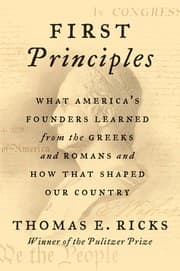
This is the last- We, we so opposite ... last anecdote on this topic, and then I, I have, I have one more question that I wanna ask you. Uh, this has been tremendous. I was, uh, I'm reading this book now, I, I'm kind of a big reader, on, uh, it's called "First Principles", and it outlines the first four presidents of the US, and not necessarily, it doesn't tell, it doesn't talk necessarily about them specifically, although it does. It's more about, uh, what, what w- what was influencing them to become the people they were. So it's, it's a really good book.
I highly recommend it. I think the, the la- the author's last name is Ricks. I don't, I forget his first name, but it's "First Principles" the name of the book. But in there, to your point, they have this anecdote where one of the early, like, performance reports for George Washington when he was still, um, fighting, uh, with the British before the Revolutionary War, was that he had the capacity to, um, continue with adequate performance during long periods of hunger. Oh.
So, like, you think about that, like, these guys are traveling, you know, to deliver a message to the French in some outpost, and they gotta travel for a month to get there, and one of the, like, ch- I mean, imagine today, like the, you get your performance evaluation from your boss, and one of them is, "Can perform adequately when over long periods of hunger." Like, they wouldn't eat for days, and some people could handle it, some people couldn't, and I just found that, like, astounding that, like, part of his performance evaluation was his ability to continue doing his job despite probably days of hunger at that point. Yeah. And I just think, you know, we're so disconnected from that stuff. Yeah, totally disconnected.
We wouldn't- Um- I don't think we'd survive. No. So okay. So this has been absolutely phenomenal, uh, and I appreciate you. I have one final question and, and really this is maybe, uh, we'll end on more of a uplifting note to a certain extent.
Um, you know, so many aspiring musicians out there, you've had multiple decades-long career spanning multiple different genres. Uh, you've been in Nashville, you've done all these gigs, you've done all these things, pro- created your own album, uh, uh, multiple times, and now the most recent one, "It's My Time." If I'm an, if I'm an aspiring musician and I'm, I'm struggling with the automated beats and the this, and I'm worried about AI music and all this kind of stuff, w- what-- If, if I was your mentee, like, what would be your advice to me in finding my unique style, my unique voice, the, the thing that's gonna, like, pull the best out of me? How do I, how do I work towards that? You know, I always thought that was kinda simple to answer, but um, it's really about knowing yourself.
It's about loving yourself, like we talked about in the beginning. It's about knowing who you are, staying grounded with who, who you are, and where your passion is. So if you're trying to imitate someone else, um, 'cause you don't know who you are, the music's gonna come out that way. If you're trying to impress someone because that's what they wanna hear. But my best music, and I'm still working on it, and um, I will work on it till the day I die, is always something that just comes from my heart.
Whatever's coming from my heart, they're f- people are feeling it, and if you can't find that authentic self in, in your own mind and in your desires and your talent, it's not gonna come out that way. So that's the, the bottom line is they just have to figure out who they are, what they want, and strive for that no matter how many distractions are coming in the way, 'cause they will be, and rejections. And the music is, um, so full of... It's subjective. It's so full of rejections and If you're not counting on the validations from these people, and if you're just giving of yourself, you just keep doing it.
And you just keep doing it until the day that you can't do it anymore. And I feel like the day you can't do it is when you're not breathing. Yeah. I love that. I- Because I'm not, I mean, I'm, yes, I've been around for a while, and I'm not stopping- Yeah ... because, um, I don't know.
I just, I, I feel like I'm growing all the time. I'm learning more and more. Yeah. I, I, uh, I say this to you, 'cause I, I told you about, or you read- heard the thing, I coach my kids', uh, 10-year-old baseball, year-old baseball, and, um, I, I tell them all the time, and it's, it, this is just like, but, like, so many, so many of the people that we admire are imperfect, yet we feel early on, especially early on, and, and I put sports as a creative endeavor as much, as much as anything else. W- we, we look at our, our imperfections and we're like, "Oh, if only.
If only." And it's like so many of the best in anything, sports, music, art, it's the im- it's the imperfections that we love. Oh, yeah. And it's like if you can love those imperfections, that's where the magic is. I don't know.
It just feels- Yeah, you have to love all of yourself, 'cause you're not perfect. There's no way you are. Yeah. And none of us are. But they appear perfect.
And before social media came out, you know, you would just see pictures in the magazines and you'd see them on TV, and they're in their most perfect pose because camera's on. But you don't see them without their makeup. You don't see them struggling. You don't see the struggle in their own mind of what they're going through. You just see the perfection and you think, "Well, I'm not like that."
No, we're all the same. We just need to, uh, that's another podcast I'm gonna listen to you of, of yours, um, changing the negative thought. So- Yeah ... and the gentleman that I listened to earlier that I told you about, he said that when the thoughts are coming in the mind, you know, you have to learn how to control it. And so we have to, um, when those negative thoughts come in, and it's gonna happen a lot in music because you're putting yourself out there, you're letting someone listen to you, and they're gonna give you your p- their opinion, and, uh, it could hurt. But you have to know that you are being who you are, and they don't like it, that's fine.
So you d- you just have to learn how to, when those thoughts come in your head, same thing. Thoughts come in, "Okay, I don't, I'm not really crazy about that thought. Well, why don't we try to change that thought? Why don't we stead- instead of..." I heard this one before, 'cause I have a lot of, I have a lot of land in the back, so I have a lot of weeds in the gardens.
And I used to look at it as, "Oh my God, I gotta go get all those weeds out of the garden. It's just so much work." And now I'm like, "Wait a minute. I have a lot of land. I'm blessed with land.
And once I pull those weeds out, my garden's gonna look so much more beautiful." Like, it's just a way of you change your thought. And that's not easy. Especially if you're raised with the negativity- Yeah ... then you gotta learn how to change those thoughts. 'Cause you can't stop the thoughts. And I, I did it with my own son, like, uh, constantly I would, I would get the thoughts of, you know, what I saw, what happened.
And, and finally I had to start working on that too. I had to say, "Okay, he's not there anymore. You're here on this earth reliving that thought. He's not, he's not at that place. He's not doing that.
He's in a, a beautiful place where you're going, so let's change our thought." That's, that was the hardest one for me. DeeAnn DeMayo, this has been phenomenal. I'm so happy that we had a chance to spend time together. Where can people learn more about you and get the new album?
Okay. So first of all, thank you. I was really looking forward to this interview- ... especially after I listened to y- your, your podcast. I need to let others know about the- Oh ... I love what you d- Thank you so much I've read a lot of the books that, what you talk about.
Oh, thank you so much. And one of the books, I can't remember the title of it, my son actually bought for me before. Oh. Um, it, it's, uh, I can see the red cover. The four-letter word is on there.
Um- Oh wow, The Subtle Art of Not Giving a Fuck? Yes. Yeah. Yeah. Yeah.
That's a great one. He gave me that book, and I, I, you know, I definitely read a lot, but I also put it, um, audiobook so I listen to the podcast. Yeah, yeah, yeah. But, um, yeah. I thank you for having me and, um, it, such an honor.
And, um, I, my website gives most of it. So my website is deannmusic.com, which is D-E-E-A-N-N music dot com. Awesome. And it gives all the social links. It gives my bio and, um, lots of videos, and it'll bring you to my YouTube link.
So I kinda have it all in that one package. I'm on, um, uh, Spotify and, and Apple Music and Amazon and Pandora and all those different platforms out there. And those are under DeeAnn, It's My Time. Gotcha. So if you just Google that, you can get that too.
Tremendous. Well, guys, we'll have, I'll have links in the show notes, whether you're watching on YouTube or listening wherever you listen to podcasts. I'll have, uh, links to DeeAnn's website, and I hope you guys will follow along in her journey because the music is great, you're wonderful, and I appreciate the hell outta you. Oh, I appreciate you. Thank you so much.
Let's go. Yeah. Make it look, make it look, make it look easy. I stand up- Thank you for listening to The Ryan Hanley Show. Be sure to subscribe and leave us a comment or review wherever you listen to podcasts.
Game ain't a game for me. I never switched up, no changing me. The only thing changing is me. Close twice as many deals by this time next week. Sound impossible?
It's not. With the One Call Close system, you'll stop chasing leads and start closing deals in one call. This is the exact method we used to close 1,200 clients in under three years during the pandemic. No fluff, no endless follow-ups, just results fast. Based in behavioral psychology and battle-tested, the One Call Close system eliminates excuses and gets the prospect saying yes more than you ever thought possible.
If you're ready to stop losing opportunities and start winning, visit masteroftheclose.com. That's masteroftheclose.com. Do it today. If you like the show, please take a moment to rate, review, and subscribe. It really does help the show to grow.
Thank you for listening. Happy holidays. Wanna give your host a gift? Consider subscribing, rating, and reviewing the show this holiday season. It really helps the show grow.
From all of us at Believe, have a merry Christmas, everyone, and a happy holiday.