Want to make a difference in your community, but not sure how? Go to gofundme.com right now and start a GoFundMe. Seriously. Your next fundraiser doesn't have to start in a school parking lot or a church basement. You can start a GoFundMe today in just minutes.
Fundraise for yourself, a friend, or family member, or an organization. All that matters is that you care about them. GoFundMe is the trusted place to fundraise for what you care about, with no pressure to hit your fundraising goal, but tons of tools to help you reach it. You can confidently start fundraising right now, whether it's creative, local, or critical. Your cause matters, and there's a reason why GoFundMe is backed by millions and chosen by fundraisers everywhere.
It works, and it matters. GoFundMe helps you make a real difference. Start your GoFundMe today at gofundme.com. That's gofundme.com, G-O-F-U-N-D-M-E dot com. This is a commercial message brought to you by GoFundMe.
And it might seem a little weird, but one of the things I love to do is drive through cemeteries periodically because I look at these headstones and most headstones will have a birth date, a death date, and a dash. And I ask myself, what are the stories within that person's dash? Every one of us listening today as we're having this conversation, we're fortunate enough to have an open-ended dash. Our date's not there yet. So that means that every day that we wake up, we still have the opportunity to write our dash.
You wrote the book, we're going to start super high level because I know that myself as a founder, current CEO of a startup in the AI space in insurance, property casualty insurance, talk to a lot of founders, talk to a lot of leaders. How the hell do we figure out what actually matters most? Like this feels like a minute by minute question that oftentimes, especially new founders, new owners are dealing with, but seemingly 25 years into my career, I still deal with it on a daily basis. How do we figure out what are the things that matter the most to us so we can actually focus our time there? Yeah.
So Ryan, that's a great question. And I know we're jumping right into this. So that's the reason we wrote Do What Matters Most is we spent years developing a system that people can use. So let me tell you what this is not what it is. Do What Matters Most is not just a few time management tips, but rather it's a program in the system by which someone can organize their lives and take control of their schedules.
Because to your point, we did the research and found that 68% of people feel like prioritizing their time is their number one challenge, which I think you just well articulated. What was interesting about that research is that 80% of those same people didn't feel like what they were doing was getting them there. In other words, to-do lists, sticky notes, whatever AI delegation of time management, whatever people are using, 80% don't feel like it's getting them where they need to be. And what I'm talking about is not just work-related, but for many of us listening, we're fathers or mothers. In other words, we're parents, we're spouses, we're sons, daughters, brothers, sisters.
We have friends. How do we balance all of that? And then even most importantly, how do we take care of ourselves in the process mentally, physically, emotionally, and spiritually? And so what Do What Matters Most is, is it's a program and a system to do exactly that. It's to take care of ourselves holistically in all of those key roles in our lives.
And some people would say that's not possible. And I would agree without a system. I want to touch on actually the third one. One of the things that I've been getting a lot of questions about lately is I think people are, I think a lot of founders, leaders, owners, et cetera, we'll just refer to them as leaders on the call here. I think that the idea that I'm going to work 18 hours a day and grind, grind, grind, and maybe there are moments where you need to do those things, right?
But I think people are looking at their lives, even though even highly super ambitious people, right, are saying to themselves, yeah, and I still want to coach my kid's baseball team. Like I'm struggling with maybe guilt feelings, you know, time management for sure. Maybe lack of proper prioritization, but also these feelings of guilt around taking time for myself and building these things in because I have this young business or this growing business that I really want to take to the next level. You know, how do you start to marry maybe explicitly some of the emotions around building personal important items into our schedule along with these incredibly important business priorities that we have? Yeah.
So let me answer that from a philosophical standpoint first, and then more onto the do what matters most specific second. So from a philosophical side of it, you know, when we do coaching and things like that, I'll say there are seasons and times where it's okay to sprint, but overall what we're running is a marathon and that's a slow pace. And so, yes, if we need to pick up the pace and sprint for a couple of weeks or for three or four weeks, that's fine. There are seasons where that might be the case. You know, if you're a CPA, the month of April might be a sprint, right?
The first two or three weeks of April. But that kind of cadence and schedule can't be sustained over the course of years in a life if we expect to have a family and other things, if we expect to take care of our physical and mental health. So it's okay to philosophically sprint for a season, but that can't be the way of life continuously. Second to that, on the book cover of Do What Matters Most, there's a phrase we use that says you'll either lead a life by design or live a life by default. One is intentional.
One is we're going to have a balanced life and it very much is possible to do when we have the right system and approach to it rather than just being yanked around by all of these different things and people that want a piece of our time. And let me just share a quick story with you, if it's okay, to illustrate kind of where you're going with your point. And, you know, some, the CEO of Clif Bar went through the Do What Matters Most training. And she said, I wish I would have had this in my 20s. And she was around 47 at the time.
And rather than saying, you know... 'Cause I get where she's coming from. She says, "You know, I- my life would be so different now if I would've been doing this the last 25 years." But rather than focusing on the past and the gap mentality, my thought for her was, "You know what? You're 47. Look at all the life that's still ahead of us."
And the rest of the executive team that was listening was like, "And, you know, look at what we can still do with the rest of our lives, the impact that we can have." And that was the right thinking. So can I just share one little brief story that's in our book? And there's different versions of this floating around out there. I don't even know if it's true.
What's more important than whether or not the story is true is the essence and the principle that we take away from it, and, and I caveat that in the book. So there's this father, figurative, hypothetical example of a father that comes home. He spends all day on his laptop just grinding away, got this thing that's due, whatever it is, and late into the evening his son comes to him and asks, "Hey, Dad, can I borrow $20?" And the dad's like, "What do you want $20 for?" You know, he's just a little bit put off 'cause he's been a long day, he's at the end of the candle.
And the son then asks, "Well, Dad, how much do you make in an hour if you don't..." You know, and the dad's thinking, he's like, "Well." All right, and, and it just kinda hits this blowup point. "Son, go to your room." He's...
He, he has a few minutes to kinda calm down and think about it, and he realizes that he was a little too hard on his son. So he goes to his room, it's late at night, and he walks into his son's door and he can tell, you know, he can tell that he's crying. And he says, "Son, so can I ask you a couple questions? Why were you asking how much I make?" Wanna make a difference in your community but not sure how?
Go to gofundme.com right now and start a GoFundMe. Seriously, your next fundraiser doesn't have to start in a school parking lot or a church basement. You can start a GoFundMe today in just minutes. Fundraise for yourself, a friend or family member, or an organization. All that matters is that you care about them.
GoFundMe is the trusted place to fundraise for what you care about. With no pressure to hit your fundraising goal, but tons of tools to help you reach it, you can confidently start fundraising right now. Whether it's creative, local, or critical, your cause matters, and there's a reason why GoFundMe is backed by millions and chosen by fundraisers everywhere. It works and it matters. GoFundMe helps you make a real difference.
Start your GoFundMe today at gofundme.com. That's gofundme.com, G-O-F-U-N-D-M-E.com. This is a commercial message brought to you by GoFundMe. Made an hour. "And then why were you asking to borrow $20?"
And his son, you know, through teary eyes says, "Well, I saved up $20, and if you're making $40 an hour, I thought that if I could borrow $20, then I would have to- enough money to buy, buy an hour of your time." And, you know, the father, you could just imagine if this was a real scenario, what would be going through his heart and his mind. And to me, this captures the essence of do what matters most, is we don't have to sacrifice one area of our life for another, but it is very possible to lead a life by design rather than live this life by default that we talked about. Yeah. There was an interview with Elon Musk about a year ago that circles the web.
You can find it if you go on X or Instagram, I'm sure. But, um, where the interviewees... the interviewer is asking him about his life, and he stops the interviewer and says, "You don't want my life." Right? I think we hold up... You know, here's this guy who's got all these companies.
He's, you know, he's, you know, whether depending on your viewpoint, you either, you know, uh, uh, uh, see him as a hero or, you know, as a villain, but, but he's... You have to respect he's living on cots in his, you know, SpaceX 'cause he's building this thing and... But he, he doesn't, you know, he has this very disconnected life from these different women he's been with and his kids, and he, you know, whatever. And, um, and he literally says, like, "You don't want this life." Like, where he's prioritized if you care about some of these other things, you know, it's not there.
And I thought that was a really valid point that kind of, uh, uh, follows what you're saying, which is he, he's incredibly intentional about what he wants, but that doesn't mean that that's what everyone is supposed to do. Like, you're not... You know what I mean? He has deprioritized his family at, to, to build these companies and to create these products that are, you know, generational, generational companies and generational, uh, uh, uh, tools, you know, whether it's the rockets or the cars or what, you know, all the other technologies he's built. I don't even wanna go down the list.
And I think, I think it's very important because we, we hero worship people, yet we wouldn't trade our lives for theirs, and I think that's... We get... I think a lot of people get lost in, in setting priorities they think they're supposed to have versus the priorities o- that they actually want. How do we dig into f- and, and that presents the problem of, okay, what, what do I actually want out of my life or out of my business? What am I actually trying to do?
H- how do you start to work with people to actually help them determine, like... I think there is a large portion, I don't have a percentage, so this is just g- feeling, a large portion of people who just simply don't know what they want. Like, they don't... They're not even sure of exactly what matters to them and, and what they want their life to be. It's, it's hard to be intentional about something if you're not sure where you're going.
So you just gave, like, the perfect intro into Do What Matters Most, Ryan. I don't even know if you realized. I don't know if you've read the book or not, but you just gave the- I've, I've played this, I've played this game a couple times at this point. So you just actually led into the perfect intro, and this is why we wrote this book and developed this program. And there are hundreds of organizations around the world that have gone through this training, tens of thousands of people, and over and over and over, we will hear from people that say, "This was life-changing."
And that's a pretty bold statement, right? It sometimes it becomes cliche. But for 98% of people that go through this training, what I'm about to share with you is a new approach to their life. They haven't looked at their life through this kind of lens. And so you, as you ask where to start, in Do What Matters Most we've identified three habits, and we've developed some tools to include a digital planner for Google and Outlook, as well as customized planners that you can order that will help people do what I'm about to describe to answer your question.
And so the first habit in Do What Matters Most of the three is to develop a written personal vision for each of the key roles in our life. Now, that's the high level. Habit number two is to identify what we call our roles and goals. So our five to seven roles, same ones we would use in our vision, and come up with one to four specific measurable goals around what matters most this year. And then ultimately, the most important of the three habits is pre-week planning, and that's where we sit down at the beginning of the week, we go through each of our roles and ask, "What matters most this week in each of our key roles?"
The tactical, the execution. So to back up to the point that you just brought up, you know, where are we going? That's why we start with our vision first for each of our key roles. So the first thing I would ask everybody listening to this to do right now is to identify what are the five to seven key roles in your life. So many of us might be parents, as we talked about earlier.
That would be a role. You know, whatever professionally might be your role, so founder, entrepreneur. Maybe you wear a different hat as well professionally. Investor, great. A couple of those are your key roles.
Personal is the most important role of all those, right? We've got to take care of ourselves 'cause we can't draw water from an empty well, and so we've got to take care of ourselves, and that's why it is the most important of all the roles. You know, husband, wife, these are some other examples of roles. And as the starting point, what we invite you to do, and we walk you through how to do this in two chapters in the book, what specific questions can you ask yourself? How do you get in the right frame of mind?
What are the things that matter most to you? All of these ultimately become a part of your vision, and the vision is not the goal. What we're doing in the vision is creating a mental reality before the physical reality. And a vision is often talked about but rarely done because in our research, Ryan, to answer your question, only 2% of people have a written personal vision. So for as much as it's talked about, it's rarely done, and that's why it's a powerful starting point.
I mean, imagine if you're listening to this, and let's say that you are in the role of parent and spouse, what would actually be your vision for those roles? At the end of your life, when people look back and think of you and describe you, especially as you look back and describe yourself, what type of parent or spouse or what type of leader or entrepreneur or CEO do you see yourself as? That's the beginnings of the foundation of what your vision is, and you're doing what only 2% of people have done by doing that as a starting point, and that is the first habit in Do What Matters Most, and that's exactly why we start there. Why do you think that percentage is so low? Easy answer.
So, 'cause we've done the research on that too. In other words, we've asked the question, why not? And there's a big mix. Uh, the number one answer is simply this. For most people, it's really not their fault because they don't know how to do it.
Think about this. In high school or college or an MBA program or anything else, what professor or teacher walked you through how to do this? For most people, nobody, and I've... We've trained colleges and professors, you know, UC Berkeley and others. This is as new for them as it is for anybody else in the world.
So for most people it's not their fault because they haven't been able to learn this skill set. Now, if a person has learned the skill set and not done it, that's a whole separate thing, right? But for most people, it's something new to them, and that's awesome. Like the CEO of Clif Bar, "I wish I would've learned this in my 20s." That's an accomplished lady.
She just hadn't ever done that before. No one had ever taught her. So that's by far the first reason, is just most people don't know. Number two is we don't take the time to step back and do these kind of things. We're so busy grinding, we're so busy in what we call quadrant one of our lives, that we don't take the time, or I shouldn't say that.
We don't make the time to step back and actually do what matters most. In this process of vision and goals, you asked a question earlier, Ryan, which is how do we know what matters most? Habits one and two, developing a vision for each role and then the goals for this year for each role, that's habits one and two. This is the process of identifying what matters most. Habit three, pre-week planning, is the doing.
That's the execution. How much easier is it to do pre-week planning when it's done in the context of what matters most, our vision and our goals? And so for most people, they don't know... You know, it's not something they learned. The other segment, it's just a matter of making the time to step back and do it.
But that can only be done once we know how to do it. That's why, you know, I'm not gonna try and sell my book, but that's why having the skill set is so important. It's learning how to do it and then prioritizing the time to do it. And for people that do, 98% will say that it's been life-changing. Yeah.
It... You know, I, I, uh, I shared with, um, uh, my community in my newsletter, this was about a year ago, uh, Derek Siver's idea, and, and he came out with this about a decade before, so this is not new, but, uh, of hell yes or no, right? And I was talking about this concept of, you know, how many decision... How many things do we say yes to that in, in just looking at the request, we don't wanna do it, and, but we say yes to it, and then the time for us to do whatever that thing was, the call or the event or whate- we're miserable. We don't wanna go, right?
We're bitching about it the whole way, and then we go, and then we get back, and then we're complaining about the fact that... But we said yes to it, right? So I was sharing with them this idea of hell yes or no, which I think is incredibly valuable. However, I love what you've done here because this, this idea of having a vision is what actually is... Like, you don't know what is a hell yes or no if you don't have the vision beforehand to actually be able to pass it through a filter for what the hell yes is, right?
And that, to me, seems like the biggest issue that so many deal with. Like, I just, I st- I struggle so much with, uh, and personally 'cause, 'cause I have this... And, and there's a lot of people, like, I'm reading a great book right now. I'm, I promise there's a question in here, but, uh, it's my show, Rob, so I can do whatever I want. Um, no, the...
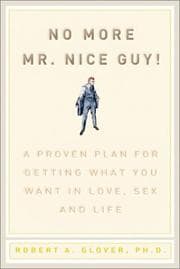
I'm reading this great book right now called, um, uh, No More Mr. Nice Guy. So I, uh, recovering people pleaser. He calls it nice guy syndrome, where, you know, exact- it's exactly opposite of hell yes or no, right? Like, everything's like, "Oh, yes," right?
And then, you know, and, and no no's. And you're doing it because you feel like that's what you're supposed to do, what you need to do. And, and essentially what you're describing, and, and let me know if I'm wrong, is the filter system that allows you to To give a very confident yes or no, because if the answer is no, you can say, "Look, I appreciate you. I like you. It's not that I don't wanna do the thing you're asking necessarily, but it doesn't... it's not in my vision.
It doesn't fit my vision, so I have to say no." And now you have an excuse to do it. It almost, it's giving people the firepower to say n- no to the things that, that take away the time or take away the energy that they would otherwise spend on the things they do wanna do. Is that a good way of framing it? It is.
And by the way, can you still hear me, Ryan? It looks like it's a little choppy there. Can you still hear me? Perfect. Yeah.
Yeah, yeah, yeah. I can hear you good. So let me answer your question in, in three separate ways, if that's all right. First of all, and it might seem a little weird, but one of the things I love to do is drive through cemeteries periodically. Because I look at these headstones, and most headstones will have a birth date, a death date, and a dash.
And I ask myself, what are the stories within that person's dash? What did they do in their dash? And that's a little bit of a philosophical approach, but the whole point is every one of us listening today as we're having this conversation, we're fortunate enough to have an open-ended dash. Our date's not there yet. So that means that every day that we wake up, we still have the opportunity to write our dash.
And so whether it's professional, you know, whether it's these other roles that we've been talking about, what is it that matters most? And are we doing those things? Because that's the essence of it, right? Are we doing them? And if you don't mind, I'm just gonna read two parts of my vision.
Is that all right? No, read away. So I'm opening up right now my Google Calendar, and, and I, yes, have these memorized, but I wanna make sure I get it right. And I'm being a little vulnerable right now 'cause, 'cause this is my vision. And again, I wanna remind us that vision and goals are habits one and two.
The vision is the high level. It's that dash. In the end, how do we hope others will think of us as they look at our dash? And so I'm gonna read just two. I'm gonna read my personal one, which I've actually not shared with anyone outside my family.
This is the first time I've shared this outside my family and really close friends. Uh, and then I'm gonna read one from the my role as father. Now, again, this is mine, right? This is not anybody else's, and so whether you agree with me or not, it's not the point. It's my vision for those roles.
So personally, now this all has to do with me. I strive to have a close personal relationship with Heavenly Father and Jesus Christ, and I make time to connect with them daily. I prioritize those relationships above everything else. I focus on learning and living the lifestyle that Jesus Christ lived and taught. I'm healthy, fit, and I live an emotionally balanced life.
I maintain a debt-free life and have multiple streams of income that allow me to help others and have a combination of time and financial freedom. And I live life to the fullest so that there's no regrets for lack of trying. That's me personally. Now, in the role of father, let me read this. I'm an example of what a true gentleman looks like.
And I have four kids, by the way, ages 23 to 16. I'm an example of what a true gentleman looks like. I strive to empathically listen rather than problem solve. I'm the type of person I want my daughters to marry. I'm present with my children and work to develop great memories together, and I help them see their potential and bring out the best in each one of them.
Geez. Man. Now, this may or may, may not be perfect, but this is my vision of who I'm striving to become in this dash. And so the vision doesn't change often. It's really front-loaded.
Like, once we sit down and identify this, we might tweak it periodically, but it can usually stay for quite a while. And then the goals will come back to each year and adjust those. So one of my goals as a father this year, at least one big trip with each child and canyoneering with the family before September 1st. That's an example of a specific measurable goal that aligns with it. And I'm not overly structured.
You know, this doesn't turn us into robots. It's simply saying, "Let's get intentional about our lives. Let's get intentional about what matters most." Professionally, how do we have a transformational impact amongst all the things that we could be doing? In these other roles of our life, what are the things that matter most?
And this program, this approach, simply gives us the way that we can do it. Yeah. W- w- what I like about that too is it's, the aspirational nature of it allows you to act as if, even if you're not there today. You know, I, uh... And, and I've done a bunch of vision statements and different stuff, n- n- never as structured.
I, I struggle sometimes with, uh, having a system and, and, um, I actually have queued up. When I finish, uh, No More Mr. Nice Guy, I'm actually reading, um, your book, your book next. Your book's the next book on my, on my table, um, 'cause this is something that I've struggled with, is like I'll, I'll write a vision statement down, right? Of something I wanna be, whether it's the entrepreneurial side of my life or, or this side, the, the podcast and communication side, or it's, or it's in my personal life, and I, I struggle to come back to it, or when I'm off of it, right?
Say I, I'm, I do something that doesn't align with the vision or I make a decision that doesn't align with the vision or I allow a, a, a bad habit to creep in that, that takes me from it, right? There's like this, again, this sense of, um, disconnect or, or, or guilt for not living that. And I... And that was a problem for a long time. And about a year ago, I, I picked up the mantra, act as if, right?
So like even if I'm off pace, right? Like so maybe, hey, I, I only wanna, uh, bring alcohol into my life no more than one day a week, right? A couple social drinks with friends. Cocktail here. I like an old fashioned as much as any guy.
Um, and you know, but I don't want that to be a daily habit in my life. Okay. So say, uh, you know, maybe I have a couple drinks with buddies after, you know, s- a golf of, golfing on a Tuesday, and now... And it's like, okay, what would the version of me that I wrote down as a vision statement do? What would that, that version of me, of exactly who I would love to be, what decision would he make?
And then I can say to myself, like, he would say, "I'm good. You guys can drink all you want. I'm, I'm just not gonna have a beer today," right? I'm just, "I don't need it," right? And I, and that version of me has no problem saying that, so I'll just act like that guy, even though that guy's not me, right?
Like me wants to go ... put three Coors Lights down and hoot it up with my buddies on the golf course. That, that, you know, like, the, the version of me right now wants to do that, but this other version that I wrote down that I'm kinda committed to being to, he would say no, so I'll just act like him. And that has allowed me to come back to, like, who I wanna be, but, but I need more structure to it, 'cause I do, I do, um, I do find... and, and this is why I'm so interested in, in reading your book and your processes. I find for those of us who do sit down and do the vision, or even to the goal part, it's the, it's the process of coming back to the goals oftentimes, and i- and in most systems. And, and this is where I want you to dive in a little deeper.
The question that I'm actually working towards is I find with a lot of the systems, right? They're so structured that the system becomes a job, and all of a sudden you're like, "I don't need another job," right? Like, I'm trying to use this system to get more time in my life and be better. I don't want the system that's supposed to be helping me bring time in actually co- Ever see an idea so clearly in your head but struggle to make it real? We've all been there.
With Wix, you can build a website for your business just the way you pictured it. Get the best of both worlds with AI and drag-and-drop tools all in one place. Stay in your creative flow and use AI when you want, how you want. Create a website your way. Try it out at wix.com.
Hey, Fidelity. What's it cost to invest with the Fidelity app? Start with as little as $1, with no account fees or trade commissions on US stocks and ETFs. Hmm. That's music to my ears.
I can only talk. Investing involves risk, including risk of loss. Zero account fees apply to retail brokerage accounts only. Sell order assessment fee not included. A limited number of ETFs are subject to a transaction-based service fee of $100.
See full list at fidelity.com/commissions. Fidelity Brokerage Services LLC, member NYSESIPC. Cost me all this time on the back end. So talk to me a little bit about how you said... 'Cause you, 'cause you said, you said, you know, it's a, it's structure, but it's not, like, so rigid, right? Like, you, you kinda, uh, uh, insinuated that a little bit.
So maybe talk through how you, how you get people to keep coming back and not make this feel like just another obligation on your time, like, like some systems do. Yeah. So let me preface it with one answer, and then let's talk pre-week planning, 'cause that's the key. The people that do pre-week planning leading this, total game changer. First of all, I'll say this.
People that go through Do What Matters Most, I say this right up front, have some grace with ourselves. In other words, we don't expect perfection from anything, right? I mean, I, I just don't. Otherwise, it's setting an unrealistic expectation. None of us are perfect.
And so for example, pre-week planning. We invite people to do pre-week planning every weekend, and it takes about 20 to 30 minutes. Now, I was a fighter pilot for 11 years. I would have never dared jumped in the F-16 without doing pre-flight planning, because you can imagine the chaos that would result if we're like, "Hey, we're just gonna wing it today." We would never do that in the fighter pilot world.
Well, how many of us go into our weeks without some semblance of a plan and expect a different result than the fighter pilot? That's why we don't do it. And so if we back up, you know, you're describing the intentionality. You used the golf and the drinking examples. You're describing the intentionality and the why for habits one and two, the vision and the goals.
It starts to become a guide for who we are. Instead of just randomly saying, you know, "Whatever happens, happens," we're becoming intentional about our dash. What type of leader do I really want to be remembered as? What type of parent and spouse, and what type of friend, et cetera? That's the why behind those two habits, and that's why we start there.
We could've written a book about pre-week planning alone. Still would've been a game changer. It's just so much more powerful in the context of the vision and goals for the reasons you described. Because ultimately, that's who we start to become in this journey of life, and it doesn't happen overnight. Yeah.
It does take time, and it takes years, but at least we're on the path. At least we're on that journey. Now, do you mind if I talk pre-week planning for just a couple of minutes? You can talk about whatever you want. 'Cause this is the execution and this is the doing, which is ultimately what really matters. Pre-week planning is a process, like I mentioned, that we invite people to do usually between Friday afternoon to Sunday afternoon at the latest.
I no longer say Sunday evening, because if we wait till Sunday evening, it's the first thing to go, right? Friends come over, family, and it's like, "Ah, pre-week planning's out." Pre-week planning is a process that helps people schedule their priorities rather than prioritize their schedule. And there's a saying that you probably heard, and I don't even know who to attribute it to, so many people have said it. Where our focus goes, our energy flows.
And so if we don't have a focal point... And this is something we'll actually do during our trainings. We'll have people stand up and put their arms out and balance on one leg with their eyes closed. And they fall, and you know, they g- they're tossing all over. We then have them do the same thing with their eyes open and choose a focal point somewhere at least five feet out in front of them.
So they'll put their arms out, they'll balance on one leg, and they'll focus on a focal point. And everybody is rock solid. They're balanced. And I'll ask people, "So how do we apply that to what we're talking about here in Do What Matters Most?" And the common responses are, "Yeah, once we have a focal point, then we're balanced.
You know, with our eyes closed, we're all over the place." That's exactly right. So pre-week planning is the process of truly scheduling our priorities rather than prioritizing our schedule and doing exactly what the title of the book is and the program, What Matters Most. So amongst all these things that we have out there to choose from, which ones are the priority? And maybe we can take the next, the rest of the time on this.
Can I share w- the why first, Ryan? There was a leader who went through this, and he said, "My leadership approach and style was to show up and deal with that, whatever comes my way that day." Now, as he was leading this team in a large organization, no wonder he's getting, you know, poor reviews on the culture scores for his team. You could imagine, Ryan, what kind of guy that is. And without me...
In fact, let me just ask you. Without describing anything else about this guy, just by simply saying that, "Hey, I show up. Whatever happens, happens, and my leadership style is let's just deal with whatever happens that day," how do you think it would be to work for that guy? Chaotic, frustrating, fusing, probably even hot-tempered at times, 'cause you get overwhelmed when you run out of energy at the end of the day and problems present themselves That's it. It's all that Yes, yes, yes, and yes.
Th- that's exactly this guy. Once he realized that's what his approach was doing to the people around him... You know, a vision for each role. Okay, what is my vision as a leader? Okay, well it's not to be that, right?
What you just described. What are some things that he could do intentionally this year that would start to move the needle in a different direction? Okay, pre-week planning. Now, let's put ourselves in his role. So rather than just winging it day to day, he's sitting down and saying, "What matters most this week?"
Once he started applying these habits, total transformation on his team, because now he's coming to work and he's no longer just reacting to the fire of the day. And when a fire does come up, he can step in and handle it, and then get back right into his plan around what matters most. And so let me walk... Can I just go through the four steps of pre-week planning? And I'm gonna just ask you, Ryan, you can kind of represent everybody listening to this.
Yeah, yeah. Do you use... Do you prefer paper or do you prefer Google or Outlook calendars? What do you prefer, digital or paper? Paper.
Okay. And that's about 40, 50... It's kind of split. Half and half is, is about the right number in most cases. So this is why we developed the tool, and I'll...
And happy after the show, Ryan, give you access to it for a year. Uh, it's, it's for Google Calendar or Outlook, or people can get a customized planner to do pre-week planning. The point is, the tool is there for either one of your preferences. It's four simple steps, because to your point, nobody wants to add one more complex thing to their life. It's gotta be simple.
Four simple steps. And we invite people, no matter what you have and do already, bring that to the table if it's working for you, and see if this can enhance it, and it will. And that is, number one... And imagine yourself sitting down on a Sunday morning doing this. Number one is review your vision and goals.
Now, they're gonna be written in your planner or they're gonna be in your digital planner. The ones we created are a one-stop shop so that you have your vision, goals, and do pre-week planning in that spot. So imagine how awesome it would be to be aligned to your vision and goals and looking at that every week. That's what you mentioned earlier, right? It doesn't help us if we put it in a drawer.
That's right. Number two is to write our roles. Well, that's easy. It's the same roles that we're using in our vision and goals, and I've already shared, you know, what some of mine are. Step three is to set action items for each role.
In other words, we have a brainstorm with ourselves. And Ryan, do you mind if I just use you as the guinea pig here? No, fire away. So what would be some of your roles? So personal already, yes.
Yep. What else? Dad. Okay, yeah. Yep, so dad is, dad is one.
I'd say another one of my roles is, uh, CEO of, uh, my company, the AI company that I told you about. Perfect. Um, podcaster, creator, coach, which would be what we're doing right now. Excellent, yep. Uh, those are probably the top three, I'd say.
Um, there are more, I'm sure, but those are probably the top three. Yeah. Excellent, and there would be more as, as we thought more about it. That's a perfect start, though. So let's use those.
So you have a vision for each one of those. You have one to four goals for each one of those for this year. And then now in pre-week planning, we sit down, you going through those roles. First of all, it would be you in step three setting action items for each role saying, "What can Ryan do to take care of Ryan this week?" Whether that's strength workouts, exercise, scheduling that, you know, elusive doctor appointment, swimming, meditating, yoga, whatever.
All the things to take care of you. As a dad, son, daughter, kids? I got two boys. Two boys. 11 and nine.
And what are their names? Duke and Colton. Duke and Colton. So it would be saying, "What can I do with Duke and Colton this week? You know what?
Duke, I'm gonna take him out. We're gonna play basketball. Colton, I'm gonna take him for ice cream. I'm gonna write him a note." Whatever.
Now, you could say, yeah, I, I might have done some of those things otherwise. But most of the time the answer is we wouldn't have done a lot of those things otherwise. As a podcaster this week, what are the things that are important to get done this week to stay ahead of the curve? As a CEO, what can I really do this week that is important? And notice the words I'm using.
What can I do? It's not what I have to do. That's a running to-do list. And that's why pre-week planning becomes a game changer. So it's that process of brainstorming for each role.
And then the last step is when will we do it? And we assign a time in the calendar for each of those action items, and that's our, that's our plan for the week. And what we've just done is scheduled our priorities rather than prioritized our schedule. And in the spirit of having grace, our target PQ or productivity quotient is 70% to 80%. In other words, of the things that we plan in the week, we only expect us to accomplish 70% to 80%.
And that's because life happens, and we allow for that grace. And it's not that we don't give 100% effort, so let's not mistake that. It's that we're allowing for life to happen. And even with that 70% to 80% productivity quotient, a person doing pre-week planning, according to our research, will accomplish 800 to 1000 additional priorities this year than they would've without pre-week planning with less stress. So by all accounts, that would be life-changing for anybody.
I also like that you said 1,000 priorities, not 1,000 tasks, because I will tell you, when I'm going wrong is when I am being my own taskmaster and just checking off tasks that need to get done versus priorities, right? Those, those needle-moving things, those, those activities that are... that push energy back into your life, that grow your business, that grow your relationship, that's, you know, whatever the, the, the role is, if you defined it. Um, and that's something that I've worked very hard on this year, uh, especially, you know, in the, in the role that I'm in today from a work perspective is, you know, like am I... Should I be the one as the CEO creating the LinkedIn post? Like is that something I...
Is that a task or is it that needs to get done for the business? And just because I can maybe get it done the fastest, I do it? Or is that a priority that actually in my role in this current company in this moment that actually moves the needle forward? And it's like those type of mistaking tasks for priorities, and that's why I love what you've built here. That is such a, I feel like such a common trap that we fall into is, um, prioritizing tasks over- ... priorities Yeah.
Can I just share two quick stories? Please. So just to illustrate this point, and you'll notice that almost every one of my examples other than that one executive have been outside of work, 'cause most of the people listening to this, owners, entrepreneurs, we're thinking about work all the time. It's the other roles that get, get neglected. And so if you notice, most of my examples have been outside of that.
And so I'm not minimizing that because like you, you know, most of us are gonna have one or two or three professional roles. It's the other roles that bring them all together that creates that holistic life. So let me just illustrate this with two simple stories. Just last week I went to Washington, DC to do a training. As part of my pre-week planning, I had written this: write a little note to Lana and Clara.
So before I left, I walked into their bathrooms and wrote on their mirror in dry erase marker, you know, a little note to them, how much I love them, how great they are. That literally took 30 seconds for each of them. My question is, would I have done that had I not thought about it in pre-week planning? Probably not. How often do we randomly go and write on our kids' mirrors and, uh, or send them a little note?
Not very often, right? I mean, there was an intentionality behind that, and so I'm no different than anybody else. It just simply wouldn't have happened, as simple as that is, had I not thought about that role as father in pre-week planning. And what can I do for my son, who's in San Diego right now working? How about my other daughter, Bella?
And just one more example to illustrate this point. Uh, the Pepsi, uh, executive team of Pepsi went through Do What Matters Most, and we certify their trainers, and it was another trainer doing the training. It wasn't me. Under the role of father, this executive wrote, "Call my son." Now, seasoned guy, right?
By all accounts, you would look at him and say, he's totally successful. And that's one thing I've learned is that pretty much all of us are navigating challenges that the people around us know nothing about, especially as entrepreneurs and owners. And this guy was no exception to that. And so the trainer, just out of curiosity, asked him, "Why call your son?" And his response was kind of a humble statement when he said, "Because I haven't talked with my son in seven years."
What? And the trainer's like, "Whoa, okay, so when are you gonna do it?" Step four. "Okay. Thursday, seven o'clock.
Great." Six months later, there was a follow-on training with the same team, and he said there was just a palpable difference about this individual. And so he asked him, "Hey, did you make that call?" And his response was this. He said, "You know, I saw it there in my planner, and for the first time I, I knew I needed to make the call."
So he did. And he went on to share that him and his son talked, and they haven't... Excuse me. Him and his son talked, and they couldn't even remember what they'd argued about seven years prior. And now they've started talking every week, and they've become best friends.
And even more so, on that initial call that he had with his son, he found out he had two grandchildren who he didn't even know existed. So what if he wouldn't have made that call? And he's probably not that different than many of us, right? Every morning, he woke up knowing he needed to make that call, but what was the next thought? I'll just do it later, next week, whenever, and suddenly seven years have passed.
So as he thinks about his dash, leading a life by design rather than by default, what was the impact of pre-week planning in his life? That simple statement, "Call my son," had a generational impact for him. And this is this. Let's keep in mind, this is a seasoned, successful guy if you're looking at him from the outside in. And so what's the impact on every one of our lives if we can develop a vision for each of our key roles, what only 2% of people have done, identify one to four specific targets or goals this year in each role, and then every week or most weeks, giving ourselves some grace, doing pre-week planning and saying what matters most in each role this week and when will we do it?
Rob- And what's the cumulative impact of that approach to life? Rob, this, this has been an incredible conversation. I know, um, uh, you know, we've, we've gone, we've gone pretty deep on this and, and I have a feeling that a lot of people are gonna wanna go a lot deeper. So where do they, uh... How do, how do people get into your world?
B- besides buying the book, like, how do they, how do they connect with you? How do they go deeper with your company? I know there are a lot of executive teams that listen to the show that could be interested in the training, so, like, how do they get deeper into your world? And guys, any of the, uh, links or resources that Rob mentions, just scroll down, whether you're watching on YouTube or listening wherever you listen, uh, and I'll have the links in there for you. So, so where do, where do we send them, Rob?
Uh, you know, I think this is, this is one of the most important topics and, and even, guys, even if you're not in a leadership role, I know we talked a lot about leadership. You could be 25, just getting started in your career, and as Rob mentioned earlier about the CEO of Clif, uh, Clif Bars, starting to put a structure like this in place could put you light years ahead of where you would be otherwise. And I'll tell you, I'm a testament, because I didn't have any of this growing up. I, I came from a, a family, and God bless my parents. They showed me, uh, love, but one was a receptionist and one was a mechanic on a railroad.
They had no business skills. We were just getting by. You know what I mean? Like, if I had a, a pair of sweatpants that didn't have holes in them for school that year, that was a victory, right? So, like, I, I've learned a lot of these later in life and, and I have thought sometimes, like, like if, if...
I'm 44, li- like the CEO of Clif. But man, if you're listening to this and you're younger in your career, d- don't pass this off as like, "I'll do that when I'm a leader," guys. D- dive into these things right now, and the, the rewards that you get, I promise you, will be exponential. So, so how do they take that deep dive into your world, Rob? Absolutely.
And by the way, Ryan, if you have children, teach them how to develop a vision for their roles. Teach them how to do pre-week planning. It's a total game changer. Yeah. My college student son does it, and all of his roommates are like, "What are you doing?"
And he taught them, and all of them, all of them are doing pre-week planning now. So yeah, you don't have to be an executive or an owner, to your point, Ryan. Uh, so three ways. Number one, the book's easy to get everywhere that you would buy a book, Amazon, Audible for the audio version, Kindle, all of that. Uh, Do What Matters Most.
Make sure you're getting the second edition of the book. Big changes in the second edition. Number two, the website is becomingyourbest.com, so becomingyourbest.com. And that really illustrates all of our teachings, I mean, our programs that you can go through. Uh, you can get certified as a Do What Matters Most train or a coach, train it inside your own organization.
Tons of options there. Uh, if you wanna get a planner, which I highly recommend because it's like... You know, it's like you talked about your dad, a railroad mechanic, is that right? You don't be a railroad mechanic without the right tools and expect to be successful. Having the right tools makes a huge difference in this.
And so whether you're using Google or Outlook, or you prefer the paper planner, if you'll go to dowhatmattermostplanner.com, you can get the tool that works best for you, whether it's digital or paper. So dowhatmattermostplanner.com. So those are the three different places that are, uh, the starting points, Ryan. I love it. Rob, I appreciate you.
I appreciate your time. This is such an incredibly important topic, especially with all the deluge of stuff we get kind of in this modern age of AI, digital era. It's very, very easy to get off track and, and lose our focus, l- lose our intentionality, and I love that you used that word. Um, and, and I appreciate this. And guys, I highly recommend, and I was being very honest, like, this, this, this No More Mr.
Nice Guy has me captured, 'cause it's, like, literally describing my life, and I, like, have to finish this book, it's so good. Um, but the next one up is this, 'cause, 'cause this is a place that I struggle with. I, I do. I, I struggle with some of this stuff, as I described, and I've tried other systems and missed. But I love the simplicity, uh, I love how straightforward it is, and I love how you baked in the ideas of, of giving yourself grace, right?
Like John 3:19, like grace upon grace. Like, we wanna give yourself that ability to, hey, you put these things down. Don't feel like you're a loser if you don't get 100%. You hit 75, you won that week. That's great, right?
You hit 60, you won that week. That's, you know. And, and, uh, I, I love that about your work and, uh, and, and about the way you speak on it. So I wish you nothing but the best. Open invitation to come back any time you want, man.
We could-- I, I have a million more questions for you. Um, so thank you. And, uh, guys, make sure you dig into Rob's world. Hear that? That's me in Tokyo learning to make sushi from a master.
How did I get here? I invested wisely. Now the only thing I worry about is using too much wasabi. Get where you're going with SPY, the world's most traded ETF. Getting there starts here with State Street Investment Management.
Before investing, consider the fund's investment objectives, risks, charges, and expenses. Visit statestreet.com/im for prospectus containing this and other information. Read it carefully. SPY is subject to risks similar to those of stocks. All ETFs are subject to risk, including possible loss of principal.
ALPS Distributors Inc., distributor. As our 76th year in business begins, our mission hasn't changed. We're family taking care of families. At Sears Heating and Cooling, we're not plumbers or electricians. Nope, we're Central Ohio's heating experts.
If you've been told you need a new furnace or have a bad heat exchanger, call for a free second opinion. You'd be stunned at how often we run these calls and nothing is wrong. Sears Heating and Cooling: honest advice, fair pricing, and locally owned for almost eight decades. searsheatingcooling.com. With Venmo Stash, a taco in one hand and ordering a ride in the other means you're stacking cash back. With Venmo Stash, get up to 5% cash back when you pick a bundle of your favorite brands.
Earn more cash when you do more with Stash. Venmo Stash terms and exclusions apply. Max $100 cash back per month. See terms at venmo.me/stashterms.