Hear that? That's me in Tokyo learning to make sushi from a master. How did I get here? I invested wisely. Now the only thing I worry about is using too much wasabi.
Get where you're going with SPY, the world's most traded ETF. Getting there starts here with State Street Investment Management. Before investing, consider the fund's investment objectives, risks, charges, and expenses. Visit statestreet.com/im for a prospectus containing this and other information. Read it carefully.
SPY is subject to risks similar to those of stocks. All ETFs are subject to risk including possible loss of principle. Alps Distributors, Inc., distributor. Every holiday shopper's got a list, but Ross shoppers, you've got a mission, like a gift run that turns into a disco snow globe, throw pillows, and PJs for the whole family, dog included. At Ross, holiday magic isn't about spending more, it's about giving more for less.
Ross, work your magic. Do you have a busy day ahead of you? AARP is here to help you feel your sharpest every day. Discover delicious food and simple habits proven to support your memory and mental wellbeing. We have healthy meal plans and videos to give you inspiration for eating healthily.
Support your brain health at aarp.org/fuelyourbrain. Yeah. Let, let me, let me share with that, uh, my wife and I got married within a year as well. Same thing. Same thing.
When I first met her, and I knew I liked her a- after one date, I said, "You know what? I gotta be honest. I don't drink. I don't ever wanna drink again. Um, I've got two years sobriety, and also, I've become emotionally available to love somebody, but I am stubborn, I can be selfish, I hold grudges, and I get defensive.
Those are the things about me that I don't think I will ever change," because I think it's important to tell somebody you can't be perfect. If I've worked on myself to, to become emotionally available to love you and I, and I've developed empathy, and I've, I've taken care of the big picture, some of the small things I'm going to be. I'm going to be defensive sometimes. I'm going to hold grudges. And I said, "That's who I am."
And she's like, "You know what? I like that person." Let's go. Yeah. Make it look, make it look, make it look easy.
Ice spat. The Ryan Hanley Show shares the original ideas, habits, and mindsets of world-class original thinkers you can use to produce extraordinary results in your life and business. This is the way. Hello, everyone, and welcome back to the show. We have a tremendous conversation for you today with Justin McClure.
Justin is an entrepreneur. He's a branding expert. He's built an entire business around social media, and he has also written a book called Daily Sober. This is 365 days walking you through the process of being sober. It's your guide, and this episode dives deep into what sobriety can do for your life.
Now, I know a lot of you listening, you may have a couple drinks. You may have a lot of drinks. It may be part of your lifestyle. But my friends, it is important to at least know what alcohol is doing to our body, doing to our minds, and how it impacts our life. You may not want to hear it, but I promise you are going to learn.
And whether it helps you just keep in check your drinking or maybe you're struggling with being sober in general, I promise you Justin, his work, his book, this conversation are gonna help move you forward. We also touch on a new product that he's launching, that entrepreneurial journey, the h- the genesis of the idea, how he built, manufactured the product. This is a full scope episode. It is fast and furious. I am a huge fan of Justin and his work, and you're gonna love this episode.
I love you for being here. Thank you for being part of this community. Doing this podcast is a pleasure, and I just appreciate the hell out of you for being here. All right, guys, let's get on to Justin McClure. Justin, great to have you on the show, man.
Appreciate your time. Thanks for being here. Thank you for having me. I'm looking forward to it. Awesome.
So I wanna start with your TED Talk from 2019, "The Biggest Distraction to My Success Was Myself." Um, watched most of it. Loved it. Can you, can you break this down? Because, uh, I love this concept, and I love the way that you attack it, and, and I wanna share it with the audience.
Well, you know, I think a lot of, uh, addiction is, um, getting in the way of yourself for me. So basically, if I had a goal in mind and the goal was here, I had all these other things that I dealt with that wouldn't allow me to get to the goals. 'Cause when you have alcohol and you have addiction, you know, with that brought in women. It brought in, uh, seeking for verification. It sought it, and then with that, you have manipulation. You're deceptive.
So you have all these character defects that get in the way of pursuing a goal that I found that when I'm sober, I have nothing in the way of achieving the goal because I sleep well at night. I have no stress. I don't look over my shoulder. And I think this is really important because in my sober life it can be quite boring, and I tell people a boring life is great. Why does it need to be chaotic?
Why does it need to be filled with ups and downs? Why does it has, have to have all these things? There's nothing wrong with being in the middle of the road, 'cause when I'm in the middle of the road, I can meditate on what I'm trying to achieve and then go achieve it. Do you think some of that has to do with not having a value structure that you hold yourself to, standards or, or maybe something like a North Star? I know, um, in the times when I've felt the most, uh, we'll say wayward, are also the times when bad habits, not just necessarily alcohol, but other bad habit, binge fl- binge-watching Netflix till 2:00 in the morning even if you haven't had a drink.
You know, you have all these bad habits start to creep in when you don't have something that you either, uh, either a baseline that you're, that you, that catches you or a North Star that's driving you. Yeah, I mean, I, I think if you don't define your value system, then other people will define it for you, and that's kind of like... You know, I'll talk about it later, but my book- Yeah ... is about breaking bad habits, which I'm, I was speaking to myself. So my bad habit was alcohol, chasing women, um, a lot of these things. So I didn't have a value system, so other people defined it for me.
The, the women that I wanted, I shaped who I was so that I could, I could earn their affection. When, when, when I went out with other friends, I was, I was kind of a chameleon. What did they want me to be? My value system was, it changed from week to week to week. I did not know who I was.
It wasn't until I got sober and I said, "These are the things I'm doing. I will not compromise anymore on these values." For instance, I wouldn't go to bars. I changed my people, places, things. Th- this is the person I'm going to be.
I can't be it overnight, but these values are what I strive to be. I'm gonna work towards that. Any person or thing or place that doesn't, uh, th- that doesn't complement that is going to be removed. And it took about a year, but after that year, I had a value system, and I did not have one in addiction. And so I, I think it's really important to say that again, that if, like, if you don't define your value system, then those around you will for you, and that's why you, you'll go back to addiction.
You'll, you, you'll relapse. You'll go back to the girlfriend you don't want. You'll go back to the pornography. You'll go back to the binge-watching. But if, but if you have a value system, it might be hard sometimes b- because you have to be disciplined, but at least you know what you stand for.
Yeah. I, uh, I do, uh, drink occasionally today, but I did 75 Hard last year, so for 75 days- Oh, yeah, that, that- No alcohol ... that, well, that, that, that's, that's something, that's something I wanted to do. I read about it and I was like, you know what? That seems the next hard thing that I wanna do. Uh-huh.
So I, I heard that was hard. Dude, it's, it's awesome. It, um, it, you know, it, it... W- here's the funny part. So, so for those of you who are listening at home that don't know 75 Hard, it's a mental toughness program.
It's not meant to be a fitness program. Sometimes it gets mes- misqual- classified. It's two workouts a day, 45 minutes a piece. One has to be outside. N- not defined on what fitness is.
All I did was, uh, I like to do ruck walks. I've, uh, 40 pound ruck vest that I wear, uh, 20 in front, 20 in back, and I would just go for a 45-minute walk, sometimes with no ear pods in, sometimes I'd listen to a podcast or a book, whatever. Um, it's a gallon of water. You have to read 10 pages of a book. You have to stick to a diet, but again, the, the diet is not defined in any way.
All I picked was to limit my sugar as much as possible, so I... Zero sugar in America today is very, very difficult, but I got as close to it as I could. Um, and then the other one is you take a progress picture, and that's mostly just to hold yourself accountable. And what I actually found out of all of it, I thought the alcohol would be the hardest just because friends, social settings, et cetera, um, but the hardest part was actually the t- the gallon of water. That was the hardest part, was the gallon of water.
And- A gallon of water? Really? Yes, because, you know, you think about how much you drink a day. Maybe you have a couple Yetis or whatever your water container is, a couple glass of water. A gallon of water is a decent amount of water, and you have to realign your life a little bit.
And, and this is where everything you're saying to me makes so much sense. I had to realign my life to the fact that, like, the simple truth was I was gonna pee, like, 15 times a day you know what I mean? It was just... You know, like, simple things like that- And, and when you think about that, you don't wanna drink it late at night because then you, you know, you wake up in the middle of the night and you disrupt your sleep, which isn't good. Yeah.
I made that mistake one day. It was like 11:00 PM, and I had only had- ... like, a tenth of the water I was supposed to drink. And, you know, so I, I chugged, you know, basically almost a gallon of water in an hour, and then that night was wrecked. But, but my point, getting back to what you're saying, is, um, what I found really interesting during, you know, being sober for 75 days, was the people that I actually would want in my life if I were to do a true audit could give two shits that I wasn't having a drink at the party or whatever we were doing. I d- you know, I do some speaking.
You go to events, and you think like, "Oh, what am I gonna do if I don't have a beer in my hand?" or whatever. And I would... You know, you get a seltzer or a glass. No, the people who actually care about you could give two shits whether you're having a drink or not. You're right.
Yeah. And it creates almost, like, this select and fil- like, this automatic filter for who are the people that matter and who don't. Like, if someone is actually gonna care if I'm having a drink or not, they don't really care about my health. They don't really care about what I'm trying to do, and, um, that was a really... Thankfully, most of the people in my life did not care, so it...
But, but that was a really interesting side effect because the few people that did are probably people in the back of my mind I was like, "This isn't a great person to have in my life anyways." Yes. And this just gave me an easy reason to step away from that relationship. Well, you know, once again, you, you, you defined a value system there. Um, that was my value system a- a- as well.
I just, I helped somebody with this last week. She's like, "Justin, every time I go out with these people, it's work-related and, like, it seems like I always have to have wine to, to be out with them." And I said, "Well, how, how is it work-related if you have to have wine? There's nothing about working that's wine-related. These are people that they...
If you're trying to be sober and they're trying to encourage you to, to drink wine, how are they really your friend?" Are you tired of endless follow-ups and missed opportunities in your sales process? Chasing leads is a losing game. That's why I created the One Call Close system, a battle-tested sales system that uses behavioral psychology to close deals in just one call. No more, "Let me think about it."
No more, "I'll get back to you." Using the One Call Close system, we took new reps from 25% close ratio to over 80% in just three months. To grow fast, you must close deals faster at zero extra marketing cost. The One Call Close system allows you and your reps to build trust, address pain points, all while watching your revenue skyrocket. Ready to stop chasing leads and start closing?
Visit masteroftheclose.com today. Close twice as many deals this time next week. Visit masteroftheclose.com to learn how. Hear that? That's me in Tokyo learning to make sushi from a master.
How did I get here? I invested wisely. Now the only thing I worry about is using too much wasabi. Get where you're going with SPY, the world's most traded ETF. Getting there starts here with State Street Investment Management.
Before investing, consider the fund's investment objectives, risks, charges and expenses. Visit statestreet.com/im for prospectus containing this and other information. Read it carefully. SPY is subject to risks similar to those of stocks. All ETFs are subject to risk including possible loss of principle.
Alps Distributors, Inc., distributor. When you walk into a Burlington you're walking into amazing prices and great gifts. That's main character energy. Because at Burlington, the holiday savings aren't the only things turning heads. Discover quality finds and perfect presents for everyone on your list, even those who are hard to shop for.
Toys and jewelry, to new beauty brands and styles, these gifts go seamlessly from our stores to under your tree. Seriously, with these savings, why shop anywhere else? Burlington deals, brands, wow. Hiring isn't just about finding someone willing to take the job. You need the right person with the right background who can move your business forward.
If you want candidates who truly match what you're looking for, trust Indeed Sponsored Jobs. With Indeed Sponsored Jobs your post stands out to quality candidates who actually fit the role. According to Indeed data, 90% are more likely to be hired and trusted by 1.6 million companies. Spend more time interviewing candidates who check all your boxes. Less stress, less time, more results now with Indeed Sponsored Jobs.
And listeners of this show will get a $75 sponsored job credit to help your job get the premium status it deserves at indeed.com/podcats13. Just go to indeed.com/podcats13 right now and support our show by saying you heard about Indeed on this podcast. Indeed.com/podcats13. Terms and conditions apply. Hiring?
Do it the right way with Indeed. Hello. I'm here during the lunch rush with Janice, who owns her own food truck. Best cheese steaks in town. Janice traded up to GEICO Commercial Auto Insurance for her food truck business.
We're here where she needs us most. They sure are. We make it so easy for her to save with customized coverage that grows with her business. Sorry, I, I just get so emotional talking about saving folks money. Not this onion I'm chopping?
It's just so beautiful. Oh yeah, nice, the onion. Get a commercial auto insurance quote today at geico.com and see how much you could save. Get more with GEICO. And it goes back to the, the, the story that I told her.
When I got sober, if I had to go to a bar, I didn't have a, a mixed drink or anything. I walked around with a water proudly because I wasn't trying to drink. I wasn't trying to have something in my hand that looked like ... So if you wanted to engage me in conversation I was very comfortable saying, "I don't drink. I'm having a good time here.
I don't need a drink but I don't wanna talk about it." And I think by doing that and standing my ground it let people know right away like, "Whoa, this guy is, is, is, is here for a purpose and he doesn't drink." And that, that's the other thing. When you're, when you're at places like that and you have a purpose you tend to stay there for an hour then you leave and you go do something else. I've been way more productive.
So what I was telling my friend, I was just like, "If you're having to be somewhere and drink wine and you're staying three or four hours, one, you need to evaluate who these people are in your life, and two, you need to figure out how this really contributes to work at all." Yeah. So, so i- it, it's kind of the same thing. It's, it's really knowing what you're here for and your purpose and defining that value system and then, and then letting people around you know that you don't compromise. I had a conversation with a woman from the insurance industry, uh, on the show and she, uh, mentioned that ...
She said she basically didn't like the fact that in that industry there were still a lot of deals that happened in a, the back of a dark bar with a glass of whiskey. Okay? And I said, "Well, take out the glass of whiskey and what's wrong with having a one-on-one conversation in a private place?" Right? The just, just reframing this.
And she kind of thought about it and I said, "You don't, to get that deal done it doesn't have to happen in that spot, right? If that person that you're trying to do business with, if they're the kind of person who needs to have a private kind of exclusive spot that they can feel comfortable speaking to you in, which is really all that setting is for them for the most part, right? Then just set that up in a place that you don't either, one, be comfortable not having a glass of whiskey or whatever while they are, or two, just find another venue that's gonna allow you to share that experience in a way that, that works for you. Just define the terms of that meeting so that that person gets the privacy that they need or, or whatever and you get to be in a setting that you feel very comfortable in." I think status, and, and I don't necessarily just mean it in a hierarchical standpoint, but like, like status and how people perceive us plays into the pressures that your client or your friend was feeling- Well, it's kind of like I- ... about having a glass of wine.
I, I wrote about something similar in my book that when I first got sober my first year and I wasn't that strong in my sobriety I would not go to bars because I didn't belong there. Once again, value system. My value system was I don't go to bars 'cause I don't belong there 'cause I might be tempted to drink because I'm less than a year sober. So what happened? Any time there was a birthday I, instead of going to the back of the bar drinking whiskey or whatever, I would say, "I don't go to bars.
How about we take a walk across the Brooklyn Bridge?" I lived in New York at the time. "Why don't, why don't we go walk through Lower East Side?" Whatever it is. I, so I inst- instead of adhering to what they wanted to do I, I made a suggestion that was better than that for me.
So instead of going to the back of the bar I said, "Why don't we talk about our deal walking across the Brooklyn Bridge? Why do we need to be in the back of the bar?" So by, by eliminating a bad place I also protected myself from doing something I didn't wanna do which was go back to drinking which would have gone back probably to three or four other things that, that kind of are downstream from the drinking. Yeah. 'Cause and, you know, you said it a couple times, and it's 100% true, the, these are, um, they're, they're ... It's like a floodgate, right?
If we let one of these, these things that we are addicted to and, and that are a negative impact on our lives, if we, if we open one floodgate, the next one opens easier, and the next one opens even easier, and then all of a sudden you find yourself all the way back in some place that you never wanted to be. And holding true to that is, is so incredibly important, regardless of what the thing is. It might be alcohol for some. It might be, uh, one that I think is a major problem for people today, I, not a judgment, but I feel like because it's now legal in so many places, is marijuana, right? I have no problem with it being legal.
Th- that's not a political statement, but just like alcohol, I think people feel like people are starting to let it creep into their day and their lives so much, and then they make excuses for it. "Oh, you know, I can still do this," or, "I can s- " And it, whatever that thing is for you, you know, could be sex, it could be porn, it could be binge-watching whatever, it could be eating potato chips all, all night or whatever your bad habits are, right? The good habits stack on top of each other, right? You do one good habit, wake up every morning and read a book or go for a walk or whatever that, then the, it's so much easier to do the next good habit, and it's so much easier to do the next good habit. Unfortunately, the same exact thing is true with our bad habits, at least that's what I've found, and, and I'm, you know, a- you wrote the book, so I'm interested in your take.
Like, um, you know, it feels the same way with bad habits. You, you make one, you know, you let, you cross that standard line one time, and then it's so much easier to do it again and again, and then all of a sudden you find yourself in that place that you didn't wanna be. Yeah. I, I met a guy at the, um, airport a couple weeks ago in LA, and we just got to talking, and I'm very open about my sobriety. I shared that with him, and he was like, "Huh."
And he, he started to talk about how he thinks he drinks more than he should, but he also ... So I said, "Well, what, what happens when you drink?" And he said, "Well, I, I'm a bit unproductive." And I'm like, "You will always be unproductive." And then I shared this, and then he asked me, he said, "Well, Justin, w- why don't you drink?
Like, what, what's the, like, how do you really define that you don't drink, and, and why?" And I said this. I said, "Because if I do drink, I could lose everything. I will never gain one thing." And I said, "Here's the analogy.
If I start drinking again this Friday, maybe I get r- so drunk that I cheat on my wife. She finds out about it. She files for divorce. On Monday, my life is over. I've lost everything in one day.
In one weekend, I lost everything." Now, it, drinking, I could lose a wife, a house, a car, my kids. You will never gain any of those things by drinking. You will ne- so you will never gain ... So, so as a smart person using logic, I said, I told him, "Why would I ever drink again knowing that, that I could lose everything.
I will not gain anything. I, I, I'm not a 22-year-old man anymore. Th- th- there's no time for that in my life. I wanna be productive. I wanna achieve.
I wanna accomplish. So I have to remove the things in my life that are taking from me, and I have to keep doing the things where I'm able to be productive." I think also, and this is why I'm so glad that there are books like yours, um, out in the marketplace, is there is a, there is a lack of understanding of the impact that alcohol has on our body, particularly as we age. And certainly it has an impact when we're younger, but as we age in particular, if you're even drinking a beer every night, your sleep is that much less, right? Just say it's, say it's 10% less.
It's, it's probably more, but say you have w- and I, I actually did a, I, I wore a WHOOP strap for six months this year just to track, uh, sleep and other things. Um, and what I found is, uh, I could have one drink, and it would have a mild impact. But if I had any m- and that's one standard drink, not the quadruple pour that most of us put in a cup and say it's one drink, right? Like, one standard drink, and it would have a mild impact on my sleep. The next one would basically destroy my sleep for the night.
I would, I wouldn't, barely drop into REM It's very fragmented, yeah. Yeah. It's very fragmented. And, and so here we are. We're thinking, "Oh, I had a stressful day or a long day, and it's a Tuesday, and I'll have a couple beers just to wind into the evening, and the kids'll play.
No big deal. I'm at home. I'm not gonna get in any trouble. It's all good." Except the next day we wake up, and we're a little frosty for those first two meetings.
Yeah. And then that starts to snowball, and now every day we're waking up and having to deal with these effects that are compounding on each other 'cause we're not sleeping well, we're not be productive those first few hours, you know, we're not going for that walk, et cetera. And then we wonder why we don't hit our goals. Now, I think y- you can insert that for a lot of things, not just alcohol, but it's we, we lack an understanding of the impact on our lives these small decisions have. You know, you know what?
I, this is probably my most passionate subject. Uh, I'm probably, most people consider me a biohacker. Like, I, I know so much about the body, how it works, the chemistry of the body, and a lot of that is 'cause I don't want cancer. I don't wanna die of heart attack. So I educate myself, how does the body work, and, and how does sugar affect it from insulin to, you know, diabetes to all these different things?
How does alcohol affect it? Well, alcohol is, is, uh, fermented, and in the liver it's converted into acetaldehyde, which is a poison for your body. So basically, alcohol is a straight-up poison. Now, what I did in my book is my book is 365 daily lessons. Twice a month, I talk about what alcohol does to certain parts of the body.
So here for August 8th, al- alcohol's impact on the heart. So I get into the technical side of if you drink alcohol and it's a chronic problem, well, this is what it's gonna do to your heart over time. And so in my book, I go through the liver, I go through sleep, I go through the pancreas, I go through the brain. If you choose to drink, and you, and you, and you indulge too much, this is what it's gonna do to your body. And by doing that, I wanna let people know that It's not out of sight, out of mind, out of body.
What you do affects your body. If it's sugar, if it's fasting, if it's doing good things for your body. Alcohol is a straight up poison, because food, nutrition, is something that enhances the body a- and provides nourishment. Alcohol does not do that, therefore it is a poison, just like other things. So if you choose to do that, two, three, four, eight drinks a week, you are going to ...
Your life is gonna be cut shorter by doing that. So once again, why would I wanna do that if I wanna live long and I wanna be healthy? I gotta cut it out. Yeah. Hmm.
I think, you know, and, and, you know, I know for me, when I look back on, you know, today, uh, kinda 2017 I had a health scare to a certain extent, and I really went f- I dropped 25 pounds. I, you know, kinda really got in shape and probably not biohackered quite to yourself, but I'm fairly dialed in on fitness and discipline and b- you know, all the things I need to do to keep myself in the right spot. What, what, what was your thing in 2017? What happened? I had been eating poorly, not prioritizing sleep, not working out, and drinking way too much.
So I was 30. At that point I was, uh, mid-30s, 36, 35-ish. And, uh, what happened was I was, uh, MC-ing a conference that I was throwing, two-day conference. The la- the closing session was a fireside chat with myself and one of the primary keynotes. And, uh, I went to go on stage and I basically collapsed behind the curtain, and could barely, I barely pulled myself together.
I'm seeing stars. I wobble out. I sit down in the chair, and before we go live, before we were introduced, I lean over to, to the guy who was doing the fireside chat with me and I said, "I, I might not be able to do this." And to, to- It sounds like pre-diabetes. No, it, it was just purely it was too much drinking.
I was about 30 pounds overweight. Um, I was eating sugar and really terrible stuff. I wasn't sleeping at all. I was sleeping four or five hours a day. Um, I was not working out really at all.
Um- So you were 30 pounds heavier then? Yeah. Oh, yeah. Yeah, yeah, easily. Um, so now I'm, I come in, like, around 190 to 195.
I kinda fluctuate depending on water weight, et cetera. Um, at that time I was pushing almost 220. Um, and you know, I'm 6'4", so I could hide it a little bit, so I could, like, look at myself in clothes and, like, ex- you know, being a former college athlete I could kinda excuse away, "Oh, I'm still in shape. You know, I got kids." You know- Yeah, yeah ... all the excuses, right?
All the frigging excuses, except I had a moment where I literally went to perform, my body was like, "Nope. Sorry. You've, you've already played all your cards. Like, there's no more cards to play here." And you know, there w- I, like, had ...
So I dragged my ... So he, I'm sitting there basically comatose. I drag myself off stage behind the curtain. The conference is over. I'm supposed to be out shaking hands, thanking people for coming, you know.
I mean, this is, like, the ending moment, and I can't pull myself out from behind the stage. I'm toasted. And I said to, I said, "This will never happen again." Like, I am at, I, I need and should be able to get through two days of MC-ing a conference and not pass out on the floor. Like, that's completely ridiculous.
Yeah. And change, that, that's when I changed everything, um, in terms of all these things and, and, uh- Well, you know, you, you, you had a health scare, but you know what? You know the biggest sign of a heart attack? No. Death.
Yeah. Yeah, yeah. Yeah. So I mean, you know, if you wait till you're 53, the first sign of a heart attack might be you die. So what, what I t- what I tell people is that for me, one, I go get all my tests done.
I see all my numbers, and, uh, even the scary stuff. I wanna, I wanna know the scary stuff. And, and, and fortunately for me, I've been very, very healthy. I've al- I was also an athlete, and, um, I cut out alcohol long enough to, like, you know, my, my liver got to rebuild, all these kinda things. But you know, the most important thing is that I want longevity in my life.
I don't wanna die at 76 and start taking pills at 66, where I have gout and diabetes and I, I, and my last 10 years are, are not being mobile. I really think we can die at 94 and just fall over. Like, we just fall over dead, right? So I'm trying to set up my life and the education that I'm trying to give people through, you know, the biochemistry of things is that you had a scare and you were able to recover from that probably, probably because you had, you had a life of being an athlete and you're in good shape and you had good metabolism, so your body's able to recover. But there's a lot of people, um, who have done so much damage to their liver from alcohol, they got fatty liver disease now.
They, they got cirrhosis. All these re- all these things are really, really, really difficult to come back from. So it's not only the education of, "Hey, you'll have a better life by being more productive, and your, your relationships will be better, your coping mechanisms, your character defects. But really just your health in general will be better if you get rid of the poisons." And I, and I, I also, uh, also put sugar in the same place.
Yeah. I don't do sugar. Uh, I, I think it's the worst, one of the worst things for us, and what I tell my wife and what I tell people is, "This world doesn't care if we survive." I mean, l- if you look at Big Pharma, you look at hospitals, you look at the FDA, nobody cares. They wanna push capitalism and the things it sells so that you can go take another pill, you can go to the hospital.
Nobody wants to see you thrive. You have to educate yourself, and you have to do this on your own, and that's why there's so many people that are sick. Yeah, I, I agree. And, you know, and I think it's worse than capitalism. I think it's elitism.
I, I think it's ... 'Cause the, what's happening in the, uh, most of the organizations that you just mentioned, at least from my perspective, has very little to do with capitalism and has everything to do with a few people making an incredible amount of money and being willing to tell us whatever they believe we need to hear in order to listen to them. I mean, i- i- I say that, and- Tongue in cheek and possibly a, a little, a bit of hyperbole, but if it wasn't for, um, if it wasn't for what happened in the tobacco lobby and the sugar lobby, um, t- coming in and telling us that salt was the problem and not sugar, right? Sugar could be a Schedule 1 drug. I mean, what it does to your body, the effect that it has. I mean, we look at people having sugar highs and we're like, "Oh, that's no big deal."
They're, they're... You, you give a kid a candy bar and watch what happens to him. They literally become a different human being. Look at, look at adults. Well, yeah.
That, that, that's why I've been, I've been preaching for the longest time. In schools, the, it's not ADHD and all these other things. It's kids have too much sugar. They don't know how to deal with the impact and the effects of this sugar malfunction up and down. I mean, I have kids.
My twins are 11, and my boy is six. They're totally, like, they have no s- they have n- they're so, uh, mild-mannered and calm and, and they're great because they don't have their sugars up and down because they don't, they don't do sugar. When it w- when I'm around these other kids that, that sugar all the time, they go up and down, up and down. And how does a parent solve the problem? More sugar.
"Here's more sugar for my kid." And meanwhile, there's kids now that are 11, 12, they're pre-diabetic, they, th- they got, they got fatty liver disease. I mean, they're really unhealthy. My c- my son is in Cub Scouts, and I couldn't... 90% of the kids are just, are overweight.
And I, I can't b- you can't believe it until you see it, but you're just like, wow, it is such an unhealthy world that we live in. Yeah. I, you know, so taking this to, like, an entrepreneurial standpoint, just from, you know, if you're building a company, if you're running a company, if you're a high performer or wanna be a high performer, having a foggy brain from ingesting four, you know, doing four and four at Dunkin' Donuts in the morning and being hungover and then stuffing your face with chips for, at, at your break, like, you, you are literally not at your best. Here you are saying, you know, "I'm building something," or, "I'm running something," or, "I'm trying to be a high achiever," and you are setting yourself up in th- you know, and not to mention not, maybe not exercising, et cetera, you, you are putting yourself in a position to be non-optimal. And like, if for no other reason, you know, again, maybe everything in moderation to a certain extent, I'm not gonna tell anyone to go cold turkey.
That's, that's their particular opinion. But the closer you can get to zero, right, or, or go all the way to zero, the higher you perform. It is, it is... Go, go sober for a week. Give yourself seven days.
Tell me how you feel on Monday. Then drink for seven days and tell me how you feel on Monday, and which one of those two positions are you gonna be a better performer for your team, your company, whatever you're trying to do? So, like, even if you, like, are like, "Oh, I love my booze," that's great, but then you're not setting yourself up to be the best version for, for, uh, even an entrepreneurial standpoint, like, if that's what you're trying to do. And that's the part that I've never understood with, you know, hey, people have addictions. If you have an addiction, th- g- zero is the only way to get out of it.
I've dealt with it in my own family. I have alcoholism in my family. Uh, my father went to jail twice, um, for alcohol-related things. Like, I'm well aware of the impact that it has on people's lives and how it can destroy them, even if it doesn't kill them, right? Even, you know, non-death scenarios can have major, major impacts on family.
But even if it is gonna be part of what you do, doing it in a mild, moderate, and controlled way is... Y- if you, if you go in excess, you are literally setting your business up for failure, your life up for failure. You're not ha- gonna have a good relationship with your spouse. I mean, that's the thing. I've had people tell me, you know, especially, so when I...
And you probably get this more than I do, right? I had 75-day period, so you get it more than I do. But during that 75 days, everyone would tell you their, you know, "Well, you know, my wife and I, you know, we, we get along better when we have a glass of wine together." Okay, that sounds like a deeper problem to me- Right ... than, you know, if you can't have a good time with your spouse at home without having a glass of wine, that sounds like maybe you have a bigger problem, right? If you can't have a good time with your buddies without pounding seven beers on a Sunday watching a football game, that sounds like a bigger problem with how you communicate and the buddies you have than, you know, than you need a drink, right?
There's a bigger problem there. Yeah, no. Let, let, let, let me share on that. I mean, my wife doesn't drink. She doesn't, she never had a problem, but she just chooses not to drink.
Um, I don't drink because I have, you know, addiction. But let me tell you, like, my wife is my best friend. We get along so well. We never fight. Um, when we do, it's very rarely.
Like, if we fight two days out of the month, you know, th- this is funny, when I tell people this, I say, "You know, my wife and I might fight two days out of the month." And when we do fight, I'm like, "Let's roll the sleeves up, and let's go." Because if there's 30 days in a month and you fight two of those, those are pretty good stats. So sometimes when we're, when we're about to fight, I'm like, "Okay, is today one of these days? Is today, today the day?
All right. Let's go. Let's go. We're, let's go. Let's go."
Because, you know, like, my, m- my wife can take my phone at any point. Um, sobriety makes you make good decisions in your life. I don't hide anything from her. I don't manipulate at all. I'm, I'm very mindful, and she is as well.
So if you have to have alcohol in any relationship or business, friendship, or whatever, I would question, going back to my friend who had all the wine, I would question, is this really productive in your life, and is it really, really useful? Because alcohol as a utility is not something you need at all. Have you talked to, like, a 22 or 23-year-old about what constitutes being in a relationship today? I, I have, I have f- uh, a couple interns at the company, um, chief marketing officer at a company and, and we have a couple interns, and I was just, we were just chatting with them, you know, before we got into the business of a call. And one of them said, um, was talking about his girlfriend, and he said, "We're official now.
We shared our location on our phones." And I said, "You did what?" And he said, "Oh yeah, like, a relationship isn't official until you share locations on your phone." I'm like, "I'm 43. I've been in a lot of relationships.
I've never shared the location of my phone." ... on with that one I've never heard of that, actually Yeah, and, and I guess this is like a, a thing now where because trust, I think because of abuse of, of drugs and, and, and how commonplace it is, I think for all these reasons, people are so untrusting of each other that the only way you can feel that it's official is if you literally know where the other human is all the time. And I was like, I would not want to be in a relationship with a human that, that not necessarily needed my location, but that I felt I also needed to have her location. I would not wanna be in that relationship. And I think so many of these, you know, this, what we're talking about here is a catalyst to this general just sense of distrust of each other, of lack of vulnera- of true vulnerability. Like, we use it as a social media tactic, but we're not actually being vulnerable.
You know what I mean? There's... It, it just... And, and a lot of that comes back to, to, to how we kind of started, which is standards and values. Well, yeah, and, and a lot of people just can't say no to all the engagement on social media 'cause they think, "Okay, who else might desire me and let me kind of reach out to that and let me kind of engage in that?"
Next thing you know, you gotta hide that from your sp- you gotta hide that because people get on social, they get on Instagram, and they start engaging, and then that opens the door to like, "Well, now I gotta lie about this," and like, "Does my wife know about this?" And it all goes to like the location. And like, you know, my, my wife shares the location all the time. I don't care. I don't...
I, I completely trust her. So she gets dressed up, and she goes out in Atlanta. Uh, you know, and she goes out and does her thing. I completely trust her, and she completely trusts me, and I think having that is one of the, one of the main things that we really, really trust each other because, you know, kind of with that is, is the no alcohol. My, my wife is not gonna make a bad decision.
Like, she's gonna make a good decision all the time because our family is number one. Our kids and our family is at, is at the fo- forefront of everything that we do, and I think that's what kind of makes us really successful is we know what's most important from day one to the last day is our family. Yeah. Wow. That, that's amazing.
I mean, really getting into and sharing values, and, and actually I was listening to a podcast the other day and, uh, Ben Shapiro was the guest, and he was talking about, you know, he married his wife three months into knowing her. And the host, it was Chris Williamson's show, and, uh, he asked, you know, "How did y- how do you do that? How do you, how do you marry someone after three months and be married for 17 years or 16 years?" Whatever it is. And he said, "On the first date, I just told her what my standards and values were, and I, if she...
And, and she for the most part aligned. If she didn't and she walked away, I would've known that wasn't the person I was supposed to be married to," right? And instead, I think what we try to do is, "I like you, so I'm gonna be- try to become or morph myself or massage myself to be this thing I think you want," versus, "This is who I am, you know, I'm sober or I'm, I'm not," whatever. You know, "Here's, I believe in this. I, I'm believe in God.
I don't believe in God." Whatever my standards and values are, right, this is exactly what they are, and then you can choose whether those are things you want in your life or don't want in your life. And when you do that, you get relationships like what you're talking about. And instead, we, we try to like become something that we're not or a, a different version of ourselves, and then we wonder why two, three years down the road there- all these cracks start to form, and it's like- Yeah ... because you never... That wasn't built on the place of who you actually are.
Yeah. Let, let me, let me share with that, uh, my wife and I got married within a year as well. Same thing. Same thing. When I first met her, and I knew I liked her like after one date, I said, "You know what?
I gotta be honest, I don't drink." Um, at that time, I think I was two years, almost two years sober. I said, "I don't drink. I don't ever wanna drink again. Um, I've got two years sobriety."
And also, this is what I said. I said, I said, "I've gone to therapy. I've become emotionally available to love somebody. But I am stubborn, I can be selfish, I hold grudges, and I get defensive. Those are the things about me that I don't think I will ever change," because I think it's important to tell somebody you can't be perfect.
If I've worked on myself to, to become emotionally available to love you and I, and I've developed empathy, and I've, I've taken care of the big picture, some of the small things I'm going to be. I'm going to be defensive sometimes. I'm going to hold grudges. And I said, "That's who I am." And she's like, "You know what?
I like that person." I said... So we got married within a year, the same thing, because we put it all out there. She put it all out there. I said, "You know what?
I like who you are. You like who I am. We're not perfect. Let's, let's do this ride together." Yeah.
All right, I wanna transition a little bit because you're not just a guru on sobriety and biohacking you're also an incredible entrepreneur. And, um, it, it's funny, you just came out with a new product, uh, the Ultra Light, and saw you ta- Just I, I wanna talk about this, not necessarily the Ultra Light itself. Well, it, it's not out yet. It'll be out later in the year. Oh, later in the year.
Okay. Sorry, sorry. I apologize. That's okay. It'll be out later in the year.
We, we, we can talk about it, though. Yeah, but I guess, um, y- tell us as much as you want about the product itself, but I'm interested in, you know, here you are, you're not 24, right? You're, you're, you've, you've built a career. W- how do you... So many people, this is where I'm coming from with this question, right?
So many of my peers, I'm in my early f- 40s, feel like the idea of generating a product idea, starting a new company, like, they're like, "It's over for me. It's, it's too late. I'm too, too late to the game. How can I build something?" Right?
Like, how do you genesis an idea, build it up? Like, where does that come from for you and, and, and to build this into all the other things that you do in your life? Well, you know, one, I'm, I'm 49, so around 44 we, we had like, uh, two million subscribers on YouTube. Like I'm an expert with social content, filmmaking. The, I, I came up with the idea.
I'm like, there needs to be a light ... that works for the microphone and any device. I'm tired of setting up these lights. So I came up with it in my mind. I'm like, "Well, what if it attaches from the bottom and you had an adapter for the phone? It could work with anything.
It could be a ring light." I'm like, "Wow." So here's the important part. Here's the important part. In sobriety, I got time.
I'm not, I'm not wasting time at bars hungover, whatever it is. So in sobriety, I put my energy in good places versus in my addiction. So I said, "You know what? I'm gonna figure this problem out." So what did I do?
I learned a little bit of mechanical engineering, I learned a little bit of electrical engineering, and then I found somebody to make what I wanted, and then I hired an industrial designer to make this product in a, in a CAD the way that I wanted. And then I went down the rabbit hole of like, well, how do I find a manufacturer? And I just kept going at it. It probably took a year and a half, and I just kept going at it 'cause I believed in it. Now, here's the most important thing, is that later down the road I met Daymond John from Shark Tank, and people always say, "You know, Justin, are you surprised to meet Daymond?"
No, I'm not. Maybe you are, but I'm not. And that's, that's not arrogant, it's humble. 'Cause of all the years of me putting my head down and not giving up and saying, "I'm gonna keep at it. I'm gonna keep doing it. I'm, I'm gonna fight through these battles," you're gonna meet the people you need to meet when you should meet them.
So addi- so sobriety allowed me to put the time into something that I believed in and I just cared enough that I said, "I'm gonna figure out everything that I need to figure out, and I'm gonna make this happen." And so, so the light, so the light, one, it's a solution to a problem. So there's a problem, here's my solution. Boom. It's gonna be a winner.
I know that it is. So I always believed in it and I had the support of my family, but the main thing is I knew that if I gave up, it would never happen, so I just had to work through the tough days just like I worked through the tough days of early sobriety when I wanted to go back to drinking or I wanted to go bang a girl. I said, "Listen, you, your way got you here, so stop doing it. If today is tough, then, then sit in it and be sad. Sit in it.
Be angry. But don't go do the thing." And so once I do that, I, I can apply that to everything I do in my life. Just like I tell my kids, I try to teach my kids how to work hard, 'cause if they can learn the ability to work hard, they can apply that to everything in life and be successful. So, so the light is we've been successful in, um, as entrepreneurs in social media for a long time.
We got, you know, 15 million subscribers. You know, we get a million views a day on YouTube. And I said, "You know, I wanna invent a light that's gonna make this process easier," and so that was the culmination of me learning a lot of things on my own. Yeah. You know, it...
I, I love the advice of sit in it. Um, one of the, one of the best piece of advice that I ever got in my life was, uh, a little after, uh, the, the moment that I described before. Uh, I had a mentor of mine say, "Go get a counselor. Someone, can't be your family, you know, this is... Go, go get someone.
Set up an appointment for every other week for the rest of your life and just go see them whether you're, whether you're happy, whether you're sad, whether you're excited, whether you're depressed. Whatever it is, just go see them and talk." And what I learned through that process is exactly what you just said. Every negative moment that I've had, and, and now I've kinda learned to do it myself, but early on she helped me a lot. Um, you know, sh- one of the, one of the instances was my divorce.
Three years ago, I got divorced. It was completely blindsided me. And within two months I was operational again. Not because I was happy about the situation. I wasn't.
But h- the first thing she said to me when I sat down and I told her was, "Just let it flow through you." She's like, "All the pain, all the frustration, all the hurt, the guilt, or whatever the feelings are that you're having, like feel them all. Be sad, be guilty, be shameful, be whatever those things are that come to you. Be those things. Like experience it.
Live it. Have... Sit on the couch face down with drool coming out of your mouth for a day. You know, take a day off from it, 'cause if that's what you need, go through it. Don't bottle it up."
Yeah. And yeah, it was shitty for six, seven weeks, and then I woke up one day and I was like, "Okay. I mean, I'm not happy. You know, I don't like what's happening, but- I'll survive ... I'm gonna be okay.
I can move forward now, right? I'm good. Let's go." You know, I, I told somebody that recently and I also, I, I mentioned, I told a story in here. I was helping somebody one time in sobriety and, um, her dad died and she drank, and then she got sad and she sa- she told me she, she drank because her dad died and I said, "No, you didn't.
You drank because you wanted to, and now you're sitting on the bed and you're trying to escape by going shopping." I said, "Don't go shopping. Sit on your bed and cry until you don't cry anymore." That's what I believe, and I believe as a stoic that when I feel a certain way, if I'm sad, I need to sit here and say, "You know what? I'm sad right now and it sucks."
But as soon as you can really feel it, you go up from there. That's as far as... So, so that, that's what I tell people like, I had a friend who had, you know, stage four cancer. I'm not the type of person to say, "You're gonna beat it. You're gonna beat it.
You're gonna beat it." What I told this person was, I said, "Man, this, this is really scary. How does it really make you feel, and what if you don't beat it? Like, how, how does it make you feel?" And that person, it, it brought them to here, but then they were able to talk about it and they were able, able, they were able to work themselves up higher than that because they really understood the reality of something.
Sometimes the reality isn't good. We're sad. We're sick. We're angry. We can't escape that, and we also, we cannot appreciate the view from the mountaintop until we've been in the valley.
And sometimes when you're in the valley it sucks, and you gotta be there until you get, until you find your way out. Just like, you know, three years ago when you found yourself at the conference and, and you, and you almost fainted or whatever. That was your low point and then you said, "You know what? I gotta figure out a way to, to get out of this and be better and be healthier." Yeah.
You, you, you can't escape it. You can kick the can, but it's still there waiting for you, you know? You can, you can hide in drugs, alcohol, wh- whatever, porn, sex, whatever thing you wanna hide in, you can hide in it for a while, but it's just waiting. It's just sitting there waiting for you, and that's what she said. She goes, "You have two options.
Go through it- Love it ... or, or kick the can and go through it, 'cause you're gonna go through it eventually." And, uh, and, and that deflection, that repression, that causes so much internal pressure, so much internal stress that then can come out in yelling at your kids when they don't deserve it, or making a bad business decision, or doing something that you would never do, you know, that, that, making a m- you know, gambling or whatever it is to try to hide from that thing. And the only way, you know, it, it's, it's cliche, but the only way out is through. And, um, and I'm, I'm glad you brought up stoicism. I love stoicism.
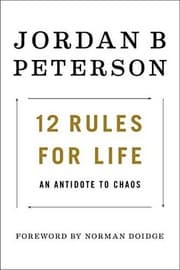
Uh, uh, you know, for me it's, like, the Bible, Meditations, and then Jordan Peterson's 12 Rules for Life. You know, if you, if you stack those three books on top of each other, you got a pretty good way to, pretty good, pretty good lessons to live your life by. Yeah, l- l- let me also mention, the same as you, when I got sober, my first six months of sobriety, they were, I was, I was dry sober, meaning I was sober, but I didn't, my mind started to... After six months of sobriety, I said, "I need to fix the problems in here." So I went to therapy, and I did therapy every Wednesday for a year, and that was the best thing for me, because it helped me figure out, how did I let myself get to this point in life?
Because when I got sober, I was kind of, like what you said earlier, I thought I was just a crazy guy. I'm like, "I'm that crazy guy. I get an excuse, 'cause I'm that crazy guy." But then when I got sober, I said, "No, no, no, you're not that crazy guy. You are crazy, but you did not see the problems that have been here for so long.
You gotta fix this." So I went to therapy for every day for a year on Wednesday, and after a year, I said, "You know what? I'm so glad I did this, because now I understand more of how I let myself get here." Yeah. The things you learn about yourself when you actually just talk, like, when you, you, you, the words, like, when you're actually in a place that you can just speak what you're feeling, what you're thinking, what's going on inside you, and you hear things, you hear it come out of your mouth.
You almost don't even need the therapist to respond sometimes. I mean, sometimes you do, but sometimes you don't even need them to respond. You hear it come out of your mouth and you're like, "Wait a minute. That's not who I wanna be." Well, that, that's why meditation can be so good, 'cause a lot of times- Yeah ... you're just saying things to yourself, and, like, you're figuring out your own problems.
Yeah. Justin, this has been incredible. The book is Daily Sober. Uh, we can get it on Amazon. Where else can people...
I mean, I know you're on all the socials, and, and guys, social media's incredible. You bring your family into it. It's funny, it's fun, educational, tons of amazing things. I'm a fan of all the social that you have going on. Um, where's the best place to connect, like, the first place you want them to kinda get into your world and learn more about you?
I mean, you know, if people like YouTube, you can find us on YouTube, Mighty McClure's. But if you wanna contact me personally, uh, you go to Instagram and type in Justin McClure or JK McClure. You can get to my Daily Sober there, the ultralight, whatever it is. And, um, I, I'm here to always help people. If, if it's sobriety or how, how I can help people maybe find a manufacturer for their product, um, I'm, I'm here to, uh...
I wanna see people win, and that's how I became partners with Daymond John. He's like, "Justin, what I like about you is you, you don't mind other people winning around you." I'm like, "No, because there's no threat to me. Nobody can take away from me what's mine. So I wanna let other people win as well, 'cause when you win, it makes me happy.
So I wanna see other people win as well." So, uh, feel free to reach out to me, and I'm hope, hopefully this helps somebody or touch somebody, and that's kinda the main point. Oh, I love it, man. Well, you got a fan. You got at least one fan coming out of this conversation, so appreciate you, brother.
Be good. I appreciate it, man. Thank you. Let's go. Yeah.
Make it look, make it look, make it look easy. Hey, stand up Thank you for listening to The Ryan Hanley Show. Be sure to subscribe and leave us a comment or review wherever you listen to podcasts. Game ain't a thing for me. I never switched up, no changing me.
The only thing changing is Close twice as many deals by this time next week. Sound impossible? It's not. With the One Call Close system, you'll stop chasing leads and start closing deals in one call. This is the exact method we used to close 1,200 clients in under three years during the pandemic.
No fluff, no endless follow-ups, just results fast. Based in behavioral psychology and battle-tested, the One Call Close system eliminates excuses and gets the prospect saying yes more than you ever thought possible. If you're ready to stop losing opportunities and start winning, visit masteroftheclose.com. That's masteroftheclose.com. Do it today.
Hear that? That's me in Tokyo learning to make sushi from a master. How did I get here? I invested wisely. Now the only thing I worry about is using too much wasabi.
Get where you're going with SPY, the world's most traded ETF. Getting there starts here with State Street Investment Management. Before investing, consider the fund's investment objectives, risks, charges and expenses. Visit statestreet.com/im for prospectus containing this and other information. Read it carefully.
SPY is subject to risks similar to those of stocks. All ETFs are subject to risk, including possible loss of principal. ALPS Distributors Inc., distributor. When you walk into a Burlington, you're walking into amazing prices and great gifts. That's main character energy.
Because at Burlington, the holiday savings aren't the only things turning heads. Discover quality finds and perfect presents for everyone on your list, even those who are hard to shop for. Toys and jewelry to new beauty brands and styles, these gifts go seamlessly from our stores to under your tree. Seriously, with these savings, why shop anywhere else? Burlington deals, brands, wow.
If you liked the show, please take a moment to rate, review, and subscribe. It really does help the show to grow. Thank you for listening. Happy holidays. Wanna give your host a gift?
Consider subscribing, rating, and reviewing the show this holiday season. It really helps the show grow. From all of us at Believe, have a merry Christmas, everyone, and a happy holiday.