Happy holidays. Want to give your host a gift? Consider subscribing, rating, and reviewing the show this holiday season. It really helps the show grow. From all of us at Believe, have a Merry Christmas, everyone, and a happy holiday.
Was waiting to hold it forever. Guy across the street let his property completely fall apart. It's condemned by the cil- city, full of people in there doing drugs, squatting, all these things. Now people are, don't feel safe in my property, and I ended up having to sell it for a loss because that real estate is not desirable. It's not growing, so there's not a lot of appreciation.
So when you're looking at short-term, you wanna make sure that you're buying desirable real estate in terms of there's a lot of tourism that comes there, beach markets, mountain markets, national park markets, places like that. But make sure more than anything that you understand, as a tourist who goes there, what it is that tourists want when they go there, where they wanna be, what they're trying to do, so that you make sure you buy in the right location. The location is almost more important than the property itself. Let's go. Yeah.
Make it look, make it look, make it look easy. Ice. The Ryan Hanley Show shares the original ideas, habits, and mindsets of world-class original thinkers you can use to produce extraordinary results in your life and business. This is the way. Hello, everyone, and welcome back to the show.
We have a tremendous conversation for you today with Avery Carl. Avery is the founder with her husband of The Short-Term Shop, where she teaches her clients how to buy short-term rentals. She also has 250 rentals herself, as well as being the top brokerage in EXP. We talk about her mindset, how she was driven out of the music industry to start this short-term rental business, what that mindset was that allowed her to give away or stop pursuing her passion, which was music, and find her career, which was short-term rentals, as well as how you actually buy short-term rentals successfully. Avery is a wealth of knowledge.
This conversation goes from mindset to tactics very quickly, and when you get to the tactics section, I promise you guys, if you're into short-term rentals, if you're looking to invest in real estate or property, this is a conversation you do not want to miss. Before we get to Avery, I just want to mention again, Master of the Close. Go to masteroftheclose.com. If you deal with inbound leads, you need to be a member of Master of the Close. This is a low-ticket course that I put together to teach you the process that we developed at my insurance agency, where we wrote over 1,200 clients in two and a half years.
We did this with a very small team. Closing qualified leads at north of 80%. We walk step-by-step through this process. Guys, again, this is a low-ticket course. I just don't want this information to die.
Inbound leads are such a huge part of business today, especially small business, and this process is easy to implement, works in every industry. I have done it personally in the technology space. I've done it in fitness, and I've done it in insurance, as well as coach clients in many other spaces. This process, easy to teach, easy to learn, and absolutely bulletproof. Go to masteroftheclose.com today.
Avery, it's awesome to have you on the show. Thanks for making the time for us. Yeah. Thank you so much for having me on. Yeah.
So, um, I tried having a rental property very early in my life. I didn't know anything about business, anything about rentals or property, and made a, like, a million mistakes and ultimately got so frustrated with the experience that I sold it. Um, now, 15 years later, uh, at least in a small part, I regret that decision. But, um, what, what attracted you, uh, to real estate to begin with, right? So I, I, I know short-term rentals is where you're at and, but you also sell a lot of real estate.
Like, what is it about property real estate that just attracted you to it? Well, I've got 250 rentals, so I'm happy to answer any of your questions on- Yeah ... any of that. But, um, the reason that I started it, my husband and I started investing in real estate was because when we first got married, I had what I thought was my dream job, it was not. Um, we had a little bit of money, maybe, like, $8,000 or $9,000 saved up, and we're like, "Okay, we've, you know, we've gotten ahead a little bit. We've got some money saved.
So what do we do with this? Like, what do we invest in? We don't know how to pick stocks. Like, apparently you're not supposed to pick, like, individual stocks. We need somebody to tell us what to do here."
So we went to... There was an Edward Jones financial planning office in the same building as my corporate job. And so we went in there, met with a financial planner. We were all excited 'cause we felt like we'd finally, you know, gotten ahead a little bit, and she basically told us we didn't have enough money for her to bother with. And so, you know, we walked out, like, wind totally let out of our sails.
I don't remember, but I would guess we went to the bar. Um, and we were like, "Well, now what do we do?" We, w- we wanna figure out how to be smart about this and not just have this sitting in the bank, or maybe we need to save up some more. Like, but we wanted to do something now. Uh, and so we had recently moved from New York City to Nashville, and at...
That was back before Nashville, like, jumped the shark entirely. It was back when Nashville was still cool. Sorry, people who are moving to Nashville. Uh, when it was still really cheap. Uh, this was back in 2012.
Yeah, 2012. And, um, s- we were... Our real estate agent at the time was trying to get us to buy something in East Nashville, which was, like, the hipster part of town that was appreciating really quickly. People's houses were worth, you know, $100,000 more two years after they bought them, and our agent was like, "You need to buy here because you'll get so much equity so, so quickly." And we were like, "Man, you know, we're moving from Brooklyn to Tennessee.
We're done with neighbors. We wanna buy something out in the country." So we did. We bought something out in the country. And so we kind of thought back to that and thought, "Well, you know, maybe that's not a bad idea to buy one of those houses, put...
You know, we've almost got enough for a down payment. We could save up a little more and make one, put a renter in it. They'll pay the expenses, and then, you know, by the time our future kids need to go to college or something, we'll have all this appreciation." And there w- back then, there was, like, no... There, there was BiggerPockets, and that was it, and we didn't even f- hadn't even found that podcast yet.
Uh, so we just bought this house. We got really lucky, um, found a house, bought it right off the MLS, cash flowed almost $1,000 a month. So the mortgage was $647 a month, and we were able to rent it out for 1550, so not bad for a long-term rental. And when we got that first rent check, we were like, "Wait a minute. This is pretty badass," because my dream job that pays nothing, which was in the, the music business in Nashville, which pays nothing, uh, after all my deductions and stuff, that was about what I was making on my W-2 job.
So this house was making the same amount of money as me while I slept, and we thought, "Well, this is interesting." And so then we, like, went and sought out education on it and read all the books and listened to every podcast we could get our hands on. And, uh, we came upon short-term rentals, uh, really just because we had a little bit of a down payment left again for one single family home, and we'd just been on vacation to the Smoky Mountains and stayed in a cabin, and we were looking for our second property, and we thought, "Man, you know, those short-term rental cabins..." This was, this was about 2014, so Airbnb had not hit very hard yet, but it was starting to. And we were like, "Man, well, what can we buy that's gonna make us the mo- most amount of money the fastest?
We just stayed in this cabin in the Smokies and paid, you know, $200 a night. That's gonna make more money for the same price as one of these houses in East Nashville, so let's try that." And back then, there was no self-management. There was no... Like, you had to use a property manager.
And we decided to self-manage from Nashville, it's about three and a half hours away, because when we f- started looking around at property managers, we found that the average split back then was 40% of your gross income. And we were like, "Wait a minute. No, we need that 40% to go buy more properties. Like, how hard can this be?" We found a cleaner, we found a handyman, and we just posted it on Airbnb and Vrbo and figured out how to manage it from Nashville.
And I'll stop there, 'cause that's a lot. Th- th- that was in 2014 that we bought that first one. Now we've got 250 doors. Eight of them are, are vacation rentals. So there's a lot of entrepreneurial drive in there.
Like- Yeah ... so I think the mistake that I see friends make, 'cause I, I have a, a good buddy who's a realtor, and he obviously pushes all of us to buy property and, you know, he's got, uh... He's, he doesn't get into the short terms as much, but he's always pepperin' us when he finds a decent, like, two-family or three-family, and, "Hey, guys, get involved." And some of my friends have gone down that path and been very successful, and others have gone and kind of backed out, we'll call it. You know what I mean? Maybe they get one- Mm-hmm ... and they just, "This is enough."
To me, and, and the difference in those personalities is the, the, the people who go in thinking, "This is kind of like this is a business," right? "I'm gonna look at th-" The holidays are here, and that means it's the most wonderful time of the year to save with Rakuten. Use Rakuten to stack cash back from your favorite stores on top of holiday sales. That's savings on savings. With Rakuten, you can get cash back on gifts for everyone on your list, from toys for the kids to kitchen gear for the person who loves to cook, to electronics for everyone.
You can even save on something for yourself. Just shop the stores you love, and cash back is automatically added to your account. And you can get paid with gift cards, PayPal, or check. Or eligible American Express card members can even choose to earn membership rewards instead of cash back. It's truly a no-brainer.
Join for free today and get a new member bonus after minimum qualifying purchases. Just go to Rakuten.com, download the app, or install the browser extension. That's R-A-K-U-T-E-N. Terms and conditions apply. "... it's like a business, an entrepreneurial endeavor.
My, my business is owning properties, is renting properties, and that, it..." Are you tired of endless follow-ups and missed opportunities in your sales process? Chasing leads is a losing game. That's why I created the one call close system, a battle-tested sales system that uses behavioral psychology to close deals in just one call. No more, "Let me think about it."
No more, "I'll get back to you." Using the one call close system, we took new reps from 25% close ratio to over 80% in just three months. To grow fast, you must close deals faster at zero extra marketing cost. The one call close system allows you and your reps to build trust, address pain points, all while watching your revenue skyrocket. Ready to stop chasing leads and start closing?
Visit masteroftheclose.com today. Close twice as many deals this time next week. Visit masteroftheclose.com to learn how. They tend to push deeper to think of it ... differently to, to, to think like you did, right? Not...
The easy part for you would've been, uh, property manager, 40%, okay, we don't make nearly enough or whatever, but I don't have to do the work. And I, that feels like the miss to me. It was probably the miss in my own scenario. I didn't realize the work that would be involved. It is.
That you can systematize and automate to a certain extent, but, but that there is a lot of work involved. Did you guys understand what you were getting into from the rip? Did you see it as an entrepreneurial endeavor? Or just, it, you just kind of... Like, were these decisions kind of cascaded as you went, or did you pick up really quick, like, this is a business?
Like, we can actually make a, a, a, a full income, this can be what we do. We, we picked it up pretty quick, and a lot of that, I think, is personality types. And there was a lot, like, kind of a perfect storm of why this was a good idea to go, go all in on at the time. Um, number one, so I come from a background of collegiate athletics, so I played soccer at University of Texas, and I have a Big 12 championship ring. And so I learned very...
I'm from a extremely small town in Mississippi. Mississippi notoriously does not produce good soccer players. We produce great football players, but not good soccer players. And so it was just really crazy. I ha- the team that I was on, my club team, happened to be really good.
Every single girl went and played D1. And what I learned from that was I kind of st- realized in junior high, hey, I just wanted to get out of Mississippi so bad, you know? Big, big city dreams girl. And I realized the harder that I worked at soccer, the better chance I had to get out. That was, like, my ticket out.
Mm-hmm. So from an early age, I started equating hard work with, you know, moving forward and climbing the ladder and getting things. And I thought, you know, after all that was over, and then I graduated undergrad at, like, the worst time to ever graduate, in the spring of 2009, and there were no jobs. So, um, I was a musician. I was a touring guitar player in a, in a few bands, so I bartended and, and did the musician thing until the market swung back around.
Uh, and I thought, "Well, I'm gonna work in the music business," 'cause there will probably be a lot of people similar to me, musical background, who, you know, wanna have big kid jobs now. And, um, so I got what I thought was my dream job and worked really hard at it. And what I found was that the hard- the n- amount of work that I did was not proportional to the amount of moving forward that I was able to get. Like, I'd get to work, and I'm great in the mornings. I'm not that great in the afternoons in terms of productivity.
So I'd finish everything I had to do by, like, 11:00 AM, and then I'd just sit there and wait for my boss to give me something else to do. Eventually, we found I'm a terrible employee because of that. Like, I, I'm motivated by whether it's, you know, making more money or building something. I can't just sit in a desk all day and work for somebody else. And, you know, when I thought about it and like, well, my dad owns his own business, both my grandfathers on either side owned their own businesses, so I didn't really have a role model of working for someone else and even realized that.
At the same time, we were thinking, you know, we'd just gotten married, thinking about having kids in the future, and I'm like, "Well, I don't want to have to put them in daycare from 7:00 AM to 7:00 PM," 'cause, you know, our commute's an hour with, with traffic. So there was a sense of work not being fulfilling and also knowing that it wasn't gonna be a good situation for our future kids and kind of putting those two things together. Uh, my husband is the same, same way on the work thing. Like, he was feeling kind of fat and sloppy one time after a night out, went for a one-mile run, first one ever, and now he's run 30 marathons. So we both kind of do everything extra.
So it was definitely personality type and wanting to get out of that having to answer to somebody else, because I just knew that that boss at the time was not gonna be somebody who was ever gonna understand, like, "Oh, my child has strep throat, I need to stay home." And I just, we wanted something different. We wanted our lifestyle to be designed a little differently. So all of that together kind of pushed us forward on, "Oh, hey, we can, we can build an actual business out of this instead of just kind of letting it take a backseat and build up appreciation in the background." I wanna stay on your entrepreneurial perspective for a second.
So, uh, and you can obviously fast-forward and, and rewind as it makes sense- Sure ... in this answer. But I have a lot of people that are very successful on the show, yourself included, and I like to, I like to get their perspective on this particular question because when I'm interacting... So my industry is the insurance industry. Every little boy's dream is to grow up and be an insurance agent, right? So I'm living the dream.
Uh, no, I'm, I'm actually, I, I firmly believe and, and firmly fall into the, uh, school of thought that, um, you find what you're good at, and that becomes your passion, not, you know, this, this whole idea of following your passion, as you found with your music career, right? Like, I thought I wanted to be a professional baseball player. I saw my only way out as being a baseball player. I came from a town of 900 where we said you could leave your doors open because the criminals lived in our town. They didn't steal in our town.
So, like, it was not... You know, my whole goal, same as you, was get the hell out of here, like, whatever I gotta do. And I saw, you know, academics to a certain extent, but, but being athletic as my way out. And, uh, ended up playing baseball in college and played a little after. But at a certain point, you, I hit reality, where it's like, there's no career here in this sport.
And, um, you know, so, so I'm, I, I see a lot of people who have these early dreams, and they hit that wall, and then some- and somewhere in there, a, a switch flips. They go from being passionate, driven, intense, intentional to, "Well, I'm making a paycheck. You know, this is about as good as it gets. You know, I'm gonna get the dad bod or, you know, mom bod or whatever, whatever, you know, to be, I guess, you know, whatever happens there. Uh, I'm gonna stop follow- stop, you know, maybe doing my hobbies.
Maybe I'll play golf once a month." Like- You s- in somewhere in your journey and, and that calculation between, you know, soccer success, you know, ha- you know, wanting to be a musician, et cetera, you gave yourself permission to keep pushing. Is that just intrinsic to you? Was it, um, did you have mentors? Was it your family?
Was it, you know, just the fact that you and you had this partner in, in your husband who also shared some of that intensity and energy? Like, I think a lot of people get stuck in the transition from early life passions to a, a fulfilling career, which you've obviously found, and you've made that transition. Where do you think you got that permission to do that? And permission, I mean giving yourself permission. Like, how did you get through that phase to, to keep growing what you're doing today?
That's a really good question. And, I mean, definitely my husband and I are on the same page about the, the hard work and, like, being a little too much about everything. Uh, we're both very intense people. Him more than me. He's, like, really loud and in your face, and it's like, you know, it can be a little exhausting to have a conversation with him.
But, um, so, I mean, maybe it was growing up in the millennial generation of, like, hard work fixes everything. And, you know, my dad was a professional athlete, and my mom is kind of a perfectionist, so just having that instilled in all three of, uh, us kids, my sister and my brother as well, uh, about, you know, always working hard. What's... The most important thing in anything is that you worked hard. Even if you didn't win, even if you, you know, insert thing here, as long as you can say you tried your hardest and you did your best, then that's what's most important.
And then I'm just kind of somebody maybe... I'm a very high anxiety person, so maybe it's something to do with that. But, like, there is no good enough. There is no best. So we just keep pushing and pushing.
Yeah. Um, and I guess, you know, it's, it's just I think kind of a, a perfect, perfect combination of the way I was raised and then, uh, the partner that I chose and just enjoying the building of things. Like, I, I like the building more than once it's built. I like the building phase. It makes me feel, uh, fulfilled and like I did something, like I paid for the day.
I can go to sleep at night feeling like I did something. I had terrible, terrible anxiety in college because I felt like I wasn't doing anything, like I wasn't moving forward. And I think that continuing to build kind of keeps that anxiety level a little bit lower. Um, and then, you know, for my, my kids, now that we've... What I'm gonna tell them is, they're still very small, four and six, you know, you can pursue those passions, those things that you're probably never gonna make a million dollars at, and but you can start building income while you're doing that.
So I think for our generation, it was kind of like you have to choose. You can be poor and be a musician and do the thing you want to do, or you can go get a big girl job and be successful. So I think for this generation, for our kids... Are they Gen Alpha? Are they something younger?
I don't know. Who knows? But you can do both. There's a way to do both. You don't have to choose, oh, I'm gonna go sit in a desk all day, or I'm gonna pursue my dreams.
There's a way to make money while you're pursuing the thing that's probably not gonna make money. Yeah. One, one more question on mindset, 'cause I, I'm just very interested. Uh, I've found a lot of high achievers are high anxiety people as well. A lot of them.
And I... And you may have answered some of this question already in the idea of building, but I, I myself am also, uh, high anxiety. I feel the exact same way. I was a terrible employee for the most part becau- and, you know, I'm not gonna get into my backstory 'cause this show is about you. But, like- ... the, the, uh...
I, I have also had a very tumultuous past with large companies bec- for that exact reason, right? You're sitting at your desk, stamping TPS reports, sliding them across. Yeah, you're making an income. Yeah, it's stable. But there's...
You're like, "I have no idea how I'm contributing to this big thing." Like, I, I also would get all my work done and there was... I remember a time in my career, I was 24 years old. I was working for an accounting firm as a consultant, and I had every, uh, every player in the major, in Major League Baseball, their batting average and, like, most of their stat memorized. Because I was into baseball, because I played baseball.
I was working for this company. I could get all my work done in, like, the first two hours, and I had nothing else to do. So I would just, like, look at baseball st- You know what I mean? Like, I wish I had been more entrepreneurial at that time. But, but my...
Getting back to my question, I think a lot of high achievers deal with anxiety for, for, for various reasons, but it is very, very common. A very, very common, uh, uh, quality. Some harness it as you have, right? Now, I'm not saying every moment of your life has been perfectly- ... dealt with anxiety. I completely get that, right?
I'm, I'm there with you. But you have found a way to, in general, harness that energy and, and turn it into positivity. Um, besides this idea of building, are there any other mindsets, hacks, tricks, mantras, books, something that's helped you continue to focus that energy that you feel inside you in a positive direction to, to, to reach... You know, 250 rentals is a freaking incredible number, and I'm sure you have more, and you do a lot more beyond just manage those. So, like, you found a way to harness that energy.
Do you have any other, uh, uh, tactics or, or, or thoughts for people who do deal with anxiety and maybe haven't found a great way of channeling that? Obviously, exercise is, is a good one. So for me, one of the biggest ones is our, the brokerage side of our business. So, uh, our company's called The Short Term Shop, and we help other investors buy and learn to self-manage their own short-term vacation rentals, just like we did. And sales jobs like that are very, very build-y and very, uh, you're always, you know, trying different marketing to see if you can, uh, bring in more income, and, you know, the more clients you get, the more income.
So sales jobs, I think, I found really help with that. So for me, I'm constantly trying to figure out, okay, we've got offices in 20 markets. We were the top team at eXp out of 85,000 agents the past three years in a row. Uh, the best year we ever had, we sold a billion dollars in real estate. So- Wow ... um, I think that sales For me, at least, contributes to that building factor and, and helps with the, okay, the harder I work, the, I do help more people, or I do make more money, or whatever your thing is.
Um, if you're, you know, somebody sitting in that desk thinking, "Man, this sucks," like maybe try a sales job if you're not ready to go out and be an entrepreneur yourself yet. It really does help when you're working towards that bonus or that commission because it, your, your compensation is now a little more proportional with the amount of work that you put in. So for me, that helped with switching from just a straight marketing job to a sales job, and then going fully entrepreneurial. I don't know if that's really answering your question at all, but No, I think that's great advice. That you actually, that's actually my path to entrepreneurship was through sales.
I was working as a c- like I said, working as a consultant for this large accounting firm. By all accounts, a very good job. I hated every single day of it, but- ... by all accounts, like on paper, it was a good job. I was making good money, I worked for a big company, lots of stability, all that kind of stuff, but I was miserable. And it wasn't until, um, uh, my father-in-law, or ex-father-in-law now, but father-in-law at the time, basically came to me, and I think he just didn't want his little girl to be married to like a bum, right?
He, you know, and he didn't necessarily understand what I did for a living. So he said, "You know, I want you to come sell insurance at my insurance agency." And I'd always had this thing of like, I w- I wanted to own my own business. I w- but I, but I didn't have... I came from a family where my mom's been a receptionist at the same company for 40 years, and my dad, uh, was a, was a union member on the railroad, right?
Their whole message to me growing up was, "Go work for the big company, get the safe job. You know, that way you don't have to worry about stuff." Like, that was what I had to break all that stuff. And it wasn't until I became a salesman that I was like, "Oh, wait. Like, if I work harder, if I work smarter, if I make more connections, I can make more money."
And then that was, that... I think that's wonderful advice. That's exactly how I launched my own entrepreneurial career, so that's great. So okay, I wanna get out of mindset and, and that kind of stuff, and move into, uh, uh, short-term rentals. Okay.
Because, um, I'm, I'm very fascinated by this space. I'm petrified of owning property because of my mistakes that I made earlier. So, uh, some of this is gonna be like free consulting for me that you didn't realize that you were have to do. Um, but so my early mistakes were I owned a, a very old building. Ni- it was built in 1905.
Um, I'm not handy at all. I can fix basic stuff, like basic like dad stuff, but I'm not a handy guy necessarily, so I'm not doing mechanicals. Or, you know, the number of times that I've taken, you know, 110 right into my body and dropped the screwdriver or whatever I was doing, because I'm a moron and don't know how to do electrical. Like, all those mistakes. And then what...
You know, we weren't, we were only cash flowing 100 bucks a month on the property- Mm ... which was tough. And then what broke my back was I got a call on Christmas Eve that the, uh, we had a, um, an oil furnace, 'cause again, old as hell, middle of an old ass city, um, that went poof on Christmas Eve. Oh, God. So now I'm trying to find a, uh, a furnace guy who also can handle an oil unit on Christmas Eve, and we had to pay 5X rate in order to get someone there. Because we live in upstate New York, and it's cold as hell- Mm-hmm ... and you can't have your tenants not have heat on Christmas Day in the middle of the winter in upstate New York.
So there's a lot of mistakes in there that I believe I made, building age, whatever. So if someone is, you know, tuning into the podcast and like, "Okay, I've been thinking about real estate for a while. Short-term rentals seem like something I might be interested in," like h- what's the first step to get into this game? Like, where do you start? What are the, what's the pre-work you need to do before you step in and, and, and take on something like this?
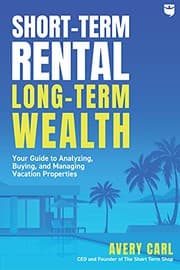
Well, you can read my first book Yes. Short-Term Rental, Long-Term Wealth. Well, and so you guys know, every resource that Avery discusses, and feel free to, to share all the resources you have, your books, courses, anything like that. We'll have links in the show notes for you guys. So wherever you're listening or watching, just scroll down and you can find all the stuff that Avery talks about.
I just want to make that clear. Yep. So I would start there. Um, you could start your search with my company, The Short Term Shop. So we have offices in 20 markets across the country that are all very vacation rental friendly, in mature vacation rental markets.
You don't have to worry about regulations, things like that. Uh, we'll help you find the right one. We'll teach you how to manage it for free, and make sure... And we do that while you're under contract, so we make sure you know what you're doing before you even close. We'll teach you how to use all the property management software, how to set up your listings, et cetera.
But if you want to take the hard road, then I would say think of a place that you went growing up with your parents or maybe now with your own kids or your spouse or whoever, where you went on vacation and you didn't stay in a hotel. You stayed in a beach house, condo, cabin, something like that, where you've been a tourist, and start there. I think a lot of people, the biggest mistake they make is they go Google, "Best place to invest in short-term rentals," and they get all these lists from the big property management companies, from the data companies that say, "These are the best places to stay, to invest in short-term rentals." But a lot of them don't... Like, either they're looking at just strictly numbers, and so they'll tell you to buy somewhere that's weird and cheap, like, I don't know, Indianapolis.
Super cheap. You can make some decent money there. But it's not, there's a reason that... It, it's just not desirable real estate. You know, it's not growing, and I'm just...
Indianapolis is a very arbitrary pick, but, you know, like somewhere in the Midwest, uh, where those cities aren't really growing, which is why the real estate's really cheap, which is why it looks better on paper. I got my ass handed to me in the Midwest buying apartment buildings because I'm like, "Oh, great. The cash flow looks great across the board here." And then, you know, one thing happened outside my control three years after I owned my property. I wasn't planning to flip it, wasn't planning to sell it, um, was planning to hold it forever.
Guy across the street let his property completely fall apart. It's condemned by the ci- city. Full of people in there doing drugs, squatting, all these things. Now people are, don't feel safe in my property. And I ended up having to sell it for a loss because that real estate is not desirable, it's not growing, so there's not a lot of appreciation.
So when you're looking at short-term, you wanna make sure that you're buying desirable real estate in terms of there's a lot of tourism that comes there, beach markets, mountain markets, national park markets, places like that. But make sure more than anything that you understand as a tourist who goes there, what it is that tourists want when they go there, where they wanna be, what they're trying to do, so that you make sure you buy in the right location. The location is almost more important than the property itself. I saw a lot of people get in trouble in 2020 when, you know, it was 100 offers on every single property, buying properties in good markets but a little too far away from the attractions, like 45 minutes out, thinking, "Oh, well, you know, people will pay less, uh, to have to drive into the attractions." Those people were the first ones who had to sell when the market settled down because when the, when the tourism settled down after COVID, people only really wanna be really close to the attractions.
So understand the market that you're choosing, understand where and what the tourists wanna do there, who's coming there, and when and why, and then start looking at the data from, like, AirDNA, PriceLabs, that tells you, you know, the income history of these types of markets. Start with those two things. Also, uh, most importantly, when you pick a market, make sure you check the regulations by calling the local county or city and asking what their regulations are. I've seen very experienced investors buy a bunch of properties in a market and not check the process for that before they bought them, and then be incredibly shocked when they run into roadblocks with actually getting the permits. So make sure you check all that before you get under contract.
So, and, and I apologize for my naivety in some of these questions. No. Um, so I live in, in Albany, New York area. Mm-hmm. Um, does where I buy matter?
Like, let's say, let's say I w- I, uh... So, so my girlfriend's from Colorado, right? She's from- Mm ... Durango, right? Great ski town.
Love Durango. Yeah. There's, there's, you know, tons of skiing, tons of hiking, mountain stuff, right? Like, let's say we wanted to buy a, uh, short-term rental, uh, that, you know, in Colorado, right? Mm-hmm.
So many, many states between us and Colorado, multiple time zones. Is that an issue? Non-issue? Like, am I... Should I be looking, like, within a couple hours of my home?
Um, like, I guess the first thing that I would be nervous about is am I... What are my exposures if I can't drive there in a reasonable amount of time? About zero. So- Oh, love it ... it does not matter. There's really no reason other than to just do, like, an annual checkup on your property.
Like, people are like, "Well, what do I do in an emergency?" Like, what are you gonna do? If it catches on fire, what are you gonna do? Go insert yourself into the situation? No.
You're gonna... Hopefully, they've called the police already, but, like, you're gonna call the police. If something breaks, like a toilet, are you gonna drive over there and fix it? No. You're gonna call somebody to fix it.
Like, if a toilet breaks in my office back here, I'm not fixing it. I'm calling somebody to fix it. If a toilet breaks in my place in Tennessee, I live in Florida, I'm calling somebody. So it's just, it's the same process, it's just, uh, further away. So you do wanna to go visit your properties at least once a year just to make sure.
But in terms of where you wanna invest, I think, for example, you, like, Durango's a great place to invest. Um, it... since there are a lot of short-term rentals there. What is it? Purgatory Mountain that's, that's up there by Durango. That's a big one, yeah.
Uh, you're gonna have... There's gonna be a lot of infrastructure already in terms of cleaners and handymen. It's gonna be easy to plug in. Uh, but if you're somebody that just, it's, it's gonna keep you up at night to not be within driving distance of your property, that's okay. It's not wrong to invest closer to you, like maybe the Finger Lakes.
Uh, that's not wrong either. So- Mm-hmm ... but don't let driving distance limit you if you do wanna invest across the country. I would say 99% of our clients at The Short Term Shop, so there's 5,000 of them, don't live within three or four hours of their properties that they own. Oh, that's wild. Yeah, you can do it all- That's very wild ... all remote.
What about, what about international? Like, so I, we just went to Turks and Caicos, stayed in a V- in a Vrbo. Um, text with a woman. Have no idea who she is. You know, she was very kind.
Mm-hmm. But then, uh, whoever her onboarding person is met us at the gate, handed us the keys. "Have a nice week. I'll be back at the end." Boom, right?
I mean, that was pretty straightforward. I mean, is there- Mm-hmm ... are there... I'm sure there are additional risks. What would they be? And y- I'm assuming you don't wanna start international, but, like, is that an option?
Have you done that? I have not done that. I know several people who have. Uh, really, you just wanna make sure that you as an American are allowed to buy property in that country, that you're allowed to finance property in that country. Some countries require you have a citizen of that country buy it with you.
So it really... I, I might not start with international, just 'cause there's that extra layer of crap to deal with when you're already learning a new business, but it's doable. People do it. It's just not something that I've done. What about these, like, obscure or, uh, that's not the right word.
Um, we'll call them eclectic properties. Mm-hmm. Uh, tree houses, uh, urgs. Like, some of the... I, I don't really get down with some of, like, the, the mountain hippie-ish culture, so I don't always- Mm-hmm ... know what all these buildings are.
But I see them- Mm-hmm ... sometimes, and they look, they look interesting but crazy at the same time. Like, y- you know, where do those fall? And, and, you know, I got a buddy who has, who bought this, I thought it was a ridiculous piece of property. It was just outside of the Adirondack State Park, and he put like four, like, pop-up A-frame homes on them. And they're like almost like little tiny homes.
Mm-hmm. And they're separated just enough that they can't really see each other. And he does, like, phenomenally well. Mm-hmm. They're kind of like odd structures.
Like, does that- Yeah ... entice people? Is that like a niche market? Do those come in and out of style and there's a risk there? Or is that the kind of thing that you may wanna over-index on because they do draw more people in? That's a really, really good question.
So unique stays can, can be something that really works well, but you're right, they do kind of come in and out of style. Uh, es- especially if you're doing, like, tents or structures that are not truly real estate, like not with a foundation, a permanent foundation, you kind of miss out on a lot of the tax benefits that you'd be able to get if it were real estate. You know, tents are gonna be depreciating or domes or, you know, any, any of the above. Uh, and you're gonna have to replace those eventually. Whereas a piece of real estate, you know, you can redo it and remodel and things like that, but it doesn't just completely lose its value, it appreciates.
So, um, those can be... There are a lot of people who are really successful with that. For me, I like to go with tried and true. Uh, so a lot of the markets that I'm in, I'm not gonna be able to convert anything that I own to a long-term rental. Like, I'm not gonna be able to convert a $1.8 million, 4,500 square foot beach house into a long-term rental.
That's just not in a, in a vacation market. So for me, instead of an exit strategy, I look at the past. Well, Destin, Florida, where that property is, has gotten 10 million tourists every year for the past, I don't know how many years they've had that many, but I know my grandmother came here and rented, rented vacation rentals in the '30s. So I li- I just like to see a lot, a lot of tourism, and I like to stick with the thing that we know works, which is buying a beach house. People are always gonna do beach houses.
I do feel like you have a little bit more of a, a pool of tourism to draw from with a standard... not standard, but, like, more traditional s- piece of real estate than, like, the, the tipis and the huts and the domes and the yurts. I think with those you're looking at probably single people, younger couples traveling together, whereas, you know, we get a lot of families in our bigger ones. So I prefer the traditional vacation rental route to the unique stays thing, but there's a lot of people who are super successful with the unique stays. That's the cool thing about real estate investing is there's not really a wrong way. You could screw it up really easily, but there's not a wrong way to do it.
Yeah. We, uh, we stayed in a, a Vrbo in... And I don't know why I always do Vrbo, just that's the way it's been the last couple times. But, um, in Woodstock, New York, which is only about an hour from where I'm sitting. But it's a cool little cheeky town, and it was the wintertime, and we were just looking to get away from the kids for a couple days.
And what was funny is I was looking at the properties, and they were all, like, literally just outside of town. It's cool. And, and I got a standard, standard house, kind of what you described. But the three houses that were, like, on the other side of the road or whatever, th- they were all owned by the same person, and they were pitching, like, "Bathe in the crick. Uh, we have an outdoor shower."
And I was, like, looking at it, and I'm going, "I, I feel like that just limits your m-" Like, I'm... I have no desire, unless I'm at a beach and I'm just rinsing off, if your only shower is an outdoor shower, that is not... Like, you gotta be a pretty specific type of person that looks at that and goes, "That's where I wanna stay." Yeah. Um- Yeah, I'm not that person either, Michael.
Yeah, it feels like it, it limits your market a lot. And as you said, you just have to be... I guess it all depends on how you market it and who you're trying to attract and what type of people come to that community. Um, but that's very interesting. So, um, obviously you've done this a tremendous amount, and you now, like you said, you've helped 5,000 people, um, with, with your business.
What is the most common... And, and I hate this question, but I just wanna start here be- as we build. What's, like, the most common thing that you see them trip over, um, before they come to you? Obviously, once they're working with you, you have a template and all that kind of stuff. But, like, I'm assuming for a lot of them, they try to do it themselves.
They hit some roadblock and they're like, "Eh, I need help with this. Let me go sl- I need Avery's help. Like, I... You know, let's, let's come see what these guys are doing." What is usually that thing that they run into that just kind of pushes them towards the, "I, I need someone to really walk me through this process"?
Yeah. Uh, that's a, a great question. So I think right now, and there've been different main problems over the years, but right now people get really hung up, like when they're googling or looking at different influencers that talk about this stuff, they get real hung up on, uh, "Oh, I have to go, I have to buy in a market where nobody's talking about. I have to do this thing that nobody's talking about. I have to be in this place that nobody is.
I don't wanna be... I don't wanna have competition." When really, you know, a big, I call them mega markets, like the, the Panama City Beaches or Myrtle Beach or Smoky Mountains in Tennessee, where there's a lot of rentals. There always have been a lot of rentals. And the reason for that, you know, some people will say, "Oh, it's saturated."
Well, places get, quote, "saturated" because there's a, there's a reason. There's enough tourism to support a lot of investors being really successful to where other investors are trying to do it, too. So I actually prefer investing in those mega type markets because it's very, very easy to get up and running, especially as a new person. There's plenty of designers. There's plenty of cleaners, plenty of handymen.
L- people are used to giving you the door code, and the vendor goes in and sets up the furniture, whatever. Whereas if you're trying to, like, trailblaze and do what has not been done before, you're gonna have to go find a regular housekeeper who cleans primary homes and teach them how to turn a vacation rental. As a new investor, do you know how to turn a vacation rental? No, you don't. Uh, and it's just harder to find the right types of vendors to learn how to do the vacation rental model and not the primary home model.
So I think, I mean, you can be successful in going where no one's gone before, but, like, why? Why would- Yeah ... why not just plug into something that's easy? So, and you're never really competing with an entire market. You're competing with your bedroom count, and then further still, if you look up, like, Destin, for example, there's thousands of rentals, but a good 45, I mean, maybe even 60% of them, when you look at them, they've got terrible pictures, and they're painted, like- ... pink from the '90s. It looks like the Golden Girls lived in there with wicker furniture and stuff.
So if you're doing it right and managing well, and you have good decor, you're really only competing with a very small fraction of the market. So I think people being afraid of competition of those good heavy tourism markets makes them make bad decisions sometimes. I, I love that take, 'cause i- and I think the most important point for those listening in there is the support industries are, have good infrastructure in those places. Like, that, that's a, that's a really good point that I think a lot of people probably wouldn't think about is... And guys, if you didn't pick up on this, essentially what Avery said is that the handyman knows how to use the punch pad, knows that you're a short-term rental host, knows that they need to come in and punch out or what- whatever the structure is.
Like, they're used to it. You're not explaining it to the first time. They probably have 100 other short-term rental customers that call them as well, so they probably have good references, and they're known in the community, and these are all things that are really important. So like you said, if you're, if you're states away from that person and you need to call them because a pipe burst or something happened, you wanna know that they understand the process. You're not, "I can't figure out how to punch this code in," and, or, or whatever the, whatever the process is.
Um, I think that's a, that's a wonderful point. So do you... Like, obviously, especially since COVID, it seems like short-term rentals have really skyrocketed. If they've become ubiquitous, like oftentimes if I'm not going somewhere for a work event, I go to either Airbnb or Vrbo. Like, if we're s- vacationing most often, we'll look at those places first.
So, uh, it's bec- And I think there's a lot of people, um, from a cultural perspective, uh, that that's what they do as well. Mm-hmm. Do you see that turning? Do you s- where do you see us, I guess, in the curve? Are we, are we at peak short-term rentals?
Are we still on the upswing? Is there... Do you ever wake up and go, "Oh, shit, what if no one ever wants to stay in a short-term rental again?" Like, I guess where, where are you from a, um, a, a growth or maturation of the market? I think that we're in a stabilization.
I think we've got... I mean, the vacation rental industry is a $10 billion industry, so I don't think we're ever in danger of nobody's ever gonna stay in a short-term rental again. But I do think you have to choose your markets wisely. That's why I only invest in vacation markets, so I don't buy in metro or suburban markets, areas that aren't dependent on tourism, because those areas tend to end up with anti short-term rental regulations that are pushed either by the hotel lobby or by primary homeowners. And, like, dude, I get that.
I live, I chose to live in a vacation market, and I make my money on vacation rentals, and I still don't really want one next to me. Uh, so I totally get that, so we try to stay in vacation markets for that reason. And I think that a lot of people try to make short-term rentals versus hotels. So again, I make 100% of my money on short-term rental income, but there are certain trips I'm gonna stay in a hotel and certain trips that I'm gonna stay in vacation rentals. It's not either/or.
So I've- if I've got to go, uh, speak at a conference, I'm staying at a hotel. If I don't have my kids with me, I'm staying at a hotel. I wanna be waited on. I'm staying at a hotel that has room service, for sure. And...
But, you know, if we're going somewhere with the kids or, you know, m- my parents are coming, anything like that, it's gonna be a vacation rental, 'cause we all wanna be together. We don't wanna be in separate hotel rooms. And so it's just, it's a different choice for different purposes, not, uh, oh, you're only gon- people only are gonna rent hotels or only are gonna rent short-term rentals. Yeah. That makes a lot of sense.
Um, I guess, you know, where... Like, when you're, when you're looking at it, and I know you said vacation areas, um, but is there anywhere else besides vacation spots? Are there like... Is it... You know, so, so take, um...
What about like, like small, uh, uh, micro towns or like sprawling cities? Like, um, I have a buddy that, that only s- he refuses to stay in hotels. He's kind of a nut job, but he refuses to stay in hotels. So he only does short-term rentals when he travels, even to conferences. And, you know, he, he actually prefers like some Texas cities and stuff for conferences 'cause they have...
Like, they're kind of sprawling, and- Mm-hmm ... the houses tend to be, uh, very accessible to downtowns, et cetera. Like, New York City feels like it might be tough. I don't know, because one, I do know that there, there is some regulation there against short terms in certain buildings, et cetera. Mm-hmm. And there's so many options in New York.
So like, like let's say maybe vacat- for whatever reason, vacations m- spots made me nervous, or I didn't understand them, or I don't- Mm-hmm ... do vacations, so I don't know what they are, et cetera. Um, is there a, is there a secondary spot? Can you, can you look into some communities if you know a community very well? Like, do you see that market starting to build? Is that like, is that a, a trend that's coming moving into communities, or you think it's just never gonna work?
Well, no, it just depends. So there are markets that I've, have very eloquently named them vacation-ish markets. Okay. So they are metro markets, but they're areas that there's either like a ton of conferences, like Scottsdale for an example- Yeah, yeah ... example. We have, uh, an office there, and there's like 300 conference spaces.
There's more conference spaces in Scottsdale than anywhere else in the country. Uh, that's an area that vacation rentals do awesome, and if you decide you don't like it or, you know, what have you, you can convert it to a, a long-term rental, and it'll be just fine. Uh, same thing with like the Sarasota-Clearwater area or like Austin. Those can totally work. It's just you're gonna have to navigate some regulations in those markets.
No, that's true. Not Scottsdale, but the other ones. Yeah. So it, it, you know, I k- I kinda wanna wrap up with, with your projecting out into the future with, with property in general. Doesn't have to stay just on short terms.
Okay. Um, I think, you know, I, I recently bought, uh, the house that I live in. Um- Do you see interest rates coming down? Do you see... Like, where do you see- property feels very tough for me, and, and a lot of the conversation with, uh, guests I've, both guests I've had and, uh, some of the people that I follow, has been around the idea that right now young people are struggling to get into homes, right?
Mm-hmm. The rates have gone way up. I know where I'm at in Upstate New York, when COVID happened, all these New York City people just flooded our area, and literally the price of homes doubled. Yeah. Homes that were going for 250 to 300,000 were selling for $600,000 in the same exact community in, in under two years, and we really haven't seen those prices recede too much.
They very much have stabilized- Mm-hmm ... but we haven't, we certainly haven't seen them come back down. And I know a lot of, uh, my younger friends who are in their mid-20s, uh, early 30s, who are now looking to buy their first home, they're, like, just frustrated as all hell because they're, they're looking at, say, what their friends who, who bought earlier or that are a little older and the mortgages they're in and the prices they paid, and they're just... They, they're struggling to make it work. Do you see the market turning back a little bit? Do you see...
Where do you see opportunity for those individuals, uh, to, to own property? Is it, is it worth renting and having a vacation property, like a short-term rental? Like, is that a way to go for people? Like, should we always focus on our, getting a primary home first and then looking to get into, uh, the rental game? Like, just maybe do some, uh, prognostication over the, the property market in general and, and where you see things going.
Yes. So a lot of people don't realize this, but 2023 and '24 are statistically the worst real estate market that we have seen in the history of recording the real estate market. Wow. Worse than 2008, worse than all of that. Uh, fewer homes were sold in '23 and '24 than, you know, the whole 2008 debacle because those rates jumped.
Not that they jumped so high, they've been much higher years ago, but because they jumped so much so fast that it really kind of stopped everything. Everything has ground to a halt. Um, so what... And everybody was calling for this big crash and thinking that all these prices were gonna go down, and the crash happened. Guys, like, I think we're at the end of the crash, but the prices didn't do what everybody was hoping.
They kept increasing. The reason for that is because we have a big housing shortage. So in terms of, of interest rates, I don't see how they can not have to come down in the next couple years because there's, um, so many industries that depend on that housing market, whether it's finance, whether it's, you know, not just the real estate agent industry, and people can't afford to get into homes. It's crossed my mind a number of times in the past two years, like, are my kids gonna be able to afford to buy houses when they're old enough? And, um, uh, I don't have an answer to that .
But I don't- Well, if they follow your short-term rental buying strategy- ... then they certainly will, but... Yes, yes. So, uh, we're hoping to, you know, kind of bring them into the family business at some point. But here's my thing, and I'm by no means an economist. I believe I had a C in economics, macroeconomics, uh, in, in college.
C is good enough for this show. Yeah. C's get degrees, right? So, um, it's gonna have to. Something's gonna have to move because they can't just have the entire general public un- unable to buy houses, and I don't know what that's gonna look like.
Maybe it's interest rates. Uh, I don't think that, you know, giving, uh, a, a down payment assistance, which has been talked about, I don't think that's gonna help. I think that that's just going to make things more unaffordable because more people are gonna be a, be, are going to use that to buy houses. And I just, I don't know what the future holds, but I do know that rates are gonna have to come down. They're gonna have to get things moving again.
Past that, it's hard to say. If you're able to buy a house right now with rates the way they are, I would go ahead and use this window before all the buyers come flooding back in when, when rates inevitably do go down. I think a bunch of people that are sitting on the sidelines are all gonna bum rush the market, and we're gonna be back to multiple offers on everything. I don't think it'll be as bad as it was in t- 2021, but I think that if you can get into something now, you've got a better chance of getting a discount off of the asking price, and you can refinance later. Don't buy, don't say I told you to buy something that doesn't work and bank on, on refinancing later.
Buy something that you can swing now. Hopefully, when rates do go down, you can refinance later. Uh, but in terms of being able to start real estate investing, there's always gonna be less competition on buying duplexes, triplexes, and fourplexes, quadplexes. So you can use a primary home loan to buy one of those, live in one unit, rent out the other units. Sell it in a year, you do have to live there a year, and go buy another one, and you can keep doing that, and you can put down as little as 5%, it might be 3%, 3 to 5%.
You don't have to save up a 25% down payment to buy these things, and you can have, you know, 12 units in three years by doing that. So that, that's a really great strategy that I would probably use if I was getting started today. You could short-term the other units or long-term the other units or, you know, you can be renting your primary house and still get a 10% down payment vacation home loan on a, an Airbnb that it has to be over 50 miles from your primary. So that's another way too. If you only have one down payment and you don't wanna do the multiplex thing, you could just keep renting, buy that short-term rental, let that income start accruing, and then, you know, do it again somewhere else.
I absolutely love that advice, and I think you're 100% right, uh, about if you can swing it now, now is the time because what's, what I, what's in between the lines there is that when people start bum rushing, being that the fact that prices have not receded as much as we thought, they're only gonna go up. When there's multiple offers on these properties, when rates come down, the prices are only gonna go up. So maybe they've pulled back 10%, 5%, whatever, depending on your market, they're only going up. So waiting too long and waiting for the right interest rate is kind of like trying to time the stock market. Yeah.
It just simply doesn't work. So I love that advice. Uh, obviously you are an incredible wealth of knowledge. Thank you. Tell people where, uh, they can go to get more from you, where they can get involved with, um, your organization.
You're coming in, I know you got a great podcast. So sh- uh, tell everyone where to go. All right. So our website, if you wanna work with us in any capacity, is theshorttermshop.com. Uh, you can follow us on YouTube at The Short Term Shop, Instagram at The Short Term Shop.
We've got a v- a low-ticket course. We feel like information should be available to everyone. Uh, STS, Short Term Shop, stsplus.com. Um, we have, I have a new book coming out in February called Smarter Short-Term Rentals, and you can get that, uh, the BiggerPockets bookstore. I'll get the exact link for you.
I think it's biggerpockets/smarterstr, but I'll get that for sure. I love it. I appreciate your time. I appreciate you. Thank you so much.
Thank you. Let's go. Yeah. Make it look, make it look, make it look easy. Hey, stand up.
Thank you for listening to The Ryan Hanley Show. Be sure to subscribe and leave us a comment or review wherever you listen to podcasts. Game ain't a game for me. I never switched up, no changing me. The only thing changing is me.
Close twice as many deals by this time next week. Sound impossible? It's not. With the one-call close system, you'll stop chasing leads and start closing deals in one call. This is the exact method we used to close 1,200 clients in under three years during the pandemic.
No fluff, no endless follow-ups, just results fast. Based in behavioral psychology and battle-tested, the one-call close system eliminates excuses and gets the prospect saying yes more than you ever thought possible. If you're ready to stop losing opportunities and start winning, visit masteroftheclose.com. That's masteroftheclose.com. Do it today.
If you like the show, please take a moment to rate, review, and subscribe. It really does help the show to grow. Thank you for listening. Happy holidays. Want to give your host a gift?
Consider subscribing, rating, and reviewing the show this holiday season. It really helps the show grow. From all of us at Believe, have a merry Christmas, everyone, and a happy holiday.