Income Before Impact: The Melanin Money Blueprint for Wealth
with Carter Cofield
Episode Answer
Income Before Impact: The Melanin Money Blueprint for Wealth is a Finding Peak podcast episode hosted by Ryan Hanley with Carter Cofield. The conversation explores leadership, performance, entrepreneurship, and the work required to build with clarity under pressure.
Read the Conversation
Show the full transcript
You shouldn't scale your business unless you plan to walk away from it. The grass is always greener on the other side, right, Ryan? But what people don't realize is that underneath that grass is always shit. It's almost like there's shame put on those people for choosing that option. Mm-hmm.
Trying to make impact before you make income. Talk about it. It's almost impossible for you to be happy. My early success was built off of fear. I didn't want to be broke again.
It's very important to be truly connected with yourself so that your beliefs are actually yours. My success is not gonna be governed by what I say yes to. My next level of success is gonna be governed by things I say no to. Carter, George, dudes, I'm so excited to have you on the show, uh, particularly as we were talking about in the green room, because the way you guys operate your business and, and some of the ways that you, you teach, particularly building wealth, fits so in line with some of the struggles that I know the particular audience, my audience here, which is a lot of small business owners in the professional services space, you know, insurance, accounting, legal, et cetera, right? You said something, uh, Carter, so I'm gonna start with you, um, in the green room, where big part of your work and what the two of you teach is that a, the business shouldn't be the only asset that we're growing as we're, as we're, you know, in our ownership of it.
Kind of why do you think that is? Because I know a very common practice, and there are consultants out there that will, that will teach business owners this, "Just dump everything back in your business, dump everything back in your business." W- w- why could that potentially be a pitfall? Yeah, uh, I think it's a great question, and I think, uh, uh, the answer is, is what a lot of business owners need today, and we're going through it actively, right? So your business is an asset, and your business can be your fastest growing asset, and me and George could testify to this.
Our business is our fastest growing asset. But that doesn't mean it needs to be our only asset. Because if you put everything back into your business and you never exit that business, then how valuable is that business, right? Because if you're not taking profit, high profits every single year, and then you don't end up exiting, because a lot of these businesses, if you're important to, if you're important to your business, if you're valuable to your business, then your business is not valuable, right? And people get to the end of their lives, they get to retirement, they're like, "Yo, I got this thing I built.
Nobody wants to sell it. I haven't taken enough profits to build any personal wealth, so now I'm in this place where I still have to work for the rest of my life." And we all can attest that that is not the goal of entrepreneurship. But I think the hard part that all of us deal with is, like, at what point do you start taking profits to start building personal wealth and not feel like you're robbing the business of its growth? And that is something that we're ac- that we actively help our clients decide so that they can have assets outside of just their business.
That's great, and if, and if I can, I'll just add a little more sentiment to that. So, um, to, to Carter's point, right, if you're valuable to your business, then your business is not valuable. So I've, I've kinda broken it down into, like, you know, four stages, right? And so we have the start phase where, you know, you might still even be working a job, right? And you're just, your business isn't profitable yet, so you're putting money, uh, personal money into the business to get it off the ground, or maybe you're at breakeven, best case scenario, right?
So everybody has to start there. Then you have this growth phase, where it's like, "Oh man," like, "I could just stay here," right? It probably, it'll probably be your highest percentage profit margin phase of the business on a percentage base. You might make more later on, but it'll feel like less 'cause of how much you're reinvesting and how heavy the business is at that time, right? So the growth phase is where you have to make a very int- important decision, like, do I wanna build a lifestyle business, meaning a business that can grow in proportion to the lifestyle that I desire and just be okay with that, or do I wanna scale this thing?
You shouldn't scale your business unless you plan to walk away from it, right? Because your lifestyle business will stop, you know, at some point, right? You're just like, "Okay, cool, I've done it. I've built it to be able to maintain my lifestyle. Uh, I, it's so profitable, I probably can put an operator in place to continue to take distributions," but you don't plan to sell it or give it to anybody else, most likely.
The scale phase is when you plan, you're starting the process of planning that. So we're in the scale phase actively, right? Our business is growing. It's thriving. We have 10X the team that we had, you know, when we were in the growth phase, um, but we're having to put so much back into the business.
Now, what we did, we both did is, when we were in the growth phase, as we started to realize we were going to scale, we took l- we, we made sure that all that profit margin that we were getting, we were taking that money off the table, right? So that way we feel more confidence and more liberation when we are in the scale phase, right? Because we don't feel as bad, like, "Okay, I'm putting all this money back into the business, but I took home personal profits and started building personal wealth along the way," right? And then the last thing is something that we learned very new recently, is while we're in the scale phase, is there anything that we can do, while still being hyper-focused on the business, is there anything that we can do outside of the business that will create more insight and give us feedback loops to grow our business but also makes us money? Because if we can do that, then that can give us more resources on the personal wealth side that allow us to not have to put pressure on the business while we're in the scale phase.
That's just been our personal journey. I'm not saying that's the best way to do it. But we wanna make sure that we're being mindful of the personal wealth part of it, because if not, you won't have the clarity and the mental fortitude to keep going, because behind the scenes, your personal wealth isn't together. And that's what we see with a lot of entrepreneurs that we work with, is, like, they're making decent money. They're making great money, but their personal wealth house isn't in order, and it's creating a level of hidden stress that only they know about, right?
And so when they work with us, we start to unpack that, start to restructure things, and they actually become more successful in their business because now they have that burden and pressure off of their shoulders. Yeah, dude, there's, there's so much in there, guys, to, to unpack. I, I think one of the things that I... A major, a, a major decision that I'm very interested in how you made it was w- The decision to go from, "This is supporting my lifestyle, this business that we're building," to, "Let's scale this thing to the next level." 'Cause I think a lot of people get caught in that moment. I think there's a lot of, we'll call it entrepreneur porn that exists out there where it's like, "You gotta scale.
You have to scale," right? Which, which, which we feel all this pressure. If I don't scale, I'm not gonna be put on podcasts, and no one's gonna ask me any questions, and my business isn't gonna grow, and people think that I'm a failure. And it's like, I know plenty of guys who own a one-person law firm that take just the cases they want, that make more than enough money, that have the country club membership, they're at their kids' sports game, and they're happy as hell, right? And then I know other guys that have been the same quality that have decided, "Okay, well, because I'm good as a one-person shop, now I need to be a 100-lawyer shop," and all of a sudden they're miserable, and they can't get to their kids' sports games, and they're making the basically the same amount of money, but their business is 10 times bigger.
Like, how did you make that decision, and how do you guide your clients if they're in this moment of scale versus lifestyle, right? Like, is there an equation? Is there a framework that you use or some way to kind of think through this process? Yeah. This is about to be therapy.
I, I was literally gonna say the same thing. This is about to be therapy for everybody in the room. So I'll give you this quote by Alex Hormozi, and then me and George will do our best to unpack it, and I'm gonna try not to butcher this quote. But, um, Hormozi was basically saying that he used to look at these business owners who were making a million dollars, maybe 1.5 million, and then they, they didn't wanna scale. And he's like, "Dude, there's so much juice left in this business to squeeze.
What are you doing?" And after years of coaching people and, and doing it himself, Hormozi realized, he said, "Yes, there's so much juice left to be squeezed in this business, but what gets squeezed is you," right? And so when we make this decision to leave being an entrepreneur to becoming a business owner, and that's how me and George delineate, like entrepreneur, you're entrepreneur, you have this lifestyle business. You, you know, do whatever you want, no, no major pressure. But then you switch to business owner, right?
And then it's not about you anymore, and I think that that decision is so important, and people make the decision for the wrong reasons. They make the decision for things that you said, right? Like, "I wanna scale because I wanna have this big business. I want people to interview me." But what they don't realize is the cost they, the price they have to pay to get the things that they don't even know they wanted.
So the way me and George look at it, now that we know the, the, the good, the bad, the ugly on both sides, because the grass is always greener on the other side, right, Ryan? But what people don't realize is that underneath that grass is always shit, and it's so much of it you don't know what's under the grass, right? And so when me and George look at it now, right, if you wanna have that lifestyle business, and you wanna be at your kids' games, and you wanna have a 70% profit margin, especially as a service-based business owner, then do that. Or if you want to say, "I wanna scale because I want to exit, and I love what I do, and I wanna build this team and build this dream," then do that. But don't get the two confused.
We see so many people who are trying to scale their business, not taking any profits n- not even w- not even knowing their business won't be exitable, and that's where I think you have a problem. Yeah, 100%. And so to his point, the decision, the only w- thing that led us to making that decision is realizing the business that we were going to build had to be something that we can exit. But the issue is most people aren't do, aren't looking at it that way. They're just, they're looking at it from vanity metrics.
I wanna make a... I heard somebody, they're saying they're making a million a month or two. I wanna do that, right? They didn't tell you about the team that they're paying or the multi-six-figure payroll. They didn't tell you about the ad cost.
They didn't tell you about the stress. They just told you about the vanity metrics. They told you about the, the vacation, but they didn't tell you about the travel experience, right? And so for us, like it was a, it was, it was a calculated decision. Like, we are in a industry and are building a business that we can see a path to, uh, to be able to exit was one.
Now, the other part of that, 'cause that's, that's just the money piece. We, we were already pretty solid financially before we made the decision. The other piece was, is this about me, or is this a- or th- is this about impact, right? Because if it's, and I'm not, and neither one is wrong, right? Like, if it's about you, do not scale, right?
If it's about you, build it to the level that you need to build it so you can be like your, your friends who work in corporate America. You can check out at a certain time. You can watch all the sporting events. You can... Like, if it's about you, and I don't want anybody to feel wrong if it is about you.
That's called self-awareness, right? If you're like, "You know what? I don't have that itch. I don't have this. This is, this is big enough for me," please stay there, 'cause all you're gonna do is, it's gonna, 'cause it's gonna be hard either way.
It's gonna be harder if you don't want to be there or if you don't have a path, right, to be able to see the light at the end of this tunnel. Because it's gonna be h- even we wanna do it, right? Arguably, you know, I may have dragged Carter a little bit. He's like, "Are you sure you wanna?" Uh, but we wanna, we wanna do it, right?
But even in wanting to do it, it doesn't change the weight, right? So imagine having to carry the weight that you didn't even know that, that it was gonna be that heavy, and you don't even wanna carry it. And so just really being able to sit with yourself and ask yourself, "Is this impact that I wanna have, this legacy that I wanna leave, this mission that I'm trying to create through this scale, is, is it worth it to me," right? 'Cause if it's not, y- y- you're not, it's not gonna be good for you, I promise you. And we, and we try to be as transparent as poss- We literally have a new client right now who's crushing it, and we are talking her off a ledge every other, "I wanna do this. I wanna do that."
I was like, "I know you do, but you don't know what's on the other side of it," right? Everybody wants to do it until they know what's on the other side of it. And we just try to be honest with people to let them know what's inside of, and it's like, cool. If you know that and you still wanna do it, then you must really wanna do it, right? But we just wanna make sure that we're using our platform and our voice to say, "Hey, look, we are happy with the decision we made, but we wish we also had more context so that we knew how to steward it even better than we're doing it now.
But we feel great about where we are, and we just wanna spread the good news to anybody who's thinking about going down that path." Yeah. There, there's two things you said in there that I think are, are really... Well, there's a bunch, but there's two things that stand out. One, and I know this wasn't the point of your conversation, but I think it's very important to bring up We all need coaches.
We all need people that we talk to about this stuff. Like you said, you're talking to this client, and you're walking her off at the edge, right? I can tell you, I have a coach that helps me build my-- It's helping me build out my coaching business, right? Like, I'm a coach, you know, helps entrepreneurs get through, you know, whatever I, the thing that I do. But, um, but, like, there are parts of it where I, I just didn't have my mind right.
Right? I needed someone to bounce stuff off, and I think a lot of these decisions get made in a vacuum, right? We're, like, uncomfortable or insecure, so we kinda turtle up and don't talk to anybody. We don't want someone to think that we don't know what we're doing, and it's like the most successful people I know have either business partners that they trust, kinda like the two of you, or they have coaches that they hire themselves, or they have, you know, a, a financial advisor, or they have a, a, an attorney or someone who they can go to and say, "This is what I'm thinking. Like, poke holes in this thing."
And I think too often we make these decisions in a vacuum, and that kinda leads me into my question here, which is you said it, it's either, it's either about me or my family or my lifestyle or, or impact, and I would love for you to unpack, like, there is so much pressure on impact today. Like, everybody you hear-- I mean, I was literally just listening to a podcast with, um, uh, Cody Sanchez was interviewing, uh, Eric Jorgensen, who just wrote that book about Elon Musk. And, and even in that conversation, right, like, it's, "Oh, if you're not doing this for impact and impact," and they must have used the word, like, a dozen times, which I understand why, right? Like, the work Elon's doing is sending rockets and solar cars, and I, I get that. But, like, y- I feel like there's so much pressure on impact that when people say, "Hey, what I really want is to take care of my spouse, take care of my kids.
I wanna be able to hang out with my friends. I wanna do good work," but, like, that stuff after the bell goes off is just as important to me. It's almost like, it's almost like there's shame put on those people for choosing that option. And, like, maybe break down, like, how you guys dealt with maybe some of even your own thoughts and emotions around choosing impact, which is what you're doing by scaling, versus maybe, uh, the extra hours you may have to put in, at least at the beginning, to, to get yourselves there and, and ch- making that decision. I'll start by saying this, George.
I'll pass to you. Trying to make impact before you make income- Talk about it ... is almost impossible for you to be happy, because as the airlines say, put on your mask first before putting on the mask of your neighbor. So I believe it is so much easier to focus and put your attention on making impact once you've solved the income problem for yourself, which is why me and George say if you're having this lifestyle business, have it for as long as you need to take as many chips off the table for you to feel secure. Because I think the thing that most business owners are missing is having your personal wealth secure allows you to become a better business owner, because you're able to take bigger risk in your business, 'cause it won't kill you. George, before you jump in, I, I, I, I wish I had, like, a confetti button or, like, an applause button, because income before impact, uh, like, I, I wanna, like, that's gonna be, like, the title of this episode.
I, I, I couldn't agree with you more. No one says that. I, I love that you are pushing that message, because I, you know, even from my own career, I wasn't able to take certain leaps until I knew, like, I, I'm not this, like, burn the bridge, burn the boats, burn the bridges, like, have no options guy. Like, to me, that is the worst way to go about something, because now you're making decisions from a place of, like, if I mess this up, I'm at zero, versus, hey, I can go all in on this, and if for some reason it doesn't work, like, my kids still have food on the table. My, m- you know, my wife can still put gas in the car.
Like, like, you know what I mean? Like, I'm not losing my house, because that's, that's pressure that nobody talks about in this entrepreneur porn burn the boats method. I, I absolutely love that point. No, that's, he, he hit, he hit the nail on the head, and I don't, and I don't not have much to add besides the fact I know I'm a father. Um, he's not, so, um, when I think about it, it's not a either/or, it's just the order of operations, and he said it perfectly right.
So I'm in a position now, right, because I, I made the income first, we made the, the strategic decision to have the additional impact. Let's not, let's not get it twisted. Like, being present for your child is impact. Being present for your spouse if you're married is, is impact, right? Being present for the members of your community or your family is impact as well.
It's just about the decision on do I wanna, outside of the impact internally, in te- in my internal world, do I wanna have impact externally, right? In a, in a bigger way, 'cause you still can have impact. And I think that just making that distinction, to your point, not shaming people for their choice, 'cause at the end of the day, here's the truth. Anybody that's forcing you or pressuring you into these decisions are not gonna send you money on the first of the month to pay your bills. They're not gonna show up and watch your kids when you are burnt out at both ends, like burn the candle at both ends and you need support.
So when you understand that, it's like I'm al- if I'm truly making this decision for, like, for me and for the desires that God has placed on my heart to have an impact and a legacy beyond what's happening internally, then do it. But if it's for any external reason, if it's because of validation or some childhood wound or I'm, I'm not good enough and I'm chasing this external feeling to feel something that can only be filled by me healing the parts of myself that, you know, that have nothing to do with entrepreneurship and business, if it's for any other reason, then that's gonna be the issue. But assuming all things remaining constant, it's like God has placed his vision on my heart, and I'm doing this for the right reasons, right? And I believe that I can tr- transform other people's lives. So for example, our mission is to decrease the wealth gap by $100 billion, right?
Every year, our clients improve their collective net worth by hundreds of millions of dollars, right? We ge- we went to, had a client event last night, and there's, some of our clients are young, some of our clients are older. We have older clients who, like, "I just, my portfolio is just up 20, 20%. I'm getting so mu- so closer to financial f-" like That, that's worth more to me than any amount of money that my business could pay me at this point, 'cause I already got the income first. And so, but if you don't have that, and you're not- you're dealing with external factors, you will chase and move the target forever.
It'll always be something different because you need something to keep replenishing that cup that has a bottomless hole. And think about the imposter syndrome that comes with coaching people who are doing so much better than you, and you are not financially secure. Like, think about the imposter syndrome that comes with that, right? And so, um, yeah, for all those reasons, I just personally think it's, it's, it's powerful to, to choose in- income first and then, and the impact. Then your impact is so much bigger, right? 'Cause you get impact, if you, if you wanna give 10% of a, you know, $1,000, it's $100.
If you get 10% of a million, now you have a bigger impact, you know? And so, yeah. Yeah. I, I'd say I, I saw that my... So I started as a boots-on-the-ground producer hawking home and auto policies and selling small business insurance back in, like, 2005.
And, you know, it's funny, to, to your point, like, when I first started and I wasn't financially secure, I'm in my, you know, early to mid-20s and, you know, I'd figured out corporate America wasn't for me and was trying a sales job for the first time. It was like I saw everyone not as, how do I help this person get the best insurance, which, which, which was my job, but, like, mentally it was, "What can I sell this person? How much money can I make from this person?" You know what I mean? So it's like my, even though I was, I would love to believe I was always doing a good job for them, I was never trying to, like, do anything nefarious, but, like, everybody was like a dollar sign.
And then as I started to get more secure in my career, I started to be able to look and go, "Okay," like, it's more about how do I craft the right collection of policies? How do I make sure what my purpose is in this transaction, risk prevention, et cetera? Like, how do... You know what I mean? It's like my, I was able to be better at my work when I wasn't looking at everybody as a dollar sign because I had the money in the bank, and if they said no or it didn't work out, it wasn't like my entire month was ruined, you know, because of that.
And that, that is something that I feel like so f- there's so few conversations around that point and, and I love it. I love this idea, I, or not, I don't love the idea of chasing, but I love that you guys are bringing up this idea. George, you said it. Like, we're constantly chasing, and I think every entrepreneur or someone who has tried to be an entrepreneur who, who maybe didn't necessarily have this decision made, it does feel like chasing. Even in my own life, I know the moments where I wasn't as sure about scale versus lifestyle, I did feel this sense of, like, I'm saying yes to things I shouldn't say yes to.
I'm constantly got, like, searching for new ideas. You know, "Hey, what if I start a faceless YouTube channel?" You know what I mean? St- you start chasing this stupid stuff. Yeah, yeah, yeah.
Like, how do you... So let's say someone finds themselves- Mm-hmm ... and they feel that chase, right? They feel like they're saying yes to too many things. Yeah. How do you coach them or, or, or, or guide them to kind of reining back in and figuring out what really is more important to them?
How do we- That's a great- How, how do we correct ourselves? Yeah, that's a great question. Um, the first conference I ever went to, I actually started out in the insurance, on the insurance side too. I worked for MassMutual, um- Nice ... early, like, in 2011. Um, I went to this conference, and the lady said, "In 2011, a billion drill bits were sold."
She said, "But nobody that buys drill bits cares about the drill bits." She said, "Let's just assume they were used to hang up artwork in offices, homes all across the country." And she said, "Well, what would you say if I told you nobody cared about the artwork?" And she said, "What they cared about is the feeling that they got when they walked in the room where the artwork was hung." And her point was this, right?
Like, most things are just a means to an end, right? We, we, the money you have in your bank account, or the money you have in general, is the hammer and the nails in this example, right? If it's a Roth IRA, a solo 401, private equity, right? Whatever, right? That's, that's the painting, right?
But the real thing that we're after is, deep down inside, there's a desired lifestyle, right? There's things you wanna do for your family, for your spouse, for your community, for your loved ones, for yourself. You n- and if you sit with yourself for a few minutes, you can probably define what that is, right? And then that creates kind of a container around what you're really marching towards. Because, but if you don't have that target, right, you will continue to chase because you don't have a target, and you don't have a measuring stick on when enough is enough, right?
You don't have, you won't have a measuring stick. But if you define that, "Hey, if I could just have my primary residence in my, in my home city, I would love... There's a, this travel destination that I absolutely love, and if, if I could have a nice little place there, if I could help my mom out financially 'cause she didn't understand about retirement, I could, as long as I could do the..." That c- when you add it up, that will create a target for you, right? Most people haven't sat down to define it and add it up.
And it will also let you know what's not inside that container. So when you start thinking about all these other things, like, "Oh, wait, that doesn't fit inside of this." So you have to at least question why. Not to say that things can't evolve or things can't change and your worldview expands. I'm not saying that.
But you at l- at least will cause you to question, 'cause you have a recipe, and it's like, "Oh, well, this ingredient wasn't there before," or, "Well, I, I didn't need it before. Why, why do I think I need it now?" But most people don't have that benchmark or measuring stick to be able to, to, to figure that out. So everybody has to define what their target is. Like, and then that way you know when is enough enough, you know if something does align or doesn't align, or you at least have the framework to be able to challenge it when it, when it comes up. 'Cause we're human, we're humans.
Entrepreneurs historically have shiny ball syndrome. It is what it is, right? How do we curb that appetite? By reminding ourself and having an actual benchmark on what we said, uh, w- is what we wanted to do. If that makes sense.
It makes complete sense. Um, I don't know. Do you guys know, uh, um, Mick Hunt? He's, he's, um, got a, he's got a very big podcast right now. He's blowing up, Mick Unplugged.
He's a very good buddy of mine. And, uh, met him through the insurance industry, and he's, you know, ow- owned and sold a couple agencies and consulting businesses, and now he's running essentially a media company, and he's doing very well And I asked him one time, you know, we were just having a conversation, and he likes bourbon, I like bourbon. We're just, we're just chilling and talking, and, um, I said, "Man, you, you, you've been, like, so many different things," right? Like, you've been, you know, insurance salesman. You've been, you know, agency owner.
You've owned a consulting firm. You've started technology companies. You've done all these things. Like, like, how did you make the decision to m- move through these various businesses? And he had one goal.
He was raised by a single mom, and he's like, "My mother will never have to worry about money or lifestyle again," right? "She did her job getting me into the world and bec- making me who I am." And he's got this idea of that's his because. Like, your why is important, but his because is making sure his mom's taken care of. And, like, the hard days, the next decision, it was does this next thing allow me to obviously live my life, but also take care of these people in my lives who got me here?
And, like, he's like, "That's what drove me." He's like, "If I knew to say no to something," 'cause it was easy. My filter was does this thing, you know, service this goal? And if it didn't pass through the filter, it was a no. And I, I, to your point, like, he's so clear and, and, and I envy him 'cause I know in my own life sometimes I've lost my filter, right?
I think, I think it's natural that we do, but, you know, I've lost my own filter sometimes. Various things happen, and then you find yourself too scattered. And I think this is, like, one of the most important exercises an entrepreneur can do, and I, and I'm, this is where I, I, I'm interested in you guys and how you operate. Like, I think it's okay to reset that filter sometimes, right? Like, like, now his mom is set up.
He's got hi- his, his family and the people he wanna take care of, and his kids and stuff. So now his, his filter is he's moved it to impact in terms of his message and what he's trying to do with the communities that he serves, right? So his, he was able to change it in time, and I think some people think that you pick one, and, like, that's it for the rest of your life. How have your filters moved and changed, and how do you know when to create a new filter for the decisions you make? Yeah.
That's, that's, that's phenomenal insight. Um, and so I'm, I'm always a firm believer that what gets you here won't take you there, right? And so at the beginning, I would say my, my personal journey, right? Like, you know, just coming from not having money, losing my parents early, having my back against the wall my whole life. My first, uh, why was to survive, right?
I never want to be in a lack of control of my life and my circumstances ever again, right? That's the filter. Anything not getting me close to that filter, I'm not paying attention to it. Then once that's done, it's like, all right, Carter's good. Now, I wanna make sure my sister is good, right?
And then I think, and then so when you come up with these filters, I believe once you achieve 'em, you need to change the filter, 'cause here's the problem if you don't change the filter. My early success was built off of fear. I didn't want to be broke again, and fear drove me for a very long time, but at a certain point, it, the thi- same thing that keeps the house warm, well, as George says, it will burn it down, right? And so now, like, at that, th- I can't operate out of fear anymore 'cause it won't help me get to the next level. So I need to then change my why to, oh, I want to help this person, or I wanna have this amount of impact.
And I think if you don't change your why after you accomplish it, it could be a unhealthy motivation, right? And so I just believe, like, and that's why I think che- doing, like, yearly check-ins, like, reviewing. I review the year at the end of every year. What did I do? What did I say I was gonna do?
Did I like it? Did I not like it? And now I'm in a stage where, like, my success is not gonna be governed by what I say yes to. My su- my next level of success is gonna be governed by the things I say no to because my number one goal is just to not get distracted, period. I love that.
I love that. George, what about you, man? Yeah. Um, I have a simple quote. I know Carter's heard me say it, uh, uh, often, is, uh, "When the facts change, uh, so do I," right?
So I think we're operating from our worldview with the information, the context, the resources that we have at that time. At any given time, right, that could be disrupted. That could be changed. We could learn something new, and as a result of that new information and new insight, right, in this context, it might require us to change our filter, right? Um, and so that's, that's kind of me.
So I think, I think the issue is people hold so closely to their own beliefs that being a truth seeker, you have to live on the edge of contradiction, right? It's like, okay, well, I said this. I believed this last year. Well, I'm not the same person I was last year. It's okay for me to say that, "Oh, I did believe that with the context, information, resources, worldview that I had at that time."
People hold so closely to those beliefs that they're un- they're unwilling to make that shift because they feel like it was a bad reflection on them. You know what I mean? Even in business, right? Like, we, just give, to give a completely separate example, like, we were using this one CRM system, but then at that stage in business, just be honest with you, it was too expensive. I was like, "I'm not," but, you know, our list is getting bigger.
They're charging us more. I, I don't, we gotta find a better way, right? And so then we went through the iteration trying to use two or three other CRMs only to come back to the, to the original one, but the facts were still true at that time. The facts were that was too expensive for where I was in business, and I couldn't justify the cost. Not that it wasn't the right CRM system.
It wasn't ri- it wasn't right at that time, right? And so being willing to, like, you know what? Let's try this. Oh, that doesn't work. That doesn't work.
But now we circle back because this works in this season with this information, this context, this reality. But you gotta think from a leadership standpoint, that could make me look like I'm, don't know what I'm doing. Like, hey, I, like, I have ops team that has to unravel and stand this up and set up this automation again. It's like, well, we, we were ju- we were just using this six months ago. But I don't care about holding onto my beliefs because I know that my beliefs can evolve, right?
And I'm okay with that is the first thing. And another thing is just And this is more about self-awareness, but the true root of all disease, if you break down the word disease, is being disconnected from oneself. I think so m- I think people don't get enough solitude, and they get so much outside noise from social media, from peers, from everything else that's going on, they have a hard time making a decision that's their own decision because they're getting so many outside influences, and they're not even hearing their own thoughts. And so I think it's very important to be truly connected with yourself so that your beliefs are actually yours. Like, why do you want this?
Like, if you can't answer that, right, then you gotta challenge, like, where is it coming from? Why do you want this? And if you can't, and if you're not clear on that, it's probably time to challenge that belief. This is like a therapy entrepreneur masterclass that you guys- We can- ... are laying down right here. This is just so good.
We told you. We told-- Once we asked those questions, we said, "Bro, we are, we are all-" This is great for you, right? "We are all in therapy together right now." Yeah. Yeah, we're all in therapy.
We're extracting the, the best out of us. So c- kudos- Yeah ... to you as a, as a podcaster. This is, um... You know, man, I, I, I have this, I have this philosophy, and, um, you know, and it's, it's exactly what you guys are saying. Like, I'm just-- I line up so, so closely with the way you guys are talking about this and teaching it 'cause, like, my, one of my core principles is operate in reality, right?
What you said, exactly what you said. Like, I, I can want to believe anything is true, right? I can want to believe that if I go outside my house and shake the tree, money's gonna fall out of it, but that's not reality. Leaves are gonna hit me in the head, right? Like, like, that could...
That's a nice belief. So many people that particularly that, that I'll work with, that they have these, like they... It's almost like they're wishing something was true. They're operating based on a wish, right? I wish that things would, you know, that this CRM worked perfectly for me, and we could afford it, and it was all right.
You know what I mean? Like, I wish that this type of customer would do business with me. I wish that I would get more attention, and this for, for, for this. And it's like, well, you don't have a bold claim, so no one cares. Uh, the fact of it is that CRM is fancy, and then people talk about it, but it's not right for your business.
You know what I mean? Like, like, how, how do you ground someone? Like when if you, someone comes to you, and maybe they just have delusional ideas of money, right? Of, or delusional ideas that they can spend as much as they are and sa- Like, how do you get someone, how do you coach someone back to reality, back to operating the way that you just described, where we're actually taking real inputs and not just working off of beliefs or, you know, things we see as we're scrolling through reels on Instagram or whatever? What, what I can say is I can tell you about how we deal with it internally 'cause internally, um, and then how that translates to the people that we serve.
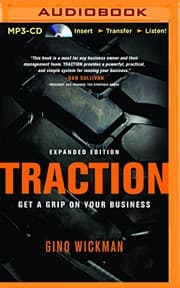
So internally, I'm pretty sure you've read the book, what is it, Traction or one of those books, but- Yeah ... um, they talk about, like, the integrator and the, what is, what is it? The integrator- Visionary ... what's the, what... Visionary, right? Yep. So in our early ages of our partnership, even though we're both co-founders of the business, you know, I, the visionary, um, McCard is the integrator, right?
So it's like, "Hey, look, this is what I can see 10 years in the future. This is what we gotta do," and then I, and then he runs the play, so to speak, just to oversimplify it, right? Yep. And in that context, right, we create this, this very healthy balance of like, that is, that is great, and I'm glad that's 10 years in the future, but what about the next 10 days, right? And then, and it pulls us back, right, to like, "Oh, okay, great.
Like we have, there's certain things we have to do today." And so there's, we're always balancing, like let's look at it from a business standpoint, what will be our retirement plan and what pays our bills today? Our retirement plan meaning we exit a business for, you know, a substantial amount of money, right? But there's so much that you have to do leading up to that for that to be a possibility while keeping the lights on, right, in real time. So for us, it's just knowing that we can play in that space and have that balance of like, "Yeah, I'm gonna let you have that autonomy to, to see as far as you can, and I'm gonna play the role of making sure that we take step one, two, three, four, five," right?
That's how it's put, that's how it's worked out for us. Now, for a, a client who may not have the luxury of having a built-in business partner, brother who, you know, who can have that balance, we're a- we're always acting as the, the, the integrator for them, right? Because most of them are, they... Well, for whatever their vision is, they see it more clearly than we will ever see it. It's their vision.
And so we're able to say, since we're not e- emotionally attached to it, and because we've experienced the highs, the lows, the ebbs, the flows of, you know, all, all iterations of business, we're acting as that ground. I think Gary Vee puts it as clouds and dirt. So if they're in the clouds, we're helping them stay rooted, and then they're like, "Hey, that's great. I'm not mad at you for this vision you have, but here's what we n- here's what needs to be true today," and making sure that they're calibrating on is if that's something that they really want. 'Cause oftentimes, it's almost like on my social media, I have, like, an interest folder. I'll see something like, "Ooh, I wanna buy that."
I don't buy it anyway. I used to, you know, I used to hit a, what, what, what do you call it? Impulse purchase. Yeah. Now I add it to my in- in- interest folder, and I almost never go back to it.
So how much money have I saved by just, like, adding it there and saying, "Oh, well, you know, if I, if I still want it, I'll go back to it. I have the link handy"? I've got, I've got, think I've gone back and bought one of those things, right? And so it's the same thing. Like we just help them understand, like, "Hey, we're gonna park this for now.
We're gonna focus on what matters most, and if you really, really wanna do this, and you're really convicted by it, we can, we can revisit it," and just reminding them of their, their North Star, which a lo- for a lot of times, you have a lo- a lot of clients that are women, it's like they wanna be able to take care of their, their family and have, and, you know, show up for their daughters. And like, like we remind them, like, "Hey, the, the more you do more of that, like, it may not allow you to do as much of this as you think it is," and just reminding them of their true why. Yeah. Love that. I w- I wanna pivot now.
Um, I'm not sure, Carter, whether it was you or George that said this early. It may have been you, Carter, but there was, uh, one of you mentioned, like, you're, you're always looking for potential, um, activities, businesses, et cetera, that not only can help support your main interest but also can potentially generate revenue, and I think content and how you guys are doing your content game is a big part of that, and I'd love for you to talk through how you thought about how you frame building the content side of your lives and of your work with how it then supports the, the business itself, right? The advisory and, and tax firm, et cetera. Like, so, so I think a lot of people- ... get confused in that, one, they have to be directly related all the time, or that they have to be two cons- completely separate things, or that you can't actually support the content business on its own, that all of the support has to come out of that business is which, where a lot of people get caught. So how did you think through this, and how did you start to build it so that your, your content side of what you guys do wasn't just a burden to the business, but was actually thriving alongside of it and supporting it?
Yeah. So I'm a firm believer that it is not the best who makes the most money, it is the most well-known, right? We all can make better burgers than McDonald's, yet they're, they, you know, make a billion, they've made a billion burgers, right? So for me, um, I think that it's, it's a few things. Number one, when it comes to content, people will buy from you because they believe y- because of what you know.
Other people buy from you because of who you are. And when you have content, um, you are able to... You, we have, when you have content, you are able to show both, right? So through our content, we've been, been able to show our expertise, but we've also been, been able to show who we are as humans. And some clients hire us because they love, they love our expertise.
Some clients hire us because George is a good father, right? And so you are able to leverage this and, uh, be able to get more clientele. So for me, content has always been, uh, a very, very big and ve- very important pillar of our business because with our cell phones, we can get millions of views and not have to worry about marketing for our business. Then after we got the content piece figured out, it was like, okay, how can we, now that our content is bringing us in customers, how can we also make money from this content, right? So we have a podcast where we get sponsorships.
We have, uh, you know, a, a, a podcast where we get brand deals, all those things like that. And what we notice is the more money we make outside of our advisory firm, the easier it is to reinvest money back into our advisory firm, right? And we, and Alex Hormozi has this concept called sawdust, where it's like, okay, look at areas of your business where you can turn it on and make money, but it costs you no extra time, investment, and, and, you know, X, Y, Z. So, uh, for us, it's just really been around how can we figure out ways to make money outside of our business that takes the stress off of reinvesting in our business? I'm a firm believer, and I'm curious to hear y'all in s-sentiment on this, I believe that we all be- everybody can become a millionaire by doing the big three.
Number one, you get experience in whatever you're doing. So if you say you wanna be the best podcaster, get podcasting experience. Number two, through that experience will make you a expert, right? 'Cause with enough practice, anybody can become expert at whatever they do. And then once you become an expert, you then can educate people on how you did, how you became an expert. So people will pay you for what you know.
People will also pay you for who you are. So once you, we become these, you know, we are now very, very, um, known in the financial space, some advisors will literally pay us thousands of dollars to spend one day with us to, to, so that they can get the lesson without having to get the scar, right? And so now we can be that coach for that person. We can be that advisor for that advisor. Um, and that money is all profit 'cause it costs us nothing.
And the more we make doing that, we can, we don't, we don't even need to take distributions from our business if we don't, if we don't need to. And that, again, because we're in the scale phase, and we knew this already, so we're like, "Okay, how can we still make sure our personal wealth is secure, but make sure our business can still scale and stay profitable?" Yeah. And so, Carter, I got a E to add to, add to that for you. So you said, when you said ex- expertise, experience, education, ed- or educate, is that what you said?
Yeah. Uh, yep. Yep. And you can also add equity to that, right? So many people aren't familiar with, like, consulting for equity.
So on one hand, we could educate, right? And people pay us 25,000 or whatever it is for a, for a day. Or it's like, "Hey, w- if I could help your business grow by X percentage, could, would you be willing to give me a percentage of the business," right? Like, in, in many instances, people are willing to do that. So, um, I agree wholeheartedly with what he's saying 'cause we're, we're both doing the same thing.
Now, the other piece, going back to your question on looking at the media p- aspect of the business and the content and how does that serve, well, to be honest with you, we spend hundreds of thousands of dollars a month on paid advertising, right? So for us, it's like you can only build an audience in a few ways. You can, you can buy it, which is what we do a lot of, fortunately, unfortunately. You could borrow it, right? Like, going on platforms like this, and you've built an established audience, and people are here, and like, "Oh, I like these guys.
I'm gonna go see what they have going on." You can, you can build it, and that's what we're doing with the content, right? Because then it becomes owned media. So it's like, okay, well, if we have, uh, hundreds or thousands of video though on YouTube, well, across all platforms, I don't even, I like, I can't even fathom how many pieces of content it is. But if we have five years, five to six years of content archives, some of which is long form, right, we are building our audience through that content, and we're able to nurture our potential clients at scale.
Um, there's a gentleman who actually set up our podcast suit- studios, and he helps people do this. Um, but he... I can't remember exactly what he said. Carter will remember, remember it probably more eloquently than me. But actually, I'll let you interject real quick to what he said more.
Yeah, yeah, yeah. So b- basically, um, we always talk about, uh, the power of compound interest when it comes to investing. Right? You put a dollar in today, it could become tens of $100,000 tomorrow. He looks at every piece of content as a dollar in the content market, and that that will compound, that same compound interest that happens with investing can come from an audience.
That will help you build your business, yeah. Yeah. And so from that vantage point, when you-- But you have to, again, it's about, about the frame. If you don't have that frame, content's gonna feel like a drag. It's like, oh my gosh.
Like, t- 'cause we record, I record a video that goes live every Monday. Carter records one that goes live every Friday on YouTube. We have a podcast that goes live every Wednesday. We've been doing that since 2021, every week, have not missed A day, right? And then sometimes it's like, did that hit?
That one got 1,000 views. This one did, got 80,000. That did really well. I don't know if anybody saw that. I did this on a Saturday when I could've been re- re- relaxing, but you never know when someone's gonna see that piece of content is gonna be the reason that they make a decision.
And more importantly, imagine your favorite show, right? You don't, you don't... Th- some episodes you love more than the others, but if it comes on every Wednesday at 8:00 PM, and then one Wednesday they don't make an announcement, it just doesn't come on, you've lost all trust and credibility with your audience, right? And so at some point, once you make the decision to become an authority, to become a leader, to become someone who says they do what, who does what they say they're gonna do, that's what brand is. Brand isn't your colors.
Brand isn't how you make people feel. Brand is, I know them for this, and I can trust them for that. And the moment that that changes, you start to lose brand equity. And so for the foreseeable future, if our brand is saying our podcast airs every Wednesday, doesn't matter if Carter's sick, doesn't matter if George is sick, doesn't matter my little son's not feeling well, doesn't matter if it's raining outside. If that's what our brand says, that's what we have to do.
That's the commitment that we make, and we understand the dividends that that can pay. Every time we acquire clients now, it doesn't rain, sleet, or snow, someone says, "Oh, I was watching that YouTube video, and that was what made me sign up." So that make, that keeps us going on the days when, like, tomorrow, when I gotta record a YouTube video and I don't feel like it, right? I know that it's a part of the brand, and so hopefully that answers your question. No, it does.
It does. Um, uh, inside the insurance industry, uh, I get brought in to do a lot of workshops on marketing 'cause how I kinda cut my teeth was using content, um, which in the insurance industry was, when I first started doing it, uh, was very rare. Uh, the insurance industry in particular operates about 10 years behind the rest of the world in terms of both technology and general marketing and sales stuff. Um, and God bless the, uh, um, monetization structure that insurance has, it's able to do that. But, um, my point is, what I used to say is think of every piece of content that you create as a salesperson working for you 24 hours a day, seven days a week, right?
They don't take vacations. They don't get sick, right? They don't, they don't bitch about the health insurance plan or the 401, right? It's just working for you all the time, and when you start to like, like, just as you guys said, when you start to think about it not as this thing I have to do, this task I have to get through of creating content, but, like, this video could make me a sale, right? Someone could hear me talk about what I do mixed with the fact that I like the Buffalo Bills and, you know, whatever, and all of a sudden they're like, "Oh, like, I like the Buffalo Bills, and I need growth consulting, so, you know, this is the...
I'm gonna give this guy a call." Like, all of a sudden, the, those things click, and, and I really like your point about you never know which piece of content's gonna be the one that hits, right? Like, you in your mind could be like, "The hook is perfect. The graphics are done, the pacing," and, and it just bombs. And then you can put one out where, you know, you, you're just kind of stream of consciousness, and you're like, "Ah, whatever," and it clicks to two people, and now all of a sudden you got two new deals in your pipeline.
Like, you just never know, so you gotta do the work. Um, I, I, I love that. I, I absolutely think that, that... And, and this is kinda where I'm going and, and where I wanna finish here in, in the last few minutes together. You know, AI is everywhere.
We know AI is everywhere. I, I believe that with the, with AI taking such a big portion of, of the, the work we do, it's slowly just taking this work away, content and the human aspect of that content is actually becoming even more valuable every day. Because if, if we still believe that despite automation, AI, that kind of things, we still wanna know who the humans are that we're doing business with. If you're just putting out AI slop and this kind of stuff and, or you're not creating any content, what differentiates, you know, my business from your business, right? If I don't know who the humans are behind it.
So how are you guys kind of leveraging that and, and making sure that people know who you are in this maelstrom of AI content and shit that's coming out? We just talked about it yesterday, actually. So, um, we do in-person events, um, at a, in a pretty, I would say pretty, pretty grand scale. And I think the experience economy in general, if you do any research now, you'll see that the experience economy is actually upticking quite a bit because of what you said, right? No one can distinguish online what's real, what's fake, et cetera.
And so with us, you know, we have the, the fortunate luxury of having a decentralized team. Everybody can work remote, um, and, and we run, we run a successful business. But as we think about how we connect and engage with the people that we serve, we understand that at some point, right, maybe not every day, they may not have to walk into our office and shake our hand, but they need to understand who we are and that we're real, right? Simply put, right? And so, you know, for us, the events that we do serve as that opportunity, um, for us to just really separate ourselves.
Like, again, you can, you can fake online now, you know, AI, you can have a nice background. There's a lot of things you can do on the internet, but you can't fake hosting, uh, a multi, multi, multi six-figure event with hundreds, if not thousands of people. You can't fake that, right? And so for us, that's been something that, not, not because of that. We did this before AI existed, but it, it has now allowed us to leverage an infrastructure that we already had to create that separation and remind people that, "Hey, we're not just talking heads online.
We do this in real life. We get real results. We have real clients." Um, and so that's, that's, that's the ways in which we're distinguishing ourselves, or one of the ways at least. Carter, I know you gotta run, man.
Um, last words, you know, on this topic, and then hit me with, I know that my audience is gonna wanna go deeper into your world. Like, let me know how they do that. Uh, this has been a tremendous primer for who you are as people and your mindset, and obviously it lines up so perfectly with my own, and I know it will with the audience. Like, w- where do they go to get deeper into your guys' world? We'll have all the links, whether you're watching on YouTube or wherever you listen to podcasts, guys.
The show notes will have all the links there, but, like, where can they go to get into your guys' world deeper? Yeah. Um, if they're on YouTube and just s- uh, search Melon and Money, um, I think that, that, that, that'll probably be the place for them to get the most amount of value, just be- be- put out those three videos a week in long form content. We also host these virtual wealth workshops, um, a couple, a few times a year to really give people like fi- you know, we, we believe in, in greatness on display, right? Where we literally spend five days with these people and give them our best wealth and tax strategies, and then allow them to become clients after.
Um, if they want to, interested in that, it's just joinwealthworkshop.com. I'll get you both links. Uh, I'll have the team send you our, you know, our YouTube link and then that, that link if they wanna, uh, get closer to us. But that's really, you know, that's really it, and we just put a lot of time, effort, and energy into showing people that we can help them by first actually helping them. Love that.
Guys, this has been phenomenal. I wish that we had three hours to go through this 'cause we could keep going even further. We... But, um, I appreciate the hell out of you. Uh, this has been a tremendous conversation.
Anytime you guys wanna come back on the show, open invitation, 'cause I just, I love the way your guys' minds work. I love what you're talking about and the way you're doing it. I wish you nothing but the best, and I just appreciate the hell out of you. We'll probably take you up on that offer. You'll probably save us some money on therapy, 'cause this was, uh, this was great.
You know, this was great. This was great. No, likewise, we share the same sentiments. Had an amazing conversation, and we appreciate the fact that we didn't have to dive too deep on the things that people always ask us, and you extracted more value out of us, um, than we could've imagined. So we appreciate you as well.
Aw, thanks, man. Well, with that, guys, we're out of here. Peace.
Books from this episode