You've finally broken loose from work. Three friends, one tea time, and then the text. Honey, there's water in the basement. Not exactly how you pictured your Saturday. That's when you call us, Cincinnati Insurance.
We always answer the call. Because real protection means showing up. Even when things are in the rough. Cincinnati Insurance. Let us make your bad day better.
Find an agent at c-i-n-f-i-n dot com. Happy Holidays! Want to give your host a gift? Consider subscribing, rating, and reviewing the show this holiday season. It really helps the show grow.
From all of us at Believe, have a Merry Christmas, everyone, and a Happy Holiday. In a crude laboratory in the basement of his home. Hello, everyone, and welcome back to the show. So, I know I probably say this every week, but I have another one of my all-time 23 favorite episodes that you're about to listen to. It is with Aaron Gordon.
Aaron Gordon is the man. If you don't know who Aaron Gordon is, then that's a you problem, not an Aaron Gordon problem. And I am so incredibly excited to share this episode with you because I think of the world of Aaron. I think the world of the way he thinks about the business, not all of what he feels is exactly the way I feel. But what I do love about him is that he's constantly thinking about his business.
He's constantly marrying what is a very difficult kind of traditional legacy set up with where he wants to go in the future. And doing it in what I think is an absolutely incredible and respectable and admirable way. And also just super cool, ridiculously cool dude who I got to spend a lot of really good time with recently in New York City for Doug Benz's The Business Meeting. So, just couldn't be more excited to share this episode with you. Before we get there, guys, if you love the podcast, you love the blog, findingpeak.com, findingpeak.com, go to findingpeak.com, stick your email address right in there and you'll get great articles delivered right to your inbox every week.
Appreciate all the subscribers to that. We've been live there for about four months and we're doing, I think, just over 1,500 subscribers to that blog, which is just tremendous. And I love you guys for doing that. And big shout out to Tivoli, T-I-V-L-Y.com, that's T-I-V-L-Y.com, T-I-V-L-Y.com, delivering basically what's a foundational small business premium for us every month. Every month, well, I mean every day, every week, every month, we're getting calls from Tivoli, live warm call transfers from their kind of front edge, front end, wow, I can't speak right now, front end triage specialists directly to your agency and the business owners transferred between them and now you're literally on the phone with someone who's raised their hand and needs insurance.
Gosh, I can't speak. That being said, Tivoli is tremendous as much as I've butchered. So for as much as I've butchered this ad read, Tivoli is the 180 degrees that from a quality lead generator for your business if you're interested in commercial lines. Okay, so think about how terrible this ad read has been and then flip that 180 degrees and that's how good Tivoli has been for Rogue Risk. We've been a client of theirs for almost two years just to give you some context.
But guys, the fact that you're willing to deal with me as I try to do some of these live reads and stuff for sponsors and all the different stuff is the fact why I love you guys so much. All right. With that, let's get on to easily one of my new favorite episodes of 2023. I don't like the way this sounds, but we're going to have to go with it. That's a lot better though.
Yeah, I know. But I like to look at the other one better. I don't know why it wasn't picking up my USB there, but whatever. You'll edit this out. It's all good.
Yeah. You're hearing me better now? Is that good? Yeah. You sound good.
Yeah. Yeah. You sound good. I mean, it's not normally that high fidelity microphone that you have. I don't know why.
It's literally not coming up as an option on my computer right now. You know what it is? It's because you downstate elitist. Your technology refuses to work with us upstate bumpkins. That's what it is.
I think I know what it is. I don't think the power is connected. But yes, it is our upstate elitism. What the heck? Yeah, it's literally not.
Hold on. But anyway, what's going on? How are you? I know we'll get rolling in a minute. I'm sorry.
Yeah, good, man. Just doing the thing, you know, doing the thing. Every single day. That's what we're stuck doing. It's the business we got forced into.
What am I going to tell you? Yeah, it's. And it's very interesting. You know, I've. Rogarisk, you know, I love to read and.
I read a lot. I read just about every morning. And so much of it. It's funny. I like I've started to realize that I even without being conscious, you know, without it being a conscious decision.
I tend to watch what I'm reading will skew towards whatever the whatever the issues or problems are that I'm sensing, even if I'm not like aware of it. You know, I mean, it's not like I sit down. 100 percent. I need to do. You know, I'm like I'm not making these as like conscious decisions.
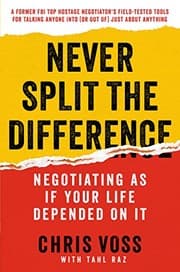
It's just I'll be I was reading, you know what I was reading. I've read never split the difference before, but it was but it was like when it first in the middle. I'm in the middle and I've gotten lazy. But yes, I'm actually reading it for a second time because, you know, I'm working a lot more with the sales team and we're we're doing all kinds of different things at Rogue. And I'm trying to I'm trying to build this human optimized model and I'm struggling with certain parts and, you know, like sales leadership and sales salesmanship in general.
It's not my specialty, right? It's just not it's I can sell. I know I'm very good at business development and like in like deal making, but man, like sales, which is not my specialty. So I'm reading this book. What I found is I just couldn't get through it.
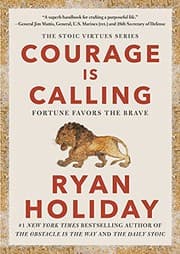
And I gravitated towards and all of a sudden, you know, I picked up Ryan Holiday's Courage is Calling. And and I good. I've never I've never read that. Yeah, I mean, it's a it's an airplane read, but there's a ton of like thought provoking. ideas and shit you can underline and, you know, little little ditties. I love little ditties just to, you know, it's like brain food.
You know what I mean? These little, you know, some people call it like mental masturbation or whatever. But like to me, it's this is one. I don't have any problem with masturbating. But two, I think it it's just kind of feeds you these these little things like during the day left your own devices.
You can make all these whacked out crazy decisions that are not good for you. And if you're constantly feeding your brain, these little ditties, these little one liners, it's one of the reasons why I don't love how reels can be a debt. It can be like a bottomless pit. But like you give me like five or six scrolls on like some David Goggins or some Jocko Willink, like Instagram reels. I get all jacked up and I come back firing at you know what I mean?
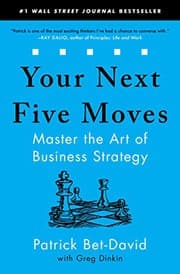
Like it's I don't know. Did you ever read your next five moves? No. Okay. Honestly, like I'm not a big reader.
Yeah. You can also audio book it. So this guy, Patrick Ben David. I don't know if you know. Oh, I love Patrick Ben David.
This is his book. This is his book. And it's the only book that I've ever read where I had that kind of like real impact. Okay. So the other one's like midway through the book.
Your next five moves is literally saying, and I feel like you'd be really good at this. It's like his premise doesn't give away the whole book, but his premise is that a chess grandmaster, if you sit down against the chess grandmaster, you're thinking, okay, I'm going to move the pawn here. They're like five moves later. They know what they're going to do based on everything that you're going to do over the next five moves. They know what they're going to do.
And if you plan your business development five moves ahead. You'll come out on top. Yeah. Because, because what that means is that the here and now, that thing that you're thinking about right now is not going to actually be as important or might not be the decision that you ultimately make. Well, this little fancy, just so you know, this little scarlet thing that's sitting on my desk is dead.
That's why. That's why the microphone is not working because when I go to power it on, it's dead. I got to figure that out after. Sorry. I should have had this.
Should have my tech better prepared. You're good. We're talking about, I'm listening to you fix your microphone while we talk about books. This is amazing podcast radio. This is why the people tune in right here.
This is unbelievable. And I just bought that book. Yeah, it's good. Yeah, that's cool. It's not a heavy read.
It's like the rest of them, but it's like, you know, it's a pretty good one. I like it. I'll be honest with you. I am a ferocious reader. I am constantly consuming.
I can't, I can't help myself. I love, I love consuming. I love creating. I listened to, if I'm in a car, I am listening to a podcast. If I'm walking and listening to a podcast, if I'm, I have two books sitting here on my desk that just came in the mail today.
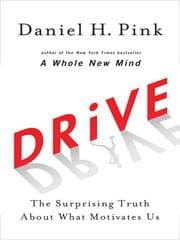
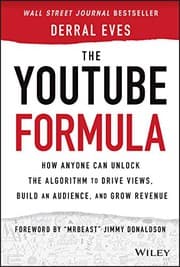
I have Daniel Pink's drive, which I'm trying to be a better leader. I'm realizing that I have some blind spots in my leadership and I want to be better at that. So I'm, I have that, uh, which was referred to me as a very good book on leadership. And then I also have the YouTube formula by Daryl Eves, which was referred to me by someone else as, you know, uh, uh, uh, an easily skimmable book with some really solid tactical shit for YouTube. Um, and YouTube is obviously, I shouldn't say obviously YouTube, you know, some people may not know.
YouTube is our largest driver of traffic and leads to rogue risk is YouTube. Well, I listen, I listen when you talk. So I actually knew that, but that's only because I listened to when you talk. Well, most people just, just, I don't think they do, but that's why. The YouTube thing is like, it's so, it's so crazy.
Like I've become a, is this live? Are we, is this going to be, is this, is this going with this? Yeah. So are we really, this, the podcast is going to be me. This is how we roll, man.
Oh, this is great. So I'm like, I'm a great consumer of some like people who do alternative living, which is one of the things that if I wasn't married with five kids under the age of 12. That might be something I would do like, I don't know if you follow these people that live like in, forget about tiny homes, but like live out of vans. And like literally there could be a sprinter in front of my office and it's someone's entire house with a shower and like all that stuff. And like there was a gray water and black water and all that kind of jazz like that, which you have to get past.
But the, that whole idea of people just like flipping things on their heads and making entire livings off of YouTube. Like there's this, there's these people in, I think they're in Virginia somewhere called life uncontained and they have over a million YouTube subscribers and they live in a container home. They put two containers, put them together, built us a really nice home. The first five years they lived in like a van that wasn't even built out and their entire revenue for their, them and their two children is YouTube. Yeah.
And like, if people don't think that that's a thing and there's, and it's not going away. Yeah. The formula, the algorithm may change, but like these people who get, put out one video a week and get, or two videos a week and get 1.2 million views and have X number of subscribers. They might not be making tens of millions, but they're definitely making money and then sponsorships and then all that jazz. And, you know, so I got a taste of that lifestyle, not that lifestyle.
I got a taste of it when I was at agency, when I was building the agency nation platform and doing those videos on YouTube. And like, you know, I'd spend, I travel or do whatever. And, you know, you do all these cuts and beat, you know, B-roll cuts. You try to make it entertaining and educational and, you know, you're building this community. And, you know, there are some of those videos have two, three, 4,000 views, which in the insurance industry, a YouTube video getting three, 4,000 views is a lot of views.
And, you know, we got monetized really quick and, you know, we started, you know, I started, you know, we were adding, at one point we were doing like almost an additional thousand dollars a month in revenue, which isn't a lot for a company like trustedchoice.com. But you think about it, like if I was running that solo, right, that's an extra, that's a thousand dollars a month for something that basically took me one day a week. I did one video a week and it probably took me one day's worth of work a week to put it out. And in exchange, you're making a thousand bucks. Now, if I had put more time and effort into it, if it was my whole job, if I was selling, you know, stuff, it was a primary driver of what drove ticket sales to the Elevate conferences.
So now you do an in-person event to go along, I mean, you can see how this is monetized. Now, the part that I come back to with this, with this kind of alternative lifestyle or YouTube or content creator lifestyle is, is there is a, and, and, and I've talked to Sydney about this. I've talked to, I've talked to Bradley about this. I've talked to others and maybe even you feel a little bit of, feel this a little bit. It is very difficult to stay grounded and to understand that behind what you're sharing, there has to be a real life, right?
So, so the beauty of Agency Nation was a lot of the videos were me traveling to different events, traveling to see agents, traveling to trusted choice headquarters and, and what was going on and what was happening there and sharing this experience and journey as we built this platform and all this kind of stuff. So there was a, there was a real business behind the content we were creating. I think where some people get in trouble and there's a lot of people in our space that this happens to is you're talking about insurance and you get 10 views on a video, right? Sucks. No one cares.
No one gives a shit. And then all of a sudden you post one about like prospecting and you get 500 views, a thousand views. People start sharing it, asking you questions. And you're like, oh shit, this is way cooler than doing the insurance videos. Now, granted it is way cooler, but is that a real, like, is that real or are you just because you did something different and whatever, you get some more attention, but no one is going to buy anything from you.
Like you, you, you have to be careful that what you're creating is actually going to be a business and not, and not confuse it with something you do for fun. I guess is what I'm saying. I'm not sure if you're talking directly to me, but I can take it. I am not, but I have other people in mind. Yes.
But I think also that there's the challenge that we have is that insurance isn't cool. Yeah. And I think that one of the things that I at least try to do and that I think you try to do also is like, I want people to buy from the person. What I don't want is for people to think that this person is a jerk or this person doesn't know what he's talking about. So like, I just, you know, there's this guy who I became friendly with.
He's a state farm agent and he has, which has some really great content. And to your point, he put out this one really silly, stupid video. He'll even tell you that, which was green screen. He's looking at a guy crash a motorcycle and he doesn't say anything, just his facial expressions. And he got like 600,000 views.
Yeah. So it was like, okay, so if this gets 600,000 views, the thing that I think about as it relates to that being the insurance versus the non-insurance or the trusted advisor versus the not trusted advisor is you can't replicate those one-offs. No. So that, what I think gets people in trouble to your point is when they try to replicate that, they say, what was it that triggered the really silly facial expression? Well, you can't.
So now once a day you're going to post, you're making a dumb face. Yeah, now you're the facial expression. Yeah, you're the goofy facial expression. It's like, it's, and what you don't want in a profession, there are obviously people that have done this really well on social, but like, you know, there are those people whose entire social media presence is them like commenting on other videos of people doing like really stupid. Things like in the kitchen.
And they're like, did you just blend pasta to make new pasta or something like that? And that's a persona. But if you want to be a professional, you can't be the guy who, or gal who's green screening on top of people doing dumb and dumb things and saying how dumb they are. Yeah. Unless that's how you want to be.
Well, here's, here's a lesson that I tried to, that I, you know, I had to learn the hard way and ultimately still try to preach today is that you get exactly back what you put out. So if you are the doofy, dumb face guy who makes fun of crashes or does wacky faces, you're going to get goofballs who call you because, because someone who's serious or whatever, you know, they're going to be like, oh, that might be fun, but whatever. Right. Like you get back. It surprised me to say that because like one of the, one of the debates that my parents and I have, and obviously they have different views on social media, but my mother like kind of sees that it could be a thing.
Yeah. My father literally just can't even. Yeah. So he's like, where's the ROI? Where's the ROI?
And one of the things that I say to him is if you really wanted to see a direct ROI where I could pull up some sort of dashboard and it will say that this person clicked through and this person bought, those people are the exact people that you told me never to sell to. Yeah. So it's going to be because I make some sort of cutesy video on saving $4 on your auto insurance. And then those are the people that are going to call us and then they're going to cancel the next day because someone else offers them $4 off that. So that social media pitch is different.
What I can say is that I think brand building is a thing. I really think that there's like this thing of people where they just kind of see you. And I think lurkers are a thing where people don't, you don't realize the value. I look at views. I don't look at likes.
Even though it says you should look at likes and comments. Because like how many people do I meet in a given day or at a conference or wherever I am that say something like, oh, I saw your videos. Or I feel like I saw you somewhere. I don't know if that was Facebook or LinkedIn or something, but I've seen you somewhere. My usual response is I'm an identical twin.
You probably saw me. You probably saw my brother. But that answer is like you saw me somewhere. That means that what I'm building had some sort of impact. And then you might buy from me later.
But to your point, anyone who's going to click on an Instagram message and say, here, I'm going to click through your JotForm and buy from you two minutes later are probably not the ideal client for us. Well, yes and no. To your point on brand building, it just – that customer that you really want, if you're doing it the right way and speaking to them in the way that they speak in their language, talking about the things that they're interested in, maybe they don't click the first one they see, but they might click the seventh one they see. But that's what – but I'm saying if you want to say I have a reel that got 50,000 views because it was random, and I have no idea why I got 50,000 views because it was stupid. And 50,000 people clicked on the link, and even if I could convert 10% of those, those are horrible leads and horrible conversions because it was a gimmick that brought them in the door is my point.
Yes, and this is like the whole – I don't know if you remember, it wasn't that long ago, the Facebook rage with let's run a stupid contest on Facebook that people signed up for for this thing that they never wanted but signed up for it, and then we gather information, and we try to call them and sell them insurance, and you're like, I get that there are some captive agents and some personal lines-only agents that are built a certain kind of way that made money in that process. But I know the dirty little secret that maybe not be so secret is that that business retains for shit. So even if you were really good and had really awesome processes in the 17-point touchpoint with the voicemail drops and the text messages and the emails and the phone calls and the auto dialers, if you were good at that and set that up and crush that, that business does not retain. Because the Nest Facebook ad that that person sees that offers them a $25 gift card to the Bronx Zoo, they're signing up for that one, and they're getting called 10,000 times by that person. A hundred percent.
And I actually think, I always like to think, what would I give the people a chance to sell me on? Yes. It's not a car warranty. An interesting thing was I was recently on the phone with Progressive changing a vehicle for someone, and I called twice because we don't even work with Progressive. It's just a service provider.
I called twice because originally the dealer gave me the wrong VIN number. And both times, the script that the customer service rep read me about homeowner's insurance was so good, I said to them, I wish that I recorded it. It wasn't, I can save you 15%. It was, are you happy with the service that I provided? If you like your service so far, can I put you in touch with someone who could give you a homeowner, a quote for your home, which may be able to save you on your insurance while you're achieving the same service that you said you liked from Progressive?
And I was like, you played to exactly what I said I liked. All that. It wasn't too pushy. By the way, they never called me because I said that I was an insurance agent, things like that. But like, those people want to listen.
That's not you saying, here, click this QR code, and you'll get a four cent, you know, thing to 7-Eleven. Dude, it's, I mean, again, the stuff that I've learned just in the last three years, not to mention the last 17, it's like, I could take just about, not all, but just about every traditional piece of ideology that exists around our business, and I could show you a very well-run counterexample, and call centers is one of those, right? Like, I was actually just having this conversation with someone internal at SIA today, because we're doing some testing around using carrier sales centers for certain types of business. So I am convinced that at a minimum, at a minimum, $1,500 to $2,500 bops, you cannot write them profitably. You can't.
You can't write them profitably. Not at scale. Not even in your agency. If you're writing a $2,500 bop, you are, that business is unprofitable. What about a $500 bop?
Yeah, completely unprofitable. It doesn't mean, you're writing it to write a piece of business. And again, I get it. Purists, come at me. You're going to go, well, small accounts grow.
I know that, and I believe it. It's why I write them. Well, you know, you got to do what's right by people. Completely agree. We have no customer left behind as our strategy.
But to your point, I am the purist, and I would tell you both of those things. But the response that I have, and my father and I have this, you know, back and forth all the time is, that doesn't mean that the $500 bop is profitable. Yeah, it doesn't mean it's profitable. Yeah. It's not profitable now.
You're just willing to take it as a loss leader for future growth. But you can't say that it's profitable. When it grows, it'll be profitable. But it's not profitable right now. Or, you send it to a carrier sales center, let them write it, let them service it, and pay about 20% the cost as you would if you wrote it inside your agency.
So, this was, so the average, the average. But it's still not profitable. Well, no, that changes. So, I'm going to run this through for you, okay? So, let's say, let's say our cost of acquisition at Rogue is, let's say it's 50 bucks, right?
It's right around there. It fluctuates depending on the month, depending on what's going on. We dial up Tivley. It gets a little more. Maybe we do, you know, we have a lot of different places where business comes from.
But let's say it's around $50 per lead. Not closed business, but 50 bucks is around what it costs to get a qualified lead in the door. It doesn't mean we close it. It just means a lead that we could potentially write costs about 50 bucks. Okay.
So, if that's the case, $500 bop, it's going to make us, what, about $1.25 in revenue, depending on the carrier, you know, whatever. Or no, $1.25. $75. Make us $75. $75 a year. So, instead of us writing it, right, we have a deal with a carrier. They take one point year one, and they take two points until we get to a million dollars in premium with them, and then they go down to one point, okay?
So, if you take, you know, no one gives a shit about any book size that's less than a million dollars, really. I mean, we all have them, but no one, you know, you have no juice in a carrier until you're at about a million bucks. So, if you're stacking your chips with certain carriers, trying to get to that million dollar mark with the carrier so you start to have some juice, because that's kind of a, something about that seven-figure premium book starts to trigger with that particular carrier. You know, I'm not talking about total for the agency. I'm talking for a single carrier, okay?
So, if I were to, if I were to have, just think about the math, if I were to send every bop that came in that I kind of eyeballed was going to be $2,500 or less to the carrier, right? I'm getting hit with one point year one, and then when I hit a million, I now have a million-dollar book of business serviced at 92% retention rate for $10,000. Right, right, dude, you're right, you're right. And, by the way, your acquisition cost is an acquisition cost of year two, so you're actually, your profitability on that skyrocket. So, it's really, even if you made nothing year one, no revenue, no work, therefore.
Yeah, because the whole concept, and this is why I think what people miss about carrier sales centers in general. Now, look, they're not all the same. I've done a tremendous amount of vetting. I have three that I really like that we're testing right now. But, my point is, the carrier sales center is not meant to replace the work you're doing.
It's meant to be additive to the work you're doing. If Aaron Gordon is sending the business that's small, that wastes his time, wastes his time from a profitability standpoint to a carrier sales center, then what he should be doing is still writing all the same bigger accounts that you want to spend your time on. All you're doing is not taking away from those accounts that you really want to write, that are profitable for you to write, that do need your expertise, time, attention, hand-holding, and just saying all that other shit. I still want to write it. I just don't want to have to deal with it.
And the only thing, when you look at the math, when you look at the process, how additive they can be, ego is the only reason why people don't use them. That's my personal opinion. I could be wrong about that. Do you think it's ego or just the way it's always been done? Or do you view that as ego?
I think the way it's always been done is ego. I think that people have this – I never thought of it that way. I never thought that the carrier service center, you're right, they're probably also better at cross-selling at a certain point. Most people probably don't care because the average consumer is used to consuming call centers, so it doesn't really matter. And I bet you could probably cut it where if the premium ever increases above your threshold, they kick it back to you.
Forget about the premium, but if the service becomes a higher level of service that you want to bring in-house, yeah. Yeah, maybe you're right. I think I'm going to say that to you, Brian Hanley. But maybe you're right. You have to believe in it.
You also have to believe that the carrier is not going to screw up the lead, which I think is another piece. Yes. Well, statistically – Maybe that's what you're saying about ego, but you're right. Statistically, your staff will probably screw it up before the carrier will. So, a best practices agency has a retention of what?
Somewhere between 89% and 92%. That's a best practices agency per the big I is going to be in that range. Right, right. Right. Okay.
So, the three carrier sales centers that I'm currently testing all push 90 – 92 is a minimum threshold. On given years, they push 93 or 94%. So, technically, these carrier sales centers, if you're utilizing them properly, would be best practices of the best practices agencies. Like, they would be the top from a retention standpoint. So, again, and I'm not saying that we – Well, that's actually probably why – That also has to do with probably the fact that they're probably really good at getting ahead of the service requests.
Yep. They're probably really good at getting ahead of some of the other challenges, and they also probably just don't drop the ball the way that – They have systems processes. They're open. All three of them are open at a minimum of 8 to 8 Eastern. And the phone comes in.
The phone call comes in. They already have the account up, which I know a lot of agencies do, but you'd be shocked at how many don't. Yep. So, like, they're probably able to just kind of pull all that in a different way, which I guess works out. So, again, I'm not advocating everyone go to carrier sales centers.
That's never the case. My – what I've tried to pride myself on, right or wrong – and trust me, I take a lot more shots and have a lot more failures than most agencies because, unfortunately, I have this methodology is I have like a Bruce Lee mentality to this business. Which is, I'm running a business that I'm trying to grow profitably while taking care of my customers. Who does that? How it gets done?
The method in which they purchase. I don't have – I don't really care. I don't care. As long as it serves our customers and does right by them, gets them in good coverage, gets them good service, right? So, I'm not saying I don't care that they're taking care of.
All I want to do is write business and screw the customer. What I'm saying is as long as it meets a bar of expectation of service, then I don't care how they come in. I don't. Right. Well, that's right.
That is right. Exactly right. Well, that's one of the things that I think a lot of people kind of face when you talk about it, especially on the personal side. I know you don't do a lot of that, but like when you talk about minimum coverage, it's maybe not on the commercial side. Yeah.
At what point do you set your threshold and say this is going to be a – this is a minimum threshold for coverage, for quality, for everything like that? And then how much business are you willing to let go out the door theoretically realizing that you'll be more profitable in the long term? And I don't think that people really analyze the profitability of the different silos of their business enough. No. I think that that is complicated because if people really did a deep dive and they don't want to spend the money or they just don't want – like people would realize that there's so much stuff that's not profitable.
And probably if you take like really big business clients that are like that top 2% middle market or large middle market accounts that everybody knows are the most profitable because they're the same work as some of the smaller ones, if you take that as an obvious answer for profitability, I bet you that most people will will probably miss on what their most profitable process line path is versus – and they'd also probably miss on what the really bad ones are. What's up, guys? Sorry to take you away from the episode, but as you know, we do not run ads on this show. And in exchange for that, I need your help. If you're loving this episode, if you enjoy this podcast, whether you're watching on YouTube or you're listening on your favorite podcast platform, I would love for you to subscribe, share, comment if you're on YouTube, leave a rating review if you're on Spotify or Apple iTunes, etc.
This helps the show grow. It helps me bring more guests in. We have a tremendous lineup of people coming in, men and women who've done incredible things, sharing their stories around peak performance, leadership, growth, sales. The things that are going to help you grow as a person and grow your business. But they all check out comments, ratings, reviews.
They check out all this information before they come on. So as I reach out to more and more people and want to bring them in and share their stories with you, I need your help. Share the show. Subscribe if you're not subscribed. And I'd love for you to leave a comment about the show because I read all the comments.
Or if you're on Apple or Spotify, leave a rating review of this show. I love you for listening to this show. And I hope you enjoy it. Listening as much as I do, creating the show for you. All right, I'm out of here.
Peace. Let's get back to the episode. Yeah. You know, there's actually, if you're a Hanover agent, they have a free service. Well, they will come in, digest your book of business.
They will find personal and commercial. They'll do profitability. They'll do cross-sell opportunities. They'll do like a full, they will hand you this report, which breaks down your entire book, all carriers. You know what I mean?
And whatever. And they will, you know, and you sign an NDA. They're not taking your information. They're not doing whatever. But they will come in and do like a full analysis of your book of business and hand you this report and say, here, this segment is this and this is here.
And here's your retention on personal lines, you know, outside of this range and da-da-da-da. And here's your monoline. And it's really, really interesting stuff. And you could decide to do with that information whatever you want. Yeah.
But I just think that a lot of people would be super shocked. Yeah. With how like, oh, I really thought this was profitable. Well, what do you mean? Like we have this thing where we have one outside producer and he specializes in smaller-ish jewelers block policies and the ancillary business that goes with it.
It's a fascinating business to be in in New York City, especially if you're willing to chase people every single month for their non-pays, like every single month. And I have told my parents that there's no way that it's profitable for him. For us, it's very profitable because we give him a better commission split. Yeah. And so since he gets a better commission split than he was getting elsewhere, we also, quote-unquote, force him to do more of the work, which he's willing to do, right?
Again, I will not walk up and down 47th Street between 5th and 6th Avenue every single month and collect three or four checks for $200 each. It's never going to happen. I'd rather pay you, kind of like the service center, an extra 10% and you deal with it. So I can't figure out how this guy's life is profitable, for lack of a better term, but I can tell you that's profitable for us. Yeah.
But my father's like, what do you mean he's making X a year? I'm like, do you realize what he does? If he cut out this smaller business, like he's – it just doesn't – when he pays for parking to go see this guy, runs off his commission, like kills his commission. So I think that's a fascinating part of this business. Also, like how many people just have never thought about these things?
Yeah, I was going to ask you, how many people actually think – and this is the interesting thing. And actually, Cass was the one 10-plus years ago that started raising this flag, and he and I have talked about this in detail. Like, when you go to a conference, right, there's a couple things that you realize right away, at least that I've realized. There are lifestyle agents and there are growth agents. And then inside of those two segments, there are sub-segments.
Now, lifestyle agents, I think, are the majority of agents. They have either kind of inherited or perpetuated or built an agency in which it serves their lifestyle, right? And what do you think the percentage is there? Because I have a number in my head. So I'm just curious.
I bet it's somewhere between 65% and 75% of agencies are lifestyle agents. You think it's more? Yeah, it could be. I think it easily could be more. If you drive down the street in any city.
Yeah. Well, there's a road over here that's got four of them. And none of those are growth, right? None of those. All four of them have a traveler's sign and a progressive sign from the 90s that's sitting in the window.
All four of them have the exact same signs in their windows. They're all like three last names. You know, it's whatever. You know, it's like Gordon. Yeah, it's, you know, it's just, it's, it's, so, okay, so you see that.
Okay, so let's carve those guys out because what they're trying to do, all they want to do, and not wrongly, so that's not a knock. If this is what you do, trust me, there are, I wake up just about every day and ask myself why I don't have a, why I didn't start a lifestyle agency. Because what I'm doing today is fucking terrible for my stress and emotions. I love, I love it, but, you know, it also forces me to drink a lot. So, good thing you're coming to the city soon.
Yes, which is going to be awesome. I can't wait. So, so, but then there's this growth segment. Okay, so let's say it's somewhere between 15 and 25% of the market are growth agents, people who grow their business. Inside of there, I think we have two groups.
We have marketers, and we have business owners, okay? We have people who are just good at putting business on the books. It's grow, grow, grow, grow, grow, grow, grow, grow, grow. They're doing the Facebook stuff. They're doing this stuff.
They're trying all these different things, but it's just grow, grow, grow. They're not thinking about how their agency is set up. They're not thinking about E&O. They're not thinking about retention. They're just thinking about growth at all costs and really trying to get acquired and get the fuck out, right?
There's those. Then there is this very small group of people. And I think it's what brings together a lot of us, because I think you think this way. I know Paradiso does. The crew that we kind of are starting to run with and the people that we tend to bump into, a lot of people at One City World Tour, I think, think this way.
They think about their business not as an insurance agency, but as a business, and an insurance agency just happens to be what they do. Now, it doesn't mean you don't have to be good. It doesn't mean you can't be nerdy or wonky. It just means that they look at it like a business. They don't hide high.
You can also be more of a purist in what insurance is and does and that and be a business. It doesn't mean you can't be a nerd. It just means you think about things like what you said. I'd rather pay this guy to go walk the streets and pick up $200 in cash for jewelers blocks than me do it myself because when I do the math, it doesn't make sense. And I'll tell you the other thing is like I think that when people start thinking about the business, and obviously, you know, I'm the child of someone who – and I think that being able to be a quote-unquote business owner like you say is a luxury in our generation that I am – I realize it's not like a millennial take.
But I am lucky enough that I've never had to say if I don't make a sale today, then payroll is not going to be made, right? Like I've spoken to my dad multiple times. I remember he talks about the first sale he ever made. It's still a commercial client of ours today. But like I can't imagine being that guy who says, hold on, if that commission check doesn't clear.
But with that being the mindset, I think that until recently, people kind of hid from how we made money, how much money insurance agents were making, like it was some sort of like dirty secret. And what I found is every single time I either bring it up to people or people ask me and I tell them directly, they think we should be making more. Yeah. For the effort. Which is like we have a client, a large jeweler, and one day his – we were like maybe – it has to be like five years ago now.
We were sitting waiting and it's waiting for a long time. Then he came and he said, sorry to keep you waiting. And then he was complaining to my dad about a 12% increase. And he looks at my father and goes, how about you making it off me? And my father says, do you see that number?
I'm going to make 12.5% this year. You want to do the math? And he looks my father right in the face and he goes, I want to deal with me for that amount. It's a big account. It's like a nice middle market commercial account.
So – but people – I think people don't realize – now, obviously, I don't think any business owner would say that's not a good account. It's been very profitable. It grows every year. It's above anyone's minimum threshold. But even from the outside, people are like, you have to start thinking about this as a business.
You have to start thinking, is it a good use of my time? I used to be a serial networker, serial. When I started, I was frustrated because my parents wanted me to sell and I couldn't figure out how to sell. And I was like, you know what? I suck at cold calling.
I'm really good. My wife thinks it's crazy, but like I'm really good if you put me in a room. I am not afraid at a bar or at a crudité station. Worst case, like the person thinks I'm a weirdo or doesn't want to do business with me. Best case, I get to write their business.
And what I was doing was every night I was networking or a few nights a week. And the rest of the time, I was either following up on bad leads from networking events or I was trying to chase to find the next networking event. Yeah, yeah, yeah. What I started to realize is if you kind of just focus on certain silos of networking and say, this is where I'm really good. Again, business owner hat.
I'm going to take my skill set, which is not cold calling, which is being in person. I'm going to figure out, but I'm going to say, I'm going to go to two a week or maybe even one a week. But then I'm going to be better at getting the leads that I want to. Then when I follow up with them afterwards, I actually get to write the business. And I'm not just tearing my hair out after we get.
Yeah. I still not get anywhere or get $5 when I just paid $40 for parking and $100 for an entry ticket. Yeah. You know, it's funny. It's funny, dude, how similar that story is to me.
I mean, that's literally, I was just, I mean, that's how my story was. I was, I sucked at cold calling. I hated it. I hated interrupting people. There was something about calling someone on the phone and interrupting them that I felt like I wasn't adding value.
Now I know, and Carruthers has pounded this into my head. You are adding value, blah, blah, blah. I get all that. That does not wedge into my brain. That does.
I get it. Logically, I hear it. And I'm like. How many cold calls in your life have worked on you, Ryan Hanley? Like zero.
Zero. Yeah. Like 0.00. Yes. And that's not a knock on them.
Again, you know, my wife and I always joke about the fact that we get a billion, ever since we got a house phone, we get a billion of these calls. Yeah. And she always says to me, why do these people do it? I said, there's somebody somewhere who's running some algorithm who figured out that all of these companies are not losing money every single day. So you just kind of have to figure that out.
It's just not for me. But I think that this business allows people to do, by the way, you know what makes a lot of money? Really good inside salespeople. Yep. Which are very difficult to find, by the way.
But it should be easier. You know why? Because you take, they have no awkwardness. Like all the hard part has been done. All I need them to do is cross out.
Like I've sold these people on our value. Let's say you just sell people who have been clients of this agency for more than five years and love us. Or clients who have recommended us. Yeah. Other people, which means they like us.
Now we're just going to go back to them. I've done the hard work. Yeah. But it's very hard to find because people don't realize that that's actually not a cold call. Yes.
It's a cold call. But it's not a cold call. When these people hear Gordon, they're not going to say, hang up, who are you? Yeah. They're going to be like, oh, how's Goldie?
This is why everyone grows their agency on referrals. What I love is when I see someone talk about how they work on referrals. You know, we work on referrals. We work on referrals. And they get, you know, they get this look.
You know, you've seen this look that guys get, especially guys. All the time. They get this shoulders kind of roll back. And they look at you like they got this secret that you don't understand. I work on referrals.
You know what I mean? They just, it's like this look. You know, it's like if you've ever seen a, if you've ever seen a guy posture. And women, nothing against you, but this is specific to dudes and their unique ability to posture, right? They just, they get this look like I referrals, you know, and then they look at you if you do it any other way, like you're an asshole, basically.
Well, what about this? Sorry, go ahead. You know, what I, you know, and what I, what I started saying to them is I go, oh, you're lazy. And they go, and they're like, what? No, you don't understand.
We work on referrals. And I'm like, yeah, yeah, no, you're lazy. I get it. I completely get it. No, I get it.
And they're like, and the, because to me, and I love referrals. Don't get me wrong. I'm not busy. I'm busy. This is tongue in cheek to a certain extent, but, but the point is like a referral is the easiest thing that you can get.
You're right. It's the easiest way to sell. None of those people guilty as charged sometimes as well, really work on referrals either. Yeah. Do you know what working on referrals should mean when someone's really happy with your service and they're like, Aaron, I love you.
Thank you. Came through for you. You're the best. You know what I should be doing when there's a super storm Ida and I showed up to 15 people's houses that night just to show them emotional support. You're going to tell me I'm crazy, but it's just what I do.
Yeah. What I should have done the next week was asked each one of them for a referral. Yeah. That would be working on referrals. That would be saying, it's not awkward.
I know that these people are very happy right now. And by the way, they would probably, they're probably thinking, how could I like really say thank you to him? So if I ask them for, so when most people do that, what you're saying, which is a very gorgeous thing to say and say, I work on referrals. The reason why it's really lazy is because they don't even work the referrals. Yeah.
Yeah. It's what that means is they wait for the faltering. And what I would say to you is some people are really good at prospecting. Some people are not, but Mick Hunt would say, and it's true. And he's yelled at me about this.
Every single agency, all of those lifestyle agencies that you discuss, I bet you have 50% more revenue sitting in their business, easily sitting in their business to do nothing. If you sent one email out that says, did you know that we do life insurance? Nothing else. One email. You can make X number more for your lifestyle.
I'm going to give everybody, I mean, you part, you know, this, I'm going to give everybody that you want to make more money, sign up for propeller bonds and zip bonds, sign up for those two services, then email every commercial client you have email everybody. Cause a lot of regular humans who don't have businesses also need bonds for different things that they do. If they show up at a trade show where they make beat, you know, if they make honey from home and they have to go to a fucking bizarre to sell it, like, you know, I don't know why I came up with bizarre versus farmer's market. That's odd. But, um, you know, a lot of times it's an upstate thing.
Yeah. You might need bonds for these things. And it's like, and here's the thing. There's no touch. If it's a simple soup, a simple, easy bond propeller can do it in five minutes.
And if it's some big handholding bond that you need help with, you send it to zip and they do the whole thing for you. You literally don't have to know anything about surety. That's what I'm doing. That's what we're doing on the personal side as well with armadillo. People are doing that all the time.
It's the same thing. I do nothing. People complain. This wasn't covered. I don't want to deal with it because I'm not going to make any money off of it.
But you know what happens? If they have just a decent experience or they buy a product, I get the data. Forget about the commission. I would do it. And I've said this to the founder of armadillo.
I would do it for no revenue. Just solve my problem and give me the data because then I know when people buy new homes, I can pitch them. Tell me when they have a claim. If they have a good experience, I'll try to pitch them again. And it's easy.
Yeah. There's no touch. Yep. My parents would say, how could you have no touch? I think that there's a place for both.
I really do. I think there is a place for both. And I think that you can convert, like you said about the box, I think you can convert no touch into touch. Yep. And that's where the secret sauce is.
The secret sauce is not worrying about how you bring them in the door, but worrying about how each year, not just on rate, you increase the revenue per account. Dude, you just hit it out of the park. I'll give you an example of this. So one of the things that we were finding is with our leads that come in is somewhere between 15 to 30% of those leads fill out the form. We call them within 30 minutes, which right now is our bar.
I want it to get quicker, but you know, whatever it is what it is. So we call them within 30 minutes, completely ghost us, never call us, never respond to a text, never respond to an email, never respond to another phone. We're completely gone. Okay. But all their info, cause I've gone in and audit this.
All their info was a hundred. I could tell you exactly who the business is. I can tell you exactly the person. Okay. So here is my, here's what I think happened.
They watched a video. They read a piece of content. They saw something brought us to the website. They said, I like these guys. I would like to get a quote.
They click on the get a quote button. They fill out the first page of the form, expecting the next page to give them a price and it doesn't. And they go, eh, I'm out. Okay. Because I believe that somewhere between, and I will figure this out, uh, or, you know, before I'm done with this, with rogue risk as a project, I will figure out what this percentage is, but I believe somewhere between 15 to 30% of small business consumers want to see a price.
Doesn't mean they're a bad customer. It doesn't mean they're a price shopper. It means for them, for their personal customer experience to be validated, they want to know what it's going to be about, what the price is going to be about. So what we're testing right now in partnership with great American is a, uh, basically a two path call to action. So now slowly we're, we're kind of redesigning rogue and testing this.
Well, we're going to have like a, Oh, are you a DIYer? Click here, get a quote today for BOP or workers comp right on the spot that you can bind and purchase if you like it. Or would you rather work with one of our licensed agents? Click here, call us today. It's a different form.
So what that's allowed us to do is bifurcate and track how many people actually want to start as DIY. And the, and the cool part about it is if they go through and they don't ultimately purchase, we get all the information that our team can call out and try to close the deal. It's not like we've lost the lead, but I, you know, my point is, do I love quote bind issue online on your own? I don't love it. I mean, you know, cause I am, despite the way that I think and believe I am more of a purist, I do believe that there's a ton of value in what we do.
It has to be done right. All those things. But do, should I, you know, philosophically, should I take that 15 to 30% and just throw them out the door because they want a number and I don't believe they should have a number or whatever. Right. Like, I don't think that.
And I'll tell you something really interesting that we found. We've done some studies into this, obviously not as good as they should, but when people get pricing, if there's a lowest and a recommended, even the price conscious buyer, again, assuming that it's not 3X, 4X, 5X, 6X, will take the recommended from the agent that they clicked on over the lowest. Yeah. So to your point, when they click or when they disappear, it's not that they just wanted the cheapest, easiest option, it's that somebody told them that in order to get to a place tonight, to do an event tonight, or to sign their lease or to whatever, they need insurance. Yeah.
And they came to us and didn't get that. Yeah. So therefore they had to go to somebody else. But if we gave it to them, regardless of what we gave them, they would probably see that. Yeah.
It's, dude, it is incredibly interesting. I literally, do you want to know what it's like to live in New York City right now? This is great. Do you do video podcasts? I've never seen a few videos.
No, I don't do the videos. Okay. For all those loyal listeners, my nose literally just started bleeding randomly out of the blue. What's that about? Dry New York winners.
Look at this. Straight up. Oh, yeah. This is the real life of insurance agents with Brian and Aaron. Here we go.
Nose bleeds live on air. Yeah. Well, the good news is we don't, I kind of wish we produced the video now, but I'll be honest with you. I'm so, I'm, I'm, I would love to produce the video, but it's just another step that I don't feel like dealing with. I've also found that when you produce the video, um, people get squirrely.
Uh, and maybe that's not as much the case today because video is so much more ubiquitous and so much more part of people's lives. But, you know, I found even as, as, as, as short times a few years ago, you know, a lot of people don't care. A lot of people are perfectly fine with it, but then you get a lot of other people who they get a little squirrely. They're a little more tense. They, you know, they want their facial expressions to be right.
They don't respond the same. And what I, all I care about is the conversation. I'm, I want this conversation to be the best conversation to the two of you that we can possibly have. And what I don't want you going is, ah, no, I can't talk now. Cause my nose is bleeding or, oh shit.
You're like, I don't like the way I look. How many videos are and podcasts total. Do you think you've done in your career? Oh, thousands has, has, has yours or anyone else's nose started to randomly bleed? No, you're the first, first nosebleed I've ever had on the show.
First nosebleed. There it is. Hanley has waited long enough. We're opening up the gates right here. The keys to success.
First nosebleed on the show. That's true. I, um, nah, man, it's, uh, you know, this, this work that we do, it's so incredibly important. Um, and it's, it's very difficult to manage what, what I think people start to feel it, um, diminishes what we do when we talk marketing and we talk cost of acquisition and social media ads and all that. We start, I feel like a lot of some of the more old school, some of the people who, who are very, you know, hardcore purists or whatever, more traditional, they start that.
I feel like they take that talk as diminishing. Right. And I think what I like about what you do, hopefully the message that comes off when I create as well and others, uh, you know, like us is that you can be both a marketer and a salesperson and a, and a, and a, you know, a high volume grower, um, and still care about quality of customer experience, the quality of the coverage, the, you know, all that kind of stuff that, that is the bread and butter of an independent insurance agency. It's, it's like the joke that I say about e-signature, but it's not a joke. When we, when I wanted to, and this is like, you're going to, you're going to bang your head against the wall, but like when I wanted to institute e-signature in our agency and my parents were like, no, why?
First of all, is it legal? Then once we got the legal, no, nobody wants that. And my contention was 30 years ago, part of the broker relationship was the person came in, they signed the forms, they gave you the check. And that was your, nobody that we interact with ever wants to print, sign, and scan forms. No one ever.
And the way I proved it was I took a hundred signatures that we got in three months. And I said that to my parents and I said, look, over 85% of those, the people just sent back the signature pages. Yeah. Which means that what we had to do on those Accord apps, no joke, was reprint the whole damn thing, swap out page 11, page 18, and page 22, and put in the signature pages, which just shows that it's not a, so that doesn't take away from coverage expertise. Purist, any of that.
It's just saying, how can we make the customer experience the best? And so I think that there's all of that. And yes, I'm a purist. People tell me that I'm old school and that I should be doing things differently, but you know what? I'm mixed of lifestyle and growth.
Like this is just how our agency is. And by the way, it's given me a great life. So who am I the one to, who am I? A hundred percent. And that's, and that is, that's the key.
You know, I, the way my brain works, I tend to focus on the tactics and strategies that work for, for more growth focused agencies. But the truth is there isn't a day that I don't wake up and wish that I was running a lifestyle agency. And that my daily operation was maximizing revenue per client and the overall profitability of my business. So that today, instead of having 15 meetings and stressing the fuck out at 5am about the five fires that I have go, cause all these projects aren't connecting. You know, I could just like, be like, it's fucking snowing out.
I want to go to Mount snow. Peace. I'm out. I'm going skiing. Like, I would love to be able to do some of that stuff because I have my business.
The likelihood of you losing one single dollar of revenue by doing that is minimal. Yeah. The likelihood of you going skiing and saying, I'm out for six hours today. If you had that historical, you might. Okay.
So you might lose $4. Yeah. It's just not, you know, so we'll see. I think, I think that there'll be a mix. I think that going forward, there'll be a mix.
I think that there is a day of reckoning coming for those random older time agencies that haven't adapted at all. Yeah. But then again, you know, I get back to the story that my father tells, which is if I wasn't here, he probably would have done one of two things either sold 10 years ago, because my siblings wouldn't have been interested either. Meaning assuming that no one was interested, or he would have said, I'm going to continue to work at the pace that he was working at slowing down slowly right now. He's 82.
And this is a version of a retirement plan, even though I planned for my retirement that other people didn't realize. So like, if you went to that, one of those four agencies that has the oldest principle and you told them, we're going to, we're going to force you to close your doors on December 31st, 2023, because you're, you're going to lose all your carrier appointments because you haven't produced in the last five years. That, again, the oldest one would probably say, that stinks, but it's been a nice ride. Like, you know, can I get an earn out for a couple of years? Like who's going to service my book?
Okay, great. I'm moving to Florida. Yeah. No, I'm dude. And, and, and, and I want to be respectful of everyone's time and yours as well.
I know we started a little late. The, uh, uh, an episode that hasn't gone live yet, but I recently recorded was with Billy Vangura and he was, and he does a lot of, uh, traditional agency prospecting, uh, primarily personalized agencies inside upstate New York. And he finds these kinds of hole in the wall agencies and he's, and he's doing his thing. And it's really interesting what he's doing. And he was telling a story about how he came across this guy.
He's got four agency locations. Um, he's got almost a million dollars in revenue between the four locations. Like some of the locations, just basically one person sitting in a room, you know, kind of thing. And the guy, you know, he, he, you know, the guy makes an offer, he makes an office, he's kind of negotiating and ultimately it falls apart not to bury the lead, but, uh, but, but what he said was, you know, the reason that it fell apart is this guy is making enough money to finance his entire lifestyle. Um, everything that he can want, he wants nothing else.
He's in his eighties and he hasn't reshopped an account in three years. Hasn't re-shopped an account. Hasn't, hasn't touched. And by the way, even if you, if you, if, if he, if I purchase his agency or partner with him or you partners with him, Billy or anybody, if we would say to him, you will never have to do one thing differently. He might consider it, but we might say, listen, what we want is for you to allow us to send emails to your clients.
Why should, why should I do that? Yeah. Why? Again, I'm not saying it's a bad idea, but why? I don't need to do that.
Eats his breakfast, says hello to his wife. Not, not to give away his pitch, but you know why Bradley flowers became an insurance agent. Yes. Right. He's found the guy in this community that paid, that paid golf, that played golf the most.
He said, I want to be that guy. It's not a joke, but like I tell people that my dad is the only, I believe the only person that's been in the insurance industry as long as he has, which is since October of 1958 and has never played a round of golf. Never. That stinks. My summer Fridays are like a whole different level of stinking being his kid, but whatever.
It's all good. Dude, this has been awesome. You're awesome. I'm sorry. I'm sorry that it took us so long to get going.
I'm sorry. My nose started bleeding to all the listeners. You don't have to apologize for anything. We don't have to go on Gordon here. This is, that's, this is, this is a conversational show, man.
We're real people just having conversations and sharing with an audience. I love it. This has been great. It will not be the last time. And I'm sorry it took so long to get you on the show.
That was not intentional, but I'm glad that we did it. And I'm going to see you tomorrow. How about this? Tomorrow, next day. Can't wait.
Right. Wednesday or Thursday. We're going to shovel the snow for you. We're going to shovel the snow. Don't worry.
I love it. I love it. And if people want to get at you, connect with you on social, where's the best spot? NY Risk Advisor. Any LinkedIn, Facebook, Instagram, Twitter, NY Risk Advisor.
I've been loving Twitter lately because just having a lot of fun with it. So I feel like it's the most fun of the platforms, to be honest. It is. It's just, it's awesome. It's great.
My brother's on, my twin brother's on it. So we get to get a little banter there. So it's good times. That's great. Oh, by the way, I saw my first policy ever off social media, off of Twitter, 10,000 in revenue, off of Twitter, two weeks ago.
Boom. There it is. Mic drop moment to end the podcast. I love you, bro. I'll see you in a couple of days.
Peace. Thank you. Thanks. Thanks. Yeah.
See, see, see, see, see, see, see, see. Cheers. Close twice as many deals by this time next week. Sound impossible? It's not.
With the one call close system, you'll stop chasing leads and start closing deals in one call. This is the exact method we use to close 1,200 clients in under three years during the pandemic. No fluff, no endless follow-ups, just results fast. Based in behavioral psychology and battle tested, the one call close system eliminates excuses and gets the prospect saying yes more than you ever thought possible. If you're ready to stop losing opportunities and start winning, visit masteroftheclosed.com.
That's masteroftheclosed.com. Do it today. Happy holidays. Want to give your host a gift? Consider subscribing, rating, and reviewing the show this holiday season.
It really helps the show grow. From all of us at Believe, have a Merry Christmas, everyone, and a happy holiday. If you like the show, please take a moment to rate, review, and subscribe. It really does help the show to grow. Thank you for listening.