You've finally broken loose from work. Three friends, one tee time, and then the text. "Honey, there's water in the basement." Not exactly how you pictured your Saturday. That's when you call us, Cincinnati Insurance.
We always answer the call, because real protection means showing up, even when things are in the rough. Cincinnati Insurance. Let us make your bad day better. Find an agent at cinfin.com. The good news is if you are an idea machine today, and you don't have the execution abilities of Thomas Edison, you have gi- you're given a gift, which is AI essentially helping you build and execute.
You can mope about jobs being lost due to AI, but you can also say, "Hey, maybe God has a different plan for me." It ha- Even if you get laid off because of AI, maybe that's part of the plan. Maybe that is, that is in your future. It's forcing your hand to have all these ideas that you had over the years, did not execute. List them, knock them out one by one with AI.
We can talk about how to do that, but it's like essentially knock them out one by one until you have a winning idea. What I, what I struggle to understand about people is... And, and maybe it's just because I was raised in the middle of woods with no money. I didn't have the luxury of believing things that weren't true- Mm-hmm ... uh, or didn't have any, like, backing behind them as potentially being a successful strategy. So when people ask me, I'm like, "How can you support Elon Musk?"
The, the shit that he says, it works. Mm-hmm. Y- you may not want to hear it- Right ... and you may not want his lifestyle, but you can't deny the fact that when he says, "Here is an executable principle," that that principle is most likely accurate and most likely gonna yield positive results. Like, you just- Mm-hmm ... can't deny that. And I literally, y- you know, at, at going on 45, I can't even s- I can't even be in the same room with people who are gonna, who are gonna...
They're gonna allow or, or they're gonna be willing to discuss and/or even pitch ideas that have zero receipts behind them as to them being successful, just 'cause they sound good. I, I, I can't even get my head around that idea. 100%. That's why I left San Francisco, so. I lived in San Francisco for 15 years, and I just had it.
I'm like, "Okay, I, I can't do it." I believe that, man. I believe that. I, I've had these little touches of Silicon Valley, uh, in different things that I've done. I've, I've pitched a, a startup that I was part of for a while, the PMP, and, you know, I've had these little touches.
And I just, I always feel like, you know, one of these things is not like the other, and, and that thing is me. You know? Yes. I just always feel that way. Yes.
Um, or also, and I'd be super interested in your take on this, and then we can get into what we wanna talk about. But, um, like, I also kind of feel like a lot of people are pretending. Mm-hmm. Like, they'll say something, and, uh, you know, it'll be more of, like, this ideology than, than- Yes ... based in reality. But you can almost tell by the conviction in their voice that they're saying it 'cause they feel they need to, not 'cause it's what they actually believe, and that is almost worse.
Like- Yes. It's- ... that's even harder to be around ... it comes from arrogance. So people are overly confident in their a- their own ability to understand really complex things, and they oversimplify it, and they go into one of these isms. Sure. And they're like, "Oh, it needs to be this because it is..."
I'm like, okay. Go throughout history Yeah ... and look at the exact scenarios. Here's... Think about, you know, humanity, is that it has lived many, many lives, and the same scenarios have repeated multiple, multiple times, and a lot of them are happening at the same time right now. How about instead of trying...
My PhD, part of it was complex systems, and one of the things about complex systems is that it humbles you. Whatever you think is true is probably not true. So you have two ways of dealing with that. One is you say, "I am smart, and I know exactly what is right and wrong," and la, da, da, da, da, and try to kind of approach it that way. The second one is just be humble.
So look at, okay, so if I push this button, let's say we go, we become socialist, okay? What happens? And one, instead of trying to go right and wrong, how about I go and look at history and examples of this and try to collect data and try to actually have an informed opinion? So, so it's, it's, it's huge- But Alex, you don't understand. It just has never been implemented correctly.
Yeah. Just that you don't... It's, it's democratic, it's democratic socialism. Socialist, yes. That's the, that's the one that hasn't been done accurately yet.
We just haven't tried that version yet. Dude, I, I told you I left San Francisco for a reason. Unfortunately, it followed, uh, it, it, it... I used to bel- You know, one of the things I... Even though New York is... it got some things, a ton of things about it that I don't appreciate, you know.
Um, I always felt insulated because of New York City. I was like- Yes ... "You know what? At the end of the day, there's a lot of greedy motherfuckers down there," and I love that because I know they're gonna keep things pushing in the right direction, right? Mm-hmm.
They wanna make money, and yeah, maybe they take a little too much from themselves once in a while, but I'm okay with that because they're always pushing us towards- Mm-hmm ... prosperity, towards growth, towards technological innovation, and all of that comes down. Mm-hmm. And you can go get as much of it as you want, as, as hard as you're willing to work, et cetera. Okay. Mm-hmm But now we got this Mondami guy.
And, and I'm watching, like, this isn't like Fox News spinning, like literally wa- like he's on social media with the camera at his face saying shit that, like, is straight out of Mao, Stalin, I mean, Hugo Cha- I mean, it, it's like he's verbatim saying the same shit, except at the end, he smiles and goes, "And, but I'm a Democratic socialist, so, so that makes it okay." And you got all these morons behind him chanting his name, and you're like, I, you-- One Google search, one ChatGPT or Claude or whatever stupid... One, and you literally wa- He's, he's reading verbatim. It's the same shit. We're gonna give you all this free stuff, except he now, he just said the other day, he wants to start capturing IP.
Yes. Yeah Not just, not just rep- repatriating a, a, a property. He wants to start capturing IP, which means you literally can't create a single thing in, in the city limits without him owning a piece of it. Yes. It's a f- it's fucking bananas.
I mean, that is- It's bananas ... ludicrous. Yeah, but I tell you something funny about Mamdani. So when he started running, I have friends in New York, they said, "Oh, it's a, it's a joke. He's not gonna win." I'm like, "Watch, he's gonna win," and I really think he's gonna win.
And again, look at Bolshevik Rev- Revolution. Look at Mao Zedong. Look at Venezuela. It actually, what it is, I think humanity goes through these waves, and u- unfortunately, in parts of this great country, we're going through that exact scenario where that populist message, doesn't matter how many times in history it has played out disastrously, people are unable, in masses, unable to actually put two and two together. So they're like, "Yeah, free grocery stores."
I'm like, "Great, that is..." It's like, I'm like, "People fall for that." So it-- And people will fall for that. I really think he's gonna win. Um- I think he's gonna win, too.
Yeah, yeah. I absolutely think he's gonna win. Um, I, I have a question for you here. Mm-hmm. So I, like, I'm 100% willing to talk about politics.
Right. Mm-hmm. 'Cause I... And, and there's a whole bunch of reasons for that. Uh, uh, I'd say the two biggest are, one, politics directly impact my financial and lifestyle. Mm-hmm.
So I want to have conversations and understand who's around me and where they are. We don't have to get into major debates, but I at least wanna understand where your head is at. Mm-hmm. And the second is the psychology of how political messages are spread relates so closely to how business messages and movements are spread. Mm-hmm.
And it's so incredibly important to understand. Mm-hmm. And here's my, here's where my question comes in, and there, there's a few other reasons as well, but here's where my question comes in. So many people that I do business with or that I work with, not my, not my close circle, because, you know, obviously they wouldn't be in your inner circle of, of people if you weren't willing to have these kind of types of conversations. But so many people I bump into, they're, like, afraid to talk about politics or mix politics in any way with business for s- a whole myriad of fears, and I can't get past that anymore.
Like, I feel like the reason we're here today is because... Like, I'll give you an ex- I was in a mastermind, 60 people in the room, and the topic of politics came up, and I stood up and I said, "I think it is cowardice to play this I don't talk about politics thing in business." Mm-hmm. "I think that's pure cowardice." Mm-hmm.
"And you should've..." It was like, dude, you would've thought that I just ripped the biggest fart in the middle of Catholic mass ever. Mm. I mean, it was like everyone was aghast at, at the, the fact that I would say that they, I thought it was cowardice. And it sparked this incredible debate that really didn't have a f- a, a, a...
No, we didn't, couldn't come to a conclusion. So, but the general sense was people are very, very nervous, incredibly nervous and scared about talking about politics in any way as it relates to business. Like, one, do you think that that's a good thing and a good business practice? And two, like, like, w- how do you handle politics and political conversations in these topics? Because for who I do business with, it's incredibly important to me at least to know where your head is at.
I don't have to agree with everything. Yes. But it's important. Yes. And I t- I can tell you from personal experience.
So I've always been, you know, you can call me a right, you know, Republican, or I call myself a libertarian person. I believe in individual liberty- Mm-hmm ... and, you know, the right of individuals to build and prosper and own property and provide for their family and all that. I, I immigrated to America for that reason, okay? I came from a totalitarian country, and I came here because I read stories of George Washington and Alexander Hamilton's Federalist paper and stuff like that. So to me, that is absolutely in the core, and I believe America is a very unique country in that sense.
However, I did not myself talk openly about politics for years because it does hurt, especially living in San Francisco, it does hurt your ability to conduct business. People sort of shun you, and they are like, you know, you don't get, like, they, you kinda get gray-balled- Mm ... to, to put it mildly. Um, but something switched. It wasn't actually business, because look, end of the day, I will survive because inside my head, my skull, I'm a free person. So you can put me in Venezuela, in the ghettos of Venezuela, in a totally dictatorial country, I'll be free inside my skull, and I'm fine.
The thing that switched, flipped the switch for me was actually having kids. So- And once I had kids, I realized, look, I may be able to live and survive in any scenario. I don't really care. But do I want my kids to grow up in a completely, like, totalitarian, I wouldn't say we're like Mao Zedong level, but we were actually going in that direction a little bit. Mm-hmm.
Especially COVID opened my eyes. I'm like, do I want to live in a country? So I, I started talking about it myself after years of being an entrepreneur, essentially after COVID. I'm like, this, I don't want my kids to have their individual rights and liberties being taken away by the country, by the government, and that's the whole purpose. That's why we have First Amendment, Second Amendment.
We- they have all these things that limit the, uh, the, the level of government involvement in our lives, and that's why we have been a prosperous country, because all the Founding Fathers, they were on board. They came. They The holidays are here, and that means it's the most wonderful time of the year to save with Rakuten. Use Rakuten to stack cash back from your favorite stores on top of holiday sales. That's savings on savings.
With Rakuten, you can get cash back on gifts for everyone on your list, from toys for the kids to kitchen gear for the person who loves to cook to electronics for everyone. You can even save on something for yourself. Just shop the stores you love, and cash back is automatically added to your account. And you can get paid with gift cards, PayPal, or check. Or eligible American Express card members can even choose to earn membership rewards instead of cash back.
It's truly a no-brainer. Join for free today and get a new member bonus after minimum qualifying purchases. Just go to rakuten.com, download the app, or install the browser extension. That's R-A-K-U-T-E-N. Terms and conditions apply.
Rejected the concept of a strong totalitarian government, and that's why they did what they did. So it's like I, I gotta do it for my kids. In, in gen- in, in other words, you said, you know, I, I need to do it for business and stuff, and I get it, and I agree with you. To me, it's even one level more personal. I don't know if you have kids or not.
But for- I do ... yeah, so for me, it is like I don't want my kids to grow up in that country. So yeah, that's, that was a deal breaker. So I, I completely agree. I'm like, now I gotta talk. Yeah.
So I, I completely agree, and, um, you know, I guess the, the context of the question was I feel like people use business as an excuse. Mm-hmm. I actually share 100% your reason for being vocal. Mm-hmm. I just don't think-- I'm willing to accept the consequences.
Any consequences that may come with someone not doing business with me because they disagree with me politically- Mm-hmm ... I've just accepted. Um, uh, and I just, I struggle with why so many people, like... I just stru- I struggle with this. A- and I'll give you an ex- I'll give you another example.
So I, I just did a, a speaking gig, uh, yesterday. I had a, a keynote yesterday. Mm-hmm. And, uh, the night before, we went out for dinner and, and a, and a couple beers with the people that were organizing it, and they brought in some, you know, some of the VIPs from the event, you know, standard kinda keynote thing, and it, and it was great. And, uh, the guy who brought me into the event, he and I started talking about, um, some of the crazy shit that's going on in schools right now to get to your kids thing.
Mm-hmm. Yes. Living in New York, I shared with him that while my kids go to private Christian school bec- for the, for all the reasons that I'm about to explain, um, you know, I would, I would take on 10 jobs if I needed to, to pay for this private school to not go. Mm-hmm. Because on day one, there were, uh, my best friend, or my, my older son's best friend, sixth grade, he had two furries- Oh my God ... uh, four lesbians, and the teacher said, uh, "Your pronouns and your gender identity, um, will be kept 100% secret from your parents, and I have no obligation to tell them.
So whatever you tell me to call you, whether it's Dog or whatever, is completely acceptable." That's day one. That's the f- that's the homeroom, day one public school, New York. That's insane. Okay.
So what's funny is all these people that I could tell were, like, kinda, like, ears up, down here, as soon as, as soon as the kids stuff, they all came down and, and then all, it became, and all like, "This is absolutely crazy. How do we deal with this?" Now they all, like, opened up. So, and my point in saying that is I feel like when individuals like you, like me, people who have platforms, people who have thought through these things at a deep level, it's almost become an obligation for us to share our ideas- Yes ... to give others permission to, to kinda at least engage in some way. Does that make sense?
It does, and you're right. So I think permission-- And here's another way to think about it. Again, it's not left versus right. People who have self-made egocentric belief systems, they're like, "I think this is, needs to be blah, blah, blah," whatever ism, they are actually the ones who are more likely to be vocal about their opinions than people who think through things, okay? Mm-hmm.
Pragmatic people. And that creates actually a problem. The problem is pragmatic people, they're all like, you know, they're reasonable people, and they're thinking, doing, you know, cost-benefit analysis, and they're like, "Well, do I really wanna offend people?" Blah, blah, blah, and therefore they're quiet. And these min- the minority with crazy egocentric ideas are louder.
So even though they're smaller, they have a larger platform, and it feels like to Even politicians are like, "Oh, I gotta appeal to the base." You know, that's what they do. They, their only job is to be elected. So they, they listen to the loud minority more than the silent majority, who are practical, reasonable people. So you're right, if you want change, the vast majority of pragmatic, logical people who actually look at data and history and examples and, like, create, like, common sense arguments, we want them to be louder.
Mm-hmm. Because there are more of us, and we are the-- we should be the base, not the loud few people who have these crazy ideas and they wanna shove it down our throats. So, so I, I agree with you. It's like, it's essentially s- and people with a platform, it's doubly as important, which is why last year pretty much I went, started talking about politics for first time, um, on my Instagram and Facebook. I have a lot of followers, and I got a lot of hate for it.
Mm-hmm. Um, it was painful actually. Uh, but I 100% stand by what I said, and it was totally worth it, and I encourage more people to do it. The term used is actually the exact right term, permission structure. Mm-hmm.
So if people with a platform who have a lot more to lose risk talking about what is really common sense, more people w- who are pragmatic, they stand up and are like, "You know what? I'm gonna talk about it too." So w- we want to amplify the voice of the pragmatic, good people. And yes, people with a platform are doubly responsible to talk about it. That's why I started talking about it- Yeah ... after years of being silent about it.
And, you know, now we're coming in and, and, and you wrote this book, The, The Conqueror's Code, and we have AI coming into these conversations and we-- You know, just seeing some of the early nonsense that Soar is creating- Mm-hmm ... and, and these different video platforms, and I mean, the sombrero is just amazing. You know what I mean? Yeah. Like, you have all this... You know, you have Chuck Schumer talking, but which is obviously AI with the, you know, Gene Tepper's with the sombrero, and you're like, you're looking at this and, and you're seeing these kind of memes come out of the White House and, and we live in this completely different age of, of understanding where we get our information.
So- Yes ... so being someone who has built so many companies, NASA, you know, you've, you've, you've worked, you know, partnered with Tai Lopez, you know, one of the best marketers of all time. You have this amazing platform, and now y- you've written this book and, and seeing AI coming, like, where, where do people get... Let me frame that question better. How do we-- How do people trust the sources, or maybe what are the filters they need to use to find the sources that they can trust when they're starting to make their own decisions, right? Just like you said, we need to start being pragmatic, thinking through these things, and I say, "Okay, Alex, I absolutely agree with you.
I wanna start being more thoughtful in my opinions." Mm-hmm. But now I'm seeing the White House post AI-generated memes. I have, you know, my favorite marketing, uh, thought leader is now talking about, you know, transgender issues and, and how the hell do I sort do all this to start to get to the actual truth? Yeah.
The answer is, uh, my answer, look in history, which is why I love history, because it sort of-- it's macro. So you go back and you say this s- s- no two scenarios are exactly the same, but the same themes repeat themselves over and over again. I go back in history. I, that's why I read a lot of biographies and history because opinion books are great, but more importantly, I'm like, "What actually happened in the past, and what was the outcome?" Okay?
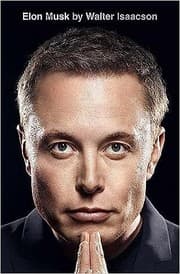
And that, to me, is the ultimate way to predict what's the best, uh, course of action to take. Like I told you, like, um, read biographies, um, from modern day people like Elon Musk. I, I read his book line by line. Every email he sent, every-- I just, I very few books I read like that. So I read it line by line because I know the outcome.
The, the guy has made these massive companies that are every single one of them. All these people who hate on him, I'm like, "All of you combined cannot do one of his ventures. All of you combined," okay? Yet you have the audacity to question his method to the madness. Instead, you gotta go read his method to the madness, and even if you wanna use it for a different purpose, even if you wanna use it for your own whatever agenda it is, you cannot argue with the success of his method to the madness or his ultimate arrogance to not even pay attention to it, okay, and completely dismiss it.
The same is true in history. That's why that book is about history. Look at the great conquerors. Look at Alexander the Great. Look at things that went right and wrong.
Look at Julius Caesar. Um, look at, you know, Mehmed the Second, who used, like, cannon for the first time to, uh, conquer, uh, Constantinople for the first time. And you just read, it's mind-bending, the similarities of those days, like Roman Empire being a great example, to the current day that we live in and how the Republic fell. And it just like, it's a, it's an amazing thing to read, and I encourage people, you wanna cut through noise? Look at history.
It's like, it's like that's a, that's an example. And everything that people argue about, I say, "Well, believe it or not, this has happened in the history before." And you can ask ChatGPT, "What are the historical examples of, of this particular scenario?" And then look at what happened there, and it tells you we have not changed that much. People think, "Oh, no, this is new."
Yeah, the tools of the warfare has changed, but it also changed throughout history, like, you know, gunpowder, cannon, you know, electronic warfare, navies, like you name it. Um, atomic bomb, there's a good documentary about that on Netflix, how it panned out- And, and you look at how these new technologies, like, changed everything, and it's like, it's just another wave of that, a new technological advantage. And go back in history, look what has happened before, probably happens again. All these things that you say, like brainwashing kids in school, by the way, happened in the Roman Empire. Mm-hmm.
So it's like towards the end when the Roman Empire, after Roman Republic, there was a Roman Empire, towards the end, you can see the echo of what has- what is happening in our, in our country today at the end of Roman Empire, exactly the Western Roman Empire. Exactly. It's like all these things that we feel are new, hedonism, like people just completely, you know, doing whatever they want and w- like, the, the destruction of the family unit. All these has happened in the Roman Empire. You just, like, see the echo of history ag- happening again.
Yes. Yeah. I'll tell you what woke me up to this, and I'm looking for the quote. There's a great quote, um, something like, "If you don't want your son to be a Roman, don't, don't let him be taught by Romans" or something. I'm, I'm butchering the quote.
Yeah. But the whole idea, it's exactly what you said to the point of, like, the indoctrination of our youth. It's like if you don't want your kid to believe things like a man can be a, a, a woman or that, you know, Sally in sixth grade is, is actually a dog and should be taking dumps in a litter box in the back of the classroom, then don't send them to a school where that is accepted. That does that. Exactly.
Right? Like these kind of things. Yes. Well, I'll tell you what woke me up to the history was, um, and it seems to have died down a little recently, but the Winston Churchill was the bad guy in World War II argument that was going around- Mm-hmm ... for a while. I, at first I was like, "This just l- sounds like some stupid meme."
And then I saw, like, Constantine Kissin address it on Trigonometry. It's a podcast that I really like. I don't know if you're familiar with that one. No. Um, but he started addressing, I'm like, oh my God, this is actually like a widespread idea that people are perpetuating.
Like, you, you have not read a single word of history from that time if you are positioning Winston Churchill as the bad guy. Now, if you wanna make a, a full spectrum argument, was he a perfect human? Certainly not. I mean, he made plenty of bad decisions, but those were bad decisions as bombs are being dropped on his head- Yes ... while, while his people are dying in the streets from the, from the blitzkrieg. He's trying to make the best decisions he can with the information he has.
And yeah, s- s- a couple of them didn't go the way that he wanted, and now we're gonna position him as the bad guy? Mm-hmm. Like, like we've, you've lost touch with history if that's an argument that you're willing to make. And, um, and, and I know that the guy that ultimately that was started off of, that wasn't actually the argument he was made. He was taken out of context.
I, I get all that part. But, but it, it just hit me how hard we have lost touch. And then I was talking to a friend of mine who, you know, is, is a good dude, tends to skew a little more left, but in general a good dude, and he made this off the cuff comment that blew me away. It was something like he was referencing the early 1900s as if they were archaic, like Neanderthals, you know, you know, drumming on wood and, and barely could understand fire. And I was like, "They're us, bro.
Like, like you, you, tho- those are us. They're, they are no different than we. They're having the same- Exactly ... exact thoughts we're having right now- Exactly ... they were having back then. So like you, you're, you're trying to... Because maybe they didn't have cell phones, you're somehow thinking that they're less sophisticated of human beings, or they are didn't- not dealing with the same emotional pain that we are?
Like, are you fucking crazy? Half of them would go days without eating. Mm-hmm. You know what I mean? Like when's the last time you went three days without eating 'cause you couldn't get a, a job down at the dock that day, right?
Mm-hmm. Or the bread line ran out of bread, and you just didn't eat. Mm-hmm. Like when's the last time that happened for you? So like we, we just have this, this whole idea of the end of history that was perpetuated around postmodern liberalism.
Mm-hmm. It is such a cancer to our methodology and to how we operate on a day-to-day basis that I, I don't know how to remedy that idea be- besides reading. It- But how do you spread that to the masses? What if I told you that every no you've gotten in the last 30 days was preventable? What if every, "I need to think about it," was actually your fault?
What if every, "Can you send me more information?" meant you screwed up that sales call? You'd probably get pissed, right? It certainly pissed me off when I realized this is what was happening to my own sales team. And you should be angry because anger creates action, and action is what you need right now. Your conversion rate is stuck at 20% to 30% because you're using a broken script and a broken process.
Meanwhile, your competitors are gaining ground. But wait, you have a secret weapon, the one call close system I'm going to teach you. My clients, who I work with one-on-one, are hitting 80-plus percent conversion rates. Same leads, same market, different words. Now, here's the deal.
I'm giving away the entire system for free. Not because I'm nice, because I know once you see the results, you'll want to work with me. So click the link below, get the workbook, and start experiencing sales conversion rates most believe are impossible. This is the way. It's, it's postmodernism is...
That's the main issue, is like they think us as humans are very different and now somehow we are more advanced and like grew IQ points or something. Not true. We are the same biological systems, organisms we lived back then that we are now, and that has been the case through the recorded history, okay? So the human that lived during h- ancient Egypt until now, we have changed very little as, like, actual human species. So all those arguments are come from a place of arrogance.
That's kind of what I'm, what I'm saying is, like, I am s- I am such an evolved human that I am not even comparable, and I have the right to judge that person, even though that person lived, like, hundreds, two hundreds, thousand years ago, and that person did this thing that according to s- my postmodern values, like, they were not, they're not correct. Therefore, I'm gonna judge that person. I'm like, okay, that literally comes from the place of ego and arrog- arrogance. But, but here's the good news. There aren't that many of them.
They just happen to be have very high conviction because high ego people, people with a large ego, are by definition louder. So so, so it's, it comes from the position of ego, and these are just loud people, and they're minority. The problem that you pointed out, however, is correct. People who are not like that are, in general, tend to be quieter, and because of that, it feels like those are the people. And, and also the other thing that happens is that, um, our social behavior is con- contagious.
So loud people, even though I say they're a minority, because the message is constantly repeated and repeated and repeated, it actually rubs on people, okay? Just like I say, broke energy is contagious. You know, depressed energy is contagious. Happy energy is contagious. It's, it's the same thing.
So these people are kinda also rubbing and perpetuating these ideas by just pure repetition and being loud. So so and people get influenced by that. That has happened also throughout history. So a few people who were loud, they pushed really terrible ideas on people, Bolshevik Revolution being the case in point. So, so I, I-- most people were not on board with Bolshevik Revolution.
It was a very unpopular move at the beginning, but then these w- these people were loud and, like, repeat, repeat, repeat, repeat the message, and over time, like, people are like, "Ah, these people..." You know, combination of them winning a little bit and then r- hearing their message multiple times, people get influenced just through the fact of re- repetitively hearing a message. So I, I think the solution is exactly what you said earlier, which is people that have-- that are grounded, maybe that's the best term I can use. People that are grounded in reality and common sense and all that, they need to be louder because the f- the, the, the, the, the gut reaction when I see a bunch of crazy people saying crazy stuff is for me to say, "Okay, I'm gonna go take my ball and go play somewhere else." That's gut reaction, okay?
If we do that, and if all of us do that repeatedly and for long enough, there will be no place to go. So it's-- So you said it's our duty. Yes, it is our duty. If we care about the next generation, it is our duty to stand our ground, even though it is counterintuitive and a pragmat- pragmatic person who wants to make a living and build a business or what have you, the pragmatic answer is take your ball and go play somewhere else, which is why I left San Francisco. Yeah.
But, but, but it's-- if all of us do that all the time for long enough, there will be no other place for us to take our ball to go and play it. That's essentially what happened, like, throughout all these crazy revolutions that has happened over the years. Yeah. I wanna transition a little bit to entrepreneurship. Mm-hmm.
And you're a serial entrepreneur, very successful, spend a lot of time with successful entrepreneurs. So taking this concept of we need to be louder or at least more convicted- Mm-hmm ... in our convictions- Mm-hmm ... um, to, to turn a terrible phrase. Mm-hmm. Um, how do we s- like, it feels today, like, entrepreneurship was-- It feels very chaotic. I get a lot of questions.
People, people ask me a lot of questions, and, and some of them I don't have the answers, which is why I love having individuals like yourself on. Um, there's so much hitting us. Buil- build, start your own AI through Lovable. Just type your idea in- Mm-hmm ... and everything gets built, and then, you know... Or is it more like, d- you know, if AI is gonna be everywhere, should I be out Cody Sanchez-ing everything and buying plumbing businesses?
And, you know, like, I feel I get a lot of questions from people who kinda see what's coming, understand that, that AI is absolutely coming down the pipe. They're, they're unsure of what that means, but they see it and believe it's gonna be a bigger part of life. They see companies across the board, including in my own home industry, which is the insurance industry. You know, one of our largest, uh, organizations in our industry just announced they're dropping four thousand people, and that kinda layoffs don't happen in insurance. Mm-hmm.
And they actually referenced automation and AI as one of the reasons why they're dropping four thousand people. So I think a lot of people see this trend, and they're like, "Okay, I wanna own my own destiny," whatever that looks like. Mm-hmm. But where before it was, "Okay, I could go small business, I could go trade or tech," were really the big entrepreneurial veins, I f- it feels so fragmented and distracting, and there's so many different people trying to push their version of entrepreneurship on. People don't know where to go.
So I know that's a very broad idea, so you can take it wherever you want. But how do these individuals who have this spirit, who want to go down this path- But just simply feel like they have so much hitting them in the face, they don't know what to do. Where do they start? What do they start thinking about? Yeah.
So again, I'm gonna go back to history, and I'm gonna work my way to today. So if you look at the best entrepreneurs of all, of all time, um, they have put a huge, large, just volume body of work out. Go from Leonardo da Vinci to Picasso, you know, the number of artwork he did, to Thom-Thomas Edison to Elon Musk. They all had-- They just put a l-a huge, uh, body of work out. So the overall, overall message that I wanna tell people is that successful people are idea machines.
Successful people are idea machines. They just constantly put out a huge amount of work. Now, there's a catch with that. The catch is you can't have a lot of ideas, but now don't have execution abilities, so you can't execute on any of your ideas. Which meant the world of like super successful entrepreneurs was limited with people that not only were idea machines, but they were also really good execution machines.
Okay? Now, the scale has tipped a little bit now with AI. So, you know, we build our product, for example, Famous.ai- Mm-hmm ... is a builder. It's like idea to business. So that means more people can turn their ideas into businesses and products with, uh, AI.
Which means, which means that history has disproportionately rewarded high i-idea machines, essentially, but they also had to have great execution skill. The importance of execution skill has dropped a little bit. It requires less capital, it requires less time, it requires less resources, people. And you can have more ideas and lack a little bit in the, in sen- in the sense of resources, but it's still win. So whatever history has, history has rewarded idea machines, it's going to be even more.
Okay? And one of the things that I heard, like, you know, common entrepreneurship advice is that do one thing and do it right. That common... The worst pieces of advice are the ones that sound good but are not true. Okay?
So I tell people this. I'm like: "Look, that is designed for people who don't have great execution skill, and they could not execute many, many ideas, so they had to spend a lot of time executing on one idea." In those scenarios, it made sense. With AI, that advice is actually not that good. The correct advice is to revert to become the Thomas Edison, Elon Musk, you know, Picasso.
L-you pick, you know, Vanderbilt, like all these great in-- Henry Ford, like all these great industrialists of our generation, you read their biography, they're like idea machines, okay? So I'm like, okay, go to that and use AI-- lean on AI for execution. So my answer is, just like I do, and I don't say anything that I don't do myself. So when we started the company, Famous Labs, I didn't know exactly what it was gonna build. I essentially...
And I did that, by the way, back in-- when I became an entrepreneur for the first time in two thousand and seven, I didn't start... My first company was an online dating app, but it didn't start as an online dating app. I started an app studio, and we were launching apps. We launched quizzes, games, stuff like that, until online dating hit, and then we followed the traction, and we doubled down, tripled down on that. So but I-- to do that, I had to cash out my four zero one K at the beginning, pay all the penalties, put all my money in it.
I wasn't married. I didn't have kids. You know, and, and I, and then I raised capital in Silicon Valley, and I built... I had to do that, required a lot of resources. And also, like, now you can execute the same method with less, way less resources with AI.
So the good news is, if you are an idea machine today, and you don't have the execution abilities of Thomas Edison, okay? You have gi- you're given a gift, which is AI essentially helping you build and execute. So you can mope about, you know, jobs being lost due to AI, but you can also, you know, say, "Hey, maybe God has a different plan for me." And you say, maybe it hap-- Even if you get laid off because of AI, maybe that's part of the plan. Maybe you-- maybe that is y- that is in your future.
It's forcing your hand to have all these ideas that you had over the years, did not execute. List them and knock them out one by one with AI. And we can talk about how to do that, but it's like essentially knock them out one by one until you have a winning idea. And I tell you one thing as an entrepreneur, I, I was actually gonna post about it on Instagram. I've launched hundred plus products in my entrepreneurial life.
It's like probably couple hundred. Nothing beats the dopamine hit of, uh, working on a product and launching it and getting traction from the market. Nothing. And it is, to me, it's an opportunity for all those people, instead of thinking, okay, yeah, the grand scheme, macro level, what is happening and all that, I'm like, focus on you. What are your ideas?
Are you the next Thomas Edison, Elon, you know, Picasso? Are you a mini version of that? Okay? Do you have just, like, ideas? If you have ideas, you're handed a gift.
Just list them out, and this is the time. Execute them super fast, one by one by one. Go to market. You will find a winner if you stay at it for long enough. So instead of being confused and resentful You know, dazzled, whatever.
Is, is instead just be like, "Okay, what has worked in the past?" A lot of ideas, people who had a lot of ideas. Do I have the ability to execute them? The answer is yes. The, nowadays, it's much, it's the easiest it has been throughout history to execute ideas.
So just sit, write your ideas, un-confuse yourself, okay? It's, like, very important. Like, ignore the noise, un-confuse yourself. Write down your ideas one by one and knock them out one a week. So, and you will find traction if you do it enough number of times.
So that's kinda my high-level advice. I, I like that a lot. You know, James Altucher, uh, pitches this, uh, 10 ideas a day. Yeah. Right?
So, like, instead of journaling in the morning or whatever, he writes down 10 ideas for something every, every day. Mm-hmm. And just 10 ideas, 10 ideas, 10 ideas. And his whole thing is if you come up with, you know, 70 ideas a week, and one of those ideas might actually be good. And if you do that every day, now it's 300 ideas in a month.
And, you know, now all of a sudden you're, you're just the pure coming up with these ideas and making that part of how your brain works. You start to see ideas, et cetera. So it's just the practice of, of, of this- It's a practice, yeah ... I love the idea machine. Yeah.
And I, I- So- Let me add something to that- Yeah ... I think is useful. So, um, Ryan, I, I bet a lot of your audience, they're like, "Oh, I have some ideas, but I don't have enough good ideas and stuff like that." Here's the truth. Nobody knows what a good idea is.
Nobody knows. So it's a game of numbers. Now, I give you even better news. Um, Brian Armstrong, CEO of Coinbase, he has a great clip. Maybe you can, uh, link to it at some point.
He says, "Action produces information. And the best thing you can do is to act, to produce information, and then use that information to come up with, uh, your next move." Meaning instead of sitting in vacuum and coming up with ideas and then expecting your brain, your unexercised, unfit brain, okay? Hopefully I'm not insulting your audience by that. But people who have not done that en masse, it's kinda like going to the gym for the first time, okay?
So your brain is not fine-tuned, which is perfectly fine. But you gotta start somewhere. You know, you go to the gym for the first time, you push some weight, and it's like you're all sore and you're not doing things right. You start, and then that action of starting with ideas and actually hitting the market, meaning acting on the idea. The act of implementing the idea itself gives you new ideas.
So that's the good news. You don't have to come up with all those 300 ideas in one shot. You just need to create with a few, one actually, and just go to the market. And when you go to the market, you get feedback. And that information produces...
That action produces information that you can use to formulate new ideas. That is what I'm saying. Like, a lot of people are like, "Oh, I don't have a perfect idea. Let me find for the perfect idea." That's one category of problems people have.
But the answer to that is, the antidote, uh, to that is very simple. Whatever you have, act on it. And, uh, the market will give you your next idea. Yeah. I, I love that.
It's funny, I had a, I had a conversation with my son the other day. Um, he did really poorly on a, they call it ELA today. I guess it's like reading and English. We would've called it English. ELA.
Um, a test, and he was confused as to why he... You know, and he was frustrated, and he was mad. And he, he does pretty well in school and just, you know... I said, "Bro, wins and lessons." Mm-hmm.
Like, yeah, two days ago you sucked at sentence fragments. Mm-hmm. Right? But now you know them better. Mm-hmm.
Like, you didn't really fail because now if you were to take that test again, you know what a sentence fragment is versus, you know, that was what the test was on or whatever. Mm-hmm. And I was like, "Wins and losses, man." And, like, it was almost like saying wins and losses instead of like, "I failed the test." It, like, loosened his body up.
I, like, could see his shoulders, like, loosen. And then all of a sudden I watched his... You know, 'cause before when I was kinda helping him with the ones he got wrong, I could tell, like, he had the wall up. You know what I mean? Mm-hmm.
Yeah. The like, the dad sh- you know, shut the fuck up, Dad wall. Mm-hmm. And, um, and then like when I said, I looked at him and I go, "Dude, g- who gives a sh- it- you're freaking in sixth grade." I was like, "So what?
You did bad on one ELA test in sixth grade. Like, now you're, what you're..." I go, "It's wins and losses." And then he started listening. And I think that what I...
That's exactly what I hear you saying, right? Is like even if you, you have an idea and it's not the home run idea, the, the action that you take in executing it and maybe figuring out that it's not the great idea or the big idea, you're gonna learn a ton of stuff just in that action that then the next idea you'll be able to jump two or three steps. And then- Yes ... maybe that one's not the best one, and then you can jump four or five steps, 'cause you keep learning a little more until you get to the one that actually hits. Is that, that sounds basically- No, 100, 100- Yeah, okay ... 100% what I'm saying.
Yeah, yeah, yeah. I mean, look at, look at even like, I mean, I use Picasso. You look at early work of Picasso versus towards the end of his career. Picasso is not one Picasso. It's, like, people don't...
People think people come out of the box all trained and like... No. Uh, all of us are work in progress. All of us are a work in progress. So the, the thing, the keyword there is progress.
So, so, so, and progress comes from action. Like, okay, I take a step, but take the step today so you can take more steps. That's, that's, that's what's I think a lot of people are missing. They're trying to calculate the exact right step that takes them to the exact destination. And I'm like, "Bro, you don't even know where you're going."
It's like no one knows where you're gonna end up. In fact, I would argue there have been, there are very few companies that the, the product that they have today is what was conceived at the point of conception of the company. It's like, it's like, it's like companies like- Zigzag, zigzag, zigzag. Let me random walk my way towards the destination. And it's natural, and there's nothing to be asha-ashamed about.
What, what I think people should be embarrassed about is lack of taking the steps, meaning lack of action. That is unforgivable. But but if you're taking steps, we're all humans, and we all don't know exactly what we are doing, and we all learn. I still to this day, I launch products, and I don't know if they are gonna take off or not, and I'm like two hundred reps under me, okay? Mm-hmm.
I still... My hit rate, I tell you, under Famous Labs, I've launched twenty plus products in the past two years. Seven of them are even alive, okay? So my hit rate is low, and I've done it like two hundred times. It's fine.
Your hit rate is gonna be low, so what? So, so we just take the swings, man. Take the swings. It's just like, you just do it. I, I would like to, for breakdown, so you, you, um, you framed Famous AI as a, as a product builder, right?
Mm-hmm. Talk me through that, 'cause I think, like I, I've gotten a lot of questions particularly about like Lovable and- Mm-hmm ... these, these app builders and stuff, and I, I think for people who haven't done the full dive into AI yet and really spent that time, they, they... It's hard to conceive what that actually looks like. Like, what do I... If I, if I'm coming to Famous AI, right, I...
What, what, what do I have to have prepared in my mind to bring to the tool to start to, to, to actually get a product or to get an app or to get something out into the market? Like- Yeah ... do I have to have a fully baked idea and ability to code? Is it like... What do I have to bring to the product to actually make it happen? No ability to code.
So that is definitely... I am not building for coders. I'm building for a normal person who's not a coder. There are a ton of coder tools. We are building for the general everybody entrepreneur, essentially.
I'm building for myself when I started. So the, the, the way I think about it is that everyone in the market is going after code builders, like product builders. I, I don't think that's what people need. People need a business builder. So they want to...
They, they have the overall idea. I want to start a dating company for people over forty, okay? Or I want to start a dating company for people who have kids, okay? Or I want to start whatever, a diet and nutrition company that does my own diet formula. So you have to have that overall idea, and the idea here is that AI implements and massages your idea and gets it as close to market ready, not writes code.
Yes, it does write code. But it's trained to create products that are market ready. For example, you know, I teach like, you know, how to build landing pages for your product that actually articulate the value proposition, and then you put a hook on top, like a emotional hook, and then an explainer video, call to action, what's called benefit stack, objection overcoming. Or like, I have like anatomy of what actually makes a product actually sell. Because end of the day, nobody's writing code, bro.
They want to build a business that have customers. So, so we trained it so that it, AI knows not just write code and create product. You come with the idea. It builds the first iteration of it. It takes about twelve minutes, and it's free to start.
And you essentially... It kind of like brings your idea to life. Then you look at that, and that's very important. That first, you know, the first version of the product that comes out of just plain English saying, "Hey, I want to build a keto diet thing that does this and that and tracks my carb intake and that." So takes...
It won't generate the whole thing in one shot because it's not even... It might deviate significantly from what you had in mind. But it creates an impressive mock with data put in, so you see what it's gonna look like. And the reason for that is I wanna punch you in the face, and I wanna say, "Here, this is how close you are to seeing your idea come to reality." And trust me, it, it's once people see their idea somewhat materialized, they are one hundred times more motivated to go through the follow-up motions to actually make it work ready.
And in the process, AI is constantly thinking about the marketability of your idea. So it's using the language that actually sells your product emotionally. It builds a landing page of your product, right? It builds the app with like low friction. So it's like the things that we do that I, that I learned from years of building consumer products.
I'm like, "I know these things need to be in it," so I codify it. So the idea, the main purpose of my company... We have multiple products, but the main purpose of my company is to give, uh, in the... I, I think of established companies as the Goliath, and I think of the little guy as David. I'm like, "I wanna give them the slingshot- Hmm ... that allows the little guy to take out the big guy," okay?
So that's my entire purpose, and that's not code generation. It's part of it, but it's not code generation. It is, it is the asymmetric warfare, uh, tool that allows you to actually look like a billion-dollar company. So if you're competing with Fitness Pal, I want your product to look, feel, be as production ready, marketing ready as Fitness Pal. So there's like, it looks like a billion-dollar company, and then it, David has a chance against a Go-Goliath.
So that's, that's the main idea. Um, and I, I think this is when I go back to idea machines. The idea here is you come with the idea, like you wrote bullet points. And people do it differently, by the way. Some people go...
ChatGPT is trained on Famous. It knows what Famous AI is. So you can actually ask Famous AI, "I'm build," uh, "ChatGPT, I'm building this on Famous AI." It gives you a detailed prompt, and you can come with a fully fleshed out vision. Hmm.
Uh, s- and some people do that. They put a really long prompt with all the details. But I- it's also designed for people who just wanna put the idea in, because I want people to get started. I'm like, "Put a one sentence about your idea, see what it creates, and then iterate on that." So we handle both scenarios essentially.
And, uh, like I said, the differentiation, the way I think about it is that all these software companies are getting the intent of the entrepreneur wrong. They think of it as, "Oh, uh, we generate code for them." I'm like, "Nobody cares." You want to build a product that actually user can go to market with. That's the main difference I'm focused on.
Yeah. I, I love it. And, uh, I will say that my, uh, I... My question is slightly, um, selfish because I have been idea machining- Mm-hmm ... um, a lot lately on, on some things, and, uh, I was digging into, uh, when, when OpenAI launched Agent Builder, right? Mm-hmm.
And I, and I was mostly just peppering ChatGPT about Agent Builder. Like, I just wanted to learn about it. Mm-hmm. Uh, 'cause I missed the dev day- Mm-hmm ... whatever thing, and I- Yeah ... didn't feel like going back and watching it. So I was just getting the...
And a- and, and what was funny was ChatGPT started asking me, like, kind of what would I want to build with Agent Builder. Mm-hmm. And, um, and, and this idea, you couldn't do it all the way with that. But when I started, when I started, uh, giving it the idea that, that came to my mind- Mm-hmm ... one, I was shocked at what idea, like, came immediately to the forefront of my brain, which felt very, I don't mean to be quite so, um, uh, uh, big here, grandiose, but, like, a little divine. And just so much like this idea was the first idea that came to my mind, and it's something that I've always wanted.
And I was like... So I started talking to it, and it's, man, it's like to fucking this and then, you know, you gotta connect all this shit. And I was like, I'm a sales and marketing leadership guy. Like I, I get-- I understand how technology works, but I can't make the technology do the things. And, and then I knew we were gonna be talking, and I knew what this did, and I was like, at some point, I'm spinning this conversation over to, like, how do I get my, an idea out into the world?
Because- Yeah ... because I, I'm never gonna, I'm never gonna learn how to code. I'm never-- I'm probably not even gonna be able to do, like, all the crazy connectivity and the databases and, like, I don't know how to do that stuff. But, but even just the first step of how do you, how do you start to validate this idea, see what it looks like, and actually see some functionality happening so you can, you can take it to that next level, like I wouldn't even know without that type of tool. And, like, this seems exactly, like Famous AI seemed exactly like what I was looking for. And that's not just 'cause you're on the show.
I mean, I've been waiting to talk about this, I knew you were coming on. Yeah. Um, but, uh, I think there are a lot of people like me who have ideas for an app or a tool or something that they could, they could share or that they're really passionate about, and even if it was just a, a side hustle or a side quest, but they just get so stuck in how do I actually make it happen. I don't know a developer. I don't wanna go on Fiverr 'cause who do I trust or, you know- Mm-hmm ...
Upwork or whatever. And these tools can get you so far. So maybe w- where does it stop though? Like, could I take this all the way to I'm selling an application that people could download or put on their phone or log into on a website or whatever? Like, can I take it all the way there?
Or like, how far can I get? Because it seems like all the tools kinda stop at different places. Yeah. So the idea here is all the way. And we have a lot of people who are non-technical who have apps in the App Store from our platform.
In fact, one of the things that we went through great length, pain, I should say. So for example, in some of the tools, you mentioned Lovable. Lovable does not build a mobile app. It's like iPhone, Android app. We do.
Okay? There are other tools that build iPhone, Android apps, but what, what you need to do, the user needs to do is to, once they build it, they need to download it, compile it on your computer, which right there, I lost 95% of the population- Mm-hmm ... and then connect it. So we went through insanity to have direct connections to App Store and Play Store so that the users do not have to download code and have a local version compiled and then upload. It literally does it from the platform directly to iPhone and Android- Mm-hmm ... as an example. So I am going through, this is literally when I say I am, I am, you would be like literal great avatar for us.
I'm go-- I'm putting myself in the shoes of the user who doesn't have an engineering team, doesn't know how code works, and, and also marketing. So it's like the whole spectrum. I wanna go all the way from idea to walk you through all the way to have a product market ready and CRM, everything built in. Okay? And I'm literally going step by step, and I'm trying to remove all complexity, all complexity.
And obviously, no AI tool is perfect. So it's like, as we go through it, I'm like, every week we roll out new things, and I re- remove friction here, I remove friction there. I make this a little bit. Now it, now our platform tests its own, uh, build, and it actually, if you build something, you see it, like, says, "Detected an error," da, da, da, da, da. It tries to fix it.
And, and it's like, it's like, because I don't want the user to even see a- Code error snippet and then say, "Fix it." I'm like, I remove that. AI should do that automatically, should build its own test harness. And we are, like, literally going step by step by step by step, and I'm gonna build the whole thing end to end. So a normal person...
My idea is that a normal person who doesn't have access to developers and engineers, but they have ideas and they have great business acumen, they have vision and great business acumen, they should be able to execute the whole thing on our platform end to end. And that's where we are going. I'm really excited about it for that reason. Exactly to enable people like you. It's like I'm like, that idea, here's...
I'm gonna take two seconds to explain this. I think all of us are born with gifts in our brain. Your gift and mine are different. It is some of it we are born with, some of it is through the just reality of the life we lived. You and I lived very different lives.
Because of that, we have these little gems in our brain. We are good at something, okay? Everyone's good at something. That I'd like to believe that. That little gem is hidden, tucked away inside a lot of people's brains because they do not have the ability to take it out, productize it, and sell it.
So I'm like, my entire job I work every day is that to enable everybody to take that gem, which is different for everyone. It could be like mindfulness workshops. It could be whatever. People have, like, insane skills, and you just take that and allow the user remove all the abstraction. You don't need a dev shop.
You don't, you don't need a marketing agency. Abstract all of that, abstract the idea, show it to the user, iterate with the user as a combined CTO, CMO, you know, CRO, like all of those combined, and just work with the user to take that gift and polish it and put it out as a product out there in the market. That's my job. I love that. And guys, if you're listening and you have these ideas, this is, this is why I was so excited to have Alex on the show because you guys have been pinging me, hitting me on the side about what AI tools I'm using and how do I do this and how do I...
Like, all, all that stuff is great, but these are the types of tools that are gonna, are gonna help you make money from your ideas and, and, and make an impact, right? I mean, that's- Yes ... that's ultimately, you know, uh, we all like to make money. I certainly love to make money as much as anybody. But man, that money spends a little nicer when it comes with a serious impact on the back end. 100%.
I'll spend all the money, but- Yeah ... the stuff that comes with impact, man, it really feels good. And, um, and being able to get these ideas, like we shouldn't be handcuffed because you, you didn't take, you know, C++ class in freaking college. That shouldn't handcuff you from getting your ideas to the market. Famous AI is a great way. I'm definitely going down this rabbit hole because this idea has been burning a hole in my brain.
And, um, man, I'm just- They call the idea divine, by the way. It is divine. Yes. So I, I, I sometimes think hit me in such a weird way, I have no explanation for it. I mean, where did this idea come from?
Divine is the good way to think about it. Mm-hmm. And honestly, it is a gift. Yeah. Believe in God or not, if, if you believe in God, it's a gift from God.
If you don't, Mother Nature. Yes. So it's like gave you this gift. You have the option of ignoring it. But I really, I, I think everybody experiences.
You experience it. I experience it. I bet everybody experiences it to, to a different degree, that you're walking and an idea hits you like, uh, you know, like a semi-truck. And you're like, "That is an interesting idea." And do not waste it.
Yeah. So, so o- on that, and then we'll, we can, we'll wrap up here. But on that, this is, this one's not opened yet, but I started playing around with this, uh, tool, uh, it's called XNote. It's like one of these- Mm-hmm ... digital digitizing pens. And I carry the small book.
This, this one's not open. The other one is. But I started carrying this with me everywhere I go, like with my wallet, for the exact reason of you get these ideas or... And sometimes it's like everyday shit, like I need to go pick up something from the store, right? And I just, I just blast it in Notebook, and then it shows up in the phone, becomes a task, and I get it done.
And it's like capturing these divine moments, because I'm absolutely a, a believer 100%. Um, capturing these moments is, is, is just as important, and that's why I loved that we spent so much time on the idea machine, on the idea generation. Because when these sparks hit you, I think a lot of people aren't listening. Exactly. Like we're not listening.
And if you can- You gotta open your heart, man. Yes. You gotta open your heart. So it's like- Make a habit out of listening- Yeah, yeah ... to these, to these moments, to these things that happen and the stuff that... And some of it's fucking crazy, and that's okay, right?
But write it down anyways. And then, you know, and, and maybe that thing seems crazy today, but six months or a year from now, that idea is not so crazy. You never know, right? Yes. Um, timing is just as im- is just as important.
So, uh, Alex, I, I appreciate the hell out of you, man. This has been tremendous. I could talk to you another four hours. And, uh, uh, I love it. I love Famous AI.
Um, so much that you've done has been so impactful. Uh, if people besides Famous AI, if people wanna get deeper into your world, follow what you're talking about, where's the best place for them to do that? Instagram @dralex. Doctor is spelled out, so dralex. Yeah.
Awesome. And guys, I'll have, uh, links to everything we discussed today in the show notes, so just scroll down, check it out. Appreciate the hell out of you, my man. Uh, open invitation anytime you wanna come back. Yeah, absolutely.
Thank you. Thank you. If you liked the show, please take a moment to rate, review, and subscribe. It really does help the show to grow. Thank you for listening.
Happy holidays. Want to give your host a gift? Consider subscribing, rating, and reviewing the show this holiday season. It really helps the show grow. From all of us at Believe, have a merry Christmas, everyone, and a happy holiday.