Hiring isn't just about finding someone willing to take the job. You need the right person with the right background who can move your business forward. If you want candidates who truly match what you're looking for, trust Indeed Sponsored Jobs. With Indeed Sponsored Jobs, your post stands out to quality candidates who actually fit the role. According to Indeed data, 90% are more likely to be hired and trusted by 1.6 million companies.
Spend more time interviewing candidates who check all your boxes. Less stress, less time, more results now with Indeed Sponsored Jobs. And listeners of this show will get a $75 sponsored job credit to help your job get the premium status it deserves at indeed.com/podcats13. Just go to indeed.com/podcats13 right now and support our show by saying you heard about Indeed on this podcast. Indeed.com/podcats13.
Terms and conditions apply. Hiring? Do it the right way with Indeed. What does VA mean to me? A place for my daughter to call home, thanks to the VA home loan.
A new lease on life. The best healthcare team I've ever had is here at VA. An education and the opportunity to open doors I never thought possible with my GI Bill. The financial support I need to manage the disabilities I developed because of my service. Get what you earned.
Visit choose.va.gov. Not all veterans are eligible for the type or amount of benefits mentioned here. Happy holidays. Want to give your host a gift? Consider subscribing, rating, and reviewing the show this holiday season.
It really helps the show grow. From all of us at Believe, have a merry Christmas, everyone, and a happy holiday. Man. Let's go. Yeah.
Make it look, make it look, make it look easy. Hey, stand up guy, I'm on two toes. Big body, pull up in a Range Rover. Hello, everyone, and welcome back to the show. Today we have a tremendous episode for you, a conversation with Ron Stoltz, an executive coach, a three-time New York Times bestselling author.
He has a PhD in psychology. He has a doctorate in chi- in chiropractic medicine. And what I love about this conversation is how Ron ties, I'm gonna say the spiritual, I don't necessarily, and we actually talk about this in the religious sense, but he brings in an emotional, a spiritual, and the, and in the words that Ron uses, a consciousness to leadership that I think is gonna open your mind to the way we talk, we act, we think, how we show up in our business. This episode is all about leadership, both of an organization and taking leadership of our own lives. You're gonna love it.
Let's get on to this tremendous guest, Ron Stoltz. Ron, I appreciate you being on the show. Um, I, uh, I, I'm, I'm excited because y- you know, o- one of the topics that we talk about the most and, and I focus on the most with this show, and, and really you don't know this 'cause we're just getting to know each other. Mm-hmm. But, uh, about six months ago, I changed the, the title of this podcast from my name, The Ryan Hanley Show, which- Mm-hmm ... super creative and, uh, egotistical, um, to, to Finding Peak, which is the podcast title today.
Mm-hmm. Mm-hmm. It was a big change. It was a brand change, and really it was a directional change, um, for, for what we're gonna talk about today, which is these ideas of leadership, growth, and, and kind of, I call it peak performance, but being, becoming the best versions of ourselves- Mm-hmm ... because a- as you said, and this is where I wanna start, right? It's time for a quantum leap forward in leadership.
So what does that- Yeah ... mean to you, and, and why, in particular now, do we need that quantum leap forward? Like, what's going on in the marketplace today that, that this, among other, you know, among maybe a f- a few other times in history, is an- Mm ... incredibly important time to evolve our leadership? Yeah. You know, I think it started back in the '80s. You know, I was working with AT&T during their divestiture.
I was running a corporation called Inner Game, and they had hired us to really manage their shift from the mindset of being a monopoly to one of being a for-profit five organizations. And, and I really saw how stuck they were in that old way of thinking, and even though they saw and, and fully agreed with what I was suggesting needed to be done in terms of really supporting everybody and cooperating, bringing, you know, and sharing, you know, they, everybody kind of in the organization kept their head down, nose to the grindstone, and was looking more at their, you know, retirement than anything else. And so it was just that monopoly mindset that limited everybody. But, you know, today we're in a place where we have to be m- much more conscious. We can't be this old ego-centered, top-down, arrogant, you know, leader that's really just telling everybody what to do.
I mean, first of all, people just aren't accepting that any longer. It's just not working. Uh, you know, you get Gen Z, they're, they're not they're gonna walk out on, on, on that sort of mentality i- immediately. But you're also seeing there's 50 years of leadership research that clearly shows that a more conscious, cooperative, collaborative organization is more profitable, literally by at least 40%. I mean, I see it all the time in my clients, that they're seeing increases in profit and productivity by well over 40%, all because just as, as if we get our own life in alignment with our highest intention, our greatest aspiration, and we really develop our life and become who we need to be to, to reach that highest aspiration.
So an organization that has a meaningful purpose, even if it's making widgets, but they're also contributing to the world in some way- All their people come together. So it's just as an individual comes together and their life becomes more, uh, you know, successful or fulfilling and, and, you know, and joyful. Uh, so in an organization, as they come together with a single-pointed focus, collaborating and cooperating, bringing out the best in everyone, you give people meaning. You give people a sense of purpose and, and validation in their life. And, you know, the truth is they go home happier.
They go home feeling more fulfilled. They treat their family better. They treat their spouses better. They, they contribute to the world in a different, different way. And we create, which is kind of my hidden agenda, creating a more conscious and caring world, which is, you know, if we don't do it now, we're, we're in trouble.
So for one, just a, a point of reference for the audience. When you say conscious, like maybe just define that term a little bit and, and how it relates- Yeah ... particularly to leadership so that everyone can kind of be on the same terms. Good. You know, conscious, really the definition of it is how aware are you of your, what you're thinking? How aware are you of what you're feeling?
Even on a subconscious level. And, you know, I realize people think, "Oh, subconscious, well, that's not conscious." And actually, you know, if, if you quiet your mind, if you're focused and present enough, you really are aware of subconscious thoughts that go through, you know, supportive or unsupportive, that type of thing. And so it's really a matter of healing the past, from my experience, so that you're... don't have all that subconscious limiting chatter from unhealed issues of your past, and really quieting the mind and then neurologically rewiring the brain for integrated whole brain thinking, which really makes the brain a much more potent receiver and capable of, you know, that you... I mean, you immediately start accessing higher levels of creativity, imagination, intuition, but also higher levels of thinking.
You, as you move up in consciousness, you become more aware, not just of yourself, but of other and otherness. And in that level of awareness, that's where you find the answers that you're looking for. So my clients, as they move through their different levels of evolving, they begin to recognize, "Oh, if I don't have the answer here, and I'm feeling resistance and struggle here, that just means that there's something ready to be healed." And so they breathe into that, do whatever is necessary, 'cause they have the skills to, uh, really heal whatever's in the way. And they, in healing whatever they're struggling against, they access the very part they need to allow them to go up into an even more aware, more conscious state where they can find the answers that they're looking for.
And that, uh, you know, that takes them into what I call big mind, the capability of really, rather than struggling and trying to find answers, but to just really quiet the mind and then put out what you're looking for and receiving that. I was, uh, talking to a friend of mine. We meet every Monday morning, uh, we're peers and both entrepreneurs, et cetera. And, uh, it is like a true, uh, kinda shoot the shit session. Like we, there's no agenda.
We kinda check in on each other, uh, in so much as like, you know, "How was your week?" You know, "How you doing? You hitting your goals?" And that kind of stuff. But then for the next, you know, sometimes it's we, we, we, our technical stop is a half hour, but sometimes we go an hour.
It's really just... I- I'm gonna s- use this term safe space even though I don't like the, the woke connotation of that term, but it is a safe space to, to, to just, we just talk, right? About different things that are on our mind related to business and, and, and it is, it's difficult. Like what you just discussed is a very heady topic, and I feel like in today's world, people are so bombarded with life. There's so much.
And, and I'm 43, so I remember a world without the internet. I, I'm the last generation that will remember a world without the internet. Mm-hmm. And, and w- before the internet, life was just slower. There was more space built into life.
It just was, right? You had to walk places and not know if the person was gonna be there on time, right? Like you'd be like- Yeah ... "Hey," I was trying to explain to my kids and I, and I promise this is going somewhere. Um, I was explaining to my kids the idea of like, I was like, "You used to say to your friend, 'Hey, meet me at the ballpark at 3:00 PM.'"
Mm-hmm. "And then you just hoped that they were there at 3:00. And maybe they were there at 2:30, maybe they didn't get there till 4:00. You didn't know, and you just had to kind of trust that eventually they were gonna show up at the ballpark to play or whatever." Like- Right ... it just, and, and like, 'cause they're like, "Well, did you text this person?
You tell them you're gonna be there, and if you're gonna be three minutes late, now you gotta like text them and say, 'Hey, I'm three minutes late.'" It's like, and, and all of that takes t- space and time. Okay, okay, so this is kinda what we were discussing and, and I, I said to my friend, I said, "You know, today, it feels like today everyone needs to become a philosopher." Right, right? Like, and, and, and, and like it, it comes back to like the idea of like stoicism having such a, this resurgence and huge impact on our culture and, and now, you know, I'm, I'm reading, you know, half the books, I'm a, I'm a big reader, but half the books I read now are philosophy books.
And, and not for like the... I don't know. I guess when I was growing up, like if you read philosophy, you, it was like, you know, you were not gonna do anything with your life. And now, now I feel like if I didn't have these concepts as an entrepreneur, as a leader, et cetera, I couldn't operate in the world without these ideas, right? Without, without, uh, a, a quote that I've been using all the time is, uh, from Bruce Lee in some of his writings, um, "The value of the cup is its emptiness."
Right? I, I've been saying that a lot to some of the people that I mentor and some of my, I have some executive coaching clients that I work with and I'm like, you know, they'll be talking, talking, talking kind of like I'm doing right now, and I'll say like, "Hey- Let's, let's empty the cup on this topic. Like, you're telling me you don't have the answer, so the reason you don't have the answer might be because y- y- you know, it's already full in your head. Maybe we need to empty it. So, like, I ...
Coming back to my question with that huge, long contextual diatribe is, um, do you think that with the pace of the world or other factors, which I'd be interested in, that philosophy and philosophical concepts, it- it's why these things are making such a resurgence into our life? Do we actually need these topics now more than ever to deal with our teams, with ourselves, with our spouses, with our children, with our friends, et cetera? Yeah, I do. I mean, there are certainly ... I h- I come from a strong spiritual background.
I've studied all, all the various religions and meditation and, you know, just, uh, quite, quite fully. And those were kind of like that was another part of my life that never came into my work, in a sense. And now it's an integral part of my work. You know, just as, just as I remember creativity was really, you know, if you had creativity, a creativity group in your organization, well, they had a little closet in the basement- Yeah ... you ... And now the CEO is, you know, all about creativity.
That, that has to be their, um, high- highest ability almost. You know, you ... So all of a sudden, you know, if you're not present, if your mind's not quiet, if you're not accessing higher levels of consciousness, you're not functioning as a optimum leader. And, uh, so- Are you tired of endless follow-ups and missed opportunities in your sales process? Chasing leads is a losing game.
That's why I created the One Call Close system, a battle-tested sales system that uses behavioral psychology to close deals in just one call. No more, "Let me think about it," no more, "I'll get back to you." Using the One Call Close system, we took new reps from 25% close ratio to over 80% in just three months. To grow fast, you must close deals faster at zero extra marketing cost. The One Call Close system allows you and your reps to build trust, address pain points, all while watching your revenue skyrocket.
Ready to stop chasing leads and start closing? Visit masteroftheclose.com today. Close twice as many deals this time next week. Visit masteroftheclose.com to learn how. It really is a complete shift, you know.
And, and the ... I think it's wonderful because I think that that shift in awareness, self-awareness, other awareness, caring, becoming more cooperative, collaborative, supporting others is really what we need to really begin to not only take care of each other, take care of the human, but also take care of the rest of the world. Become aware that, of the oneness of it all, rather than the duality, separateness, and, you know, whatever's good for me is all that matters. So you've said quiet your mind multiple times, and I am positive that, uh, knowing the audience as well as I do, that there are many people out there going, "Oh my gosh, I would love for my mind to be quiet." Yeah.
So how, how, how do we do that? If you're, if you're a leader, et cetera, how, how do you quiet your mind? How, how do you, how do ... When you're working with a, with a client or an executive or whatever, um, h- h- how do you coach them to, to actually build some quiet into their mind? Well, first I try and logically get them to understand what all the noise is about.
And as they begin to recognize that, and this is just science, that most people say have the same thoughts every day. They might say them differently, but it's really just this, you know, noise that goes through their head. A lot of people even embrace that and raise that level of chatter because they feel safer being up in their head rather than really being in the, in the wholeness of what their brain's, you know, really made of, which is also includes the heart and the gut. People are starting to recognize, oh, the gut has neurological, uh, circuits. The heart has neurological circuits.
So the brain isn't really just this, in the, in the cavity up top. It's, it's all, all through us. And, and so, you know, you have to be able to ... You know, a lot of people that I work with are very brilliant. They really are.
They have that high IQ, but they don't have the emotional intelligence, and that's because they hide in their head. And so the only way to get them out of their head is to help them recognize that what the, the challenges they're dealing with are all really the result of them stopping breathing. In other words, they ran into something that they didn't know how to emotionally handle. They ran into something that they didn't feel comfortable with, and so they went up in their head and efforted and tried and saw, saw what they could do. But they quit breathing when they do it, when they do that.
And so the way to heal all of the things that they were unable to heal as a child, as, you know, even earlier in their adult life, is really to learn to breathe. And as you learn to breathe and look deeper, you learn to recognize, oh, there's a lot of emotional baggage in there. So you have to learn to acknowledge, express, and release that emotional baggage. You know, your analogy of hanging out with your friend and having an open sharing conversation, well, th- those can even go deeper. And maybe you're, just didn't include this, but, you know, one of my mentors, Joseph Campbell, talks about you've got to enter that cave that you fear to enter- Mm ... to find the treasure that you seek.
And of course, that treasure that you're seeking is that Unconditional love that every child wants, it's, it's you. You, you, you know, you need to discover the wholeness of who and what you are. You know, as a child's growing up, they discard a lot of the different aspects of who they are to get acceptance from their family, from others. And all of those parts that, you know, we've discarded are really necessary for us to become whole, for us to become authentic, for us to become capable of accessing who and what we truly are. So what I do is help people to go on that inner journey, that hero's journey that Joseph Campbell talked about, that Star Wars was written about and all of that.
And in that inner journey, they become more self-aware. They become more aware of others. They become more, um, compassionate, empathetic. They become more sensitive and supportive of others. And all of a sudden they create a more trusting, uh, supportive environment where people are willing to contribute and, and explore answers and share what their insights are around the work environment or so- social structures that they're involved in.
And in that, you really, all of a sudden you get people who are more committed, and they're more involved, and all of a sudden your organization is more cooperative, more collaborative, more successful. And, you know, so it's all tied together. But it all starts with healing yourself. It all starts with healing all the different aspects of yourself that you left behind, and then that really creates a platform, a foundation, if you will. And the higher you wanna build your life, the more, you know, um, more you want to do with your life, the stronger that foundation has to be.
Just like if you're building a building. You know, if you're building a one-story building, well, that's, you know, maybe a foot deep of concrete is gonna do it. But if you're gonna build, you know, towers, then you're gonna have, you know, that huge hole that you're filling with concrete and structural support. And so healing the past gives you that foundation to build your life on. I s- I think that's what took me in this direction is so often I'd see people, spiritual teachers, politicians, business people, they would have done really well, and they went, rose to a certain level in their life.
All of a sudden they felt like they were kind of running into something, limitation, something that they couldn't understand. So they'd try harder. They'd use the old tools they'd used. And rather than shifting to a higher state of conscious and becoming more self-aware, emotionally intelligent or anything like that, and their life falls apart. I mean, I've seen people die.
I've seen people lose everything, all because they weren't willing to let go and grow. They, they were so caught in that old fixed limited mindset that they weren't able to evolve. And so my clients, which are really very successful C-suites, entrepreneurs, founders, uh, what I see in them is that they're really, as they heal themself, become more self-aware. They're really looking at how do I... I don't wanna go from one comfort zone to another to another.
I wanna continue to evolve. And so that's really, you know, that can only be done by quieting the mind ever more fully so that you're accessing, um, the very best of what your brain has to, has to share with you, you know. So, you know, not to jump on, let me just add this. You know- Yeah, no ... as you as you quiet your mind and becomes more integrated whole brain thinking, that forebrain, which is everybody uses it, but it doesn't really blossom until the brain gets quiet. And as it blossoms, it becomes the conscious CEO of your life, so you see everything differently.
You respond to everything differently. You react to everything differently. And as that begins to happen, you begin to trust your higher capabilities. You begin to understand, oh, consciousness is key. And if I understand what my highest aspiration is, in other words, what is it, what's my highest intention, but what do I need to breathe into?
What's going to be a little more difficult? And that's your aspiration. And so as your life becomes that, has that deeper purpose, that deeper meaning, and, and you're moving towards that aspiration, you're becoming more self-aware. You know, it reflects in your relationships with others. Your relationship with yourself is always reflected in your relationship with others.
The more conscious and caring and self-accepting and self-loving you become, the more that ex- is expressed in all of who and what you are and what you do. And so it really is key to quiet the mind because, you know, the, the, the kind of the thing that makes a huge difference in my people who stay, stay around for a while is they start axing what I, accessing what I call big mind. And big mind is where you not only don't, you know, you, you have a challenge, and rather than sitting down and trying to look up, well, what did I do before? How could I handle this? And trying harder and exhausting yourself.
You really just sit there and quiet the mind completely and say, "Okay, this is what I'm looking for. This is what I want," and trust that it will come in, and it does. You know, I just was talking to a fellow I hadn't, uh, worked with for about a year. He's just blown away by what big mind's capable of because he's... He, he said, "I've got six patents, and I've got six more coming."
And, and this guy's not an engineer. He's just a business guy who's got ideas that he needs for what he's developing. And, uh, so you really are able to... You have to be able to be that mentally agile. You have to be that mentally capable of accessing The best of who and what you are without running all sorts of down dead-end roads and wasting time and effort, because this rapidly changing, ever-increasing complexity of, of our business world, there's no time for that.
You have to be able to respond, and you have to be able to respond from a very present, conscious place. And most people don't. You know, they, if they haven't healed stuff, they're gonna respond from the more contracted fear, fear-based, ego-controlled place. Yeah. I, um, I wanna go back to something you said that I feel like, especially earlier in my life, I could really relate to before I started doing a lot of work on myself back in 2017, 2018.
Um, you said m- many people feel safer in the noise. Mm-hmm. And-or that might be paraphrasing, but that, that, that was pretty close to what you said. It was. It was.
Um, and, and I could, I could very much relate to that. Uh, I have a, a fairly strong case of ADHD, which I got diagnosed with at 40, even 43. Mm-hmm. Um, and I just thought I was crazy and different for a long time and didn't necessarily understand. But, um, what I would do is essentially that.
Like when you said that, I was like, "Oh my..." You know, I, I had never thought about it that way, but when... I, I really look at 2017 as like a, a, a sea change moment in my life, when I started, uh, trying to take, uh, uh, we'll say control as much as you can, but, but being, a conscious effort towards being a better version of myself versus just like existing- Mm ... uh, early in 2017. And, um, and we don't have to go into why that is. It's unimportant.
Okay. Um, but before then, I, I feel like that's what I would do, right? Like, in moments where I felt lost or I felt, um, unanchored or depressed or, uh, whatever, it was like, more, give me more, put more in my head, more thoughts, more activity. And, and it was like somehow that e- even though I don't know that anything, and, and most likely I don't think you could say anything more productive came out. No relationships- No ... were not getting better.
You get more effective and less effective. I wasn't getting happier. Right. Yeah. It was like, it w- it was like an excuse or a, a distraction from actually getting better, was just more, more, more.
So, okay, so, so, so I can completely relate to that. Sure. My question to you is, for those who are listening who are, who are still there, I feel like today I have a much better handle on it. Not that I'm perfect and, and, and improving- Yeah ... but I do feel like today I have a much better handle on it. Uh, six years of really good counseling- Right ... and lots of personal work have done that.
Mm-hmm. Um, but for that person who, who, who isn't there yet, who, who may hear that and go, "Man, I, I think I might do that," h- how do you... One, how do you start to recognize that you're, that, that you are that person, that you're instead of quieting, you rush into more noise as a way to escape, right? Which we know, which I think we both agree- Right ... and obviously this is your position is not the way to go. How do we start to recognize that?
And maybe what are, like, some 101 level ways of starting to pull back into the quiet? You know, if, if, if we're starting at a baseline of, of most people, I don't think, and you've probably seen this in some of your clients, right, they have none of these tools. So, so how do you recognize it, and then what is maybe, like, your number one, 101 basic first thing for starting to quiet that brain? Well, to recognize it, all you have to do is s- is say to yourself, "Okay, I wanna stop thought." If you can't stop thought, you're not in control of your mind.
Mm. And so, you know, so then the journey becomes, okay, so how do I stop thought? And that is the journey of meditation. That's the journey where you begin and find a single-pointed focus, and I would suggest breathing because it's always there and handy. Uh, and you start breathing into, uh, uh, that, that noise, and you start breathing into it and giving your mind something to focus on.
Like, as you breathe in, say in. As you breathe out, say inwardly say out. And you just continue that, and maybe you begin to extend the in and the out by counting, you know, one up to 20 while you hold the breath in and 20 as you hold the breath out. You know, and that can keep going up to 50 or 60 or whatever it is. Yeah.
You know, you're just working through your fears of life and death as you, as you do that. But what you're going to recognize, everybody does, is, oh, well, what's all that noise about? And that noise is always about your unhealed, uh, unacknowledged, and un- dealt with childhood issues. And they're really... You know, that's the beauty of it is you learn that, oh, when, when I'm struggling with something in my life, that's really just nothing but an indicator that something's ready to be healed.
Something saying, oh, okay, yeah, we can figure that out, but we need access to more of who and what we are. So we need to heal that part so we can, you know, become more whole and conscious and access that w- that wisdom, that knowledge, that awareness. And so, you know, it only takes a couple of months to really heal our emotional backlog sufficiently so that you can monitor and deal with it on your own as, you know, things will continue to come up maybe throughout your life. But you have the tools, you have the ability to, to take care of those as they come up. And to be honest with you, when they come up, you don't see them as, oh my God, I've got to deal with this now.
No, they're opportunities to learn and grow and develop. They're opportunities to become whole. You know, you were talking about when you were w- and w- talking with your friend at lunch, uh, you, you know, you were open and honest with each other. Well- If you heal that past, if you really have gotten to that point of openness, that cave door, those cave doors are wide open. You know, you, you put up party lights, you have music on, you invite your friends in.
If they see anything, you know, they're gonna point that out to you, and you, you... to there, you know, to them as you're going to their caves. Those caves, rather than something you hid yourself and hid away from others hoping nobody would recognize that th- that existed, those aspects of yourself existed so you, you know, avoid rejection and, and being hurt. Those cave doors are open, and that's, you know, that wholeness of who you are brings out the uniqueness, the character of who you are, which allows you to be unique enough to actually live your life fully and, and be successful. Otherwise, you're just sort of meandering in the, in the noise and fear of, fear of success, fear of failure, fear of everything, you know, runs your life. I, um, this y- this year I had there...
2023, I guess, in, in the last year, but, uh, it was 2023, had the opportunity to see, uh, Jordan Peterson live in Utah talk. And, uh, and I'd heard him talk about this topic on his podcast before. It was the first time I got to see it live. Um, but it was the idea, and it's very simple, of tell the truth, right? And, and, and people hear that and they're like, "Yeah, of course.
Tell the truth. Yeah. Okay." It... But the way that he dives into this concept, to me is, is exactly what you're discussing in terms of letting people into the party and, and letting them see the things.
Uh, 'cause he, he goes into this in, in, in a way that only he can, so I'm not even gonna try to do it justice. Um, this thought experiment on, on why it's important. And ultimately he comes out with the conclusion that the only way to live in reality is to tell the truth. And the first time I heard him say that was probably five years ago. Again, like on one of his podcasts and I...
I couldn't tell you what it was. But hearing it again live and, and watching him actually work through the thought process in real time, um, it, it hit me even harder and, and became really something I said to myself is this, this needs to be a core value in my life because, uh, uh, uh, uh, one, I guess lying is immoral for sure, you know, I guess especially if you're religious. However, um, the more the concept that was this idea of if I'm not telling the people in my life the truth, I'm not living in reality. And, and the, the idea there was if I say something to you that is untrue- Mm ... you, Ron, are gonna respond to that as if it is, right? So, so now I'm getting a response to you.
You're g- I'm getting an honest response, or what I would perceive as an honest response- Mm-hmm ... to an untruth, which means we're not actually communicating in reality because I told you something that I didn't actually believe. You gave me a response on that thing that was untrue to begin with, and now we have a relationship that's based on concepts that, that don't actually exist. And I feel like that relationship debt builds over time, and so many of the poor relationships that I've had, I could almost, I could almost pull back to this idea. And in the time I obviously couldn't wrap my head around this concept. But- Mm ... listening to you describe it here in a way, and I, and I really like that visual of like letting your friends come in and, and party and see all the... see everything with the lights on and they can point out the, "Hey, man, you might wanna dust that corner off," or whatever.
Yes. Um, like, you know, that to me I think is a really, a good visual because everyone can imagine someone coming over to their house. But, uh... And, and now your friends are actually... They're, they're, they're, they're living in, in reality with you.
And, and maybe one of those friends, and I think this is the hard part and I guess this is maybe a, a, a really good place for you to jump in is... Excuse me. Um, is the hesitation is obviously what if Ron doesn't like me? What if I tell Ron exactly who I am, and, and I would love for Ron to like me, and Ron hears exactly who I am and goes, "Meh, you're not really somebody that I want in my life," or, "I, I think you're okay, but I don't wanna have the type of relationship you wanna have," and now I'm hurt because you have rejected me. And if I had just lied to you about who I was or massaged pieces of me, this person who I wanted in my life would be in my life.
How do we get past that concept? Because maybe not just in relationships or marriage or whatever, but, but in business. This is just as true in business. We do it with our best employees. We do it with our business partners, our vendors, our board members, our investors.
We, we, we create these false realities and then we're surprised when they react to the false reality or that they buck when they actually figure out what the truth is. And, and but we do it over and over and over again. So how do we stop this cycle? One, I guess, do you agree with this little monologue that I went on? And two, um, h- how do we start- I think, I think you're absolutely wrong.
No. How do we, how do we buck the cycle or how do we, how do we have enough confidence in ourself to say even if Ron is someone that I would love to have as a dear part of my life, I have to show him myself, and if he decides that that's not what he wants, I need to be okay with that. How do we, how do we do that? Well, you've hit the nail on the head that most of us grow up, you know, because, because I've asked all over the world what does a child want more than anything else, and everybody shouts out love. Un- Yeah ... do you want conditional or un- conditional love?
Unconditional love. So a child wants unconditional love. I'm just confident of that. So what will they do to get it? And everybody shouts out whatever they need to.
Anything. Mm-hmm. And so the question is, well, what did you do to get love? Yeah. What parts of you did you give up?
What parts of you did you develop? You know, who did you become? You know, you, you learned who to be, what to feel, what to say, what not to say, who not to be, all so that you would fit in because you were looking for love outside of yourself. So the beauty of healing the inner child, of doing that inner work and becoming more self-aware, is the big shift that I see even literally within two months, is they begin to look within themself for that acceptance and love. So that p- that paradigm shift, their program for getting love rather than then well, to be a nice person, to be an achiever, to be, you know, s- whatever they think they need to be to get love from others, becomes, "To get love, I need to love and accept myself."
And that becomes their journey. And so they're not worried about what other people think. They aren't in relationships. They aren't in the big game of being a rescuer, prosecutor, victim. They're, they're in the game...
They're, well, they're outside of that game completely, and in a game of just really recognizing everything as an opportunity to learn and grow and to recognize a part of themself that's ready to be healed and accepted and loved. And so it becomes a journey of becoming whole, becomes a journey of being authentic. And it's from that, that integral place of, of wholeness and, and self-acceptance and love that you move through the world. So if somebody's doing that with somebody like myself, I'm not judging. I'm not even really listening to what they're saying.
I'm listening to what's behind it. You know, they're revealing a great deal to me, you know, which doesn't always make them comfortable but but it's, you know, it's what they're not saying that tells me as much as what they are. And so, you know, I ask questions. You know, my wife jokes, you know, I'll go to lunch with somebody and she'll joke when I get home sh- you know, the, "Would you make them cry?" Hmm.
Yes. What do you mean? You know? Yeah. But the truth is, I ask questions and I l- I, I love rabbit holes.
It's like, "Well, what's down that rabbit hole? What's that, what's that thing you just avoided?" Yeah. So that's... To see what's down there because that's who you truly are.
Yeah. And so you live your life differently, and you live your life f- You're, you're not looking for people who are playing that outside game. You're looking for people who are, are more open and connected and exploring, you know? And so you can unpack your bag. You know, I had lunch with a fellow.
He's a, you know, master, grand master in martial arts, you know, been teaching it for 60 years, and we had the lunch every day for years and years till he moved out of the country. But it, you know, and every day we would just, you know, talk about everything and anything. Not just business, which was pr- a part of it, but anything and everything. And in that, you, you you're exploring just what, you know, what is left behind that needs to be healed because why would I ever leave any part of myself behind? You know, if, if one of my sons had, you know, we were at a picnic and I couldn't find him and, you know, two years later he finally comes to the door and, and I can see that he's gone through hell, you know, am I gonna just slam the door in his face?
Or am I going to open that door and invite him in and support him in all the healing that he needs to go through, all the anger that he has for me abandoning him, all the, all the things that he needs, I'm going to give them to him unconditionally without, without waiver because I love him. And if we can't do that with ourself, if we can't go in and help heal that inner child, th- for me, that little boy within, then we're, we're lost in the noise. We're lost and then we don't wanna be responsible for ourself, our life, and anything else. So I'm just gonna get lost in the noise and not, uh, not be brave enough to actually respond and be able to respond appropriately on all levels to what's go- coming into my life. It seems to me, and, and this is anecdotal, I don't have, uh, any numbers in front of me, that there's been a resurgence in openness around people talking about their faith, about God, about what- wh- whatever status that is for them- Mm-hmm ... um, and, and, and where, uh, God and, and faith play a role in their lives.
I felt like for a while, um, people were hesitant to be public about those topics or to bring them up, and I guess to me, again, that's anecdotal, so assuming that it's true in, in this scenario, it might not be, and if you have evidence I, I'd certainly be interested. I, I just haven't done the research on the topic. It's mostly just from, again, as many people as I follow. Um, to me that seems like a counter move to what has been a very secular few decades in, in our society. That the...
It seems like, uh, you know, I've seen my own sister go through this. I've seen many friends who have pulled away from faith, away from, uh, God and, and, and, and no judgment on which version you choose. I, I have my, my thoughts on, on God comes to us all in the way- I, I think there's about 300 and some gods, so yeah. I mean- Yeah. But, you know, and, and I, and I, I actually fight with my...
Even though I'm, uh, technically a Christian and, and, and follow Christian practices, um, I, I get in arguments with my mother. She's a very... She's a... My mom is a saint, but she's also a Bible literalist. A literalist.
Yeah. And, um, we have a lot of really fun arguments because I, I'm of the opinion that... I, I, I, I don't... This is so off track, but I guess, I guess I've already gone down the path so I have to follow it for a second. Uh, I, I feel very strongly that, um, all the religions are God.
He's comes to you in the time and in the way that he, that y- he needs to present himself to you. Yeah. And whether... You know, 'cause I said to her, I go, "So what? Everyone in Japan pre-1557 or whenever the first Christians got there is just screwed?
Like, because they didn't have Christianity? They're just... All that entire part, they're just, they're all screwed. Like, I don't understand. Like, you know, explain that to me."
So whatever. So my, my point in saying this is, um- ... is it, it feels like our society very much had made this very secular, very materialistic, narcissistic move the last two decades. And maybe that's to do with the internet. Uh, you know, there's a lot of different, uh, reasons for that. And now there seems to be this counter move back to these ideas of, of mindfulness.
If, if maybe God is beyond where you wanna be right now, and you wanna be more in kind of a meditative, non-religious mindset, but, uh, similar breathing techniques, mindful techniques, or you, you're going down a faith-based. Do you see this move coming back? Like, is that, does that, does my anecdotal observation, uh, make sense to you? And are, and are you seeing similar things? Um, and do you think it's from this kind of very, like, self-oriented last few decades that we've had?
Uh, does that, does that seem like the right way to position the argument? I'm okay with that. Okay. Okay. Uh- So that being the case...
Oh, sorry, sorry. Keep going. Sorry. Well, people talking about religion isn't talking about themself. A lot of people hide behind their religion and let their religion define who they are.
Mm. So you've gotta be a little bit careful- I think there's some fairness. I think there's some fairness. I think there's some fairness in that comment. I, I, I would accept that.
Um- I mean, you know, I've studied a lot of religions, and I started when I was about 12. And, you know, as a Christian- Yeah ... and started literally going to other churches, other synagogues, wherever, and that branched out into Hinduism and Buddhism and a lot of other things. And, you know, so it's a matter of I'll be, I'll be really bold here. I think your re- You know, please ... I think your...
Yeah. I think your religious choice is determined by your level of fear. Okay. And so it's, you know, when you get to a certain point, you know, when you meditate and, and, and dissolve in the infinite and recognize the oneness, um, is, is that God? Yeah, certainly.
Most certainly. But what if, you know, when you study physics and you recognize that you recognize the perfection of the world, you recognize the perfection of existence, and it's like, okay, well, so did God really spend that much time creating this earth and us in this huge vastness? Or is there, you know, is God something more than what I'm really contributing or, you know, saying that he or she is, you know? So to me, the one thing you can rely on is, you know, it's like if you and I were walking on a dirt road and there was a dirt bank off to our right and, and I saw a gold pocket watch at the bottom of that dirt hill, you know, I don't think you would... You know, if I said to you, "Oh my God, look, the rocks fell down and turned into a gold watch," you, you would go, "Well, maybe somebody dropped it there."
Yeah. Yeah. And the reason you would do that is because the com- complexity. You know, it's too sophisticated. It's too complex to just be accidentally happening.
And so, and so is the world, and so is the universe, so is all of his existence. There's this intimate perfection that goes through all of it. And so I find myself going, "Well, I don't know about a god," because, you know, I grew up with the God sitting in a big chair kind of thing initially. Mm-hmm. So, but I do recognize that there's a consciousness behind it all.
And so everybody... It, it's like the Hin- Hindu story where there's five blind men climbing through the jungle or hiking through the jungle, and they run into an elephant. And one's holding the tail, one the leg, one the ear, one the trunk, one the side of the elephant, and they all describe this beast in completely different ways, you know? And I think that's really what's happening, is we're, we're in this jungle, and we're lost in this jungle, and we're looking for something, you know, meaning and, and, you know, some anchor that gives us some feeling of safety and confidence. And, and we find this elephant and, you know, so all these blind men go off, and they create religions.
You know, there's the tail religion, the trunk religion, the, the leg religion, the ear religion. Mm-hmm. And yes, that's, that's fine and, and that works for certain people, but, you know, the truth is, what if you really are willing to quiet your mind and really let yourself experience the oneness with God? What if, what if you're really willing to let go of your attachment to this physical form and experience the connectedness that you have with that vast consciousness that, that is filled, you know, that is existence? Yeah.
Then you begin to recognize that religion is, you know, is a workable tool for people, and it helps them feel more comfortable, and it gives them focus in their life and perhaps creates a bit of sanity, although millions of people have been killed because of it. Yeah. You know? So it's, it's really a matter of, you know, what level do you wanna play on? Yeah.
You know, when you, when you look at, you know, in Mysea the king said, "Geez, you know, we're gonna throw out this part of the Bible, and we'll bring in this part." And, you know, so this one guy, for political reasons, so that the Christians and other people would like him and he could stay in power, you know, really, really defined what the Bible's all about. And yet, you know, I have people come to my door going, "Well, it's in the Bible." And it's like, "Yeah." You know?
This is, you know, it's funny, and this is the struggle when I talk to my mom, and we have, when I say this, we have amazingly productive yet combative conversations in so much as- Yeah ... like, you know, our varying views, but I, I tend to skew more towards you. And I said to her, I go, "Ma, King- Just take King James, right?" Didn't change too much other than the definition of words. Literally changed how we define certain terms- Yeah ... which drastically changes our interpretation of what's going on. Yeah.
So like when you say, and, and again, I'm not knocking my mom. She's, uh, like I said, a saint, and is, is- I'm sure ... is probably on a deeper plane than even myself. So, you know, I've, I, uh, not that she listens to the show. She does not. Uh, but- Good ... but, um, but, but, you know, she wouldn't be upset with me saying this.
And, and I, I just, and, 'cause there's a lot of people that feel this way. And my point is, and I think this is what you're trying to get to, and it's, I wholly agree with your, your, your, what you're saying. To me, I see all the religions and meditation and varying other things as different handrails on the steps leading to the same place. And if you see them as that, and not the actual laws of the world, but as a handrail, as a guide to this, to this higher place- Yeah ... then, which physics gets you to, which I was a math major in college, math gets you to. Mm-hmm.
All these things, if you allow them to, and you don't get caught in the ideology of the thing, but in the, but in seeing it as a, a, a, you know, I'm, I'm, I'm creating this visual of a handrail, it, they all take you to the same place. I mean, literally string theory is built, if you believe string theory, and, and, and I don't know that I do. But it, you know, this whole concept is built on the thing that literally everything in the universe is connected, right? That, that quite literally everything is connected. And how you could believe that's true and not believe in a, a oneness or, or God, whatever you wanna name, you know, the, the, this, this oneness is, is a good way of putting it in the terms of our conversation today.
Uh, I, I don't know how that's possible. So here is my actual question for you that, that we can go back to a tactical usage for someone from a- Right ... from a business context is- Yeah ... I believe, uh, whether they are, whether they are embracing religion for all the right reasons or not, or depending on how deep they are, uh, meditation, mindfulness, et cetera, uh, and regardless of its geo Christian or, or, or Hindi, et cetera, um, I belie- I believe the resurgence of these topics are a counter move from two decades of, as I said, selfishness, narcissism, secularism, et cetera. Let's say someone listening to this is still caught in... Do I still have you, Ron?
Yep. Mm-hmm. Yeah. Okay, good. Okay, good.
Your, the f- uh, the screen froze, uh, for a second. Good. Yeah. I'll, uh, I'll cut that part out. Um- Sometimes I just sit very still.
Yeah. No, it's fine. It's fine. Um, the, the internet probably knows we're talking about religion and is starting to, like, uh, uh- Yeah ... knock us down a little bit. Um, no, so, so let's say someone is listening to this and they can feel that sense, and, and I, and I've seen this and talked to my, some of my friends about this, right?
They, they, they feel that little bit of like, "Man, my life has been a little bit all about me, even though I have a spouse or a partner or kids or," uh, or, um, you know, they're, they're... How do you, what are some, just like we talked about a little bit with the, um, quieting your mind, what are some initial steps to, to, that someone could take that, that don't feel too, you know, so people get a little overwhelmed with some of the stuff we're talking about, right? What are some of the initial steps that people can take to start to break free of the, I'll call it the, the, the, the, the cage of, of, of self-orientation to, to s- to starting to think about some of the things we're talking about, right? I, obviously you're farther down the path than me, and I'm farther down the path than most. Um, for those who maybe are towards the beginning of this path, but they, but they understand it, they, they feel it, they want it, w- what are some of the things that you would recommend for just those initial non-scary steps to get a little bit of momentum going down this path?
I would share what I do. I mean- Mm. ... that's what I do. I, you know, I've- Awesome ... I've studied and learned and, you know, I've, I've gone through a thousand different tools and practices and that type of thing in my life. And the one is always there for me is breathing.
So if you, you know, what I'm recommending is become responsible for your life to the point where you can respond appropriately on all levels of what's coming into your life. And, you know, so you have to breathe. You have to heal that, that backlog. You have to quiet your mind. And the only way to quiet your mind is to give your mind something to focus on.
You can't, you can't tell your mind, "Oh, quiet down," because that's the mind talking to the mind, which only raises the level of confusion and frustration. So you have to, you have to breathe 'cause that connects you to your feelings, and that connects you to your heart. And of course, that's when you go, "Oh, those feelings are getting in the way. Maybe I should heal those. Oh, that heart is in the way.
Maybe I should open that." And that is, it, it is that pro- people are going to choose how deep are they interested in going. And that depth that they go will determine their depth of, of their consciousness. That'll determine their depth of their ability to recognize the perfection of the world. Mm-hmm.
You know, to me, everything that comes into my life is perfectly designed to support me in opening up my heart and living more fully. Most people, most of what comes into their life scares the bejesus out of them, and they- Mm ... shut down and hide from it and that type of thing. Yeah. You know, the, the truth is, I, I was given a gift very early on, you know, and it's probably the worst, best gift I've ever received. And, you know, I was in the Marine Corps during Vietnam, and it was not- Mm ... not a happy place for me.
I went in all, you know, athletic and ready to go and realized what a nightmare it was. And when I got out, uh, I was a mess. I lost, you know, my, I got divorced, lost custody of my boys, you know, lost everything. And It was in a moment of literally in the middle of the woods, uh, I'd chosen to take my life. And, you know, I was a big guy and I had a big hunting knife, and it was coming towards my heart at full speed.
I wasn't, you know, looking for excuses or haphazard ways of doing it. And, uh, somehow in that moment, I dissolved in a white ball of light. You know, and at 21 or two, I had no idea what that was. No awareness of myself, no awareness of the world around me. But what I did have, what I did experience is, uh, the perfection of existence.
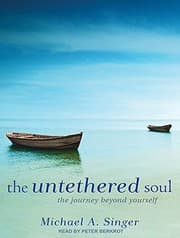
Um, the, the beauty, the oneness of, of life, the meaning that my life had within all of that. And, and it gave me purpose and, and direction because I wondered, okay, how do I live with an awareness of that oneness rather than the duality? How do I rely on that, that oneness to bring out the best in me? In other words, as I later learned, how do I live from a place of consciousness that allows me to really enjoy the oneness rather than, you know, have to struggle with the duality and, and be limited in my little comfort zone so I don't have to respond, you know, I don't have to be responsible for things that I'm uncomfortable with looking at or dealing with in life. Have you ever read "The Untethered Soul" by Michael Singer?
I probably have. I'm certainly familiar with the title, so, you know. Yeah. I'm a v- v- voracious reader, so Yeah. Yeah, me too.
Me too. I, I'm, I'm with you. I- and I'm also very draconian. I, I, uh, I... the library, my library is, is books that, that, that, that pass a cut. I will throw a book one chapter in in the garbage and move on to the next one if it feels contrived or whatever.
Um, and I, and I love it. I, I, and I love all different stuff. But the, this, uh, to Michael Singer and then I, and I wanna address one more thing with you. Um, he, he... the, the whole book is a, is a, a non, non-religious breakdown of the concept that we are not our mind and we are not our body, that we are our... he call- he call- he refers to it as a soul. Um, insert whatever word makes you most comfortable.
But this concept that our mind and our body are physical manifestations in this plane that are meant solely to keep us alive, and the narrative that we hear on a day-to-day basis is not us. Our, uh, that is our mind just projecting thoughts, most of which are fear-based because fear is what keeps us alive and has, that evolved to keep us alive. So you are essentially being pounded all day long with fear-based thoughts, and you can hear them, right? And, and, you know, and unless... And, and he goes to this idea that you talked about very much so that, that by quieting our mind, by listening, by, by being able to, to, to find what you call big mind, you can actually start to dissolve that narrative that is, that is just an onslaught.
And when you do, you s- it's like the first time, excuse me, that you ever get to experience who you actually are and what you actually believe in life- Mm ... because you're just having this narrative hit you in the face all day that you think is you. Most of we us are never taught that that's not us. It's our mind or our body sending signals to our, to us to say, "This is how you keep us alive." You know, fear, fear, fear, fear, fear. Avoid this.
Don't do this. Be scared of this. Don't say this. Fit in here. You know, whatever, because those are all the things that keep us alive, yet- Yeah ... none of which is who we actually are.
And, and, and, and it, it, it just relates in, in some ways at least closely to what you're saying, and I, I just, I try to push that book as much as I can because it was so meaningful. You can, you... It's a very quick read. It's a very easy read, but the concepts in it are, are very, very deep. And, um, and to me it's a, it's another data point to, to support exactly what you are saying, that, that, that, that we ha- that unless we understand who we truly are, and the only way to do that is to, is to be quiet.
And however you can get there, um- Mm ... I've used meditation. Sometimes I'll tell you quite honestly, um, the Our Father prayer works for me. I, I will just almost like a mantra, I'll just repeat it and repeat it and repeat it and repeat it, and then it will kinda get quiet in my mind, and then all of a sudden I'll be, I'll be in this state of peace. Um, and, and that's just how I get there.
I think e- everyone uses different- Yeah ... ways of getting there. Think, think in terms of the noisier your mind, the noisier your meditation has to be. Yeah. So yeah, you might wanna have music on. You might have to stare at something.
You might have to be saying something. You might have to be breathing. Yeah. You know, all of that- Yeah ... together is you need that level of noise to quiet and focus the mind, and that's fine. But at some point, as the mind gets quieter and quieter, you begin to, okay, well, I don't need the music.
Okay, I don't need that visual. Mm. Okay, I don't need that. And pretty soon, you know, it, it comes down to, well, okay, my single-pointed focus is my breath, and I'm gonna use my breath in various ways to, uh, extend that single-pointed focus so that I can quiet the mind completely. And- Yeah ... it's in quieting that mind that you empower yourself ultimately to, as you suggested, to discover who and what you r- really are.
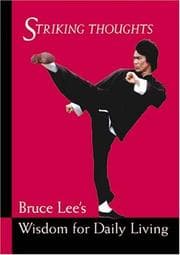
Because otherwise you're, you know, you're just not able to take responsibility for your life because you don't even know who and what you're, what you're capable of. So. Um, I just finished Bruce Lee's "Striking Thoughts," which is a wonderful look into a very dynamic and interesting human being. Um, some of it is just the ramblings of a individual. Some of it is, is, is really, really interesting and intriguing, and he talks a lot about the Confucian idea of knownness And this idea of the, the, you know, and I've said this on the podcast many times, it's a, it's a, it's a con- it's a slightly different but cut from the same part of the book.
Um, uh, he expands on that idea of knownness, and he tries to describe it in, in this idea of the value of the cup is in its emptiness. Mm-hmm. And that we are not-- we cannot be who we are unless we enter all situations as an empty cup would, right? Mm-hmm. Open to the world, uh, you know, uh, devoid of, of the, of these incessant thoughts that are constantly filling our mind, uh, devoid of ego and all these kinds of things.
It's, it's a really interesting concept and book for those who are, who are interested in it. Um, but my second to last question, I got two questions for you, and then I, I will be very... try to be respectful of your time, although I know we're close. I'm doing fine. I, I apologize. Um, so I-- you just t-told, uh, uh, an amazing story, and I want people to dig into it further, and, and my last question will be where they can find out more about you and your work and, and dive into that.
I just have one question about that experience, and it's, um, you're standing in the woods and you're driving this knife towards your heart, and you ha- you, you, you, you're enveloped by this white ball of light. Um, this experience happens. It ends. You have not killed yourself. You're standing there.
You have a knife in your hand. Actually, the knife was about 20 feet away. Knife is about 20 feet away. Yeah. What is your next thought?
Like, like this just happened to you, something that, that you will... it will forever define a moment in your life- Yeah ... and, and, and, and obviously change the course of your life. Very much so. What is your next thought in that moment? What is the, what is the first thing that hits you that, that you're like, you know, w- w- w-what is the first thought that hits you when that, when that happens? I'm just interested in that.
How do I reconnect with that? And so I literally went to a little cabin on an island. You know, I'm talking outhouse, you know, wood stove, water pump type of cabin. And I read and studied and breathed and quieted and began to explore who, you know, uh, began to heal all that, uh, you know, I r- you know, when I went in the Marine Corps, I was, you know, I was a U.S. champion rower. I was married or engaged to the, you know, Miss Teenage California.
And, you know, I'm thinking, "Okay, this is, this is my life. I'm doing all right." Yeah. Yeah. And I came out, and within a year or two, everything was, you know...
I had no direction, no sense of everything. So when I had that experience and really realized the perfection of my life, which I had no sense of before, I realized the oneness. I realized that's my religion. And so, okay, so what's my church? Well, my church, you know, is probably nature.
Um, and how do I get to that place in my church, and so that I can recreate that whenever I want. And so that became my journey, and the breath has taken me into that. I can quiet my mind. I can go into any state of consciousness I want. I can, I do, do see the perfection of life constantly, even in the worst of times.
And, and, uh, really, you know, I, I'm not, I'm not coming from that place of fear. I'm, I'm not. It, it bec- and why would when you recognize how limiting that is? You know, if you're in the middle of a crisis, do you wanna contract and, and decrease your ability to d- handle that crisis, or do you wanna be present and expand your ability to handle that crisis? And of course, reasonably speaking, you're going to want to expand.
You're going to want to have the best perception, reaction that you can have. So that's how the work people I work with, that's how they begin to live, and that's the art of high-level leadership. You know, like the, you know, the one thing I saw when I first started studying leadership is the higher the, the higher their level of consciousness, the higher level of their leadership. The more connected they are with others, the more able they are to relate and really create a thing It's like, well, yeah, I've spent my whole life helping people move into higher states of consciousness, so I focus more on living and working in the world and, and, and doing that. And so, yeah, it's, it's just, uh, you know, you, you make up your highest intention.
Mine is to create a more conscious and caring world, you know. And the best way to do that, because high-level leaders can, are really can have the greatest impact on a organizational or societal level. So, all right, since I have this unique ability to take people into those levels of leadership, that's what I'll do. Mm-hmm. And so that's the process that I'm in the middle of.
I love it. This has been a tremendous conversation. I've so, I've enjoyed it immensely and, um, I... If you saw my crazy notes, you'd think I was either planning some sort of attack or, uh, that I was completely manic. But, um, I, I've just, I've written down so many ideas that I'm gonna think on, uh, more after this and just appreciate so much of your time.
For those- Mm-hmm ... who've listened that wanna learn more about you, about your work, about where they can dive in, where, where's the best place for them to go? Well, just my website, ronstout.com/tps. Um, that has got information along with free stuff if they're looking for ways to begin their journey. But if they're ready to have a conversation and look at what they really want, what they're, it's effective, then they'd go to, uh, nextleveldiscoverycall.com And, um, yeah. It's not a sales call.
It's really, it's like, "Where are you? What is, what's your biggest challenge? What's your biggest dream? And let's figure out how you can, what you need to do, who you need to become so you can create that dream." Wow.
Well, uh, for everyone listening, I will have, uh, uh, Ron's contacts, his website, uh, the, the website he just, uh, mentioned as well, nextleveldiscoverycall.com, uh, in the show notes, whether you're listening on Apple, Spotify, YouTube, wherever. Also, obviously, you can just go there direct, but if you forget, just go to the show notes and, um, and you can find all that. Ron, I appreciate your time so much. Uh, I have enjoyed this conversation thoroughly, and I hope that this isn't the last time that we connect. Anytime, you let me know.
Yeah. Make it look, make it look, make it look easy. Thank you. Hey stand a guy, boy I'm ten toes Big body pull up in a Range Rover I could chase the whole game when I say so I pull up, shut it down, yeah they know Running this game ain't a thing for me I never switched up, no changing me The only thing changing is season You go against me then you know that you tweaking, okay 'Cause baby I'm him, I be on ten Two-stepping in the party, I do not dance Watch how I move, make it look easy Counting up wins, that's part of the plan Black mail taking off my head is a CC I can't fail, all my victories are on repeat I'm knee-deep, need a job, best that you seek me I'm too sick, yeah, I know I make it look easy Easy, easy, E Yeah, tell 'em don't try to play me Yeah, yeah, yeah, I'm drippy on the dirty They can never count me out They can never count me out, I know They can never count me out They can never count me out, I know I make it look easy Make it look, make it look easy Close twice as many deals by this time next week. Sound impossible?
It's not. With the one-call close system, you'll stop chasing leads and start closing deals in one call. This is the exact method we used to close 1,200 clients in under three years during the pandemic. No fluff, no endless follow-ups, just results fast. Based in behavioral psychology and battle tested, the one-call close system eliminates excuses and gets the prospect saying yes more than you ever thought possible.
If you're ready to stop losing opportunities and start winning, visit masteroftheclose.com. That's masteroftheclose.com. Do it today. If you like the show, please take a moment to rate, review, and subscribe. It really does help the show to grow.
Thank you for listening. Happy holidays. Want to give your host a gift? Consider subscribing, rating, and reviewing the show this holiday season. It really helps the show grow.
From all of us at Believe, have a Merry Christmas, everyone, and a happy holiday.