You've finally broken loose from work. Three friends, one tee time, and then the text. "Honey, there's water in the basement." Not exactly how you pictured your Saturday. That's when you call us, Cincinnati Insurance.
We always answer the call, because real protection means showing up, even when things are in the rough. Cincinnati Insurance. Let us make your bad day better. Find an agent at cinfin.com. Happy holidays.
Want to give your host a gift? Consider subscribing, rating, and reviewing the show this holiday season. It really helps the show grow. From all of us at Believe, have a merry Christmas, everyone, and a happy holiday. Hello, everyone, and welcome back to the show.
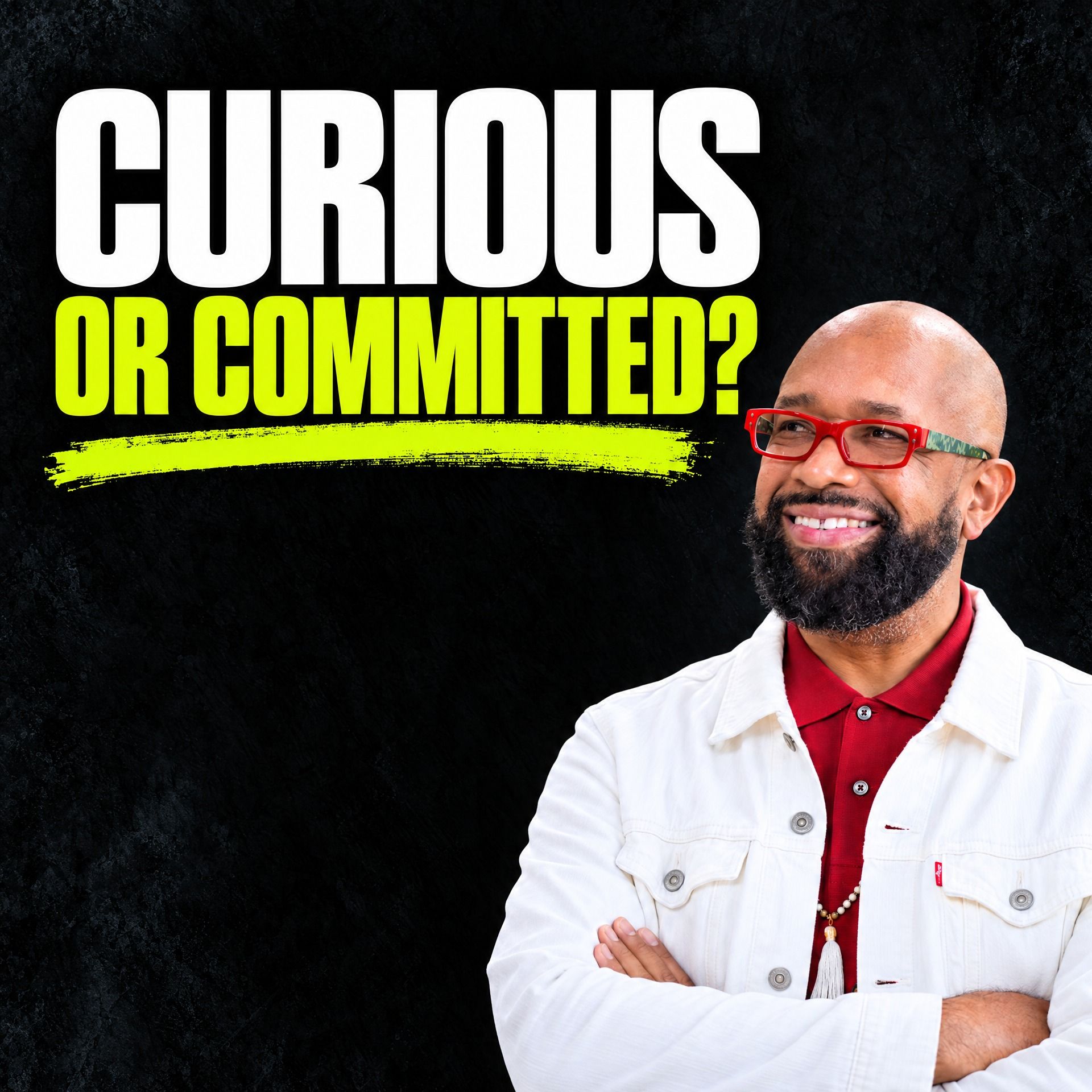
Today we have a tremendous conversation for you, an interview with Dan Go. Dan is an executive fitness coach, and I've been following Dan for a long time on Twitter and on YouTube. I've listened to many of his episodes. I've read a lot of his articles. The way he approaches fitness is pragmatic, it's practical, and it is set up specifically for high-performing individuals who are struggling to keep their fitness and health in line with their business performance.
And I just enjoy Dan's philosophy, the way he goes about it, his nature, and this conversation takes so many different twists and turns as we approach this topic from multiple directions. As you know, as I've said on this show for years, health is a competitive advantage in business, and Dan is the guy to get us there. I appreciate you for listening to this show. I love you for listening to this show, and whether you're listening to it on Apple, Spotify, or whatever, or watching it on YouTube, if you're not already subscribed to the show and if you have comments, questions, things you wanna add, come over to YouTube, leave those in the comments. I collect all those comments, and on some of the solo episodes, I go in and answer those.
And if I can even get, uh, our guest to come back and answer some of those, I do that as well. So I love you guys. Let's get on to Dan Go. Let's go. Yeah.
Make it look, make it look, make it look easy. Hey, stand up guy, bum 10 toes. Big body, pull up in a Range Rover. I can chase the whole game when I say so. I pull it up, shut it down, yeah Dan, so excited to have you on the show, man.
Thanks for taking some time out today. Appreciate you for having me. Uh, enjoyed the conversation that we just had - Yeah. ... uh, previous to this. Good laughs all around, so I think this is gonna be good. Yeah.
I, uh... Sometimes, you know, you start a podcast, you start talking to somebody, you know, you never know are you gonna click with that person, you know, that, whatever, what it's gonna be. Yeah. And then you start having a conversation and you're like, "Ah, crap, I wish I had hit the record button." Yeah.
"That was, that was really good." But, uh, it's all, it's all good. Well, we can get into that if we want to. Uh, for, for, for everyone listening, I, I, I've been following Dan for a while on Twitter. Uh, love the stuff that you put out.
Um, I found an article that kind of... I was like, "Man, I wanna talk to him about this." Reached out. You, you, you accepted the invitation to come on the show. Uh, but then I found another article that I wanna use the crux of our conversation.
Mm-hmm. So for, for those listening, they know, it... I work with a lot of executives, I work with a lot of startups, and for years now on this, on this podcast, I have been sharing the idea that health is a competitive advantage. And I've- Yeah ... told my story. Around 2017, I had a health issue, and I completely refocused my health and fitness, made a priority, and it, and it's changed my life.
So 25 pounds, et cetera. Okay. Um, but despite me trying to bang them over the head with that for years, so many people neglect their fitness, their health, and w- and they don't associate it to how they actually perform in business. Yeah. And one more little contextual piece of information is I actually did a keynote on Wednesday down in Dallas.
It's around, uh, uh, I call it... It's about how do we finish projects, and I have this little form. It doesn't matter. And afterwards, I'm standing there kinda decompressing and a, and, and a guy walks up and he said, "In high school and college, I was a baseball player. I was fit.
You never had to ask me twice to get to the gym. I was constantly there. I was constantly working out. I loved how in shape I was," et cetera, et cetera. He said, "At 38, I'm, like, 50 pounds overweight.
I can't get myself going. I don't like the way I feel. I can't change my habits." And my answer to him, and this is where I wanna kick it to you to see what you would say and then where we go with this, m- my answer to him was, in my little- limited health knowledge, was, "The difference was you don't have a goal today." Mm-hmm.
Like, there's no why pushing you or because pushing you to get to the gym. In college, it might have been be a starter on that team. Yeah. Find a woman, you know, get laid. Whatever, whatever your prior- You had a priority that kept you going back, and today you don't have that priority.
Now he's- Yeah ... a very successful business guy. If that gentleman had walked up to you and, and said that same thing to you, how would you start to address it with him, being that he, he essentially would be, from what I understand, your target market? He's a, he's an executive who's struggling to get himself in a position where hi- his fitness matches his business performance. Yeah. The very first thing I would do is, uh, ask questions.
Uh, that's, that's the most important thing. Uh, coming from a coach's standpoint, it's one thing to tell someone what they, you know, quote unquote, "should be doing." Mm-hmm. It's another thing to use questions to guide what's already inside of that person. So you're right.
He had a goal most likely before. It's like he's playing high-level baseball, he wanted to keep himself in shape, he wanted to be his athletic best. Now, that may change, and that probably has changed in terms of his motivations. I would ask him first, it's like, "Okay, so why do you wanna get in shape in the first place?" And then you go through kind of like his surface level answers, "Oh, I just wanna feel more confident.
I just wanna feel better about myself," like all this kind of stuff. Then you ask him, "Okay, so why does that stuff matter to you?" And then I would keep on kind of like extracting and trying to peel this onion of getting to the core reason why. And once we get there, we understand what the motivation is. Uh, and, and the thing about motivation, it's very fleeting too, so you, you have this window of opportunity to really act on it.
But once we find the core motivation, then we have the ammo necessary to be like, "Okay, well cool, then what are we struggling with right now? What do we need to do in order to turn the ship around? What's the destination?" Right? Like, a lot of times people are like, "I wanna get in shape."
Well, if you say that you just want your business to be successful, what does that mean, right? You, you actually... When we deal with the... Or when I deal with entrepreneurs, like I deal with people who are very targeted in the metrics that they are trying to accomplish in their business, but when I ask them about their bodies, they are so vague in general. "Oh yeah, like, uh, I just wanna get in shape," or, "I just want more energy."
Well, how do you quantify that? Because the brain works in such a way where you have to really be exact about where you wanna end up. And, and that's the thing with entrepreneurs, it's kind of like they don't take the brain that they have with their businesses towards their bodies. They kind of treat it like a, like an amateur rather than a pro, as opposed to what they do in their business. So what I try to do is I try to find out what the core reason is, what the core why is, and then afterwards we try to treat their business like they almost treat their...
Or no, sorry, we try to treat their bodies almost like they try- they treat their businesses. And we try to m- make it in that language so they understand, and then they turn this whole getting in shape thing from this process that was maybe kind of like, "I don't know what I'm doing," and whatever, to, to an actual like objective process that you can understand. So, so that's probably the first thing I would do. First and second thing is what's the destination? What's the why behind it?
I actually feel bad that he asked me that question and not n- you now. Also, I think I had speaker brain, you know- Oh, for sure ... like that first half hour after you get off the stage and- Yeah ... y- you, you wanna answer people's questions, but you're, you have nothing, you have nothing left to give us. Oh, y- well he's saying like, "Give me advice, give me advice." Yes. And then our automatic is like, "All right, here's the advice.
This is what I did." Yeah. You know? And, and that's, that's totally cool. I mean, that's totally fine.
It's, uh, it's what he asked for. Um, I just realized that through kind of like the whole years of coaching is like telling people to do one thing is, is actually just like one thing. But most, most of the times, like people actually have the answers inside of them. They have to come up with the answers themselves- Yeah ... through really good clarity, through really good question asking. And then once they get there, then they're gonna be like they, they have ownership over like what they do at least, as opposed to someone saying like, "You do this, you do that," kind of thing.
Yeah. I, and I... It's funny, it's funny how when something is outside of your domain, like I do something very, very similar and like I love the Socratic method, which is what you just described. Like look, let's just, let's just do a waterfall of whys until we start to get to a place where we're really touching into what's happening. And like if I'm working with a, with a startup founder, et cetera, that's like second nature.
And then- Mm-hmm ... almost all other things in my life, I'm just like, "Do this," and you know, walk away. It's just, it's just funny how domain knowledge is like that. And, and I guess that kind of goes to my next question, which is, is that kind-- is that the issue with health and fitness for, for a lot of these business professionals who haven't yet taken it? They, their domain knowledge is in w- how... whatever they're executing in, in their business, and just it's in our nature as humans that w- we just don't naturally apply that to other things because it's... I would imagine that once one of your clients works through this process with you, it feels very similar to things they do in their own business.
Yeah. But they've just never even thought on their own to apply that same process to their fitness. Something that I realize a lot is that things that are obvious to us are not obvious to others. Mm-hmm. So it's easy for me to stand here and be like, "Oh yeah, you could just like put your business and treat your body just like you do your business," when there is such a disconnect because I've, I've worked with a lot of people and I've, it's kind of been this like subconscious thing that I've already done.
Mm-hmm. So I do feel that, you know, people like yourself, uh, people like myself, like coaches, should be a tool to guide them to that. It's not like they can automatically be like, "Oh, well, well if I measure what I manage, so you know, if I measure like the metrics in my business, why am I not measuring the metrics inside of my body?" It's, it's just so easy, easier said than done. And also something that I realized too is that through the exposure of, of doing business, uh, business owners actually become more objective about each and every metric that happens in their business.
So if sales go down, they're not gonna be like panicking and be like, "Oh my gosh," like, they're gonna be, "Okay, cool. What's the cause? What's the thing that happened?" And the th- the thing is they don't really take that same, uh, mindset with their bodies because they have not been focused on their bodies as long as they have with their businesses. So they step on the scale and they see themselves doing everything that they should have been doing, and they're up two pounds.
They start freaking out. They're saying like, "This diet sucks. I'm not getting anywhere," blah, blah, blah, blah, blah. And they haven't been exposed to the emotions that you need to be exposed to when you're transforming your body. It's much like kind of like doing a startup in a sense, especially if you're just like starting or restarting.
Mm-hmm. So you have to get through those emotions. It's better if you have like a coach or at least like something to guide you, to tell you like- ... what you should be doing. And, and along that process, you should be learning a lot about yourself. As you learn lessons from building up a business to whatever size that you want it, you should actually be in- honing in the lessons that you're learning from transforming your body.
Uh, these are both, uh, these are actually just, like, these kind of, uh, these external processes that are masked, that are really, uh, masking the true process, which is self-development and developing yourself as a person. Yeah. It almost comes as second nature, it feels like, or it's just an accepted practice that most entrepreneurs, executives, et cetera, having a business coach, having a board of directors- Yeah ... having an early mentor- Yeah ... uh, finding, uh, an early investor who, who acts as an advisor to your company. It, it almost comes as second nature to them, and then so many people fight having a fitness or health coach. Yeah.
And I think this also goes for h- mental health as well. Mm-hmm. Uh, the best piece of advice that I've ever gotten, ever, was from a, a, a mentor of mine about five years ago. I was on my journey of, of taking control of my, my health and my fitness, and I started to do that. Uh, but my mental health, I had never addressed my mental health, and he said, he said, "Go find a counselor, someone who's not, you're not related to, isn't a friend, someone completely removed from your life, and pay them every two weeks, and just sit down.
And just, just sit down with them every two weeks for the rest of your life." That's what he said. He goes, "Every two weeks for the rest of your life, sit down with that person and just consider it a life expense. Just put it in your budget, make it a life expense. Good, bad, everything's amazing, everything's terrible, and, and just talk to them."
And that has quite literally changed the course of my life. Mm-hmm. And, and again, I think about it, like, that makes sense to me, business makes sense to me, and I still fight the idea sometimes of having... And I, And I have had some fitness coaches, but, like, I fight the idea of just having somebody with me all the time. So- Yeah ... do you feel like...
Why do we fight this? Is it because it feels like something, uh, particular to fitness and, and health. Does it, is it because it feels like something we should be able to take on ourselves? Is it an ego thing? Is it a, a lack of just knowledge?
Does it feel, uh, is there some sort of stigma around having a health or fitness coach that keeps people from engaging? Does that make sense, what I'm asking you? Yeah. I think there's a couple things at play. So, number one thing is that you're gonna get coaching for the thing that you wanna get better at- Mm-hmm ... and the thing that you prioritize.
And most times when entrepreneurs are thinking, like, "Where should I get a coach?" It's obviously gonna be for their business. 'Cause that is, like, the number one thing that they prioritize in their lives. Now, what are other things that they prioritize but they don't really think that they need a coach in? Whether it be relationships with their wife or- Mm-hmm ... husband, whoever it is, uh, being a parent, their health. They think of these things as, like, these natural processes that just happen as a result of you going through it, when they really should be treating it as something that you can actually learn and get from A to B a lot faster than just trying to figure out on your own or just trying to read books about it.
Mm-hmm. And also, like, I think when people think about coaches, they think a lot about, like, the educational aspect of things. Um, "Okay, what am I gonna learn from this coach?" And, and all this kind of stuff. Especially when it comes to fitness, everyone kind of thinks that they know everything already, especially if you're on social media.
It's like, "Okay, well, I've just, like, l- looked at 10 reels that told me not to eat vegetables , not to eat meat, and not to do all this kind of stuff, and now, now I'm f- now I'm educated," right? Yeah. But it's not necessarily like that. I... The way I look at coaches is like this amalgamation of, yes, the right...
It's actually the right education for the right time of where you are at that very moment of time. It is implementation and it's accountability. It's like, it's not enough to know, you must do. And that's what coaches do, it's they hold you to the fire of the thing that you said that you were gonna do, and if you don't do it, that's where the accountability comes in saying, "Okay, why didn't you do it?" Right?
And, and that's why I think coaching works so well, especially when it comes to, like, this fitness field, is because you have someone there who's telling you what the right thing is to do at the right time, and I'll use a story for this. So one of my clients in the past, uh, I'm gonna say over the past 14 weeks, he's dropped, like, 50 pounds off of his body. Incredible. Took himself from 36% body fat down to 23% body fat. Now, he's asking me, he's like, "Okay, Dan, now what, what are we gonna do?
What next?" Well, I told him, it was like, "Based on where we are at this very moment, I think we have this opportunity to be able to get to 19 to 18% body fat based on the trajectory of where our weight loss is at this very moment. We can continue this on for another, like, six to eight weeks but, over time, what's gonna happen, some things that I've seen, is the symptoms of being on a diet for way too long. You get hungry at these weird times. You eat foods or you eat a meal, and you're still hungry after you eat a meal.
These are signs that your hunger hormones and your appetite hormones are coming back and starting to bite you in the ass a little bit. So when that happens, what's gonna happen is, is that we're gonna up our calories, we're gonna keep ourselves within this variance of weight where we're at. We're gonna take advantage of these calories and use them to build muscle." So I tell this story because a lot of times people think that fitness and also weight loss is, like, this kind of, like, simple process. You just eat less and move more, and it's kind of like telling someone to build wealth by just spending, you know, spending less than you earn.
I mean, it's, it's, it's a trite statement, but it's much more complicated than that. Mm-hmm. You probably know this through, like, startup coaching as well. So we have to understand that every single thing that matters to us, especially, like, health, even relationships- It's much more complex than we think. And going back to that example that you used for the therapist as well, I, I too get therapy.
Every single time I'm about to get therapy, I'm like, "Why do I have this in my calendar? I don't even think that, uh, like I, I wanna cancel," but I've done it enough times that I know that after I'm done that call, I know I'm gonna be put on the right path, I'm gonna feel so much better. It's just like before you get onto it, I'm like, "I'd rather do business. I'd rather just like-" Yeah, yeah. "... you know, create stuff," and whatever it is.
So, so it's kind of like this thing that's like you don't necessarily, you don't necessarily know the value until you actually kind of go through it. Yeah. And, and I think that's kind of like this disconnect between people not getting coaching in this specific area of their life. I couldn't, I couldn't, I couldn't agree with that more. I think with all things, and, and the word that y- I actually heard you use a couple times in there is nuance, that that aspect of, of almost everything is so important.
We, we, we see these reels. Y- you're, you, you talk about, uh, there was a reel of Dana White saying Gary Brecka changed his life. The next, literally the next reel was Gary Brecka on stage saying something, and then the next reel was BioLayne talking about why everything Gary Brecka said was ridiculous. And it was like one, two, three in a row. So it's like, uh, if you're not, if you don't have someone in your life who can address the specific nuances of, of your lifestyle, of your goals, of your body composition, of your tastes, of, of what you're willing to sacrifice to get to that place, right?
Like someone may say, "I wanna drop X number of pounds, but I'm unwilling to n- not drink alcohol on the weekends." Yes. Okay. Like, how do you figure out how to do that, right? You need someone who can understand what you're trying to get to.
But if you're just scrolling through reels, you know, at one minute you're like, you hear Dana White, he looks amazing. You know, he's, uh, you know, just this bull- bull kinda guy, and you're like, "Wow, that looks great." And you hear, then you hear the guy literally talking. You're like, "There he is. I'm gonna follow what he says."
And then the next- Mm-hmm ... guy is telling you all that stuff is nonsense. You're like, "What am I supposed to do?" Yeah. And, and those nuances are important. Uh, we assume they're im- seemingly assume they're important.
Most people, most successful people, uh, assume and understand that nuance is important in business, but I think everything else that you mentioned, our mental health, s- uh, re- our, our relationship with our spouse/partner is incredibly nuanced. Yeah. Our kids' relationship, our relationship with our children, if, if we have them, is incredibly nuanced. And why wouldn't then also our relationship with food, exercise, fitness, health, why wouldn't that be nuanced? And I just don't think you can...
I think you can get small tips and inspiration from generic social media stuff. I don't think it's a bad thing, and we ta- we were talking a little bit about that before. Yeah. It's not a bad thing. Even Alex Hormozi, the other day on an interview that I was listening to with, uh, the woman Chris Williamson, said, "I scroll Instagram and like motivational coat- quotes."
You know what I mean? He's like, "I like them. They, they make me feel good." That's great, but if you live your life by those, you're g- I th- it's very difficult to hit the mark. It, it, it just, it's not tailored to what you need and, and that is so incredibly important.
Yeah. I look at people like puzzle pieces and especially- Mm ... with clients, and each client is gonna be so different based on a number of factors. I mean, we'll, we'll name off some, like what's their time commitment, right? Uh, some clients like to cook food. Other clients don't even know how to turn on their stove.
Uh, some clients love to work out. They love spending three hours in the gym every single week, and that is like, "I need this." And there are other clients where they're like, "I am so allergic to the gym. I hate even being here. I feel like I'm being looked at and watched."
And the thing with, like, getting all this, like, information, this sh- this kind of abundance of information, especially from social media, is, number one, it's not necessarily vetted for your situation. It's, uh, it's kind of like you're getting it as, like, this, this kind of, like, sh- steady stream of just different thoughts, and I think that's cool. You know, it's good to have, like, you know, guys who disagree with each other and kind of, like, who, who give you a little bit of, like, a challenge in terms of, like, what you're thinking. But at the same time, if you're doing that and you're scrolling and then that is, like, the only place where you're trying to educate yourself and you're trying to piece together this plan that's supposed to be working for you and you alone, I, I don't think it's a good strategy. And I wouldn't...
I mean, like, if I wanted to build a business, like, I'm not going to go on social media and just look at how other people are building businesses because they're all optimizing for something different. Uh, this reminds me, I was at this, um, I was at this dinner, and to put things in context, like, I optimize for impact and reach. That's, like, the thing I optimize for, especially when it comes to, like, social media. And I was, I was talking to this guy, I just met him first time. He, he knew what I was doing, you know, or he knew what I did.
Uh, he found me on social media, all this kind of stuff. So when I sat back- so when I sat beside him, he's like, "Here's all the ways that you can monetize your audience. Here's what you should be doing to monetize and make more money and make this and make that." I never asked him for advice, mind you, just, like, unsolicited blah, blah, blah, blah, blah. But the thing is, is that he's trying to optimize me for the thing that he wants, which is money.
And I'm, I'm not a... I like money. I, I think it's great, but I do think that the way in which I'm making money is a little bit more conducive to, like, what I want to do in the long term, which is really just, like, impact and, and live a fulfilling life, like creating really cool shit. Right? Yeah.
So, so over time I just, like, extricated from myself from that conversation. But that's the thing, it's like when you're on social media it's like, guess what? Even looking... Even if you follow me, it's like we optimize for the thing that we want. My whole thing is like, get your body to a level that's avoiding a preventable disease, feel good, look good, and do so in a simple way that fits your lifestyle.
For other people, they're like, "Get a six-pack. Be at 10% body fat. Oh no, you gotta gain enough muscle so you're always gonna be two- over 200 pounds at, like, 8% body fat." And they're just making you optimize for their goals and their subjective idea of, like, what success means to them, especially when it comes to health, when the reality is, is like you gotta ask yourself, "Okay, what do, what do I really want, and who is the person that's gonna best help me get to this place?" If you're a hammer, everything's a nail, right?
Yeah. That's what it is. Yeah- Absolutely ... I completely agree. I, I completely agree.
I... And, and I'm... It's funny, so, so what I do is very similar. I, I have no intention of building my YouTube channel for max ad revenue and all this kind of stuff. Like, I wanna help people.
I, I hit a certain point in my life where I found that a few... I found that, in general, working towards becoming the best version of yourself, whatever that looks like for you based on your particular goals, that journey seemingly l- leads to a, a more satisfying, content, happy life. I don't love happy- Yes ... 'cause happy is more derivative, but it just does. Like, and, and whatever that looks for you, right? And again, so, and, and getting that message into the world and trying to be a positive influence versus, you know, to, to fight against all the negative is, is my goal.
And it's funny, I will have people come up to me and they're like, "Well, you know, are you selling affiliate links through your email list?" And I'm like, "No." "No, I don't do that." Mostly if I create something I think is really awesome, I just tell them about it and, you know, I try whatever. But, you know, the, the idea is, like, no, I'm not doing that.
Like, I have things, I have a way of making money. I like those things. Those things seem to impact people in a very positive way, and I wanna do more of those things and get better at those things. But I, I don't need 19 streams of income to be happy. And I do think that that is a very...
I think this idea of being careful where you get your advice until you know why you're getting it when- and how it's being framed for you, and if it's being framed specifically for you or through someone else's filter is, is really good. I mean, I do, I couldn't... That, that's very important and I hope everyone listening takes that note down. Like, understanding why someone is sharing that ad- sharing a piece of advice for you is just as important as the advice that you're actually receiving. And I'm, I'm, I'm, I'm very happy that you brought that up.
I think it's important. I always ask this question. I think it's a great question to ask ourselves too, is like, what are we optimizing for? So let's just say we're getting someone into a program and he's like, "Okay. Well, wanna get my weight down from 220 to 180 pounds."
Okay, cool. That's, that's the outcome. That's the destination. But what else are we optimizing for? Um, most people, they optimize to get to, let's just call it weight loss.
We'll, we'll stay there for a second. They optimize to get to the weight loss result, but they don't optimize to keep the weight loss result. Mm-hmm. Right? It's like, "I will do this unsustainable thing.
I'll drop 20, 40 pounds in however long, and I will do so in a way that is not conducive to me even wanting to live this lifestyle by that time I'm done with it." The biggest question I get asked every single time is like, you know, "Okay. Well, Dan, what happens, you know, after the, after you lose the weight? What happens after you, we get there?" And whatever.
I'm just like, "Well, I mean, getting there is one thing. Keeping it is another." Mm-hmm. And the goal is not necessarily to try to control this outcome. I think I, I, I say this all the time, and it sounds like it flies in the face of, like, what I'm talking about, but it doesn't.
So it's like you don't have control over your weight, you don't have control over even how much money you make, you don't have control over what people think about you, you don't have control over how many likes you're gonna get on a specific post when you put it out there. Mm-hmm. But you do have control over your behaviors. Uh, you do have control over the way in which you react to things. You have control over the foods that you put into your mouth.
You have control over the behavior of actually going to the gym and working. You have the control over looking at your KPIs and making sure that you are making progress and taking steps. Like, these are the things that we do have control over, and I'm so glad that you said the whole idea of, like, fulfillment and happiness. I think a lot of times we get so much anxiety by trying to control these outcomes when the reality is, is that we should be putting focus into the behaviors. And a lot of times when we get in, a client into, like, you know, let's just say a program, our main i- or our main kind of question is like, "Okay.
Well, what type of person are you becoming as a result of reaching this destination?" Mm-hmm. Right? Because it's not necessarily, like, you doing all these tactics, yes, it may get you there, but but more so if, have we set up a plan that is gonna be conducive to your lifestyle and the way that you love to live it, while still keeping the result that you have achieved for yourself. So it's like, okay, well, if you're not optimizing necessarily for weight loss, what are you optimizing for?
You're optimizing for behavior change. You're optimizing for making the right decisions when you are eating meals. You're optimizing for being the strongest version of yourself when every single time you're hitting the gym, trying to, like, eat that up a little bit, trying to see what you're made of. That's... And, and reaching your full potential, that's what you're, like, optimizing for.
Yeah. So, so I think it, there's kind of like this whole kind of, uh, focus totally on outcomes, but it's an overfocus, it's an over-obsession- Because if you're so focused on the outcome, that actually creates more anxiety- Mm-hmm ... that the farther you are away from it, as opposed to just focusing on putting like one foot in front of the other every single day and focusing on those actions for those days. Have you ever read, uh, The Gap and The Gain by Benjamin Hardy and Dan Sullivan? I've heard about it, but- Oh, dude ... I haven't read it, no.
It's super fast read. I don't know if you're a reader. I'm not trying to, not trying to give you advice 'cause I'm now optimizing... I'm ta- I'm talking about my own life optimization. You should, you should read this.
Yeah, yeah, yeah. If you don't, you're not a real... No, uh- Yeah. Uh, no, no. But, but so this, the, the, the whole idea of this, it's actually comes out of the work of Dan Sullivan and then, uh, Dr.
Benjamin Hardy, who also wrote 10X is Easier than 2X. He kinda turned this into a book. Okay. The concept is exactly what you just described and the way he frames it, and I just, I, I couldn't agree with you more, and it's basically like so much an- so what he rec- so what most people do is they have this thing, right, 220 pounds, and they're trying to get to 180, and all they think about is, "Well, I'm only 218, and I'm only h- and I'm," you know, "and I'm still, I'm still 30 pounds away, and I'm still this." Yeah.
And all that difference between where you started and where you're trying to get to, that's all anxiety. Yeah. And what he says is instead, measure down. So go, "I lost two pounds this month. I lost seven pounds this month.
I lo-" and now, now all you're talking about are the positives, right? It's a way of reframing your- Mm ... your date, your, your, your, your execution, so that you're always mentally wrapping your head around the positives. And that, I, that really grabbed me. And, um, uh, Abigail Shrier, who just came out with a new book as well, I haven't read it yet, but I read the synopsis of it, and was basically like the more... Her, her whole argument is that, like particularly she was talking about like, like postmodern therapy in which we're constantly talking about our problems.
And she's like, even though there is a positive to addressing and dealing with your problems, if you're constantly talking about them, all your brain hears is the reinforcement of problems, and you're essentially like compounding those problems in your head versus what you just described, which is focusing on the activities, the coming home and going, "Sweetheart, I did nine pull-ups today. Like, ah, I couldn't do nine pull-ups a month ago. That's amazing," right? Like that, now you feel like a pimp. Like you come home and you're like, you know, sh- sure, is there some 22-year-old banging out muscle ups, you know, like he looks like a, like a, like a, like crazy person, you can't even understand how he's doing it?
Sure. But you got nine pull-ups today, and you couldn't do that a month ago, and that's so incredibly positive and satisfying, and focusing on that, it, it just, it moves you forward. It keeps you coming back. And I, I feel like we get lost in the what we're not doing, and we forget all the things that we are. If that, if that, if that makes sense.
Sorry, my, my microphone is unfortunately... Hey, can you hear me? I can hear you great. Okay. Yeah.
Okay. Sorry about that. Yeah, you haven't changed on my end. Yeah, yeah. You're all good.
My bad. We, we gotta- No, you're just fine ... cut that one out. What's the, what was the last like 30 seconds that you talked about? No, you're good. So, uh, what I was saying is, and I'll just cut it to your answer, but what I was saying was- Yeah ... um, uh, uh, you know, we, we, we go to the gym, w- we get nine pull-ups.
We weren't able to do that. Maybe the kid next to us was doing muscle ups like a, like an animal, right? Mm-hmm. And instead of focusing on the fact that I can't do that, focus on the coming home and telling your family that you got nine pull-ups. You couldn't do it before, right?
It's, it's- Yeah ... holding that positive that, that, the growth in your mind, it, it, it reinforces the positive activity versus focusing on where you're not, which maybe your goal- Mm ... is to get to 15, you know? And, and that by, by holding the positive aspect of our growth in our mind versus focusing on not being at our goal yet reinforces the action much more than the desire to get to the goal, if that makes sense. Yeah. It's, uh, it reminds me of like the curse of the Type A, uh, individual, where they're always looking at the, the grass on another- Yeah ... person's lawn as opposed to their own. And also, it is like whatever you focus on expands.
That's, that's the principle. So if you're looking in the mirror, you're going to the mirror, and you're looking in the mirror, and all you're doing is just like grabbing onto your belly and being like, "I hate this," or looking at certain parts of your body where you're like, "I don't like this," and, "I don't like that," it, it really just like creates a, a way of which it, you're just expanding those problems as opposed to seeing like the things that are actually working for you. And it's so easy, especially like in this day and age, like where we are so focused on kind of like the bad things that are happening around us. Uh, it's even made double worse if you hang around complainers the entire time, energy vampires, which is- Yeah ... and, and what we think about expands. So I like to say, especially for like a Type A individual, there's this little thing that we do, which is like, hey, every single day before your day is done, write out like every single win that you had from that day.
And then people are like, "I had no wins." Man, this, this is actually kind of like, it annoys me. It's an external thing that annoys me a little bit. So I go out, I talk to, uh, I talk to almost like anyone. If I'm in the grocery store or if I'm in like, you know, butcher shop, and I'll ask them a question.
I was like, "Oh, what's the highlight of your day?" And they'll be like just drawing a freaking blank. Mm-hmm. Like I've never gotten... I've maybe gotten like one answer, or at least a good one that I would consider to be a good answer, out of all the like 50 to 100 times I've done this.
And the thing is, is that we're so bogged down with the things that aren't as opposed to the things that are. Mm-hmm. So I get people to do this little exercise, which is just like recount all the small and big wins that have happened in your day. And what happens as a result when people do this- ... is they look at, they look at their day and they're like, "I actually won a lot more than I lost today." Whether it was doing a workout, whether it was choosing the healthy meal, uh, whether it was...
Some people, like, some people will actually make a massive gain in their business, whether it's, like, closing a million-dollar deal or whatever it is. It will totally gloss over them, and they will not even think about it past the event that happens. Yeah. They have to remind themselves, "Oh, shit, I closed that million-dollar deal today. I f- I remember.
I just totally forgot that." And then it's just like, to us, we're just like, how do you forget such a thing? Yeah. Because we are so mired and we're so trained to be focused on what we don't have as opposed to what we- Yeah ... have in the first place. And I do think that the more that you focus on the good that's happening in your life, the more that you're inviting the good to happen as well.
I, I... This is not proven by science, okay? This is not... This is anecdotal, but I do feel that we do emit, like, a specific frequency based on our thoughts and based on kind of like the ways in which we feel. If we are feeling in a certain way that shit's always bad and I'm always gaining weight and, like, all this kind of stuff, that's the, that's what you are attracting into your life.
Mm-hmm. As opposed to, "Hey, what's up? I dropped like two pounds off the scale." Fuck. Good job, Dan, you know?
Or, "I did one more pull-up than I did before. I just hit a PR in, in my incline bench press." Boom. The more that you kind of focus on that, the more that you're kind of inviting that stuff to happen. So- Mm ... totally get what you're saying.
And, and that's kind of like the whole crux of using our minds to our advantage. For me, it's like I feel that reality is malleable. Mm-hmm. And it's different for everybody. I can put two people in the same room, s- similar people, and give them the same situation.
They will come out with two totally separate perspectives on what happened to them. And what most people don't realize is that that is our superpower. We can use a perspective that makes reality malleable to be for us instead of against us, and I really wish that people would actually use that, not just for their health and bodies, but for, like, every aspect of their lives. It's easy to say, hard to do, but the more that you do it, the easier it gets, just like lifting weights at the gym. Yeah.
The, I couldn't agree with you more. Uh, everything, the resonance of energy, all that kind of stuff. I... The only thing I would say on top of that is if you are in a place today where you feel like you're not there, guys, this is a learned- this is something you can learn and practice- Yeah ... and get better at. I, uh, I hope no one listening takes this and, and I think if you're a longtime listener, you know this, but I, I... and I, and I won't speak for you, but for me, like up until 2017 when I had my kind of...
I call, I call that... That was like I had a kind of an awakening moment where I said I need a change. I was that way. It was, "I'm not making enough money. I'm not getting on enough stages.
You know, I'm not signing enough clients. This person has the..." And it was all negative, where I'm not- Mm ... what I don't have. And, and it led to all kinds of things. And when I...
And it was funny you said there's, there's all kinds of... You, you didn't go down this path, but you made this comment that there's these ancillary benefits, uh, and I'm paraphrasing, but there's ancillary benefits to, to this work that you don't necessarily see. And one for me is I'm a much better father today. Like- ... not even close, like on another planet quality father today because of the mental, physical, et cetera work that I have done, and it's taken me years. And, like, I feel like I'm a pretty good dad today.
Like, I, I- Mm ... I'm pr- I can be present, I'm connected, I give them their space, but at the same time, I... You know, all the things that I... You know, how I want to be a parent, how I personally want to be a parent, and how the relationship I have with my kids, it is as good as it has ever been. I hope it'll continue to get better.
But the path that I was on in 2017, if I didn't make these changes, I don't know that that would be true. And I don't love when I look back at the type of parent that I was in 2017. I don't, I don't look at that person and go, "I was doing a good job then." I, I don't believe that I was. So my point is you...
And I would've never saw that coming. I didn't make any of those- Mm ... changes to be a better parent. I made those changes- Yeah ... because I was face down on the floor drooling on myself. Like, I... You know what I mean?
But because all this work, you start to see that positivity, that connection, those qualities that you're building into yourself leak out into these other parts of your life that just you wouldn't have guessed but become these amazing surprises that, you know, I value immensely. Can I, can I maybe... I'm going to assume, and then you can, you can, you can challenge me on this assumption- Mm-hmm ... that the main change that you made was a mental choice to see things in the way that serves you. So this is, like, one of the things that I've seen with entrepreneurs. "I can't go to the gym because, you know, I gotta do stuff in my business."
As opposed to you, I'm, I'm, I'm probably gonna throw it out there as like, "I need to go to the gym in order to be more effective for my business." Same situation- Mm-hmm ... different perception. Yep. And, and it's so easy. It's so easy, especially on social media, it's so easy to, like, look at what other people are doing, look at what other people have, and be like, "Why am I not there?"
And, like, all this kind of stuff. Well, like, guess what? It's like you, you have your own journey, and you have to honor that. And part of the journey is making a choice based on what the world means to you. Mm-hmm.
What these things mean to you. I had this, uh, I had a friend who came up to me, and he was just like, "Dan, when I was, like, broke and hustling and trying to, like, make things, I was the happiest I've ever been." And then he's like, yeah, now he's, he's making a good amount of money, very good amount of money. He's like, "I, I just don't feel that happiness anymore." And I didn't really say this to him at the time 'cause I had to think about this for a second, and when I thought about it I'm like, "Hey, the only person that changed was you.
So as you made more money you became less happier, and you chose to become less happier, not because of the things that you did, not because you made more money and because of what you're doing. It's because of the way in which you're perceiving the things that you're doing." Mm-hmm. It's so easy, especially as we get older. Like, how, how old are you right now?
Uh, 43. Yeah, I'm, I'm 44. Mm-hmm. So I find this divergence of people as you get older where it's like you can, you can do what most people are doing right now, which is, like, becoming more pessimistic, more cynical about the world and everything that... around them and being more bitter, as opposed to, like, a very small percentage of people who are getting more optimistic- Mm-hmm ... who are getting more happier, who are, who are looking at the world not necessarily through rose-colored glasses, but they're looking at the world in the sense of like, "Hey, like, how is all this stuff happening for me?" As opposed to the world happening at them.
And, and I, and I do this thing with my daughter. Actually, I'm holding this right now. Oh, shoot. I'm not... Yeah.
The... It's right here. Okay. So- So there's this rock that my daughter gave me. It's like this magic rock.
I call it a magic rock. Yeah, yeah. And, and every single time, you know, I see my daughter I'm, I... You know, we touch it toget- we touch the rock together, okay? And once we touch the rock we're like, "It's a great day."
Yeah. We just say to each other, "It's a great day." I love that. And also, and also it's like the world is taking care of us, right? The world is taking care of us.
So, I mean, just by touching this is ac- it acts as, like, this little totem for ourselves to, like- Mm-hmm ... maneuver our minds in the way that we wanna maneuver it. And then once you say it's like, "It's a great day," then you will look for reasons why it's such a great day, and it's all a choice. And the thing, like you said before, it's like it's really hard, especially if you're starting from, like, rock bottom and you're like everything sucks and you're complaining about everything and you're stuck in this kind of like rut a little bit. It's really hard. Just like going to the gym, it's really hard to go to the gym when you're just starting out.
That is, like, the most- Mm-hmm ... that's the hardest part of going to the gym is, like, when you're just starting out to, to just get that momentum. But just like anything, like the more you work it out the stronger the muscle gets. But we have to make a conscious choice to say, "We want to choose this way of life. We want to choose this way of thinking." And then once you start to get these, you know, sort of quote-unquote results as a result of thinking that way, then you become a believer.
But you won't believe it until you start thinking that way and start looking for reasons why to think that way. Yeah. I completely agree. You... I think that you could apply the, the, the ritual or ceremony that you have with your, with your daughter to, to, to so many things and, um, you know, one of the things that, that I found or, or kinda reclaimed was my faith and that- Mm.
You know, and that's a... I don't put that on anyone else. That's what, that's what I did. Yeah. And I have friends who, um, you know, maybe other religions or just a lotta, lotta, lotta, lotta atheism out there, which is, again, everyone makes their own decisions.
But they'll question, you know, why the, the... And they're like, "Yeah, it's not real," but I'm like, "If I believe it's real, it's real." Mm-hmm. You and your daughter believe that by touching that rock it turns everything into a magical day, great day. That means it's true- Yeah ... because you believe it.
That's, that's what matters, right? Yes. And that doesn't have to be true for anyone else for it to be true to you, and that is what I believe the beauty of the universe is or, you know, the beauty of this, this, whatever we're living in is, is that you, if you believe it, it is actually true. You are creating a great day because you had this moment of connection with your daughter, and how many people walk past their children every day is... and, and they, they never connect with them. Yeah.
Yeah, they keep them alive. Yeah, they have a house. They pick them up from school or whatever. But they don't ever have that connection. They don't, they don't create that thing, and that to me is, is so incredibly important.
You know, I, I, I had, um, uh, I don't know what you would consider this guy. He's a guy I know in business. I don't even particularly like him, but I was talking to him one day, and this was, this was kinda just after, um, it was, like, 2018-ish, and, uh, he said to me... I was talking about something. Something happened.
I, I, like, made some progress and then something happened. I was kinda just bitching, you know what I mean? Mm. And he looks at me and he's like, "You know it's not supposed to be easy, right?" And I was like, "What do you mean?"
He goes, "Everything's supposed to be hard, and when you learn to love that everything will make sense." And I, like, sat back for a second and I was like... And I kinda like, I, I had to, like, marinate on that thought for a second. All of a sudden I came back and I go, "Wait a minute. Just like your buddy who was broke and when he was the happiest working hard, the hardest parts of my life are the parts that I find the most satisfaction and joy in," right?
Being a good parent, being a good partner, growing my business, helping people or having chi- These are hard things. Really hard in some cases. And they're also the things that I find them... that I am drawn to the most, right? Like, like, uh, working out. Working out's not supposed to be easy, and my hardest workouts are the workouts that I walk out of, and I think this is true for probably everybody, right?
Mm-hmm. You do the hardest workout. You absolutely obliterate yourself, and you walk out of the gym and your big old smile on your face, shoulders are back. You're like, "What else am I gonna do today? Let's go do something else," you know?
Mm-hmm. And, like, it... But we, we've been, like, programmed somehow and, and, and, and I don't know that I'm smart enough to know how to deprogram people, but we've been programmed somehow to believe that it's supposed to be easy or that the goal is eventually things are easy, and I'm like- If you can just retrain your brain to, "Oh, no, no, it's supposed to be hard." Hmm. And therefore everything's good because- Yeah ... it's supposed to be this way.
This is exactly the way it's supposed to be. And in the, our growth and journey through accomplishing those goals, taking those hills, there's so much positivity that comes out of that. I, I agree with that. And I, I'm gonna throw something on top of that, which, uh, I've learned from, uh, from a friend, this guy Ali Abdaal, and it's, it's the concept of, okay, well, yeah, it's gonna be hard like everything. You're gonna have to like struggle, figure it out.
How can we make it fun? How can we make the hard thing fun? It's, uh, because like everything that we, that we enter into, it also is like molded by our perspective of what we are doing. And that, and I'll use the same example is like we can be doing the same exact ta- task while one person's like really stressing them out and the, and another person's like, "Oh, this is like really cool. Like, uh, it's kind of, it's kinda hard, but I mean, like, I'm having fun with this."
So I think that the perspective that you bring into the, let's just say the gym or whatever you do at work, it can be molded to like, yes, it's, it's gonna be hard. And also, hmm, how can we make this like fun for ourselves? Yeah. You know? Like, how can, how can we actually revel in this a little bit and enjoy this process?
And then again, just like anything, it's like our minds, our minds are actually like the best and worst things in the world, where it's like if you give it like the a horrible command, then it will go and seek out a horrible outcome for yourself. Why is this always happening to me? Oh. Yeah. Well, guess what?
It's always gonna fucking happen to you, you know? Yes. Exactly. A- as opposed to giving it commands and actually, uh, and actually setting like intention- Mm-hmm ... with the thing that you're doing. That's like, okay, well, our minds are these goal-seeking mechanisms, so why don't we use that to our advantage and give it the right intention?
So let's just say a person like hates going to the gym. Well, okay, cool. What's a form of exercise that we can enjoy, that we can do on a regular basis? Let's like start off with that. If they ever do go into the gym, okay, how can we make going here fun for us?
Maybe it's like in the beginning it's like, okay, I'm gonna go in and I'm just gonna like play around with all the machines, and I'm just gonna try out all these machines. I'm gonna do them horribly. I'm not gonna judge myself for it. And then eventually, especially for like high driven, high achieving type A individuals, it's like, okay, well cool. How can I like do a little bit more than I did like last week, right?
How can I... That's actually the thing that I find with a lot of my entrepreneur clients is like they make it fun by like progression. Mm-hmm. So if they're adding like another 10 pounds to their bench press or they're adding another 10 pounds to their squat, that's what makes it fun for them, and that's what gives them this like, this kind of like this fulfilling prophecy of every single time I'm going to the gym, I'm just gonna be creating all these like little wins for myself. Yeah.
And it all comes from like this idea of perception. And, and I will say something that you said earlier, uh, which, which I will, uh, which I'll kind of like point out which, which I found fascinating, which is like you said something like you were at a place where it's like, I'm not making enough money, I'm not getting enough, uh, up on enough stages. And like, and then when you said that to me, I was just like, those are all incredible problems. Those are all so good. Imagine me see- being stressed about getting on more stages.
Holy crow. Yeah. What a good... Like, that's a great life. I know.
I know. Yeah. Oh, it's funny. You, you know, it's funny and, and, and I wanna be respectful of your time and that of the audience and- Yeah ... we actually didn't talk about anything that I wanted to talk about, which is perfectly fine. It gives me other reasons to- What, what's the one thing you wanna talk about?
We could do it like super quick, right? I mean, like- I, I, uh... Uh, no, the, uh... Okay. Okay.
You have this list. I'm gonna direct everyone to it, right? Great. So show notes, uh, guys, or just g- go to, uh, Dan's website, have it linked up. Uh, we'll hit him at the end.
You have this article that for me, uh, things I'm doing at 44 to avoid regret when I'm 74. There's a whole bunch of li- items on this list. One, one thing, someone's listening to this, they're completely bought into everything we said, and they said, "You know what? I get it. I'm gonna do one thing."
What would be the one thing from that list that you would give them as a starting spot? It can be a starting spot, whatever. I know there's, there's like 19, 20 things, but what would be the one? The one thing I would say is, uh, is actually what we are talking about right now, which is the idea of making reality malleable for yourself. Mm-hmm.
Uh, choosing your perspective on and being intentional with every single thing that you do is going to dramatically change your life and dramatically change your approach, especially to the things that matter most to you. And I'm not talking about making money, you know, that's important, but I'm talking about how you are being intentional with your children if you have it. How are you being intentional with your spouse if you have one? How are you being intentional with your body and your perspective of what a healthy body means to you? What does the gym mean to you?
What does healthy eating mean to you? It's not a boring thing. It's if you change your perspective to being like, "I feel really good after I eat a super healthy meal," that is a perspective that you get to choose. Mm-hmm. So, so make reality malleable for yourself and be intentional with the type of reality that you're creating.
And then once you do this, your reality is going to change. And the best part about it is, is that you made the choice. It wasn't made for you. I love it. My man, where can people get ahold of you, learn more about what you're doing, just engage with your content?
Where are all the best- where's the best spot? Dango.co or just search my name on Google and, you know, I have everything there. Except for there's, like, this place called Dango Cake Lab, because in Chinese my name means cake. Okay. I don't know my- I don't know why my parents did that, but- ... it's Dango.
But, but yeah, other than that, other than that cake place, all the other links all point back to me, so go there. It was incredible to have you on the show. I appreciate your time. This has been wonderful conversation, and I wish you nothing but the best, my friend. Thanks, man.
Thanks, man. Hope you have me back. I love this. Let's go. Yeah.
Make it look, make it look, make it look easy. Hey, stand-up guy, be on 10 toes. Big body, pull up in a Range Rover. I can change the whole game when I say so. I pull up, shut it down, yeah, they know.
Huh. Running this game ain't a thing for me. I never switched up, no changing me. The only thing changing is easy, you- Close twice as many deals by this time next week. Sound impossible?
It's not. With the One Call Close system, you'll stop chasing leads and start closing deals in one call. This is the exact method we used to close 1,200 clients in under three years during the pandemic. No fluff, no endless follow-ups, just results fast. Based in behavioral psychology and battle-tested, the One Call Close system eliminates excuses and gets the prospect saying yes more than you ever thought possible.
If you're ready to stop losing opportunities and start winning, visit masteroftheclose.com. That's masteroftheclose.com. Do it today. Happy holidays. Want to give your host a gift?
Consider subscribing, rating, and reviewing the show this holiday season. It really helps the show grow. From all of us at Believe, have a Merry Christmas, everyone, and a happy holiday. If you liked the show, please take a moment to rate, review, and subscribe. It really does help the show to grow.
Thank you for listening.