Happy holidays. Want to give your host a gift? Consider subscribing, rating, and reviewing the show this holiday season. It really helps the show grow. From all of us at Believe, have a merry Christmas, everyone, and a happy holiday.
In a crude laboratory in the basement of his home. Well, everyone, and welcome back to the show. Today we have a double tremendous episode for you, a conversation with Marcus Ogden. Marcus is a former NFL player, former founder and CEO of an eight-figure construction company. He is now a speaker, a brand ambassador, a consultant, a coach.
Uh, he's written books, and all around just absolutely tremendous human being who I have come to get to know over the last few weeks and months now that, uh, we text all the time, we talk all the time, we connect on social media, uh, big supporters of each other's work, and, uh, just, you know, when you meet somebody who is cut from a certain mold, who has a certain mentality, sometimes you just can't help yourself but get drawn into their work, get drawn into what they do, and wanna support them in every way, and that is what Marcus has become for me. And this is just, uh, an amazing podcast. I want you to get to know. It's really just an intro to Marcus' work. I want you to dive deep.
He's gonna tell you about how he connect- you can connect deeper with him. Uh, if you listen to this and you are an event organizer, uh, I would highly recommend Marcus as a speaker, reaching out to him. Um, you know, Marcus is somebody who I am gonna be trying to make connections with in my own network because I just think so much of this human being and what he has to share and the message that he has to share. So, uh, this is a tremendous conversation. And guys, uh, to that, to that, you know, not only should you connect and connect deeper with Marcus, um, you know, I would appreciate if you love this show, because we do not run ads on the show, if you find value in it, if you love conversations like the one that I'm about to have with Marcus that you're about to listen to, uh, would love for you to share this show.
Even if it's to disagree with something that we talk about or something that I say, even if it's to add your own perspective, if it's dissenting, that's okay. That's what this show is about. This show is about becoming the best version of ourselves. How do we find peak performance in our business and in our life? And in order to do that, we have to be able to disagree with each other.
We have to be able to talk about tough topics. We have to be able to talk through things in a caring, compassionate way, filled with grace, but also in a way that is intellectually honest, and, uh, I think that that is what we're cultivating here on the show. The show's growing like crazy, so I p- appreciate all the new listeners that are coming to the show, and if you love this show, make sure you subscribe, share it with friends, and if you can, leave a rating and review on Apple and Spotify because guests read those ratings and reviews. They do. They go in.
I do that. When someone asks me to be on th- their podcast, I come in. If I don't already know them, I, I read a little bit, I learn a little bit. Is this someone who I feel like I can have a good conversation with? And, uh, those reviews mean a lot to guests, and it means a lot to me if you'll do that.
So, uh, with that being said, I don't wanna take up too much of your time here in the intro 'cause I wanna get on to my good friend, Marcus Ogden. Yeah, that was a, that was a good, uh... It was a great conversation, but it was one of those things where you're just, you know, he just kept having points and, um, I just was like, finally I just had to be like, "Well, that's a perfect time to wrap up, man, 'cause we gotta go." But, uh- Yeah, it's all... I figured a half hour in between episodes would be fine, but, um, you know, whatever.
It's all good. Well, dude, I'm- It's all good ... I'm so excited to have you on the show. I, I, I appreciate, um, the connection that you've made, the conversation, reaching out. Uh, it's been amazing.
And, uh, sharing your, your story with the audience, I, I, I couldn't be more excited, so I just appreciate you being here. No doubt, man. I look forward to it. So I, I, I would love to start, um, not at the beginning. Um, I wanna talk, you know, I was, I was looking through just a lot of your stuff on social and, uh, looking through your keynotes page and just your website and all that, and, you know, a word that I saw a few times that to me is something I, I battle with and, and am constantly, um, fighting is this idea of ego and, and the negative, the negative aspects of ego and what it can do to us.
As someone who's been, uh, successful multiple times in multiple different, uh, avenues and multiple different seasons of their life, um, you know, why, why do you address ego? Like, what, what, what is, what is it about this idea that you have felt it's so necessary to create one of your top keynotes around, to create so much content around? Like, why has that term, that idea, that concept, uh, become, you know, seemingly one of the cornerstones of the work that you do?So really what happens is, Ryan, you know, people don't understand that just because you're successful doesn't mean you're gonna stay that way. I made a lot of money playing in the National Football League. I made even more money as a construction company owner, K2 Premier Enterprises, and I did very well, and I was doing a lot of things that I loved doing.
I was able to go where I wanted to go, do what I wanted to do, uh, buy what I wanted to buy. And unfortunately, I started to believe the hype that comes along with success if you don't appreciate it and if you don't really keep yourself grounded around positive movement, which means just doing things and being exercising of an individual who wants to help others, right? So in life, you can really learn how to be successful, I feel, through innovation, movement, being dynamic. And for me, I lost the sight of movement towards really, like, trying to extend a hand to help other people, trying to do things to help others become more fulfilled and successful. I became all about myself.
And as an individual, when you're all about self, then you're really at either the door or you're about to open the door to, like, just blow up and end up imploding in a negative way. And ego is something that you can't see. I have an acronym for it, okay? And in that regard, you talk about ego, for me, it's exaggerated glorified opinions. One of my clients told me another acronym for ego, which is edging God out, and it all comes back to we have to remember that when we have things, it doesn't mean we have to change who we are.
We don't have to try to be something that we're not. You know, our podcast is in the top .5% most successful. Uh, you know, I've been very fortunate to interview some amazing people. We're interviewing Dr. Ian Smith later this month.
It's gonna be on March 28th. Uh, I've interviewed two gentlemen yesterday, Kachi Benson and Matt Ogens, who produced a Disney+ documentary coming out called Maidu. It's coming out March 29th. You know, all these people, Robert Irvine and David Archuleta, and if it was the old Marcus, right, the ego would be bigger than my brand-new house that I bought, that I worked so hard for. It'd be bigger than anything.
And honestly, I couldn't step into a room because my ego would literally not allow me to do it because it wouldn't fit through the door. So what I've learned now is that if you're successful, your ego needs to be kept in check, right? And understand that ego when you're, when you're, w- if your ego gets bigger than the good part of your soul, you're screwed. And so what I'm hoping people gain from this, right, Ryan, is that they understand that in life, no matter how successful you get, you never wanna be in a position to edge God out, and you never wanna be s- in a position where you're exaggerating, lying about what you do, how you do it, trying to cheat others to get ahead. Glory, all about you, you, you.
I call that external motivating factors. Cars, homes, money, trips, all those things that really don't matter. And then opinions, which is, right, Ryan, having to always have the last word. So to me, I talk about it because so many people, Ryan, do not understand that if your ego starts to get bigger than the good part of your soul, it's normally and usually too late to get back and try to fix it, to keep yourself going in the right direction. So I try to talk about so people are aware of it, so they don't end up like I did in, um, what was that?
April 2013, moving to Raleigh, bankrupt, broke, almost homeless, $400 to his name because of his ego. So what I've heard you say is that a lot of the lessons around ego you've had to, to, to learn the hard way, uh, through, through, through, through loss. And, and how, how do you address this with, say, a younger audience, maybe people in their late teens, early 20s? Um, you know, we have a lot of, uh, this show has a large portion of its audience works in the insurance industry. Not everyone, but a large portion of it.
Sure. Sure. Uh, many of those are younger, uh, uh, sales professionals, younger leaders. And h- how do you speak to them where they could start to head this off, uh, uh, avoid some of the traps o- of ego without having to take the big, the big L? Like, it, it, it...
Like, do you just have to feel... I- is there, is to some regard you have to feel some loss before you can really appreciate it? Or are there things you can do? Are there ways that you can head off the ego traps without having to take a big L, if that makes sense? Yeah, of course.
Yes, there's all sorts of ways that you can avoid the big L because of the big E, which is ego, right? Mm-hmm. And the key to that, right, Ryan, is surrounding yourself with people like you or me or others who have learned from making mistakes, right? And then listening to us. I tell the younger generation, right?
Do not expect anything to be handed to you, right? Everything that you get, every opportunity that comes your way, you have to work for it. And you need to work for it through two types of skills. The hard skills of knowing your industry. If you're in insurance, knowing how to talk to people, knowing the property casualty, understanding what that is, your premiums, your products, your services.
That's the hard skills. But you have to also master the soft skills. Empathy, compassion, connectivity. And I have a saying, right, Ryan? Vulnerability creates connectivity.
And if you're listening to this, the way in which you avoid the trap or the big L 'cause of the big E is being around people that are sharing things, advice, stories, guidance to keep you on track so you don't fall off track or you don't get off the wagon. So if you're a younger person or lis- younger person listening, understand that you need to surround yourself with people who are older, wiser, who have been in business longer, right? Everybody needs a coach, right? Or a mentor. So the way you can really not allow the big E to cause you the big L of loss, right, Ryan?
Is active listening, right? You have to really listen to people like yourself or like Mick Hunt or like myself or some of the other leaders that people know and respect in their industry, or even people that are outside their industry that have gone through life and have seen the good, the bad, and the ugly, or have gone from boom to bust to boom. That's a big part. So again, I tell people, especially the younger generation, you have to really master measured decision-making, right? Number one.
Number two, you have to be really good at competitive market analysis. What makes you different? And three, you have to adjust and adapt on the fly with speed. You have to be strategically agile in what you're doing in the workplace. If you can do those things, you will be primed for success.
But it all starts with active listening and then measured decision-making, and then making sure that you understand what you do better than your competition through competitive market analysis. And at the end of the day, you wanna be able to adjust and have good decision-making on the fly with speed, which basically comes down to being strategically agile in your approach. Uh, I had, uh, a guy on the podcast, his name James Altucher. Um, good dude, very smart, uh, former chess master, uh, does a lot with investing and entrepreneur, and he has this concept called plus one minus one, and what he says is at all times you have to have someone who is your plus one, that, that, that older generation mentor who's been through the game, who, who has lived a life that you would want to live, who can help you navigate it, that you learn from. You have someone who is your, your, quote-unquote, "equal" who's maybe at a same portion or same place as you in your life and in your career that you can p- a peer that you can share real time relevant experience with.
And then your minus one is that person who you're mentoring. So essentially, it's kind of being both the, the student, uh, the, the, the, and the teacher at the same time at different levels. So you can take that knowledge that you have, you can put it into practice and help others put it into practice at your same, uh, same level. Uh, taking the information from kinda your elder, putting it into practice, and then also teaching it to those below you who, who maybe aren't there yet in their journey. And, and I don't mean below as a hierarchy, I mean it as a career path.
Of course. And, um- Of course ... and, and it, it relates a lot to what you're saying in that, you know, we, we... If you have to also teach it, right? Like, this is what I've found one of the reasons and, and I'm, and I wanna get to this with, with your own career 'cause I know you're a speaker as well, but one of the things that I love about being a professional speaker is, is not necess- I don't, you know, it- n- no part of it is the spotlight for me. It's, it's, I've learned these things and I, I just love, I love getting them into people's hands, right?
I love like, "Hey, I, I've been through some stuff," right? Some of it's good, some of it's bad, uh, some of it's interesting intertwined lessons and experiences. And man, if I can put this in front of you, may- maybe a couple of you are actually paying attention and not digging through your chicken can, can, can, uh, will actually put this into practice. And, and, and that, what that does is it forces, this is what I've found, is it forces me to relive the moments in my career where I made mistakes that maybe I could have done differently. H- you know, uh, obviously time machine, um, maybe I would've done differently, and I get to relive them and, and it, it keeps me, to a certain extent, humble because I have to keep, you know, I keep sharing, "Hey, you know, this thing happened and here's why it happened, and I, I put myself on this pedestal over here and made this decision on an island when really I should have socialized this" or whatever.
And you, by teaching, you, it kind of forces you to stay humble to a certain extent. Do you, do you find that? D- does that seem like a, like something you've experienced? Or w- what do you think on- Oh ... teaching as a way to overcome ego? Oh yeah.
Teaching allows you to really understand that somebody that is really wanting to learn, you're allowing yourself to pour into them so they can be better. And teaching is really humbling because it's somebody that's wanting to learn from you, and it's somebody that you're guiding or educating or trying to make better or inspire or teach and really trying to give them a new perspective on life. That's always humbling, because at the end of the day, that person is looking to you to help them get better. And that's what speaking is for us, that's what our podcast is, trying to shine a light on our guests to help our audience. That's what our consulting does, helping people on a monthly basis, you know, achieve their goals and exceed their goals.
That's what we've done with- as a best-selling author, trying to write books around overcoming adversity, pushing through obstacles, you know, creating success, how to push through sleepless nights, you know, how to become better in pivoting in life, how to be a better leader. You name it, that's what we really are focusing on. So teaching allows you to really remember why you chose the path you chose to then turn around and then educate others or give others older, younger, you know, wiser, you know, some pe- you know, I've got people that I teach, some coach that I'm, they're smarter than me, but not in the area of which they're looking for me to coach them in. Yeah. So that's what it really comes down to.
So teaching, coaching, mentoring, guiding, it's all the same. Yeah. And it's all about humbling yourself to understand that people are going to look to you for guidance, for answers, for solutions. And when you realize that's what it is, that's when great things start to happen. Yeah, there's, uh...
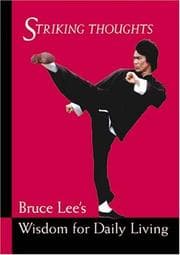
I'm reading, uh, Bruce Lee's, uh, well, it's not this particular book wasn't, isn't by Bruce Lee, but all of it is from his journals. It's called "Striking Thoughts." It's a, it's a great book if you're interested in that kind of stuff. And, uh, in there, um, basically this guy took all Bruce Lee's journals and pulled out these segments and kind of compartmentalized them into, uh, into areas. So like goals, uh, his movie ca- you know, and, and as he was journaling out all these thoughts.
And one of the things that, that Bruce Lee wrote down, which I thought... And, and I'm, Bruce Lee's, uh, I, I've been fascinated with a few different characters recently. Um, uh, Kobe Bryant is one, Bruce Lee's another. A couple other individuals who just, for some reason their mentalities are really resonating with me right now. But, but this, Bruce Lee wrote down in his journal, um, the, "The usefulness of the cup is that it's empty."
And like, it took me a second to think about that. And then actually I kept reading and I, I, I underlined it and I was like, "Ah, it's interesting. There's something there. I'm not really sure." And then he went into a little depth, deeper in, in another entry in which he said, you know, um, uh, the use, we, "The cup, the cup is only useful if it's empty."
And the re- and then he, and he goes on to explain that, that when you really think about it, if we approach a situation, if I were to come to this interview and I was like, "You know what? I've read Marx's, I've read, I've at least watched a couple of his videos, I've read his website. I know everything he knows." What's the usefulness of the conversation? What's the usefulness of the connection to you, right?
And, and his point as he articulates it, I'm not gonna try to do it directly because I'm gonna do it disjus- uh, uh, disservice, was essentially in, in all areas of our life and in all situations in our life, if we can show up empty, then we become a useful vessel because now I can hear everything you say. I can listen to the way you say it. I can take it in. I can, I can marinate on it. I can fill up on your ideas and extract the real value from them.
And I feel like too often, I feel like too often we approach situations as if we already have the answers. Mm-hmm. And, and that almost every, almost every time I truly regret a decision is when I didn't approach it empty, I approached it full. Um, one, does that resonate with you? And two, you know, when you s- when you talk about ego, um, how do we empty ourselves?
Like, if we do find ourselves in these places, right? And this is where I'm really like someone who, who, you know, who has had struggles with ego, myself included, you know, I've, you know, had the same things. Um, how do you empty? When you find yourself in that mode and you catch yourself and you're like, "Oh, I'm, I'm coming from a place of ego," how do you start to today, h- how do you start to dissipate that? How do you start to let that go?
How do you start to, you know, allow yourself to come back to a, to a balanced place? So I live by this saying: the human mind can do a lot of things, but the human mind can't do everything. And once you understand that, that's when you can come into a situation or come into an event or come into an interaction and not try to have a predisposed thought of how it's going to go. So like me, when I interview people, I know who they are and I have an idea of what they do. But other than that, I don't do research.
I don't go to their website. I don't look at their books. I don't do any of that because I'm not trying to have information that they put out that might have been at a certain time in their life- Yep ... that they might have thought had been something at that time and they might think totally differently today, right? They might have a different thought process, perspective, view. I have no idea.
So I don't want to have a preconceived notion of what someone may say, plans to say, or what I think they're gonna say based off what I've read in a bio that could be old- Mm-hmm ... in a bio that might be outdated. Even if they send it to me, they might have read what's in there. They might think totally differently today than when they had that bio written. So I tell people, "You wanna know who you're talking to, if possible, but don't go and try to get all this type of information on them based on what you see on the in- the internet. Everything you read on the internet is not factual, it's not true.
You know, some things are been outdated, you know, misunderstood, misrepresented." And when you approach people in that light and let them tell you who they are, what they're doing, what they're about, what they feel- That is how you're able to get great interaction, great conversation. Yeah. When I was a speaker starting out, I realized one of the biggest reasons, and if you're lis- if you're listening to this right now and you're in sales, please listen to this. If I was trying to sell a speaking service to a client, and I got on the phone with them, and after saying, "Hi, hello, how are you?"
And vice versa, the first thing I wanted to do was talk. Who I am, what I'm about, I'm a former NFL athlete, I speak on this, this, I've worked for this company. Now, of course, I haven't been paid at the time, but I think that wasn't really important. But I was just out there trying to rush, rush, rush and get my stuff out. I felt whoever talked first in the process was going to win.
And in reality, whoever listens first and then responds- What's up, guys? Sorry to take you away from the episode, but as you know, we do not run ads on this show, and in exchange for that, I need your help. If you're loving this episode, if you enjoy this podcast, whether you're watching on YouTube or you're listening on your favorite podcast platform, I would love for you to subscribe, share, comment if you're on YouTube, leave a rating review if you're on Spotify or Apple iTunes, et cetera. This helps the show grow. It helps me bring more guests in.
We have a tremendous lineup of people coming in, uh, men and women who've done incredible things, sharing their stories around peak performance, leadership, growth, sales, the things that are gonna help you, uh, grow as a person and grow your business. But they all check out comments, ratings, reviews. They check out all this information before they come on. So as I reach out to more and more people and wanna bring them in and share their stories with you, I need your help. Share the show, subscribe if you're not subscribed, and I'd love for you to leave a comment about the show, 'cause I read all the comments, or if you're on Apple or Spotify, leave a rating review of this show.
I love you for listening to this show, and I hope you enjoy listening as much as I do creating the show for you. All right, I'm out of here. Peace. Let's get back to the episode. After that is going to win.
So when I talk to clients today, it's not about the Marcus Ogden story. It's not about what I feel I can bring to the table. It's about what do you need me to bring to the table? You're inviting me to dinner, fantastic. I'm not gonna show up to your, to your house with what I feel I need to have to be welcomed.
I'm not gonna go and cook a, a, you know, a steak or, or a roast or, uh, you know, burgers, and the next thing you say, "Well, well, I'm a vegetarian." Ooh. Well, I'm not gonna go and, like, make a bunch of sides or, you know, and everything. You, "Oh, Mar- sides are already done. We're good to go.
Don't need this." "Ooh, my bad." So what I say to people is ask, what do they need? So if I'm going to dinner at your hou- I'm gonna ask you, "What can I bring? Can I bring this?
Can I bring that?" And when you tell me what to bring, that's what I'm going to bring. Just like in sales, just like in interaction. You're not gonna tell somebody what they need before they tell you what they need, 'cause then you're, you're, you're hitting a, you're trying to swing a haymaker, and if you connect, it's a grand slam. Awesome.
But if you miss, you strike out. More times than not, in business, in sales, in conversation, you strike out when you try to come to a meeting or an interaction with a preconceived thought, with a notion, with a solution, without even hearing the problem. So again, a way to really help to knock the ego down is not try to think about what you think somebody's going to say. Ask them the question, then shut up, and then let them say what they need to say. Oh my gosh, dude, I, I...
One, I love, uh, the person that listens first wins. I think you're completely right. I, I love that. And it- it's funny, our, the sales process that I developed at my former business, um, was considered, you know, it was, it was very different than the common insurance sales process. And what we would do is literally the person would get on the phone, and what I would teach my people is you say one simple thing.
"Hey, h- you know, hey, how are you? Thank you for your interest in our company. What's going on? How can I help?" And then you sh- and then you shut up.
And dude, this is the har- this was, like, the hardest... All the other aspects of the sales process, people would pick up, no problem. This part was the hardest part to train people on because, to your point, I feel like w- we, we just wanna barf all our amazing characteristics and experience and knowledge and I saw you do this, and that's why you need to... And I'm just like, "No, no, you have no idea." Like, like, just be quiet.
Like, just l- you know, just be quiet. Like, literally, if you gotta be five minutes on the phone in silence, be five minutes on the phone in silence, 'cause eventually they're gonna talk, and then you'll start to understand. And dude, it was so hard. Wh- why, I, I, I think you're 100% right, and I love, I've, you know, I've never heard it put that way, and I love that. Like, why, why do you think, like, taking it kind of to the second level, why do you think this listening first idea is, is so difficult?
Like, 'cause it is a difficult concept. Yeah. I think it's fair to say that. Do you think, one, do you think it's fair that it's difficult? And two, why do you think it's difficult?
Y- it's extremely difficult. Let me ask you a question, Ryan. They have a speech class in high school and college, right? They have a debate team. You get on debate team, things like that, right?
You know, all that kind of stuff, right? We have a communications class. We have a, you know, how to speak to people class. We have all these things in high school, in college. And if you c- people can get full scholarships to go to Ivy League schools for being on the debate team.
Like, that's truly what it, that's- That's facts. Is there a listening class? Hmm. Is there a how to let someone speak first class? Is there a learning how to do proper etiquette and say your name and then ask someone, "How can I help you?" class?
No, there isn't. So because our society, our culture has trained us to communicate all the time, talk, speech, debate, you know, ask quest- you know, you know, you know, just like say things, tell people who we are, you know, ask them a question, really knowing that we want to just go ahead and say, "Well, who, what we got to, to, to bring to the table," all these things, that's what you create. You create people that are going to wanna talk first, and society has taught them going, again, going through high school, and if you do it into college, right, you know, has taught them communication, speech, debate is awesome. And the problem is, it is awesome if you're trying to earn a grade. It's not awesome if you're actually trying to be in the business world and actually do well when it comes to sales.
Mm. Right? So we're getting taught at a young age, and I, I, I went through, you know, speech class, debate class in high school. I took communications and speech, uh, you know, in college. I mean, even like languages, Spanish, French, Greek, you know, you name it, we're taught to what?
Talk in what? Different languages. Nobody's telling us how to listen to people in different ways non-verbally and get cultural experiences to learn how to actually bring value to people. We're all about the talk, talk, talk. Yes, you need to talk to be able to get people to know what you're wanting to do for them, but it's not everything.
It is the second part of the process. The first part is the listening. Ryan, when you talked about your job in October you were telling me about, I didn't say, "Oh, man, you got a job at... Great! Well, you know, I'm a former NFL athlete and, you know, I can talk about this and I can do that and I can do s-" No.
I said, "Yo, Ryan, tell me about your event. Who's gonna be there? What's the theme? What do they need? What do you think their problem is?
Okay, mindset. Okay, getting out of their own way. Okay, overcoming obstacles." Well, I can talk about things like resiliency, mindset shift. I can talk about perseverance.
I can talk about my acronym MINDSET. I can talk about how you have to have, you know, you have to have that whole process of visualizing, vocalizing, vote vicinity to get to victory, which you need to have to do what? Be successful in rolling out through that process. I said, "Well, wow, vulnerability creates connectivity. We can talk about that."
So I let you talk first, and then I told you after that what I could bring to the table. If I was would've barfed on you what I thought you needed to hear, you'd be like, "Marcus, thanks a lot, man. Um, gee, Mick, well, why'd you bring me this guy?" Yeah. "Like, here's a guy that just wants to tell me all about himself."
Right? Yeah. And that's not who I am. And if you're listening, that is the key to winning in business. Yeah.
Active listening. You don't have to flex by speaking. Flexing needs to be done by listening. But we don't teach people that, and so that's why they struggle. L- let me...
I'm, I'm kinda thinking on the fly here, and let me, let me hit you with something and you, you tell me, you react to this. So, um, unfortunately with social media, with the way our politics is done, with the way our news is delivered, e- even the conversations they have on, like, financial channels like CNBC and whatever, it is just short sound bites, everyone yelling over the top of each other, and you, by the end you're not even sure who said what and what was really said, and it's like everyone just trying to get their, their one little clip in that then they can take and throw on social media and blast everyone over the head with that. Okay, and that, and that just is this reinforcement of talking, talking fast, talking over the top of each other. Then you have this counter movement of just incredibly successful, incredibly large and growing, uh, uh, independent media outlets like Lex Fridman's podcast, like Chris Williamson's podcast, like Joe Rogan's podcast. Even, you know, and, and Mick's is growing like crazy, our, our, our good buddy, you right?
And he's kinda cut from the same mold in the way he does it, and it is this long form, like, I ask you a question, I let you go as long as you want, then, then I, and I listen to you, I take it in, I follow up with a question. I let you go as long as you can go 'cause you're, you're the, you're the star, right? You're the guest. And then it is this, this... And, and these are growing at a pace that...
So I guess my, I guess where my question is, we have this one version which seems to be dying, which is this talk over the top of you, who gets the last word, who says the fastest, most, you know, kinda biting, cheeky thing, versus this long form, deep, engaging, you know, and, and kinda Rogan kind of started this with he'll ask a one-sentence question and let his guest talk for a half hour before he speaks again. Like, do you think our, what we really desire as humans is that more listening, uh, non-confrontational manner of having deeper conversations and that's why people are gravitating towards what you're describing? Or, you know, uh, does that make sense? Like I just, that kinda... As you were talking, that kinda thought came to me is like, why, you know, people always ask why are these long-form podcasts and, and long-form conversation formats doing so much better and growing so much faster than traditional?
And to me, what you just described, and I had never had this thought before, this hit me while you were talking, is that s- could be one of the defining characteristics between the two is that the host actually listens to the guest and doesn't try to talk over the top of them. They actually give them this format to go as long as they want.That's exactly what we do. Now, of course, because we're just starting out, well, no we're not just starting out, we've been out for almost, for about 21 months, so closing in on two years, right? It'll be June 22nd it'll be two years. But we're half an hour, but as Mick made me aware, and I, and I realize it, but it's so nice to hear a person that loves our show say it, I don't talk over people.
I don't. I, I, I don't. And I'm all about the guest allowing themselves to speak, be heard, and promote themselves, authenticity, their brand, what they're doing. You name it, I'm all about it. And because of that, this is where it comes in, I feel, to our podcast having so much success, right?
Just like Mick's, just like yours, just like Joe Rogan's, right? But again, sometimes people put on podcasts and they interview people, and they want to talk about anything and everything that's about their life when a guest says something. And here's the thing, this is not a podcast about you. Yes, it's your podcast, but it's not about you. If you want a podcast about you, have a podcast, no guest, you sit there and talk, go monologue, go ahead and do it to your heart's content.
But I'm probably going to tell you at some point sooner than later, you're gonna lose a lot of listeners. Why? I, I mean, how much can we talk about ourselves all the time? Yeah. Like, yo, I mean, we put out what, 300 shows we've done?
If I talk about myself for 300 shows, what kind of people will be listening? People who are just like... Nobody. Yeah. Nobody would listen.
Nobody would listen. So podcasting and business are very synonymous in which it's all about listening, it's all about hearing people, it's all about recapping what they said, asking another question that leads down the path, going somewhere, and that's business. Right, Ryan? That's business. And that's how people...
And we've worked for a lot of companies, a lot of people, insurance, finance, uh, construction. Like, you name it, we've done it. And at the end of the day, right, Ryan, everybody we worked for says, "Marcus, you listen well, you fit our theme well, you crushed it, the people loved you. You know, you fit in well, you blended your story to what we needed to hear. You were listening to what we said in the pre-con call, you were listening to what we said when we met the night before, you were listening to what we said right before we had our final walkthrough."
And again, right, Ryan, it's hard to keep people engaged for 60 or 90 minutes if you do not understand how to connect with people. And again, goes back to vulnerability creates connectivity. The more vulnerable you are with people, the more honest you are with people, the more authentic you are with people, right? Like you talk about, you know, finding your peak in your, we talk about peak in your, your podcast. Getting to the peak, getting to the top, it's not about what you say about yourself, it's about what others say.
Mm. You will never reach peak in anything if the only person that loves you is you. 100%. Dude, you're- you couldn't be more on the mark. So, um, I wanna shift gears just a little bit and I wanna talk about y- you've, i- you know, and I, and I want, I wanna push people to your podcast, to, to your properties to hear the, the in-depth parts of your stories.
I want them to go deeper and so I'm not gonna, I don't want you to just retell the same story you've told in other places. And, and, uh, I know you just did an episode with Mick, that's another great place to get information, and, and, uh, you know, Mick's one of my best buddies in the whole world, so anytime I can push people to his podcast, I always wanna do that. Um, so, so that being said, you had two big drops that, you know, maybe not, those aren't the only ones, but you had two big ones, right? Coming out of your NFL career, coming out of your construction company. My question to you is w- why did you keep going?
Mm. Why, why not, why not just screw it? The universe is out to get me. God didn't make me the type of person who could ba, ba, bop. You know, why, why did you not s- it's very easy to go down the dark path.
You obviously chose to pick yourself back up in both moments and keep pushing forward, and now are in this amazing place that you're in today. How did you do that? I did that by turning one V, which was a victim mindset, to a victor mindset. Mm. And what I realized is, is that if I'm gonna get out of this, I have to pull myself up by the bootstraps.
I gotta put my big boy pants on, I gotta put my belt on, I gotta put my tool belt on, I gotta put my jacket on, my heart, and I gotta work. And that's when it took me to get out of that hole, the rock bottom moment, as a custodian. And at that moment, I said, "Okay, Marcus, you're always thinking about..." You know what I call it? If anybody that loves this show or knows of this show, I call it the Al Bundy syndrome.
Where I constantly was saying I was a great... Now Al says, "I was, I was Polk High's, you know, most valuable player. Four touchdowns in one game." Yeah, yeah. But I was always in the past with Al.
Well, that's what I was before that rock bottom moment. I was a great NFL athlete. I was a great, successful CEO. I was a eight figure a year business owner. I was making seven figures a year.
But when I was saying that in, wow, you know, April, May, June, July, August, September of 2013, it wasn't my reality. I heard this on a podcast and I loved it, right? You can't worry about the past, it's gone. You can't be anxious about the future, it's not here yet. You gotta live in the here and now.
And when I was going through what I was going through, I was constantly living in the past. Mm. Constantly. And I was afraid of what was gonna happen next because I hadn't had any success. And instead of that, focusing on the right here, right now, I wasn't doing that.
And once I had the rock bottom moment- In September 2013, then I went from a victim mindset to a victor mindset, and at that moment I said, "I gotta charge for it no matter if I fail, win, succeed, don't, whatever. I gotta at least try. If I don't try, I'm gonna always be just that, losing at every way in life." So I said, "Enough is enough," and I said, "Let's get going, and even if you don't go anywhere, at least try." And it took me a while to get there.
If you're listening, I didn't get a paid speaking job for two and a half years. Not one, two and a half years. So if you're listening, understand it's not gonna come overnight. It's not gonna come easy, but the minute you go from victim to victor mindset and you have a strong mindset shift, anything and everything is possible. Where did you get that from?
A book? A mentor? Did it come to you from God? Where, where- how do you... Did it just manifest in your mind?
Like, what, where did that come from? I remember what Jack Del Rio told us when I was a 22-year-old rookie. "If you wanna be successful and fulfilled in life, you have to be your own CEO." Jack said, "If you sit around and wait for us to tell you when to get to the stadium, what to do, how to do it, all these things, you will not be in the NFL or at least on the Jaguars for long." And I took that and I remembered that at that moment.
It's like he was speaking to me again when I was a 22-year-old rookie in the meeting room down in Duval County at Jacksonville Jaguar Stadium. And when I remembered what Jack said combined with that real moment of saying, "Wow, I put myself here. Nobody else," once those came into my mind and once I got a picture of I need to change me and remember what Coach Del Rio said, that's when things got better. Hmm. It's pretty amazing how moments in your life can hit you, and in the moment it just kind of passes you by, right?
Like, maybe in the moment you're, you, you maybe you took that in, you know, "Hey, that's, yeah, I get that," but you're 22. You know what I mean? You're like, "I wanna go out there and freaking hit somebody. Let's go. Let's get our pads on and let's go.
Like, I, I'm, I'm good with this philosophical stuff." And then, you know, you, you... but for some reason it sticks in your brain, you know? You, it, and, and, and, you know, you obviously had the ability to pull that back out and, and I think this goes all the way back to the teaching part and it's, it's, it's why I love doing these podcasts. I've-- these podcasts feel selfish to me because I, I get the opportunity to talk to guys like you, to, to gals, guys and gals who know so much, who've had so many experiences and, and you get just you have all this sinking in and, and, um, you know, I'm interested in now that you are a speaker, and I think speakers, the best speakers and, and you know, and I obviously put this in you in this category are, are, are teachers, right? You're not, you're not up there pontificating or preaching.
You're, you're, you're sharing. You're, you're, you're, you're giving people ideas, concepts. You've all these great acronyms and sayings you've come up with that help people categorize information in their brains. Wonderful. Absolutely wonderful.
As you've gone through that process, w- what have been some of the core ideas that came to you that maybe you didn't, you didn't necessarily see coming? Things, things that started to have meaning or recurring ideas that kept coming back to you that maybe you didn't plan for, but, but through the process of teaching, you found yourself really grabbing onto and, and becoming core aspects of, of, of your practice as a professional speaker and, and as, as you operate your life. So really and truly, I started to really pull stories from my life, like the NFL, business, upbringing, and the more I did that over time, the more I saw an impact being made in the first half of my keynotes and in the coaching and the consulting, and then moving into the next phase. And then what I really started to lean on then after that, becoming that, like you said, that instructor with the action steps. When I started in the sp- in the space, I was always just up there trying to motivate, and then I became an inspirational speaker through better storytelling that connected with themes of our clients much stronger, with action steps that were aligned with our clients' values and what they wanted much better.
And I got better at the storytelling to really match what the themes were, and I got better at bringing the value through the action steps that aligned much better with the clients. That's when things took off. And I didn't realize how valuable that was until I got taught that by a client that I spoke for in New York City, and she told me, "Marcus, if you wanna be a big time, big pay keynote speaker, 10, 20, 30,000 and above, you have to do three things. You have to have great stage presence, you have to engage your audience, and you have to educate your audience. If you don't do those three things as a speaker, you will never reach the top dollar."
Best advice I ever got is about, it was about six years ago, and ever since then, we really worked towards that, and it's really changed us from a average, middle-of-the-road speaker to where we're at now, getting booked lar- I'm, I'm heading to Cabo Friday for a big job. My client or our client's 1,000-mile travel. Their, their big sponsors and clients who we were all who, who approve kind of us working through the whole conference is United Airlines, Carnival Cruise, and, um- SBRE Technology. So I'm doing that, and then I just got booked for a big job in April down in Atlanta for High Speed Alliance Real Estate. I got, we got booked for a huge consulting contract with Fairway Mortgage.
They're a top 10 mortgage company in the United States. We're gonna go to Boston, Baltimore twice, and then we're gonna be here in Raleigh. So working with Living Bank in Houston in October, looking to work with you in October. You know, we're getting some great, doing some great things coming up with Mick and what he's got going on. But we've learned to remove what we really think matters, and we bring to the table what we know the clients know truly matters.
I love that. So, um, I wanna be cognizant of our audience's time and, and yours as well. I would be remiss, uh, if I didn't, uh, mention the fact that you were a Buffalo Bill, 2005 to 2007. Uh, Buffalo Bills are the greatest team in the history of the NFL by far, certainly the best uniforms. Um, and I am highly, highly appreciative, and guys, I just, I'm gonna, I'm gonna just say this.
Take it, Marcus. I know it probably makes you uncomfortable, but, uh, Marcus sent me a, a football signed, uh, Bills Mafia. Awesome. I get it home. My boys love it, and he goes, "Wait, you have two boys at home?"
And I said, "Yeah." And he goes, "Are they Bills fans?" He, so he sent me two more footballs, and now me and my boys have footballs. Amazing, thoughtful. I did a post on LinkedIn about it just 'cause I, I said this is the things that don't scale, that turn, you know, people from, from liking your work into lifelong fans.
And, you know, not, you know, we're getting to know each other and I, and I love that, but it just, it's a whole nother level of experience and I, and I think it's wonderful. That's great. I had to say that because I think you're a quality person, I want people to know. Um, but I, I have one football question. Sure.
Just one football question, and I don't wanna spend too much time on it, but, um, I have one football question. Uh, is... So, so I've, I've heard from, uh, other people, uh, that I've talked to, um, uh, that Ralph Wilson, now Highmark Stadium, really is a home field advantage, that it really is a, a tough place to play. What is the truth to that? Uh, I've been on the field as a, like pre-game, I've been able to be out on the field and watch, watch you guys warm up.
I tell you, the first thing I noticed was, you know, so I played, I played high school football and for a, you know, a mid-size upstate New York school, I'd like to believe I was pretty good. But, um, but as a fairly small, you know, narrow-shouldered dude, you know, playing middle linebacker, whatever, you know, I'm pretty small. I'm standing out there. I'm s- I'm 6'4". All of a sudden I see the offensive line and the defensive linemen come out, and I was like, "This is why high school football players do not become NFL players."
Look at the size of these guys. Okay. That, that's a side story. But, so, uh, I've, I've heard from other guys that I've interviewed and, and just people that I've met over the course of my career speaking, et cetera, run into who've played in the NFL that, that, that Highmark Stadium, Ralph Wilson Stadium at the time, uh, is truly a competitive advantage for the Bills just 'cause it's a tough place to play. What makes it a tough place to play?
What is it about that atmosphere? Obviously with, in the Josh Allen, in now in the Josh Allen years, it has a whole new energy and I'm, I'm, you know, as a Bills fan, very thankful to, you know, having lived through the four years of, uh, of wide right, you know, as a kid, now getting as an adult to experience some success again is wonderful. But like, what is it about that place? What is it about the fans, the energy? It does feel different, and a lot of people have mentioned that.
What, what is it from a player's perspective that makes that atmosphere, uh, different from others that you've played in? Bills Mafia loves the Buffalo Bills no matter win, lose, or draw. And when you have fans that are truly die hard and not fair weather, fans that will always scream and cheer and be loud for the Bills, no matter if they're up a lot, down a lot, tied, it doesn't matter. And when you have that atmosphere as a incoming player to the team, to that field, to that environment, you know you're gonna be in for a loud day, especially when you're playing offense and you're trying to hear the cadence, you're trying to hear the count, you're trying to really get locked into your job and to in focus. It causes a lot of problems.
It causes a lot of hearing issues, it causes a lot of psychological issues at times, too, because you know that you're facing, uh, basically the, a 12th man, right? They say this is, that in Seattle, that's 'cause the elevation. The fans in Seattle have nothing on the Bills 'cause again, the Bills went through, what? Four years of going and losing, and those fans, they, I mean, I mean, yes, they black out, unfortunately, for a long time, but the fans kept coming and kept appearing. And, and here's the thing, too.
It gets cold in Buffalo in the second half of the season, and that is another big factor. Teams like Miami, uh, you know, teams like Tampa, Jacksonville, you know, even the Titans, and when you're playing like, you know, the Rams, the Chargers, you know, when you know, the, you know, the Raiders, if you're an indoor team, you know, like, uh, you know, Minnesota or these thing places, you gotta come play in that cold, cold weather, right? So that's another factor that ties in. So between the, the, the, the weather atmosphere, between the fans just never, ever not being Bills Mafia oriented, it's just a really tough place to play. Yeah.
La- last question for you that, uh, sports related and I wanna wrap up. Um, I talk to a lot of as a, as a dad who has boys and are playing sports- Mm-hmm ... and this goes for if you have daughters, too, who play sports, um, there's a big debate at, you know, my kids are 10 and 8, around the specializing versus playing a bunch of sports. Where, where as someone who obviously you made it to the pros in your sport, did you play other sports? Do you believe in the, the non-specialization, you know, playing, playing basketball and soccer or, you know, having other things going? Like where do you fall in that?
What, what do you, what advice do you have for a, a parent who has a son or daughter who's playing sports and maybe is dealing with this right now? The more sports you play- I feel gets you better conditioned for the sport that you wanna play. And doing other things, like I played basketball for a couple of years growing up, 12 and under, then middle school. I was not gonna be a basketball player in high school, but my dad said, "Play basketball for the running, for the footwork, for the agility, for learning how to play with teams." Because I wasn't allowed to play football in seventh and eighth grade because St.
John's didn't have it. We didn't have that, so I needed to do something, my dad said, to get me ready but for playing with others, teamwork, collaboration, you know, agility, pushing through adversity. So I love people playing more sports, right? My daughter, who's nine, she plays basketball, she plays volleyball, she plays soccer, and she loves it. Yeah.
And she's very athletic. She does that, and she does a great job. And so again, my nephew, I know he played football. He played a little bit of basketball. Uh, he did a little bit of track, if I'm not mistaken.
I also wrestled, uh, when I was in high school and did track as well. So all those sports, in my opinion, got me ready to play my premier sport, which was football. Love it. My man, I, I, I appreciate your time so much. I'm looking forward to working together.
Um, I, I'm gonna say one more thing, guys. If you, you know, obviously very selfishly I'm working to get, uh, Marques into my event, but, uh, if you, if you are listening to this and you have an event or you sit on a board of an event, um, this is an incredible speaker who has not made his way through the insurance industry yet, and having him at your event, I'm telling you, is gonna be a defining factor on whether people come back in years in the future. I think that, um, as a, as a keystone, as a keynote and cornerstone of a conference, uh, I, I couldn't recommend Marques' work enough, and I hope that if you're listening and you do have an event in the industry, uh, you'll reach out. So, so if, if people either wanna look to your speaking to hire you and find out more or they just wanna follow your work and connect with you, where are the places that people should go? I- We'll have them all linked up in the show notes for the episode, but just so people can hear it.
Yeah, absolutely, Ryan. So we have an app. It's called the Marques Ogden app, M-A-R-Q-U-E-S O-G-D-E-N. That's gonna be our app. If you have an Apple phone or an Android, you go to your app store, type it in, boom, you can download it.
You can go to our website, www.marquesogden.com. You can go to our link, which is Marques, um... Sorry, we g- we got that, got that regard. So you can also go to, uh, our link, which is marques360.com, and/or you can just shoot me an email, marques@marquesogden.com. So again, we have our app.
If you have an Apple phone or an Android, you can just download that right away. You can connect with us. You can go to our website from there, follow our podcast, and get our free exclusive content there. You can just go to our website, marquesogden.com. You can go to our link, marques360.com, or you can shoot me an email at marques@marquesogden.com.
My man, I appreciate it so much. I wish you nothing but the best, and, uh, look forward to working together in the future. Look forward to it, man. Thanks for having me on. It was awesome.
Close twice as many deals by this time next week. Sound impossible? It's not. With the One Call Close system, you'll stop chasing leads and start closing deals in one call. This is the exact method we used to close 1,200 clients in under three years during the pandemic.
No fluff, no endless follow-ups, just results fast. Based in behavioral psychology and battle-tested, the One Call Close system eliminates excuses and gets the prospect saying yes more than you ever thought possible. If you're ready to stop losing opportunities and start winning, visit masteroftheclose.com. That's masteroftheclose.com. Do it today.
Happy holidays. Want to give your host a gift? Consider subscribing, rating, and reviewing the show this holiday season. It really helps the show grow. From all of us at Believe, have a merry Christmas, everyone, and a happy holiday.
If you liked the show, please take a moment to rate, review, and subscribe. It really does help the show to grow. Thank you for listening.