Did you know that driving under the influence of marijuana is illegal? Driving high will get you a DUI. And if you're wondering if law enforcement can tell you're driving high, well, everyone else can. Friends. I can tell you drove high.
Parents. I can tell when you drive high. Relatives. I can tell. You drove here high, didn't you?
So what makes you think law enforcement can't? I can tell. If you feel different, you drive different. Drive high, get a DUI. Paid for by NHTSA.
Your wife, your family, your friends are not going to respect you until you can master yourself, until you've instilled self-discipline. Self-mastery is number one. You can't lead your family until you can lead yourself. They're just not going to take you seriously. But through example of yourself, then you can turn around and lead your family.
So then phase two is leading your family, rebuilding the relationship with your wife, whether there's resentment, whatever it may be, and then kind of going from that to your finances. And like, well, Nick, I can work on my finances now. Well, no, because you don't have the discipline to put the cookie down. You're not going to be able to have the discipline to save and invest and make smart choices with your money. Dude, incredibly excited to have you on the show.
I think your story is incredible and really what you're doing to help people, especially I think men in particular, although I think your story resonates regardless. I'd love for you to dig, and we don't have to do the full download because I really want to get into some kind of, I want to talk about some topics that I think are really relevant, but just like the backstory a little bit and kind of how you got to the book. That's because the topics in your book are where I want to spend time because I personally and very selfishly have some questions for my own life as well as I know a lot of people who listen to the show are dealing with some of the things that you address and I want to give them some tactical takeaways. So give us that a little bit of the tour on how you got to the topics that ultimately became your book. Yeah.
And before that, I want to kind of hit on what you said before we started recording was like these men are white knuckling through their life. And man, that's what, and it's funny, I've used that term myself on podcast and with talking to guys and it breaks my heart to watch guys and they are like good dudes are just holding on for dear life, trying to keep things together with their families, their life themselves. And they're just white knuckling through life and it doesn't have to be that way. But yeah, the book, obviously it originated through my own story of leaving special operations. I left Marine Special Operations Command in 2012 after 12 years and thought I had it all figured out, thought I had me figured out.
And it was like, this was the culmination of like the next thing that was just going to be freaking amazing. Right. And it was anything, I mean, I guess it was to some extent, but it was really anything. It was a colossal, just really meltdown of life. And it seemed like every time I turned around, it just got worse once I left.
So that's where it started. It started at the story of me transitioning from the military. And then where it went was I, a couple of years later, I started working with a nonprofit called Gallant Few helping, well, I was helping veterans. I was helping guys in my unit doing some networking, going on some trips, trying to, because they were transitioning out too. Because in 2012, things drastically shifted in the global war on terror.
So a lot of guys that were really active in that fight started to kind of cycle out. Things, deployment started to slow down. Politically, things started to shift and change. And so guys kind of started cycling out of the military and especially special operations. And so they started coming to me and I was already contracting.
I had done really well networking. So all the business professional side appeared to look like it was going really well. Meanwhile, my life was falling apart on the inside. But so I started working with these guys trying to network them and get them jobs and this and that based off what I've done. And I met a guy named Carl Munger, who was the executive director of Gallant Few.
And he goes, hey, man. And I was doing this on my own dime. We were pulling money together. I was just figuring it out. And he goes, hey, what you're doing is nonprofit work, veteran service work.
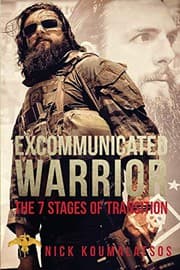
You need to get organized so that you can scale this and help more veterans. So that's what we did. We created a project called the Raider Project. And me and a teammate kind of worked with help guys transition. So it turned into the excommunicated warriors or actually the seven stages of transition portion of it really became a keynote, was actually a keynote that I was giving.
And it was a thing that I had seen in guys that it was this cycle of these stages that these guys go through. And the ones that are successful make it all the way through the seventh stage. Right. And then there's a lot of guys, unfortunately, that don't make it through. They get kind of stuck in stage five, that sink or swim area, and they kind of sink.
Or they just build a house. And as my good friend Kirk Weiser says, they just build a house in that misery and they just, you know, they pitch a tent there and they start reinforcing the walls and they just stay in that area. And so it became a keynote. But as I was giving or traveling around talking with veterans and giving these giving this story, I started to realize that it wasn't really a veteran issue. It was a human being issue.
It was an issue of identity. It was an issue of being afraid to turn the page. And so guys would get, you know, guys and women, you know, it was crazy sports athletes. And I wrote that in the book. You know, you, you take the kid who's played, like, little league football since he was four years old, peewee football, uh, and he played middle school, uh, you know, elementary, middle school, high school, college, gets drafted for the NFL or pros or semi-pros or whatever, and he's 23 years old and blows his knee out- knee out.
This guy doesn't know anything other than being a footballer, and now he can't do that thing at- anymore. He can't be that, he can't be that thing anymore at the ripe old age of 23. I mean, how do you think that plays out? It, it plays out really negatively, um, because that's all that that person knows. It's a...
And then law enforcement, uh, fire service, any first responder, medical community. And you know what's even crazier? Stay-at-home moms, career stay-at-home moms. They, they dedicate 20-plus years to raising kids, and then what do we do when we grow up and we turn 18, 20 years old? We bail with little to no thank you.
You know what I mean? It's just like- You get a hug at graduation, and they're gone. Yeah. Yeah. It's, it's the most, it's the most unfulfilling job ever, right?
So this, this woman dedicates her life to, you know, raising her kids a- a- honorably so, right? I, I... My hat's off to those women out there that do that. Um, but then it's done, and it, and it becomes part of their identity as well, and then they have the whole empty n- like, what, like, "I've just dedicated two decades to, to this, and now they don't need me anymore," which they do in different capacities. But nonetheless, that's part of their identity.
And, and so women would read this story or hear the keynote and, uh, and, and, and just resonate heavily with it, um, uh, everyone across the board. And that's when I started to realize, I'm like, "Oh, this is not a veteran issue. This is just a human being life thing. This is just something that happens." Uh, we have different stages and chapters of our life, and sometimes we get stuck in one, thinking that that might be the best chapter of our life.
So instead of turning the page and start writing the next chapter, we kinda just get stuck, and we spin our wheels in this thing without actually having the courage to start writing the next one. And what's sad is the next one might be the very best chapter of your life, and you're waiting to start it. Yeah. You know, I... And I think it goes, y- you don't have to hit, and as you, as you described, again, with, with stay-at-home moms, and you, you don't necessarily have to hit pros or, or, or be in the military, whatever.
You know, I, I felt this even... You know, I played college baseball, um, that... You know, baseball... Football was most of my identity, and then I got hurt playing football my senior year, and I tr- was lucky to transition to baseball and, and able to, uh, uh, make a college team. And but sports were always my thing, right?
Yeah. Like, it was- Yeah. I wasn't, unfortunately I, I wasn't fast enough to, to make it, uh, anywhere, uh, sports-wise, um, or probably talented enough. But, uh, good enough to get to college, right? But it was always my identity.
Yeah. It was always what I cared about. It's who you were. Picked my- Yeah ... I picked my major based on the, you know, my abi- you know, its ability to facilitate me, you know, practicing and all this different stuff.
And then all of a sudden, you graduate from co- and it's over. Yeah. And you're just like- Mm-hmm ... "Okay, who the hell am I now?" Right?
And the, there's al- there's, like, micro moments of this, and then there's these big, huge moments that happen. And the reason that I brought up, uh, you know, kinda before we, we went live that the idea of white-knuckling is, you know, I think in my, even in my own life the last few years, and I've shared a little bit on the show, uh, in the past, like, I've had some events that have kinda shaken, you know, my... You know, I thought, like, "Hey, like, I, I w- I read, hard worker, keep myself fit, healthy, like, try to be a good person, like, believe in God." I have a very strong relationship, uh, with, with Creator, God. You know, I'm a Christian, uh, raised Catholic.
And, uh, you know, I was like, "Man, I, I, for the most part, I, I, I'm doing good." You know what I mean? Like, I, as I explained, I came from a town of 900 and kind of, I remember at 12 looking around that town going, "I gotta get the fuck outta here." Like, like- Yeah ... every male role model is either an alcoholic or a drug addict or a criminal, and, like, it just was n- going nowhere. And I was like, "Man, I pulled myself out of that."
Like, look, first, first member of my entire family to go to college, all this stuff. Like, oh, I'm doing great. Mm. And then, you know, here I am in my early 40s and I'm looking around and I'm like, "Wow, I've, I'm kinda, like, fucked this up. Like, I, I'm not, I'm not, like, in a great spot here mentally."
Yeah. And even though... And this is where I wanna, this is, this is where this question is going. You said something that, like, that really hit me. I was able to maintain the appearance that everything was great, that I was doing great, that I was fine, that, you know, we're, we're, I'm good.
But behind the scenes, it literally felt like I was holding on for dear life. Like, at any given moment, I could take a step off the path and just fall into the abyss. Yeah. And, you know, a year out of that scenario, I feel very good today. Feel, feel like I'm working my way back, but I'm certainly not all the way back.
But I know so many people, and particularly men, but so many people, women too, that just this is what they're doing. They're, they have this fac- AI agents are everywhere, automating tasks and making decisions at machine speed. But agents make mistakes. Just one rogue agent can do big damage before you even notice. Rubrik Agent Cloud is the only platform that helps you monitor agents, set guardrails, and rewind mistakes so you can unleash agents, not risk.
Accelerate your AI transformation at rubrik.com. That's R-U-B-R-I-K.com. ... facade that they put out that like, "Hey, I'm good," you know, "You don't have to ask how I'm doing. Like, I'm all right. Like, I," you know, "I don't need your, your charity," or whatever. But behind the scenes, they're masking it with drinking or, or, you know- Yeah ... they're, they're, they're cheating on their spouse or, or doing stuff that is really self-destructive.
And, like- What, how do you work with, with that ment- like, how do we start to break that down? Like, where do you go from there? Like, taking that situation of you have this appearance, but you're behind the scenes, you're holding on for dear life, or at least it feels that way. Like, when you're talking to a guy, whe- whether it's a former team member or someone from the military, et cetera, how do you start to break that down and help that person start to crack this problem open? It's, uh, it, it just feels like so many people today are struggling with this.
Fir- first, it, it, it really comes down to do they want to fix it? Like, if at the end of the day, Ryan, if, if, if someone doesn't want change, there's nothing you can do about it. Like, it, it breaks my heart, but, like, a- and, and, and then I'll take it to the next level. You know, first they need to want the change. Two, they're have, they have to be willing to do the work to get the result.
There's a lot of people my wife and I talk to about this a lot of times. There's a lot of people out there that want the result, but not, don't wanna commit to the work that has to, to get it done. So y- you have to have both. You have to have the courage to be able to want the change, and you have to have the, the commitment to do the work, um, in order to change, right? For instance, you, you kinda brought some things up.
Um, things like anxiety, depression, anything that, that you're feeling like that, those are, those are subconscious cues that something in your life is, is, is amiss, that you're not living congruently with the things that matter most to you in your life. So if you are white-knuckling through life and you feel like this way, the, then these are the things that are like, "Hey, knock, knock. There's something wrong that you need to address." So instead of addressing it, what do we do? We turn to coping mechanisms, and you already, you already did it.
Other women, um, drugs, alcohol, you know, the, the nightly half bottle of wine or, you know, six-pack of beer or pornography or whatever it is that's gonna give you the dopamine hit that you need to make yourself feel good for a, a momentary time. Here's the problem with that. It is a, it is a black hole that you will never fill. You can... No, no amount of, no amount of pornography, no amount of chasing women, no amount of affairs, no amount of gambling, no amount of drugs, alcohol, it doesn't matter what it is, you will never satiate that portion of your appetite.
Like, that's never, "Oh, if I can j- I just need this thing to take the edge off," and then tomorrow it's again, and then the next day, and it's never gonna get better. You're never gonna fill that void. It's a, it's an abyss. Yeah. You, you, dude, not to interrupt you, but I'll tell you one of the things that caught me really off guard, right, when I was going through my, my kinda darkest moments a few years ago was, like, I think the first thing I started doing was, you know, I've, I've always had a few drinks or whatever.
A- alcoholism runs in my family, so I've always had to be very careful with that, but seemingly, you know, been able to break that. It's never caused a problem in my life. Um, and I've always kinda been, like, few drinks on a weekend or, you know, you go to a barbecue, whatever. All good. The first thing that happened was I started having a beer or two or a drink or two a day, right, to the first COVID.
Yeah. And then I, then, you know, kinda kicked in, "Hey, man, that's not good. I know that's not good for me." You know, I've spent a lot of time in fitness, uh- Just one, though, Ryan. Just one.
Yeah, yeah. Hey, it's just one. No big deal. Yeah. Okay, so I cut that back, right?
And then I was like, "Well, you know, smoking pot's not as bad for you. I'll just take a couple rips off a joint or have- Right ... an edible," right? Right. And then so I did that for a while, and I was like, "Well, I feel like shit every morning. My brain doesn't work as well when I wake up."
So not that I'm against it, you know, no pro... Hey, to each their own. It's all good, but I found for me that, okay. So then I cut that out, and it was like I literally, because I wasn't solving, as you said, solving the, the actual problem- Mm-hmm ... then all of a sudden, you know, now I'm betting on football games. And I was like, "No, that doesn't work."
Then I'm buying random shit that I don't need, that... And it's like you just cycle through all these things, and I, I, I was shocked at how, like, I always found, like, the next little, like you said, dopamine hit and, and because I wasn't solving the problem. Like, okay, I'm not drinking every night anymore, but Insta- you know, I'm buying- Yeah, and you validate, your, your brain validates the excuse, right? Yes. Yeah.
Yeah, completely. Buying random T-shirts- Yeah ... on fucking Instagram at 11:45 at night while I'm binging Netflix. You know what I mean? Like- Yeah, yeah. Right ... what are you doing?
A- and what that is is that's a, that's an amygdala hijack, right? Um- Yeah ... you know, take that back over to the simplest thing, like think about at school. You have a paper due on, you have a paper due on Friday. When do you write the paper, you know? Most people are like the last minute, Friday morning, Thursday night.
You know what I mean? Yeah. The last minute. Uh, and what the reason for that is is your brain is like, "That's hard." So when your brain's saying, "Hey, this is the actual..." like, you start identifying the issue, or maybe subconsciously you don't even know.
But your brain's like, "Don't do that because that's gonna cause pain and hurt. That's gonna be hard. So instead, go watch Netflix. Go vac- go clean out your car. Go vacuum."
And you can take this down to the most simplest task, and it's every single time your brain, you know, just kicks in ADHD mode and it's like, "Oh, I gotta go do this thing over here," or, "I gotta do this," or, "Why don't you just go do this and avoid that discomfort?" But the problem is this. This is what's, this is what, this is where the, uh, the trick fuck is. Um, if you're listening or you, you yourself, if you think about the thing that you're most proud of in your life, the most, the biggest accomplishment you have in your life, and it could be a lot. It could be several.
It could be, you know, doing a fitness show, running a marathon, doing the Spartan race, building a business, you know, making a success here, raising your kids. I don't know. Whatever it is for you. Never Never is this something that was given to you or came easily. So if the things in our life are the absolute... like the things that we're most proud of in our life are the, were the absolute most difficult to achieve, the, that required the most hard work, the most sacrifice, um, why don't we choose that every day?
Yeah. Why don't we choose the, the, the sacrifice? Why don't we choose hard? Why don't we choose the things that, that, that are difficult that we potentially could fail? If those are the things that we're most proud of in our life, why are we choosing easy over hard if h- if the hard things is what gives us the most satisfaction in our life?
You know, I, I had this moment. It was b- it was about, you know, I've... probably a little more than a year ago, sitting there, wallowing by myself, uh- Feeling sorry for yourself. Yeah, just, you know- Yeah ... 'cause I, I'm- We all, we all do it Right, yeah. And, and- Yeah ... you know, so, like, a- and it's particularly, what's interesting is that, like, it was this weird dy- you know, as, as I, I'm working through all this stuff and, and, um, you know, I didn't have my kids that night 'cause I'm, like I said, I'm divorced. And, you know, I'm sitting there, and I was like, instead of optimizing for, like, let me numb something right now- Uh-huh ...
I know what makes me feel the best, which is working out, eating the right foods. I love being creative, writing, et cetera, all these different things. I run a business. Like, why don't I just optimize for those fucking things? Like- Right.
Right ... those make me feel good, too. Right. You know what I mean? Like, big sale, you know, putting a new product out for the comp- you know, whatever the thing is. Like, those make me...
Hitting publish on a post that I'm very proud of, like- Right ... those things make me feel really... Why don't I just optimize for those and, you know, kinda started slowly working out, uh, working myself out of it. But that is not... Like, we don't, for whatever reason, like, that, that is, like a tough thought for a lot of people, right? They're like, like, it feels...
Is it because it takes longer? Like, the, is that literally what it is, is just the timeframe to feeling good? Delaying, delaying gratification. Delaying gratification. Every single thing, all of these things that you're j- you're proud of all require delayed gratification.
So, like, then we can talk about, like, if you really wanna get into it, it's like, okay, then what do I do? Yes. Like, this is where I'm sitting. I'm white-knuckling. You, and you have to take ownership of where you're at, like extreme ownership.
One, your happiness is y- is yours. Y- your spouse doesn't make you happy. Your kids don't make you happy. Your job doesn't make you happy. And happiness comes from internal.
Like, that's your decision to be happy or not. What's around you and your circumstances, like, p- you can disagree all you want, but the reality is, like, it, it's a choice. Yeah. It's a choice to be grateful that you have... There's a lot to be grateful for, and even the pe- somebody that has it really, really bad has a lot to be grateful for.
The fact that you were just one in, one in, what, one trillion or whatever, five trillion to be on this planet, to exist, like, that's a, that's a gift, right? The, the, we live in a, we live in an Earth that has infinite possibilities and, and opportunities if, if you so choose, if you believe that they're there, which they are there, but you have to believe that they're there. So one is, like, you have to take extreme ownership of, of your life and where you're at. Like, that's just, that's just it. And then this other thing that, that things are supposed to be a certain way.
Like, the, we have this society that, that, that almost dictates, like, well, things... You know, and we create these stories in our head that like, "No, I'm, I'm supposed to be this way, and my life's supposed to work out," and we have this grand plan, um, which is all bullshit, you know? And if you, like, go to school, go through grade one through 12, go to college, get a degree, you know, get a job, and then get married, have two point... 1.5 to 2.5 kids, a house and the white picket fence, pay the mortgage, the car, blah, blah, blah, and live happily ever after, that's, that's a f- somebody else's fabricated life. Yeah.
It, it is, and we fall into this trap thinking that I have to do it. And then when somebody wants to change, they're like, "Well, I can't, 'cause I have this mortgage, and I have these cars, and I have these bills." I'm like, who says you have to have all of that? It, it's, it's a facade. You're making a choice to live the way that you wanna do, and if you're not happy, well, you have the power to make that change in your life.
They're like, "I can't. I can't change my job. I've do- I've dedicated 50 year- 15 years to this profession." So? You're miserable.
Change it. Who cares? Well, then the money. Downgrade your life. Yeah.
Like, I'm all for making money. Like, I make a lot of money, and I think people should l- make a lot of money. I come from nothing. But I've also done a l- done it in a very hard, like, I've had, I've done it in a very hard way a lot of the times where I didn't need to. I was, I was my own worst enemy.
Yeah. What, uh, could you break that down a little bit? I'm interested in what you mean by that. So, like, uh, basically I came from the world that... And this is one of my limiting beliefs that I had, um, that I could achieve success.
I come from nothing. Grew up in, you know, like trailer, trailers and Section 8 housing and just poor, man. We were poor. No dad in the house, you know, abusive stepfather for six years until that blew up, you know, um, one night. So, like, literally come from nothing, you know?
And then I, I built everything myself. Not, I mean, I can't say I built myself. I've had amazing teammates. Like, noth- no one's ever self-made. I've had amazing mentors.
Because I have plowed forward and I've done the work both externally and internally, the path has been laid with amazing people in my life that will accelerate what I'm doing, right? And that continues to happen. But I believed That I had it in me to be successful. But here's, here's the toxic trait or the, uh, or the, or the limiting belief. I believe that I had to work 10 times harder than you, Ryan, to get the same success as you.
I know I could be successful, but I just, the universe dealt me a different hand, and I had to work... For me to achieve the same level of success, I had to work 10 times harder than you. Success comes easy to you, but for me, the universe was gonna make me work for it. So what happened? I manifested my own reality.
I manifested my hardship. It was 10 times harder. Everything was, 'cause I was thinking that way. Can you give me an example of that? I think that's a wonderful, w- wonderful from an insightful p- purpose, not, not so much from that you had to deal with that.
But, like, just can you break that down a little bit? Because I think- It's the concept of, like, basically like if you want something done right, you gotta do it yourself. No one can do it better than I can. So like, I've gotta, I've gotta be the one at 5:00, 8:00, 5:00, you know, 4:30 in the morning to, to 12:00 PM. Like, I, no one...
I gotta outwork everyone. It's a, it's just I've gotta outwork you. So everything has to be done by me. Um, and then because you're thinking this way, you fall into this weird vein of just, uh... And it reminds me of, uh...
What's the author? If I have it on my shelf. Um, great, great guy. 10X is Better than 2X? Yeah, Dr.
Benjamin, uh, Hardy. Yes, but h- the a- Dan Sullivan. Dan Sullivan, yeah, yeah, yeah. Dan Sullivan, his concept. That's really, that's what, you know, so what changed was this, a- and starting in 2018, I started to get my own coaching, and then really went in 2020 when everything happened.
I really started to kinda t- t- 2018, things, that- that's when things really changed. And then, and then I just went all in on it. I just, like, started to double down on that. And that's really where I started to kinda level up, and it wasn't through necessarily hard work. It was hard work on myself, but it ne- it wasn't like, I wasn't try- I was trying to figure out what, what is the easiest road?
Like, what is, what- What's your zone of genius kind of ... what flows? Yeah, what is flowing in the business? What's working? And at one time, Ryan, I had seven different businesses, 'cause I was like more is more. More businesses, more money, right?
Work harder. I have the infrastructure, I got the team, let's fucking go. But I was, I was exhausted, out of shape, like not living good, you know? Everything was work. I wasn't prioritizing my own health.
I wasn't taking a moment to, you know, check out and refill my cup. And I know that sounds counterproductive, but then you start realizing that you can create systems that literally make money for you. And I'm not talking about, like, internet schemes and things like that. I'm talking about your business. You know what I mean?
Like, you have to scale your business, and you have to put the right people in the right seats. And when you do that and you let go of the vine, that's when you can, you have the clarity to really, you foc- like you said, you focus on your unique ability. You focus on your zone of genius, and the rest you let go. And it's amazing what happens when you can do that, but w- this is, this is why it's so hard is because it has, it challenges people's ego. It challenges people's pride, and then their self-worth. 'Cause they're like, "Well, wait a minute.
If I'm not doing it, if I'm not grinding hard," you know? Hustle, hustle, hustle. Grinding, whatever that means, right? And I, I did all that. I said all that, but it got me nowhere.
It got me a 2X. But I want a 10X. Who doesn't want a 10X? Well, the, for a 10X, you've gotta, you've gotta self-analyze. You gotta see where you're ho- where, where you're the bottleneck, where you're holding people back.
You said something earlier around identity, right? Yeah. And I think that this is one of the core pieces. Y- you said, you know, misery becomes someone's identity. And I think a lot of people, like I got a good buddy, incredible athlete when he was younger.
Smart guy, he's a good dad, but he's, he's fat as fuck, and I just- Yeah ... feel so bad because I'm like, "Dude, you don't see fat 80-year-olds." No. Like, you have this amazing family, and you're such a, you're, he's a g- he's a great dad. He's a good husband. You know what I mean?
Like, good, great husband. You know what I mean? Like, just solid human being. But he is, he's like- Well, he's not great. He's good.
Yeah, yeah. He's good. He's identified as, like, dad bod. He's like, "Oh, I got my dad bod." You know, whatever, and I'm like, "Dude, I, I just..."
You know, and he, that has become now his identity, and, like, he sees, you know, some of the stuff that I do, and, you know, the different... And he's just like, "Ah, that's, you know, I, that's not me," or, "I don't have time," or blah, blah, blah, blah, all this different, and he makes all the excuses. And I'm like, "Bro, you think I have time? Like, I don't have time to do this stuff." Yeah.
I make the time, right? Uh-huh. I make the time. So if you find yourself, if someone's listening to this and, and they're, you know, they've, they've, they've put some sort of negative trait or negative emotion, feeling, et cetera, and they've applied that to their identity and they're kinda living with that, how do we start to break that identity down? Like, w- how do we start to get past that?
So, so I've learned, I've learned that, um, whoever that guy is, I guarantee that there, that you sc- you scratch the, the crust off of that surface, and there's something pretty deep going on there. Um, nobody looks in the mirror and sees a dad bod and goes, "Fuck yeah." You know what I mean? Like, that's just not the reality. They, you know, when they're alone, like, you can lie to every other people, but when you're alone and you're, you're honest with yourself, you don't want that, you know?
You're accepting that because you think that's the c- that the de- the hand that you've been dealt. Um, but it really is misery, and I've, I've worked with enough men over the years that when you scratch the surface of this thing, people are in a lot of pain. And, and for instance, and a lot of this, where this comes from, I just talked about this, um, at, at one of the retreats, and we kind of break... This is what I, in the men's retreats that I do, this is where I break this stuff down, is, um, one in three men are, are physically abused in their life. Um, one in four men, and this, and this statistic rings true every single time.
If I get a men- if I get enough men in a room and get them to break, you know, drop their, drop their guard and to be honest, um, this, this stays true. One in four men are sexually abused. Blew my mind. Blew my mind. I was like, "There's no freaking way that can be true."
Um, and over the years, it is, it maintains truthfulness. One in th- one in three men physically abused, one in four men sexually abused, and, um, that's not something that is, uh, macho. It's not something that people wanna talk about. Uh, men don't wanna admit that, um, because it makes them look weak, you know? It looks...
It, it's, it's a, you know, it makes them feel a certain way, right? Out of control. They weren't able to protect themselves. In reality, a lot of it was when they were kids, right? And it's like, that's a tragedy, right?
You're a kid. You're supposed to be protected by other men, and instead you're, you're being, um, traumatized and, uh, taken advantage of, and that's, it's pretty sick. Uh, but the problem is, uh, men carry this, this weight, this trauma around with them that they don't deal with for a very, very long period of time, and this is how it shows up. It shows up in the self-sabotage. It shows up in the coping mechanisms.
It's, it's the reason why guys l- will start a diet and then fall off the diet. It's, it's the reason why they'll start saving something or have this new idea, um, and then don't follow through. It is the number one reason that men can't follow through on what they say, is because they get to a certain level, and then they have this i- this subconscious idea of themselves, and then they falter. And until we deal with that thing, the root cause, then we're always gonna be treating symptoms. And how do we treat symptoms?
Kind of going back to what we were talking about, right? And un- until you get down there and you carve that cancer out of y- of your, of your life, you're always going to have this up and down thing that, that you're never going to be able to fix. Do you think some of this has to do as well with, like, the, the f- feminist movement around toxic masculinity, and that- ... this idea of men- Of course ... s- spending time together, of being strong, of being a protector? Like, these ideas are frowned upon, you know what I mean? Yeah.
Like, you know, I take, uh, I do... I don't fight, but I, I d- I take, I go to boxing and, and learning how to- Yeah, good ... right, that kind of stuff. Like- Yeah, good ... you know, and, and, you know, people will bust my chops and stuff and be like, "Oh, you know, what are you gonna do? You're 44. You're gonna fight?"
I'm like, "No, I don't wanna get hit in the head." You know what I mean? Yeah. Like, the reason I'm not a football player is 'cause I got three concussions in high school. Yeah.
However, if someone's fucking around and I can throw a decent right hook, I got a chance of getting out of that situation without- Yeah ... the people I care about, you know what I mean? Yeah. Or at le- If you're an HVAC technician and a call comes in, Grainger knows that you need a partner that helps you find the right product fast and hassle-free. And you know that when the first problem of the day is a clanking blower motor, there's no need to break a sweat. With Grainger's easy-to-use website and product details, you're confident you'll soon have everything humming right along.
Call 1-800-GRAINGER, click grainger.com, or just stop by. Grainger. For the ones who get it done. At least, at least presenting myself in a way that that aggressor chooses somebody else, you know what I mean? Like, but people will literally give me shit about it, and- That's hilarious ...
I've been trying to, like- That's just their own, that's their own insecurity showing. Yeah. You know? And so, so how do you... I guess I, I have a lot of guys who, you know, and I, I t- I talk to a l- a lot of men about this, especially in the last few years with the podcast, uh, you know, trying to bring these topics up, and as I was dealing with my own stuff, you know, I mean, this is quasi-therapy for me as well, so, you know, just in, in a very selfish way.
But, um, guys that are... You know, I, a, a lot of guys are hesitant to be that, like, kind of more classic male role of, of the, the, the protector, the builder, um, the, the, the, the kind of rock of a, of a household. Uh, how... One, like, how do we start to break through this mindset? I feel like it's being torn down a little bit now.
I feel like the world has corrected and, you know, the timeline we're on where the bullet missed Trump's face- Yeah ... and hit his ear seemingly has put us on a timeline where- Well, I, I think that, I th- you know, to kind of go back on, like, what started this journey for me five years ago, like, I've been in this for, since 2000... I got out in 2012, stopped contracting in 2014, so I've been on this path since 2014, and, uh, what really lit, lit my tires was, um, was COVID. Uh, 'cause, you know, I felt like John Rambo. Like, I got out of special operations. I had my businesses.
Um, you know, I grew my hair out. I'm surfing. I'm skateboarding. I'm spending time with my family, running my businesses. I'm, I'm...
No one... You know, I did media and s- I did stuff online, but no one knew my political affiliation, my religious f- I didn't talk about that stuff. I was just like, "Dude, listen. I dedicated 12 years of my life to this, my youth to this thing. Good, bad, or indifferent, doesn't matter.
That's what I did, and now it's my time. Now it's, now I'm gonna live for me." And then, um, I had a bus- I had a gym during COVID that got raided by the cops. And, uh, yeah. So here I am going, "How on earth did my gym get raided without a warrant?"
Like, straight up Cops entering the gym, cars, boom, boom, put the dumbbells down. That was really a line from a cop, I swear to God. Uh, one of our members is a chef in the area, um, was doing curls, and the cop came in there and was like, "Put the dum- put the dumbbells down." And he's like, "Are you kidding me right now?" And we're in a town of, like, 2,500 people.
This is before masks. There wasn't one COVID outbreak. It was just nothing. Um, we shut down for a couple weeks, and then nobody said anything. Like, there was just no guidance whatsoever.
So I'm like, all right, what is the CDC saying? All right, open doors, check temperatures, limit pe- per- certain people per square footage. All right, we'll do all that. Cool. And the- and people were like, "Dude, Nick, I'm losing my mind.
I gotta get back in the gym." It's a, it's a mental therapeutic thing, you know, training for sure. Like, I gotta get out of my house. And, uh, so we did, and then w- a couple weeks later, we got raided. Ended up all over, you know, went viral all over Fox News, et cetera.
I was one of the gyms. And, uh, and I really, I just like, how did we get here? How did this happen? And I started to look at it from a, you know, I kind of put my special operations hat back on. I started looking at it from, like, an asymmetrical, you know, uh, environment.
And I was like, oh, this goes back even longer. Like, you know, and, and if I wanna take over, like, you know, say, say, y- you know, a group of us, Ryan, were gonna t- you know, invade Canada and take over, which probably wouldn't be hard. But, um, would, would be... You know, I say this all the time. Would we be worried about the, uh, the children if we had to invade the country and take over?
No. We would... Would we worry about the women? No. Would we worry about m- um, the elderly?
No. Who's our threat if we're gonna invade a country? Military-aged males. That's, that's the threat. So, so if I look at a long-term campaign, how do I, how do I remove the threat to taking over a country without firing a shot?
Well, take military-aged males, make them distracted, make them decentralized, get them addicted to various of things, and just completely, um, remove them from the equation. Well, that's what, over decades, that's what's happened. You can look at, you know, look at the, uh, look at the shows in the '80s, you know? Al Bundy, The Simpsons, the doof- the doofus dad, the what is, you know, the, the silly man, the silly dad, and then we've just slowly, very slowly eradicated manhood. But you look at men, and I'm not saying they were perfect.
They were not emotionally intelligent. They had a lot of trauma. They had a lot to deal with. But you, like, you look at men prior, you know, '60s and prior, they had a set of morals and guidelines that they followed. They were m- the family unit was stronger then than ever, and at that time is when they started to erode the family unit, and that's when the country started to become weak, and that's the rise of the federal government.
So you started seeing more federal government power and the reduction of strength in the family unit. And why is that? Men. Men. That's what got here.
We allowed, we allowed somebody else to take control of our family, our community, our schools, our kids, everything, and we just sat by and watched it happen. But since then, I think they showed their hand too. Because of what I do in, in, in our coaching community and, and the guys that I work with, um, I've definitely seen t- it, it was about a year after... Obviously, there was certain people that were already on board in 2020, but about a year after, even people that really believed it, the guys that had gotten, you know, had gained 40, 50 pounds, you know, and then stuff, then stuff started to come out and things started to start looking a little hokey. And they were like, "I think I got duped.
I think I got duped, and, uh, it's time for me to kind of, you know, step back into the role that I was meant to be." And, uh, I think there's been a big course correction. Yeah. I, you know, it was funny. I was talking to my kids about this 'cause, um, I try to take, for all the reasons that you just described, you know, I'm a firm believer that parents have advocated or abdicated so much of their responsibility to educating their children, right?
Mm-hmm. I mean, obviously you go to school. My kids go to Catholic school because I don't trust the public schools in New York State, but, um, outside of that, right, the, that's math and letters and that kind of stuff, but none of the lessons of life, um, that are important, that are actually gonna materialize in any way that are gonna help them be successful are taught in schools. It's just not. Right?
You learn those things through, through community, either whether it's sports, you know, I'm obviously a huge believer in sports, or, you know, community groups or, you know, just being around other kids. And it was funny, you know, we were, I was talking to my kids about something. My, my older son's 11, and he was explaining, uh, uh, a situation at school and, you know, some kid was talking shit and different stuff. And, you know, he was asking me kinda, uh, not to him personally, but to one of his friends, and he was asking me a- about the situation. And, you know, obviously you don't wanna, um, I'm not advocating for violence in, in a lot of these situations, but I, I explained to him, I said, "Dude, you know, when I was growing up," and, you know, this is '80s, '90s, "if you said some stupid shit, there was a chance you were gonna get hit."
Yeah. You know? And like, you know- There's a consequence to your actions. Yes. Yeah.
And, and when that consequence got removed and we started seeing stories about people who were defending themselves and they were being classified as the criminal or the wrongful actor versus the instigator, I, that to me was a, a very clear sign that something was off because I, I don't understand a world where you can say something or do something to me, but then if I react to that, I'm the one who's, you know, respond in a fairly reasonable way. Um- You know, I'm the one that's actually wrong. And that was a huge wake-up call for me, you know, watching them kind of grow up and, and that, and that question and, and seeing the way the youth interacts, where people essentially feel like they can say and/or do whatever they want, and there's zero consequence on the back end unless somehow that misaligns with the values that, that have been pushed upon us in this kind of post-modern liberal belief system, right? And, you know, you look at what's happening now where we're starting to actually police our streets again. Um, you can a- you know, we're starting to, to be able to b- re express ourselves through our First Amendment and, and these different battles that we see being fought.
It does feel like things are, are correcting. But, you know, the- I still, Ryan, I still do think that there's a cost. I, I think that it's not immediate. It's not like you say ... You, you run off of the mouth and you get punched in the mouth.
But you gotta look at the, you gotta look at the type of individual. I think it's delayed. I don't think that you can, you can ... Y- You don't get ... You have the freedom of choice, but you don't have the freedom of consequence.
So you can make a choice, and there might mean ... There not, there might not be a, a direct consequence right now, but over your lifetime, like if you look at the individuals that do these sort of things and act out and just run their mouth and, like, if, if I really analyze their life, they're not successful. They're, they're not making money. They're not taking ca- They're not a standup person. They're not taking care of really anyone.
They're really selfish. It's all about how the, how things make them feel personally. And I think that they, they, they do have ... I think it's a negative snowball effect of what happens to them, and I think that's the reason why that they act out and they say the things that they do, because life is not happening for them, so they're angry. But they become the victim in their story.
Yeah. That victim mentality is so incredibly toxic to our success and to our ha- You know- Yeah ... I, I don't love talking about the word happiness. Uh, to me, I've always seen happiness as a, as a derivative of- Yeah, it's a byproduct ... positive action. Yeah.
Yeah, yeah. It's, it's- It's a byproduct. Yeah. It, it ... You can't, you can't seek happiness.
Yeah. I'm, I'm ... I immediately become skeptical of- You can seek it, you're just not gonna find it. Yeah, yeah, exactly, yeah. Anyone who's selling happiness, I- Yeah ... immediately become skeptical of, 'cause I'm like, you know, th- that's not how you get there.
You know what I mean? Like, it's purpose, meaning- Yeah. I, I- ... sense of connection. You know, it's never- I sell the, I sell the opposite. I sell- Yeah ...
I sell the, the difficulty. Yeah. And through difficulty a- and through challenge, you will find happiness. But that's not, that's not, that's not ... That's a byproduct of doing it.
Yeah. And that goes back to what I was saying, man. Like, you wanna be, you wanna be fulfilled, you gotta do hard things. Yeah. Yeah.
I, I wanna hit you with a concept and, and, you know, it might be face value, but let me know. You know, I've been working through this construct lately or filter. I like to think about my decision-making structure, how I think about things through different filters. And, um, you know, I, I think one of the keys, one, one of the major filters that we've missed here, especially through COVID, I think COVID lit this up like a Christmas tree- Yeah ... was this idea that our society had stopped living in reality, right? When, when you see, you know, men can be women, women can be men, um, that, you know, all, all these different constructs, you know, that, that somehow we should trust, you know, the ...
Trust the science even though none of it makes sense, or they're, you know, they're not tr- It ... We're not living in reality. And, and I've really started, I've taken this step back and said, "W- what are, what are the actual receipts from these actions?" If you can show me a, a, a receipt that produces positive long-term results from this action, I'm open to anything, right? It's why, though technically I'm probably considered a conservative based on where my views are, uh, that's not the way I've been my whole life, and it's certainly, I have no problem going anywhere on a political or spectrum if there's a receipt behind it that shows me long-term- Yeah ... success, right?
Right. One, does that, does that play for you? Do you think that's a, a filter that works? And how, how do you, how do we start to manifest this more in our lives? Like, so many people just take shit at face value and I'm like, "Why?"
Like, why do you do that? Well, you know, this is what I've always done. And I'm like, are you getting anything from that? Well, I think- And then there's nothing behind it ... I like the idea of, you know, you talk about the whole society thing and, like, we don't know what reality is.
Remove yourself from, from society and reality for a moment. Go out in the middle of the woods. Disconnect from your phone. How do you feel? You know, if I take so- if I take you, right, and we go somewhere out in the mountains and there's no phone, there's no society, there's nothing, we're just living, doing things on an adventure, how do you feel then?
I feel fucking amazing. So then is it all this other s- Is it, is it you or is it this other stuff? Are we allowing ... What, are we, what a- what input are we allowing to, uh, to effect our perception or our mood? So I think the biggest thing, and that's kind of what I ...
That's kind of going back to the beginning of this thing, is like we are no longer ... Majority of people are not the captain of their own ship or the CEO of their own life. And I think that's the biggest thing it comes down to, is like you need to y- you are in charge of your life, all of it. You're not a victim. No one handed you a raw deal.
And even if they did, so what? So what? Bad shit happens to a lot of people. Bad shit happens to me. It's okay.
It's all right. How do you, how do you combat this when you're constantly being bludgeoned with let us take care of you? Essentially the message for, I'd say, up until, you know, maybe the a, a year or two post-COVID when people really started to wake up to some of the shit that, that's been shoved down their throat, for so long it was, you know, "We'll take care of you." Why would you want- "We'll make sure-" Why would you want somebody else to? Yeah.
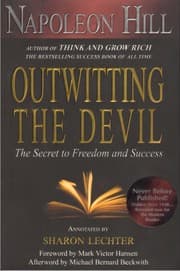
I- I don't, but it's seemingly a lot of people, maybe, maybe it's not even what they actually want, but they- they're willing to accept that narrative versus s- standing out or, or being different- There was, um- ... or putting their phone down ... a great book by, uh, and unfortunately, I, I hate to believe these statistics, but I hate that it, it just is true for, you know, century after century, it's true. Napoleon Hill's book, Outwitting the Devil. You ever read that or listened to it? I have, yeah. Yeah, yeah.
Highly recommend the audiobook. It will, like, it will blow your brain up. Um, it was written well over 100 years ago. Uh, and it was finally released once he died. Yeah.
His wife died, and then they released it. Um, and she wouldn't let him release it because she said that basically the government would kill him, the, the, the church would kill him, you, you know, billionaires would kill him. Um, so he, they, they wouldn't, they re- wouldn't release it until he died, and then she never released it, so it was the foundation that released it afterwards. Yeah, highly, highly suggest reading the audiobook. But it talks about control and it talks how, how basically 98% are going to think like this, like what you're saying, and there's 2% of the people that are gonna think for themselves.
A- and that's, unfortunately, that's a reality, and you have to choo- the individual has to make, has to make the decision, i- are they going to think for themselves and be that, be the CEO, CEO of their own life, or are they gonna fall into the herd of everybody else and just consume and be told exactly how to think, what to believe? You know, it's wild. I have a, one of my audience members made this. I show it on the show every once in a while. It's GNF, the letters.
Maybe on video it looks better that way. Um, stands for give no fucks. Um, and it came out of a couple years ago. Uh, I was kind of diagnosing my own life, right? Like, when were the moments when I was the most successful, when things were really driving forward, and when were the moments where I felt stalled?
And there was one core thing that I kept coming back to, was the idea that you, that you just shared. When I was operating based on my own belief structure, regardless of how it impacted status, how it impacted, you know, relationships, and I don't mean that like in a ... You know, obviously there's certain relationships you, you want to nurture, et cetera. But, um, when I was operating as my own individual, making my own decisions as the way I saw the world, was when I saw the most progress in myself. And in the moments where I advocated that responsibility to what I was being told on social media or by the news- Right ... or, or what I felt was expected of a person in the position that I was currently in in that moment, that is when I saw the most stagnation, the most unhappiness, and my, my- That's right ... my mind's willingness to drop back into these negative, toxic traits.
And I've kind of dedicated this show since that moment to inter- to talking to people like yourselves and trying to draw out ideas on thinking for yourself. Like, that one i- that one concept. If you can just, just, just kind of nail yourself to this idea where you're making the decision based on what you need in your life and not what your neighbor's gonna think or your mom's gonna think or your friend, shit, what happens is insane. And you can't guess it. There's, it, it tends to be very serendipitous.
But it is hard, but it comes with purpose and meaning and fulfillment that you just literally, you can't ... It, it, it's, you know, I, I, I've explained the sensation and it kinda, it, it's like sex, right? Like, you can hear about it, but until you experience it, you have no fucking clue. That's right. And then- That's right ... you know, and you wake up one day and you're like, "Oh my God, I'm like my own person."
Right. This is pretty incredible. Yeah. Like, I have my own views, and I have reasons for those views, and they guide the decisions I make, and you don't have to like them, but if you do, come on along. And that to me is just one of these ideas that it seems like is being purposefully ...
Now, thank God for people like Jordan Peterson and others- Mm-hmm ... who have really come out and tried to make some of these things mainstream. Like, I love his concept and try to live by this idea of, of, of be a monster- Mm-hmm ... but know how to control it. Yeah. Like, you're not a, you're not a good person if you're weak- Mm-hmm ... and good, because you have to be good or kind. But if you are a m- Well, it's, it's the old, it's the old warrior thing.
Um, you know, it's better to be a warrior in the garden than a gardener at war, you know? Yeah. It's- It's the, it's the balance. Men, men need to have the capability of violence really. And it's like you go into boxing.
Like, you, people can make ... Like, why? Like, you default in a, in a, in a dangerous situation, you default to the lowest level of your training, and if you have zero training, you default to zero. Yeah. Yeah.
And now you are a victim. Yeah. It, it was funny, man. I, I had a buddy that, you know, I was coaching, and a bunch of my coaching buddies and friends with the, you know, around the teams are ... You know, I, I had posted a, uh, like a story on Instagram or something just of me hitting the bags with, like, a quote behind it or whatever.
M- m- it's more, like, keeping myself motivated than it ... I'm not, like, trying to become a boxing influencer or n- or any of that. Trust me, all the boxing guys on Instagram love to tell me how they would knock me out based on the way I throw punches. So I'm not ... You know, I get that I'm not good.
However, I was sitting there and my buddy, you know, they're kind of busting my chops. We're having a good time. And, and one of my guy, and one of the guys goes, "You know, honestly, like, why do you do that?" I go, "Bro, I have two kids. If someone- Right ... comes knocking on my door at 2:00 PM- Right ... at 2:00 AM, I'm gonna grab my shotgun, I'm gonna grab my hunting knife, and I'm gonna ...
My job is to make sure those two little humans make it out of that situation. That's my fucking job." Like- Right ... you know? Like, how am I gonna do that if, if I have no way of protecting myself and no even basic martial skills? Basic.
I mean, and mine are- That's right ... very basic. And literally they looked at each other and they all went silent. And I was like, "That's why I do it, man." Like I- I hope that day never happens. But if it does, I want that to be just as bad a day for the guy knocking on my door as it is for me that he knocked.
And I just hope more men embrace that idea. Um, and I think they can do that by getting involved with individuals like yourself and, and falling into their world. So, you know, as a way to kinda wrap up our conversation, and, and I appreciate the hell out of you, man, like how do people get deeper into... Be- besides the book, you know. And, and guys, we'll have, you know, wherever Nick points us, I'm gonna have it linked up in the show notes, whether you're watching on YouTube or, or listening to podcasts, just scroll down.
Um, where can they go to get deeper into your world and start following along with, with what you teach and, and how you talk about these different topics? Yeah. So the, so the, you know, it's funny you say that about the book, 'cause that's really where it came from. Like, the book started and the Agoge happened. Um, and that's really our community.
And we have kind of these four phases is, is master yourself, and that's like all, in all areas, mentality, dealing with your shit physically, your nutrition. Because the reality, y- your wife, your family, your friends are not gonna respect you until you can master yourself, until you instill self-discipline, right? Self-mastery is, is number one. Um, you can't lead your family un- until you can lead yourself. They're just not gonna take you, uh, you know, seriously.
But through, through example of yourself, then you can turn around and lead your family. So then phase two is leading your family, rebuild- rebuilding the relationship with your wife, whether there's resentment, whatever it may be, you know. And then kinda going from that to your finances, right? And like, "Well, Nick, I can work on my finances now." Well, no, 'cause you don't have the discipline to put the cookie down.
You're not gonna be able to have the discipline to save and invest and et cetera, and, and make smart choices with your money, right? Like this, this is all faceted. And then s- also, if your family's not on board, if your wife's not on board with, with investing and saving and the way you spend money as a family, then that's just gonna create more strife in your family. So there's a reason why it's phase three. And then phase four is that, is like really, like, leadership.
Like, what does that dynasty look like? What is the leg- legacy? What kind of leader are you gonna be? And the, and at, once you've mastered yourself, you've got your family rock solid, you've, you've locked down your finances and building generational wealth, what is the fourth phase? What does that look like?
You know, what comes next? And that's kind of what we do, and then we, and then we, you know, we coach through people through that. I mean, we've made, we've changed so many people's lives. Guys, I just got a text the other day from one of our guys, um, who's down in Disney World and, uh, with his, with his mom and his kid, and he's like, "Dude, you know, before you guys, I literally could not fit in a rollercoaster. Now I'm running around like crazy playing with my kids."
And he's like, "Thank you for this opportunity." You know, he would've been dead. The reality is he would've been dead. He was well over 300 pounds. His dad died at like 47 of, of a cor- coronary, uh, basically coronary disease.
Um, a- and he's thriving, man. He's gonna live, you know, s- several, several more decades because of this. Um, and because of that, he has, you know... And this is not just him. This is so many different people.
Um, we have guys who, that he's, he's got a promotion. He's making like three times what he was when he was 300 pounds, because it changes everything. And so that's what we do in the Agoge is, is that. So you can get the book, and then you can look into the Agoge and kinda go from there. But yeah.
Nick, I appreciate you, man. I, I... Keep pushing, dude. I love your YouTube channel. Thank you.
Thank you. I love the shit that you're doing. Um, this is so incredibly important, not just to, to men kind of our age and where we are, but to, to the next generation of men and women and, and leaders that are coming up behind us. Like the, you know, uh, these are the people who are gonna be taking care of the world that we leave them. So it, uh, it falls on us to continue sharing these messages, and, and I think you're, you're just completely dialed in, bro.
And I, and I appreciate you. Appreciate that. Thank you for your time today. Thank you, Ryan. Let's go.
Yeah. Make it look, make it look, make it look easy. Hey, stand up Thank you for listening to The Ryan Hanley Show. Be sure to subscribe and leave us a comment or review wherever you listen to podcasts. Game ain't a thing for me.
I never switched up, no changing me. The only thing changing is me If you like the show, please take a moment to rate, review, and subscribe. It really does help the show to grow. Thank you for listening. Happy holidays.
Want to give your host a gift? Consider subscribing, rating, and reviewing the show this holiday season. It really helps the show grow. From all of us at Believe, have a merry Christmas, everyone, and a happy holiday