Hiring isn't just about finding someone willing to take the job. You need the right person with the right background who can move your business forward. If you want candidates who truly match what you're looking for, trust Indeed Sponsored Jobs. With Indeed Sponsored Jobs, your post stands out to quality candidates who actually fit the role. According to Indeed data, 90% are more likely to be hired and trusted by 1.6 million companies.
Spend more time interviewing candidates who check all your boxes. Less stress, less time, more results now with Indeed Sponsored Jobs. And listeners of this show will get a $75 sponsored job credit to help your job get the premium status it deserves at indeed.com/podcats13. Just go to indeed.com/podcats13 right now and support our show by saying you heard about Indeed on this podcast. Indeed.com/podcats13.
Terms and conditions apply. Hiring? Do it the right way with Indeed. All you're doing, folks, is changing one thing, that is it, and adding one step. So if you wanna change your finances in the future, if I could sit there and tell you that you can get all the money back for every car you ever buy, drive, and own, okay?
That, if I can tell you, you can get out of debt in a fraction of the time without working harder, longer, or taking on any risk, is that important? If I could tell you that you could never pay interest to the banks ever again, and you could keep all that money, so just add up all your payments you make on credit cards, on car loans, on any, any loans you have, imagine writing those checks that you write to their bank, imagine writing them to yourself. What would your life look like? So if all of those things are things you would like, okay, 'cause every one of those is a compelling thing that you would say, "Absolutely," if I told you it took one change and one step to do that, every one of you would be interested. So- This whole podcast game is so funny.
Isn't it, though? You know- It's changed a lot. Ch- oh my gosh. So I started in 2011. Um, my first podcast, I heard, I don't know if you remember this name, but a guy by the name of Chris Brogan, like marketing dude from way back in, like, the early blogging days, like 2007 to 2010.
And he, uh, you know, and I was... So at that, at that time I was, um, uh, working for my ex-wife's family's insurance agency, and I sucked at selling, like the worst salesman ever at the time. So, so I had to find a way to get business in 'cause I hated cold calling. So I turned to content marketing. Okay, so I find this guy, and he starts talking about podcasting, and I was like, "Well, shit, talking into a microphone sounds a hell of a lot more fun than writing all the time, so I'll try this."
And dude, I grew my show back then to number 11 in the world. Now, at the time, just to be clear, that was, like, around 52,000 downloads a month. So I have a screenshot from 2014. I did, like, 52,000 whatever, it doesn't really matter. Um, but, uh, Ed Mylett is two ahead of me, and Gary Vaynerchuk is two behind me for the world, for Apple at that time.
That's wild. Which is wild, right? So, uh, so that happens. I'm, you know, having a great time. I'm interviewing all these amazing people.
And then, um, I get this job offer to become the CEO, CMO of a tech company. Uh, the insurance industry is, like, my native industry, and it's more money. You know, I'm a poor kid from the fucking country in the north, right? So, like, it's more money than I could have ever imagined at the time, and I say sure. And they say, uh, you know, "You can bring the podcast, all good."
Three months in, I get the call into the office, uh, "Hey, man, you know, this podcast thing, like, we know we told you you could do it, but, you know, uh, some people are wondering if it's a distraction." I'm like, "Well, is my work not good?" And they're like, "No, no, no, it's not that, but, like, we're getting calls." And I'm like... So they force me to, to, to...
And I look back and I'm like- The momentum you lost during that My God, the momentum. The momentum. So it's just an interesting game, but, um, well, dude, I'm super excited to have you on the show. Yeah, pumped to be here. Um, like, I guess give, give people the 10-cent tour.
I don't normally like doing the backstory first, but I, I really, I'm interes- you have a kinda unique and, and very dynamic, and there's a lot of places I wanna go, so I'm interested in how you tell your version, and then we'll go from there. Yeah, I'm gonna keep it super short, so I'm gonna leave a lot out 'cause it's long. But, you know, I started kinda like you. I'm up in the north. I'm in, uh, Buffalo, New York, always been here.
I grew up in a lower middle class family with one dream as a young kid. I wanted to be a pro snowboarder. I had watched a video, seen magazines. That was my aspiration. I went from skateboarding, introduced to snowboarding in my garage by my best friend, and I'm like, "I wanna be a pro snowboarder."
And that's where it all began. Like, I, I've always been kind of a dreamer. You know, even as a young kid, I just never really had boundaries in terms of what I thought was possible, so I would just dream these things. But every single person I would tell my goal to would say, "Nah, you can't do that. You live in Buffalo.
Like, you'd have to move." And, you know, you had all these people knocking your, you know, your dreams down because they want you to conform to their way of thinking, their failed dreams, is what I always call it. And I almost, uh, never made it to that point, but there was a, a pivotal event that happened, and I, and I say this because this is very important for everybody listening to this, is there was one person that showed me that it was possible, and his name was Blair Russ, and he was a pro Burton rider from Buffalo, moved to California, but came back to Buffalo when I was in this point where I wanted to be a pro but didn't know the path. And I heard he was gonna be riding and filming at this local resort, so I made sure I was there. I took off school, and I'm riding, following these guys through the park, trying to stay far enough behind 'cause I was nervous.
You know, I was just a young kid, nervous that, like, I'm gonna get in their way of filming. And, and Blair, like, stops me and he says, "Hey, you know, I, I've seen you riding. Like, do you wanna ride with us?" It was, like, the greatest day ever, but one thing that happened that very day is it made me understand that it was possible. Because if Blair and this guy Shane had done it, and they came from Buffalo, then I could do it too.
And that, that's, like, what catapulted me. And the, the story's kinda unique from there on out. You know, I, I, I did become a pro snowboarder, but in that journey to be a pro snowboarder, I had to learn something that I guess I really never realized I learned at an early age is the freedom of time. I needed to do something that gave me the freedom of time to chase my dreams so I wasn't inhibited because I had a job, a J-O-B trading time for hours or time for money. So I created my own company at 16 years old called Phat Clothing Company.
I printed shirts with my art teacher, Mr. Mahalski, and I sold them to my friends in school. Then I took that same concept, learned the wholesaling, and I started going on the road, going to snowboard contests, selling my clothing to all the shops. I would leave like early, so I would get there on time, but I'd stop at all these shops and I would consign or sell my clothing. A pivotal event happened there is I met this one shop owner and they bought my clothes, but he said, "Hey, do you want a ride?"
And I said, "Yeah, of course," and looked at my watch. I'm like, "Yeah, crap. They close at 5:00. It's noon." And he's like, and I said, "When do you want to go?"
He says, "Let's go right now." And I was confused. Like up to this point, I'm like, "You got a shop. You're the only one here working. You're open till 5:00, but you want to go right now.
Like how? Is someone coming in to, to cover it?" And he says, "No." And he says these words. He says, "I own the place, so I can close the place."
I'm like, "No." Like I, I know like to some of you are like, "Well, yeah, duh." But like I'm, I'm just like this young entrepreneur and I did not yet understand that like that's what an entrepreneur can do. They call the shots. They don't have a boss.
So we went riding and now all of a sudden the only thing I can think about is I need my own shop. This is no- this is 1992 just to give everybody relevance. November of '94 my shop Fat Man Board Shops, obviously Phat Clothing became Fat Man Board Shops, opened in the Lockport Mall. And the only way that place opened is I didn't have any money. I didn't come from a wealthy family and every place I tried getting a loan from family members and banks said no, except for my mom who had nothing but the house we lived in and she literally put the house up for collateral so that I could get an SBA backed loan.
This is, this is November of '94. Now I'm going to go really fast. From that point I lived what most people would only think of as a dream. I was a pro snowboarder traveling the world getting paid to do it on someone else's budget while I'm running my own skateboard snowboard shops with my buds and literally like on off season I'm running a skateboard shop skating and then in season I'm traveling while running the shop. It was epic dude just purely epic until the day that that whole dream kind of came crashing down and it was when the planes hit the towers and what we all know as 9/11.
Well what most people don't know in today, in today's world because you have to live through it was that was a recessionary period too a long one a three-year recession. Well when you're an entrepreneur owning shops through a recession your business tanks and it did it dropped like 30% and it was so bad that I didn't have the, the money to carry through so I needed to get a job. The one thing I had sworn off earlier in my life that I'd never do I needed a job. So I put my resume out and the only companies that responded back were Wall Street firms. Now I'm a punk snowboard kid that wears a, a beanie and a hoodie every day and now I got to go interview to a financial firm where I got to put a black gray or navy blue suit on every day and that was my reality that was my destiny right.
So I took the job I was really really good at it and it forced one of the most important things you know so you're an entrepreneur and you told me your story a little bit about you know like where you went from the podcast the freedom to now this corporate world. I had to do that it was a mind it destroyed my mind and but it forced something that I think was the greatest thing. I used to work in my store I want to be clear about that most business owners work in their business and they are the best at what they do in their business but it's almost like a you trap yourself you create almost a slavery if you will because you're, you're a slave to what you created and I, I was there but now I'm working you know the mornings all the way up till five o'clock at this financial firm doing investment advice and stocks and everything else so now I can't work in the store now I got to work on the store on the business and that was that transition I realized that was what was happening I was working on the business my retail stores exploded I had other people running them I had you know and now I'm working on events I'm working on you know skate and snowboard teams and making videos and cool stuff that I would have never done working in the store so you can see sometimes one door closes and another door opens and that really sums up everything that's happened in my life.
So I'm doing the shops I'm, I'm in Wall Street I'm a pro snowboarder I'm doing all these simultaneously and then I get this idea because of one of my clients to get into real estate because he was my wealthiest client but he gave me very little money to invest for him and I asked him one day I said why don't you invest more and he said I make too much money in real estate to give you any of my that money I can make more in something that I control I'm like okay so '06 I flip a house '07 I flip another one in '08 I buy a dilapidated paint store that I was going to convert and develop into a three unit strip mall where I was going to move my main shop into it so literally it was brilliant because I'm sick of paying rent now my tenants are going to pay the the mortgage and I'm gonna I'm gonna have rent-free access to this beautiful building. You heard when I said I did that right 2008 yeah the great recession so second recession literally brought me to my knees almost bankrupt me and my girlfriend at the time was living at my house and she paid the bills so that I could continue on that's the only reason I made it through it but through 2008 I, I basically struggled but I also continued into real estate while doing all those other things and I built up a rental portfolio which then I lost and I had to sell every one of them in '14 because banks just suck let's just be honest which put me onto the path that I'm on today of being your own bank because I, I had a bank literally take away 36 units because of their decision to literally not allow my line of credit to continue because I was at my debt to income ratio something they didn't tell me it's just like that all of a sudden you got no line of credit they freeze it banks are in control of your money if you don't know that so then after that I was just struggling I went into flipping houses instead of owning rentals, 'cause it was easier.
And that flipping led me down the path of private money and borrowing from individuals, and learning that, to writing books, to then developing courses and getting everything. But the, the whole thing brought me to a pivotal moment. I'm a high rank, high, high-performing financial advisor doing extremely well. And I'm in Utah snowboarding, and this guy that I borrowed money from, Mike, who's super wealthy, uh, was there. So I call him up and said, "Hey, Mike, I'm in your backyard.
I got a deal I'd like to show you. Can we meet?" So he says, "Yeah, meet me at Cheesecake Factory," to which I did. And then all of a sudden at Cheesecake Factory I ask, I don't know why, I ask him, I said, "So Mike, how do you lend all this money?" And without flinching, he says, "I lend from my private banking system," to which I articulated as a financial advisor, Mike owns a bank.
I'm like, "Holy shit, you got way more money than I thought. Let's go to your bank." And he says, "No, I don't own a bank. I mimicked what banks do. I copied what banks do, and I do it as my own banker."
And then I said, "All right, well tell me about it." And he tells me all these particulars, like I get... I changed where my money went, I get guaranteed interest on my money, I get dividends on my money. It's all growing tax-free in a protected environment. And then when you come to me, Chris, to borrow money, all I do is I take a loan from my private bank and I lend it to you, and you pay me 15% interest.
I take the 15% interest and I deposit it in my bank, not their bank. And, and I'm just like, "This is, this sounds awesome." But as a financial advisor, everything he's telling me, and I went really fast with that, but everything he's telling me, I'm compartmentalizing. I'm like, all right, guaranteed interest, what could that be, right? And you're from the insurance industry, so I, I'm not thinking insurance, I'm thinking financial.
And then he's like, "Dividends." I'm like, "All right, stocks pay dividends." And then he's like, "Tax-free." I'm like, "Roth." But none of it was jiving, 'cause not all of them work together in what he just explained.
So I just asked him, I said, "So what is this?" And then he tells me, and he says, "It's a specially designed whole life, Chris, you should know that." And, and I felt stupid, 'cause I'm like, "Oh yeah, I should know that, and I do know that," but I didn't know it worked that way. And that's what led me down the path of being your own banker. And I went from being a student, I was a student of that trade.
I was using it, and used it to get outta debt, used it for real estate, to now today being the teacher and having thousands of clients, being number one in the infinite banking space, and that's what I do. I mean, I do one thing extremely well. But my whole life has prepared me for that moment. And I sorry I went long on that, but that's as fast as I could get through it. No, I'm glad you did.
Um, how do you keep going when you get kicked in the teeth one, two, three... Like how do you keep coming back? 'Cause one of the questions I get a lot on this show, 'cause, you know, we, we... Our two primary topics, although I love going off topic sometimes, are leadership and performance, right? And you get a lot of comments, particularly on, uh, founders who are maybe t- trying, you know, had a startup, failed, had a startup, failed. They have another idea, they have the entrepreneurial spirit.
They feel that this is their calling, but they keep getting kicked in the teeth, right? And you get a little gun-shy, and some people get gun-shy, and you start, you start going, "Well, maybe I'm not fit for this. Maybe I should go get a job." And then, a- and some do, and then they feel that tension and stress of not being, you know, on purpose. And like, but you seemingly have been able to, to come back again and again.
Is that learned? Is it innate? Is there, uh, something you can share with us to help the people who maybe have just gotten kicked in the teeth and are, and are sh- worried about coming back again? I, I, I'd lie to you and to your audience if I said, you know, "Oh, it was innate," or, "It was easy." Every single time that I was at the bottom, it, I felt like my world was ending.
I felt like I, I just... Sometimes I thought maybe I'd just turn my truck into a tree, you know, while driving 60 miles an hour. And listen, like those are the thoughts you have when you're at the bottom. I've been there enough times to understand what that's like, and it's just freaking hard. But here's, here's the one thing, you know, like when I think about my life, I think about what, what prepares you to go through hell and, and then climb out on the right side?
Which listen, like there's no other way to call it than other than that's what it feels like. It feels like the entire world turns against you. It feels like every single person is sitting there staring at you saying, "See? I told you so. I told you not to do that.
I told you not to do that." You know, it's always the people that you love, your family members, your significant other or spouse. It's always them that like they f- seemingly seem to be on your side when everything's good, but then all of a sudden when something happens and you're at the bottom, they're, they're there, like sitting there scolding you that you should've listened to them, and that is always something I've hated. And there's two things I will, I will give credit to in my life. Number one is, you're gonna la- you're gonna laugh, but is a movie called Rad.
1986, the movie Rad came out. Bro, it's my favorite movie of all time. It, it's- I'm not even kidding you ... the all-time movie. That, that... S- so since you understand that, and hopefully some of your audience understands that movie, and if they don't, just watch it.
Greatest movie of all time. There's this guy, Crew Jones. Crew Jones, everybody told him he can't do it, he can't win, he can't get to be who he wants, and he persevered through everything. Through h- you know, he went to hell and came out, i- in other words. And he had t- one, maybe two people that believed him, and that's it.
The movie Rudy, okay? Another great one. Rudy had one person. Well, he had two, but then, you know, the one guy died, his best friend died, and then he had one person that believed in him. The one thing all of you need to understand is when you're in that dark place, all you need is one person to believe in you, and sometimes all you need is yourself.
Because the only way to truly fail is to quit. I'm just not a quitter. That Crew Jones in the movie Rad was not a quitter, and he persevered, okay? Yes, it's a movie, and some of you are like, "It's just a stupid movie." To me, it wasn't a movie.
To me, it was everything. It was the person I wanted to be. It was the life I wanted to live. That was the pinnacle movie that built Chris Naugle, and, and Ryan, I'm sure you had a similar thing. Moving past that, though, I, I also was introduced to something special, something that most of your audience won't know, but Earl Nightingale.
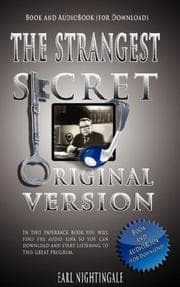
Been around forever, okay? Earl Nightingale. And the one to watch is The Strangest Secret in the World, and he talks in there about a study that was done by a doctor about the 5 and the 95. The 5%-ers, the wealthy, and the 95%, everybody else. And he explains so eloquently and simply that the difference is conformity versus creation.
The 5% create- And never give up, and keep persistently and consistently going after something. The 95%, the majority, they conform to somebody else's failed dream, somebody else's failed idea. So right there, that, because I was introduced to that a long time ago, when I got in these dark places, I've been there so many times, all I remembered is there's no way to fail except for quit, so you just can't quit, and you just gotta keep going. And, and, and it just gets worse and worse, and you just think, "Wow, I thought I was at the bottom, and now I'm even going further." But eventually, what you learn at the bottom catapults you back out of it, and you never go there again.
But then you learn other things. So I know that's a long answer to your question, but, like, Rad, the movie and what I, what I saw and learned in that movie and what I lived after it, and Earl Nightingale, the difference between success and failure is creation. Just keep creating. So I don't think anyone should ever discount the impact that entertainment or media has on us. Movies, songs, poems, quotes, it all hits us in different ways.
It's so funny that you brought... So one, I, I was, I didn't wanna interrupt you when you were telling your story before. So my entire fam- family's from South Buffalo. I have, like, 30 Irish Catholic- No way ... cousins from Hamburg. Oh, hell yeah, yeah.
You can't, you can't hit a, you can't hit a driver in South Buffalo without hitting someone that lives, uh, i- that's related to me. Um, I- I did not know that. Yeah, so I live in Albany now, and the only reason I live in Albany is 'cause my dad used to work for the, uh, Buffalo Depot for Amtrak, and he got a promotion, but the promotion was in Albany. So I'm the only member of my family not to be born in South Buffalo. Uh, so huge Bills fan, you know, Josh Allen's the truth, the whole deal.
Uh, y- the whole deal. I g- back all the time. I got tons of buddies. I went to school at the University of Rochester, so, like, W- Western New York and, and Buffalo has been a huge part of my life, so we got that in common. And then, and you know, it's funny, I had that in my pocket, and then I heard you say Rad, and I'm like, "Who the is this guy?"
I'm like, we just became best friends. Um- Yep ... you know, a backflip. Hulk Hogan, eat your heart out. Oh my God, there's so many good fucking quotes in that movie. Dude, did we just become best friends?
It's the best. Oh, so cool. It's the best. Um, no, guys, and if you haven't seen the movie Rad, it's pheno- it's an hour and 35 minutes. It's super short, and it actually, you wanna talk about perseverance.
So, um, Bill, oh my gosh, I'm gonna forget his name. The, the guy that plays Cru Jones. His name's Bill something. I'm gonna forget it. Um, so, uh, her na- the, the, the, the wife in Rocky, um, Adrian.
Adrian. Uh, what's her name? Leah whatever her name is. Yeah. So she's in that movie, okay, guys?
So they're talking about perseverance. Yeah. I mean, I know this is a little tangential, but I'm talking about perseverance here. So, so that movie gets made, and after it gets made and released, after the, the i- initial launch cycle, right? Uh, whoever owns the rights to the movie has to license it out to be created into DVDs and, or that would've been VHS at the time, and then DVDs, et cetera.
Well, she didn't think anyone liked the movie because its initial box office numbers were terrible. Terrible. It bo- complete bomb, right? But there, there was this subculture of people, like you and me, and other people who enjoyed that movie that, that loved it. And it wasn't until about s- five years ago, maybe six, that you could even find that movie on Amazon or...
You could only find bootlegged copies. That was the only way you could get a copy. And it was through the perseverance of the main character, man, it's gonna kill me. I don't know his last name, and he's probably not listening to this, but I apologize considering how many times I've watched that movie, like, literally thousands. Um, he persevered and, and, and literally built a groundswell of fans, and there was a, I think it was something like over 100,000 people signed this, uh, petition that he then delivered to her.
And, and to her credit, I think she just didn't know, 'cause the moment she saw it, she released the rights, and now we can all watch it. But, um, you know, he, he, he, it was, like, 25 years of him trying to get this movie out into the public, 'cause this was, like, his life. I don't think he did anything else after that. He actually became, or tried to become, a professional, um, BMX rider for a while. Uh, what, what a, what a phenomenal movie.
But, um- There's a whole documentary about this whole journey. Yeah, yeah, yeah. It's, it's really, really cool. I mean, it... And just to think how groundbreaking that movie was and the things that they were doing, and the fact that they, all the tricks, all of it was done, all of it was real.
And most of the guys, the other thing I thought was really cool about that movie, and I know we're way off topic here, um, like 95% of the guys were, were real BMXers. Were, were, were working, were working BMXers- All of them ... that they brought in to ride, and there was only, I think, three or four of the guys were actually actors. And even, even those guys did a lot of the stunts themselves. Not all of them, but a lot of them. So, um, pretty cool- But, but- ... the, the whole perseverance thing ... but you said something that's interesting.
You said we're off topic, but we're right on topic. Yeah. Yeah, yeah. Because, like, everything you just said, that perseverance, that 25-year journey, you know, I, I'm just gonna call him Cru Jones just 'cause that's- Yeah ... forever his name to me. Yes.
You know, has never given up on his dream, and it took him 25 years. But, like, listen, it's not about how long it takes you to hit your dreams. It's about the fact that you still chase it and you don't listen to anybody else. 'Cause in that movie, Cru Jones' mom, the, the, the exact story, she was the one that didn't believe in him. She was the one that said, "You can't miss your SATs for this BMX race." And he goes, and she scolds him and, and he begs her, and she lets him do it.
But, like, he goes through so much adversity in that movie to get to that one moment where he doesn't even know if he can make it. Yeah. But he gives it all up. He burns the boats to get to that one moment, and he knows it. "I burned the boats.
I gotta make this." And he pushes deep, deep inside of him to, to win, and he didn't even win. That was when he just got through qualifiers. And then you'd think it's all easy, right? He gets in the race and he wins the race.
Oh, great. You know, it's just like every other movie. No. Everything else happens. That's where the movie gets really interesting, because it's not just that he won qualifiers, it's everything else that happens that fights him.
Anyway, I'm not gonna give the movie away, but he ends up winning at the end, and that was, that was... I watched that movie, like you did, so many times I burned the VHS out. Mm-hmm. Most of your audience probably didn't even know what a VHS is, but- Yeah, yeah, yeah ... like, that movie shaped me. It shaped me.
It made me exactly who I am today, and I've learned this because that is the single moment where I changed. And you're right, it was a, it was a fricking movie. But like- Plus the soundtrack is amazing Oh, beyond. Soundtrack is phenomenal. Um- I mean, listen, like, y- your audience probably can't see it, but like this is like a background.
But like, you know what this is. Hell yeah. I brought it back and I got my GT Pro Freestyle Tour up. So guys, you, you can't hear Chris right now, but he's showing, so if you can go over to- Sorry ... the YouTube channel and check it out if you're, if you're just listening on audio. But he's got, he's got a, um- Skyweight TA from 1985 ... mad...
Oh my God. The... I can't believe you brought... I l- I freaking... Everything about that movie, like for me, so I was six years old when that movie came out, or five years old, somewhere in that range.
And like, I remember like me and my buddies, there was like five of us, you know, and I, I can remember this, at that age, sitting on the carpet in the living room, 'cause that's what you did, 'cause the TVs were as big as your refrigerator back then, again, for the younger side of our audience, and they weren't flat. Um- ... and you're watching this thing, and not in HD, and like I just remember getting done and I was like, "I wanna run through a brick wall right now. Like, let's go. Like, uh, we can do anything." Like, it was just, it was such, the way they did it was, uh, amazing.
You know, and it's, it's, it's early '80s TV, but it's just phenomenal. Just phenomenal. And- By today's standards. Yeah. Uh, uh, Bill Allen is the main character, and not that this is important, but Christie Brinkley looks phenomenal in that movie.
Um- Sure does she ever. Yes, she does. Ass sliding. Woo-hoo. Oh my God.
Yeah. Ass sliding. Oh my God. Guys, you gotta watch this movie if you haven't seen it. I'm gonna put a link to the like Netflix or Amazon or whatever, you guys can check it out, but uh, movie's just phenomenal.
But I, it does, it does really fall in line. So, um, okay, so, uh, all this tremendous su- success throughout your career, you're coming back multiple times, and you find this BYOB, be your own bank, right? Now, I will tell you that when I was looking through all your stuff and reas- you know, making sure that I, that I understood what you do, is you try to prepare a little bit, um, as is probably obvious I don't over-prepare, but, but I do try to understand. Uh, even someone who's been an entrepreneur for at least the last decade, second half of my life, I made the... I, I, m- you know, this is, podcast not about me, but my story's basically like early on I grew up very poor, and I mean it was very entrepreneurial early in my life.
Like, all the things, right? Selling baseball cards. Um, I got, part of my story is when I was 10 I used to walk the streets of my town at like 4:30 in the morning and pick recyclables out for their five cent deposit and shit like that, right? Okay. So then, but I fell for the trap, right?
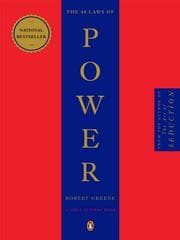
I fell for the trap of, of like the big company, the safe job, the paycheck, the 401, like that's what you do, right? 'Cause that's what my parents pushed me towards, right? My parents being a receptionist and a, you know, essentially a, a m- manager/mechanic on the railroad, like in their world job safety was paramount, right? You hadn't, you needed job safety, job s-... So I fell for that trap, come out of college, go work for the big companies, and it's just miss after miss after miss after miss, right? Just, and I'm, and I'm be in these jobs for a year, two years, there'd be friction, some regard, I broke power law number one quite often, if that makes any sense, um, to people, if you've read that book, which I highly recommend you do.
And, and, and I hit this point where I was like, "W- look, what am I, like why am I freaking here? I know it's not to work for one of these big companies 'cause it just keeps not working. So what is it?" You know, and that's when I found entrepreneurship. Okay.
So despite all that, despite being an entrepreneur with exits, with all the different things, I'll be honest with you, I looked at this concept and I said, "That sounds scary as hell." So how do we take this idea, just m- start as a starting point, and how do we remove that initial scariness of like being your own bank sounds like a lot, right? The way you describe it and the way your materials are and how you coach it, it, you know, I know it, I know it doesn't have to be, but like my initial impression, my initial gut was like, "Ooh, that feels like a, that feels like a big, that feels like a big thing." So, so how do we start to remove some of those scary barriers for people? Yeah, it's easy.
Uh, you know, I've done this thousands of times and we have thousands of clients throughout the nation, so it's evolved. And, and here's really the simplest, the, the easiest way I can explain taking something that most people perceive as being complicated, but it's not, it's just different, okay, it's a mindset shift more than anything, is to go into this. All you're doing, folks, is changing one thing. That is it. And adding one step.
So if you wanna change your finances in the future, if I could sit there and tell you that you can get all the money back for every car you ever buy, drive, and own, okay? That. If I can tell you you can get out of debt in a fraction of the time without working harder, longer, or taking on any risk, is that important? If I could tell you that you could never pay interest to the banks ever again, and you could keep all that money, so just add up all your payments you make on credit cards, on car loans, on anyth- any loans you have, imagine writing those checks that you write to their bank, imagine writing them to yourself. What would your life look like?
So if all of those things are things you would like, okay, 'cause every one of those is a compelling thing that you would say absolutely, if I told you it took one change and one step to do that, every one of you would be interested. So that, right off the bat, I can tell every single person before I get into explaining what it is, that all of you want this. Because you want guarantees on your money. You wanna have liquidity and access to your money. You want it all growing tax-free, 'cause who the hell wants to pay taxes?
You don't want someone being able to sue you and take all your money. And someday, I have a five-year-old daughter, she's everything to me, you wanna pass on a legacy, so you wanna make sure your family's taken care of if you, you know, get hit by a bus, right? So I think we can agree on all those. So again, back to the change. One change, one step, and here's what it is.
The money that you make, all of us are taught, like you, uh, you eloquently explained this, you know, we're all taught how money works from a very young age, and we're taught that to get ahead in life, especially in our generation, 'cause we're, I think we're both Gen X, in our generation we were taught you go out and you work hard. You work overtime. You climb the ladder. You, you continue to trade your time, your hours for dollars, okay? So I'm holding up money for anyone listening to this, I'm just holding up some fake money here, right?
This is what we're all working for, but we understand one thing from a young age, and someone-- some people never learn the difference, is the only way to have this is to trade your time for it. That's the biggest lie you've ever been taught, okay? Because if all you ever did your entire life is trade your time for money, and you saved money, you'd never become wealthy because you have not yet learned the laws of wealth. You've not yet learned how the wealthy operate, and they, they operate under s- different set of rules. So let me explain one of the things.
This, this thing I teach, listen, I did not create this, okay? Be your own bank. I might have created and pioneered the name and trademarked the name, but I didn't create this. This has been around for hundreds of years. The Rockefellers, the Rothschilds, the Morgans, the Stanleys, they all used this, so I can't take credit for it.
And here's what they did, and I, and I'm gonna tell it in a story form, okay? So let's go back to the wealthiest families in history back in the day, the Rockefellers and the Rothschilds. Back then, they used banks, but back then, they were scared of banks. They had so much money at banks that they worried that if there was a run on the bank and the bank goes down, they lose all their money. So they s- they were seeking a better bank alternative from a financial institution that was stronger, and they all landed the exact same place, and that was the industry you used to work in, the insurance industry.
Specifically, the life insurance indus- industry, 'cause you go back to the 1800, 1900s, life insurance, mutually owned life insurance companies were the safest, strongest financial institutions. Fast-forward to 2025, the same thing is exactly true. They are far bigger than most banks, although you wouldn't hear that, but they are. The buildings banks operate out of, those big skyscrapers, guess who owns them? Not the bank, the insurance companies.
Almost all of them. I was just in Cincinnati with, with one of the giant insurance companies, walking around, they were like, "Yeah, we own that building and that building and that building and that big building, the biggest one in the city, that. We own that and this and this and this." A lot of insurance with the company that you're referencing. Absolutely.
So that's what these wealthy families knew. So the wealthy family said, "All right. Well, we wanna get some of our money in these giant f- institutions." But you can't walk into a life insurance company and say, "Hey, I got some money. I wanna deposit it."
They're not a depository, okay? They're not a bank. So how they had to do it is they had to manipulate and create a private banking system using a not so common but well-known product called whole life insurance, okay? Now, that is not a sexy product. When I was told that from that guy Mike in my story, I'm like, "Are you kidding me?
That's the worst place you could put your money." That's what I thought. So when these wealthy families did that, they said, "Okay. There's gotta be a way to construct the contract behind the life insurance, behind the whole life, so that it works for what we want," and they figured it out. It's a specially designed contract that they did.
Now, for generations and generations, most people will never figure this out. What they said is, "We're gonna change where our money goes first. Instead of giving it to a bank that we don't control and the bank is gonna take our money..." Let's, let's just... Real quick, let me-- I'm going down a rabbit hole, so let me bring it back out.
When we put our money in the bank, let me ask all of you a question, why do you do that? And the answer every one of you would say, "Well, I don't know, because that's what we were told to do." Some of you might be like, "Oh, because they pay me interest on my money." Great. Whatever your answer is, that's what you were taught to do.
Now, when you put the money in the bank, let's say the bank pays you 3%. Now, most of you are not getting 3%, but let's just pretend you were. Does the bank take your money and just put it in a vault and leave it sit there? Absolutely not. The bank takes your money and loans your money out at a higher interest rate.
Simple, right? They pay you 3, they lend it out at 6, they make a 3-point spread. That's banking. So if we can just understand banking from its core, that's a pretty cool business, right? Banks are quite successful and make lots of money, and they control all of our money.
We worked for the money the bank is putting to work and making the majority of it, 'cause statistically, if you look at Bauer Financial, banks make f- anywhere between 400 to 1300% more than we do. So you can continue to go through life putting the banks in control of your money, or you can get off of the rat race and you can learn what the wealthy do, and that is control of their money. They changed where their deposits went first. Now, not all their money, but their savings, the money they, they were gonna use for big purchases, for businesses, for anything they would do, and they put it in these specially designed whole life contracts. Now, the money's in the whole life.
Why would we wanna do that versus the bank account? Well, number one, the guaranteed interest rate's significantly more than you get at a bank, plus it never changes. So when the banks drop interest rates with the Fed, insurance companies do not. It's contractually guaranteed. Secondarily, these are mutually owned insurance companies that pay dividends and have never, ever missed a dividend in well over 100 years, all of them, okay?
So now you get a dividend. So what is the interest in dividend? Well, about 5.5 to 6.4% is what you can expect in 2025 right now. Are you getting that in your bank account? Absolutely not.
So we can already argue that you're making more with the insurance policy than you are with a bank account. But now you're earning in that tax-free. So now that, let's call it 5.5%, to earn that in a bank account, you'd have to get, like, 6.5, 7% after tax. So we're way better off from a return standpoint, and we're not paying tax on the gains, plus we got a death benefit. So we're in a good place.
But now the worst part is most people will be like, "Yeah, but then you don't have access to that money." Right, if you did it into a regular whole life, but this is specially designed for high cash value. So you have access to your cash value immediately in the first 30 days. Now here, now I'm gonna... Now we just kinda discussed why a stupid whole life, okay?
So I think everybody, if you listen to what I said, would agree that, like, yeah, that does sound better than a bank account. As long as I have liquidity of my money, and you just answered that. Immediately in the first 30 days, you have access to your money. Maybe not 100%, but at least 60 to 90% of it immediately. And some of you are like, "Oh, I knew there was a catch."
Stay with me. Now, let's look at where your money goes today. Most people listening to this have debt, car loans and credit cards. So let's just start with a credit card. Let's just assume somebody has a Visa.
They owe five grand on the Visa. It's 20% interest, and every month they pay $200 a month to that Visa to try to pay that thing down. If you change where your savings went from bank to now this whole life, and now we wanted to get smart and pay off debt, 'cause that's the best return we can ever get, and, and some would be like, "That's not the best return." Okay, what if I could guarantee you 20%? Would you wanna know where you could get 20%?
"Oh, yeah, yeah, guaranteed 20%, where do I go?" Pay your Visa off and pay yourself the exact same amount you're paying Visa. You took back and recaptured 20%, 'cause you're giving away 20%. If you pay that same amount to yourself, that $200, you indeed are making 20%, no ifs, ands, or buts. Okay?
Now let's go into infinite banking, what I teach every day in the simplest form. We start with the whole life policy. We owe Visa 5,000 bucks. We saved up five grand in the policy, so what we're going to do is we're gonna go to that insurance company and we're gonna borrow $5,000 from the insurance company. The insurance company is not gonna ask any questions.
They're just gonna give us $5,000 because we have $5,000 in cash value in the policy. So s- effectively, what the insurance company's doing is they're lending us five grand of our death- The holidays are here, and that means it's the most wonderful time of the year to save with Rakuten. Use Rakuten to stack cash back from your favorite stores on top of holiday sales. That's savings on savings. With Rakuten, you can get cash back on gifts for everyone on your list, from toys for the kids to kitchen gear for the person who loves to cook to electronics for everyone.
You can even save on something for yourself. Just shop the stores you love, and cash back is automatically added to your account, and you can get paid with gift cards, PayPal, or check. Or eligible American Express card members can even choose to earn membership rewards instead of cash back. It's truly a no-brainer. Join for free today and get a new member bonus after minimum qualifying purchases.
Just go to Rakuten.com, download the app, or install the browser extension. That's R-A-K-U-T-E-N. Terms and conditions apply benefit today while we're living, 'cause we have five grand that can collateralize that $5,000 of death benefit they're giving us. So we're just borrowing our death benefit while we're living. Every mutually owned life insurance company will allow you to do this.
But what I'm gonna tell you next, not every insurance company does. The five grand you had in your account, most of you, if I asked you if you had five grand and you just took five grand out to pay off Visa, how much money's left in your account? Your brain will go to what you've been taught. You will think a bank account and you're like, "Well, I had five grand, I just took five grand, so I have zero." But in this equation, some of you read through the, the kind of words there and you're like, "No, you said you had five grand, and that five grand was earning five and a half to six percent-ish, and you borrowed five grand of your death benefit."
So how much money's still earning five and a half to 6%? Five grand. And we borrowed the money from the insurance company and paid off Visa. Now, the insurance company charges us interest. Let's call that 5% simple interest.
And now some of you are like, "Oh, I knew there was a catch." Yeah. Remember how a bank makes money. You give bank money, they give you 3%. You go to borrow money from the bank, they charge you 6, they make a spread.
Let's do some math. The insurance company, let's say it's 6%, okay? Simple math. You're earning 6, the insurance company charges you 5. Are you making a spread?
Yes, you are. So does it matter that the insurance company charged you 5% to borrow th- your, your own money? No, 'cause your money never left the account, therefore your money's earning uninterrupted compounding interest and you still used it for the goal of paying off the credit card. Mm-hmm. Now the credit card's gone.
Now you gotta treat your money the same way you treat the bank's money. The equation is not done, and now you have to be an honest banker. So now the $200 you paid Visa every single month, you no longer owe that to them. Go in and change the name on the check and change the bill pay so that every month, that bill pay, $200 a month, same exact amount, pays back to you, but you deposit it back into that life insurance contract. Now, every single time that $200 hits your contract, it is considered a loan repayment.
We call it recycle recapture. You have $200 available that very moment your check hits the insurance policy. So you didn't lose any liquidity. You actually now have $200 that you didn't have before. But the $200 represents 20% you were giving away.
So you have $200 in liquidity that you didn't have before, plus you got 20%, plus you're still making compounding interest on every dollar of that 5,000 that you put in there initially. Now re- rinse and repeat that. Pay off all your debts. Then use the money to buy a car. Pay yourself back the exact same amount you would pay on a lease or on a, a financed car loan.
You're getting all the money back. You're not leaking anymore. You're keeping every penny because you're controlling the rules of banking. That's all it is, folks. And it can go on and on, and it can get more and more complicated, but at the core, all you just did is took back the banking function in your life.
I teach this every single day to thousands of people. And like you said, in the beginning they all think it's complicated, then they see it operate. We put an operating system, which is software behind it so they don't have to do all that work, it just is done for them, and they're like, "This is the same thing I was doing before." Not a s- not a penny more is being saved or spent, but you're controlling it all 'cause you changed the rules. So then what you're...
What... The guy that you met in Colorado, he had basically, um, a, a large enough balance or available cash in his whole life policy that he was then u- using that to deploy strategic... Using it as a way to deploy, uh, like debt service capital. So essentially- That's right ... yeah. He was just doing private loans, yep, and bur- doing the commission And then he was just arbitraging the interest rate to say, "Hey, Chris, I'm gonna charge you 15 'cause I'm getting five points, and I'm just making the difference on 10, and I just have to trust you enough, you know, through my own vetting system, that I believe you're actually gonna pay me back.
And now all I'm getting is the vig on the interest without actually losing any, any cash, any, any free cashflow." Well, yeah, but you missed one thing. Okay. So I love how you did that. You're like, "It cost me five to use the money."
And yes, he, he had several policies, and most- Yeah ... people that are gonna do that are gonna have multiple policies. And let's say it was 100 grand he lent me. So he had 100 grand that he could lend. So he d- this isn't Fiat, or this is in fractional reserve banking. He had 100 grand, and he lent me 100 grand.
The insurance company charges him five, he charges me 15. So right there, let's just say that's a 10-point spread. But most people would be like, "Well, yeah, but if I lent 100,000 from my bank account to you at 15, I make the full 15." But what you're missing is that that insurance policy, that contract, is still paying you guaranteed interest and dividends of roughly, I, I could argue that 6%'s a pretty normal number today. So you're still making the 6% on the full 100 even though the 100 is out making 15.
So effectively, what Mike was doing is making money twice on the same dollar, 'cause he was. He's making a spread plus uninterrupted compounding interest. There is no other place on Earth your dollar can earn twice for you at the same time, period. Unless you're a very, very wealthy individual, and like Elon Musk, okay, let's use that example. You've, you've all probably heard Elon or heard people talk about how Elon does things.
He borrows money, okay? How? Well, Elon owns a lot of stock, stock in Tesla, stock in all these other companies, and that stock's worth tons of money. But he doesn't wanna sell his stock, 'cause then that's a taxable thing. He wants tax-free money.
So what does he do? He borrows from a margin account. But he's got enough where the brokerage will allow him a margin account. Now, if his stock goes up, Elon has more margin to use. If the stock goes down, Elon has less money to use.
We've heard about that, too. Elon's net worth in one day when Tesla dropped, dropped, like, billions of dollars, right? But in a whole life, the only place it can go is up, 'cause it's guaranteed. It can't ever go down. But that's how you have to look at this, is the wealthiest people in the world don't use their money, they leverage their money.
All you're doing is the same exact thing, but in a guaranteed environment, in a tax-free environment, in a protected environment, and you're doing the same thing Elon's doing, but you're using insurance policies. And then you could say, "Okay, well, who else does this?" Well, presidents, and, uh, McCain ran a- almost his entire political campaign was run out of his whole life policies. Uh, love him or hate him, Biden, he said he, you know, he had a bunch of MassMutual policies he ran his campaign from. Uh, you can go back to McDonald's was started with a loan, the, the real estate portion, and Ronald McDonald started with a loan from a whole life.
Walt Disney World, or Disneyland I should say, started from Walt Disney taking a loan from his whole life. You see, I'm not the only one that's done this. You just never heard about it, because you've been so trained to think one way about money when the truth has been right there in front of you. But most people in the world won't look at the truth, because they'll say, "Oh, that's stupid. Dave Ramsey said whole life is the worst place you can put your money."
Yeah, but you're not looking at how it's designed. And, and Will Rogers said this. Listen, folks. Listen very closely to what I'm gonna say to you. Will Rogers had the most profound quote.
He said, "The biggest problem in America is not what people don't know. The biggest problem in America is what people think that they know that just ain't so." That's what's holding most people back. They think they know what just ain't so. That's it.
So guys, this is no, I mean, is in no way, um, uh, uh, negative towards you, dude, but everything he's saying is 100% acc- I mean, I sold life insurance for a decade. Everything that he's talking about with these whole life policies is 100% accurate, and I know people who have used them to, um, essentially as replacements for home equity loans. I know people that have used them to, uh, increase their real estate portfolios, et cetera. I, I will say I had never thought through c- and I knew that these policies did these things, and so, so technically everything, everything Chris is saying is above board. Not that I need to validate that, but if anyone doesn't, not, doesn't know you, first time they're hearing from you, um, tactically and technically speaking, everything that Chris is saying is 100% accurate and true about how whole life, you know, these types of whole life policies work, 100%.
Um, what I, what I had not wrapped my head around, and I, and I, this is why I love podcasting, the very beginning of our conversation, is I had never wrapped my head around the idea, despite having sold this product for literally a decade, um, the double, the double take. I had never, I'd never thought about that, right? 'Cause you only ever think ab- you think, you think about, "Hey, I'm gonna deploy this capital to, uh, make a down payment on a, on a rental property," or, "Hey, I wanna finance, uh, a new backyard for my house, and I'll take it out of there instead of..." an- if you don't wanna take a home equity or you already have one, et cetera. But I hadn't thought about the idea of essentially you're still getting paid, like I just hadn't wrapped my brain around still getting paid on the initial, the, the ca- the money that's still in the policy, that you're not actually taking the money out. That is the only reason to use the policy. It is the only reason to use the policy, 'cause really, you said something pivotal in there is you said the product, the product, the product.
Everything I just taught, I started with the product, 'cause you have to understand that, and that's the tangible thing most people are gonna sink their mi- or wrap their mind around. But think about what I just taught you. Almost everything I just taught you had nothing to do with the product, it had to do with the process. That's it. You don't get wealthy buying a whole life policy and putting money in a whole life.
Matter of fact, it'd make you poorer, okay? I'm gonna be perfectly honest. If all you did is put money in a whole life policy and be like, "Oh, this Chris guy and, and Ryan Velarde, it said that that's how I get wealthy," that is not how you get wealthy. That is literally how you sh- get stuck. I didn't talk about that.
I said you put money in the whole life policy, and then you find a place for that money to go work for you a second time, because now, just like you said, you can earn money on the initial sum, but that money can be used again to go out and earn for you a second time. And then we talked about banking. Everything I taught in that whole thing or any of those examples was banking, banking 101 reverse engineered for your own private banking system, and that's it. It's a process you need to learn, but everybody wants to buy the product, so I, I emphasize the product and why you use it, and those reasons I gave, that's why you use the product, the policy, the specially designed whole life. But everything that's gonna make you wealthy is not the product.
It's the process. The policy just makes you a little bit more wealthier and more efficient because you always are earning on every single dollar. Remember I mentioned earlier, most people are taught to work and trade time for money Once you get off that and you start having your money work for you, that's when real wealth happens. Not when you keep working harder and longer like we're taught, like our parents taught us, and like our parents did. You become wealthy when your money's working for you.
I just showed you a way to have your money work for you 24/7 for the rest of your life, guaranteed. That's it. Yeah. I'm very glad you made that distinction. And, and, uh, what I wanted to, I wanted to validate for anyone who was skeptical that this isn't, like, some janky thing that you're making up.
This is, this is stuff people take out every day, and, and for... Not for this purpose. They take it out for whatever their reasons are, right? This is just... What I love is that you've applied a tactical business process and a way to a- to continue to accumulate and grow wealth on top of something that literally you could walk into any...
Most insurance agencies and every financial advising firm today and most likely put into place, you know, after an exam or whatever their process is. But, like, it's not... You know, this isn't rocket science. It's a, it's a well-defined process and strategy put on top of a, a, essentially what would be an everyday product. I mean, I don't think I'm- Well- ...
I'm diminishing it by, by what it is, and I, I absolutely love that. So when you, when you, uh, are, are coaching people through this process, and I, and I know the type of people that are listening to this, they're gonna be... There's a lot of, lot of people that I know that'll be super interested in what this is, um, and, and learning more, and, and we'll talk about that a little bit at the end. But, like, when you get people who, who, who miss, right? What are some of the common misses?
And obviously, if they're working with you, you can help correct them and help them s- you know, see around those corners. But, like, what are some of the things that someone could get themselves in trouble with or maybe just completely misunderstand and step in a bucket, um- Well- ... if they're doing, trying to do this on their own? That's easy. I, I've seen this hundreds of times, people miss. They, they hear about the concept, they get really excited, and then they over-commit themselves.
They're like, "Oh, I... Well, I'm gonna put this much into it," right? Now, now we ask, you know, h- is how much of do you make, and then there's only certain percentages we'll allow. But they come into this saying, "I wanna put all my money into this whole life." Don't do that.
Keep money going into a bank account to pay your normal bills, your utilities, your groceries, your rent, and things like that. Because listen, like, that money's just gone anyway, and you don't wanna put money into the policy, take money out to pay those. It's just not efficient. The money that goes in the policy and goes back out to work should go somewhere where it can earn more than the cost of capital. So if the cost of capital from the insurance company's five, that money should be out working at at least 5.5% or higher, right?
That's a simple rule. So people forget that rule, and they put money in the policy, and they start paying their rent. They start buying groceries with it, and they doing this. You're, y- you're still earning on all the money, but now the money's going out s- for, in a place where it's not earning. So that's, that's mis- miss number one.
The biggest miss of all of them is, and I preface this many times, uh, you know, just some people didn't pick it up. Think of this as a s- think of this as Monopoly, right? We all have played Monopoly. Let's just go there. You start on Go.
Your goal is to go around the board, and then some people play Monopoly with the goal of getting to Go because they get $200 when they pass Go. That would be the policy dividend, right? Think of that as every year you pass Go 'cause the insurance company pays you a dividend. If that's how you played Monopoly, you'd never win the game. Never.
But then there's the strategic players that go around and they strategically find properties along, properties along the way to deploy their money that they saved or that they had in their bank in, in Monopoly. They buy rentals, right? And that's mostly what it is, or they buy railroads, and those railroads pay money back to it. Okay? Those are the opportunities we look for in infinite banking.
But yet every year when we pass Go, we get that $200, uh, the divi- the dividend. So if you think about it that way. Now, let's just to say you played Monopoly where every dollar that you earned from all of those opportunities, the railroads or the properties or M- uh, Mediterranean or I'm trying to remember, Boardwalk, you own those. But let's just say you took the money from that and you just blew it. You just went out and you partied it or you, you spent it on clothing or whatever, okay?
You would never win the game. You'd actually go bankrupt in the game. Well, in the game of life, the same thing applies. Where people make the mistake is they use the money from the policy, they deploy that money, and then they never recapture and recycle the money. So they pay off Visa and they're excited.
They no longer owe Visa money, but then they forget to change the name on the check and pay that money back to their bank. They just paid off someone else's bank, but now they don't pay their bank back. That is just bad banking. That is not being an honest banker, and that is the single biggest problem I see. So big that two years ago we set off on a mission to fix that problem 'cause I'm a problem solver.
I realized in life if I wanted to become wealthy, my number one thing I need to do is solve other people's problems. My problem doesn't matter. But if I solve somebody else's problem, I can make a lot of money because that's the way the universe works. You give and then the universe gives back, but you never give just to get back, otherwise it reverse engine... It doesn't work.
So we created a software, think of it as an operating system, that will do all of that for you. Because we found that people, listen, even if you teach them, even if you show them, life gets in the way, their mind drifts back to the old way of doing it. They just are not good with money. I, I don't mean to put down anybody, but most people are not good with money. They don't...
They're not a good steward of money. They're not a good manager of money. They suck at managing their own money. So we s- we said, "All right. To fix this, the only way to do it is to automate it."
We created software, and that software launches in October. We've been testing it. It... We've got a bunch of users. It literally does the infinite banking concept for you.
All you need to do is just like when you get in your car and you gotta go somewhere, you type coordinates in your GPS. The GPS, you don't even need to think. You could be talking, you could be listening to music. "Turn right," you turn right. "Turn left," you turn left.
Arrive at destination. Piece of cake. But some people when they're driving, their GPS goes, especially on the thruway, you miss the exit, and you're like, "Damn it." Now you're gonna prolong it a little bit. It's gonna take you a little more time, but you know what?
The GPS is gonna course-correct you. Most people in real life, without some type of GPS system, if they miss the exit, they get flustered, they get frantic, and they, they continue to go the wrong direction, and they get even worse off. That happens in this world, too, of be your own bank. People just get off base, off track, and they never get back on. The software is the GPS that brings you back, because if you get off base, it's gonna recalculate and put you back on track.
And as long as you can read and follow instructions like you do when building Legos, you will never, ever, ever fail at being your own bank. But this is the very first time this has ever been done in this industry. It's revolutionary. And literally, like, I say this to my team and I'll say this to your audience, we are about to change an entire industry, and we are about to literally flip it upside down and give people absolute certainty mathematically that this works, for the first time. 'Cause up to this point, R. Nelson Nash's book, Becoming Your Own Banker, was conceptual.
Now it is a mathematical certainty. And listen, like, folks, I'm not saying this stuff 'cause I want you to buy our software or use us to create your policy. I'm literally just telling you how I've got where I'm at. I solve people's problems. And the other thing I was taught, Ryan, that, uh, I'm sure you know, being a Buffalo guy, is s- well, a mentor a long time ago...
I was in a rough place. You heard some of those falling-on-my-face places. I was there. And I went to this mastermind that I couldn't afford, put it on a credit card, and I went there with expectations, 'cause I just spent five grand to go to this mastermind. I'm like, "I gotta get something from this."
The guy who was putting the mastermind on was Greg, wildly successful, crazy author, Napoleon Hill, like, does all that stuff. And he had the owner of Pictionary there. He had the owner of UGGs boots there. He had the owner of Make-A-Wish there. So m- I walk in, and I'm like, "I am nobody."
So I went to him and I said, "Greg, I need the best advice you can give me." To which he puts his hand on my shoulder, leans into me, and says, "I'm gonna give you the best advice I can give anyone." I'm like, "This is what I paid five grand for." And then he says these words to me, and I want all of you to react however you would if you were me. He says, "Give your best stuff away for free.
Got it?" My reaction was, "You mother..." I don't wanna swear on your show. But you get it. A- a- but actually, in New York, we have a license to swear here, so I could normally.
Yeah. But you get it, you folks. Yeah, you- I'm like, "This is what I paid five grand for, so you can tell me to give my shit away for free?" Well, that was the best advice. So if you go to my YouTube channel, I've got thousands of videos that we spend $25,000 a month in production costs to create, because I'm giving my best stuff away for free.
We do six webinars every single week teaching all variations of this and private money, and we give them away for free. We don't charge a penny, and we have hundreds of people join us. So, like, there really was truth in that. And that's all I've done, folks, is given my best stuff away for free, made my whole life's model, my business model, my culture in my business all to be one thing, and that is to solve someone else's problem. That is it.
And I have become wildly successful because of it. But you know what? Who cares about me? Folks, all of you could do way better than I have, 'cause y- some of you are a lot younger than me. I'm 48.
Like, you got so much more time than me. Just take those things that I just said and apply those in your life. Solve other people's problems. Give your best stuff away for free. Live and never, ever quit, and just keep persistently and consistently doing what it is you're good at, and focus only on what it is you're good at.
I think a lot of people, especially with college, they get off on this track of things that they don't like, but they're like, "Oh," but they pay a lot of money. You'll never make it, 'cause you'll hate your life. You'll hate what you do, 'cause it's not something you're passionate about. I've done that. I've chased TV shows, and then we had a show on HGTV, uh, flipping houses, called Risky Builders.
Hated it. Hated it. But I'm like, "Oh, but we're gonna make a lot of money, and this is cool. You're gonna be famous." Hated it.
I would've never made it. Do things you love. I... Dude, if we could just snowboard and ride BMX our whole life, that would've been epic. Would've been amazing.
But the body, you know. Whatever. I'm a skier, so judge me as you will, but yes, I, uh- I don't judge skiers. I ride the skis every day. I, uh, back in the day, I could, I could, I could do the parks with, uh...
I'll tell you what broke me. Um, we used to do the parks with all my snowboard buddies, right? And we're... The only thing I never landed, I never landed a flip, but I got, I got helicopter. I got, uh, most of the other stuff.
Uh, so the, I'm happy with my life goals, my skiing life goals. And then I watched a friend of mine try to do a flip on skis, come down, and I watched his, um, his, uh, from his, from his, uh, his forearm, whatever this bone is, your f- your forearm bone, I guess, uh, basically crack in half because he landed and he put his hand down. And I said, "You know, I don't know if I wanna go 20 feet up in the air anymore. I think I'm, I think I'm okay. I'm gonna stay a little closer to the ground."
And now I just... I don't, I don't get into it as much. But, but yeah, no, dude, I, this has been fucking incredible. Dude, it got incredible when we both acknowledged Rad. Yes.
Like, let's be honest, BYOB and all this other stuff- Yeah, right ... the pinnacle moment of this whole podcast was nothing that I just taught you. It was the fucking Rad. Yeah. Yes. It was every one of your audience needs to watch that movie.
If we've exposed more people to the movie Rad... And I'll tell you guys, the soundtrack is amazing. My 11 and 9-year-olds still listen to, uh, Break the Ice all the time. I mean, it's just, it's just such a phenomenal show. I mean, what other movie has BMX dancing and it's cool?
Like, it's actually cool. Like, that sounds ridiculous, but when you watch the movie with the song and it's just, it's just phenomenal. Um- There's nothing that's not cool about that movie. Nothing. There is nothing that's not cool.
Uh, where do people go? They want, they want more of this. I'm sure they will. And guys, everything that Chris talks about we'll have linked up in the show notes or the description. Wherever you're watching or listening, scroll down.
You'll find it. Um, but what's, like, the, the, the best place for them to get started? Yeah. Remember the story with Mike. You know, I wanted to do this, and Mike said, "I can't teach you.
You gotta go to this guy." This guy had me watch a 90-minute video. Now, this is over a decade ago. So folks, I'm gonna tell you, if you are interested in learning anything about this, I got thousands of videos on YouTube, but do me a favor. Go to chrisnogle.com.
It's N-A-U-G-L-E. And then a video will pop up. It's a 90-minute video, the same one I watched, just modernized. Watch that video. It's not Rad, but it's pretty freaking cool.
It's very cinematic and very fun, and it, it has my whole story with the BMX in there. Watch that movie or that video, and that will give you the fundamentals. That's the starting place. Then join us for our webinars every week. Watch my YouTube content at The Chris Nogle.
I, I'm not hard to find. @thechrisnogle on every social channel. And, uh, we put some crazy stuff out there. So I think, you know, even if you're just after entertainment, folks, you will like the stuff we put out on YouTube. Ah. I love it, man.
It's hilarious. I appreciate the hell out of you. It's been a tremendous conversation, and, uh, look forward to the next time that we connect. Thanks so much. Me too.
Thanks, Ryan. Really fun. If you liked the show, please take a moment to rate, review, and subscribe. It really does help the show to grow. Thank you for listening.
Happy holidays. Want to give your host a gift? Consider subscribing, rating, and reviewing the show this holiday season. It really helps the show grow. From all of us at Believe, have a merry Christmas, everyone, and a happy holiday.