I call it cash rich, time poor. Cash rich because you're, you're doing well on the business side, but time poor because your family gets little to none of it, and if they do get some of it, it's the burned out, stressed out, uh, frustrated version of, of Dad who's always on edge, always facing the phone. I wanna help people walk along through that same transformation. So I have a buddy who is into health optimization. We just go back and forth, "Hey, have you ever tried this?
Have you ever done that?" You know, we're always exchanging notes. And he's like, "You gotta try methylene blue," because in general, both of us believe, and, and there's a lot of science behind this, too, I mean, I'm not saying this as like a we believe it like it's a conspiracy theory, but that a large part of why we age and why we show age is because our mitochondria start to die. So as our mitochondria age, and, and, you know, they're the powerhouse of the cell, et cetera, so we stop... They s- they start to age.
They stop consuming as much and producing as much energy, and our skin starts to look a little older. We start... Okay, and there's a lot of research around this. Well, one of the supplements that you can take that feeds mitochondria is actually this supplement called methylene blue, and it was found as a dye back in the early 1900s. And then they started giving it to people and found two things.
One, it produced a massive amount of energy in people. They found m- themselves more energetic, et cetera. It also is really good for, like, in general, like he- like immune support and this kind of stuff. The problem is, my buddy didn't tell me that it turns your fucking mouth blue. Yeah.
So my tongue is bright blue. So for like the 10 minutes leading up to the podcast, I'm like in the bathroom like scrubbing my tongue , going, "I look crazy." And finally I was like, "You know what? Ah, this, this ain't-" It, it ain't, it ain't coming off. This ain't going away in the amount of time that I have here, so we're just gonna have to rock it.
But, um- I love it. Yeah. I'm gonna have to hit you up on the side of tell me more about that, 'cause I'm all about the, the hacks, optimization, and I'm not a big fan of Western medicine, so. Yeah. So dude, I'm with you, man.
Like, I really... I think, I think there is, there's a, a time and a place for Western medicine. Like, I had this heart issue about a month ago. Um, I had an AFib flutter, and, um, they put me on Eliquis and this other, this other, um, met- Motropal or something. I couldn't function before the medicine.
After the medicine, I could function until I got the s- I had to get surgery on my heart. And, uh, so that medicine, good medicine, but also short timeframe, right? It was like, "You're gonna take this for three weeks between getting out of the hospital and when I get to the actual surgery." So those three weeks, it kept, you know, my heart rhythm in control and everything. That's good.
But, like, um, about three years ago, three years ago, um, I went to see my doctor, and I had been diagnosed with ADHD, like formally. And kinda anyone that knew me probably, you know, would've guessed. I don't think it would've been hard for them to guess. But, but whatever. I was like...
My doctor was like, "You know what? Like, I would like to..." Whatever. Doesn't matter. So get the formal diagnosis.
Okay. You know, I don't know what's supposed to change in my life now that I know what I probably already knew. But my doctor goes, "Well, you know, your cholesterol's a little high. Let's put you on Adderall and Lipitor." And I was like, "What?"
I was like, "I'm 42 years old. I'm gonna go on Adderall? Like, I don't understand." And she's like, "Oh, no, no, it's not a big deal. Like, just take it."
And I was like, "Well, I'm not fucking going on Lipitor." Um, I tried the Adderall. I did not like it. I mean, it, it works really well, but I don't like all the side effects. The side effects are wicked.
But I was like, man, like just finger snap, throw me on the drugs. Like, "Just for the rest of your life, here you go." Like, it's like an annuity for them. It's crazy. So I have, I have turned in the last three years to, like, I don't wanna go quietly into the night.
I wanna fight my physicality as much as I possibly can for as long as I possibly can, and I don't wanna do it with standard, standard Western just popping pills. Yeah. So, you know, the good news is there's, like, if you open your mind, and you obviously have, like if you, if you're willing to open your mind to non-mainstream solutions, you can really dial yourself in in the second half of your life to where, like, you know, I could run hoops with 20-year-olds right now. You know what I mean? I, eventually I would slow down, but, like, I could play.
You know, I could be there. And I just think it's... You, you have to take this stuff seriously. You know what I mean? Like, you have to own your own destiny.
You have to do your own research. Like, my friends think I'm bananas 'cause I'm always trying this and trying that, and I'm like, "Look, like, I try stuff. If I don't feel any improvement, if I don't like it, I stop taking it." You know? And over time I've found, like, a nice tight little protocol that I take every day or whatever, and I feel great.
But I, this methylene blue I've wanted to try for a while. Man. I'm all the way back, and I'll shut the fuck up, and we can start talking about the podcast. But, like, um- No. A- all good.
I, yeah, I wanna learn more about why you're doing it a- and all that. And, uh- Yeah ... and speaking of friends calling you weird, ha- have you ever heard of the, uh, Gerson therapy or, or Max Gerson? I, I've heard of him, but I'm not familiar- The protocol ... like, I've heard people talk, but I, I, I won't say that I'm super familiar with why. Like coffee enemas. Have you heard about those?
Oh, yeah. Yeah. Do, do one of those and tell your buddies about it. Then that, that'll escalate the weirdness conversation. Did you find...
Did it work? Did you find- Yeah. It, it's, it's great. And, um, it first, you know, cl- cleans out your insides pretty good like it's designed to do so. But it helps give you, like, a clear, like clearmindedness.
Like, sometimes I'd find myself foggy-minded, and that was a great hack for that. And, um, a- and yeah, and it kinda just kinda get, gets your system running back the way it should. Um, so yeah, it's the... Yeah, just when you said, you know, your friends might think you're, you're, I don't know, different, crazy for being alternative on the, on the, uh, you know, medication or whatever we call this thing, your personal health, that'll kick it up a notchYes, that's a good... I agree.
I agree. I, um, you know, it, it is... I think, like, for me, I, I looked around, I- I've told this story on the show before, but last summer I looked, I, I went out, my kid's a pitcher and I coach his team, and he was... I need to go out to talk to him about something. So call time, walk out, whatever.
I'm talking to him, and then I don't know why, I think a couple of the other guys came in and they were talking to each other, and just for a brief second, I kind of popped my head up and I just, like, scanned from the pitcher's mound the rest of the field, like behind the fence and everything. And like 90% of the dads were fat. You know? Like, or they just had like beer bellies and it just looks unnatural and like you can tell. And I just, like, I just remember saying to myself like, "That will never be me."
I'm not saying I'm gonna be an Adonis or I'm gonna ever have a six-pack, you know, but I'm never gonna be that like slumped over, my back always hurts, I complain every time I stand up, I'm carrying an extra 50 pounds, my knees, my shoulders are barking at me constantly. Like, because with just a little bit of research and some testing and just kind of an open mind, you can-- you don't have to live that way. Like, like that is not I'm just getting older inevitability. Like, you don't have to live that way. And I think it extends to every other aspect of your life as well.
Uh, I've said it a bunch of times on the show, like health is a competitive advantage in business. Like if I see someone that I'm competing against or negotiating against and they're obese, I know I'm gonna win. I know I'm-- I just have to wear them down. Maybe they'll win once or twice, but they're gonna need to slow down 'cause they're not gonna be able to keep up and I'll just be able to work faster, harder, longer if I need. You know, whatever I need to do I can do because I have the energy and I'm not, you know, I don't have 15 ailments that have come on from not taking care of myself.
And I think a lot of people in business forget or are ignorant to just how important your health is to long-term success in business. Absolutely. And yeah, I was kind of on my way to being one of those chubby dads on the bleachers that you referenced. I don't know, probably could have been accused of being one at, at one point in my early 40s. I'm now f- you know, 48, so late 40s.
But uh, around 42, 43 I discovered or was introduced to bioidentical testosterone and uh, bioden- you know, hormone therapy I guess a layer up to t- you know, 'cause women have their own thing. But bioidentical, um, hormone therapy and it's been just a game changer and I, I wish I would've discovered it seven, eight years prior like in my mid-30s 'cause that's when I truly needed it. When I did my blood work I was told that I have the, at the time, the T levels of an 80 something year old man and my doctor who, who was... He's an MD you know, Western trained, but he was also very much on the preventative side so I kinda like built a good rapport and trust with him. You know, 'cause my dad was Western trained MD all, all Western, you know, tactics only or, or strategies and so I saw him take, you know, kind of follow his what he did in his career with his own life and, and you know, had cancer and never like looked for other ways, medical ways to, to help solve it.
So anyway, I know I'm getting off track here but um, game changer getting on that and I wish I would've found it seven, eight years prior 'cause it would've accelerated my success. It would've helped prevent any kind of downtime that, that I, you know, that I might have experienced emotionally. A- and that should be the number one thing, um, that I've come to learn that uh, doctors, y- you know like if, if, if a middle-aged man's coming to a doctor because of depression the number one thing should be let's get your, your hormone levels checked. That should be number one not, "Hey, let's, let's pop you some pills and let's just put a Band-Aid on it and who knows? It might hurt your liver in a few years but you'll feel better today and you'll numb yourself out from life and then you'll crash once you're off it but let's just fix it for the moment."
Completely agree. Do you know Andy Frisella? Do you know that name? I'll say it kinda sounds familiar. I, I don't- So he's got a podcast.
Um, he kinda hit prominence. His podcast was called the MFCEO pod- podcast and now it's, I can't remember the official name. I just think of it as Andy's podcast but this guy, he's the founder and CEO of 1st Phorm, the supplement company. Um, really outspoken dude, um very smart and his thing that he says on his show all the time is like if you're depressed go work out. Like go get a hard workout in.
Then if you're still depressed now maybe you have a problem. Maybe there's something you need to work out, right? And may- and, and it's probably to your point hormones or supplementation then it's, you know, maybe some sort of whatever, some sort of pharmaceutical. But like 90 plus percent, and this is true for me as well, 90% of the time those, those moments if you have a day or two where you're just like ugh, you know and you're, you're going down that rumination path, if you just go get a hard workout in you're like, "Oh, I'm better." Yeah.
Yeah. Yeah. I'm not, I'm not as upset anymore. I'm, I'm good. I'm fine.
Everything's all right. No, it's crazy. Yeah, along those lines too I don't know if you've ever heard of and, and have only heard about it recently 'cause somebody else was doing it, uh, for their own benefit was scream therapy. Have you heard about that? I have seen videos of women in the woods screaming but beyond the comic relief of that I have not spent too much time thinking about it.
Gotcha. Yeah it, it definitely not something you're like, "Hey, let me lock myself in a car and scream." But yeah a, a buddy of mine said that when he gets down he just goes and he like screams it out and it's like you just kinda like getting just rid of this energy and, and you're kinda like a little bit drained from that and you're like, "Okay, you know, I, I, I got it out." What- whatever. So anyway um, curious uh- No I, I can see it because the...
I, I do know the act of screaming can release endorphins and it certainly releases adrenaline because you're basically faking like a, like a flight or flight, a fight or flight moment. Yeah. So that, that would make sense to me. You know I'd always just thought of the videos of liberal white women in the woods screaming away like You know, I don't know, whatever they're screaming about. You know, the 7 Series came in the wrong color or whatever.
But, um, it, it, you know, so I find that interesting. But I can see the tactic making sense if you're, if you're using it strategically, 'cause really, you know, this is like cold plunges is another, is another good example of a probably very similar effect. What cold plunges do, you know, beyond the anti-inflammatory properties, which you do need to be in there for a while, right? So there's two, two types of cold plunges. There's...
And I- do you cold plunge at all? Do you, do you- I have. I, I haven't done it in about a year, so it's a good reminder- Yeah ... to, to prioritize it again. So I love cold plunges. I'm actually upset.
About a month ago, one of my stupid frigging cats po- I had a inflatable one. I gotta get rid of the inflatable ones, 'cause I had an inflatable one, and this stupid cat must have punctured it, 'cause I came down, and there was, like, water leaking out of it. So I haven't, I haven't been in in a month, which is... So I've been doing the cold showers, which is worse, in my opinion. But, uh, so, so there's two main reasons.
There's three reasons why I do it, but, but two of them are phys- physiological. First is anti-inflammation, but you really need to be in for three to five minutes at a minimum before any, uh, inflamma- before your body starts producing the white blood cells, ripples, et- et cetera, that are gonna attack the inflammation, which is a big part of why people like it. But, so you need to be in there for a bit, and it needs to be, like, probably below 50 degrees to really get there. That's not 100% scientific, but that's a decent range. So if you're under 50 degrees, you need to be around three minutes plus to get that benefit.
But that benefit is very real if you're gonna do that. The second is when you get into the cold, at that, that initial adrenaline rush that you get that just bombards your body when you first step in, what that does is it flushes a lot of the stress chemicals, the cortisol, et cetera, it flushes those out of your system 'cause your body thinks you're dying. So when, you know, when you hit... There's no, there's no rational reason why you should be stepping into water that cold, right? So when you do, your body's like, "Oh, shit," like, "We're in trouble.
We're dying. Like, get rid of all the negative shit. Bring in the adrenaline and the endorphins because we gotta save ourselves. Like, we gotta survive." And that flushes those negative stress chemicals out.
So even if you just get in for 30 seconds and get out, you're going to get that benefit, which is very s- which is probably what you're getting from screaming. And I think the third one, and the reason that I probably do it the most, is it fucking sucks. And I like the fact that when you do something that sucks early in the day, in particular, the rest of the day feels easier. Yeah. Yeah.
It's all like it, it, it... You can only improve from here. Like, whatever I'm doing next is not as bad as what I just did, so- That's right ... day's just gonna get better. That's right. That's right.
Well, dude, let's, let's get into the, let's get into the show. We did enough bullshit in here. But, um, let's... Let... I wanna start-- I don't normally start with origin stories, but I, I really like yours, and I, and I think it's a good place to start to help us understand where you are today, which is where I wanna spend most of our time.
So if you could, let's let the audience... Just, just give them a quick kinda tour of your origin story and get us to what you're working on today 'cause, 'cause that's where I wanna spend our time together. Awesome. Yeah. So just to, yeah, debrief on that, this is going back to the, uh, late '80s, early '90s, uh, middle school, high school days for me.
Played in about 40 basketball games, and my dad only went to one of those games. And I remember wondering, you know, as a, as a young teenager, like, "Does my dad not care?" You know? Like, I just didn't know how to process that. And, you know, I'd score a basket, and I'd look to the stands, empty stands, and no dad there.
And, um, but my teammates would score, and their dads were there on the benches just cheering them on like crazy. And I was like, "Man, that, that was, like, kind of very hurtful for me," 'cause, like, I don't have a dad cheering me on. And I remember looking at another dad just loving on his kid, and I was like, "Man, I wish that was my dad." And, and I would have crushed my dad hearing that 'cause, you know, he wasn't a, a, a bad man. He was, he was a good man.
He was a great provider for the family. He was a, um, a medical doctor, very successful in his career, and, um, but he just gave his whole life to his career. And when that happens, and I learned at a young age, that, you know, the, the family's the one that pays the price for that. And so fast-forward about 20 years, uh, this is now 2015, and, um, you know, my dad at this time, he's 67 years old, looks healthy, and, um, his parents, my grandparents, had just passed away a couple years prior in their mid-90s, like, in, in good health, just, you know, just kinda died in your sleep. Sign me up to go like that, nice and peaceful.
And so my dad's thinking, "Hey, we got a long run ahead of, uh, ahead of him." And, um, so gearing up for his 40th year, and, and there's this phrase, you know, "God laughs at man's plans." So at the beginning of the year, he was diagnosed with a terminal form of cancer, only given a few months to live. Yeah, he ended up making it to 10 months, but, uh, one of the words that he told me before he passed away, and I, I use this to, as the foundation, as my reason why, essentially, is he told me, "Don't miss Leo's games. I missed too many of yours."
And Leo is my son. He's, he's 11 today, but at the time he was, you know, barely about to be a year old, and I was already missing the, the moments of him starting to walk and talk and become, you know, a little boy toddler from the, that infancy stage, and, you know, depending on my wife to get videos and send me pictures and stuff. And so when my dad told me that statement, it hit me in two ways. First, it was nice closure for those early days. I didn't really know where to park that.
I hadn't even thought of that, uh, you know, until that moment my dad said, and it just bubbled up as if it was, like, now. It's crazy how we hold onto these memories and stuff. And then that, that parked over there beautifully, but then the other side was like, "Oh my gosh, I'm repeating my dad all over again. I'm him." You know?
My dad always gave us nice homes, cars, and trips to Europe to, to kind of replace his absence, and I'm doing the same thing, nice homes, cars, trips to Europe, to my family. And so that was the first time that was, like, instilled in me that, hey, I was the boy, didn't like it, now you're doing it to your son. This has to stop. And I'm like, "Okay. It's gonna start tomorrow though, because today I got a 16-hour workday ahead of me."
And it's like, okay, tomorrow comes, and I just keep pushing it off. Many tomorrows turns into three years. And so this is now 2018. My dad's long gone. And, um, this, this was a great year for business.
I'm scaling my company to $20 million that year. It's a company I founded a few years prior. And y- you know, from a financial perspective, life is great. I'm making more money than I know what to do with. As long as I'm not buying helicopters, like, I should be set for life.
Didn't buy any helicopters, so that's good. And I got this money printer. Push a button, it just spits out money. But the, the interesting observation in all that was, like, I was hating life. Like, I just hated it.
Everything depended on me, and I had the world's worst org chart. It's like me here, 40 people beneath me. I'm delegating down, or so I think, and then it boomerangs back up to me, and I rob from the future by just having the attitude of, "Oh, it's just quicker if I do it myself." And yeah, for the moment it's quicker, but you're training your team that George is the firefighter for every situation, every decision if we run into any issues These are people that I've had on my team for years, and we all know the common definition of insanity, but I sort of have a new addition to it, is that when you hire people, you pay them to do a certain job, and then you end up doing it for them, and you do that for years, that's kind of insane too. And I was living insane for many years according to that definition.
So the, the pinnacle of my burnout reached this moment, summer of 2018. I call my mentor. He's, he was traveling, but I'm like, "This is an emergency. We need to talk now, SOS." And, um, I just told him, "Man, I j- I just, I hate my business."
And I, I don't use hate often. I know people throw it around, but when I say it, there's this visceral meaning to the word hate. I, I just disgust. I want out of it. I wanna burn it down.
I wanna sell it like I'm done. And it's like, you can't snap your fingers and sell a business tomorrow. You know? There's getting your financials ready, hit... You know, getting the market, evaluation, LOIs.
They fall apart all the time. Like, that's not a solution for tomorrow. You can burn your business down overnight. That's a solution, but not a smart one. There's a lot of ramifications there.
So my, my mentor lovingly walked me back off the ledge, off the cliff, and said, "Why don't you just stop doing what you don't like doing and keep doing what you're good at?" And at this point, I'm like 23 years in business. I'm just like, "Oh my gosh, yeah. Sounds so simple. Duh.
Okay, let's do that." And so, um, that's when What I Do Now was born. You know, what I do now is the buyback time formula, but at the time, that name didn't exist. I didn't know what a bottleneck was. I didn't know what a framework was.
I was just doing the work to essentially document things and, and, and come up with a plan to get everything off my plate that I shouldn't be doing so that I could stay focused doing all the things that I'm good at, my zone of genius. And I'm... You know, my thing is marketing, the, the fun money-making side of online marketing, copy, angles, going into new markets, not merchant accounts and invoicing, payroll, and all that. And I have people supposed to do that, but it would all just, like, roll up to me, tech stuff at the middle of the night. And so, so yeah, it, it took about two and a half years to really reach the, the peak of the transformation that I set in place in 2018, and it took longer because as entrepreneurs, there's a bit of a self-identity like, "I'm the best one to do this.
Nobody can do it better. This is my baby. I founded this company." And sometimes you just have to let it go and, and, and see what happens. And there's a lot of PTSD associated with letting go of those decisions because we can all point to examples in the past.
"Well, I, I depended on them to do this, and it, and it all fell apart." And but you gotta blame yourself, or in my case, I had to blame myself for not properly training them, so that, that was the big light bulb for me to be able to let go with confidence. So about two years later, more than doubled the business from 20 million that year to just shy of $50 million that year. Um, you know, life is great. Um, I'm living semi-retired, never working more than 30 hours a week by intention 'cause I'm protecting my calendar.
I'm setting the framework in place where emergencies still happen. They just don't go to me. They go to somebody else. And the most impressive part of all that is you remember my dad said, "Don't miss Leo's games." Never missed any of his games.
In fact, at eight years old, I taught him how to negotiate real estate. Um, we also do Airbnbs, and we buy land and, and all kinds of other side things that this, uh, my main business allows me to do. And the old me would've told my son, "Hey, son, um, go in the room over there. Here's an iPad. We'll let you know when the big people are done talking."
But the current me, the new transformed me, I'm like, "Teachable moment. Son, you are gonna deliver this offer to the realtor. You're gonna tell him, 'Close in 30 days. Here's the price. Leave the furniture.
Leave the dock,' 'cause this is gonna be an Airbnb. It's gonna save us 100 grand. Now go tell him." And he looks at me like, "Why?" And I'm like, "We'll debrief later.
Just go. Time is of the essence." And then he, he tells the realtor. The realtor's kinda looking at him, uh, kind of impressed, like, this little boy's talking big people stuff, and then he looks at me. Didn't have to say anything, but with his eyes, he's asking, "Is this the offer?"
And I'm like, "The young whippersnapper spoke for us. That is the offer." And we got the house. And I know the terms have to make sense, but he delivered the offer, and I know now that when he has kids, he's gonna be like, "My dad used to take me to do this, so kids, we're gonna do the same thing," and, and other things like that. Fast-forward to current day, he's 11.
He's got a, a podcast, a number of guests that have been on there. I totaled their public gross revenues, several billion dollars in sales. And so anyway, I'm, I'm derailing on my kid, but that's just the evidence of a present dad in the home once you get the work stuff figured out. You can do really cool things like that. And so yeah, that...
I'd say that's probably the, the best example of the transformation, just being able to be present with your family while you're still making money, still, you know, doing other things involving the family and those kind of decisions. And so came up with the buyback time formula, uh, the official name of it about seven, eight months ago, around, you know, mid-2025, and, and it came to a point where I was like, "What do I wanna do with the rest of my life?" You know? And I'm like, "I could do more e-com, more online stuff." Um, but I never had anybody tell me, 'cause my, my primary success has been selling supplements online, and nobody's ever come up to me and said, "Oh my gosh, your, your bottle of pills completely changed my life."
I mean, they're good products. I can sleep well at night in how I marketed them, but, you know, maybe you'll get less joint pain, maybe clearer memory, and that's what it's designed to do. It's not a miracle in a bottle. But ever since I've come out with the buyback time formula, um, I've had a number of, of just men texting me a- or messaging me saying, "I didn't realize how my kids light up like a Christmas tree at, at... because I'm present at their games or, or not missing these moments anymore." And I don't know, maybe it's a selfish thing, but that satisfies my soul.
That gives me purpose. I'm like, "I could do this." So now I help other people. My story resonates more with men, but, you know, could be anybody. Um, essentially the me of 10 years ago, I call it cash rich, time poor.
Cash rich 'cause you're, you're doing well on the business side, but time poor because your family gets l- little to none of it, and if they do get some of it, it's the burned-out, stressed-out first, uh, frustrated version of, of Dad who's always on edge, always facing the phone, and I wanna help people walk along through that same transformation. So I know I threw out a lot out at ya. I think I got to current day from the beginnings. Uh, so wherever you wanna go from here. No, I, I, I think that you really articulated the kind of maturation of your thought process on this topic really well, and, and, and I love that you, you know, you, you, you apologized for going deep on your kid.
I... You don't need to do that. I think it's really important If we're not happy at home, we can't be great at business, right? And you know, it's why with this show, while I think we, I think we rank under the business category and entrepreneurship and stuff, but so much of what we talk about here extends beyond that because like we talked about earlier before we started talking about business, right, your health is a competitive advantage. Your relationship with your spouse is a competitive advantage, right?
If you're, if you're going up against a competitor and you have a really solid working, trusting, supportive relationship with your spouse, and, you know, he or she is dealing with constant nonsense and disagreements and frustrations and, you know, all this kind of stuff, they're not gonna be as sharp when they show up in the morning. Same thing with your kids. If you're going to bed every night thinking, "Well, geez, do my kids even like me? Do they even know me? What is going on?
I'm not present. I'm not there," that's all just stress and brain cycles taking you away from being y- the best version of yourself at work. So, like I think about it like this, 'cause I try to-- I don't have a great way, I don't have like a name for it or whatever, but I try as often I can to live in reality, for better or worse, and, uh, that tends to push me on the more conservative side of life. But really, I don't necessarily view myself that way. I just live in reality, and reality is if you're a, if, if you are a pure capitalist, greedy, I wanna be the biggest, baddest, make the most money I possibly can, the truth is, you know, how much further could you have gone with your business at 50 million if your health was g- falling apart, right, as you mentioned?
If your relationship with your kids was distant and not there and falling apart, which eventually would've led probably to your relationship with your spouse or partner falling apart, and that. And now all of a sudden you're like, "Yeah, I got to 50," but no chance of getting to 100 because everything else in your life is in shambles, right? Yeah. So, but if you hit that 50 and your, you know, your relationship with your kid is great and your spouse is great and your health is there and you got a good set of friends, well, now you have all the energy to take you to the next level. So I think that, you know, while there's this like grinder, I'm just gonna push, and like you, you even said like you were, you were, you were paying the bill today to buy time in the future, or however you phrased it.
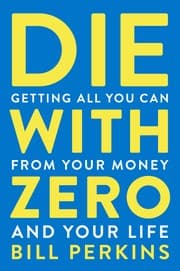
I like the way that you phrased it. I, I c- I probably just butchered it. But, um, but it's this idea of I'm gonna waste my time now to have some magical time, perceived time in the future. Like, that's just not the way reality works. And also, and, and I'll be quiet after this, but, um, there's a book that I think it's overstated, but the broad idea I think is very good, which is Die With Zero.
Um, I think I sometimes get a little, like, annoyed when, like, these, you know, people who are worth, you know, $100 million are like, "Oh, Die With Zero. It's not about the money." Well, yeah, yeah, I get that, but, like, that's annoying. But I think in real life, the, what, what the real key from that book is, 'cause I've, I've read it, is that you're 48. You're never gonna be 48 again.
You know, realistically, you're never gonna be this healthy again. Like, for guys like you and me, like I'm 45, you're 40, like for us, every day for, you know, even though we can kinda maintain by doing the right things, right? We're never gonna be 30 again. We're never gonna be 20, 20 again. Like, you know, why not run with your kid and play soccer or baseball or basketball and spend that time and, you know, sit down on the floor and play board games with them and do that shit now?
Because when you're 60, one, they're not gonna be around, and two, you're gonna be tired and you're gonna be less healthy, and you're not gonna be able to enjoy it as much. I guess my question for you is, as you buy back your time, um, using-- And I wanna get into the, the formula little bit, although I don't wanna, you know, we want people, um, to, to, to get into your work and stuff. Like how do you find the harmony between like, you know, you personally and then how do you work with your, your clients on finding the harmony between enjoying what you have today while still being that ambitious version of you that likes to grow and build? Yeah. That's a good question, and very deep.
Yeah, I, I believe, I, I mean, my response will be more, more on the simplistic side, but it's like have a calendar and, a-and we all have calendars, but like with boundaries so that you could essentially y- you know, like for example, when I work with a client, I'm like, "All right, we're gonna not work more than 30 hours a week. So we're gonna structure the calendar so that, you know, y- we're gonna get your, your family time in, your personal time in, and then we're gonna put work around that." And yeah, it's gonna be an adjustment period, but I think when, when you respect the boundaries of this is my time allocated for work and this is my time allocated to, you know, you know, to be a dad, to, to, to reconnect with the family or even my personal alone time, then I think that gives you permission to, to sorta just be in the present and, and give yourself permission. Like, you don't have to do this often, you know, when I'm like, "Okay, I got these numbers of hours to work, and I feel like I didn't finish what I needed to," so instead of robbing, you know, from the family, I'm just gonna like pick it up right here, you know, the next day that I get to work. And maybe it's tomorrow.
If it's a weekend, you know, pick it up on Monday and, and just try to be fully present. And it's not like I snap your fingers and you're into it. It, it, it's a habit you have to develop. But I think if you can just realize, a-and I, I, you know, I hope I can convey this properly, but like, like you alluded to, like once we're older, we're not gonna have the energy and the, and the drive or anything. One of the things that I visualize is that, you know, one day I'm gonna be 70, 80, and, and my son, he's already gonna be 30, 40, 50, and I'm gonna be like, "I wish I would've spent more time with him when he was looking for me to spend time with him."
You know? Like, he wanted to like wrestle in the bed, and I, I said, "No, I gotta send another email or something." Like, I guarantee when you're 70 or 80 and you think about that moment that you blew off for, for the other thing that was work-related that you won't even remember what that was, but, but you'll always remember these moments with your kids, but you won't remember what little task you had to do that you blew off a special moment with your kid. You would give up your entire fortune that you'd built up to that moment to just go back to that moment and be like, "Son, I'm here for you. Let's do this.
Let's wrestle," or, "Let's go out and throw the ball And so I don't even know if I conveyed that properly, but it's, it's minimizing the regrets that we're gonna have when we're older. We're all gonna be older, and we're gonna be like, "Ah, I could've done this and that better." We're all gonna say that. But I, I think that the goal is to, when we get to that age, we can say, "Hey, yeah, w- I regret some stuff, but when I realized that I would eventually regret it, I, I made a change and I made an effort to be there, a- and I can live with that. Like, I'm okay with that."
And so, so that's my goal, and that's what I wanna help, like, others. A- and again, I reference the me of 10 years ago, 'cause I was missing and blowing a lot of these moments. A- and even now, I, like, I regret. My son was two and three, and he was coming in my office. He had something awesome to show me that, that he thought was awesome, that was worthy of interrupting Dad while he's obviously looks busy, and I'd, I'd be like, "Hey, two more minutes."
And as I'm saying that, I'm not trying to lie or be deceitful, but I know it's not two minutes. I'm just trying to convey, "Give me time." And then, you know, once I'm off my call in 30 minutes, assuming I'm not hopping on another call, I go back to try to relive the moment, and it's gone. He's like, he's like looking at me like, "I don't know. I, I, uh, something cool, but I don't...
I'm on to something else." And eventually you train... You know, like me, I trained my son to ignore me. And, and it took a- Hmm ... a, a restoring of that bond process once I started getting the frameworks in place. Um, so it doesn't happen overnight.
It's like, "Yeah, I'm, I'm..." You know, you come to your family after working so hard. "Yeah, I'm here for you. Let's do this." And they're like, "Yeah, right.
We'll see. Time will tell. Wait till that first fire comes up and you're gone just like you've always been." And, and then hopefully the response is, "No, no, uh, I'm working the buyback time formula. Th- this time it's for real."
But it's gonna take time to, to prove that, that you, you are becoming the man that you say you are and, and, and that your, your family can trust you, and that bond is restored. So yeah, went long there, but hopefully there was something in there. No, no, it's great. And I think, you know... Man, I, I had almost a physical reaction when you said, "I'm training my son to ignore me."
I think that's a, that's a really deep and scary thought, is that we are training the people in our lives to interact with us in the way that we train them, right? So, like, if every time your spouse comes to you and wants to know how your day was, and you're like, "Hey, no, just one more email," you're training her to not ask you, right? And then all of a sudden you're sitting in a therapist office and you're like, "You know, man, I'd really..." You know, what, what... You know, so many guys, their beef is like, "Geez, I just wish she'd say hi to me when I walked in the door," right?
It's like, well, you freaking trained her to not ask you, because when you came in the door, you had 10,000 things on your brain, and you were grumpy, or you had your AirPods in and you were on a call, and then when she did actually get around to it, you were too busy with your face in your phone or what... You know, just like you said. And it's like you train them. I- man, that is a powerful thought, dude. That's a very power- I mean, that...
For those watching on YouTube, I literally had a physical reaction when you said that, 'cause, you know, I, I, I've never shared this story on the show before, but about, about two years ago, I was in, like, a not awesome spot. Um, I think we talked a little bit about this when we, when we, when we talked, uh, offline. But, uh, I sold my company, and I shouldn't have sold it to I, to who I sold it to. It was a bad decision. Um, they were not the right partner, and I just watched them slowly murder my baby over time, and it was very tough.
And we finally hit a point where w- it wasn't even what I had built. It wasn't, you know... I was-- And I hit my first exit trigger, and I could've s- you know, there may have been chances to stay or whatever, but I was like, "I, I gotta get outta here," and essentially that's, that's what happened. And when that happened, I completely lost my identity. 'Cause for the previous four years, my identity was Rogue Risk. Was this insurance agency that I built, growing it.
Everything was about, "This is what I do. I am the founder and CEO of this company. I blah, blah, blah, blah, blah, blah." You know, all the things that it takes, Ria, as you know. And I, and then when that happened, you know, it's, "Why did I sell?"
You know, just doubt and shame and regret and, like, oh, my- you know, I had this rocket ship and g- these people came in and, you know, I let them, you know, knife it to death, and w- how did I not see that they were gonna do this? And, you know, and, and I... It was really dark. And, you know, I did as some people do. You know, you, you just...
I turned to drinking, you know what I mean? Not, not in, like, a all-day, everyday kinda thing, but, like, to land the ship at night, this is what I convinced myself of, to land the ship, I would have one, two, and on bad nights I might have three or four cocktails, right? Which, for the middle of the week, is not good. There's no excuse for that at all. And, and I'm not excusing this, but my wake-up call was...
So I'm, I'm divorced. I have my kids, uh, um, two days during the week and then every other weekend. We have 50/50. And I had had too much to drink the night before, and it's, like, a Wednesday, and I'm hungover, and my kids come home from school, and they come over to my house, and they wanna play, right? They wanna throw the ball or, uh, my un- my u- my older son, I could tell, was just looking to, like, wrestle and wanted to just, like, get in...
He was just looking for action, you know what I mean? He want... And I'm like, "Ugh, oh, I'm tired. I'm tired." And, like, you know, they...
And I got two boys, and they ended up playing with each other and whatever. Dude, I cried myself to sleep that night. Like, I sat in bed and cried. I was like, "What kind of fucking loser are you that your 11-year-old son wants to, like, wrestle and play, and you're, on a Wednesday, you're too tired because you're in self-pity mode, fucking, you know, hungover on a Wednesday for no reason at all just because, what? Like, a business deal didn't go the way you wanted?
Like, get your freaking shit together." And, um, you know, I've made sure that that never happened again. But dude, that's, like, a really... Like, when you, if you self-reflect, and I'm sure there's guys listening to this, and, and ladies, m- maybe you too, but obviously George and I are dudes, so we just know dudes better That's like a really hard one to, to swallow, you know? And I'm glad-- Look, it was one day, one night, kids are fine, course corrected, right?
It was a big wake-up call. But, um, but you think about it and you're like, "Okay, that was a really bad moment, big kind of bad moment that I can look at and, and put my hands around." But as you discuss, like what about all the little micro moments? What do all the, "Just give me five minutes," or, "Hey, in an hour," or, "Tomorrow we'll do that, bud," or whatever, right? I have never framed it as, in my head, as you're teaching them how to interact with you, and man, that's really powerful.
Yeah, no, I, I only know that 'cause, uh, that I lived it. I was the master teacher of that. And, um, yeah, uh, you know, I started, you know, learning about more how like young kids need their dad. And it's kind of like common sense thing, but it is huge. You know, like, you, you live with this stuff for the rest of your life.
You know, like we're, you know, we, we get things good or bad or indifferent, you know, from our parents and, and so how they interact and, and, and influence us, we- we're gonna take that in one way, shape, or form. And, um, yeah, and I've heard-- A- and I, I can't take credit for this and I can't recall who said this, but it's like with our sons or, or in my case my one son, it's like I'm training my replacement in this world also. And so kinda looking at it through that lens gives me, um, I don't know, it, it's an exciting thing. It, it makes me wanna include him on things now whereas before it was just like, "Yeah, I'm doing it for the family, but, you know, I'm not really there. I'm just, you know, but they have a nice, nice home and we go on nice trips," like as if that's gonna be okay.
And the crazy thing is we've been on some amazing trips where you, you get the world's fluffiest pillows in, in the most expensive hotels with six and seven-figure cars valeted parked out front and, and you know, I'm thinking, "Wow, we've made it," and, you know, "The family must love this." And yeah, they, they like it. It's better than being like at, you know, Motel 6 or something. But then, um, y- you know, during COVID, we, we bought a travel trailer and we were kinda like, "It's a nice travel trailer, but, you know, we're roughing it out a little bit." The pipe burst and I had to go find, y- you know, to replace it and stuff, and I'm not exactly-- Nobody's ever accused me of being a handyman.
I mean, I can fix things- ... but that's not my thing. And it was like a family adventure to try to fix it. And, and to this day, we talk about, you know, the, the moments where we kinda had to rough it out a little bit. N- nobody mentions these fluffy pillows that I, I remember it being a big fat bill, but, uh, that, the, I guess the ROI or return on that trip didn't really last long. But, but those moments where we're kinda like it's, it's unpredictable, it's a little, you know, off the grid I guess you could say, th- those are the moments that bring us together and that we talk about.
So yeah, I, I don't know where I'm going with that, but, uh, it's just to- No, no, you're right, dude. Yeah. Ki- kids don't care about money. Yeah. Kids don't care about money.
And, you know, they just-- You have to hit a certain threshold, right? They don't wanna be hungry. They need to have the basics, right? People that are at that level, I get it. Like you gotta-- I get the struggle at a certain level.
Like you, there is a certain level of income that if you are not there, you are grinding every day to kinda maintain. And, and there are sacrifices that have to be made. These are your working moms that are doing two jobs to keep the bills on, to keep the lights on and shit. I get that. Like this is not judging them in any regard.
But when you do hit a certain threshold of income in which, you know, you're not, you know, you're not struggling for every meal, you're not struggling to put food on the table, keep the lights on, et cetera, you're, you're past that point, the sustainability point. Honestly, I don't think kids give two shits about money beyond that point. Now, when they get older, they're gonna wanna have their own taste, they're gonna wanna do different things. That's different. But like they just want your time, your attention.
They want adventures. They wanna explore. They wanna laugh. You know, if you got boys, they want fart jokes. If you got girls, they wanna do fun stuff like get their nails done and shit.
And like, and all it's amazing, and that's exactly the way it should be. And it-- but it doesn't have to be, I think especially if you're an ambitious dude. Again, ladies, I'm sure some of you are the same way, but I think I've seen this manifest the most in men, is like if you have that ambitious gene, in your brain you're saying, "I need to make more than my dad. I need to provide them with a better life than I had. I need to get them the big house and the nice car," because, you know, maybe I didn't have that exactly the same or whatever, you know?
And the truth is they just don't care. They j- they just-- I mean, they're so frigging oblivious to everything except for their small, you know, worlds that they're living in. It's not even like they notice. I mean, like they literally don't even notice the nice stuff. Uh, they just want to experience shit and be around you, and it's so easy to forget about that.
It's incredibly easy. Yeah, absolutely. And if you don't notice them, they're gonna go where they will get noticed, and a lot of them will get raised by iPads and iPhones. And then you leave them alone to the World Wide Web, who knows where they're gonna go. They're gonna see things that you could argue no human should ever see at any age, but certainly at a young age, they'll discover some things that can negatively impact them for, for years, if not for the rest of their lives, that they might need therapy for someday.
So yeah, the absence of dad at home can, can have ramifications for generations. And I'm also like sympathetic to that dad, you know, you know, say me, for example, because I have my own story where I can like I'm passing down something or I was passing down something that was passed down to me, and I can't blame my dad too much 'cause there's a story there somewhere where his, him and his dad. So I think, you know, the man has to realize it ends here, like we're stopping it here. And, uh, and then you teach your son, again, could be daughter too, but we're men just talking guys, to, to carry a level of importance to wanna pass that down for generations. I, I mean, I, I think that's the only way that we sorta slow this whole thing down of, of, uh, you know, missing, missing dad in the house kinda thing.
Yeah. I'm gonna forget the name of the research study, but there's a really famous study on how we pass down three generations of trauma. So Your job, so like the, the output of the study is essentially you have two choices. You can start to solve the traumas that have been passed down. Like, you can't help the fact that you're experiencing not only your own trauma, but the three generations prior to you, you're experiencing varying degrees of the trauma that they experienced as well.
And you can curb that, right? So like if you have alcoholism in your family, you can, you can start to curb that. Does- You know, it doesn't mean you have to be sober, but it means, hey, you can teach your kids what a healthy relationship with alcohol is, right? If that's, if that's what you wanna do, right? You can have a healthy relationship with money.
If your family has always been terrible with money, right, they just can't figure it out, you can solve that. You can say, "Hey, you know, my kid, you know, I can be better. Instead of being worse than my dad or carrying on with my dad, I can be a little better, and I can teach my kids to be a little better than me, who will teach their kids to be a little better than them, and now my great-grandchildren could be great with money, and, and it could change the whole course of our, our lineage." And what I like about it, whether it's true or not, right? I, I...
Again, there, there are studies that have shown this. They are fairly prominent. I don't know what they are off the top of my head. Uh, if someone's listening and knows, love for you to pop it in the comments on YouTube, do that. But what I like about it is even if it's not true, like even if we're not actually carrying trauma, let's say that's not the case, the mental exercise, the, the thought experiment is nothing but healthy for you and your family and the people that matter to you, right?
If you, if you believe it, and you take on the responsibility of I'm gonna start to change some of these generational traumas or mindsets that have held my family back, I'm gonna be a positive stepping stone instead of a ne- That's only a net positive to you, to your kids, to your spouse, et cetera, down the line. And I also think it gives you something bigger to work for. 'Cause I could be okay not being great with money or drinking too much or whatever my vice is, right, gambling too much or what- whatever the things are that I do that are, that, that don't produce positive results. But man, am I okay with my kids having to deal with that? Yeah. I don't know.
Am I okay with my kids' kids having to deal with the fact that I had a gambling problem? Yeah. Now I'm, now I'm fighting for something bigger than myself, which I think is a key to making major change in our lives. I think it's very difficult to make major changes in our lives if we're only operating for ourselves, but the minute we find God, we, you know, uh, prioritize our family above ourselves, we prioritize our community or some larger thing, it makes those changes much easier. Yeah.
No, I, I agree 100%. And yeah, I also agree, yeah, it starts with God and, and having, you know, purpose and yeah, it's... but it's beyond me, and now I've got a reason to, to change, to change the way that I work, the way that I think, the way that I talk. And yeah, we could be okay. I've got, you know, this drinking issue or, or, or insert the issue name. But if you're thinking like, "Okay, but it doesn't stop here.
It's gonna impact generations, and I have a chance to at least curb it, at least minimize what I'm passing down," I, I think that's compelling enough reason why. So let's assume I'm struggling with this, and I come to you. Like, what's the first step of shaking me out of my current state and starting to buy back this time? Like, like what, how do you... Like, what's the...
I don't wanna get into your full program. I want people to dive into your work and spend time with you and if that's what they're interested. But, like, what's that first step? How do you rattle my cage? How do you get me going on the right path if, if I'm, if I've come to you 'cause I have a problem?
Yeah. Usually, uh, just say for example, uh, say this is a client onboarding call. The first thing I do is say, "Hey, look, you know, five, six months down on the calendar and, uh, give me two weeks where you can be off the grid completely, 'cause we're gonna take a vacation there." Like, they're gonna take it. They're gonna go with their family, and they're gonna start buying the plane tickets, book the hotel, invest in it. 'Cause when we just talk about it, it's like, eh, it's give or take or, or, you know, take it or leave it, I guess, if it's gonna happen.
When you invest in it, you're like, "Okay, I'm- money's out. We're gonna make that happen." And, um, so I t- I tell them, we, we, we work on that, and then a lot of times they freak out, and they gasp like, "Oh my gosh, how am I gonna take two weeks off? I can't even take an afternoon off for an hour." And they're...
And I'm like, "I love that response, because you need this more than you know." So, like, we're, we're on track as far as y- helping them with what they need. Transformation's coming. And then, um, once we have that to look forward to, and they're like, "How am I gonna do this?" I'm like, "Well, clock starts now."
Okay, so this is what we do now. We take a look at their last two weeks, and if you're like the me of 10 years ago, I'd, I'd say, "I don't really... I have a calendar. I could guess what I did." Okay, well, you don't have a great history there to, to re- that you've recorded, so start now.
So for the next two weeks from here to two weeks from now, pretend like you have a camera on you and wr- write down everything that you do. Journal everything that you do. I mean everything. I woke up at this time, uh, took a shower, brushed my teeth and prepared food, did some work. What I did, because if you prejudge, "Should I write this down?
Should I not?" You're gonna miss out stuff that you probably should've written. So don't prejudge. First couple of days, you're gonna start to recognize some things like, oh my gosh, some low-hanging fruit stuff. And we all know, like, there's a number of things we shouldn't be doing, so that's like the first place to attack.
But two weeks will sort of give you like a great, like, sample size of, of things. And when I did this for myself, I was working as high as 80 hours, and, uh, I realized that 40 of those 80 hours were on tasks or, or things that were $50 an hour or less. Now, I'm a 1,000, a $10,000 an hour guy when I'm working in my zone of genius, and I'm doing work for m- most of my work week was $50 an hour task or less. And so remember, at this time, I had a money printer, push a button, spits out money. So for a small investment of, not a mathematician, but $50 an hour times 40 hours is $2,000 a week.
Couple hours worth of business revenue would have bought me half of my time, but I didn't realize that 'cause I was such in the fog So we need to bring clarity to their current situation. Like, what are all those things you're doing that you shouldn't be doing? Let's get that off your plate, and then we have to implement what I call the time liberation trifecta, which is the only three things you can do with any task that you shouldn't be doing. I mean, one of them is you do it, and we'll determine what that is, your zone of genius, needle-moving stuff. But the other stuff, uh, important, but it shouldn't be you doing it.
And so you can either eliminate things that don't move the needle, you can, um, automate anything that repeats, or you can delegate, but with ownership. Remember 10 years ago, I was delegating. I would've told you I'm the king of delegating, but yeah, it boomeranged back up to me. I wasn't transferring the proper ownership and showing them what the definition of done looks like. So there's a big key difference to making it work 'cause I, I can already hear people saying, "Well, I delegate."
There's a big difference delegating with ownership. And so once we do those things, that, that's the beginning of identifying the things they should get off of their plate, and the goal is in the first 90 days to experience, like, version one of this whole thing. It's not gonna be perfect. They're r- patch up some things. That's why I'm there, to help them, walk alongside them, accountability, make sure they're sticking to it.
Um, we've also sc- um, designed the calendar to not work more than 30 hours. We're, we're putting in personal time and, and family time in there as well, and we're gonna respect those boundaries. And so we get them out from being the bottleneck in their business to being present at home. So it's not like, "All right, we got you out of your business. All right, let me know if anything breaks."
It's like, nope, you're here 'cause you also wanna restore the bond with your family. So there's frameworks for that too, and one of the simpler ones that I can explain is, um, essentially, like when, when you say that you're gonna attend a game or a recital, an event, a date night or whatever, you put that in your calendar, and you don't miss that unless you get hit by a bus. So don't walk across a street where buses are going, okay? Um, just like, you know, a Zoom call or a Zoom meeting, like most of us will not miss that for anything. And so we need to treat our personal calendar, our personal commitments the same way, and that's more of a mental thing.
But if you're investing in me to walk alongside of you, yeah, you're gonna wanna do it because that's, that's why we're doing this whole thing. And so, uh, yeah, that, that would kind of be the, the first step is identifying what it is we can get off your plate, and then, uh, then we can see how to reconnect you with your family. And we're, we're doing it all at the same time, but, uh, but that, that's how it would be. And the, the last thing I'll say is as we approach the six-month vacation, 'cause remember the gasp like, "Oh my gosh, how is this thing gonna work?" Um, we do absence rehearsal tests.
So m- first we'll take an afternoon off, and then we'll take a couple days off, and then we might take a long weekend, attach one of the weekdays to it on the other end, and then we take our two-week vacation because what's gonna happen in our rehearsals, maybe invoicing, uh, uh, or accounting doesn't get an invoice or maybe fulfillment doesn't get a, a notice to ship a thing. I mean, these things are not catastrophic to a business if, if they're a few hours late or a day late. So in your little rehearsal, you're gonna sort of button up little things that maybe we didn't catch in our, in our big picture stuff to get off your plate. And then once that's all buttoned up, you've already had a little bit of practice being away from your business and it didn't fall apart, so that's gonna help you feel better during your two-week trip. And then you'll also realize that, okay, we've, we've found anything that could go wrong.
And then the last thing is that I didn't really talk much about, but we'll install a number two person, like an operations person, um, or, or just call them a number two and whatever in-company title they have, but where everything stops at. So nothing penetrates that number two person because you're gonna give them the decision rights and there's, there would be only a number of things that escalate. And I've done this a number of times personally where nothing has escalated, but I'll always have people say, "Well, give me an example of something that could." Something where there's like imminent financial disaster. Maybe, you know, th-th-there's, you need to like sign into your bank account because you as the founder are the signer, nobody else can and you gotta like approve something.
Y- you know, like a big one. Like for example the other day, but I was actually in work, but you know, there's this big massive wire transfer that my number two, he initiated it, but the bank's like, "Oh, we need to talk to the, to, to the signer because this is too big." And at that point I had to. So may- maybe if that's a critical payment, maybe you have to be interrupted in your two-week trip. But it's never happened during one of my trips.
So yeah, that's how we get going. Yeah, I love that. I think it's Hermosi says it all the time. I don't think it's-- I don't think this is his original thought, but he says it all the time. It's like, "Show me your calendar and I'll show you who you are."
It's wild, man. You know, I- time blocking, it's like the ultimate life hack. You know? Like I know there's much more to what you're doing than just time blocking, but just as a broad stroke, just like I never go to the gym. Is it on your calendar?
Like you schedule all your meetings. Why not put an hour and fifteen minutes on your calendar somewhere that that's like your gym time? And now you don't have meetings scheduled over the top of it. Everyone knows you're not gonna be there. But like you said, people get so nervous like, "Well, what if, what if my team sees that I'm working out at two o'clock in the afternoon?"
It's like you're the boss. You can do whatever you want. Like you know what I mean? Like and, and I don't mean that in like a jerky way. I just mean like, you know, all your...
I think a lot of it too is a misunderstanding of what your team really needs to be successful and I, and I hear you explaining that and what you're saying is like your team just needs to know what are they responsible for, what do they need to come to you for, and what decisions can they make on their own, and like where are you going? Like just some simple-- I mean you can get make it more complex, but like even some basic expectation setting and system builds and they're, they don't care what you do after that. You know? They only care when they're like unsure of what to do. They feel like they can't do anything unless they come, you know, unless they get your approval and now you're at the gym and now they're like, "Oh, this son of a gun like I need his freaking...
You know, I can't put this marketing message out until he approves it, but he's not gonna be back for forty-five minutes 'cause he's at the gym," you know? Now you get like that where if you were just like, "Hey, um You know, I don't care, you know, you know the guidelines for a LinkedIn post. Like, w- well, once it's ready, just publish it. Like, like if- That's it. You empower them ... you know, like, how much damage could you actually do?
Yeah. Yeah. And then there's a, like a, uh, I call it weekly operating cadence, but it could be, you know, every other week, it could be once a quarter. Y- th- every business is gonna be different, but that's where you bring up issues. I- if there's concerns, "Hey, let's discuss it in our little short, brief," I like to call them little 15-minute meetings.
It's not a place to talk about how, how are the kids or how's the weather. This is like we're getting down to business. What, you know, what's working well, what's not working well, w- how can I help you? We'll see you at the next scheduled meeting, and that helps avoid all these random pings, all these random approvals, and, uh, just constant daily interruptions that, that I used to find myself in all the time. George, I could talk to you for another couple hours, man.
I, I love what you're doing. I love that you lived it. Like, to me, the work you're doing today with the Buy Back Your Time formula, it, it works and it makes sense, and it's validated because you lived the other side of it. You lived the 80 hours. You lived the pain of coming home and having to say no, and, you know, and all this stuff.
And so, like, when someone sits across from you, and like, so the audience is like, George and I talked for, like, an hour or so a couple days ago before we, uh, scheduled the podcast, but I could hear it in your voice. Like, it was like you felt this pain, like you know what the other side of this looks like. And, you know, just some degree or, or a theory is not gonna help people solve these problems. And I love, I love, you know, the part where you force them to book the vacation because that puts the, the, the urgency time pressure on them to, like, you need to make these changes, but it's possible. Like, in six months, I'll get you there, but you don't, you're not gonna make the changes if there's no urgency.
And a two-week vacation booked, signed, paid for, you know, that, that's a, that's gonna put some pressure on you to make sure that you're, you're ready. So I love it, man. So for all the people who are listening to this that wanna get deeper into your world, that wanna learn more about what you're up to, what you're doing, and, and potentially work with you, uh, what's the best way to do that? Awesome. Yeah.
Thank you, Ryan. Um, buybacktimeformula.com, um, that's my website. There's gonna be a link to my book from there. It's free, just cover shipping. It's 128 pages.
It has everything I know about buying back time. Um, all the frameworks and principles are there. Um, people could literally read it and do it, but if, if you're like the me of 10 years ago, I would've paid a mini fortune to collapse time from bottleneck to freedom so I could walk alongside you and do that. That option's available there. All my socials are there.
I have a couple of other programs coming out too. It's called, like, 18summersroundtable.com. Um, more, probably more than we can discuss now, but that'll be there, as well as founderdaddinners.com, that if you're in the Austin area, I'm hosting dinners at my house for, uh, founder dads to, uh, to just come together and talk about what founder dads do. So yeah, but buybacktimeformula.com is where it all starts. I love it.
Guys, uh, whether you're watching on YouTube or listening wherever you listen to podcasts, just scroll down in the show notes, and we'll have a link there as well. Uh, appreciate the hell out of you, man. Um, you're doing so much stuff. We'll definitely have you back on the show, but, uh, this, this is phenomenal. And this is such an important topic, and I'm so glad that you're out here preaching the good word 'cause a lot of people need this.
The, the world is very hectic, and having someone in their corner like you who can help them get their time back and get their life back, it's worth, you know, 1,000x, you know, whatever it costs to work with you. So I appreciate you, bud. How was that, dude? Man, I, if you love it, I love it. Yeah.
Yeah.