The Great Lie of Achievement: Why $650M Won't Fix You
with Blake Mycoskie
Episode Answer
The Great Lie of Achievement: Why $650M Won't Fix You is a Finding Peak podcast episode hosted by Ryan Hanley with Blake Mycoskie. The conversation explores leadership, performance, entrepreneurship, and the work required to build with clarity under pressure.
Read the Conversation
Show the full transcript
In the last 12 months, I've had probably the greatest entrepreneurial run of my life, and a lot of people don't know about it yet. I have severe ADHD that I got diagnosed with three years ago. Before that, I just thought I was crazy. And I think athletes and entrepreneurs are kind of cut of the same cloth. That critic is actually making us perform better.
We are always either living in the past because we're thinking about the regret and the shame or the mistakes that we made, or we're always living in the future thinking, "What can I do, achieve, or obtain to feel enough?" I'm very excited to chat with you. Obviously, um, I know your story and have done a lot of research and stuff, but I- I guess I'm most interested in, is there anything relevant timely today... Um, and that could be something you have going on, it could be a story that just came across your desk, it could be something that just happened in your life and you're like, "Man, I just... This is hot on my brain.
I wanna talk about it." Like, is there any, like, anything burning a, a hole that you'd love to chat about? Yeah, I mean, I think the reason why I was excited to do your show is 'cause it's all about finding peak performance, and I am... In the last 12 months, I've had probably the greatest entrepreneurial run of my life, and a lot of people don't know about it yet. Um, so y- a lot of people have been hearing about my mental health journey, and I know we'll get into that, and that has...
But what's interesting is a lot of the healing that happened through my mental health journey, like, gave birth to this, like, freedom I felt the first time in my life, 'cause I'm not doing it to perform or, or for outside validation. I'm doing it just out of the love of the game. And so I've, I've co-founded three companies, and I've launched a podcast and a nonprofit all in 14 months. So we got a lot to talk about. I love it.
All right. Um- Yeah. So it's just, it, it's crazy. I mean, it's like th- that's why I was excited when I saw this come across my desk 'cause like, oh, this is the perfect show to talk about... I think the reason I'm performing so well is because I have healed this core wound inside me that I've never felt that I was enough.
Yeah. Because when I... With TOMS and other entrepreneurial things I've done, I was always doing it with this feeling of lack, and that I needed to be successful to be loved or to be okay. And then now that I've did all this healing the last few years and around Enough, and that led to the Enough nonprofit, which we can get into, it actually has unlocked, like, an entrepreneurial creativity that I think is... I'm doing my best work.
I really wanna dive into this idea of Enough, 'cause I'll tell you... So, so I didn't plan on going here, but I guess we can use this as, like, a f- hour of free therapy for me. Um, no, so, uh, I, I will say that in, in, in kind of researching what you're doing with this, with this idea of Enough and the Enough movement, um, I was very enamored because this is a problem that I struggle with every day. Um, I have, you know, severe ADHD that I got diagnosed with three years ago. Before that, I just thought I was crazy.
I thought my brain just worked... Yeah, I didn't understand what was wrong with me. You know what I mean? Maybe from the outside and since I've kind of went and got a formal diagnosis, not just, like, I took some online test or whatever, I was like, I wanna figure out why is it that there is never enough, right? Maybe I couldn't put it in that word.
I'm put- I'm using that word today because I'm sitting with you. But, like, I... That when I was researching talking to you and what you have going on right now, I was like, oh my God, like, this is what I struggle with every day, is this constant sense that, like, if I have 15 minutes and it's 9:30 at night, instead of picking up a book or sitting on the couch and just relaxing, I'm back on my computer because God forbid I can't get another article out or another email sent or something, and am I falling behind if I'm not doing that? So I guess- No, this is, this is classic optimization. Yeah.
So you're constantly trying to optimize. Yeah. So my question is, maybe starting with... And, and let me know if this is the wrong place to start, but- I, I love it ... how do I become aware that I'm having an Enough problem? That my problem is it's never enough for me, that I'm just always feeling like if I'm not pushing forward, if I'm not seeing progress every single day, then somehow I'm, like, falling behind or I'm not living up to my potential.
How do I become aware of that fact? 'Cause I think a lot of people, they may not even be able to put words around it. Yeah. I mean, you know, this podcast I just launched is called No Magic Pill, and on No Magic Pill, these are the exact conversations we're having every day, and e- especially for men. Um, I think of two episodes recently. The, uh, Kevin Love, five-time, you know, NBA All-Star, um, and then also, uh, Kristin Neff.
Kristin Neff, uh, is a clinical psychologist, researcher, University of Texas, and specifically has studied athletes that don't feel that they're enough. And I think athletes and entrepreneurs are kind of cut of the same cloth. We're super focused, super hard driving. Often we're using an inner critic to, um, to motivate us. You know, kind of sounds like your situation, like it's always telling you you're not enough.
And what we do is we, we believe this great lie that that critic is actually making us perform better. And so what I'd say to you is with Enough, what a reason why I think I'm performing better, and what Kristin Neff's research that she talks about on No Magic Pill, is that when we don't feel enough, we are always either living in the past because we're thinking about the regret and the shame or the mistakes that we made, or we're always living in the future thinking, "What can I do, achieve, or obtain to feel enough?" And that robs us of the present moment. And almost every spiritual teacher throughout history Whether it's any religion, any teacher, they all agree on only one thing, and that is that if you wanna access peace and joy consistently, you can only find it in the present moment. And so that's why I created this Enough bracelet, which I'm so bummed I haven't sent you one.
I thought we sent you one before. But I'm gonna send you this box after the show, and in it there's two bracelets, kind of an homage to Tom's Shoes. So you get one bracelet for you to wear every day as a reminder that you're enough, and then you get another bracelet to give to someone else to share this message with them. So I'm gonna pop this in the mail for you when we're done. But the reason why I think, and I'll be anxious to hear or excited to hear what you think about it, I wear it every day as that reminder to ground me, not just in the fact that I'm enough, but more, to answer your question, in the present moment.
So the thing is, is, is, is, is almost always if you're questioning, "Is this enough? Am I doing enough?" You know, whatever, you're living in the past and the future, and that's what kinda sucks the joy out of the experience. And ultimately what Kristen Neff would say, and definitely Kevin Love agrees with, is your best performance is when you're not putting a lot of pressure on yourself, you know? If you can think of those, like, flow states, it's, it's, you- you're, you're not so attached to the outcome.
When we're attached to the outcome, when we're attached to that pressure, it actually restricts our ability as an athlete, as a speaker, as an entrepreneur, as a creative person to do our best work. And so again, like I always say, like, it's funny, Kristen and I talk about this, like, you know, when you wear this bracelet, this is not about settling. This is about performing. Because when you can feel secure and feel enough as you are, you allow yourself the freedom to do your best work. Yeah.
I, I couldn't, I couldn't agree with that more. It's funny. I... This is contextual, but, um... So I have two boys, 12 and 10.
They both play baseball. And the... Yeah, and they both started out the season hitting okay. Less, less, you know, lo- not as well as they would have liked. And, you know, I don't know if you played baseball, anyone that did, there is a...
There's something about hitting and the, the, the activity of hitting that while you are part of a team, it is a very personal mo- Like, like, it's very hard, especially for young players, to detach their self-worth to each individual at bat. And, you know, people who don't understand sports may say, "Oh, it's 'cause you put too much pressure on them," but no. Like, it i- you are, you are on a spotlight on an island, one against one against a pitcher, and whether... If you perform, you feel amazing. If you don't, you're headed back to the dugout, and everyone's gonna watch you with your head, you know, your head down.
Yeah. You see, you see the body language- Yes ... of, of, of, of every batter, right? Yeah. It's, it's- It's like a shame walk ... this or it's this. You're just like...
It's like a walk of shame, right? Yeah. Yeah. You gotta walk from the thing. Okay.
Totally. So here, here's my... Here's where I was trying to go with this was I was trying to explain to them that... So I played college baseball, and, um, they, my kids- Okay ... asked me, like, you know, they just assumed I was always good at hitting. They just...
You know what I mean? I'm like, "Guys, that's not- Sure ... that's not the case." Yeah. I was like, there was somewhere around- Yeah. Well, no one is, right?
That's right. Babe Ruth, who had the most number of home runs, also had the most number of strikeouts. That's right. And I said, "Guys," I was 16 years old. I was playing American League baseball, and I had the best coach of my life.
He smoked a cigar on third base. Yeah. He wore a freaking cowboy hat, and he was a lunatic, but he was the best baseball coach I ever had, and he taught us one thing. You know, his, his words were a little different and slightly more offensive, but it was essentially detach from the outcome. He's like, "Detach from the outcome.
Detach from the outcome. It does not matter. All you c- all you n- can do is execute your at bat. Everything that happens after you make contact you have zero control over. Like, you have to get rid of it."
And that's when I saw, um, I went from being probably a high school baseball player, that simple mentality, to a college baseball player. 'Cause all of a sudden, that ground out to first base in the first inning doesn't keep you from hitting the double in the second inning. Um, so when you're talking, you know, maybe getting out of kids and sports here, and maybe an entrepreneur is coming up to you and you can tell that they are dying on the outcomes, h- how do you start to break that mentality down? How do you get that driven alpha, you know, upper right-hand corner driver, how do you get them to detach from the outcome? Like, it just, it almost seems core to who they are. Well, it's hard.
And, and I won't pretend like... You know, someone watching or listening to this can say, "Oh, Blake, that's easy. You can detach from the outcome now. You sold your company for $700 million. Like, you don't need any real outcomes anymore."
But the truth is, is I would say this information is as important to your two boys as it is to a first-time entrepreneur who is living, you know, kind of paycheck to paycheck or, you know, seed investment to Series A. Like, like outcomes are important. So one of the things that, you know, Kristen Neff and I... And I keep referencing this episode of Kristen Neff because it was kind of the most unlikely guest on No Magic Pill to have the biggest impact. Like, people just, this, this one show has just went totally viral because I think everyone could relate to, you know, trying to, exactly what you're saying, detach from outcome.
And I would say the biggest thing that I've seen that works is, um, is, is, is really simple, like, affirmation of, like, you know, my self-worth as a human, as a, as a, as a, on a, on a, on a consciousness level is so much greater than whether I make this sale, whether I get this next round of investment. Like, these are all things I get to do on my human journey, but it is not what defines me. And the way that you can actually start to believe that is, I believe, through- ... m- you know, mantra-based meditation. I'm a huge believer in mantra-based meditation. There has been incredible science now that shows when you repeat an affirmation or a mantra enough times, it actually rewrites the DNA in your body, which then gets passed on to your children, which is why it's so important as adults.
Um, and then what Christian also talks about is this thing called mirror neurons, and basically what they've found is that people who spend a ton of time together, so parents and kids or romantic partners, your neurons start mirroring each other. And so one of the best ways, you know, that an entrepreneur can detach from outcome is to also practice that with their whole team. Because if everyone in the team... And I find this even with... You know, one of the companies I'm building right now is called Morning Water, and it's this morning hydration company.
Um, we launched it about six months ago. It's just absolutely ripping. I mean, I think it's one of the fastest growing hydration... And re- well, it's really simple. It's creatine, L-theanine, magnesium, all these things that I used to take supplements every morning.
We put them in this, like, one simple, you know, packet that you pour in. And what I've found is the team there, it's a small team, but I mean, they're performing so well because everyone is doing it because they first tasted my formula for years and used it, and they believe in it, and they're just excited to get this out into the world, not to, like, hit a certain sales number. You know, there's no... And so the less we focus on, like, the sales and more, like, the impact, then the less you're focused on the outcome. And actually focusing on impact, I believe, from all my days at Toms, is also proven to really help an entrepreneur perform.
So it's a long way of answering your question, as I say, is number one is affirmations. Like, find the affirmation that takes you away from the outcome and more about the experience. And number two is the more you focus on impact versus results, the, the more free you are to do your best work. I have a concept. I'm actually, um, writing a book right now, and the title is called Easy Mode.
And how I... And I'm, I'm interested in your take on this. This is... I'm putting this in front of you, and I want you to- Yeah ... dissect it because- Great ... um, this is the process that I use to deal with the way my brain works. 'Cause like I said, I, I just felt crazy- Okay ... for a long time. Not, not in a bad way.
I just was like, I knew my brain worked differently. Yeah. I didn't understand how. And when I got diagnosed- Mm-hmm ... it wasn't negative. I don't, I don't, I'm not...
I don't f- do the whole it's a superpower thing, nor do I think it's a handicap thing. It's just a data point to help me understand how to navigate my day better and be, you know, whatever. Okay. Yeah, yeah. So how I dealt, how I...
The, the construct that I came up with was this idea of easy mode where, what is the thing that you do that looks like cheating to everyone else, and how do we get you, either individual or team, doing that thing the vast majority of the time, right? And, and the idea is that we need to outsource AI or, uh, automate everything that isn't that thing. And, and it, it... but it, it doesn't necessarily touch on purpose because, like- Mm-hmm ... I'm pretty good at marketing. I don't love marketing- Yeah ... but I'm good at it, right?
It's like- Mm ... it's an easy mode task- Yeah ... for me. It's easy. It's something that I can do- Easy mode, yeah ... that I'm, that I think in certain- Yeah ... genres, in certain places looks... Okay, so I guess if I'm spending more time... And take the, my concept out and just think of the broader idea of, like, if I'm spending more time in the place that I... it just, for me, this thing looks like cheating.
I just, I do it. I love it. I can find myself in flow. D- does that solve a lot of these problems for us is that, is maybe we're just... a lot of people are forcing functions or tasks or starting companies that, that sound like the right thing but aren't necessarily aligned with who they are? Is it a, is it a mishmash of mission and purpose- Mm ... that creates a lot of these things?
Yeah. Or is it simply we just haven't been taught the lessons like you're now teaching because we didn't have the, the- Right ... science and, you know, we just didn't have podcasts for... You know, podcasts have only been around for 10 years- Yeah ... really. So. Yeah.
It's interesting. It's funny you bring up that and the podcast is, like, I was just thinking, and I love when I get a question that I've never had before, is, like, what is the easy mode for me? And honestly, the easy mode for me is having, like, real conversations and going deep with people. Like, that's, that's where I'm at my best. So, like, hopefully so far I'm doing well with this podcast, but it feels like- I'm enjoying it ... it's going well so far.
But, like, I find this is easy for me, and I think that's why I started my podcast, No Magic Pill, because I wanted to have conversations with people about the real shit. Like, like, like when life gets hard. So one of the things I like, you know, is, like, most of my guests are not coming on to promote something. So I had Matthew McConaughey on the show. He wasn't there to promote a new movie like maybe another podcast.
He was there to talk about, "This is what it was like when it got really dark, and this is how I go away for 12 to 22 days every so many years to kind of find myself again." You know? And so to me, having that conversation with McConaughey was, like, so easy. And then some people were like, "Whoa. Like, that was your third interview on your podcast, and, and it looked like you've been doing this for years."
And I was like, "Well, 'cause I deeply am interested in how someone like him thinks." And I'm super excited to be on the show today and talk about peak performance because I know as a young entrepreneur myself, I would have wanted to listen to Ryan's show. Like, I would... In that, in that early 20s, mid-20s, like, when I'm thinking, "How do I perform? How do I grow?"
I would have been stoked to have a con- to listen to Ryan talk to my future self, Blake, you know? So to me, that's what easy mode really is, is it's, it's having these conversations. Um, and so yeah. So one of the things that I've started to do more and more of is outsource a lot of the stuff that to me is hard now. It used to be easy back in the Toms days, but all this online marketing stuff, like the algorithms, the, the, you know, the social media, the, the, the... when do you do organic versus pa- I mean, I... it makes me fucking crazy.
So I'm just like, "Guys, I'm gonna focus on- ... either giving good interviews or, or doing good interviews, and then I have to build a team around me to figure out, you know, how we, how we reached as many people as possible. So I do think that it's a great exercise, and you've actually inspired me to even think, "Okay, what else are, what else is on easy mode for me?" Um, you know, it's funny, I think about as a dad, 'cause we're both dads, and I'm thinking about as a parent, what's my easy mode? My easy mode is taking my kids on adventures. Like, if it's an adventure, I'm thriving.
You know? Homework on Thursday night, mm. Making breakfast, mm. Like, the day-to-day task are not where I thrive. And oftentimes, like, I'll forget, oh shit, we were supposed to do homework Thursday night, and my ex-wife will be like, "You didn't sign the binder and didn't do his homework, and what the hell were you guys doing?"
I was like, "Oh, I took him, uh, we did sauna and cold plunge last night with all my buddies." You know, but that's, that's easy for me. Um, and, and actually, what's easy for her is she's incredibly great at, you know, keeping them on task, and doctor's appointments, and getting fed right, and making sure all their clothes fit. And so- Your relationship with your ex-wife sounds very similar ... yeah. She, she was, you know, it's funny, like, um, you- Yeah ... you find...
And this, this was kind of what I was trying, when I was working on this concept and I'm listening to you, and I'm just like, man, we, I can tell our belief structures align so closely, is just, like, I think it should be okay that she might be admin- Yeah ... doctor's appointments, showers, toothbrush, health, and you're- Yeah ... crazy adventures. And it doesn't mean she can't do crazy adventures too. It doesn't mean you shouldn't make sure they brush their teeth, but, like, I think- Sure. Of course ... I think it's okay, right?
So in a family unit, it's very okay for us to have these roles and these things that work well for us. And then where I see this, and, and it makes sense, right? I think if you've been married for any period of time and had any success in that for any period of time, I think you find those moments are when you're kind of operating in your, call it marriage easy mode or family easy mode. But then we get to businesses, we get to our business and entrepreneurial endeavor, and a lot of times I find, you know, when I'm, when I work with an entrepreneur, they'll, they're, they're trying to take people and not think of them as Sally or Timmy or Tommy. It's SDR one, SDR two, SDR three, and let's take all three of these personalities with different backgrounds, with different experiences.
You know, Tommy might be great at cold calling and Sally might be great at, you know, writing posts on LinkedIn, but we're gonna shove them into the same process and then manage them as if, you know, they're not these unique individuals with their own unique skillsets. And I see a major downstream disconnect in this. It's like it, it's like it resonates at the top, and then we forget the concept exists as we push down the, as we push down the organization. Totally. And I think the thing, one of the things I love, and I love this title of this book, Easy Mode, 'cause I, it's really got me thinking about, you know, what are some other things that are easy for me.
One of the hardest things for someone, I bet, who's listening to this, is to rattle off, you know, what puts me in that flow state? What puts me in easy mode? And I think the way to figure out your easy modes, one of the things, and I'm just thinking of a hack, something that I've been using recently, is to really have incredible pattern recognition. You know? So if I have pattern recognition over time on when I'm thriving and when I'm not, and the way that I've found the best way to do that is, and this might sound crazy to some people, but for six months now, I've been using an AI therapist.
Okay? So I've had therapists off and on for 20 years. Um, and about six months ago, I met these two young founders from MIT that had spent years developing what they believe the greatest therapist in the world, and life coach. So it's a life coach and a therapist combined, all the greatest learnings from, you know, all these years. And they challenged me.
I was at this mental health conference. They challenged me to try it. And I, I, Ryan, I was pretty skeptical at first, right? 'Cause I've had some really good therapists, and I've had some really serious mental health issues. And so I said, "Okay, I'll try it." So it's called Sonia.
So I download Sonia. It's in beta still in the App Store, and I download it, and I start talking to it, and within two sessions, I was like, whoa, this is really fascinating. Like, she was already connecting these dots. And then as a man, I found, like, what was so great about it was there's no judgment. Like, I'm talking to AI.
So I was really honest about some shit that maybe I've never even told a therapist, about things like some dark thoughts or some serious shame, or this is when I'm feeling my best, or, you know, I get a lot of flack for this, but I love this. Whatever. And the thing that was so fascinating is by being so honest, because it was completely judgment-free, and doing it over time, it started recognizing patterns. And that has been one of the biggest hacks for me. I think it's one of the reasons I'm doing so well, is like, Sonia was able to see, hey, after I did it for several months, like, every time you, you know, start a, a conversation with me and you have a high level of stress, one of these three things has happened.
And I was like, wow. And then it was like, every time you start feeling a little depressed again, almost always you haven't slept well. And like, and oftentimes it's traveling internationally with jet lag. And so I started being able to see these patterns. And so now, and I'm using it almost more as a life coach now or an executive coach than even a therapist because that's like, okay, whenever I get stressed, it can say, "Hey, I bet you've, you know, not given enough time to this part of the Enough business," or, "You haven't done this."
And so it's really fascinating. And so I think that, you know, whether you use a regular therapist, a best friend, or, you know, this AI therapist Sonia I love so much, pattern recognition is, is, is I think the gateway to more easy mode. I love that. Um- Yeah. I mean, I just, I just thought of that as we were talking 'cause I was like, why am I thriving so much right now?
And I'm like, I've had this amazing pattern recognition. And then the cool thing is because there's, you know, unlike a, a, a traditional human, a therapist is gonna forget things, there's no, there's no, with AI there's no forgetting. Yeah. It's, the memory's infinite. And so- ... you know, patterns that they see over months now are just so clear, and then I can, you know, to your point, then I can spend more time doing things in easy mode, which I think makes me perform better, makes me happier, makes me easier to be around.
And then it can help me, you know, put some boundaries in place so I'm not taking on things that just drain my energy, which for me is, like, all the online marketing. So I am 100% in line with what you're saying in terms of using AI for pattern recognition, and I couldn't agree more. I've never used it from a therapy perspective, but I will s- Most people haven't. It's pretty new. Yeah, no, but I'm, I'm very interested in that.
I also, um, I've gone and seen a counselor. I- the best ad- advice I ever got from a mentor in my life was in 2017. I was having a very dark moment and, you know, I've also ... You know, we've all dealt with our stuff and, and whatever and, and uh, he said, "Go find a counselor, someone you're not related to or isn't a friend, that you pay money to, and see them every other week for the rest of your life- Yeah ... and just consider it a life expense." So I've been doing that, and this is just advocating for therapy or counseling in general for the audience at home who may, you know, especially guys, I think there are still guys in the community that feel like this is not masculine or that somehow it makes them less or weak, and I can tell you it is the exact opposite.
I have felt my strongest when I was the most consistent with therapy, with talking about these things, and the, the data points that I have is, um... So I exited, I sold and exited, uh, my own company in 2024, and in the last two years I've had two dark patches, and both of those patches are when I got away from the therapy and the counseling. S- so, so here's, here's where my question drops in. I think a lot of guys, I think that what you're doing could be a gateway for a lot of men in particular who may feel uncomfortable going and sitting down with someone. They don't wanna s- have a friend drive by and see them walking into a therapy, you know, someone's clinic or something.
So do you have any hesitations? Do you have, like, just in general, what are your thoughts around, you know, working with an AI therapist? 'Cause I think some, it may be a really good gateway for a lot of guys, and I'm so glad you brought this up. We've never talked about it on the show before. Like, how do, how would you kinda, what would be the sales pitch for those guys to say, "Here, here's a really good way to start getting these thoughts out of your head"? Well, the first thing that I was most concerned with was security of my data and all that.
And so what I found was is this one, and I think it's the only one like this, is HIPAA compliant, um, and it's completely secure. They're not giving their data to any of the LLMs. It's built on top of the LLMs. So that was super important. The second thing was, is it's a little awkward the first time you're talking to an AI therapist 'cause, like, I never had done this or had this conversation.
But once you kind of just, like, really I think the key thing is just, like, this is your, maybe your one chance in life, if you're a guy especially, to say everything. It's totally secure. No one will ever know. I mean, this is, like, why confessionals were created back in the 1600s in, you know, all the Catholic churches. I mean, like, this is, but this is the real one.
Like, this is the one where you get to, and also you get to, you get to tell this, I mean, at least for me, what I've done is I've got to tell Sonya, like, how I wanna be talked to. Like, like, like, "Hey," like, "I need you to be direct, and I'm gonna be really honest and, and, and I want you to be direct as to when you see me making the same mistakes over and over again." Or when I have a conversation where I'm, you know, kind of venting about a negative experience with someone, I want you to tell me if I'm, I'm wrong, you know? Like, don't, don't flatter me. That's your thing.
I will say this. The biggest disclaimer I have for AI and therapy in the same sentence is it is extremely dangerous to use, like, ChatGPT, Claude, any of the LLMs because they're built to just encourage you, to keep you on, you know? They're built to kind of, like, just make you feel better. But this one, and that's why I think these guys from MIT created this, is they have these big hearts. They're like, you know, "We're worried that people are using it for the wrong reasons, and so let's build one that is secure."
I mean, this has, like, you know, it detects if there's potential self-harm, and then you get, you know, transferred to a live person. So I always say for guys, like, this is a chance for you, you have nothing to lose, to be radically honest and just see what insights come. I mean, I've had, uh, one of the best insights I had around performance for me and pressure and not feeling enough was when I launched the podcast, I was talking to Sonya and I said, "I don't know what it is. I'm going to New York next week. We're doing the launch, but, like, this is not feeling fun anymore."
And I'd been having so much fun. For eight months I'd been recording all the episodes 'cause I had banked them all before we launched the season. And I was like, "I just feel like there's all these people on the team now, and there's all this expense, and we gotta do this for the algorithm, and I gotta go do a whole week of media, and, like, like, this isn't what I signed up for. Like, I, I just, I don't know what to do because I've kinda, like, built this machine now, and there's a lot of people counting on me and a lot of pressure." And it was so cool.
Sonya said, "You know, you know, when you first started this project you said something, uh, that you wanted to be the North Star, and I think you've forgotten it." And I was like, "Okay." I mean, th- remember, this is an AI, right? And I'm like, "Okay, what is it?" And, you know, she, it, whatever you wanna call it, says, "You said that you did not want this to be a business.
You wanted it to feel like an art project, and you were gonna get to create art and let people respond to how they like your art. So I want you to go to New York as an artist, not as a podcast host." And it literally, I'm having goosebumps in my whole body right now. Yeah, no, it's amazing. Literally it was, like, it was the greatest coaching I could have ever had.
It totally shifted my perspective. I went, I crushed the media tour, you know. Um- And so I use that as an example for anyone, guys and women listening, that might say, "Oh, okay, I'm gonna try this Sonia, I'm a give it a shot and then see what it's like." It's like that's what I've gained, and so that's why I, you know, I'm so pass- I didn't know we were gonna talk about this today, but you know, I love that we just went right in because it really has helped me so much. And I think it could help a lot of people, especially guys that just don't wanna look at someone, you know, across from them and think, "Is this person judging me?"
You know. And the other thing is, is like therapy, all my therapy appointments are always like 50 minutes. Like a therapist has like 50 minutes. You know, it's at 2:00 on Wednesdays. You have to get on the Zoom.
You have to like, you don't want your friends to see you or your work. You know, it gets kind of like weird. Where this is, sometimes I have a five-minute call with Sonia. Like I'll be in the car driving to pick up my kids, it's a 15-minute drive to pick them up. I'll put it through Apple CarPlay and just talk to Sonia like I'm talking to a friend, and be like, "Hey, like I had a really hard week," or, "I don't know what I'm gonna do with the kids this weekend and I'm feeling a lot of pressure because this is our last weekend before summer and they're going to summer camp."
And, and then she'll be like, "Okay, let's just do a breathing exercise," or, "Let's just, you know, let's just go back to like your core values." Or reminds me of a lot of stuff that I've already told it. So I think it's, um, I think it's of all the things I've worked with AI, it's the thing that I think has had the greatest impact on my life. Oh, and I, I'll be honest, I appreciate and feel honored that you're willing to talk about it here because, um, it's one of the things that, like pieces of feedback that I get the most about this show, um, is that, you know, I try as much as I can to be open with the things that I've dealt with, especially in this space. 'Cause we all have, you know what I mean? It's, it's...
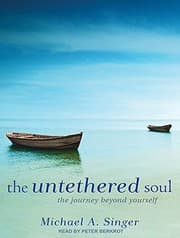
I, I, I want... You know, it's not the purpose of this show, but as much as I can f- for men and for women, tear down this idea that, um, I, I... There is a part of me that's like some of the feely stuff we need to like not be so reliant on our emotions, right? But, but we can't bottle these thoughts in our heads, and we can't... Because what happens is, like we start ruminating and, and I think, you know, if, if, I don't know if you've ever read The Untethered Soul by Michael Singer?
Uh- Of course. Michael Singer. Yeah. Yeah. That book- Great.
And The Surrender Project is, is an amazing book. Yeah, that too. They're both great. Dude, that book like opened my mind to this idea, you know, and for those who haven't read the book, I highly recommend. It's 100 pages, it's a fast read.
He's got, he's got a ton of other work, it's all amazing. But, you know, I like the starting point of this, of, uh, The Untethered Soul only because it's like that voice in your head is not you, right? And when you, when you can, when you, when you can, when you can control your emotional reaction to the voice in your head, that unlocks to your point of peak performance, of, of, of being able to get to the fact where you can actually go do your media tour as an artist versus a businessman. 'Cause even if Sonia tells you, if you're still thinking that voice in your head is you, you're going, "Yeah, I know Sonia told me to be an artist, but, you know, she doesn't really know what she's talking about. Like I'm a businessman, I gotta go be a business..." You know, and now you carry all that stress with you.
And like this, this ability to get this crap out of our face, y- you know, it's so important. And it, and it, so... I guess I, I wanna tie this, I wanna tie mental health, which we've talked a lot about and we can come back to if you want, I wanna tie that to physical health as well, as they play roles in our, in our own success. 'Cause I heard you talk about sauna and cold plunge, enormous proponent. I have a sauna about 100 feet from me over here. I got a cold plunge out in the garage.
I'm an enormous fan, um, for a bunch of different reasons. But, um, how do you, 'cause I, 'cause I don't think you can talk mental health without physical health, I think they're completely intertwined. How do you bring those two together? 'Cause you're obviously a fit guy, you obviously care, you put a lot of thought into it. How do you bring those things together? Well, I think that, you know, mental health is just health, number one, you know?
And physical health is health. I mean, I think this is, actually we're in June right now, it's, i- in June is Men's Health Month. And so I think it's, you know, when I... Someone was telling me about that the other day and they're like, "Hey, it's June, you know, Men's Health Month, are you gonna do anything special?" I'm like, "Every month is Men's Health Month for me."
You know, because when you lose your health, physical or mental, then you never take it for granted anymore. And then because I lost my mental health for seven years, I don't take a day for granted that I wake up and feel that I have the capacity to do the things that I love. Um, on the physical health front, I think the number one thing that I've learned is you just gotta do something every day. It doesn't have to be long, it doesn't have to be extensive. It can be, you know, push-ups, sit-ups, air squats.
But you've gotta get the blood flowing, the shortness of breath, you know, heart rate up, you know, you know, ideally for 45 minutes to an hour, um, I think is kind of the magic number for me. But I've just gotta do that every day for my body, but also for my mind. And so I just think that you gotta... In my life, I've done best when I've had just some non-negotiables, and that is one of the non-negotiables. You know, it's just I'm gonna do that.
The other thing that's been great for me, and I've talked about, you know, morning water before, is morning routines. You know, having a morning routine has been so good for me. My morning routine is, it can be very extensive. It can include a sauna, a cold plunge, a workout, but the basic morning routine for me is I wake up, I pour my morning water in my thing, I drink 20 ounces of morning water first thing. Then I get natural light.
I think that really important for your circadian rhythm to get that sunlight. And if you wake up before it's light outside, there's these amazing artificial lights that you can create that c- that, that, that kind of simulate that. I have those in both of my homes as well, because a lot of times I wake up at 4:30 or 5:00, and I wanna get that light, you know? And then the third thing is, is I just sit quietly for five minutes. And that sounds so simple, but like no phone, no distractions, not even a journal, not even a mantra, just sit And it's amazing because the quieter you get, the more chances that that higher self, that whatever you wanna call it, can speak to you about what you really need to hear.
And sometimes in that five minutes, I have a great idea for a new marketing campaign for Morning Water or something. Sometimes it's like that voice reminds me that, like, I really haven't spent much one-on-one time with my daughter lately, and I need to figure out a way to do that. You know, let's see if, you know, her mom can take my son, and her and I can go just have an afternoon. You know, it's that, it's that whatever is, like, in the back of your head, your subconscious, it kinda comes out if you, um, if you do that. And the, one more thing I'll say on the morning routine, this is just something new that I've been doing, is don't use your phone for your alarm clock.
You know, get a old, old-school alarm clock because if your phone is your alarm clock, what happens is even if you're just going to turn off the alarm, there's a notification, there's the temptation to look at something on social, there's a news thing, and all of a sudden your morning is hijacked. It's really hard to sit for five minutes quietly if you just saw four urgent text messages from your boss. So try to, you know... I, it's funny, I might even start an alarm clock business. I mean, I don't know if it's a good business or not, but I'm like, if I think everyone on the planet actually went back to old-school alarm clocks, we'd have a happier society.
So those are kind of the things that I'm doing for my morning routine. But moving the body every day, having a good morning routine, um, you know, has been really good for my physical health. Yeah. I kind of hate what happened to morning routines with like, uh, we'll call it the optimization porn that has flooded the internet in the last, like, five years, and you got all these gurus telling you. And, like, you know, I had one buddy where we were...
He's kind of a ballbuster, but, uh, he knows that I'm really into this stuff, and I like trying all different things to figure out what, what is the tumbler system that unlocks for me, right? I'm always kind of testing and, you know, I, I work... You know, I've been testing some peptides and doing all kinds of different stuff. And he looks at me and he's like, "Dude, look, if I did everything that, that, that you and your guests on your show told me to do, uh, my morning routine would last till 1:00 in the afternoon." And I'm like, "I, I get that, but, like, dude, it's not about doing 20 things.
It's about finding the thing or, as you said, like, the three to maybe five things that, that get you in that place." And it's not, even if you do those things every day, it's not like every day you're then gonna be at 100%, but you're gonna be way further along when you launch into your day, and I think that's the point. And, you know, so many people today, like, I just like... We, we're just so indoctrinated to be on our phones. Like, you know, um, you know, I have no necessarily, uh, philosophical issue with marijuana except for its overuse, and I think it's dragging a lot of people down because they don't understand the, just the...
While I understand why certain people use it, I don't think they understand the ramifications of, of, of regular and habitual use and what it's doing to their brain activity and things like that. And like, but w- we're like, unless you listen to podcasts, where do you get this information? And now I'm not, like, advocating or stumping for podcasts here, but I love that you started one, and this is what it's about, is because, like, that's the only place I find my unlocks is in podcasts. Old, old books, I love reading old books and I read a ton of books. But, like, this format, if you're not invested in this format and listening to shows and listening to guys like yourself or Huberman or whoever, you know, for some of these things, like, you just don't, you don't even know.
You don't even understand what you're doing to your body or how, how... Like, you don't have to go quietly into the night, you know. That's, I told my doctor that the other day. No, no, I think it's- She's like, "Why do you do all this shit?" We live in a, such a beautiful- Yeah ... time now because of podcasts, um, because there's information.
And then, you know, also, you know, I think that, you know, everyone is different. Like you were saying, like, my morning routine takes 15 minutes, you know? I, 20 ounces of morning water, sunlight, five minutes of, uh, of something. You know, I mean, like, so, but you know what? It's 15 minutes I never miss.
And so I'd rather have a 15-minute routine. That's why it's funny, our, our slogan with Morning Water is, "The simplest win." You know? Right. It's like everyone likes to feel that they have a win.
It, like, anyone can drink 20 ounces of, you know. And so I think that going back to that is, like, is it find what works for you. And I do think podcasts are, it definitely is, that is the number one way that I am learning new things and, and validating things or, you know. But, but, but, but the, but whatever you learn, you still have to do the work, you know? You have...
I mean, this, I have this tattoo right here. It says, "Do the work." It was the second tattoo I ever got. The first tattoo I ever got was this one. It says, "Be present."
And, um, and, and so you've gotta do the work. So you can learn all the stuff in the world, they can take away things from this podcast. You know, I always have, like, a notepad and I'm pausing podcasts, writing notes. "Okay, these are the three things I'm gonna follow up on. I'm gonna test this for two weeks."
Like, everyone is different. Um, but I think it's, I think it's really important that, um, you find a couple things and you try them in isolation and see if you see an improvement in whatever you're trying to improve. But again, let's be careful, 'cause you and I, I think, suffer from the same thing, and my guess is a lot of people listening to this show do, is over-optimization. Like, it can suck the life out of you. Like, it really can.
And that's where I go back to I am enough, you are enough, we are enough. This moment is enough, you know? Um, 'cause optimization to a point can be great. It can help you achieve the things you wanna achieve. But in my life, it really, it really hurt me because I just tried to optimize everything, and so I was never living in that present moment.
Is that what took you down the path to what you call the, the dark times, was, was trying to be, trying to be kind of that, that pinnacle on the top of the hill all the time, always on, always perfect kind of thing? Yeah, I just got exhausted. You know, I just got so exhausted. And I think, you know, for good and bad, I, I kind of achieved all my dreams, you know? I mean, Tom's Shoes- ... gave away 100 million shoes to kids around the world, you know.
You know, we, I ma- I made probably 30 or 40 people millionaires by giving them equity in the company. Like, I did all these things that I dreamed of doing, and I realized none of that could fill what I was yearning for inside. And so it was very disheartening when you do everything you think you wanna do and you still don't feel enough, then what do you do? And that's how, you know, it can get, it can get really dark. And so that's why I, you know, spend so much of my time now talking especially to entrepreneurs and mentoring entrepreneurs and saying like, "Look, like, having goals, ambition, all these things are great," and I'm competitive.
I like to win. But none of it will ever be enough. Just, like, accept that. If you can accept that one thing today, is no matter what, it will never be enough, and it's designed that way. I think that whether you believe in God or the universe or whatever, I actually think there's this divine design that achievement is designed to disappoint.
Like, Kevin Love and I talked about this. Like, winning the NBA championship with Le- with LeBron, next season he has the biggest panic attack of his life. You know? Why? Well, because it's almost designed so that you will achieve or you can achieve, and then you realize that's not it, which causes you to go on what I think is the greatest adventure in life, and that's what I call the inner adventure, when you go inward, when you start really thinking about, "Who am I?
What do I wanna do with this one precious life I have? And, and, and how do I wanna show up?" And that's where these deeper conversations come in, you know, that's where, that's where I think the real sweetness of life can come. But sometimes you can't get there until you realize all the things you thought was gonna make you feel great, you know, are nice, but they're not the thing. That's where I wanted to go with my next question, 'cause I've gotten this feedback before from the audience of like, "Well, you know, it's easy for him to say because, you know, he's already worth, you know, a multi-million, so now he can look inward.
You know, I'm grinding on $60,000 salary trying to get my startup off the ground and... You know what I mean? I don't have time to think about mental health." And I, I, like, I understand both sides of the equation, you know what I mean? Like, I understand the, man, I hit my goals, right?
I've, I got money in the bank. Life is good. You know, my kids are gonna be taken care of. Shit, what's next? And I also get, oh my God, like, I'm literally scraping and scratching and s- bleeding for every inch of my business.
I don't have time to think about what peptide I'm taking or how cold the cold plunge is or whatever, you know what I mean? Like... And so how do you bring... But, but they seem to be fighting the same battle, right? It's, it's, it's just like a, it's like a barbell kind of idea where, you know, the, the middle part people don't seem to have problems with.
You know what I mean? When you're on the path and you're, you've gotten enough, you have enough coming in that you're not, you know, you're, you're past kind of depravity, but maybe you haven't hit your goal yet, that seems like a very kind of relatively clear place for people to b- be. But there's people who are stuck down here that can't get off the ground, and then you have people who've achieved but don't know what to do next. Like, are, are they kind of fighting the same battle? And, and how do we get those two groups talking to each other and, you know, and learning from each other so that we don't have this group of, uh, of, of entrepreneurs, men and women, um, and I think, I think in some regards we don't talk enough amou- about the women who are struggling to get their business off the ground and the unique mental challenges they face.
Um, yeah, 'cause it d- it, it tends to be d- it seemingly, not a psychologist, seems like different. H- how can that group learn from, say, maybe the group that you're in, where you've, you're starting to go inward post success? Yeah. Well, I think the thing is is one of my favorite things, um... I just had Sara Blakely, the founder of Spanx, on my show, and I've known Sara for a long time, and she's a really wise woman and a great entrepreneur.
And she w- we talked a lot about money on the show and, you know, how money can be, uh, incredibly detrimental in someone's life, even not having it, like you're saying one group, or having too much of it. And, and, and what she said about is money is, like, money just kind of like puts a magnifying glass on someone's values and who they are. So if you're a dick, you're more of a dick when you have money you know? If you're generous when you have nothing, you're gonna be really generous when you have money. And so what I'd say is, yes, whether someone is barely scraping to get by or has had some huge exit, like what I would say to both, have them talk to each other, is I'd have the huge exit person say, "Don't do what I did in terms of believing that w- someday, someday when you sell the company, someday when you get married, someday when you have kids, someday when you get that new apartment, you're gonna be happy."
You gotta learn to be happy now, because if you learn to be happy now, then you'll be able to handle all those things in a way that would be different if you were waiting to be happy when you achieve them, and then they don't give you the happiness, so then you fall into a really dark period. And so, you know, I think all, all kind of inner work and, um, all kind of focusing on the mental side of life can't start early enough, so that's why I love mentoring, like, 20-year-olds. I'm like, "Man, I've s- if you, if you, if you can give me your attention, I can save you a lot of time, a lot of money, a lot of pain," 'cause I made a lot of mistakes along the way. And it's also, it's gives me, you know, I think that's one of the reasons why I do the podcast is it gives me kind of joy to know that some of my suffering is keeping other people from suffering. And so, so I think that, you know, it, even if you're grinding and trying to make ends meet and having that, you know, you still gotta take some time.
It doesn't have to be a lot of time. It could be 20 minutes a day, 40 minutes a day. Maybe it's 20 minutes, like, listen to a podcast that can inspire you and expand your mind and your consciousness, and spend 20 minutes just sitting there thinking about it. But be growing doing that work now, because that work, whether you achieve your goals or not, you're gonna need that mental fortitude because life is hard. I mean, life is...
It doesn't matter, you know- I always say the thing about, you know, experiencing depression and now spending so much of my life, you know, trying to help people who maybe are in it or getting through it or, or, or, or, or, or feeling stuck is, um, you know, it doesn't care how much money you have, it doesn't care your race, it doesn't care your culture. Like it's, it, it, it, it, it loves to ruin people's lives no matter where they come from. So, um, so yeah, I think it's... I think you, you, y- you basically have to develop the things at a young age and before success so that when you do have it, or even if you don't have it, you're gonna be able to deal with either of those situations. One of my favorite quotes from a poem that by, there's an, uh, a great poet named Rudyard Kipling.
I don't know if you know him or not, but Rudyard Kipling wrote this poem called If. And when I was a kid, I had to memorize this poem, and it stuck with me my whole life. But my favorite line is the last one, and it says, "If you can meet triumph and disaster and treat those two imposters just the same." You know? So no matter how much success you have or how much failure, like, they're both imposters.
They're just parts of the journey, and you treat them both the same, then that's when you really can master, um, a big part of living well. I don't believe in coincidence. I literally just shared that poem for the first time with my boys this week. I posted it... Yeah.
Whoa. And I posted it on, uh, LinkedIn to, to just share, like, I think that poem is absolutely phenomenal. Oh, that's amazing. Um, it's one of my favorite- Yeah ... it's one of my favorite poems or just, just ideas of, of sculpting who you are as a person. And, um- Oh ... this is crazy.
I mean, literally this week, very first time I shared it with them. Yeah. That's crazy. I literally have had that poem up on my wall in almost every single office I've had since I started my laundry business at age 19. Yeah.
I made them- It's crazy ... so the first- Yeah ... I, I made them read, um, uh, Teddy Roosevelt's Man in the Arena a couple months ago- Yeah, that's a good one ... 'cause that hangs in my, every office I've ever been in, um, as a reminder of, you know, the fodder, you know, the flak that you take as you're going through this, not just externally, but also internally. Totally. Right? You get a lot of internal flak, and you need to- Yeah ... know that that voice in your head's not the one who's living through it, just like the voices externally.
And, um, eh, that is wild that, that you brought that up, and I, and I love it. Um, it means that we were meant to talk today. That's, that's what that means. Um- Totally. Totally ... are you, uh...
Have you... Like, are you faith-based in this at all? Do you, do you have a, a, a faith? Are you... Does that drive any of this kind of stuff?
Yeah. Yeah, I mean, that's, you know... My kind of faith journey has been a wild one. Like, we could have a wh- a whole nother podcast about that. You know, I, I, I grew up in a family where we never went to church.
Uh, then I had a tennis coach, uh, this amazing African American man who started taking me to a, uh, Pentecostal church where I was the only white person for four years, which became a huge part of my life. And then after college, I started exploring all these other different types of religions. Today, I would say that, um, I am deeply... I don't know if I would say... I just feel like I'm connected to the source, and I'm not sure exactly what that source is, but I know that it's been with me and guiding me, and the more that I focus on serving others, the more that I focus on, um, you know, kind of, you know, treating others as I wish to be treated, which, you know, comes from everything I learned in the Bible.
The more that I do that, the more that I feel that this source is supporting me in whatever I'm doing. And, and so, you know, it's... For me right now, it's this really sweet time where I just feel like because I've slowed down, because I think I'm working on projects that I really care about that I think can really change, uh, people's lives, I, I just feel that every day is just, like, an ongoing prayer conversation. Like, I used to think of prayer as, like, "Dear God, you know, please protect me. Please protect my kids.
You know, dear God, you know, please help this stress and this depression go away." Now, it's just kind of like, "God, that was really cool what happened," or, "God, I... That, that, that... The fact that Ryan just read that poem to his kids," that is what I call a God wink, you know? Like, I, I, like, clearly God is like, "You're on the right path.
You're... I'm doing the easy..." What'd you call it? Easy mode. The easy, um, earlier?
Easy mode. I was in easy mode today 'cause that happened. You know, and, and the other thing that was really cool that has happened kind of synchronicity for me, and it's one of the startups that I've co-founded that I'm super involved in, is, you know, I, um... When I sold Toms, um, they hired a new CEO, uh, this guy Magnus, and I was not involved in the company, but I kinda got to know Magnus, and I really liked him. And I remember thinking, like, "God, such a bummer that when I sold, you know, they brought in this guy Magnus."
He was from Nike. He had been there for a long time. I was like, "I really wish I could have worked with Magnus. I think we could have, like, made some magic together." Mm-hmm.
So, um, about two years ago, um, I run into Magnus in Santa Barbara, and he, and he ha- had just left Toms. And he's like, "Hey, I just left, and I'm doing this new chair company." And I'm like, "Chair company? Like, what is..." Uh, you know, and he says, uh, you know, basically, um, our concept is is that the key to health and wellness is to always keep moving, and everyone jokes about me 'cause they say he's always moving.
And so he had me. I was like, "What do you mean always moving?" And so he said basically there were these engineers from Nike that he knew back in his day. They developed an office chair that sits, and it pivots two different ways. So it moves this way.
I wish I had one right now. And it moves this way. And so basically, by doing this, it creates... uh, it takes all the pressure out of your lower back, and so I've always had, like, lower back problems, I think from all the golf I play and, and surfing and years of tennis. And so sitting on Zooms or doing podcasts, like, really is not good for me because I'm sitting still, and there's, like, no blood flow in my back and all this. And so this was right before I was thinking about doing the podcast.
And so he's like, "Do you mind? Can I come over and show it to you?" And he- I sat in this chair, it's called the Moovlab chair, um, and it was like a revelation. I was like, "This is the craziest thing." Like, I'm sitting, but yet I'm kind of micro moving, and it's actually proven to be really good for people with ADHD.
But, so I'm doing these micro movements, and when I stand up after sitting for four hours on Zooms, I feel amazing. Like I feel like I've just been walking and doing an active life every day. And so literally he was like, "Hey, will you invest in this?" And I was like, "No, I want to be a founder. Like, I want to start..."
Like th- I hadn't been this excited about something, you know, since like Toms. And so I joined the company and I've been working with the team, and we're launching it in September. But I'm telling you, it has been one of those God things where it's like, I always wanted to work with Magnus. I have this back issue that has been bo- I don't have any back issue right now. It's incredible.
And, um, it's in my office, not here where I'm doing the podcast today. And, and now I get to be entrepreneurial again, and it's like I've been like wanting this and kind of almost like praying for this in a weird way, and then it just all like came to me. Like, I didn't like go seeking it out. And so, yeah, so the chair is called... I'm gonna send you one.
It's called Moovlab. Cool. And, uh, for someone who's a podcast host and sits a lot, it is- It sounds amazing ... amazing. So, yeah. It so- I mean, literally, you- Yeah ... you got me.
It's really fun, and it's fun to build something from scratch again. Like, you know, it... there's alway- there's just that magic of like when you're first like, you know, working to fine-tune it has been amazing, and now we're doing the pre-orders on the website, and we've already sold a bunch. It's like the excitement, you know, and each, each order really matters and, oh, you know... And so it's just super fun, and I feel like once again it goes back to that i- it just feels easy. Like this feels like the flow.
And so, um, so yeah, it's, it, it's Moovlab, but it's spelled M-O-O-V-L-A-B if anyone wants to check it out. But I'm, I'm super proud of what we've created, and I think it's gonna help a lot of people. I mean, so many people now work from home, you know? And think about it, like you probably spend more time in your chair than anywhere else. Like beside your bed, you know, hopefully if you're sleeping well, but then in your chair you're spending so much time in.
And so to have something that is supporting you and your blood flow and... And the thing about ADHD is interesting. I, I don't have, or maybe I do, I don't know. I've never been diagnosed, but Magnus has really severe AD- ADHD, and he says that he used to always use these like fidget toys and stuff to like kind of like help him focus if he's doing something else with his hands. But now these little micro movements you're doing with the chair is kind of the same thing, so he feels like he can lock in.
So, uh, I'll send you... As soon as they come out, um- Oh my gosh ... I will send you one. Well, I, I very much appreciate that. I, I will say I found, um...
So I also, I, I, I tore a ligament in my lower back playing football in high school and, um, and so I've always had to be very careful with, with, you know, not careful, but like I had to be smart about it and I found, um, I do, th- this is contextual, but I found barefoot shoes doing 40 pound ruck walks. So I'll go for a 45-minute walk with a ruck vest on, but I'll wear barefoot shoes, and barefoot shoes were the unlock. I originally thought it was just gonna be the vest. But when I went to the barefoot shoes, um, what if... it does this, a similar concept to the chair, the constant movements. Y- your, we, we don't realize how, um, n- standard kind of walking shoes or running shoes lock our feet in, lock in our motion, so we're only doing one motion over and over and over again, where with the barefoot shoe, you're feeling every contour of the road, so every micro muscle, every tiny tendon, everything from the tips of your toes to the top of your back is constantly having to adjust with every step, and then when you have the added weight, it's doing the same thing.
And I found for, um, knee pain, foot pain, hips, um, lower back, I... it's like all gone. Like it's crazy. Wow. You know what I mean? Okay.
So that's, uh- Okay. That, I love, I love that. Is there a s- is there a specific barefoot shoe you like best? Uh- 'Cause I don't have any ... let's see. What do I have on?
Uh, I don't even know what these are. I've worn, I've officially worn the tag off of these shoes, so I don't even know. Um- Okay. But any barefoot... 'Cause I've been hearing a lot about this- I, I think it doesn't really matter- ... so that's interesting that you bring it up ... to be honest with you. I've tried different ones.
Yeah. You know? Um- Yeah ... and, you know, they all, the, the, the, f- you know, whatever holds up I think is probably gonna be- Sure ... your best one. I don't know that I have a- Yeah ... a firm recommendation. Cool.
But I do, um, that has been a big unlock. And what I'll do t- going all the way back to your point of quiet time, I used to- Yeah ... have AirPods in and make phone calls or do a podcast, and now I go nothing. So just I leave my phone at home. Nice. Good.
I leave my AirPods at home. I like that. I throw my vest on with my shoes and off I go. I like that. Man, and you come back, my biggest problem is sometimes, the other day, the other day I was like half jogging back 'cause I had this really good idea that I didn't wanna lose.
So I was like- You're doing what you can ... I started running a little bit in the vest and I'm like dying because I was like, "I don't wanna lose this idea." It was like, you know- I love it ... for, for one of the companies I work with. Yeah. I, I've been there.
Yeah. I know that. Well, Blake, man, dude, I could talk to you for hours about this stuff. I, um, I love that someone who has had the success that you've had is so incredibly willing to be open about, you know, going to therapy and, and using AI for like... Like these are the kinds of things that I think people need to hear.
It's almost like, not that you're giving them permission, but you are to a certain extent to say, "Look, like you're not wrong, weird, weak. You're not broken for wanting to, you know, develop a morning routine and get up early even though all your buddies, you know, are beer drinkers and stay up late." Right? "You're not wrong for needing to talk to somebody and get the crazy thoughts that we all have," right? Just get them out of your face, right?
Just, just you're not alone, and like, I think more and more of these conversations need to happen. It's why I'm so glad that you have this podcast. And guys, we're gonna have everything that we talked about linked up, so whether you're watching on YouTube, listening wherever you listen, scroll down. We'll have, um, the podcast, we'll have the webs- uh, uh, the Enough Movement website up. We'll have all this stuff so you can check it out.
Um, but like if s- you want, if someone wants to follow along with what you're doing and, and this, this part of your journey, which I think is incredibly important, like where is the best place for them to go? Best- basically Instagram. I mean, that's kind of where... It's just @blakemycoskie. That's where I kind of talk about all the things, and then also, uh, blakemycoskie.com.
I actually, I know kind of websites are kind of out of fashion, but I, I have so many cool projects I'm working on right now that I decided to create a personal website this year. It's not anything extravagant, but it basically has a little bit of information about all the things that I'm working on and that I'm passionate about, and all in service of trying to help others on their journey. I'm with you on the website thing. I, I, I don't know if it's just because I've been online for t- almost 20 years now or whatever, but like I still n- I still miss the kind of good old days when you would go to somebody's website and read their blog and- Hey, that's what I did. I created one.
I have a Substack on it, I have links to the No Magic Pill podcast. It's kind of everything. 'Cause sometimes, you know, Instagram is fun, and I, I have a lot of fun with it and I try to put things in real time that I'm learning. But it's nice to have just a website, uh, you know, my, simply just my name because then, you know, someone can go and actually spend some time and say, "Okay, this is what I want to dig into," or, "This is what I want to find," and... Well, I appreciate you, your time. I appreciate you coming on the show and sharing with our audience, and, uh, not that I think you need it, but I wish you nothing but the best in all the endeavors you have coming forward.
Books from this episode