Hiring isn't just about finding someone willing to take the job. You need the right person with the right background who can move your business forward. If you want candidates who truly match what you're looking for, trust Indeed Sponsored Jobs. With Indeed Sponsored Jobs, your post stands out to quality candidates who actually fit the role. According to Indeed data, 90% are more likely to be hired and trusted by 1.6 million companies.
Spend more time interviewing candidates who check all your boxes. Less stress, less time, more results now with Indeed Sponsored Jobs. And listeners of this show will get a $75 sponsored job credit to help your job get the premium status it deserves at indeed.com/podcats13. Just go to indeed.com/podcats13 right now and support our show by saying you heard about Indeed on this podcast. Indeed.com/podcats13.
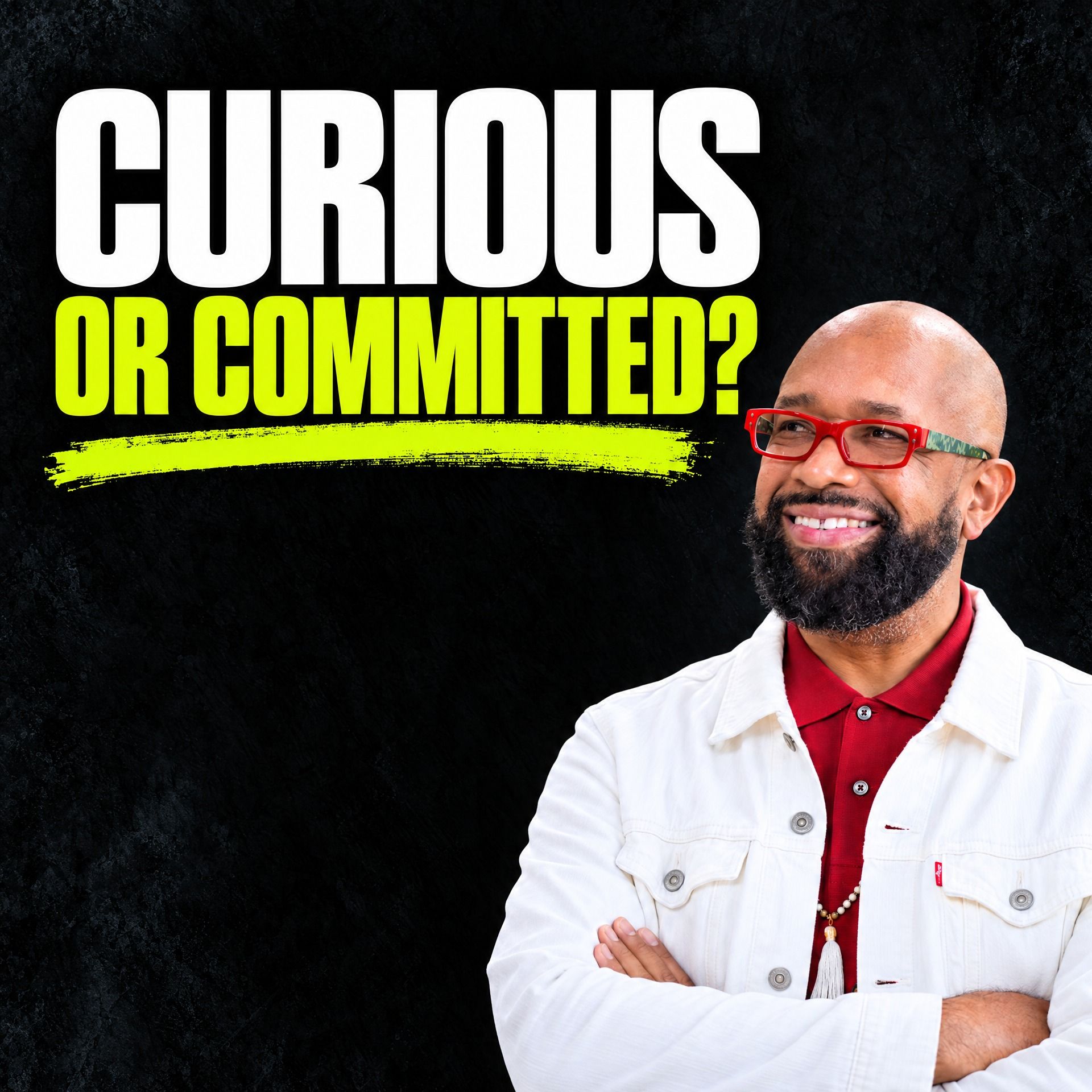
Terms and conditions apply. Hiring? Do it the right way with Indeed. We do not have enough suffering in our lives. That's according to today's guest, Christian Ray Flores, international pop sensation, and I mean that quite legitimately, minister, entrepreneur, coach, author, incredible human being.
Someone who spent a large portion of his life dealing with adversity and trauma, growing up in Russia, living through the, the Chilean Revolution, having his father in a concentration camp, made it to America, and absolutely has dominated. Just tremendous human being. The range, the depth, the philosophy, coupled with tactical guidelines that he's gonna share with you. Guys, I hit 15% of what I wanted to talk to Christian about. We're gonna have him back on the show again, 'cause we simply ran out of time.
This is one of my favorite episodes, one of my favorite conversations I've had in a long time, and you're just absolutely going to adore Christian. I highly recommend that you dig into his work, that you follow along, connect with him on socials, subscribe to his newsletter, all those things, because this is someone who I'm gonna be connecting deeper with because we just matched philosophies in a way that I, I just... It's why I do the podcast. Episodes like this are why I do this show, 'cause I get to meet incredible people and share them with you. With that said, my friends, this audience is growing rapidly, and I appreciate it.
I love you for that. If you're listening, please like, subscribe, watch, leave a review, comment. Uh, I read every review, I read every comment on this show. If you agree with Christian, if you disagree, right? Come over to the YouTube video.
Watch us have this conversation, leave a comment, and Christian will come in and answer it. I'll come in and answer it. My friends, I love you for being part of this community, and if you wanna go deeper, if you wanna get insights beyond just what comes through the podcast or through the YouTube channel, head over to my website, ryanhanley.com. Subscribe to the newsletter. Comes out once a week, unique content.
We're driving you to resources, ideas. It is my best work, my deepest work. We put through the newsletter, right? Oftentimes it is diving on topics that we didn't get to fully address in the show. We'll dive deeper there.
It's completely free. Ryanhanley.com, head over today. I love you for being here. I love you for listening to this show. Let's get on to Christian Ray Flores.
In a crude laboratory in the basement of his home. So dude, when I was researching you and, and getting ready for this, I, I gotta say, I, I f- I had a moment where I felt very emasculated by, by what you've done. You had- What? ... during your pop career, the mo- some of the most epic hair I have ever seen- ... in my entire life. Like, I was, like, looking at it going, "I could never pull that off. Look how freaking awesome that hair is."
That was the hair that did it, huh? Yeah, it was the hair. You know, you've done all these amazing things in business- But it's the hair ... but that hair really got me. No. Well, I, um, you know, born in Russia, you immigrate to Latin America, you have this, this wild story and, and you can go into that as much as you want, but i- and maybe starting there, how...
I'm, I'm really interested in, in, in maybe dive into your backstory just, just a little bit. We don't have to do every detail, but maybe some of the, the highlights, because I think what I was most intrigued by was you, you did not have, in any regard, a standard, you know, upbringing. You had a, there was t- tons of turmoil, stuff that, like, literally your, your father's put in jail for a period of time. Yeah. Yet you have found a way to, to not just persevere, but, but to excel in life in many different areas.
Yeah. And I was in... I really wanna dive into, especially early on in this podcast, what those early experiences did for you and how you have taken them and not used them in a victimhood way- Yeah, yeah ... but, but use them as a way to build strength and, and write books, become a pop star, an international pop... I mean, literally I'm, I'm reading about how Boris Yeltsin's using your songs in his campaigns. I mean, just, just this incredible life where so many people that would come up the way you did and, and have the early portion of your life the way it was, they would, they would turtle in.
They would, they would, they would compress. They would become depressed- Yeah, yeah. Yeah, yeah ... and, and you have done the opposite. So I'm sure every moment of your life hasn't been, you know, completely joyous and amazing, but, like, you know, y- you, you've persevered so well and, and driven through it. I'm, I'm, I'm interested in starting there.
Okay. So thank you for... Thanks for asking. And, and I think that is the question, right? And, you know- So to, to give your audience a little bit of a, of a background in a very, very fast-forward way, what you're referring to is that, you know, I basically changed four countries by age seven.
My dad was in a concentration camp in Chile. We were refugees in a refugee facility, then we were, went traveling to Germany, then back to Russia, then to Africa. There was a civil war in Africa when we were, we were there. There were bombings literally across the street from my house. They blew up a building.
And then we sort of... I ended up coming back as a teenager to, like, the worst Soviet Union restrictive environment. And then after the fall of the, of the wall, I, you know, just sort of, uh, it- it's almost like took flight, right? There was, like, escape velocity that happened, and the question, I guess, is about that. How does that happen, right?
And I became one of the pop stars, and then we moved to the States. We started several businesses, nonprofits, and did a bunch of other things, and none of it is really over-the-top grandiose, but it is sort of, if you think about it, "Wow, that's a lot," right? And, uh, I would say the, the, the question that, that I get most is, is what you're saying. How do you not contract? How do you expand in the midst of massive, massive disadvantages and, like, life-threatening circumstances and things like that?
Yeah. And, and I think honestly for me, the answer is, is that there's actually a tremendous potential opportunity for growth in the midst of suffering if you process it correctly, right? A- and actually, I don't think we have enough suffering in our lives that makes us weaker, right? And I mean, it's, biologically, that- that's even true, right? You, you don't go to the gym, you become weaker.
You go to the gym, and you create suffering, you become stronger, right? But it's extraordinarily true a- across all dimensions of life. So learning ambition, romance, friendship, money, all those things, it actually works universally, and it's not that I wish ... I mean, and it's actually impossible to replicate my kind of suffering that is completely out of control, but you can actually replicate suffering on purpose that is constructive suffering that makes you grow, and I think that's the answer, is that you interpret suffering as, as a win of some sort, and that's a mindset shift, right? Yeah.
I love the idea that we don't have enough suffering in our lives. I, I completely agree with you. How does someone who, say, is coming up in a standard American middle-class family in a neighborhood that's safe- Mm-hmm ... that's never had to worry about gun violence or poverty or drugs, it, it all feels kinda, it feels outside of them. They may- Yeah. Yeah, yeah ... see it on the news or hear someone talk about it- Yeah ... but they've never experienced it.
They've never run into it. Their school is relativity s- relative- relatively safe. How does that person who's listening to this and going, "You know, I can h- I hear what he's saying," h- how do they cultivate that in their own life? What are, what are some of the constructive ways that someone could find- That suffering ... suffering, bring suffering into their lives- And- ... and start to grow again? Exactly.
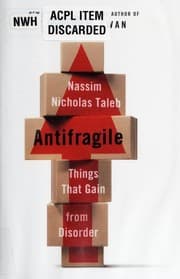
Basically, what you need to do is seek out not too much suffering, because too much suffering will break you, but enough suffering to grow you, and that is actually... There's a term called, coined by Nassim Taleb, called antifragile, right? Mm-hmm. And that's antifragility. Antifragility is the ability to get better, stronger, smarter, more agile because of act- b- not in spite of suffering, but because of suffering.
So I would say the formula there is keep 80% sort of safe, predictable, and create 20% across all dimensions every single day in the unsafe, painful suffering, and you will be unstoppable, I believe. So I love Antifragile. It's one of my favorite books. It's on the wall behind me. It's one of my most recommended books.
I- Yeah. It's crazy, right? Just it's an incredible- Yeah ... uh, work. You know, s- so you've seen the outside world, right? Like outside- Yeah ... of America.
Like, I, I, I, I have so many friends, and I know we don't know each other that well. You know, my backstory, I grew up in a very small, very depressed town- Mm ... in the middle of the woods in Upstate New York. We used to say that you could keep your doors open at night because the criminals lived in our town. They didn't steal- ... in our town. Right.
And, you know, so not that I've had ... You know, I haven't lived in a war-torn area. I haven't lived in- Yeah, yeah ... in another country where there's just completely different, uh, challenges that you face on a day-to-day basis, but I didn't necessarily have it easy. We were certainly lower class. Yeah.
Mm-hmm. You know, all that kinda thing. Like, you'd have three shirts and one pair of jeans for school for the year, and you'd just wear them over- That's- ... and over again until they fell off you ... yeah Right? I mean, that was just what it was like. That's pretty, that's pretty third world, man- Yeah. ... even if it was in America.
Absolutely. Yeah. It's s- so now I have, and, and this is why I'm just so, I'm so excited to chat with you today, is now I'm raise ... You know, I've, I've risen up out of that. Like, my sole goal in life, even at the age of 10, and I was telling my kids this the other day, like, at 10, I had this idea of, like, "I need to get the f- outta here."
Mm-hmm. Mm-hmm. Like, "I need to get outta here and never come back." Mm-hmm. Like, "This is not where I wanna be as I grow up."
That's right. Yeah. And I've achieved that to a certain extent. My kids live in a, in that bubble, right? They've grown up in that bubble community- Yeah ... where it's safe, it's nice.
The people are, you know, good people. For the most part, everyone treats them well. There's sports leagues- Yeah ... and community. Okay. I struggle every day with how do I, like, show them?
How do I introduce them to experiences- Mm-hmm ... where they start to feel that pain, right? Obviously, I don't wanna put them in, in mortal danger, but I want them to experience- That's right. Yeah, mm ... some pain and some tr- Because man, I'll tell you, even at my age, for- I'm 43 years old, right? I have so many friends who grew up, say, in the community that I live in now. They grew up here.
Yeah. You know, I look at them, and they're ... So many of them are either, either miserable, like just straight miserable, even though by the outside they have a good life, or they're like- What's the right word? Like, like, they're, like, dead inside, right? There's just no, like, oomph.
Yeah. They're just kinda, like, go through the motions, you know? They, they bitch about their kids, they bitch about their wife, they bitch about their job. They bitch about their taxes. And I'm like, "Dude, those are, those are not real problems.
Like, your wife is actually okay. Your kids are fine. Like, you know-" Uh-huh. "... I don't know.
They pick up the garbage. Your taxes are going somewhere." I mean, I don't love taxes like anybody, but, like, you know- ... your garbage gets picked up, your roads are clean, the fire- Yeah, yeah ... uh, department shows up. Yeah, yeah. You know?
Like, I don't want them to grow up to be those people. Like, I want... You know, so, like, in... How, how do we start to cultivate now? You've seen the outside world.
You're in America. You've written this love story to America, which I wanna get to. Like, if s- if I'm coming up to you and asking for advice, like, how do you start to... How does someone like that, how does a parent do that? How do we start to indoctrinate them to this idea of suffering being a good thing?
Thank you. First of all, thank you for asking that question, 'cause I l- I am very, very passionate about parenting. I come from three generations of broken homes, you know? And I had to, I had to really, really re- recalibrate my life, my character, my everything to learn how to be a good h- husband and a good parent, right? So this is quite literally the top of my priorities.
Like, it's not business, it's not money, it's not career. It's not even impact. It's my wife is radiant with joy, my kids are functional and winning, you know? That's basically it, right? Mm-hmm.
So, so I really do care about this tremendously. I, I, you know, a- and the thing is, it's fascinating, and I would love to get to even the m- the skip 40 years and that kid is a high performer CEO, and how the same principle applies to that kid and to that CEO, right? Like, let's- Yeah ... let's make that gap, right, later. Yep. But, but it's the same thing, right?
So my kids, they, two were born in Moscow, one was born in Ukraine, but they moved pretty early. So the, you know, my oldest one was a little bit older, she was 12, but the youngest ones were, you know, zero or, like, one and three, basically, right? So they're 100% American. Like, they're very Americanized now. Yes.
H- here's how you, how you still replicate the healthy patterns. No participation prizes ever. Okay? That's the, those, like, the basic things, right? Teach them disciplines, not grades, right?
Uh, the school system is desi- designed as a factory. It's, it's a conveyor belt, and it's designed to teach kids to perform to given a certain mark, right? I mean, they're literally creating cogs. Yeah. That is, that's the way it's done.
What we taught our kids, and our oldest went to a charter school, then a private school. Our youngest two were actually homeschooled throughout. We taught them disciplines. This is history. This is literature.
How did literature relate to history? How does this thing relate to each other? This is economics, right? This is geography. And the system, the, the, the mindset of the normal education b- sort of bubble is you're at the center of it, then it's your parents, then it's the state, then it's the country.
What we taught them is there's the world, there's continents, countries, states, systems. Then it's your family, then it's you. You know? You are not at the center of the universe, you know, basically. Yeah.
There's a world, and you fit into it a certain way. So these are, like, micro things, right? Uh, but I would say a relationsh- d- you teach them relationship by not being a, a parent only in the morning when you drop them off and in the evening when you tuck them in and maybe play around in the backyard for a little bit. Well, integrate your life with them, because they need it. When they grow up, they need to understand what deep relationships are, right?
So we literally, we planned our, even limited our business opportunities to where our lives with our kids were integrated. Mm. They're weaved together, and if you do that early on, they won't resent you when they're teenagers. When they resent you in the, uh, teenagers, too, it's too, it's too, it's too late. So now we have...
I mean, they're, they're all out of the house, 20, 22, 29, but they come back. We have an in... The, the relationship is intact. The dynamics change because they're gr- they're grown-ups. We treat them differently, but they are absolutely...
We love each other so much. We have such a warm relationship. You know, you can't buy this kind of influence. You can't succeed your way into this kind of influence. You have to just do the, do the work with them, right?
Uh, when it comes to sort of comfort and what you referred to earlier, what we did is that we invested a ton of time and money literally from age zero to travel. Mm. And it would be Paris, you know? We could be an all-inclusive resort, and it would be the slums of Rio de Janeiro or the barrios of Mexico and Tijuana or the, the just under $2 a day slums in Maputo, Mozambique, and they would be with us the whole- You've finally broken loose from work. Three friends, one tee time, and then the text.
"Honey, there's water in the basement." Not exactly how you pictured your Saturday. That's when you call us, Cincinnati Insurance. We always answer the call, because real protection means showing up, even when things are in the rough. Cincinnati Insurance.
Let us make your bad day better. Find an agent at cinfin.com. Time, right? They know the Third World since they were born, you know? Even though they grew up in America, they were exposed to the contrast, and we'd spoke about the things, and we told them the stories, you know?
So I think that's, that's the way. It's exposure, really. I love that. You know, I was thinking the other day, I was reading an article and, and I, for some reason I'm always, I'm very interested in the turn of the, of the 19th century, you know, up through, like, World War II. Just not just the wars part.
Mm-hmm. Yeah. I'm interested in the lifestyle. It was a very- Yeah ... it was a very dynamic time, 'cause it was also a time when we, when documentation and imagery started to expand, so not only could we read the stories about what was happening, but we could see it as well. And, and I was reading this story about how One of the things that we've lost, particularly in this country, is the apprenticeship of our children, which is what I just heard you describe That's exactly it, yeah ... where the shoe, the, you know, the shoe cobbler, his son would be in the store with him- That's exactly it ... helping him, right?
Yeah. Mm-hmm. And the, the, if the, if the mother had work, you know, her daughter would be with her. And the, you know, d- we apprenticed our children into our trade. It doesn't mean they necessarily would do that trade, although many did at that time.
Mm-hmm. It, it showed them from a very early age work ethic, grinding, the failure, the success, the conversations, right? Like, you see, you know, even into the '50s, you see many leaders, executives would have their child with them, standing behind them back here- Yeah ... as they're doing deals or having meetings or whatever, and the child would sit there. And now we're like, "Well, my kid can't sit still for 10 seconds without a, without a piece of technology," and it's like, well, what the heck was happening back then? They didn't have that.
That's right. What was the kid doing? The kid was listening to your conversations. They were learning how to communicate with people, how to handle themselves in society, and it's like- Mm-hmm ... I said to myself, like, we wonder why we launch these kids into the world and they lose their frigging minds in college and go crazy.
Yeah, absolutely. It's because they were, they lived in a bubble, and then all of a sudden they were launched out in the world and they were like, "Wait a minute, the world is crazy and hard." Mm-hmm. You know? And, and so that, what you just described, I, I'm just...
I absolutely am fascinated with it, and I'm starting to do it with my own children. Maybe a little later. Mine are 9 and 11. No, that's great. No, it's late.
But I'm starting to bring them into my life be- Yeah ... into my work life because I want them to see, like, this is effort. Like, you, you don't just get to show up. Like, you gotta do this and, and you have to do it well. Yeah. Like, this idea that you show up and participate, as you said, and somehow that's success is, there, there's no truth to that.
Yeah. It's a, it's a complete fabrication. And they won't... If you do that, they will never be sort of those classic cliché people where they go, "Oh, they don't know how..." They're so entitled.
No, they won't be. Yeah, yeah. So when people say it's a generational thing, it's not a generational thing, it's a parenting thing. Mm-hmm. You know?
My kids are the exact same generation that they accuse of, "Oh, give me this much money and I'm not gonna show up and I'm gonna make sure..." No, my kids work hard. Why? It's not because they're pr- belong to a generation. 'Cause they were brought up in a, in an environment, right? So, but yeah, you're absolutely...
I mean, apprenticeship is so beautiful of a concept. I, and it's actually a, a concept that is widely needed for grownups, right? Apprenticeship. You, you mentioned sort of bringing them to the workspace. I was think- I was like, they've seen me on stage when I was doing music.
They were sitting... I have pictures of them sitting in a set when I'm shooting a $160,000 music video in our production company- Mm ... when we did that in LA, and they're hanging out with, like, extras and camera people and grips, and they're just hanging out there and seeing the whole thing. And, you know, they've seen me produce videos. They've pr- they've seen me do this, right? So my youngest one is na- her name's Bella, Bella Flores, you can look her up on Instagram, is sh- just crushing it as an influencer, right?
She edits, she shoots, she knows, she has this aesthetic about her. She understands how to frame something, and she's... Honestly, I don't think she's ever gonna send a job application ever. She's not even out of college, right? She's getting brand deals right now in college, and partnering and designing clothing lines and stuff like that.
It's ridiculous, right? Yeah. Well, why? Well, because she grew up watching us do stuff, you know? So, so and all three of them are very different.
Very, very different. But they h- they all three have a work ethic. Yeah. Right? And they all three have almost like an internal freedom of, "I wanna pursue this and I'm gonna pursue that.
I'm gonna puzzle for a bit." And we're, like, totally fine with that, right? Yeah. It's, it's like we've forgotten everything that Joseph Campbell taught us about the hero's journey. That's right.
Like, they, we've completely forgotten that, you know, we a- they s- you know, we start in the, in the, the safe village or the safe-ish village surrounded by- Mm-hmm ... our family, and we have a routine and things are fine, and then we get, we... If we never launch out into the world and we never face the dragon, right? If the, if we- Yeah ... if we never stand in front of the dragon and test- That's right, yeah ... our strength and our ability, then th- there's no way of coming back in and, and actually becoming the hero. Yet what, what we're, what we all wanna do is press a magic button and all of a sudden we're the hero. And it's like it just simply doesn't, these, they, they- It does not work that way.
It does not work. And to me, you know, I, I come back to this idea of apprenticeship because I was talking to... Before what I do now, I, I owned a commercial insurance agency, a national digital commercial insurance agency, and- Mm-hmm ... and, and, you know, we hired a lot of people and, and from all different places and, and, and what's interesting is, you know, when we started to really dial in and, and, and figure out how to find the workers, they were rarely the most educated- Mm-hmm ... rarely the most polished. They were oftentimes the ones who had some funky story in their background that they- That's right ... but it was always an overcome story, right? Always, yeah.
This terrible thing happened. Mm-hmm. I got fired from this job. I made this decision that didn't work. I tried this business that didn't work.
But now I'm here and I'm pushing forward. The ones that just took this straight path of, you know, go to the good, you know, come out of the good community, go to the good college, get that corporate job ID, like, it just, they, it never clicked for them. They always wanted something from us, right? Mm-hmm. It was like this idea of instead of what can I bring here, how do I succeed, how do I get forward, it was a different conversation.
It was all how much time off do I get, what's my benefits, you know, and, and I'm like, we're thinking about this all wrong. We're, we're, we're forgetting this. Mm-hmm. Enti- these, they're entitled, yeah. Yes.
It's, it's, it's a, it's an idea, and, and here's where I wanna position this question. Faith is a huge part of your life. It's a huge part of my family's life. They go to Catholic school. You know, I'm a devout Christian.
I was raised that way, and, you know- Faith is a big part of the conversations we have, and I'm very interested in how you built that into your own life- Mm-hmm ... and how you've brought your kids along through faith, and what that was like for you, and, and where you see faith in ultimately getting to a place of meaning and purpose and contentment. Oh, that's a big question. That's a huge question, Ryan. Okay, so I... You know, the peculiarity about me is that I literally grew up and ve- You'll probably find almost zero people in the United States who can say the same thing, unless they're an immigrant from, like, a communist country, is that until I was probably 20, in my early 20s, I knew zero people who believed in God.
And, and you have to just really let that sink in to even understand, okay, what are the con- what are the, what are the ripple effects of a culture like that, where everybody is godless, essentially, right? It doesn't even matter which faith, but just in general, it's an atheistic cultural baseline. Now, there, there's, of course, it's not zero people, but I knew zero people, you know? And what happened with me is that, you know, I became very successful as an artist, and I was literally entertaining millions of people, selling millions of albums and playing sports arenas, and there are these foundational dimensions of, of your pers- of, of your humanity that, that were basically underdeveloped in me because there was no faith, right? There was no f- moral framework.
There was no... There, there was not these almost, like, meta structures of what is... Is there anything bigger than me? Does that anything care about me? How do I fit into the picture?
Why am I here? What does that mean for my relationships? What does that mean about power and talent and money and, and love and sex, you know? And, uh, all of those things were almost, like, devoid of, of faith that is thousands of years old and have sort of perpetuated and, and breathed and lived within humanity. And you go, "Oh, this is just abstract, sort of lofty, sort of ideas," but it has a very real consequence, right?
Because here I am, a pop star. I'm doing all this stuff. My ego is super inflated. There's nothing bigger than me in my mind, you know? I don't know what to do with m- with marriage because I come from three generations of broken homes.
No one, no one taught me anything about this, right? I don't, I don't understand submission to authority. My mo- my dad wasn't there since I was 14, and the whole faith, like, obedience out of faith, out of adoration, out of love, nonexistent. And o- and the effect is I don't know my way around X, Y, and Z, right? I am in the top 0.1% of performers, entertainers, like, just crushing it, and I'm completely inadequate in the most basic things like marriage, for example, right?
So I'm dating all these girls. I have no idea what I'm doing. I basically sabotage every relationship I'm in, and I'm fearful of commitment, and I also, just like any human being, I want love. I want family. I want that warmth, you know, that belonging that comes with it, and I don't know how to get there.
So I want it. I date. It gets too close to intimacy. I'm afraid that it's gonna end up in divorce. I sabotage it.
Rinse and repeat. Okay. I meet a girl. She gets pregnant. I treat her like crap.
She leaves me, cuts me off from my oldest daughter, Deanna. I am now pop star, entertaining millions, clinically depressed, don't know how to breathe. Forget creativity. The great... Forget high performers, performance.
Forget genius. Forget thriving. You see how even a high performer can, can go into a deep hole if they don't fix some other areas of life, right? I meet this Canadian missionary. His name's Andy.
And I look at his family and I'm like, "Just teach me how to do this." He's like, "Well, are you open to, you know, listening to the Bible?" And I'm like, "Well, it's sort of an old book. I don't really believe in it. It's sort of...
But if I get what you have, sure." And basically how, that's how I came into the faith, you know? Mm-hmm. So now, you know, now obviously I've been an, I've been a Christian for almost 30 years, right? And I've preached the gospel all over the world in four different languages.
I've started churches. I've, I've been a bivocational pastor all over the place, right? And, uh, so it is really the most important part of my life. But I do think that, you know, even when I coach, you know, in my coaching program, when I coach people, if you're not a Christian, you can be... I can coach you, as long as you don't mind me quoting the Bible bec- because these are eternal truths.
Like, I will be doing you a disservice if I don't quote you at least a scripture where I say, "Look, this has been true 2,000 years ago. It's still true about you right now. You need to pay attention." And I'm not gonna push you to become a Christian at all. If you wanna know how, I'll obviously, I will share my faith with you.
But it is that important. I, I do think that the Bible contains the secrets to life and success and health and wealth and joy and love and all of it. Yeah. I, I was very taken by the way... I, I spent some time reading about and thinking about...
I believe that we've lost, in our culture, the idea of generational thinking. Again, t- talking about the fact that I spend time researching turn-of-the-century stuff and, and, you know, so much of what you read about everyday life, particularly about Americans at the time, was you worked to, to put your children in a better place than you were, and then they worked to put their children in a better place, and that's how we took the bloodline- Yeah ... and family and the, and, and we, we moved them forward in life, was to just... My role here is not to be- Mm-hmm ... a celebrity, is to be these things. If that happens, that's amazing, right? Yeah.
But my role is to take my family, my name, my bloodline, and move it from this place and progress us forward. Yeah. And today, when you bring up the concept of generational thinking to most people, they li- I Watch them, like, crank in their head. They're like, it's almost like they've never even considered the idea. Yeah.
They're like, "What do you mean? I'm- Mm-hmm ... I'm going for the vice president of sales position. That's all that, you know, that's what matters is me making more money or getting this position." It's like, but what, what does that, what does that opportunity mean to move you forward?
And it, and it doesn't mean you shouldn't have that opportunity. I think that's where people get lost. Like, when I talk about this concept, they, they ... I see a lot of people go, "Well, well, what about me," right? And it's like if you can hold, and this is what I've ...
A big lesson that I've taken from the Bible and I try to share with people, is that you can, you can fulfill your own meaning and purpose- Yeah ... while also, right, guiding your, the next generation to, through the, maybe some of the obstacles that you face, right? Like- Mm-hmm ... ego has been a problem in my life in different scenarios before, and I work very hard to talk to my kids about how to be driven but humble at the same time, right? That's me trying to fix a lesson that wasn't taught to me. Yeah. A blind spot that I had in my life and a hole I had to fall into and pull myself out of, and now you try to move them forward.
And, and to your point, like Jordan Peterson says it best, like, you don't have to believe in God, but there is no better roadmap for success than the Bible. Yeah. Act as if, you know? That's how he came to faith. Yeah.
And I thought that was a wonder way, wonderful way of looking at it. He came to faith and which now he says he, you know, he, he, he's a believer, right? He came to faith by simply just acting as if. Like he's like, "I don't believe- Yeah ... but I do think this book is really important, so I'm gonna act as if." And then through the activity of researching and practicing and talking and communicating and, and trying to live out s- the lessons, he became to, he, he came to believe.
And I feel like atheism has, has surfaced again in our country and, and so much of the lack of birth rate and, and this, these different ideas where people aren't getting married and, and relationships are very, you know, Tinder-based or whatever. Like, so much of that is, is a loss of responsibility to the generation that we're trying to, trying to- Yeah ... move forward. Yeah, yeah. Does, does that make sense? Does that, does that land for you?
It, it does and, and it's, it, you, you brought up something very interesting, the Tinder generation, right? Tinder generation is basically the concept is you experiment until you get it right, right? The problem with that is that the wear and tear of failed experiments really, really wrecks you, you know? You're just one atom floating in the universe, and then you'll find another atom and see if there's a, there's a little match, right? And Tinder itself actually, all those, the, the apps are actually not ...
They, they claim to be very scientific and da- I would say they, they claim to be data-driven, right? So, so you're looking for a mate and, you know, you like walking on the beach, she likes walking on the beach. You like reading books, she likes reading books. Oh, we're a match. Well, that's not how marriage works at all.
You actually, you ... Like, if you really want- The holidays are here, and that means it's the most wonderful time of the year to save with Rakuten. Use Rakuten to stack cash back from your favorite stores on top of holiday sales. That's savings on savings. With Rakuten, you can get cash back on gifts for everyone on your list, from toys for the kids to kitchen gear for the person who loves to cook, to electronics for everyone.
You can even save on something for yourself. Just shop the stores you love, and cash back is automatically added to your account. And you can get paid with gift cards, PayPal, or check. Or eligible American Express cardmembers can even choose to earn membership rewards instead of cash back. It's truly a no-brainer.
Join for free today and get a new member bonus after minimum qualifying purchases. Just go to rakuten.com, download the app, or install the browser extension. That's R-A-K-U-T-E-N. Terms and conditions apply ... to be scientific, you want somebody who complements you and you complement them. It's very, very hard to do that through an out, through, through just filling out an application, then putting it out there, and you won't be objective a- in the first place.
So the mismatches are actually probably increased by the claim of the, of the sort of we, we belong together because we're the same. We actually belong together because we're different. And then the other layer of that is experimentation is everything, right? You, you Tinder your way through life. Well, look at the, look at the outcome, let's say whatever, seven years or 10 years later.
People are literally more lonely and getting married later, not really understanding what that means in the first place. Okay. I did that, right? I did the whole experiment until you're way into it, then I realized, you know what? I'm so destroy destroyed internally, you know?
Like the damage is so vast that can you please give me a, you know, another model, right? And the model was, you know, which was so, like it was... Bro, it was, it was impossible for me to even wrap my mind around, but I was so desperate, right? So I was like, "Okay, so how, how do I do this?" Like my main pain point is how to find a mate, get married, and stay married, right?
That's basically the thing. And be happy. And they're like, "Well, you know, first of all, what's your system of values? If you're a Christian, you need to... Who do you marry?
A Christian." Yeah, that narrows it down quite a bit. Really? Yeah, really. Okay, that's a, that's a macro that you can im- im- that's, that's an algorithm you can add, right?
Mm-hmm. Okay, that narrows your focus. Why? Well, because you have the same values and you're both submitted to the same authority. That helps.
People fight. People change. If you don't have any authority above you that is objective, you will get divorced more likely than not. And when we fight and you have authority and I can open the Bible or somebody can open the Bible, me and my wife and go, "You guys are a mess, man. Here's what the Bible says about that.
You re- repent." We're like, "Yes, sir." You know? That helps You know? So you have authority.
The other thing is th- when you talk about generational wisdom, right, about dating. Like, I'm applying what you said in just one, this one scenario, because I wanna be very practical, is, you know, I basically adopted a completely new approach to sex, right? I'm like, I never, ever in my life considered that sex is for marriage only, ever. Like, that wasn't even a concept. I was sexually active since I was, what, 15.
By the time I was became a Christian, I was 26. So I'd been sexually active for a decade. And then, and on top of that, I'm a pop star, so a big portion of the population of 15 countries think I'm hot, you know, and have posters on their walls of me. And that presents a whole different layer of availability, you know, of women. F- d- it's just not normal.
It's not healthy or normal. Okay. So then I... Like, imagine me in that state, 26, right? Testosterone's pretty high, and the guy goes, "Yeah, you know what?
Sex is, is just for marriage." I'm like, "I don't understand what the words coming out of your mouth." He's like, "Well, you asked me to teach you how to do this. You know, this is what it says." And I'm like, okay, I don't even know how that's physically...
Like, I literally made the p- I, I made the case that it's unhealthy physically, didn't fly. I made the case that there's gotta be some sort of get out of jail card f- because of professional, my, my sort of occupation. That didn't fly. And I finally had the choice of whether I believe in this and will follow this approach or not. And I'm like, well, I'm s- I'm in so much pain, I'll probably just do it, right?
And basically as, act as if, right? Yeah. So I do. So I am, like, I have, I'm sexually active for 10 years. I'm completely abstinent for four.
Uh, until I get, I, I meet my wife. I court her. I propose to her. I m- I marry her. And the first time I had sex, I made love to my wife, was on the wedding night.
No one I knew even understood the concept, right? But I was trying to break a generational curse. I was just determined, I'm gonna, I'm gonna figure this out. 25 years later, I'm happily married, like, so happily married, okay? Never ever did we have any infidelity of any kind.
And even, not even a hint, not even a thought. Our kids love us. Our kids are so jealous of us. They're like, "You guys ruined it for us. We're never gonna find a marriage this good."
You know? But that gives them a, a higher bar to aspire to, right? Yeah. Uh, and then the other layer, I'll add another layer to that. So I can talk about this for hours.
I, as you can see, I can get real passionate about this, right? Generational wisdom, right? Okay, you're, you, you met a girl. You, she's cute. There's chemistry.
There's no ch- It's, it's a, it's a solo, it's a solo activity in the West, in an atomized, individualized West. It's just you and, and her. You get serious, you just inform your friends that you got serious. You get engaged, you just inform your parents you got engaged. You don't get their input about anything.
That's the culture. Correct? Like, that's the middle of the road- Yeah ... situation. When it comes to ancient wisdom, and I mean thousands of years, and not even just Christianity, everywhere, that's just learned stuff, right? You get the community involved.
So when I was courting now and dating girls in, in, as a Christian, it was like, okay, there's chemistry. I like her. There's alignment. I wanna get to know her friends. What do they think about her?
She will get to know my friends. What do they think about me and her? And, uh, and it's like this incredibly free-flowing, beautiful, holistic wisdom that is beyond just chemistry and that, you know, and attraction. And then you h- do you have a mentor? Okay, does she have a mentor?
Let's talk to her mentor, and she'll talk to my mentor. And she would literally grill the guy who mentored me and coached me about all of my worst qualities, and I think that's a beautiful thing to do. And then we're fully informed, wisdom is flowing, and we go, "Yes, I want you. I want you forever for the rest of my life." And that's what happened.
One, I, I love that. There's an idea in there, there's a couple ideas that you brought up. One was breaking a generational curse. And I was reading, now I'm not even gonna remember where it's from, but there was research done, this, this book was talking about where trauma that we experience- Mm-hmm ... resonates three generations down. Yeah.
And we are experiencing the accumulated trauma of three generations in front of us. And the argument that this, whatever I was reading, was making was that it is, it is not only important, but it is our responsibility and, and, and, and obligation, right, to do whatever we can to fix the traumas inside of us. And I'm not talking necessarily about physical trauma, like I get, you know- Yeah ... an injury or something like that. I'm talking about the emotional trauma that we carry inside of us, that that is passed to our children, and that it is a, it is paramount, it is, it is an obligation for us to work through those traumas to reduce the impact that it will have, because it's not just us. Like, like you said, we're so atomized in Western culture that, you know, this is me and my lived experience, which is a term that I hate, and like, like, no, it's not just you, right?
And, and the Bible talks about this too, but like it's not... You are passing that thing on. If you hold it, if you don't fix it, if you stew on it, if you let it fester inside of you and, and, and create tension and, and cancer, you, you, you are passing that down to the next generation and to the generations that follow. And that therefore breaking generational curses be- you know, in large part is why we're here, right? It is to, it is to solve these problems.
Yes. And I, I guess through your teachings and, and coaching both, you know, business professionally as well as the work that you do with the faith, like, I guess when I start to bring these topics up to people in casual conversations off of formats like this, it's an idea that is, again, incredibly foreign to people, right? And oftentimes they're not even aware. They feel tension. They feel anxiety.
They feel stress. ... frustration, but they have no way of naming it, touching it, e- even realizing that it, that it is real, that they're walking around every day with something inside of it. H- how do you guide them to awareness, right? Like if, if awareness is step one, if, if- Mm-hmm ... starting to understand that you are carrying something and maybe the reason that you're struggling to, to, to keep a job more than a few years or that you, you, you struggle with relationships is 'cause of this thing that you're carrying inside. How do we start to just become aware of that? Is there, is it, is it conversations?
Is it counseling, mentorship? Like, you know, what is your recommendation for someone to start to understand what they're carrying? Because we, we can't address it until we understand that it's even there. That's, that's a fantastic question, and I, and I do think that all of us carry trauma. It's just the nature of the human experience, right?
There's, you, you... Just beneath the skin, there's stories of pain, right? Every single person walking on this earth. And I would say on a macro level, I would say the approach varies on a macro level, and I can just sort of narrow it down to something very specific and then give you w- what I think works real well. But on a macro level, the way I see it is that there's, there's healing your past or building a future, right?
That's one le- that's one way of, of looking at things. And I would say, a- and then we'll talk about which state you're in right now. But, uh, healing the past is therapy. Building a future is coaching, right? And they overlap definitely, right?
So you overlap into the past, and you overlap into the future. But I would say that the big buckets are absolutely, if your, if your past is just crushing you, I mean, you just can't escape it, get therapy, right? If you wanna, if you're pretty much figured it out, you know, and you want to build a completely different future, get coaching, right? Uh, or a mentor. The, the state you're in is a- another way I like thinking about it is that, you know, if, if you are, if you had an accident, you're biking, right, and you, and you're just bruised, and you have a broken arm, whatever, right?
And you have maybe some internal bleeding, let's say. Like, let's say it's really bad. You know, you don't go to the gym. You go to the hospital. Then you go from the hospital, you go to, you know, physical, you know, therapy.
Then from therapy, you go to the, to the gym. That's basically the, the continuum. And you can sort of apply where you are to where you need to be. So, but to your question about awareness, I-- the word that I love to use b- because I think it's just, it's, it's so deep and so empowering is metacognition, right? Metacognition is your ability to think beyond your s- is think outside of yourself.
It's almost like you're outside of yourself thinking about what you're thinking. Mm-hmm. You know? And that's a skill that can be developed, right? And so I teach that v- like hands-on in my coaching.
And basically, on the, on, you know, I can... I mean, I don't keep secrets at all. Like everything I, I teach, I post and share on podcasts and everything. When I coach people, what they're paying me f- is implementation. Mm-hmm.
Like, okay, work with me, right? But here's, here's the deal that works real well, and you can expand it or, you know, contract it a little bit, but sort of that works very, very powerfully. First of all, you need a, you need a practice that is every single day that allows you to think beyond the autopilot, so to say. What you refer to, right? Is we're just existing.
We have this, you know, we're sort of on auto, auto, you know, on cruise control, right? Uh, it's a horrible state of being, actually. Mm-hmm. You know? And we-- I don't think you were designed for that.
You were designed to build and evolve and face obstacles and overcome obstacles. That's what makes you... That's what make li- makes life worth living. And, and 90% of the population on any given, you know, uh, decade even, in any given country, lives on autopilot mostly, you know? Because it's painful to think, to think beyond the uncertainty.
You know, start thinking uncer- making choices that feel dangerous, right? Uh, and we'll talk about uncertainty a little bit later maybe. But, so a metacognition, a metacognitive skill set is the ability to every single day have the space and the ability to get to a place where you know exactly how you feel, why you feel it, where you wanna go, what's in the way, what feelings are constructive, what feelings are destructive. And every single day, and I mean every single day, and you're totally capable of doing it. The way we do it, the way I teach to do it is when you wake up in the morning, your mental and emotional tank is the fullest.
Like it's the... Y- you can do it on another time of the day, but that's where you're the fullest, right? Mm-hmm. You have the most potential. You have more to work with.
Let's put it that way. The autopilot hasn't even kicked in yet fully, right? So what we do, we, we spend an hour, 20 minutes, 20 minutes, 20 minutes. One is contemplation, so it could be journaling, meditation, prayer, all of the above. There's like a variety of combinations that you can do that.
That allows you to think outside of yourself, right? Then you start becoming way more self-aware, way more positive, way more happy, way, way more objective, you know? The second is physical activity. Why? Because your brain spies on your body, and your body spies on your brain.
So if your im- your body is not engaged in the thing, you're h- only half aware. Your body is aware, actually. And when you are exercising your body, you're contracting muscles, you're, you're overcoming obstacles, you're doing hard things, your mind is beautifully designed to give you antidepressants, to give you all kinds of cognition spikes and stuff like that. It makes you... You're smarter when you work out.The holidays are here, and that means it's the most wonderful time of the year to save with Rakuten.
Use Rakuten to stack cash back from your favorite stores on top of holiday sales. That's savings on savings. With Rakuten, you can get cash back on gifts for everyone on your list, from toys for the kids, to kitchen gear for the person who loves to cook, to electronics for everyone. You can even save on something for yourself. Just shop the stores you love, and cash back is automatically added to your account, and you can get paid with gift cards, PayPal, or check.
Or eligible American Express card members can even choose to earn membership rewards instead of cash back. It's truly a no-brainer. Join for free today and get a new member bonus after minimum qualifying purchases. Just go to rakuten.com, download the app, or install the browser extension. That's R-A-K-U-T-E-N.
Terms and conditions apply. ... out, basically. You know? And then the third piece is learning. There's always something that we lack, right? In whatever endeavor, and especially if you're trying to build a new future, you are build...
You're literally leaning into a future where you're missing pieces b- or you would have that future today now, right? So to get those pieces, you're probably not exactly fully equipped to get those pieces in place yet. But if every day, l- you pick anything. You know, let's say I, I'm talking back to marriage, or it could be business, right? I'm like, "All right.
I have no idea how to even pick a mate. I don't have the, you know, like h- how, what do I look into in a woman?" You know? Or I'm divorced, "I don't even know how to start over," you know? Or, "I want to switch this career to this career," or, "I want to," for example, "have a business that has hit a plateau, and I wanna scale."
Obviously I'm missing some pieces there. What is the most painful? That's what's the lowest hanging fruit, something that I can solve quicker maybe, or maybe something that it pres- presents that scares me the most. That's where you fill those 20 minutes with, and obsess about it until you get a more or less functional understanding of the thing that you're missing. And what that gives you is this sense of accomplishment.
"Oh, I can do this. This doesn't scare me anymore." Or even, "I've mastered this." Th- in, in any phase of that continuum of obsessing over one thing. And I obsess over stuff that I don't know every day.
It's lit- there's a place for it. Every single day, I learn something I don't know, and I can pick and choose when to start, when to upgrade, when to switch lanes, when to pick another topic or whatever, right? But every single day, I contemplate, I move, I exercise, and I learn. Those things bundled together, you're, you... I promise you, you're operating on rocket fuel.
It will change your life forever. I absolutely love it, and I, I, I think you're 100% right. I, I, I wake up at, like, 5:00 AM, and what I've found is, it, that... And I've done all three of those things at different times, but when you only do one of those, what you find is you, you, you lack in the others, right? If you- Yeah.
Right ... if you only read- Yeah ... then you're kinda shoving information into a brain that's already full. Yeah. If you only exercise, then your brain doesn't necessarily catch up and, and stay with you. And, and, you know, it's like I don't do them all in the morning. Mm-hmm.
I tend to... I like to journal or just sit and, and, and kinda meditate over a cup of coffee. M- meditate's the wrong word. Ruminate maybe- Mm-hmm ... even in a positive way. But I, I literally, what you just described is the battle plan.
I mean, that, that- It really is. Yeah ... is it. Yeah. It's 100% the battle plan. And, like, morn- d- people are like, "Well, I don't like to journal."
Just do morning pages. Just barf on the page, write "today sucks" a thousand times if that's what it takes, right? Exactly. Like, whatever you to get it out. Yeah.
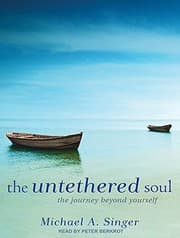
Um, have you ever read the book The Untethered Soul by Michael Singer? No, but I've heard... I've, I know the title, yes. Mm-hmm. High- highly recommend it.
Like, like Antifragile, it's one of my most recommended books, and what he describes in that book, I, is something that I've always, I'd always kinda felt but had absolutely no ability to put words to- Mm-hmm ... which was this idea that you are not your mind and you are not your body. Mm-hmm. You are your soul, and that your s- and that where we get confused is when we forget that our, we are not our mind. Your brain's job, your mind, the voice in your head, that is not you and it is not God. That voice- Mm-hmm ... is strictly meant to keep the physical being alive- That's right ... on a second-to-second basis, right?
That's exactly it. It is gonna give you every bad piece of advice to... 'Cause all it cares about is alive for another second, alive for another second, alive for the other. Same thing with your body, right? Mm-hmm. You, you, you feel a sense of, of, like you, your word, suffering when you're- Yeah ... when you're going for a long run, and your body's like, "This sucks," you know?
Then we got cortisol running through our bo- you know, get out. And, but it's, but what you're saying is, "I'm making you stronger." Yes, your body's screaming at you to stop because, 'cause it is. Your, your, your muscles are tensed. They're tearing.
Mm-hmm. There's, there's stress chemicals flooding your muscles, and but you know what you're doing. Your soul knows what it's doing, which is making you stronger, making you more fit, giving you more ability to outrun a tiger or whatever, you know, whatever our ancestors were doing. So this, but when you can, when you can conceptualize or, that's not the right word, internalize this idea that that voice in your head is not your friend, doesn't mean it's not a data point you shouldn't consider. But it's not who, it's not you, right? 'Cause that voice is gonna tell you, "Don't take on this big project.
Don't fall in love with her," right? "Don't, you know, send a random note out to this person 'cause he might think you're weak," or whatever, right? Like, it, there's all these crazy messages that you get that keep you from doing the things that move you forward, and so much of it is 'cause we think that voice is us. Or some people confuse it to be God, but it's not, right? We are this separate thing, this soul that's hol- that's been fit into a shell, and the shell talks to us, but we cannot take it as truth 'cause it's not truth.
And, and so much of what you just said is clearing that mechanism, right? It's getting the garbage out- Getting the blood flowing, the body moving and engaged in the day, and then refilling it with positive things, you know, whatever the learning part is that you wanna do, right? Then refilling it with positivity, right? And it's, it's like taking out the trash every day. Yeah.
Yeah. You, you dump the trash. You know, you, you clean up the dishes. You put... You, you know, you fill it up with good stuff, and it's just a wonderful way.
I could talk to you for three more hours, man. I wanna have you back on the show- Sure ... you know, as soon as I possibly can, 'cause I have, like, a million more things I could talk to you about. This has been absolutely phenomenal. Uh, let people know, there's, there's so much that you have going on, uh, the book, your work with your academy and coaching that you do. Where should people go if they wanna go deeper into your world?
And any of the resources, guys, that Christian mentions, I'll have linked up in the show notes, whether you're listening on the podcast, watching on YouTube, et cetera. So just scroll down and, uh, you'll be able to find them all. But wh- where should they go to connect with you and go deeper into your world? So, yeah, if you're generally... If the deeper into the world, if that's the, the desire, probably the best w- uh, place would be my newsletter.
I have a weekly newsletter. Uh, it's at christianrayflores.com, so you... It's just my name. And basically, what you get there is one free Sunday newsletter and one only for subscribers. It's just 11 bucks a month.
Of the best of the best stuff that I can just share, find, you know, collect, curate, um, that's all living in that pla- place. So I think that's probably the best place if you, generally speaking, wanna, wanna sort of just benefit from some of the stuff that I, that I share here. And if, if you're one of those probably 1 or 2% who go, "I need to work with this guy," we have a wait list, but you can definitely join the wait list. Be happy to discuss it. You go to xponential.life, and it's...
Xponential is spelled without the E. It starts with an X. Gotcha. And that's sort of basically my high-performance coaching stuff. Dude, enormous fan.
Appreciate the hell out of you. Like I said, I, I wanna have you back on the show when you have some time, 'cause I wanna get into the book. I wanna get into some of your more cl- your coaching philosophies. There's so much I wanna talk to you about, but, uh- Yeah, yeah ... I appreciate your time, and this has been wonderful.
Thanks for taking a few moments to speak to us today. Ryan, thank you, and I find you to be extraordinarily not only curious but definitely full of wisdom yourself. Because you, you can tell that you're overflowing with these ideas yourself because you don't just ask questions, you go on your own little, you know, side, sidebars, which basically tells me you know what you're talking about, you're passionate about it, and it resonates with you. So thank you for that. Thank you.
In a crude laboratory in the basement of his home It is 3:00 AM, and the confines of his lair are lit only by- Happy holidays. Want to give your host a gift? Consider subscribing, rating, and reviewing the show this holiday season. It really helps the show grow. From all of us at Believe, have a merry Christmas, everyone, and a happy holiday.
If you liked the show, please take a moment to rate, review, and subscribe. It really does help the show to grow. Thank you for listening.