My shopping style is more stay at home than try in store. So my Amex Blue Cash Everyday card is my go-to accessory. When I shop, it's easy to earn by getting 3% cash back on US online retail purchases. Each order brings me closer to more cash back. So go ahead, add the card and shop the latest styles.
Reinvent your look and reward yourself with Amex. And try on the Blue Cash Everyday card. Learn more at americanexpress.com/explore-bce. Terms and cash back cap apply I became a very unhealthy person for the simple reason that I wasn't vulnerable. I didn't ask for help when I really needed it.
In a crude laboratory in the basement of his home. Let's start talking this idea of executive loneliness as it relates to leadership. I- it's one of the things that y- it is very tough, in my opinion, to prepare for. Even if people tell you that something or you hear a podcast like the one we're about to do, like, it is a very tough emotion e- or feeling to deal with when you hit a leadership position and you start, that loneliness starts to creep in. So like, one, why, what was your inspiration to address this particular topic? 'Cause I think it's one that's underserved, and I love that you are.
Hmm. And two, like what, how do you start to get people out of that space? Yeah, absolutely. So why did I then cover loneliness? First thought, I found myself quite lonely and isolated in my career.
If you asked me at the time, would I be lonely and isolated, my answer would be no. But looking back at my corporate career, why did I resign in the end? Why did I burn out in the corporate career? It was because I isolated myself. I was just too scared to be open, to be vulnerable, to ask for help.
I was at the time a general manager of leading 72 hospitals and clinics in Indonesia, Jakarta. I wanted the next role, and for that, I tried to set my upso- myself up for success. I was not ready to talk. That left me lonely and isolated. As I then start to research the subject and I interviewed other senior executives, I found that about 30% of the senior executives I interviewed in Southeast Asia also admitted that they would suffer from loneliness and isolation, either currently or have done in the past.
So that tells us that this is a big problem. Do you think that problem is any more expansive in the Western world, or maybe Western world isn't even the right way to put it. It's more like the States, because I'll tell you, man, like here, the culture here, this hustle porn has really been this toxic- Hmm ... pervasive idea that is, is, that has gotten in, and executives feel like if they're not working, right, they're losing. And they, so they start carving out time for personal fitness, for time with family, for time to just decompress, and they're just on and on. And I feel like, and at least I've, when I've felt the loneliness, is often when I feel this pressure to work even more.
Hmm. I, it- it's like it expands and really presses that loneliness quite a bit. Or is this something that's pretty equally spread out throughout the world? I think you could be right, that it could be even stronger and even more challenging in the US. But already what I saw was we live in this world where we elbow our way up the top to that corporate ladder, only to find ourselves at the top like how I did, and then I question it.
I question myself. Why did I do this? I pushed myself so hard to get here. To get here for what? And that was the beginning of my fall, as it happens with many others, because we define ourselves in this work.
We strive so hard. And then if we lose that, even by ourselves, by realizing this is not the right mountain I climb, or that the company go through acquisition, or they lay us off, and then we lose our identity with that. Do you think there is a difference in the amount of loneliness or how people experience it between an entrepreneurial journey and a journey inside of a large corporation? Yeah. So actually, I started my research around large organizations because I worked in a company with 1,400 staff myself.
We can maybe call that a medium, but it's definitely not a startup or a small company, and that's what I wrote the book about. But as I then started to talk about this, more and more entrepreneurs came to me and said, "Nick, this resonates with me as well. Running a small shop, I don't have anyone to speak to. No one can understand me. But however, I have investors who put on pressure.
I have the board who really demand the results." Then this can be a very lonely affair, and we find indeed a lot of entrepreneurs finding themselves completely lonely, isolated, burnt out. And if we talk at the extreme end also, the, the s- the suicide rates is quite high around entrepreneurs. Yeah. I think the concept that you brought up before too, around climbing the wrong mountain, or maybe the mountain moves on you is a better way to put it.
Hmm. I think entrepreneurs feel that quite a bit as well. Hmm. Uh, they have this entrepreneurial drive. Maybe they have a vision, and they start chasing and they start something.
It's producing revenue. They have a thing, and they're looking at their life and they feel lonely and disconnected, and they don't love what they're doing. All of a sudden you start going, "Maybe that nine to five isn't so bad." I think I, I'm a firm believer that w- we need both big corporations and entrepreneurs. I know sometimes on either side, they get frustrated with each other.
I... If you have that entrepreneurial drive and you push to that top, or you're inside of an organization and you're working your way up and that mountain does move on you- Hmm ... how do you catch yourself from that dark downward spiral of like shame and doubt and fear and insecurity that inevitably comes with loneliness?Yeah, we gotta have safe spaces. If we are a man, for example, we need perhaps our men's group. We need some tribe where we can be open and honest and vulnerable, where we express our feelings. And then as professionally, we need to be in some organizations with other entrepreneurs.
Ideally entrepreneurs who are sort of building similar kind of organizations, not competitors per se, so that we can feel safe, and then we can discuss the work-related challenges just to get that sympathy and understanding from others, and that we are there to support each other. If we don't have any of that, then it can be a very lonely affair. Many entrepreneurs I'm speaking with who define themselves also in this business, and they take it as a fa- personal failure if the business doesn't work. It could just be that it's a failing business model, and it's not a personal failure per se. Yeah.
I think it... Being an entrepreneur myself, I, I feel that it is very difficult to not equate what you're building with who you are. Mm. And in many ways, I think if you can frame your mindset, I think it's a very positive thing to equate a part of who you are, right? Not maybe all of who you are, but a part of who you are with this business 'cause it's your idea.
It's the buck stops with you to a certain extent. There is a part of that, but I... How do we not allow our position in a company or a struggle in a company or a tough boss... Like, I often find that the first time we hit real adversity is when this hits harder than, and comes out of left field. You just wake up one morning, and you feel a little off, and you're like, "Man, something's missing.
Something's disconnected," and you don't know how to wrap your head around it. Is there a way for people who maybe are early in their journey, whether it's inside a corporation or building their own business, to start to prepare for the inevitable obstacles, setbacks that are gonna come and maybe not being hit so hard? Or is this just part of the process, like you have to feel that pain and then deal with it as a way to grow from it? Yeah. I think challenges will come, setbacks will come, and it's about how we handle them, and indeed we can be proactive.
And the best way to do it is to look in your kind of space, your field. Ideally identify perhaps some mentors who are a little bit ahead of you in your game who you can reach out to and ask them, "Can we- would you mind to have a call with me from time to time? Do you mind if I reach out when things get tough?" And I do that myself. As an author, I have identified authors who've written more books with me, more powerful books with me, and when I get that writing, writer's block, I'm writing my second book now, then I have some people I can dial and I can call.
I do the same with my speaking career. I have keynote speakers, I have facilitators, trainers in different spaces who are way ahead of me. Some who are 5 years, some 10. I even have some gurus 20 years ahead of me who I can call when I need to. So for that, if you're in tech or in that space, then find someone who's a techie who's done it, who's maybe scaled up their business to 250 or 500 staff and have those calls and be ready when the rollercoaster is starting.
That would be my tip. How did you start to establish those mentor relationships? 'Cause I think a lot of people struggle with that. Why would Nick ever read my email and respond to me with... Or like we get like this sense of this person is so far ahead of me or this person's ahead of me, so why would they take the time to deal with me? How do we establish those mentor relationships in the right way, in a way that's gonna- Mm ... be valuable not just to the individual who's asking, but also to the mentor? 'Cause I think that's a big part of it.
Absolutely, and I think the best is to join some organization or events in person. If you go to the relevant events, so where did I find my people? For example, my public speaking and training and mentors, for example, it's in the Asia Pacific Speaking Association, which we have in Singapore. I joined their summits, their conferences in person. Sometimes I volunteer to perhaps to keep... do a role there in the board.
You get to know some people in person, and if you feel that they have what you have as a speaker, then build a relationship and talk to them. You're not always gonna get a yes, but some of them are in the space that they wanna give back. They're writing their legacy, and if they- if you have an important business or a message that resonate with them, all you're asking for perhaps is a half an hour call from time to time. And y- I think everyone, uh, naturally are scared of being rejected. But I would say go for it.
You have nothing to lose by asking. But if you do it in person, the most people I speak with have been offering, and I'm also offering this myself to others, and it's surprising how few people take me up on it when I go for it. Yeah. That's a really interesting point. This goes to one of the things we were talking about before we went live, which is vulnerability, which I absolutely wanna transition to, I think, and this might be the perfect moment.
There's this sense that if I need to ask Nick for help on how I better position my keynote, then somehow I'm not good enough, right? Every single, and I've done 500 plus interviews on this show, right? Every successful person, yourself included, you just said it, right? Myself included, I have people that I call when I get stuck, and I don't even question it. I'm just like, "This isn't working.
I can't figure this out. For whatever reason, I'm maybe confused or whatever models I've tried to run a decision through, just it's not clicking." And then you have a person you call. And but for a lot of people, that feels like maybe weakness to a certain extent, and that's, I think, where this vulnerability comes in. How do you coach or teach, and you're actually doing it today, and I appreciate you taking the time today being that you have an engagement going on- How do you start to help people embrace vulnerability in a way that doesn't make them feel weak or shameful or doubtful of themselves?
Yeah. What I do when I do my workshops and keynotes, I share my story, the Nick who wasn't vulnerable, and that was not pretty. I, uh, actually went down the rabbit hole myself by not being vulnerable, and that was what led to my corporate career and the crash of it. I even fell over to alcoholism for some time. I gained about 50, 60 pounds.
I became a very unhealthy person for the simple reason that I wasn't vulnerable. I didn't ask for help when I really needed it. That's about seven, eight years ago now. I rebuilt myself, and I see asking for help as my greatest strength today. I have mapped out people in all different areas who can mentor me.
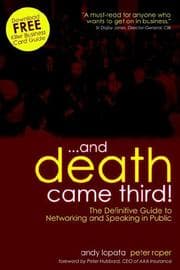
Also, I'm t- about paying it forward and giving it back at the same time. And indeed, that was part of my training today. And one book that helped me that I read and that I applied and recommended to the audience today is by author Andy Lopata. He wrote a book called Just Ask, and he's really talking about this: how can you make asking for help your greatest strength, and by making it simple. But also in his research, he found that actually people are terrified of asking for help, and he's even wrote an earlier book that was called And Death Came Third, and that's talking about basically surveying people, and they found that, that death wasn't as scary as walking into a room full of strangers and talking to them.
So I think we just have that fear, that blockage, and that is about then practicing the vulnerability muscle, and we can do that in safe spaces and conversations by becoming more open, more vulnerable. And we can also prepare ourselves, as Andy will talk about in his books, is if you're going to an event, you're going to that event, think what is it I wanna get out of this? Which are the people I wanna meet? Or even script a few questions before. Have a note in your pocket, and just stick to the script.
This is what I wanna ask. And then walk around and have meaningful conversations, and then things get a lot easier. Yeah. I really love the advice of, be prepared. I think that the industry that I work in primarily is the insurance industry.
I did a keynote a couple weeks ago in Vegas, and after the keynote a young agency owner came up to me and said he had a couple questions. Now, he pulls out his notebook, and he had the questions written down on the notebook, right? And he said, "You said this. I seemingly don't see it. I don't see what you're saying there, but I believe it, like I emotionally believe it, but I can't tangibly put my hands on what you're trying to say there.
Can you explain?" And it was a very direct, very thoughtful question. Stopped me dead in my tracks. I, I had to get to an airplane. I was trying to get out of there 'cause sometimes after a keynote you can get caught for a long time.
Which... And for anyone listening, I love answering questions after keynotes, so please, if you're at one of my events, don't not come up. Just particular time I had to go, but but he stopped me dead in my tracks 'cause it was thoughtful and it was specific. Mm. And I answered the question, and he had one more, and then he sent me a follow-up on LinkedIn and said, "Hey, if I ever have another question, is that okay?"
And because he approached it in a thoughtful way, he didn't have 17 questions, right? He had two. They were thoughtful and specific, and then he thanked me like a couple days later on LinkedIn. I will answer that dude's question any time he has a question, right? Like for now and forever, right?
Any time he's got a question, I'll pick up his ph- call or answer a text or whatever. I gave him my cell phone number. And it's just like that, that one extra step it seems like that a lot of people don't take, right? They come up and they're like... And I, I get it, maybe you're a little nervous or whatever, but just write it down.
Don't... It actually means more to me, and I've been... I'm sure you might be the same or if not, but like it means more to me that you took the time to write a question down and think about that question. All I really wanna know when someone asks me a question is that if I give you m- my best guidance on that question, there's a good chance you're gonna take action on it. That's all I wanna know, 'cause there's nothing worse than someone asks you a question and like you give them an answer, and you can tell almost immediately n- they're never gonna take action, right?
You're almost like, "Ugh." You feel like you wasted your time. But if you get the impression from someone that they're actually gonna listen to your advice, and it doesn't mean they have to agree or whatever, but that they could take action, man, you'll give so much of your free time away to try to help people. No, I fully agree with you, me. I offer my time quite frequently, but it's very few who pick it up, even though you serve it on a silver plate, simply because maybe the fear of being rejected or whatever it is.
But if someone indeed approach, I'm also there for interns and people who are reaching out. So yeah, I think the clear message here to anyone, think about who you need to reach out to and do s- take that call or walk up to people and ask the right question. Be prepared, yeah. How do you find the harmony between being strong, direct, driven, vision-focused leader with the necessary vulnerability that you need to have? Like I, I've been part of a couple organizations earlier in my career where the leader was, was almost like too vulnerable.
It was like constantly about what's not working and his issues and hi- and all the... And you're just like, "I'm losing faith that you're the guy that's gonna take us to the Promised Land," right? Mm. There's almo- you can almost take it too far. So how do you find that harmony between those two kinda sides- Yeah ... of, of what you need to be as a leader?
Yeah. We gotta be so careful from not oversharing, and going into the office and oversharing everything. We have to decide which are gonna be your safe spaces, and if it's in the workplace and you are the senior leader there, it might be that you don't have a safe space there where you can do that. It might be have to be externally. It can be coaches, mentors, it can be therapists, counselors, it can be anything from a 12-step program.
If you have a challenge, you have an addiction, you have something, go and find your tribe, the people who will understand your problem, who can talk your language, go there. But of course, it's good if we can have some friends. Women have a lot of women's groups. We men have- are getting better and better at having men's group. I'm the chair myself.
I have a men's group. We log on once a week for one hour. That's the space for the men to share what's on their mind, so do that. Vulnerable in the workplace is when we make mistakes. We need to own up to our mistakes, and just saying, "I screwed up here, and that's okay.
Let- how can I do it better next time?" That is where I think vulnerability should come in. Yeah, I completely agree with that. There are a few things that kill culture, like the leader not taking responsibility, even if it's not the leader's fault, right? At the end of the day, you put the person in that position, right?
You gave a directive for them to go down that path, and if they screw up, take that finger-pointing or deflecting. I also can't stand when leaders blame things like the market or everybody's dealing with that stuff. How it's not really the market's fault which you didn't adjust to them or whatever, and the... What do you think it is inside us? 'Cause I think every, again, I think so many of these things that we're talking about, right? We've obviously both had experience.
I'm 44. I don't know how old you are, but I know you've been in the business for a while. Like, some of these things almost feel like you have to experience them once- Mm ... but it's having the self-awareness to c- catch yourself and not make the mistake again. So like, how do we develop... 'Cause to me, self-awareness falls in that vulnerability category. Yeah.
Like self-awareness to me seems like a superpower, but not everyone intrinsically has a, a deep sense of self-awareness. Do, do you, one, do you believe that self-awareness is an important part of vulnerability? Is there any methods or, or mindsets or mental models that we can use to help be a little more self-aware about the places where we may not be connecting with our team or we may not be the best version of ourselves? Yeah, I think it takes a lot of deep work, and us men are quite hopeless in general in this, I have to say. Sorry to generalize.
I'm 50 myself, and it took me quite some while. I was not there when I was 40. I was then quite defending, and I was quite looking at the world as a place that you couldn't trust people. But the looking back in hindsight, it was perhaps that I couldn't trust myself. I was just immature.
The self-respect was there, not there. Mm. The self-love was not there. That's something that only came after I went through my crisis. I had my 40 years crisis basically for a couple of years.
After that, I found myself. But why do we have to go through something so dramatic to really hit what I did, my rock bottom, and then build myself back up? Why couldn't I have done that without this journey? I wasn't vulnerable before. I was not ready for it.
And I remember even in my office, downstairs was one of the 12-step programs for alcoholics, and I remember looking at that meeting room and thinking, "Poor buggers who have to go there," only to find myself in that chair a couple of years later on asking for help. Yeah. You know? Yeah. I, I love this idea.
And guys, I'm gonna find the link to the book, Just Ask, because you've mentioned it a couple of times, and I think that's a really wonderful point that you just made, right? Like that you were judgy of this group, right? You were judgmental of this group before, and then when you needed it, all of a sudden you were like looking around going, "Wait a minute. I'm one of these guys." And we all are to some extent.
The, this idea, it's almost, and I hate to say th- what's gonna come out of my face next is, is not maybe the best way to frame it, but it's, it's almost like at, even if you don't maybe buy into exactly what we're saying, right? Maybe you are still that hard-headed, I'm the best, listen to me. My least favorite thing that a leader ever says is, "I pay you, do, just do your fucking job," kind of thing. It just, that, that's like soul-killing to me because it, it just destroys culture. But even if it's just a tactic, right?
Even if you learn these skills just as a tactic, act as if you're a vulnerable person, act as if you have self-awareness. Over time, it will just simply become part of who you are. Does that make sense? Do you buy into that argument? Yeah, absolutely, and I believe that what really helped me was then, and back to that support group that I joined, was to be around other men who are older than me and listening to them and hearing their journey.
If we're looking back perhaps how men became men in the past, there was more of a hands-on job. We were with the fathers, the grandfathers. We were all doing work together. We had mentors, we had role models, we learned. That is not there anymore, and I think that there's a big gap that at least I could feel and I also didn't do things like joining the army or the military, which was also compulsory in Sweden where I grew up in the past, and people said you become a man when you do that for one or two years, going through a little bit of tough and hardness.
I didn't have that in my life. So therefore, it seemed I needed my crash and my fall and admit that, that I needed to do what they call in recovery, I needed to surrender and then look at others, what others doing and picking up the good pieces there. I think a lot of guys worry too, so men in particular, they worry that if they show vulnerability, if they show or address or bring to light a weakness or a mistake, that somehow they're gonna lose their masculinity. How do you fight or push back, or what has been your experience with that argument?Yeah, I've also heard that and people think, and even actually some of the women that heard that we are running this men's group, they actually didn't even believe it. They thought I was joking when I said it, and some of the guys have said, "No, that's de- definitely not for me.
I would never join that." That's ... But those are perhaps the people who would need it the most, and I was one of those people also before. And it takes a while before we get there. So I would say we need all need to open our mind a little bit, I think, in general because that's a better place when we are joining groups and we can listen to others who especially are a few years older than us.
Then we can pick up so much. Yeah, 'cause it, it feels like everything that we've talked about so far and these different concepts, like I, I think we m- most men, or particularly men who haven't put work- the work in or had conversations or joined a men's group or seen a counselor consistently or have a mentor that they work with, they ... I think there's a lot of misunderstanding of what masculinity truly is. Mm. And at its core, so much of it for me in my own journey, and I've had multiple falls similar to the one that you have and worked my way back and learned what ... and have learned over time what those triggers are and now I know how to address them and build skills.
But it's ... It ultimately is coming down to security in who you are, right? Like that false bravado masculinity is 'cause you're not secure. The lack of vulnerability, lack of access or willing to address mistakes, et cetera. It's just it comes from a level of insecurity.
As we develop security, particularly in, in who we are, it seems like many of these things we naturally start to seek them out. How did you start to ... You had this major moment of just your worst time, and you've pulled yourself out of it and- Mm-hmm ... had so much success on the back half of it. And like how did you develop it coming from that just extremely dark moment? How did you come out of that with what feels very much like being very secure in who you are, what you believe, how you operate, what your core values are?
How do you start to reestablish that security in yourself when you're doing things that create insecurity in who you are? How do you start to turn that corner? Yeah, and that was by getting support of others. I had others who lifted me up, and again, I go back to these kind of recovery meetings because they're very i- very valuable here. I was wondering when I came in there and I admitted I had a drinking problem, I was surprised that around that table were people who had one-month sobriety, three-month sobriety, seven years sobriety, 30 years sobriety.
And I was thinking poor buggers who are coming here for 30 years, and I thought what's wrong with them? If they stopped drinking 30 years ago, what are they doing here? I found out later on the reason why they are there is to give back, to help others. They were there for me, and that is the 12th step. In all the programs, the 12 step, it doesn't matter if it's food addiction, alcohol addiction, gambling, or sex addiction, whatever issue there is, the 12 step is to give it back.
And the saying in the recovery community which says you got to give back the gift to keep it, and that's what we're talking about here. So to answer your question, why did I continue to go up? Because I had others who helped me. Others carried me and lifted me, and now what am I doing today? I'm paying it back.
I'm helping others. I actually just got a message before our meeting today from someone who, a man who's today had one year sobriety, and he said, "This is the best year of my life." He found himself deeper. He no longer need to run to the bar to drink after work to wind down. He can deal with his emotions in different ways.
He can talk to his therapist. He can now have conversations with his wife about feelings, something that he didn't dare to do before. So I think it's again becoming authentic, becoming vulnerable, and really take ownership for what we are facing and deal with them. And that is, is why I keep going. I'm now seven years into my journey coming back, and I'm just loving it.
Let's change course a little bit here. I want to talk about you, you talk to a ton of leaders. You do a lot of keynotes. You do a lot of workshops. You're very involved in the leadership community.
What are some of the major issues maybe pertinent to our time, right? There's issues that every leader has faced forever, but we are living in a specific time in history. I don't want to say unique, 'cause there's challenges in every generation and every era, but this is a specific time. What are some of the things that people are consistently coming to you with or asking you questions about that are unique to this moment in time that they have to address from a leadership position? Yeah, there's a few things that really stand out, and being a coach myself as well, I typically look at the wheel of life, the eight areas of the life, and I normally ask my participants to do a self-assessment to look at the different areas.
And there is consistency. It doesn't matter where I do the workshop. The biggest gaps always is on physical health. People, especially if you're driving the corporate world high, you are in senior roles, then peoples feel that they want to have a physical health. They would say the desired score might be a nine or a 10 on a scale of a 10, but they're sitting at a three or a four.
That is always the biggest gap, and I've experienced that today again. So people are not... don't find the time and the discipline or the means to actually look after themselves. Not exercising well enough, not having a good enough diet, and just burning themself at both end. That is the major issue that I'm facing. Why is physical health so important to leadership positions?I think if you're gonna deliver in a leadership position, you gotta have the house in order.
You gotta really have a strong foundation to work on that. And I talk a lot about professional athletes. I do the Ironman triathlons myself, so I exercise an average about three hours a day to look after myself to be able to deliver at a high level. And I question people then who perhaps don't even go for a walk, who never move at all. All they do is working.
And it's almost if you compare this to a professional athlete then, imagine if you're an athlete and all you do is coming in and do- going competitions. You never train, you never rest, you never prepare yourself. You're always just competing. So that's how I see the people who come to work. They work 12, 14, 16 hours a day without preparing for it.
No wonder they're gonna burn out, and no wonder that the results are not gonna be what they should. There's mistakes and there's all kind of issues happening. That's why eventually they need different ways to cope, and that's why drugs, alcohol, and other addiction, social media and so on is coming into play. They're seeking this sh- a cheap route, a shortcut to an escape rather than dealing with it, which would be perhaps to connect with nature through a hike or a walk or a jog or a swim or a cycle or something else. I completely agree.
One of the core values of this show and what we teach here on the show is health is a competitive advantage. And I've shared stories how, you know, in situations where I've had to negotiate something or you d- across a table or whatever, and you see someone who is carrying an extra 40, 50 pounds, maybe they're red-faced, you can tell they're not in shape. I know I'm gonna beat that person simply because I will outlast them. I will have more energy. I'll have less brain fog.
I'll have clarity deeper into the day. I won't get that noon to 1:00 sleepiness or lethargy because I'm not stuffing my body full of processed food or tons of carbs. And all of a sudden your six hours of my work is 12 hours of their work because you're physically fit, right? And your brain is in shape. And I think that's something that people don't realize is...
And I'd love for you to share your experience on this. Like I have found, and people ask me, I love to, I love to box and I love to deadlift and lift heavy weights, right? And people say, "You're 44. What are you deadlifting for? You're gonna hurt yourself."
And I'm like, "I'm not trying to deadlift 1,000 pounds." You know what I mean? Yeah, I like to lift heavy weights, but I'm being a reasonable human being to a certain extent in that regard. I do it because it keeps my brain clear. Like physical body health directly impacts what's going on up in your coconut.
And so s- I feel like there's a disconnect and, and like here in the States, we've normalized carrying an extra 20, 30 pounds as if it's no big deal. We just call it dad bod, right? Oh, I got a dad bod, and everyone's got a dad bod. And I just... It makes me sad because I'm like you'll hear them complain about something, and the answer is, "Get your ass in the gym.
Go for a walk. Do 10 pushups when you wake up," right? And these things that you're struggling with, the lethargy in the morning or the lag or sleepiness you have in the afternoon, it all magically goes away when you get your body in shape. And you don't wanna do things like drink. Your wife starts wanting to have sex with you again.
Like all these amazing things happen with just getting your body in shape, and so few people do it. One, where do you think... Is, is that just our kinda pleasure-seeking culture that's been shoved down our throats through so- social media and just in general advertising and products? Yeah. And that's the most common excuse what I'm hearing then is I don't have time for it or there's all these excuses.
But what I'm saying then, especially if we're talking about leaders here, I say if you are a leader, the way I think about it, the time you spend sitting in meetings on Zoom or you are sitting on your computer working or sending emails, that's when you are the administrator. I said if you're a leader, you need your CEO time, you need your creativity, you need your strategy time, and you gotta be in top-notch creativity and in the right space to do that. And that will... That moment will not come sitting in the office. That will come when you jump out of the pool or you come from that jog or that run or even during the run.
That's when it will come to you. That's when you get the million-dollar decisions. So if you don't get that, then you're never gonna perform at the high level. I block three-hour slots every morning for my self time. It doesn't mean that I go for work at all that time, but that's my prayer, my meditation, my self-care.
It can be my exercise, whatever it is, and that's non-negotiable. If I have to move that in the morning, then it will come in the afternoon or the evening, and that is how I keep myself in that form to deliver. But to answer then your question, what do people do? Shortcuts. We have all these great apps.
We have Netflix that starts auto-playing an episode and someone is maybe spending time watching the news, following the world affairs, even though they're not control of the world affairs. So I think we gotta prioritize what we do. And they were actually laughing today in the workshop when I explained that in March 2020 during the lockdowns during COVID, I had enough of the news and I uninstalled the TV, and I haven't plugged it in since then. Wow. Still to today you have not replugged your TV in?
That's right. I haven't watched any mainstream news since 2020. Wow. Good for you. I don't watch a tremendous amount of TV.
I'd say I get my news from X. I, I, I find it more as like a psychology experiment. I was having this conversation with a friend the other day 'cause I asked him about... We, we were chatting about a bunch of stuff, and then business stuff, and then when that ended, we were just like bullshitting, and I said, "Hey, did you see blah, blah, blah?" And he's like, "No."
And I was like, "Really?" I was like, "You don't..." And he's like, "No, I don't follow any of that stuff. It doesn't impact me." And I was like, "Good for him," in my back of my mind.
And I said, "I don't follow it. I like watching... I like following politicians because to me it's like- A psychology Petri dish, right? You get these crazy people who are essentially selling 24/7 whatever their ideology is or whatever they're trying to get through, and watching the different tactics. It's almost if you're interested in persuasion, in leadership, in communication, in sales.
Watching politicians and studying how bad some of them are at it and how good some of them are at it, it really is almost like a master class of psychology in that world. And like people think, people always go, "Ah, no, you just like it 'cause it's like watching porn or whatever." And it's- I just find these people to be, I find them to be fascinating. You gotta have a screw loose to go into politics, like you do. It doesn't mean bad.
It just means like you're constantly taking fodder from the other side. You're trying to get something done. You either can take a educational way, you can go persuasive, you can go bombastic, and then why do some people choose certain situations to use certain tactics? I find that the reason that I am so interested in it is because it just to me is like this, you're getting to wa- it's like a zoo. It's like a zoo for persuasion and leadership tactics.
And sometimes inside the zoo is like a big sign that says, "Don't do what this person is doing. It doesn't work." Mm-hmm. I don't know. That's always been my take on that is I wouldn't want that job.
I don't pretend that I have all the answers or know in any regard. I don't follow it because I think I'm right. I follow because I think that these people are constantly trying things to get something done, and you get to see in public in real time whether it works or not. Yeah, that's fascinating. I get some part of it.
Of course, I get it by memes. I follow all the news. The best part is, and this is what I, I... Like the internet always wins. Like at the end of the day, these call them trolls or meme creators or whatever, I don't know who these people are, I don't know where they are, but they always win.
They're always gonna get you. No matter what, they're always gonna... They're gonna put your head on a thing and say... And, and it's just sometimes it's so clever and brilliant. It's like my dirty pleasure, I guess.
You know what I mean? Like we all got that one little thing that we do, and that's probably mine. So beyond physical fitness, are there any other... 'Cause that one makes complete sense to me. Are there any other kind of specific to this moment in time things that people are coming up to you about? Yeah.
We have covered a bit on it, and it is the lack of support, the lack of support system. We touched on that other as well. That's a huge one. And the workshop today, for example, mainly from big MNCs company, they don't have that in place. They don't have it.
They don't have anyone they speak with. And of course, when you ask why, they say, "My company provide an in- internal mentoring program." And what is happening then if you have an internal mentor, it happens same as when I had mine. We're trying to impress that person instead when we have the conversation. Why?
Because that person probably have a say in your next promotion. You wouldn't be open and vulnerable and share your biggest challenges, what you're facing to someone internally. Again, we have to take ownership for our own lives. Yes, it's great if you have a great job and the company's looking after you. They have their policies and they have some in turn, but we gotta look at our own life with full ownership, and that goes for our career as well.
Why would we trust that our company look after our career? It's not in their interest. It's taking that self-ownership, and there's wonderful coaches who can help us to strategize that and look at that and looking at the next level. And also, we shouldn't put all eggs in one basket and trust that the company will employ you for 30 years and then be surprised when there's a layoff next year. So I think thinking about and having that portfolio kind of career mindset where you are constantly building your portfolio already.
If you are in a corporate job, save some money and build up and something that is chasing your dreams. What they're lacking is purpose. I'm asking in all my conferences, all my talks, I'm asking them, "Who in here knows your life purpose?" And typically in an audience of 1,000 or 1,500, two hands going up. That means that people walk around their lives not knowing their purpose, and they're completely lost, and then they wonder why they fall from failure to failure.
So that is definitely another thing I'm seeing, that lack of purpose. In the same vein as taking ownership, where do you fall with a leader developing a personal brand outside of either their own entrepreneurial endeavor or the company that they work in? Yeah. Again, it's about... And this is linked to purpose.
Think what is it that you wanted to do? If you lose your job tomorrow, what would you do? Do you have some passions? Do you have something that is cooking inside you that you would love to do? Start that journey now and map out what it is, and join some associations, read all the books on that subject, and really become an expert in that topic already now.
Create the name for yourself. That's so easy these days in this world, and you can build that sort of side career already. And then I heard someone today when we had this conversation said, "My company don't allow me to have an additional income." I said, "Great and fine. Then build this expertise in an area where you call it a non-profit, and that's your way of giving back now."
The day when you are perhaps losing your job or that you want to ready take step, remove those words from the website. You have your platform, and you can start invoice customers from day one. So be proactive about it and build it and see if that's your opportunity to create something. I know through some of the ups and downs in my career, it was my personal brand that I had built alongside the various things that I've done that has led to the next opportunity, right? I've never really found myself in a place of not having anything to do, any way to make money, because I had developed very early on- A personal brand around certain topics, around leadership, sales, technology, and because of that through-line personal brand, in 2018 I was fired from a job that I loved.
I basically broke power law number one. I outshined the master, right? Not on purpose. I thought I was doing my job, but he didn't like that my brand had grown bigger than his, and off out the door I went. I loved that job.
Never wanted to leave. It was a complete shock to me. Didn't find out that was the reason I got fired a year later. But it was the personal brand that I had developed on the side that led three weeks later, I had another job that I enjoyed just as much. That opportunity presented itself, bam, "Hey, I heard you're available.
Can we talk?" Yes. Boom. Awesome next opportunity, right? So I think today more than ever, developing a personal brand, and I think you're right if you're...
I don't even think when you're with another company it is always appropriate to, to monetize that personal brand or that you even need to. If you can and it's appropriate and it makes sense and it doesn't take you... All for it. Not knocking that side hustle at all, and I have no problem even if people in my own company, again, appropriate and separate and doesn't take away, go do your thing. I love it, because oftentimes they learn skills doing that that they can bring back to your company.
But have... Developing that personal brand, whether... Pick a platform, right? This is another thing. Pick the one that works for you.
If you somehow can figure out how to be successful on X, awesome, or LinkedIn, right? Is a really good one, especially for leaders, right? Or Insta- or whatever works for you, just start sharing your thoughts, your beliefs, and build up people who agree with you and are interested in what you have to say. And then what happens is, I think, and for so many of you listening to this, as you shared, Nick, like I don't care if it's your company or you're inside a company, I think the only thing that today we can bank on is in a given period of time, there's gonna be major change, right? Mm-hmm.
It's seemingly every three to five years the company makes cuts or goes a different direction or gets bought or you need to pivot or you sell, and then all of a sudden you find these people who even if they have a positive outcome, like they actually sell their company, they have literally no idea what to do next. They find themselves depressed. They find the insecurities, the doubt, the shame, the loneliness, all the things we started to talk about come in, where the individuals who have a personal brand, who have a purpose as you described, seemingly just move on to the next thing because it makes complete sense. They're like, "I love to do this thing. I've been talking about it, building an audience, building connections, and this is the natural next step for me."
And they bypass that time period of indecision because it's all right there. It's just the next natural conclusion based on what you're interested in. I, I couldn't agree with that advice more. I think this idea of building your personal, just recapping, if you have a purpose, an idea, and, and I'm interested in your take on this. Just around constructing a purpose, I find a lot of people who come to me, they don't have a purpose because maybe what they're interested in is very broad to start, right?
Mm-hmm. And I think they think somehow that's wrong, like their purpose needs to be a specific, "I help children in this country do this thing." But... And it doesn't have to be that specific. The more specific you get, the more, you know, directed, the more the universe will pull in opportunities to you the more specific you are.
But at first it could just be, "I like to be fit and wanna help people get fit," right? And then it could be, "I like to help men over 40 get fit." And then it's, "I like to help men who are in leadership positions get fit." And then you can refine it over time, but it's like we need a vector first before we have a destination. Does that make sense?
Yeah, absolutely. Finding your purpose is definitely a journey. It's not something that is a big crack overnight. And just find any kind of direction, as we say. And what happened to me from my journey, I started to become a volunteer for a suicide prevention agency in Singapore, a cause that is big to my heart, and a major portion of my work and my keynotes and so on amounts are donated to that cause and also volunteer for them and so on.
That is close to my heart and gives me a lot of meaning to do that. That doesn't mean that's my only purpose. I also find out meaning in other things, including, yeah, keeping fit and helping others to be fit. So yeah, it's just about starting that journey. Nick, th- this has been an incredible conversation, man.
I appreciate the hell out of you. If people are interested in getting deeper into your world, learning more about you, what you offer, where should they go? They can have a look at my LinkedIn profile. I'm quite active there, and it's Nick Johnson, N-I-C-K J-O-H-N-S-S-O-N. If they wanna look up my book, it's Executive Loneliness.
It's available on Amazon as a Kindle paperback and also on Kindle as an audiobook. Tremendous. Nick, I wish you nothing but the best, man. I appreciate your time today. Taking the time with us means a lot to me, means a lot to the audience.
So thank you so much. Thanks, Ryan. In a crude laboratory in the basement of his home. Happy holidays. Want to give your host a gift?
Consider subscribing, rating, and reviewing the show this holiday season. It really helps the show grow. From all of us at Believe, have a merry Christmas, everyone, and a happy holiday. If you liked the show, please take a moment to rate, review, and subscribe. It really does help the show to grow.
Thank you for listening.