There are people where they just hear the word Trump, and it triggers them. You could probably measure that their body temperature increases and their heart rate increases just by the mention of the word Trump. If someone gets triggered by that, then whatever comes next, their emotions are, are clouding their judgment. Doesn't even matter if they're someone who hates Trump to that degree, you could probably completely make up something that he claimed he did or said something that's completely crazy, and they won't bother to look it up. They won't bother to fact-check it.
They, they will just one hundred percent be like, "Oh my gosh, that's crazy. I can't believe he did it. He's blah, blah, blah," right? 'Cause it, it affirms what they already believe. That's Zuby, our guest on the show today, and this conversation will challenge everything you think about courage, conformity, and what it actually takes to speak the truth in a world that punishes it. This is The Way.
So you knew Scott Adams. Scott Adams just passed. I was enormous Scott Adams fan, you know, pre him going political, during the way, uh, during his time, kind of starting to commentate in twenty sixteen and, and, and really focus on, on... The way he focused on, uh, uh, more cultural and political topics I thought was, you know, based in, in kind of real deep thought and reality, and he was just a, a, an interesting and, and original thinker. He really-- And he seemingly stuck to, to the, to, to his thought process.
What, what was he like as a person, as, as a man in the time that you got to spend with him, just being that he just passed? Yeah, sure thing, man. Well, first thing, rest in peace, Scott. I, I knew the day was coming. Uh, I thought it was gonna come sometime this month, if I'm being honest, based on the things that he was saying and just from what I knew.
Um, but still, nonetheless, of course, you know, it's shocking in a way, and it's sad. And no matter how much warning you get, um, when someone passes, it's, it's just sad. Um, but you know, in his case, man, he was like a champion all the way up until the end. I've never seen someone just kinda keep going in the public eye in the way that he did and just continuing to do his live streams and continue to put his message out there and encouraging people. And I, I, I took, um, I definitely took something from that.
It's not something I've really seen before, and I think there's something to... I think there's something for people to learn there. But in terms of, uh, Scott's character, I mean, I, I've only met him in person twice. I've interviewed him three times. The first time was remote, like we're doing now.
The second two times were at his house in California, once in twenty twenty-four and then again in September twenty twenty-five, so just, just a few months ago. So I-- when I saw him then and I met him and we were chatting, I was very conscious of the idea that there was a good chance it was gonna be the last time I'd see him in person. Um, and so there was a certain weight to it. But at the same time, you know, it-- he was still his usual friendly self. He was very-- He, you know...
With me, he's always been, been very kind and polite, um, very encouraging. I know he actually talks about me quite a lot on his, his live stream, live streams and likes to use me as an example of his sort of talent stack idea, as someone who does multiple things and makes them work together. Um, obviously a good, great sense of humor. I mean, anyone who's followed his work at all over the decades would already know that. And yeah, man, he was a, he was a good guy, and I know that there are people who want to sort of tarnish his reputation due to that little rant he had, uh, I don't know, was it twenty twenty-three, I think, when he sort of made those comments that people were like, you know, "Hey, he's, he's a racist, he's a Nazi, he's a white supremacist, he's all these kind of things," and, you know, just kind of take the punchline of it and completely strip it out of context.
Now, are those statements that I would have personally said? No. Do I think he could have worded it better and explained things better? Sure. But at the same time, having spoken to him about it and seeing him talk about it on multiple things, I think, um, you know, I, I, I understand what he was getting at and the wider point that he was trying to make.
And we live in this world where it's kind of b-- it's kind of strange, where someone can live for sixty-eight years and for decades and decades be in the public eye and put out thousands of pieces of work, multiple books out there. I don't know how many live streams, you know, thousands of hours of, quote-unquote, "content." And there are people who wanna take one thing that you've said in your entire lifetime, take the very f- you know, suppose the wor- the worst thing that you've said in your entire life, and they wanna kind of make that your legacy and use it as a, a, a, as a reason to kind of to dismiss or to denigrate the man himself, and I, I think that's just lame. And but on the flip side of that, I mean, it's just been massive outpourings of love and support. I, I actually said to my wife yesterday that I hope when I die I get, uh, I get that much love and support.
I hope, I hope that many people are sad when I die. Um, you know, he impacted millions of people. I've known of Scott Adams literally since I was a child growing up in Saudi Arabia. I remember seeing all the different cartoons in the, the, the Arab News newspaper it was called. And, um, you know, Dilbert was one of the ones that I'd regularly see.
And I, you know, I just remember... I, I didn't think, "Oh, decades later, this guy's going to be like any type of peer," or, "He's gonna be someone who respects me like I respect him," or, you know, "I'm gonna be sitting down having conversations with him and putting them out there to thousands of people across the internet." You know, I, I ne- I never thought that would be. But, um, yeah, rest in peace to Scott. I, I hope that his confession of faith towards the end was, was true.
That's between him and God. Um, but yeah, that's, that's what I have to say on that one, man.Yeah, I, uh, I'm glad that you talked about the one moment in a lifetime of content and value. And, you know, one of the things that I was so interested in having this discussion with you about is, is a couple different things. I mean, you seem very much, uh, like a polymath, like a, like a Renaissance man yourself. Uh, Scott was also someone who, who played in multiple different dimensions with multiple different formats.
And to me, you know, there seemingly when I hear discourse, right, on it that, that you see on, on X or, or any of the platforms or, you know, any type of, of media, um, it-- you know, I, I, I look at the bifurcation in the world, and I hate looking at it as right and left or conservative and liberal. You know, I, I, I don't... It, it can sometimes fall in those buckets, but those, in my opinion, aren't the actual buckets. Those are just categories or tags that, that can occasionally be put on the two different conversations. And I find myself gravitating to individuals like yourself, like Scott, uh, like a, like a James Altucher, like individuals who seemingly you can't guess their opinion on a topic, right?
You, you, you can't just automatically assume, well, hey, you know, X happened, Scott Adams is going to agree with that, or he's going to be in this path or s- or same with yourself, right? Like, seemingly you ingest the topic, you think through your set of morals, your set of, you know, personal filters, uh, frameworks, et cetera, and then you ta- you take an opinion. And then we have other individuals on seemingly both sides of what we'll call, I guess, the aisle, who just face value, rip out all nuance and however they can use that topic to play to their biased opinion, right? Uh, they'll, they'll present it. And to me, we need to highlight more individuals like yourself and, and your thought process.
Uh, one, I guess, do you, do you agree that that seems to be more the bifurcation than just a straight kinda like right, left, conservative, liberal type thing? And, and two, how do we start to cultivate more of these voices who are seemingly deeper or more independent or original thinkers? Yeah. Well, it's a differ- it's a difficult one, Ryan, because first of all, in the USA, which is the country that drives the majority of social media discourse, um, and it's the biggest English-speaking country. So I mean, the...
You, you guys only have two real, like, proper political parties. So the false binary is sort of forced upon this giant population of hundreds of millions of people, and then people are just so amped up and jacked up about politics in the US that you almost have to choose a side to some degree, right? This doesn't mean that you have to be a binary thinker, but even if you're someone who is a little bit more nuanced and like there, there's only two parties that you can vote for. And even when it comes to things like the news media, when-- in the US, like I'm not aware of any mainstream or sort of traditional news channel that's like even tries to genuinely be down the middle, right? There's like right-wing news and there- Not anymore, for sure.
No, no. Yeah. There's right-wing news, and there's left-wing news. And that's where the money is, and that's where the votes are, and that's where the power and the influence lies. So kind of breaking this duopoly is difficult to do in people's brains when it's what is put upon people, and it's also really what's incentivized, not just at the sort of high politics level but even at our level, right?
Being someone who is a, a media figure or a, a content creator, I don't love that term, but for lack of a better term, if you're someone who puts stuff out, it could be podcasts, it could be just tweets and social media posts, it could be videos, you're a political commentator, um, it's a lot more lucrative and a lot less painful, and also just cognitively a lot easier to just pick one side and just play completely on that side. Um, you literally make more money faster. Um, it's much more clear where you fit in and who can hire you or what podcast you can go on and so on. And like there's a whole ecosystem for left-wing media and for right-wing media in the US and also in some other countries. So it's a lot easier to just play completely in one of those fields.
Beyond that, it's also a lot easier to take criticism from the other side than from your own side, right? So if you're someone who's naturally more right-leaning, conservative-leaning, you know, you can deal with like the left wing and the woke and the progressive criticism all day long, whatever, right? But when people who are generally aligned with you and who typically agree with you or who are, quote-unquote, "On your owns-- on your same side," when they start criticizing you or they start ridiculing you or whatever, like it hurts more, right? You're, you're getting, you're getting hit from both sides at that point, right? It's not just like, "Okay, I'm here, and I'm getting hit from one side."
It's like I'm standing in the middle and like I'm just being buffeted back and forth by people o- on both because I'm trying to have a little bit of nuance or maybe I'm not 100% this way and 100% opposed to this or vice versa. Naturally, most people just wanna avoid that. Um, also, just when it comes to thinking, um, it's a lot easier to just think in black and white and to think in binary and to think, you know, my tribe good, your tribe bad, comes from this side good, comes from that side bad, and that's it. You know, my side good, that side evil. And there are quite literally millions of people, and that is like their thinking framework when it comes to politics, when it comes to cultural issues, when it comes to social issues.
Um, and then beyond all of this, all of this is already a problem, and then you slap social media and algorithms on top of it, um, and you see what gets rewarded, right? You see what gets response. You see what gets reaction. You see what gets clicks. And once people see that, they want more of it because, you know, I know you talk a lot about the status game, right?
I listened to your TED Talk. Um, and so people are chasing the status or they're chasing the fame or they're chasing followers or they're chasing influence or they're chasing money, right? Like, there's money in all of this as well. So it's quite difficult for people... Like, like I think there are, there are multiple things going on there.
There's the sort of intellectual challenge. There's the sort of financial or career challenge if you're trying to make some type of career out of it. There's the fact of the, the sort of consequences of, um, playing more down the middle. And there's the fact that, you know, it is kind of a binary, at least in the USA and many other countries. For example, I'm from the UK, um, and in most...
In the UK and most European countries, you typically have, like, at least three viable political parties, but you c- in some places you have four, you have five. I mean, you might have hundreds that exist. But in the States, you know, there's just kind of this, al- almost like this winners duopoly, winner takes all. Um, there's this tribe, and there's this tribe, and they don't overlap as much as they used to. And so it's just like, okay, pick one, and let's go.
And because of this binary thinking, last point I'll make here is, if you don't march in lockstep with one or the other, you get, you get accused of being in the other tribe, right? So I've been accused of being everything from a far... I, I've literally been accused multiple times of being like far right, of being a white supremacist. Like, as a Black guy, I've been accused of that, um, of being, you know, all of this. And then I've also been accused of being like, "Oh, Zuby's going a bit woke," or like, "Zuby, are you, are you turning into a lefty?"
Or whatever, right? Because I express, I express an opinion that is not like a straight down the line, uh, sort of perfect Republican talking point, and suddenly it's like, "Ooh, that sounds a little bit woke." And it's like, all right, so myself, who has been at the forefront of criticizing that whole ideology for almost a decade, all of a sudden I'm woke because I'm just saying something that's not like parroting another point. And you know, a lot of people don't like thinking. My dad often says that most people don't think.
And while that sounds quite disparaging, I think there's quite a bit of truth to it. Yeah. There's a couple, there's a couple places I wanna unpack that. I, I actually just had this happen to me the other day. So I am a, not a huge fan of Kathy Hochul, the, the Governor of New York, um, for a bunch of reasons.
But she has two policies that she just came out with in her twenty twenty-six agenda that I actually agree with. One is she wants to, uh, invest, uh, both in the nuclear power plants that we already have in the state, which we have a few, and then she wants to start bringing in potentially some new, uh, smaller Gen IV reactors, uh, into the state as well, which f- I'm an enormous proponent of nuclear energy as our way of getting through the energy crisis, particularly in a state like New York where they will not, for a bunch of reasons that are insane, start and extract any type of natural resources that we have in the state out. Okay. Um, and she also wants to have kids from, uh, the first bell to the last bell have their phones in one of those, uh, bags that, you know, they can't send and receive messages during the day so that they can focus on school, right? And I don't know if that's a good idea or a bad idea.
I've read enough to believe that I, that I think it's a good idea. Uh, but I think it's worth it, the experiment to find out if it's a good idea. And if the only pushback is I can't text my kid in the middle of the day, seems like we should at least give it a try and let them try to focus for eight hours on, on learning and, and engaging with each other. Well, what's funny is on X, because I normally am a opponent to what she says, you know, sh- I actually, I posted and I was like, "Hey, I'm actually... These are two initiatives, as much as I'm not a fan, these are two initiatives I think are great for our state."
And, and dude, you, you should have seen the people like, "Oh, you know, now, now you're a fan? What, what next you're gonna be all about Mondami?" And I'm like, "Whoa." Like, you know- You know, and I, I have thir- you know, I don't even, to be honest with you, X isn't even like a priority to me. It's mostly just where I'm more of a voyeur.
I just read it for the news and stuff, you know? Like, I'm not trying to grow an audience there. And I was just, I was just taken aback by like... And this is where I wanna get to. Um, you mentioned people don't think.
I'm, I'm interested... I wonder how intelligent people actually are, the general population. And I don't mean that as a way to knock people. I mean, we know for a fact that everyone doesn't, isn't born with the same IQ. And as I've gotten deeper in my own career and moved out of just simply talking about business and into some more nuanced ideas, um, I've found that there's some people that I talk to in my life who just simply can't keep up.
And I don't mean that as a knock on them. They're wonderful human beings, great people. But just like you try to get into like second or even, you know, God forbid, third level, you know, thinking and, and... It actually came out of some discussions around Trump, where someone had a big problem with a decision he made. And I said, "Look, I don't, I don't know exactly why.
I can only look at what he's done. But if I'm thinking about how he's negotiating through tariffs to leverage tariffs," and they're like, "He's changing tariffs. How is business ever gonna get done? He's constant..." I'm like, "He just got Japan to invest six hundred billion dollars in the United States by leveraging a tariff for one week."
Like- You can't, like you can't connect those two dots that a little bit of pressure with a tariff produced six hundred, six hundred billion dollars in investment in the States? Like, you're just tariff bad hate. Like, and then I, I started to, to think like, and, and this is where I'll wrap my long-winded question up here, is like maybe this person just simply hasn't been trained or doesn't have the intelligence or their brain just isn't structured in a way, in a nonlinear way, to be able to connect these, these dots that don't just happen one at a time. Um, how much of the issue is that people just can't follow along with hyper-nuanced discussions or, or multi-layered discussions? It's a good question.
Um, I haven't thought about it or expressed it this way before, but what immediately came to my mind as you were saying that is I think there are at least three main things that are or could be going on there. So let me, let me step through this. Let me think through this out loud. So the first, I think, is what you're saying, which is just intelligence, processing power, right? Some people just simply not being able to wrap their head around certain ideas, especially if they are more abstract, more multi-layered, more hypothetical.
Not everyone can do that, right? I'm sure you've heard that thing of, like, if you ask the question, you know, "How would you feel if you didn't have breakfast this morning?" Not everyone can process and answer that question, 'cause they're like, "Well, I had breakfast this morning." It's like, "Yeah, but if you didn't have breakfast this morning, how would you feel?" Not-- It takes a certain level of processing power to answer something like that, right?
Or when something has recursion. Um, so there's just a level of, you could call it IQ, you could call it intelligence, processing power, whatever it is, and that's one point. Um, the second one, which is a major one, especially when it comes to anything sociopolitical, is just the influence of emotion. So you have people who are, you know, they could be of average or even of high intelligence, but they're so emotional that the emotions supersede their rationality and their logic and their thinking. So, for example, there are people where they just hear the word Trump, and it triggers them, right?
They, they-- like, literally, you could probably measure that their body temperature increases and their heart rate increases just by the mention of the word Trump, okay? And if someone gets triggered by that, then whatever comes next, their emotions are, are clouding their judgment. It doesn't even matter... Like, you, you could probably make up-- Like, if there's someone who hates Trump, for example, to that degree, you could probably just completely make up something that he-- claim he did or said something that's completely crazy, and they won't bother to look it up. They won't bother to fact-check it.
They, they will just one hundred percent be like, "Oh my gosh, that's crazy. I can't believe he did it. He's blah, blah, blah," right? Because it, it affirms what they already believe, and it makes them emotionally feel good to kind of go on that rant. The idea that they could agree with something that he did or that he could do something good or whatever, like, that causes this cognitive dissonance.
And so there's a part of it which is just people un- I call it emotional incontinence, right? Some people are just... They don't know how to manage emotions. We see all sorts of variations of this. Some people just, they get angry extremely easily.
They get outraged extremely easily. Um, they're very gullible, what- whatever the case may be. So I think that's the second part of it. And then the third is the tribal thing once again, right? So someone-- Once, once someone has put themselves into a tribe, um, and they have-- Then, then they're running everything through the algorithm of considering the social consequences of what they say, what they don't say, what they agree with, what they don't agree with, and so on.
So if someone, for example, is... You know what? Like, let, let's flip it the other way. Let's say someone is, um, known to be a staunch conservative, a staunch Republican, okay? Um, and they've been very critical of, I don't know, the govern- the governor of your state, like you were saying, okay?
And then she proposes something which actually genuinely is a good idea in that person's mind and which they know that if they say out loud, "Hey, I think this is a good idea," or, "You know what? Actually, I agree with this policy," or whatever, they know they're gonna deal with what you already told me that you dealt with, right? And most people generally don't like conflict, so they'd rather just either be quiet or just go against the thing because they're more concerned about the tribe. Like, so much of how people think, how people behave, how people vote is based on what they think other people are, are, are going to think about it. Um, so like, like we, we already know this.
We-- You see it in every dimension of life. So I think that... I'm sure there are other factors, but I think those three are very significant. So I think number one is, yeah, just the intelligence thing as you me- as you mentioned. Um, number two, you've just got the emotionality, and then number three, you have the tribalism and the fear of social consequences.
Um, and they don't even s-- And it could, it could be two of them, it could be three of them, depending on the person you're talking to and the topic, and I think that's something that prevents people from just thinking independently and clearly. Taking America's political parties, it, it feels to me like you have this... D- do you think, do you-- Let me frame this question the right way. It seems to me like we have this hyper-emotional The, the, the left side of our, of our, of our country seems just hi- everything is like a, is like a, a exposed nerve, right? Where there just, there's just so much hyper emotional...
Logic is very hard and, and I, I think the far, far right has that as well 100%, right? But there seems to be this group, which I think is the majority of Americans, right? And probably the majority of the people in the world fall in this, they probably balance emotion with logic fairly well, right? But they've slowly, it seemingly been pushed, like, and I've seen this in my own state. New York tends to be a liberal state.
Most people here are Democrats, 'cause if you wanna do business in this state, you kinda have to be a Democrat unless you're willing to cut those people out. So I know, I actually know a ton of conservatives who are registered Democrats, who simply because if they register as Republicans, they get kicked out of the fun clubs, right? And it's just the way it is. Um- Can I, can I just jump in? Uh, that's, that's so pathetic to me.
Yeah, please. That's, I must say, that's so pathetic to me. I know that that's a thing, but when you just say it like that, I'm just like, uh- Yeah ... people need to grow some, people need to grow some balls. But yeah, carry on. I agree.
I, I agree. And, and, and this is where I was going with that question. So I was at a, um, my home industry that I've kinda grown up in is the insurance industry, which is, by the way, every little boy's dream. When I was six, I was like, "You know what I wanna be when I grow up? An insurance agent.
I wanna sell insurance for a living and have..." You know, I'll be a conservative in New York and sell insurance so everybody will hate me. Um, no. Uh, so I was at a, I was at a mastermind, and the topic of politics in content came up at this mastermind. It was about 60 kind of very successful, uh, hard-driving insurance organizations of different ilk and all the leaders there, and we're having this discussion and, and I said, "I, I have a problem with p- this, this idea that I don't talk about politics."
I don't ever talk about po- this, this idea. I, I said, "I don't think you have to make your brand politics. But to the point that you just made, to me, it's a complete cop-out. Trust me, I'm amazing at what I do, except I'm gonna lie to you about I h- how I feel about politics. Trust me, I'm great at what I do and I would never screw you over, but I'm gonna lie to you how I feel about transgenderism or, uh, you know, insert, you know, whatever, you know, uh, mass immigration or whatever topic I vehemently disagree with, right?
But I'm gonna lie to you or I'm gonna whitewash it all because, you know, I, I f- I wanna make sure everyone can do business with me." And I said in the group, I said, "I find that to be cowardly." I said, "I don't think your brand has to be political. I'm not saying go out and take hard stances and be a, be a, be an activist. But if you're, if you have a m- maybe a, a, let's, we'll take po- you're, you're of Christian faith, right?
You're of Christian faith and you call yourself a Christian and you go to church, but then the decisions you make, the things you support, you know, you put the black square during Black Lives Matter, you put the rainbow during whatever, you know, transgender thing's going on, and like, but you don't actually believe that, like you're a coward." And dude, I got absolutely lit up, right? Now I don't, I don't care because it's what I believe in. It's who I've always been. Was this, uh, wa- was this an in-per- an in-person meeting?
In person, yeah. Awesome. There's about 60 of us in a big horseshoe, right? Okay. And what was funny was, and I, and um, what was funny about it was, so people are like, "Ah, you know, all this pushback, and you don't understand, and I live here, and I live there, and blah, blah, blah, and this is what you do, and it's inappropriate to talk about politics and business," and, you know, all these different...
And there's, there's, there's, yeah, degrees of nuance and truth to, to all these arguments. But what, what was funny to me, and this is where I'll end my long-winded question here, is afterwards, I had about a dozen of those people come up to me and go, "You're right, but I'm still never gonna do it." And I, I still haven't... That was a few months ago. I don't know that I've still processed that engagement 100%.
You know what I mean? Like the idea that I agree, I agree, but I'm still not gonna do it. I'm still gonna hold back. I'm still gonna whitewash and then bitch, right? I'm gonna, I'm gonna not talk up about the fact that I'm against mass illegal immigration, but then over beers at the bar, I'm gonna bitch about it and spend 30 minutes giving me a diatribe of my feelings on it.
And I'm like, "You're a coward. You, you don't get to bitch about it at the bar if you're quiet about it in public," in my opinion. I don't know. I, we're... This is where I start to struggle with how to have these conversations.
Well, we-welcome to the party, man. I mean- ... gosh, if, if I could tell you how many, if I could tell you how many, like especially over the last seven years, if I could tell you how many like DMs and messages and people I've had come up to me in public in different countries and express these type of things and, you know, like, "Oh man, I, I wish I could do what you're doing," or, "I agree with you," but especially during COVID, good grief. It was probably at the peak then. Um, yeah, man, it's, uh, look, human, human beings are gonna disappoint you. And I, I often say like disappointment is the gap between expectations and reality.
And the, the only way to kinda deal with it sometimes, and this, this doesn't, this sounds negative, but it's not, is to just kind of like lower your expectations of other people. Um- Mm ... if you expect, if you expect all or most people to be courageous or to be entrepreneurial or to be creative or to be super free-thinking or whatever, like you're, you're always gonna be disappointed because most people just are not these things, at least not on a day-to-day basis. I think when push comes to shove- Once in a while, you know, you might get someone who surprises you and, you know, they kind of rise up to the occasion. But the average person is average. Most, you know, people are, are, are typical in these things, and there are...
You know, most human traits exist on something like a bell curve or a normal distribution. So for every hyper-courageous person you have, you have a hyper-coward, and most people are somewhere in the middle, and I wouldn't say the middle is particularly brave and courageous, right? There's a reason why we celebrate heroes, why we celebrate courage, why we... 'Cause it, it's, it's rare, right? If it were just, oh, everyone is super courageous, everyone is brave, then it's nothing to, it's nothing to praise or celebrate, right? Why are we like, "Oh, that person is a genius.
Oh, that person is, like, outstanding"? Because they're, they're an outlier. So I've learned to just not have necessarily sort of high expectations of, uh, the sort of general population in these things. Like, if I... I already believed that and then, like, the years from twenty-twenty to twenty-twenty-two just made it, like, even more clear and apparent with all the goofiness of the scamdemic and people's behavior during that.
Um, a-a-and so you just have to act accordingly. If you are one of those people who is that, in that kind of minority, which I guess you are, which, you know, I must be, then you, you just act accordingly. Um, you surround yourself with other people who are close to you who maybe have that in them and just generally interacting. Like I said, you just, you don't have those expectations, and so therefore, when people say those type of things or when they behave that kind of way, you're not kind of, like, shocked by it in a way that you need to spend a long time processing it. You're just like, "Yeah, you know, that's just, that's just how people are."
I wish it were different. There's many, many things I wish I could change about humanity and change about the world in general, but I think one of the reasons why I'm v- like, a very sort of peaceful and content pers- person, um, is just because I, I'm very realistic with all that. So I don't get so, like... You know, I, I actually had a conversation with someone yesterday, and he was telling me that... He's like, "Gosh," like, he, he's like, "I rarely see you comment on, like, all of, like, the conflicts that are going on in the world and, like, all the, you know, foreign wars and all this type of stuff."
Um, and I, I was... I'm just like, yeah, what, what would me... What, what can I... What will I add to those conversations, you see? Like, I have a li- I have limited time, I have limit- limited attention, and limited energy, and I have messages I'm trying to get out to people and ways I'm trying to help people the best way that I can.
And yeah, I can spend a ton, a ton of time getting, like, outraged on all these things and doing my online activism and putting up the hashtags and this and this, and as you know, lots of people get a lot of juice from that. But for me personally, um, I'm just like, that doesn't move the needle in any way. It's not necessarily good for me or my audience. It might just polarize people even further, and ultimately, it's not gonna help things that are actually on the ground. When there's a time and a place where I can use my voice and my platform to, like, offer some sort of unique insight or encourage people to help in a very specific way, then I'm willing to do that when I can.
Um, but you know, R-Ryan, everyone just has their... Uh, I, I, I guess what I mean to say is, like, ev- everyone just has their way of operating in the world. Um, for some people, that is the rule of you know what? I just never talk about religion or politics. They don't talk about it with their family, with their friends, at the workplace, whatever, and that's not, um, that's not an entirely wrong strategy, shall we say, right?
Um, there can be times actually where maybe that's the smart thing to do because we know that the complete opposite also isn't the correct position to be in, right? You'd also... You... We all get annoyed by that person who cannot, like, keep their politics and their opinions on every single social and cultural issue, like, out of the workplace or out of the family group chat or out of, like, the con- You're just trying to have a, you know, conversation with friends, and they're, they wanna talk about, you know, Trump did this and the Democrats this and the GOP that, and it's just like, bro, like, you know, cool, there's a time and place to talk about it, but can we, you know, dis-discuss something else? So everyone's kind of got a different, is on a different place on that sliding scale.
Something I'd say is a bit comparable is, like, if you are, um, someone who's on social media or you're a podcaster, you're some sort of public-facing figure, is how much you make public and how much you keep private, right? So there are crazy people who are, like, YouTubers or streamers or whatever and, like, they really overshare, right? They share every single detail of their lives. Like, I've seen women g- giving birth on Instagram, and I'm like, "I did not need to..." Like, that's oversharing, right?
That, that's too much, right? Nobody needs to see that. Yeah, it's- Some people have to see it. No one needs to see it. Yeah, it's, it's, it's a little too much, right?
Uh, uh, you know, or sharing everything about their children and constantly sharing photos and videos of not just them, but their kids and, like, I did this, like, every meal that they eat, and they're posting it, and I'm like, "Okay, this is too much." At the same time, if you're so, so, so private that you don't share, like, any info at all about yourself, then it's gonna be hard for people to connect with you. It's gonna be hard for people to trust you. It's gonna be hard for people to, like, even, even know who you are, 'cause it's just like, you know, is this even a real human being? Is this, like, an, you know, uh, is this just a logo?
Is it a company? Is it an AI avatar? So you ha- There, there's a balance between all of these things, and people find it in different places. And so ultimately, you know, I think you just... You, you, you know where that lies for you, and you kinda just do your thing and navigate it the best way that you think you can and don't get too frustrated if not everyone else does the same.Yeah.
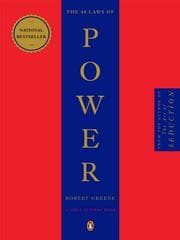
Yeah. I, I, I agree. I mean, y- you know what's funny is, uh, after that, uh, mastermind incident that we talked about, I went back and I read a few chapters of, um, "The 48 Laws of Power" by Robert Greene. Uh, that's one of... I mean, guys, if, if you're listening to this and you have not read or at least what are those services called?
Uh, Headway or one of those services that breaks the book down. I mean, I don't necessarily always recommend those, but "48 Laws of Power" to me was such an eye-opener. Um, I got there through, uh, "The Prince," uh, from Machiavelli, and then I... that kinda got me going on these power s- power structures. And then, um, then I read "48 Laws of Power." And, you know, when you think, when you, when you think through the world in this idea of, of power, not just in the I'm more physically powerful from you, but, but how do you, how do you maintain your own sovereignty by understanding how power works around you, right?
You start to see things differently. And, and, and I did, you know, I did, I did change my mi- I-- not change my mind, but I feel like I have a little more grace for people who had that opinion of, of I'm gonna bitch in the bar for a half hour and make a big stink about my opinions, but not say it in public. Because, you know, I, I... when I, when I really started to think about it a little bit, I still don't know that I have my head fully wrapped around it, but it was... I could see the argument of if I take any kind of stance or even infer a, a political or religious opinion, let's say, in my, in my public business life, I could be putting my salary in jeopardy. I could be, be putting my business in jeopardy, and I have children and a family I have to take care of, and, and on it goes.
I think you are, I think you're denying, to a certain extent, your responsibility to, to... I don't wanna necessarily say... Your responsi-- I think to a certain extent, we have a responsibility to be true to who we are in the eyes of God. Yes. And I think as long as we have a good relationship with that, that's your perspective.
However, right, there i- if good people are quiet, then, then the only people we hear are, are, are, are the bad, the, the negative, right? Yes. And so to me, y- taking, having a, a political or religious or, or, or public opinion, it doesn't have to be you're wrong, Zuby, and I'm right. But it can just be this is the way I feel and why I feel this way and, and how I operate my day-to-day. And I do think that to a certain extent, we have a re- we have a responsibility to not allow bad ideas to spread.
Um, and I think that used to be an American value. I don't think it is anymore. And I think cancel culture, I think a lot of people are still shell-shocked from cancel culture, even though I don't know that that necessarily exists anymore. Um, but I try to encourage people through this show and through the work that I do to, to... You don't have to be an outspoken political commentator.
That's, that's not my, that's not what I'm trying to say. I'm trying to say just be, be honest and true to what your value structure is. And, and maybe, maybe they, maybe it's that they're not sure what their value structure is, and maybe that's, maybe it's a little bit of insecurity to that opinion, right? Maybe that's what it is. I don't know.
But I know I feel a responsibility to be upfront with who I am, and the worst thing that I've found that's come from it is people self-select out of my life. Sure. That's the worst thing that's happened to me. That's a good- Maybe a few negative comments, whatever. And by the way, that- But for the most part- That's generally a good thing.
It... Yeah. So I wouldn't even say it's a negative. It might, it might feel like it in the short term, but I think long term it's, you know, if people cannot- Yeah, I agree ... I- if, if people leave your life because they don't genuinely like who you are or they are so intolerant that they can't handle that sort of difference of opinion or perspective, then, you know, like you, you, you gotta let those people go.
Um, yeah, I, like I, I totally hear what you're saying, and I, I share a lot of that perspective, which is why, like anyone knows, I mean, I'm not, I'm not shy about my, my views and perspectives and I haven't been for a long time. Um, had I been, in fact, I wouldn't have the audience that I do because people like to hear what I have to say on things. Um, you know, s- uh, something else I was gonna say is like, you know, as you were speaking, I was just thinking it's also, you know, tact is a thing, picking your battles is a thing, and there are also different degrees of it all, right? Like there are, there are different degrees. Some things are more egregious than others, okay?
So w- there are always things where it's like, just like in any sort of relationship, right? Like there are certain things you can let slide and it's not worth... Like sure, you might feel a certain way, you might not really like that, but is, is it really worth like going through this whole process of debate and conflict resolution for this thing? No. But there are other things that it's like, okay, no, no, no, no, right?
Like we have to, we have to deal with this right now, right? This could be with your spouse, it could be with your children, it could be with a friend, it could be with a work colleague, so on. Um, so I, I agree on that front. And I'll, I'll tell you one thing that, um, where, where like I very strongly agree is what, what to me definitely shows cowardice is when people counter-signal their actual values, okay? So like if you're, if you're a Christian, if you're saying, "Oh, I'm a, I'm a, you know, Bible-believing Christian or whatever," and then June, June comes and you're putting up rainbow flags on your, right?
Like, no, no, no, no. Like, uh, like what, what, what are you doing, right? It doesn't mean that, oh, you know, your neighbor puts up a rainbow flag and you go and like tear it down or like or some company puts it and you have to go on some like giant rant on YouTube or X or whatever, like about... You know, I just look at, I might just look and be like, "Yeah, that's stupid. Like I think that's dumb.
It's virtue signaling," whatever. And you g- you, you kinda just get on with your life. You know what I mean? But then there are some things where it's like, "Okay, wait, wait, wait. No, this is crossing a line.
I need to..." You know, you wanna put freaking, uh, 10-year-olds on, uh, cross-sex hormones, or you wanna... Right? Like- Mm-hmm ... no, no, no, no. Like, you, you, you gotta speak up, right?
Like, this is not something that this... There are certain things where it's like, all right, you just don't cross certain lines. Um, and I think that's how most people, um... I would like to think that's kinda how most people filter. Um, 'cause I see some people where it's like, it, and it kinda gets tiring because they're just, like, outraged all the time, and they're picking every fight, and every single...
And I'm just like, "Dude, like, you don't need to react." You don't need to react to everything. There's a lot of stupid stuff in the world. There's a lot of bad opinions. You could, you could spend all day just, like, reacting to stupid TikTok videos or- Here- ...
Instagram reels- Here's the perfect example ... or whatever. Yeah, go ahead. I had a bud, he lose his mind over, uh... He's a big entrepreneur, uh, just outspoken individualist, and he's, he... And AOC calling Elon an idiot, right?
And I said, "Bud," I said, "bud, anybody who listens to AOC make an argument that Elon Musk is an idiot, they are losing the universe's... It, like, that's the universe's idiot test." Like, like, the universe puts these arguments out there and goes, "If you believe this, I now know you're a moron," because, like, that's not worth fighting. I go, "Dude, that's not worth fighting." I go, "Anybody who would honestly believe that, that Elon Musk is an idiot because AOC made an argument against him, like, that pers- like, you don't want that person in your life anyways."
I was like, "Come on, man," like, "that's not a battle worth fighting." And he's like, "She doesn't understand what it takes." I go, "Yeah. She's also lying. She's a performative artist."
Like, come on, man. Like, there's no rational, you know, human being with an IQ over 50 who could think that this guy's an idiot. You may not agree with him, but to think that he's stupid or an idiot, like, come on, man. Like, what are you doing? And that was, like, one of those arguments that I was like, "Bud, that one's not worth fighting.
It's not worth going down that path." Um, but you do, we do get, we get caught in these traps and, and, uh, it's very interesting. You know, one, one that got me, and is really, I probably am not gonna give up, is, um, when Mondame came out and said, "We're, we're throwing off the frigidity of rugged individualism for the warmth of collectivism," um, I... Outside of my, my c- my, my Christian beliefs, I don't know that there is a belief I more strongly push against than the idea of collectivism in a public manner, right? I mean, obviously...
I shouldn't say obviously, but, uh, there's the argument of, like, every family is socialist, every... You know, you kinda... It, there is a collectivism to your, to your pocket of humans, to your family, but as soon as you start expanding to community, to state, to region, to country, et cetera, that goes away. It has to go away, and it's been the defining characteristic of every hard-charging, growing, uh, uh, uh, civilization in history, yet here we are back to, "We're all the same as long as I get to decide." That, that's the part that I, that I don't understand with this, is, like, we're all for collectivism and socialism and ki- everyone's equal, everyone gets the same, but everybody also wants to be the person that decides how much we get, what we get, when we get it.
And I'm like, you don't get to do that. You only get to have that belief if you are giving the power to someone else, right? If you don't get to decide. That's... You, you can have that belief if you don't get to decide, but you can't go, "Vote for me.
I'll make sure everything's equal. Tr- trust me, I'm the one," right? Like, I, I just... I can't even wrap my head around that idea. Um, that one got me, though.
That one got me good, and I'm, I... That's got my hooks in me 'cause I can't let that go. I so strongly disagree with that mentality. Yeah, man. Um, look, you know, the, the thing with, with me as well is, and I practice this in my personal life and I recommend it to other people, is, um, you know, I'm, I'm willing to talk about politics and social issues and cultural issues, like, when the time calls, and I've, I've done a lot of it.
Gosh, hundreds of hours if not thousands of them. Um, but ultimately, if I'm be- being totally real with you, I'm a general believer that they're, the only two forms of voting that are really effective are with your wallet and with your feet. So when I talk to people who, you know, they might be in California, they might be in New York, they might be in London, they might be wherever, and they're constantly angry about the political situation and the way that things are going and the fact that, ugh, like, under this democracy people keep voting for the wrong person kind of thing, um, I'm just like, "Look, you gotta, you gotta vote with your feet or with your wallet." You know, sure, you can stay there and, you know, complain forever and... Look, there, there are places that it's not gonna change.
It's not gonna change within our lifetime in some places, all right? Certainly not within, uh, the next couple decades. And, you know, people have this mentality of, you know, stay and fight, and I get that, and I think there can be something honorable about it, but I think fighting... I think it's worth fighting when you have a chance of winning, like, genuinely. Um, and if it's severely affecting you and/or your family in a negative way, then I think the smart and also the right thing to do is to move to where things are more in line with you, right?
So I could be sitting in the UK right now, and I could be complaining about rising socialism, and high taxes, and increasing crime in certain parts, and mass migration, and bad weather, and all the things that, you know, I may not like about my home country. Um, or I could go and live somewhere where I actually already agree with the way that things are run, and I like the weather, and I'm surrounded by people who generally think like me and so on. Which is what I did, which is why I live in Dubai. Okay? So instead of complaining about taxes, I'm like, "You know what?
There's places where I don't have to pay taxes." So instead of complaining every year or every month about how much I'm being taxed, um, why don't I go live in one? And why don't I, why don't I go invest there and spend my money there and, um, you know, do things there? It doesn't mean I can't travel to other places. It doesn't mean I've, like, abandoned my country or anything like that.
Um, but I just think that that's what's genuinely effective. And even when we look at our countries, you know, you're, you're from the States, I'm from the UK. Regardless of who is in power, at least culturally, things tend to shift leftwards . Okay? Um, so if you are someone who is more conservative, and especially if that is rooted in faith, if that's rooted in Christianity, Christianity doesn't change, right?
There's not like... Christianity is just Christianity. Christian teachings and ethics and morality, they stay still. So naturally, as time progresses, if you're a true Bible-believing Christian, like you're gonna be seen as more and more extreme as time goes on because, you know, the sort of standards and morals of society deviate further and further and further from something that is not moving. So you're not moving to the right.
Things are just sort of drifting off the edge the other way. Um, and so just with that understanding, I'm not here telling people, "Hey," like, "don't vote," or like, you know, "Things can never be fixed that way." 'Cause, you know, once in a while, sure, things, things can go in a good direction, El Salvador. Um, but generally speaking, in the short term, I'm, I'm a big fan of, you know, go where you're treated best. So sure, that's easier and it's harder for different people, but it... I think if, if someone feels that, that strongly and passionately about it, um, you know, complaining doesn't solve anything.
Complaining doesn't solve anything, ranting doesn't solve anything, yelling on social media doesn't really solve anything. Even a lot of protests don't really solve anything unless they're, like, very specific and directed. Um, but what you can do- And, and organic. Yeah. But if you do wanna send a message, you know, you can, especially as an entrepreneur, especially as a business owner, especially as a, you know, someone with a family man or whatever, I'm like, you know, if the math makes sense for you, and I can't speak to everyone's personal situations and their family dynamics and all of that.
Like, that's all for them to work out. My point is just, like, if it is that bad for someone, then I'm just like, "Why don't you just put yourself in a better place?" There are already millions, if not billions, of people around the world who actually agree with all the things you're saying and are aligned with your beliefs, and there are places, like in the US, uh, uh, s- US is an interesting example 'cause obviously with federalism, you know, you have 50 different states, and then even within them, you have all the different counties and cities. Like, you can find, even without leaving the country, you can find a place where people are generally, you know, aligned with you, and you're not gonna sound like a crazy person for sort of saying the thing. And this is true of everyone.
Like, if you're someone who's all on board with, like, you know, LGBTQ, X, Y, Z, um, you know, weed should be tot- drugs should be all legal, uh, criminals, you know, thefts under $900 should not be penalized. Uh, you know, you can arrest someone 10 times, and they should keep letting them out, like soft on crime, defund the... If you're, i- if that's your view, like there's places in the US you can move right now where they're fully aligned with that, right? But if you're like a staunch, Bible-believing, hardcore conservative, gun-toting, patriot type who want... Like, there are also places where you can go and you can be surrounded by people who are also like that, and you're not gonna have this sort of constant battle against your neighbors and against, like, the state and against the government, and they're not gonna be, like, trying to trans your kids in the schools or whatever garbage you're trying to get away from.
Um, so that's one of my thoughts as well. That's, that's generally one of my beliefs. Unfortunately, in the UK, it's a much smaller place, and it's a lot more sort of top-down, and there's no, like, Texas or Florida or Montana of the United Kingdom. So, you know, if the ship goes down and you're not on board with it, you kinda have to just leave the country. Um, and I know a lot of people who have done that.
I know a lot of people from Canada and many other places who have also done the same. A lot of them are coming to Dubai, by the way, which is kind of interesting. Um, so yeah, that's one of my general philosophies, and it, it ties into my, my general just idea and belief of, you know, you can only... The only person you can, like, totally control, and even we can't totally control ourselves, but the, the person you control, can control to the greatest degree is yourself. Um, and then beyond that, your immediate circle.
You know, you can influence them to some degree. And outside of that, yeah, you can try, and you, you can nudge people. I wouldn't do all the things I did if I thought that my words had no impact on people. Um, but ultimately, you know, trying to change a whole system or change an entire city or state or let alone country, oof, I mean, that's, that's tough. That's tough.
And there are people working in the sort of opp- complete opposite direction, and they're fired up. And, um, then you just have the fact that politics is just a complete mess anyway. And good people don't even wanna generally be involved in it. I think that last statement is incredibly true. I think for the most part, we're dealing with a lot of C players.
I think that you can disagree with Trump, and I do on things, and... But he's an A player. I think it's hard for C players to see an A... I think a big part of the general... I think there are people who honestly just don't understand what he's doing.
W- w- right or wrong, right? Not, not a judgment on the actual actions ef- efficacy, but I think people s... I think there are a lot of people who simply just can't keep up with the, with what he's trying to do, right? And I think there's a lot of... And I think that goes For a lot of things in politics, there's a lot of C players, because A players wanna build businesses or, you know, have lives where they're constantly attacked.
And I think it's only a C player who has no other way of achieving success other than, you know, putting on a party hat and, and, and b- willing to, to do things that others aren't, right? Or, or take positions they don't honestly believe in, in order to achieve a goal. That's, that's the tactics of a C player, in my opinion. I haven't met many A players that are willing to, to do that. Um, uh, my last question for you, and, and as we wrap up here, is, uh, you just recently became a father.
Congratulations. Thank you. Um, how has that impacted ... I don't want to s- say impact your life, 'cause I know your life is probably bananas, 'cause I got two of them. Um, and you know, it, it ...
The ... I ... Not that you, uh, want any unsolicited parenting advice, but- Go for it, man. Go for it ... uh, the only thing I ever tell, uh, particularly dads, is like, the first, like, six months are cool 'cause it's new. Then it sucks until they're about five.
And then at five they become awesome. Yeah. You know what I mean? Like, like six months to five, you're almost, like, pretending like you like them. You're like, "Oh, they just puked all over and shat all over- ... and ripped the curtain down.
Oh, they're so cute. Oh, yeah, it's my kid," you know? And then in part- like, in the back of your mind you're like, "This is miserable. Why did we do this?" And then God forbid- ... you have another one, right?
But then at five- I wi- I want at least ... I'd like to, I'd like to have at least five. Yeah. Totally. I prom- Good.
Good. I love that. I, I woulda had more. I'm, unfortunately, uh, I'm divorced. I, I woulda had more if I'd stayed with my, my wife, but ...
Or, my ex-wife. But, um, uh, but I promise you at five, they turn amazing. That's when they get awesome. Y- yeah, but you gotta ... No.
So but, uh, just how is that? Has it changed, um, the way you process? Like, like when I, when I do this show, right, how I'm able to stand behind the things that I say and why I try to always work through whether it's gonna be good or bad for my brand or whatever, what I honestly believe is 'cause I know someday my kids may listen to this show. And, and I, I'm doing this for them. I have conversations with people like you so I can learn from you, I can take in your, your ideas, h- how you process things, and, and take pieces of that and, and teach it to my kids.
Like, I'll have interviews, and th- there are parts of things you've said today that ... And then when they get home from school, be like, "I was talking to this guy Zuby today. He's fucking awesome. He's from Dubai." I was telling them on the way to school, right?
I'm like, "Th- you know, he's got this awesome ... " You know, I just, I see you very much as like a, a, a, a polymath or, or, or a renaissance. You know, you take on all these different topics. Your music. I mean, we haven't even gotten into half, three-quarters of the shit that you do.
But I, I, I do it so that I can put in front of them ideas. You know, they'll be ... They're their own people, but I do it so that if they ever go back and listen to everything, read everything, which would be insane, but if they did that, that I've created, I wanna be able to stand in front of them and, and be proud of, of what I did and, and you kn- you now know who I am, your dad, right? You were a kid through a lot of it. You don't really know your parents until you get older.
Sometimes you never l- learn who your parents are. But if you ... If ... I want them to know who I am. How has having a child impacted the way you create, the way you think, or, or has it not at all?
That's a good question. You know, I think, like, mentally I was shifting towards dad mode before I became a father, and a lot of the decisions that I've made over the last few years were knowing that I want to have a family and be a husband and a father and so on. So, um, but, but obviously things change when you're holding that child in your, in your arms and, you know, looking, looking at them in the face. So what I would say is, I think being a father has made me care more about fewer things. Um, I was already disciplined.
I was already focused. I'm not one of those people who's like, "Oh, I was a mess, and then I became a dad and I put my life together." No. My, my life was already very much put together. Um, but it's expanded my capacity for love, for sure, and it makes me make decisions differently because I think less selfishly.
Um, uh, so when I'm making decisions, I'm thinking about the family unit and I'm thinking about, um, my, my wife and my son and our future children that we're going to have, Lord willing, when I make decisions. So short term and especially long term, I'm kinda just thinking towards that. I'm not just thinking of, like, "Oh, okay, is this good for me?" Or, "Is this, you know, in line with, you know, what I feel like doing right now?" It's like, "Okay, um, I got, I gotta go beyond that."
So I'd say those are the main things. Um, and maybe one of the things that helped me kinda shift towards it before is, you know, I've been an uncle for 19 years, and I have 10 nieces and nephews between the ages of two and, two and 19. So in terms of the different ages and stages, I've got four older siblings- So you've practiced ... that I've, I've s- Yeah, I've seen the, I've seen all my older siblings go through all of this, right? Um, and I've seen my different nieces and nephews at the different stages and, you know, been quite privy to all of that. So sure, it's not the same a- as having your own children.
Of course not. But it's not starting from a complete, it's not starting from complete zero either. Um, so yeah, that's, uh, probably how best I'd describe it. But, um, it's awesome. And you know, my, my son's already past the six-month stage and things are still awesome, so hopefully it won't be sucking- Good for you ... from six months to six months till five years.
I- Hopefully, hopefully it was, uh- I'm also just j- I'm joking to a certain extent too. There's just, you know, uh, I, there's like this ... A- and it really, it really starts when they start moving, you know, when they get, when they get mobile. Because you're, like- It's crazy ... trying to do stuff. And where you used to be able to, like, keep them contained in a little box or, like, a playpen or, like, push your couches together or whatever you do, like- they can get out of that.
And now like you have to be, you have to, you're not only like trying to have a job and have a relationship with your spouse, and now you have a mobile human who has a undeveloped brain that just wants to touch everything. And like at a certain point you'll be like, "Ah!" Yeah. But it's also the most amazing thing ever. And, um, you know, I, I, I hate that so many people, my sister's in this, uh, uh, frame where, uh, they're in their 30s and they're still like, you know, "I'm not ready" or...
And I'm like, "You're never gonna be ready. You're just, just, you, you, there's no... This isn't like preparing for a test. Like this is, it's more like, it's more like sex. You, you've no idea what it's like until you do it for the first time, right?
And you're like, and you suck at it at the beginning, and then hopefully you get better with more practice. Like that's basically what having a kid is. And, uh, I just find it to be the most amazing thing, and it, it, uh, I'm, I'm glad that it's been such a wonderful experience for you. I'm, I'm sure- Thank you ... just, you know, this limited time we've spent together here today and, and, you know, uh, being someone who's, who's followed along with your journey for a while, um, I, I hope you have five, man. I really do.
The world needs more people with five kids, and, uh, uh- Lord willing, man. Lord, Lord willing ... I just appreciate the hell out of you. I appreciate your perspective. Could talk to you for hours, but, um, I know, uh, you've been very generous with your time.
It's, it's late where you are or starting to get late into your evening, and, uh, I just appreciate you, man. Um, not that people have a hard time following you, but if there's one place they can go to go deeper into your world if they're not connected, what, what would be that place? Would it be X or somewhere else? Yeah. Any social media, @zubymusic, Z-U-B-Y music.
And if you wanna check out my writing and, um, I've got a Substack, which is realtalkwithzuby.com. So @zubymusic and realtalkwithzuby.com. Yeah. Substack is, is a pretty, pretty interesting little community. Um, that's where my writing is too, and I've found that to be very interesting.
Um, I appreciate you, man. Thank you so much. I wish you nothing but the best. Congratulations on your son, and, uh, uh, just keep doing what you're doing. Thank you, Ryan.
I appreciate it, man. God bless.