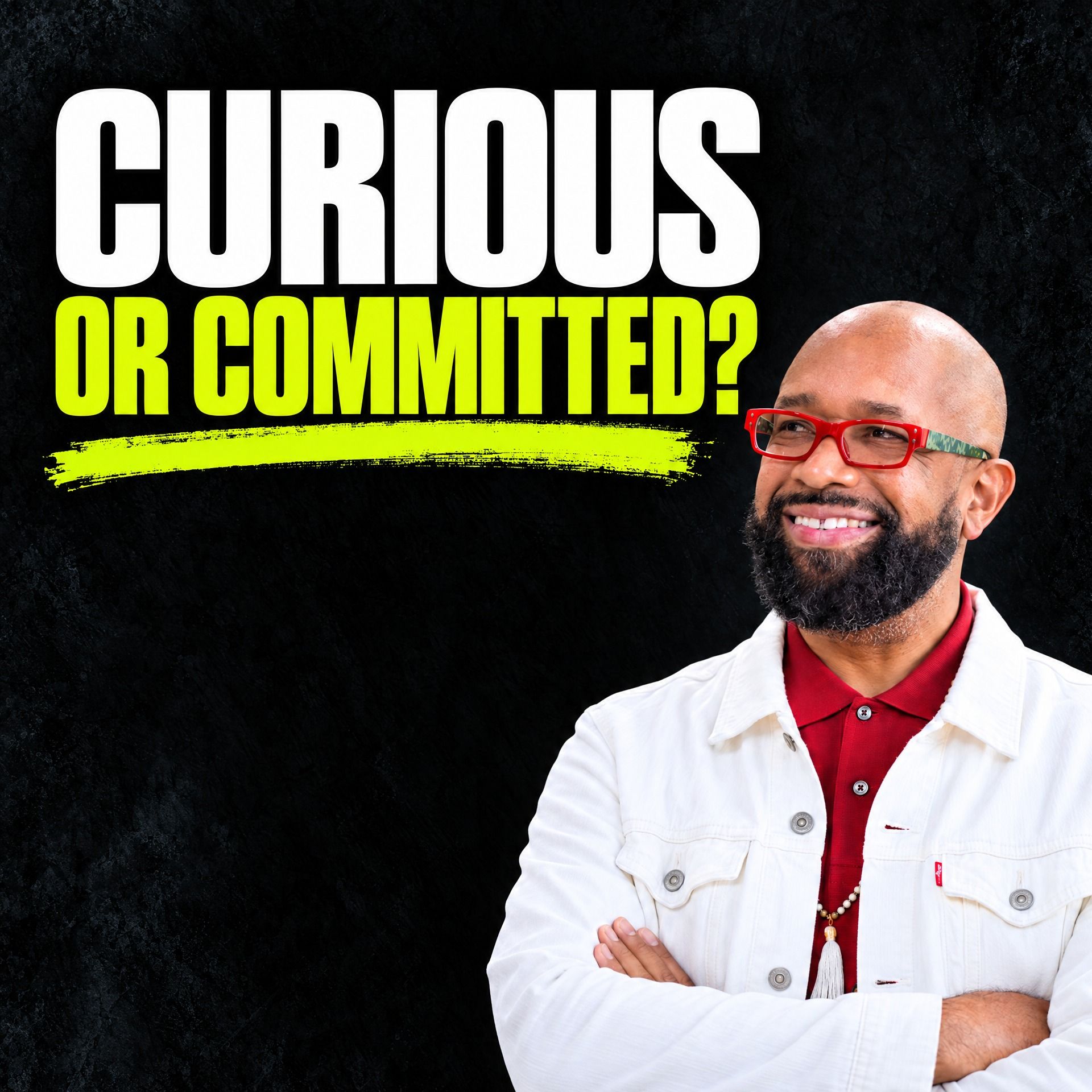
I believe that the only way we can harvest the learning and the growth and find those seeds that can enable us to grow is by extending some grace inwards. It's by forgiving ourselves for being the unfinished drafts of who we're on the way to becoming. How does a girl from a small Aussie dairy farm, the daughter of a nearly illiterate farmer, become a globally recognized expert on courage, who advises NASA and appears on CNN? That's Dr. Margie Royal.
In our conversation, we get real about why our comfort zone is killing our potential, how to silence the negative voice in our head, and why faith over fear is an intentional game plan for our life, not just a tattoo. This is one of the most important conversations we've ever had on the podcast. You are not gonna wanna miss this one. Let's dig in. This is The Way.
It is such a pleasure to have you on the show, and I appreciate you. Uh, I have twice, so the audience knows, I have twice messed this up. Uh, once I had an issue with my kids, and the second time we were literally on the call and all my electronics just blew up, 'cause I just created this brand-new studio that we are recording in, or at least I'm recording in right now. So Margie, I appreciate you so much. Mm.
I appreciate you putting up with, uh, all my stuff, and I am so excited to chat today. Excited to talk to you, too. And I'm gonna start by just saying, I'm, my pronunciation of my name is unique for Americans. It is Margie with a hard G. Think margarita.
Okay. I'm gonna try my best. Margie. Margie? Yeah, that's it.
Yep. Short for Margaret. Tremendous. Yeah. Tremendous.
Um, I apologize for not having that dialed before we went live. But, um, that being said, I always excuse 'cause I have this very bland Irish tongue which literally has zero flavor in it at all. So unless it's, like, as base, like, English, American English as possible, I cannot get pronunciations right. Um, so you know, just the way that I was born. But however, getting into what I want to talk about, so much of your work is based around the idea of courage.
And you know, right on your site you have this quote, it's pulled out, it's in quotes, it's, it's boxed, "Growth and comfort can't ride the same horse." And I think logically, that makes a tremendous amount of sense. I think everyone would just go, "Yeah, yeah, of course," you know? However, it's not the way most people operate in practice. Why do you think so many of us can logically understand, believe that growth comes from pushing ourselves, going outside our comfort, et cetera, yet we just operate in this nice comfy, consistent spot for most of our lives?
Because our bodies biologically, you know, neurologically, we are so wired for safety, for certainty, for familiarity. And so even though intellectually we hear an idea, we hear that, you know, quote, "Growth and comfort can't ride the same horse," and we go, "Yeah, yeah, good," when we then go to do it, we go, "Oh, no way." You know, like, you know, our brains are pull, pulling on the, pulling the reins and going, "No, no, no, no, no. I don't wanna do that." So just recognizing that, you know, c- overcoming our own instinct for self-protection, for certainty, for shoring up the status quo, is just so programmed into us that there's a big gap between what we know we should do and what we actually do.
Fear creates that gap. Instinct to play it safe creates that gap. And hence, you know, what, the work that I do, it takes cu- courage. Cultivating our capacity to take, to take action even though we're afraid and there's a risk, is so crucial. Do you think a lot of your focus on courage comes from the fact that you were raised on a farm?
Hmm. Great question. Great question. I don't think it all comes from being raised on a farm, but clearly that's one aspect of it. I think it also comes from being raised in an environment where I didn't have many role models who were people to look to who were empowered.
Uh, where there was even culturally in Australia, there's something, anyone who's from Australia listening to this will know the tall poppy syndrome. There's this cultural norm that celebrates self-deprecation, and, uh, and is just out to get anyone who seeks to put themselves out there and be too big, to be a tall poppy, a poppy flower that could get risk getting cut down. And so we, so humility is praised. Anything that could remotely sniff of trying to get too far above your rank, you know, being ambitious, et cetera, um, is, is really socially risky. And so I think for me, having the courage is something I've had to practice, defying the doubts and that little voice in my head that said, "Who do you think you are?"
And you know, my dad milked cows for 50 years, you know, largely illiterate, dropped out of school at 16, so this environment was about really celebrating humility, um, and has self-deprecation in art form. I think for me, th- my own personal journey of having to practice courage, but then in life with all of the stuff that life's brought my way, just recognizing that, you know, if life was perfect, it wouldn't be, and that so often we have to- ... really walk this path of what I would even call faith over fear. And so my whole journey, I think, has been one that's continually pointing me back to courage in different forms. Love that. I actually have, uh, faith over fear tattooed on my wrist right here.
Ah, really? Um, it's my, my daily reminder. You know, every day when I take my shower or just getting changed, you know, you look down, I can't miss it. It's on my wrist. And, you know, I've dealt with m- a lot of my life, um, you know, the voice in my head is very negative, very negative, and I know that that's not me.
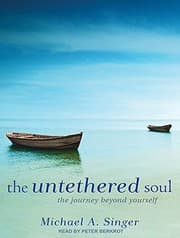
Uh, read The Untethered Soul, uh, spent a lot of time searching that. But the, the conversation that is happening in my head, like, he's a dick. Like, he's a, he's not a... You know what I mean? Like, he wants to just tear down and pull down.
And, you know, I think it's very difficult for a lot of people to separate that voice from maybe who they actually are if- Mm-hmm ... if, if you believe that you're your spirit and not necessarily that voice, et cetera, which I do. Um, how do we start to frame ourselves through a filter of courage versus... And, and we're gonna make the assumption that, that this thought experiment, the person is unhappy with the course of their life or where they find themselves in this moment. So they're not content. They are, they are the opposite of content.
How do they start to frame courage in their life? How do they start to filter their decisions and their thought processes through courage to, to make those changes? 'Cause we just, we get stuck. So many of my friends who, who will bitch at me at a little league soft- a little league game or a, a basketball game, you know, you're just chatting, oh, this, and yeah, th- my wife does this and my boss does this, and man, I always thought I'd be here, whatever, right? They're just stuck. How do we start to break free of that?
Hmm. One is just cultivating enough awareness to see that, hey, I'm, I'm stuck, and that's a level of maturity, our own evolution, right? And not everyone matures at the same pace, and some people never fully mature. I mean, we know that, 'cause we meet 70, 60-year-olds, 70-year-olds, 80-year-olds who are stuck and sometimes miserable and very complicit in everything they complain about. So recognizing that we aren't responsible for the families we grew up in, for the environment that we found ourselves in.
We are not responsible for that. But we are responsible as adults with how we choose to live our lives, what we focus on, even our own, you know, development, that inward journey, to use, you know, j- that, that hero's journey. And not everyone chooses to take that journey. It's that, really that inward journey, and I know you're on it. Um, this podcast is part of your journey inward.
And psychology, you know, there's a r- there's a, there's a, there's a rule that only when the pain of staying where we are exceeds the pain of what it would take to grow do we sometimes start that journey. And, you know, I don't know if you know anything much about the 12-step programs and AA, but it's like, you know, does the elevator have to get to the bottom floor? Do you have to lose your family, your business, your reputation, your whole life before you go, "Maybe I need to have a look at myself," or just to go, "You know what? What is it that's not working? Where am I cut off?
Where am I certainly not fully able to, to feel joy and contentment and connection with people? And where am I complicit, not just, not just, you know, the victim of my circumstance, but actually part of c- the creator of some of these circumstances," whether it's kids, wife, husband, business, team members, financ- you know, prosperity and health, our wellbeing, our own bodies, which are a reflection of what we think and how we feel. So, so, you know, everyone is on their own journey with that, and that's part of what I love to help people just hold that mirror up. Years ago, Ryan, I lived in Papua New Guinea in my nin- in my 20s, not in the 1920s. I'm not that old.
Um, in, in my, in my 20s. In the '90s, uh, I lived in Papua New Guinea for a couple years, and I was working in marketing. I found myself coming to a really confronting an eating disorder that I'd had through my teens. I had bulimia. And I thought that I was sort of over it, but it reared up again in this environment.
It was the most dangerous country outside a war zone at the time. And suddenly I was like, "What the frick? I thought I'd sort of dealt with this." And bam, there I was in this, what was a self-destructive cycle that I hated being in. I had so much shame on it, with it, and I wanted to stop it, but my willpower wasn't enough.
I just kept finding myself in this cycle. And by the way, I was pretty high-functioning, so no one knew. It was not obvious at all. I also, at the same time, found myself continually being the confidante of super smart people like the top lawyer with the top law firm from Australia there and a top, you know, diplomat early in her diplomatic career, and that were confiding with me their struggles. And I was like, "How come these smart, intellectually high horsepower people are doing things that are hurting themselves, self-sabotaging themselves, and I'm doing it too?"
And that really was the start of, for me, a really beautiful, profound, difficult, painful journey of just why is it that we humans who have so much- Intellectual capacity will do things that hurt us. And so for those who are listening, I, I'm sure they're smart, I'm sure they're capable, I'm sure they've got lots of strengths and skills, and have done lots of awesome things, and yet my guess is they sometimes are stuck in these patterns of thought behavior that sabotage themselves, and that, that don't lead to greater health, greater happiness, richer relationships. And so I think it's just getting really present to our lives, and being able to take a really hard look in the mirror and go, "What is it about what I'm doing and how I'm thinking that's actually creating suffering in my life?" And I think of suffering as any time we're not really connected to sense of peace, and purpose, and, and optimism, faith, you know, in ourselves if not in a higher power, God, whatever, whoever it is that how you construct that for yourself. Um, therein lays some rich, rich fertile ground for, for self-discovery.
Yeah, I agree. I, I had, um... It's funny, I, I've done a tremendous amount of work on myself, and just I, I've always had this yearning, and, and maybe the core of why I do this podcast is just I've always wanted to figure out, like, how good I can be. You know, I don't know, that's like my probably my intrinsic motivation is like how good can I be? How can I...
Can I stay fit in my 40s? I'm, I'm gonna be 45 this year. Can I, you know, can I make lots of money or enough to be, you know, uh, we'll consider, uh, we'll consider, uh, standard American wealth, the nec- the lack of necessity to think about everything you spend money on, right? So not, you know, it doesn't mean you're a multimillionaire, it just means when you, when you go out to the steakhouse, you don't have to worry about appetizers and a second drink. Um, you know, can you, you know, write a best-selling book?
Can you do these... So how good can you be? Okay. And, and I've done a l- a lot of work. I've had a counselor, I read, b- okay.
And then two years ago, um, I had a fairly bad business experience. Founded a company, grew the company, sold the company, and then the company that bought that company trashed it, destroyed it. I watched my baby get murdered in front of my eyes and, um, and then all of a sudden it was over, and this thing that I had attached my identity to and had plans to operate, run, grow for time, you know, important, uh, uh, infinite, all of a sudden was gone, and I had no idea who I was anymore. Mm-hmm. You know?
All of my bad behaviors, all of them came raging back all at once, like the dam, like someone just opened the floodgates and it was staying up too late, death scrolling, uh, having a drink every night. Um, I started-- I, I hadn't smoked pot in 25 years. I started... You know what I mean? Like all of a sudden it was just like this, this shame and doubt and, and what's-- and here's my point.
Um, I thought, to, to what you were saying, that like I had beat that behavior. Like in my mind, I was like any of those negative characteristics, those, those, those vices, those, those hooks, right? You could say that the enemy or th- you know, I don't necessarily say the devil, but like, you know, have, have gotten, gotten their hooks. I, I thought I had pulled those out, and one moment that I wasn't prepared for, and they came rushing back, and it was such, um... I t- I tend not to dwell on things for too long.
I us- try to use them as data points, and it was like this big if this was like a plot chart, this would be like an enormous- ... flashing red dot. Like, like something happened here. And I guess my question for you is, uh, a- almost coming back to the beginning but, but slightly reframed again is like, I think this happens to a lot of people. I've met and talked, especially through this podcast, a lot of people who you feel like you overcome something and it's still there. So d- I guess my question is do, do you believe that we ever truly get rid of these behaviors or do we have to accept that these are kinda core pieces of who we are, and our goal becomes the daily management of, of staying ahead of them or beating them?
Does that- Mm. Does that question make sense? Mm-hmm. Mm-hmm. Well, you're not fel- you're not infallible, I'm not infallible, and I don't believe any of us ever arrive.
We are essentially human becomings more than we are human beings, and we're all on a journey, and all of a sudden you found yourself just tanking back, regressing to these really negative, self-destructive thought patterns. You know, all of those stories that you would've had as a kid that maybe you worked through in therapy, bam, they all flooded back. You know, you were just pulled completely back upstream. And so I really believe the mastery of our lives is not about eradicating every insecurity and every, uh, shadow that exists within us, 'cause I think they're always gonna be there, but there is the mastery of them. There's a noticing, ah, my seven-year-old self has just reared its head.
You know, that hurt little girl, that, that wounded boy who was never good enough for his dad, whatever it is, it comes back to the fore, and I think just being able to notice that, like that's part of the growth journey. Like, aha, there's that little insecure girl again. And so my guess is that's what got triggered massively for you in that. Your whole identity was just shattered. And yet, you know, it's through the cracks where the light gets in, right?
You know, the bigger the breakdown, the greater the potential for breakthrough to another level. And so, yes, I don't think we ever get rid of it, and I'm really curious to know, Ryan, what's been the breakthrough? What's been the new blossoming and growth for you on the other side of that? Grace for myself has been the biggest one. Like, um, it was very humbling, right? 'Cause up until that point, I felt like I had...
I don't wanna say mastered my mind 'cause that's a little too far, but, like, that I had built the habits, mechanisms, thought patterns to, to stay on the path that I desired, right? I thought that I had done all that work, and that they were well trod and well walked, and it was like, it... And again, this was, I guess you could also say this was a big moment, but I thought I was more prepared. And, and looking back on it, I don't know that I could have done anything different. I think this is...
I also was, if I was self-evaluating, felt I was-- I did recalibrate quicker than I would have in the past. So even though I kinda spun off the planet for a second, I was able to kinda bring myself back in faster than I would in the past. So I tried to give myself some grace there, and then that's where the idea came from of like, dude, like, just, like, don't always... I can, I can be kinda hard on myself. Okay.
Mm-hmm. Uh, very demanding. Mm-hmm. And I just said, like, you know, "This is not, this is not like a circuit board that you can wire." Like, you, you, you're, you know, you have this neural network, you have all these feelings, and then if we get into the spiritual side, you know, there's, there's so much to being a human.
Like, just pump the brakes a little, grace upon grace. Like, give yourself some space. And, and, um, I think what that's allowed me to do is be more self-aware, um, because instead of wearing a uniform of, like, hard-charging business guy who's got a podcast and he's sp- You know, it was more like, "Okay, I'm a human being." Mm-hmm. "Here's what I'm good at.
Here's some stuff I'm not so good at." And, you know, try to operate more in reality, if that makes sense. Yeah. Well, you know what? You've said a few things, and grace, I love the word grace.
And in "The Courage Gap," uh, the final, the chapter there, which is about find the treasure when you trip. You know, either you're gonna try something and fail, or you're gonna fail to try, but either way, life's gonna continually have us tripping up. And so what's the gold in that? And I believe that the only way we can harvest the learning and the growth and find those seeds that can enable us to grow is by extending some grace inwards. It's by forgiving ourselves for being the unfinished drafts of who we're on the way to becoming.
And for you in that moment, it's like, "Heck, I thought I was ahead of that." And I think one of the key ways, particularly those of us who are... You know, I, I'm in the, in the business of per- personal professional development, and I know myself, and I've had plenty of moments, um, I wouldn't even know where to start the list, probably about 20 minutes ago. You know, like, where I am not as together as I wanna be, where I, you know, all, for all the stuff that I do, I'm like, "Geez, I dr- I've dropped the ball again. I wasn't as loving as I wanted to be.
I wasn't as kind. I wasn't as patient. I wasn't as generous. I wasn't as..." You know, you name it.
And so I think to just forgive ourselves, because so much suffering comes from thinking we should be further along than we are. You're in your mid-40s. I'm a decade older. I'm like, "Heck." I look at my journal from when I was 25, 'cause I've always been a journaler and self-reflective a long, for a long time, and I'm like, "Gee, I don't feel like I've made a lot of progress."
I mean, heck, I'm still here. But actually, I mean, what if, what if that is, like, your experience there, what if that was actually so beautifully, divinely orchestrated for your growth? What if that was really to put you on your knees, to go, "You know what? You're getting a little ahead of yourself," you know? And I think looking at this even through a faith lens and, and I'm a Christian, and there's a wonderful man called Father Richard Roy.
He talks about pray for daily humilities. Like, just to remember you have not got it all together. You're never gonna have it all together. And, and so just to extend that grace inwards, and I think of grace like water. It always flows to the lowest part, but it always lifts us higher.
Yeah. Yeah. And the more we can extend that grace into ourselves, one, it al- allows us to pick ourselves up, but it also allows us to extend more to others, because everyone around us is fighting those internal battles, is falling short, and I think it enables us to actually just forge such a deeper level of connection with all the other humans that are on this wild, wondrous, mysterious journey too. Yeah. I, I, I completely agree with so much of what you said.
One of the pieces that I'd like to pull out is this idea of expectations, 'cause I think so much of my own, so much of my own, I hate to use the word failure, life lessons, places where I've tripped up, have been almost always when my ego allowed my expectations and maybe even my mental thought to extend beyond where we are in this moment, right? Instead of just living in reality right here, right, completely connected to you in this moment, right? I've, I've done as much prep as I can, as I'm going to do before it starts, right? Like, I could have done more. I could have done that, right?
But at this m- So if I get into this moment, I'm like, "Oh my God, I wish I had prepped even more. I wish I had read every word of the book." Right? Like, I didn't do that. Like, I have to operate in this moment.
And I could feel pain, regret, whatever. You know, I'm using this as a microcosm, but, like, you know, I could, I could sit in-- Instead of sitting in this moment and being completely with you, I could be thinking about all these things I wish I had done or things I have to do after the ca- I mean, there's so many... Or I could just sit here in the... And one of the things that it really taught me was- To, to detach from the outcome and expectations and to try to live as much as I possibly can in reality in the present. Mm-hmm.
Um, and this, this idea of, of living in reality is, is kind of where I would like to take this to, to, to our current world and how cultivating courage and calm and, and grace with the maelstrom of negativity that we have to deal with on a day-to-day basis from whatever social media or news outlet or water cooler friend that we bump into on a day-to-day basis, right? It's v- it almost feels like we're constantly living with, like, this fairly high baseline amount of fear and anxiety and stress, whether we even realize it or not, and it's very difficult for a lot of people because it almost seems like it's man- it manifests in all of us a little different. Maybe- Mm-hmm ... uh, we become very snippy with our spouse or our kids, or we become detached and distracted at work, or we become a, just a raging, you know, hierarchical dictator, you know, over the people that we manage. And it's not even those situations. It's like this baseline stress because of all the crap that's, that we're hit with.
H- h- how do we sort through all this? Like, how do we operate? How do we bring that stress and anxiety level down so we can actually move forward in our lives? Uh, well, I think just taking ownership for what we consume and let in. And you, you know, social media, you mentioned it.
People might be seeing this video on social media. But I would say we have to be so disciplined and setting up guardrails, stand guard on the boundaries of what you let in. Because social media is such a source of negativity, of toxic information, of fear and anxiety. I mean, the algorithms are designed to stoke insecurity, to stoke anxiety, to keep us scrolling, to have us comparing our lot with everybody else's. And so, you know, I think in a world where we do live so much of our time on our devices, sitting there, going into the doom scrolling, we have to be so intentional about what we're letting in.
And, you know, 20 years ago, we didn't know what was happening, or 100 years ago, we didn't know what was happening in a country, you know, 2,000 miles away. Now, we're just getting pummeled with everything all of the time, knowing that it's also pushing us further into echo chambers of self-protection, where we have this toxic sense of affinity with all the other people that agree with us. Yeah, because we all hate them, that common enemy intimacy, which gives us a sense of belonging, false belonging, but still a sense of belonging. And so I see so many people who are just pulled into those polarized corners in ways that aren't serving them, that shut down critical thinking, and that actually stoke anxiety and have it to the point that they can't even see the woods for the trees. So starting with taking ownership of what are we, what are we feeding ourselves?
Uh, obviously not just the food you eat, but the media you consume, the people that you hang out with, the conversations you let in, and being so intentional about making sure that we are spending way more time in the presence of information, people conversations that is aligning with who we want to be, that is feeding us what is it that speaks into the deepest part of us, into that spiritual aspect of who we are, that I walk away from that conversation a little, a little more connected to the goodness within me and the good that I want to do and the good that I can do, and not all of that, that toxic waste dump that's all around us. I struggle with this one because I'm of two minds. One, I know that I am happier, more at peace, calmer, more focused when I stay away from all this stuff. I know that for a fact. I can-- I used to wear a Whoop.
I could tell you literally from my heart rate- Yeah ... from how I sleep, I could tell you 100%, the days that I stay away from social for the most part, stay away from my phone, stay away from politics or news, whatever. At the same time, there are insane ideas propagating through our society that I think, for the most part, are able to propagate because people are not educated on these topics. They are-- They aren't spending time researching and understanding and exposing themselves to different ideas, right? I mean, take the fact that we have a communist as our mayor of New York City. I mean, it's absolutely bananas.
I mean, he's literally running the manifesto. He uses the words. But because there's generations that haven't been exposed to what communism is, what it does, how it sounds- Mm-hmm ... what the outcomes are, because they, you know, they're so in, in, you know, kind of placated by video games and, you know, pornography and celebrity gossip and, you know, that they then hear from their favorite influencer that, you know, oh, this person just wants to give you free stuff, and that's a good thing, and we're, now we're on-- Now we're, now we're allowing these ideas to propagate. So I, I struggle because I don't know how to find the balance between being properly educated on the things that impact our lives. Like, the people of New York City's lives are going to be worse over the next four years because of Zohran Mamdani.
Like, the fact that they elected this man to be their, uh, uh, mayor, their lives are going to be worse. And what they're going to do is they're going to blame everyone else, but the vast majority of them voted for him. And I don't know how to find that balance- Mm-hmm ... uh, uh, maybe personally or as a society, you can take that whatever you want or just share your experience. Yeah. But I do struggle with this idea because- There are very toxic ideas spreading.
However, if you just put your head in the sand, you're gonna feel better, and I don't know where that balance is. Hmm, yeah. Well, putting our head in the sand might make us feel better. I'm not talking about putting our head in the, in the sand, Dave. Yeah, that was probably, I was probably over- I, I think, uh- ...
I'm overstating. I apologize for that ... actually think democracy isn't just a right, it is a responsibility. And we have, I believe, really a strong responsibility to be engaged in the politics of our time in a way that is congruent with our values, but in a way that is pointing us toward, um, that is elevating us to higher ground, that's not feeding the wolves. To your point on how do we find that balance, because, you know, you talk about these ideas. There's ideas that are destructive that are circulating, and so this isn't about sticking our head in the sand or like, you know, I'm gonna get rid of all, all, all connection to the world.
Not at all. But I think it's about being, as I s- you know, I think of the word intentionality. You can know what's going on and you can stay abreast of the issues without sitting there scrolling Instagram for an hour and a half a night. You know, there is, there are, there are sources of information that can help us think critically and from different lenses. So I think being really selective about that.
Maybe it's a few journalists that you follow. Maybe it's a couple of specific podcasts that you listen to, but that you're, that's giving you not just a p- you know, one particular, you know, way of it. And, and recognizing the psychology shows that certainty of our rightness makes us feel good, and it isn't based on the credibility of the sources that feed that sense of certainty. You know, if I get all my stuff off TikTok because someone said, you know, I don't know, the, the, the Earth is flat and that's how it is, or communism's the way to save the world, you know, people, once they get in that, it makes them feel good. And so I think that's where we have to actively look at what's other, what's something else that might be contradictory to that?
And, and read. Just read and don't just watch, you know, 60-second TikTok reels. I, I, I couldn't agree with you. I love the fact that you used the word intentionality. It's actually one of my, uh, I do the three-word exercise every year, three words that I want to kind of be my focus points, and it was one of ...
It's actually been a word for me for the last three years, that I try to be intentional about the things that I do, not just as much as possible. I think it would be way egotistical to think that we could actually shape the universe. The universe doesn't give a shit about us. But to be intentional about how we show up in that space and about how we act. Like, I love that, and I think, y- you know, it's funny, like you bring up like the Earth is flat.
Okay. There, the fact that there are human beings that breathe air today that could possibly rationalize the fact that the Earth is flat speaks to the, like, insanity of groups because ... And I actually, I was actually listening to a wonderful podcast on this topic. Um, it's, it's called The Deep End. Uh, I think the guy's name is Taylor Welch, and he had this guy Tim Alberino on.
I don't know if you're familiar with him. No. Uh, he is, um, he calls himself a, a researcher. I think that's probably the best way, but he, he's into ancient civilizations. He, he does a lot of work with the Incas and the Mayas, and he goes to these cities.
Okay, whatever. And but that work tends to bring you into some of these more, more, uh, we'll call them fringe idea communities, 'cause when you're talking about some of the theories around some of these cities, how they were built, et cetera, it just puts you in that space. Okay. So they're having this conversation about flat Earth, and one of the things he said that I thought was particularly interesting was if you get ... And he was adamantly ag- you know, adva- he was not advocating for flat Earth.
He was making very adamantly making the case that this was- Yeah, that, that wouldn't be a credibility builder ... yes, yeah, that this was insane. But I thought he made a good point. I, I don't want to spend too much on flat Earth, but I did think he made a good point, which was if you get any of these individuals on their own, within minutes you can almost completely discredit the points that they make. They will kind of look at you. They'll shake their head and say, "Yeah, you're probably right."
However, in a group, they will pound their fist and scream, "The Earth is flat," and there are, you know, ice walls encircling the disc that we live on. And like, and you think to yourself, like, how do I protect myself? I guess this is my question. How do I protect myself from getting caught in groupthink where I'm just attaching to a group and I'm not really researching and it's just like, well, I know this guy, or I like this girl, or I follow this person and they're saying this thing, so I'm not even gonna look into it. I'm just gonna grab onto it and make it part of my identity.
How, how do we stay as much as possible a unique kind of independent thinking person? 'Cause that seems like the only way to wade through all this craziness. Hmm. Well, I think it starts with being secure enough in ourselves that our desire to be part of, accepted by some group, whether they're flat Earthers or they're QAnons or they're whatever else, is sufficient enough that, that we're willing to risk being in the wilderness, that we're willing to risk, you know, being kicked out of the pack, and that's no small thing. That's no small thing. And so that requires a lot of work.
I mean, how do we belong- Yeah ... how do we belong to ourselves ahead, how does that b- really trump my desire to belong to some group? And, and I know that, you know, the forces of the desire to be part of something is deep inherent in our wiring too, and we know from research that the thought of being cast out of a group is as threatening to us as the threat of losing our life, because that's how it was 60,000 years ago. And so the idea that my in group might say, "Margie- You don't, you don't belong to us 'cause you're not lining up with what we believe. Like, it's so in, in... Like, our brain processes it.
Like I'm being cast out into the wilderness without any water, into the Sinai Desert without any water in the middle of summer. You know, like, this is death to me. And so that, that requires just getting really anchored in who we wanna be. And I, and I do think, I think that faith, and I know, I know that that's not why we came on to speak about this today, but I, I think that being connected to ourselves at the deepest spiritual level, to that essence who am I, who I am, am I is more than my title, my status, my, you know, what, what events I get invited to, you know, who I hang out with, my social media follow count, et cetera. When we can be kinda anchored at a core level in ourselves, it actually emboldens us to c- think critically in those moments when a part of us would real- rather shut down our critical thinking.
And I think a lot of people right now have shut down. They don't wanna think critically, 'cause that means risking everything that gives them a sense of safety, my group. And you know, we witnessed it. I saw it the other night at the Grammy's, and I've forgotten her name, but she got up and made a statement about, you know- Billie Eilish ... Billie Eilish.
We're all on, uh, we're all on stolen land, you know, and so how can we, you know, say that pe- How can you have illegal immigra- Yeah. How can you have illegals- Yeah ... when you are living on stolen land? Yeah, and I'm like, okay, let's just play through that logic here. Like, just anyone, play through that logic. So, you know, maybe you could just move over into my house and tell me to get out tomorrow, and because, you know, I'm on stolen land, so how can you be stealing?
So, I mean, it just doesn't make sense, and yet everyone stood up and applauded and what have you. Because every, no one wanted to be the one that didn't stand and applause. I mean, I'm not saying everyone stood, but a lot stood, which just speaks to the cowardice that lives within every one of us. When we are- This is a woman living in a $14 million mansion, by the way, just to be clear Yeah, not to mention the... You know, there's her hypocrisy, but there's also the cowardice that lives inside every one of us that everyone who stood up to applause that, when I'm sure a lot of those people, taken individually, would go, "That doesn't make sense.
That just doesn't make sense." One of them was a Supreme Court justice for the United States. Right. I, I didn't even- Kutani Brown. Kutani Brown- Oh ... was in the second row clapping and laughing when she said that.
Which- I didn't even realize that ... if you think about this, this i- these are supposed to be the seven, what, there's seven Supreme Court justices, supposed to be the seven most rational humans in the country, right? When you think about it, these are supposed to be the individuals that can- Yeah ... look at... Man, we, we know that that's not 100% the way it works You, you obviously watch more of the Grammys than I did, 'cause I didn't even realize that, but all I saw was a snippet on my social, and I was like, "Oh my gosh." Yes. So- So- Yeah.
But to your point- That's- How- Right ... coming back to your question, 'cause it's a really important question, how do we make sure we don't get pulled into that? And I think just recognizing we are all vulnerable at all times to being pulled into that. All of us are vulnerable at all times. So we have to stand guard. We really have to stand guard, and that's where creating a little space for ourselves to stop and just notice how we're noticing and noticing how we're engaging in what we're doing, and really reconnect with what is t- really true for me.
Now, you said that you journal. Do you think... I think, I also have this theory that, that... Well, I'm a huge journaler as well. And to, and to be honest, every time I've had the darkest moment, uh, I've had a, I've had a dark moment in my adult life, journaling has been the tool that has brought me out of that dark moment.
Without journaling, I would not have gotten through. Even with counseling, even with reading- Me too ... meditation, whatever, I'm not a big meditator. But, um, but journaling has been the tool to get me out. And when people ask me, "Why do you journal?" Uh, m- it's mostly like, there's a lot of chaos in all of our brains, and it allows you, like the- Mm-hmm ... the physical motion, I don't believe in- Mm-hmm ...
I don't like digital journaling. Mm-hmm. Handwritten- Mm-hmm ... with a actual, physical device that physically puts, you know, color on a page. Um, it, it, it forces you to, to, to articulate what, what's actually going on in your brain. There's a lot of different ways to do it, and I, I'm not a journaling master, so I have literally no guidance on the best way to do that.
But here's my question. How much do you think is cowardice and how much do you think... I don't believe most people actually understand what they believe. I don't think most people have spent enough time actually thinking about who they are, what they believe, what their core values are. Now, you don't find this as much in, uh, uh, Jews and Christians, because I think when you have connected, truly connected, uh, genuinely connected in whatever they, w- way that works for you with a higher power, um, you are, you are guided in a way that can help.
Doesn't solve all issues. I know plenty of Christians that are completely messed up. But, but it, it is, it does give you some guide rails, right? And to, to think, to think deeper about topics. But taking the spiritual piece out, I honestly believe most people just don't know what they believe.
They don't have a, a hard core of values. I could be wrong. That's my belief. And, and I'm, my question is, when you see people, you, you see this woman living in a $14 million mansion who has reaped all the rewards of this amazing country and everything that it could possibly provide to someone who's talented, which I'm not a big fan of her music, but she's talented. You can't deny that.
She's, she's been successful. Can say something so completely idiotic and stupid, contradictory and inaccurate, um, and have people stand up and applauding and cheering her- What is the ratio of cowardice to I just don't have a value structure, I don't have a core set of beliefs, and I'm willing to go along with whatever sounds best in the moment? So I think it's, I think we are, some of us more so perhaps on the spectrum than others, prone toward laziness. We are, as Daniel Kahneman said, cognitive misers. So if there's an easy thing, if we can avoid the cognitive horsepower required to think deeply, and I can't remember who else had said, but all-- someone who's, I think, passed.
You know, all the world's, world's problems would be gone, uh, uh, w- we wouldn't have the problems if we could all just sit in a room quietly and think. Um, and I've just butchered that totally. But my point being that I think we are-- we tend to be lazy. So tell me what you believe. Okay, I'll just buy into that.
You know, a- and I, I know I was raised, really, a, a strong Roman Catholic church, and as I became a teenager, really into my late teens, I was like, "But that just doesn't make sense. That just does, that just does..." And I, and I found myself in this rebellion against my parents who just didn't question it, and I did question it. And, and that was part of my journey was-- and I think actually to be mature in our spiritual faith, by the way, we have to have gone through a hard questioning. If not, that meant us at some point going, "I'm, um, none of this is holding up for me."
And then sometimes we come full circle. But to your point, I think a lot of people don't know what they... So they borrow beliefs. Let me just take your beliefs. And you know what?
When someone like Billie Eilish with that fame and platform, you know, there's a bunch of teens and twenty-year-olds looking at her going, "Oh, I'm just gonna borrow that belief," and I-- and they never think it through. It was like when it was defund the police, and I had a daughter who was at a very liberal college at that time, and she's like, "Defund the police." I'm like, "Madeline, let's think about this. Just think about this for two seconds. What-- does that make sense?"
She goes, "Well, blah, blah, blah." I'm like, "Okay, let's play this through." So I sort of forced her to. But what if I hadn't forced her to? Because everyone else was just, "Defund the police!"
Because everyone around her was doing that. You know, and we see, I mean, obviously we see a lot of that in colleges, which is the very place we should be teaching critical thinking. So colleges, honestly, I think universities, that's where they should be teaching us how to think, not what to think. But we have to take ownership for that ourselves. And, and that, that requires sometimes a lot of work.
I remember reading a book called The Case for Christ a few years back. Um, and for anyone listening, I, this obviously, we, we didn't start this conversation at all talking about, it wasn't ever, that wasn't on the, on the, on the menu in terms of faith and spirituality. But I'm like, to anyone who's like, "It's not..." I'm like, "Just read that book. Just read that book, and it will take you a long time, and your brain is gonna hurt a little bit."
But just, you owe that. If you're gonna say you believe something or don't believe it, at least do your homework and, and, you know. And that's a great book- Yeah ... to just help people process. So I would say the same when it comes to immigration or the economy or political ideologies. Communism, great.
Study communism really hard. Look at where that's worked. What's all the great things about how that has worked so well? Um, you know, capitalism, is it perfect? No, it's not.
But which country does everyone, including me, may I say, immigrant, wanna move to? You know? So, so I just, I-- all I can do, and as a parent, but, you know, in our, in our roles, you've got this podcast. It's just encourage people. Put in the cognitive effort to really thinking through what is it you wanna believe. 'Cause if you don't, you know, what you wanna believe, obviously you can fall for anything and get swept up in some really destructive, uh, ideologies, but also hurt yourself.
Yeah. I, I, so I, I, I'd mentioned to you that, um, one of the changes that I made, um, to my own mentality was to try to be as present and to operate as I possibly could at all times and to live in reality. And I haven't talked about, I haven't talked about this a lot on the show, but, uh, I, I have mentioned it tangentially around this idea of like I'm open-- I tend currently to skew in what people might consider more of a conservative viewpoint currently, but that's because I look at the world and I look at where receipts come from, right? The receipts for success. And I can't, I can't look away from that, right?
So, so take, take the Bible, Old Testament, New Testament, whichever you prefer, or both. Um, regardless of whether you want to believe in God or not, there is no denying that the Bible produces incredibly positive results when you live as close as you can to the guidelines set. Right now, there-- my mom is a Bible literalist. We argue about this constantly. Um, I see the Bible more as a guidebook from God.
She sees it as words passed down verbatim. I tend to think that that's bananas. She knows that, as much as I love her to death, and these are the fun conversations that we have. However, we are in complete agreement that if you follow the guidelines, you will have positive outcomes, more positive outcomes than you would if you, you know, if you were to follow, say, a secular lifestyle. Now, I, I'm gonna take Hinduism, Buddhism, some of the Eastern religions out.
I don't know enough about them. Um, I, my understanding is they seemingly line up very similar in a lot of their belief structures, so they probably are great guidebooks too. But I look at these ideas like defund the police, like this stolen land thing, flat earth. I, there's no receipts, right? There's, there's-- You can't produce.
You could not come to my office and sit down on my desk and say, "Ryan, here's the receipt for why these ideas work." There's not one. There's literally not one. And people still believe them. So my question for you is, I'm a leader, and I need to operate in this ecosystem, right?
How, how do I-- what do I need to adjust about how I convey my message to help my team, you know, trying-- most businesses stay out of politics and stuff, but there are ideas, right? These ideas that don't have receipts that propagate through-- Like, a good one is, is diversity, equity, inclusion, right? I'm all for diversity of thought, and I've never understood, as a capitalist, I've never understood racism. I said a thousand times on here. If you are a capitalist, if you believe in capitalism, racism is the stupidest idea that's ever existed because all you should want is the most hardworking- Mm-hmm.
Best talent ... energetic, smart people, right? That's- Mm-hmm ... so it's stupid. And, and so I'm not talking about that. I'm talking about when you take people who, in some cases, don't even want these jobs or, or aren't, and you, and you stick them in, and now you're forcing these people who high achievers versus people who aren't necessarily, right? And you're, and, and now this is a-- you haven't seen one positive outcome from DEI outside of just pure counting numbers from an HR perspective.
And excluding diversity of thought, I'm talking purely on, um, you know, like race, gender, sexuality. Diversity of thought obviously is not, doesn't get included in there 'cause that is something you want, right? But we continue to propagate these ideas. And every company, well, almost every company that has put these policies in place, well, it's about fifty-seven percent of the S&P 500 has, has removed their DEI program after five years. Okay.
So there's going to be another idea like this. How do I sidestep this as a leader? How do I help my people live in the reality of the marketplace and the society that we're in and not get caught in some of these ideas? Yeah. How do we communicate that message?
Well, I think leaders have to be so clear in their values. Lead from your values, not from emotions. And the, the winds are always gonna be shifting, and I think people are looking. We don't look for a leader who we agree with on everything. What people really crave and are looking for are leaders who they know can't control everything around them, but con-control themselves, and there is a consistency to the values which guide their decisions.
And we mightn't agree with all those, but, but, but we can at least respect that they have a consistency, and that's true for them. And so when it comes to all of the social hot button issues that obviously CEOs today, like chime in on this, chime in on that, that, you know, ten years ago, they didn't have to chime in on stuff that was completely irrelevant to their brick-making manufacturing, you know, facility. And now it's like, "What do you say on this and that?" And I think, you know, is this relevant to your business? And if it's not relevant to your business, like focus on what's relevant to your business and communicate the values that guide you as a leader.
And I've worked with, you know, I-- for instance, I know a leader, he is, uh, he's the COO of a very, very, very large company. People say, you know, "Tell me about, you know, what guides you as a leader." And he goes, "You know what?" And he's, he's a strong Christian. He goes, "This is what guides me as a leader."
He's not expecting everybody else to have his beliefs, but like, "This is what guides me as a leader. If you wanna know what guides me, this is it." And so, you know, I'm sure he has different opinions on things than some people might in his really large company. But he's, he's upfront. This is what guides me, and I think that is what commands respect and trust. 'Cause we wanna look up to leaders and know that they're trying to be as congruent and have integrity in what they belie- what, what they hold to be true and what they do and what they say.
And often we see inconsistency, and when we see inconsistency, it breeds distrust, and it undermines the psychological safety. It undermines culture. And so I would say as a leader, get really clear about what are the values and are you in alignment with those values. And anywhere you see gra- gaps, whenever there's gaps, what do you need to do to close that? Margie Warrell, ladies and gentlemen.
The book is The Courage Gap: Five Steps to Braver Action. I think our world needs more courage and more bravery more than ever before. Uh, thank you so much for your time. Uh, I love your work. I love the way you think about the world.
Where can people go deeper into your work? Uh, well, I mean, obviously, if anyone who's interested in, in reading the book, I've-- which I also narrated, um, grab a copy. I have a website. It's my name, Margie Warrell. I'm on LinkedIn.
You can connect there and on across different socials as well. I promise you, I try and be a source of positivity, optimism, and, uh, that's, that's what I wanna bring to the world. So I'm so grateful for the chance to chat with you and your-- and lis- and all those who listen to you. Thank you so much. You have a great day.
You too. We're out of here, guys.