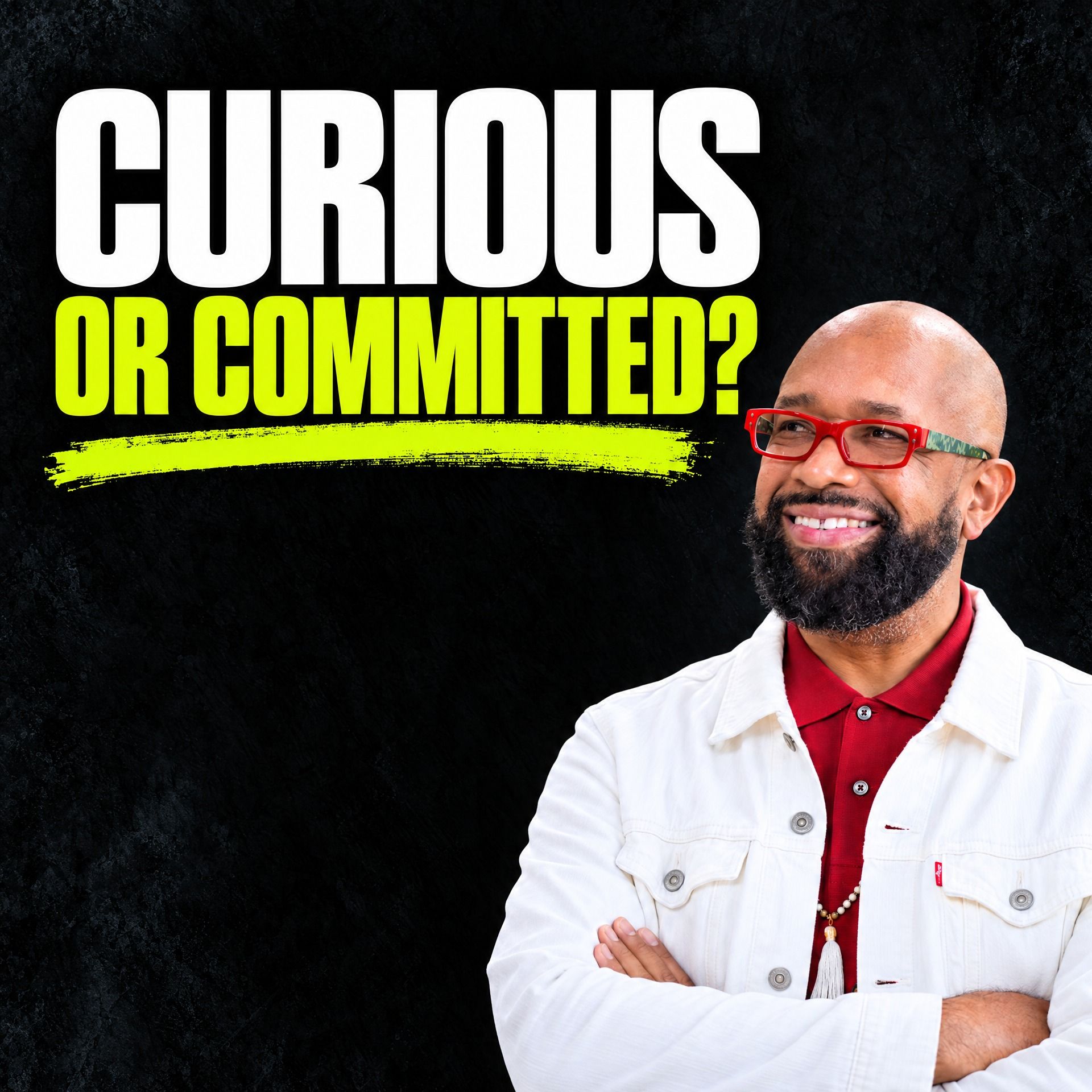
Why Success Can Still Leave You Feeling Behind | Jim Murphy
with Jim Murphy
Episode Answer
Why Success Can Still Leave You Feeling Behind | Jim Murphy is a Finding Peak podcast episode hosted by Ryan Hanley with Jim Murphy. The conversation explores leadership, performance, entrepreneurship, and the work required to build with clarity under pressure.
Read the Conversation
Show the full transcript
If you wanna live an extraordinary life, you have to constantly pull yourself out of the temporary situation you're in, because selfless is fearless, and when fear is gone, love remains, and love is fearless. Where I'm at work, I feel guilty for not being home, and when I'm home, I feel guilty for not being work, and every day I'm in this endless cycle, and I just feel stuck, and I'm not sure how to move forward. People really idolize the people that I work with, but what they don't realize is that I spend most of my time with miserable millionaires. The best possible life is one foot in joy and one foot in suffering. Jim, it's great to have you on the show, man.
Thanks for taking the time. Yeah, thanks for having me. Yeah. So, so one of the things that initially connected, you know, being a, a, a former athlete yourself, and, you know, f- falling in love with psychology, and now this is what you do for people every day, high performers, I've always been shocked; shocked might not be the wrong word. Intrigued by the fact that w- when you talk to individuals like yourself who have been and work with high performers, when you hear them in interviews, mindset, the psychology that they use to get to these places is oftentimes, like, the very first place they wanna go.
Yet the rest of us, the so many other people, right, who struggle to ascend to that next level, it's, like, the last thing they think about. Why do you ... One, do you agree with the premise that the vast majority of people who find themselves underperforming, it's in large part because they don't work on their mindset? And two, why do you think there's that gap? Like, why isn't the very first thing we learn mindset, psychology, like, the stuff that you teach every day?
Yeah, good question, Henley. So the, um, when you say mindset, what, what I think of is, is, uh, um, the, the reason you're doing something. Like, w- uh, what, what am I pursuing right now? Like, what's my mindset for my performance? Or if I'm giving a speech, like, what's my mindset going into the presentation?
Uh, is, um, you know, why am I doing this, and what am I really, um, going for? And to me, your mindset is the foundation of mental toughness. Um, we're, we live in a world that is, uh, as humans we're, we're, we're led around by our eyes. We're, we see a beautiful sunset or sunrise and, and we're in awe. We, we watch a great movie and, uh, or see a beautiful person.
We stop in our tracks, and if we see something, um, scary or traumatic, then, then we're, we're scared and traumatized. And so, um, humans are easily caught up in their circumstances. And yet if you wanna live an extraordinary life, you have to constantly pull yourself out of the temporary situation you're in and into the bigger picture or what I think of as the realities of, of heaven, where anything is possible. And so I think what the greatest do is they, they continually see, um, a longer horizon and a, a much greater vision than the average person sees, and, and that's because they're pursuing something much more than a, a temporary result. And is that innate?
Like, if I'm not born with that, then I'm screwed, or is this something we can develop through practice and work? We're born with a self-centered nature, and so it's something that needs to be trained. Every human is born self-centered. When I say self-centered, I mean, uh, everything that, that, uh, we do as humans is, um, naturally gonna have ourselves in the center of it. What do I want to do today?
What am I going to eat? What are my goals? What's gonna happen to me and my family and my career? This is the normal, uh, inherent way of, of living in the world, and it leads to fear and, and comparison and anxiety. Um, I think of anxiety as a mind of too many thoughts and, and too many concerns.
And so, um, but if you wanna live the best possible life, you wanna be the best performer, the best speaker, then you need to get out of the way. We need to get out of that fear, that self-centeredness that leads to fear, um, because selfless is, is fearless, and when fear is gone, love, love remains, and love is fearless. Is this kind of the concept of detaching from the outcome? Is that, is that, like, is detaching from that self-centered nature or the outcome of every action and how you apply, like, your own self-worth, is this, is this the exercise? Like, is this what we're trying to do when you say, like, rem- you know, moving away from that self-centered nature?
Yeah, that's part of it. Um, however, we're not gonna detach from the outcome unless we have something greater to attach to. Um, when nothing really great happens without passion, and passion is the willingness to suffer. That's the literal definition. And, uh, um, in fact, one of the five skills of inner excellence is to compete and live or lead with, uh, um, freedom and passion.
And so, uh, we need the willing, we have to be willing to, to sacrifice, and we're not gonna sacrifice, um, except for something that's very, very important to us. So I've been doing this show for f- five years, done over fi- almost 500 interviews now, and the concept of detach from the outcome has come up dozens of times. No one has ever followed it with, "It doesn't work unless you attach to something greater." And I'm very interested in that. Like, 'cause, 'cause, you know, when I was coming up and we both played baseball, you made it professionally.
I, I, I did not. I got, uh, I got the whammy button from the Pirates a couple times on some show me tryouts, but, uh, that's as far as I made it. Um, that being said, you know, even, like, hitting coaches, et cetera, that ha- it was like, you know, all you can do is control the controllables. You know, what happens after that doesn't matter and all this kind of stuff, and like- So, you know, in these skill sets, in these activities that we care about, how do I... Like, if, if I'm detaching from an outcome to attach to something greater, how do I make sure the same, like, level of self-worth and anxiety and fear doesn't just get attached to that next bigger thing?
Does that question make sense? Yeah. That's a good question. It, it's be- um, the thing has to be, um, so great that, that, uh, um, even if you don't get it, you're still gonna be willing to pursue it your whole life. 'Cause, you know, it's funny, and I don't mean to take this down a sports analogy path and provide too much context, but even in my own sports career, and we'll just use baseball since we both played, um, like, my career really didn't take off until I was able to stand up at home plate and, and, and remove the idea of, like, it's not that I don't care if I get a hit, but if I don't get a hit, I'm not going back to the dugout crying. Like, I'm obviously trying to get on base.
I'm trying to execute an outcome, but there was no value or, or, like, personal self-worth attached to that individual activity. However, my performance over the course of a season mattered to me quite a bit. And is that kinda like... I mean, again, this is a microcosm. We're just trying to break it down into something smaller.
I know, you know, your single performance as a junior on a varsity team doesn't necessarily matter that, you know, over the course of your lifetime. But, you know, is that kinda the idea, is expand your viewport and, and then the individual things that happen in the middle, you can, you can detach from because what you're really trying to do is create this longer, larger outcome over the course of time? You know, Henley, as I listen, I have so many thoughts that come to my mind. And I've been studying this for a long time and, uh, um, sometimes it's hard to, I get lost amongst all the thought, all the thoughts, so I hope you can help me, uh, simplify everything. But, so you're, you're, um, talking about as a high school baseball player and the desire to, to get a hit, um, versus the, um, the ability to try to get a hit but not be attached to it.
This is where we're at, right? And so, um, this is kinda like the difference between, uh, a teenager and an adult is the, the ability to see the bigger vision. Someone who's mature, um, can see a longer vision than temporary, uh, pleasure. And it's also similar to the difference between confidence and belief. So, um, when I'm...
A- as a performance coach, most people come to me because they're underperforming. It's, it's one of the most common reasons why at least an athlete would come to me. And, uh, um, and they often want more confidence, and confidence is great, but it's not nearly as powerful as being fully present or be- having beliefs. And so, um, I think of belief as a subconscious comfort level of, of what you feel is possible in your life. And, and so beliefs are running our lives.
And confidence is like the f- the feeling that you can achieve what you want to achieve. I, I can make this putt, this free throw, I can give this talk. That's confidence. It's a, a short-term, um, positive feeling about, um, achieving what you want to achieve. Belief, the, the power in belief is it doesn't matter if I make this putt or, um, screw this talk up or, or make this basket, I'm still good.
It's all gonna work out. Very big difference between the two. How do you cultivate one versus the other? Well, I don't, I don't really think about confidence as something we're trying to get. Um, we, we want to develop beliefs and, and presence.
Those are the two big ones. Um, confidence is so fickle, and there's so many things that go into it, and it doesn't always guarantee a good performance. Whereas belief and presence, far more correlated to a better performance. And so, um, both of those are very, um, correlated to how you feel when you're fully present. And when I think of fully present, that always needs to be explained on what I mean.
It's, it's, it's like thinking of peace as the absence of war. To me, peace is far more than the absence of conflict. And being fully present, I think of it as far more than, than just not thinking about the past or future. What I, what I really want someone beyond being present is fully engaged, heart, mind, and body, unattached to what they're trying to do. And another way you can think about it is, um, to have the sense that anything is possible.
And so freedom and presence and joy and glory, um, belief, these things all are very similar in my mind. I'd love to, to kinda double-click into this idea of being fully present because, again, I, I, I love the depth that you're going on these topics 'cause it's, it's... And then obviously this is, this is your life's work, but it, you know, again, I, I haven't heard anyone try to explain being fully present beyond what you just said. Like, be in the moment, you know, don't look at your phone, don't think about, you know, what you- the things you have. Just, like, be there, right?
So okay, so let's say f- and I think in today's world, it is incr- it's exceptionally difficult and/or people don't choose to be present very often right now. That seems like a core problem in life in general. And even the idea of just not thinking about, you know, maybe, like, stage one presence is just not thinking about the past or the future. Okay, let's say I can actually get myself to that moment. How do I go deeper?
Like, what, what do I need to be doing in that moment, or, or what habits or mindset, take those words for, for what they are and, and, and use what, what you think is right to, to, to go to that deeper level to actually, you know, this, this idea of belief in being fully present that you said. Like, I wanna get, I wanna get there. So presence is, is also very-- to be more present is also very correlated to passion and beauty. So, um, if, if there's something that you're willing to sacrifice for, and if you see more beauty, then both of those you're gonna, you're gonna be more present. Um, beauty and hope are also very highly correlated.
And, and so if there's not much beauty, there's not much hope, then you're not gonna be present. It's, uh, um, you're gonna be, uh, caught up in the past and, and projecting that to the future. And so, um, to me, all of Inner Excellence is largely can be thought of as an in-depth system to have the sense in your life more often that anything is possible. Which means more connected to beauty, more connected to hope, um, um, much less thoughts of self. In fact, the goal is to be s-selfless and therefore fearless.
Okay, walk me through that. So as I become more selfless, I become more fearless. Yeah. So there, you can think of, so there's three things that, that, uh, I think of that are, are really commonly thought of in performance that he-help out performance mentally. There's confidence, there's belief, and there's presence.
And, and like I said, pr-presence and, and belief are far more powerful. And belief is, is that sense that you can do something. Yeah. That you can be, um, state champion or, uh, um, win a, um, prize or get promoted or whatever it is that you wanna do. So th-that's the belief that you can personally do that or your team.
And yet, if you're fully present, you can go beyond beliefs, and it's, uh, um, to me, it's a fascinating idea. Because beliefs have limits. Every belief has a limit. And we, and you and I both have beliefs about every area of our lives, and those, um, areas all have limits with them. And so Inner Excellence is about expanding what you believe is possible, which means, uh, coming to the edge of your beliefs, coming to the edge of your feelings, and, and embracing those feelings as places to grow and expand.
So, um, learning to be fully present is, is, uh, um, very highly correlated with, with, uh, um, expanding what you believe is possible. I'll, I'll give you a quick story. So there's a guy from New Zealand that, that recently won the British Open in golf. His name's Ryan. And, um, I hadn't, uh, heard of Ryan n-before.
I, I hadn't been following it that closely the last six months, and so the PGA Tour. And so, um, he's from a small, smaller country, New Zealand, not super famous for golf. And, um, and he wins. And so I thought, did Ryan go into that tournament feeling, yeah, I'm a better golfer than Scottie Scheffler and Rory McIlroy, and, and I'm gonna win? Probably not.
Um, did he have a belief that he could be a British Open champion? Possibly. But I don't think he had to have that belief. He just had to be fully present. Because when you're fully present, there's no fear, and there's no attachment to what just happened to what might happen.
And it's like, I don't know if you ever heard, if you golf or have heard of people saying this, but, um, all of a sudden I came to the last hole and added up my score, and it's like, oh my gosh, that was my best score ever, or it was such an incredible day. Because they, they weren't-- 'cause by definition, the score is, is a past and future thing. Uh, the score and the outcome in general is a distraction. It feels to me like expectations play a pretty large role in our ability to be present. And what's so admirable and, to use your word, beautiful, I think about, like, what Scottie Scheffler's been able to do the last four years on the PGA Tour, is that despite massive expectations that this guy's the number one in the world and he's just gonna dominate, he continues to show up and perform and not allow those expectations to impact him.
Where, you know, how many past single champions are there that have this great moment and achieve the pinnacle of, you know, whatever it is, and then are never able to get back to or even perform at that level again because, say, they're constantly pressing or, you know, they have all these expectations on them now that they just simply can't deal with. So how, one, one, is that true? Do you believe that? And two, like, how do we remove those performance expectations from ourselves to free ourselves up? So we're talking about Scottie Scheffler, and we're talking about expectations.
Now, it's possible that Scottie Scheffler became world number one beget the, because he has, uh, um, as soon as he got the world number one caddy, he became world number one. And so, uh, um, Teddy Scott. And so that's possible. But I think, um, when we think about expectations, in fact, one of the things that Teddy, uh, likes to say or do, do, he also does coaching, um, is he's always trying to, to reduce expectations to something that he knows the golfer can do. And because expectations by definition are a future thing that, that, that you want, that you don't know if you can do.
And so we wanna constantly get out of expectations and, and be very careful with our desires. We, desires are, are really important and powerful, but we wanna make sure that we direct them to what's very empowering. And, uh, um, along with that is, is, you know, when Ryan Fox won the British Open, was that a good thing for him? Um, Scottie Scheffler won the two thousand twenty-six, uh, FedEx Cup. Was that a good thing?
Um, all I know is that both of them wanted to win. Could be a terrible thing for both of them. I don't know. And this is might sound kind of funny coming from a performance coach who gets paid to get people to do these things Um, but realizing that you don't know what outcome is best for you is really important to gain freedom, and freedom is one of the three pillars of extraordinary performance, along with belief and presence. How does somebody, like, cultivate freedom in their lives when maybe they just feel stuck?
I mean, I know so many people, business owners, people that are doing well, especially even from the outside, and they just feel stuck. They feel like, I don't have-- When I'm-- I just was talking to a, a CEO the other day, and his exact words were, "Where I'm at work, I feel guilty for not being home, and when I'm home, I feel guilty for not being work, and every day I'm in this endless cycle, and I just feel stuck, and I'm not sure how to move forward." And this is a high performer, and if you were to snapshot his life from the outside, you'd be like, "This guy's killing the game." Yet this is, like, the inner turmoil that he's dealing with, and he feels like he can't move his business forward because of this cycle that he's stuck in. Like, uh, and I think that's more common than people are willing to admit.
How do we break out of that cycle? Yeah, that is very, very common. Um, it's-- I think of it as, as, uh, being a half day behind. Uh, one of the coaches that I interviewed for Inner Excellence, I think he was the coach for Ohio State baseball, but it was a while ago, um, talked about being, uh, a half day behind for, for students. You're in class, and, uh, um, you're thinking about baseball, and then you're not paying attention in class.
And so then you're at baseball, and because you didn't pay attention in class, you did poorly on the exam, so now you're thinking about the exam that you just, uh, did poorly on while you're at baseball, and then it just keeps going that cycle. And so it's super common with, with all adults. And one of the main things that's really important is make sure you clarify, um, what's most important to you. I think of it as your life purpose. And if you don't clarify what's most important to you, then you're gonna, um, constantly be thinking about trying-- You're gonna try and control what you can't control.
And, uh, um, that's, that's why people-- The, uh, one of the main reasons why people aren't present, why I haven't been present, that present in my life, because, uh, I tried to control what I couldn't control. Um, and that's, like I said, um, more passion, more beauty, and focus being present. Um, and you can't be present unless you have something compelling to sacrifice for. It's, it's hard to be present. And, and, like, for that, that, um, successful, um, business owner that's or entrepreneur, for him, it would really just think, um, and help him understand is that, "Okay, what I want most is to, to live a meaningful, fulfilling life where I feel fully alive and make a difference in the world, and I want to share that with my kids and help them do the same."
Say that's something that he wants. Then, um, one, being clear on that, and two, being clear on how that feels, because when you're at your very best, it feels a certain way, because then we can start to notice what adds to that and what takes away from that feeling, that presence, that freedom, that joy. And, uh, um, once you get that clarity on that thing that's most important, then it really helps you, you focus on it each day and be present at work and then be present when you're with your kids. It's such a big question, and I know, you know, I was talking to another friend the other day who called me, and he's another guy who's got successful business, and, you know, he's not necessarily dealing with as much turmoil as my previous example, but, you know, he just-- He's talking about being in a rut. He's like, "You know, I, I, I wanted to be an entrepreneur.
I'm an entrepreneur." Beyond being an entrepreneur, he's like, uh, he's like, "I don't know where to go from here." You know, it's kinda like what he-- You know, I'm paraphrasing a longer conversation, but the idea was essentially like, "Okay, I built this business. The business is good. My kids are good.
You know, my wife's happy. She gets to have her job, and everything's great, and-- But, like, what do I do now?" And he's like mid-forties. Like, you know, I'm mid-forties as well. He's like, he's like, "I, do I start another business?
Do I take this business to the next level? Do I remove..." He's like, "How do I f-- Like, how does someone figure out what that purpose is?" And, and maybe a lot of the people that come to know what that is, and they don't know how to get there, but, like, it, maybe even from your own life, if you have this experience, like you-- The seasons of life seem to be tough transitions for a lot of people, and, and even in particular high performers who, who have built this, we'll call it brand or identity around some level of performance, and then they, that season comes to an end, and how do you cycle through that to the next season, and, and how do you do that without losing your mind? So there's a football player who won seven, uh, Super Bowls named Tom Brady, and, uh, he, after he won, uh, um, his third or fourth Super Bowl, he said, "God, is that all there is?"
And then Bubba Watson wins, uh, the Masters and calls up Teddy Scott a few days later, and he says, "Teddy, is that it?" Teddy's like, "Bubba?" He's like, "Is that it?" He's like, "What is it?" He's like, "That's all.
I mean, now it's nothing changes." And so for both of these guys, they achieve the pinnacle of their sport and this super success, and they're still empty. And this is, you can find this for thousands of years. You'll see it everywhere you look. If you look hard, you'll see people that have millions or billions of dollars.
I mean, look at Pete Cowen, the, the man in black, one of the, um, world's most, uh, famous and successful swing coaches. He, uh, said in an article that, um, people, um, really idolize the people that I work with, but what they don't realize is that I spend most of my time with miserable millionaires And so, um, if you want to live extraordinary life, and I in fact, I wrote a book about it called The Best Possible Life, then you really have to understand human nature. You have to understand the human condition. And humans are created for relationship, and, uh, um, our greatest need is, is for love, unconditional love. The greatest desires is to be fully known and fully loved by someone.
That's, uh, very important. Um, that would be the best because then you could completely relax no matter what you set out to do, and you'd be fine. Um, but as humans, we're led around by our ego, um, that part of our mind that's always threatened, always comparing, never satisfied, always puts you on trial. And, uh, most people are, are led around by that as, as I have been most of my life, um, for their entire lives, and then they, they die that way, keep searching for more and keep, um, always on trial, always comparing, never, never enough. And but once you-- if you ever realize that what you really want is to feel fully alive, and, uh, um, there's a big difference between getting good circumstances and feeling good about that and, uh, having a depth of wellbeing that, that, uh, fills your soul.
I call that happiness versus joy. Happiness is a positive temporary feeling based on what's happening. You get good circumstances or results, then you get good feelings. Bad circumstances or results, bad feelings. And, uh, this is what most people are chasing, the happiness, the good circumstances and good results, so then get good feelings.
And that's a really chase your tail empty existence. Um, whereas a-- I define joy as a, a deep sense of wellbeing and freedom and gratitude, independent of circumstances, and inner buoyancy and delight that comes from sacrificial love. And joy is the pillar of self-control. Joy, to me, is, is, uh, um, kind of the essence of absolute fullness of life where you feel fully alive. And if, if everyone were to pursue that joy, um, they can have it because everyone can sacrifice and, and, uh, sacrifice for others.
So what I hear you saying is similar to how confidence is a derivative feeling of belief, happiness is a derivative feeling of joy. And just based on our conversation thus far, it sounds like what most people are doing or, or getting wrong, or the reason they're feeling conflict or anxiety is 'cause they flip that upside down. They're chasing happiness and chasing confidence instead of chasing belief and joy. Yeah. And, and I know I don't think about, um, um, pursuing confidence or happiness whatsoever.
Um, of course, I'm human, so I want both. And, uh, I always wanna be confident, and I always wanna be happy. But I know, um, that belief is far more powerful and, uh, um, joy is, is, uh, far more, uh, meaningful, fulfilling, and, and feel more alive than happiness, which I know is fleeting. So, um, what I try to do, people come to me, in essence, is they want happiness, and I teach them how to have joy. For a long time, I had the belief that if I allowed myself to become comfortable, filled with freedom and beauty and joy and those kind of things, like, that I would lose the edge that allowed me to be successful.
So it wasn't that I wouldn't occasionally dip my toe into those things or spend moments there, but I always worried that, like, "Oh, if I start to get comfortable, then I'm not gonna wanna wake up at five AM and grind out for the first two hours of the day like you're supposed to do to be a, you know, rock star entrepreneur or whatever." And, like, how, how do you manage that sense? Because what I'm hearing from you is if you go all in on, on, on, on joy and belief and, and these types of things, beauty, freedom, um, that's the unlock. Yet, yet it's kinda like I've been, you know, only a toe dipped in that bucket for a lifetime. Yeah.
So that's a very good, good realization, Andy. Thanks for bringing that up. So, um, joy comes from sacrifice, sacrificial love. The best possible life is one foot in joy and one foot in suffering. Can you expand on that a little bit? 'Cause- Yeah, sure ...
I'm, I'm-- that is a very intriguing idea to me. Yeah. So the way the universe is set up, um, right, right now anyway, is that if you want stronger muscles, you have to break them down. You have to suffer, sacrifice. You gotta go through that pain to get them bigger.
There's just no other way. It's the same thing for what I think of the three great, uh, pillars of the best possible life: love, wisdom, and courage. Um, if you want wisdom, which I think of as understanding of everything that lasts forever, you have to go through difficult things, and you have to, um, overcome your ego, the part of your mind always threatened, always comparing. And, uh, um, same thing with courage. If you want courage, you have to have scary things to face.
And, uh, um, if you don't have the joy part, then life is gonna be too hard. It's just gonna be really, really, really difficult. And then if you don't have the suffering part, then you're gonna be... you won't have inner strength. Um, and without inner strength, you're gonna be constantly chasing happiness, constantly chasing better circumstances, chasing your tail, feeling empty and exhausted and very anxious. Certainly, in the hardest moments of my life, I-- it was almost as if I, I felt the farthest away from joy.
I mean, there's no doubt about that. And it's almost becomes like a self-fulfilling prophecy where it's like you feel like you don't deserve joy because you haven't achieved some goal or expectation that you set for yourself. Yeah. I think that's because most people don't think of joy and happiness like I've described it. Most people don't have a real definition of joy.
They think of joy as enjoyment Good feelings. I think this, most people I've encountered def- think of joy as, as that. Um, so very similar to happiness. And so people just, most people spend their entire lives trying to get better results and circumstances so they can get better feelings for themselves and their family, and this is the empty pursuit where it's very frustrating and scary. And, uh, but joy is very different in the way I define it, um, coming from sacrificial love.
I completely agree, and I, I've never heard a position this way, but I, I completely agree, and I, and I think it's... I think this is probably, like, a, a fairly systemic problem that, that people essentially misdefine joy as enjoyment. And, and once you say it the way that you just did, once you position it the way you just did, like, it makes complete sense to me that, like, you're, you're looking at joy as these enjoyable moments, not the f- this, this overarching- It's a byproduct ... yeah, yeah, this overarching feeling and direction of your life that you're, that you're trying to take. It's more joy is a vector, enjoyment might be a data point on the journey. Is that kind of how we can- Yeah, yeah.
Joy is a byproduct of love, and so, um, it's not something that you really pursue directly at all. It's, it's something that, that becomes, comes as a byproduct. I think that, that we're always walking in either love or fear. Um, we're either in the, um, we're either driven by a sense of, of serving others, putting others first, making a difference in the world, um, or putting ourselves first. The first one is love, the second one is fear.
When you, when you focus on yourself, um, then it's, it's, uh, leads towards fear. Now, this can be confusing because there's things like self-care, for example, which is, uh, super important. Um, but if you wanna... That's why I wrote the book The Best Possible Life to help clarify all this. If you wanna live the best possible life, which I define as a, a life with, uh, extraordinary experiences, um, deep and rich relationships where you feel fully alive and you're, you have a, a clear purpose and mission, um, and you feel like you're making a difference in the world.
That life is, is one that's, um, driven by the, or powered by joy, which leads to self-control. Um, but it comes from, from living a life of, of, uh, sacrifice for others. I'd like to close out our conversation today with maybe like a... And, and obviously a, a big part of this is, is people need to get the book and, and I know you have a workbook coming out in January, 90 days. Um, we can talk a little bit about that as well, and, and even in the construct of what I'm about to ask, you know, talk, talk through, uh, the workbook.
But, like, let's say you're just stuck in y- you've had some success, but you're not where you wanna be. You f- have maybe a family or a relationship, but it's not what you would love it to be in the world. You, you, you're in this place that we kinda discussed where, uh, you're, you're, you're constantly a half day behind, which I love that term. You're, you're just constantly a half day behind. Like, if, if, how do you break...
Like, what's the first step? And we don't have to go through the whole thing. You know, obviously, I want people to, to, to get deeper into your world and the book and everything, but, like, how do I start to crack that code? Like, what, what's the first thing I need to do to, to just start to end that cycle of, of being a half day behind? We need to get out of the, the obsession with results.
There's far too much out of your control, and so you've gotta regularly pull yourself out of what I call the third world of results and circumstances into, uh, what I think of as the first world of unlimited possibility, limited only by imagination and belief. And so, um, with Inner Excellence, we have, uh, four daily goals, or you can think of, think of them as four intentions every day. And the first one is, is to give the best of what you have, realizing that some days it's not gonna be very good or very much, and that's okay. So this is an, um, a redefinition of success. We have to take that off the end result, otherwise you're just gonna be, um, too emotionally up and down based on what's happening in your life.
And so the first one is give the best of what you have, and some days are gonna be what I call 30 or 40% days, which are days when you have only 30 or 40% of your best, and then you're just gonna give 100% of that 30 or 40%. And if you do, that will be success. And then number two is to be present. There's no fear in the present moment. Number three is, is, uh, um, to be grateful.
Gratitude is directly linked to inner peace, which is linked to inner strength, which is linked to mental toughness, and they're all linked to beauty. So that's three. And then number four is to focus on your routines and, and only what you can control. So when I think of, of, uh, um, your friend there and what people can do that are similar, similar situations, I think of, uh, James Clear wrote the book Atomic Habits. It's a great book.
And, um, he talks about doing the smallest next step. And, uh, and, um, BJ Fogg also wrote a similar book, a similar idea of the smallest next step. Um, if you want to be healthier, um, and you wanna start maybe going for a run, um, don't think of it as, as, uh, "Okay, I'm gonna run a marathon." Um, what's the smallest step that you know that you can do? And do start with that.
Um, can you, um, find your, your running shoes, um, and put them by the door? That could be your first day. And then the next day, could, could you put them on and wear them around the house? And so learning to take small steps and, and, uh, um, because with Inner Excellence, we just wanna get better every day, a little bit better. And, and what's, it's not important, the, the circumstances you're in, not near as important as, as the direction you're going.
And, and, and by that I mean your, your, uh, where your heart is going. This is maybe slightly contextual, but it kinda drives me crazy that This is not stuff that we're taught. Like, why, why do we have to learn these things after getting bludgeoned to death, you know, by life, and then all of a sudden we go, "Wait a minute, I wanna do better. L- let me start learning. I gotta get Jim's book."
You know what I mean? Like, here I am, you know, in my 40s trying to figure life out here. You know, I... You think about these things and you're like, man, like, how blessed are the people who are taught these lessons early in life and are able to cultivate them, and you don't have to scramble for them after you've made a mistake, or found yourself in a position that you don't wanna be in, or are, you know, are, are living with daily anxiety that cripples you from, from taking a step forward, and you have to crack free. But, like... 'Cause what you just, what you just outlined is it's, it's beautiful in its simplicity and its directness, and it feels so accessible, yet so many people live in this cycle that we've defined, and it's, it's sad.
And, and I know I find myself in it, too. I'm not saying, like, I'm above it. It, you know... It, it's, it's, it's just these little tiny steps forward, and I love this idea of, of kinda, like, find that, find that bigger thing that's not yourself, 'cause it, it seems that, you know... And Marc Andreessen just said something the other day, and I, I don't know if you're familiar with him, the investor, um, from Andreessen Horowitz.
He's one of the founders. And he's been on this kick lately of, um, anti... We'll call it anti-introspection. And his point, right or wrong, I'm interested in your take, is essentially that those people who consistently perform and seemingly are able to, um, operate successfully on a consistent basis have removed themselves from daily introspection and over-examination of, like, their thoughts and who they are and, you know, like, ruminating in these things. And, you know, maybe some of this is out of Abigail Shrier's book, uh, you know, Bad Therapy or whatever, where we just relive these moments over and over.
And what I hear you saying is the more we can get out of our own little tiny world and put our life's activities, our, our thoughts, our, our actions into sacrificing for something larger, the more we get what we actually want inside. Does that seem like a, a fair thesis? Yes. So when I think about, um, extraordinary performance in any a- avenue, I think of three main obstacles. One is overthinking.
Two is, is, uh, negative or judgmental thinking. When I say judgmental, I, I mean laying down a negative verdict about yourself, your circumstances or others. And then three is self-consciousness, concern for what people think about me. And, uh, every single person has these three challenges. And the second one that you just mentioned, uh, well, um, all three of them are, are crucial here, but overthinking and, and negative thinking or judgmental thinking, developing non-judgmental awareness is kinda like what you're, that guy was saying, the, the investor.
Um, that's a crucial skill to learn, that can I be in this moment but not attached to it? Can I be in this moment and not judge it? And that's, um, largely what inner excellence is about. How do we do that? It's very hard.
And that's why you have to have a system of, uh, pursuing, um, things that are very meaningful and powering rather than getting, getting caught up in pursuing things that are transient and, and superficial. Let's, let's, uh, take it home with this question. Is there anything beyond what we have discussed thus far that you feel like is not being talked about enough when it comes to this idea of inner excellence? Is there a concept that if you could leave the audience with can be a anchoring stone for them as they begin their journey on inner excellence? Yeah, I think it's, it's the concept of, uh, surrender and, uh, um, connecting with others.
Um, you know, the, there's a, um, an organization, Alcoholics Anonymous, um, and the, the derivatives, uh, that have... 12-step programs that have changed millions and millions of lives all over the world, and, uh, one of the primary fundamentals of that program is surrender. And so if you think about it, um, we're constantly surrendering our, our, uh, um, our lives over to other people, like when you surrender to the dentist or to the surgeon or to the electrician. You're not, you know, looking over their shoulder and saying, "Hey, uh, you, you forgot that wire." Or, you know, talking to the plumber, "Hey, are you sure that's the right..."
You know, because we, when we have someone that knows what they're doing, spent their life doing it, we surrender to that person. So, um, we need to get out of the way if you wanna live extraordinary lives. The, the biggest thing in the way is, is yourself, your ego, your fear. And w- if you get out of that, then, then you're gonna be able to collaborate and develop the relationships that, that, uh, are necessary to live the life that you were created for. Inner excellence is possible, my friends, and, uh, I think Jim has the unlock.
Uh, you can pick up his book on Amazon, wherever books are sold. Um, also we have the workbook coming, uh, January, I think you said. Mm-hmm. Great. And then The Best Possible Life is also out.
Yep. We'll have links to all the books, guys. Whether you're watching on YouTube, listening wherever you listen to, scroll down, you'll find links to the books. Uh, where else can people get involved in your world, Jim, if they wanna go deeper? Yeah.
Thanks, Hanley. So I have a, um, a newsletter, a blog on Substack, Inner Excellence Jim Murphy. You can also find me on social media, same, same name. We'll have it all linked up, guys. I appreciate the time and the thoughts.
Incredible conversation, my friend. Thanks so much for having me, Hanley.