Our workplace is the modern battlefield, and we are switched on and in fight or flight fourteen, fifteen hours a day, day after day after day after day. It is a wear and tear on our body and on our mind, on our emotions. That's where burnout happens. That's where you lose sight of what you're doing it for. Today's guest is Dr.
Guy Winch, internationally renowned psychologist, best-selling author, and the leading advocate for what he terms emotional hygiene. I had Dr. Guy on the show because I want to discuss his most recent book, Mind Over Grind. This book speaks directly to a problem that I know I personally have dealt with my entire life, which is overworking, over-prioritizing work, a lack of harmony between my work life and my personal life. That can even look as silly as trying to fit every second of the day that I'm not doing something mandated by my personal life, fitting in work into it.
I convince myself, as so many of us do, that this is somehow getting ahead, and it's not. And this discussion is gonna give you a superpower to be an absolute monster in your work, but it's gonna make you question some of the traditional mindsets around getting things done. But before we get to Dr. Guy, I just want to say we have so many new listeners subscribing to the show. I absolutely love you for being here.
Uh, the show is growing like crazy, and if you're not subscribed, please do, whether it's Apple, Spotify, wherever you listen to podcasts, or if you're watching this on the YouTube channel, subscribe and leave a comment. The best thing about listening or watching the show on YouTube is that you can comment on the show, and a lot of times the guests or myself will go back into the comments and answer your questions. So make sure if you're not subscribed on YouTube and you want to interact with these amazing guests that we have on the show, that you're subscribed there, that you're leaving a comment, that you're liking the show. It means a lot to me. It means a lot to our guests, and it helps this show, Finding Peak, reach more amazing audience members like yourself.
I love you guys for being here. Let's get on to Dr. Guy Winch. Guy, it's great to have you on the show today, man. Thank you for taking the time.
Thank you for having me. So you said something in the green room, and I was debating in my head whether I wanted to wait later or get at this right away, but I tend to like to not bury the lead. You said that passion and drive are risk factors, and I immediately, you know, kinda not pushed back, but said I, I've literally have done five hundred episodes of the show. I've never heard anyone position passion and drive as potential risks. So let's kinda break this concept down, and then we'll weave our way through, uh, how we get there.
So look, the, the risk factors psychologically, because what it puts you at risk for are a number of things. Number one, overworking and really not having very clear boundaries about when are you actually overworking too much, um, when are you actually going into the red? Because the thing about passion and drive is it, it, it obscures that a bit. You're all excited about things. You're animated.
It's like good stuff. It's all good stuff, you know? So then there can never be too much good stuff. There can be too much good stuff because what my research has found is that when you are too passionate, and you are actually at risk of self-neglect. There's a, the famous story from Sam Altman, the, you know, founder of, uh, OpenAI, that in his previous startup he developed scurvy.
Scurvy is something sailors would get in the eighteen hundreds because they were at sea for two, three months and didn't have vitamin C. Flintstones vitamin would have saved him from scurvy, and I'm sure he could have afforded a Flintstones vitamin. He was just so passionate and focused that, you know, malnutrition happened. And it's just an example. But there, there, there are many ways in which we start to neglect.
We push off doctor's appointments. Our self-care goes down, down the drain. And we, we are so focused, we're so prioritized that everything else in our life starts to get very, very marginalized. And fine for a week, fine for a month, but that's not how passionate driven people are. They're at it for months and years.
And then you wake up one day, you know, and, you know, your relationship is in a really bad state, and you barely know what's happening in your kids' lives, and, you know, your, your physical, your mental state can be problematic. There are all these things in your house you haven't fixed because you haven't had the time. So overworking is one, is one big risk factor. But what the other risk factor is, is that you start to lose parts of yourself because you don't have time for some of the people that used to be in your life that used to be important people for you and some of the interests you had and some of the activities you used to pursue and some of the other passions and hobbies that you used to have. And the thing that's important about those are they're not just pastimes.
They give oxygen to different parts of your identity and your personality that don't get oxygen in the work that you're doing. You know, we don't bring our whole selves to work. We bring a very specific part of ourselves to work. So those friends that were the ones that you could be really goofy and silly and, and, and have fun with and, and just laugh with and be, you know, just carefree with, you don't see them anymore, and you've lost that part of yourself and that part of yourself that used to be just creative or like music or like to create music or like to be in the garage and make stuff. Like, ah, you don't have time for that anymore.
So that whole creative part, that whole making part gets lopped off. You know, in, in my book, I called it like amputating parts of your personality one by one, and, and that's another huge risk fa- factor. But again, you're excited. You're passionate. You're driven.
You're, you're, you're going after it, so you don't notice until you've become this really narrow person. And so anyway, there, there are others, but, but, but those, those are big risk factors because they have a really big impact on us.And I didn't know I was showing up for a therapy session. I'll be honest with you, I feel like you're speaking directly to me, and this has been something that I have fought with my entire life, and it's, it's f- so I'm 45 years old, um, and, you know, I, I'm, I'm listening to you talk and I'm thinking about myself and the times when I was... I'll say, I, I don't like to use the word balance. I like to use the word harmony, uh, because I feel like- Oops ... it's constantly moving- Mm-hmm ... you know, when, hey, there, like you said, there will be a week where in a healthy s- a passionate scenario, you do need to press hard, and maybe you do say to your spouse, "Look, honey, I'm, I'm gonna be-- I, I gotta do a couple late nights this week, but that's it."
And then, and then if you're, if you're healthy, you can down throttle and get back into rhythm, and that's a harmony. Uh, balance, I feel like denotes 50/50 regardless if you, you know, it does actually or not, and that is very tough to do. So my, my point is, um, I have-- I've done a lot of soul searching, and I am so prone to overwork, to literally slot work into every aspect, every moment that isn't a mandated thing of the day. And I don't, I don't feel happier. Um, I don't know that happy is necessarily the goal, but I don't even feel like I'm more connected to my mission or my purpose when I do that.
It's like I'm just filling a void. W- what, what is that? Why, why-- I mean, I'm, I'm literally like a case study for what you just said. I, I, honestly. Ryan, I'm a case study for what I just said.
That's why I wrote the book in part, because I was going through all of it. And to be very honest with you, I'm a little even embarrassed to say it, were there nights where I'm working on the book at ten o'clock at night and it's about the chapter about overworking, and I'm like, "This is a little hypocritical what you're doing right now," you know? Yeah. You know, like, yes. But, but here's the thing.
Here's the but. I'm, I'm all for success, and I'm all for passion, and I'm all for drive. You can do it in a healthy way. You can do it in a way that you can still give oxygen to those parts of yourself, of your life that you need to. In the book I have, you know, for example, this whole method of, like, assessment that you can catch yourself before you go too far down that slope so you can make the corrections in time.
I'm not for no stress. I'm not f- I'm very realistic. I'm also a driven person. I also tend to overwork. And I also used to feel like, "Okay, well, if there's nothing ha- if there's nothing in the calendar, what, it'll be a waste not to get further ahead in something.
Like, wouldn't I, why wouldn't I fill that gap with work?" I mean, that was my, my philosophy and how I did things. I've learned over the years and I've learned in working with people and I've learned in, in, especially in, in doing this research and thinking about things that, like you said, that extra hour is not gonna move me forward. But if I actually devote it to something more important, it will move me forward. My, my, my whole, you know, message is you will get further if you take enough time, and it can be the minimal viable amount of time, to do the things that actually make the life part of work life worth it, you know, meaningful, nourished.
And, and it doesn't take a ton. For example, if you're a musician, I used to work with somebody who was a musician, he goes, "I don't have time for music." And I'm like, "Well, that's bullshit." Am I allowed to say bullshit on the podcast? It's a podcast.
Yes. Anyway, okay. If you bleep me out- Yeah, this is an adult show. You're good. Okay, very good.
So that, that's bullshit. Here's why it's bullshit. Because you don't need to join the philharmonic. You were, you were in an orchestra when you were in college. You were in the, the, the, terrific.
Half an hour, pick up the violin for half an hour. It will make you feel like a musician to play for half an hour. You don't have half an hour a week? Yes, you do. Yes, you do, especially if it's important.
Do you know what I mean? In other words, I'm, I'm for, in a very, very realistic way, finding ways to be a whole person, and that will make you so much better at what you do. Yeah. I, I, I... My entire life has been a case study for what you just said.
Uh, I had a startup from 2020 to 2024, and I was so- Oh, those are funny years for a startup. Yeah. Yeah, yeah. I, I launched my company seven days before, uh, the zombie apocalypse hit- Yeah, yeah ... in New York State, so, uh, that was super fun. But we survived, and we were able to sell, and I was able to exit.
During that time, I was-- I knew exactly what I needed to do as the founder, and I did it. And it was done because I had built a great team around me, there literally wasn't more to do. So I was forced to do things like, you know, I love to play golf. I find it very therapeutic. So really I just love to hit golf balls.
I just like going to the range and I can, you know, 45 minutes or an hour on the range is like therapy to me. I come back, I feel great, I feel refreshed, my mind is open, all this kind of stuff. And I was, you know, doing that regularly. I was working out regularly. I was seeing my friends more.
I was, you know, all this stuff. I had this really nice harmony to my life because... But in other parts where I didn't have this structured framework for what my responsibility, my value to add was, oh my gosh, work leaks into, like I said, every moment of every day. And, like, I had a moment, um, one time and, and, uh, the audience might some, might be able to relate to this, but, um, uh, I'm now divorced, but my wife at the time, in order to wedge every second of work opportunity in, I had like morphed from my office that I had built in the basement, my nice office that I had built in the basement, morphed it up into the l- into the dining room and, like, I owned half the kitchen table with my, like, work setup so that- Every, I, I didn't-- The time it took to walk downstairs was removed, and it-- I was so unhappy in that time because it f- I, I felt like this need to fill every moment. So I guess, like, t-taking those two scenarios, w-why would I feel so comfortable in the first one going and hitting golf balls and not even thinking twice, where in the second scenario, if I, if there's a ten-minute segment and I can't get a few emails out or, you know, something put down on a page, I, I feel like I've wasted a day?
Because look, and, and this is a very important thing. When you hit g-- I, I have a personal trainer. When I, when I started working on this book, I, like, made sure every appointment, three, four times a week, every appointment is in the schedule. You're hitting golf balls, you're not doing it randomly 'cause you gotta schedule it. You gotta find the slot and, and, and reserve the slot, right?
And same, same with golf. You're scheduling when you're gonna be there. It's in your schedule. Our brain takes schedules super seriously. If it's scheduled, apparently I must need to do that at that time, is how our brain thinks.
And so when you're hitting golf balls, it's actually less likely to bombard you with worries about work because it's your task now, and also the really satisfying thwack of hitting, you know, the golf ball. Who doesn't enjoy it? And, and, and so, but when you are at home, and this is not just you, this is everyone, no one does what I'm about to say people should actually do. No one puts in their evening an hour of quality time with kids, talk to wife, have date night. If it's date night, then we just do it on Thursdays, but we don't have to say date night.
Or here's an even better one. Um, rest, recharge, spend half an hour doing something I enjoy. You don't put that in your calendar. And so when there's a void in the calendar, the h- well, it's, it's free time. It's, it's work will invade that, right?
And, and so we actually need to put in our calendar those tasks that we know are useful, that I know are important for us. And, and your calendar should then look full all day, but when your calendar is saying like, "Oh, and here's one day I really need... This was a very stressful three days, so on, on that Thursday evening my goal is, like, you know, like, just, like, binge a TV show for three hours." Binge TV show, be specific about which one. Now you've reserved the time, but without reserving the time, work will invade, and it'll do it in two ways.
It'll make you sit down at the kitchen table that you've, you know, like, like hijacked, you know, the, the, the whole table there. Um, but B, when you have your stuff on the kitchen table, then you're-- every time you pass by, every time you look at it, this thought is gonna occur to you about work. "Oh, I should be doing this. What about that? I really need to, to deal with this issue."
Like, you will constantly be thinking about work when you're home, often in very unproductive ways. Because if you're just thinking about, "Oh, I need to do this, I need to do that," that's just a thought. Or if you're ruminating about something difficult that happened with this client or the, "Oh, yeah, you know," or, or this work or, "I was really counting on them to do this thing and they're really not doing that well and I really need to talk..." Like, you're not getting anything done. You're just spinning about work.
And one of the things I say is that, you know, if, if you are home but you're thinking about work, you're at work, you're working simply because your mind and your body don't know the difference. When you start, and especially as a founder, especially if... And again, when you're passionate, you're really invested about stuff. And if you're really invested about stuff, it matters to you, i.e. you're switched on, you're in fight or flight, and your whole body is constantly activated from morning till night without a break. And the other danger we have, I mean, the-- Sorry, I'm just segueing to this and tell me I'm...
But, but there all these headlines now coming out of China of the 30, the, the, the executives in their 30s and 40s that are dropping dead from overwork. The karoshi deaths in Japan, death from overwork, you know, like, are, are at, at high levels. The, the World Health Organization, uh, had a statement that said that three quarters of a million people die from overwork a year. And you can be like, "Well, that's not me. I'm healthy.
I'm all of that." And I'm not saying it's you, but those are the people who actually drop dead. A lot of things happens before you actually drop dead, right? I mean, it's, it- Well, no, I'll tell you. So Guy, you know, I'm, like I said, I'm 45, fairly fit guy.
I take my fitness and health very seriously. You know, a health optimizer across the board. And, um, I also thought for a very long time that I had, I had done a lot of work emotionally, mentally. Um, I'd seen a counselor every other week for like seven years. Um, n-not-- through good times and bad times.
Like, not, not as like I always have problems. Like, sometimes we go and just talk about the good shit that's going on, right? It was just a routine. It was a, it was a practice. And for a very long time, I was like, you know, I am far from a perfect human, but I am, I'm really putting in the, the full college try here.
Like, trying to get my emotional stuff together, my mental stuff, my physical. Okay, all that's great. And I told you about the startup. Well, the way the startup ended was not the way I would have preferred that it ended. Like, my exit was not, you know, sunshine and rainbows.
Uh, it wasn't the worst thing ever, but... And it was the first time in my life that I, I was kinda rudderless. Like, I did not know-- It was the first time in my life I did not know the next thing I wanted to do. And I spiraled all the way back to full mid-20s degenerate. Like, just Working 24/7, felt like I needed to have a beer or three, and like a rip from a joint every night to land the ship because I was working so hard to like figure out my next thing, and I created all these narratives in my head of some were like, you know, complete egotistical craziness, some were like doubt, shame, fear spirals, and like-- And what shocked me, and this is my question for you, is if you had asked me before the day my company was shut down, I would've told you as much as possible for me and my brain, I'm a rock.
Like I, I got this mental thing down. I'm solid. I'm, you know, boom, boom, boom, very productive human being, good to my kids, like even though I'm divorced, great relationship with my ex-wife, blah, blah, the whole thing, right? I would've said I'm pretty so- And dude, I just fell apart. Like, just, just, just all the way back down to doing all these negative habits.
And one thing that I, that I-- when I get people who have, who have your expertise on the show and I get a chance, how do we defend against that back spiral, right? Like I feel-- Like ev- It just seems like the, the two steps forward, three steps back thing. Like, like how do we make the progress and lock the progress in so that we, we feel like we now have a new base camp? 'Cause I think there's a lot of, and, and I don't know women's psychology as well, but particularly I know this for men, we build ourselves up, but the whole time there's like this little part of our brain that feels like it's, it's just like shaky scaffolding. Like at any given time, we could go all the way back down to the bottom. And what I'm trying to figure out is how do I build some, some markers where maybe I could fall a little, but I'm not going all the way back down.
Like I never want that to happen again. All right. So that happens to a lot of people. Um, and it happens to a lot of people also around retirement, for example, would be another kind of time that that happens. But, but here's the deal.
If you have a purpose, creating a company, succeeding, whatever it is, and you are on that purpose, you are chasing that purpose, you like, like-- Look, we spend most of our adult waking hours at work, working towards our purpose. So that's, that's the, the, the main thing in life. That's when we said work-life balance is 50/50. It's never 50/50 if you're working. I mean, the life part gets ten, 20%, 15, I don't know, five.
I mean, I mean, just be realistic where the hours are. But, but here's the thing. When you are full on toward a purpose, same thing with marathon runners, you know, casual ones. They train for the marathon, they do the marathon, full on depression a week later. Pretty much the time their nipples stop bleeding is when they start getting depressed.
And, and here's why. Because that singular goal was removed, and now what? Now there's no purpose. Now everything you'd oriented your entire life toward, your days, your weeks, moment to moment, your, your everything has been removed. So it's a massive, massive void.
And if I were working with you at that time, I would have said to you a year before, "Hey, let's start thinking about what happens post-exit, because you are gonna be celebrating for a week, and then you are gonna sink like a stone." So because when you have a big engine like that, when you have it in you to be passionate and dedicated and driven, where's the engine pointed? Where's that geared toward? So, so, so you h- those things have to be planned ahead. People who are like, "Oh, I'll retire and figure it out," I'm like, "You won't, 'cause you're gonna be too depressed to figure it out then.
You gotta figure it out now before you get depressed." You know what I mean? And, and, and so that's, that's one part of it. And the other part of it is this other thing that I was saying. When you're so dedicated that everything else gets pushed to the margins, there's nothing else-- Then life is not about anything else.
So the one thing it was about gets taken away, but it's not as if you had your friendships, these activities, the thing, you know, golf balls can only do so much. And, and so you-- it, it requires to be a little bit more of a fuller person, because that will b- that will buoy you a little bit. But beyond that, in this situation, it's like you need to know what's next. If anyone is like working towards-- And, and people get that when they get laid off. Now the goal then becomes, well, find another job.
But, you know, some people after exits or some people they take voluntary leave or whatever the thing is, if, if you don't start structuring that time pretty soon, then you're gonna sink, because you are used to being driven, and driven means you're going somewhere. You're driving towards something. If there's no destination, the driven energies start to swirl and flail around, and they start to point in wood, and then bad things happen psychologically. Um, I'm gonna share something that I've, I've never shared on the show before, but one of the things that really pushed me down post the exit of my company, I've-- I had that-- I didn't know that was coming. I wish I was working with you 'cause that, that's exactly what happened.
It felt like a stone sinking. You felt like, you know, just this rudderless... And then I started to feel a lot of shame that like... You hear a lot of people give, uh, maybe it's not lip service, sometimes it feels like it is, like, "My kids are my purpose." You know, my, my kids, my ki- And I love my kids.
I, I've, I've dedicated myself to being a great father, and I feel like I do a fairly decent job at it. But like my kids as a purpose weren't enough, and I felt like, I felt like some sh-- I don't know, I felt like some shame around that. Like, like I have these two amazing little kids that I gotta make sure that my half of their time and their life and, you know, I need to be a dad for them, and I should be out there building something and showing them the way it's supposed to-- And like They weren't-- Like, it wasn't enough motivation to pull me out of the spiral. And eventually I did, and I'm, you know, I'd like to believe I'm back and, you know, got a good mental framework on my head, and this podcast has been a big part of it. Uh, but, uh, like, I guess, you know, how do you find that, that next purpose?
Like, how do, how do you work through that process? Because when I started the agency, it was a, it was a digital commercial insurance agency that I started. Um, insurance is my, uh, the kinda home industry that I grew up in. Um, I had a very clear purpose for what I wanted to do. I had a clear vision of what I wanted that business to be, where we fit into the market, what our competitive, uh, ba-bum-bum-- I mean, I, I could see it, I could taste it.
And then after that, it ha- it had, it took a long time to, to get that back. And, and I think some of that was I didn't have, like, a framework. I didn't have a process for it. So how does someone who feels like-- Someone who's listening to this, and maybe they're in this moment right now, they're rudderless. We'll just say that, that kinda that rudderless, maybe they have a job or they're doing something, but they're not satisfied.
You know, they're, they're trying to trade crypto or hustle some AI side business to fill the void. Uh, w-what, how do you start to work people towards that, that, that healthy passion they can grab onto and, and kinda reclaim themselves? It's a great question. I just wanna say something about the parenting piece, if that's okay. I've worked with a lot of women over the years who, before they had kids, said, "I'm not sure how I'm gonna feel about it.
I'm gonna take a few years off maybe to have a couple of kids, and maybe I'll feel really fulfilled." And some of them felt fulfilled and didn't wanna go back to work. And some of them, within two months after their first baby was born, were like, "I love my kid. I love being a mom. It's not enough for me."
And the same is true of dads. I know plenty of stay-at-home dads who just were like, "Oh, no, no, the kids are my passion. I wanna do this the entire time. My, my partner can work or I'll figure it out." And I know plenty of who are like, you know, kids are-- and they love them to death, and they're the passion, and they wanna be the best parents possible.
It is not sufficient, and it's okay that it's not sufficient because it's a, it's a, you know, when you're raising kids, it's about them. It's, it's not about you. And, and it's a very specific kind of generosity and giving and, and, and caring and... But it doesn't satisfy all your needs in terms of success and recognition and, and, and, and competitiveness and drive and all of that stuff. Um, and sometimes when that's displaced onto the kids, like, "You gotta be the best at, you know, at math."
And, like, the kid's, "I'm three," you know? And it's like, so that, that's, you know, wind that down a bit. So, so, so that, I just wanna say something about that. It's like the, you feel that, you don't, you can be a great dad but still wanna have your career, and you could be a great mom and still wanna be really successful and, and found your company and move up the ranks and, you know, be president and every-everything you want, and it's completely fine to do both. Um, about your question, so how do you find...
Okay, so, so, so now you're, like, swirling around without a thing 'cause you, you know, your, something is over. How do you find the next thing? So there's an intersection of things that you're good at, things that you're passionate about, but it's really about opportunity for a lot of people. Because a lot of driven people, a lot of passionate, driven people who are also competitive, you know, they enjoy the competition. They enjoy, you know, being good at what they're doing.
And you can kind of pick them up and put them here and take them from insurance to another industry, to here, to, from sales to operations, and they'll get their bearings, and then they'll be good at that because they wanna be good at it. So they'll figure out the lay of the land, and then they'll figure out how to, you know, drive forward there. So part of it is don't wait to find, you know, to fall in love with another project. Maybe that will come your way. But we also get attached to things because of how much we invest in them.
Our investment in something creates the attachment. So if it seems reasonable, even if it's not, "Eh, it's not the thing I'm dying to do," but if it seems slightly interesting, kind of maybe okay, the minute you start to invest in it, the minute you, you, you land somewhere and try something and see how far you can go there, within a while, the, your investment of trying to do well there will make you more attached to it. You know, I don't know many people who, like, from, you know, the age of 15, like, "I wanna do insurance." You ended up in insurance. It was probably random.
I, I don't mean to interrupt you. No one in the world- I know. I was being kind ... has ever woken up at 15 and said they want to do insurance. You end up there, and then you find your place there, and then you're like, "I can do this really well. I like this part of it.
I like that part of it." Do you know what I mean? But that's, it's a great example. I'm just using it because it's nothing- No, 100% agree with you ... it's not something people aspire to. They end up there, and then they get really into it 'cause they wanna do well there.
That's the model. You end up somewhere, choose something, land somewhere, especially if you're young. You know, if you're, if this, if you're 60, this is your last gig, whatever. But even then, like, choose something and then go for it. And then within a year of making those efforts, if you don't feel connected or engaged, maybe there's something there that, that's not working.
But usually, if you're driven, if you're mo-motivated, if you really wanna be successful, if you're competitive, you'll find your place wherever you are. And it will feel satisfying because you're doing the thing. You're pushing towards a specific goal. You're trying to get better. You're trying to do better than.
You're trying to, you know, like, like, make a mark, and that can happen anywhereYeah. I, and I think actually the, you know, the, the career that I ended up in and the people that I found myself around, I, I, I, I didn't mean to interrupt you, but it-- Well, I guess I did. But I, uh, the, the point is it's a common joke in the insurance industry, like, no little boy or little girl's dream is to sell insurance for a living. Like, literally, there's five hundred thousand of us in the, in the country that, that, you know, do this job, and, um, you know, none of us woke up ever going, "This is..." But you do develop if you apply yourself.
And, and, and I can say, you know, guys, if, if you're not in the insurance industry and you're doing whatever, or you find yourself in some place where you're not passionate, I can tell you firsthand, insurance is the most boring product in history to sell. It's incredibly important, but it's very boring. Very boring. However, you know, I know people who love the act- the, the, the number-crunching, nerdy ones and zeros side. I know people who love the deal-making side.
I know people who love the sales side, the people side, right? So to your point, a-and this is... I'm, I'm kind of just reframing what you said. By, by choosing to apply ourselves before passion, before purpose, that that action can create the passion and purpose that we're looking for. But, but we have to be willing to take the action first.
That is, yes, exactly correct. And you know when else, where else that happens? Relationships. So for example, if you feel a little disconnected from your partner at this point in your career because you're so focused on work, and yeah, it's fine, but I don't know, the passion's a little not there, and you know, like it's fine to be together, but it's just very transactional. You know, you, you get the milk, you pay the electric bill, whatever.
One, one thing I recommend to people is, yeah, because you're not investing in that relationship anymore, 'cause you've had it for twenty years or for fifteen or for thirty, whatever, you're not-- But if you actually spend a month, I'm gonna go and have, let's do four date nights, one a week for, and I'm gonna put effort into creating the most fun date night I can that's gonna delight my partner and gonna be really, really fun. Or she has a birthday coming up, let me see, you know, this. Or he has a, our anniversary, I'm gonna surprise him with that. The more you invest in something, the more attached you get, the more you care. So I know it's counterintuitive because you think that you have to care to invest, but investment creates caring.
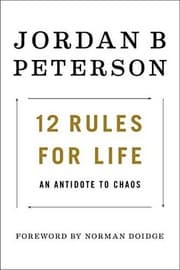
It's true in relationships and it's true in whatever we invest in psychologically. It's a truism. Yeah. So you can use it to your advantage in, in any domain. I, um, I c- I picked up a version of this, uh, from Jordan Peterson.
You're familiar with Jordan Peterson? Yeah. So he, um, he was at-- So I had a, a health issue back in 2017 that kinda forced me to recalibrate how I approached life. Essentially, I was allowing myself to become a lazy slob and, you know, I didn't want that to be who I was and whatever. So I picked up "12 Rules for Life" and started reading it and started watching some of his stuff and, um, one, one of the things that stood out to me, and I, and I've, I've tried to apply this, uh, to, to, from a broader sense, but, but I watched a-- The point is I watched a video and he was being q- asked questions after a talk, and someone asked him if he believed in God, and this is back in 2017, 2018.
And, you know, he kinda does his Jordan Peterson meandering thought process style of talking that he does, and he ends up on this. Uh, he finally says, "I'm unsure whether I believe or not at this moment. However, what I know is the best path to success is," in his words, "the Bible," right? New Testament and Old Testament. "So I act as if he does.
And what I have found is by acting as if, I am slowly moving towards belief." That was his answer to that question. And I was very taken by that because I had never heard it framed that way before. I don't know if he was the first or not. He, he probably was not, but, but he framed it that way.
And I've, I've seen, I've seen in the rest of my life that if you, if you want something or you want to be something, the first step isn't massive amounts of research or money or, or even skill. It's just action in the direction towards the thing. And then, but that takes like a leap of faith. Uh, you have to, you know, a-and I don't necessarily mean faith necessarily in the, in the biblical sense, but, you know, you have to believe that that action's gonna lead to something, and I feel like a lot of people get hung up there. So how do you- I actually-- You can think of it as a leap of faith.
Yep. Sorry for interrupting. No, no, you're fine. But you can think of it as preparation. In other words, if you're station A, let's actually be a little more optimistic.
You're station D, and you're about to go to station E, like to the fifth jumping point. Uh, you're not there yet. You don't know if you'll get that promotion. You don't know if you'll leap up to that level. You don't know if your startup is gonna bounce from this valuation to that valuation.
But that's when you have to start looking at the people who are there and start to think like them. That's preparation. It's not just a leap of... Yes, you can think of it as a leap of faith, but like, I don't know if I'll get promoted, but if you don't start noticing how they think, what their priorities are, how they organize themselves, how they behave, what those, you know, then you're gonna get there and be disoriented. You need to start thinking like that as part of preparation.
It's due diligence to my mind. You know, it's, it's, it's more like that. So the leap of faith part, yes, you could say it's a leap of faith, but it, but it's like, but it's, it's, it's more just correct prep, you know, like, like to my mind in that specific case. No, I love that. I, I love the framing of it.
And I, and I think, you know, I guess I, I like that framing better because it feels more accessible. 'Cause, 'cause my-- You know, I, I get, I get young founders, uh, y-y-young in business, not necessarily always in age founders will reach out to me 'cause of my career. And, you know, my advice is usually, uh, this is, this is cliché and broad stroky, and I'm-- So take it, take it for the fact that I understand that that's what it is. But it's like you gotta start somewhere. Like, you have to start action. Like, so many people get caught in this paralysis, which I-- which is a lot of what I got caught in post-sale- post-exiting my business, right?
It was like this inaction paralysis. I was examining, "Well, do I wanna do M&A now? Do I wanna go back into a sales job?" And, and I got stuck, and the only way out, and, and I, and I credit this podcast for it, 'cause I really-- it's really when I doubled into saying, "You know what? I'm so curious.
I love talking to amazing people like you. I feel like I have some skill for questioning you in a way that gets amazing information out. Like, I'm gonna push into this for a while." And that action got me going. How do we break-- How do people who are listening to this break free?
How do they pick the action when they're in that it feels like there's a million things they could be doing or should be doing, and instead they do nothing and just kinda spin their wheels? O-o-one of the thing I, I, I-- One of the things I talk about in, in the book, and I'm mentioning it because, uh, it's, it's our coping mechanisms. We have coping mechanisms. That's what allows us to deal with, with challenges in the world. And my lament in general, it's gonna sound tangential, but I'm looping right back to your question.
My, my lament in general is that we don't teach psychology in schools. Because there's a lot we don't know about our operating system, our mind, but there's a lot we do, and it would be very useful to teach it so that people could understand better what's going on with them. When you are, um, uh, overwhelmed and in paralysis, what typically is going on is that your coping mechanisms, you're not using them intentionally. You are allowing your unconscious mind, your automatic coping mechanisms take over. And when your automatic coping mechanisms take over, the ones that you're not paying attention to, because we can't pay attention twenty-four/seven.
We can pay attention in a moment, we can make a decision, but then we're busy doing things, automatic coping mechanisms kick in. What those do, and I try and explain this in the book, I'll be very, you know, simple about it. What, what those do is they favor very easy solutions that give you emotional relief. So it'll give you emotional relief by taking you to a fantasy of like, "Well, maybe one day this will happen." Well, that's not helping you right now.
Or a distraction, "You know what? You should check social media. That would be a great idea to do right now. I think there's a chocolate bar in the fridge that I could actually go to right now." Because it will take you to something that'll just numb or make you soothe your feelings in the moment.
It's not-- They're not productive necessarily. They don't have planning and anticipation. They don't have your long-term goals in mind. It's all very short-term relief oriented, and that's what we feel when we're paralyzed. We're not actually thinking about, "What's the best I need to do now to cope to feel better?"
And that's when you have to take over, and you have to say, "All right, let me start doing something." And you-- "Well, what i-- I don't know what to do." That's the point. Here's what you do. You sit down, and you write down, "What are my goals?"
You start listing your goals. What can I do today? What are five things I can do right now to move me forward in some kind of way? Who are five people I can talk to that might have been in this situation that might help me get out of it? Who are three people I can call for emotional support who won't just let me vent and feel bad for myself, because that will not be helpful, but who will be there, validate my feelings, and then kick me in the ass and say, "So what you gonna do about it?"
Who are those people? And how can I, when I go talk to them, say, "I need two things. I need support and a kick in the ass. I'm asking you for both," so ex- they understand that that's their job then. Like, you start to look at, what can I do?
Start making lists. Start writing down ideas. What's the worst thing that I can do right now if I was doing something, not the paralysis part? Like, what's a bad idea? Or like, what are some ideas I've had that I disqualify 'cause they're not good enough?
What was missing from them? What could I add to that that would sweeten the deal and make it, hmm, now it's a little bit more interesting? What are those circumstances? What have I enjoyed about what I've done before? It's the people.
How important are the people? Well, maybe they're sixty percent important, so maybe the, actually the content less important. And when I'm actually looking at things, I need to make sure that the people around me are people I actually wanna be working with, for, what, what have you. Like, again, if you start thinking in a coping way, you know, long-term thinking, breaking it down, problem-solving, action items, brainstorming, then you're not paralyzed. But you have to have the wherewithal to understand that unless you take over, this is the thing about work hijacking your life, it hijacks your coping mechanisms, and the lack of work does the same.
It hijacks your coping mechanisms, so you're not in charge. You think you are, but actually you're just kind of, days are getting wasted. You're spinning. You're not actually moving any-anywhere. You're not getting anywhere, 'cause you keep, like, talking yourself out of it because you're demoralized.
You have self-pity going on. You have to take over. Yeah. One of the things that really concerns me about our current, uh, society here in the, in, in the US at least, um, is that it feels like the younger generations, uh, and I'm, and I'm gonna bypass the millennials, um, to the, to the whatever they call the next one, Gen Z. Gen Z.
Gen Z. Um, because I, I talk to these guys and, and, and it tends to be more guys for me, so I'm, I'm not knocking the ladies out for the ladies that are listening. Uh, I'm, I'm sure, uh, a guy can, can, can square me up here on this, but, um- They're-- It feels like they're all chasing. Like, like I didn't feel when I was in my early 20, I, I wasted a lot of my early 20s in some ways. Obviously, it made me into the person I am, so it's hard to, you know, I'm not gonna play a time travel game.
But, um, it feels like they're chasing crypto, the next some AI vibe-coded startup, uh, uh, you know, they're trying day trading. They're into, like, I'm 45, I've been investing in the stock market for 30 years, you know, whatever, thir- 25 years. I've never played around with derivatives and futures in my 20s. I would never even think about it. And these guys are on trading apps, you know, essentially gambling all day long.
They're, they're, you know, video games and all this stuff, and, and I don't... I guess it just feels like there's no early training for the younger, for our kids and, and ultimately these young generations to e- there's like almost no incentive structure set up for them to think long term, right? I, I completely and utterly agree with everything that you've said, but we have two generations, I think the millennials are particularly bad for a couple reasons, but certainly in Gen Z, there's n- there's very few incentives for them to think long term. They, they can't foresee ever buying a house 'cause of the economy. They're being told not to get married until they're later.
You know, all these structures that would, in previous generations, even as, you know, even, even mine, you know, right on the edge of the millennials, like buying a house locks you into long-term thinking. You have a mortgage for 30 years. Like, I need to, I need to put something in place. You get married or, or, you know, you, you have a long-term, uh, partner, and it-- you start thinking long term. You have kids that start thinking long term.
Today, it feels like none of those incentive structures are in place or are even advocated for or are advocated against. So how do, how does that generation or, or if we're mentoring them, let's say I'm listening to this and I'm 45, 55, 65 and I'm, I have some mentors in that generation, how do we help them to start thinking longer term to set their lives up so they're not dealing with this coping mechanism, you know, instant gratification for their entire lives? It doesn't dictate their entire lives. Look, they, they, they have a couple of challenges which we need to acknowledge. Number one, and I think the most urgent is, what they're hearing around them is there's no point in investing in a career because AI might demolish that career in five years' time, two years' time, 10 years' time.
We don't know. So why invest in a long-term career path where you have no idea whether that's a viable path to begin with because of AI? So that, over the past two or three years, has been very much present for a lot of people, and it's happening in all kinds of industries. Secondly, and you know, now a little bit more in the background, but in fact still in the foreground, is climate change. Well, you know, the world's gonna, you know, circle the drain in just a couple of decades anyway, so you know, I don't know where you're building that house, but it might be underwater.
You know, so, so there are a couple of major things that are making them feel like, "Yeah, I don't know where the world's gonna be. Why am I..." You know, there's no sure path because those paths might be completely washed away, taken away, what have you. Now, um, uh, when I grew up, uh, it was a generation where school kids had to practice once or whatever, hiding under their desk from the nuclear blast. By the way, desk is not gonna help in a nuclear blast.
But that's fine. Uh, you know, we'll put that aside for a minute. But you know, you had those, those, uh, exercises of like, "Oh, the air raid sirens. Everyone's nuking. Let's hide under the desk and hope for the best."
So you know, the, the world was about to end then as well, and then there was Y2K, where all the computers were about to stop and we're gonna go back to being Luddites and, and primitives because there was a computer bug. People who don't know it, if they're too young, look up Y2K. It was a big thing until the stroke of midnight happened in 1999, 2000 happened, and everything was still okay. Uh, and then the millennials, they come out, you know, into the workplace where the great recession was happening and, and they couldn't get jobs. There's always something.
But, but here's the thing. Um, for Gen Z, one, one thing you said is right. When you, uh, relationship, you, you c- you get married, that's gonna do something. But when you have kids, then the idea of, "Ooh, how can I guarantee I can feed these young ones for a while?" will create a little bit more urgency. This, this, this search for, you know, the day trading, the crypto, the derivatives, the, the apps, the, there are, there are searches for quick solutions.
There are s- too many models which they see in social media and the general media of people in their 20s who got really wealthy, who struck it rich, w- developed the killer app, who, who founded the company that had the great exit. They see too many of those people, and there are quite a few of them. But for every one of them, there's what? 100, 1,000 that didn't, who we don't see, who are invisible to us. So it, it, it's very misleading, this idea that, yeah, you can get rich in crypto.
Crypto's not having a moment at the moment. You know? It's like, so, you know, what's that doing to your self-esteem, to your finances, et cetera? It's creating panic, and, and gambling is a very addictive thing. It's the promise of instant success, but you know, the house always wins often.
And so, like, you know, and, and in this, like many people lose. It, it, it's tempting to go toward that solution, and if you're mentoring people in Gen Z, you need to talk about hedging bets. Hedging, you know, if you're gambling on crypto, if you're gambling in the stock market, how are you hedging your bets? It's fine to be in the short term in some way. What are you building in the long term as a hedge?
What are you investing in that will be there for you regardless of whatever happens with this? Maybe you'll be one of the lucky ones, and you'll be able to toss the other plan aside. But if not, what is the other plan? What is the career that you're actually building? What are the skill sets that you're actually acquiring?
What is the knowledge base that you're internalizing? That will set you up in the long term. You have to hedge your bets. You can't go all out on the fantasy because only very few people get to have it. So it's not wise.
Do that if you must, but what are you building that's more stable, that requires a long-term view? You can and should do both. Let me help you with the other one because you can do your crypto trading, you can do whatever. Let me help you build a thing that will give you some assurance and, and, and take away some of the panic and some of the anxiety when things don't go well on that, on that front because you know, you know, "I have a backup here. I'm working on this.
I'm working on this stable thing." And if you know, if you think you can't do both, you can do both. Stop gaming for five hours a day. You'll find you have the time. Yeah, I, um...
It, it's funny, uh, like the cobbler's shoes, you know, cliche where you, you see things in, in other people or other instances, but when you're looking in the mirror, it's like th- those things are invisible to you. Um, I, I tell founders, really, really anybody that I work with, one of the first things that I'll talk to them about is just doing an audit for a day. Just take a piece of paper. I, I'll tell them, it- it's most likely gonna be annoying as hell. I get it.
But for one whole day, from the moment you wake up to the moment you go to sleep, just make a quick note on what you do every 15 minutes. Just, just see what it, see what it looks like, you know? What does it look like? And the two other things I do is pull up their calendar, and I pull up their Instagram feed. Mm-hmm. 'Cause when you look at someone's Instagram feed- Mm-hmm ... you know where they're giving their attention to.
Mm-hmm. It's really interesting because- Yep ... the algorithm, you know, one misunderstanding that I think people have about the algorithms is that they are trying to feed you things. It's not true. They're trying to feed you- Trying to feed you what you're eating ... what you're e- exactly. What you...
So it's like if you're pissed that your feed has a bunch of negative crap in it, that's 'cause you're giving attention to the negative crap. Like, if you look at my Instagram feed, it's how to coach baseball, like Wu-Tang derivative songs, and, like, comedy stuff. You know what I mean? Like- I'm, I'm with you. My-- I've trained my Instagram- Yes ... feed.
It, I mean, not to be, but, like, if I go on Reels, I'll get two things. I'll get stand-up, I'll get puppies. That's what I wanna see. Exactly. If you're showing me something else, I'm not gonna pay it attention.
That's it. And I've trained it, and it's just puppies, which... And the cutest, and, and stand-up. Great. That's what I need in my...
And I'm not gonna do that for an hour. Yeah. I'm gonna do that for five minutes if I need it. It'll make me smile, off I go. But you can train your, your, your feed.
You can train the algorithm. The algorithm's interested in what you're interested in, so don't be interested in the stuff that's outraging and upsetting and this and that. Just train it to show you the stuff that you need for a break. It's so wild what you find out about yourself when you do these little exercises- Yeah, yeah ... 'cause you find, "Well, geez, I screwed around on my phone for a half hour in the middle of the day." Like, maybe I wouldn't have, wouldn't feel the need to be answering emails at 6:00 PM if I hadn't screwed around at 11 o'clock in the afternoon or, you know, whatever, if you need that time to decompress.
But it, it's, it's funny what you find. So I, um, I wanna wrap up our conversation today with, uh, a takeaway for the audience. One of the things that you had mentioned, um, earlier, uh, and we had kinda skipped past it, was a, a method that you have that you talk about in your book for kinda catching yourself when you're in these moments. So someone's listened to this and, and, and they're, they're s- you know, they find themselves in, in the scenario that we have discussed, right? That they, they're overworking or, you know, they're just way over-indexed on the things that, that, on activity and, and very little limited substance, and they wanna start to make this change.
How do they... Sometimes it feels like just catching yourself in these moments is, is, like, the biggest step of them all. How, how do you help people, like, figure out or even, you know, stop the bleed when they're in these overworking, pressed till the end of the day, you know, kind of, kind of mentalities? How do, how do they crack out of that cycle? Well, look, the exercise in the book, it's a, it's a, it's a multi-page assessment of, you know, like, how much are you taking care of this?
How much are you dealing with, with these things? But, but it, it, it's truly about, like, what matters to you in life. Like, when is the last time you spent quality time, and I'm gonna define quality time. Your phone wasn't on you, not in your pocket, not by you. It wasn't in sight because if it's in sight, we will look at it every five seconds.
How, when's the last time you spent quality time with your partner without a phone present? When is the last time you went for two hours at home in the evening without checking work, messages, or emails? When is the last time you were with your kids, again, without the phone, that you were actually present and enjoying whatever was going on there? And, and for many people, it's been a while. When is the last time you did something that makes you smile that's just for you?
"Selfish," quote-unquote, if you must. When is the last time that you did something that you had to force yourself to do because you were too tired to do it, but you knew that if you force yourself to do it, when you come back from it, you will be rejuvenated, you'll have a second wind, and you'll be like, "I'm so glad I made myself do that 'cause I thought it was more important to do something else, but no, I forced myself to go to the event, and I'm so glad I did"? When's the last time you had that I'm so glad I did that feeling, not about work? And I promise you, for a lot of people, they're gonna have to really scratch their head. On that one.
And then if you're scratching your head, start marking your calendar with when you will be doing these things and make sure you do them regularly. And accountability is a calendar. You can see if it's in there, plan for it, slot it out, make, you know, like schedule it and make sure you do these things because that's what will take you out of the hole. You know, you have to this audit is a very important thing. One way to do it is indeed to look at what you're doing day to day.
But the other is to look at your mental state. If you're just like totally revved up all the time. I just want to say just one thing about that. You know, the revved up thing that you're totally in gear all the time. We are not designed that way.
We evolved to be activated when there was a war going on, when there was a hunt going on because we're hunter gatherers, not all the time. And our workplace is the modern battlefield and we are switched on and in fight or flight 14, 15 hours a day, day after day after day after day. It is a wear and tear on our body and on our mind, on our emotions. We cannot afford it. That's where burnout happens.
That's when numbness kicks in. That's where you lose sight of what you're doing it for. So do an audit, not just in terms of your time, but in terms of like, how are you feeling about things? How are you feeling about what you're doing? How are you feeling about your life?
And if you're on hold because I just need to get here before I'll be able to start feeling good. How long have you been on hold like that? How long has it been in waiting mode? Because if you just do this and then you just do that can get kicked down the road. So just self-reflect and take responsibility.
Dr. Guy Winch, my friends, the book is Mind Over Grind. This has been incredible. And I appreciate you allowing this to be a quasi-therapy session for me as, you know, this, it just hits home. And, you know, I think my testament to the work that you're doing is that as just a classic overworker, workaholic, I have done my best work when I had control over what you're talking about.
And I've never, I can never, when I have pressed too hard and been in this overwork, I've never had things come out of that where I'm like, that's my best work. It is always when I have a grip on, you know, on a really solid harmony. And I love that you've written this book. I love that you're out here doing this because so many, like, this is, I'll wrap it up this way. I've been blessed to speak to over 700 incredibly smart, highly successful individuals like yourselves.
None of them relate their success back to, well, I grinded 20 hours a day for years. None of them. They always, if they even did that, they always talk about the regret they have around it. This is, while posterized on social media, no one I know who is truly successful and happy in any regard lives this grind all the time lifestyle. Nobody.
And I'm so glad you're out here. Where can people go deeper into your world? We'll obviously have the book linked up in the show notes. So whether you're watching on YouTube or listening on wherever you listen to podcasts, just scroll down, guys, or just go to Amazon. It's Mind Over Grind.
But where can they follow you and get deeper into your work? It's Guy Winch, G-U-Y-W-I-N-C-H. They can, it's guywinch.com is my website. They can follow me on LinkedIn, on Instagram, again, at Guy Winch. And, but through my website and through my socials, they can get more information.
And yes, just Mind Over Grind. The subtitle, How to Break Free When Work Hijacks Your Life, because a lot of us are hijacked. I hope people enjoy it. I appreciate you. Thank you so much.
We're out of here. Peace.