Key Takeaways
- →You do not need to quit your job to start building what is next.
- →The knowledge that feels normal to you may be your most valuable asset.
- →In an AI-soaked world, real human presence, trust, and energy matter more, not less.
Listen to the audio version of the podcast on Apple or Spotify.
Most people think the next chapter starts with a dramatic move.
Quit the job. Burn the ships. Bet on yourself. Pray the landing gear works.
That story sounds bold. It also gets a lot of smart people killed.
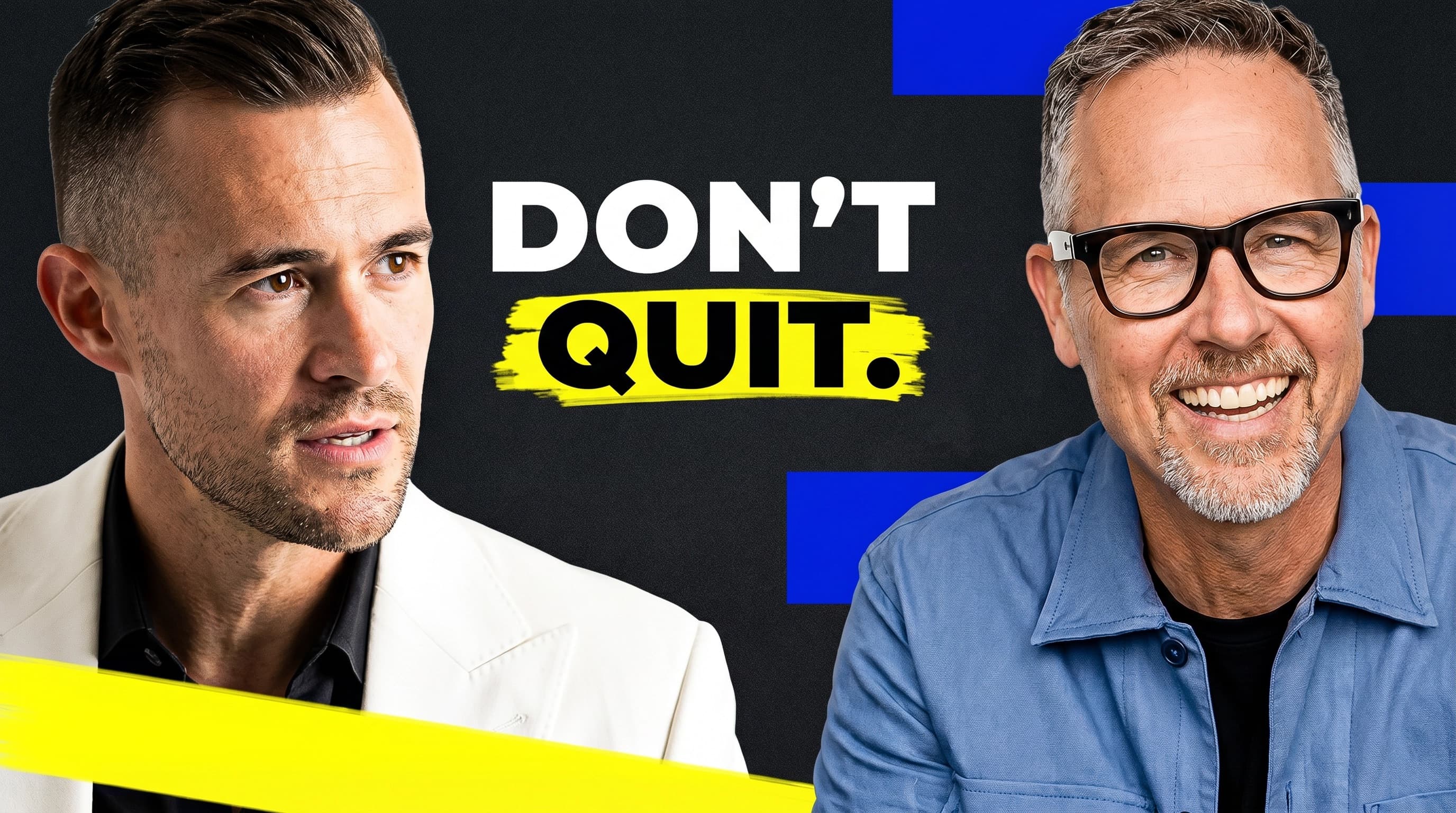
That is why this conversation with Mitch Matthews matters.
Mitch works with leaders, founders, and executives who know they are not done. They have built careers. They have credibility. They have scars. But they also have kids, payroll, mortgages, and a real life that cannot be lit on fire just because some LinkedIn bro told them to “take the leap.”
His answer is better.
Build the bridge first.

Connect with Mitch Matthews
Mitch Matthews is a success coach, speaker, and author who helps leaders build their next chapter through clarity, message, and authority.
Learn more at MitchMatthews.com.
The free training mentioned in the episode is available at MitchMatthews.com/time. Be sure to use the code "peak" to access.
Why Quitting Is Usually the Dumb Move
There is a lie sitting underneath most career-change advice.
It says if you want something more meaningful, more profitable, or more aligned, you need to make a giant public break from your current life.
Mitch rejects that idea.
Not because he lacks guts. Because he understands reality.
Most high performers do not need more chaos. They need a strategy. They need a way to test ideas, shape offers, and build demand while the lights are still on.
That is the real power of a next chapter built the right way. It starts as a both/and, not an either/or.
You do not need to blow up what works just to find out what else is possible.
Inventory Your Brilliance
This may have been the most useful idea in the whole episode.
Mitch says the first move is to inventory your brilliance.
Not your résumé.
Not your job title.
Not the fake polished bio you slap on a conference website.
Your real brilliance.
The patterns you see fast. The problems you solve without thinking. The questions people always bring to you. The stories that changed how you lead. The lessons you paid for in blood, time, embarrassment, and repetition.
That is where the next chapter lives.
And here is the catch: the things that are most valuable about you often feel too normal to notice.
They are easy for you, so you assume they are easy for everybody.
Wrong.
What feels obvious to you may be exactly what someone else needs help buying, building, fixing, or understanding.
Build the Bridge Before You Leap
This is where Mitch’s Authority Bridge idea lands so clean.
You do not need to become a different person. You do not need to invent fake expertise. You do not need to wake up tomorrow and announce that you are now a coach, consultant, speaker, or thought leader because you changed your LinkedIn banner.
You build a bridge from what you already know.
You start with the work, the experience, the credibility, and the proof you already have.
Then you shape it into something useful for other people.
A framework.
A speech.
A workshop.
A coaching offer.
A point of view people can follow.
That is a much stronger play than starting from zero and pretending confidence is a business model.
WATCH NEXT: Ex-Google Chief Evangelist: Why 90% of Companies Are Optimizing AI for the Wrong Thing
AI Will Flood the Zone. Human Energy Will Win.
Another thread running through this episode is AI.
A lot of people are responding to AI like frightened villagers seeing a storm roll in.
Mitch and Ryan take the smarter view.
AI is a tool.
A serious one.
It can help you mine your own ideas, organize content, sharpen delivery, and create leverage faster than ever before.
But it still cannot walk into a room and make people feel something real.
It cannot replace judgment.
It cannot replace earned wisdom.
It cannot replace the transfer of conviction from one human being to another.
That matters because the more noise the machines create, the more valuable authentic signal becomes.
If you can speak clearly, teach honestly, and communicate with real energy, your value is going up.
Not down.
Teach From the Journey, Not the Destination
Mitch drops a line in this episode that deserves to get clipped, framed, and taped to a thousand laptops.
Teach from the journey, not the destination.
That is the antidote to expert paralysis.
Too many smart people keep their mouth shut because they think they are not “there” yet. They think they need perfect certainty before they are allowed to help anyone.
That is nonsense.
People do not connect to perfection.
They connect to honesty.
They connect to someone who has been in the fight, learned something useful, and can hand over the map without pretending to be the Messiah.
The most trusted voices are not always the people at the finish line.
They are often the people a few steps ahead, telling the truth about what the road actually looks like.
Introverts Are Not Disqualified
One of the sneaky-good sections of this conversation is the way Mitch talks about speaking.
A lot of people think great speakers are born extroverts.
Mitch calls that bluff.
Some of the best speakers in the world are introverts who have learned to do extroverted things for an hour at a time.
That is a big distinction.
You do not need to become fake. You do not need to become louder. You do not need to turn into some stage-clown version of yourself.
You need to amplify what is already true.
Then, when it is over, you recover like an adult who understands energy is a resource.
That idea alone will give a lot of smart, quieter leaders permission to stop disqualifying themselves.
The Rub
This conversation is not really about quitting your job.
It is about refusing to waste your experience.
It is about seeing that your next chapter does not need to come from fantasy. It can come from your real life. Your earned knowledge. Your hard lessons. Your voice. Your point of view.
You may already be carrying the raw material for what comes next.
The question is whether you are willing to notice it.
Then shape it.
Then build the bridge before you ask it to carry your weight.
This is the way.
Hanley