Key Takeaways
- →The analog world is bleeding you dry — Legacy friction silently taxes every transaction you make.
- →The agents are already here — Machines now drive over half of all internet traffic.
- →Fear is a strategy for losers — Experiment now or watch incumbents steal your future.
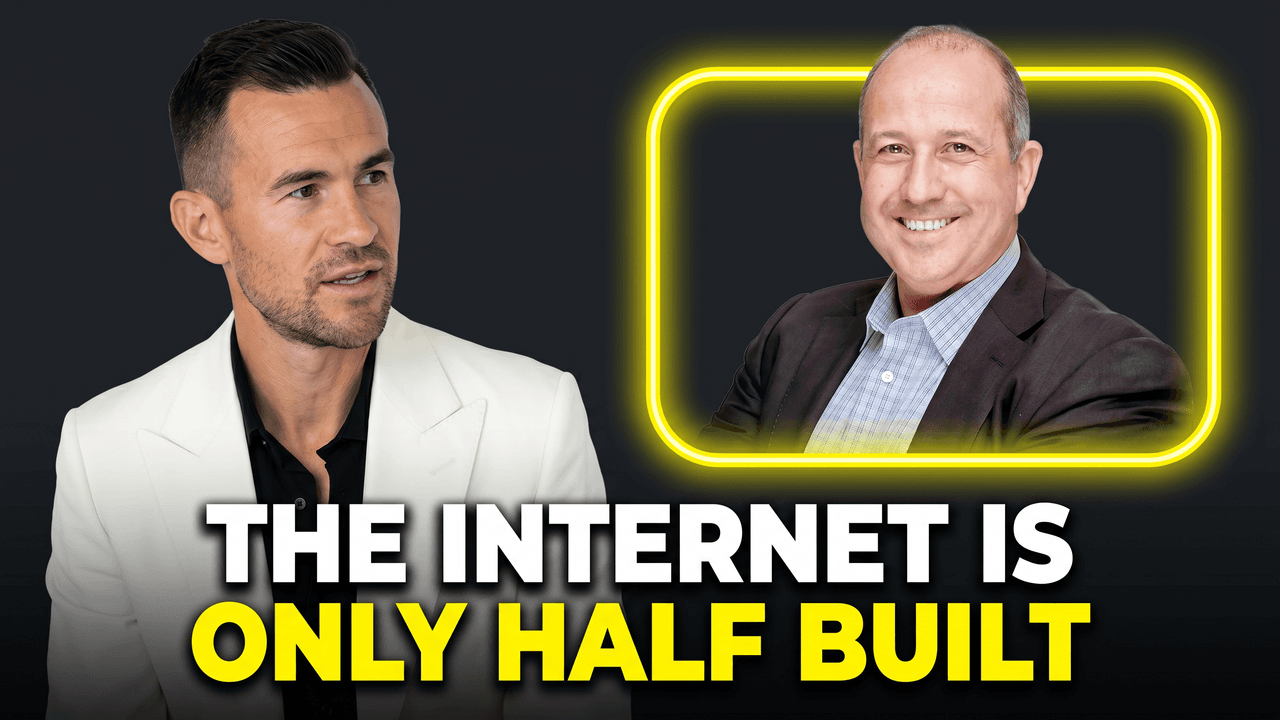
The internet we use today is only half built.
We spent the last 40 years digitalizing communication and content. We built email, websites, streaming, and social feeds.
But we left the heavy lifting stuck in the analog world. The movement of value, the execution of complex work, and the verification of who owns what all stayed offline, buried in paper, middlemen, and delay.
That is changing right now. We are entering the autonomous digital economy.
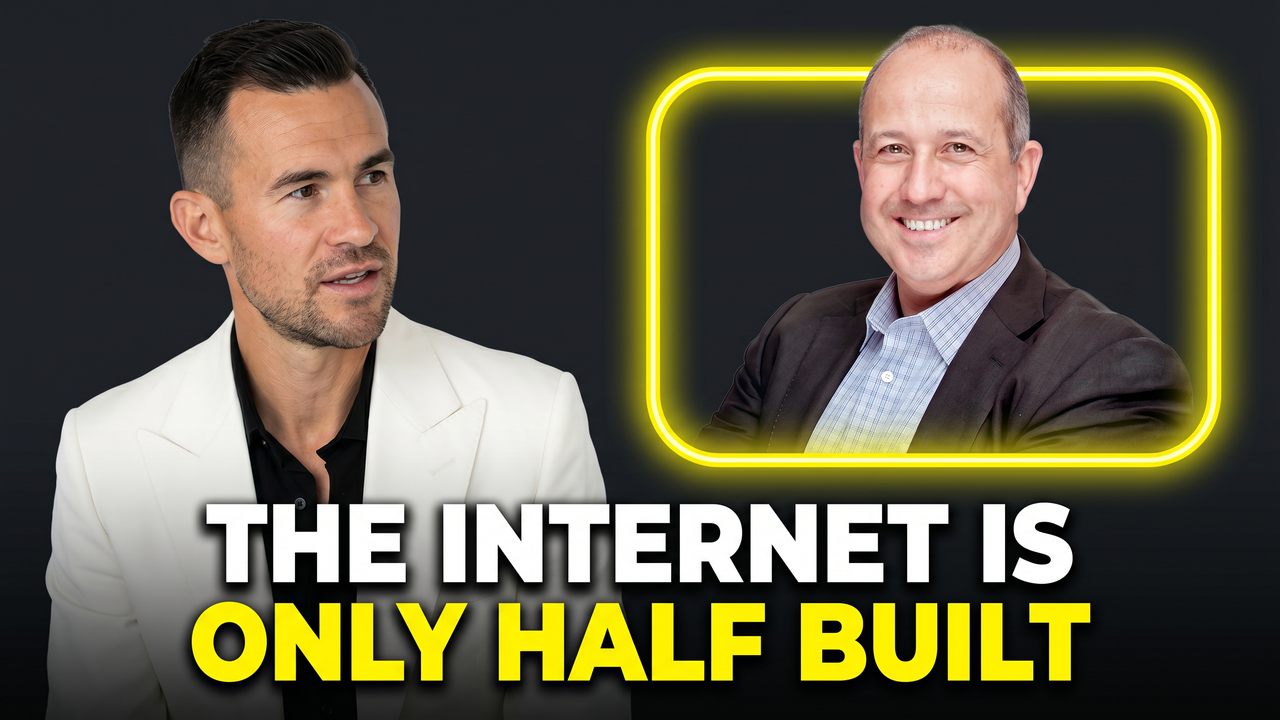
Matthew Le Merle, Managing Partner and Co-Founder of Fifth Era and Blockchain Coinvestors, joined me on the podcast to break down what this means for the people running companies.
He is a venture investor who has spent his career watching how big shifts play out, and he sees a near future where digital trust (blockchain), digital intelligence (AI), and digital execution (agents) come together into one system.
His words for where we sit: "An autonomous digital economy is the future, and we're about halfway there."
Half. That is the part most leaders miss.
This is not a someday idea you can file under "watch later." The build is already in progress, and the second half moves faster than the first.
If you are a founder or an executive, you cannot afford to sit this one out. The autonomous digital economy is coming for your margins, your operations, and your industry.
The good news is that you do not need to understand how to code the underlying architecture. You need to understand how to put it to work.
Connect with Matthew Le Merle
Website: https://www.matthewlemerle.com
Fifth Era: https://www.fifthera.com
Fifth Era LinkedIn: https://www.linkedin.com/company/fifthera
The Hidden Tax of the Analog World
To see why the autonomous digital economy is inevitable, look at the friction sitting inside the systems you already use every day.
Matthew used real estate as the example, because almost everyone gets it. The biggest asset most Americans will ever own is their home. And the process of buying and selling that asset is stuck in another century.
"It costs them an average of $20,000 to trade a $250,000 property," Matthew explained. "They lose 10% of the value of their home each time they buy and sell it."
Sit with that for a second. Ten percent of your largest asset, gone, every time you move.
Add the 45 to 60 days it takes to close, the endless paper shuffling, and the cottage industry of title insurance that exists mostly because proof of ownership is fragmented and hard to trust. You have a system begging to be rebuilt.
This is where tokenization comes in.
Matthew put the mechanism in plain terms:
If we digitalize the proof of ownership, we can make it run over the internet, and the technology we use to do that is tokenization.
Once ownership is provable and portable, the asset can move at internet speed instead of courthouse speed. That 60-day process could shrink to five days. That $20,000 cost could drop toward $2,000.
When you remove that much friction, you open real economic value for ordinary people. And it is not only real estate. Every asset class carries its own version of this tax: private company shares that are hard to sell, gold that sits in a vault, dollars that take days to settle across borders.
Tokenization attacks all of it.
Matthew does not pretend this is painless for everyone. Some of the cost in the old system is somebody else's paycheck.
His point is sharper than that. He argues there is a duty to the customer that sits above the comfort of the incumbent. If you fight to keep paper-based titles alive, he says, "understand what you're doing is you're hurting every American."
That is a hard line, and it is the right one.
Why Blockchain Adoption Feels Slow
A fair objection shows up here. If this is so obvious, why does blockchain still feel like a sideshow after more than a decade?
Matthew's answer is the calm one. Adoption curves are long. The internet itself took decades to move from research labs to the device in your pocket.
Big infrastructure shifts always feel slow in the middle, then look obvious in the mirror. He is not describing hype. He is describing a build that is roughly halfway done.
We came at this from my world too. Insurance is one of the slowest industries on earth to change, and I wanted to know where it fits.
Matthew's read was smart: the industry is more likely to adopt AI-driven decisioning before it adopts blockchain payments, because risk assessment is where the pain lives.
That is a useful lens for any leader. The technology that wins first is the one that solves your most expensive problem, not the one with the best story.
WATCH NEXT: Holistic Detox: How to Clear Brain Fog for Good
Humans Doing Machine Work
The other broken thing Matthew named is the misallocation of human effort. We have built an economy that asks people to do work they were never designed to do.
Think about the warehouse worker lifting heavy pallets all day and risking a back injury that follows them for life.
Think about the accountant hand-crunching vast piles of financial data that a machine could sort in seconds.
We built workarounds like forklifts and spreadsheets, but we still parked a human in the center of tasks that machines handle better.
In the autonomous digital economy, AI agents step into these complex, data-heavy, or physically punishing jobs. And this is not a forecast.
"Cloudflare announced last month that for the first time, computers and agents are driving over half of all the world's internet traffic," Matthew noted.
More than half of the traffic on the internet is already machines talking to machines. The agents are here.
That word "agents" scares people, so let me be direct about what it does not mean. It does not mean the end of human work. It means the reallocation of human effort toward the things we are good at.
As I teach in my human-optimized model, humans beat machines at three things: building relationships, solving complex problems, and selling based on trust.
When you let agents handle the rote execution, you free your team to do the high-value work that drives growth. The company that wins is not the one with the fewest people. It is the one that puts its people on the right work.
Matthew brought the same idea back to the golf course, of all places. Robotic mowers guided by satellite already run on real courses today. Not a demo, not a pitch deck, running now.
Yes, some mowing jobs go away. That is a real thing that affects real families, and he does not wave it off.
But he flips the question in a way worth stealing: it is not bad that fewer people spend all day baking in the sun and risking skin cancer to cut grass. The better question is whether the jobs we are handing to machines are the right jobs for humans to lose.
Ask that about your own company and the answer usually gets clear fast.
Where the Value Goes Next
For the investors and operators reading this, Matthew's venture thesis is worth writing on the wall.
He takes a ten-year view. He assumes the change is coming and asks who captures the upside.
His answer will sting incumbents: "Most of the shift, most of the value is gonna be captured by disruptive new players."
The companies that own today rarely own tomorrow, because they have too much to protect and too little reason to move. The new entrant has nothing to defend and everything to build.
If you run an established business, that is not a reason to panic. It is a reason to behave like the new entrant inside your own walls. Start a team that has permission to attack your own model before somebody outside does it for you.
And the barrier to entry has never been lower.
"Even small businesses can start experimenting," Matthew said. "This is not something that requires any more billions of dollars to get started."
The cost of trying is a rounding error compared to the cost of being late.
The Two Axes of Leadership
Faced with a shift this big, leaders fall onto one of two axes. This was the clearest idea of the whole conversation.
The first is the axis of fear. It is the belief that innovation will cost you the goods you have today and open up new bads tomorrow.
Leaders on this axis play defense. They protect the status quo. They wait for the technology to be perfect before they touch it, which usually means they touch it too late.
The second is the axis of the innovator. It is the belief that innovation will solve today's problems and open future opportunities we cannot yet imagine.
Matthew put entrepreneurs squarely on this axis, the people crazy enough to think they can change the future and stubborn enough to try.
Here is the contrarian truth most people dodge: you can be an expert at using the internet without understanding a single line of how it works, and the same is now true of AI and blockchain.
So stop waiting to understand the plumbing.
"You don't necessarily need to change anything this year," Matthew told me. "But I wouldn't wait five years."
Get a paid AI account. Build one simple custom assistant. Point it at two hours of admin your sales team hates and watch what happens.
The mindset matters more than the mastery.
The Operating System Underneath All of It
We closed on optimism, and I want to be careful with that word, because it can sound soft. It is not.
Optimism, the way Matthew and I mean it, is a decision. It is the choice to bet that the people building the future are solving more problems than they create, and to get in the game rather than narrate it from the sidelines.
When I look at what is coming, I said it plainly on the show: I do not see a better operating system to run your life and your business on than that kind of grounded optimism.
The autonomous digital economy rewards the leaders who play around, test the edges, and find the spots where a small move creates a big return. It punishes the ones who fold their arms and wait for certainty that never comes.
Stop defending the way things used to be. Start building for the way things are going to be.
This is the way.
Hanley.
Listen to the audio version of the podcast: https://linktr.ee/ryan_hanley
Watch this episode on YouTube: https://youtube.com/ryanmhanley
Get my weekly breakdowns for founders and executives: https://ryanhanley.com/subscribe