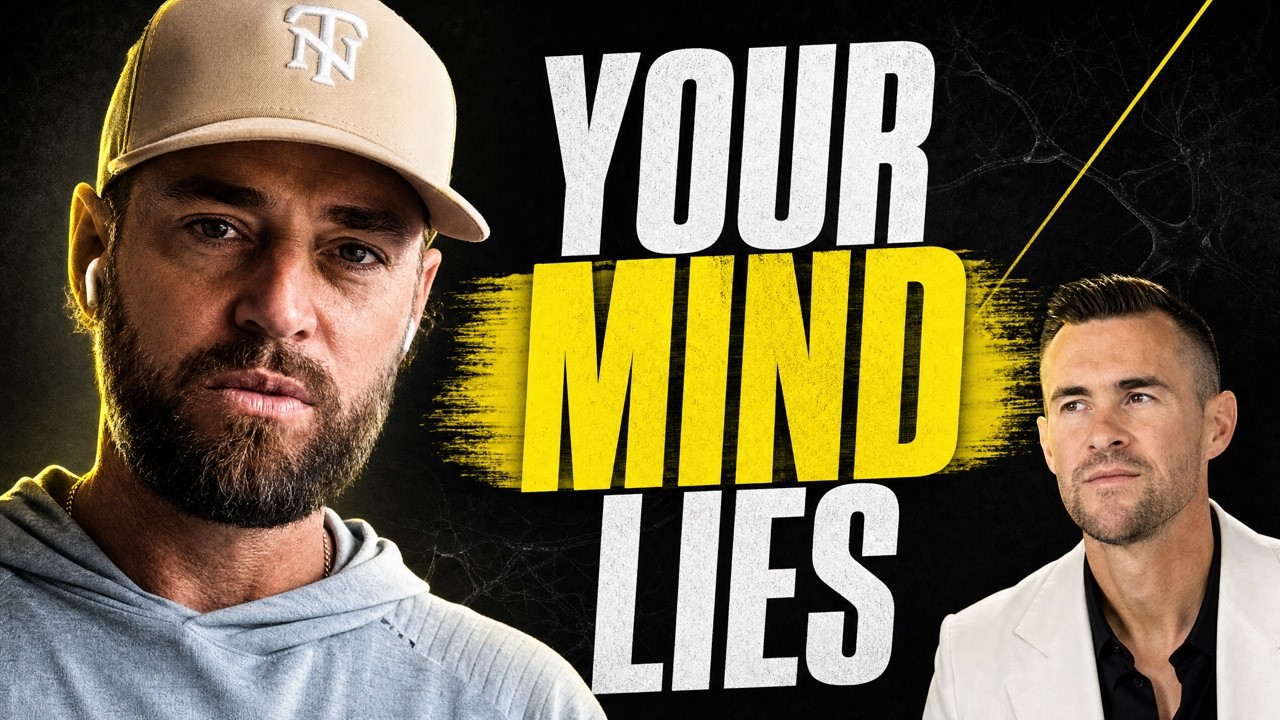
Ex-Google Chief Evangelist: Why 90% of Companies Are Optimizing AI for the Wrong Thing
Episode Answer
Ex-Google Chief Evangelist: Why 90% of Companies Are Optimizing AI for the Wrong Thing is a Finding Peak podcast episode hosted by Ryan Hanley. The conversation explores leadership, performance, entrepreneurship, and the work required to build with clarity under pressure.
Read the Conversation
Show the full transcript
To me, AI feels different. It feels like it's moving so fast and so far in each leap that if you're trying to wait till the, like, the finished version, you're not gonna be able to catch up at that point. I think as these models are doubling in power every six months, right, and they're getting ninety percent cheaper every year, basically, if you kind of compound that out over five years, that's a hundred million improvement in price power. If you're telling the AI to go in the wrong direction, the AI's gonna take you there really, really fast. It's like a self-driving car with the wrong address.
It's not about being right, it's about getting it right, and if you can't get past that, we can't move forward. I am so far down this AI agent rabbit hole that it's insane. I, um, I'm not technically... I'm not, like, a native tech guy. Uh, I get-- People, people misconstrue it, and I think, I think this is interesting.
I'm interested just in your take on this. Like, uh, there's nothing technical about me by nature. I'm not great at fixing things. I can't code at all. I took, like, one week of C++ in college and was like, "Screw this."
Um, but a lot of what I do is technical, and so much as, like, I love getting into AI, I love learning about these things because I see them as... To me, it is undeniable what is coming, and to be unprepared as a leader, regardless of your technical proclivities feels you're denying yourself a skill set that's gonna be very relevant. And I get a ton of questions from the audience about, "How much of this should I be putting into my business?" Um, "Should I be building myself an OpenClaus?" "Should I have CoWork?"
Like, "How much time should I be delegating to learning about this stuff?" 'Cause I think there's this group of people that has been able to, we'll say, skip off new technology and wait till it's mature and still be okay in what they're doing. And I'm ... Worried is the wrong word, but I'm concerned for them in so much as, to me, AI feels different. It feels like it's moving so fast and so far in each leap that if you're trying to wait till the, like, the finished version is available to you, you're not gonna be able to catch up at that point. Yeah.
Uh, I'm with you. I think, um, you know, senior leaders... And, and by the way, like, um, when I was at Google, I met over a thousand CEOs and advised them, right, on their digital transformation, marketing, and AI strategy. Um, and that was one of the typical questions. This was like, "Look, you know, things are moving very quickly.
Do I wanna be a fast follower? Do I wanna be a leader?" But my answer is, you always wanna be a leader. You don't have to, uh, take on the most complex projects at first, right? But you can't wait.
And so if you're not building your AI muscle right now as a, as a company and as an individual, and I think as these models are, I mean, doubling in power every six months, right, and they're getting ninety percent cheaper every year. Basically, if you kind of compound that out over five years, that's a hundred million improvement in price power. Right? And so, like, if you're not building the muscles right now, I don't think, you know, you're gonna thrive in the next five years unless, you know, the government regulation saves you. So I'm, I'm with you.
I think you've gotta go hard on developing the skills yourself. You have to go hard on, uh, you know, h-helping your team develop that skill. The problem is that, you know, a lot of employees are scared, as, as they should be, right? It's very normal. And so as an executive, what you have to do is not just, you know, teach people AI, is you have to show them what the future looks like for them.
Like a, "Hey, if you're doing this job right now, and the AI's gonna take over fifty percent of this job, and you'll be more productive, and it's gonna be great. But let's be honest, eventually, that job, you know, won't be that fulfilling, so here's your next job. A-and, and we're gonna try to get you to stay, you know, up, you know, a-ahead of AI. And if you become really, really good at this, you know, your career's gonna thrive for the next ten years." And so that kind of hopeful message I think is important.
Also, talking about AI as a growth engine, not AI as a productivity engine, right? Like, the speech of, like, we're gonna get thirty percent productivity out of AI is not that, you know, warm-warming for, for employees. But instead, if you say, "We wanna double the business in the next five years and, and employ only thirty percent more people," then that's a much more thoughtful, you know, optimistic message. So a lot of this is, you know, the, the leaders knowing the stuff, right, personally and having played with it. Uh, more than played with it, like, having really achieved something with it.
And then secondly is really getting people on board. AI is not really a technology problem. To me, it's, like, two things that really matter. One is change management, right? Uh, and the other one is, what are you asking the AI to do?
And so one of the conclusions I reached, you know, after my five years as Google's chief evangelist was that ninety percent of companies are optimizing the wrong stuff, right? And so if you're, if you're telling the AI to go in the wrong direction, the AI's gonna take you there really, really fast. It's like a self-driving car with the wrong address, right? And so in, in my experience, what's, what's happening a lot is, um, people are deploying AI systems and, um, employees reject them sometimes, and/or the AI system is just focusing on the wrong thing. This idea of focusing on the wrong thing, uh, I don't think...
One, this is not a conversation that's being had. Uh, I do not hear very many people talking about this at all. Uh, it's mostly-- And, and I-- To be honest with you, I think for a long time I was guilty of this as much as anybody because w-this has only been something in our f- that's been at our fingertips, what, for two years, two and a half years-ish? And it's gone so far from what, you know, GP2 or GP3 was to, you know, 5.4, and then, you know, obviously there's a ton of other models. But just thinking about OpenAI's progress, you know, what you could Ask and expect to get back from those early models.
I mean, that's remedial stuff that you wouldn't even think about today, and it's on- it's this tiny little 24-month window that we've been working in. Um, if you're a, a lot of leaders, a lot of, um, we'll s- call them regional and, and Main Street businesses listen to our show. Ton of, ton of leaders, ton of entrepreneurs. But it tends to be, uh, outside, say, the Fortune 500, Fortune 1000 group, um, that, that kinda come to this show. And I know the question that they're asking themselves right now is, "Nicholas, what's, what should it be working on, and what shouldn't it be working on?"
Because I'm positive what you just said scared the crap out of them because efficiency and the, the productivity of each task is so incredibly important to smaller organizations. Not that it's not to large organizations as well, but you can really feel that pain if you have even one employee working on tasks that aren't moving the needle. Yeah. Well, that's a great question, and then that, that's why I wrote my book, The B.S. you Call AI, Not a Bonsai. The book's about, you know, how companies can really grow a lot faster, um, without, you know, more innovation, without new products, without hiring new people.
It's just changing your mindset and asking the AI to do something different. So I'll give you a couple of examples, right? If you look at 90% of companies and you look at how they're doing their marketing, which is usually, you know, a canary in a coal mine because if your marketing team isn't doing the right thing, uh, the odds are your product development team, your customer service team, you know, other teams aren't doing the right thing because marketing is very data-driven. It's pretty obvious, you know, what you should be doing. So I'll give you my favorite example of doing the wrong thing.
Like imagine you and I started charity, right? And we wanna advertise on Google and Facebook to raise money. It's a very simple equation. We put cash into Google and Facebook, we get cash back, right? So, and then the AI is doing all that work.
It's doing all the targeting, all of the optimization for the advertising. So what do you ask the AI to do? Well, if you look at what charities are doing today, now, not 10 years ago, but today, 90% have the same KPI, right? So the most, you know, popular KPI in marketing, which is return on ad spend. It's basically the amount of money you raise divided by the amount of money you put in, right?
Hey, if I put a buck into Google and I get $3 back, I'll do this all the time 'cause I just found this money printing machine. Turns out there's nothing... You know, it's, it's, it's fine. You're making money, but that's not the right KPI. Like, what you should really focus on is how much money am I raising minus how much money am I putting in?
How much cash do I have left at the end of the day, right? But very, very few, you know, nonprofits do this. And so St. Jude's, for example, I met St. Jude's about seven years ago, an amazing organization, right?
The most respected organization in the US, the number one place college grads wanna work, does amazing, amazing work to help children for free throughout their entire, you know, cancer, um, you know, uh, well, uh, the, the, you know, if, if the cancer comes back five years later, right, St. Jude's will still be there for you, still for free. Parents can, you know, fly in and have a hotel for free, to eat for free. And also St. Jude's does, you know, a huge amount of research for childhood cancer worldwide.
So when I met them, they're raising a billion dollars, right? And they were kind of thinking a little bit in this kind of efficiency mindset, right? As long as we're efficient, we raise money efficiently, we'll do more. Um, but I was like, "Look, you know, you should just care about how much money you've raised minus how much money you give Facebook and Google." And within a year of making that change, and they'd done some other things as well, but they'd raised 46% more money, right?
And, and now they're raising $2.5 billion. So that simple, simple change of like, "My marketing KPI is wrong," right? "Let me change it to the right one. Boom, I'm 46% better off overnight," right? And then so, so that's an example.
That's a very simplistic example, and then we can go into more complex examples, but this is happening all over everywhere in every advertiser I've met. And then if you dig into, you know, their HR policies, what's the KPI? Time to hire. Like why? Like why do you have to hire fast?
Don't you wanna hire the best people? What about customer service? Average handle time. No. Who cares, right?
I mean so, so if you, if you're a CEO of a small business and you look at the KPIs that, uh, your team is following, I, I, I would bet you a lot that you can find three or four really important KPIs that are incorrect, and if you change them, your company would be way, way better off. In, in working with AI as much as I have and thinking about my own clients, uh, that I work with and, and having similar conversations, one of the things that's kinda hit me in the face is how, how many of our KPIs, how many of our workflows have been determined based on the restrictions of the system we use, not based on them actually being what's best for our business. It's like, "Well, we can only track time to hire, Nicholas. I, I have no ability to understand the long-term, you know, return on, you know, this, you know, spending an extra four months bringing in an employee and adding these extra layers." And so they, because they didn't have the ability to either handle the amount of data or the systems couldn't do that, et cetera, you get these best practices and these KPIs that aren't necessarily, as you said, best for the business, but it's what they can do.
And to me it feels like with AI and the ability to, uh, build these agents, build your own, you know, your own LLMs to, to mine data out of databases or multiple databases and pull them together, we can start to actually think through how would you grow the business in a perfect world with no restrictions and actually have that be a reality, and those are really different conversations in some cases. Yeah, I think that's exactly right. I would add another complication, which is most executives aren't comfortable making decisions based on a prediction, right? So I'll give you, uh, a really great case study from the book. Uh, um, a company called Surex, which is an online car insurance, you know, company out of Canada.
Um, you know, if you're online car insurance company, what you care about is typically historically was leads. How many leads do I get, and what's my cost per lead? Another set of really bad KPIs, right? Because who cares how many leads you got? Who cares how much they cost, right?
These are the, these leads are any good, right? So imagine using, you know, an AI to predict the quality of each lead. So you just, you know, you get a new lead, right? It's a 35-year-old man out of Memphis, Tennessee, who, um, drives, you know, this kind of car, has this kind of credit score, dot, dot, dot, dot, dot, right? And then it's actually not that hard.
You could build a model that is quite accurate, that can forecast the profitability of that individual customer based on how long they're gonna stick around and pay the, the monthly premiums, and, you know, are they gonna have a car crash. And so imagine, you know, you can build the models that can rate, you know, we'll make 500 bucks from Ryan. We'll make, you know, 100 bucks from Nick 'cause he's gonna have a car crash. And you can do this for every single customer that you acquire. You feed the simple one piece of data back to Facebook and to Google, right, and their AI figure out how to find more people that are the most profitable.
So this company did this and, and within, you know, a few months, next thing you know, they were acquiring 90% more customers who were the top, you know, 20% customers, and 60% fewer customers who were the bottom 20% customers, and they made four times more money than before, right? And so this whole idea of not only do I have the right KPI, and I can think about, you know, using data and AI to maximize that, but now I can build a crystal ball. I mean, I can predict the future, even though it's not 100% accurate. But if I could predict the future, that's the data I should be using, not, you know, what happened yesterday. So too many companies also look, you know, in the, in the rearview mirror, and not enough companies actually look, like, at the, in, in front of the windshield to see what's gonna happen next.
So the best, best companies in the world are the ones who are using predictive models to make decisions today. And the cool thing about AI is that now this is available for even the smallest company. Anybody can build a predictive model. Anybody can plug it into Google and Facebook and other places and dramatically improve their customer acquisition, dramatically, you know, lower their churn, dramatically improve, you know, their cross-selling. So this is all available to everyone.
But you, you have to be okay with making decisions based on forecasts. Now y- y- it's, it's, it's just like a, a mindset shift where you're like, "Man, I know the leads I got today. I know my cost per lead. I don't know exactly what my profit's gonna be for Ryan in the next five years. I'm only guessing.
But I'm actually comfortable with that guess, and I'm gonna optimize using that guess. And I'm gonna improve that guess over time, and I'm gonna get better and better, but I'm, I'm basically building a business that is running based on the future." I, I know you may not know this, but, uh, the industry that I grew up in was actually the insurance industry and the property casualty industry. And one of the things that to this day, 20-plus years in the business, I've sold thousands of policies. I, uh, started my own agency, grew it, sold it.
Um, in 2021, we were actually the fastest-growing small commercial agency in the country outside of the top 200, which are, like, the Marshs and the Willis Tower Watsons and those guys, um, who I would've loved to compete against, but, uh, we were not. We were significantly smaller than them. But, uh, but my, my point in saying all that is what most people would be shocked to know is how little and how broad and fuzzy the data is that most carriers make their pricing decisions on, and that's not a knock on the carriers. Honestly, until AI became what it is today, the option to actually pull in all the data wasn't even really there because of all these old pipes, and y- there's a whole bunch of stories there which we don't wanna, I don't wanna bore the audience in. My point is, with, with some of the clients that I work with in that space, uh, something that I have found eye-opening as well as them, is the ability to run multiple predictive models synchronously alongside each other so...
Or, or asynchronously, sorry. So, so you could essentially say, "Okay. What if we tweak, uh, what if we say n- 40 is the cutoff range for this top tier instead of 35? What does that do? What if we say people who only drive y- whose commute is less than 15 miles instead of 20 miles?"
And you could literally, instead of having to deploy a team of actuaries who, you know, pull up, uh, a room full of chalkboards and start doing all these calculations, you can play with all these different variables at one time and run out these scenarios years into the future. And, and again, we're doing, as you said, predictive modeling. But think about it, guys. Even in your, your, your smaller business, e- even like a, a bakery or a, or a plumbing, a vertical, you can start to play with, "Hey, what would it look like? Here's what we're doing today.
What would it look like if I added two new estimators to my plumbing business, right? If they were going after these guys and here, what could I predict?" And the model can, can give you all these scenarios so that you're not just guessing or using gut feeling. Not that gut feeling isn't still there, and I guess this is where my question is going, is, like, if I can have 50 different scenarios laid out in front of me, and I get all these numbers, at the end of the day, it still feels like there is a gut decision at some point to know which ones to trust, which ones to give the most weight to, et cetera. How are you, you know, advocating or, or, or, or consulting the people that you talk to around this, this balance or, or harmony between the gut feeling of a leader with experience and the information they're getting out of these, uh, predictive models in this case?
Not necessarily looking at analytics, but the predictive models that they're getting in from AI. Yeah, a couple of thoughts on that. It's a great, great question, Ryan. One is, um, let's just kind of predict the future a little bit, right, and assume AI agents work. Let's assume that, you know, the number of hallucinations goes down to near zero, and you get all these processes of agents, uh, doing a bunch of work for you.
Um, okay, so that's interesting. So, and that's gonna get pretty commoditized, right? You get customer service agents and this and that, pricing agents. So we're back to, you know, asking the agents to do the right thing, and we're back to giving it the right data, and then using your judgment as well. So there's three things that matter.
What do you ask the AI to do? We talked a little bit about this. What data do you feed it? Right. And then what do you do with these decisions?
So, um, you know, one of the thoughts there is that, um, th- these AI models are actually extraordinarily powerful, and most companies are actually very worried about using them today. So for example, in the car insurance business, going back to pr- property and casualty, uh, this is a public case study that's seven years old. Uh, I think it's even, like, eight years old now. So Google worked with AXA, right, the large European car insurance company, um, and their actuaries to look at their predictive model for large loss car accidents, right? Car accidents that cost more than $10,000 to insure.
And AXA had 72 pieces of data they were using legally. They solved this plumbing problem, and they had the data, right? They had the data and, and their actuaries were using the data. And with that data, they were able to, you know, predict who's gonna have a car crash at about a 38 to 40% accuracy rate. Google's Cloud team took the exact same data, no new data, the exact same data, and, uh, using machine learning as opposed to human math, they're, you know, able to improve that pred- that prediction to 80% accuracy.
They doubled it, right? Yet, if you go around the P&C world, despite the fact that this thing is public, this case study is public, you'd be hard-pressed to, to see how many pr- property and casualty, you know, companies actually use AI to predict risk. So that's one massive opportunity is just , you know, your predictive models should be using the latest and greatest technology because if you've got agents competing against other agents from your competitors and one is twice as accurate as yours, you're gonna lose, right? And then so for example, going back to the marketing example, if, if Servicce has got a mar-- you know, a, a predictive, you know, uh, engine that's twice as accurate as mine and we're trying to acquire the best customers in the industry, they're gonna get all of them, right? Because mine can't really predict who the best customers are.
So there's a huge amount of work for most companies, even small companies to do to just predict things better. And going back to your bake- bakery example, right? I mean, you could predict demand at the product level. You can predict, you know, how much flour and sugar you need. You can try to predict prices of these things going forward, when to buy, when not to buy.
There's a lot that you can do, uh, that's really exciting. But in the end, to your point, right, that's just data. And, and the AI is just giving you some recommendations. But the AI doesn't have a lot of wisdom today, right? And so I think it's really important to also have a human in the loop, uh, for the really important decisions.
Not that, you know, the day-to-day stuff, the agents are probably gonna be able to handle most of it. But when you're trying to make a direction shift in your business, right, "Hey, I'm a baker, and I wanna open a second, you know, bakery," or, "I want to add, you know, three new items to the menu," you can discuss with AI what it thinks. It can give you, you know, its opinion. But in the end, you know, you're the baker. So I guess my answer is for day-to-day things that AI can do really, really well, I think we're getting pretty close to being able to remove the human in the loop, right, with the agents not making mistakes, you know, hopefully, you know, a year and a half, two years from now.
But that means that, you know, what executives should do is really focus on the areas that require judgment, because the AI is not gonna have a lot of that. But the AI can help you scenario plan. It can help, you know, give you a whole bunch of different outcomes that are possible. Um, but, you know, you have to pick in the end. Yeah.
Guys, I'll give you a quick example of this just so you understand, uh, a thought process here. I actually built, uh, I'm using OpenClaw and, uh, essentially his name's Maximum Effort, um, as an homage to Deadpool. I call him Max, and he's essentially my chief of staff of this podcast and my consulting business, Finding Peak. And I'm gonna give you exactly what happened with you, Nicholas. So someone from your PR team reached out to me and emailed me and said, "Hey, we'd love for Nicholas to come on the show."
I, uh, Max goes through my inbox every day, looks for podcasts, um, outreach emails, and scans them, then goes and does a full research report on that individual, uses a set of filters and guidelines that I gave him and comes back with a quality score as to whether or not, not that this person is smart or not smart, but do they fit what we're trying to do and where we're trying to go? And if it's, um, eight or above, it automatically cla- crafts a response email, puts in the Calendly link, sends it back to the person and says, "Hey, we'd love to have Nicholas on the show," which is what happened with you 'cause you were an eight and a half out of ten. Uh, not as quality of a person or knowledge, just, you know, what, how, what, what he came up with. Um, so and then you got the email, your PR person forwarded to you, you scheduled your time, you showed up here. As soon as you schedule your time, Max goes into Riverside, pulls out, uh, a link, creates the cal- the link, uh, then edits the calendar so that the link for you to come into the show is ready for you.
I got a notification that you were booked, but outside of that, I didn't do anything until about an hour ago. I started doing some research on how I wanted to approach the conversation, right? So like, think about that, guys. That's, that's, that's one process. Now think of processes in your business, right, that you can set up some logic around that are things that you don't necessarily have to be there for, right?
I gave... Now, now there have been scenarios where the person has come back and said, "Well, this person's a five." Like, um, I had a guy who I really wanted to have on the show after I read his bio, um, but he was in the blockchain space. And Max thought, "Well, hey, we don't really talk about blockchain that much," so he gave him a five out of ten. And I came back and I said, "Well, look, I know, like, blockchain isn't the point of this podcast.
However, it's a major story. It's a developing technology, and the integration of blockchain and AI technology has made it, kind of brought it back to the forefront of, of, uh, what I think should be on leaders' minds. Let's talk to this guy," right? So, so now we're slowly iterating to where eventually I won't have to touch any of it, and I'll just have great guests that show up that I then can just do what I like to do, which is the research and the interview part. And- That, you know, I, I tracked it, you know, in the last month, it saved me about two and a half hours a week of time just removing this process.
And it's smoother for my guests because now they're not waiting for me to go back into my email and find the-- you know, did they respond yet? Like, all that ki- it just gets handled. And, like, this is where I think, uh, this is where my question's coming from. That long diatribe is to say, I feel like we're looking at AI, and we're looking for these big home runs. And to me, especially in these early days, a lot of the wins are just in finding a half hour in your day here, an hour in your week here, two hours here that, like, these little functions that just give you small chunks of time back that when you start to stack them up, man, y-now I have the time to sit back and go, "You know what, Nicholas?
I'm gonna, I'm gonna think about this decision," right? Where before, because I had ten bazillion things going on and I was so hassled, I'm just making these snap decisions. It actually allows us to be leaders again, is what I'm saying. It's like it's, it's like, is this-- Do you believe that what AI's really gonna do is kinda give, give leaders and people in leadership positions a-their jobs back to a certain extent, which is actually dissecting and making decisions and then actually advocating for them, right? It, it-- This busy work, I feel like, is so much of the reason that we don't do those things, but AI can solve that.
Yeah, I'm with you, I think. Uh, and then y-you take your example, right? You can even, you know, uh, u-use AI to do a lot of the research, um, and then, you know, find some questions. And then, I mean, like, the AI could have read my book, right? You know, summarize it for you.
And so, so yes, I think, you know, it's, it's not that hard to create a fifteen, twenty, twenty-five percent, thirty percent headspace more than, than what you have today. Uh, and then I think, you know, then AI calls-- So, you know, yes to, like, the productivity piece and the small ball, right, hitting a bunch of singles. But also, like, if you read my book, right, um, there's a lot of home runs that you can hit with AI that are not that hard, right? And so, uh, you know, for example, like, like, in fifteen percent of customers drive ninety percent to a hundred percent of the profits in almost every industry, right? And so, and, and we talk, talk about this, right?
We-- And large companies don't talk about this. Most entrepreneurs don't talk about this. When I ran my companies, I didn't talk about this, right? I focused on acquiring customers and then making sure customers that I had already didn't churn. I just didn't spend enough time creating customer value, right?
So the whole idea of customer lifetime value, where you're acquiring the most valuable customers, just like Surex did. But then after that, you're using AI to develop these customers to make them more valuable, right? Going back to the property and casualty example, right? Um, if, if, if a customer has two products, and if they have home and car insurance, they'll stay twice to three times longer than, than before. So, um, and so I'll give you an example of a use of AI that I think is really fascinating.
I was working with a fashion retailer, and they'd use a lot of AIs to make a lot of decisions faster, right? They were saving time. They, they were doing that productivity piece. But then, you know, o-one of the merchants was like: "Look, you know, I, I've got some insights, I think, on customer behavior, and I think that if we can, you know, drive customer to do certain things, they'll buy a lot more. They'll be even happier.
So the customer lifetime value or the profit of a customer over time is gonna go up a lot." So, okay, like, what's, what's your hypothesis? And the hypothesis was that if you look at customers who've only shopped in one category, right? They've only shopped, you know, blouses or, or shirts, uh, and you get them to buy in a different category, like pants or skirts, um, in my experience, people just, well, start shopping a lot more. Which funny, by the way, was the opposite of what AI was doing, right?
If, if, you know, if you go into a fashion retailer and you buy a lot of shirts, it's gonna just spit out more shirts for you. A-and the reason for that is because it's optimizing the wrong thing, right? It's optimizing to a short-term metric called conversion rate, right? So it's like, and by the way, like, a hundred percent, almost a hundred percent of websites are optimized for conversion rate, right? It's like, hey, a customer comes in and six percent buy, and the next page four percent buy.
The first page is better than the second page, which turns out not to be the case, right? And so we did this test, and we showed that, uh, if you can get a person to start shopping across categories, their customer lifetime value doubles. Like, you make twice as much money off that customer as you did before, right? And so back to your point about thinking and not just rely on the AI, right? This was a very senior merchant who had insights that the AI didn't have, and she challenged the AI.
She's like, "The AI is wrong." Right? Now, the AI wasn't wrong. The AI was just trained improperly, right? It was, it was trained to do the wrong thing, which again, is, is my experience with almost every, you know, meaningful AI project.
And so once we retrained it and said, "Hey, look, you know, if somebody's bought a lot of shirts, yes, the recommendation engine should have some shirts into it for sure, but it should also have some pants and some belts and some shoes." And if you look at Netflix, like, Netflix is a really good example of this. Like, if you look at Netflix seven, eight years ago, it would just recommend stuff like exactly like what you've wa- you've already watched. And so because they were trying to increase watch time, right? Presumably, I, I haven't worked with Netflix on this topic.
Um, but now if you go to Netflix, you see that recommendations en-engines are, like, all over the place, right? Like, you know, stuff you may like because of what you saw, but then you get, like, a lot of weird stuff that, you know, like, why are they showing me horror movies? I don't-- I haven't really watched any horror movies. If, if you like a show and you watch that show and you're done with the show, maybe you'll churn. But if you watch a show and then watch a show in a different category, right? 'Cause if you run out of rom-coms, but then you have a horror show or an action show.
And so this kind of really deep knowledge of customers is what we have to train AI on, and, and most companies just do a pretty bad job At, at one, understanding, you know, their own customers. If you, if you, you know, these thousand CEOs that I met, one of the first questions I would ask them is, "What percentage of your profits come from your top 20% customers?" And only about 20% to 25% of CEOs knew that. And then if you ask the follow-on question, which is, okay, like, what do these customers eat for breakfast? Like, who are they?
Tell me more, right? 'Cause if I know that, I'm gonna train the AI to find you more people like that to then develop your current customers to be more like that. And then if you think this way, right, everything is around improving customer lifetime value as opposed to every other metric you can think of, right? Churn. Churn is important, but it's not the most important thing, right? Right.
Number of customers acquired doesn't really matter. Like, how is my customer lifetime value? Am I increasing it every day? You know, I thought Ryan was worth $2,000 in the next five years. Now he's worth 3,000 bucks.
I've created 1,000 bucks of value. If you train the AI to do that, right, acquire the most valuable customers, and then find the next best thing you can do to get a customer to be more valuable for you, all of that while also checking that you're delighting customers, right? So customer lifetime value goes up, net promoter score goes up, right? And so that's the trick and, and, and it sounds a little bit, you know, theoretical if you're a small business owner. But one of my good friends runs a gym, and he started thinking this way and looking at customer lifetime value.
"I don't care how many members I have. I don't care how many I acquire. I want these people to, like, stay forever and invest a lot more money in their health." So now he's got this business, you know, it used to be a $200,000 business. Now it's a $1.2 million business.
His churn is, like, 3%, right? And when people join, they stay forever. So what did he do? Well, he started, he started targeting 55-year-old customers and above, um, because, um, they have health issues that are more difficult to deal with. He hired different types of trainers and trained them differently.
He built a whole set of practices like nutrition and all sorts of things around his members, and members love it and never quit, right? So just imagine going from a typical gym where it is, like, constant churning to this really kinda customer-centric, high customer lifetime value business. So his average customer is worth 28 times more than the average customer of a normal gym. This can be done by anybody, right? Don't focus on just the average customer.
Try to understand who your best customers are, try to find more like that, and try to make every one of your customers your best customers. And AI can help you do all that stuff, even if you're a very small business. Yeah. And the best part about this, you know, is so you figure out who your highest lifetime value customer is, and you, you, you get a good feel for that avatar or avatars, and then it's not like you can't then go back and now optimize for conversion of those specific people. So, you know, guys, what, what Niklas is not saying is just stop at what's the best lifetime value for a customer and how do you provide that product.
It's now that we have a better feel for what we need to optimize for, we can give that to our conversion optimization agent, and now, now they have the proper target. So what I love about this, what you're saying here is figure out the right target first. Spend the time figuring out what the right target is before we go into these optimization cycles. Because we know AI is amazing at optimization, creating efficiency, et cetera, but if we're, if we're shooting at the wrong target, we're, we're no further along. We just have this engine optimizing for the wrong things, and we're just as m- you know, maybe miserable or frustrated with our results as we always were.
Maybe we just have more. Um, and that, that part of it to me i- is-- it's so-- The granularity of AI is another part of it, right? Like, we may be able to say, like, people over 55, but I'm positive that what your friend didn't stop at was people over 55. It was probably, you know, men who are 55 and, you know, wanna play golf more and, you know, this, you know, maybe have tried TRT in the past but didn't like it and, or women who, you know. You can get so granular in who these people are.
And then, uh, what I love about it is, about AI in particular and how we find places to use in our business, is now the things that I'm not good at, like I am not good at creating ad copy. I've been writing and doing marketing my entire life, and to be honest with you, creating, like, ad copy for, like, an Instagram ad or a Facebook ad, it just, like, breaks my brain. I, I, I know all the stupid copy hacks. I've read David Ogilvy. For whatever reason, it breaks my brain.
But what I can do is say to the AI, "I want you to give me a, you know, Alex Hormozi copy with a David Ogilvy hook with a ba, ba, ba," you know, and, and then give me 50 different iterations that speak to men over the age of 55 who like to play golf, have tried TRT, and are frustrated with the results. Bang. And that comes out in 15 minutes. So now the parts of the process that you normally would've had to outsource or just not in your zone of genius, those things are taken care of. And, and as you described, you can spend your time in the spots where your zone of genius actually matters, right?
Talking to your customers, figuring out why they decided to stay. You know, what was... You know, was it this exercise or when we added the nutrition program? And, like, those are things we don't get-- oftentimes in smaller businesses, we don't get to those things, not because we don't value them, but because we have so much transactional nonsense in our business that we can't. And a- AI is freeing that up in a way that I feel like w- we have to take advantage of.
We can't wait. Like, there isn't-- If, if you're in the same community as your friend who has a gym and you're trying to target the same market that he is, you're gonna get destroyed by him because he kinda FAFO'd with this stuff and figured it out and played around with it. And even if it's not perfect, he's so far ahead for the next iteration, and, and that's the part where I-I'd love for you to, to talk a little bit about is, you know, uh, let's say they've gotten into the book and we've, we've made some early wins, and that's great. But how do we set our business up? Because it feels like, and I've gotten this feedback, every week we're getting a new model and it can do this new thing, and should I switch from OpenAI to Claude?
And like, how do we manage, uh, from a leadership perspective, this-- the constant change and the constant like new features and new models? Like, how do we work through all that and not get lost in that mess? Yeah. What a great, great question. So, and, and what you said, by the way, is really insightful.
Um, the idea is to put customer lifetime value in the middle, right? And then everything will, will, will... So, so to answer your question, same thing, right? If you've got the right KPIs and you're thinking about it the right way, uh, you're gonna get a two X or a three X, right? And if a new model comes in and it's, you know, ten percent better, that's, that's ten percent.
And so staying, staying ahead on the model front is, is useful and should, you know, try to not be too far behind, but that's not the leverage. Like the leverage is just if you use like the latest, latest model, and my model is six months old, but I've got the right-- I'm asking you to do the right things and you're asking to do the wrong, I'm gonna trounce you, right? And so again, like the, you know, yes, watch for everything. Yes, you know, make sure that, you know, what you develop is agnostic, that, you know, uses, you know, the MCP protocol so that you don't have-- You, you can't be wedded to one model. And, and by the way, like, you know, I love Google, I love, you know, I'm, I live in Silicon Valley.
I love these companies, but this, you know, AI agent operating system is gonna run your business, right? You can't be beholden to one of them. You, you, you have to have some optionality if you can afford it, right? And it's, it creates kind of complexity. But if you can have at least two models competing for your attention, that's, that's a useful thing.
Um, so staying, you know, staying ahead of the models and, and using the best model I think is, is interesting, but not the most important thing. Having the right KPI is much more interesting, except for one exception. I would say that, um, you know, if, if you believe like I do that we're getting really close, pick a number, I don't know, eighteen months to having AI being able to write code, uh, without a human in the loop, um, then you have to have the, the, you know, the AI that can do that, right? If, if Claude is better than, you know, OpenAI at coding and OpenAI requires a human in the loop and Claude can code without that human in the loop, just, you know, a little bit of oversight, th-then you have like an infinite, you know, innovation cycle, right? And this is actually really a critical concept to understand.
The day that AI can write code, like ninety-nine point nine percent of the code is the day an entrepreneur can have any idea, right? And it's live like in a week, right? Now, like, do-- how many ideas do you have, right? So, so that you have to really pay attention to what models are the best at coding, and, and you have to be really on the edge of that. But you know, one LLM is slightly better than another at creating, you know, ad copy.
If your ad copy is a little bit better, but your KPI sucks, uh, you're not gonna be there. So I think that's the, the most important thing, right? Is just making your customer in the middle and then, you know, even going beyond the avatar of the best customer. Like you want a predictive model that can give you an N equals one. Ryan is worth this much.
Nicholas is worth this much, and Ryan is improving in customer lifetime value. Nicholas is, you know, going the other way. So why? What's happening? Why is Ryan getting better?
And why have we lost a thousand dollars on Nick in the last six weeks? What have we done? And then when you start thinking this way, like one, you learn a lot as an executive, and two, you plug in the AI agents on top of that and they tell you like, "Hey, you screwed up your pricing on this product and you pissed Nicholas off. He's... Now, that's what happened."
Or you had a customer service interaction with Nick. It didn't go very well, and one of your most valuable customers hasn't bought from you since. You know, so now that kind of connectivity, but focusing on customer lifetime value and customer, you know, net promoter score or some kind of customer satisfaction. Like in the end, if you really analyze what a business is, it's, you know, trying to keep cost and control, of course, right? But then, you know, increasing customer lifetime value and increasing customer satisfaction.
If you do those two things, you're gonna win, right? And then yet, um, when people are plugging in AI agents on top of their business, the AIs never know about these two things, right? So that's, that's the opportunity, is just focusing on that. And then there's one more I wanna, wanna share, which is, uh, I think a really massive opportunity for, uh, small businesses, uh, and medium businesses as well. It's, um, gotten harder to compete against larger companies with big brands, right?
People are consolidating to more, you know, fewer brands. Um, trust is being eroding. And so, um, that's why you have a lot of data suggesting that the biggest, most profitable companies in every industry get more profitable every year, you know, faster. So their, their profitability is accelerating and it's leaving, you know, others behind. So, um, you know, historically, building a brand has, has been hard.
Um, you know, obviously you have to have an amazing product. You have to have amazing trust with your customers, and you can build a brand through word of mouth. But also you can try to do some brand advertising. But historically, like eighty-eight percent of brand advertising was, uh, was im- unprofitable. And then you have to take a big risk, right?
You have to build these ads that cost hundreds of thousands of dollars, and then you have to buy a TV spot for two hundred thousand bucks, three hundred thousand bucks, and now you're three to four hundred thousand dollars into it before you know if anything is working or not. So now with AI and with digital marketing, you can actually circumvent all that and build a brand with no risk. Right. So I'll just share a quick story, which is, uh, Invisalign. Uh, Invisalign had some, you know, pretty big issues during the pandemic because you have to go see a dentist to get Invisalign.
And their top competitor back then was SmileDirectClub that shipped direct to consumers. Don't have to see a dentist, right? So you, you figure during the pandemic, SmileDirectClub would just eat, you know, uh, you know, uh, Invisalign alive, right? And so, you know, Invisalign was stuck, you know, trying to figure this out. And then in Q4 2020, dentist offices started to reopen, and Invisalign's revenues went up by twenty-six percent and SmileDirectClub was down by six percent.
And the difference in market cap that happened that day was about fifteen billion dollars that shifted between the two companies. Why? Because a number of searches for the Invisalign brand, you know, in the last three months had doubled on, on an absolute basis and had doubled relative to SmileDirectClub, so that when the dentist offices reopened, people were primed to buy from Invisalign because they really knew the brand. So how has this happened? So we, we did some work with Invisalign, and then we repeated this for a number of brands.
And the book explains how you can do all this. But long story short, you, you know, use AI to build, you know, a six-second ad or a thirty-second ad. That ad isn't about selling now. It's about building a brand for the medium and long term, right? So it's a very different ad than a typical kind of direct response performance marketing ad.
But... And, and but historically, the problem was that we couldn't tell if this thing was working or not until much later, so you couldn't really optimize it using AI. Well, now you can put an ad on YouTube and, and you could put, like, fifteen different variations of an ad or even fifteen different ads because it's so much cheaper with AI. And you can see in real time which of the ads is driving people to search for your brand, right? And you double down on that ad, and then you only start investing money on that ad.
And maybe just in one state, a small state, in Iowa, for example, right? You start investing a little bit of money in, and you're like, "Hey, look, the searches for my brand are doubling in Iowa." And, and maybe you wait a couple of months to see the impact on your sales, and you're like, "Hey, look, my sales in Iowa are going through the roof relative to the rest of the country. Whoa, this thing worked. Now let me scale it to the whole country."
So next thing you know, the searches for Invisalign have doubled across the US. The searches for SmileDirectClub are flat. Dentist offices reopen, and Invisalign eats SmileDirectClub's lunch. So anybody can do this. It's very inexpensive.
And next thing you know, your brand is at a whole different level. And then magical things happen, right? Your website converts better. Your-- You can price ten, fifteen percent higher, and customers, you know, will be okay with that. You acquire more customers more cheaply.
Da, da, da, da, da, right? It, it's just like a... Having an amazing brand is a force multiplier for a business. But it was something that was, you know, undoable for a small company, for a small company before. And now with AI a-and the ability to test before you invest any real money, anybody, you know, a bakery, a gym can build an amazing brand.
Yeah. I, I couldn't agree with you more. This has been a mountain that I have been shouting off of for a few years now. Um, basically, since I got into AI, since my fingers first got in and I first started using this thing, like, I, I just started telling all my clients on this show, I've said it a thousand times, y-your brand might be your most valuable asset today. Like, and, and what I mean by that is not you don't need to have a good product.
You have to have a good product, but having a good product is the barrier to entry, right? There's no... Y-you know, you can have the best product, and if you have the worst marketing, I, I don't know today that that build a good product and they will come thing really relates anymore because of how saturated the market is with messag-messaging. And, and I saw a really trite example compared to your Invisalign example the other day. I was watching, um, a video.
This guy's name is, uh, Greg Isenberg. He talks about, uh, AI agents, Claude, this whole area. And there was an entrepreneur, uh, he started this little application where, um, he lives in the UK, and he was moving from one-- He was trying to find a new apartment with his girlfriend, and the hardest part was they both had, they, they both had different visions for the apartment, so they were taking pictures of these apartments, but they're empty, so you can't really see. So he basically built this little app that you tell it your style, you take a picture of the room, and it kind of dresses the room up for you. It stages the room for you.
Okay, cool. You know, whatever. Well, that's not the-- That part is interesting, but not, not the story. The story is he had zero brand. He literally created this-- He even says, "I created this on a weekend for my, for my girlfriend and I, and then I just, for fun, decided to commercialize it."
Okay. He's like, "I had zero brand." So what he did was he u- he created an AI agent. And, and we don't have to get into the technical details of how he created the AI agent. But essentially what it did was using TikTok, it created five to seven different versions of TikToks and TikTok ads every day.
And, and then he would run them. And what he found, by giving it access to the analytics as well, is it would test w- uh, words at the top, words at the middle, words on the bottom. Do I highlight certain words? How long should the videos be? What-- And basically, he found this format that it was like family member plus, uh, funny deadpan story plus value, uh, plus CTA with a kitchen scene yielded these massive returns.
And he was saying on this interview, "How would I have ever gotten to that as the l- you know, hook to image to whatever? Like, it would've taken me years." And it took him about six weeks of just iterating, iterating. And he's like, now, uh, the thing automatically builds this. It, it's cons-- You know, I give it like-- And this is the wild part about this stuff, guys, is he said sixty percent of his content now is in the veins that he knows works, and then he has forty percent of the content they create is on new tests.
So now he's got this wheel. Just, I mean, just think about this for your business, for the gym, for, uh, for lar-- I mean, large organizations, this is should be, I mean, this should be, like, common practice. But, like- He is now on the side, on this little side project that he created, making an extra four to five hundred dollars a day in new, that's not renewal, four to five hundred a day in, in new signups, paid signups, on a recurring loop that is put-putting sixty percent of your winners out there and doubling into them, but also constantly testing new to find new winners. And it becomes this self-perpetuation machine that, like, could we have gotten there not using these tools? Sure, we could have.
But the timetable is completely different. And I know we're talking about a simple app and whatever, and guys, please don't do the, like, my business is different thing. There is a version of this for every business, and if we just compare guy who started an app and then has to do all this marketing the old way, right, of iterating and going to Canva or hiring a firm, versus this iterative loop machine that is constantly learning, doubling into winners while still experimenting with new stuff. It doesn't even matter the, the comparison in product quality. The speed at which the AI driven business is able to iterate is gonna win over time every time.
It just-- It's an-- I mean, to me, it-- I just look at it and I'm like this is a no-brainer, and it's fascinating, and it is absolutely this leveraged unlock that any business can take advantage of. Yeah. So insightful, Ryan. I, um... It's funny, that's the last chapter of my book, you know, Be a Sequoia, Not a Bonsai.
Um, so let's just assume for a second that companies will figure this out, right? They'll put customer lifetime value in the middle. They'll, they'll, they'll optimize the entire business around that, right? You know. And then they'll have a software engine that can really code a lot of stuff really, really fast.
Okay, so now the logical question is like, okay, so everybody could do this, right? It's not gonna be that hard. Um, what's different? How can I maintain my competitive edge? It is precisely what you said.
Like, in the end, with AI, what really is gonna matter is give it the right, you know, data, give it the right thing to optimize, of course, as we discussed, you know, throughout the, the show. But, uh, who moves faster? How many tests can you run a year, right? So, like, I'll just tell I was working with an internet company, right? Uh, we all know what it is, uh, but I, I can't mention it.
And the CEO wasn't happy with the velocity of testing of the company. And so now I worked with them, and they created a, um, a cross-functional growth team that they have before. And that team was given all sorts of testing tools. They were also told what they could and couldn't test without approval, so they could just basically go, right? And then, so they started doing a bunch of tests.
They had, they had a bunch of hypotheses themselves, right? Put them on a Google spreadsheet, testing, testing, testing. And after every test, they not only looked at was the test successful or not, but they also looked at what was the impediment for running the test really fast. Hey, this got stuck in legal for a while. This got stuck in creative.
Whatever it was, right? And then they were just breaking down those barriers one by one. Let's hire a part-time attorney for the team. Let's do this. Let's do that.
And next thing you know, they like ten x the number of tests they were doing really quickly. Then they started running out of ideas because they were like- So they put up a Google spreadsheet for the whole company, and the CEO said, "Look, you know, every month we're gonna give three fifteen thousand dollar prizes." This is a, a big internet company, so they can afford it. Uh, we'll give three fifteen thousand dollar prizes, um, and, and for the best idea for a test, and anybody can participate. And, and the innovation here is that we're gonna give the prizes out before the tests are run.
Like, it doesn't matter if it works or not, it's just, is the customer gonna be thrilled, and are we gonna be more profitable, right? Customer lifetime value, net promoter score, the two things that really matter here. So just imagine now the whole company is listening to the customer more, interviewing customers, going up on Twitter and, and, you know, listening to what customers are saying and just, just get better ideas. Uh, and now, you know, they're doing twenty-five times more tests than before. And now-- And, you know, and imagine now plugging in exactly what you said.
Now you, you know, you start not just doing human tests, but you can start now training agents to come up with new tests and even test them, you know, by writing code. So, um, as long as you've got the customer lifetime value as the optimization factor, you can actually eventually run a limitless testing organization, you know, two, three, four, five years from now. But, but again, even if you do this, and if you've got the wrong KPI, you're gonna build the business going in the wrong direction really, really fast. So KPI is right. The thing is moving at lightning speed.
Good luck with any competitor catching you. Ah, I love it. Y-and you know what it is? It's an ego-less business. Because what you're saying is, "I don't know the answer.
All I care about is finding the answer." And I just love that. I mean, that's, that's, like, the first thing I say to a founder, to an executive that I work with is, "It's not about being right, it's about getting it right, and if you can't get past that, we can't move forward." Like, if you have to be right, this doesn't work. But if you're willing to let the systems, the machines, the test guide you as you let layer on your experience, man, oh, it's such an exciting time.
And Nicholas, I love, uh, that you are out there sharing this message of getting the KPI right 'cause there's nobody talking about this. I mean, obviously I run a podcast for a living. I see all the pitches. I talk to so many people. This is such a unique perspective, and it's so incredibly important.
The book is Be a Sequoia, Not a Bonsai. Wherever you guys get books, we'll have the links in the show notes. If someone wants to go, uh, beyond just the book and get deeper into your world, where's the best place to do that? Yeah, reach out to me on LinkedIn. I'm happy to talk to people.
I do a lot of consulting as well, and I started four companies myself, so I love talking to founders. Delighted to, uh, talk to anyone. Awesome. I appreciate you. Thank you so much for your time.
Have a great day. Thanks, Ryan. You too. Cheers.