You've finally broken loose from work. Three friends, one tee time, and then the text. "Honey, there's water in the basement." Not exactly how you pictured your Saturday. That's when you call us, Cincinnati Insurance.
We always answer the call, because real protection means showing up, even when things are in the rough. Cincinnati Insurance. Let us make your bad day better. Find an agent at cinfin.com. Happy holidays.
Want to give your host a gift? Consider subscribing, rating, and reviewing the show this holiday season. It really helps the show grow. From all of us at Believe, have a merry Christmas, everyone, and a happy holiday. In a crude laboratory in the basement of his home.
Hello, everyone, and welcome back to the show. Today we have an absolutely tremendous episode for you, a conversation with Andy Matheson, former co-founder of Glovebox and now regional sales director for First Choice, uh, which is a MarshBerry company. And I wanted to have Andy on because, uh, Andy worked for more than six years in a family-owned independent agency, Colorado Insurance. Uh, he then founds this incredible startup, Glovebox, which I'm sure many of you have heard about. And for a whole bunch of reasons which Andy talks about, uh, he now has left Glovebox and become a, you know, working with MarshBerry First Choice as a regional sales director, helping agencies across the country, uh, grow and develop.
And, you know, that type of move is a move that I think many would struggle with. I think many would worry what maybe the perception of that move is. And Andy had to make this move for a lot of reasons, um, and those reasons are his, and I think they're important. And I think we all struggle at different times with how our professional life impacts our personal life, and I think that kind of the Andy Matheson story, which is obviously the title of, of this episode, is a wonderful display of a thought process on how to make the right decision n- for yourself and for your family, and how to prioritize meaning and happiness over public perception necessarily. I think Andy's an incredible guy.
Uh, I always love talking to him, and I think you're gonna love this episode, which is episode number 237. Guys, I love you for listening to this show. Uh, as I've mentioned many times, every week our, our show is growing, and we have more and more subscribers, more and more listens, more and more downloads, more and more, uh, uh, uh, watches or whatever you call them on YouTube. And, you know, it's just such a pleasure to bring you these conversations. And whether it's the solo episodes that I do where I try to put, you know, a new, you know, kind of reframed or contrarian or just, you know, some sort of idea in front of you that you can consider and think through, uh, and just, you know, question some of the norms in our industry in a way that, you know, hopefully s- some of which you can apply, some of which you can, uh, toss out into the garbage.
I mean, that's the point. N- not every idea works for everybody. Uh, and then these incredible conversations that I have with people like Andy, who are so willing to come on and share their time, and their story, and their expertise, and, uh, their experience. I just-- It's a very meaningful process, and I just couldn't thank you more for being part of it. Even if you're just a listener, uh, one-off, and you decide not to subscribe and not to be, you know, c- part of the community in a deeper way, uh, I just appreciate you for, for, for taking the time to, um, consider the thoughts that are shared, and hopefully in some way they add value to you.
Uh, if you do wanna go deeper down this journey, I-- hopefully you subscribe on whatever audio podcast, if you're listening there, or you subscribe to the YouTube channel. If you have questions, comments, you can leave them on social, or come over to the YouTube video and leave your comments on the YouTube video. I respond to every single comment, and I-- You know, it's a wonderful place to capture thoughts, capture ideas. And, uh, and if you wanna go even farther down the rabbit hole, go to masterclass.insure. That's masterclass.insure.
Uh, put your name, put your email in. You'll get on the newsletter. And as we get closer to launching, uh, the coursework around, uh, being, you know, kind of the first piece of coursework we're gonna put out is kind of our, our one-call close process, you know, what, what it means to be a closer, et cetera, uh, talking through how to generate, you know, kind of fill your funnel with inbound leads. Um, this is some of the early coursework that we're gonna be doing, and when that becomes live, you'll be the very first to know. Uh, that will also come with, uh, discounts to the program, et cetera, for choosing to opt in and, and be part of, uh, the free newsletter community.
So masterclass.insure gets you there. Uh, but with all that said, uh, I appreciate you, I love you, and let's get on to Andy Matheson. I'm good to see you. Yeah. Good to see you too, bud.
What's, uh- Yeah ... what's the haps, man? What's going down? Phew, it depends on the moment. Uh, obviously a moving target with all the new stuff going on for me, but, uh, it's been outstanding. I mean, I'm in a g- very comfortable place now, and I'll be honest, like, my stress level went from way up here to, like, way down here for the first time in, like, seven years.
So- Yeah Feels good. Feels good. Um, needed that. Yeah, I get it So- You know. What, um- You get it.
You do. Yeah. Yeah, I do. It's, um, you know, it's funny, I was talking to, I have a, I have a mentorship call every other week with a very good friend of mine, and we're kinda accountability partners in the different things that we're trying to do in our lives and, uh, and it was funny, I was, I was sharing a story with him, um, about, you know, just, just how, how much stress and anxiety will allow us, like we'll, we'll, we'll believe anything our mind or our body tell us when we're stressed or anxious, right? Totally, dude.
Like, when you're- Yeah ... when you're, when you're in a good place and you're feeling good and you're feeling motivated, your mind or your, your body can be like, "I'm tired," and you're like, "Fuck you, body." Or your mind can be like, "Oh, you need to have another drink," or you need to... You can be like, "No, you, like I'm good, like I'm crushing, I'm going." And then you hit a patch of anxiety and stress, and all of a sudden your mind is like, "Hey, man, like, why don't you have like three glasses of whiskey tonight?" Or, "Why don't you not go to the gym today?"
And your body's like, "Oh, I'm kinda tired. Sleep in." And you're like, "Sure." You just say yes- Yeah ... to all of it. And- You fall into a lot of traps.
Yeah. Yeah, and, and, and then all of a sudden you wake up one d- like you start that, that, for whatever reason, that stress or anxiety, like you get a little window, like a, like a window will open, and you look and you'll go, "What am I freaking doing?" Like- Dude. Yeah, it's crazy I had so many of those cycles, so many- Yeah ... of those cycles for the pa- like from 2022 to tw- end of '23 it was just constant, and it, it became so obvious that, um, you know, my brother and I had to have a, a, a heart-to-heart and it was like, "Dude, not that you're not bringing value to Glovebox, but w- we need to understand where your head's at because this in and out approach of being here, being gone, being here, being gone is draining to the company, and it sucks for you." And it- Yeah ...
I felt it j- I felt it worse than, than he did. Like it was like- Yeah ... I know that it's happening, and that sucks, and that's not what we set out to do. And like, dude, I, I think I kind of, a- most people know by now, but it's like single dad, stressed as fuck, can't lead a team anymore because I'm always constantly being torn on every angle of my life, and it was just weighing on me. So- Yeah ... had to make the right choice for the company and for myself, and I'm so thankful that I'm in this ch- in this seat right now.
It feels a lot better, so. Dude, I'm, one, I'm happy for you. Thanks. I am, a- and I know you don't need this, but I'm very proud of you for making this decision. You know, also single dad, also having gone through a lot of shit, you know, like I, I completely feel you.
And, you know, it's funny, um, since I started Spiny Peak, the coaching and consulting company that is now what I do, dude, the number of people that have reached out to me on the side and said, "Bro, you know, what's this? Just another thing you're gonna do for like six months?" Or, "You always do this. You're always changing. You know, you've never committed to any..."
Like, dude, the freaking people that come out of the woodwork and like question your decisions, question... And I'm like, and, and, you know, it took me, took me a second, right? 'Cause, 'cause I was like taken back and then actually, you know, I called, uh, I called, uh, Jason Kass, who, who, you know, he's been probably my, my oldest friend in the industry, and um, you know, I just said, "Dude," you know, I just was sharing with him my, my struggles, as I'm sure, you know, you share with your brother or- Absolutely ... whoever else. You know- Yeah ... and you're just like, you know, I'm just like, "Dude, like I, I, I, you know, I don't understand why it, I don't understand why all I've ever wanted to do..." And I, and I know this about you. It's why you and my, me are friends, it's why I connect with you.
Like, all you wanna do is add value, build things, you know, help people, lead people, like, like this is- Right ... what you're trying to do with your life, and life throws these curve balls at you, and you just have to make tough decisions, and that's kinda what I wanna get back to with you. But like, the lack of empathy or lack of understanding or just complete callousness that people will have to, I have to make a life decision that, like isn't on some linear path, ex- linear expected path that you, you know, you might think is the right way to go based on what I was doing previously, but like- Totally ... I'm a- it's also like the real world. And- Yeah ... being able to get through that is a superpower. I, and I'm sure you've gotten some of it, and that's what I'm really interested in, I guess, at the beginning here- Totally ... is like I'm sure you've gotten both sides of it, right?
Like, "Hey, man, so happy for you. Glad you're in a place you're, you're killing it," and, and then the other side is like, "Dude, how could you leave this company?" I'm sure- Literally ... you've gotten both. Like how- Literally ... do you deal with that, that- Just yesterday. Yeah.
Yeah, yeah. How do you deal with that? That's, uh- Yeah ... to me, really interesting. Uh, the, the empathy piece is really interesting because typically people hear things, doesn't matter what the topic is, and they have an immediate opinion. Doesn't matter what, like putting yourself in someone else's shoes, it's like, "Oh, how could they possibly?
How could they possibly do A, B, or C?" For me, I always try and, uh, give the benefit of the doubt that they didn't consider what people actually go through on a daily basis. Yeah. And so I'm typ- like first, my first reaction now, 'cause I'm calloused as well, is like, "Okay, they just don't get it. It's fine."
Yeah. Like, the false narratives are all over the place, and I have to be okay with the reality that like people are gonna think what they're gonna think. I don't have to recreate the narrative. I don't necessarily need to even tell my story. However, I want to.
Yeah, yeah. And there's a lot of things that happened in the past 24 months that have been entertaining, uh, interesting to, to, to give differ- get a different perspective on. Yep. Um, have some insight into what other people do that I've never realized before. Yep.
And at the end of the day, that has made me a very well-rounded expert in the industry. And so, but going, going back to your original question, it just gives me an opportunity to get in front of more people, talk about more thing... These are icebreakers, man. These are just icebreakers. Yeah. 'Cause now we lead into other things together.
So, um, I've just t- taken it as opportunities, man. That's really all it comes down to. I'm not gonna control what other people think, but I will turn it into an opportunity, so. You know, man- Um- ... uh, a good buddy of mine, um, someone I've known for a while, Aubey Knight, said to me the other day, uh, "Dogs don't park at, dogs don't bark at parked cars." Yeah.
So how I've always wrapped my head around this- Uh, you know, I take a lot of shit, and, and I deserve some of it because I'm very open and honest with my opinions, and a lot of my opinions are contrarian, and so I, I deserve to have people push back on me, and it's part of the job. So I, I- Totally ... but sometimes people will say things and it'll get under your skin a little bit even though, you know, d- I don't care how, and I've heard like, it was funny, I heard Tony Robbins on a clip the other day talking about this, and I'm like, "Oh my God, I'm so glad I heard this," because if Tony Rob- if people can still get under Tony Robbins' s- skin- That's gonna forever happen ... then I feel so bad when people get under mine. Yeah. So like, you know, so, uh, you know, and, and I just had to say to myself, and it was funny, uh, Au- Aubie, you know, I was sharing this with him, and I was like, "You know, I've caught," you know, I don't wanna tell the Rogue story anymore. It is what it is, and I'll n- the, you know, all the details will never get out, right?
And for both legal reasons and because I don't think it's necessary for people to know. Um- Sure. I think everybody in that situation made what they thought was the next best decision, and it just, it is what it is. Okay. Um, but I have caught a sign- I have gotten a significant amount of blowback from people about it, and I was sharing that with Aubie, and when he said, he, he's, he just said, you know, kinda off the cuff, and, and Aubie's a great dude.
Um, uh, for those that don't know, he's the executive director of the Big I, uh, of North Carolina. Okay. And, uh, he just said, "Dude, dogs don't par- don't bark and park cars." And I was like, "What w-" Exactly, right? Like, you, you're a guy who when people meet, they know you, they see you, you have energy, you're thoughtful, you understand the industry, you have experience in the industry, and I think that the key is, for as much as you may or may not need to hear this, if you hadn't built a reputation and people didn't see you as someone with standing, they wouldn't say shit to you.
Totally. You know what I mean? It would go, the move would go unnoticed. But the fact that people are noticing it, both positive and negative, speaks to the impact that you've had even, you know, at a relatively young age, so- Yeah. I, I completely- It's kind of a similar, it's a similar quote to the, "The lion doesn't concern himself with the opinions of a sheep" kinda thing.
Yeah. In, in a similar vein, in a similar vein. Yeah. Uh, but it comes with a respect factor, so, uh, well said. Well said.
Yeah. I can appreciate that. Yeah. It's- So, so s- so you said you had a story, you wanted to tell it. Let, let's, let's hear, uh, what parts, what, you know, you can go into detail or not, or, or maybe just lessons you've learned, things you've seen.
Um, I'm just interested in your perspective, and then I wanna, I wanna hear more about, uh, you know, what you're doing, Smart Choice, et cetera. I wanna get into that as well, but, uh, I'd love to spend a little bit of time just on... A- and the reason I'm so interested in this, and I, and I don't wanna over-index on it, uh, it's not just because I've been through it, although I feel like I have a master's degree in having my life- ... completely upside down. Sure. Um, I think there are a lot of people who, who, who go through life and they're so nervous about a big change like this, right?
Maybe they're sitting in a job that they don't like or isn't fulfilling them or they're not making enough money or whatever the issue is, right? Whatever their particular thing is, and they, they'll, they're... I think a lot of people allow others' potential perspective or opinion on a move stop them from doing what's best for them and best for their family. And obviously, you have made a, a, a fairly large transition to do what's best for you and for your family, and I'm interested in what takeaways you have from that so far, what lessons, what thought process, et cetera, you've picked up during this time. Really good, uh, setting of the stage, 'cause, um, you know, for those that don't know, it's, it, it's very clear and obvious now, like, single dad, uh, had a tough separation, divorce, uh, but it allowed me to kind of look at things differently as far as how I'm gonna handle my business, how I'm gonna wanna raise my kids, and honestly, how I wanna treat people, uh, because of the empathy thing.
Yeah. So that's kind of the, the, the side, the back burner there. But what I'm gonna get at, too, is, like, when I- we were at our agency in from 2012 to 2019, things were honestly pretty comfy. I had, I w- I was single for half of that. I got married on the second half of that career, uh, p- piece of the agency career.
But when I would come home to a support system that allowed me to do things really well at my agency, it made life very easy. Like, things couldn't have been easier when I was at my agency, because we had our, you know, operations in place, our staff in place. I could come in, do my job, come home, and have a great life. We sold our agency in 2019, and we had an influx of cash that we reinvested into Glovebox. When we did that, we actually had no paycheck for 18 months.
We were paying our company instead of our company paying us. Mm-hmm. Very odd concept right there. So that's a perspective even in and of itself. It changes the way you go about your daily life, what you s- your spending habits are, you know, how you start a family, and that's what I was doing.
I was starting a family, starting a company the exact same time. We can go into detail about what I saw at Glovebox, but really what I was gonna get at here is that that trajectory of my career has had bumps and bruises because of my support system at home. Long story short, when you go through trials and tribulations at, in any phase of your career, you gotta have some sort of a grounding. Mm-hmm. And my grounding was my family, my friends, my colleagues, my business partners, my, my, my referral partners, et cetera.
Conversation, insight, knowledge, advice, take it all. It's like reading books all day every day, but you're doing it with real-life scenarios with real people, and I was doing that throughout the time at the agency, the startup company, and now here at what I do now. And to kinda c- come to conclusion on this, this topic here, it only makes sense when you can grasp what everyone is doing and you s- to turn it into, like, reality for yourself. Mm-hmm. Meaning, put it in perspective.
Everything is perspective. Mm-hmm. And now I can look at myself honestly, look at myself in the mirror and say, "I'm doing well." Everything I'm gonna do going forward is based on my experiences and h- how hard it's been, challenges, and it's g- honestly, it's gonna be okay. It's never as ba- as, as good as it seems, it's never as bad as it seems, and that's kind of where I've been getting at with all this.
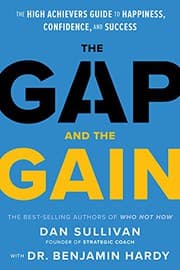
A, a comfy lifestyle at the agency, stressful times at the startup company for capital, um, turning it into a successful, uh, company, moving on and doing what I'm doing now. So w- w- kind of a long version for that answer there. Yeah. No, no, I, I love it, man, and I, I'll give the audience, and if you, if you haven't read this book, I recommend this too, um, The Gap and the Gain, uh, by Benjamin Hardy. Yeah.
Uh, he wrote a book in partnership with Dan Sullivan. It's, uh, it's a Strategic Coach original idea, so Dan Sullivan's Strategic Coach is where this idea came from, and then Ben Hardy, uh, worked with Dan Sullivan to r- turn it into a book. The concept is very simple. Uh, the book is a, is a good, quick read. There's some depth to it, but the, the s- the top-level concept is very simple.
We, and I, and I explained it on the show a couple weeks ago, but I will again, because it's, I can't ... There's sometimes these concepts hit you, and I feel like they're, they're, they're first principle ideas, and I just can't help but continue to bring them up. Basically, we have where we started, and we have our ideal, right? And I think, I think the misconception, when we logically think about this, I think what I'm about to say makes complete sense, but emotionally, our, I think most of us emotionally assume that we're gonna go start to ideal in this linear line over some period of time, and everything will just work out, and everything will be, and that that's what happens, right? Like, here, ba, ba, ba, ba, bup, everything's good, and I get to this point.
Mm-hmm. And that's not the way life works at all. We've all seen that meme of, like, what people think success is, and it's this straight line, and then what it really is. It's like this tangled- Oh, yeah ... mess, like spaghetti mess, right? Totally.
So the, so the idea of the gap and the gain is that we have our start and our ideal, and then where we actually are. And stress and anxiety are the result of measuring ourselves between where we are and our ideal. And what Dan Sullivan recommends, and what he teaches all his entrepreneurs who come through the Strategic Coach program, is we need to measure ourselves not by the gap where we are to the ideal, but from where we are from where we started. Because if we're constantly measuring, and this is the, this is written in the book over and over again, me- always measure backwards. If we think, like, "Okay, who was I in 2012 that first day I walked into my family agency?
Like, who was I there?" Probably d- a little disorganized, probably slightly more cavalier, brash, you know, unpolished. And then you kinda refine yourselves, and you, you now, you learn the agency business like, like the back of your hand. You start this, you know, tech company. You start to go through all those experiences, and you look at yourself today and you're like, "Oh, shit, my job now a- I, as part of," and I wanna hear what you're doing at Smart Choice in detail, but you know, I now have this job with this, with this, you know, largest network in the country, and I now have this decade of wins, losses, beats, stories, experience, et cetera to pull off of that make me this incredibly unique value provider to members of Smart Choice, where you could be like, "Oh, I didn't exit Glovebox for $20 million," right?
Like, maybe that was your ideal in a moment, and you could be wor- have all that anxiety on yourself. Or you could say, "Holy shit, I have a decade of experiences that no one else has, and now I get to be this tremendous value provider," no anxiety. And like- Totally. Yeah ... that, dude, that to me is something I constantly have to remind myself of, because I'm nowhere near my ideal, but when I look back at my experiences, I'm like, I, I, I have like a fucking PhD in this industry. And- Yeah ... you know, people can believe that or not believe it, but like, you know, and I see the same thing from you.
I see very similar moments in time, and it's just like that I have to remind myself. But here's the key, and, and I'm, I'm interested in your take on this. I literally have to remind myself of these things every day, or I wake up and I'm riddled with anxiety, right? Like, every day I have to go, "Look, man, here's where you're at. Here's the value you provide.
Like, dot, dot, dot, dot, dot. Go get it. Okay, great. Reset, let's go. Feel great."
Yeah. The days where I forget to do that, or maybe, you know, whatever, I get to like 2:00, 3:00 in the afternoon, I'm like, "Holy fuck, Finding Peak's never gonna be anything. No one's ever gonna respect me. I've screwed my career up. My kids are gonna hate me.
You know, my, I'm never gonna be able to make the payments on my new house. Blah, blah, blah, blah, blah." What's up, guys? Sorry to take you away from the episode, but as you know, we do not run ads on this show, and in exchange for that, I need your help. If you're loving this episode, if you enjoy this podcast, whether you're watching on YouTube or you're listening on your favorite podcast platform, I would love for you to subscribe, share, comment if you're on YouTube, leave a rating or review if you're on Spotify or Apple iTunes, et cetera.
This helps the show grow. It helps me bring more guests in. We have a tremendous lineup of people coming in, uh, men and women who've done incredible things, sharing their stories around peak performance, leadership, growth, sales, the things that are gonna help you, uh, grow as a person and grow your business. But they all check out comments, ratings, reviews. They check out all this information before they come on.
So as I reach out to more and more people and wanna bring them in and share their stories with you, I need your help. Share the show, subscribe if you're not subscribed, and I'd love for you to leave a comment about the show, 'cause I read all the comments. Or if you're on Apple or Spotify, leave a rating or review of this show. I love you for listening to this show, and I hope you enjoy listening as much as I do creating the show for you. All right, I'm outta here.
Peace. Let's get back to the episode. Uh, you know what I mean? And then all of a sudden you're, like, vibrating and you can't wait to go get drunk that night to ease the pain. And it's like, I, you know, and I, and I just, th- i- it's like these little thoughts that just, I don't know, they're so important.
So I don't know Well, and I think the fairy tale ending is what you hope to attr- uh, achieve But how many people get the fairytale ending? And honestly, I don't even know if that's ever a reality to have that. I mean, we're ... I always relate things to sports, and we're in a, you know, and sorry for your Bills, uh- Yes, thanks, man ... we're in a, we're in, we're in the, the Super Bowl conversation right now as far as, like, timeframe. And, you know, these teams made it to the ultimate goal of getting to the Super Bowl, and that's their fairytale ending of hopefully raising that trophy.
For me, it was start an insurtech company, sell it for a billion dollars and, you know, s- ride off into the sunset. By the way, I still had an outstanding experience. I left on amazing terms. I am gonna have a, a positive, uh, you know, ending to that story just along the same lines, it's just not gonna be that fairytale. My fairytale was realigned.
That expectation went from here to here, and it's okay because the new reality is still what you just described. Everything in between, the blood, sweat, tears, the monetary, you know, earnings at the end of the day, still in a good place. Like, everything is actually gonna work out just the way it needs to, with exception to the trajectory of, like, the scale, right? The scale just shrinked, and that's okay 'cause now there's a new scale. Yeah.
And there's a new opportunity. So, I don't know. Like, I, I'm always realigning expectations, and I think that's what you're getting to. The anxiety kinda puts you, it grounds you a little bit. Yeah.
And it's okay to have anxiety- Yeah ... because I think it makes you aware of what's going on. Yes. Because in the middle of the day, you get in your groove and you kind of jump back out of it with anxiety. But I think it's okay to constantly re- bounce off i- you know, bounce ideas off people so that you can recalibrate, recalibrate, like, once a month, if, if not more. And so that's where I'm at.
Like, the fa- the fairytale is just a new fairytale, so. Yeah. I, I, I have ... One, I love the idea that anxiety keeps us aware. I do think that's true.
I do think that, again, I think there's a, a threshold, obviously, where you don't, you know, you don't necessarily want to- Allow it to affect you, yeah ... put yourself in places that go too high. But I do think a small, we wanna keep a constant level of stress and, in, in, you know, we'll put anxiety in that ter- in that, in that category because otherwise we're not actually pushing ourselves. Like, if you're showing up every day and everything is frigging easy and you have no stress, you are not growing as a person. Totally. And this, this kinda plays into my next question for you, which is, like, do you think we even ...
Like, I ... Like, there's no fairytale ending for me. Like, I- people are like, "Where are you trying to go?" I don't fucking know. H- honestly.
Like, I don't know. I know ... I don't have, like, a 10-year plan where I have a second house in Florida and a boat and whatever. Like, I plan on working forever. Like, I love doing, there's certain things that I love doing and I, and I guess my goal, my fairytale is more, like, being able to work on the projects that I choose to work on- There you go ... as often as I can.
But- Yeah ... but, like, I guess my point is, is, is shooting for, like, a fairytale or even having that as a goal, is that even a worthy pursuit? Like, is that even something that we really want? Like, does anyone, is anyone truly happy if they have nothing to do but put their feet up and drink, you know, colorful- Piña coladas, yeah ... alcoholic drinks out of umbrellas? Like, is anybody really happy long-term in that life? I don't know.
I, I wouldn't be. So I just- The only exception would be if I'm playing golf every day. That'd be fun. Yeah. Like insurance agents typically do.
No, I'm just kidding. Uh, no. Yeah. I mean, yeah, you're, you're onto something because then it, what you do is you kinda look around at your peers and you think to yourself, like, "What are they going through? What are, what is their, what does their trajectory look like?"
Yeah. "And how am I gonna relate to that?" Why do we always have to compare ourselves to- Yes ... the, that- Yeah ... that, that notion there. So I, I'm okay with where, where things are. I really am.
I think that's a, I think that's a perfect way to transition into your new role is just this idea that ... I, and I see this, I see this in agencies all the time. I, it's, it's in everybody, so I'm not singling out agency owners- Yeah, no, yeah ... or whatever, or even producers. But, like, I think too often we see chest-thumping on LinkedIn, and I can tell all of you listening to this with 100% certainty that most of the people constantly chest-thumping on LinkedIn are doing some small portion of what they say or present online. Just, just so we're all clear.
Like, I know a lot of these people and I know the backstories. Like, doesn't mean they're not good people and it doesn't mean they're not successful, just be careful that we idolize people that are chest-thumping and shit. And, like, uh, I'll give you an example of this. I, I post on In- Instagram a lot videos of me, like, working out. Now, one, that is not for the audience.
That's for me. I go back and I look at them and I look at form and whatever. I put a little, like ... Sometimes I put, like, some inspirational shit on top of it just to make it interesting, but, like ... But I suck at boxing, and I know I suck at boxing, and I put the sucky boxing videos out so that, to, in part to show people that you don't ...
Like, I don't compare myself to good boxers, but I still three times a week go and hit the bags for the workout. And I think that what we need to stop doing is saying, "Because I don't, I'm not as good at so-and-so at cold calling, I'm not, I'm gonna h- you know, be unhappy," or, "I'm not gonna cold call 'cause I'm not as good as him or her or whatever." Like, we just have to, if we, again, going back to this gap in the game, if we just think about our own personal growth, everything seems to work out the way it should. Dude, I think if, um, you consider what it looks like for others to see your posts, your, you know, your story and you listen to your, you know, what, what we're talking about here, I think it's okay to understand that everyone's gonna have a different opinion of you, and as long as you're doing right by the industry, your peers, I think it's gonna be a good reflection of who you really are- Yeah ... and what you stand for. And that's okay to me.
Like, I don't wanna be an influencer. I don't wanna be this insurance celebrity per- I wanna just do right by my peers, work hard for insurance agencies, make good money, and, and have a good life Yeah And that's okay I love that, man. So- I love that ... that's where I'm at. So let's talk about that. So okay, so, uh, I'm sure based on your experience, your history, who you know, you had options on- Yeah ... what your next move would be, and you chose Smart Choice.
Oh, it's actually- Talk to me a little bit about that It's, uh, I'm at MarshBerry. MarshBerry. Oh, MarshBerry. Sorry. I'm sorry.
MarshBerry First Choice. No, it's fair. First Choice. It happens. Yeah.
I apolo- Guys, I apologize. MarshBerry First Choice. Sorry. Yeah. Yes.
I completely apologize. Completely apologize. Sorry. No, it's fair. So, like, yeah, you're right.
Like, the free agency market when I hit the, when I hit the market- Yeah ... was kind of funny. Like, 10, 15 folks ha- immediately like, "We must talk. Definitely get, set aside some time." I knew in the first couple days, like, who the top, who would rise to the top as far as who I'd wanna talk to. You're talking everything from, uh, insurance carriers to other insurtech companies to, of course, networks, um, to everything outside the industry, mortgage companies, other insurance agencies, both publicly traded and smaller mom and pops.
It was pretty interesting to take on every conversation to realize what is the next five to 10 years really gonna look like and what do I actually wanna do to make it most effective for myself, 'cause I have two core, uh, pieces of logic for my next phase of my career. Doing what I do best, which is marketing, lead generation, uh, networking, professional networking, et cetera, and challenging myself to learn something new inside the industry. I've had experience as a, you know, inside the agency space, now at the startup space in the insurtech world, and now in the network space. And what I really wanted to accomplish, 'cause honestly networks were always fascinating to me. We're talking, like, the business model, um, everything it can do for agencies.
Um, you know, you're talking about, um, th- like honestly there's, there... And this is what I think of networks right now. You have the one, and there's a big gap, so like, just like good insurance agencies and bad insurance agencies, uh, the big gap is the value they bring to the, to the, to the client. You can, a- and I heard this term the other day. I th- I was cracking up.
Um, uh, what was it? Dang it, now I'm f- spacing it. It was, uh... Oh, commission clubs. Networks are just commission clubs.
And I heard that and I was cracking up 'cause I was like, okay, clearly the reputation for networks or groups is that all it's doing is giving you market access and enhanced commissions, right? And okay, that's probably the more antiquated old school approach and reputation for what networks and groups are, but the good ones are doing way more than that. And so I was looking for things like how can I, um, help agencies operate more effectively, give them legitimate guidance into tech stack and how they can operate with technology and, and the next v- version of what a moder- modern agent looks like. How can I help them advi- like, I just wanna be an advisor. Yeah. 'Cause that's honestly what I can bring to the table at this point.
Great advice. Consult. Lead by example. I've done it. I can show you what I did, and I can show you what other people are doing.
I talked to thousands of insurance agencies at Glovebox. Mm-hmm. I saw what they did wrong. I saw what they did right. Everything in between.
Lot of gaps, a lot of overlaps. There's, um, things that, and here's kind of the reality too, is a lot of these agencies really are just insurance agents that happen to own an agency, and that is okay. That's great. The problem is- Yeah ... you can't be an expert in everything. You're worried a- wor- worried about sales and service and marketing and commission statements and carrier relationships and training and recruiting and all this stuff.
There's no way in hell you're gonna be an expert in all that. So it's okay to lean into your resources, which regard, uh, which for me was the network space. I've known First Choice for years. I've watched them grow. They are the number one premium aggregator in the country.
When MarshBerry acquired First Choice in 2000 tw- uh, '22, it was a huge opportunity to say, you have one of the best insurance agency consulting firms now owning and operating or help, you know, d- provide distribution across the, the, the nation for the aggregation side of the house. And now I can team up with the, a great repu- reputable name brand, represent them the way I wanna represent them. It's all conducive to my f- first goal, which is helping indepen- independent agents succeed. Mm-hmm. Everything just fit the bill.
So it was funny, going through all those c- recruiting conversations, hearing what p- possibly I could do, it was easy to eliminate. It w- it was very simple, and I, it only took two weeks. I, I knew what I was gonna do. Honestly, the first conversation I had with First Choice, it was a done deal as far as, uh, my, as far as I was concerned, so. Yeah.
That's awesome. Yeah. I mean, it, it's, it, it's so exciting when you feel that connection and, and you can dive into it and, and really feel like you, uh, like you're being successful. Yeah. Um, I don't know why- What is that?
Is that the- I don't know why- I don't know what it is. I'm sorry for everyone listening. You got a Zoom thing. For some reason when I do hand gestures, certain hand gestures, the video, uh, creates these little bubble things, which is weird, and I'm gonna- Yeah ... I gotta figure out how to turn it off.
Um, for the YouTube people, they saw it, and this is all just wasted time for them. I wanna go back to your comment around the, uh, the commission club thing. So, you know, I- Have you heard that term? I was cracking up. I, I have not heard that term before, but I think I could s- I, I can hear agents saying it.
Like, it sounds like something agents would say about networks. Um- Yeah ... and here's, here's one of the things that I always... So I was part of, Rogue was part of two different networks. So we were originally part of Indium, and then when we were purchased, we had to leave Indium obviously, and we were part of SIA. Okay.
And, uh, I n- you know, and sh- I would always get people reaching out, "Why did you decide to join Indium? What's it like being part of SIA? What's it like being part of a network?" You'd get a lot of those questions, et cetera, or people that are in other networks trying to compare and, and, and I would get never, I never heard commission club, but I would get basically like, "Oh, you know, they don't add any value. They take more money," whatever.
And I'll be honest with you, in both scenarios, when I did the math- If it was just a commission club, it was still worth being there. So I, I, I've never completely understood why- Revenue's revenue. Yes. Yes. Yeah.
So like, so like I, I could under- I mean, someone could say, "Oh, geez, they don't do anything but, but aggregate premium or whatever," or, "It's a commission club." Okay. Okay, but I make more money than I would if I wasn't part of it, so I'm not really sure w- w- you know, if it, if they were solely that, which neither one were, you know, both had their own set of services, et cetera, just like MarshBerry First Choice, and I, I just never understood why that is used as a negative. Like, okay- I, I think because, uh, I think it's because of the language in the contract. And you must remain independent.
You're an independent agent for a reason. Don't join a group if you don't think you're gonna remain independent. If that group has aspirations of acquiring you or getting equity stake in your agency or taking your commissions, personal preference, don't do it. Yeah. I think that you lose independence, you lose autonomy.
You're actually working with not even a silent partner at that point. That is just a true partner. Groups, networks that are benefiting an independent agent allow them to stay independent, and they allow them to, "We're just not, we're not, we're a silent partner. We don't touch your business. We advise."
Yeah. "We give you better opportunities with these carriers. We get you the access you deserve. We're gonna give you some outlets to lean into." So that's kind of where I'm going.
Yeah, no, I, I, I'm, I am, uh, just to be clear, I'm not saying that there isn't a hierarchy of, of value that different networks give you. Yeah. Yeah. For sure there is. I guess I just, assuming-- I, I think most, most networks at face value, at a minimum, if you do the net-net, you make more money being part of most networks.
I definitely think there are networks where that is not the case, and I also think there are networks that add more value than don't. And I als- and I think to your point, which is very, very important, and probably the most important part, before you join any network or any agency cluster, right? There's all these little, like five and six agency clusters forming, and I have heard, you know, some people will be like, "It's the best thing I ever did. It's great." And I've heard other people have these horror stories, and it's because we, we don't look at the exit clauses, right?
This is what it is. You brought this up, and I think this is the most important part of all these contracts, is, is the w- what happens if everything goes wrong, right? It's awesome to talk about the good stuff, this commission level and this split and this bonus structure, and you get to fly to Hawaii if you hit the president's club or whatever. Amazing. All those things are amazing.
What happens if things don't go right? Sure. What happens if, what happens if the, uh, agency principal gets hit by a bus and his, his or her spouse, who doesn't want to run the agency, now wants to fire sale it? How does that work? How do they get out?
Do they get screwed? You know, the, the exit clause in these contracts is so important, and, and the people that I know that have the biggest beefs with any network, it always comes back to you didn't really read the exit clause. That's- Right. What, they'll, they got gripes, and maybe those gripes are legitimate, but you didn't read the exit clause, and that's why you're pissed. So- And that's the sign of an agency owner that needs help.
Yes. And that is, again, I keep saying this, it's okay. That's okay. Yeah. You're not an expert in everything.
Yes. Neither am I, neither is Ryan Hanley, right? Yep. It's okay. So I think leaning into networks is vital.
Actually, did you know 70% of agencies, independent agencies, are a part of a group in 2024 and beyond? Um, so- I didn't know it was that high, but I knew it was more than 50%, yeah. Yeah, which is interesting. So any agency of any size, we're talking 250,000 in revenue, we're talking 200 million in revenue. So I think that's interesting to assume as well, because every agency is using it for different reasons, and that's something that I keep an eye on as well.
Yep. Um, thankfully at First Choice, we have a lot of reasons why we would get, you know, a big agency involved or versus a small agency. Um- Yeah ... we're talking about the MarshBerry ecosystem at that point, but we don't w- need to dive into it. It's just kinda like if we're leveraging our value adds for every agency, it's not all one size, right? Yep.
You need this, you need that. I'm gonna as- advise you according to who you are and the makeup of who you are and your, your, um, aspirations, your goals, and what you actually looking to accomplish. Is it perpetuation? Is it sale? Is it just simply to benchmark myself against another agency and understand what are my, my peaks and valleys, my gaps and overlaps?
There's a lot to be said- Yeah ... for every agency's treated uniquely, and that's not something I think every network does, so that's another big point to observe. Yeah. No, I think, I think it's a great point, and I love that you brought up that stat. I did not know it was that high. Mm.
What, what I think is really interesting is, uh, I wrote, I can't remember if it was an article or I, I created something. It was probably a podcast, but I think it might have been an article- Mm ... around the idea that, um, having, when I first joined Indium, um, which Cat Terns now runs and is doing a great job with, it's a, it's kind of a different organization. Agreed. Um, much, much more, uh, much more, a, a, a much better run organization under Cat, she's doing a tremendous job, um, than it was when I joined it. But, um, uh, I, I, just getting in, in, in that version of it, which, you know, I, I wish that I was part of the Cat, Cat Terns version, but, but I wasn't.
Um, just getting in and getting my hands, it was the first time I'd ever been part of a network because- Mm ... my previous agency that I worked for was, wasn't in a network, and they were very against them. There was, like, this idea that, you know, my, my, my, my ex-father-in-law was like, "If you, if you have to join a network, then y- you're not a good business owner. You're failing or you can't sell or whatever." And I'm like, you know, and, and I don't want to make him sound so douchey. It was just his opinion.
He wasn't- Well, no, I- Whatever ... that, that happens a lot, yeah. But that happens a lot. And then I joined Indium, and I was like- Wait a minute. Like, so I get access to these four carriers that I need but probably don't have the ability to feed enough, so that's an advantage. I get contingencies on this carrier immediately day one that I wouldn't have gotten commission, uh, contingencies on for another year.
I give up only the contingency point. You know, what- whatever the deal was, I can't remember exactly what it was. But it, you know, and there was, like, some discounts on a couple technologies or whatever, and I remember going like, "Okay, I don't..." Is there going to be a day? Here's my question for you.
I wrote an article at that time that said there may come a day in the not too distant future when you cannot do this alone anymore. You have to ch- Part of starting an agency, part of, you know, like choosing your AMS or your CRM or your phone system, one of those primary decisions pre-launch is gonna be which network or aggregation system am I gonna join upon launch? Like I-- do you believe that day is coming? Obviously, there'll always be exceptions, but could you see this number 70 going to 90 someday? Here's an interesting, uh, way to respond to that.
There is-- I think, I think we're at the mercy of the carriers. I do. Because I think they start, they're starting to frown upon small groups, like the five-person groups, the 10-person groups- Yeah ... and just saying to themselves, if you think about it from a company standpoint, like, "If I'm Progressive, why am I giving the benefit to these five agencies where they're really not bringing anything different to me as they were on an individual basis," right? There was nothing s- differently they're doing for me with these five specific agency groups. So the smaller groups could potentially fade just based on the mercy of the carriers, right?
Yep. They're the ones who are gonna dictate are these groups worthy of the higher splits, of the pr- profit sharing incentives, et cetera. So to answer your question, I think it's a wait and see. Yeah. I think the, the big ones are in the clear as far as their, their relationships with the companies, their ability to get the most out of them, and, and kind of this m- mutual benefit to both the agency and the carrier.
But the small ones may have this plateau where they can no longer grow because they're at the mercy of the carrier. Yeah. So I think we should watch that. That's something to watch. Yeah.
I think, um... I mean, it is not, you know, it's not breaking news that there is a lot of downward pressure on agencies, particularly smaller agencies for production, right? And I've heard from, you know, a bunch of my, my, uh, agent connections that, you know, and, and we were seeing this a little bit at Rogue, uh, pre, pre moving over to SAA. That, that obviously changed everything because of their scale in terms of the pressure that we had, but, you know, we had some pretty substantial pressure before we made that move from a few of our carriers on production, right? And I was like, "Guys, I'm getting you in now because I need you to believe in what I'm trying to do five years from now," right?
But because the market was changing, you know, there's obviously market dynamics at that time, we were starting to get the, "Yeah, but we still need X amount of production to, like, keep your appointment," whatever. And I've heard, right, uh, you know, from a few of my friends who, who are either more closer to startups or, or just run smaller agencies, that that downward pressure has continued and is starting to go, uh, up book. So, like, you know, maybe before if you had 250,000 in premium with a carrier, um, they were kinda pushing on you, or 250,000 or below. Now it's like 500,000 or 750 they're starting to push on you a little more. And that dy- that market dynamic, to me, is, you know, how high that pressure goes, like, like, what size book, you know, how high they go with that pressure, that downward pressure that the carriers are putting on them, I think is gonna determine a lot of the network adoption.
Because if you, you know, if, if carriers say, "Hey, if you're over five," if in general, again, we're broad stroking here. Mm-hmm. "If, if you have over 500,000 premium with us, you're good," right? "We're, we're happy. Just keep producing every year."
Yeah. "We're, we're fine." But if that starts to creep up, and now it's like, "Geez, if you're not at 750, we're gonna really have to start to evaluate this," or, "If you're not at a million, we're gonna start to evaluate this," that's gonna push a lot of agents into the network discussion because they're gonna wanna keep riding that carrier, but they're not gonna wanna deal with the downward pressure all the time. Dude, not only that, but there's some confusion right now. Obviously, with these unprecedented times with the way this market is, you're hearing from carriers things like, "Hey, we no longer offer these products.
Um, and, yeah, we don't really offer those bonuses anymore, so don't really worry about that. Um, and by the way, you actually didn't grow with us last year. And, oh, by the way, can you write more business with us?" And so there's this confusion. Mm-hmm.
It's, "We've pulled opportunities from you. You have to become more niche. You're not gonna get paid the same on that niche. And by the way, I need you to do a lot more business with us." And so this, it's very conflicting.
It's, you know, pulling the rug out from under you and making you s- get back on your feet immediately and do better than you did previously. So I think there's a, a, it's a bit of a confusing time we're in. Um, and so what that's gonna do as well, kind of piggybacking off of what you said, it is gonna possibly force agencies to join, because then they really aren't gonna have to have that pressure of production. They're not gonna have to worry about these conversations as much. The confusion will probably dissipate because now that's the group's problem, not the individual's problem kinda thing- Yeah ... if you get what I'm saying.
So I think it's a strange time. Yeah. Oh, no, it's definitely a strange time. I have two, I have two, uh, two questions for you. Um, I'm gonna ask them both at the same time 'cause I'm a bad, uh, podcast host.
Nice. You know? So just, just deal with that, and then you answer them in the order that you want to. Cool. Um, so one, you said we have to become more niche.
I'm very interested in that because considering the market dynamics- I actually think it will pay dividends and create sustainability in agencies if they become more of generalists, right? And my reason for saying that, just, uh, let me articulate and then... We- we'll go one at a time, 'cause this is kind of a big question. Got it. Yep.
So, so I push back then that only from the standpoint of if, if I have, let's say I have three carriers and I know what goes where, and they have appetites and I've been growing with them and feeling good. Then all of a sudden the last two, three years happen, this hard market comes in, and now there's holes in all those appetites, 'cause those carriers rightfully, and, you know, and I, I'm trying not to bang on carriers as much 'cause I know they're businesses, right? And we have to deal with the reality of who they are- Yeah ... the reality that they face. So, so they're looking at profitability and they're starting to pull out of markets and, and, or jacking up pricing, et cetera. And now y- y- you add like these three or four or five class of business that you wrote really well, you know where they go or where they went.
All of a sudden, y- you know, you don't know where to put them. Okay. If instead you wrote 20 classes of business instead of five, again, just, I'm just broad stroking the numbers here, guys. Don't, don't hold me to five versus 20 or whatever. But like, if you became more of a generalist and said, "Okay, we know how to write these five really well, um, but what we're gonna do is add five more or 10 more classes that we write really well and really work on," now all of a sudden your pool becomes bigger and you have more opportunities, and are you a...
You know, does that make sense what I'm saying? Like, by broadening our appetite as agents, we are, we are giving ourselves the flexibility to, uh, move with the market and, you know, maybe all of a sudden, yeah, we can't write those, um, auto repair shops anymore that we've been killing it with the last couple years because so-and-so carrier is, doesn't want them, but man, we could slide into bakeries for a while and crush, 'cause they'll still write bakeries and they want bakeries and whatever. And I think, so I guess that's just my thought, and what do you think about- Yeah ... niching more versus going more generalist as a way to, to, to weather this storm? Well, it changes your business model, 'cause if I'm an insurance agency and I do one thing really well, and for us that was always personal lines, refer- professional networking, that was my mission. Carrier comes in, or carriers plural come in and say, "That's just no longer the way we're gonna take on business," obviously personal lines is a mess, um, you gotta change your business model.
All right, well, shoot, scratch that idea. I can't proceed with my current referral partners, my professional network changes, my day-to-day changes. I think it sets an agency back a little bit as far as how they're going to recalibrate and reassess how they're going to accomplish what a carrier wants. Mm-hmm. Now although, y- going back to the original question, being more of a generalist is better long term for your, the s- the health of your agency.
In the near term, I think it's a hindrance on your success rate- Mm-hmm ... which ultimately hinders your revenue, which hinders your growth, which hinders your ability to hire and do well with your tech, and it, I think we're in this very funky state of- Yeah ... of the industry. It really, it's putting a halt and saying, "Reassess yourselves, come back to us in a little bit, and then you can run, realize what you're gonna do for us as a company," like an insurance carrier, an agency relationship. Dude, that's- I don't have a- I love that perspective. I, I, I actually agree with you, and, uh, I think that's a really good perspective. I, I would completely agree that if you, say, had three to five, uh, uh, niche markets that were your primary specialty, if you followed my advice in a s- in the, in the most, uh, straightforward manner, it definitely would set you back.
I think that's a very fair assessment. Um, and I'm kinda thinking about this in real time. I love that you said that. Yeah. If I were to game plan that, what I would say is, one, I think the earlier you can create a base, a, a, a, an inbound base, um, that can, that can...
So what I'm advocating in general with, with my consulting agency is that, uh, what, what creating an inbound flow and base of business does is give you the sustainability to ride these out, because you've- Excellent ... you've created a mechanism to place a wide range of accounts that come in on their own accord because they've chosen. So it's easy to close, high converting, and, but it does come, you have to cast a, a little wider net, all right? Mm. And I, that's what I teach people to do. Okay, that's great.
Yeah. But I had an awesome conversation with Charles Speck, who, um, uh, it's gonna be a couple episodes before this one comes out- Cool ... so people will have heard that, where we were talking about how, uh, the answer is probably, now today you're gonna face some turmoil, but I think, I think this really is the answer for agencies moving forward. It's we need to have this layer, this inbound layer that creates kind of a, a, a steadily, a steadily increasing foundation of revenue generation, right? Inbound is never going to give you... I shouldn't say that.
It is very rare that inbound is gonna give you these huge, monumental growth moments. What it does is just incrementally increase every month and then all of a sudden, two, three years later, you pop your head up and you're like, "Holy crap, I'm doing nothing and bringing in X amount of premium every month." Yeah. That's awesome. Yeah.
I, I, and, and what Charles and I kinda got to, and this, and just, I'm, you, you said this and it just like set this thought off in my head- Sure ... I think you're so right, dude, is that, is it really, I think both are necessary, right? We, we go for our, we go, we pick our three to five niches, our, our, he, he recommends one to three max, right? So say, say we have those, and uh, and those are our big wins. Those are our accounts we crush.
Those are the ones that, you know, put those big spikes in revenue on the board. But underneath that, having that base layer of inbound, if, you know, allows us to ride out these types of storms, which if you haven't built it, today you're gonna feel some pain. But like understanding that it doesn't feel like the market is gonna become any less dynamic in the next five to 10 years considering what's going on politically and economically, et cetera. It, that feels like the formula, right? Like- Have your nice base layer, and then these targeted big wins that you go after with maybe an outbound program.
Does that sound like what you're saying? Yeah, and I think that base layer you're talking about is probably only attainable if you are part of something bigger, because it might not be something you can achieve on your own. And so that's why I'm advocating a network. It's because it's okay to lean into the network for the foundational stuff that you're talking about that can no longer be accomplished with the way- Mm-hmm ... the market is. And it's okay to be niche when you feel like you already have that access and relationship with the people and the companies that you know- Yeah ... you can get done.
But then you're talking two different business models in one. Um, but g- here's what I would advise. Um, you, if you're an agency owner and you do have this issue, um, start, start to hire producers for the niches that you're trying to expect and grow in. So for example, if you're a commercial line shop, you have your specific producer, one or two individuals, who specifically go out for, after roofers and plumbers and contractors. And then you work on another individual who goes after the habitational stuff, and maybe the cannabis stuff.
And then you have individuals that represent your niches. Mm-hmm. And then you can grow those verticals in, within your organization, and you, they know their markets, and some are gonna lean into the network ca- access, and some are gonna lean into your individual access that you have as a c- an agency. And that allows you to be f- versatile, 'cause now you're not relying on one vertical, or one or two or three, kinda like you mentioned. You can lean into your, your, your specific silos of production.
Yeah. Right? You have, you're gle- looking over here with these producers, these pros- And that's the right way to, in my opinion, grow your agency long term. 'Cause now you're not worried about these market influxes. It's just- Yeah ... okay, like some are gonna re- drive more revenue today, some are gonna drive more revenue tomorrow, and I, I'm, I'm just going with the punches. Yeah.
A- and so- And what I hear you saying as well is being intentional about the thought process, right? So like you won't, y- you know, it might not, fr- from a sustainability standpoint, right? Which is a lot of, like I, I have this concept, and I actually shared it in a solo video that will have also been out most likely by the time this one comes out. But it's this idea that like wh- how I used to pitch people who'd push me, who'd push back on me about the value of insurance. So, so at Rogue we wrote a lot of startups.
Even when I was back at the Murray Group we wrote a lot of startups. Um, you know, or new businesses, et cetera. And a lot of times, what I think is amazing, people who have been in business for 10 years and, and all the, you know, you, you'll know this too. I mean, everyone who's been in agency knows this. 10 years in business, completely respect insurance for the most part.
You know, listen to you, you know, take your advice. New in business, know everything they've ever needed to know about insurance. You're an asshole and you don't know anything, right? Totally. So like, so they would call and I'd say, "Okay, man.
H- here, here's my pitch on why insurance is important. Insurance provides the foundation in which you build growth. You can't grow without insurance." And, and I, and I could almost hear them on the phone like taking that in. And depending on the response, you know, I'd be like, "Look, man, here's the deal.
If you don't have, you can't hire more people unless you have workers' compensation insurance. You wanna add a professional element to your business? You need E&O. You wanna go raise money, now you have a board of directors? You need D&O.
You need, you know, all these different coverages. You wanna, you know, expand, uh, the, the size jobs that you work on? You need a commercial umbrella. So like your growth, your top line revenue growth that turns you on, none of it is possible without this foundation." So like- I've never heard anyone say it like that.
That's outstanding. Yeah. That's cool. And everyone can steal that, uh, or just join my Joint Finding Peak, uh, today. Hey.
Learn even more tidbits like that, you know. Ba-dum-bum, dynamite drop. Uh, so, um, the, the, but I think this also, that kind of foundation to growth analogy, this is again, I, I love what you said about the niche markets. My only thing that I would add to that is I think you also need to have a, what I call closer, completely different position, completely different psychol- uh, psychological profile, who handles your inbound accounts as well, right? So it's, it's like creating- Absolutely ... a generalist inbound niche.
Like my, my niche, if you were to hire me to come work at your agency, would not be to cold call people. I would not be amazing at that. I don't wanna do it, and I wouldn't be great. However, you put me as a closer, right? You, you know, you, you just have my phone ring and have me close, dude, I'll close 90% of the accounts that come in.
And- Yeah ... that, 'cause that's what I'm good at. There are other people who couldn't do that, but dominate as outbound producers. Totally. So I think we almost have to think about this inbound position like another niche that we, that we work on that just gets us this consistent flow of business that's coming in, and then we have these other guys, and gals, uh, people, humans, um, uh, who are doing the, hey, they're going after those $10,000 revenue accounts, 5,000, 20,000 revenue accounts. So now every month you're seeing- They, when they pop, they pop.
Yeah. Yeah, yeah. And then that way, no matter what happens, you, you, you- You're protected. Yeah. You're always kinda, you're, you're kinda like, ah, you know, just like you said.
The ebbs and flows don't impact you as much. Yes. Yes. Yeah. Yes.
I guess- I see what you're saying. Yeah. Yeah. And I think, I guess I completely agree with what you're saying. But I don't think you can accomplish that without your, your network because otherwise- No, and I, I agree with you too ... you're, you're fighting your car- your carriers all day.
I, and I, I, and I think that's the point that I wanna, I wanna reiterate that point. That was a really good point that I hope people didn't lose. In order for inbound to work, right, that inbound position to work, you have to have, you have to have a decent carrier set. You, you know, two or three carriers in inbound is not gonna help you. Like the, the thing with Rogue, and, and again, I, I, you know, some of this, I'm not advocating for you to have as many markets as we have.
We had s- the day that we closed, we had 61 markets. You can't even be a- So- ... an expert at that. Yeah. So, so that was too many markets. Way too many markets.
And, and every- you know, and I get everyone's, "Oh," you know, I get it traditionalists. You don't have to hit me. I know that was too many. However, what it did allow us to do is I could place, we had 271 industry classes that we placed at Rogue. Gri- 200, no, that's not- Cool ...
221, sorry. 221 industry classes that we placed. So- I think 62 is insane. That's not what I'm advocating for. But I do think finding a network that matches your value structure is important if you don't have a broad portfolio of carriers directly, because what that allows you to do is place the business exactly where it's supposed to go versus trying to wedge it in somewhere.
Um, again, speaking specifically to inbound, and because you are gonna have kind of a broad set. You'll have a bakery, then a contractor, then a, then a marketing consultant, then, you know, you know whatever, a delivery person. And having a broad set of carriers, which I believe is probably only possible through some sort of network relationship today, is the only way to get that done. Um, that is a perfect opportunity for me to transition over to something real quick. Yeah. 'Cause I think it's just as important.
You can't plan for your business without some sort of financial guarantees, and with the way we are right now with the lack of personal lines of b- you know, new business, and our commercial lines in and out of niche opportunity, you are banking on your current revenue, but that can fluctuate so strongly with regards to your production, um, and your retention. If you are a part of a network, you have a little bit more, um, guarantee that you're going to know your financial outlook every year, because there are some profit-sharing guarantees. There are some contingency bonuses that are a part of the f- fold. There are some commission enhancements that are specific to each company you write with, and that allows you to plan ahead for things like, you know, building up those silos we talked about, hiring and training, and getting software in place to do all these things. So I think it adds another element of the financial aspect.
You gotta plan out your year or a couple years in advance, and if you can't financially back that s- that plan, then you're not gonna w- it's not gonna work anyways. So a network also financially would benefit you, 'cause you have some guarantees behind the way you're planning your business. Yeah. And so yeah, you're talking about, um, what we were talking about a few minutes ago, and then the, the, the other consideration is financially you have to have some guarantees and know what that outlook's gonna look like. Let me, I wanna ask you- Just another thing ...
I know we're kinda getting up against a number, but I have one more question that I wanna ask you specific about this before we wrap. Um, the way I've seen, uh, a lot of network memberships pitched, right, when they're pitching to the agency, and, and, and I'm not just talking about Indium or SIAA. I've, I've heard this, been part of different conversations, et cetera, with a bunch of different stuff. Uh, i- if I'm being honest, never first choice MarshBerry, so I have no intrinsic knowledge there, but I've heard this pitch from a bunch of different networks, okay? And it usually boils down to owner income, right?
It, you know, comes down to, "Hey, over time, discounts, relationship," whatever your value things are, that, "We c- you can make more money, agency owner, by being part of this network." Okay, that's usually where the pitch comes back to, however they get there. Okay. My question for you is, do you think in the times we're in today, that pitch should change from owner income improvements to growth? Like, to me today, w- you know, y- if you're the owner and, and you have a lifestyle, et cetera, I'm, I'm not saying you should get rid of your income or whatever.
I'm not trying to knock that. I guess my point is, like, if I were pitching a network today, and I'm, I'm just interested in your take, 'cause I could be completely off here. If it were me and I was pitching a network, I would focus on growth. I would be like, "Look, the only way to get through these times is not to maximize your personal income. It's to grow your, an agency."
Yeah. "And the best way to do that is to be here." And I've always found it interesting, I think the pitch 10, 20 years ago was when the markets were really stable and they were soft, right? It was owner income, owner income, owner in- you're gonna grow regardless. Prices are always coming down.
Owner income. Today, I feel like that needs to be changed to growth, growth, growth. Y- is that wrong? Do you disagree? Uh, what are your thoughts on that?
No, it makes me think of a really good point that my brother Ryan actually mentioned to me just literally this morning, and I'm just gonna read it, 'cause it's sitting right here in front of me. And it, it says, um, basically, um, let me start at the top for a second. So building, uh, building a business fast is way easier than building it slow. And what Ryan meant by that is it's kind of twofold. Uh, growing agencies, uh, have a tendency to take profits out of the company far too early.
That could be, uh, specific to the agency, uh, owner's c- uh, compensation. Um, uh, and put it in their own pockets at the sacrifice of the agency's growth. When you're in pure growth mode, reinvest most of the profits back in to fuel the growth i- in that way. So pour the gas on the fire now in favor of larger returns later. The business is going to go through waves of growth where you figure out strategies that just seem to align with the market at the right time.
It's important to triple down on what's working and put the blinders on, as you don't know how long that p- specific wave is going to last. And when Ryan said that, I was like, "Yep, that's-" Yeah ... uh, completely what agency owners should be focusing on right now. You are not in a market to make money for yourself today. You are in a mar- a, a, a market that's allowing you to take opportunities. W- do whatever you c- you can to grow now, because your benefit is triple down the road.
Yes. Dude, I, I, I literally, I love that. That, that, that is ... Guys, go back, re- hit the back button, you know, 30 seconds or whatever, and go back and listen to that again. I couldn't agree more.
You know, I had someone, I had a former employee at Rogue, um, uh, kinda troll me on the internet and make a comment about how Rogue wasn't profitable. And- My, you know, I don't engage in trolls because people don't know who the idiots are, but like, you know, in my head I was like, "That is such a stupid statement," because we were a three-year-old agency. Our growth rate was prob- if we were to put our growth rate against, and again, I c- I can't talk about specific numbers, but if I were to put our growth rate against- I'm sure, yeah ... any other agency in the country, we would freaking blow everyone out of the water. It wasn't, wouldn't even be close. The things we were doing were effing insane.
And yes, we weren't profitable because we, we were a three-year-old agency. Yeah. We wanted m- we, I wanted to, we, I wanted to grab as much market share as I possibly could as fast as I could and gain, 'cause you can always cut expenses out of a business, but you can't- Yeah ... but it's really hard to put revenue on the top, right? Yeah. So, like, I, I could not agree with that more.
This hard market, if you are complaining about, about not being able to grow in this hard market, I know there are extenuating circumstances, and I'm not saying it's easy, but this is an opportunity to, you said, small gains today will spring forward in the future, and all of a sudden you'll look up and you'll be light years from where you are. I could, I couldn't agree with that sentiment more. This is the- Now is not the time to take profits, guys. Dude. Now is not the ti- reinvest hard, harder.
Yeah. Double, triple down. Yeah. So I'd like, I like that you said that. Time to become a wartime general, bro.
It's time to become a wartime general. If you are not a wartime general, find someone in your agency, or find someone you can bring in who is, or find a coach or a mentor or a consultant who can come in and be a wartime general for you, 'cause that, that is what you need right now. And the people who do what you just said, man, they're, they're gonna, they're gonna be the ones we have on pedestals three, five, 10 years from now. So yeah. Yeah.
I love it. Yeah. I love it. That's, it's a, I'm glad we, we covered that. That's really important right now.
Yeah. All right. So. Dude, I appreciate the hell out of you. I love this.
Um, where can people connect with you personally, and if they just wanna learn more about what you're doing, or MarshBerry Smart, uh, First Choice, uh, where do they go? Always on LinkedIn. So Andy Matheson on LinkedIn is the best w- if I may get in touch with me, chat with me, DM, and we can set something up specific. I, I think you're gonna be s- pleasantly surprised at what networks are doing right now. It is not what you thought five, 10 years ago.
Yeah. So just consider that. Don't just, don't just think your agency doesn't fit the f- fit the mold just because of what you think it is. Get some education, understand what it really means, and then you can make an educated decision. Dude, appreciate the hell out of you.
I'm so happy for you. Um- Oh, thanks ... uh, I, I'm proud of, of, of that journey. Not that you need to hear that, but just as, you know, as someone who cares about your success, I'm, I'm proud that you're in a place that you feel better. I can see it in you. Like, you just, dude, you seem ...
You know, last couple times I saw you, you could just see- ... the stress on you a little bit. I love it. I've heard that from a few. Yeah. Yeah.
No, I feel, I feel it too. I feel that sense of, uh, of, of relief. Yeah. So. And, uh, just, and, uh, very appreciative that you would come on and share your story, share your emotions.
Yeah. Appreciate you. We need to hear that stuff, so awesome, bud. Uh, I'll let you get outta here. Thanks, man.
Awesome. Good to talk to you, man. Talk to you soon. I'm going to ShaBOOM. Close twice as many deals by this time next week.
Sound impossible? It's not. With the One Call Close system, you'll stop chasing leads and start closing deals in one call. This is the exact method we used to close 1,200 clients in under three years during the pandemic. No fluff, no endless follow-ups, just results fast.
Based in behavioral psychology and battle tested, the One Call Close system eliminates excuses and gets the prospect saying yes more than you ever thought possible. If you're ready to stop losing opportunities and start winning, visit masteroftheclose.com. That's masteroftheclose.com. Do it today. If you liked the show, please take a moment to rate, review, and subscribe.
It really does help the show to grow. Thank you for listening. Happy holidays. Want to give your host a gift? Consider subscribing, rating, and reviewing the show this holiday season.
It really helps the show grow. From all of us at Believe, have a merry Christmas, everyone, and a happy holiday.