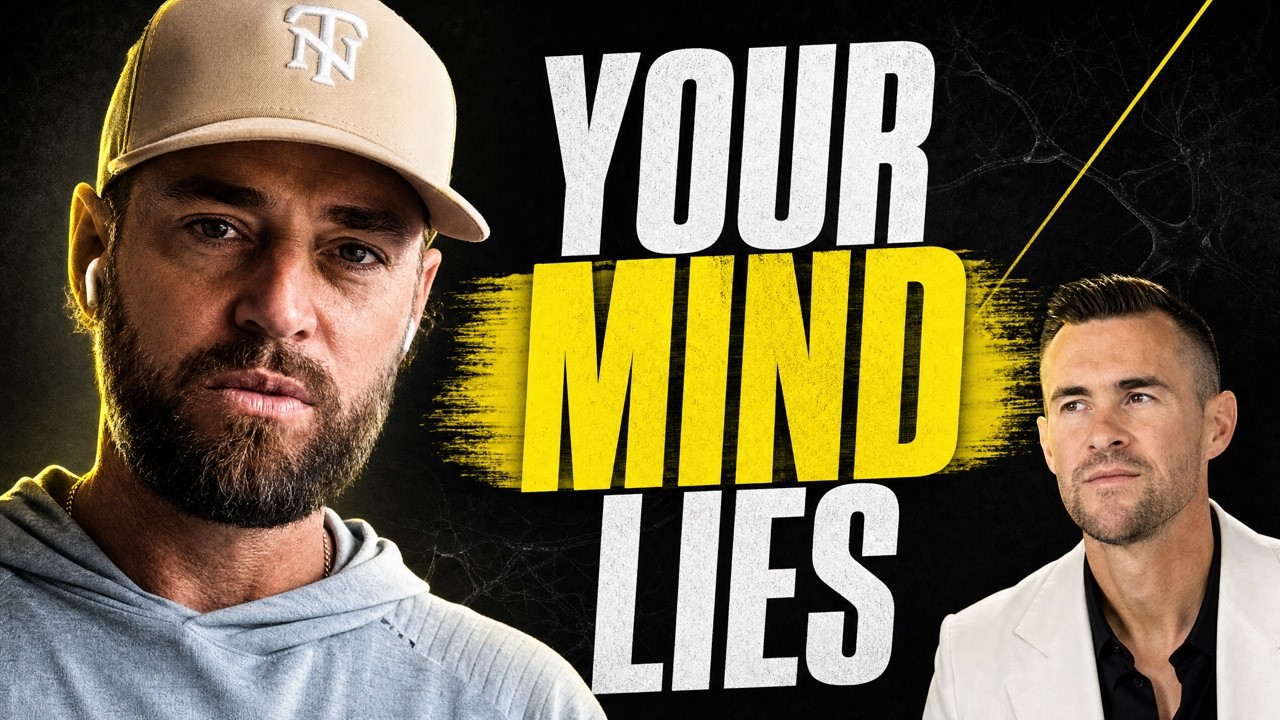
How a Prison Sentence, 7 Rejections, and 1 "Yes" Changed the World | Damon West
with Damon West
Episode Answer
How a Prison Sentence, 7 Rejections, and 1 "Yes" Changed the World | Damon West is a Finding Peak podcast episode hosted by Ryan Hanley with Damon West. The conversation explores leadership, performance, entrepreneurship, and the work required to build with clarity under pressure.
Read the Conversation
Show the full transcript
AI agents are everywhere, automating tasks and making decisions at machine speed. But agents make mistakes. Just one rogue agent can do big damage before you even notice. Rubrik Agent Cloud is the only platform that helps you monitor agents, set guardrails, and rewind mistakes so you can unleash agents, not risk. Accelerate your AI transformation at rubrik.com.
That's R-U-B-R-I-K.com. The last words he ever said to me in Dallas County Jail when the prison bus was getting ready to come pick me up, he said, "Hey, West, be a coffee bean." Those four words, "Be a coffee bean," were the four words that changed my life, because those four words put the power back inside me. And if the power is inside me, it cannot be in the world around me, right? The criminal justice system, the guards, the other inmates, it's in me.
And if I keep the power inside me, I won't survive prison, I'll thrive in that prison. And I want everybody listening to know that the power's inside you. It's not inside all those no's that you get. It's not inside that time you quit before you got to your dream. It's not inside all the difficulties you're facing every day in life.
It's not inside the idea that, that you haven't been able to make that, that business deal work or that, that dream with your family work because it just hadn't happened yet. But if you keep the power inside you, you don't survive the adversity, you thrive in the adversity. What if your biggest breakthrough is waiting on the other side of your biggest breakdown? After getting fired from my third executive position, I realized God didn't create me to work for someone else. So I founded my own company, bootstrapped it, and sold it for seven figures in less than four years.
This podcast is for unreasonable people seeking unreasonable results. My name is Ryan Hanley, but most people just call me Hanley, and if you're ready to stop making excuses and start making moves, you're in the right place. This is the way. I wanted to start with something that I saw on your website that just caught me, and it-- you, you, you write on your website, it-- there's a little bit of preamble, but the last sentence is, "Do not quit before the miracle happens." Yeah.
And the question that hit my brain was, how do you know when the miracle happens? Like, how do you know you've hit that point? Yeah, I, it, I think that's a very good question, a good place to start this thing. And, and I'll tell you the answer, and I'm gonna tell you a story behind this, how I know this to be the answer. The answer to when the miracle happens is when you've not only achieved the goal you're trying to achieve, but it's something bigger than you could have ever imagined, right?
There's the miracle, right? Like, I-- we have-- everybody's got goals in life, things they wanna set out to do, but it's when you stand up and you say, "Oh my God, I didn't just hit the goal. I hit way past the goal. How did I get here," right? Like I tell my wife every day, "I can't believe this is my life."
Um, and the story behind this is back in two thousand seventeen, I had been, been out of prison for two years at this point, and, uh, about fourteen months, this date I'm gonna tell you about. It's, the date's January 11th, two thousand seventeen. I know the date, you know, like it's my birthday. Um, January 11th, two thousand seventeen, I've been out of prison for fourteen months. Um, I live in my parents' spare bedroom in a town called Port Neches, Texas.
And, uh, you know, living in my parents' spare bedroom at forty-one, forty-two years old, you know, I'm, I'm on parole for the rest of my life 'cause I committed a bunch of crimes in Dallas, um, back when I was a meth addict, and I was the leader of an organized crime ring. We broke into homes all over Dallas, and, uh, a jury in Dallas back in two thousand nine sentenced me to life in prison, or sixty-five years is what the sentence was. And, um, so the jury sentenced me to life in prison, and I went to prison and transformed myself in there. And after I got out of prison on ear-early release, which is parole, I knew I wanted to share this story because I had an incredible story, the message of the coffee bean, and we'll talk about the coffee bean later. But I didn't have a lot of places to share this story when I got out in two thousand fifteen, two thousand sixteen, even two thousand seventeen, because I'm an ex-con, and so many ex-cons that have come before me have burned the bridge to the ground, right?
I mean, how many ex-cons in the history of ex-cons have gone back out and messed up again? A lot of us, right? I mean, there's a-- the list is so long. So I'm-- I've, I've got this story to tell, and I know that the right audience at the time is gonna be college football because I played Division I college quarterback back in the day. I was a starting quarterback at the University of North Texas in the, in the mid-nineties.
So in fact, at twenty years old, I was a starting quarterback on a Division I team. So I've got this great cachet to spin with college football teams, but I don't have any coaches. I don't know any coaches twenty years later in two thousand seventeen. But a buddy of mine in Houston, Texas, calls me up. Houston is ninety miles away from where I live.
He said, "Hey, get to Houston right now." He works in the media. He said, "Get to Houston right now. It's the Bear Bryant Coach of the Year Award. They're gonna na- they're gonna name the best college football coach in America.
The eight best coaches in the country are in this room right now. I've got an extra press pass. I'm gonna sneak you in." So man, Ryan, I drive the ninety miles from Beaumont to Houston. He sneaks me in the back door of Toyota Center, and he hands me a press pass.
And so there I am in this room, and all these coaches are there. USC, Wisconsin, Penn State, PJ Fleck, they're all in this room, and I'm in this room too with my dream and my pitch that I'm gonna pitch to these guys of why they should bring me to talk to their team. So I go around that room that night, Ryan, and I meet every one of these coaches. I shake their hand. I give them my pitch, and I tell them why they should bring me in to talk to their team.
And every single coach I meet that night slams the door in my face. They all tell me no. It's a bloodbath of no's. In one hour, I got seven no's from eight coaches. That's a no every eight minutes.
So now I'm standing in the corner of Toyota Center. I'm ten feet from the door. I'm licking my wounds. I'm feeling sorry for myself, and the voice in my head is screaming at me, "Go home." The voice in my head is telling me things like, "You don't belong in this room.
The dream was too big for you, Damon." The voice in my head is calling me an imposter, and I know every single person listening to this podcast right now knows the imposter voice. But I'm gonna tell you something I quit doing a long time ago, Ryan: listening to myself. And I, and I found out why I started listening. Listening to myself, sometimes the voice in my head that was talking to me that I was listening to was fear talking to me.
And, and you don't wanna listen to fear, 'cause fear's a liar, right? So instead of listening to myself, I talk to myself. It's a technique I picked up while I was in prison. And I remind myself that night, "Damon, you survived prison. This isn't gonna hurt you like prison.
You came to talk to eight coaches. You're gonna-- You're not leaving till that last coach in the room tells you no." And the last coach, Ryan, hardest guy to get to in the room, his team had just beat Alabama two nights before for the national championship. Everybody is in line to talk to this coach. But I'm relentless, so I stalk Dabo Swinney around this room, the head coach at Clemson.
And I look like a crazy person, Ryan. I'm, I'm hiding behind fa- behind fake plants. I'm pushing people out of the way. Dabo sees me, and security sees me, too. They're gonna throw me out of the Toyota Center.
But I get in front of Dabo, I give him my pitch, and I come up for air, and Dabo looks terrified. He's like, "Man, y- you got a card on you?" It looks more like a stickup than a pitch, right? Oh, man, I was like, "Ah, I've seen that look before." And, you know, inside the, the wheels are just spinning, man, this is terrible.
I, I give him my card. He looks at it. He said, uh, he said, "I'll check you out," and he takes off. He's a nice enough guy, but that's a no. But I would tell you what I felt good about that night was that final no, because that final no meant that I left it all on the field, and that's one of the biggest takeaways I got from playing sports all my life.
Or like this old guy that told me the story about the coffee bean in county jail. He said, "You don't, you don't have to win all your fights, but you do have to fight all your fights." And so that night, I fought my fights, I lost them all, and I went home and I slept like a baby, 'cause I did everything I could in my power to make that dream come true, and I just kinda resigned myself to maybe the dream's not gonna happen. Well, four months later, I got an email out of the blue. It's the director of football operations at Clemson University, a guy named Mike Dooley.
Mike Dooley's email said, "Hey, Damon, Coach Swinney met you at a board show in Houston. He'd love to have you come talk to his team. Do you have August 1st open?" And I'm like, "Brother, I got every 1st open, man. I got nothing going on, man.
I've..." The only thing I'm doing at 2017 when he emails me is the entire time that I've got this presentation I wanna, I wanna do in front of people, but I don't have a lot of options, I practice my presentation every night in my parents' spare bedroom. They got a mirror in there, a little vanity mirror my mom had when I moved in. So for two years, I've been practicing my presentation, getting myself ready, getting in my reps. Because anything you wanna be good at in life, you gotta practice that in life.
There's no such thing as an overnight success. It doesn't exist. It's not real. So that day, I told Mike Dooley, "Man, look, you can have any Monday you want in 2017, man, 'cause I'm just talking to a mirror at this point." He said, "Well, let's set the day for August 1st, 2017."
August 1st, 2017, I go speak to the Clemson Tigers, the defending national champs of college football. A- and when I get done with my presentation that night, Dabo's in my face now. And Dabo's a high-energy guy, man. He's like, "Damon, that's the most amazing story I've ever heard. I've never seen my players respond like that to a speaker."
He said, "Have you been to Alabama to talk to their football team?" And I'm like, "No, man, I hadn't been anywhere. I've been to Clemson." He said, "Well, we're gonna see about that, Damon." He said, "I just texted Nick Saban from the back of the room."
Ryan, the next day when my flight, when my flight lands in Houston from my trip to Clemson, I turn my phone on. There's a voicemail and a text message from the director of football operations at the University of Alabama. The whale. The biggest program in America, with the best coach to ever do it, and here's what the voicemail said: "Hey, Damon, Dabo called Coach Saban last night. Coach Saban cannot wait to hear your story."
He said, "How does August 21st, 7:30 p.m. work for your calendar?" And I'm like, man, I'm laughing out loud. I don't even have a calendar at the time, Ryan. And I was like, "Man, I'll be there." So just like that, Dabo Swinney just kicked open the biggest door to college football, and Dabo didn't stop there, 'cause Kirby Smart's calling, Lincoln Riley, Chip Kelly, Lane Kiffin, Ryan Day.
Every coach in America starts picking up the phone and calling me, 'cause Dabo becomes the friend, the client, that turns the whole Rolodex over to me. So the dream is real, Ryan. I mean, this is it. Man, I wanted to be a speaker. Now I'm a speaker.
I'm speaking in all these rooms to college football. I mean, I'm, I'm going everywhere at this point. But the biggest event hadn't happened yet. The dream was way beyond... W- um, the, the reality was way beyond what I had even dreamed it could be, you know?
What you were asking in the original question. The biggest event hadn't happened yet. I hadn't met the second servant leader. You know, Dabo's the first servant leader. This other guy's the second.
So it's August of 2018, one year after that first presentation at Clemson. I get a phone call out of the blue that day, and on the other end of my phone is a guy named John Gordon. Now, John Gordon is one of the mo- biggest speakers and authors in America. This is the Energy Bus guy. And I'm like, "John, I follow you, man.
I know who you are. How do you know who I am?" He said, "Dabo Swinney." He said, "Damon, I just got done speaking to Clemson's team, and Dabo brought me in the office for 30 minutes to tell me your whole life story." And John said this before the pandemic.
John said, "Damon, the world needs the coffee bean message, Damon. Let's deliver this message to the world." He said, "Will you write a book with me? We're gonna call it 'The Coffee Bean.'" And in the summer of 2019, the book, "The Coffee Bean," came out, and it took the whole world by storm, the whole planet.
It starts off in America first. Four to six weeks, it's riding high at the top of every bestseller list, gets a global publishing deal attached to it. Ryan, global publishing deals are rare. That's when your book gets reprinted in every language in the world. The book starts popping up in Chinese and Spanish and Arabic, French, Italian, German, Vietnamese, Korean, just in time for the year 2020.
And everybody remembers the year 2020. You'll never forget when a global pandemic hit, right? The entire world became a pot of boiling water, and the entire world was searching for the right message, and that's when the entire world discovered the coffee bean guy, Damon West. And man, my life went from this, horizontal, to straight up vertically, and it hadn't stopped yet. Since the year 2021, I've gone around the world sharing this story.
Every month I'm on the road 20 to 25 days of every month sharing the story somewhere on the planet, but it But it all goes back to one night in Houston, Texas, January 11th, 2017. The night I had seven nos in the first hour. And I was-- remember, I was 10 feet from the door getting ready to walk out and leave, and if I walk out that door that night, I mean, we're not having this conversation today, and the world doesn't have the Coffee Bean message. So, you know, I guess what I'm telling you is this, that you know the miracle happens whenever it's bigger than what you could ever dream. You know, and that's what I tell everybody in life, you know, you can't quit because life gets tough.
You don't give up on your dreams, your, because life gets hard. You don't not ask your questions in life. The only question you know the answer to in life, Ryan, is the one you do not ask. That answer is no every time because you never asked your question. I, I think Wayne Gretzky said it best.
Wayne Gretzky said, "You miss one hundred percent of the shots you do not take." So you gotta go take your shots in this life. You can't quit before the miracle happens. But so many do. What, how do we-- what's a, what's something we can wedge into their brain?
The people that are listening to this show who, who've, who've, who got the seven nos and did give up, right? But are willing to try again. Got the seven nos and quit, but they're willing to try again. What can we wedge in their brain today, listening to this show, wherever they are, so that when they do, when they do go after those eight coaches again, they, they get all eight and, you know, in their world, whatever that is. What, what's that, what's a thought or an idea that they can hold onto when they walk into that room, so they don't stop at seven, they get all eight, and they go home, and they sleep like a baby?
Yeah. So here's, here's a great place to introduce the Coffee Bean because that's what I think is the thing that everybody can take with them. And, you know, anybody from five to ninety-five years old can pick this message up. So in 2009, the jury sentences me to life in prison for organized crime. And in the little intermediate period between the time that I'm been sentenced, and the prison bus comes to get me, I'm in Dallas County Jail, and I'm asking all these people in Dallas County Jail, "How am I gonna survive?
What am I gonna do?" And everybody's telling me the same thing, "You gotta get into a gang. You can't survive without a gang." But, but my mom and my dad had made me promise I wouldn't get to a gang. So I run into this old Black Muslim man named Muhammad.
Now, Muhammad's a career criminal, in and out of prison his entire life, but he's the most positive guy I've ever met in my life. And Muhammad comes every, every morning he comes by my, by my cell, and he picks me up. You know, he checks on me. So this particular morning, he comes by, he's like, "Hey, listen, West, I've been watching how you're dealing with these knuckleheads and these dummies talking about you gotta get into a gang." He's like, "Man, don't listen to these fools, but let me tell you what prison's really gonna be like."
And that's when he kinda, he tells me what prison's gonna be like, the racial dynamic in there, the fact that I'm gonna have to fight. That's when he tells me, "You don't have to win all your fights, but you gotta fight all your fights." But he sees the fear in my eyes, and that's when he shares with me, he says, "Listen, let me break this down for a different way." He said, "I want you to imagine prison as a pot of boiling water." He said, "Anything we put into a pot of boiling water will be changed by the heat and the pressure inside this pot."
He said, "I'll put three things in this pot of boiling water and watch how they change: a carrot, an egg, and a coffee bean." So here's where I first heard the story of the Coffee Bean. It was the summer- The holidays are here, and that means it's the most wonderful time of the year to save with Rakuten. Use Rakuten to stack cash back from your favorite stores on top of holiday sales. That's savings on savings.
With Rakuten, you can get cash back on gifts for everyone on your list, from toys for the kids to kitchen gear for the person who loves to cook to electronics for everyone. You can even save on something for yourself. Just shop the stores you love, and cash back is automatically added to your account. And you can get paid with gift cards, PayPal, or check. Or eligible American Express card members can even choose to earn membership rewards instead of cash back.
It's truly a no-brainer. Join for free today and get a new member bonus after minimum qualifying purchases. Just go to rakuten.com, download the app, or install the browser extension. That's R-A-K-U-T-E-N. Terms and conditions apply of 2009 in a jail cell in Dallas County Jail, 10 years before John Gordon and I wrote that book in '19.
So he said, "First things first." He said, "If I put a carrot in the pot of boiling water," he said, "what happened to the carrot?" I'm like, "The carrot's gonna turn soft." He said, "That's right." He said, "But the carrot goes in the water really hard and firm, but the water, the prison, will turn the hard carrot soft and mushy and weak."
He said, "You don't wanna be a carrot." He said, "What about the egg? What happened to the egg in the pot of boiling water?" I'm like, "The egg is gonna turn hard like a hard-boiled egg." He said, "That's right."
He said, "The egg has a shell that can protect it physically on the outside. But inside that shell, that soft liquid core, that yolk, that heart becomes hardened." He said, "Now, if your heart becomes hardened, you become incapable of giving or receiving love." He said, "If you are incapable of giving or receiving love, you've become institutionalized, and you do not come back as someone your parents recognize." Then he asked me the question, Ryan.
He said, "What about the coffee bean? What happened to the coffee bean in the pot of boiling water?" And Ryan, I didn't have an answer for Muhammad on that one. I didn't know what happened to a coffee bean in a pot of boiling water. And that is when Muhammad, this man who looks nothing like me, this man who doesn't come from the same America that I came from, the man who doesn't believe the same things I believe in life, this is a Black Muslim man from the streets of Dallas, Texas.
I'm a white middle-class Catholic from a little town called Port Arthur, Texas. But this guy's so different than me, he's about to share with me one of the most important and transformational messages I've ever received in my entire life. And, and there's a moral there too. Like, if you ever shut yourself off to other people because of their differences, different race, different gender, different ethnicity, different religion, different opinions, different political views, if you close yourself off to people because of their differences You are going to miss some of the most important messages and some of the best friendships in this life because the messages in life can come to you from anywhere in life. Muhammad shared with me that day.
He said, "If I put a coffee bean in that same pot of boiling water we call prison," he said, "Now you got to change the name of the water to coffee." Because he said, "The coffee bean, West, the smallest of the three things, small like you, has the power to change the entire atmosphere inside that pot because the power is inside the coffee bean." He said, "Just like the power is inside of you. Everything else in life," he said, "Ryan, is changed by the waters of life. Carrots are changed by the water.
Eggs are changed by the water, but not a coffee bean. The coffee bean's the only thing that can change the water because it's the change agent." He said, "If you want to come back as someone your parents recognize, you got to be like a coffee bean, too." In fact, the last words he ever said to me in Dallas County Jail when the prison bus is getting ready to come pick me up, he said, "Hey, West, be a coffee bean." And Ryan, those four words, "Be a coffee bean," were the four words that changed my life because those four words put the power back inside me.
And if the power is inside me, it cannot be in the world around me, right? The criminal justice system, the guards, the other inmates, it's in me. And if I keep the power inside me, I won't survive prison, I'll thrive in that prison. And I want everybody listening to know that the power's inside you. It's not inside all those nos that you get.
It's not inside that time you quit before you got to your dream. It's not inside all the difficulties you're facing every day in life. It's not inside the idea that, that you haven't been able to make that, that business deal work or that, that dream with your family work because it just hadn't happened yet. But if you keep the power inside you, you don't survive the adversity, you thrive in the adversity. And when, when the power's inside of us, Ryan, we understand, too, that there's, you know, coffee beans know that there's only a few things you can control.
You can control what you think, what you say, what you feel, and what you do. There's four things. That's it. What you think, what you say, what you feel, and what you do. And if it's not one of those four things, you don't control it.
So being a coffee bean means that, hey, if it's something I don't control, then I won't focus my time, the most precious resource I have, because once time is gone, it's gone for good, and all the money in the world can't buy one more second of time. But when you start focusing your time on things you ac- actually can change, the things you can impact, the things you can control, that's when you get closer to your dreams. You talk a lot about this idea of resiliency, and, and what I heard in that message was, like, almost the core underlining philosophy of what resiliency really is, is, is, is continuing to push through and believe in, in what's inside here and not allowing the external, right? Talk maybe a l- e- explain a little bit how resiliency plays into this idea. You know, e- e- I think a lot of people can e- empathize with, or empathize is the wrong word, understand and appreciate the, the, the, the pain and the hardship and the difficulty of, of surviving that prison and coming out.
But I think we get, also get lost in the mundane of our lives as well. Completely different, but, but the day-to-day easy comfort routine of day to day can lock us in almost as much as a set of bars can. H- how do we break free and create this concept of resiliency in a life that ultimately is almost set up to be convenient at every step? Yeah. I, it, so I tell people all the time that I meet more people out here in the free world that are locked up than I ever did when I served time in a real prison, because more people are imprisoned by their thoughts, by their things, by their prejudices than by steel bars and barbed wire and concrete combined.
And that's the prison in your mind, and that's a very, very serious thing you need to watch out for because when you become a prisoner in your own mind, that's the hardest prison to ever get out of. Like, whenever I got out of prison, Ryan, I, I wouldn't, that wasn't the first time I was free. I had already freed myself spiritually and mentally and emotionally. I was free even though my physical body was locked up, so when I walked out of prison in 2015, it was almost like a trifecta f- freedom, right? Spiritually, mentally, now physically I'm a free man.
But in order for me to hold onto that freedom, I've got to practice the same things I practiced when I was inside that dungeon and I freed myself. And that, and that's kind of the thing I, I go back to every day is, like, hey, listen, man, if you weren't locked up mentally in there, you're not gonna be locked up mentally out here, Daymond. So here's a few things that I think you have to do to become free in your mind and spiritually, mentally, is one, you have to have a spiritual awakening. And I don't mean something religious here, because I think religion and spirituality are two very, very different things. Religion is a man-made concept, all right?
Spirituality is your conscious contact with whatever you call God, and you can pick whatever you want to believe in. I, I, I'm a Christian, and that's, I choose to believe in Christ. But anybody can believe in whatever they want to believe in. And, and I learned a lot about this when I was in prison. I got into a 12-step program recovery called AA.
Now, I don't, I don't speak for AA, but it's, it happens to be the recovery program that I'm in, and I have found that the principles in AA work really well for just about anybody in life. You don't have to be an addict for the principles to work, because here's what we have when we have these things called the 12 steps. The first three steps of the 12 steps are when you acknowledge that there's a higher power out there, and you admit that you're powerless over whatever it is that's holding you back in life, and only the higher power can help you get past this, this blockade in your life, whatever's holding you back. So that's when you turn your life and your will, your thoughts and your actions over to a higher power. And then the fourth step of the 12 steps is when you make a searching and fearl- fearless moral inventory.
A moral inventory is this: you find all the things that you have resentments against in life, you put them down. You find all the things that you fear in life, and you put them down. Because these are the things that hold you back. Fears hold you back. Fear is more akin to theft, I think, than anything else, 'cause fears rob us of things in life.
You know, the new book that I just wrote, the, the book starts off with a question: If someone took control of your life tomorrow, what's the first thing they would change? And I didn't come up with that question. I first heard it from James Clear. If someone took control of your life tomorrow, what's the first thing they would change? The trick is that we all know the answer to that question.
Then the question really becomes, if you know the answer to what the first thing to change is, why have you not already made the change? I believe the answer lies in some form of fear. Fear of doubt, fear of failure, fear of success. Fears hold us back, and they keep us in that place called the comfort zone, and nothing big ever happens in a comfort zone. And so in recovery, I've learned how to put my fears and resentments down, and I work this moral inventory.
Here's what I'm trying to get to in life. I wanna keep my side of the street clean. I can't clean anybody else's side of the street in life, but Damon West can keep his side of the street. And when I mean my side of the street, spiritually, mentally, physically. I wanna do the best version of Damon West every single day.
And so in a, in a, in a moral inventory, you know, I'm sitting here trying to figure out what role I play in my problems. Because if I can find the role that I play in my problems, that's the one thing I can change, that's the one thing I can fix, that's the only thing I can control. And so if I start putting my problems down, and I start figuring out what I, you know, my fears and the role that I play, the resentments, the role that I play, then I can work on the role, my role, and that's the only thing I can control, 'cause you can't control anybody else. Another thing I would tell people to do: wake up with gratitude. Gratitude.
You've, you have so much to be grateful for. Even when things are spinning out of control, you have things to be grateful for. Focus on the positive, not the negative. And whenever you're going through something difficult in life, you know, your days are, are bad, they're just running a bunch of bad days together, you know, focus on the days that you won. Remember the successes you had in life.
When I was in that corner of that room, you know, after those seven nos, I started thinking about, "Man, I survived prison. Damon, you're a pretty s- pretty unique guy to be able to survive prison." You know, and most people listening to this, you'll never go through a prison experience, right? Most people listening to this will never have a SWAT team come into their living room. But I would argue that the SWAT teams of life, the SWAT teams of life come for us in different ways.
It's, it's a bankruptcy. It's a marriage failing. It's a family falling apart. It's something happened to one of your kids. It's something happened to one of your pets.
These are the SWAT teams of life. But if you can find this mindset that says, "No matter what the adversity is that's gonna come in my way, there's an opportunity in there for, in there somewhere for me to grow," and focus on trying to get to that opportunity, that's when I think we turn our situations around. But it's, it's, it's a mindset shift. When I was in prison, my first cellmate was this little guy named Carlos, and Carlos was this bank robber from San Antonio. W- neat little guy.
He's serving, uh, 99 years, but a n- nice guy. But Carlos is telling me, he said, "Man, listen, you can't become a coffee bean if you don't s- stop seeing the way you see prison." He said, "Your problem is you think prison's a punishment when you should be thinking prison's an opportunity." And I did not understand what he was saying. How can prison be an opportunity?
But he told me. It was very simple. "You have s- 24 hours a day, seven days a week now to work on yourself. You could become the best version of yourself possible while you're here." And so it was a mindset shift to start looking at my obstacle as an opportunity in life.
Gratitude for where you are. Focus on you and the things that you can change, you know? And that, have that spiritual component to your life, because it's a big universe out there, Ryan. We can't do it alone. For a long time, I completely disregarded the idea of, like, a gratitude practice.
It felt, like, huckstery. It felt like ethereal foo-foo. Even, even though I'm, even though I'm also a Christian, believe in Christ myself, I, I felt this, this sense that somehow it was nonsensical or unimportant. You coming in for it? You leaving?
All right, hold on. I told you one of them might come down. Yeah, cool, man. Give me, give me a hug, bud. All right.
Hey, say hello to Mr. West. Hi. Hi. How are you?
All right, have a good tournament. I c- I love you, and I will be following on Game Changer, all right? Okay. Love you, Dad. I love you, buddy.
I love you, bud. Um, uh, my younger son, Colton, is playing a baseball tournament in Connecticut, and my older son is playing a baseball tournament about an hour north of here. So I'm going with my older son, and my ex-wife is going with my younger son. So that's that. Um, so- Are you a Connecticut fan in basketball?
No, uh, no, I, I was a Syracuse fan for, when it, when Boeheim was there, 'cause, uh, that's the closest, that's the closest school. So we always, we always hated Connecticut. Um, now I just kinda love watching college basketball in general. Yeah. Um, having, having, Syracuse has lost its...
Although, um, uh, Gerry Mack is now the head coach, uh, Gerry McNamara from the title run, um, is now the head coach of Siena, which I could hit with a driver and probably a five iron from my home. So, uh- Wow ... rapidly becoming a, a Siena basketball fan. So this idea of a gratitude practice, you know, I alw- it was always, like, one of those things that I thought, like, you know, life coaches taught you as, like, a five-step whatever, and I don't know. And then I started going through some hard times and was searching for things, you know, searching for something that I could grab onto. And in the mornings, I just started, like, sitting, and I would read.
I've always read. And after I got done reading, put my book down, I would just sit there for 30 seconds, right? "God, thank you for the home that I live in, the children that I ha-" whatever, right? Whatever hit my brain, and then I'd stand up. And holy shit, bro, like, even 30 seconds, even acknowledging one thing changes your perspective on the day.
W- like, one thing, just acknowledging one thing, and it, you, like, stand up, and there's this weird sensation of like, "Everything's not terrible. I'ma be able- Yeah ... to get through this thing." It's wild. You know, and, like, like I said, n- most people would never go through a prison, but you've, everybody's gone through something difficult in life And I wake up every day and I think to myself, "Damon, you didn't wake up in a prison today. Like how great is your day gonna be?" 'Cause my, my worst day out here is better than my best day in there.
Now that can apply to anybody, man, 'cause think about your worst day that you're having right now versus the best day you had in that bad situation you were in, right? I mean, like, if you're going, let's say someone's going through a, a, a breakup, a bad marriage, they're getting a divorce. You know, it's tough to find good days in there, but you survive that, and if you survive that, you can survive other things in life. Um, I think that it's normal for you to look at some of this personal development stuff and say, "Eh, it's kind of like rose-colored glasses," or, you know. Some of that stuff's even so ambiguous.
There's a lot of phonies and fakes in that world, and it's unfortunate because they really taint the whole industry, 'cause y- you've got some really good life coaches out there, but you got some, you got some bad seeds out there. I would say also to be, be careful, man. Watch out for these people. You know, if, if someone leads with the bling, the shiny, flashy objects, they're probably a huckster. Yeah.
If someone throws their faith out there so much in your f- in your face in the very beginning, pay attention to that. I'm not saying they're a huckster, but you wanna watch their actions really heavily, all right? 'Cause look, man, when people wanna tell me they're a Christian, it makes me wanna grab my wallet first, 'cause I wanna make sure that, like, if they lead off with that, right? "I'm a Christian, I'm a Christl-" All right, now I wanna grab my wallet 'cause it feels like you're trying to pick my pocket. But n- b- but now what I'm watching to see with all these people that wanna profess their faith publicly, publicly, because I see a lot of that. Public professions of faith, it's a big deal.
A lot of Christians are suscept- susceptible to this, and I find that with m- a lot of, uh, my brothers and sisters in Christ, that they let their guard down when someone talks about Christ in public, right? And it blows me away because I'm like, "Okay, hey, listen, let's watch that person's actions," right? Because if you wanna tell me how much you're a Ch- you're a Christian, I wanna see all that stuff that shows up in the red ink of the New Testament. Show me love, show me compassion, show me some mercy, show me empathy, show me these things that show up in the red ink of the Jesus' words in the Gospels. And when someone wrongs you, show me all that stuff in the red ink too.
Show me that, that, that thing about he without sin cast the first stone, right? Grace upon grace. A lot of... Yeah, a lot of t- yeah, show me grace, man, because grace is hard. Grace always costs the person giving it more than it costs the person who receives it.
So, you know, I would say when we were talking about these, these, some of these people that have tainted that coaching world, and I'm not a coach, I'm just telling you from observation, some of the people have tainted this stuff, watch people's actions. Because if your actions don't align with your words, then you're not authentic, you're not real. And I think that if more people would sit back and say, "Hey, you know what? I'm gonna just watch and see what you do and take a little more time with this decision for you to be a coach in my life," I think we'd have a lot of, a lot more mentors and mentees that are better matched up. Yeah, I, I couldn't agree with that more.
The unfortunate part about what you just said is that so much of the advice that they would give you is actually correct and is valuable, but the, the delivery and the lack of, the fact that, as you said, they don't live it, right? They'll tell you it, but they don't live it. And so, so it, it, it gets muddled and it gets mucky, and then we don't really understand. And then it takes me 42 years to realize that gratitude and a, a, a simple, very simple and, and kinda salt of the earth gratitude practice is incredibly valuable to my life. And, and I wish that it hadn't taken 42 years to get there, right?
And I think that goes for a lot of these things that I, I also think there's something too, man, just, just test shit. Like, I look at everything as a, as a, an experiment or a project. I try not to, to, to, to put too much, too much expectation on anything, right? So it's an experiment. So I'm gonna try this gratitude thing 'cause, 'cause whatever I'm doing today ain't working, right?
I'm not, I'm not feeling better. I'm not getting better, whatever it is. So I'm gonna try this. If it works, awesome. If it doesn't work, you know, get rid of it.
You know, I g- people give me shit all the time- Hiring isn't just about finding someone willing to take the job. You need the right person with the right background who can move your business forward. If you want candidates who truly match what you're looking for, trust Indeed Sponsored Jobs. With Indeed Sponsored Jobs, your post stands out to quality candidates who actually fit the role. According to Indeed data, 90% are more likely to be hired and trusted by 1.6 million companies.
Spend more time interviewing candidates who check all your boxes. Less stress, less time, more results. Now with Indeed Sponsored Jobs. And listeners of this show will get a $75 sponsored job credit to help your job get the premium status it deserves at indeed.com/podcats13. Just go to indeed.com/podcats13 right now and support our show by saying you heard about Indeed on this podcast.
Indeed.com/podcats13. Terms and conditions apply. Hiring? Do it the right way with Indeed. 'Cause, 'cause I'll tell people that I like to cold plunge, right? This is a microcosm.
And they'll be like, "Oh, you know, oh, you're just another guy talking about cold-" Sure, I guess I am, and I guess at face value, I'm just another guy that will say that it works, or at least it helps me. And I said, "But I, I don't, it's not like I do it, I don't sell cold plunges. I don't have a referral code for cold plunges. I don't get sponsored by a cold plunge company." I like that, yeah.
You know what I mean? Like, I, I have a, a quasi makeshift tank. It's right there. That's why I'm pointing off the screen for everyone watching on YouTube. And I get into it for one reason: because I fucking hate it.
I hate it. Every day, I, every day for five year- I've been doing, well, I've been doing since pre-COVID, so maybe six years, like 2018, 2019. Every day, Damon. Every day I stand in front of it and my body is screaming not to get in 'cause I know how terrible it's gonna be. And every, and every day when I do it, I get out and I go, "Fuck you, bitch voice Which, right, I can get through this.
So the next thing, and the next thing, and the next thing that day, you, I can get through that thing, 'cause I did this stupid thing that I hate already, right? And, and I don't know. It's like little hacks like that, but if you don't try stuff, if you don't experiment a little bit, like you said, if you just stay in your comfort zone, you never figure out those things that work for you. Specifically- Yeah, my dad ha- my dad had a phrase for this, man. He said, "Do things you're afraid of so you can do things you're afraid of."
And it, it's like the most simple- Oh, I like that ... yeah, yeah. Do things you're afraid of so you can do things you're afraid... The more you do, the more you conquer fears, the more you can conquer other fears, right? Yeah. The more you do stuff that holds you back, voluntary adversity.
Put yourself through some adversity voluntarily, you know, because, and there's two forms of adversity in life. There's a kind you find because life is hard. Life is gonna deal you some tough stuff. But then there's, there's the other kind of adversity that you find yourself in because of the choices that you make. And, and that can be voluntary adversity too.
I mean, like, you can do something bad, and there's a bad consequence that happens to that, or you can say, like a cold plunge, "I'm gonna put myself in this situation because I need some adversity. I need, I need to handle some adversity every day that's gonna..." Because you're gonna face other adversity in life, right? Do things you're afraid of so you can do things you're afraid of. I, I love that you do cold plunges every day.
I love the fact that you stated you don't sell cold plunges too, right? Yeah. That's- It's like- There's no financial gain by me, guys, just so we clear. Yeah. There's no financial gain by me stating that I do this.
Uh, it's just funny. But then you get all these commenters online, which I love the commenters online, and I, and I wanna get, I wanna get to your new book, but dude, I, I, one more thing that I think is just funny, maybe you'll appreciate. Yeah. Um, so I, uh, train to box. I don't spar.
I don't wanna get punched in the head. Doesn't matter. I played football, too. I would've played football in college, but I got three concussions my senior season. And so it was no more, no more football for Ryan heading to play college.
That's a good choice you made. Yeah. That's a good consequence of a decision. It's good. I ended up playing college baseball, so it was all good, but, um, whatever.
Um, so I don't wanna get punched in the head, but I do train to box a lot 'cause I love the physicality of it. I love that it's aerobic, physical, you know, whatever. It doesn't matter. And for my own, um, again, I, I make no money on anything related to boxing, but I will post these videos sometimes on Instagram, mostly as, like, motivation. Like, look, I'm 44 years old, and I'm out here fucking getting after it.
Okay. Bro, these guys, and I love them. I love... They will write me essays on Instagram on how they would knock me out. It's amazing.
It's the best thing. Like, people are always like, "Don't read your comments." I love the comments, 'cause these guys will be like, "Oh, you jabbed with your right foot there. I would slip underneath your jab and come up with a hook, and then I cr- " And, like, the amount of time that they took to analyze this guy who knows nothing about bo- watches YouTube videos and tries to mimic them, right? Like, it's amazing, and, uh, it's just one of the beauties of human beings and how insane we are.
Um, okay. The beau- the, the good thing about the comments is that you have a power over that. Like, y- y- someone that sends you a comment, there's nothing to say that you've ever read the comment. And so, you know, so many times people that put those out there, they want a fight, and, and if you don't respond back to it, you don't give them what they want. I lo- I look at the comments too, man.
It, it cracks me... I just, I did a show recently called Soft White Underbelly. You ever heard of that? Soft White Underbelly is this guy, is, is it, this guy's in, uh, in LA, and he interviews people off of Skid Row, man. I mean, like, people, th- there's people with, there's drug a- people in active drug addiction, all kinds of stuff.
Sammy The Bull Gravano is someone he's interviewed, you know, and you just, you just sit in front of the camera and you tell your story. And man, this is, I mean, there's millions of people that follow this guy. And, um, man, I did it recently, and, like, I'm, it posted, like, a week ago. So I go in there every day, and I just, you know, check out, and this, this video's moving, man. B- and there's people saying, "Oh man, I love this.
This is a great story." But you got all these haters, you know? "Oh my God, this guy's f- he's full of shit," and all this other stuff. And so I'm, I'm just cracking up. Like, this, people are like, "This guy never did time in a real prison."
I'm like, okay. So, but yeah, man, the, the comments, uh, they don't, they don't bother me, man. It's so good. Hey, look, here's, here's another rule I live by in life. We're talking about all these rules and principles I live by.
Other people's opinions of you are none of your business. Other people's opinions of you are none of your business. It doesn't matter what someone thinks about you. And another, like, really, like, foundational principle of my life, uh, you know, when I started working the 12 steps, and I, and I still go to meetings to this day. I go to a couple meetings every week.
I'm on the road, so I hit meetings on the road a lot. But it's this, that whenever you're, you owe someone an apology in life, you need to make that apology. You need to own your behaviors in life, and that makes you a better person. The first thing an apology does is it frees the other person from the harm that you did to them, and that's the most important thing, because whenever you do something to somebody, they don't deserve that. This is, again, about grace and being a good person and a person of integrity.
You know, when we wrong people, and you're gonna wrong people. I'm gonna wrong people. You need to own it. And, um, whenever you own it, you free them, but, but then you free yourself too, 'cause you don't have to hold that resentment against yourself. And I, I had that problem in my life too.
I've got a lot of victims of the crimes I committed. I committed a bunch of property crimes, Ryan, and it, it's important for me to say this. Like, I broke into people's houses for three years in Dallas, and when I broke into people's homes, I didn't just steal their property. I stole their sense of security, something I can't give back to them. You know, something I can't replace, something I can't fix.
The damage is done. I can't change what I did to these people. I can't even apologize to them. The state of Texas has a law. It's a felony to apologize to the victim of a crime.
They will send you back to prison in Texas if you reach out to apologize. So, um, my victims have to live with that for the rest of their lives, but in recovery, I found out that there was this clause that you can do about, uh, making amends, and it's called a living amends. And a living amends is when you go out and do good deeds, and you expect nothing in return. You just wake up every day, look for ways to serve other people. I got this little prayer that I say.
Now I'm gonna give everybody this prayer because whatever faith you are, you can plug this prayer into your life too. I get up in the morning, I say, "Hey, God, put in front of me what you need me to do today for you, and, and let me recognize that when I see it, 'cause I don't wanna miss whatever that thing is." Amen. That's it. My life is pretty simple when I live out that prayer every day.
Now, d- am I perfect about this? No, man. I'm in spiritual progress, not spiritual perfection, brother. I, I haven't, I haven't figured out how to perfect this thing yet. But- Hmm ...
I do work on myself every day. I stumble and I fall and I get back up, and that's what being a coffee bean's all about, you know? Do I have some days when I'm the carrot? You bet, man. I have, there, there's some tough days out there that kinda beat you down.
Do I have days that I'm the egg? I've got a lot more egg days than carrot days, to be honest with you. I think the egg is the natural evolution of most human beings. We have a tendency to get angry at a situation before we do anything else. But I can always snap out of it and always become a coffee bean, no matter what time of the day.
Noon, 4:00 PM, life's not going right, hit the pause button. Take a step back. Take a deep breath, and just tell life, "I'm not gonna live like that. I'm not gonna be the carrot. I'm not gonna be the egg."
And then run and jump back in that pot of boiling water called life and tell life, "You know what? Turn it up. I got this, man. I can be a coffee bean, too." Dude, to your point about how you approach negativity in your life, a comment on a social post or otherwise, whenever someone writes a post about how they would beat the shit out of me or knock me out or whatever, however they phrase it, I always respond, "Thank you.
I'ma work on that." Dude, the next, I'm telling you, and then not everyone, but I'd say 3 out of every 10 is then just as long on advice. They immediately go, "Oh, bro, well, hey, man, well, here's what you do, you know? Here's a box step routine," or, "Here's a, this re..." Then they become super nice.
So they, like, the first post is like, "You're, you're a jerk. You're terrible. I'd beat the crap out of you." And then just by going like, "Thanks, man," like, "I, I'ma work on that," or like, "I appreciate the feedback," all of a sudden, now they're my boxing coach. Yeah.
Right? Right, now they're my boxing coach. You turned it around on them. You flipped the script on them. Yeah.
Yeah. To, to your point about, you know, you can only respond how you respond and, and, and saying, you know, when apologizing and, and whatever, you know, I think there's so much to that, and we just, I, I think so many people want to, and they hold it in for whatever reason. And every once in a while, again, d- like your, what your dad said, you know, I do things that I'm scared of to do things that I'm scared of. Like, if it scares you to respond or apologize, try it once and see how it feels. Um- Yeah ... dude, I wanna finish with the time that we have left.
I, I just wanna finish with your new book, right? Okay. I, I highly recommend, I'll have it linked up, The Coffee Bean is amazing. I have a copy. I've given a copy to my older son.
My younger son is, uh, is working on it right now, the one that came in during the middle of the podcast. That's cool, man. Um, but love, it's absolutely phenomenal. But, uh, Six Dimes and a Nickel. Let's talk about that book, where'd it come from.
It's in right here, man. We got it on the screen here. If you're watching on YouTube, we'll have it linked up. Guys, this episode is coming out, if you're listening to it on release day, the same day that Six Dimes, uh, and a Nickel goes live. So, um, we'll have it all linked up and you can go get the book.
But tell us about what we're doing now. So Six Dimes and a Nickel is the, the title comes from the prison slang for 65 years, which is what a jury sentenced me to. Every 10 years in prison is a dime, every five years is a nickel. I got 65 years by a jury in Dallas, so that's six dimes and a nickel. And really what it is, Ryan, it's all the life lessons from a life sentence.
Uh, so I told you, the, the beginning of the book starts off with a question: If someone took control of your life tomorrow, what's the first thing you would change? My goal with this book is to give you the principles, the stories behind the principles I live by, and the applications of all these principles in my life that help me to an- not only answer that question and make that change, but hold onto that change. I want you to be able to make the change in your life that you're holding back on, and hold onto your change, too. Every chapter is a principle in which I live my life by. The body of the chapter is the story behind how I learned the principle, 'cause I believe people learn from storytellers.
We love good storytellers, right? We love stories about redemption, the underdog journey. We love stories that have sports. Sports is the great uniter. But we really love true crime and prison stories, and I've become a really good storyteller, Ryan.
So every chapter is a, every title of a chapter is a principle, the body of the chapter is the story behind where I learned the principle, and the end of the chapter is the application of the principle in your life, too. I have learned a lot about writing books. This is my sixth book, and probably gonna be my final book, to be honest with you, man. Writing books, it's hard. I'm on the road.
I'm, I'm, I'm so grateful for my life. I'm, I've got a lot of demand as a speaker right now. Like I said, I'm on the road 20 to 25 days every month speaking somewhere, sharing this story with co- corporations, sports teams, school districts, associations. But writing books is hard, and so I wanted to put it all into one book. And this book right here, it'll read like a movie, because it's, it's a life story that it's the backdrop of, but you're gonna get the principles that I've turned my life around and you can use in your life, too.
I love it. Damon, dude, you are, you're a national treasure, bro. I love that you're out there telling your story. It's, your, your ability to take this in- this incredible experience that you've had, that so many would have fallen apart through, and, and to share it in a way that I think, while you said so many won't be able to relate 'cause they won't have spent time, but, but you fee- but you, you can grab onto it. That's what I loved about The Coffee Bean, was I was like, I will never, hopefully never, I shouldn't say never, hopefully never experience this life.
But I felt like I was there with you, I was learning with you, and, uh, it's as meaningful to me today as, as, as when I read it. Uh, dude, please, just keep doing what you do, bro. I love it. I appreciate it. Thank you so much for your time.
Ryan, thanks, brother. Thanks for having me on today. And if anybody wants to find me, you, my website is damonwest.org. That's where people find me for speaking. Appreciate you, brother.
Thanks, man What if I told you that your biggest breakthrough is waiting on the other side of your biggest breakdown? What if the very thing you're afraid of, losing control, facing uncertainty, getting knocked down, is exactly what you need to discover who you're really meant to be? This podcast is for unreasonable people seeking unreasonable results. If you're tired of playing small, if you're frustrated with where you are versus where you know you should be, if you're ready to stop making excuses and start making moves, then you're in the right place. My name is Ryan Hanley, and after getting fired from my third executive position, I finally realized something: God did not create me to work for someone else.
That's when I founded Rogue Risk, bootstrapped it from the ground up, and sold it for seven figures in less than four years. This is also when I developed the Reality OS framework, a leadership methodology that helps entrepreneurs find their signal in a world of noise. Whether you're stuck in revenue growth, struggling with leadership, or simply know you're capable of more but can't figure out how to get there, this show will give you the clarity, tools, and inspiration you need to break through to the next level. So subscribe to The Ryan Hanley Show wherever you listen to podcasts. And if you wanna go deeper down the rabbit hole, visit findingpeak.com to join our community of leaders who refuse to accept ordinary results.
This is the way. You've finally broken loose from work. Three friends, one tee time, and then the text. "Honey, there's water in the basement." Ugh.
Not exactly how you pictured your Saturday. That's when you call us, Cincinnati Insurance. We always answer the call, because real protection means showing up, even when things are in the rough. Cincinnati Insurance. Let us make your bad day better.
Find an agent at cinfin.com. If you liked the show, please take a moment to rate, review, and subscribe. It really does help the show to grow. Thank you for listening. Happy holidays.
Want to give your host a gift? Consider subscribing, rating, and reviewing the show this holiday season. It really helps the show grow. From all of us at Believe, have a merry Christmas, everyone, and a happy holiday.