This podcast is supported by The RealReal. Meet Christine. She loves shopping and this, is the sound of fashion overload. Too many fabulous things and not enough space. So Christine started selling with The RealReal.
I've always loved collecting designer pieces, Gucci bags, Prada heels, but my style keeps evolving. Selling with The RealReal, game changer. I earn more and they do everything. Seriously, just drop off your items or schedule a pickup. We handle the photos, descriptions, pricing, even shipping.
You just sit back and watch your items sell fast to our 38 million members. And I get peace of mind knowing I earn more selling with The RealReal than anywhere else. Exactly. This, that's the sound of your closet working for you. The RealReal.
Earn more, save time, sell fast. And right now you can get an extra $100 site credit when you sell for the first time. Go to therealreal.com to get your extra $100. Therealreal.com. That's therealreal.com.
In the jungle, the elephant is the biggest, the giraffe is the tallest, the fox is the wisest, the cheetah is the fastest, yet the lion is the king of the jungle even without any of these qualities. Why? Because the lion is courageous, is bold, walks with confidence, dares anything, and is never afraid. The lion believes it is unstoppable. The lion is a risk-taker.
The lion believes any animal is food for him. The lion believes any opportunity is worth giving a trial and never lets it slip from its hands. So you don't need to be the fastest. You don't need to be the wisest. You don't need to be the smartest.
You don't need to be the most brilliant. All you need is courage. All you need is the will to try. All you need is the faith to believe it is possible. All you need is to believe in yourself that you can do it.
In a crude laboratory in the basement of his home. That was sent to me by my very good friend and co-author of The Civilized Savage, Chris Paradiso, and I wanted to start our time together today, uh, with that thought as we lead into our topic that we're gonna address imposter syndrome. For most of my life, I've struggled with imposter syndrome. I wouldn't have called it that, uh, back then, but honestly, I didn't even have a name for the feeling. It was this dull, nagging sensation, this tiny voice in the back of my mind whispering on repeat, "Why would they care?
What have you done?" And honestly, the voice had a point. I'm not Tony Robbins. I haven't inspired tens of millions of people. I'm not Elon Musk.
I haven't invented something that's changed the course of humanity. I haven't sold a company for nine figures, won a Super Bowl, or written a New York Times bestseller. That voice would say, "You haven't done anything. No one cares." And for years I believed it.
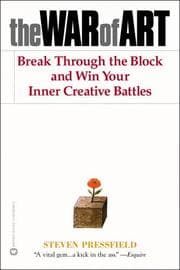
But then I started reading. Back in 2017, when I started my personal development journey, when I decided that I didn't want to just be a slob with a dad bod who got by and hoped that something good would luckily fall into my lap and I'd be this mysterious success that I wasn't actually working towards. And I tried to put a number to how many books I've read in the last, whatever that is, eight years. It's well over 200. But it wasn't until I picked up Steven Pressfield's book, The War of Art, that I realized that the voice was real and that it had a name, the Resistance.
Pressfield writes, "Resistance will tell you anything to keep you from doing your work. It will perjure. It will falsify. It will tell you you're not ready, you're not good enough. The Resistance will stop at nothing to keep you from succeeding."
That's when it hit me, because I realized the voice in my head that was telling me I wasn't good enough wasn't trying to protect me. It was trying to protect itself. It was trying to keep me small, because when we go for big things, danger is inevitable. It wasn't until I read Michael Singer's book, The Untethered Soul, that I discovered that the voice wasn't me. It was just a voice.
Singer says, "There is nothing more important to true growth than realizing you are not the voice in your head. You are the one that hears it." And that was a game changer, and I highly recommend The Untethered Soul to anyone who hasn't picked up that book. Realizing and understanding that the voice in my head wasn't me changed the game. I became aware of it.
I became aware of its intentions. And if I wasn't the voice, I didn't have to believe it. It wasn't until I read The Courage to Be Disliked that I learned that the voice didn't matter. It had no power unless I gave it power. There's this line in the book that sticks with me, "The courage to be happy also includes the courage to be disliked.
When you have gained that courage, your relationships will all at once change into things of lightness." I realized that the voice in my head, the Resistance, was rooted in fear, fear of being judged, of losing status, of not being enough. But if that fear didn't matter, then I could change my perspective. What if I could lead, create, and speak even if that voice was still there? In fact, that's what the greats do.
The greats act in spite of their fear. So if you've ever felt like you don't belong, like your accomplishments aren't enough and that you're faking it, know this, you are not alone, my friends. And you don't have to stay stuck. Today, I'm gonna walk you through the exact steps, process, mental models, whatever you wanna call them, that I've used and continue to use to become that person that I know I can be, even if right now it's in the brief instances between when that voice speaks, those, those moments where you're like, "I can be more," and then that voice knocks you down. I'm gonna teach you my process.
Use it. Don't use it. I hope it helps. I'm gonna teach you my process for overcoming the resistance. Before we get into the exact steps, I wanna just briefly talk about why imposter syndrome and the resistance exist in the first place, right?
Imposter syndrome thrives when we aim high, right? This is Jordan Peterson's work. Aim up. The more you achieve, the more you fear being found out. "I don't deserve this.
I didn't earn this. I'm not worthy. Why should they care? I'm not good enough." Regardless of where you sit on a hierarchy, those feelings will always be there.
It's not a sign of failure. It's not a sign of weakness. It's a sign that you are pushing your boundaries, that you are putting yourself into a new space, that you are growing. But there's a part of imposter syndrome and the resistance that we don't often talk about, and it's something that I spend a lot of my time on in my work and personal development talking about. I have a TEDx talk coming out in February of twenty twenty-five on this topic.
A big part of imposter syndrome, it's not about our lack of skill- Hear that? That's me in Tokyo learning to make sushi from a master. How did I get here? I invested wisely. Now the only thing I worry about is using too much wasabi.
Get where you're going with SPY, the world's most traded ETF. Getting there starts here with State Street Investment Management. Before investing, consider the fund's investment objectives, risks, charges, and expenses. Visit statestreet.com/im for prospectus containing this and other information. Read it carefully.
SPY is subject to risks similar to those of stocks. All ETFs are subject to risk, including possible loss of principal. Alps Distributors Inc., distributor. At Capella University, learning the right skills could make a difference. That's why our business programs teach you relevant skills you can take from the course room to the workplace.
A different future is closer than you think with Capella University. Learn more at capella.edu. Or talent or achievement. It's about status and our fear of losing status. We are wired to fear losing our position in the tribe, and this goes back to when, you know, we were in groups of twenty, fifty, a hundred and fifty, right?
Our place in the tribe mattered, and we didn't wanna lose that place. And when we sit in leadership positions or we try to stretch ourselves by writing a book or stepping on stage or inventing a new product or starting a new company, those positions magnify this because we feel the weight of being seen anytime we step out front. Immediately, eyes are on us, and we feel judged. And we understand that stepping out onto that ledge, becoming that leader, taking that chance creates the possibility of being dethroned, of losing our place in the hierarchy of whatever community matters to us. The imposter syndrome whispers, "What if they stop respecting me?"
And this fear is deeply rooted in our psychological makeup, where status and recognition play very crucial roles. Studies have shown that individuals experiencing imposter syndrome attribute their success to external factors, things they cannot control, and they live in constant fear of being exposed as less competent, which is closely tied to concerns about losing status and respect. Dr. Jessamy Hibbard, a clinical psychologist and bestselling author of The Imposter Cure, writes, "At the core of imposter syndrome is a fear of not being good enough." This might not be there all the time, right?
There are, there are moments. It's, it's intermittent, but when it comes on, it comes on strong, especially if we still believe that that voice is us and that we are supposed to listen to it. But when it occurs, you seriously doubt yourself and your capabilities and feel incredibly insecure. This insecurity is linked to our fear of losing status and respect in our professional and personal lives. Guys, every podcast that I create and publish, I worry that you're gonna listen to it and fucking hate me.
That you're gonna stop listening because I said something wrong or, or I took a stance that you didn't like or, you know, y- you don't like how much I curse or the way that I talk or the fact that for a lot of these episodes, you know, I put down a ton of notes and I don't look at the camera. I don't know. This is my style. I'm trying to deliver value to you, and every time I do it, I worry that you're not gonna wanna show up anymore. But I've learned over time that the only way to find out if that's true is by hitting publish.
So let's talk about how I have gotten and feel comfortable saying the ability to control my, the resistance and imposter syndrome and ultimately a fear of status in my life. Now, I will say, and I've said this on previous episodes, I was born with some sort of break in my brain, some sort of malfunction in my brain in which I've never really cared what people think about me. I want you to like me, but if you don't like me, I don't really care. Some of that came out of necessity. Where I was, you know, where I was born, how I was raised, the community I grew up in, I- it was survival.
Like, I just wanted to get the fuck out of there, and if I cared what these other people thought of me, people who I did not want to live their lives, I did not wanna live the lives that they'd been living for generations. I wanted to change, and I wanted to become more, and I never wanted to go back to that place. Like, I just couldn't care what they thought. Like, if I cared what they thought, I'd still be there, and that was the last thing that I wanted. Some of this has always been inside me.
However, that has never stopped the resistance from shouting into my ear that, "You're not good enough, that no one cares, that you haven't done enough to be worthy of attention." What I'm gonna give you now is my three-step framework for overcoming imposter syndrome, right? Uh, step number one, we have to reframe the inner critic, and we talked a little bit about the three books earlier, right? Instead of thinking, "I don't belong," ask, "What value am I bringing?" Right?
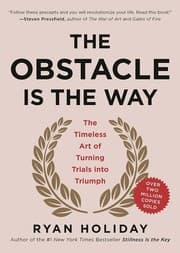
Your inner critic isn't your enemy. It's oftentimes a misguided coach, right? It, you're, it's a redirection of energy. Uh, there's a quote from Ryan Holiday in The Obstacle Is the Way, "The obstacle in the path becomes the path. Never forget, within every obstacle is an opportunity to improve your con- your condition."
Now, what I take from Ryan Holiday's work, and Ryan's an amazing author, and his work in stoicism is incredible and life-changing in many ways if you really take it in and, and practice it, uh, is that that inner critic, that imposter syndrome, that resistance, it gets the loudest for the things that are the most important in our life. Which means when the volume gets turned up on the resistance, when that imposter syndrome is just banging that drum, it's a good sign you're pointed in the right direction, right? You are not the voice in your head. Fear is a vector to action. If the voice, the resistance, if it's telling you no, that's a good indicator you're on the right path.
Not the easy path, but the right path. Step number f- one is reframe your inner critic as a guide. When it's just low level, meh, maybe you're doing some cool shit. But when that volume gets turned up and the drum gets banging and you can't hear anything else, then this isn't gonna work, everyone's gonna hate you, and your life is gonna be ruined, there's a decent chance, as long as you're doing something positive, that you're on the right path, that that's the thing you're supposed to do. You're supposed to write that book.
You're supposed to take that speaking gig. That is, you should take that job. You should start that company. You should go coach that team. Whatever the thing is that you're so worried about that you're not good enough to do, when the volume gets turned up on the resistance, it's a good sign you're meant to do that thing.
Reframe what that critic is. Forget about what they're saying. Listen to the direction they're pointing you in. Fear is a vector for action. All right, step number two, we have to collect receipts, right?
So we've reframed what that critic is. That critic, y- you know, we don't care what they're saying. We're just kinda listening to what they're, what they're pointing at and using that as a vector for where we need to do our work. We're thinking the, we're thinking of the resistance and imposter syndrome as a guide, not as a guide to growth, not as a critic, not as a roadblock, not as a stop sign. Step number two, we collect receipts.
Now, receipts is a word that has been picked up in common TikTok vernacular. You know, show your receipts. Uh, uh, political pundits love to, you know, show your receipts. There's all kinds of, like, talking heads and thought leaders on social media that's all, it's all about the receipts, and look, I... It's kinda cool, I guess.
I don't know. Of all the stupid terms that people use on social media, uh, it's not my least favorite, uh, so that's cool. But, uh, we do need to collect our own receipts. When we, you know, keep a success file. It could be a notebook.
It could be a, uh, uh, Apple Notes. It could be a folder on Google Drive. Just, it could be a, a, a document, a Google Doc that you keep that you just write down, like, the cool shit that you do, like your successes, your wins. What is the really cool shit that you have done in your life? Because when the critic, when the imposter syndrome, when the resistance gets dialed up, a really good way of shutting it down is to remind yourself of all the ridiculously cool, amazing, successful wins, the world domination plays that you've made and have come to fruition.
Every time you close a deal, solve a major problem, every time you receive feedback from a, a boss or a client or your partner, write it down. Imposter syndrome hates hard evidence. I may not have a nine-figure exit or won a Super Bowl, but I do have a seven-figure exit, a bootstrapped in less than three years. I've put on conferences with over 800 people. I've performed over 350 keynotes, sold millions of dollars in product, run large enterprise sales and marketing teams, grown this podcast to over 100,000 monthly downloads, while being a single dad and coaching my kids.
I've been fired three times, only to bounce back stronger. Wait, I've been through some shit. I've done some shit. I've seen and experienced things. Maybe, just maybe, I do have something to offer you.
Receipts don't lie. Remind yourself of how fucking awesome you are. Step three, reconnect with your mission. Your value isn't about appearing perfect. It's about creating change, value, and growth.
When you align with your purpose, the fear of status takes a backseat to the work that matters. There is no perfect, right? There's no perfect. That's-- You're never gonna achieve perfect. Perfect, and our perfectionism that comes along with our pursuit of perfect, is a tool of the resistance.
There's an Emerson quote, "The purpose of life is not to be happy. It is to be useful, to be honorable, to be compassionate, to have it make some difference that you lived and lived well." True fulfillment arises from dedicating yourself to meaningful actions and contributions rather than pursuing your own personal happiness and external validation, status. When you're aligned with your purpose, which is a whole nother podcast, we're not going down that path right now, you stop giving a shit about what the resistance has to say. If you are reframing what the resistance has to say, if you own your receipts and the successes that you have, and you're aligned with your mission, the voice has no room to speak.
Imposter syndrome has nothing to say. There's nothing to poke at. There's nothing to prod at. And while you may hear remnants of it in the back of your mind, you no longer give a shit. What the resistance, imposter syndrome, is trying to do is protect you from a loss of status.
"The more something threatens your identity, the more you will avoid it," Mark Manson, Subtle Art of Not Giving a Fuck. Incredible book. Fear of losing status can prevent you from embracing the challenges that lead to growth. And when you recognize this, it helps you confront the resistance. Imposter syndrome's gonna whisper, "What if they stop respecting me?"
The resistance pushes you to ruminate on things you can't control, and particularly sinister is status. You can't control what someone thinks about you. In fact, you have no idea what the vast majority of people in your life think about you. You never will, no matter what they say. Someone could shower you with praise and secretly despise you.
Someone else could constantly question your every move and inside respect the hell out of you. Focus on what you can control. Mark Manson again, "The key to a good life is not giving a fuck about more. It's giving a fuck about less, giving a fuck about only what is true and immediate and important." Prioritizing what truly matters diminishes the fear of losing status and redirects focus to meaningful endeavors, the shit that matters to us.
So here's a quick daily practice to get you started on removing the resistance as a barrier to you doing the shit that matters in your life. It's quick. Two minutes. Two minutes. As often as you possibly can.
I'd love to say every night, but I don't do it every night, so that would be, you know, a little hypocritical of me to push that on you. As often as you possibly can, take two minutes and just write down the good shit that you did that day. Doesn't matter, big or small. Could be sales call that went well. It could be not reacting to an unjustified criticism.
It could be slowing down and being present with your kids. Whether you believe it or not, you're fucking awesome, and the only person who needs to believe that is you. Because if you don't believe it, no one else will. Don't sweat the small stuff. Yeah.
Yeah, that's good advice. But celebrate the small wins. Celebrating small wins builds momentum, and the compounding effect of celebrating even your small wins rewires your brain to focus on the evidence of your competence, of how fucking amazing you are. The resistance may always be there, but you don't have to believe it. Imposter syndrome doesn't mean you're failing.
It means you're growing. I have this little wooden statue over my right shoulder here, if you're watching on YouTube. Uh, it has the letters GNF. It's carved. Letters GNF carved in wood.
Stands for give no fucks. A listener made it for me, which is amazing. Thank you. It's a constant reminder that this is my life. I determine my value.
I encourage you to GNF in your own life. And if you agree, comment GNF on YouTube or leave a review and comment GNF on iTunes or Spotify. Share your story. Guys, I read e- Every comment, every review, I read them all and I appreciate the hell out of them. But I wanna know, does this resonate with you?
Right? I put time into creating these ideas, these thoughts, these stories, and I wanna know, like, does this resonate with you? Do, do these steps... can these steps help you get past imposter syndrome? Do y- if you try these steps and they don't work, I wanna know. They worked for me.
I have a good feeling they'll work for you. I hope they work for you. I believe that they will work for you because you are not that voice in your head. That voice doesn't care about you, it cares about itself. Now, go be your crazy, weird, amazing self and tell the resistance to fuck off.
This is the way. In a crude laboratory in the basement of his home. Introducing Fidelity Trader Plus, with customizable tools and charts you can access across all your devices. Try our most powerful trading platform yet at fidelity.com/traderplus. Investing involves risk, including risk of loss.
Fidelity Brokerage Services LLC, member NYSE, SIPC. At Capella University, learning the right skills could make a difference. That's why our business programs teach you relevant skills you can take from the course room to the workplace. A different future is closer than you think with Capella University. Learn more at capella.edu.
When you walk into a Burlington, you're walking into amazing prices and great gifts. That's main character energy. Because at Burlington, the holiday savings aren't the only things turning heads. Discover quality finds and perfect presents for everyone on your list, even those who are hard to shop for. Toys and jewelry to new beauty brands and styles, these gifts go seamlessly from our stores to under your tree.
Seriously, with these savings, why shop anywhere else? Burlington deals, brands, wow