Two hours ago, Kyle arrived at the bar Hey, what's everyone drinking? 30 minutes ago, Kyle got his friends another round of drinks Cheers. Cheers. Five minutes ago, Kyle decided to drive home drunk. A minute ago, a law enforcement officer pulled up behind Kyle Sir, have you been drinking tonight?
A chain of events that began two hours ago is about to change Kyle's whole world. Drive sober or get pulled over. Paid for by NHTSA. Hello, everyone, and welcome back to the show. We have a tremendous episode for you today.
We're gonna do something a little different. Uh, it's gonna be a solo episode. But I wanted to take a few minutes with you, and I wanted to read through my TEDx talk that I recently did at TEDxNewAlbany, uh, kinda table read style. The version that comes out that I actually performed on stage in New Albany is not gonna be what you're gonna hear. Not exactly.
Uh, I did it a little different. I cut some sections out and expanded some places, uh, for the actual on-stage live performance that got recorded and, you know, hopefully will be up on the TEDx YouTube channel in the not too distant future. But I still wanted to share the message in its entirety with you guys, particularly because I think the topic that I addressed is something that it's a blind spot for us. It's something that w- we don't see coming until we're caught in it, and then it is very difficult to get out. And I have found myself, in some of the situations in which I am the most regretful of, uh, the things I've done or not done, it is often because I fell into what I call the status trap, the invisible prison of societal expectations, right?
Those things that we feel we are supposed to do because of this label that we might wear at any given particular time, right? So, uh, people like me or people like this do things like this, and therefore I need to do all those same things as well. We make so many bad decisions when we're operating from a position of status. And I've had several experiences in my career where I just look back and it doesn't even seem like the same person who made those decisions today. And in examining why I made them, it was because I was trying to be something instead of just al- allowing who I actually am and the way that I operate to come through and, and to follow that unique path, if that makes sense.
Um, uh, it'll make more sense when I do the table read. But, uh, I wanted to put this in front of you, uh, not only because I'm, I'm very proud of the work that I did, and I spent over six months putting this talk together and, you know, working out the performance and, and all that kinda stuff. This is something we can avoid, right? It i- it i- it's not an intangible. It's not a if this happens, break glass kinda thing.
It's this is something that if we're intentional and thoughtful, if we haven't had major downsides from, you know, attaching too much value to status or the corresponding ideas, then we can still avoid it. And if we find ourselves in this place, there is a real path out. And as leaders, as creators, if you're ambitious, if you wanna become a, an influencer or an entrepreneur or an executive or really anyone that starts to hold positions of status or desires positions of status, right? The status trap is absolutely something we can get caught in, and it can derail our progress, and I don't want that to happen to you. So, uh, I'm going to, uh, just kinda table read style work through this script.
How I built this, right? I didn't just build an outline. I actually scripted every single word first in its entirety, and then I went back through, uh, just to kinda work through what my process was, right, for this talk. So scripted every single word in its entirety, did some table reads, got a feel for that, uh, deleted some parts and made adjustments, and kinda went back and forth on this full script editing. And then once I got the full script to where I was in a timeframe that I had some buffer, so TEDx Talks, if you're unfamiliar, have a max limit of 18 minutes.
They really want you to come in 17 or under. Some of the most successful TED Talks have been in that 15 to 16, uh, minute range, right? You don't wanna-- It is not a platform for more context than is necessary, if that makes sense, which as you guys know, as listeners to this show, is difficult for me, so this took a lot of work in refining. It was one of the most challenging speaking performances that I've ever had to prep- prepare for. M- most of that is pressure that I put on myself 'cause I wanted to do well or at least be proud of my performance, which I was.
Uh, but, you know, this process was very different than how I normally would build out a talk. I would normally build out a talk in slides, actually, and, uh, and then use the slides as a template and a, and an outline to, to ultimately get all my stories and talking points and stuff together. In this case, I scripted every word. I edited it down to be, like, exactly what I wanted to say, and then from there I broke it into an outline, and then from there I actually built a few slides off of, uh, the talk. So I'm not gonna necessarily, uh, do all the slides.
I think that's extraneous, and I don't think it's necessary. But I wanted to read this for you guys, put it in front of you, and I would love your feedback. So if you're listening, watching on YouTube, or even if you're on Spotify and Apple, I would love for you to come over to the YouTube video and leave your comments, leave your thoughts, leave your questions. I really wanna know what you think of this particular idea. It is so incredibly powerful and so insidious if we are unaware that our mindset has been captured by this idea of status.
Uh- I want to make sure that if you're part of this community and you listen to this show, and this is something I think I can help you with. So hopefully, uh, what you're about to hear is valuable to you. I hope you enjoy it. If you do, would love... and you, you're not already, please subscribe to the show, share it with friends. That's how we grow the community.
Uh, that's how we grow the audience of this show. And as always, I just appreciate you and love you for taking time out of your day and choosing to, to be here with me. I know you have so many options, and I'm not going to belabor it anymore, but it is just so incredibly meaningful that you spend this time here. Thank you. And like I said, all questions, all comments, all thoughts, if you'd come over to the YouTube video, leave them there, and, uh, I will respond to every single one of them.
So all right. With that, I'm going to get on to my TEDx talk table read. Now, the, like I said, the version that you... that comes out in TEDx, the f- in the TEDx, will be different. Uh, what I ultimately ended up doing was, in the 11th hour, was cutting a few sections and expanding in a few other places, so it is a little different version, but I wanted to read to you kind of the fully scripted version that I put together that ultimately was the template that I went to stage with. So all right.
Okay. In a crude laboratory in the basement of his home. It is 3:00 AM, and I can't find it anywhere. The title of my talk was Stop Living a Life You Didn't Choose. He said, "I thought you figured it out by now.
We didn't hire you for your opinion." I sat there paralyzed. The CEO's crippling words hung in the air. That was the moment I realized I wasn't living my own life. I was 38 years old, and I had lost the way.
This was the job I was supposed to have. I had checked all the boxes. On my career ladder, this is exactly where I was supposed to be, my dream job, and that dream had just become a nightmare. As his comment sank in, it felt like I was falling, as if I had been holding onto a ledge high a- atop a mountain of success, and my fingers had just gotten over the top when someone decided to walk by and step on my fingers. At, at that moment, I experienced just about every negative emotion a person can feel about themselves, pain, shame, doubt, insecurity, anger, fear.
How did I lose the way? My story isn't unique. Every day, millions of people wake up, go to jobs they hate, pursue goals they didn't choose, all because they're caught in what I call the status trap, the invisible prison of social expectations. This would become a defining moment in my life, and it's the reason I'm here today. See, it's astounding how many people want to live spectacular lives but prioritize fitting in, getting along, being normal, being accepted.
Raise your hand. And for you guys listening and watching, put the word status in the comments. Raise your hand if you've ever done something not because you wanted to, but because it's what you believed was expected of you. I know I certainly have. Look around your life, and you'll see the status trap everywhere.
It's the law degree you p- pursued because your parents convinced you it was sensible and safe. It's the vacation that you spend staging Instagram photos on the beach instead of just enjoying your time. It's the house that you buy that's expensive and in, but in the right neighborhood, even though it comes with a soul-crushing commute. It's saying, "That's interesting," in meetings when what you really want to say is, "I completely disagree." And to be clear, there's a fine line between giving into the demands of status and sacrificing for family and loved ones.
Your choice to have a soul-crushing commute could be so your kids could go to a better school, or working that sensible, safe job that you hate, it could just be a placeholder till you get your entrepreneurial idea off the ground. The outcome isn't the issue. It's why you make the decision that matters. George Bernard Shaw wrote, "The reasonable man adapts himself to the world. The unreasonable one persists in trying to adapt the world to himself.
Therefore, all progress depends on the unreasonable man." Unreasonable people get unreasonable results, yet so few of us lead unreasonable lives. See, the status trap, it's, it's a blind spot. Our society encourages us from birth to fit in. Don't touch that.
Don't say that. Be nice. Listen to your teacher. Take these classes. Go to this college.
Get this job. It's all subtle programming. At face value, none of these things are necessarily wrong if we choose them. But what my experience had taught me is that status is a limiting belief that denies us our full potential. It teaches us to master working the system rather than mastering the skill of our craft.
Prioritizing status outsources our passion, our dreams, our goals to other people, to what is expected. We chase significance. We're intoxicated by attention. We trade comfort for purpose, conformity for impact, and inertia for legacy. Tyler Durden said it best, "We buy things we don't need, with money we don't have, to impress people we don't like."
Think of it like this. We all start at the bottom of the ocean in the darkness, unsure of where to go, what to do, who we will become. And along comes status, the anglerfish, dangling its little light, and in the darkness, that light feels like the path. It lures us in with shiny rewards, attention, accolades. But behind its light, lurking in the darkness, lies the danger, the silent suffocation of never becoming who we were meant to be, when the whole time all we needed to do was swim up.
Thoreau wrote, "The mass of men lead lives of quiet desperation, their souls trapped, held hostage to social expectations and the material requirements of status." These prevent them from truly experiencing freedom, fulfillment, purpose, meaning, happiness. I'm here today to challenge you, challenge you to examine your relationship with status, reframe your approach to success, and give you three principles for breaking free of the status trap. Because having status isn't necessarily a bad thing. There's a reason status is hardcoded into our human system: safety, security, routine.
According to a study published in the National Library of Medicine, conforming to group norms can temporarily reduce stress and anxiety by aligning with others and avoiding potential conflict and rejection. Status in and of itself is not the problem. The corrupt- Hiring isn't just about finding someone willing to take the job. You need the right person with the right background who can move your business forward. If you want candidates who truly match what you're looking for, trust Indeed Sponsored Jobs.
With Indeed Sponsored Jobs, your post stands out to quality candidates who actually fit the role. According to Indeed data, 90% are more likely to be hired and trusted by 1.6 million companies. Spend more time interviewing candidates who check all your boxes. Less stress, less time, more results now with Indeed Sponsored Jobs. And listeners of this show will get a $75 sponsored job credit to help your job get the premium status it deserves at indeed.com/podcats13.
Just go to indeed.com/podcats13 right now and support our show by saying you heard about Indeed on this podcast. Indeed.com/podcats13. Terms and conditions apply. Hiring? Do it the right way with Indeed.
You've finally broken loose from work. Three friends, one tee time, and then the text. "Honey, there's water in the basement." Not exactly how you pictured your Saturday. That's when you call us, Cincinnati Insurance.
We always answer the call, because real protection means showing up, even when things are in the rough. Cincinnati Insurance. Let us make your bad day better. Find an agent at cinfin.com. lies in why we achieve status. For in that same study, the short-term relief that comes from conformity has the cost of our long-term psychological well-being.
See, the larger the gap grows between who we are and who we were meant to be, the more stress and anxiety fill our lives. We're not born chasing status, but we choose early in our lives how we're gonna play the game. Prioritizing status is the path of comfort. Just do what everyone does and expects of the type of person you'd like to become. Fit in, play along, say the same things, read the same books, have the same opinions, go on the same vacations, be agreeable, be nice, get along, don't stand out, avoid tough conversations.
The American education system was built to produce cogs in the societal machine, which is great for the machine, not so great for the cogs. But this isn't just an American problem. We've all heard the Japanese proverb, "The nail that sticks out gets hammered down." In Australia, there's tall poppy syndrome. In Scandinavian countries, it's called the law of Jante, which I'm paraphrasing here, says, "You're not to imagine yourself better than we are."
Society's encouragement of conformity is a problem as old as time. The good news is there is another way. See, I, I wasn't born with status. I, I grew up in a small town of 900 people in the middle of the woods of Upstate New York. As kids, we joked that you could leave the doors open at night because the criminals lived in our town.
They didn't steal there. Needless to say, it was not an opportunity-rich environment. And as early as 12 years old, all I wanted to do was get out of that town. I didn't want to have my life dictated to me by its desperation, and I believed at the time that money helped you escape. So at 12, I began waking up at 5:00 AM every Thursday morning before school.
I'd grab two large 50-gallon trash bags and head out into the dark. Why Thursday? Because that was recycling day, and all my neighbors would put their recyclables out on the street in little dirty blue bins. I'd walk from house to house, rummaging through their dirty little blue bins, looking for recycle bottles and cans with a 5-cent deposit. After about an hour and a half, I'd have filled my two garbage bags, which was about 30 bucks in profit.
This was a zero-status job. I was literally a garbage picker. I had neighbors yell at me and eyeball me, you know, through the windows. My friends and classmates ridiculed me, calling me things like Garbage Boy, and, and even after I told them how much money I was making and I asked them to help, no one would. Picking garbage was beneath them.
Me, I didn't care. I was 12 years old and was flush with cash. My immunity to status allowed me to capitalize on an opportunity others would not. See, we all have a choice. We can play the status game, chase the accolades, mimic the crowd, fit in, or we can do as Steve Martin taught us: be so good they can't ignore us.
Or maybe put in the context of our conversation here today We can be so unreasonable they can't ignore us, because it's completely unreasonable at 12 years old to get up at 5:00 AM, put on a snowsuit 'cause it's 20 degrees out, and pick garbage for five cents a pop. But here's the rub. After a few months, my neighbors stopped yelling at me and giving me the stink eye out the windows, and my friends, they liked hanging out with the kid who always had money in his pocket. See, my status changed, not by fitting in, not by doing what was always expected, rather doing exactly what I needed to do the way I needed to do it, without regard for what others think. We chase status, but we envy execution.
Fast-forward back to my 38-year-old self. I had forgotten the lessons I learned at 12. There I sat, shamed out, anger coursing through my body. I was lost. At what I thought was a major stepping stone in my career, a milestone job, I found myself at the lowest emotional point in my life.
Needless to say, I did not speak again in that meeting. I just sat there. When the meeting was over, I got up and dragged myself back to my office. See, I didn't realize it at the time, but status-seeking behavior activates the same neural pathways as addiction. I, at 38 years old, was addicted to status.
I had done things. I had achieved things, and people wanted to know what I thought. They wanted to interview me. They wanted me on their podcast, asked me to speak at their conference. As I slumped into my chair, staring out the window of my 15th-floor office, a torturous set of questions entered my mind.
Was this it? Was this the top? Would I ever get another opportunity like this? How the heck did I get here? And then the memory of walking those streets at 12 enter my mind.
I, I thought about who I was back then and what I was willing to do to create a better future. I remember making my high school varsity football team as a sophomore for the sole reason I was the only guy in the program willing to lower himself to learn long snapping. I was a starting middle linebacker by week four, but, you know, who, who keeps track of these things? I remember writing a letter to every college baseball coach within a six-hour drive of my house explaining that this 6'3" power-hitting catcher would commit on the sole factor to whichever school gave me the biggest scholarship, not because we were greedy, but because I was poor, and a scholarship was the only way I was going to college. How little I cared about the opinion of others.
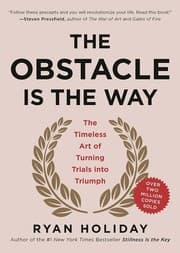
It was then that I took out a notebook and I started writing, and what I wrote down that day would be the beginnings of the three lessons that I'm here to share with you today. These three principles have guided me ever since, and that, when followed, create an immunity to status, and they will empower you to become your unreasonable self. Principle number one: fear is a vector to action. I hadn't read Ryan Holiday's The Obstacle Is the Way yet, but it's the same idea. Fear would be my guide, not my anchor.
For me, that was the pull to become an entrepreneur. A year later, I founded my first company, Rogue Risk, a first-of-its-kind digital commercial insurance agency. Principle number two: give yourself permission. I would no longer allow the opinions and expectations of others to dictate my actions. You'll never be able to.
You don't have enough. That's not the way it's b- always been done. I, I would not allow my unique approach to business to stay just notes on a page because others didn't get it. And using our unique approach, we were able to scale Rogue Risk and sell it in two years and ultimately exit within lesson four. Principle number three: what you focus on is who you become.
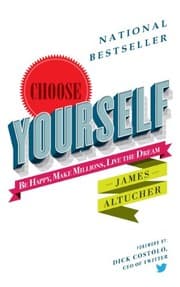
I could either focus on gaining, preserving attention, status, or I could focus on becoming a master of my craft, and in my case, that was mastering the craft of entrepreneurship and leadership, skills that were necessary for me to develop in order to manifest this business that I had dreamed of for more than 15 years. To be clear, being unreasonable, choosing yourself, as James Altucher puts it, it, it's not the easy path, and it comes with a cost. It's torturous and treacherous and lonely, and you will absolutely find yourself on an island, but it will be an island of your own design. There's this Emerson quote that rents space in my head, "God will not have his work made manifest by cowards." The challenge I bring for you, bring to you today isn't should you or should you not chase status.
It's do you have the courage to choose the future you want? Can you be unreasonable enough to become the person God intended you to be? Because in that unreasonable pursuit is where you find purpose, meaning, and happiness. And if three principles is too many, if you can only take one principle away with you today, the inner forearm tattoo-worthy principle, it is undoubtedly what you focus on is who you become. What you focus on is who you become.
The choice is yours. Choose wisely. This is the way. And cut scene. So my friends, that is, uh, the talk.
Like I said, it took me six months to get to that, of writing and editing and, you know, researching and framing ideas and, you know, the number of stories that I pulled out and how it all laid together, uh, building the case, keeping it short. Uh, it, it, it really -- putting this TEDx talk together was one of the most challenging speaking performances That I've ever, uh, taken on, mostly because of its brevity, right? It's, it's much easier to have an hour to kind of weave and meander your way through different stories, and, uh, you can read the crowd and, uh, you know, poke and prod and try things and back up and go down different paths as you're getting feedback from your audience. It's a completely different experience, uh, where this was, you got one shot, and you had to rip because the lights go off at 18 minutes, and you don't want that to happen. I'm very proud of this message.
Uh, y- I'm gonna be sharing more as I develop more around this idea. Uh, I think that, you know, being able to recognize status and its impact on our lives and our decision-making is an incredibly important part of our own personal development and becoming that best version of ourselves. 'Cause, 'cause as I say during the talk, status in and of itself isn't a bad thing. If you're doing incredible work and people appreciate it and enjoy it, you're going to elevate in status in their eyes, and there's no intrinsic problem with that unless your decisions start costing you or your company or your family and loved ones. If chasing that status comes at a cost that you don't wanna pay, that creates negative impacts in your life, that generates more stress and more anxiety, then it's a negative. So developing a relationship, an intentional relationship with what status means in our lives, how we handle it, and how we make sure that it isn't corrupting our decision-making process is incredibly important, and I hope that you got value out of this talk.
Uh, when the, uh, TEDx, you know, kind of the, the video recording of the talk goes live, I'll make sure that, you know, share it on all the socials. If you're not on the email list, go to go.ryanhanley.com. That's G-O.ryanhanley.com, and you can jump on the email list. I'm gonna definitely share it there as well. Um, guys, I, I appreciate you for being here.
I appreciate the fact that you continue to show up, that you get value from this show, and I hope you, uh, appreciate how hard I try to work to deliver value back to you. I take our relationship that we have here very, very seriously. Any comments, any questions, any thoughts that you have about what you just heard, I'd love for you to leave them, uh, uh, in the comments of the YouTube video. It's just a easy way for me to collect all your thoughts and then respond to you guys. Um, I hope that you absolutely crush this day, and understand that with all things in life, it's your choice, and I very much do hope that you choose wisely, wisely for you, because that, my friends, is the way.
In a crude laboratory in the basement of his home. It is 3:00 AM, and I can't find his way out. I'm here on the job site with Dale, who's a framing contractor. Hey. Good morning.
Dale traded up to GEICO Commercial Auto Insurance for all his business vehicles. We're here where he needs us most. Yep, they sure are. We make it easy for him to save on all his insurance needs, all in one place, with coverage that fits his business and bottom line. Oh, I shouldn't have looked down.
It's all right. We're, we're so far up here. Look at me. Take a deep breath. No, I'm good.
S- so good. Get a commercial auto insurance quote today at geico.com and see how much you could save. Get more with GEICO. Happy holidays. Want to give your host a gift?
Consider subscribing, rating, and reviewing the show this holiday season. It really helps the show grow. From all of us at Believe, have a merry Christmas, everyone, and a happy holiday.