Did you know that driving under the influence of marijuana is illegal? Driving high will get you a DUI. And if you're wondering if law enforcement can tell you're driving high, well, everyone else can. Friends- I can tell you drove high ... parents- I can tell when you drive high ... relatives- I can tell. You drove here high, didn't you?
So what makes you think law enforcement can't? I can tell. If you feel different, you drive different. Drive high, get a DUI. Paid for by NHTSA.
I'm here on a job site with Tim, who owns his own electrical contracting business. Three employees and two work trucks. Tim traded up to GEICO Commercial Auto Insurance. We're positively here where he needs us most. They sure are.
With step-by-step help on all his insurance needs, all for shockingly low rates. Shockingly low, huh? Just a little bit of electrician humor. Do you get it? I got it.
You know, it feels like we have a real connection. All right, I'll stop. Get a commercial auto insurance quote today at geico.com and see how much you could save. It feels good to GEICO. If you're an HVAC technician and a call comes in, Grainger knows that you need a partner that helps you find the right product fast and hassle-free.
And you know that when the first problem of the day is a clanking blower motor, there's no need to break a sweat. With Grainger's easy-to-use website and product details, you're confident you'll soon have everything humming right along. Call 1-800-GRAINGER, click grainger.com, or just stop by. Grainger. For the ones who get it done.
Careful, Ryan. We're, we're gonna get into, to, to clickbait territory where they're gonna click on the, on the video. College teaches you how to be an employee, and because that's what it's built to do. So it's serving its purpose, because they need employees to come and run their companies. The critical thinking doesn't necessarily happen in every single classroom.
I have a master's degree. I know what I'm talking about. Until I got a mentor, and he showed me how to make 50,000 a month, and then my life was changed. He had to bend my mind, 'cause I did not know it was even possible. Let's go.
Yeah. Make it look, make it look, make it look easy. Ice. The Ryan Hanley Show shares the original ideas, habits, and mindsets of world-class original thinkers you can use to produce extraordinary results in your life and business. This is the way.
Hello, everyone, and welcome back to the show. We have a tremendous episode for you, a conversation with Herman Dolce, AKA the Haitian CEO, founder of Bella Sloan Enterprises, where Herman teaches financial freedom, specifically by bringing the secrets, the tricks, the hacks that multimillionaires, billionaires use around credit facilities to gain financial freedom. How, how the super rich are using credit facilities, different credit tools to gain financial freedom. He's changing the game, changing mindsets, changing attitudes of everyday people to understand how credit works, what's good credit, what's bad credit, and how we can use credit to get ourselves out of trouble and put ourselves into a place where our money is working for us. This was an incredible and dynamic conversation.
If you are struggling with your financial freedom, if you feel like you're constantly behind the eight ball, you don't know how to set your assets up, you don't know how to set your income, your revenue up, your cash flow, and if credit just scares the absolute hell out of you, then you're gonna love this conversation. Guys, before we get to Herman, I wanna give you a huge shout-out. I appreciate the hell out of you guys. The audio version of this podcast has been going crazy. We have blasted up the charts in both the business category and the entrepreneurship category, cracking both the top 20 in business and the top 20, uh, in entrepreneurship.
We just had our last episode with, uh, Tommy Mello go into the top 100 episodes, uh, list for Apple. So all of you who are listening on audio, I appreciate you, and those of you watching on YouTube, I love that you're coming here. I love the comments that you're leaving. Guys, let us know what you think about these guests. Let us know what questions you have.
Tag the guests who come on this show. Tag me in your comments so that we can come back in and answer your questions. If anything that Herman talks about, if anything that I say in this podcast doesn't make sense, or that you think we got it wrong, or that you, you don't understand exactly how to use some of these tactics that Herman describes, leave those in the comments on YouTube. I always, if you don't tag them, pull those guests in and have those answer those questions as much as we possibly can. And if you prefer, you can always just DM me on whatever favorite, uh, social media platform that you have as well.
So if you're new to the show, subscribe. But guys, I just appreciate you for being part of this community. We have so much more content coming out as we push forward with this channel, with this podcast, and just continue to bring you, uh, guests with just incredible insights into growing your business and taking control of your life. I appreciate you, my friends. Here we go.
Herman, it's great to have you on the show, man. Absolutely. Thank you for having me, Ryan. It means a lot. Yeah, so I think we all get involved, we all enter the workforce, whether that's starting our own companies or whatever, and, and financial freedom, even if it's not like at the top of a list that we may write down, it's always inside us, this idea of like, "I'm working to get to a point where I can then do things I want, choose my projects," whatever, right?
That's we're kind of all working on that path, yet so few people actually get there. Why is that? Whoa. Um, I think That we get caught up, um, in analyzing too much, watching too many mentorship videos, and not actually just executing. Um, we have a lot of people who have smart notepads, um, they have all the gym equipment.
You just have to press play every day, um, and actually do the work. I mean, Nike figured it out 30, 40 years ago, "Just do it." Um, and not just do it once, but do it consistently. I have a motto, um, where, um, "Where motivation runs out, discipline must take over." And you ha- the discipline just has to happen daily in order for true change to happen in mind, body, soul, or finances.
You know, with, like, Goggins coming out and a lot of these other motivational guys, you know, discipline has become a word that a lot of people are talking about, yet I think every single one of us struggle with it in some capacity. Mm-hmm. Mm-hmm. H- How, how do we develop, and h- maybe how do you develop discipline in your own life? How do you make sure that the f- the behaviors that you need to execute to get to the place that you wanna be, that you are consistently doing those things?
So for me, number one, small steps, and number two, writing down everything, right? Mm-hmm. So, um, if I have a plan or a goal ... I, I'll give you a, a longer story. So, um, in my business right now, we did- we hit a little downturn, right?
And I was looking at the numbers with my CEO, and then we kinda figured out what happened. What happened was we was focusing so much on a conference we were having March 2024, which was the Blueprint Summit. So for six months, we was focusing only on it, and we weren't planting seeds and doing other things in other avenues or silos in our business. So now June came around and our numbers are down. We're like, "Why are our numbers down?"
Because 90 days ago, we weren't planting seeds, so now we're feeling it, right? So writing down your goals and then planting little seeds. 'Cause everybody, when I say, "We have to lose 100 pounds, you have to lose 100 pounds," it's so big, but, um, when you write down, "I wanna lose 100 pounds, and here are the five steps I'm going to do it," they are small steps. At first, I'm gonna walk 15 minutes every single day, seven days a week, right? And then 15 minutes turns into 30, into 45, and into an hour. We, we take on these huge chunks, and then when we fail, it's like, "Oh, it can't be done."
It's a huge project, we just have to do it in, in little pieces. So writing it down for you, is that journaling? Is it, do you have a system for how you write it down? Because while accountability to, say, a fitness coach or a business coach or a mentor, I mean, that's why we pay a lot of people- Mm-hmm ... and, and all that is great, uh, and can be very useful. I'm, I'm a h- huge advocate of coaches and, and consultants.
Um, personal accountability is st- you still need to have personal accountability. Right. And I'm, I get very interested in people's methods for how they hold themselves accountable and to stick to these things. So, so maybe what is your process of writing it down? So I have several notes apps.
So I have one for business and one for personal, and I write them all down. So I remember when people, um, used to talk about manifestation and vision boards. I was like, "Oh, that's crazy." But it is true. Because once it's in my head, and then I write it down, it becomes real, right?
So once it becomes real to me, it gives me the sense of, "Well, I gotta get it done," 'cause it's, it's on a list, and I'm looking at the list every day. Every day before work, every day before my day starts, I'm looking at, "Okay, what do I have to get done?" And I'm, and, and when it is unchecked too long, it's my fault. I always take accountability 'cause it's there. I'm like, "Well, why aren't you getting it done?
Why is this still on the list? Who do I need? Do I need to talk to my CEO about it, my V- my VP, my operations person? Who do I need to talk about getting this done?" Because it's on my board to get done.
So when you write it down, it's kind of like a self-accountability in and of itself. Yeah. I, I'm right with you on manifesting. I've always, you know, I read the first few chapters of The Secret and was like, "Meh." And just the whole time like, "This is nonsense."
You know what I mean? Like I, I had in my head, "I'm a hard worker. I show up every day and work hard. Like, I'll just get the results that I get because I'm gonna work as hard as I work," right? And I was always- I- ... kinda like, "Oh, with goals," and stuff like that.
And then I heard, I can't remember the podcast, I think it might've been Annie Fursylo, but it doesn't matter. Mm-hmm. Someone who I wouldn't have expected, and they're like, "Man- manifesting changed my life." Mm-hmm. And I was like, "Oh, shit.
Maybe I've had this wrong the whole time." So I, I, I started looking into the concept, et cetera, and then, uh, I, uh, I found, you know, this idea that it's, it's like when you buy a new car, right? Like, you, you buy... I, I had a Jeep, uh, a Jeep Wrangler for four months. I actually, I hate- Are you tired of endless follow-ups and missed opportunities in your sales process?
Chasing leads is a losing game. That's why I created the One Call Close system, a battle-tested sales system that uses behavioral psychology to close deals in just one call. No more, "Let me think about it." No more, "I'll get back to you." Using the One Call Close system, we took new reps from 25% close ratio to over 80% in just three months.
To grow fast, you must close deals faster at zero extra marketing cost. The One Call Close system allows you and your reps to build trust, address pain points, all while watching your revenue skyrocket. Ready to stop chasing leads and start closing? Visit masteroftheclose.com today. Close twice as many deals this time next week.
Visit masteroftheclose.com to learn how ... did that. I always wanted one, I bought one. Uh, four months later I sold it 'cause I hated it. But, but when I had, when I bought that Jeep, I literally saw Jeeps everywhere. Everywhere.
Uh-huh. Everywhere I went I was like, "Oh my God, this car. I didn't realize everyone had all these Jeeps. Where'd all these Jeeps come from?" Like, you know.
And it's because our mind is now focused on that thing 'cause you have it. Yeah. And so even if you don't believe in, like, the universe flow part of manifesting, the whole idea that what you think about every day is what you're going to see and act out in the world makes- Every day ... complete and utter sense. Absolutely. Every single day.
Because, um, I, I even have my peers... 'Cause remember, um, I, I wanna pivot to social media for a second. Yeah. There's certain people I follow, because they call it a newsfeed for a reason. Yep. So I'm following certain entrepreneurs, certain suc- successful people, motivational speakers, business pages, and since I'm seeing it every day, I'm feeding that to myself, it's changing my mindset and my behavior.
So when I write certain things down, when I'm reading different tweets, I'm, I'm feeding myself that, so the input is output. Oh, dude. I, I couldn't agree with you more on what you just said. Actually, one of the exercises that I do with my coaching clients is I'll have them pull up their Instagram feed and scroll through it, and I'm like- Mm ... "This is a direct reflection of what you're spending your time thinking about."
If you have, like, car crash videos and comedians, well, that's where your brain is at. If it's- Right ... motivational quotes or fitness videos or whatever, that's what you're feeding your brain. If it's- Exactly ... negative stuff or angry whatever, politics, you know, whate- whatever, like, that's what's feeding your brain. The, the algorithm is going to spit back on you what you spend time on. What you spend time on.
Mm-hmm. Yeah, and I found that exercise, even for myself sometimes, like if I start to see stuff in there that I'm like, "Why is that coming through?" Yeah. I have to go, "Have I been spending time on that?" Because- Right ... it wouldn't be feeding it to me if the algorithm didn't think that I wanted it.
Exactly. And, uh, it can be a wake-up call to a certain extent. Exactly. The Explorer page on Instagram and the For You page on TikTok says a lot about you guys. Yeah.
So definitely take a look at that as a exercise, like, "Wow, this is what I've been feeding myself." Yeah, yeah. It's only gonna give you what you want. That's 100... You're 100% right about that.
So let's, let's start to swing back to, uh, let's take this concept of discipline and being disciplined, and start to apply it to the idea of, uh, like, financial freedom, of, of taking control of our finances. Like, where does this break down most often for people that, you know, they're, they're not getting to that place? You know, where does the discipline break down for people? Um, outside distractions for, um, mo- most likely with people or an environment that are not going where you're going. So I have a tagline, um, and it's, it's, uh, it's on my phone.
Um, it's called Audit Ear Circle, right? So it's, it's a, it's a branding, it's part of my company. I made an LLC about it. And what it is is, um, if... What it means is, 'cause I wore the shirt one day and somebody asked me what did that mean, I was like, "Well, a commercial jet holds 300 people, a private jet holds 15," right?
Um, everyone can't come with you. So it was very important to me when I started making specific goals, they didn't align with, you know the saying, the five people that are around me the most. Mm-hmm. Right? So I literally had to start firing people in the different levels of the different circles that I'm in in my life.
Um, my parents are amazing, I'm first generation from Haiti, but I wanted to become a millionaire, right? And my parents weren't millionaires. They weren't associated with millionaires, so they couldn't teach me or tell me how to become a millionaire, so they were one of the first people I had to fire outside of my financial circle. My, my parents did show me financial discipline in terms of when I was young. My father used to sit down with me every Friday, 'cause he got paid every Friday, and he, and I would have to write out the checks for the bills that were p- due that week.
So he was showing me how to balance a checkbook, et cetera, and he was also doing it because when the Nintendo came out for $100, he knew, I knew, 'cause I saw what he made and I saw what money was left, when he said no, he really couldn't afford it. Yeah. So he showed me that financial literacy, but when it's came to time to invest, um, understand truly what money is and how to multiply it, compound interest, um, I had to let go of my father in terms of that and start to associate myself with people who were going where I needed to be. Um, whether you wanna become an electrician, an astronaut, you have to start hanging with those people that are in those spaces. They're going to help you, um, reach your goals because they've done it, um, or they failed at doing it, so either way they can show you the right and wro- wrong way to do it.
I think you just made a really good point and, and I'm gonna expand upon it a little bit and get your feedback. A lot of people get hung up on this surround yourself with the five people that- Mm-hmm ... you wanna be like, um, and they think that it's just a group of five, and that you get- Right ... one group of five, when really- Right ... it's like a bunch of concentric, you know, a bunch of circles that, that may intertwine or may be- Absolutely ... completely separate. Like, so, uh, uh, your example about your family is perfect, right? Like, they sh- showed you one piece of financial discipline, but- Mm-hmm ... maybe then you also learn love and compassion from them. Like, like, you know, so, like, for my, my mo- my mother's the exact same way.
She's been a receptionist for 40 years for the same company. Her- Mm-hmm ... feedback to me was, you know, when I was growing up, was get a, go work for a big company, get a safe job, get that check, 401... That was, that was- Right ... the path to her, was about safety. Mm-hmm. They never aligned with me because I have a very large risk tolerance.
I'm very growth focused. Like, I'm just... They, they never, that, that never suited. I tried it, I failed miserably, right? But, but for- Cultivating things like love, compassion, empathy, how I relate to people- Sure ... she's dead smack in the middle of that circle, right?
Mm-hmm. So it's, it's finding groups of people for the characteristics that you want to improve or grow in yourself, and it's okay for those to be different circles. Does that make sense? Absolutely. It's okay 'cause there's different circles for different things.
So there's the love and relationship, there's family, there's friends, there's business, there's spirituality. Um, there's different circles for different seasons and different reasons. You know, we have to learn how to, um, manage those. It's not just one circle of five people. Um, it's, it's def- it's definitely different levels to this game.
Yeah. So you mentioned before understanding what money is. Mm-hmm. As, as much as you can or are willing to, I would love for you to maybe break down that statement and, and help... I, I think it's very common that we don't necessarily understand what money is, and I would love to kind of start the, the, the next part of our conversation just kind of level-setting on, like, what are the common misunderstandings about money and, and what really is it as it applies to our life?
Okay, so there's, there's two versions of this I can go into, and I'm definitely gonna go to the easy version. So the, the harder version is that the dollar is debt, right? It's, it's a debt tool, right? It, um, it doesn't, uh, the value of it is not attached to anything. It's imaginary.
It used to be connected to the gold standard, but President Nixon took us off the gold standard. We can go down that rabbit hole. But fundamentally speaking now so that everyone can truly understand this in a layman's term, when my mentor was teaching it to me, money is a tool, right? And that tool needs to be used to make more money, right? Um, and when I was growing up, of course, our parents taught us to exchange time for money.
And then when I started learning more about money, that money can do the work for me infinitely, right? So I can send a dollar out into the world, and if it brings me back 25 cent, 50 cents, that's a really big deal. Sounds small, but what if I had $10, $15, $20 th- dollars? So my company, when we're showing people, "Hey, you can leverage credit," right? Um, at 0% interest.
Like, "Hey, let's invest in this business. Let's invest in this real estate." You flip it, you get back 25, 30%. You just made $20,000, $30,000 on a $100,000 investment. May not sound like a lot, but once you're doing that over and over and over again, um, that's what the rich do.
Um, so understand that the money is a tool, and exchanging, not exchanging for time and money can really change your life. Did you just describe, uh, the concept of leverage? Like, is that, is that kind of what you're breaking down? And could you maybe expand upon what leverage is for people a little bit? So right now, um, a lot of us, and, you know, shout out to all my hardworking people, um, 'cause it's what we were taught to do, we leverage our time for money.
So we say to Microsoft, we say to Bellissone Enterprises, the name of my company, "If you give me eight hours this week, um, 40 hours this week, I will in return give you $1,000," right? And nine times out of 10, we can negotiate. That sounds great. Oh, that's $52,000 a, a year? Yes, I'll do that, right?
Or 'cause you're leveraging your time. Or I can teach you how to use money as a tool so that you can get back more time, right? So what if we can condense that $52,000 in three months, right? What if I can get you that in three months, um, by investing in X, Y, and Z, getting a mentor who's done this before, and now in three months you've made the $52,000. Would you, would you be interested in me teaching you that?
Let's leverage the money or credit instead of your time. Yeah. Because now you get time freedom back. So, uh, um, a good mentor of mine gave me an example. He was like, "Is a million dollars a lot of money?"
And I was like, "Yes, that's a lot of money." And he was like- Mm ... "I don't really think so." He was bending my mind. I was like, "Well, why not?"
He's like, "What if I gave you a million dollars in 30 years? Is it a lot of money at that point?" And I was like, "No, not really." And he was like, "Right. A million dollars is worth, in conjunction with time, more money the smaller the time horizon is."
So a million dollars in a day is a lot of money. A million dollars in a month is a lot of money. A million dollars a year is a lot of money. But a million dollars over 30 years is not a lot of money. So it's all about how we're leveraging time and money for our time freedom, 'cause we have a limited time on this planet, and I wanna maximize it as much as possible.
I had a, a mentor say to me very early in my career, "Every per- every successful individual that I know is leveraged to the hilt," is what he said. Yes. Um, and I, I didn't necessarily understand it, so I, I questioned him, and he came back and explained, you know, really what I wanna dig into the, the kind of meat and potatoes with you on is this idea of using credit or other people's money- Mm-hmm ... to create leverage in their lives. So they're- Mm ... they're borrowing to, you know, if I can borrow X, but as you described, that X returns me, you know, 1.5X on a monthly basis- Mm-hmm ... well, now I'm not scared of that, taking on that debt, 'cause that, that's actually producing income. Right.
And he said what people who are unsuccessful do is they take out credit, and then they buy shit that doesn't produce any income. Any income. And now that, so, so the, the credit in the first scenario with the successful people is an asset, and the same credit, it could be the same amount of money, for the- Mm-hmm ... unsuccessful person is a liability. Exactly. Exactly.
This, this, this is my wheelhouse. This is my favorite conversation about- Yeah ... of how to leverage it. One of my greatest examples is something that I actually practice. Um, another one of my lines is, "Success has receipts." So I, I got a $100,000 line of credit from a bank, and how a line of credit work to, to your listeners is you only have to pay the interest on the money.
It's not like a loan. So a $100,000 loan would probably be, like, 15, $1600 a month. Like, it's pretty expensive. Maybe 2,000. But if it's just interest only, I was only paying $700 a month for that $100,000 line of credit if I maxed it out.
So I maxed it out and I invested it in my friend's business. He had a trucking company at the time, right? So remember, I maxed it out. It was only costing me $700 a month, right? But my return on investment was he was giving me about $20,000 every single month, th- 'cause I bought 15% of his business.
So 15% of his business yielded me $20,000 being deposited in my account every single month. It was like my first really big investment outside of my home, right? And I was like, "Wow, this is, this is kinda crazy." So I'm netting $14,000 and change, right? So to your example when you just said a lot of successful people are, are leveraged to the heels.
So 'cause I was scared to give up 100, I'm gonna be $100,000 in debt. But my, again, my mentor had to bend my mind, but what is that giving you? Like how long did it have to take you to make $20,000 before you made that investment? So now I was like, "Okay, well let me look for another 100,000, another 150,000." I wasn't scared of debt anymore 'cause my parents taught me to be afraid of debt.
Mm-hmm. They said, "Oh, you have to pay it back." But if you have an investment and a strategy that is servicing the debt at minimum, it's a win for you. It's a win for you. So as long as I was making my $700 back, I was in a great position, but I was making, I was making way more than my $700 back.
Listen, even if I was just making a measly $2,000 a month, it's a win because I'm servicing the debt and I'm netting 1,500. Why do you think people are so scared of this? Is it just they haven't been exposed to it, they haven't had a mentor like you had, or is there something more kinda systemic in the way that we're taught about money that, that keeps us afraid of making these moves? Because what you just described is exactly everyone who I know that has financial freedom, what you just described is exactly the way they do it, 100%. Yeah.
They're, they're not using their own money. Yeah. Oftentimes, I-- You know, it was funny, I, I made a, uh, I made an investment in a company similar, uh, slightly smaller deal than what you did, but, um, but similar, and a buddy of mine, uh, we were talking about it, it, it, you know, and he, he s- when I told him I used my own money, he started laughing at me. Yeah. Great.
He's like, he's like, "You used your own cash?" And I go, "Well, yeah." And he goes, "Why did you do that?" And I was like-- He's like, "That cash could be used for, you know, this and this and over h-" He's like, "You, if you wanted to, you just..." He, he, he basically just described the process that you talked about.
Right. And I was like, "Son of a..." Like I'm getting made fun of. Right, right, right. So, so what, what is that that it, it wasn't until he said that, even though I'd heard this for 20 years, it didn't click in my head.
So why does this not resonate with people? And then I guess how do we start learning about it? So I'll give you a less controversial and a controversial response to that. The less controversial response to that is what you said earlier about it being systematic. Um, 'cause as I started growing my business, started my mentorship program, Bellstone Academy, I'm talking to 20, 30, 40, 50-year-olds who truly do not understand money, credit, leverage or anything like that, and the reason why they don't understand it is because they were n- never taught it.
Where were they-- The only place they were taught money is from where? Their parents, who don't have money, right? Um, where it could have been taught was in schools, and it's not taught in schools. I think to, to, to lean towards the controversial part, um, we, we, we're in a school system that doesn't teach us about money, but it teaches about everything else that is maybe not necessarily useful when we become adults. I, I remember at least 40 of the 50 capitals of the United States, 'cause I remember I had to do that in social studies.
Yeah. Means nothing to me right now unless I'm on- Mm-hmm ... Junior Jeopardy, right? Um, but I remember also in my high school that, um, even though my dad taught me this at home, we had a financial literacy class where they taught us what a bank was, bank account, open up a checking account, savings account. I remember that in high school.
I went to a private school and they taught me that. That taught me something even now, but imagine if they had taught me how to leverage credit, how to start a business, how to start an LLC, um, taught me about taxes, how important taxes is, and if I just had an LLC, I could put my phone in my business name instead of my personally. Little things like that that were not taught. So the more controversial part of it I wanted to say is another, um, a social media influencer. He, I, I watched him do this.
He said there's the financial prey and the financial predators, right? Mm-hmm. The financial prey, it is not in their interest to teach you about taxes, money, leverage. Because s- if y- if, if Bank of America knows that once you deposit $100 in the bank account, they're able to lend out $1,000 at X amount of interest, I'm not gonna tell you about that, right? I just want you to continue to make deposits while I'm making millions off of your back, putting it in trust, selling those notes, selling the debt, and they're making millions off of just your $100.
It's not in their interest to teach you that, right? Yeah. So they gotta keep the system going. So systematically, um, we need to have this information in schools as young as possible, um, to our children, um, to, to the high school people, to college students. I went to a college not too-- a matter of fact, my alma mater, Temple University, and I was talking to m- the cl- the freshman class, and I was like, um, "By the time you graduate in four years, I can give you a blueprint how you can be worth a quarter of a million dollars, um, having a net f- uh, cash net flow of 5,000."
It sounded ridiculous to them, but all I told them, I was like, "Now that you're 18, you're able to open up an LLC right now." Then I told them how, what credit cards to apply to right now. Use them responsibly. In two years when you're 20 years old, you'll be able to get business credit. And business credit, those lines are a lot bigger, right?
Those are 25, 30, $50,000 credit cards. And now you're able to purchase real estate. You're able to go into the NACA program, which is a housing program, right? Get into NACA program, you're able to get into a house at 0% down payment, low closing costs, and they'll let you get up to a four-unit. Right?
So now, by the time you're a senior in college, right? Um, I, I gave you the blueprint to get at least two multifamily units. You're renting out each apartment, and you're living for free, and those two units are gonna definitely be worth between 250 and $300,000, and those ne- and those rents for those eight doors should be netting you 3,000 to $5,000. I literally gave them the blueprint on how to be financially free by the time they graduate college, where they'll have a place to live, they'll have some income, they'll have money to help pay the student loans that they have off, that they have right now, and that they'll be in the position to breathe a little bit, to focus on their future because money now is not an issue. 'Cause you're, you're making three to five grand, and your re- and your rent is free and you're living for free. Everybody mind was blown, and Temple has invited me back several times since that conversation.
But, but ag- again, educating them, 'cause they're, these guys are a four-year degree. They've never heard of that before. Yeah. But I put them in the position for the win even before they graduated. Did any of them follow your plan?
Ah, great question. Of the 100 people, maybe three did, because some of them was like, "Oh my God, I can take my refund check and da, da, da, da, da." I'm like, "Exactly." 'Cause every- we all blew our refund checks, so we thought it was free money, not knowing that, hey, you gotta pay this back in four years. Um, so they, they, um, they took their refund check, they opened up a business checking account, put the money in a business checking account 'cause having relationships with bank is super important. They had to apply for credit.
So there's about, um, th- um, three of them that are doing really well in real estate right now. One of them pivoted to other businesses, but then they just got addicted when they figured out what leverage really meant. Why out of 100, only three, do you think? 'Cause remember, we're talking to children. We're talking to 18-year-olds, and, um, the class on Monday, Wednesday, and Friday, trying to, to pass those classes, and your psych courses which you feel is more important at the time. Um, and to be honest, the follow-up, 'cause those were one-off classes.
I wasn't with them all the time. It wasn't part of the curriculum. Mm-hmm. If it was part of any type of curriculum in grade school, high school, or college, 75, 80% of the people would execute on it because there was a, there was a reason for you to learn the information. It was more important to pass your chemistry class because you're on scholarship, you gotta get an A, you gotta pass, than a, a special guest speaker to talk about something that you're pr- that is not of priority right now.
Hey, I have works, work study funding coming in. I have a place to live. I'm living on campus. This not important right now. They weren't looking five, 10 years ahead.
They were just looking towards the end of the semester and passing. Imagine what college would be if its purpose was to actually make you successful in the world. It would be amazing. Oh. I have, uh, I have, uh, I have...
I don't love... I- I'm not a college hater, but I also, you know, looking at my own college career and just talking to as many people as I've talked to and coached as many people as I have, it... So few people come out with tools to be successful. They have knowledge. Mm-hmm.
Maybe they've learned how to learn. Maybe they've learned some discipline. You gotta hit some deadlines. Sure, maybe. Ooh.
But an actual game plan to be highly successful in the world, I mean, I don't know that many colleges or many college programs, certainly not at the undergraduate level- Right ... are built to do that. It's just down- I mean, can you... How much matrix style information can you download into your head, uh, and then we push you out the back end with a piece of paper? I just, it, it, it doesn't, to me, it just, it's not, it is not the best way to help these people launch into the world. Careful, Ryan.
We're, we're gonna get into to, to clickbait territory where they're gonna click on the, on the video. Um, I am, I'm very careful with this topic because I do speak at high schools and colleges, and I'm an advocate of education. Mm-hmm. Um, not necessarily college, right? So I, I, I definitely absolutely agree with you on that point because I'm like, "Well, what skills are you learning?"
You just said something interesting. Yeah, they, they learn, they learn discipline 'cause they're learning deadlines, and I alway- I say this on an offshoot that college teaches you how to be an employee, um, and because that's what it's built to do. So it's serving its purpose. It's built to, to make employees for the workforce. It's built to build employees for the predators because they need employees to come and run their companies, um, for them.
Um, the critical thinking doesn't necessarily happen in every single classroom. So- Yeah ... it's, um, it's interesting. And I'm, and you're talking to a person who has a master's degree. Yeah. Right?
I have a master's degree. I know I'm talking about $100,000 in student loan debt. Um, and I just, and I was, like, making 50 grand, and I was an executive director. I literally was at the top of what I can do in my profession, and maybe 50 grand, 50, 60 grand was my top profession until I got a mentor and he showed me how to make 50,000 a month, and then my life was changed. He had to bend my mind 'cause I did not know it was even possible.
Yeah. I- Yeah. And, and I, I don't wanna come off... Again, I, I'm not a college hater. Mm-hmm.
I just think that it's marketed, it, it's, it's not market... It's marketed in a way that deceives what you're gonna get when you come out the back. You will be educated. Mm-hmm. You will know how to hit deadlines, et cetera.
You'll have to, to graduate. Mm-hmm. Mm-hmm. But that piece where you come in and the, and you say, "Hey, not only can you get this great education- Mm-hmm ... but you're gonna have, I'm gonna help you have, you know, semi-passive income flowing in." Mm-hmm.
And if nothing else, you're, you're gonna have money for the bar or to go to the game or whatever, the concert. You know what I mean? Yeah. Like, like, and in doing that, they'll learn more. So someone w- if you, if someone goes through college and has two two-unit buildings, all right, so four units.
Mm-hmm. You will learn more from renting to other humans- Humans ... yeah, hiring contractors, dealing with- Right ... all the stuff that happens. You'll learn more from that in a year than you would from four years in terms of practical, applicable knowledge in the world. Unless you're in one of, like, the hard sciences or something like that. Right.
Yeah. Well, well listen, Ryan, you s- you said, you said something important I wanna, I wanna expand upon, right? Um, what we're actually learning. I, I taught a seminar not too long ago. I had somebody stand up, and I was like, "Hey, who has children?"
Somebody s- stood up, and I was like, "How old is your child?" "My child's 15 years old." "Excellent. Who has more money, you or your child?" And they was like, "Well, I have more money."
And I was like, "Are you sure?" And they was like, "Yes." And I was like, "Okay, well, how much does your child make?" "Well, he doesn't have a job, so his net worth is zero." Right?
Okay, we established that. "Well, you have a job. How much do you make?" She's like, "I make $75,000 a year." And I was like, "Okay, great.
Well, do you own a home?" "Yes." "How much is the house?" "300,000." "Okay, so you're worth negative 300,000.
You have a car note?" "Yes." "How much is the car note?" "Toyota Camry, 35,000." "Okay, so 335,000.
Student loans?" "100,000." "You're close to being worth negative half a million dollars, and you make $75,000 a year. I'm gonna ask you the question again. Who's worth more, you or your son?"
Right? Mm. And he was like, "Oh my God." He was like, "Yeah, you're right." And I was like, "Yes."
And I was like, "Guess what you're gonna teach your son to do? The same thing." Mm. So you're gonna teach your son to go into debt, b- the American dream. You're gonna buy a, go to college, negative 100 grand, um, get a car, negative 50 grand.
Then you're gonna tell him then I'm gonna get married, get a house. So we have been marketed and taught in the American system we have to go negative first, right? Th- and, and the, and, and they're gonna give you the money to do that, and you, you're at, at 20, 50% interest with these credit cards. It gets ridiculous. Instead of being taught that same $100,000, let me show you how to leverage it to make 150,000, right?
Mm. So we're part of the whole, I hate to u- use the word scam, but we're part of the whole scam. We're part of the whole swindle, and that's why it's important. That's why when she came to the seminar, I was like, you see why it's important to teach different things to our children. Because when I told 18-year-olds that they can be worth a quarter of a million dollars in assets in four years, they were like, "What are you talking about?
That's not possible." I'm like, "Yes, it's very possible." Yeah. Well, I, I love that, and I love that you're out there doing that, because so much of this is just showing people what's possible. Yeah.
You know? I, uh, you know, I grew up in a, in a very small, very poor town in the middle of nowhere in upstate New York with- Mm ... two good parents, but they both, you know, one was a, a mechanic on the railroad, part of the union, and like I said, my mom was a receptionist for, you know, I think 30 something years, 40 years now. And they were always just safe, join the union, get the job, you know, whatever, and, you know, go get a car, buy a house, you know? Th- th- it was the standard kind of blueprint that you just described where you find yourself, you know, what you get is just the morsels left over after you've paid all your bills every month, and that's supposed to be, make you happy. Right.
And, you know, for anyone living that life, if you are happy, God bless you. God bless you. However, the part that scares me is the lack of resilience in that model, and we see that when things like COVID happen or the, the 20, uh, 2008, 2009 crisis, right? Or, or, or the dot-com bubble back in 2001. If we're living that high credit consumer lifestyle, we may be able to get by while everything's fine, but the minute something bad happens, there's no resilience in that model that allows you to sustain.
And that's the part that really scares me, because it doesn't feel like the world is getting any less chaotic- Mm-hmm ... or that m- money as a broad term is gonna become any less complex than it is today. So how can people think about, and, and we can even target this specifically on what you do around credit. Mm. How can someone who's sitting there that's looking and going, "You know what? Geez, everything Herman's describing, God, that's where I'm at.
I'm, I'm, I am making money, but bum, it's all this. None of my money's working for me," or whatever. Well, what can they start to do? What is a concept or a facility, um, and you know, and you can even talk about your, your program or your coursework that you have. Like- Mm-hmm ... what can someone start to do to change this destiny?
To put themselves on a path where they're actually leveraging money and/or credit to, to help grow their lives and build resilience versus where they are today? I wanna piggyback on something you said, um, real in, um, before I answer that question, um, 'cause it, it m- it was, it made it even a little even scarier for me. We all know the concept of it's not what you make, it's what you keep. So can you imagine if you make six figures a year, and after you paid all your bills, you've maybe had $1,500 left or $1,000 left a month? So you're giving 40, 60 hours of your time every week for 1,500 a month.
Mm. You're thinking, "Oh no, I make 100,000 a year." No, it's what you're keeping. You're, you're w- you're giving all this time for what's left over after all your bills are paid. So that's kinda scary.
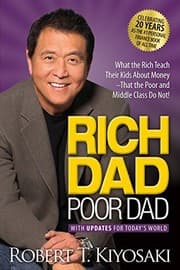
So, um, in terms of what can somebody do, the first thing I wanna say before I talk about coursework and all that other stuff is that, um, you need to first learn what money is, um, how it's created, how it's generated. I tell people all the time, YouTube University is absolutely amazing. There's a lot of free information on there- Yeah ... on truly what money is. Robert Kiyosaki's, um, I hope I said his la- his name right, um, "Rich Dad Poor Dad" is a textbook everyone should just read to really understand what money is. Now, I'm gonna say this out loud just to be clear to any of the listeners when this is clipped up, um, everybody is not an entrepreneur.
It's not meant for everybody to be an entrepreneur. But everybody needs to be an investor. Everyone. Your money needs to outwork you. It's just, it's just how it works.
Thankfully, I was able to be blessed to start a business that did really well so that when my parents retired, I'm able to take care of them. Because I've watched my parents do the whole 401and Social Security thing, and both of them, um, um, separately are making about, um, $2,000 each from Social Security and their pensions and their 401. $2,000 each, no more than 2,500 in 2024. So thank God my parents live with me. So that's why it is important to understand investing, whether it's in the S&P 500, whether it's investing in your mind, whether it's investing in buying a business, whether it's investing in buying real estate, you have to invest your money to outbeat COVID, to outbeat bad times, to outbeat inflation. Um, and also do not, um, and this is something so simple, whenever we get raises, we increase our lifestyle.
Mm-hmm. No. The more money you make, the more money you should invest, right? Um, you're making $100,000 a year, but you're driving a $30,000 car. That math doesn't make sense, right?
So just because you, you got the VP title and now you're making $200,000 a year, you don't need to upgrade from a Camry to a Lexus. Stick with the Camry, invest that difference, um, in, in, in stocks or bonds or something that's more comfortable if you don't understand money. But if you go to our YouTube university, you start, um, investing in certain mentorships, financial literacy mentorships like Bellason Academy, where we teach about credit, we teach about funding, and we have different speakers that come on. Like tonight's class at 7:00 PM, we're gonna be talking about trusts, right, and asset protection. So I have assets and I gotta put them in a trust so that they're protected and that they can be passed down tax-free to my children.
These are conversations that you need to have. I know a lot of listeners, they have a house, right? And when you pass away, there's gonna be up to 50%, if you paid off, there's gonna be up to a 50% transfer tax that your children would have to take, but since they don't, since they don't wanna pay the 50%, someone's gonna come in, the predators are gonna come in and buy it off your children. Mm-hmm. And the asset that you worked 30 years to build up is gone, all because you didn't have the education on what a trust is and moving your property into a trust, and it's not about what you con- um, own, it's about what you control.
And now that your, your son controls the trust, they can move that into, they can move that tax-free to them, and now they control it, and now we're talking about generational conversations. I love that you just brought that up because one of the things we talk about on the show, and, and, and I try to talk about as much as I can, is generational thinking. Mm-hmm. And how so much of the day-to-day friction or pain that we feel is this next moment mindset, right? Just- Mm-hmm ... what do I have to do the next moment?
The next moment, the next moment. We never take or schedule, if you have to, the time to pick our head up and go like, "Okay, what do I need to do a year from now? What do I need to do 10 years from now? How do I make sure my kids are taken care of as much as I feel or can take care of them? How can I make sure that my kids are set up so that they can then teach their kids?"
Kids, right. Like, we just, we're, it's so just the next moment. So, um, when you're working with someone or you have a, a student or whatever, like, is it scheduling time? Is it a specific process? How do we start to think out in the future and go, "Hey, maybe I do need a trust.
Maybe I do need, uh, to put this business I do out of my garage in an LLC." Maybe, you know, or, or whatever. Like, h- what is the actual, like, tactical process of planning this out into the future? I'll give you an example. Let's get specific, 'cause I know that, that's what you need right now.
So, um, I had a client come to me in debt, saw me on Instagram, "Oh, you got millions of dollars in funding and you're investing in all these business. How?" So as we're having these conversations, there's somebody that's living paycheck to paycheck, and they just can't do that, right? Um, not only do they not have money, they also don't have time, because I have to work a double and a triple, so I don't have time to go on YouTube University right now, Hartman, right? Yes.
And then we'll have the conversation about sacrifice, um, 'cause I'm pretty sure we can find time. So the first thing I talk about is taxes. Taxes are our most, is the biggest bill that we have. Mm-hmm. So that's another project I have with people.
Like, what's the biggest bill you have? My mortgage, my kids, daycare. I was like, "No, it's taxes." Taxes take 30% of your income on the low end, right, if you're a W-2. So let's help out with these taxes.
I want everybody, first thing I want you to do is to go get an LLC 'cause that'll help, that'll help you, um, with pass-through and help you with taxes. The second thing I tell them to do is we were taught, right, especially in my community, to adjust your I-9 or your W-2 when you first got the job to take as much deductions out so that in January you get a big refund check of two, three, four, $5,000 depending on if you have kids, right? So, and for three months on Instagram, everybody's on vacation and, and life is great from January to April, right? Yeah. So I tell people the first thing we're gonna do, we're gonna adjust your W-2s, talks to your tax professional, where the money that you are giving to the government to hold for you at 0% interest is a crime.
Mm-hmm. That's the first thing I want you to do. Talk to your tax professional so that that two, three, four, five, $6,000 that you're giving to them, no, you're getting it all during the year. So just by adjusting your taxes, now you're gonna be making an extra two, three, four, $500 per paycheck or per month that you're receiving. You're gonna use that money to first pay off debt, right?
So if you- so this is how I tell people, I do a class like, "Hey, how do you pay off debt without getting a second job?" Everyone shows up to that class. They're like, "What? That sounds really interesting." Mm-hmm.
Adjust your taxes. So now you're making up to $1,000, 'cause I've seen people do up to 1,000, like they get $1,000 back. Now you're paying down your credit cards 'cause that's 20% interest. You're killing that debt. So instead of paying the $100 minimum payment, you're paying $1,100 now, killing the debt in three months, six months.
Now that that credit card debt is paid off, that 1,100, you're gonna put it on your car note. That's four or $500 a month, right? Now you're paying $2,000 towards that car note. Within two years, I'm just giving an example here, you're out of significant debt, right? Now the, what's the next plan?
Remember I said everybody doesn't have to be a business owner, but everybody has to be an investor. You just freed up $2,500 now, right? 90 days I want you to save it 'cause you need a nest egg for an emergency. Then after that, and this is a long-term plan, none of this stuff is overnight, guys. That $2,500 now I just want you to start investing it, whether it's in courses, whether it's in mentors, or whether it's in just in a safe S&P 500, putting in insurance policies, whatever you wanna do, start investing that money so that it can grow because you need to outbeat inflation, right?
And that's the-- those are the minimum steps that any- everybody can do. Today is Wednesday. On Monday, talk to either your tax professional, go to your HR department, right? And those are the first steps that you can do to start to free up your money and free up your mind and free up your time. Herman, I, I could go all day with you, man.
I love this stuff. This is incredible. I, uh... Dude, uh, seriously, this, this is... The way that you're approaching this, and, and I, and I love how you have, you know, you, you obviously understand the context and perspective, but you also, um, you know, have a humility to this.
It's just, it's such a great delivery and, uh, I, I'm, like, thinking to myself, you know, I'm going, "Shit, I haven't... My house isn't in a trust? Damn it." Like, I know- It's one of those things, it's like, you know. And I...
So dude, I love it. I absolutely love it. So, so people who are dialed in here want more, want more of you, wanna connect deeper with you. Where can they go to both just connect and follow you, but also I know you have some, uh, a program and some coursework. How do they get deeper into your world?
So you can find me on Instagram, Twitter, um, TikTok. I am Haitian_CEO. A lot of scam pages, but it's a verified, verified page. You can find me there where I have these type of talks and conversation. I talk to the camera every single day, 6:30 AM I'm posting the information. 'Cause on your way to work, while you're brushing your teeth, I want you to get a 60 to 90 second clip of some gems that you can do.
You can find me on YouTube, Bella Sloan Enterprises. Bella Sloan is the name of my firstborn daughter, um, beautiful seven-year-old girl, um, where I have long format videos. 'Cause remember, Instagram and TikTok is just short information, and I go live often where I do hour or hour and a half classes to, to talk about this, and all that is free. So I wanna give you free information first. I want you to execute on that free information. And when it works, guess what you're gonna do?
Be like, "Oh my God, I went to Bank of America and I was able to refinance my car from my b- personal name to my business name, so now I have a paid off car on my c- credit report, so that's, looks super sexy. Hey, Herman, I went to that credit union that you told me to go to, and they gave me $10,000." Excellent. I want you to have receipts of the free information. And if you're interested, um, I have a mentorship called Bella Sloan Academy.
It's subscription, it's only $50 a month. We meet every single Wednesday night where we talk about credit, we talk about funding, and then we bring special guests on every single, um, month to talk about different things to expand your mind. So last week we had somebody come on to teach people how to buy businesses. It's one thing to start a new business, but what if I showed you how to buy a cash flowing business that's already making money, it already got its taxes, for only 5% down money out of your pocket, and the SBA will pay the other 95%? If I did, if I did that for you, would you be interested?
Sound like a salesman right here. And that's only $50 a month. We have people joining again tonight. We have the trust person coming on, because now that I showed you how to buy a business, that business gotta go in the trust, 'cause it's gotta be protected from litigation and from taxes. Yeah.
I love it, dude. I love it. Guys, dial in on Herman. R- this has been tremendous. I appreciate the hell out of you, and hopefully we have a chance to chat again.
Ryan, this was incredible. Thank you for trusting me on your platform and to talking to your viewers. Thank you. Let's go. Yeah, make it look, make it look, make it look easy.
Hey, stand up Thank you for listening to The Ryan Hanley Show. Be sure to subscribe and leave us a comment or review wherever you listen to podcasts. Ain't anything for me. I never switched up, no changing me. The only thing changing is Close twice as many deals by this time next week.
Sound impossible? It's not. With the One Call Close system, you'll stop chasing leads and start closing deals in one call. This is the exact method we used to close 1,200 clients in under three years during the pandemic. No fluff, no endless follow-ups, just results fast.
Based in behavioral psychology and battle-tested, the One Call Close system eliminates excuses and gets the prospect saying yes more than you ever thought possible. If you're ready to stop losing opportunities and start winning, visit masteroftheclose.com. That's masteroftheclose.com. Do it today. If you liked the show, please take a moment to rate, review, and subscribe.
It really does help the show to grow. Thank you for listening. Happy holidays. Want to give your host a gift? Consider subscribing, rating, and reviewing the show this holiday season.
It really helps the show grow. From all of us at Believe, have a Merry Christmas, everyone, and a happy holiday.