The Billionaire Case for Small Bets
with Richard Harpin
Episode Answer
The Billionaire Case for Small Bets is a Finding Peak podcast episode hosted by Ryan Hanley with Richard Harpin. The conversation explores leadership, performance, entrepreneurship, and the work required to build with clarity under pressure.
Read the Conversation
Show the full transcript
I think that's the wrong discipline. My magic model was hiring people that were better than me. Entrepreneurship is a high-risk activity. I have always struggled with goal setting. Don't set any goals.
Don't try and become too big. Keep it small, prove it out, and then go big. Copy what others are doing 'cause it's working. We need to be very protective of our mental energy, attention, focus. They can either spend more quality time with their kids, or they can put in five or six hours of extra work a week and earn more money.
Sir Richard Harpin, you, um... I have so many things that I wanna talk to you about. I'm so excited for this conversation, and I just, uh, I appreciate you making the time, my friend. And do, uh, do just call me Richard, Ryan. I did think that my knighthood would, uh, help me get a, uh, a better seat in a, uh, London restaurant, but then I, um, somebody told me that they make a surcharge.
Like, like any true, um, any true good deed, you know, it comes with a price, right? You get the, you get the Sir, but now you gotta g- now you gotta pay more for, for your next cheeseburger and pint, so, um. Absolutely. Well, I wanna get into something that I saw actually on your Instagram channel that fascinated me, and it was just a cl- uh, a snippet, but the topic, um, ah, just I'm, I'm really interested in hearing the more expanded version of this idea, which was the idea of big bets versus small bets. And if anyone listens to business podcasts, entrepreneurial stuff, you know, uh, um, Peter, uh, uh, Diamandis, who is phenomenal, has the Moonshots podcast.
Everything's about big bets, burn the boats, and you had some really interesting takes on, on small bets and, and the value that small bets make and, and how they play a role. And, and I'd love to start our conversation in big bets versus small bets from someone who's built a billion-dollar company. Yeah. I'm a big believer that you need to prove things out small, and I learned that the hard way because, uh, a great example was, uh, my original plumbing emergency business called A1 Fast Fix. Uh, started it with my life savings and my, uh, business partner's life savings, 50,000 pounds, and we grew it, and the business model didn't work, and we ran out of money.
We then managed to get half a million pound investment from a UK water company, and I thought, "Right, I'm gonna grow the business even bigger. It will get to economies of scale." And of course it didn't because it was the wrong business model. The business got bigger, and the losses went from 10,000 a month to 50,000 a month. So my learning was stay small, bootstrap your business, test, learn, copy, pivot, and make sure you get the right business model.
When you have, then press the accelerate button, and that might mean going and getting investment to really scale the business. But don't do that until you've absolutely categorically proved your model. So why then do you think there is so much moonshot, swing-for-the-fences pornography out there? Is that just clickbait to sell stuff, and behind the scenes all these entrepreneurs are kind of thinking the way you are? Or is this just a philosophical difference that people have in business?
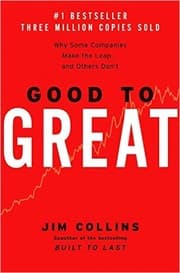
I think it's a message from some people that says, "Oh, you've gotta go big at all costs." Um, venture capital in some, some periods have said, "Well, uh, we'll give you loads of money to test and prove your business, but just go big and throw loads of money at it, and eventually it will work." And I think that's the, um, that's the wrong discipline. Keep it small, prove it out, and then go big. Jim Collins, w- in his book, Good to Great, would call it firing bullets and then when you hit the target, then fire the cannonball.
If you fire the cannonball at the beginning, you, uh, run the risk of busting your business. Yeah. I was listening to a, a kind of startup-oriented podcast the other day, and a very successful investor was on. And, and I don't think he meant anything negative about this, but he said, "You know, I, I wanna see two or three failures, you know, before I invest. Like, I wanna know they've, they've, they've run into a wall before."
And, and, and I... At a, in a broad stroke, I can kind of understand what he's saying. But at the same time, a- as the actual operator, like, that is devastating. And it is oftentimes you don't survive the first major miss, especially if you're doing it, you know, kinda counter to what you're suggesting, which is you fire a cannonball and you miss. That, that bounces back with almost just as much, you know, negative impact on you, your emotions, your relationship, your bank account, you know, all this kinda stuff.
So I guess what I'm trying to get at is, is... Like, I'm trying to break this down 'cause I'm like, I'm in your camp. Like, I, I'm more in your camp. This is what really fascinated me is you're one of the few people that I've heard who's at the level of success that you're at preaching this type of philosophy. And I'm trying to kind of wrap my head around why so... this is so pervasive, this constant...
And maybe it's more of a, and I could be wrong here, push me, maybe it's more of just a, an American cowboy, you know, shoot-the-big-gun-first always kinda philosophy. Or is this just, like, talking point fodder? And 'cause the businesses that I've seen be successful and the entrepreneurs I've seen consistently be successful have more of the philosophy that you are preaching. Yeah. And I, I think that, um, entrepreneurship is a high-risk activity.
I don't know the numbers in the US where, um, quite often, um, Americans would say that failure is a stepping stone on the way to success. It's frowned on here in the UK. Therefore, I think you get more caution. And, uh, there's two bits of advice that I would give to, um, uh, people that want to be entrepreneurs, and that is don't be afraid to copy somebody else's idea. If a business is already working, then, uh, that means it does work.
Copy their model and improve it. I did exactly that with, um, uh, with HomeServe in the UK, copied somebody else's model and improved it, and that was the magic model, triple A for the home. And then secondly, don't be afraid to go and buy a business. There are lots of retirement sales out there, and, um, those are existing businesses that are making profitability. And the big objection might be, "Well, I haven't got a lot of money to go and buy a business.
Where would I raise the money?" And the answer is vendor finance. Somebody that's selling the business, particularly if it's a retirement sale, if they really like the person that's buying the business and think they're capable, will say, "Put down a small amount of your own money," maybe a, a bit of bank debt, because a bank will lend against a profitable business, and then the seller of the business will, um, agree to repayment over maybe a three-year period. So that's another s- smart way for people to get into business is to, um, to do it by acquiring somebody else's already profitable existing operation. Yeah, I, I love the recommendation of buying an already operating business.
Um, I don't know if you're familiar with Codie Sanchez's work, but she's been popularizing this idea, uh, as well. She calls it buying boring businesses, so she advocates for buying plumbing shops and HVACs and, you know, uh, pressure washing businesses and stuff like that. And, and what I like about it is I think for too long, um, there was almost like an, an ego trip around it had to be like this, and, and nothing against Peter Thiel 'cause I'm a, I'm a fan of him and the way he thinks, but he kinda has this, you know, be a category of one type mentality. If you can't ... You know, which I think I get what he's going for, but I also think it shuts a lot of people down who are sitting at home going, "I really would like to run my own business.
I feel like I have the chops to do it, but I don't have some idea that's a category of one," and they, and I think it shuts them down, where what you've just presented are ideas of, hey, maybe, um, you see something working in, uh, like you said, triple A cars, but, but now we can move that and say, "Okay, we can take this idea and maybe apply it to home service, or we could apply it to, you know, insert other business." But if I'm ... Let's, but I wanna go into the buying a business. So, um, and y- I know you also have a, a venture fund, so you're very familiar with this entire game, uh, bought businesses, et cetera. So if I'm, if I'm listening to this and I'm saying, "You know what?
I, I've always wanted to go off on my own, and, and but I've never had that idea," that's been maybe a big blocker is I just didn't feel like I had that original idea to start, but geez, I, man, I, I'd, I'd love to own a plumbing business. My dad was a plumber. I used to help him, and it's, and I get that, like, in this AI world, these types of physical human businesses are gonna be, have real traction. How do you start to go about that process? How do you evaluate your opportunities?
How do you think about purchasing an already existing business if you've never done it before? Yeah, I would, um, take a listing, so maybe go to Entrepreneur Magazine and look at the, the listings of every franchise business. I'm a big believer of van-based service businesses, particularly those are businesses that are going out and doing something in a home or in a business environment, and those are most likely the businesses that can be made more efficient through the use of AI, better scheduling, better, uh, routing of the vehicles, but unlikely that a, uh, a skilled technician going out to the home or the office is going to be, um, uh, uh, taken away through, um, through AI. And certainly in the UK, we've got a real shortage of skilled tradespeople, uh, what, what you would call pros. And so I see AI shutting down call centers and releasing a lot of people's lives that have been doing boring, tedious, uh, answering of customer calls that a voice bot can very easily do more efficiently and cheaper, and r- releasing those great human lives to go and work in people's homes and offices and do worthwhile things that are offering great customer service.
I actually just signed, uh, my very first traditional book publishing deal two weeks ago, um, and it's around this concept that I call easy mode, which is essentially that thing that you do that looks like cheating to everyone else, right? What is that thing for you, and then how do we build your life around that idea? Not, you know, how do we use AI, outsourcing, or automation, et cetera, or just simply removing something from your life to get you more into the thing that is your easy mode and out of these transactional zero value tasks that, you know, were part of the job and took us away from that thing, which could be twisting a wrench, right? You might just love being under a sink, under, you know, in the basement fixing pipes, you know, you just, what you enjoy doing, but if half your time is scheduling and, you know, follow-ups and, you know, AR and, or, you know, accounts receivable, et cetera, like Those things are taking you out of what's your easy mode. So again, wh- where are some of the, the easy wins in that place?
You know, having built, you know, home service and, and being a big part of this service-based thing. Like, when you're looking at this and examining, you know, and there's a lot of, I'll tell you, there's a lot of, um, uh, SMB owners, a lot of service owners that listen to this show. Like, where are some of the places that you're seeing some easy wins for these guys and gals that, that they can start to implement in their business and get some of their time back? Yeah. Um, I would say it's all around, um, um, AI applications that would do the, um, quotations, that would do the, um, the invoicing and chasing those invoices, and the payments, would be doing the routing and the scheduling of work.
Um, I, I think that's gonna make a tremendous, um, effects on the efficiency of a business so that the, uh, the major cost will be the cost of the, um, the technician going out to the, uh, the customer home. And we are, um, we all want to be able to get somebody out to do all of these repairs to assemble our, um, flat-pack furniture rather than trying to do it ourselves. So releasing more people to get them into doing services to the home is going to, um, is gonna really help. Where do you fall on AI with... This is, I get this question quite a bit is, is, "Should I be learning Claude Code or Codex or Cursor and, and building these applications myself, or should I be looking at some of these off-the-rack AI tools?"
Like, in, in today's terms, right? I, I think in the future, I don't know where the future's gonna go. But, but look, I think in, in today's terms, I'm, I'm kinda caught. I, I tend to be a little nerdier, so I love... Like, I tore my entire site apart and rebuilt it from scratch using Claude Code, right?
So replaced WordPress, replaced all this stuff, and built it myself. And, but I'm nerdy. Like, that's a Friday night for me. I don't know that many people are gonna wanna do that. So when, when you're looking at return on time, uh, where, where do you think a, a service professional, you know, in particular, where should they be spending their time?
Should they just be looking for off-the-rack stuff, or should they be really digging in and trying to understand what a Claude Code could do for them or build for them from scratch? Yeah. I, I would recommend second-mover advantage. So look for AI applications that, um, other business owners are using where it's a proven case and it's working, it's efficient, it's low cost. Um, don't be bleeding edge and take AI applications or try and develop your own versions.
Copy what others are doing 'cause it's working and it's having a big effect. Uh, jump on the bandwagon, but only where you can see that a similar business is getting a, um, a big efficiency gain. Yeah, I like that. So, like, if you're a super AI nerd or maybe even a white collar, uh, more knowledge worker base, maybe it makes sense to get your hands into Claude Code and figure out how you can move some data around. But if you're out there, like I said, twisting pipes or s- pressure washing stuff or whatever you're doing, there's just, that return on time is not worth digging in and trying to build it yourself.
No. Um, I'm invested in a, uh, a business called Checkatrade in the UK. Uh, we have over 50,000 pros on the, um, on the marketplace, and we've developed software that is called TradeMore, and it's available for all of our, um, all of our pros. And it is literally, um, AI as an app that helps a pro to, uh, to run their business. So they can free up some of their administration time, and they can either spend more quality time with their kids, or they can, um, put in five or six hours of extra work a week and earn more money.
Yeah. I love that. I love that. I think, I think, I think it's very smart advice, guys, uh, for those of you listening at home, that we're, I think we're all gonna be pushed, and it's gonna be kinda shiny object syndrome for a while with AI certainly, maybe even be in, like, the first inning of shiny object syndrome. But I, I think more than ever, and, and, you know, correct me if I'm wrong here, we need to be very protective of our mental energy, attention, focus because AI in particular seems to...
I mean, you can go down some rabbit holes and not come up for days, and that's a lot of lost time if, if you're not kind of protecting your work hours and protecting your focus. Absolutely. Yeah. Yeah. So okay.
You wrote the book, Nine Steps to a Billion. Um, my first question was, is a billion... Like, should we be shooting for a billion? Is... Like, what's...
Like, I guess, a- and me- Take this question however you were, uh, however you want. When I sit down and I, I'm looking to grow, let's say I have a business, but I, but I wanna grow. I'm ambitious. Maybe I'm early 30s, and I wanna... You know, I know I got 30, 40 years of good business in front of me, and I wanna grow something substantial, build a legacy.
How do I pick the target? Like, do I go a billion dollars in revenue? Do I go 10 million? Do I go just, hey, let's just not have a goal, focus on systems? Like, like, how do we pick that initial target 'cause, and I'm asking this almost very selfishly, I have always struggled with goal setting because, and I'll do last piece of context, and then I'll, I'll let you answer.
I've always just in my head had, "I'm gonna work as hard as I can no matter what. Whether my goal's a billion or 10 billion or 10 bucks, I'm gonna work as hard as I possibly can." So I struggle with where to set that goal. So h- where do you start with goal setting? And, and, and if goal setting isn't even relevant- To, to getting there, then w- I'd love to have that discussion too.
Yeah. I, um, I didn't start out saying I wanna build a business worth a, uh, a billion dollars or a billion pounds. Um, it was really just I w- uh, I wanna run a successful business. I'm not quite sure what it'll be. Tripled it.
Uh, stumbled into the, uh, the triple A idea and, um, and that worked. Um, o- once I was running the business, then we did start having five-year plans, so we did set some goals. And if you, um, if you shoot for the stars and you only get to the moon, then that's great. So I am a believer that at some point in the, um, evolution of the business that, uh, you should set some big, hairy, audacious goals. Um, if you don't, then, uh, you won't get there.
So, um, my recommendation would be that entrepreneurs should set some objectives, but when they've set the objectives, then it's about also saying, "What's our purpose? How are we going to be different from our competitors? What's our economic engine, and how are we gonna make money?" And if we focus on running the business and making our customers really happy and growing the business, then the, uh, the dollars will be the, uh, the by-product of that. So I do believe in objectives, but it shouldn't just be about saying, uh, "I'm focused on these big goals and getting rich quick."
If you could go back to, uh, your younger self before that first iteration of the business that didn't work, was there a, a moment in there that, in hindsight, obviously you did the best you could in that moment, but in hindsight, maybe there was something that you could go back and tell your younger self, "Hey, there was a moment here that you missed," or there was a stat or an inflection or something that had to do in the economy that you could have avoided the first business model not working, or is that just part of the process that you had to go through to get there? I think it's going through a process to find a model that works, and what I would tell my, um, younger self today would be, "Don't set any goals. Don't try and become too big. Just focus on finding r- the right model. Don't worry about scaling and size.
You're in the founder phase, and you just need to get a model that works." Only when you've got the model that works do you press the accelerate button. And it's in that professionalizing phase that, um, you then say, "Right, uh, we should set some goals. We should develop a three-year plan. We should know where we're heading.
Uh, we need to know whether we need to go out and get an investor in order to fund that growth or not. Uh, we need to start bringing in the, um, uh, an experienced team to help run the business." How do you know when to make the transition from founder phase to professionalizing phase? When you've proved your model, that you're then, uh, getting some growth, and you're then saying, "So where are we gonna take this business now?" And, uh, at some point within that professionalizing stage, it would be saying, "I wonder whether there's an opportunity to, um, take this business into a, um, a foreign country."
Many American businesses, it's such a big country that, uh, uh, Americans never need to, um, expand outside of, um, uh, out- out- outside of America. Whereas, uh, in a small country like the UK, um, being able to globalize a business model is really, really important. Yeah, I was, um, working with a company a couple weeks ago that is, uh, that was thinking about entering the US market, and they're a UK company, and, uh, what was interesting to me, and, you know, I don't have as much international experience. Most of my business career has been inside the States for the most part. A little bit, uh, Canada as well.
Um, but what was really interesting was listening to them to des- describe the process of, uh, you know, in their words, kind of conquering the EU. You know what I mean? So, like, they had expanded out of the UK and, you know, hit, hit Spain, I think, first, and then France, and then now they, they're kind of tor, uh, top three leader in their category in m- most of, of, uh, of the EU. And then listening to, to that and then the expansion into the United States and, you know, kind of the ... And I'm, I'm interested in your take on this 'cause their take was that dealing with the f- the 50 states, the fact that it's 50 regulated bodies inside a federally regulated body was fairly unique and an, and a, and a challenge.
Um, not maybe necessarily harder or, or worse, just, just fairly unique to their expansion into some of the other countries within, uh, you know, Western Europe. Is that, is that true? Is that a fair assessment? And, and, and how ... I- I'm very interested, having, coming from the United States looking out, what it looks like trying to come and bring a business in.
Yeah. I, um, uh, my dream as a aspiring entrepreneur in my teens was to go to that big country called America and copy a business idea and bring it back to little UK. And so when I went out to, um, to the US for the first time, uh, and that was on a business trip in 2002 And utility branded home assistance cover, AAA for the home didn't exist. And I thought, wow, fantastic opportunity. It's the, um, we speak the same language.
Uh, it's gonna be really straightforward to take the business model and put it across every state in America. And of course, it wasn't. Many British entrepreneurs fail in America, and I was there for six years. I sent a really good guy that worked for me and ran the UK, sent him to America in 2003. Six years later, and the business was still really small.
We were making less than $10 million annual profit. And I'm a great believer in, uh, the power of mentors. There was a guy that I came across that was Americanized, but he was a Brit who founded Capital One in the U- in the US. A guy called Nigel Morris, he was a co-founder, and I thought, "He can help me to crack America." So I emailed him, no response.
I sent a direct mail letter, then a DHL, urgent, important, still no response. And one evening, 11 o'clock UK time, 6:00 PM East Coast, Washington, DC, which is where he lived, I didn't have his cell number, but I did have his, uh, landline office number, and I called it, and lo and behold, he answered the phone himself. And I said, "You don't know me. I'm a struggling British entrepreneur trying to make it big in America, and I just need an hour of your time." And he said, "Oh, I do remember your letters and your emails, and I'm sorry I didn't respond.
Persistence pays. Next time you're over in America, I'll give you an hour of my time." I said, "It just so happens, Nigel, I'm in Washington, DC tomorrow afternoon." And of course I wasn't. I got on the first flight out of London, and I was in his office 2:00 PM the following afternoon, and he gave me two hours of his time.
And it's... He said, uh, "Where are you based over here?" I said, "Oh, we're in Miami." Said, "Absolutely not." Shook his head.
"If you wanna be a serious American business hiring serious American business people, you need to be based between Boston, New York, Washington, DC, five-hour time difference for the UK." And he was right. All the people that we hired into Miami in HomeServe in the early days either wanted to go to the beach at 4:00 PM or smoke dope. That is not how you build a serious American business. His second question was, "Who have you got running your US business out here then?"
Said, "Oh, a fantastic guy. I sent him out six years ago. He's a Brit." Shook his head. "Absolutely not.
Americans buy from Americans. You need an American chief exec, otherwise you won't be taken seriously." And we were struggling to sign up all the big American utility companies where we wanted to use their brand name and their customer base to sell our AAA cover. So I brought my Brit home. We left Miami.
We moved to Norwalk, Connecticut, an hour north of New York. Hired a guy called Tom Roosen in 2010. Uh, 16 years later, Tom is still with HomeServe as the chief exec in North America, and the business made $300 million of EBITDA last year. Wow. That's an incredible story.
I mean, I love the idea of call- you know what I mean? 11 o'clock your time calling him on the pho- I mean, that's brilliant because he's last one in the office, you know. The, the receptionist or, you know, whoever's his gatekeeper's probably already gone home for the night. That's absolutely brilliant. So the learning is, I call it step number six, go global with locals.
If you wanna build a big business in a foreign country, have people on the ground, establish a presence. Doesn't need to be all the team, but you've gotta hire a local chief exec, and then I call it my 15% rule. Don't change your business model by more than 15%, because if one day you're in 20 different countries around the world, and if you imagine that every country was 25% different in the way that you'd change your model, recipe for complexity and disaster. So change the bare minimum. One of the guys that I really admire built Belron, which in the US is called Safelite, and he turned the business from worth 200 million euros to 24 billion euros in only 23 years.
And the model was identical in every single country. They went and they acquired businesses, and that was Safelite in the US. Uh, they ran, uh, it was called Autoglass in the UK, Carglass in Europe, but the operating model was the same. The only difference was the brand name. Everything else was the same.
So keep it really simple. Keep it the s- as far as you can the same in every country. I think that's fantastic advice, and I think it completely applies to the States as well. So my home industry is the property casualty insurance industry. Um, I exited in 2024 from a commercial insurance agency that I founded and, and sold, and it's very similar.
Um, a lot of... Uh, I'll use insurance as a microcosm, but- Being that every state operates differently, has different regulations, different rules, I mean, really Montana to Connecticut to Texas, it, it's in some cases insurance is only in name is it similar in the way that some of these policies operate. And, um, you know, when, when budding insurance entrepreneurs in particular will come to me and ask me about the... I, you know, it's funny, I, I had never framed it the way you have, which I love that, uh, around the 15%, and I don't know what that would be for insurance. But, you know, that's one of the things that I tell them is do not run into states that force you to do things too much differently too fast.
So depending on what state you come from, you know, that kinda dictates which states you can go to first. Because, um, what's funny is like, and this is all contextual and probably, I don't even know, it's probably not even interesting, but, uh, like if you come from New York, right, um, California, Chicago, and obviously I'm just naming liberal states, so that's probably why, uh, Connecticut, like they're very similar in the way that they operate, and your operations will be able to translate. If you're, but if you're in New York and you think you're gonna operate the same way in Florida, you are in, you know, you, you are sadly mistaken. I mean, it's a almost a completely different business. And, uh, a l- I think a lot of people ...
These are the types of details that I think separate the entrepreneurs that seemingly make it and those that don't. And I guess my question for you there is how much of this do we need to have our hand, our head out in the future thinking about brainstorming around, researching, et cetera, versus just situational awareness in the moment and un- and, and seeing, kinda playing the game on the field as it comes to us? If that question makes sense. Yeah. It's really important to spend quality time on the strategic planning of the business.
That's in the four quadrant time management model. That's the box which is important but not urgent. And it is about working out what the growth plan is, researching it properly, thinking about the options, and then, uh, making the decision on, uh, where you're gonna go and in what timeframe. Many British entrepreneurs decide, "Oh, right, I'm gonna, I'm gonna go for global growth," and they start expanding in several new countries all at the same time. They might do that while there's still a lot of growth to come in the UK.
They might do that before they've put somebody in charge of the UK. And if you've got the same team that are trying to run the home country and work on international expansion, there's a big opportunity cost. The UK, uh, the UK growth engine could slow down because everybody w- in the business wants to work on the, the shiny new stuff which is international. And then entrepreneurs are naturally foxes. They wanna go quickly.
They wanna go into lots of countries all at the same time, and they mustn't. They need to get a focused plan, do one country at a time, uh, plan it out correctly, get the right resources, hire locals in the country. Many businesses in the UK go bust by doing international expansion because they got it wrong. I would like to pivot for a second, and I, I'd like to learn a little bit more about the economy in the UK versus the US, and I'll be very frank. My understanding of the UK economy mostly comes from Trigonometry and Constantine and Francis, as I'm a huge fan of their show.
And, um, I know, you know, w- I think the entire world is dealing with, you know, different economic issues and, uh, you know, the major debate here in the States is, you know, where's inflation? I mean, and we've completely lost the ability to track inflation because we've been rigging it for so many years, and then you have numbers like Truflation, which seemingly are showing almost no fl- inflation, yet if you go to the grocery store and spend more than five minutes there, you know that inflation is real. So, so I mean, there's all these issues hitting and, you know, what is the UK in particular facing that you think are true headwinds versus maybe what we're just kind of hearing in, in media? Like, what are the entrepreneurs in UK really dealing with boots on the ground? Yeah.
It's really tough here right now. Um, costs are going up. Uh, energy prices are, uh, at a high. Um, lots of other cost inflation. Um, the government put a tax on, uh, employers' national insurance, which was a tax on hiring people and retaining people.
Uh, and that is, uh, that's really difficult. I think there's no problems in businesses paying taxes when they make a profit, but there shouldn't be taxes on, um, hiring and employing people. So that's made it really difficult in the UK. But I am a great believer that entrepreneurs are optimists. The very best entrepreneurs take any problem and turn it into a bigger opportunity.
And if you can run a business and you can grow it in a tough time, then when the times get better, the business is really gonna take off. So I would say there's no better time than to set up a, uh, a business in the UK right now. The UK is still a really good place from which to, um, run a global business. But actually, many UK businesses that are, um, operating internationally, they're doing better in the other countries than they are in the home country. The idea of taxing hiring and retaining people seems like the opposite incentive that you would want.
I mean, I, well, I mean, I, I, well, you know, I'm, I, uh, conservative here in the States, whatever that, whatever that means, and, um, you know, one of the things that we talk a lot about on the show and I talk with my guests about is, uh, like this idea of operating in reality, right? I think s- far too often, you know, and this is why I kinda doubled into some of those questions around big bets versus small bets and kinda some of that stuff, is that I feel like we're, we're given these narratives and, and biased, uh, uh, trying to get clicks, playing to my audience, and that it's very hard, particularly for entrepreneurs and, and just ambitious people who are trying to carve out good lives, even if it's not to be some mega-successful entrepreneur, but they wanna be successful enough to take care of their family and their kids and, you know, have some protection and kinda li- live a good life, right? It's very hard to parse, like, reality, like what's actually produces real results from all the noise that we get. Like, how do you recommend, like maybe you've gone through it, right? But you're still ingesting, I'm assuming, a lot of different content and reading stories and keeping up on the world.
Like, how do you carve out reality, like what's a useful data point for me in growing my business or investing, et cetera, versus just the constant noise that we're bombarded with from all these different angles? Businesses need to be aware of that noise, and entrepreneurs can't just bury their head in the sand and say, "Well, costs are rising. We're going to absorb them." Really important that they, uh, look at how they take costs out of the business. So AI is a great tool to be able to, um, battle down some of those rising costs and reduce some headcount that isn't required.
And that's really, really important. But equally, I think you've also got to rise above the noise and say, um, "I've got to focus on my growth, and despite all that noise, I'm going to follow the nine steps, scale up my business, and I am determined to turn it into a business that is worth be it $100 million or a, um, a billion dollars." How do you avoid some of the societal or political traps that seemingly are set all over, all over business today? I, I had a friend who, um, he was not the owner, but he was a C-suite executive at a f- at a business with about just over 300 people. And, you know, good guy, solid guy, uh, probably a, you know, I don't, I don't mean, you know, not to bring politics too much into it, but probably just a center of the road type of guy, you know what I mean?
Like, didn't really, wasn't very vocal on either side, just kinda lived his life. And, uh, you know, he was part of a lot of meetings, and we talked a lot about it during, especially during, like, the, the kind of major woke push of the 2000, 2020 to 2022 of... And I'm sure there'll be another swing, and there's right-wing versions of this, so, so take that out. But this, his particular case was all this stuff, like, around you can't say this and, you know, we need to, you know, all these different things that ... And, and this was the conversation they were having, uh, you know.
And, and again, for the audience, I'm, I'm not, this is not a political statement. This is just the situation that he dealt with, was they were looking at some of these things, and I think morally they're going, "Yeah, we want people to be included, and yes, we wanna be friendly to everybody," which I think everyone actually really wants. I, I s- no, I certainly do. But what is being pushed on us doesn't actually seem to align with where we're trying to go, and then they made some decisions to placate different groups. And, you know, as you get bigger, that pressure gets much more.
When it's 10 people, right, you can kinda lay the hammer down and go, "No, we're not doing that." But as you start to get larger, you get a board of ig- uh, you get a board that you have to answer to and you have a responsibility to, you have investors you have a fiduciary responsibility to, and you're getting downward pressure. Uh, you know, and, and let's say you're trying to get to a billion, right? I guess this is where we're in that nexus point. How do you keep your head clear?
How do you navigate those things? Like, did you have to ever deal with that where you felt like there was pressure coming in some capacity that wasn't related to your business that didn't feel like it actually helped your business? How do you navigate these things? This is a major problem, I think, for a lot of people today. I listed, um, IPO'd HomeServe on the UK stock market in 2004 and was a public company chief exec for, um, for 18 years.
And I noticed it became harder and harder to, um, run a public company with more and more red tape, more and more committees, more and more governance. And as a public company chief exec, you could be focusing on all of that, um, governance, and you get to Friday and think, "Ooh, uh, I haven't thought about how we're gonna grow the business this week. I haven't put enough time into going and listening to customer calls in the call center," or a retailer going out and spending time talking to customers in their, um, in their stores. So you needed a, a real discipline to say, "Gotta make sure you've, uh, you do comply with all of those committees and all of the red tape, and make sure that, uh, you've freed up enough time to spend on, um, on growing the business. Hire some people that can, um, look after the governance stuff."
Um, I think it did mean that, um- When Brookfield came along, the, uh, the big Canadian private equity house with over, um, a trillion dollars under management and made us an offer of £4.1 billion to acquire HomeServe, and we were a top 100 listed company in the UK, um, we thought that's an offer that's too good to refuse, and the next stage of our, um, our life as a company will be in a private environment where, uh, there are different pressures, but able to get on and run and grow the business without the, um, such a level of short-termism and, um, uh, focused on the, um, uh, the near-term results. Yeah. You know, it's really... Do you listen to the All In podcast? Have you heard of that show?
Um, yeah. So, um, Chamath was talking the other day on that show, and I thought it was really interesting. Um, and he actually made reference to this, that in previous years of the show, I think it's like their fourth or fifth year, they had talked about where did all the public companies go, right? Like, at least on the US exchange, there used to be 8,000. Now there's only 4,000, okay?
And then he said, "What's happened," and he, he, he said, "I'm actually not talking about that anymore." He goes, "I, I'm actually starting to think that these large private companies, it's actually a way better way of running a business." Like, if you don't need that public capital, like, make that a last resort, because you, you, you c- now have the ability to kinda sidestep all of this regulatory compliance committee responsibility kinda stuff, and now you're just your customers, your employees, and your investors, and that's who you're responsible for, and it's much easier to manage. And do you see this move almost back to more private businesses away from IPOs? Do you see that as a, as a future trend or a trend that continues?
Um, that's certainly what's happening in the UK. The, uh, the London stock market is underperforming. The junior market, which is called AIM, the Alternative Investment Market, um, has got, uh, less than 700 companies listed. It's fallen significantly over the last 20 years. And yet many entrepreneurs in the UK dream of listing their business on the, um, on the UK stock market.
So I do think that it's really important that we find a way that, um, uh, more companies can join the public markets. I think the, um, there is an attraction, uh, great for small investors to be able to, um, uh, be able to invest in those public companies, pick the ones that, uh, are the best, and, uh, they're getting a, um, a good return on their, uh, their money. I also think that the-- I, I'm with you. I, I, I believe in private companies for sure, but I think philosophically I would love to see more companies able to IPO for, for the reason, uh, the latter reason that you just suggested, which is, um, you know, a, a personal anecdote is I invested in a company. They're actually on a, a Toronto stock exchange, a Canadian company, that is moving into the US that, uh, does licensed, uh, psilocybin therapy for, uh, veterans specifically.
So PTSD, you know, very, you know, very targeted, clinical. You know, this isn't recreational at all. This is targeted therapy. But I mean, this is like 80-plus percent, um, response rates. I mean, these are, these are changing...
You know, particularly men seem to respond to this a, a little more than women, but women just as much if they had the PTSD. But I mean, changing lives. I mean, drastically reducing suicide rates, drastically reducing, um, you know, things like, uh, domestic abuse and domestic assaults in the homes because the, these guys aren't coming home, like, just filled with rage from these situations they've been put in. And here I am, random guy from New York, I get to put some money into this company and help support them, and look, does my, you know, 10 grand or whatever I put into it, does that change the... But you know, I think there's something to that and, and, and I think not just financially, which I think is obviously the primary reason, but there's also, like, a cultural component to being able to support and participate and follow along with the companies that you believe in, and I think it ultimately is good for our society to be able to do that.
Yeah. They, um, historically, the big news in the UK stock market was around, um, government-owned companies like British Telecom, British Gas being, um, privatized, and a big opportunity for, um, uh, members of the public to be able to, uh, invest in those big institutional companies. And that worked really, really well. So we've gotta find a way as a country to get back to that, um, uh, great stock market success. Yeah.
Richard, I, I could talk to you about business all day. Um, I wanna, I wanna close with this question. You can take it whatever way you want. Um, you know, obviously I'm, I'm working on this book project, but it's bigger than that. I'm very interested in, like, what would you consider your easy mode?
What is the thing that when you show up, to me it might look like magic or cheating, but to you, you know, not that it's easy for you, right, but that, man, you could do it all day. It adds energy to your life. You're passionate about it. What, what is that thing for you? That is my step number five in my book, which is hiring my replacement.
And that's a really tough thing for us entrepreneurs, but I worked out after eight years of running HomeServe that I was a rubbish chief exec, that I'd got lots of ideas, that I'd got vision. Uh, my team said, um, I challenged them and inspired them, and together we delivered more than we ever dreamt of. But my magic model was hiring people that were better than me, and, uh, effectively, um- I hired a guy that became the MD of HomeServe UK, and that then meant I could work on the business rather than in the business. When that worked, and he ran the UK better than I had, I then thought, "Right, as we grow into other countries and I can step up in HomeServe rather than step out, I'm gonna take responsibility for internationalizing our business," and then went and hired great chief execs in each of those nine other countries. And that was my superpower, was hiring people that were proven chief execs that ran the businesses better than me so I could just focus on the, uh, the vision and the model and the growth.
Sir Richard Harpin, my friends. We're gonna have the book linked up in the show notes, so whether you're watching on YouTube, listening on Spotify or Apple, wherever you listen, guys, scroll down. You'll have links to the book. But besides that, where's the best place for the audience to, uh, get deeper into your world and follow along with you and what you do? Yeah.
So first of all, um, the book is, uh, gonna be published, How to Make a Billion in Nine Steps, in the US next year. So not too early to, um, uh, go online to Barnes & Noble and to, uh, pre-order a copy of that, um, that book. And then, uh, we've got lots of valuable materials that, um, sit on, um, uh, a business that I own which is inspiring UK entrepreneurs to scale up their businesses. Uh, it's called businessleader.co.uk. So lots of resources there.
Um, we will in due course be doing webinars that, um, can be run remotely for any Americans that are interested in scaling their businesses, then, uh, would love to help. And one day in the future, we will be launching Business Leader, which is our nine-steps growth program, uh, with peer groups, with masterclasses, uh, in, um, in America. I love it. Thank you so much, sir. I appreciate you.
I appreciate the work you do. This has been a phenomenal conversation. Thank you. Thank you, Ryan. I loved the conversation.
Thanks for, um, inviting me
Books from this episode