S- supposed to be having things like a, a smartphone that has a computer, you know, basically in your pocket, a supercomputer in your pocket, and nice shoes and access to, you know, an abundance of choices. That's supposed to be luxuries. That's supposed to make you feel like you don't have to worry about money. But the necessities of our life have become so expensive that if you are in the middle and working class, that you are very likely on that downward slope of the K. You're having a very different experience.
What the is a K-shaped economy? Why is this such a problem? And why are all the smart people that I listen to, like, this is, like, the number one thing that's coming out of their mouth? 'Cause I don't know any regular people that know what a K- K-shaped economy is. But seemingly, the really smart people are talking about it a lot. So can you maybe start with just the layman's version of what a K-shaped economy is, and then we can get into why this is something that seemingly is so important right now.
Yeah, I think everybody knows what a K-shaped economy is. They just may not know the term for it, but they're definitely living through it. And if you think about the letter K, right, you, you've got this divergence. You know, one part of the K is going up and to the right, the other one is sloping down. And so it depends on who you are.
You know, that's sort of your economic experience. If you are an asset holder and you have a portfolio and you have a house, you've got a, a high-paying job, you've actually done very well over the last several years. We keep seeing that inflation in assets, um, you know, taking hold. And so at least on a nominal basis, not adjusted for inflation, but just the number that you see in front of you, it appears like things are going very, very well. If you are somebody who is not an asset holder or maybe just has a small amount of assets, but primarily you're dealing with the day-to-day cost of living, you're dealing with rent and mortgage, you're dealing with maybe the cost of education, food, travel, whatever else, you're having a very different experience in this economy.
Things are not going well. They're just seeming more expensive to you, and you're not participating in the inflation-of-assets piece to offset your feelings about that. And so it's really a struggle, and it's, you know, kind of a, a bit of a difficult thing to get our heads wrapped around because s- supposed to be having things like a, a smartphone that has a computer, you know, basically in your pocket, a supercomputer in your pocket, and nice shoes and access to, you know, an abundance of choices. That's supposed to be luxuries, and that's supposed to make you feel like you don't have to worry about money. But the necessities of our life have become so expensive that if you are in the middle and working class, that you are very likely on that downward slope of the K.
You're having a very different experience, um, and it's been a struggle. And, you know, that has sort of reverberated, um, through political choices, the overall environment, personal balance sheets in terms of the amount of debt that individuals are taking on. And so, you know, y- you can say things are great or this or that from a very macro standpoint, but you really do have to look at those numbers and realize the experiences of individuals are very different in the economy. Yeah. It, it has felt to me like there's a disconnect between the market and real life.
Yeah. And this seems to be the disconnect that I find when I'm, when I'm listening to different individuals who are talking about the economy or whatever. Um, like, they'll be the, "We're, the market's better than it's ever been. It's gone up." Uh, you know, you, there's 15 different stats that you can quote that make it sound like everything's going great.
And then as a single dad with two kids, I go to the grocery store, and it used to be $110 a week in groceries, and now it's $250 in groceries for the same number of bags. And you come home and you're like, "Well, I'm blessed in that that doesn't break the bank for me," but it's noticeable. You know, like a- and now I look back and I'm like, how does the, the, the, you know, single mom, single dad making $65,000 a year, that person, they don't get to do work on their car, or they're putting off a- Right ... health bill they have, or they're not paying for medicine they need because they have to pay groceries to get it in their home. And it's... That, I think that's what I see a big struggle with, or I personally struggle with.
I look at my investments, but then I look at my cash flow and I'm like, these two things don't seem to be mashing up together. Yeah, I comment every time we go out to dinner to my husband, you know, you sit down, you order, you know, at a nicer restaurant, a couple of burgers. He has some beers. Maybe you have an appetizer. I get a Caesar salad, and all of a sudden the bill comes and it's $170 before tip.
And you say to yourself, how does the average person who's working in this country go out and enjoy, not even an extravagant meal, just, you know, what a few years ago would have been a basic meal and has now just absolutely become unaffordable for many people? Or if they do want to take part in it, that they're putting it on credit cards or, you know, in the case of shopping, buy now, pay later, things like that, and ruining their credit. They're not building wealth. They're accumulating debt, and they feel like they can't get ahead. I mean, one of the things about money and prosperity is it's supposed to take away the financial stress that we feel.
In today's reality for most people, even if you do have enough money for some of these everyday luxuries, you're still, still feeling the crush- Of the cost of living, and it is permeating through everything you do. And by the way, not to get, you know, sort of woo-woo and psychological, but it does cause real issues. You know, it causes more divorces, it causes the stress that leads to healthcare issues. Money and worrying about money is a real issue given sort of how people used to be able to run their lives just a short time ago. It really is a stark wake-up call.
Yeah. I, I called it the other day and I, I hadn't really thought about this, it just came out of my face. I was talking to someone and I just called it the YOLO economy, right? Like buy now, pay later. Uh, like, uh, this is something that's boggled my mind is, um, these prediction market, the prediction market stuff.
Yeah. How there has be- how we had a decade of conversation around gambling online, and these states limped into it, and it's just like, oh, you wanna do the same exact thing, but now it's a contract or, you know, and now it's just, oh, go right ahead. Bet as much as you want on random things that happen in life, and we're not even gonna have a debate over this. We're not even gonna... And, and look, I'm, I'm not trying to curb capitalism or whatever, but the fact that there's-- we've just gotten to a point now where there is an entire seemingly multiple generations now, and the millennials, I really struggle with them, but Gen Z to me seems like, my impression of them has been that th- they're actually hardworking and a little more grounded individuals, except they have walked into an absolute shit storm of what it means to like mature into life.
And now they're, you know, I, I was just talking to a guy a couple weeks ago on the show where, and this is, this is kinda where I wanna get your perspective on, is like there's almost this desperation that if they don't hit these big bets, a big poly market, a- Right ... meme coin that blasts off or, uh, something like this, right? If they don't build some AI app that goes to the moon, that they're screwed. They have no chance, and they're just, they're just living in destitution until one of these moments hits. It's such an interesting observation and very different from, you know, what we've always been taught, right? Delayed gratification is the way that people historically have been successful and the way they have earned wealth.
People who are, quote-unquote, "overnight successes" often took 10, 20, 30 plus years to become an overnight success. Warren Buffett didn't really start accelerating and leaning into that, you know, big money status until he was in his 60s. But we have these young people, first of all, who are paying just an absolute insane amount of money for education. I call the US government the largest predatory lender on the planet, because they're taking people who are teenagers and they are giving them five and six-figure loans with no underwriting. There's no underwriting attached, and by the way, there's no ability to, you know, use a bankruptcy court to discharge that debt like in every other loan.
So they're walking into making these decisions, you know, they can't even buy cough syrup, but they can go and they can make these decisions. Um, and basically it's been a wholesale wealth transfer from the younger generation to college administrators. It's not even going to teachers, it's not going to things that improve the education. It's just going to administrative bloat. So you get people who are coming out of school and, and right as we're, you know, discussing this, I saw a stat that college graduates' earnings on average are down something like 8 or, or 9% year over year for something where the price keeps going up and up.
So they're not getting, in some cases, any meaningful return on their investment. It's saddling them with tons of debt right out of the gate, and so it becomes very difficult, you know, not only to address that debt, but to then start investing in those assets, the things that continue to inflate based on monetary policy and government policy. So no wonder the young people feel like they're so far behind, and then that desperation kicks in. "Well, I'm seeing all these other people on Instagram living fake lives. It looks like everybody is, you know, doing these wealthy things," because, you know, it's not about delayed gratification anymore.
It's about, you know, faking a lifestyle and pretending that I'm, I'm, you know, living large even though I've done nothing to earn it. And so there's this pressure to try to make these huge bets, and instead of building wealth slowly, they feel like they have to lay it all on the line, make the huge bets, you know, go all in on crypto and meme coins and prediction markets and things to try to not earn money productively, but to gamble. And that is not a winning strategy to be s- financially secure, although I completely understand where the pressure for that is coming from, and I do think it's something that we need to address on all fronts. Yeah. It got all of your answer, and then it, some, for some reason it dropped while I was o- asking my question.
Maybe it thought I was gonna... The universe knew I was gonna ask a stupid question. Maybe that's what it was. Um, uh, I, I get, you know, if I were 22 or 23, like, I understand it 'cause it's, 'cause it-- you, you're looking at the world and you're going, "Okay, I can't trust any institution that my parents could have trusted," right? I can't trust the executive branch, I can't trust Congress, I can't trust any type of business institution, large corporate.
It just feels like they're all trying to F me in the A, and I have no shot, and I have no idea who to trust. And then if I try to play it straight like my parents did, I'm screwed. I have no way of getting ahead. I'm gonna be saddled with debt. Uh, life is way too expensive.
So if I'm gonna be screwed anyway, why not just wild out and try to place all these bets? 'Cause hey, maybe one of them hits and my life turns around and I can actually hit that escape velocity and catch the part of the K curve that's, that's pointed up. I mean, it's sad. Like, it really makes me sad, but I 100% understand the mentality, and actually there's a part of me that's like, I- You know, considering where I came from, which was literally nothing, like, that's probably the game that I would've played at their same age if I was growing up right now. Yeah, it's funny, I also came from very little. You know, I paid for my own college.
I came out of school with $40,000 of college debt, which was obscene, uh, at the time that I came out of college. You know, now it's, you know, sort of par for the course. Um, so I, I understand the mentality too. Fortunately, I had a, a father who was very financially savvy. Um, he didn't go to college, he was an electrician, but he, you know, very much instilled the, you know, you don't take on debt.
You know, you, you do everything very conservatively, and that's generally served me, um, quite well. But I do understand, you know, the, the housing is so expensive, education is so expensive. As you said, it's a lack of trust. And the other thing that's going on in the zeitgeist, um, that we haven't really touched on is that it seems like the people who do the right thing keep getting slapped in the face, and the people who skirt the system keep getting rewarded. We see all of these frauds and these NGOs and these people who are basically taking advantage of the system.
We see criminals who are, you know, getting let out on the street. You know, if I, you know, step into the street the wrong way, I'm gonna get, you know, a ticket for jaywalking, but somebody who's punched people out in Downtown Chicago 74 times, well, we should just let them off the hook. So the incentive to play by the rules, um, has kind of... That, that social contract has been broken because you keep seeing time and time again, oh, you can open up, you know, day cares in Minnesota and make millions of dollars even though you don't have any kids or, you know, you can watch your friend's kids and they can watch yours, and everything's a scam. Everything's a fraud, which is something that happens, um, during bubbles when there's a lot of money in the system.
And so people aren't being rewarded for doing the right thing, and so it becomes more difficult to go down that path. You don't have enough people saying, "Hey, yes, you should do it. You should, you know, get rich slowly. You should do these things, and it is going to work out for you." Um, and so I, I completely understand the mentality as well.
Do you think that there was a time when people basically played it straight, and now we're just, there's more nefarious activity? Or do you think now we're just seeing the nefarious activity that has always existed in the system forever, we're just able to see it more because of citizen journalism and the internet and, you know, just, you know, getting, getting someone like Trump in who, for better or for worse, you know, good decisions, bad decisions, has kind of shaken the system, and there's been some rotten apples that have fallen out? So I think the larger the system and the more money in the system, the easier it is to hide things like fraud and waste and abuse. And so of course, it's always been, there's, there's always somebody trying to get around the rules. But given the size and the scope of government, of, you know, these various institutions in our lives and the amount of money that is running through them, I think it's easier to get away with.
Like, going back to, you know, something like the prediction markets, I mean, the incentive there to make a bet on something that you can control the outcome of is insane. I mean, it's basically like legalized insider trading. It's basically what Congress does, right? Yeah. Like the, "Oh, I'm gonna influence the outcome and I'm gonna make a bet on that."
And so we're saying, "Hey, here's a legalized way for you to manipulate the system, for you to participate in the fraud," and then everyone goes, "It's great," you know? And, and it, every telecast and football game and TV show is now sponsored by one of these entities that wants you to come in the system and do it. Oh, and by the way, if you're super successful, they're gonna find a way to kick you out of it, 'cause they don't want you to actually be successful. But that is the, the lure, the draw. Um, and I...
You know, we see it time and time again, where somebody, you know, has placed a big bet on something, and then you find out later that there's been some level of shenanigans. That person knew it was going on or they could actually influence the outcome, and they're the ones making the, the big bets to get the big paydays. So is the lesson here don't play it straight? Like, is the lesson like, screw it, like, all, let's all just kinda try to hose each other as much as possible, get ours and survive? Like, are we back...
Like, it, there's part of me, and, and, and again, you said you didn't, earlier you said you didn't mean to get all, like, woo-wooey. Right. You can get, go there if you want. Yeah. It's, it's okay on this show.
Um, it, you know, there's part of me that's like, this feels very much like Wild West, like, you know, when I think of, like, the Dark Ages or Ancient Rome. Like, you kinda no... Like, if anyone was ever looking out for you, today it feels like- Yeah ... nobody is looking out for you. And you kinda, I mean, obviously you have to have your relationship with, you know, with God or whatever if you have something spiritual. But, like, outside of that, you kinda have to, like, go get yours or someone else is gonna find a way to screw you.
I mean, that, that is a sentiment that I have heard from people. Like, you know, I'm 45. I, I hear- I've heard that from some of my friends who I would've never thought would even toss that out as a joke, and they're like, "I don't know, man. Like, I don't know how to get ahead. I'm making $200,000 a year with three kids, and I have literally no...
I, like, I'm, I'm, I'm, I run out of money every month." He's like, "I don't know what to do." He's like, "H- how do I... Like, how much more can I make that's gonna get me over the edge where I'm not at zero at the ever, ever... You know, I thought I was ahead of the game here."
And it's kind of a wild thought when you think about it.Yeah, it, it's a horrible thought that people have to resort to it. And again, I'm not judging it. I completely understand it. I think it's a bad path to go down for several reasons. Um, one is because there's always a flip side.
And so if you go after it and it doesn't work, the downside is gonna put you so far behind, um, that it's gonna be a hole that's very difficult to climb out of. Um, y- I also just think that, like, in a time where everybody's kinda going crazy and there is all of this fraud and corruption, like, there's never a better time to connect with your core principles and to be a good person. And, you know, when you are getting ready to leave this earth, whenever that may be, you're not gonna say to yourself, "Oh, I wish I would have gamed the system and had, you know, an extra sack of cash lying here next to me that I'm gonna, you know, die holding." Like, that's not gonna do anything for you, but you are gonna think about your relationships and your family and being a good person, and are you leaving that legacy behind, which, you know, arguably, um, is way more valuable than our currency that continues to depreciate in value. So, you know, I'm somebody...
One of the things that I think is, is-- I, I've always appreciated is that, like, by the time I had kind of gotten to my early 30s, I really knew myself well. I knew what my core principles were, and I have not deviated from them. I'm somebody who, who tries to stick to those principles and to be a good person and to be a good friend and a good wife and a good family member and try to be helpful in all of those things. And so, yes, I understand the desperation of looking around and going, you know, how, you know, "I'm being left behind," but that's your own perception. That's your own keeping up with the Joneses.
And I, as I said, I'm, I'm not judging. I understand that. But that is not going to bring you peace in life because when you get that money, then you're just going to then compare yourself to the Joneses the next level up. It's, you know, a rat race, and I forget the quote. Maybe it was Lily Tomlin who says, you know, "The problem with competing as a rat in a rat race is even if you win, you're still a rat."
So you have to keep that in mind. You don't, you don't wanna be the rat. You wanna say, "Okay, you know, what are the things I can do to lessen the, the stress and the pressure of these money issues in my life? But at the end of the day, does it change my life if I don't go on this vacation or if we, you know, do a staycation or a close to home thing instead of going to Disney?" Or whatever it is, the trade-offs you make.
You know, focus on the memories and the relationships and the things that you can control, and don't be so, you know, kind of pushed by the outside world. I'm not saying to not, you know, continue to work hard and hustle and make the smart investments, but also don't drive yourself crazy in the process. Yeah, I think that's wonderful advice. And, and just to be clear for the audience, I am not advocating for a, a demonic lifestyle- ... of cheating your way through. Um- I don't think, I don't think anyone-- Well, there's probably- Yeah ... three people who took it that way, but they were- Yeah, but, but- ... gonna take it that way.
No matter what we said, they were just gonna be like, "They told me. They said to go for it." Yeah. "I heard, I heard Carol and Ryan." They're like, "You know what?
Just screw it. We're just going for it." That's right. That's right. And I, I, um, I just-- It's very interesting.
It just-- I find these things as data points, right? And when you, you hear-- Sometimes when certain individuals say things that feel very out of context for them, it, like, rattles you a little, you know? 'Cause you're like, "I wouldn't have expected that person"- Yeah ... even, even if they're not serious, to voice that kind of concern. But what it does is it starts throwing alarm bells up. And, um, it's one of the reasons in 2026 I very much, uh, dedicated this show more towards economic related marketplace, these types of topics because, you know, a- going through 2025 and coming in, um, you know, when we talked about the economy, when we talked about business, investing, these types of things kind of pulling your way out of this, this desperation, if that's where you find yourself. Even, you know, I think we all kinda l- live that quiet desperation to a certain extent, but, you know, if you're above the threshold of, of what is natural or normal, um, you know, there's just so much information out there, and so much of it is absolute garbage, and sifting through it is very difficult.
And, and one of the places that I find so many people either have this skewed view or, or just a really hazy view is the Federal Reserve, right? And we have all this, you know, there's tons of news. Uh, obviously, uh, uh, Trump, um, just nominated, I'm gonna-- I know his last name is Warsh. What's his first name? Kevin?
Kevin Warsh. Kevin Warsh. Kevin Warsh. Yes. Um, and, you know, now Powell's on the outs, and is it, you know, independent?
Is it not independent? And then most people don't even think that it's just a building down in Washington. Like, they don't even realize that it's a completely independent body. So can you kinda lay out what is going on with the Federal Reserve? Why is, why is this transition from, uh, Jerome Powell to, you know, Kevin Warsh or whoever ends up getting, uh, um, um, brought in if, if he's not, uh, he's Trump's nominee obviously.
Um, why is this such an important time, and why, what is, why is the role the Federal Reserve p- plays so important to everyday life? Like, I think people think it's, it only impacts, like, big business or investments, but it, it really comes all the way down to, to everyday individuals.Oh boy, I thought we were gonna make people feel better, and now I'm gonna make them feel worse again. Okay, so stick with us for a second. Um, so let me just kind of give a little bit of perspective. So I'm somebody who started on Wall Street out of college 30-some-odd years ago, and so I've seen a, you know, a lot of shifts and changes in terms of what drives things.
And when I started out as an investment banker, as somebody who helped companies raise capital, as somebody who did mergers and acquisitions, who focused on the markets 24/7, when I tell you that we never talked about the Federal Reserve. They were not that important. They would pop up every once in a while when there was a crisis, uh, like in October of, of, you know, '87 and, and whatnot. They, they'd pop up every once in a while to kind of, you know, right the ship or Volcker, um, you know, after we went off the gold standard, raise ra- like just once in a while. But it wasn't like now a spectator sport where everyone's like, "What are they gonna do at the next meeting?
Are they gonna raise their target interest rate or lower their target interest rate a quarter of a percentage point?" Like nobody cared. It wasn't something that we focused on. The problem is that they really changed the game in terms of their interventionist policy during the Great Recession financial cri- crisis, and this is where they started doing the printing money out of nowhere. Literally, you know, taking a digital, uh, ledger that they have and just adding money to it and using that money to go out into the market and buy things like treasury and mortgage securities to help loosen up, uh, the economy and to, to, to get it going after the crisis.
And when you create money out of nowhere, it's a problem because you have to remember that money, in addition to being a store of value and a unit of account and a medium of exchange, that it's a proxy for productivity, right? That it's something that you, that they give you as a certificate, an IOU, a claim when you earn ... When you go out and you do work and you earn something and you're like, "Okay, well instead of me trading with you and then you trading with the next person," to help facilitate that exchange they're giving you this IOU. But it represents a claim on the work that I've done or the investment that I've made. When you just start adding dollars that nobody earned, that didn't add anything to the system, that didn't create a, an investment, then all it does is just create more dollars that are chasing the same amount of goods and services.
It makes the, the fruits of your labor, so to speak, worth less. And so that's really what happened, um, starting with the Great Recession financial crisis and then expanding thereafter. It went nuts again during COVID and thereafter, and they've just now added so much money to the system that they have, you know, A, not only let the government get away with having huge deficits and not spending within their means, but they've also created non-merit-based inequality. I have no problem with capitalistic inequality, right? That if you have Michael Jordan or Beyoncé or the people who are at the top of their crafts making, you know, millions and billions of dollars versus somebody who's, you know, not quite as good, I do not care about that inequality.
But when it's being driven because the Federal Reserve is printing money that pushes up the value of assets at the expense of the cost of living of everyday Americans, I do have a problem with that. And that really has been the driver of this K-shaped economy, what, what it is that we've talked about in all of this divergence. It's, you know, part of the reason, a large part of the reason we saw the massive inflation during the Biden administration in addition to his stimulus checks. But them being, you know, on standby and allowing this to happen is sort of the enabling factor, so it's government policy and Fed policy hand-in-hand. Now we are at a point, fast-forward to today, where our fiscal foundation is a absolute disaster.
We have debt that exceeds the GDP of our country, so our debt to GDP is north of 120%. That's something that, like, you might see in an emerging market in crisis, and we haven't collapsed because, you know, up until this point we've had the world's reserve currency, we have the world's trading currency, we have a huge economy and, and markets, and so that's been able to kind of hold it together. But at times things go sideways and the Fed needs to, to intervene in that. We're running deficits that are ... You know, right now I think it's at close to the 6% of GDP range.
Well, that's a level that you would see during a crisis, a recession, a war. You don't see that when we have an expansionary economy, when you're in a growth economy. Because if you think about it, the economy grows, the government takes in more money. That should shrink the deficit, but we're seeing the opposite happen. We're seeing these massive deficits.
Again, something that happened under the Biden administration because they didn't want to go through a recession and so they just spent more to paper over it, create the appearance of growth, and then, you know, still have this huge deficit. And at this the time that we have all of this going on, given our massive debt load and the fact that we have lots of debt that continues to need to be refinanced, we are now having the interest rate on the national debt, uh, or excuse me, the interest payments on the national debt, so the amount that we're servicing, uh, for that national debt, kind of like if you have a credit card the amount that, that you owe and you have to pay on your credit card. Our debt payments every year are now exceeding the country's expenses on defense. So the defense of our nation is now second to our interest expense. So we are in this crazy, crazy situation.
And the problem becomes that, you know, because of our tenuous financial situation and a bunch of other things that are going on in the world, there aren't as many buyers that are coming in to buy our treasury securities, what we issue to, to issue more debt into the market, right? To pay for these deficits. And so there aren't as many buyers who are just buying them because they always have to. You know, things like central banks around the world, they're getting sick of us and our shenanigans. And so right now everybody who's buying that is price sensitive.
So they're looking at things like potential inflation and, you know, what's gonna happen in the economy, and plus the supply and demand because every time we run a deficit, that puts more supply of bonds into the market. So supply and demand, right? So our interest rate keeps going up. Um, even when the Fed cuts what their target rate is, that's for short-dated securities, something like a month or a couple of months. But for the longer end of the curve, the yield curve, things like 10-year and 20-year and 30-year treasuries, the market is making those decisions.
And so regardless of whether it's Powell or Warsh or whoever, they're sort of beholden to what the market is saying, which is why we've seen the yield on the 10 year, you know, stay stubbornly high even though they continue to cut their target interest rate. So my concern in this, you know, overall situation is that we're gonna be put into a situation where the realities continue to push up that, that yield that we have to pay on our interest, and that means our interest costs go up. And if our interest goes, costs go up, that means our deficits go up. And if our deficit goes up, that means we have to finance more debt, which means we have to put more debt into the market, which does what? It pushes up the yields because now we have additional supply in the market.
So it ends up in this crazy debt spiral. So the reality is, at some point here, there's gonna be no choice unless we want like the world's, you know, global markets to blow up. We're gonna end up seeing the Fed probably with the Treasury, whether it's directly or through one of their things that they call something else, we're gonna see them do the same thing and we're gonna see them continue to print money and we're gonna see them continue to suppress the interest rates and it's gonna do the same thing that it's done. It is going to continue to devalue your dollars, your... take away your purchasing power from the labor that you've put out from the investments you've made, and we're gonna continue to see this widening of the haves and have-nots, which is not a good thing for our country. And it's one of the reasons why, you know, over the past, you know, several years I've told people to hedge themselves with precious metals like gold so that they can at least keep some of that purchasing power intact while we have this broader scenario going on.
That was a very long answer to your question, but- No, it was incredible ... it's important. Yeah. No, it's what, that's, that's what I wanted. And just as a corollary, all you sons of bitches that were making fun of me because I've been telling you that I buy gold and bury it in my backyard- ... who's laughing now? Right.
You know? Go check your AP Max account and tell me who's laughing right now, you motherfuckers. Um, no, I, I... That's an inside joke on the show. But, um, but I do have gold buried all over the place.
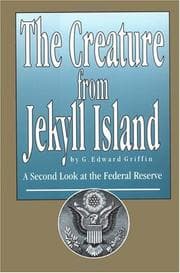
Um, so I, I, I just wanna wrap one, one idea here with the Federal Reserve. Like I've read The Creature from Jekyll Island. I've, I've spent time- Sure ... I guess w- what is the... Like the logic leap that I just struggle with is we issue bonds and then we have this entity which, which was created solely to s- for the most part, solely to buy those bonds, right?
So which then creates the money supply, which, which is all just at this point, just digital numbers. We're just putting another zero in an account. There's, there's not actually... Nothing is changing, guys. Gold isn't going from one place to another.
No one's printing off bonds and shipping them to a building somewhere. Right. Like it's literally just, oh, we take a couple zeros and you take a couple zeros and everybody's happy. And like, why, why do we even need them? Like why don't we just...
If we're just, if it's just zeros in bank accounts, why don't we just put another zero in the White House's bank account and go, "Hey, we can spend more money now"? 'Cause it just seems like an extra step that's unnecessary which then my kind of skeptical mind says, "This is a scam." How do I not see it like that? Is there a, is there like a legitimate way of looking at it or is it just actually a big scam? Well first of all, I'd just like to point out if any of us went into our bank accounts and added a bunch of zeros and went out and used that money to buy things, even treasuries, they would call it fraud. When the Fed does it, they call it monetary policy.
So just putting it out there. Yeah, the whole thing is a bit of a head scratcher. Um, I think if we've seen how dysfunctional Congress is, the executive branch, the fact that we have no continuity in our government, to the extent that we want somebody to have the Fed powers, you wouldn't want it to be the government. You'd want it to be an entity that at least has some idea of what's going on financially and is not entirely political. I'm not saying that they're not political, I'm just saying entirely.
Like you wouldn't want, you know, the congressman from You know, like I'll just pick myself, like, you know, like the house representative from my district in Illinois who's like 87 years old to be like in charge of monetary policy. It's insane. Now, we have to go back and say, okay, what is, what, what is it that the Fed does? Uh, you know, there's the, the given mandate from Congress, which is stable prices, which obviously they've failed miserably at, and stable employment, and I will just argue that kind of based on where we are fiscally, um, that their tools kind of don't matter that much in either of the places. You have somebody who, you know, is supposed to help control the money supply because, you know, as there's more productivity, there has to be decisions on, you know, how much more of those claims get out into the market.
Um, many economists, including Milton Friedman, had something called the K percent rule, which is basically you just tie the increase in the money supply to a m- a metric that makes sense, you know, whether it's the GDP or some other metric for growth. So there are different ways that you could get around that. Um, you can have, you know, the banks lend to each other, even if you, you needed some sort of, um, you know, cash and settling up and setting market rates, like they could do that in a market fashion. So the, the only reason you need the central bank today is to make sure that the system that has been created globally doesn't completely collapse and implode. So it's, it's a system that never needed to be in place and has created all kinds of issues and hardships, but the idea that we could just completely pull the plug on it one day and not have massive consequences, especially like for the US right now, given our fiscal situation and what likely needs to happen, if we let the market decide, you know, what the real cost is of financing the government, like we're pretty much done- Yeah ... tomorrow.
But, you know, so the re- so it's one of those things, it's horrible. We should start to remove more and more of their powers. But, you know, even though like the kind of, you know, an- anarchist in me is like, "Ah, let's just blow the whole thing up anyway-" Yeah, abolish the Fed ... you know, it's just, it's not... It would be a really bad outcome. And so I do think that there's probably something that happens that leads to different kinds of financial global resets and, you know, I think we're gonna see things like gold become more of a de facto reserve currency.
And as we start to extract ourselves from this fiat system, which is going to be a painful scenario if we can, and assuming Congress can get their act together, which is highly unlikely in terms of spending, then we could talk, have like a legitimate conversation as, you know, do we need all of this plumbing in the system? And the reality is that once... The dollar's already losing some of its status. I mean, it's still, you know, the top non-precious metals-based reserve. It's still used in a ton of global trade, but that is continuing to shift and change, and there's active pushes to continue to shift and change that.
But as the dollars become less important, if we start seeing things like trade wars being fought with capital wars, meaning all of the countries that are invested in our bond and stock markets start to pull money out of those markets, and the dollar becomes less and less important, then, you know, the whole financial sector itself, which is a huge sector, you know, one of the top sectors, you know, in terms of our GB, becomes less important. And then again, we can kind of have the discussion about central banks. But this is not, like you could change certain things about Medicare or healthcare, whatever, you know, kind of overnight. Like the central bank I think is a much more complicated, uh, animal that has their tentacles, and they're evil and awful, but it exists, and so we have to be realistic about how it is that we're going to, you know, kind of get it out of the system without just creating, you know, a worse situation than if they were actually there. Well, the good news is, as long as we have the biggest bombs, as Gaddafi and Maduro learned, um, they kinda have to keep paying for oil and other things in dollars, or they just- Well, but that's the problem ... just take you out.
Well, the problem is that I don't know that we do, and we are dependent upon China for a lot of the manufacturing of componentry as well as rare earth elements, whatever, that go into our defense sector. And that's one of the reasons, um, why the situation is so tenuous. And to the lay person who doesn't kind of, you know, focus on all of these different things going on and see how they're interconnected, like you're going, "What are you even talking about right now?" But there's a lot of things going on in the global and, you know, overall financial order that are shifting and changing based on the realities of what our financial system has been, where we stand now, and things like, you know, commodities, who owns them, who owns manufacturing, and it's, it's why the Trump administration frankly has been focused on things where people are like, "Why are you focused on this?" It's because it's all tied into keeping, like you said, the biggest bombs and that, you know, that threat in place because if we don't have that, then things shift, you know, pretty significantly and once again not in our favor.
And, and probably pretty quickly. Um- Yes ... I wanna be respectful of your time. I know you have to run. I have one final question Um, take this wherever you wanna go.
Uh, you are an enormous advocate of small business, of the, of the everyday business professional and entrepreneur. Um, you have two books that you've written on the topic. We've had you on the show twice before to talk about those. Um, it's one of the reasons why I'm such a big fan of your work and having conversations with you. Um, you know, you don't have to go super deep, 'cause we could talk about this for an entire episode, but, uh, for that person who's heard this, who's listened to you and says, "Okay, Carol, well, what the do I do?
Like, how do I survive this?" Like, is it, uh, do we have to start looking at things like gold and copper and, you know, platinum or, or is it crypto? Or how do I e- even in a small sense, s- start to put some, some bets in place that if things do go really wrong, I have a chance of kinda making it through? What, what are just some places to look? And I know as- what time constraint.
Like, but take- Yeah ... as far as you want, but, but where, where would they start looking? What are some of the things that can help these people have a little bit of peace of mind if shit goes haywire? So, you know, obviously this is not financial advice. Yeah, not financial advice, guys. I can only tell you what I'm doing.
Um, and, uh, you know, obviously I'm in a different financial position than other people who may be watching. I understand that. So this is just kind of, you know, my thoughts and do what makes sense for you. Um, but the reality is, as I said, you know, you go out and you spend your life and your hours and you earn. Um, I think that that is going...
The, the purchasing power you have is going to continue to deplete. And from my standpoint, you know, I have been advocating for precious metals, particularly gold, um, silver up to a point. I'm now out of silver because of the price shifts. I've done extremely, extremely well, so not unhappy about that. Might enter in again.
Uh, but I've seen that more as a trade, uh, at today's levels than I have as a, you know... I have a little bit of it, but you know, most of that's gone. But gold has a 5,000-year soc- social contract. We've seen gold as a backer of our financial system for pretty much, like, the last, you know, thousands and thousands of years. And it really is only since 1973 that this weird fiat bubble kind of started to percolate.
So I just see that things always kinda go back to where they were before. We're seeing central banks around the world, um, instead of going into treasuries, it, instead of going into some of your US assets, are starting to go into gold, and I think it's gonna be very meaningful for the United States. Um, you know, and I expect that they will probably do a reevaluation at some point in time. So again, just my insight, but I think that, you know, gold, my perspective on it is it doesn't go up in price. It just maintains its price, but the dollar goes down.
And so if you're trying to hedge out against your dollars, you wanna have some of your portfolio, um... It used to be, like, 5 to 10% of your portfolio. I am personally, we're, we're pushing towards 20% right now, um, just because we think that's what makes sense in today's day and age, and it's expensive. So dollar cost averaging is great. You know, every week you put a little bit, or every month you put a little bit in, and whatever the price is, some months or weeks it's gonna be higher and some it's gonna be lower, but over time you're gonna have, get that average price of where it's been.
And you're not gonna wait and see it move up, you know, many more legs and go, "Oh, I wish I would've gotten in." Or if it falls down, you're gonna continue to capture it at a lower price. So you can't time the market on things. So I think that's, um, an easier place to go. It's challenging because, you know, if you buy precious metals, you are paying a spread on that.
Um, and if you buy it, you have to find a place to, to hold it, and you have to make sure that it's authentic. If you buy GLD, there's always a differential. That's the, the ET- paper ETF between the spot price of gold and GLD, and sometimes it runs above and sometimes it runs below, but it makes it easier to get in and out of. I'd be very careful selling because you are taxed at a collectibles capital gains rate instead of a regular capital gains rate. Um, so you- Yeah ... you gotta kinda- Sell your gold on the black market, guys.
Don't sell it to anybody You gotta just, you gotta under- But, but the whole, but the whole point is, for me, is to just hold it, right? Yeah. It's, it's, it's the, it's the anchor to my dollars. Now, I'm also invested in the market because I do believe that the stock market needs to continue to go up. The president has told you that he's gonna run things hot.
This is gonna be on what's called a nominal basis, so the headline number, not adjusted for inflation. On a real basis, adjusted for inflation, it probably is not doing well. In fact, the S&P has not kept up with gold. Um, it looks really ugly if you look at the charts of the stock market compared to gold, but again, that's why you have that in your portfolio. But just to keep up on a, a nominal basis.
The one part that we have to worry about with stocks, um, is that there is a ton of international money that's in the market, and at some point that money is probably gonna get drawn out for their own crises and maybe thrown into gold or whatnot, and that's going to have a downward effect. But again, I think that they're going to use tools like Fed tools and whatnot to pump it back up. Because if the stock market goes down, both directly and indirectly the government will collect less money on a headline basis, and that will explode their deficits, and that will tip off a, a crisis. So they know they need to continue to push that up. If you've seen recent posts from Donald Trump, he's saying Dow 100,000.
And again, while he's not- You know, I wouldn't say that's an accurate prediction necessarily. He's telling you, "I'm going to run this hot." And so he, you know, they keep hinting towards this, so I would believe them. So I do think that, you know, in the long term it makes sense to have stocks, but again, pricing may get all over the board. So, you know, if you do it on the regular, you keep that dollar cost averaging, um, you do something broad like the S&P 500 so you get that breadth of exposure, you know, that may be the way to play it and just have a, a diversified portfolio.
If you have the opportunity, if you work for a company and you have the opportunity to get equity, you believe in what you're doing, and you can get some ownership in what you're doing, I think that's another great way to participate. Everybody always wants the cash, but they don't want that ownership, that participation. And given where we are in the financial cycle, and also the fact that, uh, you know, you get rich with assets, you know, try to get, if you can, try to negotiate yourself a piece of the company, some stock, some options. Um, a lot of, lot of companies are happy instead of paying you those dollars to give away, you know, a little bit of a claim, and I don't think enough people take advantage of that. But that's another good thing if you believe in the company that you work for, uh, and have that opportunity.
Carol, I appreciate the hell out of you. I know there's gonna be a lot of people that wanna go deeper into your world and follow along. Where's the best place for them to do that? So I have a free economic newsletter. We talk about the things like we talked about today in layman's terms, plus a couple of funny things every, uh, every time I send it out, and that's at carolroth.com/news.
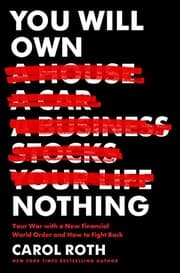
And I am cross social media, but spend most of my time on, I still call it Twitter. You can call it X, you can call it whatever you want. And I am @caroljsroth there. And, uh, as you mentioned, I've got three different books. Most recent is funny enough called You Will Own Nothing, which talks about a lot of the topics, uh, that we talked about today.
But from a prediction standpoint from several years ago, so you can see that, uh, I tend to be spot on about, you know, looking ahead and seeing where we are. Yeah, phenomenal. I- Y- You Will Own Nothing's a phenomenal book, guys. If you wanna understand this stuff, I, I couldn't recommend it enough. And, uh, if you wanna hear the conversation that we had, go back, I think it's about a year and a half, two years, we were, you- Yeah ... last time you were on the show and, uh, we did a deep dive.
Appreciate you. Thank you so much, and tremendous follow on X. I say X, but I tweet. So I kind of still am, I don't, you know, I don't know how that works, but, uh, tremendous follow. Appreciate you.
Thank you so much, and have a great day, Carol. Thanks. You as well.