For every entrepreneur listening right now, if you do not build your personal brand in the next 12 to 24 months, you face complete extinction in your space. The reason for that- Joseph, I know you're a busy man. I very much appreciate you taking the time to be with us here today. Thank you so much. Thanks for having me.
So when I was l- looking into your story, one of the places that I wanted to start, because it's something that I've just never personally experienced, is this idea of, of being an immigrant to our country and then growing inside. What is, what is the drive, what's the motivation in just f- from being in America and meeting people who were born here, natives, is there, like, it seems to me there are so many, and not that every immigrant becomes an entrepreneur, but it does seem like so many, uh, highly successful entrepreneurs are immigrants to our country, and there's a million examples. I mean, three out of the four guys on the, uh, All In podcast are, are immigrants. You know, I mean, there's just so many examples of this. Just your experience, your thoughts around why that seemingly tends to be the case that, uh, a lot of immigrants that come to this country come and are very industrious, whether it's a small business or it's growing a corporation like you have, and, and just it seems there is a, a less entitled nature to, to immigrant entrepreneurs than some of our natives.
Do you think that's a, a good, uh, a proper classification? Or, you know, I'm just interested in your thoughts around that. Oh, I have a lot of thoughts about this because every third world immigrant you'll see, uh, will always outwork a native, uh, y- you know, US worker, and the reason for that is because we just have a different understanding of the value of the dollar and the opportunity that we have right now here in America. You know, just to, and I talk about this on my book, but, uh, my dad came over as a physician fr- from Egypt and, uh, came to work in America as a gas station attendant. So coming from a, a, a physician background, by the way, doctors in Egypt make peanuts, but he made peanuts here as a gas station attendant and was super thankful, outworked everybody.
And while he was a gas station attendant, uh, had to get, uh, his, had to do another residency for four years, so he can become licensed to practice in America. So he had four years of a, a, a, an additional residency, um, and then he had to go into fellowship as a specialist. So for the first eight years while we were in the U- US, like, he was just in schooling, effectively, making peanuts and working a couple jobs. The idea of him to work that much, you know, like, that's just relentless work ethic, and that really can't be something that is so much t- taught. That's a mindset, and the easiest way to get that mindset is to be poverty-stricken and then be blessed with an abundance of opportunity.
Um, but you know, then you have situations like my kids who are gonna grow up in Newport Beach, California, and they're, they probably won't have that mindset. So I have to start instilling a work ethic in them at a very young age, and that comes through, like, the discipline of school and, uh, and then sports and then homework, and then it's like a 12-hour day, and it's kind of the same grind emulated in a, you know, first world system. Sorry, I, I'm, I'm interested in how you, like, how do you approach your children with that? Because I, uh, though while native, have a very similar experience. I came from a very poor town in the middle of the woods, in the middle of nowhere, where, you know, and the audience is probably sick of hearing this, but, like, we used to say you could leave the doors open in our town because the criminals lived in our town.
They didn't steal in our town. So, like, I remember at the age of 12 walking through my single traffic light town that had one gas station and, you know, a bunch of buildings that looked like they were completely bombed out, and that's where people lived, and going, "I gotta get out of here. Like, I have to. I can't, this can't be my life." But so many people stayed there, right?
So, okay, so I get out of there, you know, have my own success and my own life, and now I have children in a very similar situation, right? We live in a nice suburb. They go to a private school, and I'm, I'm str- struggling with them to find that hunger that I had. Like, if I was on a sports team, I wanted to be the captain. Yeah.
If I-- every business I've been a part of, I wanted to be on executive leadership or the CEO. If I was in sales, I wanted to be the top guy. Like, I always wanted to be the hardest situation, the, the best at the thing, the top of the heap. And while they're good, driven kids and successful in their own way, that, like- Do they wanna dominate like you did? Yes.
Yes. How do you get- Yeah ... how do you get that in them? Like, have you cracked that code? 'Cause I wanna know. Man, listen, I talk to so many entrepreneurs and CEOs on my podcast about that and, you know, I always look to Donald Trump. I think he did a pretty good job with- Mm-hmm ... like, Trump Jr. and Barron and, uh, you know, all his kids and Eric Trump.
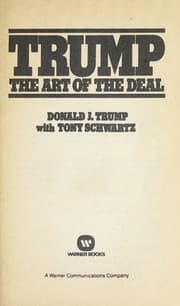
They're all, they're all killing it, you know, in their own right. So, you know, a- and, uh, he's had a faulty, uh, you know, uh, you know, mar- marital, he had, he had faulty marital situations, so I still think there's a lot of hope and a lot of kids. So I'm following that footst- that, that, uh, that, that playbook for me personally. Like, I, I've been a big fan of him since I was, like, a kid, since I read Art of the Deal. Mm-hmm.
Um, so for h- for me, I, I, I'm the same kind of mindset, superstar, elevated sales guy. Um, and then I became a CEO of a big mortgage organization, but ultimately what do we sell? We sell money. Um, we just are very, very, uh, highly intellectual money advocates. Um- But, you know, I think, like, for me, I...
Oh, I'm obsessed with that. How do I instill grit in my kids? How do I make sure that they're grinding? How do I make sure that they're winning? And I do it where I can.
They come to me, they hear me negotiating, and then I have, like, my son, my eldest son wants to be, like, you know, take my job one day. So he always negotiates with me on deals. Whatever deal I can get him involved in, I have him negotiate directly with the, the other party, and he's a fierce negotiator. And then I have him serve at the church trying to get money for the church in terms of... So what we do, we do it in the form of memorabilia and sports cards, you know.
So he'll buy sports memorabilia, and he'll buy sports cards, and then we'll flip them for charity at church and try to get the max dollar and raise it, the capital for the church. So I just do it in the way where it kinda emulates servitude, doing God's work, as well as, uh, learning the art of the deal. And it's very masterfully done to learn to negotiate properly with another party because he takes that mindset of the negotiation here for the sports memorabilia f- with this specific vendor, grinding them down to a sp- certain price. And we're buying, like, high-end sports memorabilia. C- Kobe Bryant signed balls, LeBron balls, you know, Michael Jordan pieces, and then he's taking them, and we're, you know, we're ...
It's our form of donation, and it's kinda cool because, um, we're able to really catapult the, the money we invest and then the money we raise. So he also learns, you know, the, the margin additionally raised for the church. How do you teach negotiation? Just through practice itself, like through the actual practice of buying the item, working the cl- the vendor down, you know, and then going out and actually selling the item. But he does it at a auction, so.
Yeah. 'Cause that to me, this ability to negotiate is a life skill that I think many are missing, but to me feels paramount to success in anything, success in a, in a relationship with a spouse, a re- relationship with your kids, your parents, your friends, your community, uh, your peers in your work, your, your employees, who you're doing business with. Like, you are constantly negotiating in almost every, uh, interaction that you have all day, yet it's something so few people have even spent more than a few minutes considering beyond the fact that they have to do it. Yeah, you think about it. Like, you're gonna negotiate your purchase of your home. You're gonna negotiate your spouse to convince her to be with you for the lifetime.
You're gonna negotiate, you know, whatever situation you're in, uh, requires negotiation. So the art of a... And it's really the art of the deal. The Art of the Deal, the first book Trump wrote, is about mastering negotiation. And again, thank God we have a master negotiator in, uh, you know, fighting for us because think about all the situations where we need an extreme negotiating, uh, str- a, a stream, an extreme negotiator.
Like, where he's going into Gaza, and it's, like, a hostage situation or whatever it is, you know. Like, he's literally negotiating insane deals. So to me, the magnitude and the skill of negotiation is much greater than just, oh, being the top loan originator or the top realtor or, you know. That is a true skill that is divinely appointed for us to, you know, make situations better in life for us. So it's something that's just beyond, um, sports memorabilia or beyond, uh, what I do, which is r- you know, I, I, I originate mortgages.
That's... That was the original job I had. Now I originate people to come to the organization. Uh, so I recruit. I do most of the business development.
And, uh, you know, I just try to build the brand of the company and build my personal brand, and all of that requires negotiating, right? That, that's convincing. I'm able to convince people to do business with our company and to follow me or to whatever it is. You know, my, my thing is teaching my kids that at an early age and making sure they're regimented with schooling, you know, and that comes through, you know, sports. You know, they're, they go to school, and then they're in, like, they're in football, they're in basketball, and they're in baseball, and they're in jujitsu.
They're in, you know, the m- the martial arts. And so I just try to fill their calendar where they're basically booked. Um, I don't get them as much free time as I want. S- some people would argue, you know, "Hey, they need free- more free time," but, um, listen, I grind 12 hours a day, and I see them grinding 12 hours a day, and they just gotta keep that regimen their whole life, unfortunately, from schooling to, uh, to sports to being entrepreneurs. That's just the regimen you gotta be in.
Yeah. Yeah, we, we talk about it all the time. You gotta earn your video games, right? I get that that's your release. Yeah.
Completely get it. We all have it. Each generation has the things that they do, and video games tend to be this generation. I have two boys, uh- They are like, I hate video games. I mean, Roblox and me are probably enemies, although, you know, it's probably a great company to invest in.
Seriously. Yeah, the business model is insane. Um, but, you know, I, I, I, I think this idea of, I think this idea of, of instilling, like, I don't think enough parents today, I think we outsource too much of the development of our children today, right? We get so caught in our life, our world, the sale we didn't make, the position we didn't get, or whatever stuff is frustrating or causing us anxiety, and we become so contained in ourselves that then we come home, and we're not even present with literally the reason that we're on Earth, the perpetuation of our genes and, and, and our bloodline. We're not even, we're not even investing in that.
We're outsourcing it to, you know, whatever they're scrolling through on YouTube Shorts or, you know, whatever's coming through the video game or If they're, you know, if your kids have Snapchat or whatever, Snapchatting each other, or, or the schools. I mean, geez, I mean, think about what happens in most public schools. I mean, I'm in New York State. I, I'm, I, I'm at, I'm completely... I can't even...
I couldn't... I would work 10 jobs if I had to, to keep my kids out of public school because I just, I want to know what they're being taught. They go to a, a private Catholic school. And it just, I, it, it, it bewilders me how, how we can be so cavalier with the development of our children with some of these core ideas that you've talked about. Um- I mean, yeah.
L- well, I mean, California and New York, we have extreme educational curriculum that is basically shoved down our kids' throat. Um, so I'm with you. Like, I would be... I would give up everything to make sure my kids go to a Catholic or a Christian w- school. Yeah Catholic ideally.
Um, and, uh, you know, that's 'cause number one, faith is important anyway, so instilling a regimented faith routine, and above all, beyond, you know, beyond being committed to work, the most thing they gotta be committed to is their faith, number one first and foremost, 'cause God always tells you to be diligent with your work, to, to, to make sure that you always prosper with your work. I mean, those are biblical traits. You, the most faithful people are always the m- you know, the most accomplished people. You know, I'm Egyptian. I'm Coptic Orthodox, and we came to America because of religious persecution, okay?
So the, the Coptic Christians are the most persecuted Christians. They're known as the martyrs of Christianity, thousands and thousands, tens and tens of thousands of martyrs. Martyrdom is becoming more popular right now, and you see the impact that martyrdom has when you stand up for Christ because you see what happened with Charlie Kirk. Mm-hmm. That was one example of martyrdom that we've seen in our lifetime, so you know, you see a real z- per- you know, that, that was true martyrdom.
That's the impact that martyrdom has. How many people came back to Christ because of what, what happened to Charlie Kirk? So you will see a, a, a resurgence of that now in the, in the next decade, and you'll see how many more people come back to Christ and, and that was spiraled out of, like, the first guy that did it. But he inspired countless others to follow in that footstep, and with the countless others he inspired, he also inspired, you know, countless other enemies to attack him. So there's gonna be a lot more enemies.
There's gonna be a lot more where that came from because that's just how good and evil work. So we got a lot of good coming, a lot of evil coming to stop the good, but, you know, all those who are faithful to Christ are, uh, you know, are gonna be the ones winning here. Um, and you know, unfortunately our states, New York and California, our, our, our governing bodies just don't really s- see eye to eye on that. You know, I'm hoping with what's happened with, uh, Momdami, uh, in New York that he brings back God to some extent even though it's gonna be more secular, but it's still gonna be God. Um, I, I'm, I'm hoping that that happens in New York 'cause the stuff that's happening in New York is not tolerated by the governor.
W- it's not gonna, I mean, by the new mayor elect. It's not. It's not, you know... He's a devout Muslim dude. That stuff is not cool, you know, with him, so maybe there's gonna be some good changes coming.
Him and Trump should work tightly together on all that. Yeah, I thought it was very interesting, you know, going back to, to Trump and the art of the deal, um, I thought it was very interesting when he had Mondami at the White House, and they're standing next to each other, and you see, uh, you know, to have the composure that Trump has to, to sit at that desk and have someone standing next to you who has basically built their entire, uh, persona and certainly their campaign and, and- Around hating America ... emerge on, on basically just being, you know, TDS, right? I mean, it's basically just standing up there going, you know, "Trump bad, vote for me." Yeah. And, and to have that guy standing next to you and be able to say, "We disagree on a lot, but there's a lot that we do agree on," and, and I'm, I promise this little narrative has a, has a question in here.
Um- Yeah ... when you read The Art of the Deal, and I think so many people who are anti-Trump, uh, I think there's the, the kind of complete wackos who've just bought postmodern liberalism hook, line, and sinker and, and just completely are living in a different reality. But the, the individuals who, who just don't like him, I think because he might say a bad word or they don't understand why he does the things, they haven't read that book. When you read that book and you understand the second and third order thinking that he uses to get to the outcome that he wants or even to get to an outcome, uh, so many, uh, and I, and I think some of this is we just simply believe our politicians are intelligent because they're in that position, and they're not. Like, like he is willing to get to an outcome where... And sometimes that's messy, and I think there's like this, this complete...
Again, this goes back to the, to the misunderstanding of negotiation of just when you're negotiating, you don't always get every single thing that you want. You have to be able to come to the middle, and you have to know what to give where to, to get what you ultimately want. Um, and like we've, we've gotten to this place where it's like you either love Trump or you hate him. You're either a capitalist or a socialist. You're either, you know, include everybody DEI or you're a racist, homophobic bigot.
Like you, there's n- the, like the nuance of our life has been lost. Um, you know, I know in, in your industry you're probably recruiting a lot of young people who are in Gen Z or maybe younger millennials. Like how do you start to approach, one, have you seen, has that mentality been what you've seen in your younger sales force? And two, when they come in, how do we start to get- ... people off that shelf to start to understand that there's all this gray, messy nuance in the middle, which is actually where life happens Yeah. I mean, right now we are in, like, a very polarizing political environment, right?
It's pretty crazy. But I would say most of the people that we come across, 'cause I'm recruiting on the front lines, are very level-headed on- young entrepreneurs. Level-headed young entrepreneurs will always align with, m- you know, our, our, our current president's views on pretty much everything. Just because they're level-headed, they're not thinking extreme. They're not like...
What ultra leftist liberal out of college is starting a business or trying to make millions of dollars? That does, does not align with their values. They're not trying to make money. They're trying to milk the game, you know? That's, that's the pla- play there for most ultra leftists from, that I've seen.
You know? They're always... They're not, like, superstar entrepreneurs. There's no, you know, big companies founded by extreme leftists. Now, I'm not...
There's nothing... I'm not... The, you know, the LGBTQ community, very prosperous community. Many, many prosperous people. We're talking about the ultra leftist, you know, the ones that are confused about or, you know, don't believe in a sex or whatever it is, you know, that stuff.
I, I mean, God bless all pe- his people, but, uh, th- they tend not to be entrepreneurs. Um- Yeah So I, I don't see a lot of those people coming through, um, here and, uh, you know, we're pretty... W- our number one pillar is servitude, so it's a very God-based company here. So we try to emulate good deeds and God's works through whatever we do, and, you know, the mantra is you don't chase money, you chase doing God's work first, and the money always follows, and that's, you know, a guarantee I make. Um, because money always follows God's work, you know?
He always do his work first. He does your work. That's just the way life was designed. Um, and anyone who's chasing, like, so... 'Cause we, we have the opportunity here to make a massive commission per transaction. We're doing 1,500 transactions.
You can make two points on a deal, or you can make four or five points on a deal, so you can, you really have that control, uh, to not do God's work. So that's why, you know, people here, we, we serve, uh, the American dream. I mean, we make homeownership happen. We make difficult situations, um, more feasible, and we help people in their life because we're helping them acquire the number one asset they're ever gonna acquire, and we'll help them through roadblocks that have hindered them from accomplishing the American dream. So, you know, we really are, uh, s- good stewards here and, uh, try to emulate a, a, a life of servitude through the work that we offer through our organization.
So I can only assume that the fact that type of level-headed, entrepreneur-minded individual is, is coming to your organization has to do with the brand and the message that you put out in the world because your brand is ultimately a, a filtering mechanism for the, the clients you get, the employees you get, the partnerships that you get, et cetera. What do you think it is about your brand, your message, that has resonated with so many people? I mean, 1.5 million plus followers on Instagram, incredibly successful podcast, incredibly successful business that has people coming to you to be part of it. Like, there is something about your message and your brand that is resonating. What do you think those pieces are?
It's simple. I just said it. You know, we do God's work first, period. You know, as long as you're serving, you're doing God's work, you're putting the people first, you're putting God first, um, and you're... the money follows. Success follows.
My mentor always, you know, said to me, like, "You, you do the work first, success follows. Don't worry about it." You know? And I, I spun that to, to, to align more with our company values. You know, you do God's work first, the money always follows.
So, you know, I know it's not the most politically correct or aligned mon- message. We're not publicly traded yet, so I can, I can tote- toot that as long as we're privately held. Um, and hopefully we'll stay privately held just 'cause I love what we do so much. So we have no intention. We've been self-funded.
Now we're, we have over a couple thousand people here. We just h- got a new campus, um, and, uh, we have plans to own a significant portion of national mar- mortgage market share in the next, uh, 12 months. So our goal is to hit a billion a month in the first couple quarters, and, uh, I, I feel like we're on track for that, especially with all the different changes happening in the, uh, real estate environment right now. Uh, we should see some sig- significant, uh, uh, you know, affordability measures by the Whi- uh, housing affordability measures by the White House take place in 2026. I know that's a big, uh, agenda right now, and it's definitely being attacked in so many different ways, um, as we enter 2026.
So I'm excited to see what's gonna happen for, you know, the, the opportunity for more, millions more Americans to, to purchase a property in 2026. Speaking specifically about real estate, you know, so much of, uh, what I've heard is around supply. There's not enough supply. We need more houses, we need more houses. Is, is it...
Like, what are the major aspects that have slowed the housing market and, you know, beyond just, say, like, interest rates, et cetera, that could be coming down in 2026? What are some of the other factors that you see that could take the real estate market and start to get it back on track and start getting people back into homes? I actually just had this discussion with Senator Choi on my podcast just a couple days ago And the biggest thing that was discussed on my podcast with Senator Choi was the fact that, of deregulation for, uh, builders. So that's gonna be a big thing in 2026, is like deregulating it so builders can build faster. Right now, there's a ton of regulation that totally eats all their profit margins right now, and it's a pain in the butt to build a house right now for a builder.
It's just difficult. So they gotta go through a ton of red tape, red tape that doesn't even mean anything to the bottom line, like stuff that just holds up a project for weeks on end for no freaking reason, right? So a lot of that's gonna be looked at heavily because, uh, they need to pump out houses quick. If they pump out houses quick, then economies of scale will bring housing costs, uh, uh, down. You know?
And a lot of things are... So that's on the construction side. That's, that's, I think, very, very feasible, uh, to accomplish pretty, pretty quickly. The other thing that's gonna... that's trickier, but it's gonna very, very much help, um, the housing environment, is something called portable mortgages, which is genius idea that Trump is pushing for. And portable mortgages are gonna allow you to take your low interest rate to your next property.
So a lot of people are just basically stuck in their mortgage right now because they got a 2% rate. They're like, "I'm never leaving." Well, obviously you'd never leave when your savings account is paying 5% and you have a 2% rate. The delta's 3%. That means you are literally making money on the money you borrowed.
You're making 3% on the money you borrowed. So it's not free money. Money that they're making profits on, right? So every homeowner who has a 3%, uh, or 2% interest rate and their savings account's paying them 5% is making that delta. So now all these people are like, "I'm never selling if, with, with this rate," um, are gonna be like, "Okay, if I could just port that mortgage to my new house, I'll move."
Obviously, they gotta factor in the new tax expense, but that will free up that inventory of, uh, $11 trillion of mortgages that are basically rate locked in right now. So that's gonna be tremendously helpful for housing as well if that can materialize in some way. And the third thing that's on the docket, uh, that's gonna help housing in tw- 2026, uh, which is gonna... a little bit of help, not tremendous help, but it's still s- you know, enough help is, um, 50-year mortgages are coming down the pipe. Um, so if we get 50-year mortgages, you'll see a 10, 15% payment reduction, so it's effectively like interest only, just with a little bit of principal. Um, but it's gonna be at least something to help people subsidize a little bit.
Um, and, uh, you know, the Fed said yesterday they're gonna be buying mortgage-backed securities, so, uh, I think it was like, I don't know, $20 billion of mortgage-backed securities. Um, so that'll bring rates down. That's the, the fourth thing. Um, outside of the Fed rate cuts, it's the mortgage-backed securities that they buy that actually bring the rates down, not the, the rate cuts. Could you talk me through the 50-year mortgage a little bit?
Because I've heard people have positive spins on this, and I've also heard a lot of negativity around the 50-year mortgage. Like, what's the... what, what's the pro and con to this, um- It doesn't move, it doesn't move the needle on a payment much. It just doesn't. I said 10%. You know, that's not much.
So it's just a, a another way for t- to qualify more buyers with a tiny bit of a payment. I mean, 30 year and 50 year, it's not much of a difference. It's literally 10, 15%. It's a tiny difference. Yeah.
Then why do you think he's pushing that so hard? Just to get more people in, just this is another mechanism and it's, it's ultimately gonna be a collection of different mechanisms that get us there, and this is just one of them? Or does... Do you think the administration truly believes this is a game-changing piece of, uh, legislation? No, no, they just think it's one...
The administration thinks it's just one of many ways to attack the issue. You are not going to make a dent in the env- the current environment without massive changes. So I mean, we are really upside down with affordability for housing right now. It's like a joke. Yeah.
I know- Think about here in, in New York or in California where the housing average price is over a mil and a half or something. I don't know. In California, it's like a million plus. In New York, I'm sure it's the same, a million plus. A million plus for a mortgage, okay?
At the current rate environment, that's $7,000 doll- $7,000 payment plus your $2,000 tax bill, you're at $9,000. You need to be making 20 grand a month to buy a freaking mediocre house. You're talking about a three bedroom, two bath bungalow in upstate New York. Nothing super fancy. Who makes 20, 30 grand a month?
Your local, you know, anesthesiologist is buying a little rinky-dink ranch, you know? That's who's buying. That doesn't make any sense. When our parents' generation, you know, l- like a coal worker was buying a house, you know? Or whatever, right?
So now you got... It's, it's just weird how it's done. Employ- d- jobs don't pay enough to buy houses. Everybody's looking for that side hustle to double their income. It's crazy.
I mean, I know, I know... I, I have a friend, uh, who's a very successful, he's a very successful landscaping business. He's got multiple, multiple, uh, units. Uh, does, does very well for himself. And he called me yester- uh, not yesterday, uh, a week ago, sorry, and asked me about YouTube faceless videos as a side hustle.
And it was like, like I had like this moment of like, "What the..." Like, it was just so out of left field, but he's like, he's like, "Dude, you know, I..." I was like, "Dude, I thought you were doing great." He's like, "Oh, no, we're doing great." He's like, "But..."
He's like, "You know, with all the increased, uh, you know, increased expense here," and, you know, he wants this, and he's got kids that are getting close to college age, and he's like, "You know, I'm looking at my bills, man," and like, he's like I can't scale my landscaping business fast enough and, and, you know, to, to make enough mo- uh, more because that means I, you know, paying another crew of guys, and I gotta buy more trucks, and I gotta buy another sales guy, you know, bring another sales guy in. He's like, "I need a side hustle." He's like, "And I was watching some whatever YouTube faceless..." And it's like the fact that that thought was even in his head, you know, it wasn't the faceless YouTube video thing, but, like, the fact that he's-- would go to something like that to say, "I need this side, this easy passive side hustle thing to make an extra five or 10 grand a month," I'm like, that's crazy. Like, something is wrong when that guy who's been very successful, hardworking, 20 years building his business, is thinking about starting a faceless YouTube video chan- or YouTube channel in order to make an extra couple grand to, to, like, get ahead.
Like, that's crazy to me. You know, it-- that's the world we're in right now. People need several hustles to survive. I mean, that's just the reality. They need several hustles.
There is no one size fits all for your income anymore. Um, I'm a serial entrepreneur, so I understand the concept of kind of several income streams. Um, but now that's just becoming a requirement to survival. Yeah. Everything's so expensive now, you know?
Everything- Everything ... is so expensive. The thing that, the thing that hit me in the face was about a year and a half ago, uh, I'm-- I got divorced from my wife three years ago, so kinda single dad, two kids, kinda, uh, doing my thing. And, you know, I got two boys that are with me fifty percent of the time, sometimes a little more, and I'm looking at my grocery bill, and I'm going, "How does a single guy who has two boys half time-- Like, how is my grocery bill, like, two hundred dollars a week? Like, how is this even possible? We don't even buy that much stuff."
That's it? You know? Two hundred bucks a week? I mean, man, that's nothing. Yeah.
But, but- You're obviously not going to Whole Foods. Yeah, yeah, that's-- well, that's true. But, um, but, you know, it's like, i- I was just looking at it going, like, I'm not a big... You know, I don't make myself a bunch of fancy meals. You know, I'm pretty easy as far as that goes, although I love food or whatever.
But, like, you know, just in general, um, and I, I-- it just blew me away that I was like, this-- Even a, a few years before that, it was, like, a hundred bucks, hundred and twenty bucks for the same amount of food, and I'm going, how do these families... Like, how do we expect these families who are in a six percent mortgage because they went, you know, a year ago or something and got their home, or two years ago, and they got two kids and two cars, and both parents are working, and they're, they're trying to get their kids on the travel soccer team, and they want them to go to, you know, uh, get some extra help in math and pay for a tutor and whatever. And now, like, how does that family ever actually get ahead beyond the trickle that they may put away in their 401K or something that they hope, you know, pays for their bills? Like, I, I just, I don't understand how the math works. They-- I mean, they can't get ahead.
They're robbing Peter to pay Paul every week, you know? Um, I-- my dad would've been so successful if he started his own practice. Like, he's still seventy-six years old, retired, took his retirement, went back to work, you know, 'cause he can't figure out how to just get ahead. And unfortunately, for wage earners, especially now, they're not gonna be able to get ahead. Wage earners cannot get ahead.
They have to figure out some other way to get ahead, whether it's drop shipping, whether it's, uh, I don't know, YouTube faceless reels, whether it's closing mortgage deals on the side or getting real estate license or whatever it is. They have an additional revenue stream to get ahead. That's just how life is. Um, I'm still, and you are, but we're both still trying to figure out how to get ahead. You know, we're podcasting.
We're opening up new doors. We're talking to people that are moving and shaking in society and, um, trying to figure out the next move 'cause it's survival of the fittest right now. It really is. And, uh, that's what we're preparing our boys for, right? That's what we're preparing our kids for.
As a leader, how do you recommend handling side hustle culture? Uh, I've, I've always been of the opinion that, uh, the companies that I've led or run myself or even my own company, I n- I have outcomes that you've committed to as being an employee of my company, and as long as you pr- those outcomes are hit, right? I'm happy with you. What you do outside of those outcomes, you know, the outcomes that I need you to get, I, I-- it's never bothered me, right? As long as you stay focused and you're getting your outcomes done for my business, God bless you.
You wanna go have a side hustle, you wanna go build another business, awesome. But so many of my peers, and my home industry is the property casualty insurance industry. Um, so, so many of my peers in that space, they are... Like, I, I see the message boards. I hear the comments when I'm doing keynotes or I'm talking to somebody, like, are about this idea of, like, "I can't keep my people focused.
I know he's working on this other thing during his lunch or this or..." And, and it's, like, a major point of friction for a lot of leaders that their employees have these side hustles. So how-- do y- do you have that happening in your business? How do you address it? And, you know, whether you do or you don't, how do you, how do leaders kind of wrap their head around this idea?
Because you don't want your people to be under constant anxiety from capital if you can't provide enough to them in your business or the job that they're doing. Well, here, here's the deal. My business, 'cause I'm a leader of a, a sales organization where people s-- I'm in the business of making businesses. So emortgage Capital is an organization that makes m- other mortgage companies. So when I'm talking to my leaders, I'm telling them, "Go all in on building this business," because the opportunity under the emortgage Capital ecosystem is endless.
You have the ability to make tens of millions of dollars. You have the ability to have hundreds of employees under the emortgage Capital ecosystem. We're like a farmer's insurance, right? You run a farmer. Some farmers branches are much more successful than other farmers branches.
So if you run your mortgage company under eMortgage Capital with all the resources that we provide to you, whether it's licensing, technology, marketing, lead gen, data solutions, infrastructure support or training or coaching or onboarding, whatever it is that we're doing for you, you have, you know, a billion dollar ecosystem that you pay $0 for to scale your company. So just leverage and learn and educate yourself and ask questions as much as humanly possible to grow your mortgage company, to grow your brand so you can dominate within the EMC ecosystem. We have mortgage, we have real estate, we have so many opportunities for you to scale and grow with our platform that I really just push people towards our side hustle culture because our side hustle culture, if you build within the EMC ecosystem, is infinite. Your side hustle culture allows you, you have your own production. I still produce deals.
You have recruits. You could still recruit. Everybody could do what I do, which is bring in other people and have like revenue streams under us. Or you have the opportunity to bring in other new guys or other guys and buy leads from and split commissions. So if you want to grow under one of the verticals, grow under one of those segments underneath our ecosystem and always build your personal brand.
Podcast, do your social media content. Like there's so much to do that you could stay laser focused on just mortgages. Because of the infinite upside and- Exactly ... what, when you're referencing wage earners, you're talking about, I work for the state and I make $64,000 and I really have no... Regardless of how much effort I put in this quarter, I'm still making $64,000 and there's nothing I can do about it. Pretty much.
You're- Yeah ... you're basically capped. Yeah. So- Well, I have a friend, you know, works for the, uh, he, I think he's an, he, well, he's a probation officer now, and he has no upside. So I introduced him to an investment opportunity where he has, he can basically like earn a full on other income. Um, but if he sits in the opportunity, it will compound.
If he extracts it every month, it'll just add a full on like side job for him. And he just opts to take the monthly income because he has no other monthly income. But I'm like, "Dude, if you just sat w- on that opportunity for a year, it would be like 10X that a monthly income," but he can't, you know. He needs the mon- the revenue. Do you think that, and maybe not necessarily his specific case, but I think what you just described is a very, is, is thinking v- maybe scarcity mindset or thinking very short-term versus long-term?
Yeah. How do you get someone out of... 'Cause I know a lot of, I have a lot of friends who are very smart, talented at the things they do, but they tend to operate from this place of scarcity or, or very short-term thinking. Like, I j- I gotta get through this month or I gotta get through this week, whatever. Um, but I think we both know, like while we always have to be kind of focused on what's happening today, part of our brain, or at least we have to cordon off time to consider, think about, and plan much longer term. 'Cause as you said, that's where compound results come from. Yeah.
And, you know, uh, what was it Warren Buffett said? Uh, the greatest force in nature is compound interest. Um, you know, how, how do you crack someone out of that mentality? Or how do you open them up to the, to a world of abundance if they, if they are operating or maybe they were taught by their parents or wherever they were raised to, to kind of think more small and scarce? You know, I, a scarcity mentality is something you, a lot of people suffer with, right?
Um, and how do you make people have an abundance mindset? By letting them know that the gifts of God are much greater than what you and I can comprehend. So it really comes through faith. Like, if you want an abundance mindset, be faithful, 'cause God gives you more than your, you've ever wanted. So if you hold onto this little thing, uh, you know, you start to covet, right?
And like, if you covet, you're just not gonna be blessed. So it's, it's a really simple concept. Don't covet. Give everything freely, and God will give you freely. Don't worry about it, you know.
And, and, uh, a lot of people, like, they get their first deal. That's what you hear about a lot of people in my business. They get their first deal, and guess what? They're gone for like two months, blowing the commission 'cause they're like, "I just made $10,000 on one deal." And then they're gone.
Like, take that 10,000, pretend you didn't make it, and hit the ground running twice as hard next month, and it'll compound just like that. But I mean, that, that is something that comes with wisdom. That's something that comes... Uh, like, we all, as- if you're young and you're 21 and you're making a ton of money, sadly, you will fall to that mindset. It's just, uh, it's just a w- you know, a, a sad reality that people live in right now, um, because they're, they're not living a life that's based on faith.
They're, they're living a life that's based on, uh, you know, human desire, selfishness, et cetera. Why did you start investing so heavily in your personal brand, like what we see on your Instagram channel, your podcast? Like, what was the motivation to put all this effort into building that brand? You know, I was presented with an opportunity to distinguish myself from my competitors. A couple of years back, I started, so I started the podcast.
I started, um, marketing. I started lead gener- I, I s- I started the social media. I started really, uh, hitting social media so hard in, uh, 2024. In January 2024, I launched my podcast and I launched my social media strategy. And, um, really at the time, it was kind of a, like a selfish reason.
It was 'cause of basketball. I, the number one social media influencer at the time, I made him an offer to go work with eMortgage Capital. He turned me down. He went to my competitor, and I was just really s- sad about him going, not because of anything other than he was our number one basketball player on our team. And, uh, that just, just mentally wrecked me.
Uh, so I said, "You know what? I can't beat him in basketball, but I'm gonna beat him on social media." So I just went after it as my own personal goal. Um, and then I s- I s- I beat him on social media, but then I'm like, the world of AI started to materialize, and I'm like, man, there's a... In this world of AI, like, social media influencers are more important than others because now they have the attention of the, uh, you know, ChatGPT and the AI algorithm, and every, every word we're saying right now, believe it or not, every word, and understand this, it's very important for your audience to know, every word that you say online is now indexed on, on AI.
So ChatGPT will be able to reference this specific podcast on this specific day, you know, that I said this and this about this political subject that we, you know, one of the subjects we talked about earlier, or how I feel about Trump or whatever it is. Like, it's all indexed there. So this started to materialize while I was in the midst, like 2025. I'm like, man, personal branding is becoming more important than ever. You know, I need to go really heavy into it.
So I really started to fight with how I'm going to position my brand, because I was gaining a massive audience through MrBeast-style content, like giveaway, comedy, you know, this other stuff, just kinda being eccentric. And I'm like, that's... You know, I'm, I'm the CEO of a financial institution. Like, then my board is like, "You can't do that. You need to, like, position yourself like Jamie Dimon."
But I'm like, I'm not that boring, you know? Like, I need to just be a little bit more out there, a lit- more re- relatable. I'm not gonna be like, I'm not a Fortune 500 CEO, or if that's a Fortune 10 CEO. I'm not doing super boring content. I'm gonna stay real, uh, because at the end of the day, my goal is simple: I want to recruit talent.
So. Yeah. I, I couldn't agree with you more. Uh, one of the things that I have been preaching for years inside the insurance industry in particular has been the importance of agency owners or, or leaders in the space to step out and start to, start to own that narrative. Because, uh, one of the things that you will hear in every association conference, uh, meeting that happens is, "It's so hard to find good talent."
And, uh, I know you don't know too much about my backstory, but I started my own national digital commercial insurance agency, grew it, scaled it, sold it, exited it in a, in a, just under five years. And at no point did we ever have problems hiring, and we actually had a waiting list, uh, for people to come in and be producers for that business. And it was simply because all I did every day, I shouldn't say all I did, but every day I was out front on LinkedIn or Instagram or in a newsletter or a podcast talking about what I believed about the business and what I believed in general and what my value structure was, et cetera. So people were attracted to us, partnerships were attracted to us, clients were attracted to us. And to me, this seems so incredibly obvious, yet I see, I continue to see a tremendous amount of hesitation, particularly from, from leaders in actually going out and presenting themselves.
Now, they'll do it in a very corporate vanilla, like the lawyers dotted I's and cross T's way, but that, like, what their personality is, what they actually like to do, who they really are if you were to go golfing with them or whatever hobby you like to do, you, you rarely see that, y- yet that has shown over and over again, your- yourself being case in point, when you allow your personality to come through, that is when people actually form that true bond with you. Yes. What is the message or how would you convey to, to anyone listening who is struggling with this decision to go out the importance of, of what you just said? Like, like, how do you crack that code? For every entrepreneur listening right now, if you do not build your personal brand in the next 12 to 24 months, you face complete extinction in your space.
And the reason for that isn't because anything we discussed on this show. It's because of something very simple. Everybody now goes to AI to make their decisions for them. If you go to ChatGPT and you ask, "Should I go with Joe or should I go with Chris?" And ChatGPT can't pull up anything on Joe, guess what?
They're going with Chris. AI is now deciding for people. You now have to feed the algorithm, the AI algorithm, what the narrative is so that people can logically decide or, you know, reasonably decide or whatever the reasoning model is. AI is going to go through thousands of variables and deduct with what it can aggregate on all the web why to work with you. So make your v- voice loud.
Make it louder than your competitor so you can beat your competitor, period. 'Cause they're gonna do it if you don't. Yeah. The other thing about AI too that I think people miss is where with the, with the Google's 10 blue links, pe- even though most people would, the prominent number of people would choose from the first three, you s- you still, people would still scan them all, right? Today, with AI, it's returning the answer that it thinks is, it's getting, giving one solution. So it's not even like you have a chance if you're three, four, or five on a list on, on a Google listing, on a Google SEO listing.
But, you know, when you search for, hey, what, what's the best commercial insurance agent or where should I get my mortgage from, right? It's giving you the answer that it thinks is the best for you, and it's giving you one. And, and if you're the business and you don't show up, you just simply aren't there, like you said. It's not, the, the days of, of, uh, options seem to be going away. It seems to be just give me the answer so I don't have to think about it and I can move on.
Yeah. I mean, and, and it's, and people want that instant gratification. That's what AI is delivering, and it's gonna be able to make a reasonable decision based on thousands of sources. You know, now it's gonna scour the entire web, and that's why I'm on every platform. I'm on Reddit, I'm on Facebook, I'm on LinkedIn, I'm on YouTube, I'm on Snapchat, I'm on TikTok, I'm on, you know- Medium, I'm on Substack, I'm on, I mean, you name it, like I got stuff everywhere, on every platform that exists.
So my-- When you're thinking about Joseph Shalaby, the reasoning model, like it, like it has thousands of hours of data. It's always gonna pick me 'cause I'm just the most well-known in my space. Where do you see the biggest opportunity in those social platforms or, or in the, in distribution in general, online distribution? Where, where do you see the biggest opportunity? Man, you know, you could just check online what has the biggest reach.
I, I mean, but here's the thing. Every one of these platforms is gaining market share, so I can't tell you what's gonna be the next hottest thing. I can't. One thing I definitely see that's gonna be very, very hot, uh, very soon, 'cause it was, you know, that's gaining a lot of market share, is Snapchat. You know, people are like not even considering Snapchat, but in so many verticals like insurance or mortgage, like nobody's dominating Snapchat for mortgage right now.
Nobody's dominating Snapchat for insurance. So there's like opportunities in these emerging social platforms. Um, but I don't know what's coming out that's gonna be better soon. But it seems like the powerhouses like, you know, obviously Meta, um, are, are gonna dominate u- under them for a while, and the ones that are like the outliers, like Snapchat, will start to gain more market share, are continuing to gain tons of market share. Yeah.
I mean, just look at the people who built entire careers on TikTok when, you know, that's one of the most recent that has gone very, very big and, you know, entire careers have been generated just off of being an early adopter and building a community and growing on that platform. I, I, I give a ton of credence to, to, to taking these platforms and seeing if your message can resonate early, and the earlier the better. Yeah, yeah, exactly. So- Um, yeah, go ahead. So, so yeah, I mean, w- we right now are in a really critical phase right now where all these platforms are fighting for market share.
We got X, we got Threads, all these other... You know, we had, you know, uh, new ones coming out. What was it called? Uh, Bl- Blue Sky came out, tried to compete with X to be, just in case, uh, the Democrats won. So, um, so I, I set up a profile on there even just, you know, uh, during the campaign.
Uh, I'm like, "Well, if this win-" If they somehow... I don't know if it seemed possible, but thank God, uh, things worked out the way they did. But, you know, just in case, I was ready to start posting on this other platform. Uh, even Trump's Truth Social. I mean, there's so many, you know, fighting for our attention.
So if they're all fighting for our attention, I just try to pour it into all of them. Twitch- Yeah, that makes- TikTok, you know ... that makes a lot of sense. My last question for you, uh, kinda takes in, you know, you obviously are very knowledgeable, not just about your business. You, you obviously spend time thinking about what's going on from a political standpoint, economic marketplace, societally, et cetera. And you can see it in your commentary on your Instagram.
I get pushback, 'cause I'm, I'm very similar, very similar. Voracious consumer. I have wide ranges of interests. Obviously, I have the things that I do for work. Um, and I, I talk about, in an interview for this show, people from a lot of different walks of life and a lot of different places, uh, in, in either business or in what they do.
And one of the pieces of pushback that I get is you, you, you, I waste brain cycles thinking about things that I can't control, right? Like the economy or what's going on politically or international, whatever. Um, but my viewpoint has always been understanding the macro of our world is just as important as understanding the micro of our world. Uh, and I think it allows me to make better decisions in my day-to-day smaller life when I understand what's going on in the broader world in general. But I think a lot of people get lost in that.
Um, one, do you agree that it is important to have a broader understanding and to spend that time? Or do you see, um, I don't wanna call it being distracted 'cause obviously I find value in it, but for those who see spending time thinking about these things as a distraction, do you think that that, that might be a more valid point? I mean, the macro's imperative, especially when you're, because it allows you to make micro decisions, you know, because you could see what's happening at a macro level. I'm always looking at the macro, especially in our industry, the mortgage industry, where it's very much dictated by the, the macro impacts, right? When, when the Fed cuts rates or when, uh, there's an issue with something geopolitically or when there's a war, whatever it is.
All, all those macros affect the micro. It literally affects these people's mortgage interest rates and, you know, closing dates, et cetera. So a lot of people wait on Fed day and... So, you know, I always, in our industry, the macro, everybody's watching. Everybody's watching what, who the next Fed president's gonna be.
Everybody's watching, you know, Trump's moves. Everybody was excited. You know, also, one of the things, 'cause we're in the finance business, everybody wants, you know, someone who's, uh, who helps you with your taxes and self-employment laws, et cetera, so that everybody wants someone like that in office because it just helps our business and our bank accounts personally. So those macro decisions as well politically impact our business. So, you know, I, I'm, I'm very much, uh, an advocate of people paying attention to the macros because that's what it, it impacts them at the micro level.
But also, like, you know, always sharpen your, your micro knowledge as well. And then y- also it's important for at, at the micro level in our business to, to be very knowledgeable, like to, to know what's going on with your state council, your city council, your, uh, you know, s- charities that you donate to locally or local communities, et cetera. So all of that's very, very relative in, in our space. Joseph, I, I could talk to you for hours, man. I think what you've done is phenomenal.
Uh, I'm, I'm a big fan of how you approach it, of your mindset. Uh, I think that you are completely dialed on, on, uh, how to get after this and be successful. If people wanna go deeper into your world, where's the best place to do that? Just find me on social media, Joseph Shalaby, on all social platforms, or follow my show, "Coffees for Closers," coffees with a Z. Yeah, I love it.
Thank you so much, man. I appreciate your time. Thanks, Ryan. Thanks for having me.