Did you know that driving under the influence of marijuana is illegal? Driving high will get you a DUI. And if you're wondering if law enforcement can tell you're driving high, well, everyone else can. Friends? I can tell you drove high.
Parents? I can tell when you drive high. Relatives? I can tell. You drove here high, didn't you?
So what makes you think law enforcement can't? I can tell. If you feel different, you drive different. Drive high, get a DUI. Paid for by NHTSA.
AI agents are everywhere, automating tasks and making decisions at machine speed. But agents make mistakes. Just one rogue agent can do big damage before you even notice. Rubrik Agent Cloud is the only platform that helps you monitor agents, set guardrails, and rewind mistakes. So you can unleash agents, not risk.
Accelerate your AI transformation at rubrik.com. That's R-U-B-R-I-K dot com. Hello. I'm here during the lunch rush with Janice, who owns her own food truck. Best cheesesteaks in town.
Janice traded up to Geico Commercial Auto Insurance for her food truck business. We're here where she needs us most. They sure are. We make it so easy for her to save. With customized coverage that grows with her business.
Sorry, I just get so emotional talking about saving folks money. Not this onion I'm chopping. It's just so beautiful. Oh yeah, nice, the onion. Get a commercial auto insurance quote today at Geico.com and see how much you could save.
Get more with Geico. In a crude laboratory in the basement of his home. Hello everyone and welcome back to the show. Today we have an absolutely tremendous conversation for you. If you have ever thought about selling your business, specifically an insurance agency, then this is the conversation that you want to dial in for and listen to because we have two of the absolute best in the business.
Max Olson and Mike Almberg from Legacy Advisors. Legacy is a sell-side advisory firm that helps insurance agency owners sell their business for the maximum value to the right cultural partner. Both have experience in the industry. Both have acquired and or sold agencies. Both have operated in a private equity environment.
They're young, they're hungry, and I'll tell you guys, these two and Legacy Advisors in general are starting to take over the sell-side market and their advice is practical. It's based in kind of real terms from real sales and we get into it deep and we really hit it hard. I mean, if you've ever thought about selling your insurance agency, this is the episode for you. This is something you want to take in. You want to digest the concepts.
You know, there's no, you know, we don't kind of stay on the fluffy surface here. We really get down into it. And Mike and Max are absolute pros. I really enjoy these guys and it was a pleasure to have them on the show. Before we get there, guys, I have a new newsletter.
The newsletter is specific and unique to newsletter subscribers. You have to go to FindingPeak.com. That's www.FindingPeak.com. No longer publishing some of the articles, thoughts, et cetera, online. It just doesn't make sense to do that.
But you got to be a subscriber to the newsletter. So the newsletter is going to have all kinds of great stuff, specifically focused on leadership, on life, on business, on finding peak performance, and all the pieces that go into becoming the best versions of ourselves. This is a journey that I've been on since 2017. And at 42 years old, I'm in the best shape of my life. I run a company of 20 plus people.
I've sold that business. I've done 350 keynotes in my life. You know, I've had this long and kind of winding career at still a relatively young age. And I've done that through a series of disciplines, mindsets, activities, habits, et cetera, that allow me to stay focused even when things don't go my way. And I want to share those with you.
To me, it brings great joy. It brings a great sense of pride, of satisfaction in my work to share these things with you guys and help you because I know you're not alone. Like, I struggle with these things every day. That's why I've had to set these practices, mindsets, disciplines up in my life. I mean, it's not that I wake up and I'm just have this dialed in.
I wake up with all the same fears, anxieties, insecurities that everyone else does. But then I have these things that I've built into my life which keep me on track, keep me going. And regardless of what setbacks happen, continuing to push forward and just never giving up, right? And it's this idea of never break promises to yourself. Guys, Finding Peak is a project that I have kind of flailed around with a little bit in terms of dialing in exactly what I wanted it to be and how I wanted it to be delivered to you guys.
The newsletter is going to be the way. And to get that newsletter, you have to go to www.findingpeak.com. Enter your email. It's free. I promise you won't be disappointed.
All right, I love you for listening to this podcast. Guys, let's get on to Mike and Max. Dudes, I'm so glad to have you on the show. It's been like a month or so in the making getting you scheduled and getting you on. But ever since we had our first conversation, I think it was two months ago over the summer, I've been excited to share what you guys are doing and your kind of unique approach with the audience.
So I appreciate you coming on. Thanks for having us, Ryan. Yeah. It's been a lot of fun, too. Yeah, so what is it like being one of the most sought-after and fast-growing sell-side boutique brokerages in the insurance industry?
It's been a lot of fun. And thank you for the kind words. It's been great working with Max and the rest of the team. And it's been rewarding. We can get into our backgrounds later, but this is definitely a change of pace for me.
And it's fun working with clients and seeing them happy. Yeah, this is the most fun I've had basically my entire working career. So it's good. You know, I mean, that's what makes doing work special is when you can show up every day and know and feel very good about what you're doing. I mean, that's what it's all about.
And I think what I love about what you guys are doing is I've always been an enormous proponent of the independent insurance agency owner of our system, of what it means. And for so many of the men and women who, you know, blood, sweat, and tears for 10, 20, 30, 40-plus years into these agencies and building them and growing them and ups and downs and goods and bads, you know, the moment when they decide to sell is one of the most defining moments of their career. I mean, it sets up the remainder of their life. And, you know, I think I was excited to have you on because it feels to me, and we were talking a little bit before, just so everyone knows, I had to cut Mike off because he was giving us all this awesome stuff. And I was like, stop talking.
We have to record this. You know, it feels to me like there are a tremendous number of misconceptions, right? Mike, you even said it. You talk to your buddy down the street, and he kind of sucks at running his agency, yet he gets this multiple, and now I'm getting offered this one. I don't understand.
So where I would love to start, and we're going to bounce around a little bit, but I just want to kind of not bury the lead here. You know, when someone is, let's, before we get to how someone finds you and how you pick who to work with, and I want to talk about all that stuff, like, what's the first, like, huge misconception that you have to kind of dispel? Like, what's the most common misconception you have to be like, okay, let's do a little level setting on that before we engage in this project together? Like, what's one of the biggest ones that you see and most common? Mike, I'll let you take it.
Sure. Yeah, so one of the big things for me, and my background is in venture capital, so, like, I was always used to the process of, you know, raise some money, build your business, and you sell it, and that's a success. I think a lot of business owners and, you know, you and your audience know the demographic of insurance agent owners, agency owners. You know, a lot of them hear that someone sold, and they view it as waving the white flag that, you know, you failed, or you couldn't do it anymore, and you just, you needed it now. And that's really not the case.
There's a lot of reasons to sell your business. And, you know, our job and what we try to do the best that we can is to educate business owners and just know your options, right? Maybe you don't want to sell right now. Maybe you want to pass to your kids or find a successor that already works at your agency that you love. That'll do a great job taking care of your clients, but you should know what the options are.
And I think a lot of people were just super close-minded prior to our conversations with them about even selling because they view it as a failure. And it's not. It's definitely not. So it's probably the biggest one for me. Yeah, I really hope that's not the case because I sold my agency at 40 after two years.
So if it's considered a failure to sell, then I'm in big trouble. So I love that. I love that because, you know, so much of our business and so much of being an agency owner is about ego, right? And I don't necessarily mean that in a bad way. Like, to be driven, to fight through the challenges in our space, you have to have an ego.
You have to take pride in what you do. There has to be an intrinsic level to the work. And it does become like a child, you know, or something incredibly meaningful. Maybe even it becomes your spouse. I don't know.
And, you know, the idea of selling, I think, yeah, maybe there's a little bit of machismo in it, a little bit of, ah, you know, I got the best number or whatever. But there's also a sense of what do I do next? So I think it's a wonderful way of putting it that it could be – it doesn't mean your journey is over, right? It could be a stepping stone to the next big project that you want to do. And a lot of it is you helping them maybe finance that next project by helping them, you know, get the best deal they can with what they've built.
Yeah, totally agree. The other piece to that, too, is it's not just finding the next project. It could be staying in the same thing, keep running your agency, but spending more time doing what you're good at and what you like doing. So, like, what we found – and this kind of comes full circle to what we were just talking about. So, Max is a younger guy, grew his agency really fast, and he sold it.
And a lot of people reached out, and they were like, hey, man, like, why'd you do it? What are you doing? And, you know, once some of these owners realized that if you partner with another firm, you don't have to do IT or payroll or accounting or that type of thing anymore. And you can focus on selling, if that's what you're good at, or training and working with people, people get re-energized. Yeah.
Yeah, there is an aspect to – it's an age-old kind of adage, but I just don't think most people follow it, working on your business versus in your business. And when you're in it every day, it becomes overwhelming, it becomes stressful, you know, you – it really becomes almost like a burden. And when you finally get to a point – and this was a large part of me selling – was that I knew I'm not an in-the-business guy. I'm just not. It's just not who – I'm not wired that way.
There are certain skill sets, which I would put myself against the best in the industry, and all the other skill sets, I'm, like, in the bottom 10% on. So for me, in large part – and there were other factors – it was I wanted to work on the thing, and this was the best way to do it. And that's a huge part of it, and I think – and I would love to know, like, do you see this? It feels like the – maybe it's 45 and under, maybe it's 50 and under, you know, let's say the numbers are tough. But it does feel more like our – I know – I think both of you guys are a little younger than me, but say my generation, your generation.
It feels like there's less – more people are willing to have that mentality of saying, I don't need to own the whole thing. My name doesn't have to be on the box. I'm seeing more and more agencies with names like a rogue risk, like a name that isn't just the last name, versus the more traditional way, which is, this is Hanley Insurance Services of Troy, New York, and, you know, we are – it just – it feels like we're starting to shift as an industry. Are you seeing that? I think so.
I mean, if you look at consumers, they don't really care about someone's last name. It is one thing. It is one thing. It's around 105 years and stuff like that. I mean, realistically, if you start in the last 10 years and you're customer-centric, which I think the best agencies are, there's a lot less focus on you as the owner, which is better for everybody.
Yes. Is it true that if – I read – I was reading a leadership book the other day, and it was talking about – actually, no, it wasn't. It was – I don't know if you guys are familiar with Cody Sanchez. She's a thought leader. I love her for a bunch of reasons.
But her whole philosophy is buying small businesses, buying boring businesses, and she was talking about how one of her key checklist items is actually businesses in which the owner is replaceable. If the owner is a linchpin of the business, that's actually a negative. Do you see that with insurance agencies as well? I think if the entire business is completely dependent on the owner, there's way more risk for a buyer. So if they've gone through and then built up a solid team, created great culture, created processes, they're a lot more marketable.
They're a lot more marketable. It's a completely different purchase. 100%. I think if the majority of the client list is there because the principal and the principal wants to step away, that's obvious risk to the buyer. The best case scenario is that principal sticks around and transitions that book and continues to grow their employees and make them better and stronger.
And the clients are happy, your employees are happy, and the business stays around. That's the win. Yeah. Yeah, I think that – I think something that – I don't know if you guys are familiar with the name Jason Kass, but he's been a friend of mine for a while. So 10 years ago, 12 years ago, when we first started podcasting and sharing our thoughts on the industry, one of the very first things that I noticed about our industry that I thought was bananas is that people think of themselves as insurance agency owners and not business owners.
And that is a very odd thing about our – it's a very unique mentality to our space that I'm an agency owner. And you're like, no, you own a business, it just happens to sell retail insurance is the product that you sell. And when you – we would get lambasted for that mentality. We'd be like, you have to think like a business owner. Business owners – and really where this came from is we were looking at the best practices report for the big I, and it was like 2.1% of budget is spent on marketing, right?
So we were like – and marketing was the thing that we talked about, so we were like, a business owner looks at that and goes, I need to grow. Maybe I need to increase that number. And these owners are like, no, no, no, that money goes in my – that's how I pay for my wife's seven series or whatever, you know? And I think that – it does feel like that shift is starting to happen. There are a lot of really good conversations around that.
If you have – is that – are those different – are those – do you approach those types of customers different, customers that come in and have a business owner mentality versus customers that come in with like an agency owner mentality? Is that – do you have to kind of work them differently, talk through things differently with them? Well, I think on the buyer side, so like if you're not growing and all you're going to be doing is using your agency's ATM, you ultimately aren't going to get the same sales price as somebody that's focused on growth. They don't have to be spending 20% of their – it's 20% of their budget on marketing, but they should be spending some. You may save a little bit of money over like a little bit of years, but when you get retired to sell, then it doesn't help.
Yeah, Ryan, I think it's completely different. We've had former clients that worked at a captive and, you know, got really good training and learned the sales skills and, you know, have a really good understanding of what to say and, you know, how to bang the phones. And they saw the economics that they were giving up and they said, hey, I want to start an agency and they're really good at selling. But at the end of the day, they didn't really want to be business owners or, you know, that's not where they want to spend their time. And that's why they fell into a really, really good scenario that they, you know, built something cool.
And that's a completely different profile than the clients that we have that are really good at training and hiring and producing producers. And there's different buyers for each one of those profiles too. So I don't know if we treat them differently per se, but it's, it's definitely a different conversation that we're having with them. And it's, it's sometimes a different buyer pool too that we've already been exploring. Yeah.
Yeah. That's really interesting. Um, uh, just kind of changing slightly off that topic a little bit. Um, I, I have a good buddy, uh, and, and, and he had a partner in, um, the, they owned, uh, you know, one of the, one of the largest and fastest growing homeowners and personalized agencies in Massachusetts, uh, GNN insurance. And one of the things that they told me that I thought was genius that I had never thought about, uh, I, for those listening at home, it's, um, Zach and Matt, Matt and Molly.
Um, they, they, uh, told me, cause I did a lot of interviewing with them when they were going through a lot of their sale, just cause it was so interesting because they were doing a lot of talk. They, they were speaking a lot about that process for them. And one of the things that they had said that I thought was genius that again, uh, just going, I hadn't thought about this was that they were told very early to start getting valuations done years before, right? Like start thinking about the sale, not just, okay, I'm ready to sell. Let's start thinking about this, but even before you're actually ready to start thinking, okay, if I ever needed to sell or if a great deal ever came, what's up guys?
Sorry to take you away from the episode, but as you know, we do not run ads on this show in an exchange for that. I need your help. If you're loving this episode, if you enjoy this podcast, whether you're watching on YouTube or you're listening on your favorite podcast platform, I would love for you to subscribe, share, comment. If you're on YouTube, leave a rating review. If you're on Spotify or Apple iTunes, et cetera, this helps the show grow.
It helps me bring more guests in. We have a tremendous lineup of people coming in, uh, men and women who've done incredible things, sharing their stories around peak performance, leadership, growth, sales, the things that are going to help you, uh, grow as a person and grow your business. But they all check out comments, ratings, reviews. They check out all this information before they come on. So as I reach out to more and more people and want to bring them in and share their stories with you, I need your help share the show.
Subscribe if you're not subscribed and I love for you to leave a comment about the show because I read all the comments or if you're on Apple or Spotify, leave a rating review of this show. I love you for listening to this show and I hope you enjoy listening as much as I do creating the show for you. All right, I'm out of here. Peace. Let's get back to the episode.
Man, you know, they, they started setting their business up to be sold before they were even ready to sell. If that makes sense. Is that, you know, talk me through that process because other than them, I've really never heard anybody talk about it. And to me, it seems like something that should just be a best practice, but I know it's not. Starting with the end in mind is a really big deal.
So even with my own agency, prior to selling, I've gone through, done a valuation. It was probably two years before I sold. It wasn't the right time for me to go through and then sell. It wasn't the right time for me to achieve my objectives. But what I learned from that valuation, what I learned from my business, I began to work off.
I had two years to go through and do it. And ultimately, because I did that valuation, because I went through it with all my businesses, I was able to turn those into strengths and sold for a lot more money than it would have predicted to it. A lot more money. Yeah, I think that's one scenario. The other one is a lot of people have a number in their head, and they realize that they're already there.
They do a valuation. So that's another kind of welcome surprise sometimes that we see. Yeah, and I remember one time I was talking to, I can't remember if I was talking to Zach or Matt about this specifically, which one it was. But they said one of the things they realized in starting to do those annual valuations a few years before they were ready to sell is that they're how much more of a valuation they could actually get by increasing their growth trajectory. So that essentially gave them, Max, like what you said, it all of a sudden gave them a target, right?
Not just like, let's grow. It was like, okay, we have to get from X to Y. And at Y, man, now we're in a whole new multiple level, and it opens up all these additional doors and additional buyers that maybe wouldn't have been interested with us at this target. So to me, it feels like if you're five years out, maybe if you're 10 years out, potentially mentally, start. I mean, how much can an annual valuation cost?
It can't cost, what, a thousand bucks, right? I mean, it can't be that much. Yeah, so like if you just bake that in and make that an annual process, you get a level set every year on where you're at, and you can kind of feel the market out too because the markets are constantly changing, right? It's not just realizing how much you grow and how much the sale price would be impacted, but how you grow. So what layers are you putting on expenses that maybe you couldn't change later on?
Are you adding a lot of different offices that maybe you wouldn't want to have once you go through and then sell? So it's just a bunch of factors that you can become a lot more aware of, and you can just grow a lot more efficiently. Yeah, I'll tell you, you know, going from being even an executive in companies to being the actual business owner, you learn very different, the fixed versus variable expenses, you know what I mean? The ones that you can just, I don't want this anymore, I'm going to get rid of it, versus you're screwed, you're locked in for a long time for that. Yeah, you know, that, those, I mean, those are, a lot of times things sound like a great idea until you realize, until you, you know, if you're, again, and that's why I'm kind of pushing this topic so hard is, you know, one of the things we talk about in my agency, one of the things I talk about with any, at any speaking engagement, or when I do sales trainings, or any of the stuff that I do, it's, you know, a big life thing for me is preparation, right?
We don't want to, we don't want to have the thing happen and then start preparing, right? You, you prepare before the event. So, I'm trying to really hammer on this point because, to me, if this is your big, if this is how you pay yourself off for decades of toil, right? Let's just say that's the case, right? Let's say your 20-year-old agency, and this is the moment where you get back so much of that blood, sweat, and tears.
You want to, you don't just want to get to that 20-year point, be burnout, be frustrated, you know, just want to just bail and pull the ripcord because now you're in a position of weakness. If you, if you can take a little bit of foresight, partner with, with maybe a company like Legacy, and, and do some prep work two, three, five years beforehand, now you're in the driver's seat, right? And that, and that's where I would like, you know, I mean, I, I love our industry, you know, I've said this a million times, I, I, I came from a town of 900 people where people referred to my house as the crack house. We said, we said the criminal, you can leave your doors open in my town because the criminals live there. They didn't steal from there, right?
So, so like, you know, this industry has given me a life I could have never asked for. And I think that's the case for a lot of agency owners. And it's like, I, I'm so happy for this conversation because I, I want them to start to understand how to get their business ready for that moment, whether it's five years from now, 10 years from now, whatever, you know, I think these conversations are so important because there's so much misunderstanding about this particular topic. Just on the timing of it. So a lot of times people think, hey, I'm going to go through and sell the day before I want to retire.
And ultimately, if they do that, they're usually leaving a lot of money on the table, especially if they've been in their agency size. But we've had several clients that have been in their early 60s, late 50s. They don't want to hang up the booths. They're not ready to go through an empire. They know this is the best, most marketable time for their business to get the highest price.
And they're still going to have upside on the back end as well. And they're still going to have when it is time to go through an empire, they can go through the top of the curve. They're not happy to go through an empire later. So the timing's huge. Yeah.
Yeah. And Max, just to add to that, that's done with a much smoother transition for your clients and your employees, too. Yeah. Obviously, with your experience, a lot of your employees were left with great opportunities within that organization once you kind of stepped aside, right? Yeah, I mean, I have three employees that I sold.
Yeah, I mean, I think it's pretty great. I'm still with the agency that I sold to you. This is three years later. That I sold. Which I feel great about that.
And several of them have seen solutions. I feel great about that. Several of them have options. They probably shouldn't have gone to an ad. A lot of them have options.
Yeah. I think that the level of commitment in particular that agency owners have for their people, is another very unique aspect of our industry. You know, when you talk, you know, I unfortunately just had to do a few layoffs at our agency. And it was like gut-wrenching. It was like you feel like such a disappointment.
You feel like you're failing. You know, you're there to protect these people. And they've committed to you and helped you grow in this thing. And then, you know, unfortunately, you know, life happens. And sometimes you have to make really hard decisions, which is what we had to do.
But, you know, I think our industry in particular has a strong commitment of ownership to people. Even if they're not always treated exactly the way, you know, I think we would love. There is a level of commitment and caring and compassion that is particular. And, you know, that's a really good point, Max. I think that's a really, really good point, is that doing this the right way helps set your people up for their, in their career, not just your exit and next thing or whatever you want to do with your life.
It also gives them a chance to maximize their career as well. I don't know. I don't think there's been a single agency owner that we have talked to that somewhere in the conversation hasn't asked what will happen to my staff. And they care about us. Yeah.
All the staff is really who builds a business along with the agency owner. So you should care. Yeah. Yeah, that's great. So, okay.
So let's get to the fun stuff. So everyone's just dealt with 21 minutes of us talking through this stuff. How do you maximize the value of your agency? That's why everyone is listening. Whenever you money guys get on calls like this, everyone just wants, what do I got to do?
You know, and you can answer. You can start wherever you want. I'm going to give you free reign and you can take this wherever you want. But I think, you know, and again, what I've loved about just getting to know the two of you through the few calls that we've had off the air and everything and knowing some similar people is that you're very real. You're very honest.
You're very straightforward. You have a very pragmatic approach to this process. I think it's why you guys are so successful. Why you're one of the most referred sell side brokers in the business. You know, what, where would you start this conversation and how do agency owners start to frame this in their mind?
Let's see, assume you have someone who's a few years out who believes that we need to start prepping, right? That we need to be prepared for this. They're doing things the right way. They come to you and they say, hey, I want to do everything the right way. I want to maximize this and I want to do it the right way.
Where do you guys start? What do you start looking at? What do you, what do you have them start working on? Sure. And just a, just a disclaimer to your listeners.
There's no, you know, magic tricks or anything like that that we can pull out. You know, the buyers and the private equity firms that back these buyers, they're very sharp. There's, you know, there's no like financial engineering where you're going to kind of pull the wool over their eyes. And we don't want to do that because obviously our reputation and our clients are going to be partners with them at the end of the day when they partner with them. So there's no, there's no, you don't want to create any kind of optics up front.
What's going to happen is those buyers, they're really smart. They're going to pay more for good businesses. And our job is to highlight what's exceptional about our clients and why they should be part of the organization at the end of the day. Yeah, I think a lot more, Max, do you want to, you want to say it's like a few years before, right? You're like, if you're a agency owner, it's, you know, I want to go to the cell for like 10 years.
I think first step is you want to build a great agency, which sounds simple and obvious, but a lot of people don't really focus on that. Sounds simple, obvious. You want to establish processes better to do it earlier rather than later because they'll actually be implemented. You want to make sure that you have growth consistently above average. The larger the growth is, generally the higher your multiple fees will.
You want to make sure that you're operating lean or at least you're giving yourself the ability to operate lean or at least you're giving yourself the ability to operate. So again, having seven leases for a million dollar revenue shop. You want to establish a solid culture. You want to be able to highlight your team and how great they are, how educated they are, how insurance they are. And if there's items that are between you and having that great agency that you don't have the initial skillset to go through and take care of, hire consultants that can actually help you.
Hire them. On my end, when I know the agency, there were certain things that I couldn't figure out on my own how to view them the way that I wanted to do. And hiring consultants was a huge reason for our growth and ultimately where we ended up. So you just said a bunch of stuff in there. Let's start with processes.
I have a very good buddy, Mick Hunt. He is awesome. Absolute one of the best. He's literally the GOAT of processes. Quick shout out to him just because he's the best.
Guys, Patty, agencydevelopment.com. It is the LinkedIn for insurance professionals. If you're looking for process or at least a starting point for process, that's the place to go in my opinion. Game changer for Rogue, really, the last three or four months. But why are processes so important?
If I'm just crushing it and growth is good, but maybe I don't have everything documented or our processes aren't great. I'm just a rainmaker or whatever. If I'm growing, why should I care about having a process in the agency? The more efficient you are running your agency, the higher your profit generally will be. Also, your growth is going to be better as well.
So, like, oftentimes we'll go through it and we'll have meetings with agents, new agencies within two days that have the same exact revenue, even maybe in the same geography. But if you look at what their payroll expenses are, one can really be double what the other payroll expenses are. And that's usually because it's not because they're people are getting overpaid. So if you actually establish a process in place, you can operate, which allows you to have a higher sales price. Yeah, and Ryan, I would say your listeners are a lot more kind of growth-oriented and they're trying to learn.
That's why they're listening to you in the first place. And they leverage technology more than the average agency owner. But there's some phenomenal solutions out there today that can really help you grow and just be more efficient that don't cost that much money. So, you know, obviously leverage tech as much as you can, but there's definitely a gray area where it's overkill. But, you know, be thoughtful about that.
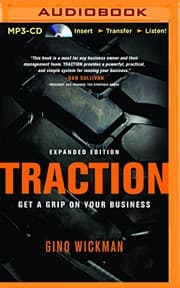
I completely agree with that. And I'll tell you, like, one of the simple non-tech things that really helped us run more efficient is we run, like, a version of the EOS system, you know, the book Traction EOS. We run, like, a modified version of that specific to our agency. And just simply putting that product, which literally run off a Google Sheet. Like, I mean, we don't have the app.
It's run off a Google Sheet. And that's simple. Just simply knowing what our goal is for the next week. The one thing we're going to get done, our rocks, et cetera. Like, and everyone kind of knowing what each person is working on.
That simple process, which has nothing to do with technology, greatly improved the efficiency and project management of our agency. And it's like that's – you read a book or you hire a consultant for a couple weeks and you now have something that will completely change the game for you. And people just don't want to do these kinds of things when, you know, they're – to me, it was like a no-brainer. Again, because I hate – some of it comes natural because I hate working in the business so much. That, like, it's like, oh, this can help me work on the business more.
I can just do more BD and stuff like that. Like, okay, great. No-brainer. I think for some of the individuals and for those of you listening who really love, like, the nerdy shit that goes on in our space, like, I think it's harder for them because they almost don't want to extract themselves. Like, they love being in there and I've actually seen a few agency owners, really, really forward-thinking and progressive agency owners, who've hired COOs to actually operate the business so that they can stay, you know, kind of a little more boots on the ground because that's where they do – you know, they're rainmakers.
That's where they do their work. And that's a really smart play. I've seen that done the other way. It takes a lot of – you have to have a lot of humility, right? Because what it says is I'm – it could be perceived by those with a large ego, I can't run my business, which is not what it's saying.
It's – I understand where my most value is, so I'm, you know, trying to hand off these other things, but yeah, that's really good. Okay. If you look at my old weekly organizer, it probably looked a lot like yours. We also ran off a modified EOS system, and I couldn't give that enough praise. It's huge.
Yeah. Yeah, I mean, you know, it's funny. I always wondered why, like, my – like, left to my own devices, I get, like, pages and pages of, like, to-dos, and then I have to – like, what that system does is it, like, draws me back in because my ADHD will just be like, oh, I can do this, and I want to do this, and oh, and I'll – okay, I'll do this. You know, and what it does is it forces me to say, no, dummy, you have two tasks between now and next Tuesday. Get those two tasks done, then you can follow all the rabbit holes you want.
But you can get those two things done first. Yeah, so we got to have a system. All right. So I want to go – I want to come back to growth a little more and talk a little bit more. But before we get there, I want to talk about running a lean business.
I think this is a really important concept to spend just a little bit of time on. When you talk about a lean business, what does that mean, and why is it impactful to not only maybe the success of day-to-day operation, but ultimately to kind of maximizing the potential value of the business? And so I think if you go through and then start with the impact first, so let's say you have, like, a $2 million revenue agency, and you're able to shave off $80,000 of expenses, which is really that big of an amount. The difference when you actually exit or the difference when you sell and then stay on, it's going to be somewhere in, like, the area of $600,000, $800,000. So, like, small efficiencies make a very big deal based off of the small schools that exist in their insurance world.
And I think operating lean, what that means is, like, looking at your expenses and realizing what's the return on those expenses and looking at all of your expenses. So whether that's your tech stack and there's items that basically you have but you're not using. If those are leases where you realize that if there are two offices that are one, if it's your people and then realizing certain people could have a new role, it all factors in any small change can have a large impact on the sales price. Any small change can have a large impact on the sales price. Yeah, and again, I want to focus everyone kind of away from when you hear, like, trimming the fat before a sale.
This is not cutting employees, right? We already talked about the demographics of insurance. All of these buyers in these larger agencies, they need good people. They'll pay recruiting fees to hire good people. So if you already have good people, keep them.
Our job is to basically show a picture of the business today, how it's operated on its own, and then how it would operate as part of a larger model. So if you have to reallocate some people that are in account management or customer success into another division in that agency, a lot of times you can get credit for that on the pro forma. But you have to know how to ask. And again, they have to be good employees. Yeah, I think that is a part employee management, and I don't mean necessarily the actual managing of the employees.
I mean taking stock in who your A, B, C, and D players are, being able to properly – who can you train up? Who needs to be trained up? Who's, you know, performing at a high level? And who just is never going to cut it? You know, the number of times that I've sat at a table with a glass of bourbon listening to someone complain about someone who's been with the company for 20 years and is terrible and is – But they won't let them go because, you know, of some reason.
And it's like – I think, again, this is where I go back to being an agency owner versus a business owner. And while I try and believe in being loyal to your employees at a certain point, if you're not properly managing your people, meaning giving them quarterly performance or – or we do trimesters, I guess, whatever, three times a year, we do performance reviews and with set criteria and feedback loops and all this kind of stuff where – so people know where they're at and what's going on. At a certain point, there is a reality to this individual is a drag to the business. There is an expense, a fixed expense to them. And is their attitude, their effort, their efficiency impacting the business?
And I think a lot of owners get caught in, well, he or she has been here for X number of years, so I don't know how I could let them go. What would they do next? Well, there are actually a lot of options and there are services that you can hire to help off-board people, help them find other positions. You could call a few of your friends or others and say, hey, I have this individual. They're not a great fit for us.
Here's what he or she is good at. Could they be a good fit? So there are ways of making sure your employees are taken care of but just not at your business. And I think a lot of agency owners miss on that. You spend so much time focusing on that employee that isn't bringing the culture up instead of bringing it down.
And that makes it so you're not actually focusing on all the other people in your organization that are bringing the culture up and doing the right things. And ultimately, that ends up impacting the retention for your best employees if you keep somebody on it that doesn't improve the culture for your group. Yeah, I found myself the other day. I called one of my team members who's a rock star. And I said, hey, man, I'm sorry I haven't checked in in a few days.
I haven't checked in because you're doing good, right? I've been addressing the squeaky wheels. And at the time, it just rolled off my tongue and it felt very natural. And he was like, yeah, yeah, no, I get it, whatever. And the truth is, he's a self-starter.
He solves problems. I don't have to worry about him necessarily. And then like a couple of days later, I was thinking about that comment. I don't know why it hit me, but I was like, oh, my God, I'm spending all my time and attention on the people that drive me nuts versus the people who are killers and rock stars that I should be, that I could get even more out of if I did spend a little time and a little training and whatever. Like I could take him to another level and I'm spending all my time with the people who drive me crazy.
Like what is wrong with me? I won't say I took any positive action on that, but the thought, it kind of depressed me a little bit that that's, and I'm trying to change it. But I mean, it was like, oh, my gosh, why am I spending my time on the people who are problems and not on the people who can probably do three times the work if I just give them a little more. Yeah, that's everyone's default. Yeah.
Yeah, and then not just with employees and management of people. It's the whole business. Yeah, so let's spin back to growth. So everybody wants growth. What I've found is in our industry, if you post something about growth, everyone will like it and comment on it.
And I'll be honest with you, I think most of it is lip service. I think that what I've found is most agency owners love to talk about growth but don't actually want to do any of the things that will actually grow their agency. They just want to flip the lights on and wait for referrals to come in. And then when they don't grow, they bitch about it but will pound the table that they're a referral-based agency. So it's like this odd dynamic of like lying to yourself and being lazy but then loving to talk about growth.
So when you were talking, you said a couple things that, you know, growth is one of the key drivers to increasing multiples, valuation, et cetera, that you want to be above average growth and larger growth. And maybe there's some implied here, so correct me where I'm wrong. I'm just taking – that larger growth actually has a larger impact than standard growth. So if you're at a certain level, that may even go geometric or whatever in terms of multiple potential. So let's start breaking down this idea of growth because I think this is something that everybody focuses on.
And let's start to kind of lay this bag of snakes out. Well, I think on the growth side, so a lot of buyers are doing the purchases out of strategic buyers. So, for example, they may not have anybody that's in their organization that is a killer of personal lines. They're a great commercial lines. They go to that backwards and forwards.
They've got lots of different departments there. They're just – no one is able to go through in the top-down solid-person lines. No one is. So, like if you have an organization that's growing at 30% every single year, you're going to be worth a lot more to them than a normal scenario because you can fix the problem on top of the revenue that you're bringing. So, in that scenario, does it make sense for agencies – are agencies who have a niche focus that then you can align with a specific buyer need, they're going to do better, you know, in air quotes, better than, say, just a generalist agency?
Yeah, I think there's always – yeah, there's always a premium for a niche, especially if you have growth in it. And if the buyer thinks that they can accelerate that growth. But the generalist can do really well as well. So, it's not something that is one or the other. But, yeah, you're usually going to get a premium if there's a niche.
Yeah, that's great. And if you are outside of, say, doing a valuation every year or whatever, how should agencies start to – you know, if they're just sitting at home and they're maybe not a little nervous about reaching out just yet, although hopefully by the end of the podcast they won't be. You know, how do they know average growth versus – like, what are – like, how do you determine these numbers? Because everyone says, like, you know, where are the numbers in our industry where an agency owner can put their finger on it and go, my size, my region, my – I write, you know, 60-40 commercial lines in northwestern Ohio. So, you know, an average growth is, you know, whatever.
Like, how do they know – what's a good benchmark? How do they start to benchmark themselves? Or is that what they pay, you know, you guys and valuation experts for? It's a really hard question to answer right now, Ryan, just given how much premiums are increasing year over year. So, you know, we talk to a lot of agency owners and, you know, they're bragging about 10% annual growth.
And when you peel it back, you know, policy count is shrinking and it's all just due to premium increase. Because at the end of the day, insurance is an incredible product, right? Everyone needs it. Businesses need it. Individuals need it.
There's going to be a home if you're looking to sell your book. And there's going to be a premium to that if you're looking to sell your business on top of the book. But, yeah, I think it's really hard to answer, like, what is strong growth right now? We've had clients, yeah, north of 20%, 30% buyers seem to get really excited about those numbers. But, you know, if you're not growing to that extent, again, you still have an awesome business.
You have an awesome model. Someone's going to want that. I wouldn't be deterred or down on yourself if you're not there. But, you know, you can certainly start to do better. With professionals, whether it's something they can help you with valuation or just other consultants in the industry as well.
If you're hesitant to do that, you're just looking for something to, like, check out online. Reagan Best Practice is always a good one to look at. It'll give you metrics for a different size, different size agencies as well. I think there's a lot of stuff that could be improved there. But it's a great starting point if you don't want to have a conversation with someone.
So let's say somebody has been listening to this and they like you guys. They like the way they talk. Like, who is a good fit particularly for you? And it's okay. I know you guys both said we don't want to be salesy.
I'm not sure. But, like, someone's listening to this and this is an honest question because you guys help people. And I had you on the show for a reason, right? They're sitting there and they're going, you know, I would like to get out ahead of this. You've piqued my interest.
I am. Like, who's a good fit for you guys and who – and it could be everybody. You know what I mean? You answer this however you want. And who maybe is not, like, maybe not in your sweet spot, if that even exists?
Sure. So – You want to take it, Max? I think we always lead with education up front. So, generally speaking, if you're somebody that has an interest in selling, it may not be today, but in the next, like, five years, we're happy to go through and have a conversation. Again, to your point of view, we're never selling – we're not trying to go through and convince you that you can sell your interest.
Oftentimes we have conversations with people and we tell them, this isn't the time that you should – like, you need to make these changes and if you want to go through and sell in a couple years, like, can they be here? And if you're going to go through and help you – so, I think it's people that would probably want to go through and sell in the next five years, if you want to get a general statement of where they're at. Sometimes they're surprised and it makes sense to go through and sometimes they make moves earlier than they expected. Sometimes it's not that case. It's really just up to them and their needs.
And how do they reach out? What's the best way to get a hold of you guys? Yeah, I mean, they can always go through and then just check out our website. It's legacyadvisors.partners. Or just send an email to Mike or myself.
I'm Max at legacyadvisors.partners. Mike at legacyadvisors.partners. And, yeah, we'd love to have conversations with them. Guys, I appreciate you taking this time with the audience. I think, you know, there's so much to our business.
There's so much to our industry. And I think a lot of focus gets put on this moment. And what I hope people take away from this is that there are many different paths. I think what you guys have done a very good job of outlining, that there is no, like, right or wrong. There's our different paths.
And that I think the key is to start thinking about this as far in front of your decision as you can or feels feasible so that you position your business in the best way possible. And I just really appreciate your time. I hope in the future you guys will be willing to come on again and talk more as the market continues to change and you get more experience and more clients in terms of just what's happening. I think this would be a great regular segment for the show. Yeah, definitely appreciate it.
It's been great. We'd love that, Ryan. Thanks for having us. Awesome, guys. All right, we're out of here.
Close twice as many deals by this time next week. Sound impossible? It's not. With the one call close system, you'll stop chasing leads and start closing deals in one call. This is the exact method we use to close 1,200 clients in under three years during the pandemic.
No fluff, no endless follow-ups, just results fast. Based in behavioral psychology and battle-tested, the one call close system eliminates excuses and gets the prospect saying yes more than you ever thought possible. If you're ready to stop losing opportunities and start winning, visit masteroftheclosed.com. That's masteroftheclosed.com. Do it today.
If you like the show, please take a moment to rate, review, and subscribe. It really does help the show to grow. Thank you for listening. Happy Holidays! Want to give your host a gift?
Consider subscribing, rating, and reviewing the show this holiday season. It really helps the show grow. From all of us at Believe, have a Merry Christmas, everyone, and a happy holiday.