Did you know that driving under the influence of marijuana is illegal? Driving high will get you a DUI. And if you're wondering if law enforcement can tell you're driving high, well, everyone else can. Friends- I can tell you drove high ... parents- I can tell when you drive high ... relatives- I can tell. You drove here high, didn't you?
So what makes you think law enforcement can't? I can tell. If you feel different, you drive different. Drive high, get a DUI. Paid for by NHTSA.
I've always hated goals. I've always thought that they were pointless. I felt like if I just worked as hard as I possibly could, then what was the point of the goal? I was just gonna get as much as I could get. But I was wrong.
And if you struggle with goals, then you are in the right place, my friends. Keep listening. What is up, guys? And welcome back to the show. We have another solo episode for you.
I'm really enjoying doing these as I dump my brain, hopefully, into yours. Now, what changed my mind about goals? Years of running businesses, leading teams, and realizing one hard truth: goals aren't the problem. It's the way we've been taught to set them. It's the way that we've been taught to attack them.
If you stick with me, I'm gonna show you how to set goals that you will actually hit. No fluff, no BS, no cliches, just an actionable, easy-to-follow strategy that I guarantee will work. All right. For years, I thought that working as hard as I possibly could was enough, and my logic there was if I gave 100% or 110%, or whatever you're supposed to say when you're trying your best, then the results would take care of themselves. But I always hit walls.
Projects stalled, teams floundered, people got frustrated with me, growth plateaued in different times. And I found I was great at starting projects, but I was terrible at finishing them. And that's when I realized that hard work without goals just doesn't work. And, and some of you are probably listening to this going, "Duh, Ryan, you know, I've known about goals for years." Well, shit.
Sorry. I have these odd things that I think, and until I absolutely bang them against a wall and find out if they make hay or not, uh, I have to kinda learn the hard way. That's always been the way for me. And, you know, the problem is most of the advice that we get about goals is absolute garbage. You've heard things like, you know, just make SMART goals, or you need STRETCH goals.
And, you know, everyone talks about SMART goals, but I don't know anybody in which, like, they practice SMART goals, and they actually work for them. And be honest with yourself. Like, do you sit down and do, like, specific, measurable, uh, a- achievable, relevant, ti... Like, do you writing all that down? I, I don't know anybody that does that, and I also think there's tons of cracks in the system.
It's not completely lacking of value, but I definitely don't think that SMART goals are the answer or STRETCH goals or, or any of these other kinda prepackaged philosophies around goals actually work. You know, and here's some stats for you. A staggering, staggering 84% of people do not set any goals, which, uh, obviously significantly diminishes their chances of success. Only 3% of people have written goals with a plan to execute them, even though, and this, this is crazy, you are 10 times more likely to succeed if you've written out your goals. 10 times more likely.
Only 45% of the people that actually set goals even track their goals. Insane? And 35% of individuals abandon their New Year's resolutions within a week of setting them, often due to setting unattainable goals. That came with the stat, and I think that last part is bullshit, and w- that's why we have to be careful when we get a stat and then someone applies their opinion onto the end of it, which I'm doing, but this is my podcast. I get to put my opinion on things.
Um, they call it Quitters' Day, and it's one week from when this episode is dropping. So this is dropping on Friday the 3rd, so technically, uh, the second Friday in January is called f- is officially Quitters' Day, when all of our big, grandiose plans and goals that we make for the year, we throw out and go back to our old habits. So if we don't set goals the right way, then we are absolutely giving ourselves no chance of success. We're failing ourselves, our team, our business, and that is not who we are, certainly if you take the time to listen to this show. So, uh, first, before we, like, get into the actual strategy itself, I wanna hit you with this idea.
Uh, prioritize fewer, bigger goals. One of the biggest reasons that goals fail is because we try to do too much at once. We spread ourselves thin. We're chasing five, 10 different priorities, and we end up missing them all or getting, like, half-hearted results on a bunch of them, and then, you know, how do we choose which ones to prioritize, et cetera. Uh, Dr.
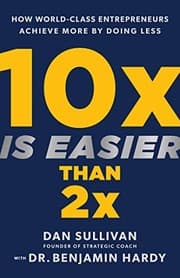
Benjamin Hardy, who wrote 10X Is Easier Than 2X, has a great quote: "To 10X, you must focus on fewer things that matter most." And eliminate everything else. 10X is Easier than 2X is one of my absolute top 10 book recommendations, regardless if you're in the business community or not. There are so many incredible insights inside that book, and the biggest idea that I took away from 10X is Easier than 2X is this thought that, uh, with a 2X goal, right, I wanna double my income, or I wanna do, you know, 2X the number of whatever the thing I'm trying to achieve is. There's a thousand different ways to 2X your goal.
You can, you know, you can take this path or that path, or if this happens, or I could get lucky here. You know, this could go up, and, and there's all kinds of external and internal factors and, and paths that we can take to hit a 2X goal. But if we're gonna 10X our results, there are one, possibly two ways to get there. Simply by focusing on a 10X goal, be it unreasonable or not, we drastically reduce the paths to success, which immediately creates focus. I love that book.
Highly recommend if you haven't read it. Uh, make that a priority in twenty twenty-five. Read 10X is Easier than 2X by Dr. Benedict Hardy. Fewer, bigger goals demand clarity and commitment.
When your goal is ambitious, it eliminates distractions. You can't afford to waste time on things that don't move the needle. Now, what I'm about to share with you has worked for me. I'm not a goal guru. I'm just a guy that likes to get shit done.
And as I mentioned before, I tend to have to learn every lesson the hard way. And because I live a GNF life, uh, I don't often take prepackaged advice at face value, and I love to try my own things. So, uh, my point in saying all that is take this in. Listen to it. If you apply it, I have a feeling that your relationship with goals, much like my own, is gonna change because this works, and we're gonna explain the process.
All right, we've kinda built up the, uh, payoff here for a while. Let's, let's get to the actual strategy itself. I don't have a cool acronym or anything. Uh, would love for you guys to come up with one. Leave it in the, leave it in the comments or DM me if you think of something as I'm talking through here.
But, um, step number one is clarity. We have to be crystal clear on what we want to achieve. If you set generic goals, I wanna get more fit, I wanna make more money, I wanna be better to my spouse, I wanna be a more, uh, present dad or whatever, there's no-- there's nothing to grab onto. There's no tangible thing that we can grab onto and actually apply whether we're doing the thing or not. Like, there's nothing there.
It, it's, it's, it's like sand slipping through your fingers. Like, what does making more money mean? Is ten more dollars a year, is that enough? A hundred? A thousand?
Are you talking about a hundred thousand more dollars a year if you wanna make more money? What's gonna make you happy? What's gonna get you there? What's gonna make it so at the end of twenty twenty-five you're thumping your chest at the holiday party looking around going, "I'm a badass"? Now, you don't actually have to do that, and if you did do it, one, I would love to see it 'cause I think that'd be cool as hell.
But also, most of the people in the room would probably think you're a jackass. However, that feeling, if you're not specific, if you're not clear, then you're never gonna know. We have to put numbers to our goals, and this is what I was always terrible about. This was the, this was the part that, that, like, shut me down immediately right here, was like, I was like, "Well, I wanna do a million in sales, obviously." And I thought to myself, "But, you know, if I work as hard, you know, I really...
I can probably only reasonably hit three hundred..." And then I started negotiating with myself, and ugh, you know, mental garbage. We all have to deal with it. When I started committing to specific goals, everything changed. Clear targets.
Clear targets are easier to hit. So let's-- for me specifically this year, uh, I want to hit one point five million in ARR for Linkora by the end of twenty twenty-five. I wanna sell five hundred memberships to my Master of the Close program, which is coming out in a few weeks. Watch for that. If you're not, uh, on the wait list, that's gonna be the best possible price ever for the value that you get.
You gotta be on the wait list, and it's only gonna be offered to people on the wait list. There's over eight hundred people on the wait list right now, but my goal is to sell five hundred memberships to that. I also wanna get five thousand copies of The Civilized Savage into the hands of people who need it, and the reason I didn't make that goal sell was because- AI agents are everywhere, automating tasks and making decisions at machine speed. But agents make mistakes. Just one rogue agent can do big damage before you even notice.
Rubrik Agent Cloud is the only platform that helps you monitor agents, set guardrails, and rewind mistakes so you can unleash agents, not risk. Accelerate your AI transformation at rubrik.com. That's R-U-B-R-I-K.com. Hiring isn't just about finding someone willing to take the job. You need the right person with the right background who can move your business forward.
If you want candidates who truly match what you're looking for, trust Indeed Sponsored Jobs. With Indeed Sponsored Jobs, your post stands out to quality candidates who actually fit the role. According to Indeed data, ninety percent are more likely to be hired and trusted by one point six million companies Spend more time interviewing candidates who check all your boxes. Less stress, less time, more results now with Indeed Sponsored Jobs. And listeners of this show will get a $75 sponsored job credit to help your job get the premium status it deserves at indeed.com/podcats13.
Just go to indeed.com/podcats13 right now and support our show by saying you heard about Indeed on this podcast. Indeed.com/podcats13. Terms and conditions apply. Hiring? Do it the right way with Indeed.
I don't care if they buy them or not, I want them in people's hands. The message in that book is it's a model that Chris Paradiso and I have discussed for decades, because I've known him that long, and that by co-authoring that book with him, I feel like this message, I'm just so proud of what this message of, of the, the teachings, of the lessons, of the, the, the ideas, the concepts that, that we've put into this book. I think it's gonna inspire a lot of people, and I wanna get 5,000 copies into the hands of people who need it. So I know what you're saying. Ryan, you know, you're a dope.
The S in SMART goals stands for specific, and again, I did not say that SMART goals was completely void of value. Uh, I just said as a framework, I don't think it works, and we're gonna get to that in a second. So if you're still on the SMART goal train and you haven't heard a convincing case as to why you shouldn't be using SMART goals, I get it. We're gonna get there. Stay with me.
Okay, so that's step number one. We gotta be clear, specific, clarity. Okay. Step number two, we have to reverse engineer the process to the goal. So once we know the destination, then we have to map the steps to get there.
Ask yourself, what do I need to do to hit my goal? This means actual tasks. Like, what do you need to do? Not just like, well, if I wanna do a million in revenue, then I need to sell, you know, a thousand widgets or whatever, right? It's what are the actual things that you need to do?
And if you don't know, ask somebody or read a book. I know that might sound crazy, but most of the crazy shit that I know came from reading books. Uh, ask ChatGPT, call a mentor, follow the person who's doing the thing today on social media and consume their content. And here's a little caveat, uh, to that or, or, uh, an addendum to that idea. Don't just consume their content.
Watch what they actually do, right? A lot of times you can learn just as much from digging into someone's social media account and watching what they're actually doing even more so than if you just listen to what they say. So don't just consume that, that person that you admire, that, that person whose life you would like to live or a version of their life, like your version of their life that you'd like to live. Uh, and it, and it's completely cool, by the way, to have that. You can have aspirational individuals who, you know, you take different parts from their lives and say, "You know, I'd love to have this kinda, uh, house and this kinda relationship with my spouse, and I'd like to have this kinda company, and I'd like to be known for, for expertise or thought leadership on this particular top..."
It's completely cool to cherry-pick different people's lives and things they do in their lives and, and admire them, and then follow them, consume their content, but don't just consume their content. Watch what they actually do. So it's most likely not rocket science. It's most likely just work. But, uh, once we have the tasks, once we know the actual things that we need to do, step number three is where we drastically diverge from SMART goals.
Step number three is set non-negotiable habits. Goals aren't about outcomes, they're about the habits that drive those outcomes. If we focus on outcomes, it distracts us from the process. If you're in sales, you've heard detach from the outcome. Every part of your life in which you can detach from the outcome and focus on the habits that create success, not the outcomes of success, but the habits that create success, you will see drastic positive improvements.
And this is kind of like an anecdote, but, um, I played college baseball. I played a little baseball after college. My career really took off when I was a junior in high school, and it was because I had a coach, uh, uh, where I grew up in upstate New York. American Legion Baseball was like, you know, the, the good summer baseball. That's where you wanted to play if you wanted to play in college, but you were still in high school, right?
So tons of guys that went on to play in college and even further played American Legion where I was. There's different leagues all over the country. American Legion was the big thing. So I had this summer coach, uh, for my American Legion team, and he pounded into our heads this idea of detach from the outcome. And he also smoked cigarettes as he coached first base, so he used a lot of curse words and, um, crazy metaphors, and he was very crass, and he's probably my f- one of my favorite coaches ever.
So I'm not gonna share exactly how he, uh, conveyed that message to you. But when I realized that it was okay for me to just focus on the work, focus on my mindset, on my setup, on my approach when I came up to bat, and I completely detached from whether or not I actually got a hit or got on base Surprisingly, I my, my career jumped. I mean, I was good enough to be on the team at the time, but that season I led the team in RBIs and doubles and in batting average, and it just changed the trajectory of my baseball career. Who knows if I'd stayed on the path that I was, if I would've made it to college. But, uh, from that point on, uh, playing college baseball was a clear path, and I bring it all the way back.
I mean, at the time I probably couldn't have told you this, but bringing it all the way back and thinking about it now as forty-three, soon to be forty-four-year-old man, uh, it was this core idea of detaching from the outcome that, that changed the trajectory of my career. And this applies to sales. It applies to everything we do in life. Detach from the outcome. Focus on the habits, right?
If you wanna lose ten pounds, commit to all workout five days a week and cut out sugar, right? The habit, the non-negotiable habit is five workouts a week and no sugar. Not, "I'm gonna lose ten pounds." Because what happens is if the, if you focus on the losing ten pounds and the outcome, you're gonna have days where you retain a little extra water, and the scale's gonna make it look like you're not making any progress, and you're gonna get frustrated, and then you're gonna change your path, and you're go, "You know, maybe I'm working out too much, and I need to..." And now you're off your habits, your success habits.
Instead of thinking, "I'll close 10 clients this month," focus on the number of calls you have to make, or emails you have to send, or networking events you have to go to, or contacts you need to add to your CRM. What is that habit that you do every day that gets you to the goal, not the goal itself? My, uh, my, my ex-father-in-law who taught me about selling insurance, uh, he used to say, "Don't worry about premium. Just put policies on the books." So this is an insurance reference, uh, for those of you who don't work in the insurance industry.
Um, I worked at a, uh, local independent insurance agency, sold home and auto insurance, sold commercial insurance. It was where I cut my teeth as a sales professional, and, uh, he would say all the time, "Don't worry about premium." Premium is, is how you gauge success oftentimes. Some people gauge it by revenue. I think that's silly, but, um, you know, we gau- you know, s- kinda premium's your top line sales number.
And he would say, "Don't worry about premium. Just put policies on the books. Put policies on the books. Don't worry about premium. Premium will always come."
So if you need an example from, like my business, you know, back at Rogue Risk, uh, was the commercial insurance, national digital commercial insurance agency that I started and then, uh, sold and exited from in twenty twenty-three. Uh, you know, instead of we need 20 leads a day, my habit was I will produce four YouTube videos a week because I knew that four good YouTube videos that addressed our audience, that were well optimized for SEO, et cetera, that, that they would produce the leads. And the other part about focusing on the habits is that it took the pressure off any one video or any one action of being successful, right? Any one week's worth of creating videos, they didn't need to always produce a certain number. I knew that stacked over time, week after week, that producing four videos a week, that the leads would come, and they did.
We blew past 20 leads a day. We were, we were crushing. Not because I didn't focus on nitpicking the 20 leads. I just said, "Every single week without fail, I will get four YouTube videos out." That was one of our primary marketing strategies was, uh, inbound through YouTube.
Today, right, uh, that might look like LinkedIn posts. So, uh, I've committed to posting a new LinkedIn post every day before 10:00 AM for, for twenty twenty-five. Every single day, so three hundred and sixty-five posts, right? These posts are how I work through the ideas that are gonna be in my TED Talk at the end of February. These are ideas that I'm reframing from the book, "The Civilized Savage."
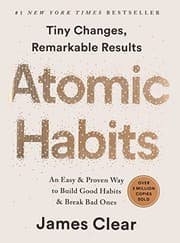
So instead of saying, "I'm gonna grow my audience to 100,000 followers," right, I'm just gonna do the work every day and know that if I'm continuing to refine my game, continuing to refine my expertise, if I'm doing the work, if I'm making sure the success habit is non-negotiable, I just do it every day, the audience will come. Goals are the destination. Habits are the path. When you nail the right habits, the outcome take care of themselves. James Clear, uh, said this in "Atomic Habits": "Every action you take is a vote for the type of person you wish to become," right?
Your habits are who you are. You can say that you're the type of person that works out, but if you never go to the gym, you're not. You can say that you're a salesperson, but if you don't make sales calls, send emails, go to networking events, if you don't do the actions, if you don't have the habits that you need to be a successful salesperson, then you're not. All right. Step number four: We must reflect on and refine our habits, not our annual goals.
So here's the thing, don't overplan. Action begets action. Planning is important, but at some point you have to move. Only through action will the path become clear, right? As the saying goes, the only way out is through.
You gotta do the thing. You got a big goal. You feel like you're in a storm, you're in a tornado You can sit there and hope it doesn't thrash you and throw you about, or you can lock in, buckle down, and work your way out of the storm through action. Annual goals are great for setting vision, right? That's what we're talking about here.
But the world changes way too fast to be locked in for 12 months. So what happens is we need to break down our goals into 90-day sprints quarterly. I like quarterly because I just, I don't think you get enough data back in a month to necessarily make the right realignments and adjustments to your habits to get your goals on track, right? And then we focus on the actions, the habits that we can control right now that will get us to that quarterly goal. And if what we find after a quarter is those aren't the habits or actions that get us there, then we can make adjustments.
But we make adjustments to the habits, not the goal. You set the goal because that's what you wanted to do. Don't fuck with the goal. Fuck with the habits. Realign and adjust your habits if you determine that they are not the right habits, that they're not the right actions to be taking.
Again, James Clear from Atomic Habits, "You do not rise to the level of your goals, you fall to the level of your systems." Right? We have one, two, maybe three big goals, tops, and then we find the habits that will create the biggest impact and align with those long-term goals. We build systems of habits around those goals. At the end of each quarter, we reevaluate, right?
Where are we now? What's changed? What's still working? What needs to shift? You're not abandoning your goal.
You're refining the path to get there. All right, step number five, and I guess we're coming back to, uh, SMART goals to a certain extent. We have to track our habits. We have to measure what matters, right? So if we're not tracking, then what's gonna happen is our emotions are gonna lie to us, right?
If we want to achieve our goals, we can't rely on our memory or our good intentions. It's just you are not your mind, you are not your body. They will lie to you, right? You need to track your habits. You need to measure what matters, right?
Your memory, your emotions will lie to you. When things get squirrely, and they absolutely, positively will, it is inevitable, it's called entropy. Your emotions are gonna freak out. We're doing the wrong things. We're never gonna hit our goals.
We weren't meant to do, we're not worthy. Doubt, shame, fear, blah, blah, blah. And then we freak out, and we go back to what we had always done, and then we get the results that we've always got, and we have another year where we didn't move forward, and that is not you. Actions, not outcomes. We don't need fancy tools to do this.
Uh, there are plenty out there. Uh, it all depends on what you're into. Um, simple notebook, habit tracker, right? A whiteboard with checkboxes. You know, whatever works for you.
I ho- honestly, I don't care. Um, you know, I used a WHOOP strap for a while to track my sleep. I did that for about four months, figured out, uh, during that time what were the things that, that most impact my sleep and therefore impacted my energy, which, uh, we addressed on previous episode. Uh, energy management is one of my core priorities for this year, making sure that I am ready to go. I'm doing, uh, Dry January, mostly just as a reset.
Um, everyone-- You know what's funny when you tell people that you're doing Dry January is that they immediately then go, "Well, you don't have a drinking problem." And I'm like, one, how the fuck do you know? And two, uh, no, but Dry January is not about, like, undoing some drinking problem I have. It's about I know that alcohol, a la my WHOOP, has an impact on my sleep and my energy. And though I love a good cocktail or a beer or a glass of wine like anybody else, probably in some cases more than other people, I want to kick off 2025 right, and I felt like it was a good thing.
And every once in a while it's just fun to, uh, confirm that you have the willpower to do something that you wouldn't otherwise want to do, which is, for me, not drinking for an entire month. So I committed to it. I'll do it. I did 75 Hard last year. It's not a big deal.
Right? So if we're tracking our habits and not our outcomes, like, so if your goal is fitness, right, log your workouts. When did you strength train? When did you cardio train? When did you, when did you stretch or, or do yoga, right?
And if you're really trying to get yourself in shape, you should be doing all three, right? Cardio, weights, uh, pulled 405 on the deadlift today, by the way, um, and stretching, and I really like hot yoga for stretching, uh, mostly because then I don't have to think about what to do, and it also is an incredible core workout beyond getting your muscles flexible. So, uh, but you can track your workouts, right? If you're building a business, this is, we've already talked about this, track the activities, sales calls, emails sent, uh, whatever those core habits are, those core actions are that you need to take, right? If you're creating content, mark off every time you post.
If you wanna get really gangster, create a Google Sheet and put the date, put the title, put a link. And again, I know we're not talking about don't track outcomes, track activity, but you could also go back in and track, like, hey, what was the first week's view count on that particular post, which is mostly for understanding which content hit and what doesn't so you can get better. But simple, track the habits, track the actions, not the outcomes. Don't just write down how much you weigh every day, right? Track what you're doing to improve the numbers that are meaningful to your goals, right?
Peter Drucker said, you know, this is s- probably one of his most famous lines, "What gets measured gets managed." You are managing your success. By tracking your habits, you're not just holding yourself accountable, you're building momentum. Each check mark, each data point, each day that you put in your journal, the, the positive habits that are getting you to where you're going, right, feels good, right? Day three of going to the gym sucks.
Day 30 is way easier. Looking back, I realize that achieving my biggest goals is not about grinding harder, although grinding harder is an amplifier. It's about focusing smarter. So grinding harder without smart focus, without, not smart goals, smart focus, is a, a, a, a, a loss. Your, your, your, your, lot of wasted energy, lot of wasted activity, right?
Grinding harder on top of smart focus is an amplifier. It's about choosing fewer goals, building the right habits, and adapting as you go. James Clear again, "Success is the product of daily habits, not once in a lifetime transformations." Very relevant considering we're just coming off of New Year's, and as I said, we're a week away from Quitters' Day. And my friends, there is one more piece to this puzzle, the ability to push just a little further than you think you can.
One of the reasons I don't like smart goals is the achievable, the A. Fuck achievable. George Bernard Shaw has one of my favorite quotes of all time. It's one of the most inspirational things that I, I've ever read, and I continue to read it again and again. "The reasonable man adapts himself to the world.
The unreasonable one persists in trying to adapt the world to himself. Therefore, all progress depends on the unreasonable man." Be unreasonable. Ed Mylett calls this the power of one more. You're one more meeting, one more rep, one more call away from achieving what you want.
When everyone else has done enough, be unreasonable. Do one more. Marcus Aurelius, "You have power over your mind, not outside events. Realize this, and you will find your strength." You have one more in you if you want it.
You can't control the market, the competition, or even the timing of how shit happens, but you can control the habits that you put into your life, the actions you take, and the mindset that you bring every single day. When you pair the right habits with the mindset to do one more, you'll create unstoppable momentum. That one extra action, one more email, one more workout, one more pitch. It could be the difference between hitting that goal and not, so why not do it? Is, is the pain of one more worse than the pain of not hitting your goal at the end of 2025?
I don't think so. We're officially to the call to action portion of this podcast, and my friends, this is what I wanna tell you. Achieving your goals will require enduring discomfort and overcoming obstacles. To succeed, the discomfort of not reaching your goal must outweigh the challenges of pursuing it. Tony Robbins, "Change happens when the pain of staying the same is greater than the pain of change.
Transformation occurs when the status quo becomes intolerable, motivating you to take the necessary steps towards your objectives." Steven Pressfield, "At some point, the pain of not doing it becomes greater than the pain of doing it." My wish for you in 2025 is that you destroy your BHAG, your big, hairy, audacious, dare I say, unreasonable goal. But the only way you get there is by focusing on what you can control, your actions, your decisions, and your responses, your habits. There is a badass motherfucker inside you, an unreasonable prick that wants more out of life, a delusional son of a bitch.
Embrace the suck, and if you're afraid, good, you should be. Go listen to the last podcast, uh, again. Fear is your vector for action. You are a civilized savage, and I am here for it. So here is my challenge.
What's your one more today? What's the non-negotiable habit that you'll commit to, that one extra step you'll take, the thing that pushes you closer to your goal? I wanna know. Share it in the comments, DM me, Instagram, LinkedIn. Let's make this shit real.
This is the way. This is the story of the one. As the purchasing manager at a manufacturing plant, she knows the only thing more important than having the right safety gear is having it there when you need it. That's why she partners with Grainger for auto reordering, so her team members can count on her to have cut-resistant gloves on hand, and each shift can run safely and efficiently. Call 1-800-GRAINGER, click grainger.com, or just stop by.
Grainger, for the ones who get it done. If you liked the show, please take a moment to rate, review, and subscribe. It really does help the show to grow. Thank you for listening. Happy holidays.
Wanna give your host a gift? Consider subscribing, rating, and reviewing the show this holiday season. It really helps the show grow. From all of us at Believe, have a merry Christmas, everyone, and a happy holiday