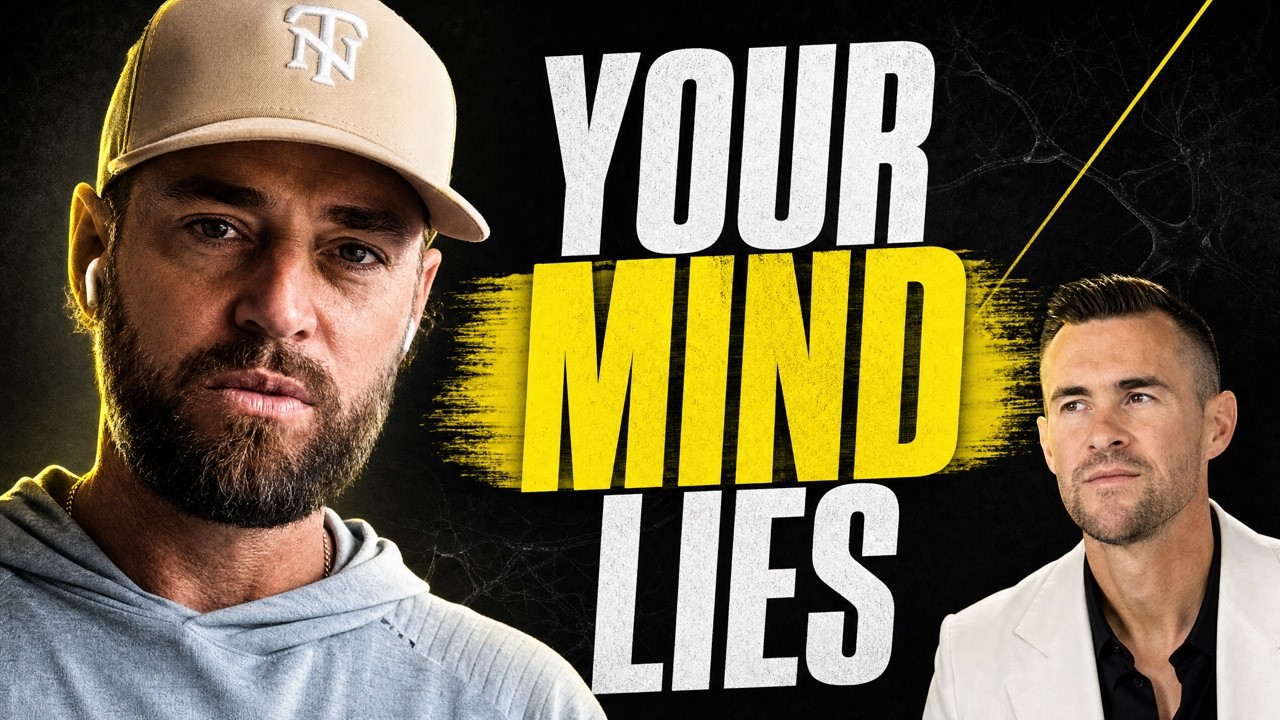
Triumph after Trauma: Cyrus Jaffery's Journey from Conflict to Entrepreneurship
Episode Answer
Triumph after Trauma: Cyrus Jaffery's Journey from Conflict to Entrepreneurship is a Finding Peak podcast episode hosted by Ryan Hanley. The conversation explores leadership, performance, entrepreneurship, and the work required to build with clarity under pressure.
Read the Conversation
Show the full transcript
You've finally broken loose from work. Three friends, one tee time, and then the text. "Honey, there's water in the basement." Ugh. Not exactly how you pictured your Saturday.
That's when you call us, Cincinnati Insurance. We always answer the call, because real protection means showing up, even when things are in the rough. Cincinnati Insurance. Let us make your bad day better. Find an agent at cinfin.com.
AI agents are everywhere, automating tasks and making decisions at machine speed. But agents make mistakes. Just one rogue agent can do big damage before you even notice. Rubrik Agent Cloud is the only platform that helps you monitor agents, set guardrails, and rewind mistakes, so you can unleash agents, not risk. Accelerate your AI transformation at rubrik.com.
That's R-U-B-R-I-K.com. Happy holidays. Want to give your host a gift? Consider subscribing, rating, and reviewing the show this holiday season. It really helps the show grow.
From all of us at Believe, have a merry Christmas everyone, and a happy holiday. Let's go. Yeah. Make it look, make it look, make it look easy. Hey, stand up guy, I'm on ten toes.
Big body, pull up in a Range Rover. I can change the whole game when I say so. I pull up, shut it down, yeah, they know. Huh. Running this game ain't a thing for me.
I never switched up, no change for me Well, and welcome back to the show. Today we have a conversation with Cyrus Jaffary. Cyrus is an entrepreneur. He's a speaker, a podcaster. He's a family man.
He's a board member. And all of these things were born out of this tremendous story. His home was literally bombed in Afghanistan. He was forced to move to Pakistan, in which he lived in a one-room apartment with six brothers and sisters and his mom. Somehow found his way to the United States, and has now become a multi-time entrepreneur, founding multiple brands in the insurance industry, in the technology industry.
Uh, has more than 160 people working for him across all his brands. This story is amazing. It shows you that with determination, with the right mindset, with the right focus, with the right belief structure, we can make anything we want out of our lives. This is what peak performance is all about. It is what this podcast is all about, and I love bringing stories like Cyrus's to you.
So with that introduction, and no further avail, let's get on to Cyrus Jaffary. I'm good, man. I'm, uh, I'm excited to have you on the show. I'm excited to talk about your journey. I really wanna focus on, like, the entrepreneurial parts of it.
Um, that's, I think that's really where I'd like to talk about. I mean, obviously we can talk a little bit about the insurance stuff, but, um, I really wanna know, like- Yeah ... I mean, dude, you have such an interesting story. Like, being on your show and, and, and getting to know you just a little bit, and then, you know, just digging in afterwards and, and learning more about what you're doing. I think it's incredible and I guess my...
I, I guess I'd love for people who, who don't know your story and, and maybe aren't familiar with you, um, you know, you kinda gave me some of your background before we went live on your show. But I'd love for you to maybe just, just kick it off here. Uh, start us, uh, off by telling us a little bit about where you came from, how you got into being an entrepreneur, and business, and all that kinda stuff. Like, just give us a little bit of the backstory. Yeah, man.
Um, I'm originally, um, originally from Afghanistan, man. So I think, um, I think that kinda throws off people when you're like, "Okay, so I'm, so I'm two years old." The ba- the story is actually right here. So my book just came out. Literally, this is the first copy I just got.
Awesome. Triumph- Awesome ... Triumph, Triumph After Trauma. Um, and my whole r- life story is basically just dealing with adversity. It's just basically having a winning, winning attitude.
So two years old, man, I was in, I was in Afghanistan. Mom and Dad are born there. So, um, we're basically hanging out. That's in the early '90s when the Taliban came and invaded Afghanistan and, um, they bombed our house. Like, my, my mom and dad are in there, my dad comes into the house and says, "Hey," to my mom, "Hey, our neighbor's house got, uh, got hit, and there's a lot of dead bodies.
I gotta go help." My mom is fighting him, 'cause my mom's pregnant. I'm with my younger brother, who is a year old. Or no, maybe my older brother, who was four years old. And it's me, I'm two years old, and they're, like, fighting 'cause my mom's like, "Dude, you gotta get your kids out of here.
You can't be worried about other bodies, 'cause we will be next." And as soon as she says that, dude, our house gets hit, um, uh, with a, with a bomb and debris everywhere, man. I, I go under a table. My mom dives open. I've got on the back of my head, actually, scars from it that's in the book, um, from... because I was bleeding from my head.
And somehow, man, like, we all got out of that house somehow, man. It was not my time at the time, uh, to... I guess to, to be the end of it for me. We go to a hospital for a week, and then, and then... So the Taliban, when they invaded Afghanistan, man, now they wanted to control everything, so they shut the whole country down.
And so you couldn't go from roads to get a way to go to other countries, 'cause they wanted to keep everybody internal. So you couldn't go through the main roads to escape, so you basically had to... We had my mom, my dad had to pay, like, 50,000 a person to go to, like, a remote place, get in a helicopter, and then from there they would take us to Pakistan, which is the neighboring country, to be, to be safe. And my older brother and older sister were already there, because there was some war. We, my, my dad worked for the US military, so he heard something, so they got the two of them out to go to school there six months before.
Um, but he didn't know that things were gonna turn really bad, uh, that quickly, so it did happen, and we got stuck there. So we, my mom walked for two weeks, dude, to me, she's pregnant, and then my older brother. She would- Walked her at night, and then during the day she would just hide 'cause, 'cause she didn't wanna be seen, 'cause if they see you, like they don't care, man. The Taliban at the time didn't care. And so she did that.
We got to this remote place. This is a crazy story be- 'cause we get to this remote place. There's, there's six helicopters, me and my mom, and, and we get into one helicopter and my mom is just freaking out and she's praying really, really, like hard. And the helicopter, the, the, the, the pilot's like, "Dude, lady, stop freaking out. Get in this, let's relax."
So we get up in the air. Dude, we're up in the air, there's six helicopters. Kabul River is underneath us, the largest river. And, um, and, and I spin one or two times, and then he just keeps going, man. It just grazed the bottom of the helicopter.
The other five fall in the Kabul River. I'm 100% positive everybody is dead except for our helicopter somehow. So, so my story starts with the first two years of my life, you know, like we pretty much ... Like, I should've been dead two times, like easily, right? Like, so, but God had a different, different plan for me.
And so we got to, we got to Pakistan. We're 12 years old, lived in refugee camps for a year, and then found a, found an apartment, and we st- we stayed there for 12 years and tried ... 'Cause my, my, my dad's side, their whole family is, is in, is in Omaha, Nebraska at this point because my, my oldest, my dad's oldest sister's husband worked for the University of Kabul. They had a relationship with the university here in Nebraska. He came as a professor and then brought all his brothers and sisters as refugees to the US. My dad was the only one out of 12 that said, "I don't wanna go.
I love what I do." He was an entrepreneur himself. He owned restaurants and gas stations in Afghanistan back in the '70s. He was, he's like, "I don't wanna do that." You know, he was a little bit older at the time.
And so that's why we stayed, and we never, we never came here, and then we had to deal with this. We're s- stayed in Pakistan for 12 years. Um, one bedroom, man. You know, um, six of us kids in one room sleeping on the floor, going and fetching water to, to, to, to give a bath to ... There's no bath, showers or anything.
You had to go grab water. There was no running water at the time. You had to go grab water a mile away, bring the water, and then use the same water with six of us once a week to, to shower before you go to school on Monday. So like, but you didn't know any better, man. We were like, it was me and my brothers.
We were, uh, uh, uh, two or three of my brothers are within two years apart, so like, man. And everybody else was living the same way, so like, you have no idea. You ... Like, we played cricket, we played outside all the time. So like, we had no, we didn't know what life was like other than the life that we were living, so we thought we were hitting lottery because we escaped Afghanistan, right?
So anyways, uh, tried 10 times to become a refugee, hit the lottery. Uh, uh, uh, I believe it was May of 2002, uh, six months before or seven months after 9/11, uh, we get approved to come to the US. You know, we come here, I'm a freshman in high school. I don't speak English. My brother doesn't speak English.
9/11 just happened. We, we look, we don't look the same. We look like we're from those countries that pretty much got them, uh, nine, to, to brought 9/11 to them. So it was a tough upbringing. Um, but, uh, but, uh, yeah, man.
So I'll, so that's kinda, kinda like my backstory of how we go from Afghanistan to Pakistan to come to the US. So when you get to Afghanistan, is your dad re-engaging his kinda entrepreneurial spirit? Is he, uh, did he find a job? Is he trying to start businesses? Like, like, obviously, and we're gonna get into more of your, y- what, what you're currently doing as, as we go, but I, I'm really interested in how you have had this, this entrepreneurial nature embedded into you.
Is this- Yeah ... like, obviously you saw it, but, but you were two years old, right? I mean, you were two years old when you first left- Mm-hmm ... um, Afghanistan, um, for Pakistan, sorry. And now you're in Pakistan. Is, are you, is he continuing to push that? Is he, is he teaching you?
Is he talking to you? Like, like, like, are you guys ... Is he ... You know, h- h- how is your dad or, or any family members influencing you- Mm-hmm ... at this time as you, as you're continuing to grow? I mean, you were, you were there for, what you s- you were a, a, a, a freshman in high school.
Yeah, man. That's what, 13, 14, so that's 12 years- Yep ... that, that you were living there. Um, what was that like, uh, and, and do you think that played a role in your, in, in who you are today in terms of the entrepreneurial side? Obviously, it impacted you immensely as a person. Yeah.
Honestly, man, like, um, the, not real- My dad, like, would come, would come to, to Pakistan for six months, and then he would leave for six months. He would come in for three months, and then he would leave for six months. And we had a terrible relationship, to be honest with you. We still do. Okay. 'Cause, like, my dad was old school.
Like, you know, like, we got beatings all the time. We, like, it was just- Mm-hmm ... it was just, that's, but that's how his parents were, so by no means ... Like, he was just like, "Hey, I'm trying to be, I'm trying to set rules." So one thing I learned about my dad, man, is, like, the discipline, um, of like, hey man, like, you gotta do things right. Um, you gotta be on time.
Uh, when I ... Like, we, dude, we would get beat j- if, like ... So there, so over there, back home, like, there was no, we didn't have cellphones or watches, so you don't know the time, so you go play. We're playing in this playground which is about a mile away, and then over there, so there's prayers. Like, so big noises come out, it's time to pray.
Everybody prays in Pakistan and Afghanistan, or Muslim countries. So you see these loud noises, and when those loud noises come and my dad is in town, that means, like, I'm late. Like, that means- Are you tired of endless follow-ups and missed opportunities in your sales process? Chasing leads is a losing game. That's why I created the One Call Close system, a battle-tested sales system that uses behavioral psychology to close deals in just one call.
No more, "Let me think about it," no more, "I'll get back to you." Using the One Call Close system, we took new reps from 25% close ratio to over 80% in just three months. To grow fast, you must close deals faster at zero extra marketing cost. The One Call Close system allows you and your reps to build trust, address pain points, all while watching your revenue skyrocket Ready to stop chasing leads and start closing? Visit masteroftheclose.com today.
Close twice as many deals this time next week. Visit masteroftheclose.com to learn how. Like, "Dude, you gotta be home." That's like your... So we're just booking it as fast as we can, that fast mile, to get home, and that bell rings for, like, two or three minutes, uh, to get home.
And then when you come home, my dad's praying, and, like, you're kinda slowly going to the aisle and trying to s- sneak into the house saying, like, "You're not late." So my dad didn't teach me a lot about, um, the entrepreneurship side of things. My dad did teach me a lot about, about, about how to become a dad, how to be a good dad, how to be a, a win- uh, any of that stuff. What he did teach me was the discipline of, like, okay, um, how do you, first of all, how do you, how do you, how do you treat people? How do you, how do you in his, in his, in his capacity, how do you raise kids?
Uh, and, uh, and, and on how to truly be just dis- disciplined and, and all the other stuff. Yeah. And how to treat other people with respect, and all of that stuff. Those are the things that I took from my dad, not, not his entrepreneurship stuff. Yeah, you know, I, I didn't have the best, uh, role models from a male perspective as well growing up in terms of my dad and my stepdad.
And, you know, what I took a lot from them, uh, at that time in their lives, they both have since come around and are, are really good grandfathers to my, to my children. But as, you know, when they were, you know, my stepdad and m- and my dad, uh, not, you know, I basically lived from the standpoint of I wanna do everything the opposite of what these guys are doing. So it was like seeing, you know, sometimes if you can have the right perspective, even if that person is not, uh, a role model insomuch as I want to be who th- who this person is, I want to model myself after them, they can almost be the, the, the negative, right? They can be the, the opposite and say, "Okay, I'm gonna take how they, the things they did, the way they treated me, or the way they treated my mother or wh- whatever," and it, it almost does provide even a stronger framework, at least that's what I've found, as to what I don't wanna be. I don't wanna be this person.
I don't wanna be, uh, an addict. I don't wanna be, uh, fly off the hinge or, or, or not be trustworthy in my emotional state- Mm-hmm ... or how I'm gonna speak to you or, or, or the physical violence piece, right? So, like, I do think that it, it seems like y- you've been able to put in perspective, you know, and not perpetuate that, and in doing so, you, you probably use the mo- use your dad al- almost as like a, as like a here's what not to do in some cases, right? And that can be just as strong, I think, um, for us. I, I don't know.
Particularly for guys I think that, that you oftentimes can look at that male role model and say, "They're basically giving me a case study on who I don't necessarily I don't wanna be," in that standpoint. Mm. So, all right, so tell me, you said you, you, you hit the lottery. Tell me what it was like. And, and obviously I, you know, I'm a, I'm a white kid from the country in upstate New York, right?
So I have no idea- Mm-hmm ... what it's like to be, uh, a refugee in Pakistan and to get a letter, a call, a message, whatever, that says, "Hey, you have the opportunity to go to the United States." What, what's that moment like for you guys? What's the conversation? How much time do you have? Just talk me through that process a little bit, 'cause that's, it's just such a foreign, a, a foreign experience to me and, and probably most of the people listening.
I'd love to just know a little bit about what that was like and what you were thinking in, in your head. Yeah. So, like, remember, so we did, um, we did- Mm ... like nine interviews, and after that final interview they tell you, "Okay," like, "All right, you guys are going to the US," or, or, "No, you're not." But, like, by the ninth one, I was like, "Hey, we're just gonna go do this again." Um, and then it's just not gonna, it's just not gonna work.
So I'm gonna, uh, "Dad, I'm, I gotta go, I gotta go play," because, like, I really enjoy, like, being outside and, and playing sports and stuff like that. So for me, it was, when we, when we did get the news, it was one of those things where we're like, "Oh. Oh, okay. Um, this is gonna be different." It was, it was like, dude, I had my life there, man.
I had friends there. I had my life. I had everything that I had going on for me, man. I thought I was living the dream. I was, I was doing certain things.
I thought I was gonna grow up there and do certain things, and I didn't know anything about the US, so it didn't really, I didn't really have any expectations. It was almost like my mom was, like, was, like, taking me from somewhere where, like, I was, I was having a good time and, like, being a party pooper and taking me somewhere else and kinda disrupting my life almost, right? But one thing I would tell you, man, about my mom is she's a, she's a go-getter, man. And she, if she has her mind onto something, um, with how she escaped and walked for two weeks to get us to the helicopter, to getting us to Pakistan as a single mom and raising six kids, um, the way she's raised those six kids and then leaving her husband back home, and she, her husband didn't come. My dad didn't come.
Coming here and saying, "Hey, I'm gonna, I'm gonna do what's best for my kids and raise these guys into, into, into certain individuals." So I, I, I, that, I take a lot from my mom, uh, ver- versus my dad, of course. But the moment was like, man, n- n- oh, like, 'cause, and then we've been g- we've been going and going and going. This was another time of like, "Okay, now we gotta go somewhere else." It was like, "Damn, Mom," like, "I don't wanna do that."
So I cried for the first 30 days, I promise you, man- Wow ... when I came here because I was like, "I don't wanna be here. It's, it's different. It's not the same. I don't speak the language, not the same people. They don't like me.
They treat me as an outsider." Especially at that time. So, like, that first part was pretty tough, and that moment when they told me, man, I had some regret. I had some, some bad feelings at the time about- Yeah ... about leaving. Was it fairly easy for you to integrate into Pakistan?
Relatively speaking. Yeah. I mean, I was two, so it was one of those things where my mom was just, was like, "All right," like, uh, so I kinda, like, I know Pakistan. I don't know Afghanistan. So it was one of those times- Yeah ... where I don't really remember Afghanistan much.
Uh, writing the book and going through the past and then interviewing my dad and my uncles and my aunts back home brought back some memories, but I was still pretty young, so I don't really... And when you deal with some trauma, a lot of times, man, I'm seeing, um, seeing a therapist and working through a lot of things- Mm ... that I've dealt with in life, and when you deal with some of those things, man, like, you kinda almost, like, block a part of your life that was very challenging, and you don't wanna talk about it. You don't wanna hear about it. You almost like, "Eh, that never happened." But, but it shapes you who you are, and you need to talk about it Um, and honestly, like if you don't talk about it, they're gonna keep inside of you for a long time, and it's just not gonna be well for you.
I think, I think I actually said this on your podcast when, when we were talking, that, um, I, the best advice I ever got was back in, jeez, I, I'm gonna forget. It was 2017, 2018, a mentor of mine said, "Go find a counselor or someone you can talk to. Uh, it's gotta be someone outside your family, someone you pay, and go see them every other week for the rest of your life and consider it just a life expense." And I've done that for the most part, and I, I'm with you, man. It, it, uh...
You start talking about things, you s- and, and it's funny how... You know, I, I read a ton, I consume a ton, I think about a lot of topics, I write a lot, a lot of topics, but when you actually sit down with someone and you hear the words come out of your mouth as they're asking you questions and you're explaining, and you're like... And, and, and I even found, and I'd love your, I'd love your feedback on this since you have th- this trauma and you have all these experiences and now you're try- you're, you've recreated them in, in your mind through, through your book, right? Like, I found that I would say something and I would, I would like stop myself and be like, "Is that, is that really the way I feel about that?" Or, "Did it really happen that way?"
Or, you know, and then as I talked about it more, it was like I, I started to go, "Wow, I, I've pretended like I felt this way about this," or, "I boxed this up," or, "I never really dealt with this issue," or, "Man, I've literally never told another human about this situation or how I felt about this or what happened in this moment." And, um, and then you can start to deal with it. But, but man, it is, it, it definitely is wild when you, when you are explaining something to people, to, to a, to a counselor or a therapist, whatever, and you hear certain words come out of your mouth and you're like- Mm ... I don't know, your internal monologue would've never said that. But when you verbalize it and you hear it, it really starts to, to, to set it in your head.
It, uh, it, one, is that, is that a shared experience? Is that something that you found? And two, like, h- how has that been, um, going through the process of writing a book and, and recreating these past experiences? How has that impacted you? Man, I would say going to him for the last six to 12 months or whatever that I've been going, um, has made me a better husband.
I'm a better communicator. I open up a lot more. I share a lot more. Um, I just feel like, man, there's one thing in my life, like, that I'd never sh- there's one thing that, like, I never shared with anybody in my life. And it almost like we...
I knew it happened, um, and it was embarrassing a lot of times. And then, and then, and then talking to like a counselor or, or a therapist, whoever, things just come out of your mouth almost. It's like, wow, like I can't believe, like, like I've never even told my wife this. I've never told the person I care about the most because whether it was embarrassing or... Anyways, I was, I was really young when this thing happened, so like it's not my fault that somebody took advantage and all that stuff.
And like, so I think- There you are, bud ... dude, Ryan, I'm not sure- No, you're good. You're good. You just, you just dropped on me. That's okay. Hey, let's, uh, let's restart at, um, at you said you started to hear things come out of your mouth and you, uh, became a better communicator with your wife, better communicator with your family- Okay ... that kind of stuff.
Right around there is where it started to get a little choppy. Okay. Okay. Yeah. Um, and you said, uh, and I just sent a message to the team, so I think, I think we're gonna be just fine moving forward.
Apologize for that. No, good. Um. No, good, man. Happens.
For the love you- You, uh, you were talking about how when you started meeting, um, some, you know, things started coming out of your mouth that you hadn't said before, some stories you hadn't even shared with your wife, and that has made you a better communicator, so that, around there. Yep. Yeah. So, so it has, man, it has made me a better communicator and, and the, and then the biggest reason being is because, like, when you can tell, like, your dark, deep secrets to, to somebody that you just met like six months ago, um, and, and, and I, and I think it feels a lot better to, to say that to somebody because that person is not gonna judge you, right? And, like, your significant other is not gonna, gonna judge you.
Your brother and sister is not gonna judge you, but you almost feel embarrassed to tell them because what are they gonna think of you? Because they're important to you. Your wife and your brother and sister are important to you, and you don't want them to think any different of you because certain things happened to you. So, so I would say, man, I, I wish everybody in the world, man, would have, would have a therapist, would have a counselor that they can just go and talk to about life. Um, obviously with mental health and a lot of things happening, man, especially some of that stuff happens in the winter around, around this time when it, when it got, when it, when it's, when it's a little bit colder I guess here, or, uh, or anytime really in general, man.
I, I feel like when people talk about it, get that stuff out, it's just such a, you're just a better human being, and a better, I'm a better father, I'm a better husband, um, I'm a better leader at the office because I feel, I feel free, um, and I don't have things inside of me that, man, I, that, that, that I'm just not sharing with somebody. Uh, and it's not embarrassing. It really isn't- Yeah ... man. Like, it's not you. It's, it's, it's things that happens to you in your life and a lot of those times.
And honestly, sometimes if it is embarrassing things that you did, sharing those things, man, it's funny because there are so many people that are dealing with the same exact thing, but like, but like nobody wants to talk about it because I feel like social media and other places are all about like, "Let's talk about the good stuff," and all this stuff. But man, there's some bad stuff too, man, and I think we need to talk about it, um, because that's the only way to become better and, and, and, and, and, and move forward. And especially with me and you, man, people that are like, and a lot of people we know, people that are like high achievers, they wanna do certain things and go and go and go and go, and do this or that and all, and all the other stuff. I feel like those are the people that are hiding a lot of things sometimes because you're hiding things- Yeah ... because you're just getting yourself caught up in all these businesses and stuff, so you're more busier than, than you truly should be, so. Yeah.
I, you know, I, so there's a couple things in there. I think, one, the more open that I've been with my life, the more I've found that most people's stuff is even crazier than mine, right? So you think your stuff is the craziest stuff, you know what I mean? Right. You think, "Oh, no one's gonna understand about this," or, "No one's gonna understand that, you know, m- you know, my, my, you know, every male role model in my life was an addict," or that, you know- Mm-hmm Uh, for a large portion of my life, my, you know, my father was in jail.
You know what I mean? Like, people are not gonna... And then you, then people are like, "Oh, you know, here, here's what I had to deal with." And you're like, "Oh, wait, your stuff is just as crazy as my stuff, or crazier." Mm-hmm.
We're all messed up, broken people trying to do our best. Right. And I think this is, this is the thing I'm the, I, I may be the most interested in about you. So, you got a wild story. Yeah.
And I am positive that there are dozens, hundreds of moments that you could've just become a victim. Mm-hmm. You could've just said, "You know what? You know, you c- you know, I, my, my, my home got blown up in Afghanistan. God hates me.
Uh, you know, I lived in a one room with six on the floor, and my mom and my dad wasn't around, and, you know, d- uh, God hates me. And, you know, and then I got forced to go to this country where, where I don't speak the language and pu- you know, and I'm dealing with all this nonsense 'cause, 'cause this thing just happened when 9/11..." You know, you could've been a victim so many times, yet you're not. You've pushed forward. Y- you're, you're, you're a family guy.
You're a business guy. People respect you. You help people. Your family's part of your business. Like, like, how do you...
How did you not become a victim? Like, what is it about, is it you, your story, the people you surround yourself? Like, like, y- you could be a victim and- Mm ... no one would blame you, right? No one would say to you, "Hey, man, we get it. You had all this messed up stuff.
You got all these things going on in your head. Like, like, we get it. It's okay to, to not achieve. It's okay to sit on a couch and eat Doritos and take money from the government or whatever. Like, it's okay."
Mm-hmm. But you didn't do that. You chose a different path, and I, I'm so interested in why you, why, how, et cetera, you, you, you, you didn't go down that path. You didn't choose. You chose to- Mm ... to push and, and to become this thing that you are.
Like, um, I just think it's such a great example of what's possible, and I'm just really interested in how you got there. Yeah, 100%. I think, I think a lot of it, to be honest with you, is, is because other people, like, um, they were, like, I was, um... So first and foremost, so when I came here at 14, 15, like, I really caught, caught up on, like, soccer. Like, my dad played soccer, and we played up, we played.
I was a good athlete, so, like, I really got caught up into soccer right away when I got here at 14, 15 years old, and I was really good at it, man. I was, like, the best player in our, in our JV team right away as a freshman and played on varsity my, for my sophomore, junior, and senior year. And, like, what soccer did to me, man, at the time was, like, it turned almost something negative that was basically happening to me, it turned it into something positive. Because as I started having success on the soccer field as a freshman, you could see all these people that weren't talking to me, that were making fun of me, that were doing all this stuff and being racist to me, all them kinda turned into, like, "Wow, Cyrus, you're really good, man. Hey, do you wanna hang out?"
I was like, "What?" I was like, I was like, "You, like, you guys, you guys were just doing this like two months ago, and now that I'm on the soccer team, I'm one of the best players, like, I have all these friends, and, like, I've never had that in the past," right? So I'm like, so then I was like, "Man, I'm gonna be really, really, really good because I want a lot of friends, and I want a lot of people to like me." So it's almost like a drive to make it so people could like you, and then it basically turned into, "Okay, how can you do better? And how can you do better?
And how can you be an All-American? Can you be this? Can you go to college, pay for college?" And all these things. So, so at the time it was...
You know, here's what happens. God, God puts you in different situations and puts different things in your life for certain reasons, right? So if my, if my house didn't get bombed, if I didn't get in the helicopter, if I didn't go to Pakistan, if I didn't go through all the stuff I had to deal with my freshman year in high school, I wouldn't be the person I am today, man. Maybe I am that couch potato that's sitting there and saying, "Man, like, I had it really good, so I'm sitting here and I'm doing my thing." So I almost see it as, hey, man, like, the more adversity in life that you deal with, it's almost building calluses in your mind to tell you that, "Hey, man, this is just another d- another day in Cyrus Yafiz's life, man.
It's just another thing I gotta deal with," right? So I don't know where that comes from, to be honest with you. Maybe it's from, like, just born, being born and just putting into this, like, adversity after adversity after just making it. Like, every day is like, "What are we gonna eat today? How are we gonna eat today?
Do we have enough for everybody to get fed today?" So it's almost more of a survival mode, right? You're not really thinking of, like, anything else other than making it through the day to be able to have food on the table, if that makes sense. So that kind of survive... And, and even to today, like, like, I'm still in the same mindset today.
I'm just like, "Man, I just gotta make it throughout the day," because now that I have, like, people that, like, honestly, like, like, when I, I got, I got with my wife at, like, 23, 24 years old, and I was like, "Oh, this person, like, reli- ... es on me. Like, I have to, like, support this person," right? At the time. And then when I became a father is when I truly changed. I became a completely different person, because from, like, s- when you have too much success, when a lot of friends, as you might know, like, I, when I was 17, 16 years old, man, like, I had a lot of friends.
I was on the varsity. I was, like, a cool kid for once. I did some stuff that I'm not proud of, man, and, like, I wasn't be- I wasn't the person I am today, for sure. From, like, 17 to 22, man, I just went into, like, a hole almost. And everybody in life, you're gonna go into certain kind of hole when you, but you gotta know how to get out of that hole, 'cause you're gonna, a hole is always gonna be there.
You're gonna go in a hole, and you gotta be able to find a way to get out of it, and that's where I'm looking at, like, God puts different p- people and different things in your life saying, "Hey, soccer's gonna get you out of that hole." And then it's Michelle, which is, like, my wife now, and she got me out of that hole because I'm like, "Man, this person relies on me. I gotta do really good on my job to pay the rent for our place that we had." And then when you have a kid, you're like, "Man." Now, like, Sophia, my first, you know, I had her at, like, 27, 26 years old.
I was like, "Man," like, "I can't fail." Because now it's not just me failing, I'm failing many other people. And then you have employees, right? And then you're like, "Man," like, "I, I can't fail in the business because, 'cause man, I gotta f- I'm gonna fail like 10 other people." So I feel like it was survival mode for a long time, and then God puts all these people into your life, and you gotta take those as fuel Uh, so now I've got our organization, 130 people.
I've got three kids, my wife, my mom, my older brother who got in a car accident who's disabled. Like, I feel like all those, the weight of all those people are on my shoulders, and like, I'm just, I'm just, I'm just, man, going, going at it. And there is, there... I, I can't even sit down one minute and think, "Oh," because I don't have time for that, because I gotta just go, go, go. And that's not good.
So that's why a therapist is really nice, because you can sit with them in that hour and just absorb everything and be like, "Man, not every one of those people have to be on your shoulders. Who, who is carrying you?" And that's a question that's hard for me that I'm still searching today, uh, because, uh, it could get lonely at the top once in a while, you know? Yeah. I think it certainly does.
It, um... You know, I, uh, in my career and my life, I feel like I've been on the top of the mountain and been knocked all the way down to the bottom quite a few times. Um, I've, I've had to start from zero quite a few times, and everything that you talked about it, going down paths, becoming a person that you, you don't necessarily like or even recognize in the, in the mirror at different times and having to pull yourself back out of that, and I think, I think people excuse it when we're young, but we don't like to talk about it when it happens when we, when we're older, right? There's like a certain age, and I don't know what that age is, maybe it's late 20s, early 30s, where all of a sudden when you find yourself in a hole, it goes from like, "Oh, you're just a kid finding yourself," to, you know, "What's wrong with that guy?" You know?
"What's wr- what's wrong with her? Why, why..." You know, "I can't, I don't wanna tell anybody about this. I don't want anyone to know that I got fired. I don't want anyone to know that I'm, I'm, I'm depressed even though I got all these people and I'm making all this money."
And you know, "What, what's he got to be depressed about?" Or, "Why is he stressed or anxious or..." You know what I mean? Like, like, "Oh, it must be nice to have those kind of problems." Like, like, y- you hear this stuff and, um, you know, I, I think that th- these are the struggles.
Like, it doesn't, it literally doesn't matter. You know, sometimes I hear people who are super successful give advice and I'm like, yeah, y- you know, I, I, I think, I think it's, it's very trite. And, um, and it's like, yeah, you know, you can say that now, but- Mm-hmm ... let's talk about what it was like when you were getting to where you are, right? And it feels like, to me, um, y- you know, h- how do you plow through that? For the person who's looking at, at what you built, and I, and I wanna talk a little bit more about that in a minute, but like, when they, when they, when they hear about what you've built, if they don't already know, and, and they're hearing 130 employees and you've gone through all this, like, like how do you deal with the day-to-day?
How do you make sure that- Yeah ... that like you, you have these people who are, who are relying on you? Like, you know, this is the last thing I'll say and then I'll, I'll let you talk. I, I will say something to myself when I'm, when I know I'm not in a good mental place. Mm-hmm. And I don't know if it's the right thing to say or whatever, um, but there are days when you just, like you said, you feel like the weight of the world is just- Mm ... and, and maybe it's even not, but it feels like it.
And, and, and you have to be aware of that data point, right? Even if, even if like logically you know that's not true, some days it feels like it. Mm-hmm. And I will literally look in the mirror and I'll be like, and I'll say to myself like, "Your only goal for today is don't fall apart." Mm-hmm.
"Just don't fall apart." I'll like literally look at myself in the mirror and I'll be like, "Ryan, just don't fall apart today." Right? Mm-hmm. Don't, don't be reactive to someone, don't have drinks when you get home, don't, you know, death scroll on Twitter or Instagram or something.
Don't, you know, like, like just, just don't fall apart. You don't have to kill it, just don't fall apart. And like I've found that that, just giving myself that grace of like, "You can, you can have a C+ day today and it's okay," right, gets you through to get to more A days, where- Mm ... if you have a, you know, you have a day where you blow everything up, right? You just decide to go to the bar or, or whatever your vice is, whatever your thing is, right? Um, those days knock you back so far, versus just, just having a kinda crappy okay day, getting through and getting the next one.
So, so I, that has worked really well for me. Um, what, you know, I don't know. Mm. A psychologist may have different thoughts on saying that, but, um, but like h- how do you do that? You, you got 130 people that look at you, like how, how do you get through each day and make sure that you don't fall apart?
Yeah. I think, well, I, I would tell you, you're gonna fall apart, right? Um, and if it, and if you don't, if you don't fall apart, you're lying to yourself that you're not falling apart. Um, it's okay. It's okay to fall apart.
Uh, the one thing I know is I know when I'm falling apart. I think a lot of people, um, for me, like when you know you have a problem or some things are not going well in your life, that's when you know you've pretty much, pretty much excelled at, uh, this thing called life, because you know you're falling apart, because that's the only way to fix it, if you know there's a problem, right? If you just keep bullshitting yourself that, "Oh, I'm not falling apart. I'm, I'm the best and I'm doing this and this," like that's just, that's just not right for you. So for me, it's pretty simple, man.
Like I know when things are not going well, and I put triggers in my life to be able to know when those things are not going right. For example, there's four things in my life, man, and I look at this in the mirror at night every day. Every day. Because I know if these four things are right, man, everything else is gonna fall, fall, fall, fall into line. And if I have a C+ day, I know that tomorrow is a new day, but I need to know that I've had a C+ day.
The people that are gonna have four C+ days in a row are the people that are gonna have a very hard time having a lot of A days. But the people that go from C+ to an A the next day, man, just don't fail twice. Yeah. If you can just do that one thing, just don't do it twice in a row, things are gonna be just fine. So for me, it's the relationship with, for me, for me obviously with, with, with, with, with God or what he has created for me, and then, and my wife.
Like, so, so I know at the end of the night, man, one thing we do, me and my, me and my wife, is like it's a kiss at night. So, and we don't just kiss at night just to go to bed. It's one of those things where like if we, if, if my wife is this way, like she won't give me a kiss if something's wrong, and we need to talk about like that. Then w- I know it might trigger like, "Hey- Babe, I'm going to bed in a sec." Uh, and I know something's, "All right, let's talk about it.
What happened?" Because a l- lot of times go to bed not talking about it. But then again, the, tomorrow night you will go to bed not talking about it, and the next night you'll go to bed not talking about it. You're not on the same page. So for us, it was pretty clear right away that like, because I know that if that relationship is right, man, everything else is gonna fall into place.
Because I'm not in the correct mind when I come, come to work and my- and I'm fighting with her or something. Like I'm just not in the right, I'm just not in the right place. I'm gonna have a C+ day. So that's number one important thing is can that be, if that communication up there is correct. Because from then it goes my second one on my mirror, it's I, I cross out a day.
So right now it's 4,231 days. That's how many days I have left with my daughter when, when she leaves for college. So I know how important it is for me, for me every day to cross that out and go one more day. I'm like, "Man, did I spend quality time with her and with my son and, and, and the other son?" Because that's extremely important as well.
Because every day you're crossing it down, you're like, "Man, I didn't do a good job today." But you know the next day you will have a good, because you'll remember that. And then third is health, man. Because if you're not taking care of your health, you're eating bad, you're not doing certain things, um, you're just gonna go in, you're just gonna go in a funk, man, when you're not eating right, uh, when you're not exercising. For me, it's 5:30 in the morning every morning.
I go outside, I work out, and that kinda puts me in the right stage. And it's my meditation. A lot of people, it's meditation. For me, it's early morning and I go, and I go work out. Um, and then fourth is I pick one employee every, every week, man, um, that's on my list that I have to like just touch base with.
Whether it's a quick call or email or just keep an eye on them. Because a lot of times when you have a larger organization, we have like 29 to 30 employees and another 100 contractors, and I'm, and it's all over the country, 30-some states, so I can't talk to everybody, but I know that strategically I can pick one person a week and then I can just go down the line. So at least they know like I'm just touching base with them, seeing how, how, how's your son doing, daughter doing, whatever that you need to ask. And so for, for me, if I can be disciplined on those four things, I know everything else is gonna fall into place. But if, if one of those things is off, I know I'm having a C+ day.
But having it visually every night when I'm brushing my teeth, I, it's very hard for me to be off two days in a row. Yeah. No, I love that. I, I love the don't fail twice. I- this is actually something that, um, at Rogue Risk and, and in every team that I've managed, I used to say all the time, I was like, "Guys, we're gonna make every mistake that exists.
Every mistake." And I think as humans, as people, we're gonna make every mistake. Like, a- a- a- and, and, and I'm, I'm with you. Like God tests us. You know, I'm a, I, I, I'm a, a, a, a firm believer in, in, in, in I have a strong faith and I, uh, I believe that God purposely tests us.
Mm-hmm. And I think the test is, okay, here's the, here's the miss, right? You, you went, you, you, you didn't even talk to your daughter tonight. Didn't even talk to her. Didn't see her.
You were doing this crisscross. She's got this thing. Bam, bam, you didn't even talk to her. And you go in and you, and, and that's the miss. And you're standing there in front of the mirror and you're brushing your teeth and you're like, "Man."
Yeah. You know, you, you just get mad at yourself for a sec and then, but here's the test. Don't let it happen the next day, right? Uh-huh. And this goes for everything.
You, you missed your workout. Don't miss your workout the next day. You- Mm ... you, you had a bad moment, your willpower was low, and you grabbed a bag of potato chips instead of a handful of grapes for a snack, and you mowed those potato chips 'cause potato chips are delicious. Okay. Okay.
Right? There's, the potato chips are the best. Yeah. But, but don't do it the next day. Next day, go to yourself, "Hey, I d- I, I had my chips yesterday.
I'm gonna have grapes today." And now the chips mean nothing. Mm-hmm. And it, like little trivial things that we, the, the loss is when it becomes a habit, the, when the, when the, the, the failures become a habit and, and like- Mm-hmm ... you know, and it, and again, dude, this is a big reason why I changed the name of this podcast from The Ryan Hanley Show to Finding Peak. Why- Mm ... to me, these are the conversations that we need to have as entrepreneurs, as leaders, as, as- Mm-hmm ... as, as mothers, fathers, partners.
You know, I, I think, you know, in life it is ... I've never heard, let me, I'll put it this way and, and I, and I, I think you would agree, but I obviously, you can give me your feedback. I've never talked to a successful person who, who ever blamed tactics for something not going right. They never bla- I've never had someone blame tactics, right? Ever.
Ever in history of all the conversations I've had with all the successful people, either on this podcast or in business, I have never had someone blame tactics for the reason that, uh, something happened in their, in their life or their business that they were unhappy with. It was always their mindset and the- Mm ... and the way that they operated their life, right? I wasn't disciplined for this period of time. I let my relationship with my spouse go. I, uh, I neglected to have a tough conversation with this employee.
Uh, I was too egotistical. I was too- Mm ... uh, I, I did, I, you know, I didn't have courage. Whatever the thing is, it's always the stuff that's going on- Mm ... between our head that, that causes the real problems. It's never like, "Well, you know, if only I knew how to optimize my Facebook campaigns, then, you know, my business- Mm-hmm ... would've been a success." Like, that's never, ever been the case.
No. You know, and I just think, uh, I just love that to death. So, so I, I do have one fob question, um, on this, is, uh, so if someone's listening and they love, and they, and they're going- Mm ... "You know, this is, I love this," right? Mm-hmm.
Uh, I am gonna get just a little nerdy on this because I think it's just interesting. Um, when you say it's on your mirror, like piece of paper? Did you write it? Like how did you visually present this to yourself so that it was, it was a reminder every day? It was just a marker.
Just a marker, a black m- marker on the mirror. Um, on the, I'm j- I just wrote it, I just wrote it down. And then I have a marker right next to my toothbrush. Every night I cross out 5,220 days. Now 5,219 days, right?
Wow. Then I write it down. It just keeps me on track, man. Because here's the thing, Ryan man, like- ... uh, money and fame and all the other stuff, man, none of that stuff truly matters. What truly matters is in that order, man.
Your relationship with your faith, your significant other, your kids, and then your health. Last, in the bottom of it is all, is my work. Yeah. Like, work stuff doesn't... At the end of the day, man, like, um, that stuff really doesn't, really doesn't matter to me if the first three are not, are not done done correctly.
But if the first three are, man, at a nine out of 10, at a 10 out of 10, work is gonna be well, because you're gonna be in the right mindset. And for work, you need to be in the right mindset. Nobody ever comes to work, fought with their significant other, or their kids are fighting with them, and they're gonna come to work and give it 100%. They're just not, man, 'cause you're just- Yeah ... thinking about those things. So, yeah.
Yeah. Dude, I lo- I absolutely love it. So, I want to, um, we haven't even talked about, like, the entrepreneur stuff- ... and, and I wanna be, uh, I wanna be cognizant of your time and of the audience's time, and I think, uh, we gotta have another episode here, and I, and I wanna even learn more about the book. There's, like, a whole bunch of stuff. So- ...
I definitely think we're gonna do a part two of this if you're up for it, if you agree. Love that. We can in a couple weeks have you come back, I wanna do a part two, 'cause I wanna get into the book and I want to get into your entrepreneur journey. But, um, uh, and I- so let's stay, uh, understanding that we'll do that, and I got your commitment and I'm excited for that. Um, let's stay just, uh, the last few minutes we have together on mindset.
So, um, as you've, uh, you've talked about how you've started to go to therapy, and I know you're, you're a big, um, I know you, you have your own podcast, you talk to a lot of successful people there. I know you're a big thinker about stuff. I know you spend time on these thoughts. Um, what is, uh... So, so, so you have, you have three kids.
Um- Mm-hmm ... if you were tasked with, uh, God comes down and says, says, "Cyrus, you can, you can give your kids one idea, one concept- Mm ... to help them reach, become the best versions of themselves." You give one concept- Mm ... right? That you can give to them. What would that concept be? What would be the message that you would give them that, that, to help them, you know, they're, they're, you're, you're pushing all three of them off into their life journey at the same time, and you can give them one message, one, one idea- Mm, mm ... as you push them off into that journey.
What would that be? Fail and keep trying. Um, fail, fail and keep trying. Because, man, you, if you don't fail, you will not learn. Um, and I, and I use that to heart, man.
I have made some decisions on the business side that we've lost a lot of money. We have failed big time. But I learned so much from it, right? And, and the other part of it is, I don't wanna set 10 years from now, I don't wanna, I don't wanna be like, "Man, I wish I would've spent 10K and did that venture, because look, look where that person has gone who tried it when I was..." So, like, I never wanna be that guy that, that sits back and says, um, that says, "Man, I wish I would've done that."
I wanna be like, "Man, I lost 10K. It is what it is." Not the, not everybody can afford to l- I understand that part of it. But, but- But relative to them. It could be 1,000 bucks, it could be 100 bucks.
Relative, relative to them, yeah. 100%. 100%. So try, dude. Try everything.
Because at the... And I tell people all the time, dude, in your 20s, man, try everything. And that's what I would tell my kids. Mm. Try everything.
Don't, like, if you don't wake up in the morning and, and excited about putting your pants on to go to work, don't. Go find something that you truly enjoy. Try dif- bunch of different things in your 20s. Figure out exactly, like, what do you really wanna do. Fail and all, because fail- failing is truly what's gonna tell you what you really like.
Because the things that you fail in, you're probably not very good at, you're gonna learn some stuff from it, and then the next time you're gonna do it, you're gonna do it correctly. So for me, for my kids, that's gonna be the thing. "Hey, it's okay to fail. Get back up and do the things that you're supposed to do, because adversity is gonna hit you. You're gonna go in a hole, you're gonna run into stuff, but how do you kinda, kinda, kinda get away from it?"
And then take risks, right? Like I'm, I'm a risk-taker, man. I think a lot of people that are entrepreneurs are risk-takers, of course, because 97% of businesses don't make it after five years. So if you're not taking those risks, man, you're not gonna be in situations that you truly wanna be. So you gotta be able to take risks.
Um, not calculated risks for some people, of course, right? You gotta, you gotta really, if you're... What I tell, what I, what I would, gonna tell my kids, I don't, I don't, I... They wanna be in insurance, right? One of my biggest jobs in this world is, man, to make sure those kids are good human beings.
If, if they can be that, like, the rest of the stuff, I don't care what they do, whatever. Like, none of my, none of my business. If they can be a good human being. But if they, one thing they can learn from Dad is to truly just do what you love, right? And, and, and if it's, if it's insurance or banking or tech or whatever that is when you grow up, do what you love.
But then the other part of it is like, uh, uh, fail as much as you can, because that's gonna teach you a lot of things then. And I'm hoping those lessons go to them. But as you know, kids, man, they do, they do whatever, they do whatever- Oh- ... whatever they wanna do. So... Here's, here's, here's what I, I, I know about that, is that, um, my dad said a bunch of things to me in all the craziness of a- of my childhood.
Um, and many of those things when I was a kid I probably couldn't have recreated. Mm. However, there were some concepts that he said to me over and over and over again that as an adult now, and as a father myself- Mm ... uh, have now become part of my core value structures, and one of them- Mm ... exactly what you just said. You know, y- if you, if you were to ever meet my dad, who, who n- who's an amazing grandfather and w- our relationship- Mm ... is wonderful now, and, you know, whatever. But, like, um, you know, he said to me one time, uh, uh, "Ry," he said, "You're gonna realize this when you become a dad."
I was asking him about something, and he said, "You're gonna realize this when you become a dad. When you become a dad," or, and, and this goes for moms, too. Uh- Mm ... when you become a parent, um, your only job from that moment on is to make your kids better than you. Mm. And that does not mean financially better.
It means a better human. Your job is to, is to take, you know, f- help fill in the gaps where your places are so that they can be better versions of you. And, um, to your point- I think i- if you do that and y- and, and you make that your, your focus, the derivative of everything else in your life, your work, your relationships, your friendships, your hobbies, your, your all these other things, they just become better. Because you can't put that kind of positivity into these humans that are connected to you- Mm ... and not have good things come out the back end. I, uh, I, I think it's wonderful, my man.
Dude, uh, so the book, uh, Triumph- Yes ... After Trauma, where can people get it? Where can they g- uh, if it's, if it's, you know, how do we, how do we get them- Yeah ... connected to the book? I wanna get... Will there be links in the show notes for anybody, whether you're on Amazon or, sorry, whether you're on Spotify or Apple or wherever you're listening or watching, on YouTube, I'll have links to the book.
So where can people go if they just wanna go directly? Yeah, just my story, man, about my life and how I've come from where I came from and details, uh, notes on, on things that I used, uh, to, to basically use as leverage to, to, to be where I am today. So it's on, it's on Amazon, it's on cirrusjafri.com, uh, where you can go in, um, and, and, and grab a book. Uh, we would love for you guys to try it out, man, and, uh, I hope it... The book was honestly pretty simple.
It's a legacy thing. One thing that sticks around for a very long time, as you know, is, is books. Uh, and it's something that I'm hoping that, uh, it, it may- maybe make changes one person's mindset about what they're dealing with, that, hey, a lot of other people have dealt with this as well. Wake up and do big things in life. Well, my man, after people hearing your story and hearing the type of guy you are, I think they'd be crazy not to pick up the book.
Uh, and I know that more than one person will learn something and grow from it. It's been a, it's been a huge pleasure, and we're definitely gonna do this again in a couple weeks, 'cause I wanna get into, like, the business side of stuff, which we didn't even touch on. Yeah. But, uh, but, uh, I appreciate the hell out of you, and thanks for coming on the show. Man, this means a lot to have me, man.
It's an honor, so appreciate you. Yeah. Make it look, make it look, make it look easy. Hey, stand up guy, bum 10 toes. Big body pull up in a Range Rover.
I can change the whole game when I say so. I pull up, shut it down, yeah, they know. Huh, running this game ain't a thing for me. I never switched up, no changing me. The only thing changing is season.
You go against me, then you know that you tweaking, okay. 'Cause baby, I'm him, I be on 10. Two stepping in the party, I do not dance. Watch how I move, make it look easy. Counting up wins, that's part of the plan. Blackmail, taking out my haters as CC.
I can't fail, I'm out getting reason with repeat. I'm knee-deep, need a job, best that you seek me. I'm too sick, yeah, I know I'm- Close twice as many deals by this time next week. Sound impossible? It's not.
With the one-call close system, you'll stop chasing leads and start closing deals in one call. This is the exact method we used to close 1,200 clients in under three years during the pandemic. No fluff, no endless follow-ups, just results fast. Based in behavioral psychology and battle tested, the one-call close system eliminates excuses and gets the prospect saying yes more than you ever thought possible. If you're ready to stop losing opportunities and start winning, visit masteroftheclose.com.
That's masteroftheclose.com. Do it today. Hello, I'm here during the lunch rush with Janice, who owns her own food truck. Best cheese steaks in town. Janice traded up to Geico Commercial Auto Insurance for her food truck business.
We're here where she needs us most. They sure are. We make it so easy for her to save with customized coverage that grows with her business. Sorry, I, I just get so emotional talking about saving folks money. Not this onion I'm chopping?
It's just so beautiful. Oh, yeah, nice, the onion. Get a commercial auto insurance quote today at geico.com and see how much you could save. It feels good to Geico. If you liked the show, please take a moment to rate, review, and subscribe.
It really does help the show to grow. Thank you for listening. Happy holidays. Want to give your host a gift? Consider subscribing, rating, and reviewing the show this holiday season.
It really helps the show grow. From all of us at Believe, have a Merry Christmas, everyone, and a happy holiday.