Hey, this is Michael Rosenbaum. Hey, guys. Tom Welling. Uh, look, we've both played heroes. And, uh, we both played villains.
But in the real life, there are no reshoots, no stuntmen, or sequels. We all make mistakes. We're all human. Making one bad decision can not only land you in jail, but could also put yourself and other people around you in serious risk. Be smart, make a plan, catch a ride, stay put.
Don't let a high moment turn into a lifetime of regret. This holiday season, be your own hero. If you feel different, you drive different. Drive high, get a DUI. Paid for by NHTSA.
Hiring isn't just about finding someone willing to take the job. You need the right person with the right background who can move your business forward. If you want candidates who truly match what you're looking for, trust Indeed Sponsored Jobs. With Indeed Sponsored Jobs, your post stands out to quality candidates who actually fit the role. According to Indeed data, 90% are more likely to be hired and trusted by 1.6 million companies.
Spend more time interviewing candidates who check all your boxes. Less stress, less time, more results. Now, with Indeed Sponsored Jobs. And listeners of this show will get a $75 sponsored job credit to help your job get the premium status it deserves at indeed.com/podcats13. Just go to indeed.com/podcats13 right now and support our show by saying you heard about Indeed on this podcast.
Indeed.com/podcats13. Terms and conditions apply. Hiring? Do it the right way with Indeed. If you're the purchasing manager at a manufacturing plant, you know having a trusted partner makes all the difference.
That's why hands down, you count on Grainger for auto reordering. With on-time restocks, your team will have the cut-resistant gloves they need at the start of their shift, and you can end your day knowing they've got safety well in hand. Call 1-800-GRAINGER, click grainger.com, or just stop by. Grainger, for the ones who get it done. those goals. In order to grow, there is a reality to getting to where you actually are and building in that gain, and it is that you are going to have to sacrifice something.
You cannot have all the things all the time and grow. It is impossible. And this is a part of growth that we don't discuss enough, and I want to lay down a reality for you. Not because-- not to be negative, uh, but I think hopefully, if you're listening to this channel, if you're, if you're following my work, you're, you're doing it because you want to grow your insurance business. In a crude laboratory in the basement of his home.
What's up guys, and welcome to another episode of the show. Uh, these are some of my favorite episodes to do, these solo episodes, because I get to break down concepts with you that I think about all the time, that I think are incredibly important to our business, and that hopefully some of them inject a thought into your brain in a quick ten to twelve minute way that, uh, allows you to operate your business more profitably, more successfully. Maybe you can add in a little sprinkle of happiness in there while you're doing all of it. And that is exactly what we're gonna talk about. Uh, today I wanna specifically focus on sacrifice.
When we think about growth, we don't often consider the sacrifice that's necessary in order to grow. We, we just consider the upside. We just consider the positive. Well, if I make X number of calls, or if we can only grow this much, or if we can add X number of people and grow, that would be amazing. And, and this is where we wanna be, and here's our targets in three years, in five years, in ten years.
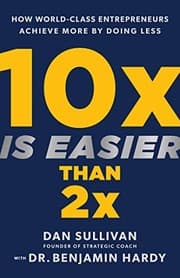
And, and all of that is amazing, and you have to do that work. If, if you don't know where you're going, then you're never gonna get there. Uh, so I do think goals, planning, thinking about upside, thinking about what's possible. You know, if you've ever read, uh, Dr. Benjamin Hardy's 10X is Easier than 2X, you gotta go big, set big, huge goals so even if you miss, you're well ahead of where you would have been otherwise.
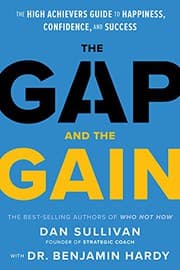
Highly recommend 10X is Easier than 2X. Uh, today I wanna talk about another one of the concepts that Dr. Hardy writes about in a separate book called The Gap and the Gain. And I'm not gonna do the book full justice. I'm gonna talk about the high-level concept.
This is a book worth your read. You can get through it pretty quickly, but I'll tell you, uh, the concepts, the ideas, specifically for leaders, entrepreneurs, uh, sales professionals, anyone who is interested in growth, anyone who works through goals, which I know inside of the insurance industry, goals are a big part of what we do, right? Uh, sales-oriented, growth-oriented businesses. Uh, you, you gotta have goals. You gotta know where-- what your ideal is, okay?
So you gotta know what your ideal is. These are your goals. These are what your targets. Great. Then what The Gap and the Gain tries to help us understand is that you also have a starting point, and then where you actually are.
And how, uh, Dr. Hardy, and this is a Dan Sullivan concept, and, uh, uh, Dr. Benjamin Hardy writes these books in conjunction with Dan Sullivan and his work. Um, what-- the way, uh, Dr. Hardy describes it is where we actually are, what we often do is live in the gap between our, our actual position, where we are in this current moment, and the ideal that we've set for ourselves.
Think of that as, uh, a vision of what we want our life to be, or a goal, or what we think we should be doing, et cetera. Where we think we should be, that's the ideal. And that this is the gap. This gap is filled with negativity, scarcity, emotional, uh, responses. Um, we could be, uh, quick to judge, quick to emote, quick to react.
Uh, we could fall into depression because we're-- we-- wherever we are today is not the ideal that we hope to have. And at a high level, there are tons of underlying ideas that I, again, highly recommend you read the book, but at a high level, the concept is What Dr. Hardy and Dan Sullivan have found in the highest performers, and ultimately, and this is the key, and this is the key to insurance business in general, the longest performers, the people who are able to sustain, who play the long game, who win over the long term, they win in the gain, which is thinking constantly about where we started and where we actually are. Because if you look at where you were the very first day that you put on your insurance production hat or your insurance, your, your agency owner hat or whatever your position is, the first day you put on that hat and you took that position to where you are right now, I bet if you think about what you're capable of in this moment versus that moment, that gain, man, it feels good. You think about the hard work, the lessons, the big wins, the places where maybe you didn't win and then w- you know, learned, adapted, grew, got better, uh, the partnerships you made, the relationships you made, the friendships you made, all the referral partners you have, the incredible employees that work for you or work with you.
And that gain is filled with positivity, abundance, energy, enthusiasm, commitment, grit, perseverance. That all lives in the gain. And that while, yes, we always need to have this ideal that we're shooting for so we know, you know, from a, from a vector perspective where we're headed, if we can think and operate in the gain as much as possible, we're able to create a long-sustaining culture of success versus the negativity, scarcity, uh, emotional reactions that come from constantly trying to position ourselves against an ideal. Okay, so I think it's a wonderful concept, and I think that, uh, that concept is very important to leaders, uh, sales professionals, uh, anyone that's working towards goals. Okay.
In order to hit those goals, in order to grow, there is a reality to getting to where you actually are and building in that gain, and it is that you are going to have to sacrifice something. You cannot have all the things all the time and grow. It is impossible. And this is a part of growth that we don't discuss enough, and I wanna lay down a reality for you. Not because-- not to be negative, uh, but I think hopefully, if you're listening to this channel, if you're, if you're following my work, you're, you're doing it because you want to grow your insurance business.
That's why you follow me. I don't, you know-- That, that's what this content is about. That's everything that I do from the consulting work to, you know, Finding Peaks Masterclass, which guys, depending on when you're watching this, you can either sign up for the wait list and the early launch list, or, uh, if you're watching this after we've launched, uh, the master class, then you can, uh, get to there. You can get there by going to masterclass.insure. So regardless of when you're viewing this, go to masterclass.insure, and you're either gonna be able to sign up for the wait list or if we've already launched, uh, when you're watching this, then you'll be able to actually join the community and be part of, uh, one of the most dynamic, growth-oriented communities for the insurance industry that's ever existed.
Um, and, uh, if you do join and become part of that community, I look forward to working with you and sharing with you and, and going even deeper, right? But too often, we, we don't talk about the sacrifices. So today, for the remainder of this video, what I want to discuss are five specific sacrifices that you are going to have to consider. You do not need to sacrifice all these things. So to be clear, I'm gonna talk about five specific sacrifices that you're going to have to consider if growth is your goal, and not lip service growth.
Uh, I have been teaching s- you know, growth-oriented, specifically inbound and content marketing concepts, uh, inside the insurance industry for 12 years now. And I can say with certainty that while there are an abundance of people who are willing to put in the work and grow, there are just as many, if not more, uh, individuals who unfortunately, and, and if this is you, this is where we have to take these hard looks, right? Uh, and it's why I wanted to create this video. We, we give lip service to growth. "Hey, I, yeah, I wanna do that," and, "Yes, I'd love to hit these numbers."
But then when we start to think about what we have to sacrifice to get there, we don't do it. We never take the action. We just do what we've always done. We have either incremental growth, flat growth, or, or just a slowly, uh, uh, trickle of business going out the door as we, as we slowly seed business back into the market. And 'cause we're not willing to accept that sacrifices are always going to have to be made, and that when we think through sacrifices and what they mean for our business, it doesn't mean you have to sacrifice these things forever.
It doesn't mean that if you do sacrifice them, that there is, uh, something wrong with you. It also doesn't mean that you have to sacrifice all these things. We have to think through where are the places that we're willing to make sacrifices in our life in order to do the work, in order to create the space, in order to build the connections, et cetera, systems, processes, implementation, hiring, all the things that need to happen in order to grow your insurance business, you're gonna have to make sacrifices somewhere. So let's talk about these. Uh, uh, before we get there, and I'd love your thoughts on this, uh, around balance in the workplace.
I don't believe in balance. I believe in harmony. We need to find harmony between our work and our non-work lives. I don't think we need to find balance. Balance connotates like a 50/50 split, uh, because, you know, if we're thinking about the word balance, we often think of like a, you know, maybe like a fulcrum with a, you know, something over top, like a teeter-totter and, you know, you're balancing work and, and personal life, and somehow it comes out even.
That is never going to be the case, and anyone who has ever operated in any kind of startup or high growth scenario knows that it is impossible to have a 50/50 split between your personal life and your work life And what I advocate to my coaching clients, to anyone who asks, if I'm up on stage or someone's DM-ing me in my social media, is h- finding harmony. And this is not easy. Uh, I have done it wrong just as many times as I've done it right. I believe that today, at 42, almost 43 years old, having gone through the experiences I have, I have, I have started to figure out processes, thought experiments, habits, et cetera, that allow me to find harmony. Meaning, I am intentionally sacrificing places in my life that are less important to me in exchange for prioritizing the parts of my life that are important to me.
And we can talk a little bit about what that looks like. And if you want specific examples, again, if you're watching this on YouTube or you're listening on the audio, go to the YouTube video, leave your comments there, guys. Anyone who, uh, leaves comments, I respond to all the comments, get back to you, answer questions, and we'll pull future ideas out of those questions. So make sure, um, you're using that YouTube video as a great place just to collect the comments or watch the videos. And if you're not subscribed to either the audio or the video or both, uh, please do.
Um, tons of content coming out. Uh, every Monday, every Thursday, we're gonna have interviews or solo episodes coming out, helping you guys focus on growing your agency, growing your insurance business. And, uh, to get that content, that's the best way. So, uh, it also helps, and this is sneaky and a little bit selfish, but take this for what it is, uh, as the numbers grow, uh, as more people subscribe, as more people share, leave comments, ratings, reviews, et cetera, uh, while that stuff is great and makes my ego feel good, really what I use that stuff for is not just to, like, look in the mirror and tell myself how awesome I am. Really, it is for, uh, helping us find new and amazing guests outside our space because they use those numbers as a validation to come in and share their insights.
Like, we have some amazing guests coming down the pipe, both inside the industry and outside, and I leverage those numbers to, to help, uh, to help us get great guests from outside the industry who don't necessarily know what we're trying to do here. So, uh, I love you for listening to this show, um, and I just appreciate the heck out of you. So, I always wanna say that as often as I can. All right. Let's get on to our five sacrifices that we must consider.
And in some w- way, shape, or form, we're gonna have to make sacrifices in some of these areas. Uh, some we can, we can say we're not going to, and that's fine. But I think thinking through these things and the sacrifices necessary in these areas, we can start to understand what harmony looks like in our life. Again, focused on growth. If you are just maintaining your agency and floating by, this doesn't matter to you.
This is for growth-oriented businesses, because in order to grow, you're going to have to put in more work. You're going to have to do certain things. Okay, so let's get to it. The most common sacrifice that I think people think about and have to consider is capital, cash, margin, et cetera. Uh, oftentimes, uh, specifically agency principals use their agency as a way to hide expenses from their personal life, um, which I completely understand.
But if you're just packing your business, you know, your car payments and your second home, and whether it also has an office in it, and, you know, and in the building, and da, and you're packing your business with all these personal expenses, that's money that you can't reinvest into the business to grow. And at some point, if you're doing that, maybe you have to sacrifice how much you take home as an agency principal. Maybe you have to sacrifice that EBITDA margin for a while in order to reinvest that capital back into the business to grow. So, you know, that's something to consider. You know, if you're the equity holder, or, or a majority equity holder, and you're paying a lot of your expenses through the business, and you're also taking some sort of income out of the business, you know, maybe for a period of time, and it does-- again, this is harmony.
Doesn't mean you're gonna sacrifice this forever. Maybe you cut your, your, what you're taking out of the business in terms of cash by 25% and reinvest that 25% back into the agency in order to, you know, hire a marketing person or, uh, uh, an internal closing position that you don't have, or whatever it is that you need to grow. You know, you're going to have to sacrifice, most likely, capital and profitability in order to get there. Not profitability like you don't have to be profitable anymore. Just, you know, maybe you're making 7% profit or 20 or 30 or whatever, and you're gonna have to carve some of that out and rein- What's up, guys?
Sorry to take you away from the episode. But as you know, we do not run ads on this show, and in exchange for that, I need your help. If you're loving this episode, if you enjoy this podcast, whether you're watching on YouTube or you're listening on your favorite podcast platform, I would love for you to subscribe, share, comment if you're on YouTube, leave a rating review if you're on Spotify or Apple iTunes, et cetera. This helps the show grow. It helps me bring more guests in.
We have a tremendous lineup of people coming in, uh, men and women who've done incredible things, sharing their stories around peak performance, leadership, growth, sales, the things that are gonna help you, uh, grow as a person and grow your business. But they all check out comments, ratings, reviews. They check out all this information before they come on. So as I reach out to more and more people and wanna bring them in and share their stories with you, I need your help. Share the show, subscribe if you're not subscribed, and I'd love for you to leave a comment about the show, 'cause I read all the comments.
Or if you're on Apple or Spotify, leave a rating review of this show. I love you for listening to this show, and I hope you enjoy listening as much as I do creating the show for you. All right, I'm out of here. Peace. Let's get back to the episode.
Invest it with the idea being the enterprise value of the organization is worth more over time, and you can build that margin back in as you scale out your business. So you're gonna have to sacrifice capital. You're gonna have to sacrifice the margin o- of your business at some point if you wanna grow. How much is your decision. Uh, but I think that to believe you're going to be able to grow without doing that, I, I'm sure there are edge cases, but it's gonna be very, very difficult, and we must consider that before we engage in growth.
And I think that's where a lot of people get hung up. I think a lot of people get hung up at one. They, they might come to one of my keynotes and h- hear me talk about h- you know, building a, a, an inbound content lead engine where you have these targeted leads coming in and a closer just sitting there waiting and bang, bang, bang, and that's how you, you scale your business with, with inbound marketing, and they think it's amazing, and then they're like, "Yeah, but I don't wanna hire somebody, and I don't wanna pay for the training, and, you know, we don't use a CRM because we just work on referrals, and I don't wanna have to have a CRM and, and I don't wanna have to do that stuff 'cause that costs money, and that comes out of my pocket." And it's like, that's fine, but that is your decision. Just understand you can't also grow.
Like, you can't not spend some money and grow at the same time. So just something to consider. Uh, the next one, and, and again, I think these are, like, one and 1A in terms of the most common, is time. You g- if you, if you golf every Wednesday and every Friday for half a... You know, you leave at noon and golf, and you wanna grow, I, I think you have to make some sacrifices there.
Maybe just golf once a week or move your, your regular golf outing to the weekend or just play nine holes after 4:00 PM or 5:00 PM or whatever if the, if golf is that important to you. But, uh, you're gonna have to sacrifice time. Maybe you have to get up at 5:00 AM and put two hours of work in before the, the kids get up, or you hang out with your kids in the evening and your, and your spouse and, you know, spend a little, you know, one-on-one time with your spouse, you get some good relationship time, and then, you know, maybe he or she goes to bed and you come back and log in and put in those late hours, right? There's going to be periods of time where you need to work more than a 35 or 40 hour work week to grow and, and this is another one that I don't think you can escape. Uh, eventually, right, if you put in this time, you can build systems, processes, you can hire people, you can outsource VAs, you can use AI, et cetera, to leverage your time to get much more out of it.
But there is going to be periods where you must sacrifice your time, and if you're choosing to golf or whatever your hobby is, I'm just using that as an example, you know, during the workday, you can't then go back and look in the mirror and say, "I'm doing everything I can to grow this business." You're just not. You're gonna have to sacrifice your time somewhere. Again, finding harmony. I'm not advocating that you all of a sudden you have to put in 16 to 18-hour days.
Or maybe you have a conversation with your significant other or your kids or whoever you need to and say, "Look, for two weeks, I'm gonna be MIA for a while. I need to get X project done to get it launched because on the back end it allows us to do all these things we need to do for our business," what- whatever those projects might be. "I- is it okay? Do I have your permission or can we agree as a couple or as a family or whatever that I'm gonna be MIA for two weeks and, and get, go bang this out?" Right?
That's a sacrifice, and then you come back to the harmony of what you want the rest of your life to be. All right. So that's number two. Number three is bad habits, right? We have, uh, oftentimes a lot of bad habits.
Maybe we have a cocktail every night before we go to bed. That might not be a bad habit, whatever, but if it's, if you're waking up groggy, uh, I know a lot of people now that, uh, marijuana's been legalized are, you know, using, you know, either edibles or smoking a little joint or whatever before they go to bed as a way to calm down and slow the brain down. Again, not a problem unless it's impacting your ability to grow your business, right? Maybe you're not going to the gym and you're not healthy, so you're sick all the time. Maybe you're not taking the proper vitamins.
Maybe you're not... You know, what is a bad habit? Are you working out? Are you lifting weights? Are you getting enough sleep?
Are you drinking enough water, right? Are you drinking so much caffeine that by 2:00 in the afternoon you're vibrating and you can't focus on anything, right? Like, what are the habits that are keeping you from success, from growth, and are you willing to sacrifice those bad habits? Are you willing to sacrifice, uh, you know, marijuana? Are you willing to sacrifice a drink every night?
Are you willing to sacrifice sitting and watching another, uh, sitcom or binge-watching a series in exchange for going to the gym three or four times a week, right? Like, or are you willing to sacrifice the donut you have every day on the way to work, 'cause it's, like, your routine, in exchange for a protein bar or, uh, you know, an apple or an orange or something healthy, a banana? You know, something that's gonna give you, you know, real positive energy or, or a protein shake, right? Like exchanging good habits for bad habits that allow you to grow is a sacrifice, right? Like, who wouldn't want to eat a frigging donut every morning if it didn't make you fat and lazy, right? 'Cause the sugar might blast you, but then it goes away and you become lazy, right?
So, like, you know, you can say that you like donuts and you eat them, whatever, but understand it's not helping you be more productive. Uh, so a- again, just using that as a microcosm example. Are you willing to sacrifice some, if not all, of your bad habits in exchange for growth? Because most likely the bad habits that, that you might say, "Well, this is how I enjoy my life," that's great. But then you, you, they may be holding you back from growth.
That's the idea, right? Like, I'm not telling you what to do. I'm saying that if you want X, and X being growth, there are real legitimate sacrifices that you have to make in the form of, you know, these things that we're talking about to actually get there. Otherwise, you don't really want to grow or you're just not willing to sacrifice for growth, which again, these are all personal decisions n- n- completely non-judgmental. Um, the fourth sacrifice you're gonna have to make, and this is one of the harder ones, is relationships, right?
You may have friends and buddies who like to go out every Wednesday for happy hour, and you may have to tell them, "Guys, I love you, but for the next couple months I'm gonna be MIA here. I just, I'm not gonna be able to show up for that. I gotta, I gotta work late. I got this big project I gotta get out. I have a new referral partner I've been working on.
I have this new employee that I need to train. I'm building out a system. I need to do content production." Whatever it is, you may have to tell some friends, you may have to tell your spouse, "Look, like, I know Fridays have been our date night Uh, but I need to move it to Wednesdays, or can we go every other week for a while? Or whatever you need to do.
Um, you, you may just not be able to go to all your kids' sporting events for a period of time. I'm not advocating for this forever. I'm saying that these are things that we have to find harmony. And if you and your spouse, again, thinking through that you have a nuclear family, you and your spouse, uh, can come to an agreement and say, "Look, I know we have good harmony here today, a- and, and the business that I own is worth this amount. And man, over the next five years, I'd really like to get it here, 'cause think about what that would do for our ability to provide for our children, get them to college, you know, take the vacations we travel," whatever your life goals are, right?
"And in order to do that, I'm gonna have to make some sacrifices, which means maybe I can't, um, go on four vacations a year, or, uh, we need to have an agreement that, like, if there's, like a, a kid thing at school during the day, like, you're gonna go. I'm not gonna go 'cause I'm gonna be working on this. But in exchange for that, I promise you that I will be transparent, eh, about what I'm doing and about the real growth that we're seeing in our business so that you know your sacrifice," spouse, partner, "is worth my sacrifice." Right? Those are the kind of conversations that we need to have, but there are going to be sacrifices made in our relationship.
Think about your, your groups of importance in terms of, uh, concentric circles, right? Obviously, you wanna sacrifice your relationships with your family the least, uh, then maybe your core group, then, uh, that next level of friends or the next level of friends and acquaintances, and you start to chop some of those out, which m- might be a little easier. So you're definitely gonna have to sacrifice relationships. The fifth one, this is one that is sneaky, that takes just a little bit of, uh, thought, uh, but ultimately is just so incredibly important, and that is your ego. When you get it go into growth mode, you are going to have to sacrifice some of your, your personal persona.
You may not be able to post on social all the time. You may not be able to be the national chair or, or state chair. You may have to stop being part of a chamber or the head of your BNI, or, uh, you may have to decide not to coach your little league team. Or your ego, as you put your head down and do the work of growth and, and have to kinda, uh, separate yourself from distraction in order to grow, it may take a hit. You may try things that don't work, right?
In order to grow, you may have to try things that don't actually work, and you may have failures. I mean, this has been a big part of, I think, what my-- what's allowed me to be so successful over and over and over again in so many different situations with so many different types of people is because I am so willing to try something and have it not work and back out, learn from that experience, and try something else, right? I don't care about your perception of me when I fail, because to me, that's a lesson. I just got smarter. I just tried something that I thought, for, for reasons that were valid, would work.
It didn't work for reasons, you know, that I find out and learn, and then now I know how to reposition, and now I can go farther faster. And now when I start new things, I am able to sidestep all these obstacles and navigate all these challenges and get farther faster at the beginning because I was so willing over the course of my career to try all these different things and fail and not care if you thought I was... You know, I-- It's funny, I get all these back channel messages 'cause people be like, you know, "Oh," you know, "He, he, he's full of shit," or this or that and, or, you know, uh, "This, this, this," you know, "This couldn't have happened the way he said it happened," or... And that's all fine. Everyone is willing to have their opinions of me and the various things that I've done throughout my career, because I know the direction I'm going and I know what I wanna do, which is help as many independent insurance professionals as possible grow their business as much as it possibly can be, right?
That's what I wanna do. I love growth. I love helping people grow, and I love our industry, right? So that's what I'm-- the work I'm doing. You can believe me or not believe me, but I'm not gonna allow my ego to force me to create scenarios or force me down paths that aren't gonna allow me to do that work because I care what other people think.
And if you're going to grow, you may have to sacrifice your own ego, your own persona for a while as you make mistakes, as you maybe spend money on something that doesn't actually work, or you hire an employee who you think is gonna be great and they're not great, and it's maybe public and that... You know, whatever. Those things are all gonna happen if you're growing because growth takes risk. Growth takes putting yourself out there, right? And, um, that's a big one for people.
A lot of people would rather not grow or would rather feign growth in exchange for keeping their ego and persona in place. And, um, that's a sneaky one, and we have to be very self-reflective to make sure that we're not doing that. Um, all right. So this has gone a little longer than I wanted it to. I think these are really important.
I would love to know what other sacrifices you would put on this list. I'm gonna give you one more bonus sacrifice that I believe is paramount. This is a bonus sacrifice: control. And this kinda goes with ego and persona. If you are going to grow your business, you're gonna have to give up some level of control.
You're gonna have to trust your marketing person. You're gonna have to trust your office manager. You're gonna have to trust your head of sales or your head of service. You're gonna have to trust people. You're gonna have to allow them g- you know, give them a set of parameters and then trust that they can be adults and operate in those set of parameters in a way that pushes your brand forward and grows your business.
Because you're not gonna be able to be everywhere, and you're not gonna be, be able to be everything to everyone all the time. So you're gonna have to give up some level of control. And That sacrifice, maybe, maybe this is the hardest one for people because if you're used to being the boss, if you're used to being the guy or the gal that makes the decisions and does the things and that people look to for all the answers, you're not going to be able to grow because you become, you become, um, the choke point. And the only way to get past that is to give up control. So my friends, I hope this was helpful.
I hope that you can use these sacrifices, uh, and, and the ideas here as a, think of them as a set of levers and tumblers that you can move, uh, to find the harmony that you need at this moment, right? Remember, you can, if you do three months worth of hard growth work, it doesn't mean you're not going to keep growing after and then you can rebalance, right? So you, maybe you got to spend a bunch of money at first, then you can rebalance that sacrifice, or it takes a ton of time at first, you can rebalance that sacrifice. And then, uh, you, you know, you, you, you need to get healthy and you, you, uh, you go to the gym a bunch because that's really important so you can have mental clarity and dexterity, et cetera. And, uh, and then maybe, you know, when it gets sunny out, you can, you know, and you want to, you can go for walks or whatever, take calls on walks.
You can dial back your gym workouts to two times a week. And, and, and, you know, it's, it's all about finding the harmony inside the sacrifices that you need to make in the moment and for the period of time. And then once that moment or period of time or season is over, you rebalance these sacrifices to what's necessary in that moment to continue moving forward. I hope this helps you. Uh, I would love to hear your feedback.
Guys, these things are incredibly important to growth. I know they're kind of ethereal leadership style topics, but these are the things that shut us down. I will teach you every tactic that you need to know, uh, to, to, especially for, for the middle part of our business, that inbound kind of closer role, that foundational consistent growth that's necessary. Uh, I'm going to teach you everything you need to know tactically, but it's these types of things that, that catch us. Oftentimes they blindside us and they keep us from moving forward.
So with that, I love you. I appreciate you. If you're watching this on YouTube, love for you to hit like or leave a comment or share it with a friend. I hope you're subscribed to this show. Uh, so much more great content coming out.
And with that, we're out of here. Peace. I'm going to Shabooms. Close twice as many deals by this time next week. Sound impossible?
It's not. With the One Call Close system, you'll stop chasing leads and start closing deals in one call. This is the exact method we use to close 1,200 clients in under three years during the pandemic. No fluff, no endless follow-ups, just results fast. Based in behavioral psychology and battle tested, the One Call Close system eliminates excuses and gets the prospect saying yes more than you ever thought possible.
If you're ready to stop losing opportunities and start winning, visit masteroftheclose.com. That's masteroftheclose.com. Do it today. If you're an HVAC technician and a call comes in, Grainger knows that you need a partner that helps you find the right product fast and hassle-free. And you know that when the first problem of the day is a clanking blower motor, there's no need to break a sweat.
With Grainger's easy-to-use website and product details, you're confident you'll soon have everything humming right along. Call 1-800-GRAINGER, click grainger.com, or just stop by. Grainger, for the ones who get it done. Happy holidays. Want to give your host a gift?
Consider subscribing, rating, and reviewing the show this holiday season. It really helps the show grow. From all of us at Believe, have a Merry Christmas, everyone, and a happy holiday. If you liked the show, please take a moment to rate, review, and subscribe. It really does help the show to grow.
Thank you for listening.