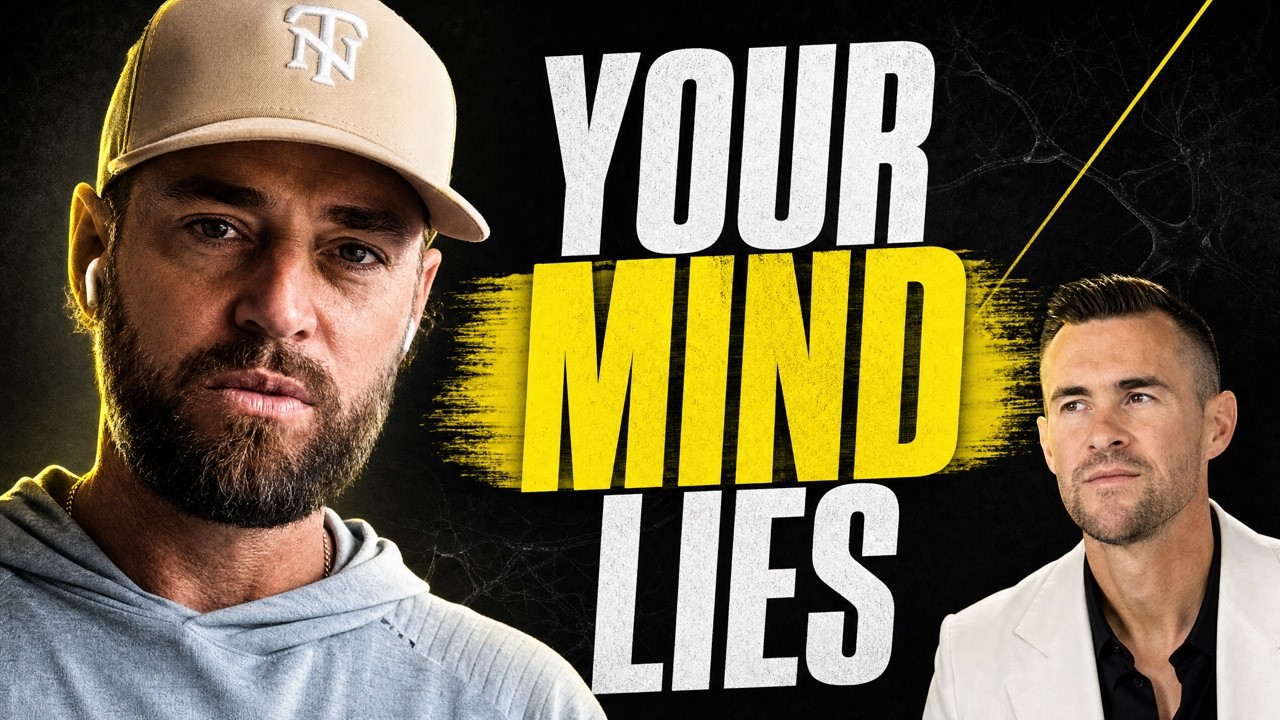
World Champion MMA Fighter Diagnosed with MS Did This Instead of Quitting | Alberto Crane
with Alberto Crane
Episode Answer
World Champion MMA Fighter Diagnosed with MS Did This Instead of Quitting | Alberto Crane is a Finding Peak podcast episode hosted by Ryan Hanley with Alberto Crane. The conversation explores leadership, performance, entrepreneurship, and the work required to build with clarity under pressure.
Read the Conversation
Show the full transcript
Most men live lives of quiet desperation, you know, never really taking that, that jump, taking that risk. I followed my dreams. I was 23 and I started my school. I had a big credit card bill. I, I, I had a credit card limit of 20,000.
I lived on that, you know, but I went all in. You know, like I realized most people never do that in their lives. Going for it, showing up, doing it. The resilience of everything, of going through it. I keep showing up no matter what.
Diagnosed with multiple sclerosis, I don't act like I'm a victim, I figure out the solution. What does a man do when the world tells him he's finished? When he loses his first 13 world-class competitions in a row? When a doctor's diagnosis hands him a death sentence for his physical life and sentences him to a wheelchair? If you're a reasonable man, you adapt.
You accept the fate. You fade away. But we're not interested in reasonable men on this show, and today's guest is a testament to that. We have Alberto Crane. He isn't just a sixth-degree Brazilian jujitsu black belt, UFC veteran, and a world champion.
Alberto Crane is the first-- is one of the first Americans to ever conquer the world of Brazilian jujitsu. He's a pioneer who packed his bags for Brazil when everyone else was just playing it safe at home. No one even knew about BJJ back then. This is a man who was told no teen times and decided to become a world champion anyways. A man who was diagnosed with multiple sclerosis and instead of accepting a life of decay, rebuilt his body and built a fitness empire, TacFit, from the ashes of his diagnosis.
Get ready, my friends, because you are about to learn what it truly means to go all in. I give you Alberto Crane. Alberto, man, I appreciate you, uh, taking the time to, to, to share your story, what you have going on. Um, m- my question, my first question, and, and I like to ask this just 'cause I think it's fun for anyone who, who i- you know, is into the martial arts that's on the show, is like most people have never been punched in the face. Like, what is it like-- Just explain the idea of, of, like this martial skill of being able to take a punch.
Like, what, what is that about fighters? 'Cause I've had, I've had people tell me the best fighters, and, and obviously I'm interested in jujitsu, are not the ones who throw the best punches, but they're the ones that take punches the best. Uh, one, is that true? And two, how the hell do you take a punch from some of the absolute animals who do, you know, what you used to do for a living? Have you seen the, the Rocky Balboa, uh, movies? Yes.
Where he tells his son, he's like, "It's not how hard you can get hit-- how hard you can hit, but how hard you can get hit a- and keep moving forward," right? That's how winning is done. And so, you know, how does it feel to get hit, you know? I think, I think it's not everybody can, can handle that, right? Not everybody can handle that.
You gotta have thick skin. You gotta be tough. Uh, and you're gonna have an instant reaction to that, like right? You're either gonna fight or flight, right? You're not gonna l- want, want anymore.
And so you definitely have to be wired a certain way, I think, if you're gonna, you know, continue doing it, if you're gonna fight professionally and things like that, right? Yeah. You're gonna know right away. You're, you're gonna, you're gonna know right away if you're gonna keep going forward, you're gonna keep moving forward and keep going or, or not, right? Uh, Why, why then do some, some people, I mean, obviously there's a lot of tremendous female fighters, too, I don't mean just guys.
Um, but why, why do you think it is that some people get hit and get back up and others stay down? And, and I don't mean-- I, that sounds trite. I don't, I don't mean it to be. I mean, like at a deeper level, when you're working with someone, you know, there, there's just-- And I saw this in football. So I played football.
I, I haven't done any martial arts. Um, so, you know, I do some boxing. Well, I watch YouTube videos and I like the workouts, but I'm not a boxer in any regard. But in football, and I played high school football, um, you know, you could tell almost right away when you were sizing someone up, when they got hit and knocked down, like how they got back up taught you so much about who your teammate was gonna be or who your opponent was. Like what do you think it is inside guys?
Is, is it motivation? Is it, uh, uh, just a, a screw is loose, you know? Or maybe it's a combination of all these different things. That you can take that punch and know like, "I'm, I'm gonna come back for more." Like, "Okay, I, I, I got hit.
I took this. You know, it's not gonna keep me down. I'm not gonna stay down. I'm, I'm gonna get back up off the canvas or whatever and I'm gonna go back in." You know, uh, that skill is so incredibly important obviously in, in the martial arts and in fighting, but it transcends so much of our life.
And I'm just very interested from, from your very, you know, specific and unique perspective, why you think some people do and some people don't. Right. In a simple way, right? It's like heart, right? In, in another sports too, does that person have heart?
You know, a lot of Mexican, Hispanic fighters, right? They, they, they can take a hit and they can keep moving forward and that's what they're known for, right? Whereas other ones, other neth- ethnicities aren't, aren't known for that so much, right? Um, have you ever heard the train-- the term gameness? Gameness?
Like are they game? Gameness. No. In South Carolina, like I think the mascot is like Game, Ga- g- um, Gamecocks. Gamecocks, yeah.
Right, right, right. And so not that I am into, uh, uh, cockfighting or, or, or pit bulls or anything like that, but there's something to be, uh, learned from that because they breed, they breed with, you know, game g- other game dogs, right? To, to create champions, right? And so, you know, I think it's part of it's in your, in our DNA and, and you know, if a dad or mom is a, you know, a competitive athlete and they have heart, they're gonna have kids that have, you know, heart as well. So I think it's, it's not just one thing.
It's like all these things combined. Of course, the environment shapes you, right? Your team. You have tough teammates, they, they raise up, they raise up the level in the room and on the field, right? And so I think, yeah, it's a combination.
It's not just one thing. We're complex beings, right? It's not one thing that makes us. It's like all these things combined. But I think some of those things definitely touch on thatThat was one of my, uh, did you watch, um, Last Dance with, with, uh, Jordan and the Bulls?
Yes, I did. Yeah. Yes, I did. One of, one of the biggest takeaways, and I, and this, I'm not the only one, but one of the biggest takeaways for me was when they were... And I can't remember which episode it was, but they were talking about the relationship that the players had to Jordan, right?
And, and obviously you had some players who appreciated who he, he was, but there were a lot of these guys who had rings on their fingers because of Michael Jordan who were now, I don't wanna say talking trash, but certainly did not enjoy or appreciate the way that he was. And what-- I just found it incredibly telling that like, you know, Jordan comes on at the end and, and guys, if you haven't seen this, it's been out for a while, so spoiler alert, that's on you for not watching it. Um, but you should watch it anyways, even if I give this away. Like, he says, "You know, they may not have liked the way I practiced. They might not have liked the way I pushed them, but they liked when the ring was slid on their finger."
And it was-- There's so many levels to that for me, where it's like you had this guy who was, who was obviously... I mean, he had a great, he had a good family, gave him some of that, but obviously it was also born in at a level that made him the competitor that he was. And despite even being around that and seeing that and seeing the success that he had, there were still guys that could complain or bitch about how hard they're being pushed. And it's like you're, you're gonna be the greatest team in the history of the NBA, six championships, and you can still complain about how hard that guy was pushed? It was a very telling thing to human psychology for me that just even these very talented people still didn't wanna push themselves to their max limit.
Right. It's a choice. Like, what do you want? And I think a lot of that I saw in, in watching The Last Dance and other things, interviews that I've seen with Michael Jordan, who I loved. He was my childhood hero, by the way.
I got to go play, watch him in Madison Square Garden when I was in high school, so I'll never forget that my dad got, got us tickets to a Knicks game, right? So, uh, man, just, just I think he checks people, right? Like, like I, I don't know who it was. It wasn't Paxton. It was somebody else towards the end, you know, and, and basically he earned his wings or earned his respect, you know.
And all these guys were trying to earn his respect, and he's constantly pushing these guys. It's that getting punched in the face thing in a way. Like, are you gonna fight or are you gonna flight? Are you gonna be, are you gonna be a little bitch or are you gonna move forward and try to win this damn game, you know? Because it's a fight, right?
It's a fight. And so what are you made of? Who are you? Show me. You know who I am.
You wanna be a part of this? Then do it. If you don't, get off the train, right? Go somewhere else. This is, this is what we're doing.
And I think, uh, I think that that's the level that he-- the bar he set, right? You saw it from the early days when he came to the Bulls. It wasn't like that. It wasn't like that. Guys were partying.
Guys were doing, you know, different things, right, that were not aligned with what he wanted. And he know where-- he knew where he wanted to go, and he set that, he set that bar and he ex- he had expectations for his teammates and everybody. And they kinda built the team, right, about, around, around MJ, right? And, and, and the history speaks for itself. Do you think he went about that the right way in motivating them?
You know, is there... And I've gotten this question from high achievers, let's say in like the sales industry. Um, a lot of my work, uh, the core industry that I came out of in my career has been the insurance industry, a lot on the sales and growth side and, and stuff. And I deal with a lot of, um, a lot of people in, in sales and business development. And, you know, you'll hear, you know, if, if they work in pods or they work in teams, you know, you'll hear like whoever's at the top, you know, they struggle with how to communicate, how to pull up, how to inspire and motivate their other team members.
And, you know, I guess my question is, if you are that high achiever, you're the guy in the gym who just comes in and cr- you just, you're just, the light switch goes on and you're as hard as you can go until the light switch goes off, right? That's just the type of... And you're looking around and you feel like you're dragging people, is how do you motivate those guys to come with you? And when do you know, like, this one is just not, he's not one of us, right? She's, she's not one of us.
Like, we gotta, we gotta cut that person out of the herd. How do you, how do you make that distinction and, and become that leader if you are that guy or that gal? I mean, you, you, you, your example, one, I think that if you were talking about Michael Jordan, it's funny 'cause I'm reading a, a book right now, The Mindful Athlete, right? Philip Jackson's, uh, guru kinda with the mindfulness and stuff. Um, I think, I think, right, it's, it's, it's you can't make everybody happy, and you're not there to make everybody happy.
If you're on the, if you're on a winning championship team, if you're on an NBA, if that's what you wanna do, you're either with it or you're not, right? And you're gonna set-- And everybody's different. Is it right or is it wrong? It just is, right? It just is.
And, uh, uh, and like, you know, he, it worked. It worked. And, you know, you don't know everybody's background and their, they have traumas. Like, I mean, Michael Jordan got cut from his, uh, w- as a sophomore in high school. And his brother, you know, you know, favoritism, parents, this and that, who knows?
But that was traumatic for him, right? That was very traumatic for him. And then he came back from that and same thing. You get punched in the face, what do you do? It's not what happens to you.
It's how you deal with it, right? Like my daughter competes competitively and she had a, she had, uh, they stopped-- CIF is the California, the, the, the, uh, high school governing body for wrestling. And she transferred high schools and they blocked her from, from competing this year, her junior year. You know? And yeah, because, because BS.
BS. Somebody had some pictures of, well, the coach in the background saying that she was, uh, what do you call it? Influenced or, um- Um, what do you call it when, not influenced, but, uh, influenced and/or, uh, uh, when they're, they're, the team recruits you. She was recruited. So she was recruited or influenced to go to the high school, but it was all BS.
It was just, we went to support a, a kid, a couple kids that used to train with us, and, and they're, they ha- it's their gym, right? Anyway, it's not what happens to you, it's what you deal, how you deal with it. It's not what happens to you, it's how you deal with what happens to you, the adversities, right? The punch in the face, the, the losing, right? The getting cut from your, from your team, right?
And, and, and life. It's not what happens to you. And so, man, yeah, it sucks. She's there right now. I'm gonna go later on and I'm gonna watch some of her teammates and stuff compete.
Um, it's a couple hours away. But like life isn't fair sometimes. Life is not fair, but it's not what happens to you, it's how you deal with it. And so it's a good lesson for her at a young age to know that's gonna happen, right? Because in life, it's gonna happen sooner or later.
This is very much your story, and this is where I'd love to pivot into, um, for those that don't know your career, your background, and the challenges that you have faced. Like, you know, you don't have to do the whole thing, but if you could give us the story to level set, you know, this exact point of, of dealing with a, with a major challenge in your life and, and continuing through it. Um, you know, can you kinda just break that down for the audience for us? For sure. You know, when I was younger, I moved down to Brazil.
I, I took that jump, that leap of faith and, uh, and moved to Brazil at, in the early days of, you know, of Brazilian jujitsu being in the country, UFC starting out, and it didn't make sense. And I think I kinda keep going back to that Joe Rogan thing. Like, most li- most men live lives of quiet desperation. You know, never really taking that, that jump, taking that risk, right? Uh, I was, I was, you know, I was in my early 20s, 20 years old, 19, 18, whatever.
And, uh, and I did that. I followed my dreams, you know? And I, I came back when I was 23 and I started my school, and I wasn't su- right, was, I, I, I, I had a big credit card bill 'cause I, I, I had a credit card limit of $20,000 and I, I lived on that, you know? But I went all in, right? My, the name of my book is All In.
And, uh, and I took that risk and that jump and, you know, like, I realized most people never do that in their lives. When I came back, I real- I was looking around, I was like... And I realized that at that, at that age. And so I think it's one, one, for my, in my book, right, it's basically, like, going for it, right? Going for it, showing up, doing it, and, and then the resilience of everything of going through it, right?
I saw, I saw, I saw a meme actually before we talked, you know? Somebody starting a business, right? And he looks all pretty and all, all kept up, and then, um, the guy, what, what's the ga- the guy who made this, the, the winning goal for the hockey, USA Hockey? Jack Hughes. Jack Hughes.
And then they have a picture of Jack Hughes with the, you know, broken teeth, you know? Trying to make your business profitable. Yeah. You know? And so, you know, listen, like that's, that's, that's life, right?
That's business. And so my, my story is, is about that, the ups and downs, and I keep showing up no matter what. You know, I was diagnosed with multiple sclerosis from my, my, my last fight medical in 2012. So that was, I don't know, 13 years ago. And, uh, you know, I've had to deal with a lot of different things.
But again, I keep showing up and I do my best and I find, I don't say I'm a, I don't act like I'm a victim. I figure out the solution and I, I believe that I, I can win no matter what. And I think, and mar- martial arts teaches you that, and I think it gave me the beautiful background of having that background to, you know, to keep that, that, that mindset, right? Of always trying to find, finding a solution and always trying to stay in that winning mindset. Most people who are engaged in Brazilian jujitsu and find out that they have multiple sclerosis, I'm guessing, I feel like many would give up.
Uh, certainly go into victimhood, probably. And, and, and some of this you probably dealt with, right? And worked through or, or, you know, I'd love to, to hear that. But like, it's your body. It's your, it's your physical...
And, and, and I'll give you just a little bit on this. So, so, uh, athlete my whole life. After college, played a little baseball. And then once that's over, I kinda go into, like, dad, husband mode, right? Put on some weight, not working out as much.
In my brain, I still think I'm an athlete, but I'm, I'm not. I'm not at all. And I'm, uh, in 2017, I'm MC-ing a, a conference, um, 'cause I do a lot of s- public speaking and stuff. And I'm about to go out and announce the closing keynote, and I sack of potatoes, pass out right to the floor. My body, my mind, m- dehydration, you know, all the things.
I had, was not physically or mentally prepared for two days of being on, right? Which at 35 or whatever I was, 34, whatever, however old I was, like, that, that's unacceptable to not be able to MC a conference for two days. And I start working my way back. And I've gotten in very good physical shape. And then about a month and a half ago, I wake up and my heart rate is pinned at 160.
I can't breathe and I can barely get out of bed. And I'm having a sustained panic attack as well as, which brought on a consistent A-flutter and AFib. And for a month, I'm basically, like, incapacitated. Like, I can't, I can walk around the house, but even going up and down stairs. And it was the first time I ever had to think about, like, what if I can't be physical?
Like, what if I can't, you know, lift weights four days a week and go to hot yoga and go skiing and do my boxing that I do? And like, what is my life gonna be? And d- one, did you have that moment? Um, what was that like? And how, how did you work through that considering how important your physicality is to what you do?
Definitely, right? Like, that was the, one of the first things, right? Is I went to the doctor. They treated me like my life was over. They found these lesions in my brain and gave me a stack of drug catalogs and, you know, basically told me, like, I might end up in a wheelchair.
And you start to do research and you're like, "Well, okay." And I had a interviewer this, this week, you know, 'cause we're gearing up for the book launch the end of March, asking me, "Are you scared?" And was I scared then? Am I scared now? Like, yes, I was scared, you know?
And what did I do? Like, going back to the punch in the face, like, do you fight or do you flight, do you freeze, you know? And what I did is I, can I... I asked the, the doctor, "Can I still do jujitsu?" And he said, "Yes.
There's no brain damage." I was like, "Okay." I was okay with not being able to fight professionally anymore. And so I actually signed up for a jujitsu tournament, and I did one, then I did two, and then I did a world tour, because maybe in six months I'm not gonna be able to, you know, walk anymore, more. You know, not gonna be able to do what I, what I love to do, what I've been doing my whole life.
And I had that in my mind, and I real- I literally did a world tour. I went to the Amazon, I went to, uh, Middle East, all over Europe, Asia. You know, w- I was like, well, if I'm gonna do this, I might as well go out on my shield, right? And then after that, I had a spiritual moment. At my la- one of my last p- stops, I actually won a, a NoGi World Championship in the pro- in the process.
And that same month, w- I went to Spain. It was one of my last stops. And, uh, I ha- I didn't realize it at the time, but I wasn't feeling good. I felt nauseous, you know, and I couldn't really eat. And, um, I had food poisoning.
And so I went out the first match, and then I survived somehow, and I ended up throwing up after that match. And, uh, I, I lost the match, but I w- because I didn't throw up on the mat, I wasn't disqualified, so I qualified for the open weight, 'cause it was like a master divisions, like veteran kind of division. And I qualified for the open weight division. And, uh, he's like, "You, the open weight division." I was like, "Well, I'm, I'm not feeling too good."
Like, you know, I was like... He's like, "Well, just maybe you'll feel better later on." And I was like, "Okay, maybe." And so I was like, am I gonna stay here, feel sorry for myself? Or, or am I gonna stay, feel sorry for myself at the, at the hotel or here, you know?
So I was like, I might as stay here, stay here and feel, see if I feel better. And, uh, I couldn't drink. I couldn't eat. You've, you've had the flu, you know, probably food poisoning as well. You know how that feels.
Like, you feel weak. You feel terrible. And I started thinking to, to myself, "I believe in my technique." And it started to make me feel good. Uh, so I kept saying it again and again and again.
"I believe in my technique. I believe in my technique." And it started to give me, like, energy. And I did that for prob- probably about an hour and a half. I went out, I won my first match, won my second match, won my third match.
I did multiple matches later on in the day. After that day, I was mind-blown. I still couldn't drink or eat th- all day, right? The next morning, I felt a little bit better. You know, I started to get, be able to put some liquids in my body.
And I flew back, back to the States, and I, I just couldn't believe what I did, the power of the mind. And it was that moment, that moment of doing this world tour, that I found my solution. Like, just the power of the mind, believing that I can. Believing I, that I can. And the next step was actually I ended up at the TACfit certification.
That kinda gave me one of the solutions, like movement practice, applied neuroscience, longevity, mobility, you know, practice that gave me one of the solutions to, to be proactive in healing myself. Why that phrase? Was that something you had said in the past, just- No ... came to you? Just came to me. At the time, I was just thinking, and I said that, "I believe in my technique," in my head.
I didn't say it out loud. I was just in my head. "I believe in my technique." Just, you know, you're down. You're, you're, you got nothing.
You don't feel good. You can't drink. You're weak. You got nothing. And I was like, "I believe in my technique" and it started to give me energy inside, right?
It gave me power. It gave me energy. And so I kept saying, I kept feeling that, that it was like a mantra, right? Over and over and over and over for, I don't know, an hour and a half, two hours. I don't know how long it was at the time.
But, uh, after the tournament, I was like, "I know I can win. I know I can win." Because of the power. It showed me the power of the mind. I mean, you gotta believe that's nothing less than divine, right?
I mean, that's, that's just being tapped in and I, I, I, um, I know that mani- think ideas like manifestation, like mantras get- Yeah ... you know, you ki- it's very polarizing. People are either like, that stuff's complete foo-foo ethereal nonsense or absolutely locked in. And I'll tell you, as I've done this show and, um, you know, I've done we're north of 400 episodes on the show- Yeah ... you know, we've interviewed some amazing people, you know, like yourself, just over the years, and one of the biggest changes in my own mindset from the beginning of this show to today has been this idea, has been... I'm gonna throw a broad stroke on it as kind of manifesting, but you know, that can go in a bunch of different places. I, you know, you didn't say that I said that.
But, like, this idea of holding an idea in your head and repeating it over and over and regardless of how you feel, right? Um, an example of this is, uh, I sold a business. And when I sold that business, it was the first time in my life that, like, I really didn't have an identity after that. Like, who was I? You know?
I had been sales guy, marketer guy, then I was business owner guy. After business owner guy, what guy am I? Am I consultant guy? Am I speaker guy? Am I just a dad?
Like... And, and, and it was really tough. And then I had a c- a cou- a couple, like, f- financial things happen. It was like this maelstrom, you know, kinda, you know... Thankfully, I didn't have any health issues, but, you know, pretty much everything else felt like it was on fire.
And I remember one day I'm just sitting there and I said Don't fall apart. That's the win. I go, "Ryan, the win for you is just don't fall apart. Don't be that guy who goes down to the bottle or to drugs or has gotta go out or f- you know, like, just don't fall apart. Just maintain.
You don't have to win some big prize right now, but, like, just ride this out." And just saying that to myself, you know, that, at that time, that particular thing, I don't know if I would advocate for that, uh, all the time, obviously. I feel like we'd hopefully like to do better than just not fall apart all the time. But it was wild, dude. Like you said, it, like, gives you this peace.
Like, you can kinda feel it. Like, you relax a little bit and you're like, "Oh, I don't have to be a rock star right now. All I need to do is not f- okay, I can do that. Like, I can do that." Like you, like, you know, I'm, I'm assuming for you it's like, "I'm not thinking about winning.
I'm just thinking my technique, my technique. Okay, I can do my techni- ooh. Ooh, wait, if I just focus on my tech- wait, I can win if I focus on my tech..." And then it's like you, you talk yourself into being the thing, even if you're not. Does that make sense?
It d- it does, 100%. That's it. You ma- you made me, uh, think about, you know, ano- when I was younger, when I was probably about 20 years old, I lost. When I first started competing, I lost for about three years. I lost for about three years, uh, 13 tournaments.
And I was, I was really investing in myself, like, I was betting on myself, right? I didn't have a lot of money, and it was kind of a crazy thing for me to move to Brazil to, to pursue this thing called Brazilian jujitsu, because nobody knew what it was. And, you know, we didn't know that it was gonna h- the UFC was gonna get as popular as it is, right? Things like that. Anyway, after three years and 13 tournaments, I was, you know, I was competing everywhere.
Um, I finally won one, and, and when I finally won that tournament, I was one of the best, like, blue belts, like, one of the lower belts in the world. And I wouldn't have known that if I hadn't have gone through those three years of losing. And it wasn't that I was terrible, it was just I, I either lost my first or second match. It was because I didn't know how to compete. I didn't know, I didn't know these little, little things, right?
That these other guys that were, grew up doing jujitsu and competing in jujitsu knew how to do. And so it was those three years and those 13 tournaments that I lost in a row at the beginning of my career that has given me true confidence in my life. And you mentioned, "I just gotta keep it together." I kept showing up. I would, I felt like my g- my, my life was over after every tournament, but the next morning I got up, I got up, got ready, and tried again.
And if I would've given up in that time period, in those three years, I wouldn't have known that. And those three years of losing has given me so much confidence, so much resilience, that no matter what happens to me, I know it's gonna be okay. I'm gonna get, I'm gonna be able to get through it. And that's the moment, that's the thing I'm most proud of, okay? I, tournaments, championships, I've won, I've won many, right?
But that's what I'm most proud of in my career, is the losing and keep moving forward and coming up on top, getting through that and doing it. I think this is such an important point, and it's something that I really worry about with some of the younger generations that are coming up with, you know, the, we'll call them the ChatGPT kind of generation, is I, I think it's brilliant and amazing that we have all this information at our fingertips. But you can't read about Brazilian jujitsu on ChatGPT and think you're gonna go to the mat and be successful. You may know the names of moves. You may understand visually maybe even what a move is supposed to look like.
But until you've gone through them and been, found out, oh, well, what, even though the d- it says I'm supposed to do this, when I do that, this guy, you know, blocks me and spin, you know. Until you feel that 1,000 times, 5,000 times, 10,000, like you, you, you can't n- you can't know what it's like. You can't actually, you don't actually own it. And, uh, you know, I know this is maybe off context, but I'm just interested in your take, like, I guess, a- a- I mean, maybe even with your, your kids, your, your daughter, um, like, how do we marry and, and, and how are you viewing, like, some of these AI tools i- in this regard, right? How do, how do we marry the knowledge that's literally at our fingertips, right?
It would take days, months sometimes to gather the information that we now can prompt out in, as fast as your fingers can move. With the real-life experience of, you know, when your feet hit the ground, you know, the Mike, everyone's got a plan until you get punched in the face, right? The Mike Tyson, like, like, how do we marry these two things so that we can take advantage of the information that's at our fingertips and the technology, but we're not losing that real-life experience that is paramount to success? Well, I'll, I'll start with the jujitsu part, you know. I think when, uh, years ago I had, I had this black belt, uh, psychologist, and I was like, "Why does it seem that people that do jujitsu, why do they seem younger than they are?"
And he goes, "It's interesting you say that. It's because when you get on, when you get on the mat and when you train, everything's in the, in the present. And when you're a kid, everything's in the present. And as you get older, everything's either in the past or in the future. So it kind of brings you back to your childhood.
And because of that, even if it's an hour, if it's 30 minutes, it brings you peace of mind, and it just makes you better for, it gets you grounded, right, for the rest of the day. Kinda takes you out of the matrix." Um, I forgot my s- tra- my train of thought. There was something else that I was, uh, we started with jujitsu. What was, uh, the, the things you mentioned at the end?
Um, I, I asked, like, how, even, you know, whether you wanted to put it in the context of how you're talking to your daughter or whatever. How do you marry leveraging- Right. I got, I know what else you said ... the technology that's at our fingertips with real-world experience and actually winning? Yeah, so ChatGPT, right? It's interesting, all those things, right?
In China, they, they, it's required. In the US, they, they frown upon it. Well, depending on the school, right? And, um, I just, you know, the, the- That whole thing of w- there was a, there was a doc- I forget if she's a doctor, but she was a lady. She, she spent her whole li- whole life kinda educating people on the brain.
And she said our brain needs five things to be good. And I, when I think about the brain, I think it's us as humans, right? We need nutrition, like, you know, food, like air, uh, water, right? Those kinds of things. Movement, challenge, newness, novelty, and love, connection.
If we have those five things, we're good, you know? And so we need a challenge. If there's no challenge- Yeah ... we're not gonna be happy. If we don't have those things, like something new, if we're doing the same thing over and over, you got-- That's why you gotta put yourself up. Just drive a different way to work.
Drive, do something else . If you do the same thing over and over and over, your brain's not work- growing. You're not getting that change in your brain, right? You're not getting that neuroplasticity happening, right? Uh, and movement, you gotta move your body.
You know, we all sit down too much. And so I think as long as we cover those bases, we put good things in our body, our nutrition, we move our bodies in the right way. Like, you know, my, my, my modality is TacFit and jujitsu, right? You know, we do some, we do different, different things, right? We, whatever it is.
Like we're talking right now, some, you know, uh, we never talked before, right? We're, we're learning or we're talking or exchanging information. Um, and then, you know, human connection, right? At the end. Human connection.
Connecting, being connected with others. As long as we have those things, we're good. This idea that you shared, I wanna come back to this idea of being present. Um, this was something-- I learned this lesson the hard way with my family. Um, when I first started gaining some popularity and, and going out and speaking and stuff like that, you know, you start getting asked to do all these things, and your attention and your, your, your presence is pulled in all these different directions, and you start thinking, you know, "Oh, you know, I, if only I could do one more gig a month.
If only I could get, you know, on this magazine. If only I could get on this p-" And you're, and like you said, you're constantly, like, ruminating on the past and projecting into the future. And what happens is I'm sitting right next to my children and then, and I don't even know they're there. And, um, it's not a, it's not a period-- It was about a decade ago. It's not a period of time I'm particularly proud of in terms of how I related to them.
Uh, hopefully corrected. But it's f- you said something that I think is really interesting, which was why does it seem like people who do Brazilian, Brazilian jujitsu are younger? And I would put other people in this category. I would put, um, stand-up comics in this category. I'd put a lot of speakers, a lot of the speakers that I meet.
And, and I think you nailed it, and I, and I just wanna dig into this a little bit 'cause it's this idea of, like, when you're face-to-face with someone and they're trying to beat you physically, if you're not present, game over. Right. If you're on stage and you're trying to make people laugh and you're not 100% in that moment, you're not gonna make them laugh. If I'm out on stage and I'm trying to move people or motivate them from where they are to, to where I want them to go, if I'm not present in that moment, that transformation ain't happening. And, and I will say that the, uh, there is a-- And I hadn't, I've never framed this before, so I, I'm going in real time just based on what you said, so I take this for what it is.
Like, when I am on a regular speaking cadence and I am forced into these moments where I have to be 100% present in that moment, th- the more often I am, the, you do feel a little lighter. I feel like I, my brain pops a little more. I feel like I have a little more purpose and meaning. Like, how do you cultivate, how do you cultivate presence outside of those moments that demand you to be present? 'Cause I, I have a feeling this idea of being present is a, is a major issue among especially young adults, but I think really anybody in this day and age with distraction everywhere. You're not, you're not the only one, right?
That's, that's something that I think, I mean, more and more, like, men, right? Especially with women, everybo- everybody is dealing with, right? Is, is not being present because of social media and different things that we, that sucks our attention away from maybe our kids, you know, and/or whatever it is, right? People that, that mean, mean something to us. I went on a trip to, I took my wife to India, and I had this, uh, philosophy meditation PhD tour guide, and he was talking to me about, you know, meditation, right?
We think about meditating, you're just, like, you know, sitting there doing nothing. You're nowhere, everywhere. And he's talking about meditation. No, meditation is also in doing. In doing.
Being completely in the moment, right? In that, for example, we're talking about jujitsu, you're talking about public speaking, you're talking about being, doing comedy, doing something that brings you completely in the moment. You know, I, I was training for, I had this TacFit, uh, test that I trained for. I did a little video, uh, where I trained for my team leader thing and, and I had so many injuries in my body that it was kind of, like, impossible. But it was such a high of training for this moment to pass this moment, this, this test, this physical test.
I trained for, like, about a year. It took me about six months to do one strict pull-up, you know, chin over the bar, because of all the injuries in my shoulders, elbows, and wrists. And it, after six months, I got one, and then I had to do 50 strict pull-ups under five minutes. Anyway, uh, when I was done with the test, I got emotional because I was so focused on it. It was like a high, right?
I was gonna miss that focus, right? Um, and so you're asking me how do we become more present, and I think it's having goals, having, you know, ha- doing activities that brings you to these present moments, right? And, and we're all wired differently And I think in my book, I mean, my mo- my wife, she's, she's, she's, you know, I've been competing and fighting my whole life, and she's asking me, like, "Okay, are you gonna be happy after you win this? After you do this?" You know?
I was chasing something, right? And, uh, and I was like, "Yeah, I'll be happy when I d- I do that," you know? But, uh, there's always something else. And there's always something else. And so she's like, "Well, you can be happy now."
I was like, "Yeah, you're right. I can be happy now." And so, uh, s- I'm still, I'm still, I'm still figuring that out. But I'll tell you, the biggest blessing for me was this MS diagnosis, because I have to slow things down. I have to not get stressed.
I can't be living in that stress, like, stressed-out state, always chasing something, always, you know, you know, challenging myself. I have to, like, chill out. I have to go the other way. And, uh, it's been such a blessing because it's given me more presence, better relationships in my life. Um, so I think doing activities, to answer your questions, doing activities that make you present, and then, uh, slowing things down.
Look at the flowers, look at the... Slow things down. Start that in the morning, you know? Do a practice that you have routine in the morning, right? Of, uh, of just slowing everything down with just looking into nature or doing some kind of activity.
Um, whether it's a routine with your kids. I don't know. Like, doing something that brings you completely to the now, to the present. It's funny, our culture has taught us, you know, grind, work hard. You know, there's certainly a type of guy also that buys, you know, that kind of buys into this idea that, like, "If I'm not working, then, like, what's my, what's my purpose," right?
Like, you're fitting in emails in between, you know, dinner to when you're doing dishes, and it's like you, you're always having to come back to this, and you're never kind of fully present in anything. You're kinda, you're kinda just a little bit of attention scattered all over the place. And, uh, uh, Steven Kotler has written a couple books. He's, like, the, the flow guru, at least one of them. Yeah, yeah.
"Stealing Fire," right, as well? Yeah. The book "Stealing Fire." Yeah, yeah. That's one of them, which is phenomenal.
And, like, and, and the idea here is if flow state, in a broad stroke, is where we do our best at whatever the thing is that we do. So whether it's hitting a baseball, you know, uh, jujitsu, giving a talk, leading a meeting, whatever your thing is, selling something. When you're in flow, you are in the best version of you. It is your, your most unconscious version fully. But the only way to get there, like, one of the requirements to flow state is presence.
So this, you know, it's, it... I find it interesting that, and, and I'm such a c- Like, this is so much something that I do to myself. In an effort to do more, we try, we scatter our attention, and thus make it impossible for us to be our best at any one of those things that we're-- got our attention scattered over. And it's like logically it comes out of your mouth and you're like, "Yeah, duh." Yet every single day, we operate almost from the moment we get up to the moment we go to bed with a completely scattered attention and never give our focus to any one thing.
And we have to, like, manufacture moments of presence, which to me seems counterintuitive. It feels like maybe the answer is cultivate presence as often as you can and make distracted moments the exceptions. Yeah. Yeah. May I say this, Ryan?
What are the most important things in your life? I'd say right now the most important thing to me is trying to be, um, the, a man that my kids, I have two young boys, that they can, they can use as a, as a, as a jump-off point. That they can, you know, they can learn from me and then build their own lives off of that. Be- being something that I'm proud of for them is probably the most important thing to me. Yeah, like, like your kids, right?
But it's like, I think it always goes back to, like, relationships, right? And, and no matter what we do. And I think being busy with the busy is, uh, not being busy with the business or things that really matter, right? And so, man, isn't that crazy? We spend our whole life, like, working and doing, chasing these things that don't matter when all that matters is our kids and our people that, our, our family, people that, that, those, those are the things that matter to us, and we spend all this time away from them doing other things.
And, uh, it's, it's, it blows my mind. And the fact that I had this, this, this MS diagnosis has been, like I said, it's been, it's been eye-opening and a blessing in a way because it's forced me. It's forced me. Like, "Hey, slow down." You know, when I first started having symptoms, like, I started feeling numbness in my body, I thought I had just, you know, gone too hard for too many years.
My body was like, "Screw, screw you. I'm gonna, you know, the, I'm, I'm gonna go numb." You know, I, I wasn't feeling my body, you know? And so it's, this, this, this situation has slowed me down, helped me s- to slow me down. Of course, I'm still doing things, but I, I definitely have priorities, right, of what matters to us, for our kids or being at a good ex- being, being a good example and, and, you know, I, I have a gym here and being a good role model for, for our students and our, our, our group here.
Um, but yeah, we spend all this time chasing, uh, different things when all that stuff doesn't matter in the big s- time and space of the universe. We're just a, we're just a spinning rock flying through the universe, right? Right. Yeah. And it's, it's, it's funny.
You know, sometimes, um, sometimes I, you know, you listen to maybe, you know, someone say what you just said and you're like, "Oh, yeah, but, you know, real world." And I, I, and I, and I probably tend to do that. Like, I, I tend to, I tend to fight, like, some of these high-level kinda ideas or, or kinda more fluffy ideas, um, because, you know, when you smash them up against the world, um, maybe in the short term They, they don't yield as, as much result in the short term. However, when you, when you start to pull back a little bit and look at your life over the broader stroke, like you said, like, does another email... Like, where does another email that, that turns your wife off, that gets her, you know, now she's not paying attention to you.
Your kid now has got his head back down in a video game, and you're sitting at the kitchen table writing one more email, when all those two people want is for you to pay attention to them. They literally just want you to, like, share space with them and talk to them and ask them how their day was. But you gotta write one more email, and you justify it through, "Well, I gotta... You know, if I don't do this, my boss will get mad, or this client will get mad, or, you know, I gotta make money for the family." But you then are going through life and never experiencing.
Like you say, you take your wife to India, you went on this world t- Like, you have all these experiences. Like, you've, you've done these things. You took this trip to Brazil, and you'll carry those experiences with you and the relationships and, and the feelings with you your entire life. And s- I think just, it makes me sad, 'cause I, I get so many... Sad is the wrong word.
I, I- I feel for the people who, who I speak to, I talk to, I meet at events, that in a broad stroke, just, they're just kinda, like, numb and a little gray and just kinda, like, grinding through things and not n- n- never really taking a, a big risk, trying to kinda shave off all the rough angles all the time. And I said this to the audience the other day. I was like, "You know, i- in business, we wanna automate, you know, as much as we can. We wanna efficiency." But, like, some of the rough edges are features, not bugs.
Like, some of the rough edges, the rough edges are what make you who you are. You know what I mean? Like, are you the same teacher if, if you don't have MS, right? If you're still trying to grind or y- you know, you never had to go through that hardship and never had to feel what that was like, are you the same coach for those kids that are in your gym, right? Are, or, or are you better today because you have all this additional experience that you were able to bring back to them 'cause you, you frigging went for it, and life gave you a shit hand, and you said, "Nope, screw that.
I'm gonna come right back over the top. You're not putting me down," right? Like, like, it's like sometimes I just, I wish for everybody that they just go out and, like, cause some trouble. Like, bang into some stuff. Like, like, just F-O a little bit.
Like, this vanilla gray life is just, it's not worth living. And then you pop your head up when you're 65 and you got diabetes or you're 50 pounds overweight, and you can't even enjoy your life anyways. You, you know the Teddy Roosevelt, the Man in the Arena? Yeah, I have it on my wall upstairs. Oh, no way.
There we go, right? Like, at my house, it's on the wall. Yep. That's it, right? That's it.
That's it, you know? Uh, going for it no matter what. I think that just that alone is you're winning, right? And there's a lot of people that never go for it. They never, they never take that risk.
You know- But, um, yeah ... and you wrote the freaking book, man. You wrote the book. The book is All In. Um, pre-order until March. This will, uh, d- this will be out right around the time of the book, 'cause we wanna, we wanna put this out right when the book is coming out.
Um, the book is All In, um, dives deep into your story and, you know, dude, I'm just so glad that, like... One, I'm so glad that I get to meet people like you, and, and I just love when someone who can perform at a high level, you know, y- you get put this obstacle in front of your life, and you're like, "Nope, nope, I'm still gonna add massive value to the world. Like, I'm gonna... You can't keep me down." And that, it's meaningful to me.
It's meaningful to the audience, and guys, I just highly recommend you go out and pick up this book. It's All In. I'll have it in the show notes. Where else can they get into your world besides the book? Uh, you can...
I have a website, albertocrane.com. You can... I have a little newsletter. Uh, my gym's legacybjj.com, and, uh, tackfit.com, something that I really believe in, functional fitness, recovery, longevity. So those are, those, those are the worlds I, I rotate in and live in.
Um, so one of those, those, those, if you go to one of their events or one of our, our gyms. I'm here in Burbank, Legacy here in Burbank. Um, this is my home, my home away from home. Probably spend more time here than I do at home, 'cause I, I love this so much. But you can find me here.
I appreciate the hell out of you, man. Thank you so much. Thank you, Ryan. Thank you. Appreciate you.
Thanks for having me on.